Barbs, danios and rasboras
Barbs, danios and rasboras are the small, active cyprinids that fill the middle of a community tank. Most want a group of six or more and use the open water, from fast zebra danios to shoaling tiger barbs and nano rasboras. Each profile lists school size, tank size and the water a species prefers.
At a glance
- Tank size
- 5–5,283 gal
- 5 gal (20 L) to 5,283 gal (20,000 L); half the list needs 24 gal (90 L) or more
- Temperature
- 72–79°F
- 22–26°C, most of the list
- pH
- 6.0–7.5
- Most of the list
- Difficulty
- 68 easy
- 69 medium · 12 difficult
- Temperament
- 113 peaceful
- 31 mostly peaceful · 5 aggressive
149 species and 7 varieties
Start here
The cyprinids everyone starts with
The harlequin rasbora is marked beginner at 2 inches (5 cm) for 15 gallons (55 liters) and takes most tap water. The zebra danio is the same rating and size and lists 64–75°F (18–24°C), a fish that never stops moving. The cherry barb is the barb for a community tank, marked beginner and peaceful at 2 inches (5 cm) for 20 gallons (75 liters). The tiger barb is marked beginner and aggressive at 2.8 inches (7 cm), a nipper unless it is kept in a group of eight or more. The white cloud mountain minnow is marked beginner at 1.6 inches (4 cm) and lists 57–72°F (14–22°C), so it lives in an unheated tank. The rosy barb is the big beginner barb at 2.8 inches (7 cm) for 24 gallons (90 liters) at 61–75°F (16–24°C).
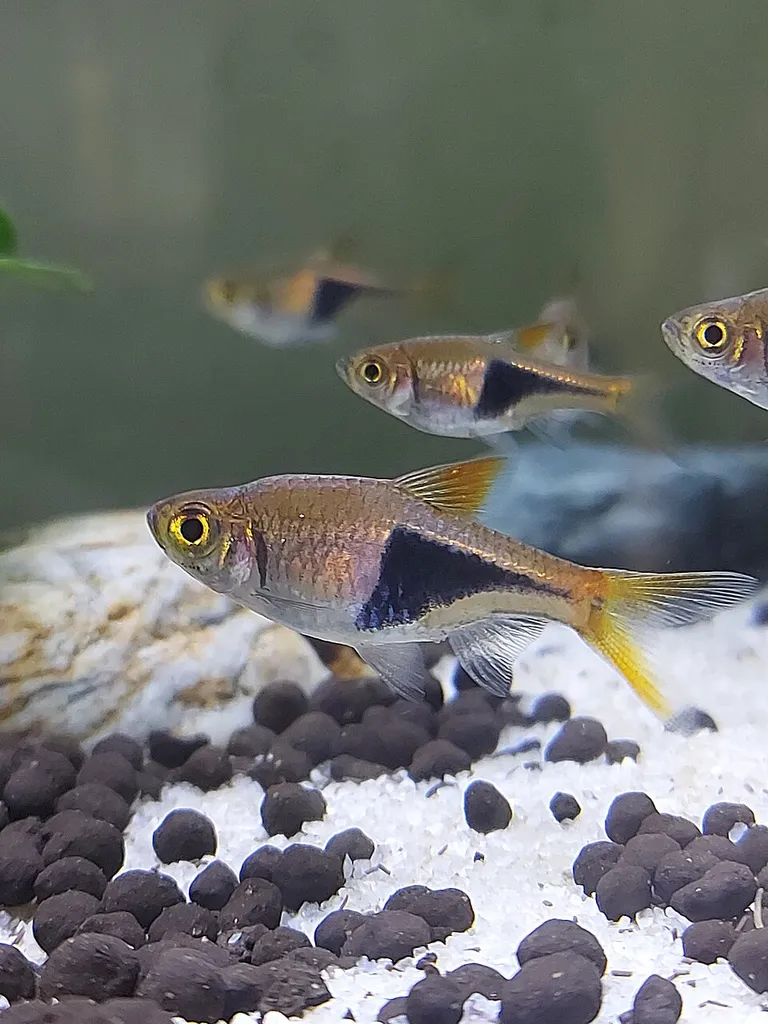
Harlequin rasbora
Trigonostigma heteromorpha
Freshwater- Size
- 2 in (5 cm)
- Tank
- 15 gal (55 L)
- Water
- 72–82°F (22–28°C)
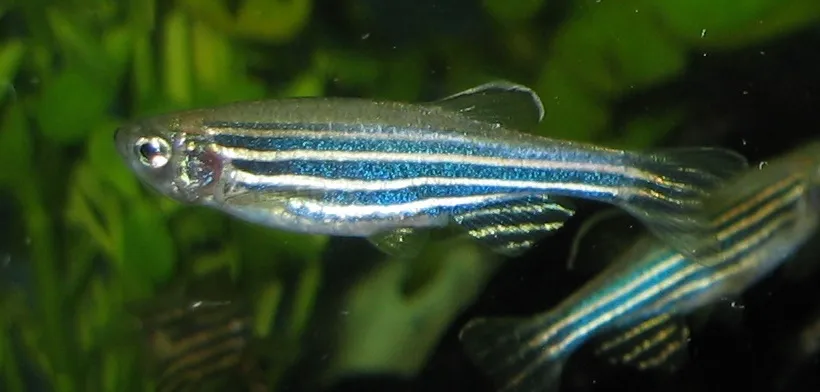
Zebra danio
Danio rerio
Freshwater- Size
- 2 in (5 cm)
- Tank
- 15 gal (55 L)
- Water
- 64–75°F (18–24°C)
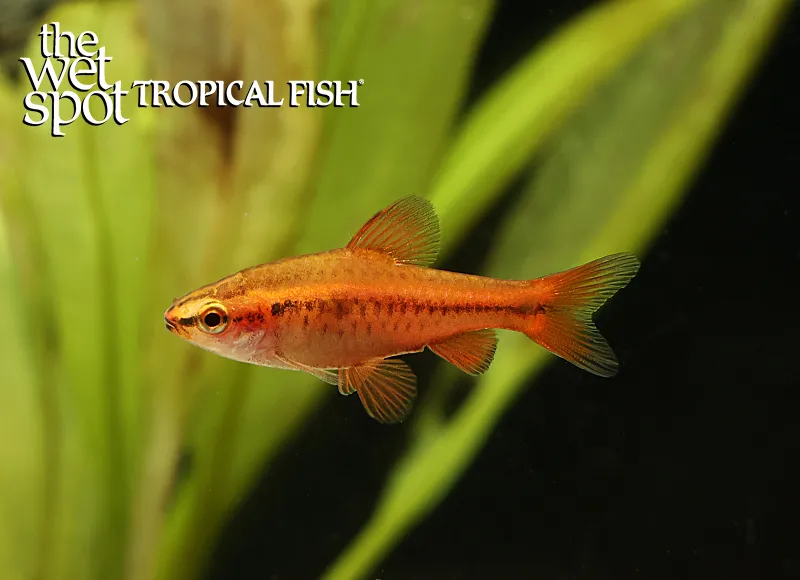
Cherry barb
Rohanella titteya
Freshwater- Size
- 2 in (5 cm)
- Tank
- 20 gal (75 L)
- Water
- 72–81°F (22–27°C)
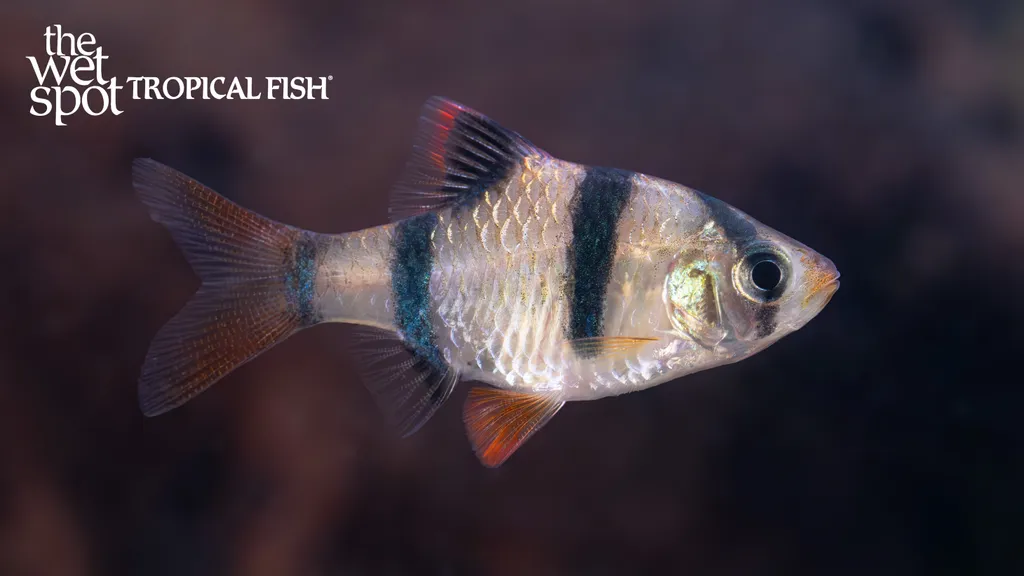
Tiger barb
Puntigrus tetrazona
Freshwater- Size
- 2.8 in (7 cm)
- Tank
- 20 gal (75 L)
- Water
- 68–79°F (20–26°C)
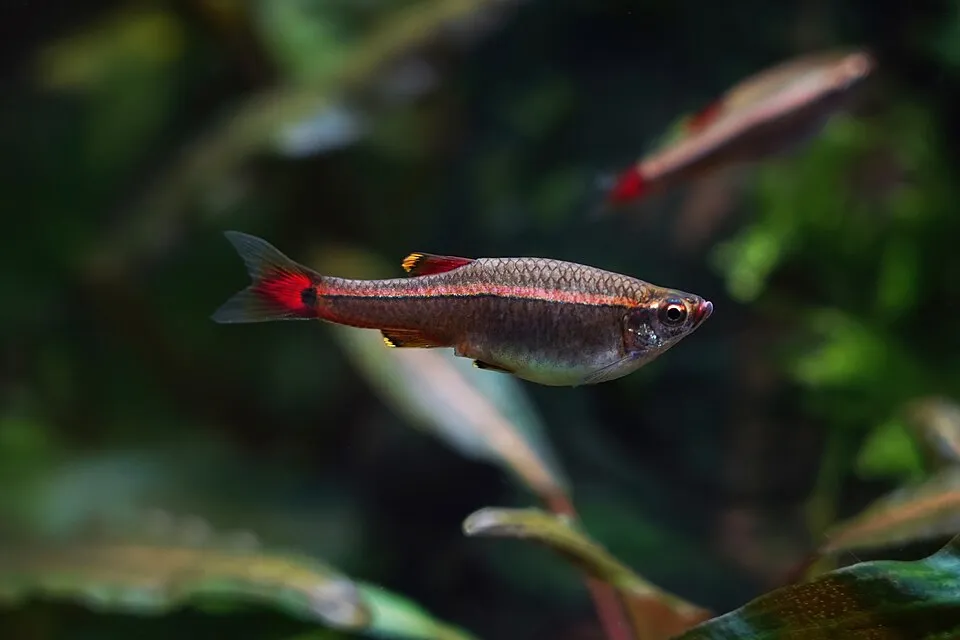
White Cloud Mountain minnow
Tanichthys albonubes
Freshwater- Size
- 1.6 in (4 cm)
- Tank
- 12 gal (45 L)
- Water
- 57–72°F (14–22°C)
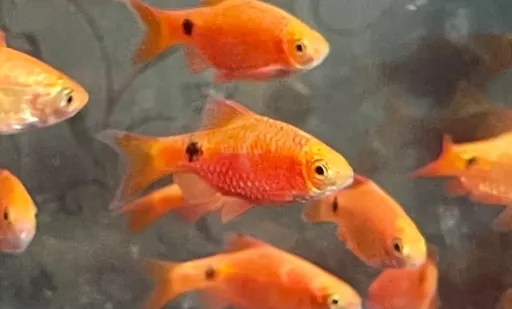
Rosy barb
Pethia conchonius
Freshwater- Size
- 2.8 in (7 cm)
- Tank
- 24 gal (90 L)
- Water
- 61–75°F (16–24°C)
The rule
What the whole family has in common
Barbs, danios and rasboras are schooling fish, and every profile on this page lists a group. Six is the floor, and a dozen is better: a short-handed school hides, and a short-handed barb nips fins, which is where the tiger barb's reputation comes from. They run rather than hover, so a long tank beats a tall one. Many of them come from cool streams: the white cloud, the Odessa barb, the pearl danio, the gold barb and the rosy barb all list a range that starts at 57 to 64°F (14 to 18°C), which makes them the schools for a tank without a heater.
- 01
Six is the floor
Every profile here lists a group
- 02
Length over height
They run, so a long tank beats a tall one
- 03
Barbs nip short-handed
A tiger barb in a group of eight nips less
- 04
Many like it cool
White clouds, Odessa barbs and pearl danios start at 57–64°F
Rasboras
Rasboras
The espei rasbora is the harlequin's smaller cousin at 1.5 inches (3.8 cm) for 11 gallons (40 liters), marked easy, and the glowlight rasbora is the third of the trio at 1.6 inches (4 cm) for 12 gallons (45 liters). The chili rasbora is 0.8 inches (2 cm) for 7 gallons (25 liters), marked medium for its soft water and its shyness in small numbers. The exclamation-point rasbora stays at 0.6 inches (1.6 cm), marked easy, the smallest easy fish in the catalog. The green neon rasbora is a 0.8 inch (2 cm) shoaler for 12 gallons (45 liters). The scissortail rasbora is the big one, 5.5 inches (14 cm) for 45 gallons (170 liters), marked easy and peaceful.
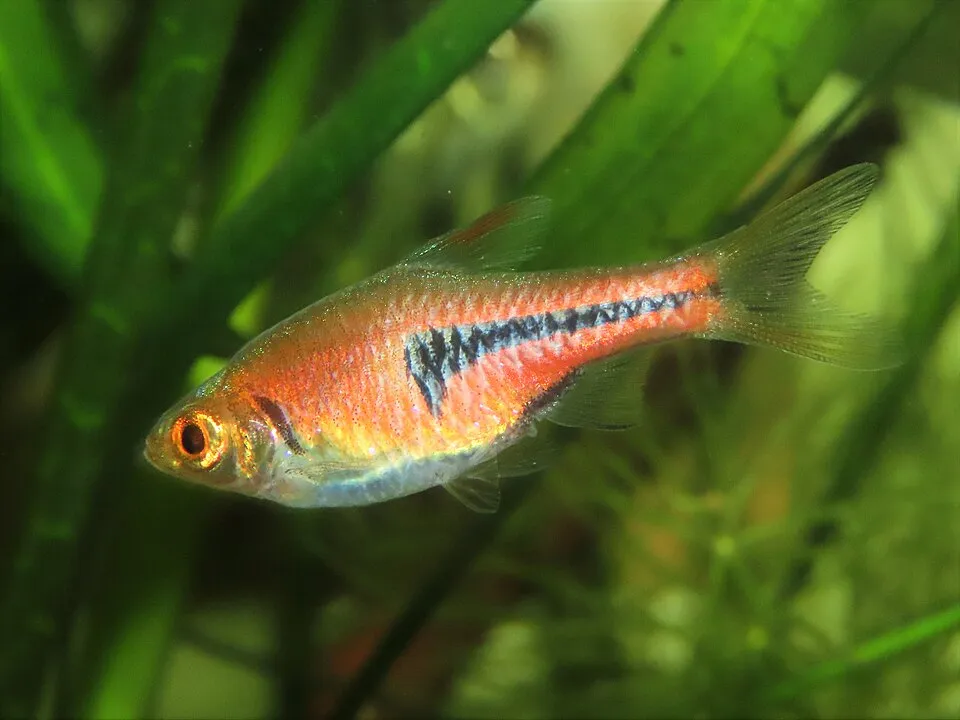
Espei rasbora
Trigonostigma espei
Freshwater1.5 in (3.8 cm) · 11 gal (40 L)73–82°F (23–28°C)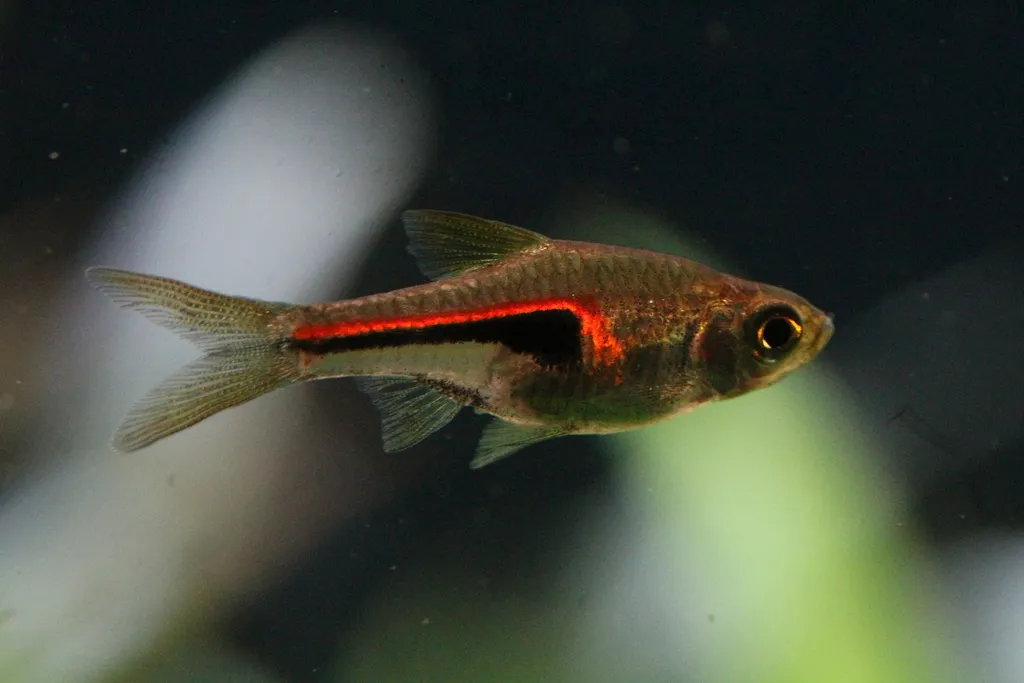
Glowlight rasbora
Trigonostigma hengeli
Freshwater1.6 in (4 cm) · 12 gal (45 L)73–82°F (23–28°C)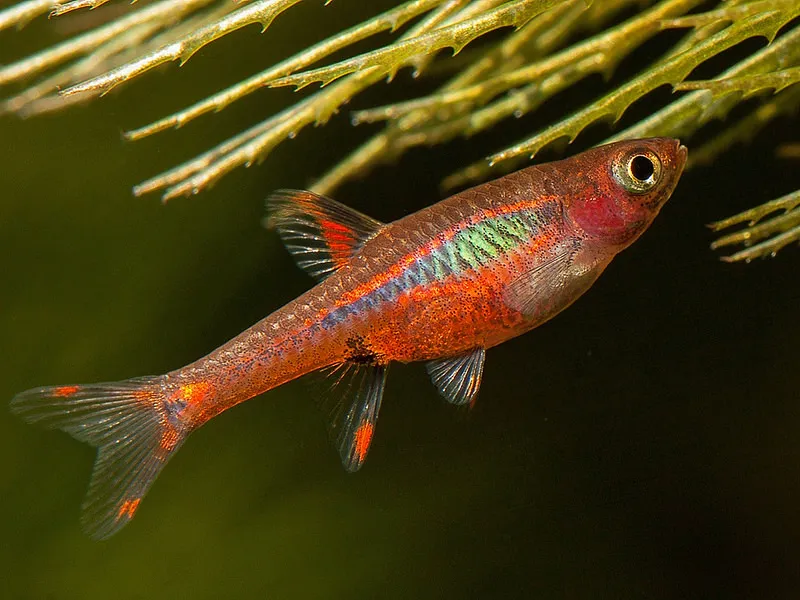
Chili rasbora
Boraras brigittae
Freshwater0.8 in (2 cm) · 7 gal (25 L)72–82°F (22–28°C)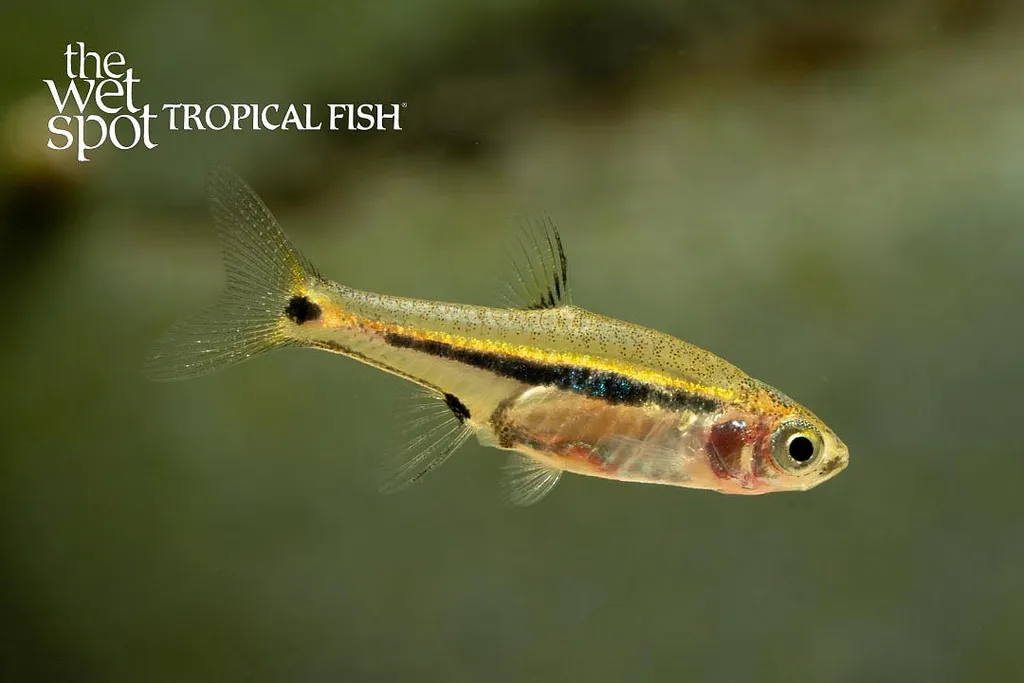
Exclamation-point rasbora
Boraras urophthalmoides
Freshwater0.6 in (1.6 cm) · 11 gal (40 L)73–81°F (23–27°C)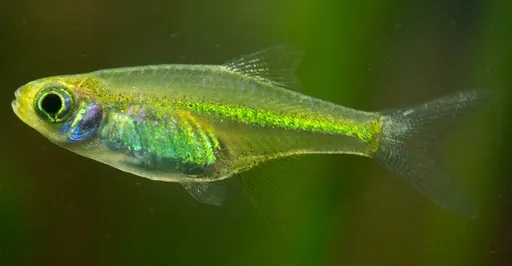
Green neon rasbora
Microdevario kubotai
Freshwater0.8 in (2 cm) · 12 gal (45 L)72–79°F (22–26°C)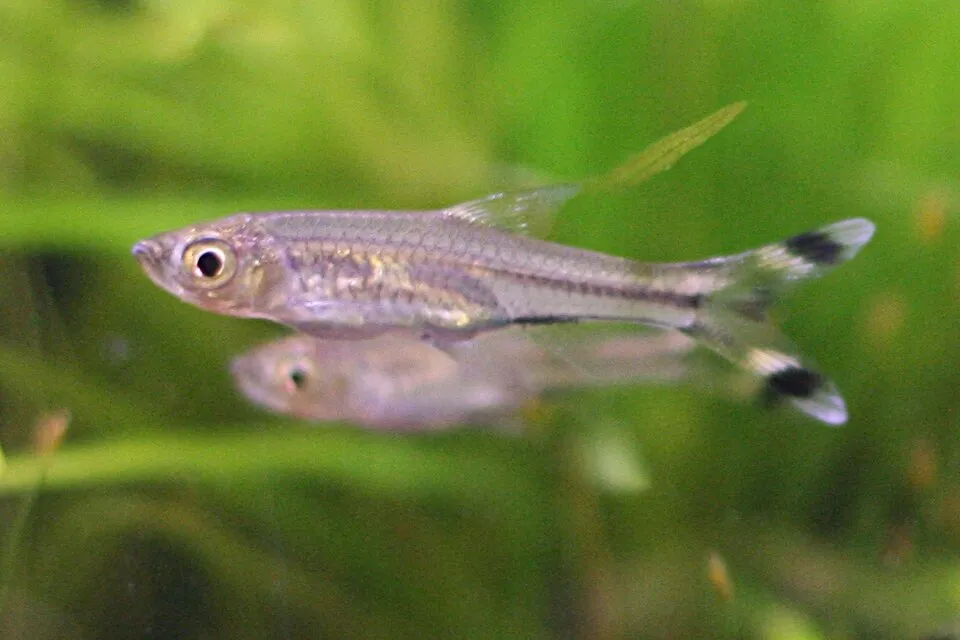
Scissortail rasbora
Rasbora trilineata
Freshwater5.5 in (14 cm) · 45 gal (170 L)72–77°F (22–25°C)
Danios
Danios
The celestial pearl danio is 0.8 inches (2 cm) for 9 gallons (35 liters), marked easy, with a spotted body and red fins. The pearl danio is 2.4 inches (6 cm) for 18 gallons (70 liters) at 61–77°F (16–25°C). The gold ring danio is marked beginner at 1.2 inches (3 cm) for 11 gallons (40 liters). The glowlight danio is the same size in medium light, marked easy for 20 gallons (75 liters). The Lake Inle danio wants hard water at a pH from 7 to 8, 3.1 inches (8 cm) for 24 gallons (90 liters). The giant danio is the one that is not a nano fish: 5.9 inches (15 cm), 50 gallons (190 liters), marked medium and aggressive, and it bullies anything slower.
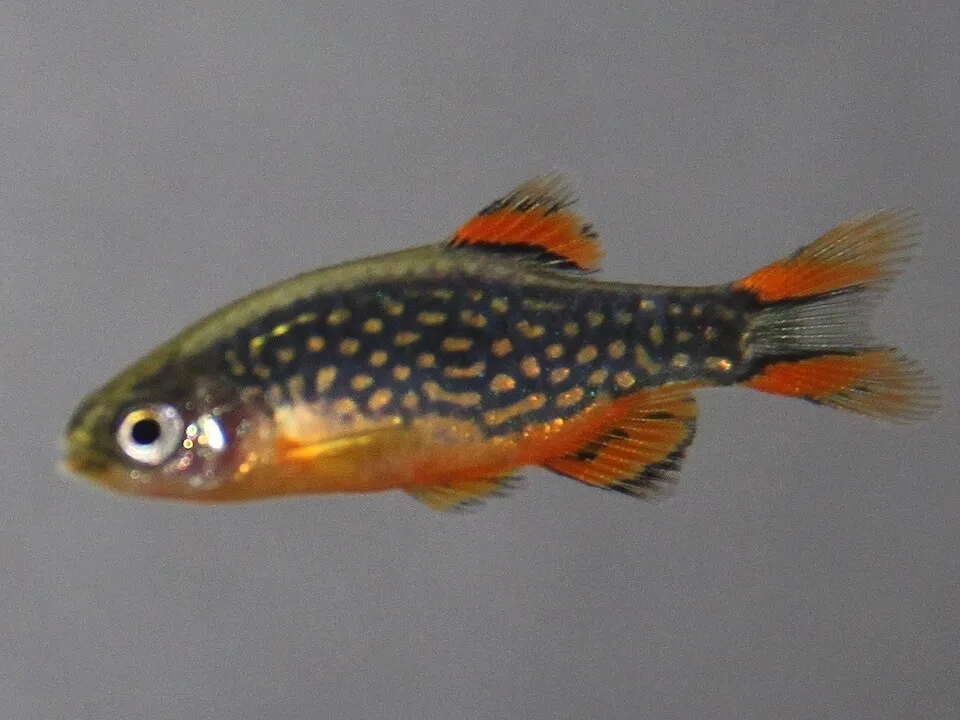
Celestial Pearl danio
Danio margaritatus
Freshwater0.8 in (2 cm) · 9 gal (35 L)72–79°F (22–26°C)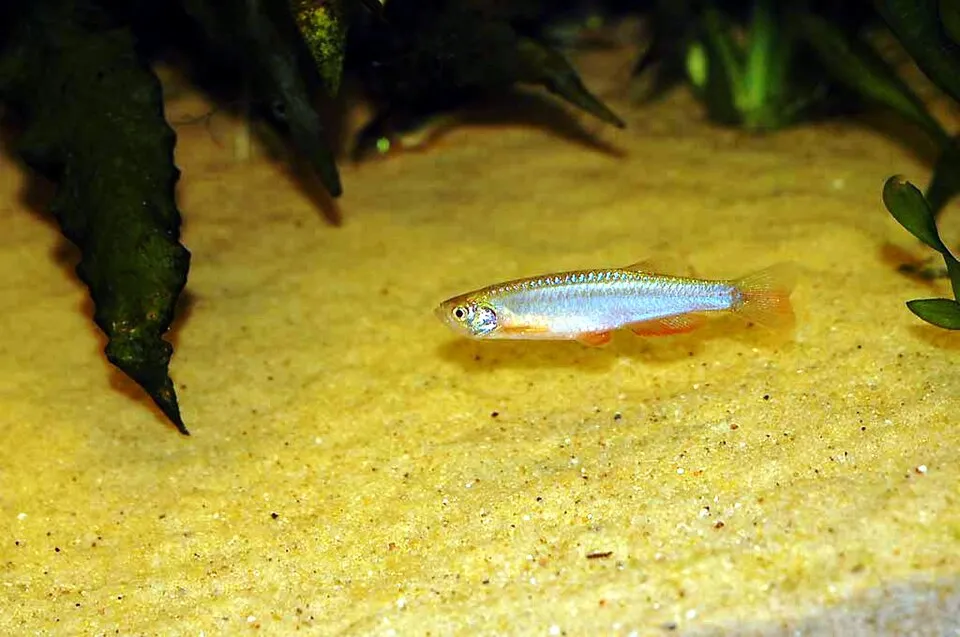
Pearl danio
Danio albolineatus
Freshwater2.4 in (6 cm) · 18 gal (70 L)61–77°F (16–25°C)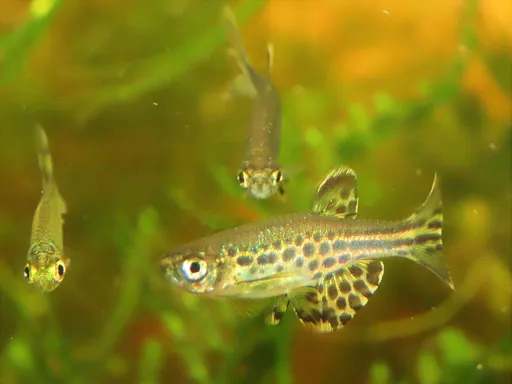
Gold ring danio
Danio tinwini
Freshwater1.2 in (3 cm) · 11 gal (40 L)64–79°F (18–26°C)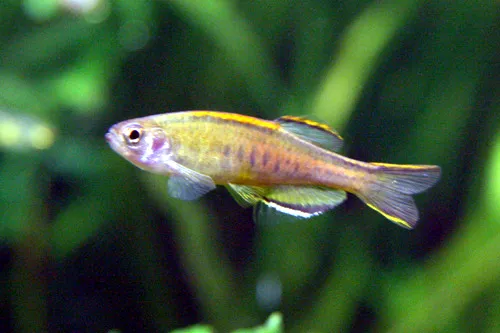
Glowlight danio
Danio choprae
Freshwater1.2 in (3 cm) · 20 gal (75 L)72–79°F (22–26°C)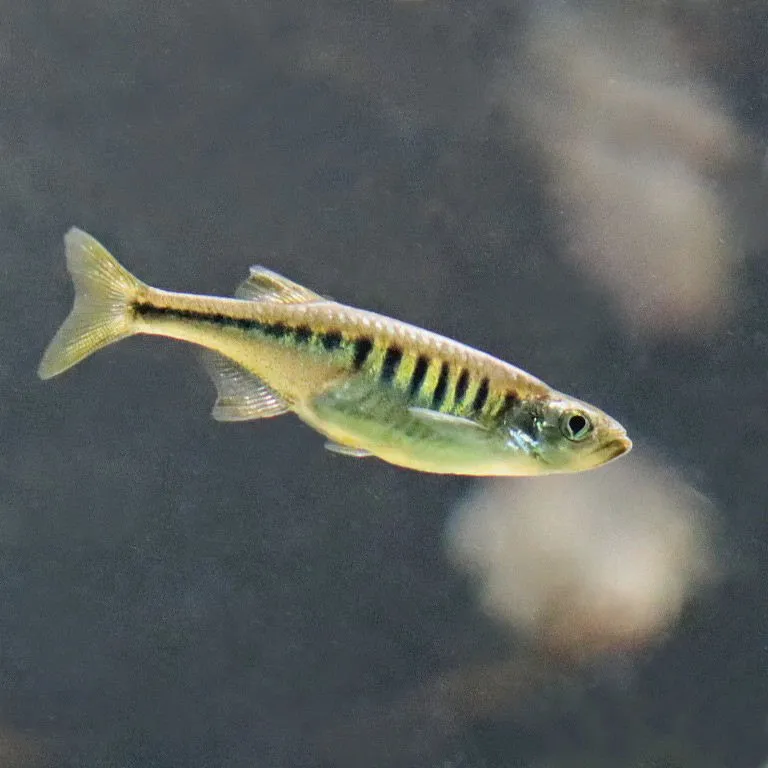
Lake Inle danio
Devario auropurpureus
Freshwater3.1 in (8 cm) · 24 gal (90 L)64–77°F (18–25°C)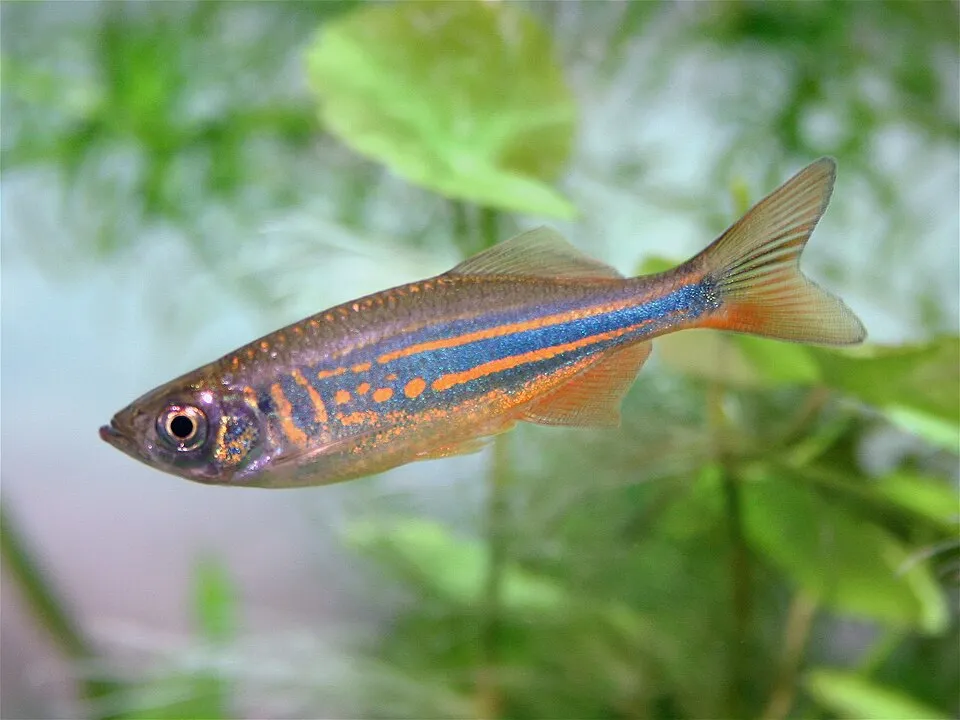
Giant danio
Devario aequipinnatus
Freshwater5.9 in (15 cm) · 50 gal (190 L)72–81°F (22–27°C)
Barbs
Barbs
The Odessa barb is marked easy and peaceful at 1.8 inches (4.5 cm) for 20 gallons (75 liters) at 61–77°F (16–25°C). The black ruby barb is 2.4 inches (6 cm) for the same tank, and the males turn wine red at spawning time. The five-banded barb is the calm tiger barb, 2 inches (5 cm), marked easy and peaceful, for soft water at a pH from 5.5 to 7. The checkered barb is 1.8 inches (4.5 cm) for 16 gallons (60 liters), marked easy. The redline torpedo barb, the Denison barb of the shops, reaches 4.3 inches (11 cm), lists 53 gallons (200 liters) and 59–77°F (15–25°C), and needs current. The filament barb is 5.1 inches (13 cm) of trailing dorsal fin for 53 gallons (200 liters).
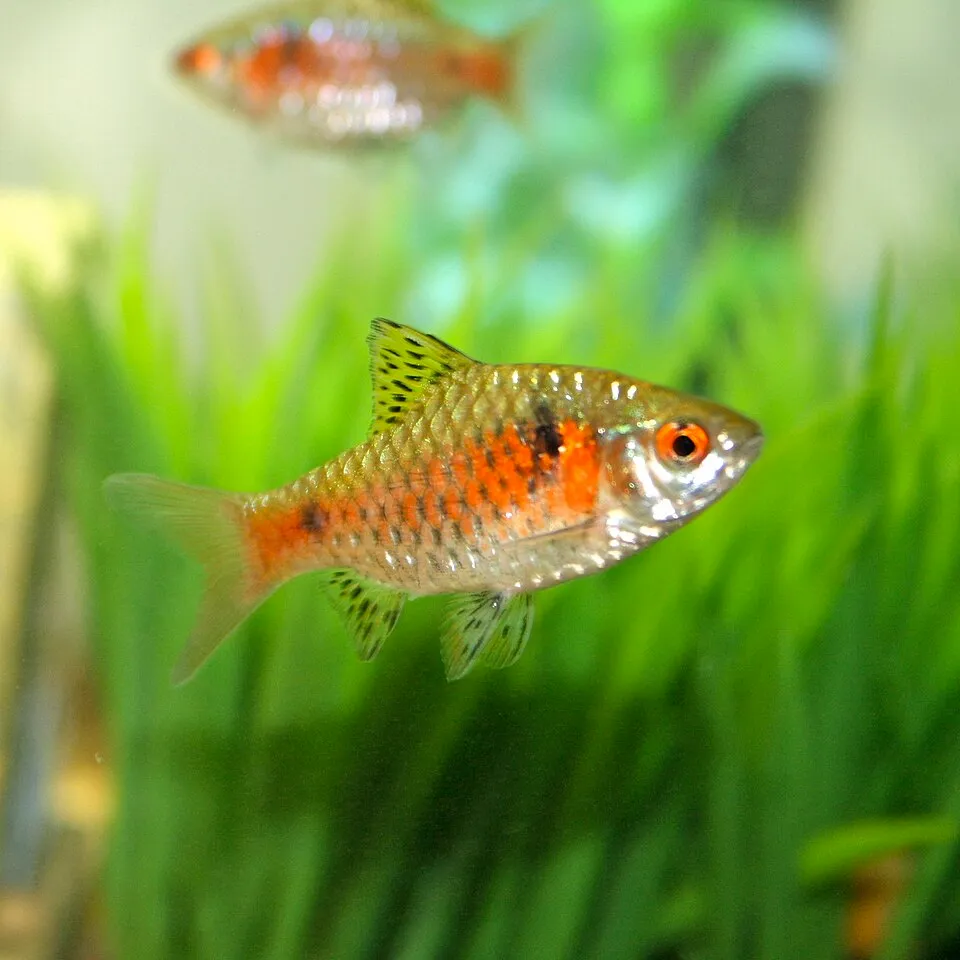
Odessa barb
Pethia padamya
Freshwater1.8 in (4.5 cm) · 20 gal (75 L)61–77°F (16–25°C)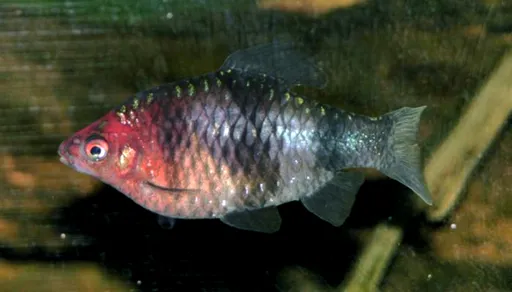
Black ruby barb
Pethia nigrofasciata
Freshwater2.4 in (6 cm) · 20 gal (75 L)72–79°F (22–26°C)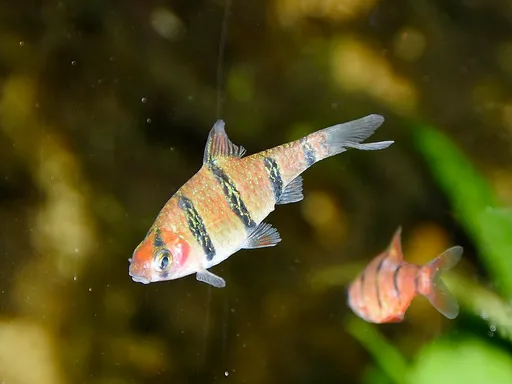
Five-banded barb
Desmopuntius pentazona
Freshwater2 in (5 cm) · 20 gal (75 L)73–81°F (23–27°C)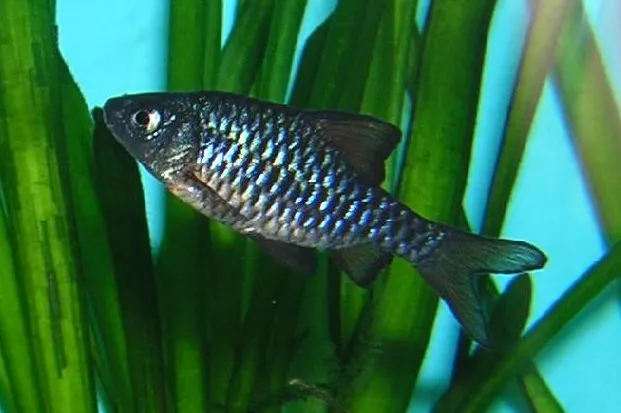
Checkered barb
Oliotius oligolepis
Freshwater1.8 in (4.5 cm) · 16 gal (60 L)68–79°F (20–26°C)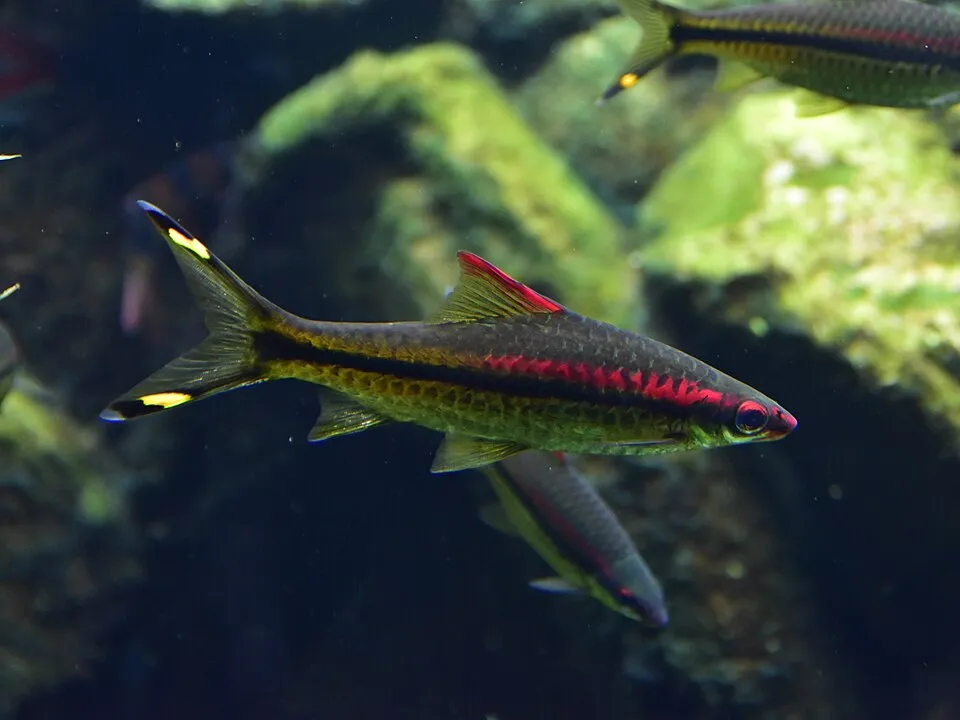
Redline torpedo barb
Sahyadria denisonii
Freshwater4.3 in (11 cm) · 53 gal (200 L)59–77°F (15–25°C)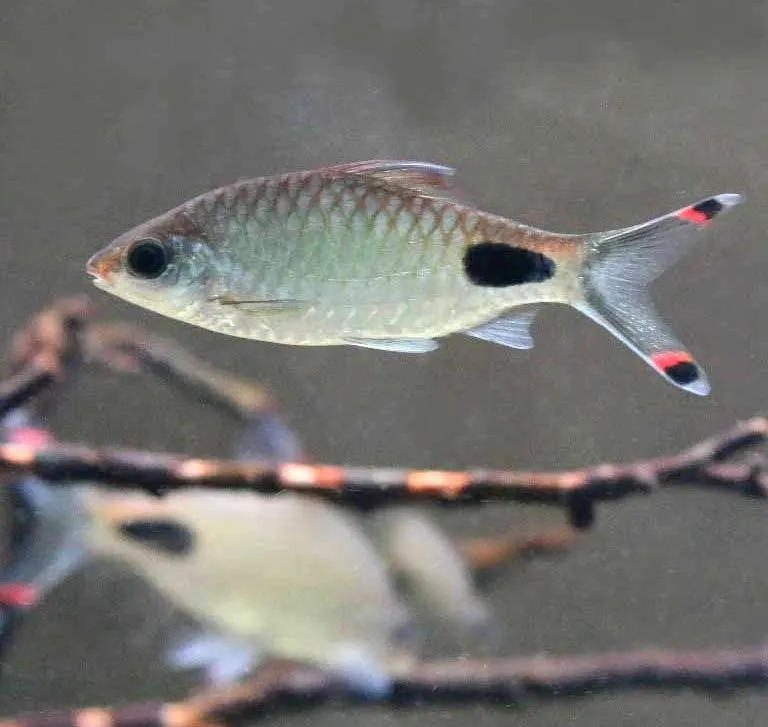
Filament barb
Dawkinsia filamentosa
Freshwater5.1 in (13 cm) · 53 gal (200 L)68–77°F (20–25°C)
The extremes
The biggest and the smallest
The tinfoil barb reaches 13.8 inches (35 cm), lists 180 gallons (680 liters) and is sold as a 2 inch schooling fish. The red-tailed tinfoil barb is the smaller relative at 9.8 inches (25 cm) for 106 gallons (400 liters), marked easy and peaceful, and the lemon-fin barb is the same size and rating. At the other end, Danionella cerebrum is 0.5 inches (1.3 cm) of transparent fish for 8 gallons (30 liters), and the pygmy carplet is the same length, marked difficult for a pH from 4.5 to 6.5. The sawbwa barb is 1.2 inches (3 cm) for 20 gallons (75 liters) at a pH from 7 to 8, a Lake Inle fish with a red nose on the males.
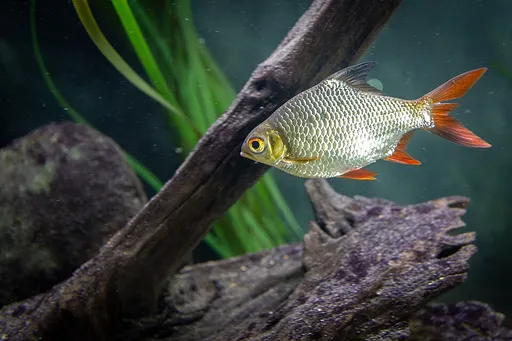
Tinfoil barb
Barbonymus schwanenfeldii
Freshwater13.8 in (35 cm) · 180 gal (680 L)72–82°F (22–28°C)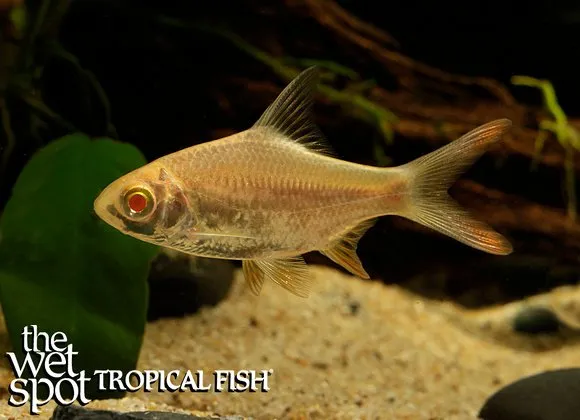
Red-tailed tinfoil barb
Barbonymus altus
Freshwater9.8 in (25 cm) · 106 gal (400 L)72–82°F (22–28°C)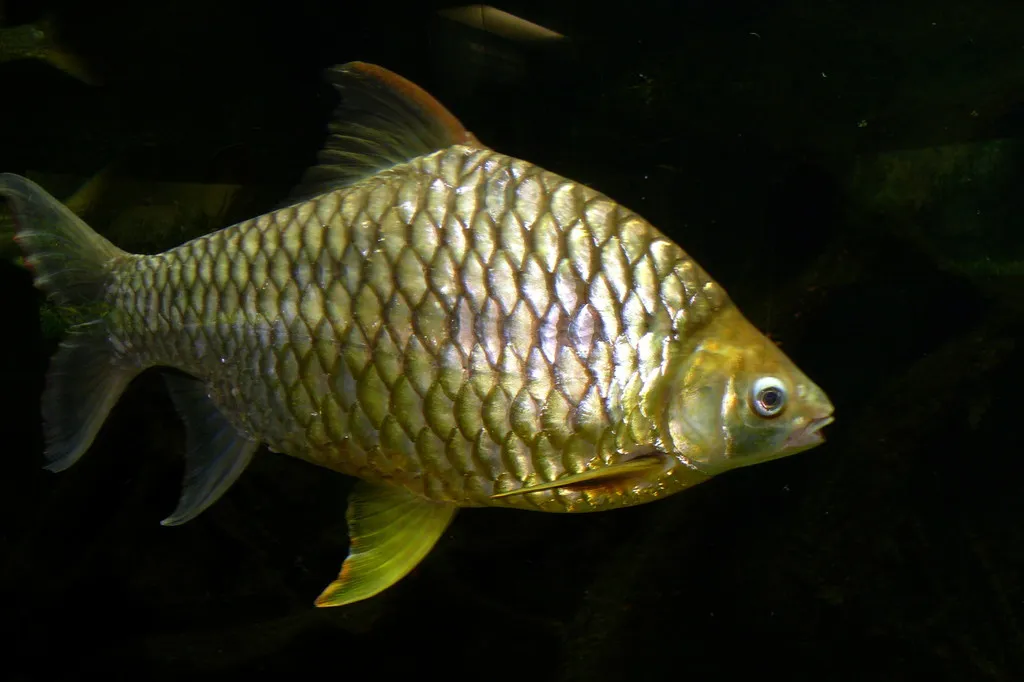
Lemon-fin barb
Hypsibarbus wetmorei
Freshwater9.8 in (25 cm) · 106 gal (400 L)72–82°F (22–28°C)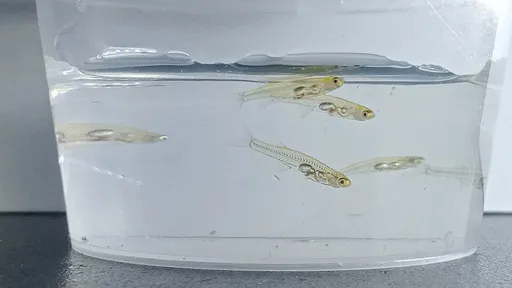
Danionella cerebrum
Freshwater0.5 in (1.3 cm) · 8 gal (30 L)72–82°F (22–28°C)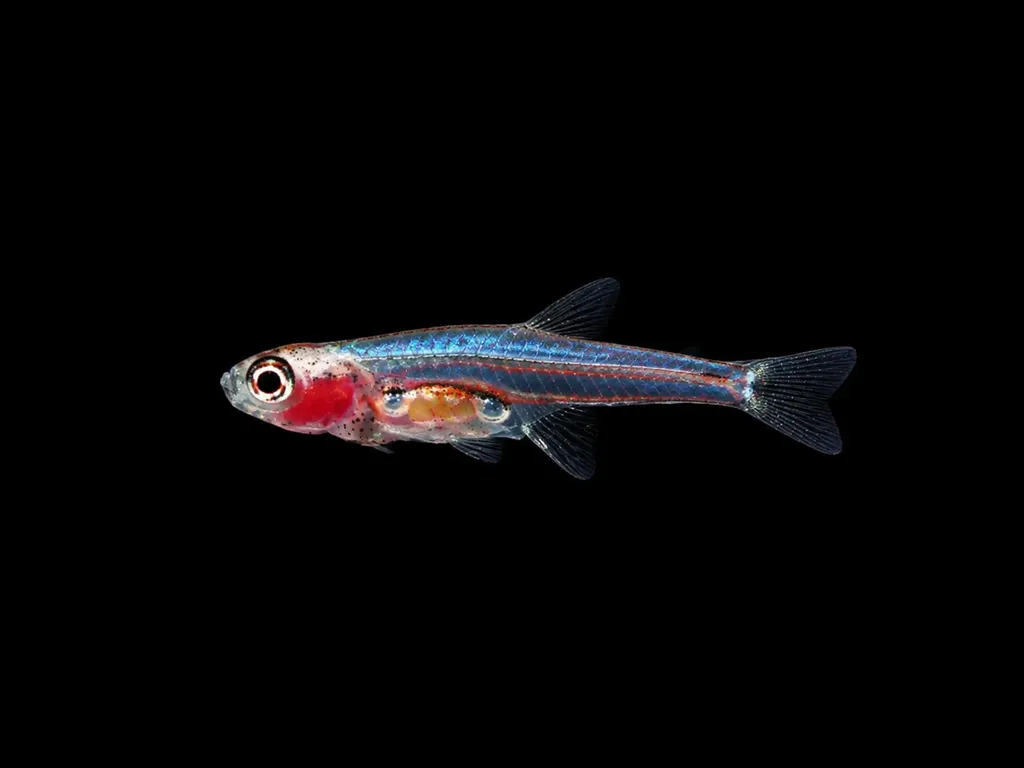
Pygmy carplet
Paedocypris progenetica
Freshwater0.5 in (1.2 cm) · 5 gal (20 L)75–82°F (24–28°C)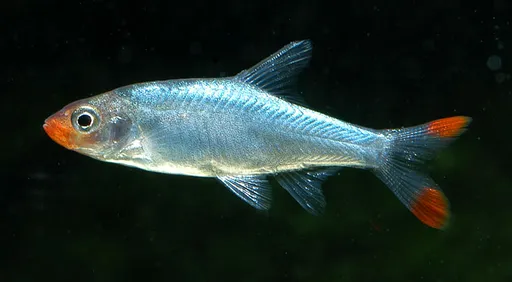
Sawbwa barb
Sawbwa resplendens
Freshwater1.2 in (3 cm) · 20 gal (75 L)68–75°F (20–24°C)
By the numbers
Smallest
Largest
Easiest to keep
Fits a 20 gallon tank
Fits a 30 gallon tank
FAQ
Common questions
How many barbs, danios or rasboras should I keep?
Six of one species is the floor and each profile lists the group its species needs. Ten or twelve of a tiger barb or a harlequin rasbora is calmer and shows more color than six.
Why do tiger barbs nip fins?
They nip when the group is too small to keep them busy with each other. A group of eight or more spends its time on its own pecking order and leaves the gouramis and angelfish alone.
Which of these fit a 10 gallon tank?
The celestial pearl danio at 9 gallons (35 liters), the chili rasbora at 7 gallons (25 liters), and the espei rasbora, exclamation-point rasbora and gold ring danio at 11 gallons (40 liters). Eight to ten of one species is a full tank.
Which barbs and danios live without a heater?
The white cloud mountain minnow at 57–72°F (14–22°C), the pearl danio and Odessa barb at 61–77°F (16–25°C), the rosy barb at 61–75°F (16–24°C) and the gold barb at 64–75°F (18–24°C).
Do barbs, danios and rasboras need soft water?
Most list a pH from 6 to 7.5 and take ordinary tap water. The five-banded barb and the Boraras rasboras want it softer, and the Lake Inle danio and the sawbwa barb want it harder, at a pH from 7 to 8.
What is the difference between a barb, a danio and a rasbora?
They are all cyprinids, the carp family. Barbs are deeper-bodied and carry barbels at the mouth, danios are slim, fast surface fish with stripes or spots, and rasboras are the slender, often red or orange schoolers of Southeast Asian streams.
Index
All barbs, danios & rasboras
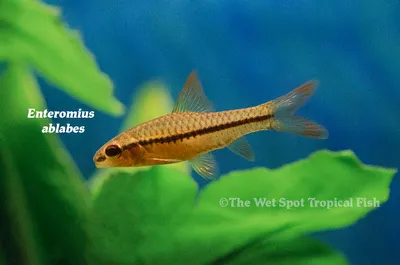
Ablabes barb
Enteromius ablabes
Freshwater3.1 in (8 cm) · 24 gal (90 L)72–81°F (22–27°C)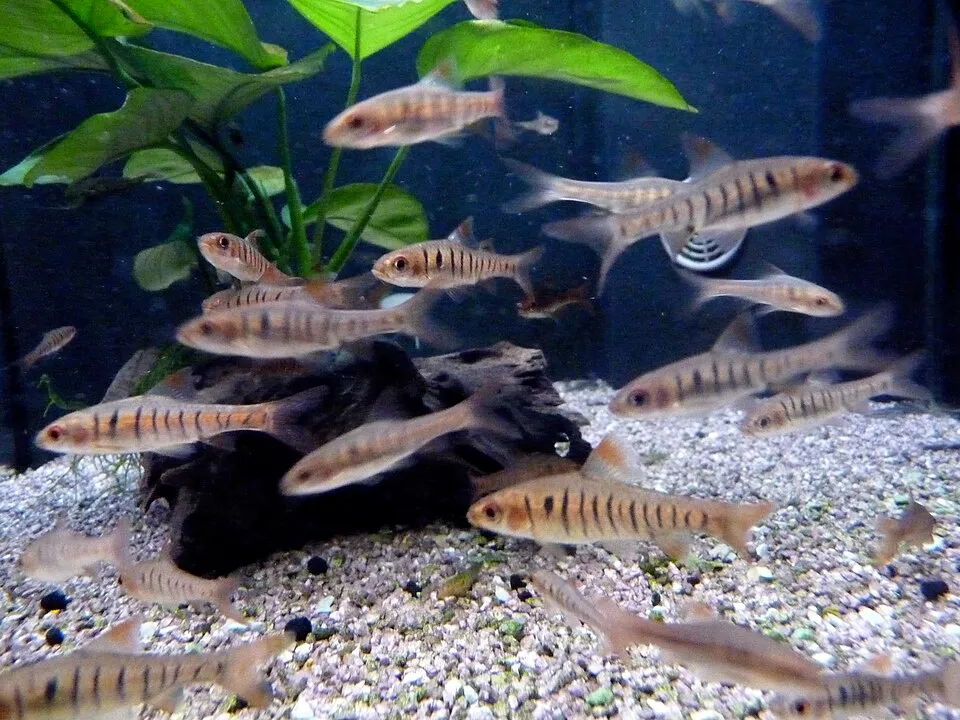
African banded barb
Barbus fasciolatus
Freshwater2.4 in (6 cm) · 20 gal (75 L)68–79°F (20–26°C)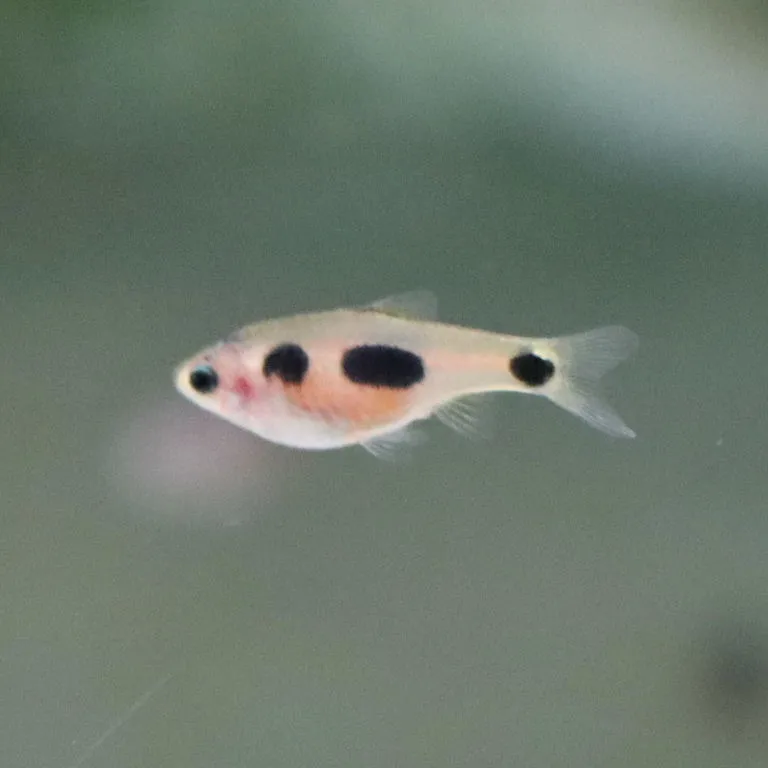
African butterfly barb
Barbus hulstaerti
Freshwater1.4 in (3.5 cm) · 11 gal (40 L)63–75°F (17–24°C)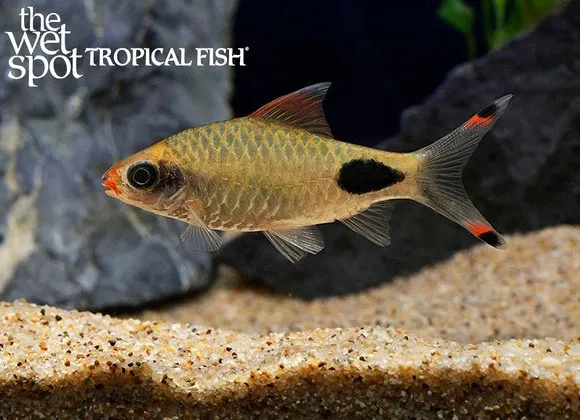
Apsara barb
Dawkinsia apsara
Freshwater3.5 in (9 cm) · 42 gal (160 L)70–79°F (21–26°C)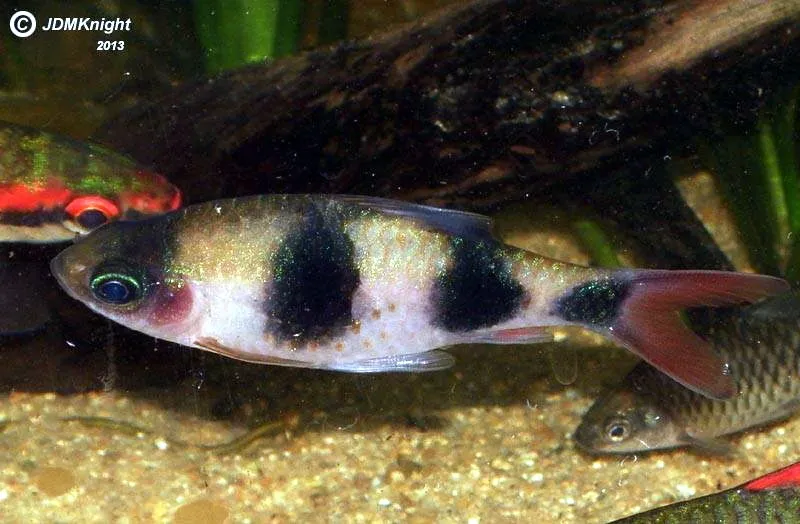
Arulius barb
Dawkinsia arulius
Freshwater4.7 in (12 cm) · 37 gal (140 L)66–77°F (19–25°C)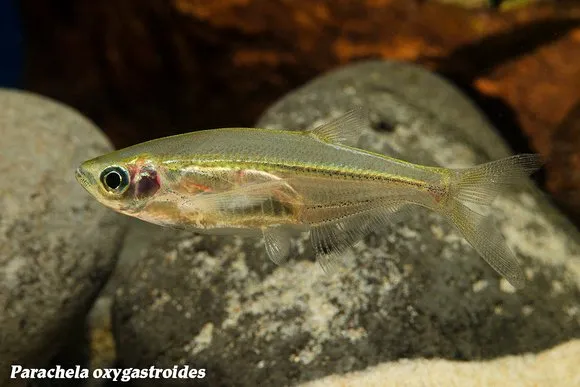
Asian glass hatchetfish
Parachela oxygastroides
Freshwater7.9 in (20 cm) · 79 gal (300 L)73–82°F (23–28°C)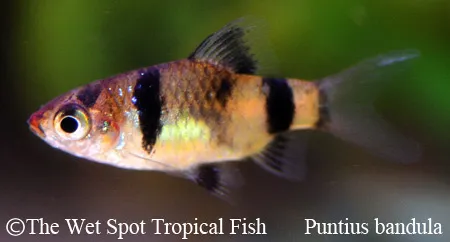
Bandula barb
Pethia bandula
Freshwater2 in (5 cm) · 20 gal (75 L)73–81°F (23–27°C)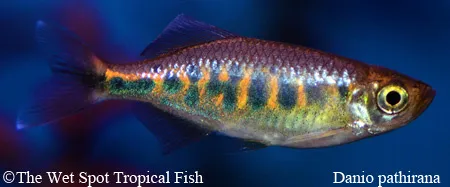
Barred danio
Devario pathirana
Freshwater2.4 in (6 cm) · 24 gal (90 L)70–79°F (21–26°C)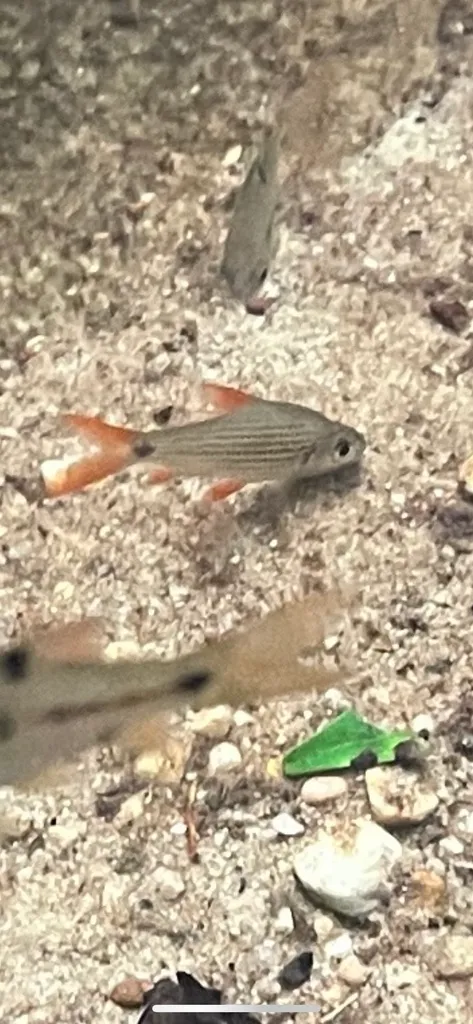
Beardless barb
Cyclocheilichthys apogon
Freshwater7.9 in (20 cm) · 66 gal (250 L)72–82°F (22–28°C)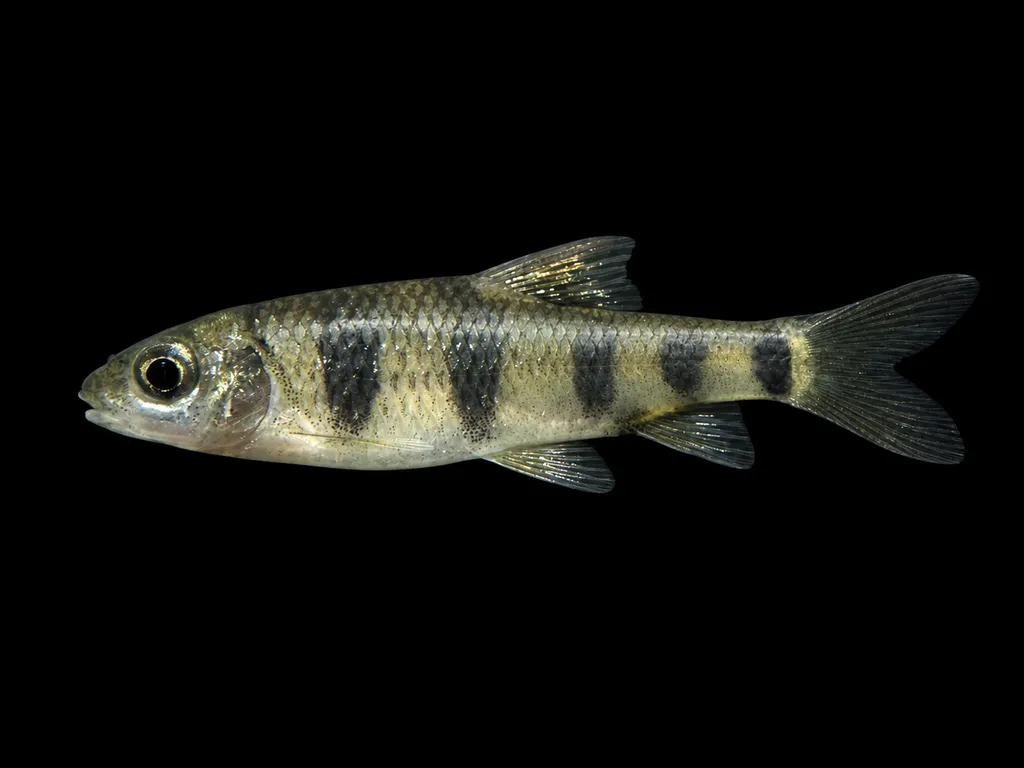
Beijiang barb
Acrossocheilus beijiangensis
Freshwater5.1 in (13 cm) · 53 gal (200 L)64–79°F (18–26°C)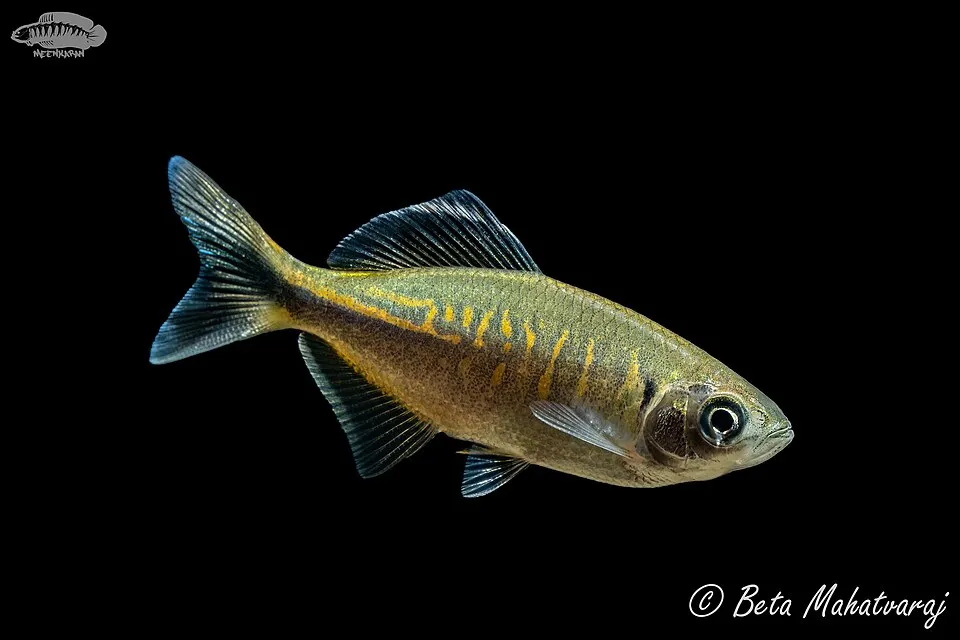
Bengal danio
Devario devario
Freshwater3.5 in (9 cm) · 34 gal (130 L)59–81°F (15–27°C)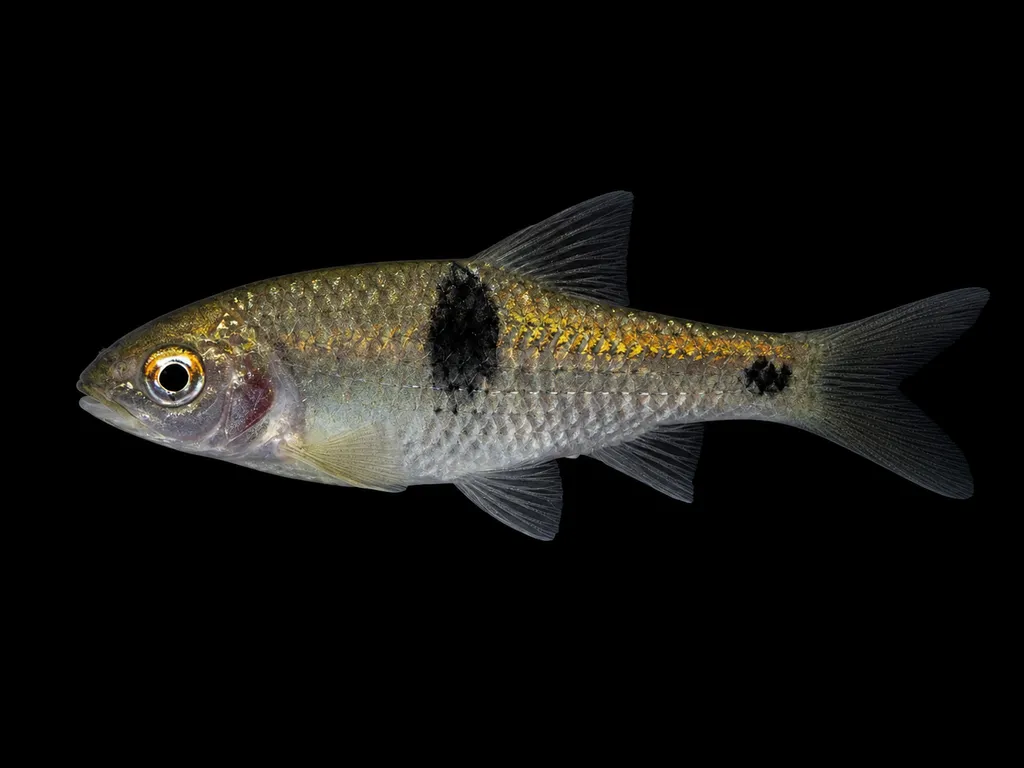
Binduchitra barb
Systomus binduchitra
Freshwater3.9 in (10 cm) · 29 gal (110 L)72–81°F (22–27°C)Black ruby barb
Pethia nigrofasciata
Freshwater2.4 in (6 cm) · 20 gal (75 L)72–79°F (22–26°C)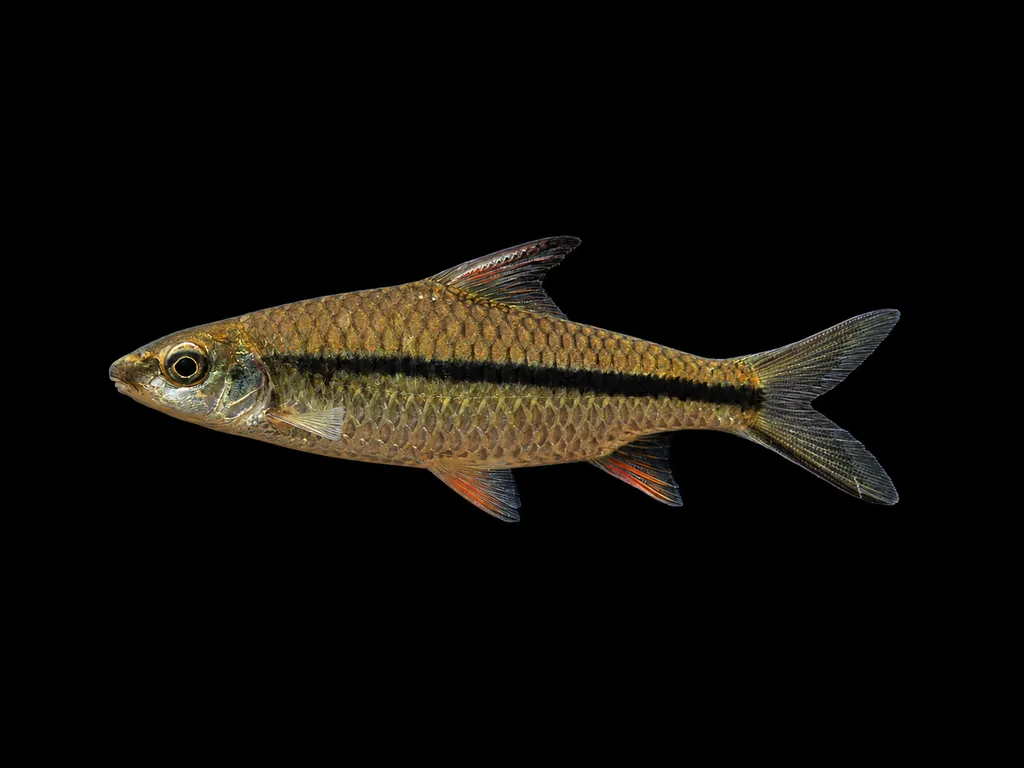
Blackline poropuntius barb
Poropuntius melanogrammus
Freshwater7.9 in (20 cm) · 66 gal (250 L)64–77°F (18–25°C)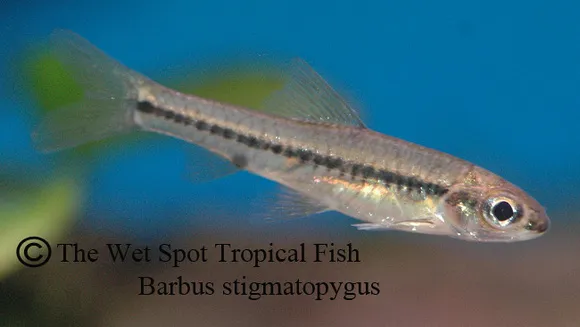
Blackspot dwarf barb
Enteromius stigmatopygus
Freshwater1.4 in (3.5 cm) · 11 gal (40 L)72–81°F (22–27°C)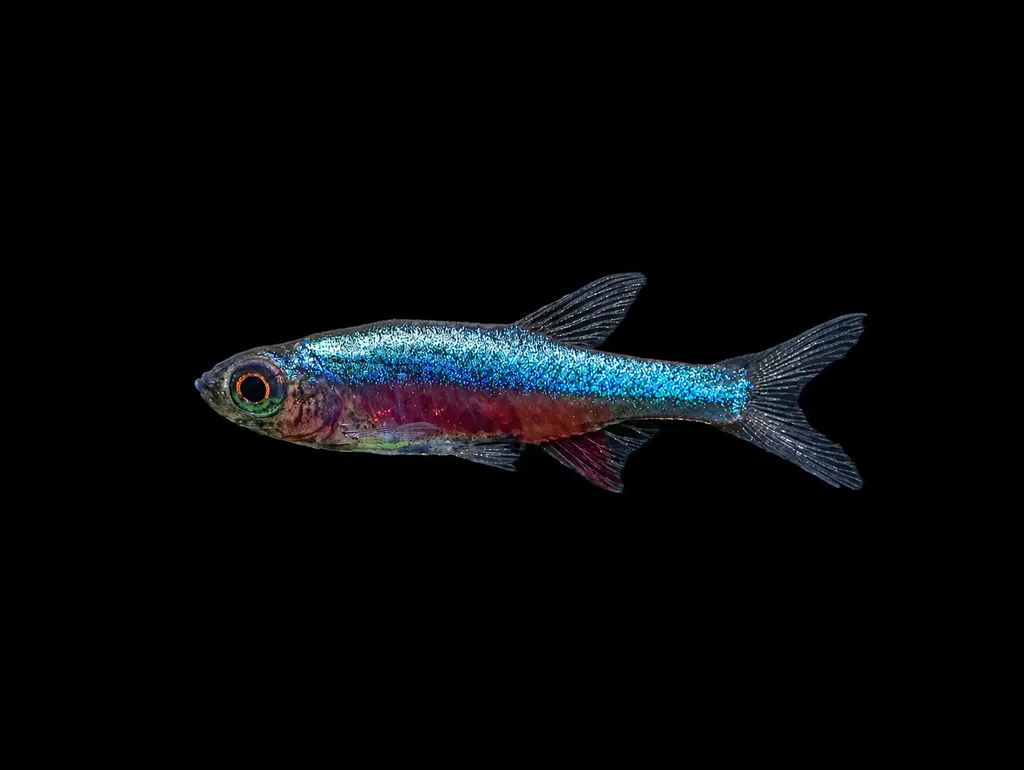
Blue axelrodi rasbora
Sundadanio axelrodi
Freshwater0.8 in (2 cm) · 12 gal (45 L)73–79°F (23–26°C)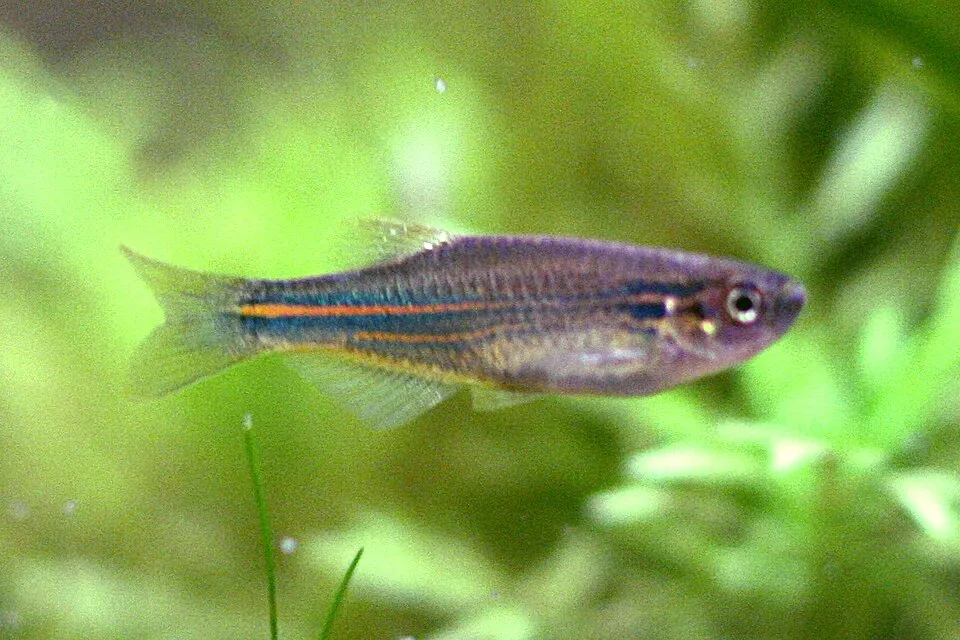
Blue danio
Danio kerri
Freshwater1.8 in (4.5 cm) · 11 gal (40 L)68–79°F (20–26°C)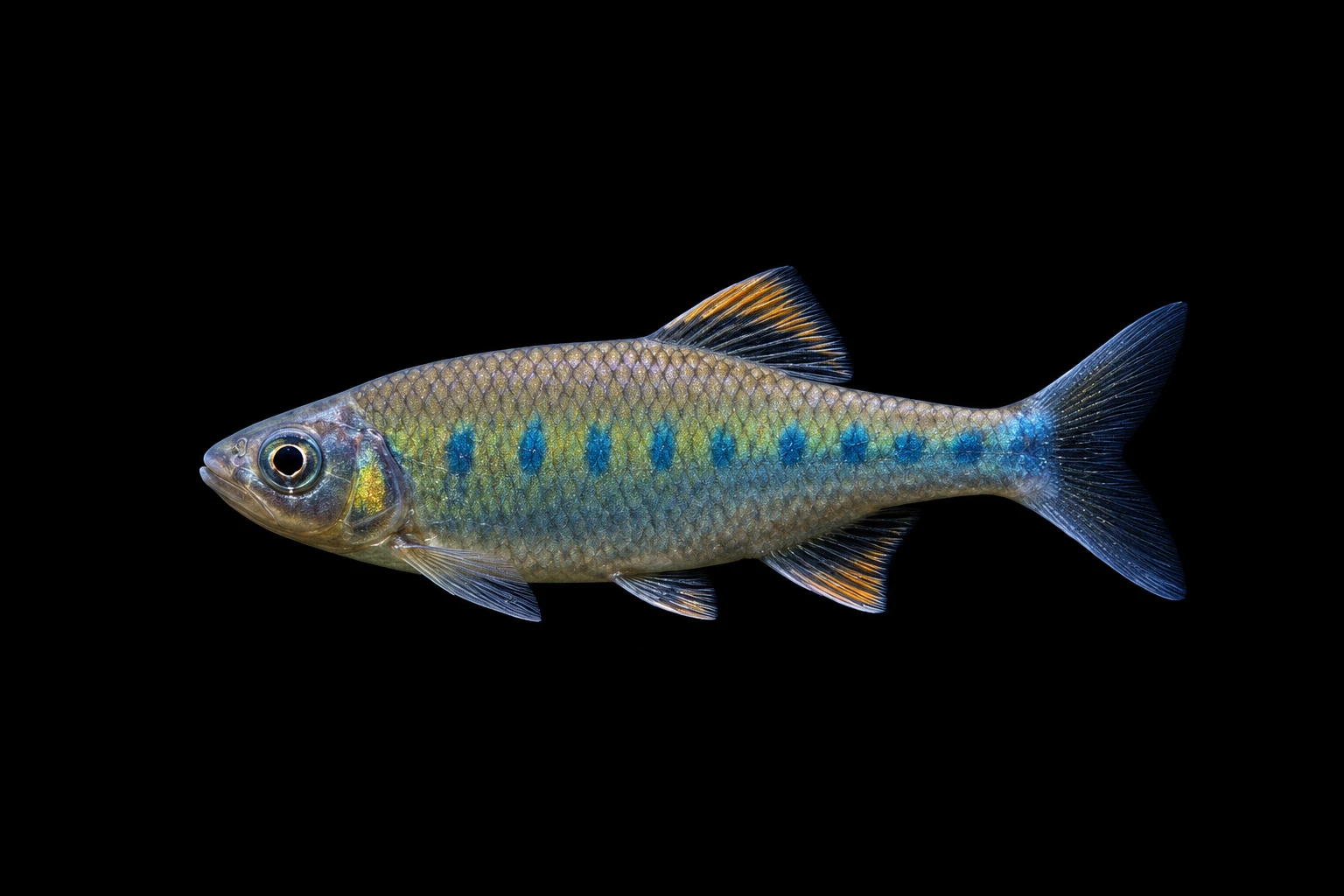
Blue spotted hill trout
Barilius bakeri
Freshwater5.1 in (13 cm) · 53 gal (200 L)64–79°F (18–26°C)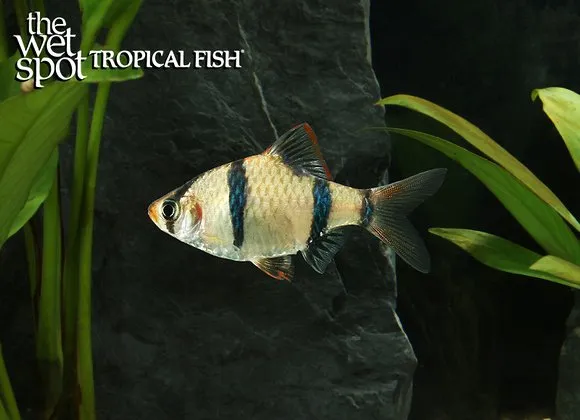
Borneo tiger barb
Puntigrus anchisporus
Freshwater2.8 in (7 cm) · 29 gal (110 L)73–81°F (23–27°C)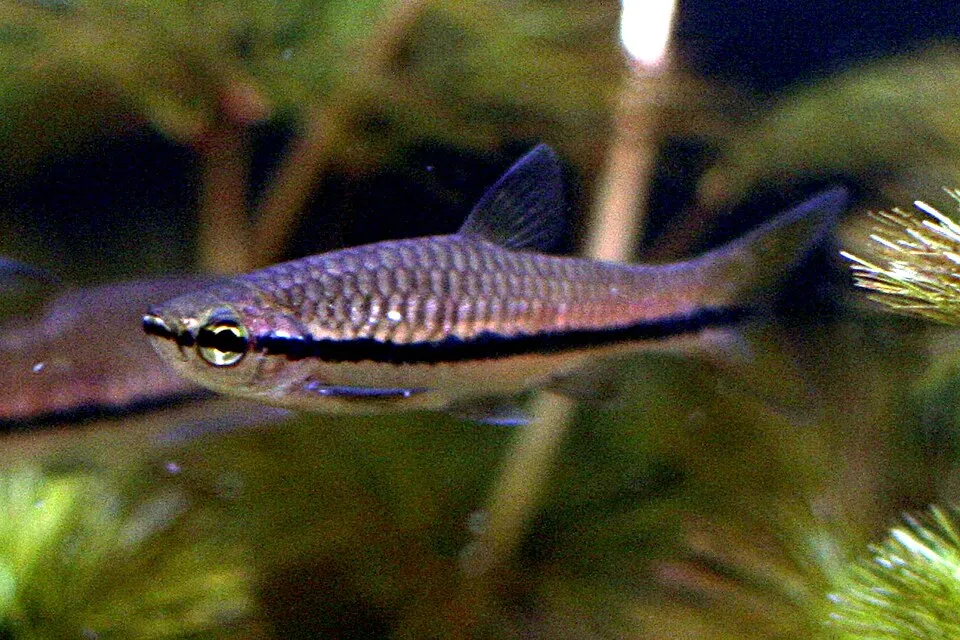
Brilliant rasbora
Rasbora einthovenii
Freshwater3.5 in (9 cm) · 20 gal (75 L)72–82°F (22–28°C)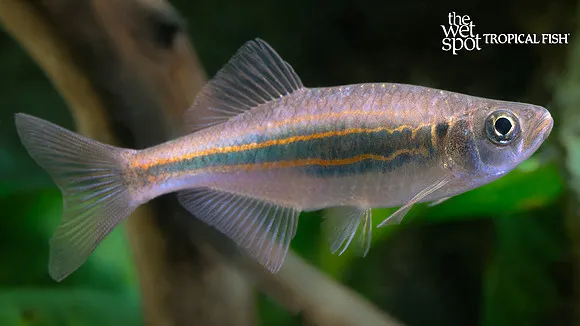
Brittan's rasbora
Kottelatia brittani
Freshwater2.4 in (6 cm) · 16 gal (60 L)68–79°F (20–26°C)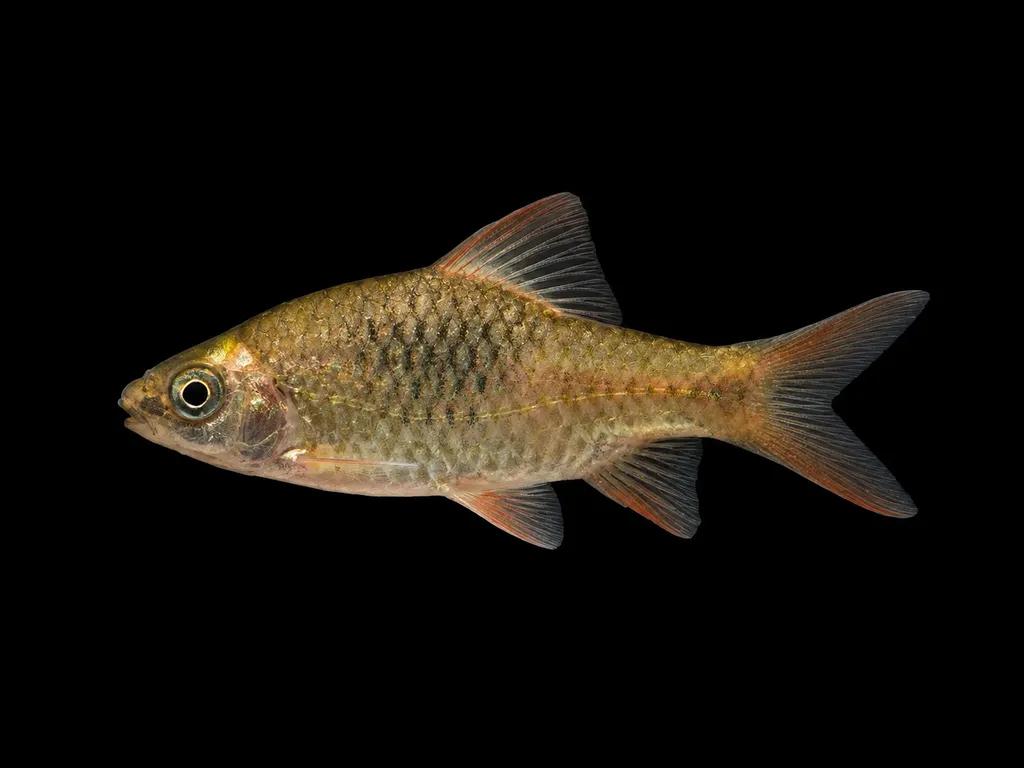
Bunau barb
Barbodes bunau
Freshwater3.5 in (9 cm) · 29 gal (110 L)72–81°F (22–27°C)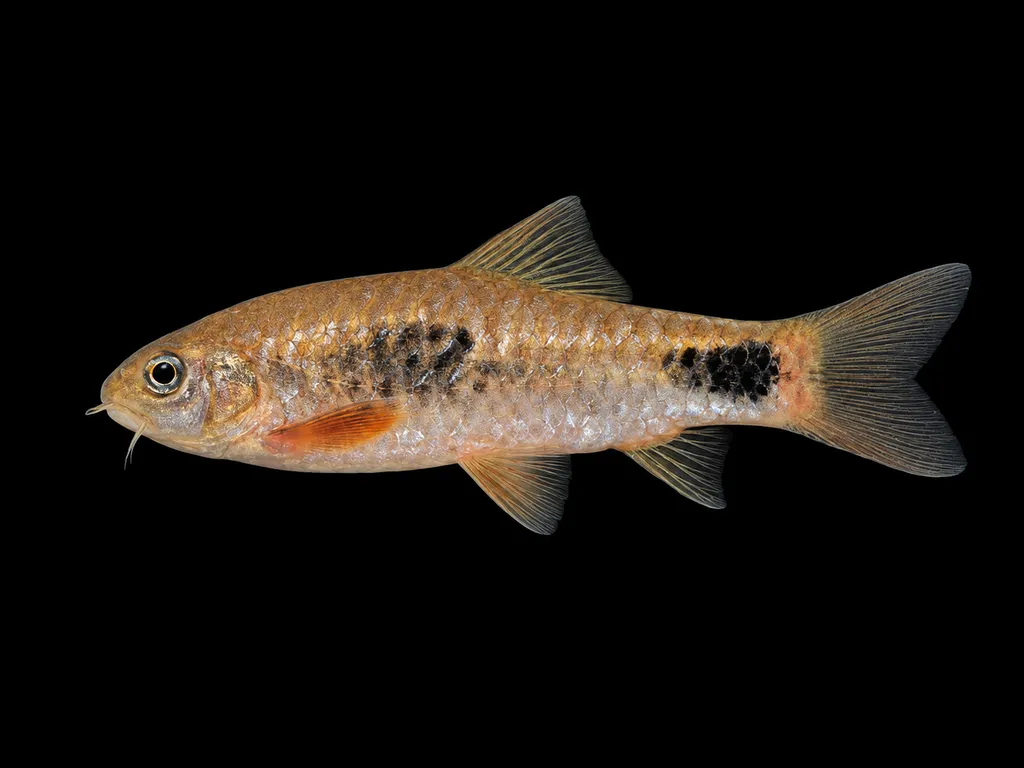
Cameroon barb
Enteromius camptacanthus
Freshwater3.9 in (10 cm) · 24 gal (90 L)72–81°F (22–27°C)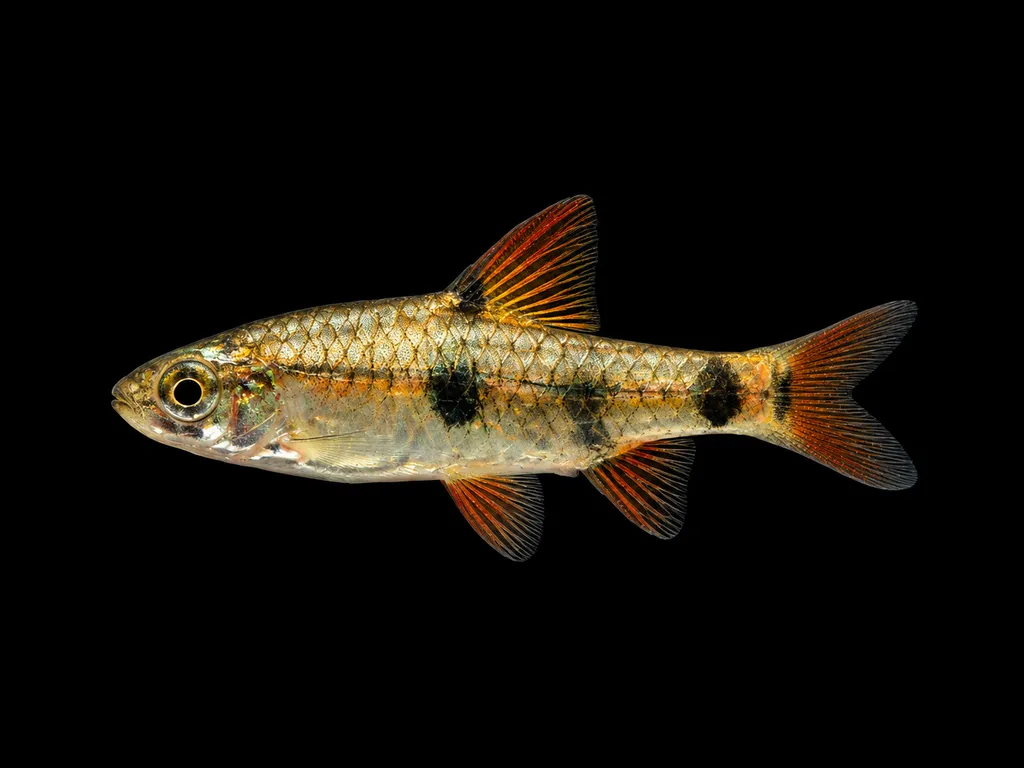
Canius barb
Pethia canius
Freshwater1.6 in (4 cm) · 20 gal (75 L)68–79°F (20–26°C)Celestial Pearl danio
Danio margaritatus
Freshwater0.8 in (2 cm) · 9 gal (35 L)72–79°F (22–26°C)Checkered barb
Oliotius oligolepis
Freshwater1.8 in (4.5 cm) · 16 gal (60 L)68–79°F (20–26°C)Cherry barb
Rohanella titteya
Freshwater2 in (5 cm) · 20 gal (75 L)72–81°F (22–27°C)Chili rasbora
Boraras brigittae
Freshwater0.8 in (2 cm) · 7 gal (25 L)72–82°F (22–28°C)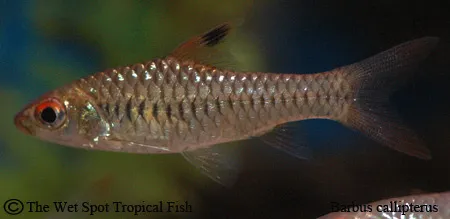
Clipper barb
Enteromius callipterus
Freshwater3.5 in (9 cm) · 24 gal (90 L)72–81°F (22–27°C)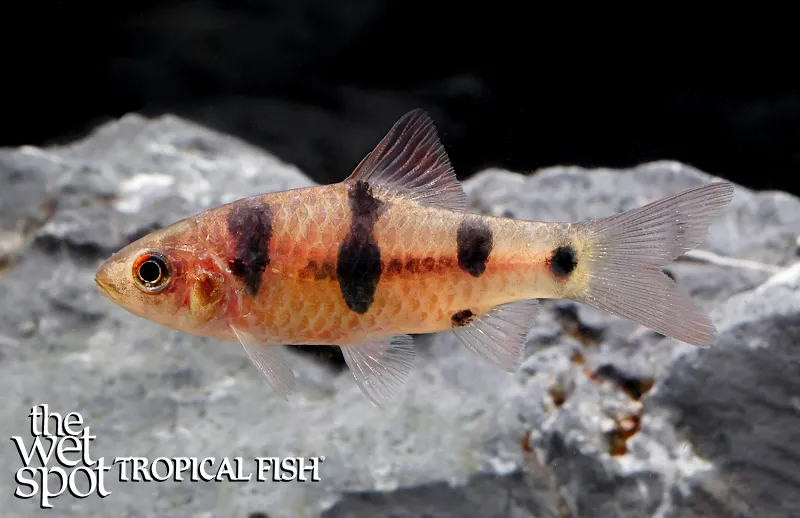
Clown barb
Barbodes dunckeri
Freshwater5.1 in (13 cm) · 53 gal (200 L)75–82°F (24–28°C)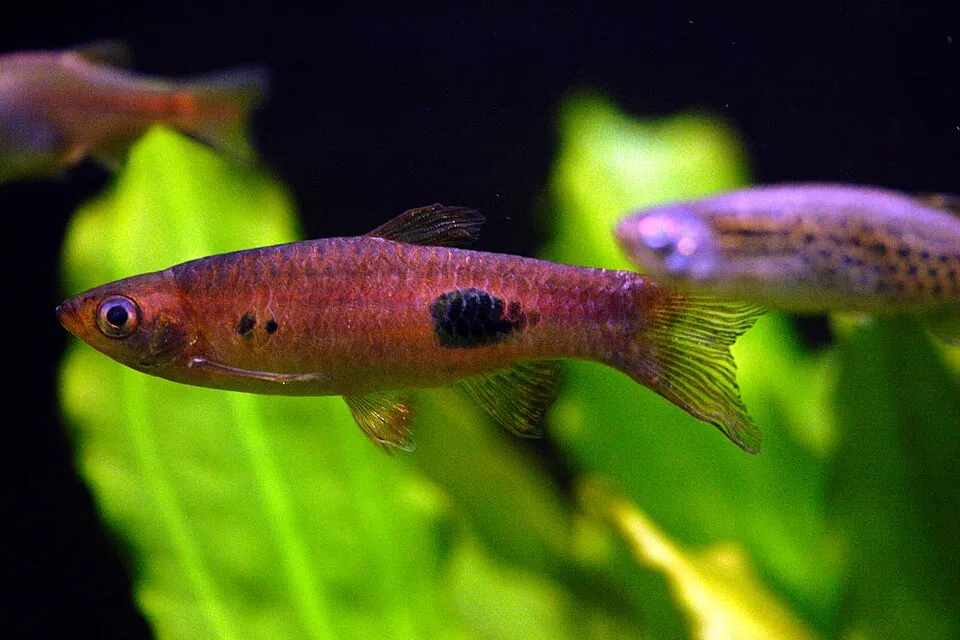
Clown rasbora
Rasbora kalochroma
Freshwater3.9 in (10 cm) · 34 gal (130 L)73–82°F (23–28°C)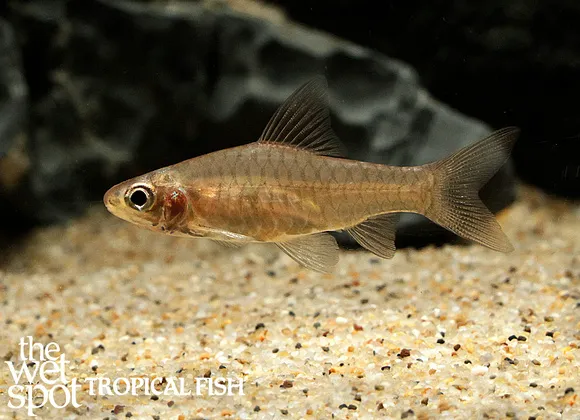
Congo clipper barb
Clypeobarbus congicus
Freshwater2.2 in (5.5 cm) · 14 gal (54 L)73–81°F (23–27°C)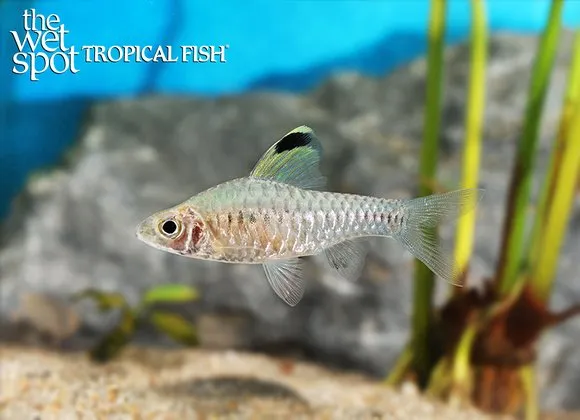
Cosuatis barb
Oreichthys cosuatis
Freshwater3.1 in (8 cm) · 20 gal (75 L)68–79°F (20–26°C)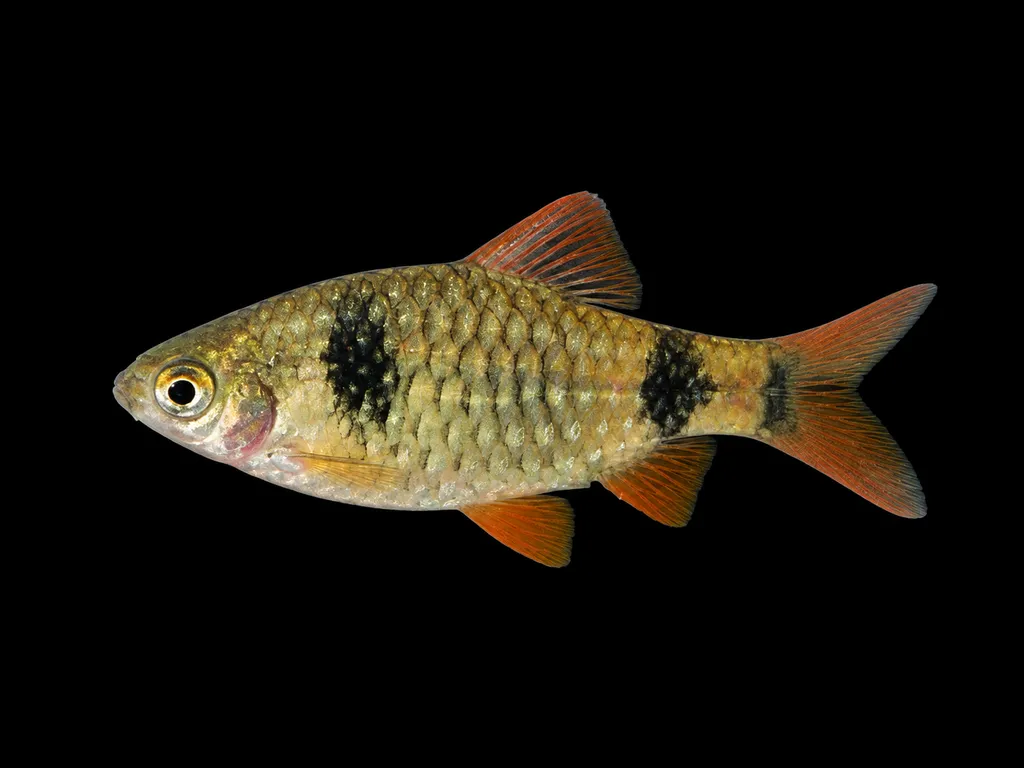
Cuming's barb
Pethia cumingii
Freshwater2 in (5 cm) · 16 gal (60 L)72–81°F (22–27°C)Danionella cerebrum
Freshwater0.5 in (1.3 cm) · 8 gal (30 L)72–82°F (22–28°C)
Deccan mahseer
Tor khudree
Freshwater39.4 in (100 cm) · 502 gal (1,900 L)64–79°F (18–26°C)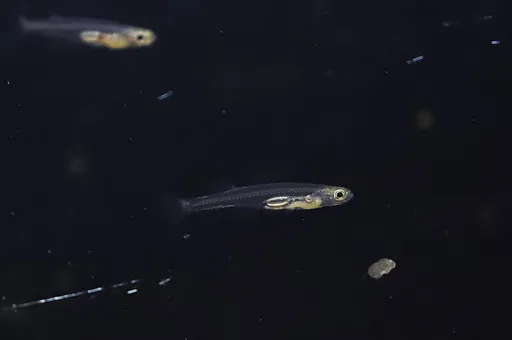
Dracula fish
Danionella dracula
Freshwater0.7 in (1.7 cm) · 11 gal (40 L)68–79°F (20–26°C)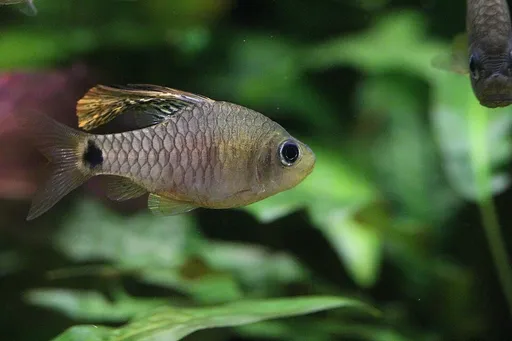
Drape-fin barb
Oreichthys crenuchoides
Freshwater1.6 in (4 cm) · 14 gal (54 L)73–82°F (23–28°C)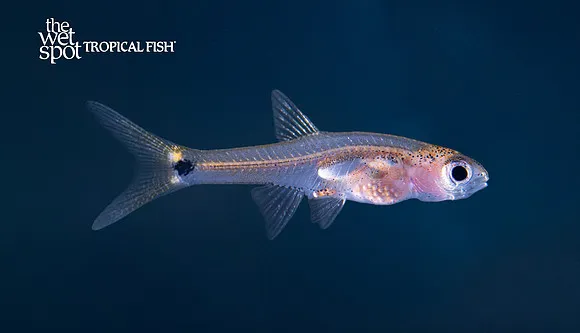
Dwarf amber barb
Barboides gracilis
Freshwater0.8 in (2 cm) · 5 gal (20 L)73–81°F (23–27°C)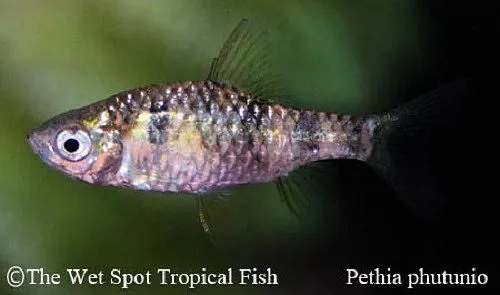
Dwarf barb
Pethia phutunio
Freshwater1.4 in (3.5 cm) · 12 gal (45 L)72–79°F (22–26°C)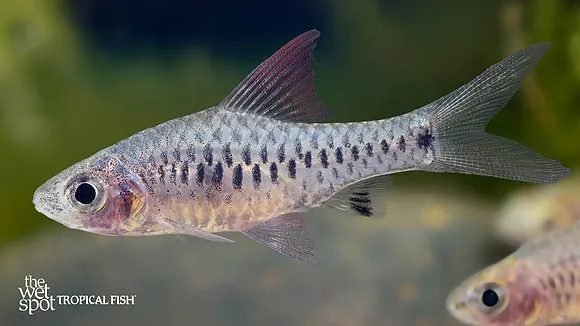
Dwarf hi-fin barb
Oreichthys parvus
Freshwater1.4 in (3.6 cm) · 14 gal (54 L)72–79°F (22–26°C)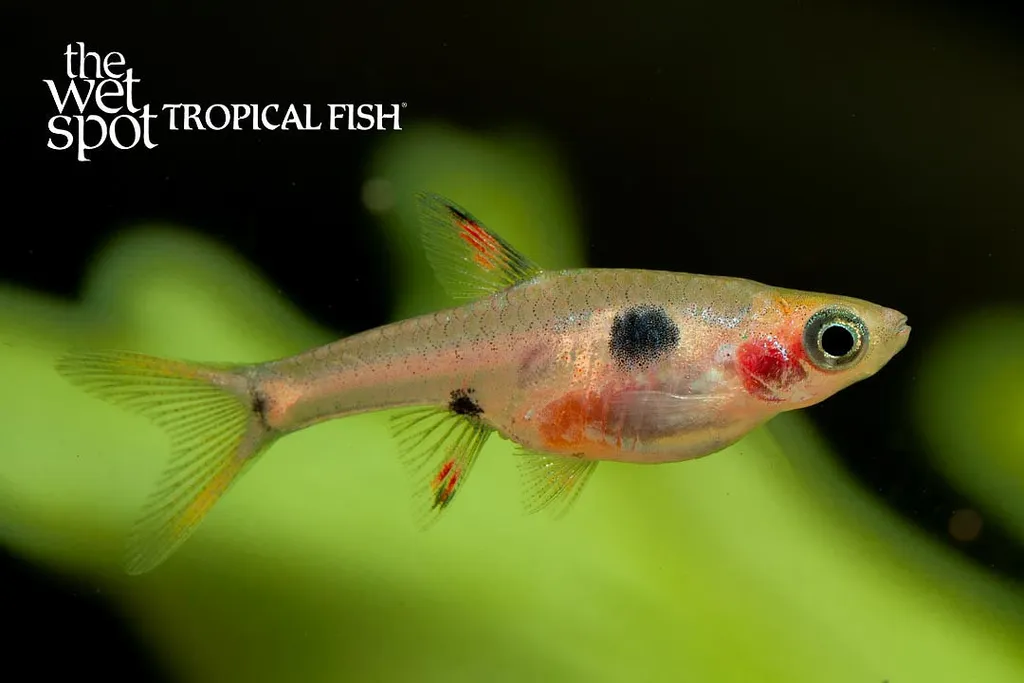
Dwarf rasbora
Boraras maculatus
Freshwater1 in (2.5 cm) · 7 gal (25 L)72–82°F (22–28°C)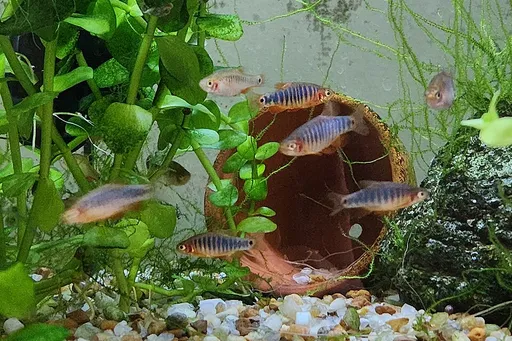
Emerald dwarf rasbora
Danio erythromicron
Freshwater0.8 in (2 cm) · 11 gal (40 L)68–75°F (20–24°C)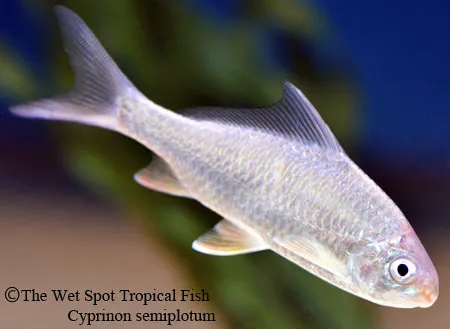
Emperor round-face barb
Cyprinion semiplotum
Freshwater23.6 in (60 cm) · 396 gal (1,500 L)61–77°F (16–25°C)Espei rasbora
Trigonostigma espei
Freshwater1.5 in (3.8 cm) · 11 gal (40 L)73–82°F (23–28°C)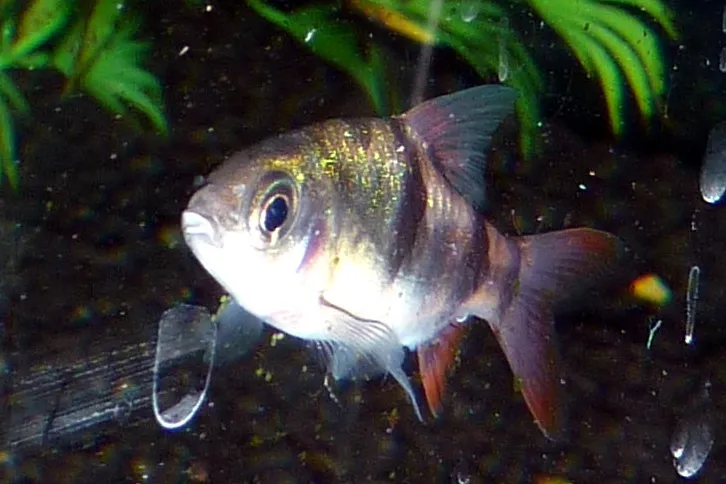
Everett's barb
Barbodes everetti
Freshwater4.7 in (12 cm) · 40 gal (150 L)64–82°F (18–28°C)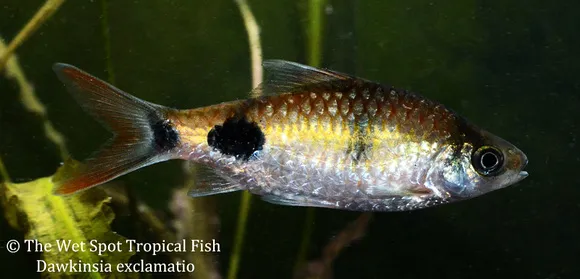
Exclamation barb
Dawkinsia exclamatio
Freshwater3.5 in (9 cm) · 42 gal (160 L)70–79°F (21–26°C)Exclamation-point rasbora
Boraras urophthalmoides
Freshwater0.6 in (1.6 cm) · 11 gal (40 L)73–81°F (23–27°C)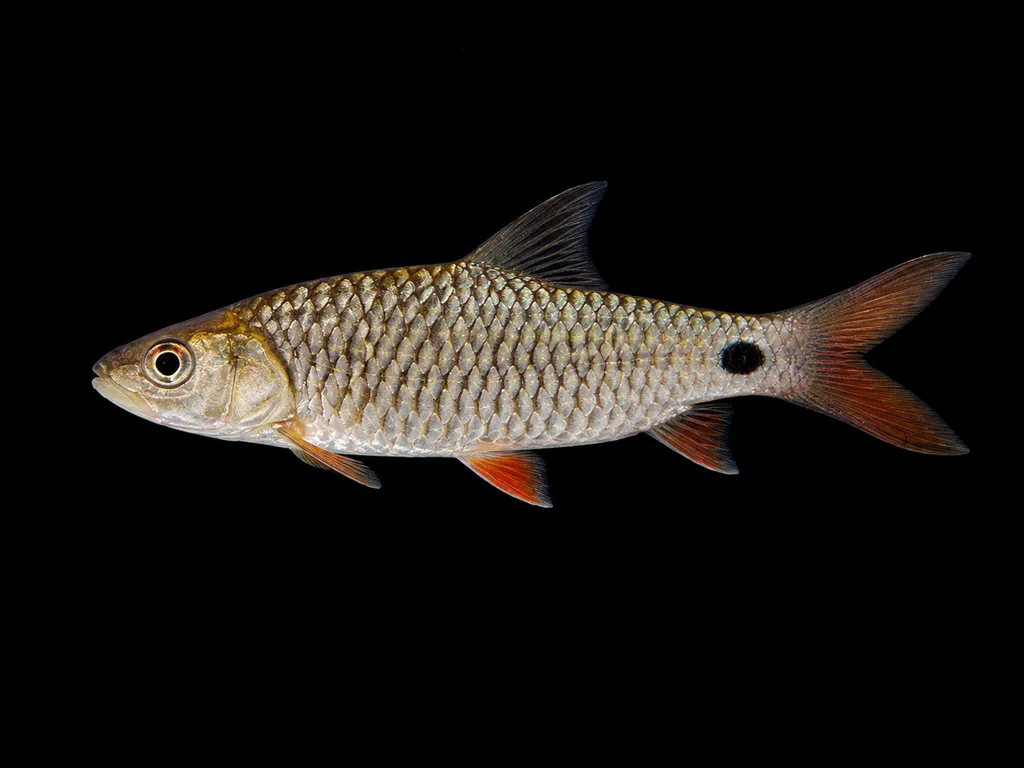
Eyespot hampala barb
Hampala dispar
Freshwater13.8 in (35 cm) · 159 gal (600 L)72–82°F (22–28°C)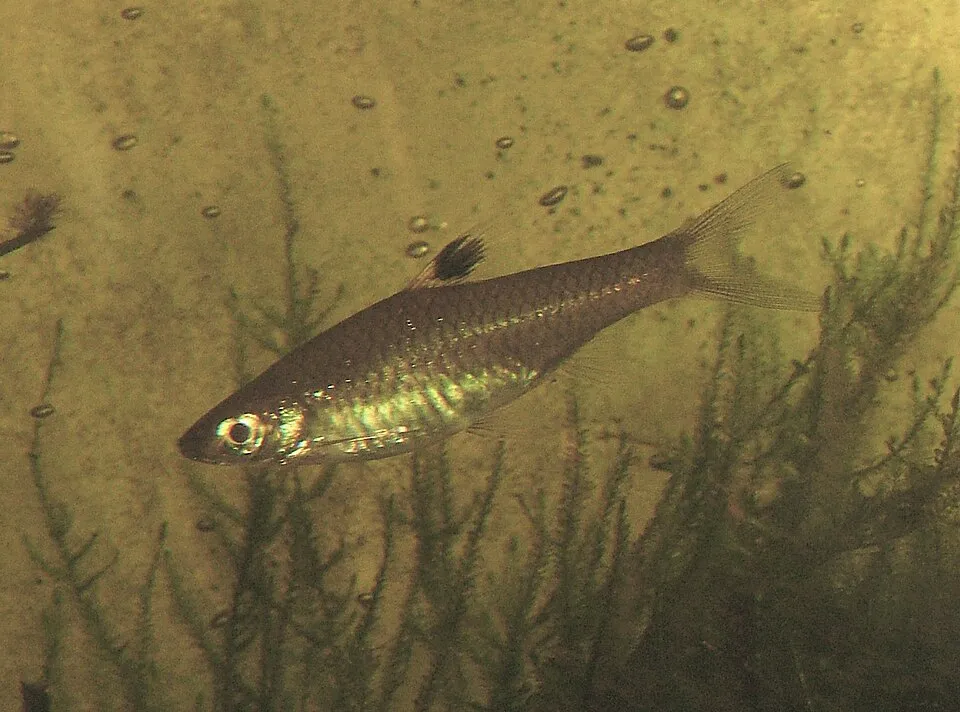
Eyespot rasbora
Brevibora dorsiocellata
Freshwater1.4 in (3.5 cm) · 9 gal (35 L)68–77°F (20–25°C)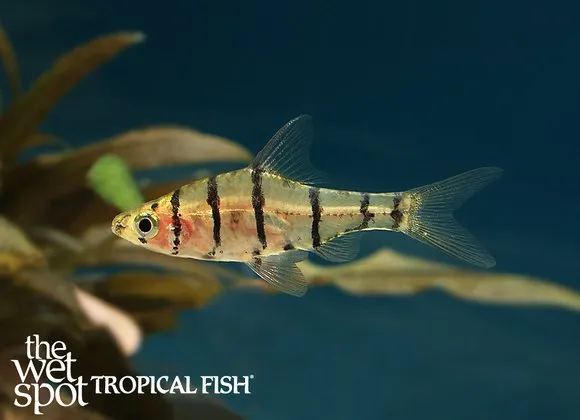
False eight-banded barb
Eirmotus octozona
Freshwater1.6 in (4 cm) · 14 gal (54 L)73–81°F (23–27°C)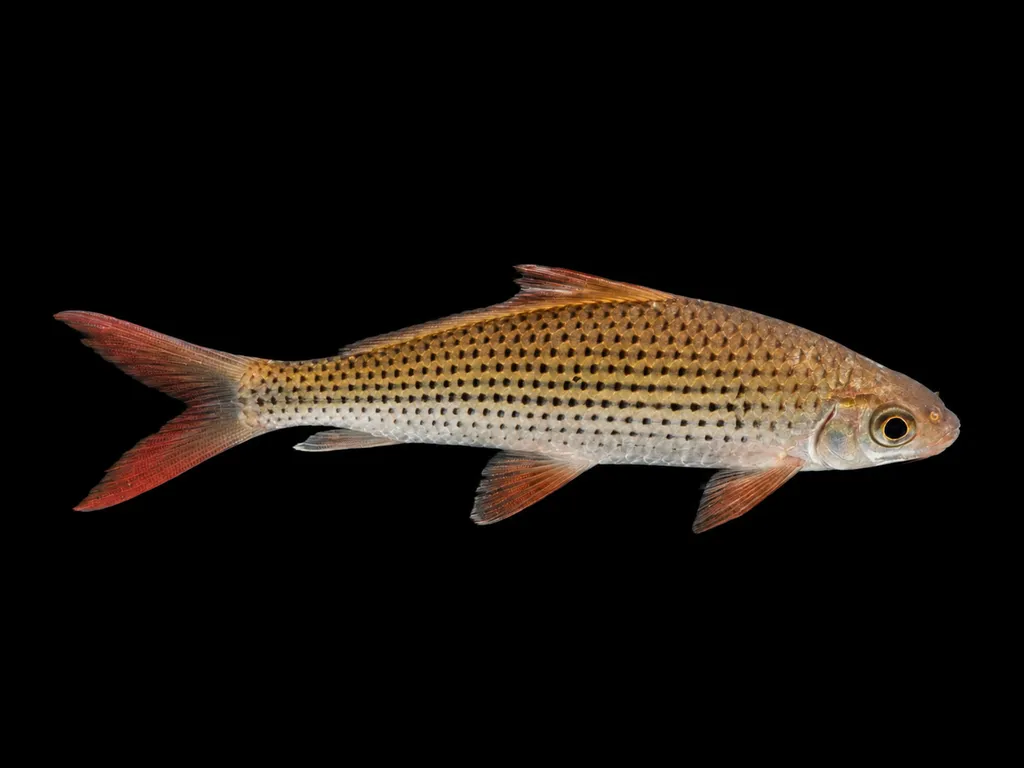
Festive sharkminnow barb
Labiobarbus festivus
Freshwater7.9 in (20 cm) · 66 gal (250 L)73–82°F (23–28°C)Filament barb
Dawkinsia filamentosa
Freshwater5.1 in (13 cm) · 53 gal (200 L)68–77°F (20–25°C)Five-banded barb
Desmopuntius pentazona
Freshwater2 in (5 cm) · 20 gal (75 L)73–81°F (23–27°C)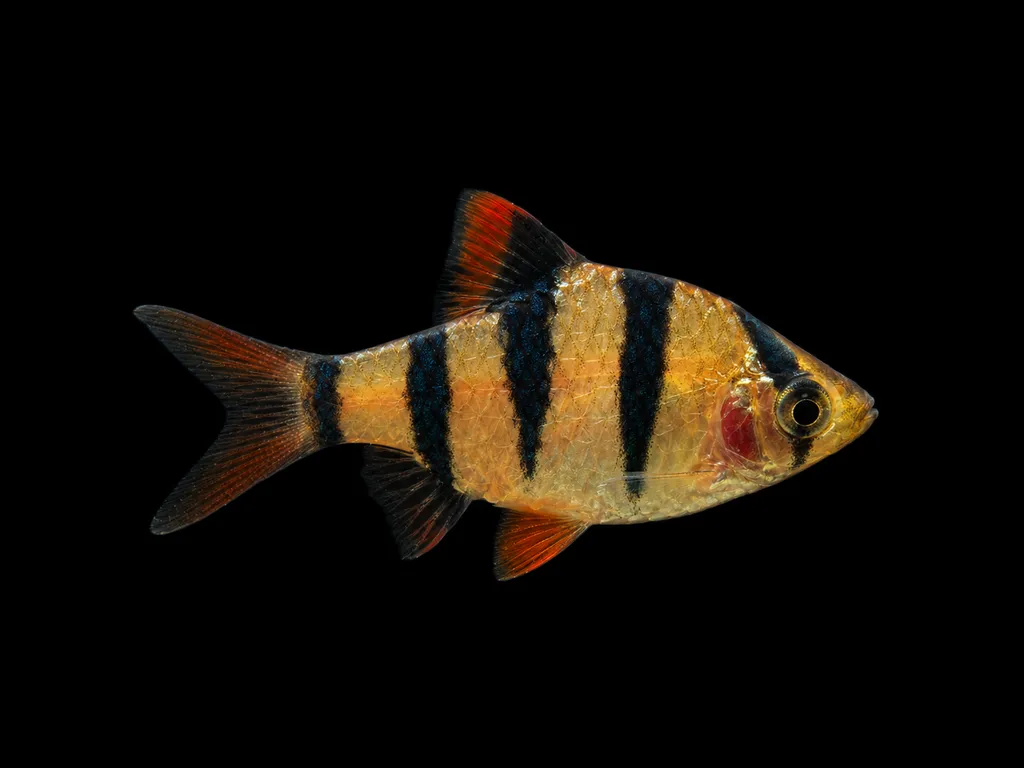
Fiveband tiger barb
Puntigrus partipentazona
Freshwater2.2 in (5.5 cm) · 29 gal (110 L)73–81°F (23–27°C)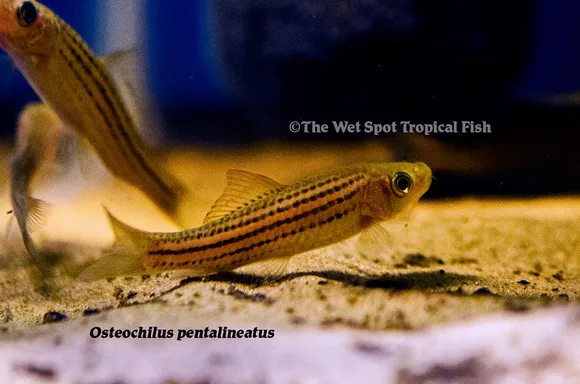
Fiveline bonylip barb
Osteochilus pentalineatus
Freshwater2.2 in (5.6 cm) · 53 gal (200 L)73–82°F (23–28°C)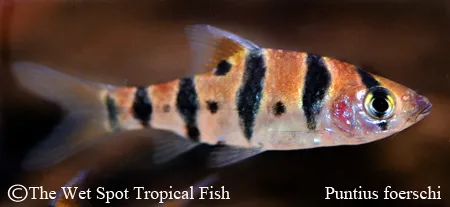
Foersch's barb
Desmopuntius foerschi
Freshwater3.1 in (8 cm) · 29 gal (110 L)73–82°F (23–28°C)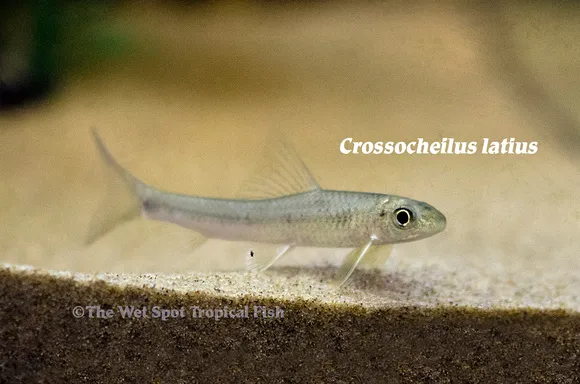
Gangetic latia
Tariqilabeo latius
Freshwater5.9 in (15 cm) · 42 gal (160 L)64–77°F (18–25°C)Giant danio
Devario aequipinnatus
Freshwater5.9 in (15 cm) · 50 gal (190 L)72–81°F (22–27°C)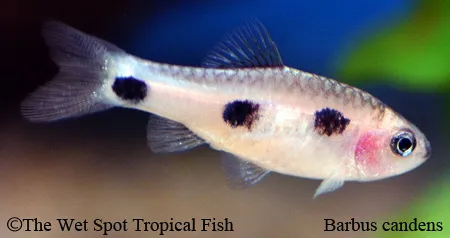
Glowing ember barb
Enteromius candens
Freshwater1.6 in (4 cm) · 14 gal (54 L)72–81°F (22–27°C)Glowlight danio
Danio choprae
Freshwater1.2 in (3 cm) · 20 gal (75 L)72–79°F (22–26°C)Glowlight rasbora
Trigonostigma hengeli
Freshwater1.6 in (4 cm) · 12 gal (45 L)73–82°F (23–28°C)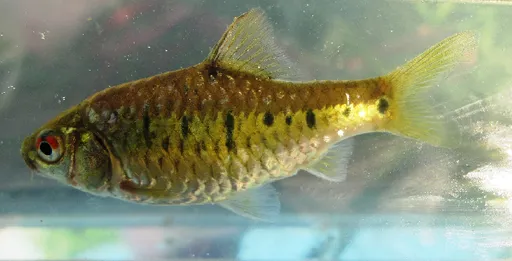
Gold barb
Barbodes semifasciolatus
Freshwater2.8 in (7 cm) · 20 gal (75 L)64–75°F (18–24°C)Gold ring danio
Danio tinwini
Freshwater1.2 in (3 cm) · 11 gal (40 L)64–79°F (18–26°C)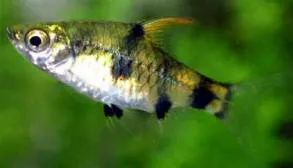
Golden dwarf barb
Pethia gelius
Freshwater1.6 in (4 cm) · 20 gal (75 L)64–75°F (18–24°C)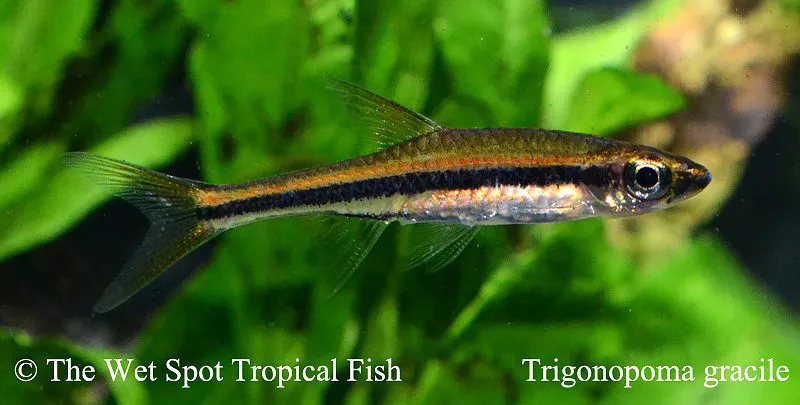
Graceful rasbora
Trigonopoma gracile
Freshwater2 in (5 cm) · 16 gal (60 L)72–79°F (22–26°C)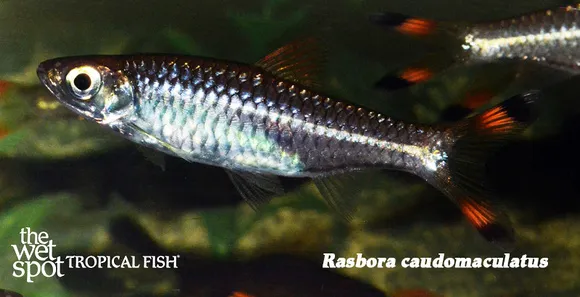
Greater scissortail
Rasbora caudimaculata
Freshwater5.1 in (13 cm) · 53 gal (200 L)68–79°F (20–26°C)Green neon rasbora
Microdevario kubotai
Freshwater0.8 in (2 cm) · 12 gal (45 L)72–79°F (22–26°C)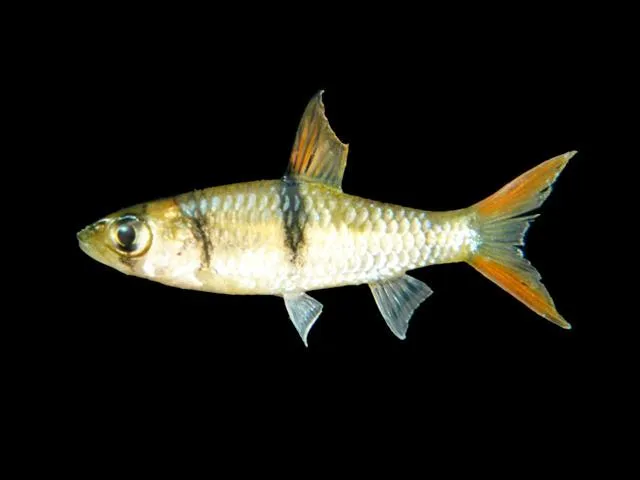
Hampala barb
Hampala macrolepidota
Freshwater19.7 in (50 cm) · 238 gal (900 L)72–82°F (22–28°C)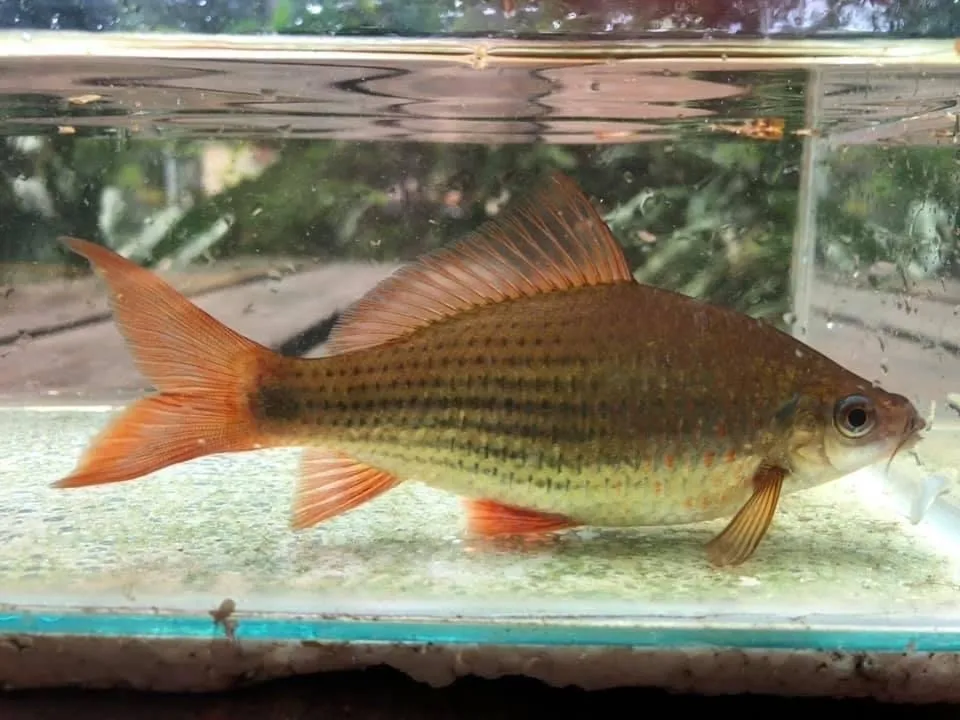
Hard-lipped barb
Osteochilus vittatus
Freshwater11.8 in (30 cm) · 106 gal (400 L)72–82°F (22–28°C)Harlequin rasbora
Trigonostigma heteromorpha
Freshwater2 in (5 cm) · 15 gal (55 L)72–82°F (22–28°C)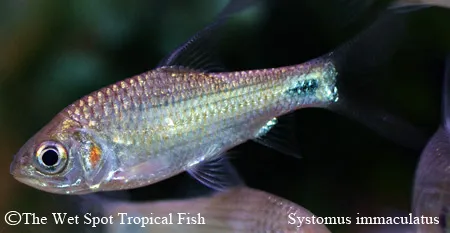
Immaculate barb
Systomus immaculatus
Freshwater7.5 in (19 cm) · 66 gal (250 L)72–81°F (22–27°C)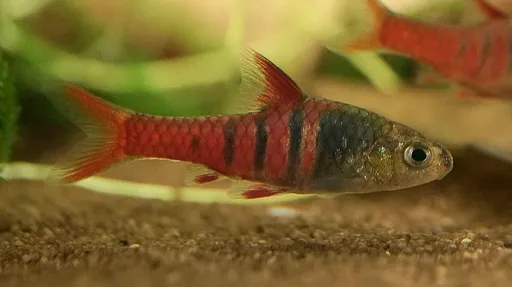
Jae barb
Enteromius jae
Freshwater1.6 in (4 cm) · 16 gal (60 L)68–77°F (20–25°C)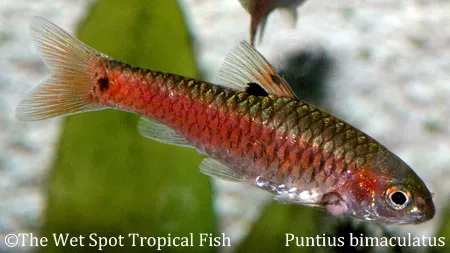
Java spotted barb
Puntius bimaculatus
Freshwater2.8 in (7 cm) · 20 gal (75 L)72–81°F (22–27°C)Lake Inle danio
Devario auropurpureus
Freshwater3.1 in (8 cm) · 24 gal (90 L)64–77°F (18–25°C)Lemon-fin barb
Hypsibarbus wetmorei
Freshwater9.8 in (25 cm) · 106 gal (400 L)72–82°F (22–28°C)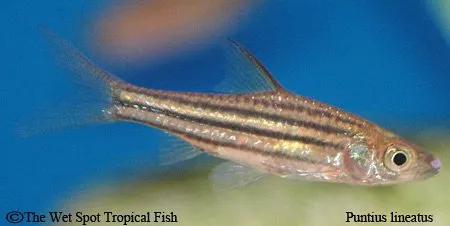
Lined barb
Striuntius lineatus
Freshwater2 in (5 cm) · 20 gal (75 L)73–81°F (23–27°C)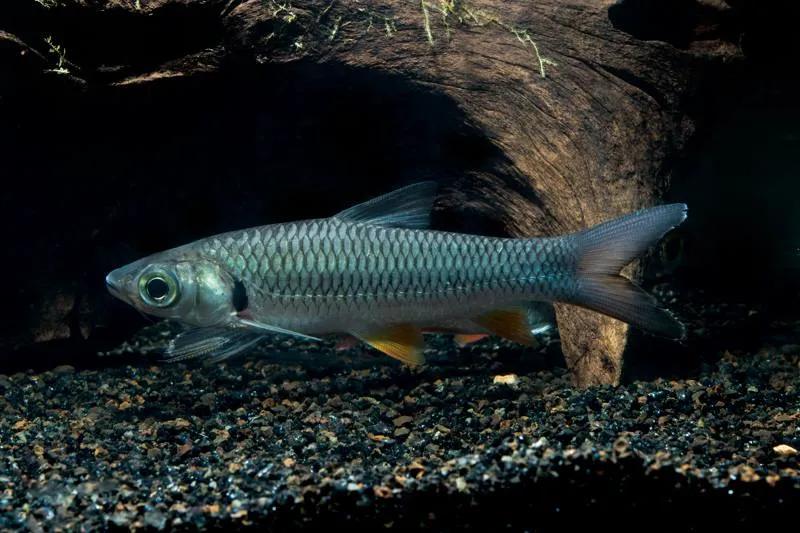
Mad barb
Leptobarbus hoevenii
Freshwater23.6 in (60 cm) · 317 gal (1,200 L)72–82°F (22–28°C)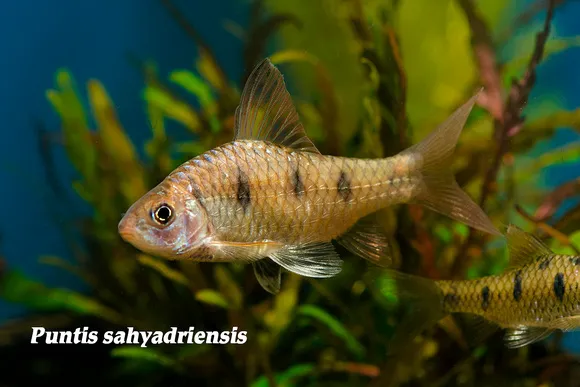
Maharaja barb
Puntius sahyadriensis
Freshwater3.5 in (9 cm) · 29 gal (110 L)68–79°F (20–26°C)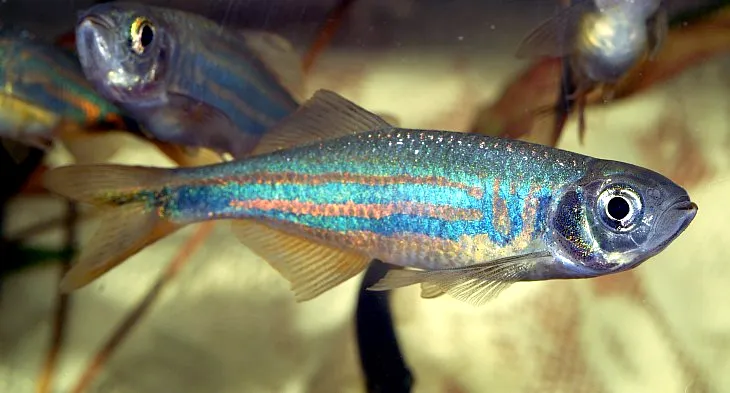
Malabar danio
Devario malabaricus
Freshwater5.1 in (13 cm) · 48 gal (180 L)64–77°F (18–25°C)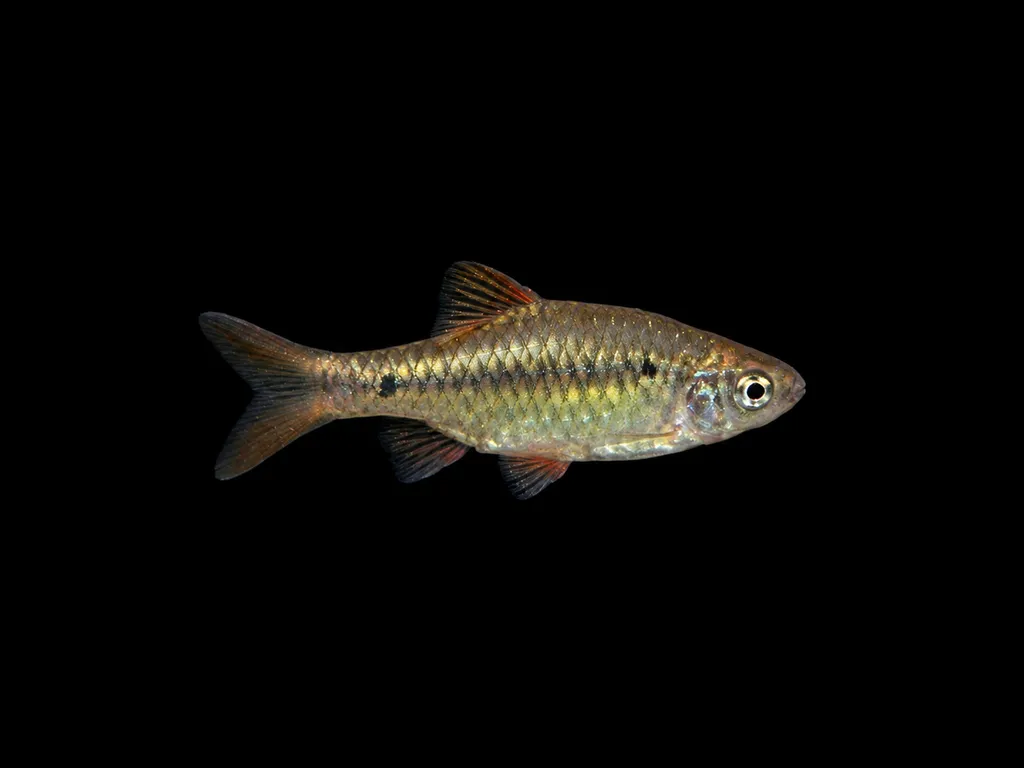
Manipur barb
Pethia manipurensis
Freshwater1.8 in (4.5 cm) · 14 gal (54 L)68–77°F (20–25°C)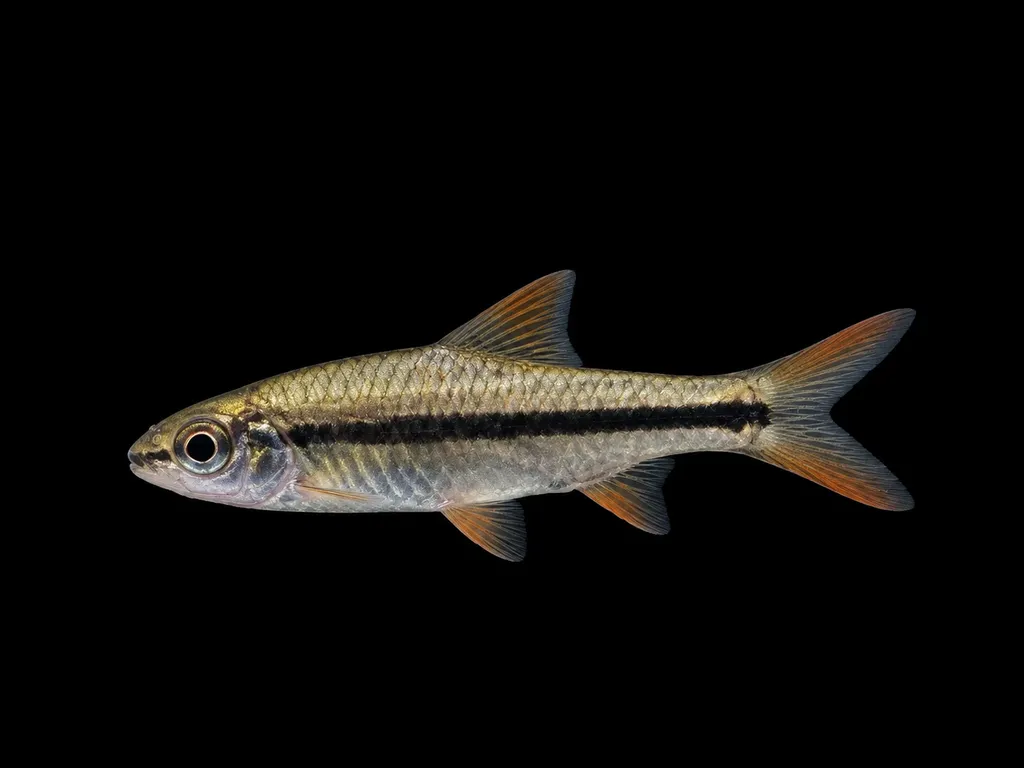
Martorell's barb
Enteromius martorelli
Freshwater3.5 in (9 cm) · 24 gal (90 L)72–81°F (22–27°C)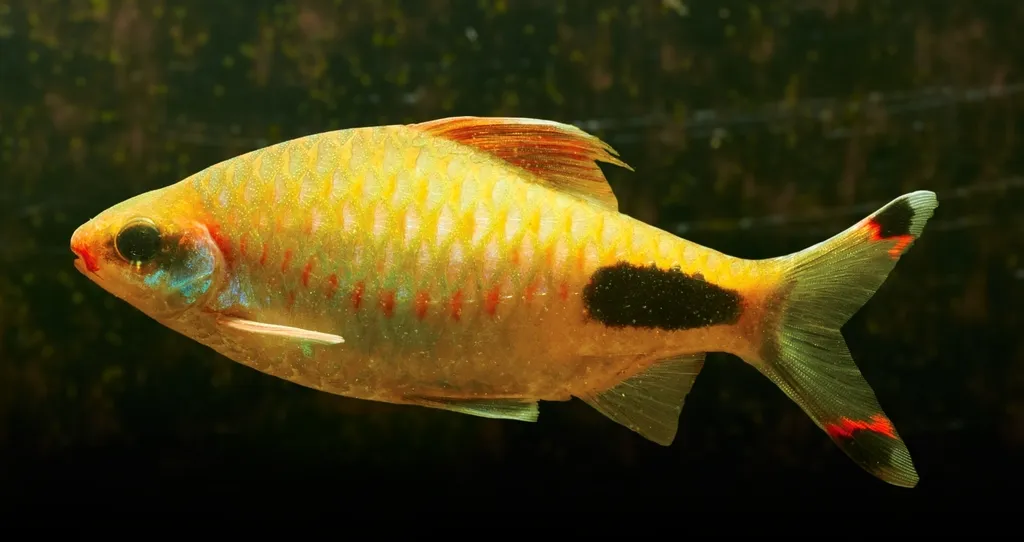
Mascara barb
Dawkinsia assimilis
Freshwater4.7 in (12 cm) · 53 gal (200 L)66–77°F (19–25°C)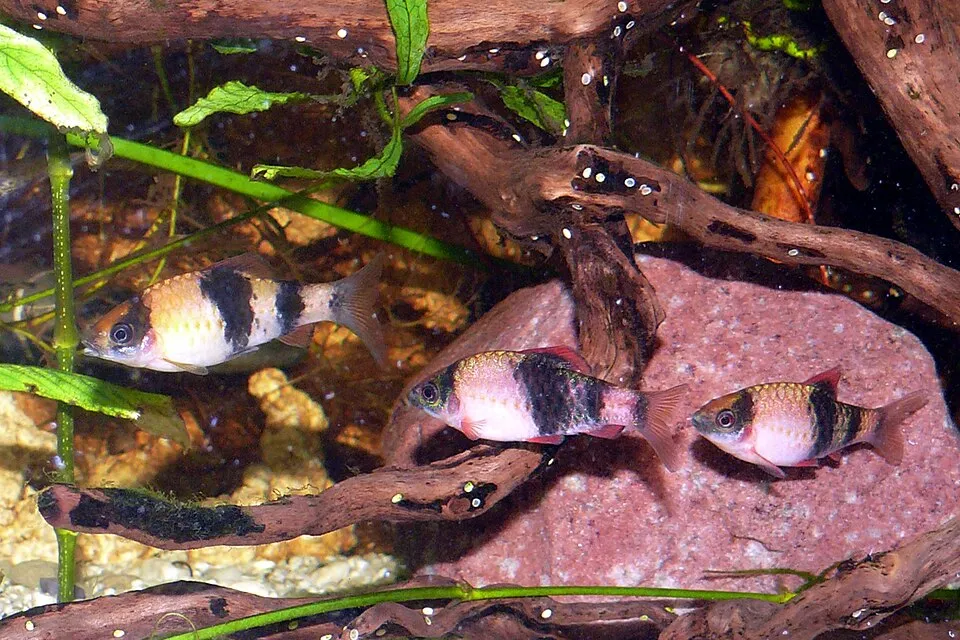
Melon barb
Haludaria fasciata
Freshwater2.8 in (7 cm) · 40 gal (150 L)72–79°F (22–26°C)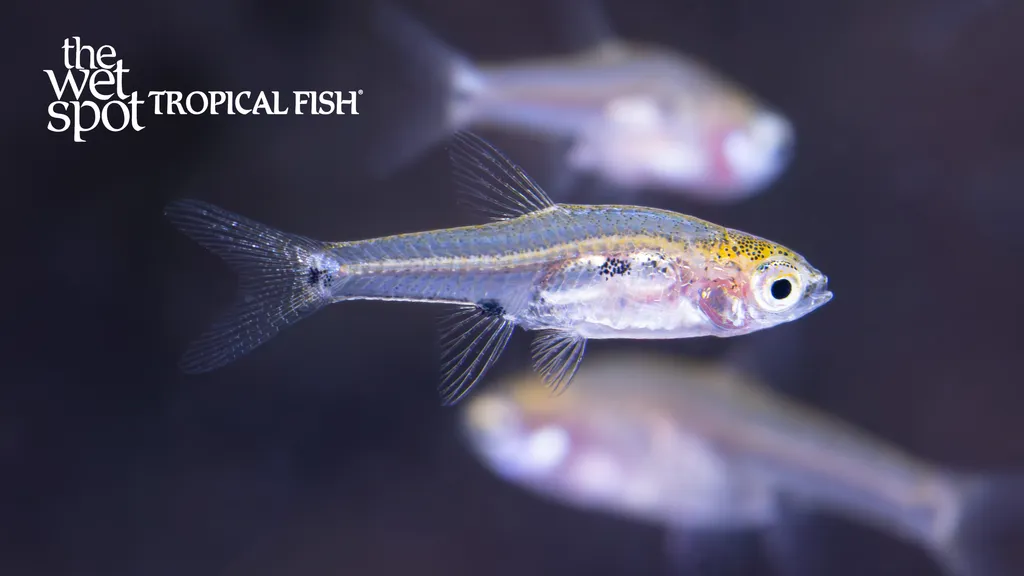
Micro rasbora
Boraras micros
Freshwater0.6 in (1.5 cm) · 8 gal (30 L)72–79°F (22–26°C)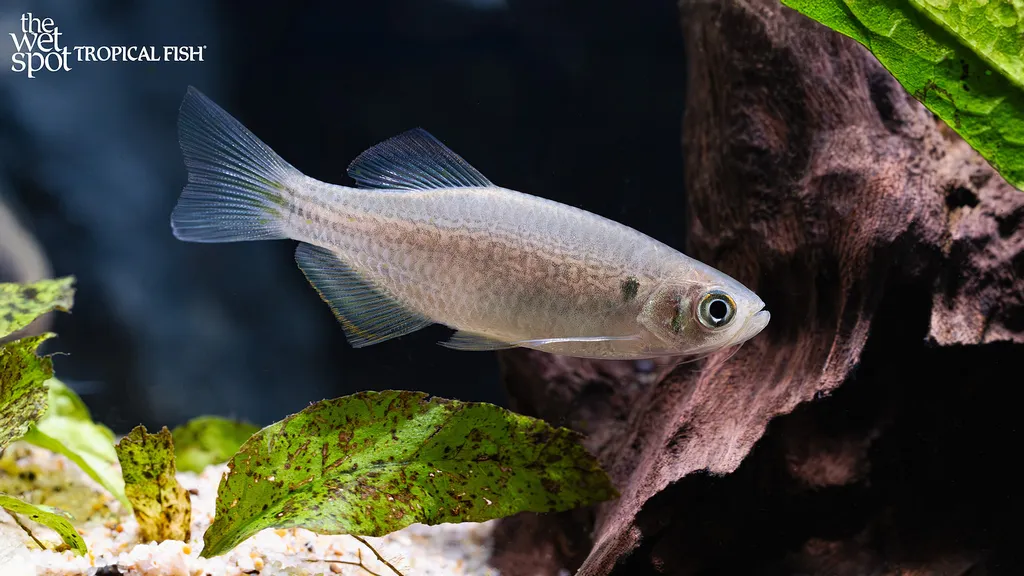
Moustached danio
Danio dangila
Freshwater5.1 in (13 cm) · 32 gal (120 L)68–79°F (20–26°C)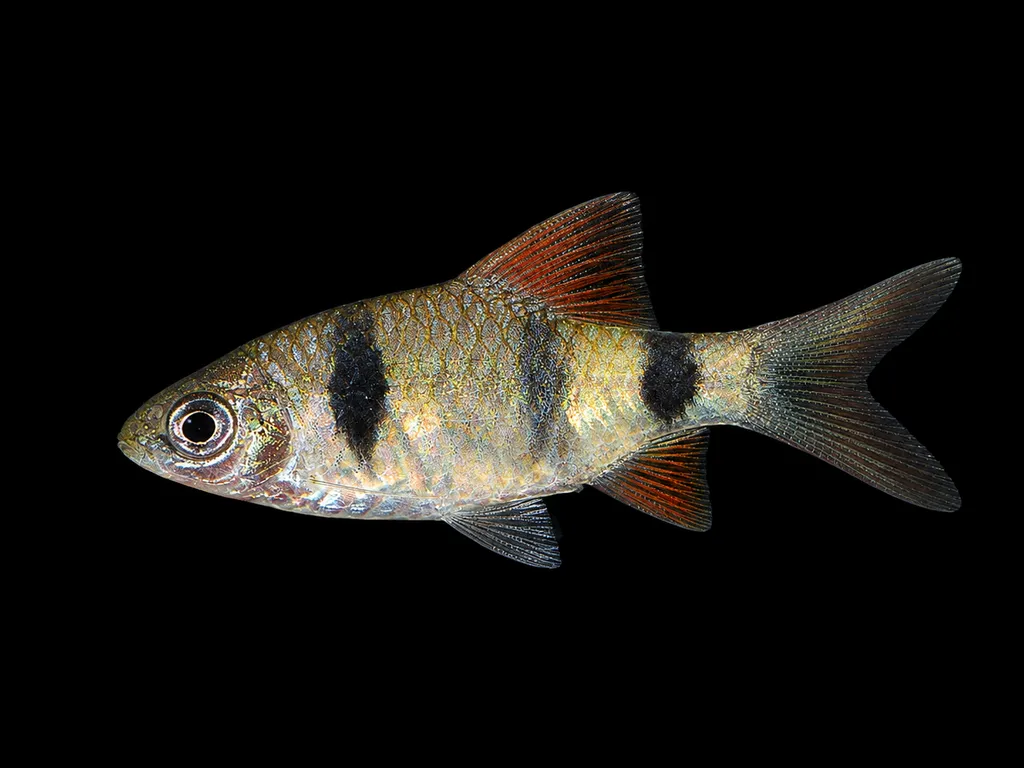
Narayan barb
Pethia narayani
Freshwater1.8 in (4.5 cm) · 14 gal (54 L)68–77°F (20–25°C)Odessa barb
Pethia padamya
Freshwater1.8 in (4.5 cm) · 20 gal (75 L)61–77°F (16–25°C)
Ogilbie's osteobrama
Rohtee ogilbii
Freshwater7.9 in (20 cm) · 66 gal (250 L)68–81°F (20–27°C)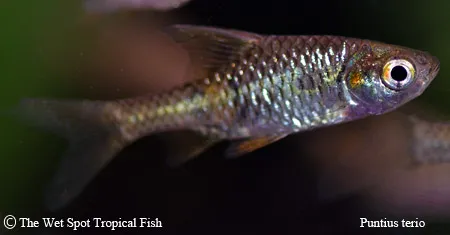
Onespot barb
Puntius terio
Freshwater3.1 in (8 cm) · 20 gal (75 L)68–79°F (20–26°C)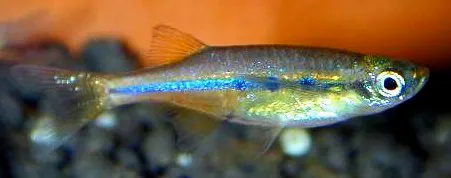
Orange hatchet danio
Laubuka dadiburjori
Freshwater1.2 in (3 cm) · 13 gal (50 L)68–75°F (20–24°C)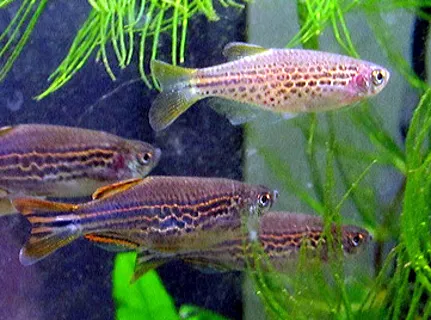
Orange-finned danio
Danio kyathit
Freshwater2 in (5 cm) · 20 gal (75 L)68–79°F (20–26°C)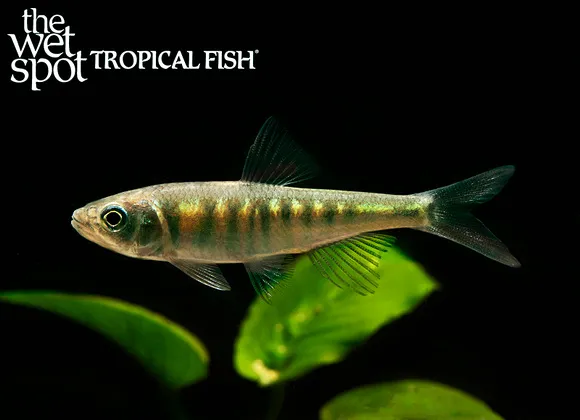
Pale chub
Zacco platypus
Freshwater7.9 in (20 cm) · 79 gal (300 L)54–75°F (12–24°C)Pearl danio
Danio albolineatus
Freshwater2.4 in (6 cm) · 18 gal (70 L)61–77°F (16–25°C)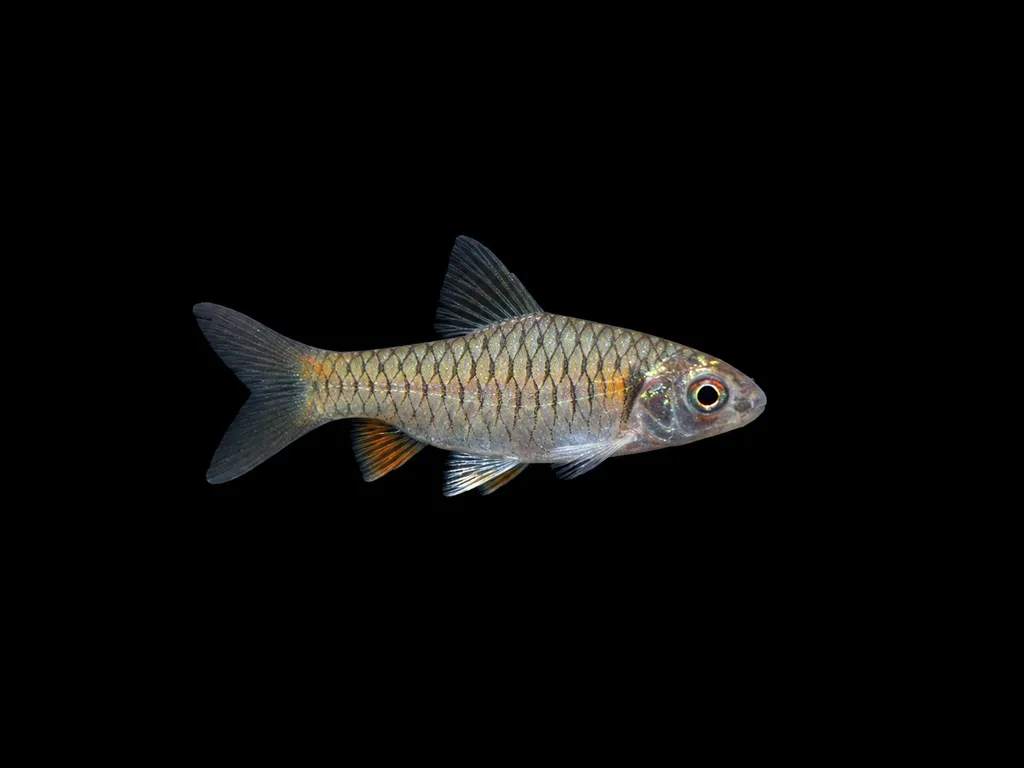
Pearl of the Congo barb
Clypeobarbus pleuropholis
Freshwater2 in (5 cm) · 14 gal (54 L)73–81°F (23–27°C)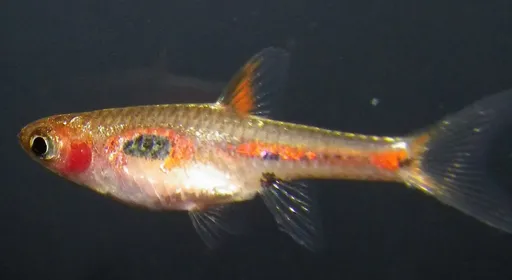
Phoenix rasbora
Boraras merah
Freshwater0.8 in (2 cm) · 11 gal (40 L)72–81°F (22–27°C)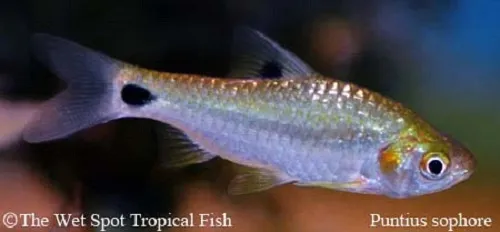
Pool barb
Puntius sophore
Freshwater3.9 in (10 cm) · 29 gal (110 L)68–81°F (20–27°C)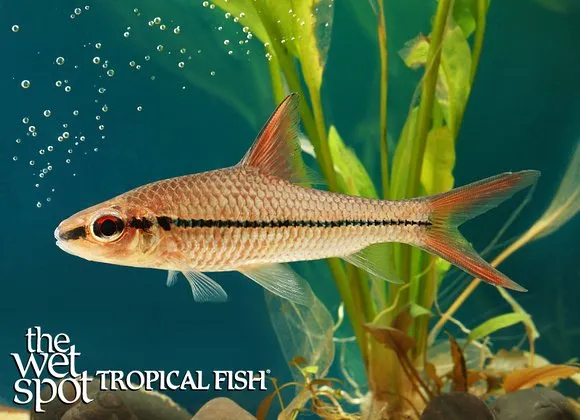
Purple-fin barb
Cyclocheilichthys janthochir
Freshwater7.1 in (18 cm) · 53 gal (200 L)73–82°F (23–28°C)Pygmy carplet
Paedocypris progenetica
Freshwater0.5 in (1.2 cm) · 5 gal (20 L)75–82°F (24–28°C)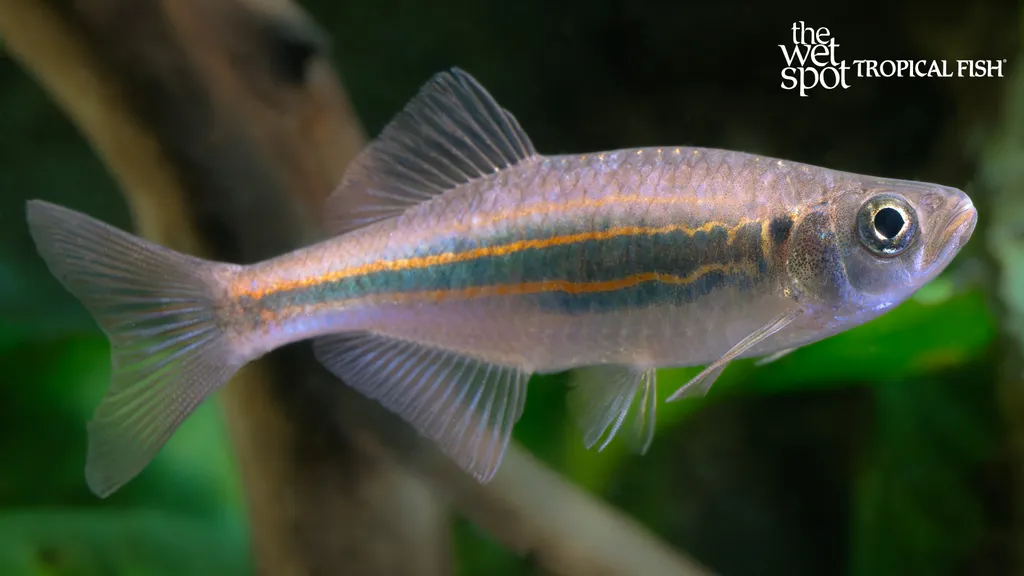
Queen danio
Devario regina
Freshwater3.1 in (8 cm) · 30 gal (115 L)68–79°F (20–26°C)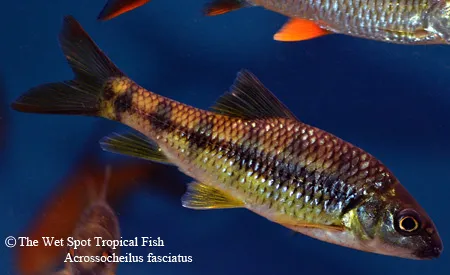
Railway barb
Acrossocheilus fasciatus
Freshwater7.5 in (19 cm) · 79 gal (300 L)61–75°F (16–24°C)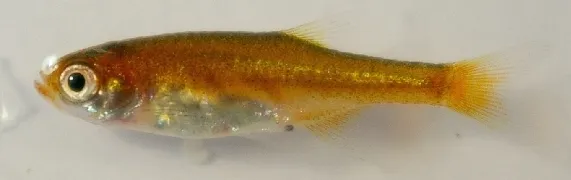
Red dwarf rasbora
Microrasbora rubescens
Freshwater1.2 in (3 cm) · 12 gal (45 L)68–77°F (20–25°C)Red-tail silver shark
Hypselobarbus kurali
Freshwater13.8 in (35 cm) · 211 gal (800 L)72–82°F (22–28°C)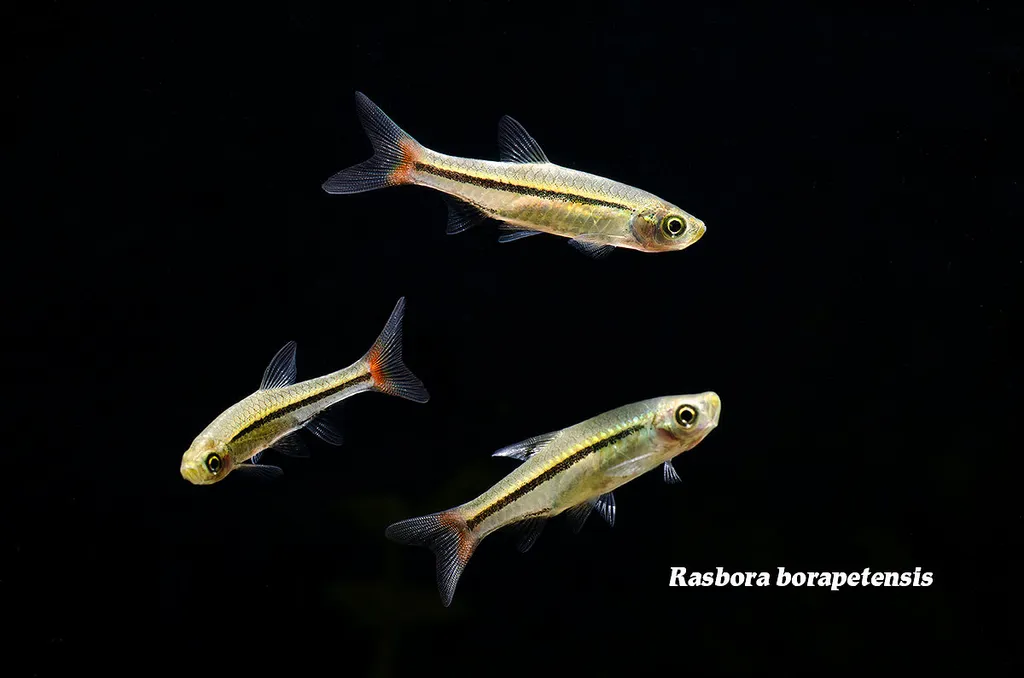
Red-tailed rasbora
Rasbora borapetensis
Freshwater2.4 in (6 cm) · 18 gal (70 L)72–79°F (22–26°C)Red-tailed tinfoil barb
Barbonymus altus
Freshwater9.8 in (25 cm) · 106 gal (400 L)72–82°F (22–28°C)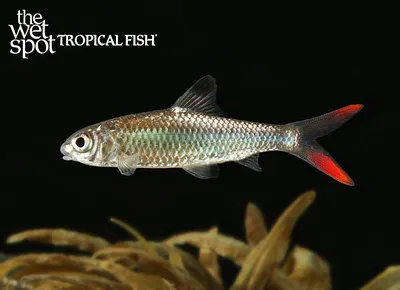
Redcheek barb
Discherodontus ashmeadi
Freshwater5.4 in (13.6 cm) · 42 gal (160 L)72–81°F (22–27°C)Redline torpedo barb
Sahyadria denisonii
Freshwater4.3 in (11 cm) · 53 gal (200 L)59–77°F (15–25°C)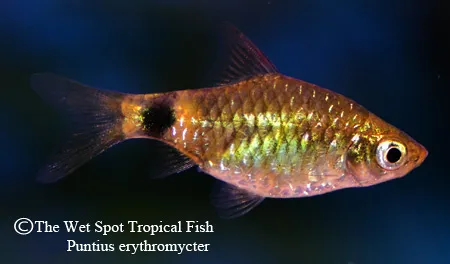
Redlip barb
Pethia erythromycter
Freshwater1.6 in (4 cm) · 14 gal (54 L)72–79°F (22–26°C)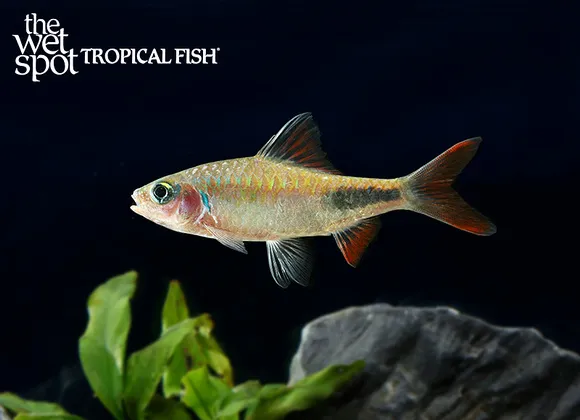
Rohan's barb
Dawkinsia rohani
Freshwater3.9 in (10 cm) · 42 gal (160 L)70–79°F (21–26°C)Rosy barb
Pethia conchonius
Freshwater2.8 in (7 cm) · 24 gal (90 L)61–75°F (16–24°C)1 variety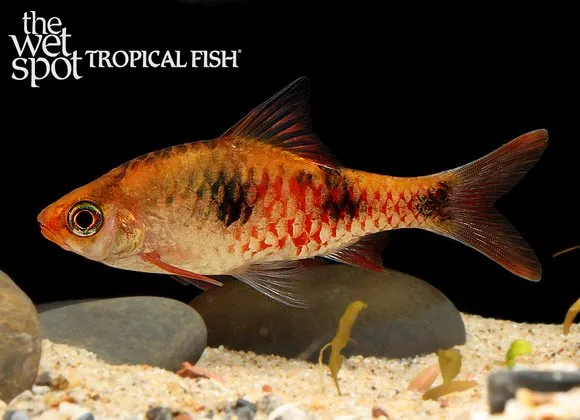
Ruby-tinted barb
Dawkinsia rubrotincta
Freshwater3.9 in (10 cm) · 42 gal (160 L)70–79°F (21–26°C)Sawbwa barb
Sawbwa resplendens
Freshwater1.2 in (3 cm) · 20 gal (75 L)68–75°F (20–24°C)Scissortail rasbora
Rasbora trilineata
Freshwater5.5 in (14 cm) · 45 gal (170 L)72–77°F (22–25°C)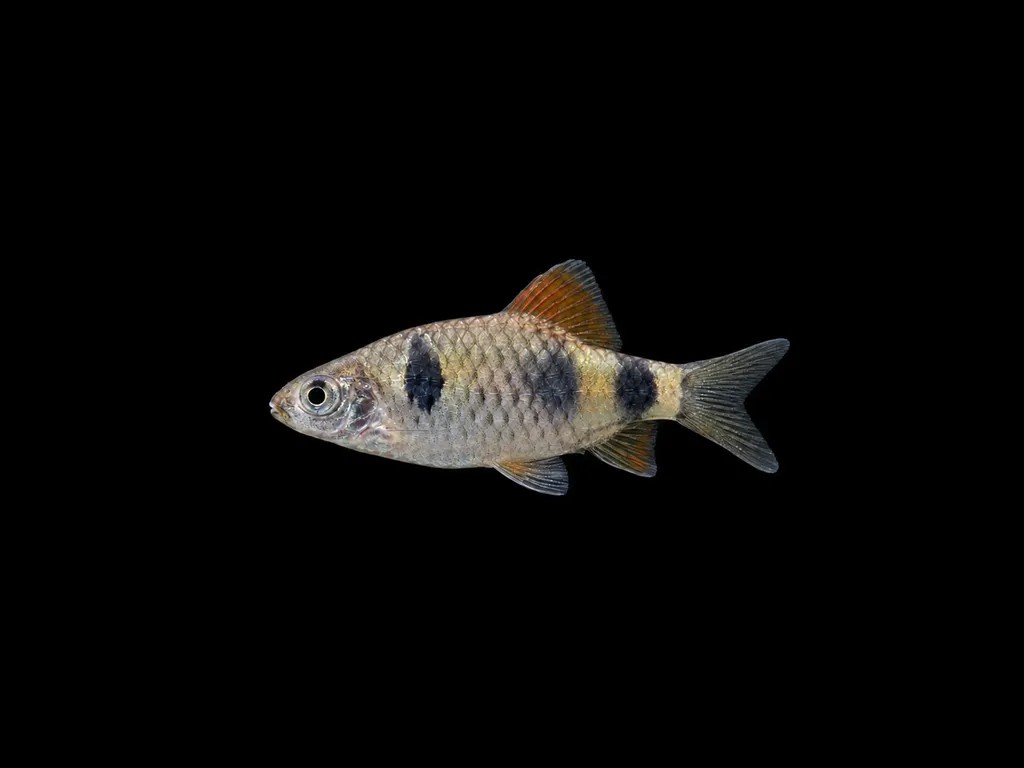
Setna barb
Pethia setnai
Freshwater2 in (5 cm) · 20 gal (75 L)72–81°F (22–27°C)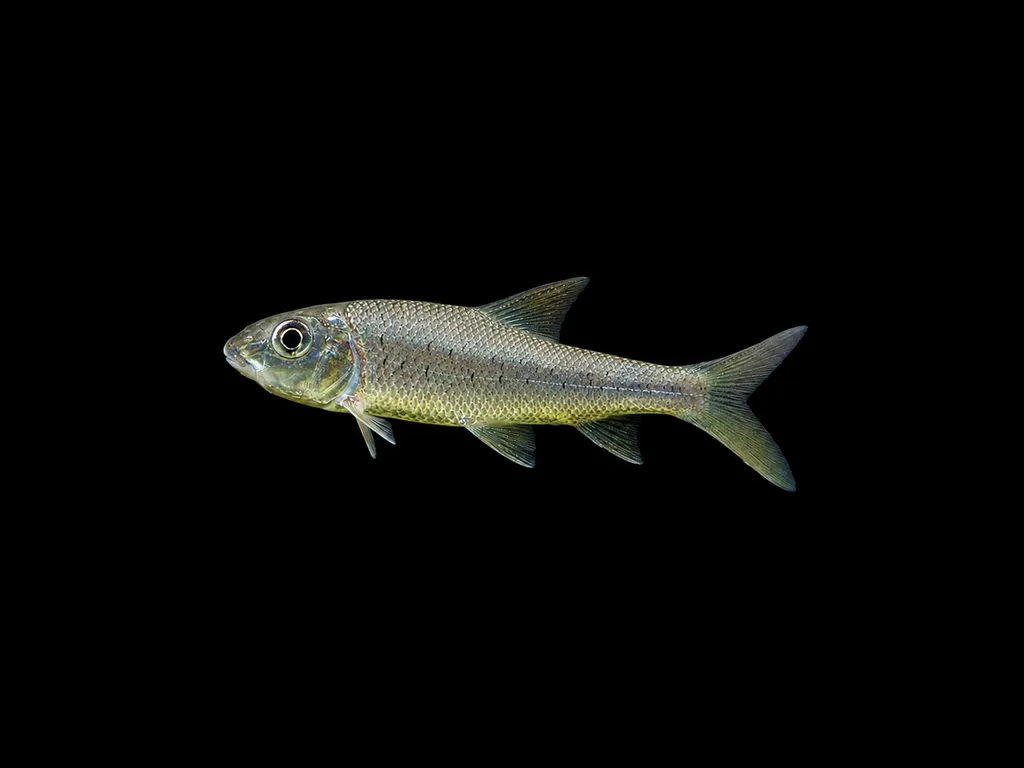
Shovelmouth barb
Chagunius chagunio
Freshwater19.7 in (50 cm) · 317 gal (1,200 L)61–79°F (16–26°C)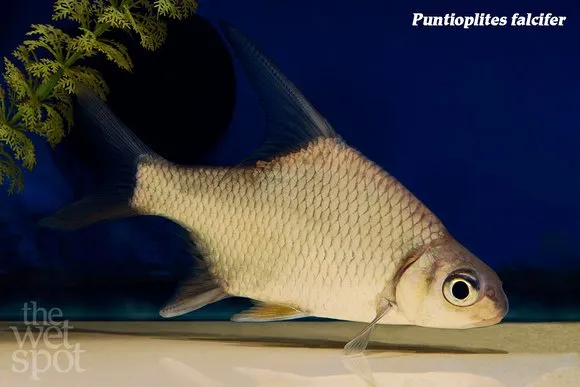
Sickle-fin barb
Puntioplites falcifer
Freshwater15.7 in (40 cm) · 264 gal (1,000 L)73–82°F (23–28°C)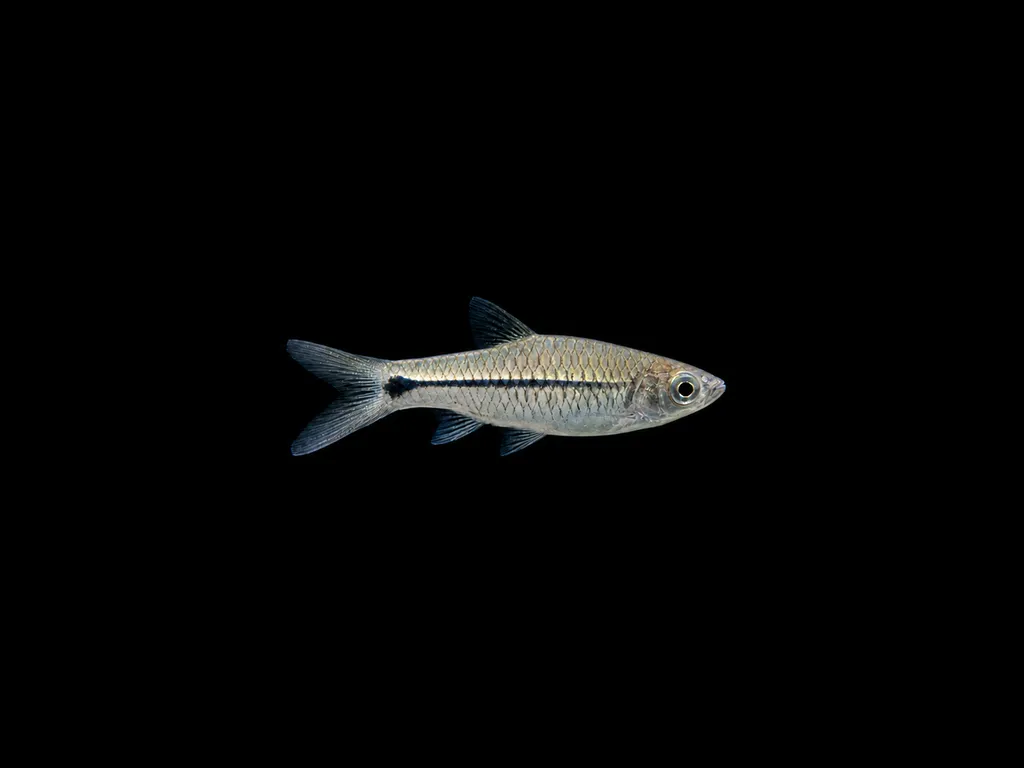
Sidestripe rasbora
Rasbora paviana
Freshwater3.1 in (8 cm) · 32 gal (120 L)72–79°F (22–26°C)Sierra Leone yellow fin barb
Enteromius leonensis
Freshwater1.6 in (4 cm) · 14 gal (54 L)72–81°F (22–27°C)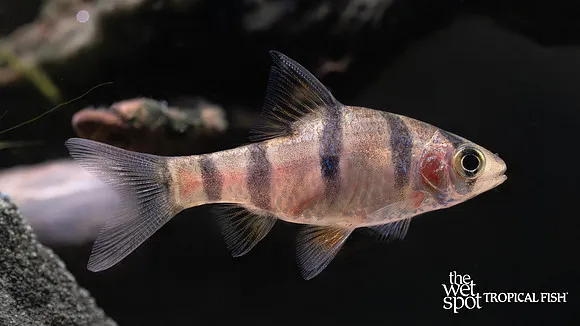
Six-banded barb
Desmopuntius hexazona
Freshwater2.4 in (6 cm) · 24 gal (90 L)73–82°F (23–28°C)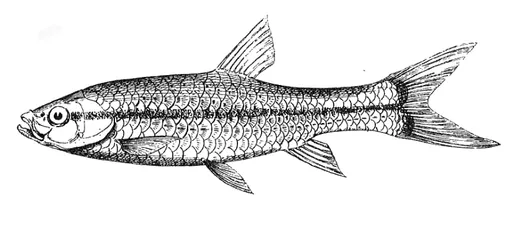
Slender rasbora
Rasbora daniconius
Freshwater3.9 in (10 cm) · 32 gal (120 L)72–81°F (22–27°C)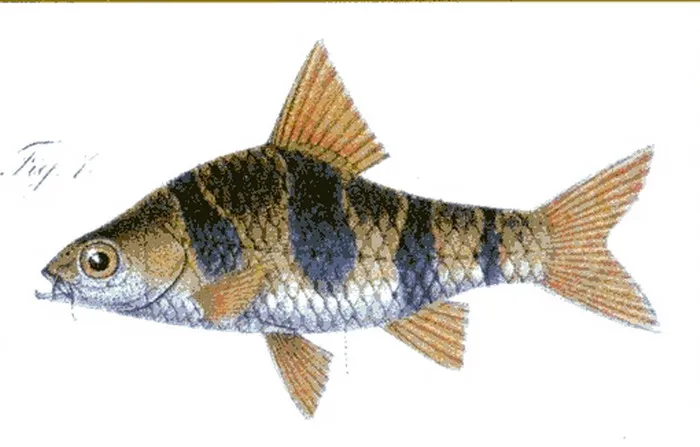
Snakeskin barb
Desmopuntius rhomboocellatus
Freshwater2.2 in (5.5 cm) · 20 gal (75 L)72–82°F (22–28°C)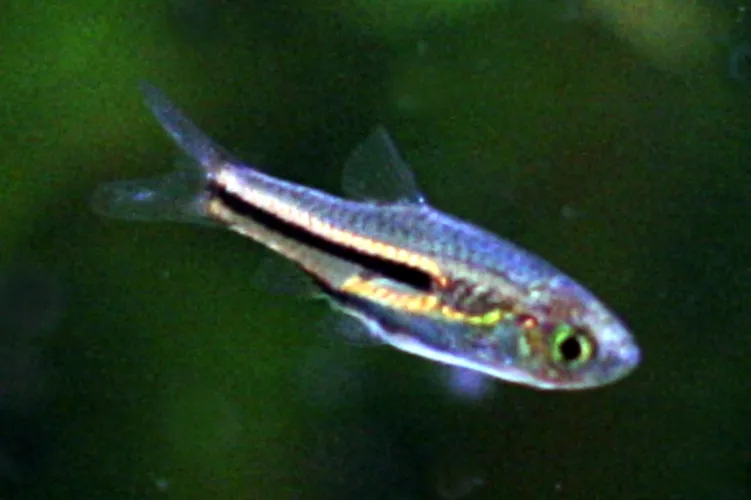
Somphongs's rasbora
Trigonostigma somphongsi
Freshwater1 in (2.5 cm) · 12 gal (45 L)73–81°F (23–27°C)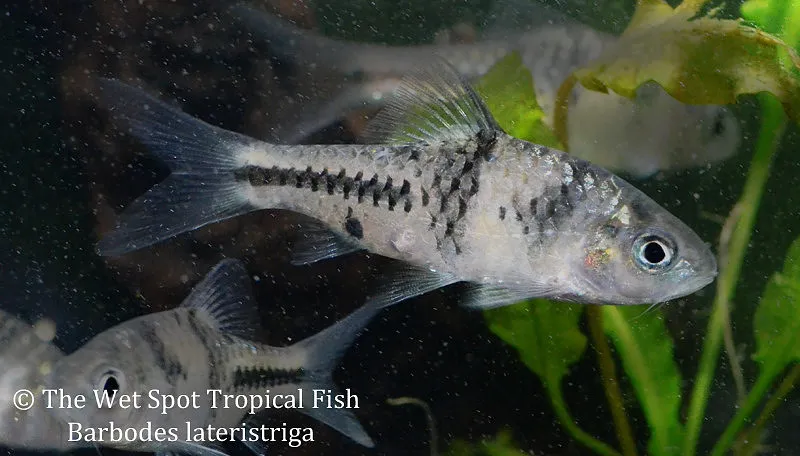
Spanner barb
Barbodes lateristriga
Freshwater5.9 in (15 cm) · 74 gal (280 L)72–79°F (22–26°C)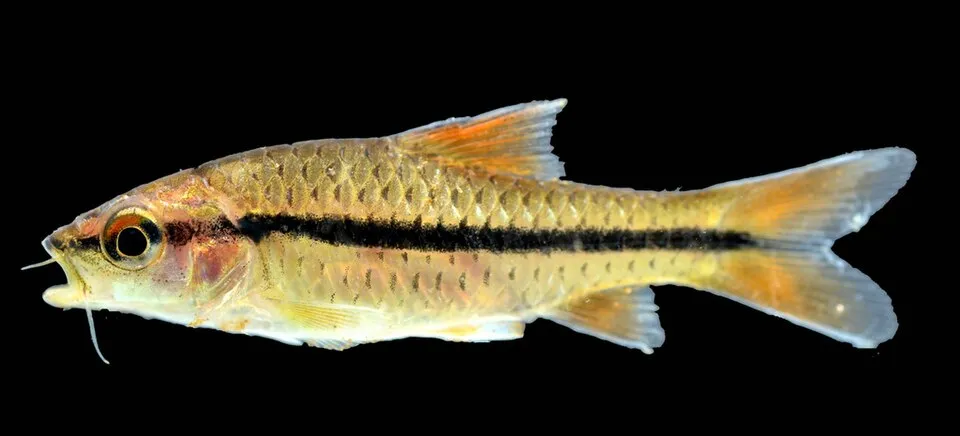
Spotscale barb
Barbus holotaenia
Freshwater4.7 in (12 cm) · 32 gal (120 L)75–86°F (24–30°C)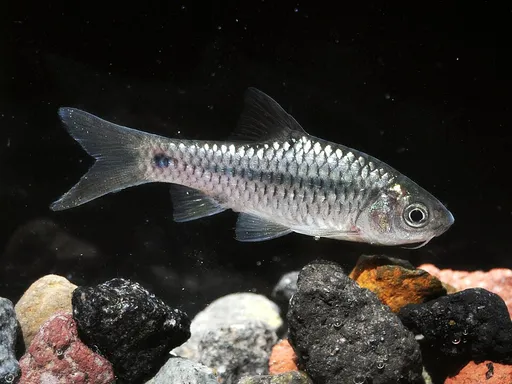
Spotted barb
Barbodes binotatus
Freshwater5.9 in (15 cm) · 40 gal (150 L)72–79°F (22–26°C)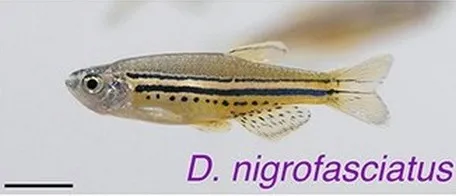
Spotted danio
Danio nigrofasciatus
Freshwater1.5 in (3.7 cm) · 11 gal (40 L)64–79°F (18–26°C)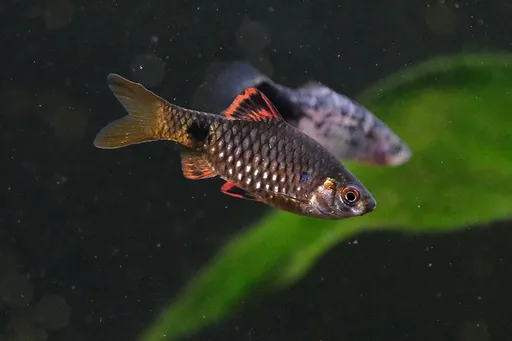
Stoliczka's barb
Pethia stoliczkana
Freshwater2 in (5 cm) · 20 gal (75 L)64–79°F (18–26°C)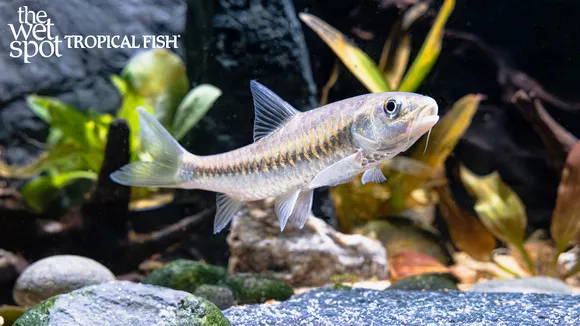
Stracheyi mahseer
Neolissochilus stracheyi
Freshwater23.6 in (60 cm) · 238 gal (900 L)64–79°F (18–26°C)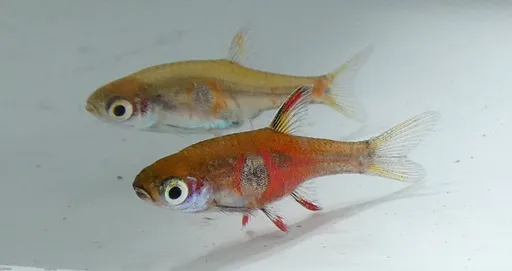
Strawberry rasbora
Boraras naevus
Freshwater0.8 in (2 cm) · 11 gal (40 L)73–81°F (23–27°C)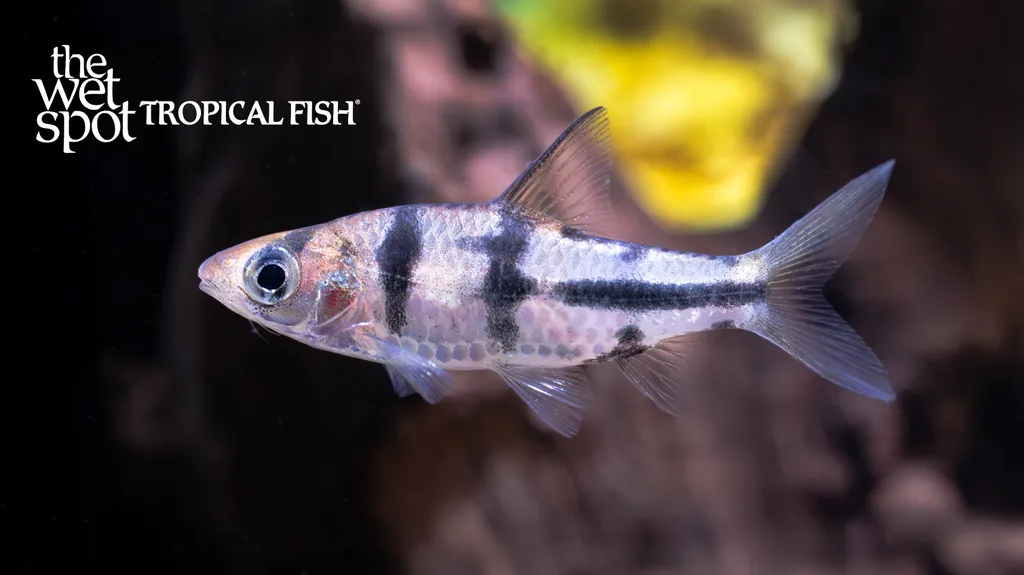
Striped barb
Desmopuntius johorensis
Freshwater4.7 in (12 cm) · 40 gal (150 L)73–79°F (23–26°C)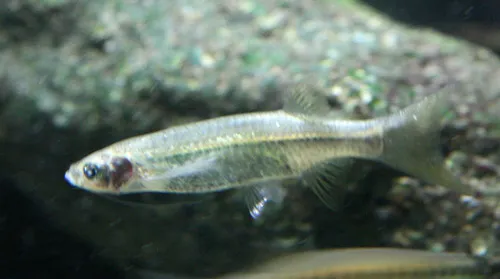
Striped flying barb
Esomus metallicus
Freshwater3 in (7.5 cm) · 24 gal (90 L)72–79°F (22–26°C)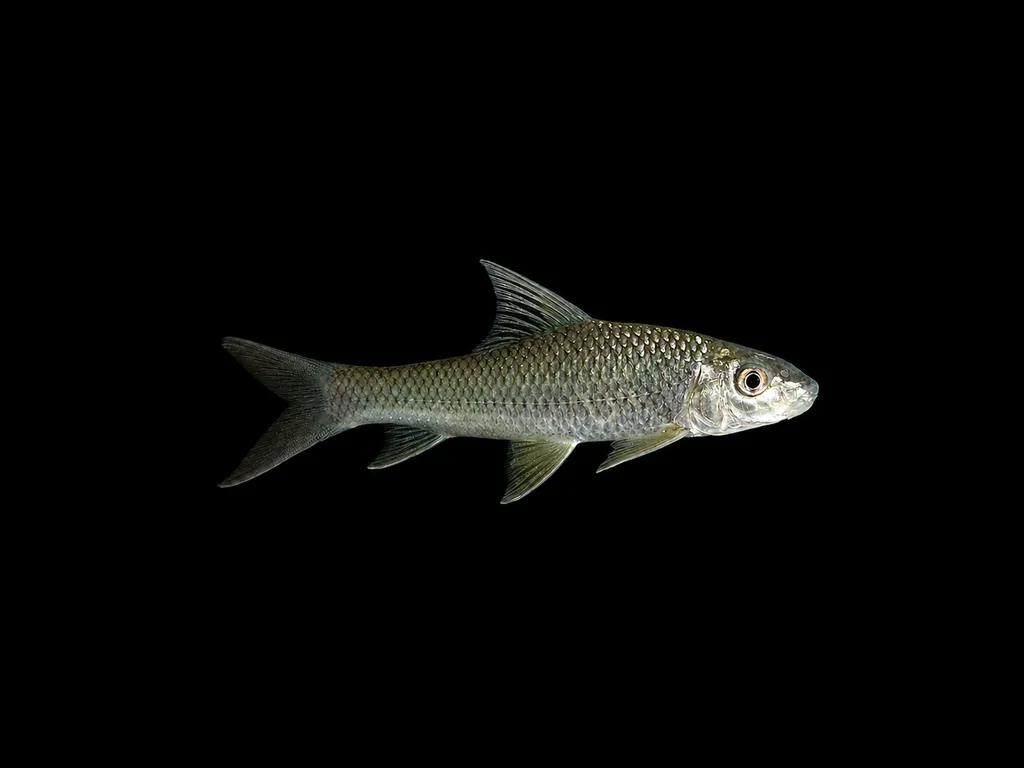
Sucker barb
Barbichthys laevis
Freshwater12.2 in (31 cm) · 159 gal (600 L)72–82°F (22–28°C)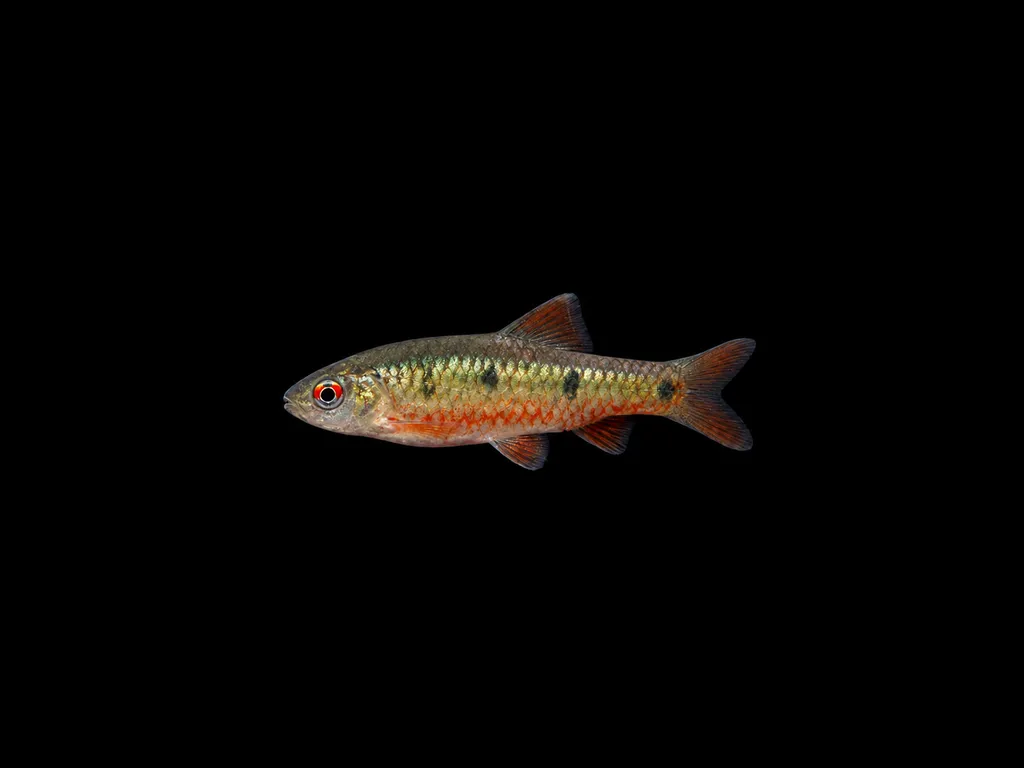
Taiwan barb
Puntius snyderi
Freshwater3.1 in (8 cm) · 24 gal (90 L)61–77°F (16–25°C)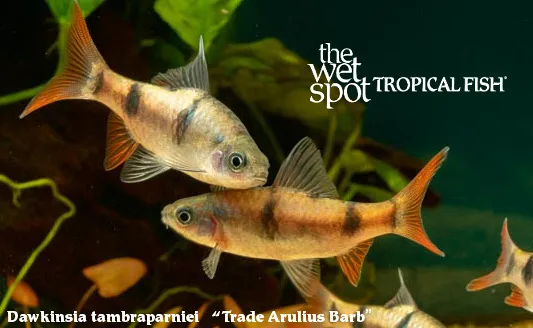
Tambraparni barb
Dawkinsia tambraparniei
Freshwater5.1 in (13 cm) · 42 gal (160 L)70–79°F (21–26°C)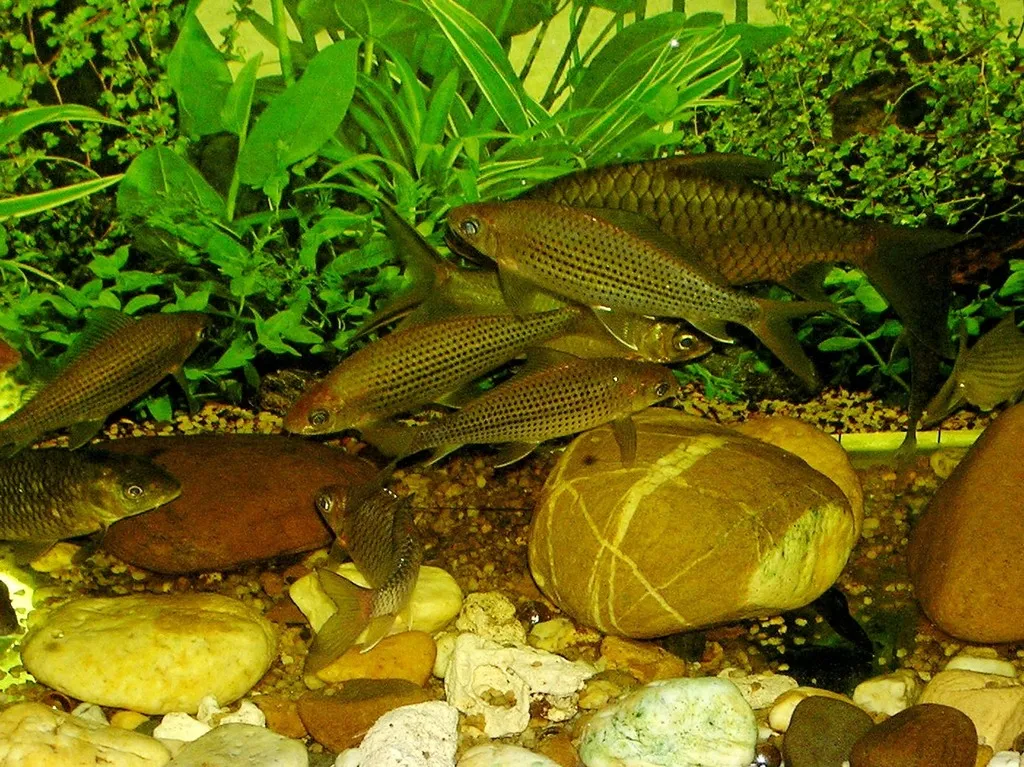
Thinlip sharkminnow barb
Labiobarbus leptocheilus
Freshwater8.7 in (22 cm) · 66 gal (250 L)72–82°F (22–28°C)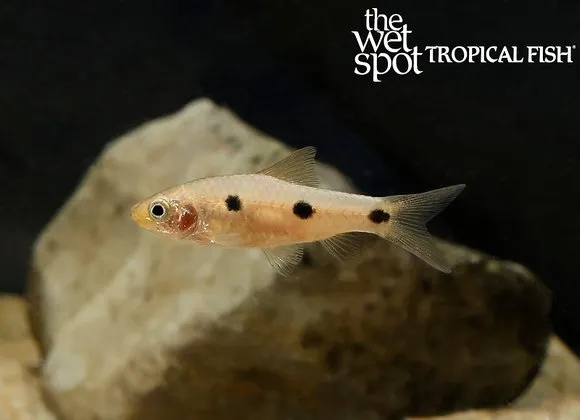
Threespot barb
Enteromius trispilos
Freshwater2.8 in (7 cm) · 24 gal (90 L)72–81°F (22–27°C)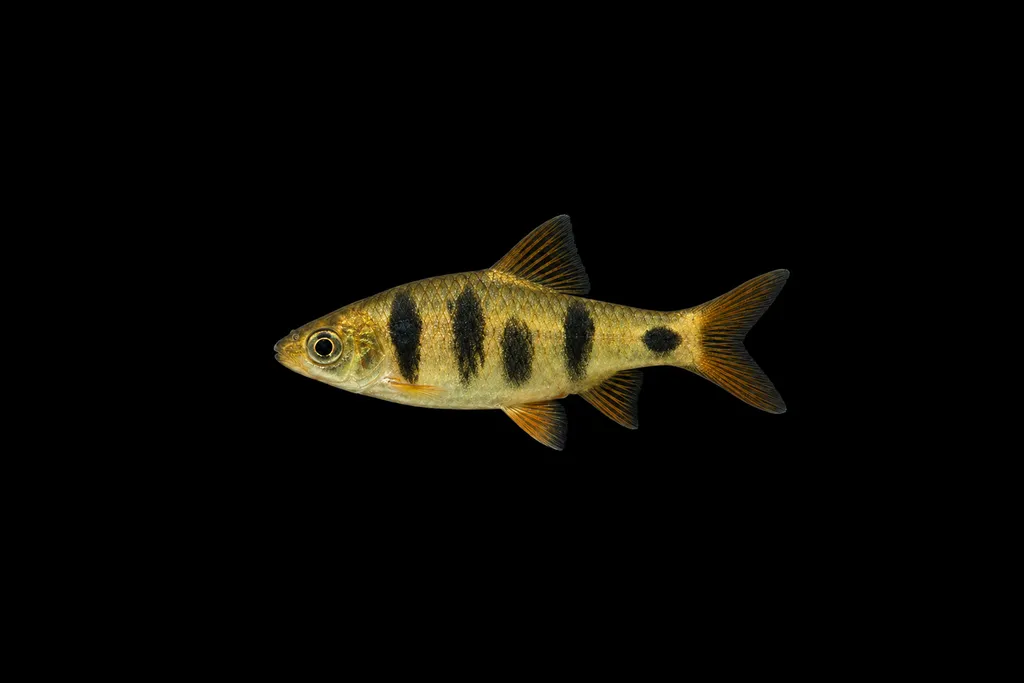
Tiantian barb
Pethia tiantian
Freshwater1.8 in (4.5 cm) · 14 gal (54 L)68–77°F (20–25°C)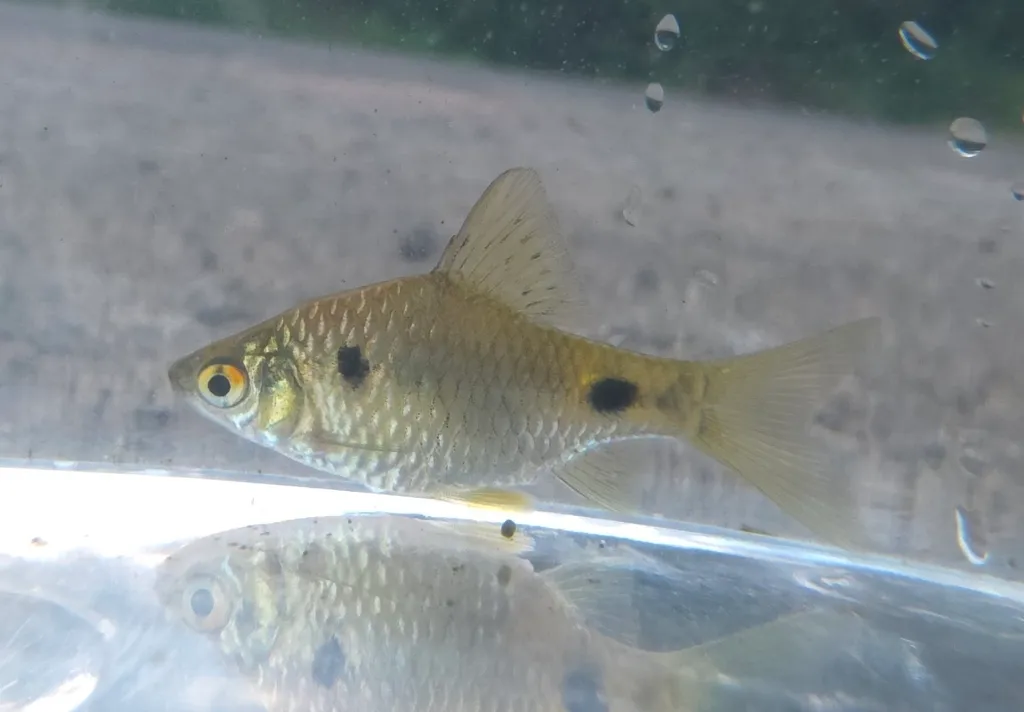
Ticto barb
Pethia ticto
Freshwater2.4 in (6 cm) · 20 gal (75 L)64–75°F (18–24°C)Tiger barb
Puntigrus tetrazona
Freshwater2.8 in (7 cm) · 20 gal (75 L)68–79°F (20–26°C)2 varietiesTinfoil barb
Barbonymus schwanenfeldii
Freshwater13.8 in (35 cm) · 180 gal (680 L)72–82°F (22–28°C)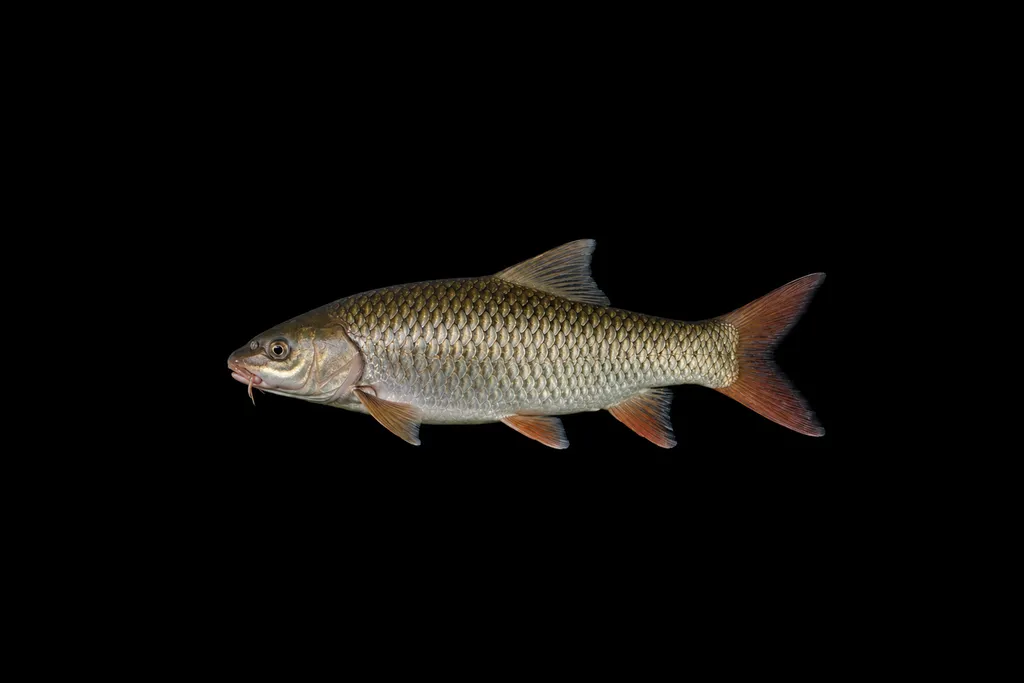
Tor mahseer
Tor tor
Freshwater59.1 in (150 cm) · 502 gal (1,900 L)61–77°F (16–25°C)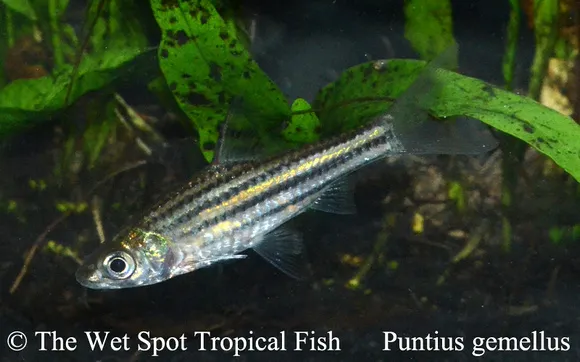
Twin-striped barb
Desmopuntius gemellus
Freshwater3.5 in (9 cm) · 29 gal (110 L)73–82°F (23–28°C)
Vietnamese white cloud
Tanichthys micagemmae
Freshwater1.2 in (3 cm) · 12 gal (45 L)64–73°F (18–23°C)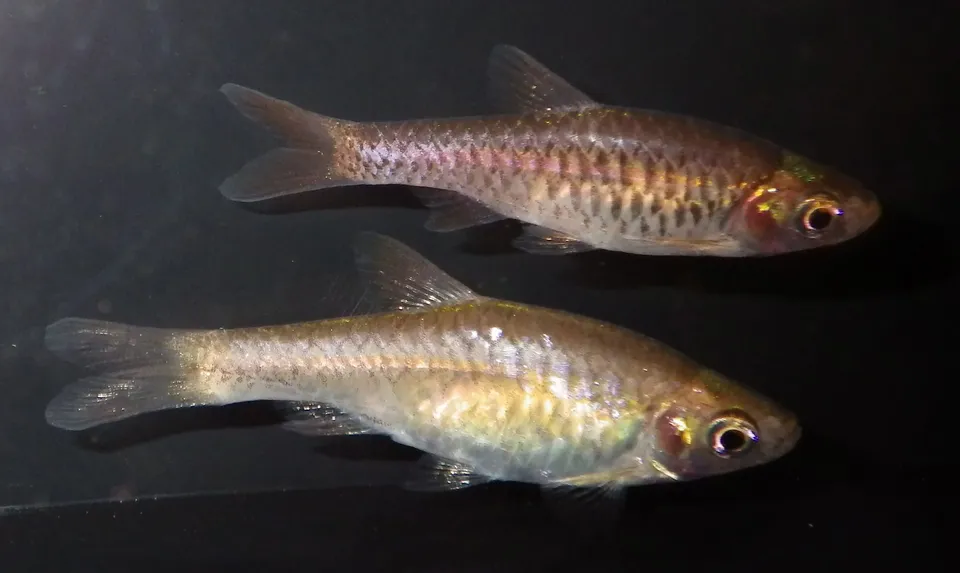
Volcano rasbora
Rasbora vulcanus
Freshwater1.8 in (4.5 cm) · 15 gal (55 L)73–79°F (23–26°C)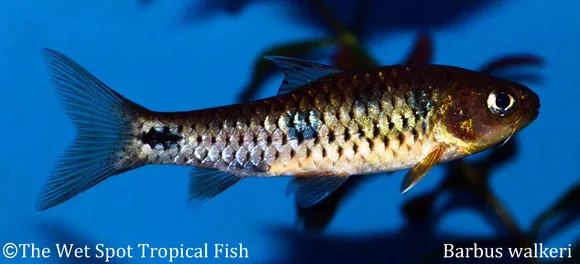
Walker's barb
Enteromius walkeri
Freshwater4.7 in (12 cm) · 29 gal (110 L)72–81°F (22–27°C)White Cloud Mountain minnow
Tanichthys albonubes
Freshwater1.6 in (4 cm) · 12 gal (45 L)57–72°F (14–22°C)2 varieties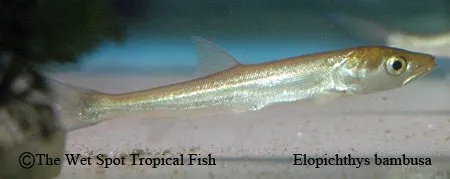
Yellowcheek
Elopichthys bambusa
Freshwater78.7 in (200 cm) · 5,283 gal (20,000 L)59–77°F (15–25°C)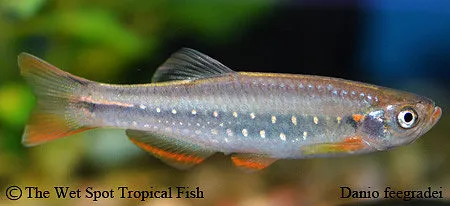
Yoma danio
Danio feegradei
Freshwater2 in (5 cm) · 20 gal (75 L)72–79°F (22–26°C)Zebra danio
Danio rerio
Freshwater2 in (5 cm) · 15 gal (55 L)64–75°F (18–24°C)2 varieties
Planning a tank?
TankBud checks stocking and water fit as you build a tank, then tracks water tests, reminders and photos once it is running.
Track your tanksMaintain tanks for clients? See TankBud Pro