Symbiotic relationships in the aquarium
Symbiosis is two species living together, and the aquarium is full of it: clownfish that live inside a stinging anemone, a goby that stands guard over a shrimp's burrow, shrimp that run cleaning stations for fish that could eat them. Some of these pairs are true partnerships where both sides gain. Some are one animal using another for shelter. A few are stranger than that. Every relationship below can be kept in a home tank, and every species card leads to a full care profile.
10 relationships · 73 species
Mutualism
Clownfish and their host anemones
A clownfish lives inside an anemone that stings and eats other fish its size. Its mucus coat keeps the anemone's stinging cells from firing, and a new fish builds that protection up over hours of brief touches. The fish gets a refuge no predator will follow it into and a nest site at the anemone's base. The anemone gets a guard that drives off the butterflyfish that would graze its tentacles, a steady supply of nitrogen from the fish's waste, and water movement at night, when the fish fans its fins among the tentacles and the anemone takes up more oxygen. Only ten anemone species host clownfish in the wild, and each clownfish species uses its own short list of them.
Captive-bred clownfish have never seen an anemone and do not need one; they settle for a coral, a powerhead or a corner of the tank. If you want the pairing, the anemone is the harder animal by far and goes in first, into a mature tank with strong light and stable water, at the tank size its own profile lists. The bubble tip anemone is the hardy host, and the one most clownfish accept in captivity even when it is not a natural host, so a clownfish profile lists it as the usual tank host where that is the case. The sebae, magnificent and carpet anemones are marked difficult, and the carpets eat fish. Expect a paired clownfish to defend its anemone against everything else in the tank.
Clownfish
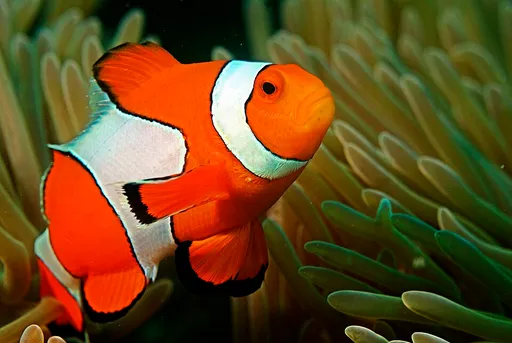
Ocellaris clownfish
Amphiprion ocellaris
Saltwater3.1 in (8 cm) · 20 gal (75 L)75–82°F (24–28°C)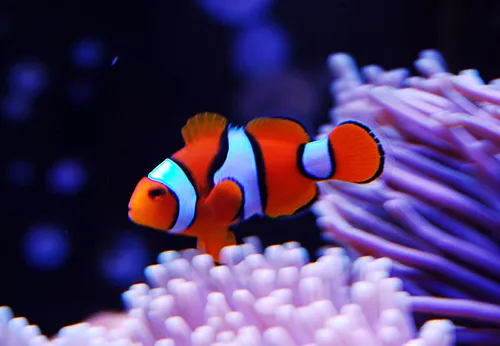
Percula clownfish
Amphiprion percula
Saltwater3.1 in (8 cm) · 20 gal (75 L)75–82°F (24–28°C)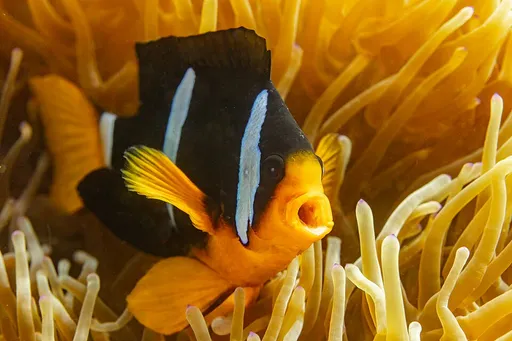
Clark's clownfish
Amphiprion clarkii
Saltwater5.5 in (14 cm) · 30 gal (115 L)75–82°F (24–28°C)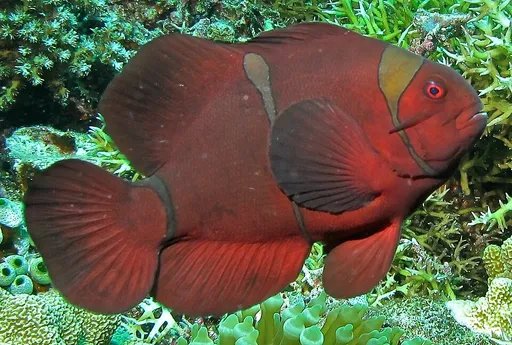
Maroon clownfish
Premnas biaculeatus
Saltwater6.7 in (17 cm) · 40 gal (150 L)75–82°F (24–28°C)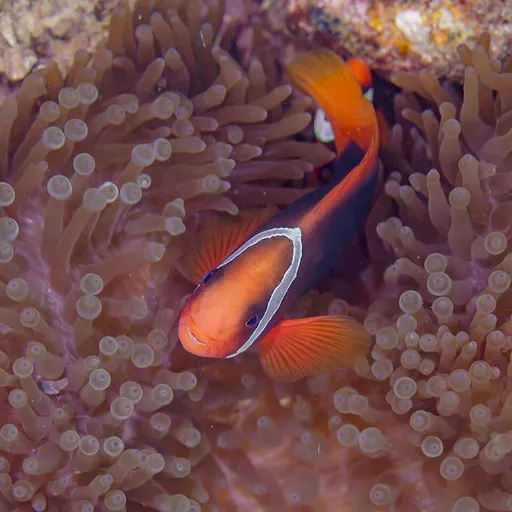
Tomato clownfish
Amphiprion frenatus
Saltwater5.5 in (14 cm) · 30 gal (115 L)75–82°F (24–28°C)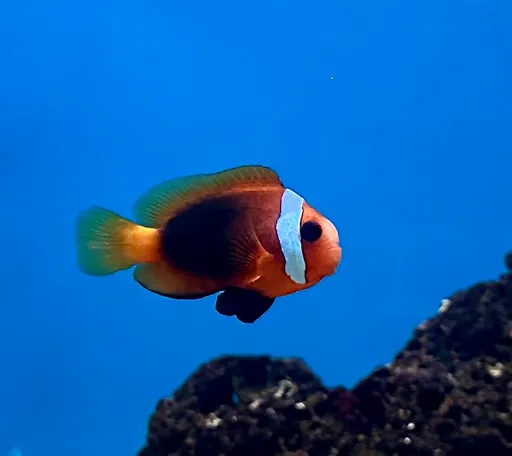
Cinnamon clownfish
Amphiprion melanopus
Saltwater4.7 in (12 cm) · 30 gal (115 L)75–82°F (24–28°C)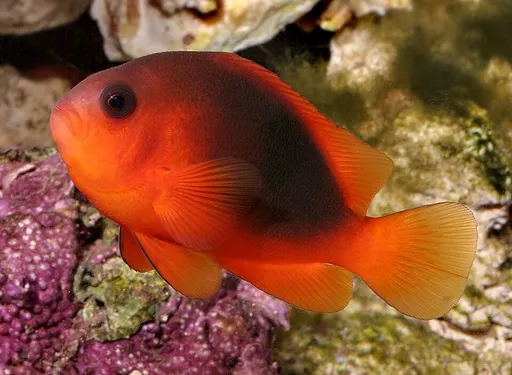
Red saddleback anemonefish
Amphiprion ephippium
Saltwater5.5 in (14 cm) · 30 gal (115 L)75–81°F (24–27°C)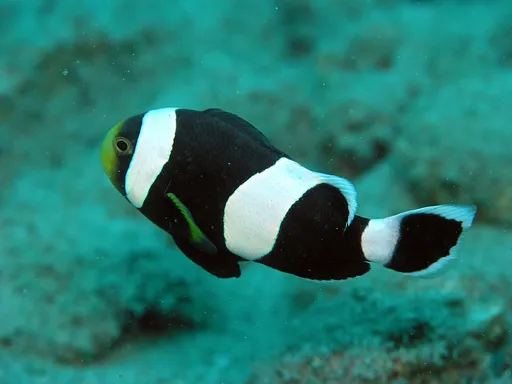
Saddleback clownfish
Amphiprion polymnus
Saltwater5.1 in (13 cm) · 40 gal (150 L)75–82°F (24–28°C)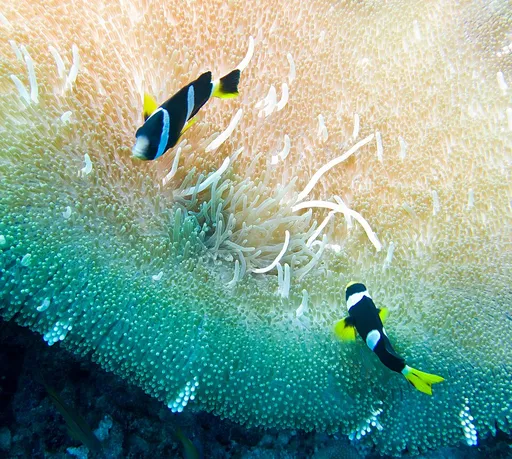
Sebae clownfish
Amphiprion sebae
Saltwater5.9 in (15 cm) · 30 gal (115 L)75–82°F (24–28°C)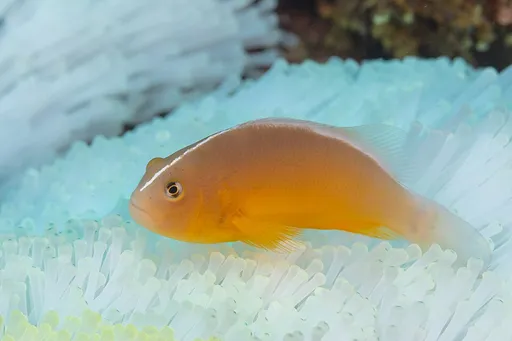
Skunk clownfish
Amphiprion akallopisos
Saltwater4.3 in (11 cm) · 26 gal (100 L)75–82°F (24–28°C)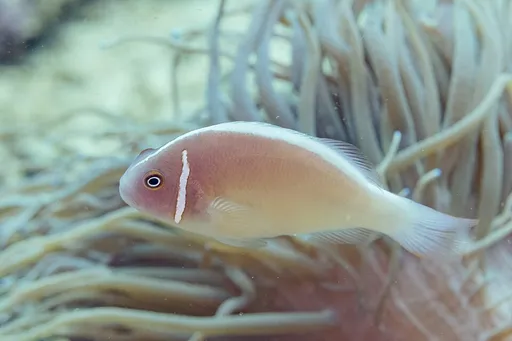
Pink skunk clownfish
Amphiprion perideraion
Saltwater3.9 in (10 cm) · 30 gal (115 L)75–82°F (24–28°C)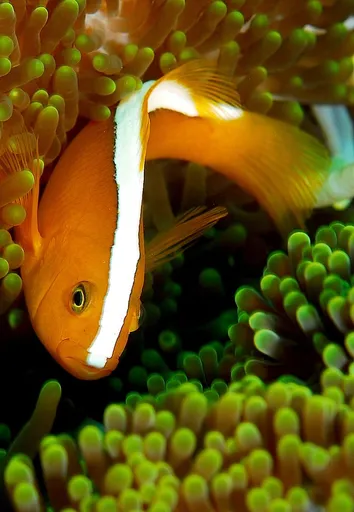
Orange skunk clownfish
Amphiprion sandaracinos
Saltwater5.5 in (14 cm) · 30 gal (115 L)75–82°F (24–28°C)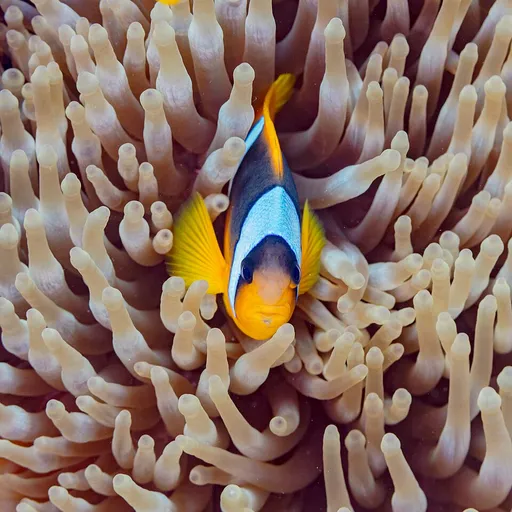
Red Sea clownfish
Amphiprion bicinctus
Saltwater5.5 in (14 cm) · 30 gal (115 L)75–82°F (24–28°C)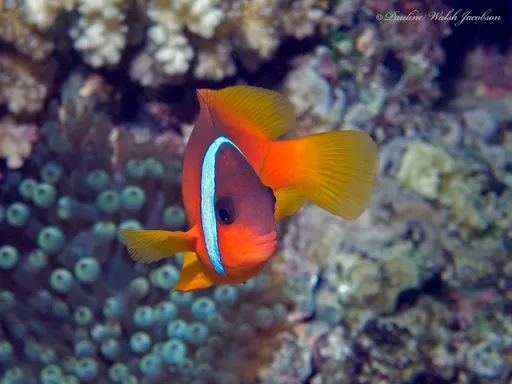
Barberi clownfish
Amphiprion barberi
Saltwater3.5 in (9 cm) · 30 gal (115 L)75–81°F (24–27°C)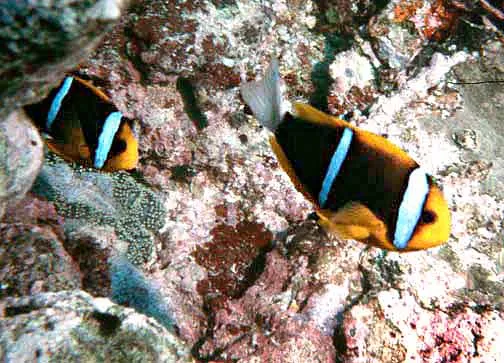
Bluestripe clownfish
Amphiprion chrysopterus
Saltwater6.7 in (17 cm) · 55 gal (210 L)75–82°F (24–28°C)
Host anemones
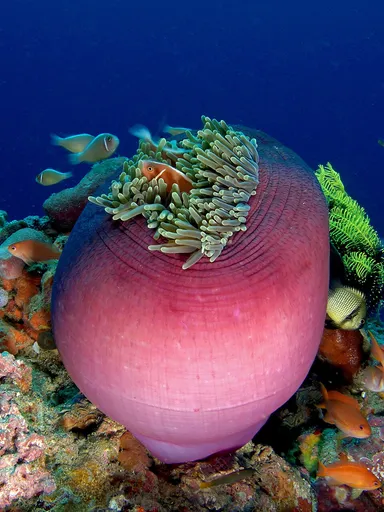
Magnificent anemone
Heteractis magnifica
Saltwater19.7 in (50 cm) · 53 gal (200 L)75–81°F (24–27°C)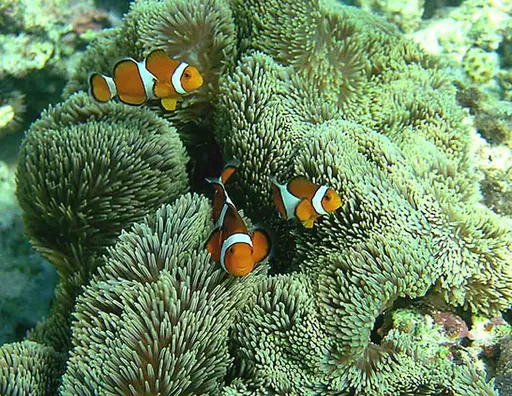
Gigantea carpet anemone
Stichodactyla gigantea
Saltwater19.7 in (50 cm) · 53 gal (200 L)75–81°F (24–27°C)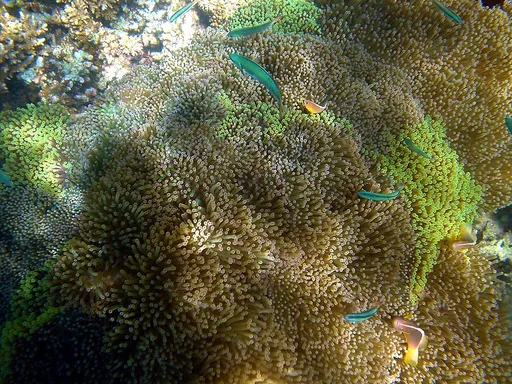
Mertens' carpet anemone
Stichodactyla mertensii
Saltwater35.4 in (90 cm) · 53 gal (200 L)75–81°F (24–27°C)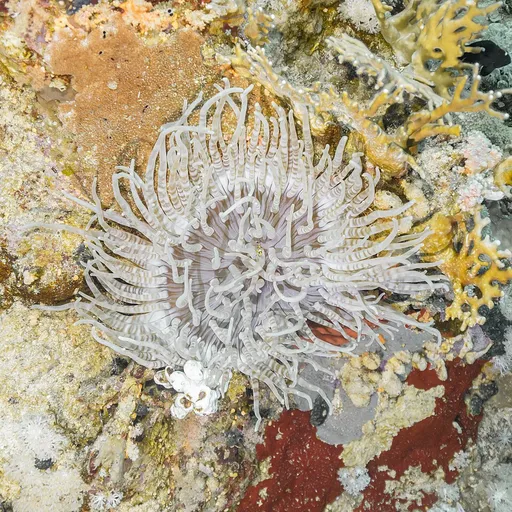
Sebae anemone
Heteractis crispa
Saltwater15.7 in (40 cm) · 40 gal (150 L)75–81°F (24–27°C)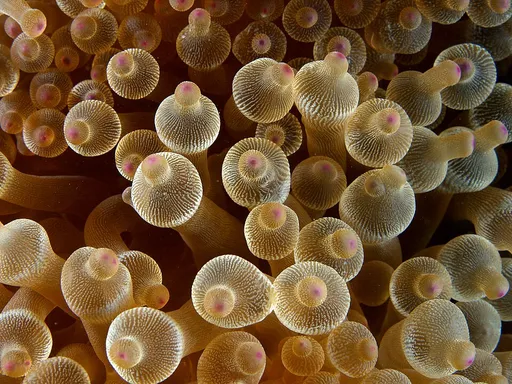
Bubble tip anemone
Entacmaea quadricolor
Saltwater11.8 in (30 cm) · 30 gal (115 L)75–81°F (24–27°C)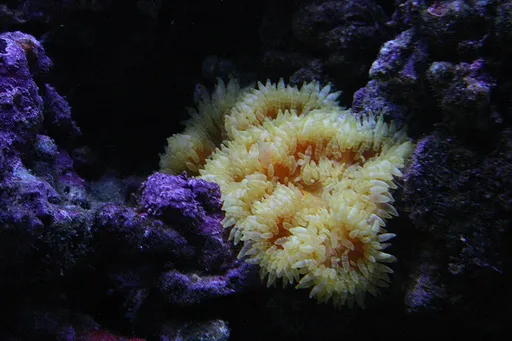
Aurora anemone
Heteractis aurora
Saltwater11.8 in (30 cm) · 50 gal (190 L)72–79°F (22–26°C)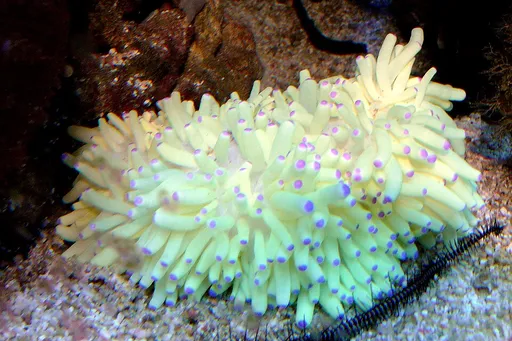
Malu anemone
Heteractis malu
Saltwater7.9 in (20 cm) · 40 gal (150 L)75–81°F (24–27°C)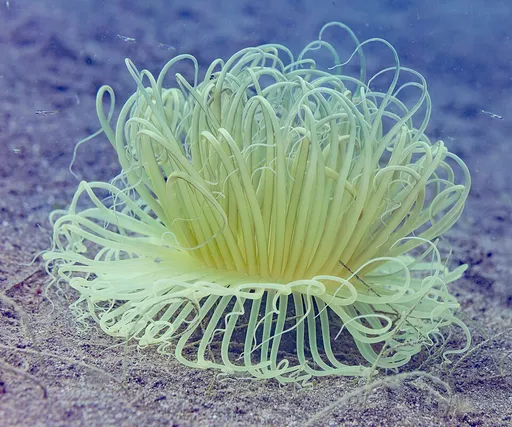
Long tentacle anemone
Macrodactyla doreensis
Saltwater15.7 in (40 cm) · 40 gal (150 L)75–81°F (24–27°C)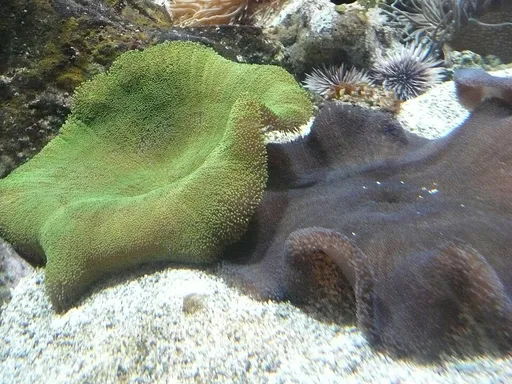
Haddon's carpet anemone
Stichodactyla haddoni
Saltwater33.5 in (85 cm) · 53 gal (200 L)75–81°F (24–27°C)
Mutualism
Shrimp gobies and pistol shrimp
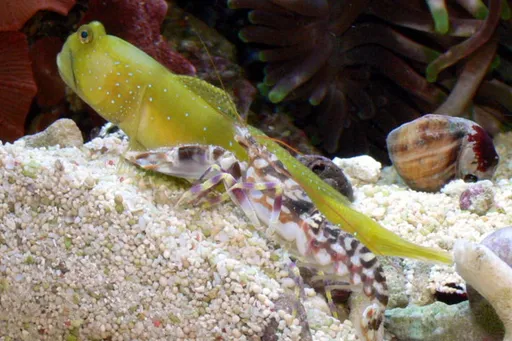
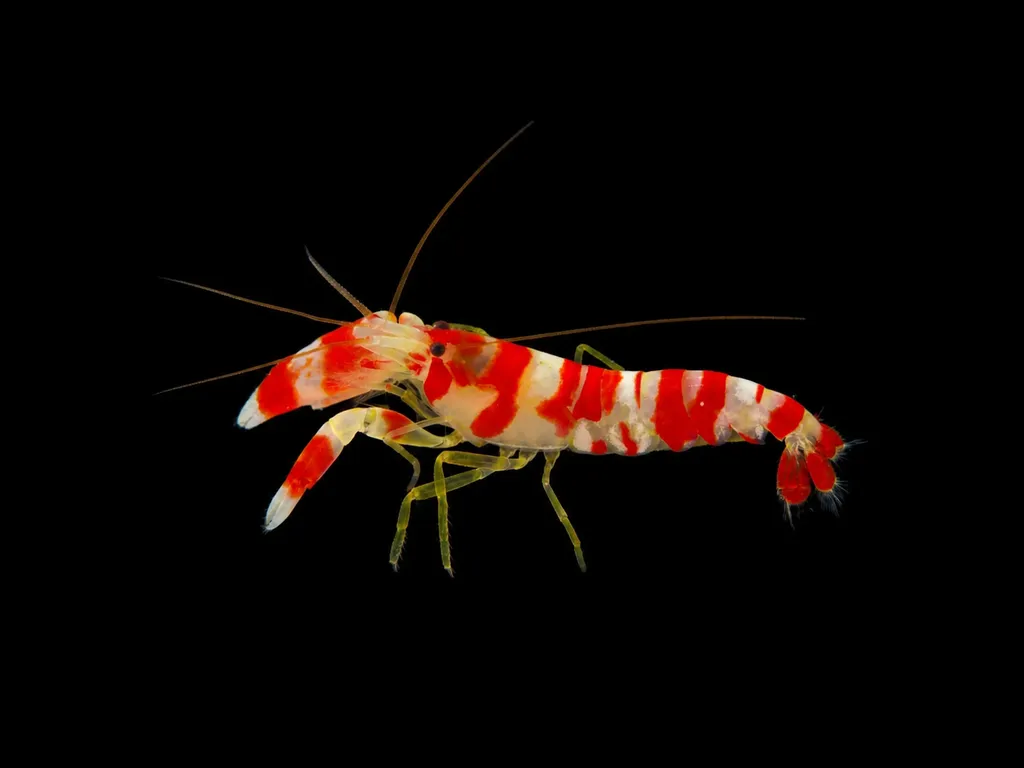
A pistol shrimp can barely see, but it digs and maintains a burrow all day. The goby that shares it has sharp eyes and does no digging. It sits at the entrance as a lookout, and the shrimp keeps one antenna resting on the goby's body whenever it is outside. A flick of the goby's tail sends the shrimp back down the hole, and a harder threat sends them both. At dusk they retire together and the shrimp seals the entrance for the night. The shrimp gets an early warning system, and the goby gets a home it could not build.
This partnership is easy to keep and it rewards watching. Give them a sand bed at least 2 inches (5 cm) deep with some rubble to hold the tunnel, add the two together or the shrimp first, and feed sinking food near the burrow mouth. The snap of the shrimp's claw is a small cavitation bubble collapsing, and you will hear it across the room. Pairs form readily between strangers, but the genera matter: the yellow watchman, pink-spotted, Wheeler's, orange-spot and Randall's gobies take a tiger pistol shrimp, while the yasha, hi-fin red banded and pinkbar gobies pair with Randall's pistol shrimp.
Shrimp gobies
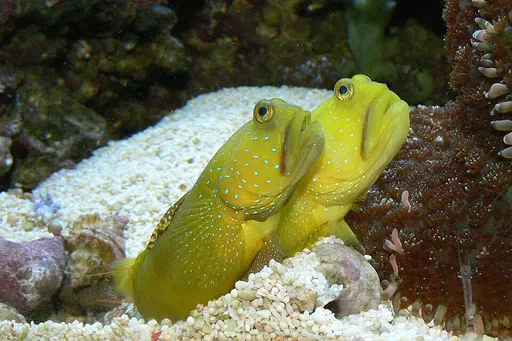
Yellow watchman goby
Cryptocentrus cinctus
Saltwater3.5 in (9 cm) · 20 gal (75 L)72–81°F (22–27°C)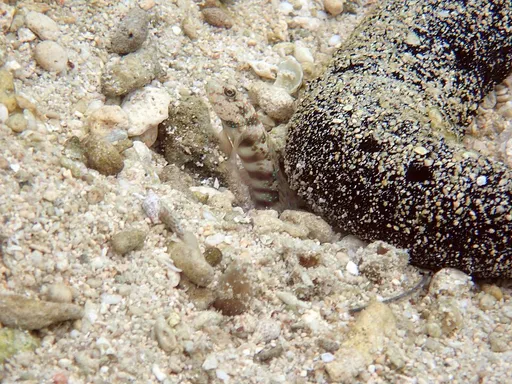
Pink-spotted watchman goby
Cryptocentrus leptocephalus
Saltwater3.9 in (10 cm) · 30 gal (115 L)73–81°F (23–27°C)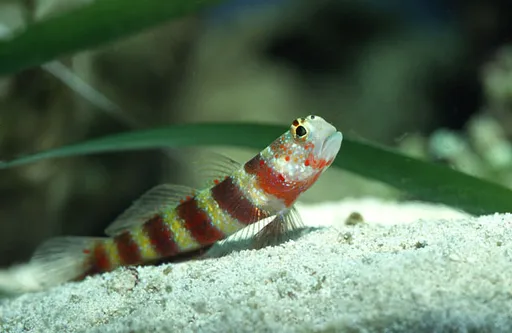
Wheeler's prawn goby
Amblyeleotris wheeleri
Saltwater3.9 in (10 cm) · 30 gal (114 L)72–79°F (22–26°C)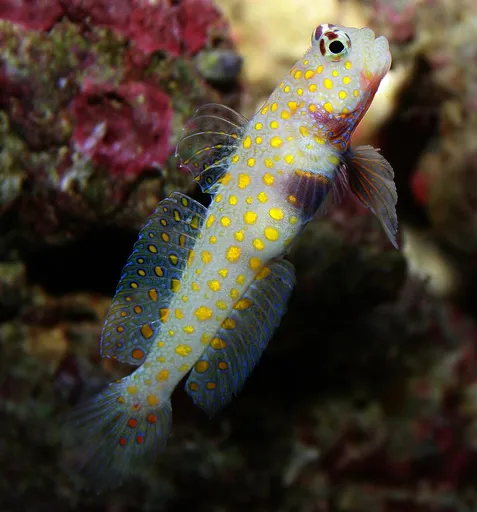
Orange-spot prawn goby
Amblyeleotris guttata
Saltwater4.3 in (11 cm) · 30 gal (114 L)72–79°F (22–26°C)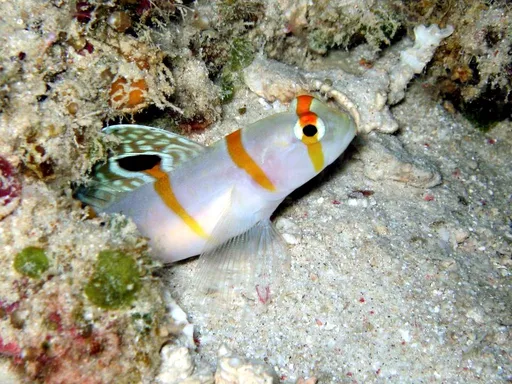
Randall's prawn goby
Amblyeleotris randalli
Saltwater4.7 in (12 cm) · 30 gal (114 L)72–79°F (22–26°C)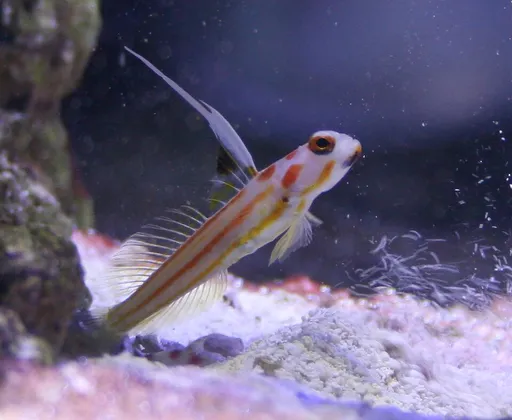
Yasha goby
Stonogobiops yasha
Saltwater2.4 in (6 cm) · 15 gal (57 L)72–79°F (22–26°C)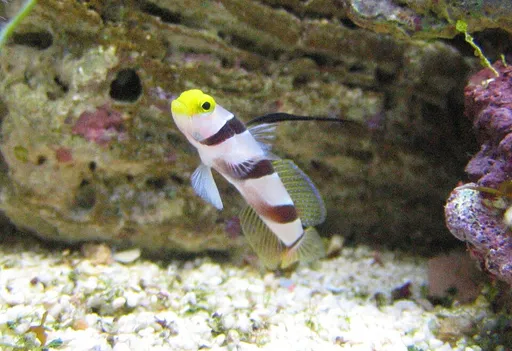
Hi-fin red banded goby
Stonogobiops nematodes
Saltwater2.4 in (6 cm) · 20 gal (75 L)72–81°F (22–27°C)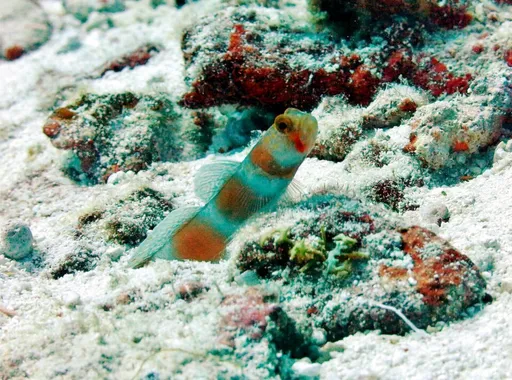
Pinkbar goby
Amblyeleotris aurora
Saltwater4.3 in (11 cm) · 30 gal (115 L)73–81°F (23–27°C)
Mutualism
Cleaner shrimp, cleaner gobies and their clients
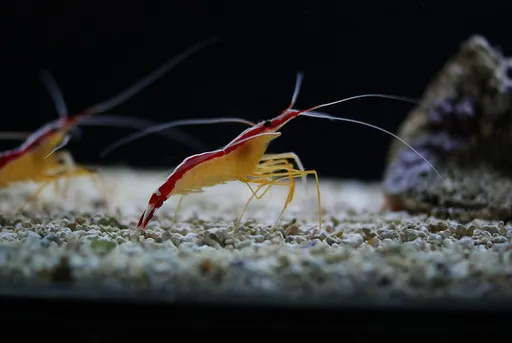
A cleaner holds a station on the reef and advertises it: cleaner shrimp wave their long white antennae and rock from side to side, cleaner wrasses swim a bobbing dance. Fish arrive and pose, head up or head down with fins spread, and hold still while the cleaner picks off parasitic isopods, dead skin and loose scales, working into the mouth and under the gill covers of fish that could swallow it in one bite. The client leaves with fewer parasites and the cleaner eats a meal it never had to hunt. Reef fish queue for it, and a busy station is visited hundreds of times a day.
The skunk cleaner shrimp is the one that does this reliably in an aquarium: it sets up on a rock ledge, and tank fish, tangs and wrasses especially, learn to stop by within days. The fire shrimp cleans too but hides more and works at dusk. Pederson's cleaner shrimp does the same job from the tentacles of its anemone. The neon goby and its relatives are small, hardy cleaners for tanks that cannot take a shrimp. The cleaner wrasses are the difficult ones: many never take prepared food, and both are marked difficult here. None of them will cure an outbreak of ich; they pick off some parasites and keep a healthy fish tidier, and that is the honest claim. Keep every cleaner away from predators such as large hawkfish, triggers, lionfish and big wrasses.
In the catalog
Skunk cleaner shrimp
Lysmata amboinensis
Saltwater2.4 in (6 cm) · 20 gal (75 L)73–81°F (23–27°C)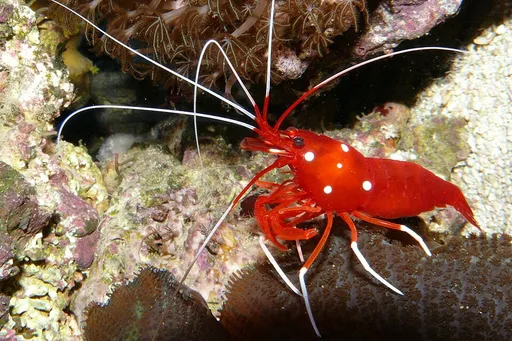
Fire shrimp
Lysmata debelius
Saltwater2.4 in (6 cm) · 20 gal (75 L)72–79°F (22–26°C)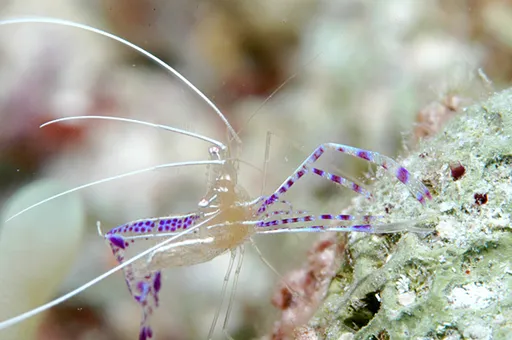
Pederson's cleaner shrimp
Ancylomenes pedersoni
Saltwater1.2 in (3 cm) · 11 gal (40 L)73–81°F (23–27°C)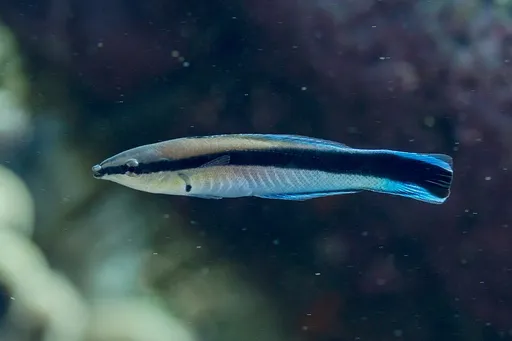
Bluestreak cleaner wrasse
Labroides dimidiatus
Saltwater4.3 in (11 cm) · 106 gal (400 L)75–81°F (24–27°C)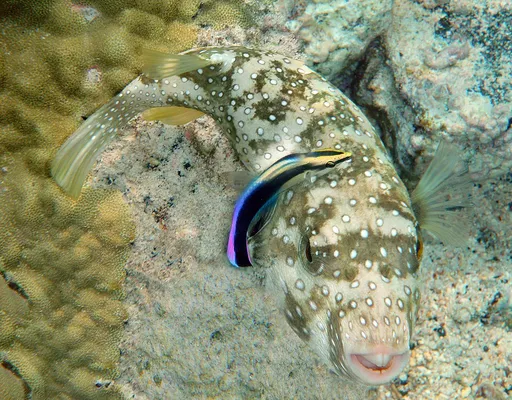
Hawaiian cleaner wrasse
Labroides phthirophagus
Saltwater3.9 in (10 cm) · 70 gal (265 L)75–81°F (24–27°C)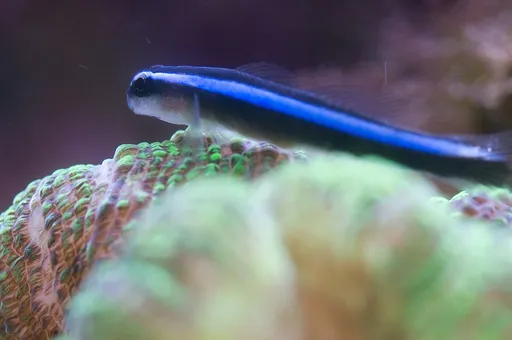
Neon goby
Elacatinus oceanops
Saltwater2 in (5 cm) · 11 gal (40 L)72–79°F (22–26°C)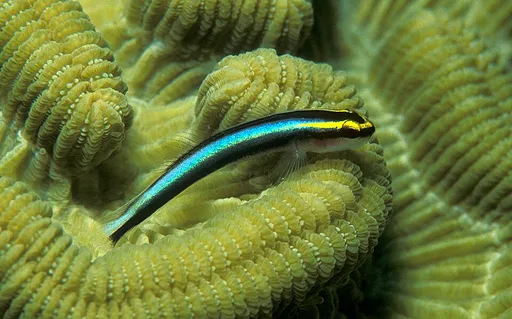
Sharknose goby
Elacatinus evelynae
Saltwater1.6 in (4 cm) · 13 gal (50 L)75–79°F (24–26°C)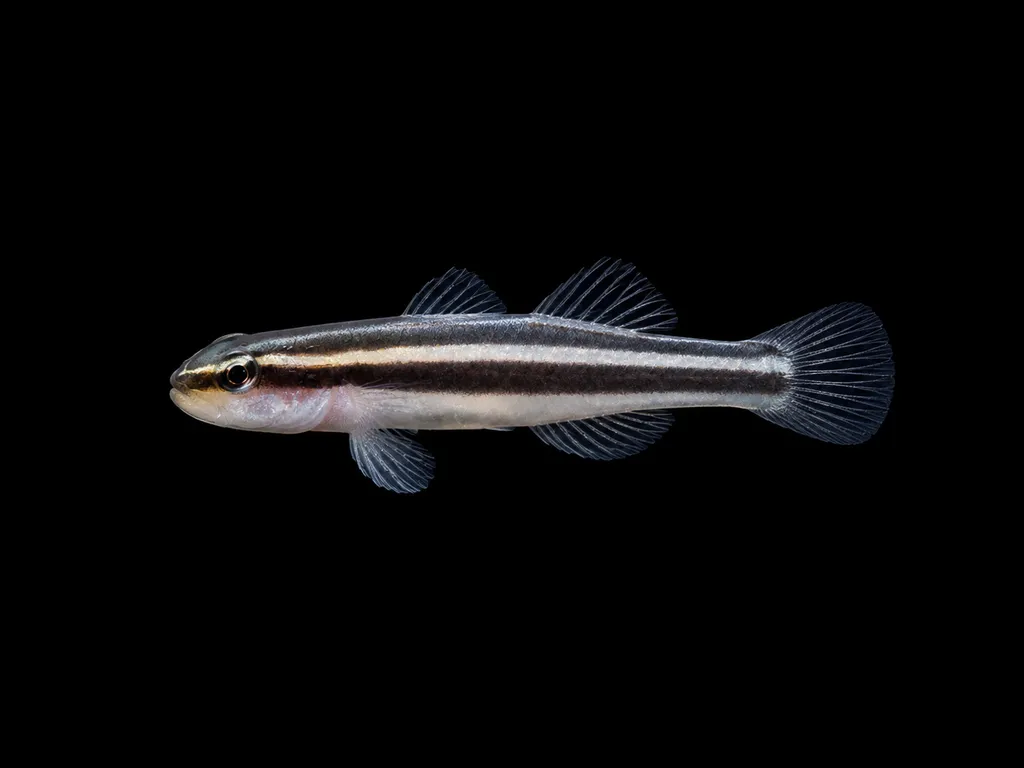
Broadstripe cleaner goby
Elacatinus prochilos
Saltwater1.6 in (4 cm) · 11 gal (40 L)72–79°F (22–26°C)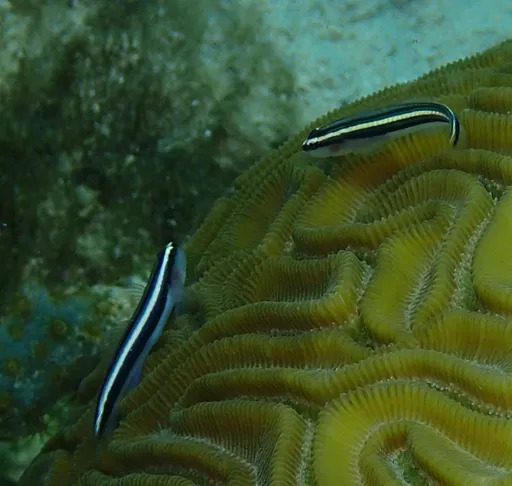
Barsnout cleaner goby
Elacatinus illecebrosus
Saltwater1.6 in (4 cm) · 11 gal (40 L)72–79°F (22–26°C)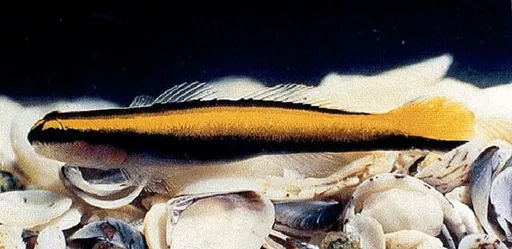
Barber goby
Elacatinus figaro
Saltwater1.6 in (4 cm) · 11 gal (40 L)72–79°F (22–26°C)
The partner here is whatever fish comes to be cleaned, so there are no partner cards.
Shelter
Shrimp and crabs that live in anemones
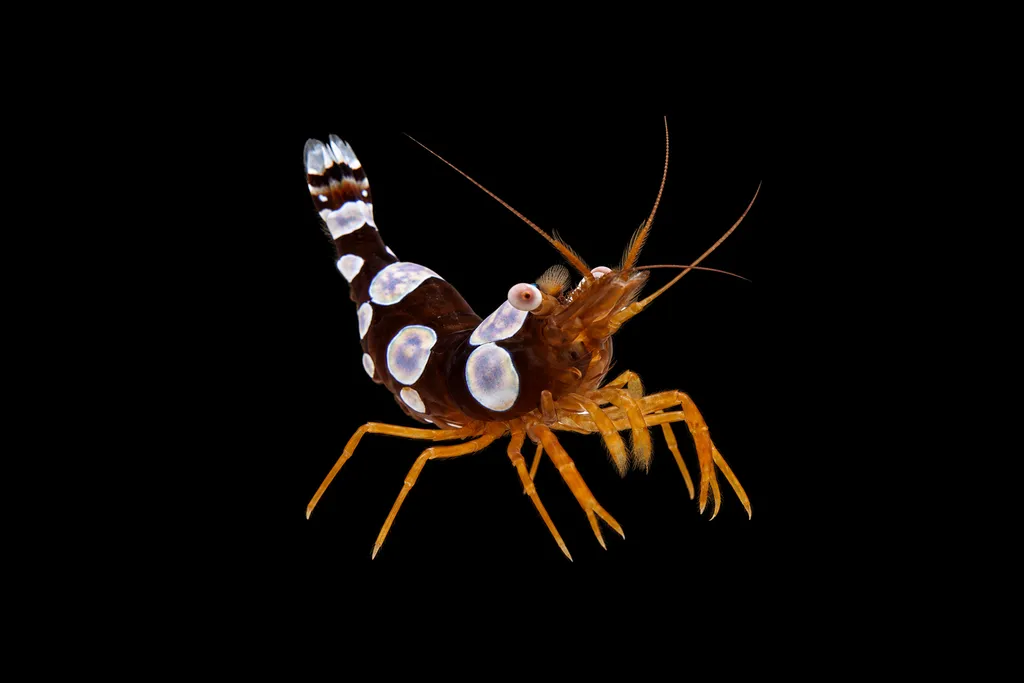
Several small crustaceans live where almost nothing else can: among the tentacles of an anemone. Sexy shrimp perch in the tentacles in a cluster, bobbing their tails in the display that named them. The white-spot anemone shrimp is near transparent apart from its spots and lives on carpet anemones. The porcelain anemone crab sits at the anemone's edge and filters plankton from the water with two fan-like arms. Pederson's cleaner shrimp lives in the Caribbean corkscrew anemone and cleans fish from there. In every case the anemone is a bodyguard: its sting keeps off the small fish that would eat the shrimp. The anemone gains little, and the white-spot shrimp will nibble its host's tentacles when it is hungry.
Give each of them its anemone. Sexy shrimp take a rock flower anemone, a bubble tip or a carpet. The white-spot shrimp and the porcelain crab want a carpet anemone or a long tentacle anemone, both of which need a mature tank at the tank size their profiles list. Pederson's shrimp wants a corkscrew anemone or a condy. Without a host they perch on a coral or hide in the rock and are picked off by any fish that eats shrimp, so they suit a peaceful nano reef. A clownfish will evict them from an anemone it has claimed.
Anemone dwellers
Sexy shrimp
Thor amboinensis
Saltwater1.2 in (3 cm) · 5 gal (20 L)75–81°F (24–27°C)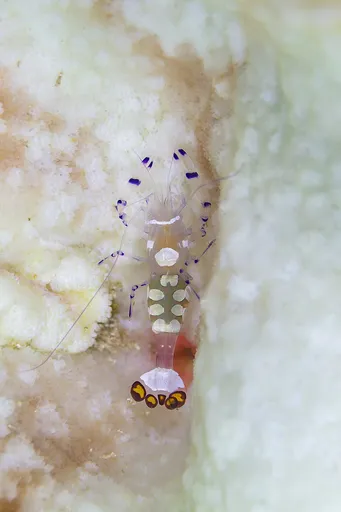
White-spot anemone shrimp
Periclimenes brevicarpalis
Saltwater1.6 in (4 cm) · 11 gal (40 L)75–81°F (24–27°C)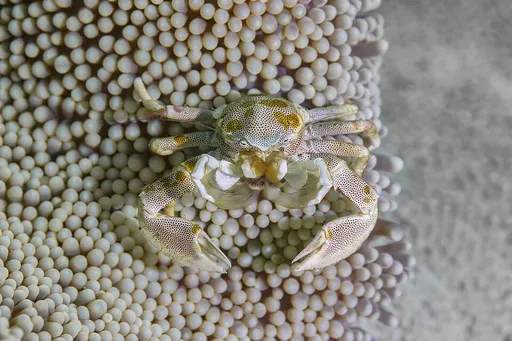
Porcelain anemone crab
Neopetrolisthes maculatus
Saltwater3 in (7.5 cm) · 11 gal (40 L)72–79°F (22–26°C)Pederson's cleaner shrimp
Ancylomenes pedersoni
Saltwater1.2 in (3 cm) · 11 gal (40 L)73–81°F (23–27°C)
Anemones they live in

Rock flower anemone
Phymanthus crucifer
Saltwater3.9 in (10 cm) · 20 gal (75 L)75–81°F (24–27°C)Bubble tip anemone
Entacmaea quadricolor
Saltwater11.8 in (30 cm) · 30 gal (115 L)75–81°F (24–27°C)Haddon's carpet anemone
Stichodactyla haddoni
Saltwater33.5 in (85 cm) · 53 gal (200 L)75–81°F (24–27°C)Gigantea carpet anemone
Stichodactyla gigantea
Saltwater19.7 in (50 cm) · 53 gal (200 L)75–81°F (24–27°C)Mertens' carpet anemone
Stichodactyla mertensii
Saltwater35.4 in (90 cm) · 53 gal (200 L)75–81°F (24–27°C)Long tentacle anemone
Macrodactyla doreensis
Saltwater15.7 in (40 cm) · 40 gal (150 L)75–81°F (24–27°C)Magnificent anemone
Heteractis magnifica
Saltwater19.7 in (50 cm) · 53 gal (200 L)75–81°F (24–27°C)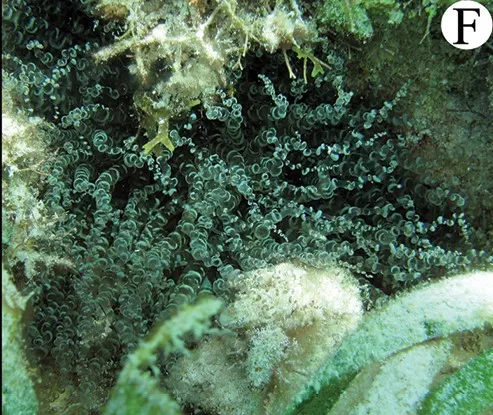
Curlyque anemone
Bartholomea annulata
Saltwater5.9 in (15 cm) · 20 gal (75 L)75–81°F (24–27°C)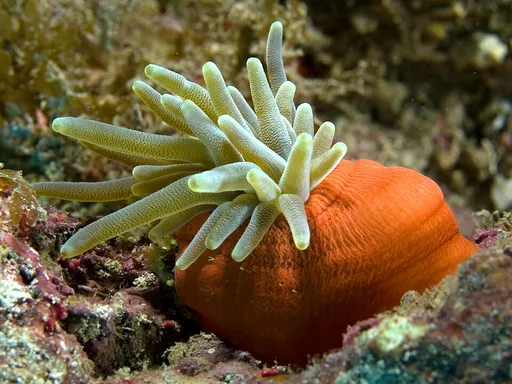
Condy anemone
Condylactis gigantea
Saltwater11.8 in (30 cm) · 40 gal (150 L)75–81°F (24–27°C)
Shelter
Banggai cardinalfish and the long-spine urchin
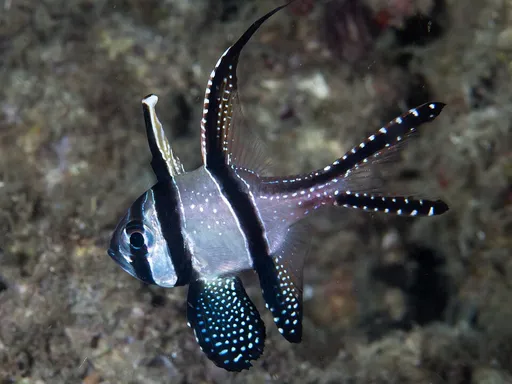
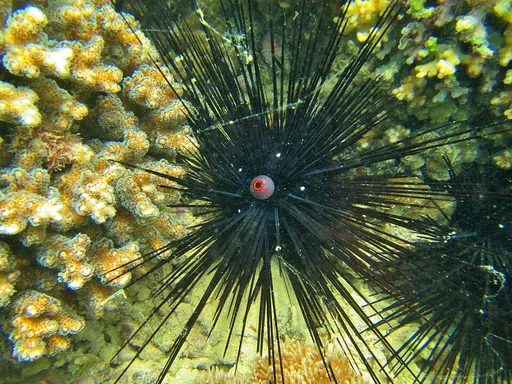
Banggai cardinalfish hover in small groups among the spines of long-spine urchins, and the young go deeper into the spines than the adults. The spines are long, brittle and venomous enough that predators leave the urchin alone, which makes the space between them a nursery. The fish are so tied to their shelter that a group rarely strays more than a few yards from it. The urchin gets nothing obvious in return.
Add a long-spine urchin to a mature tank with plenty of rock and algae for it to graze, at the tank size its own profile lists, and a group of Banggai will settle over it within days, drifting through the spines exactly as they do on the reef. The spines break off in skin, so keep hands and nets clear. Banggai cardinalfish are endangered in the wild: they have a tiny range, never disperse from their home reefs, and were collected heavily for the trade. Buy captive-bred fish, which are widely available.
Cardinalfish
Mutualism
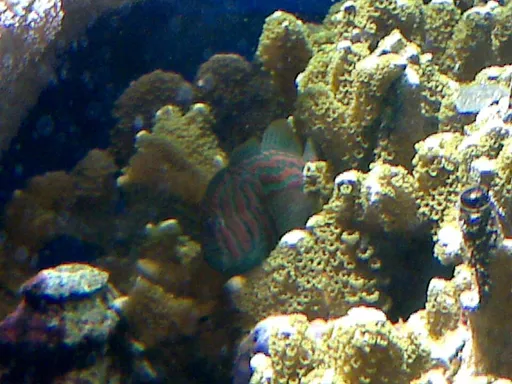
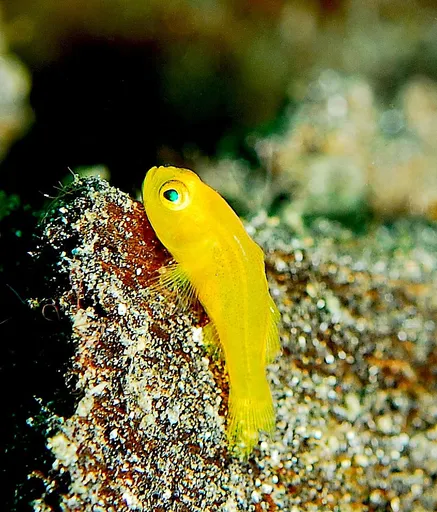
Clown gobies and their Acropora
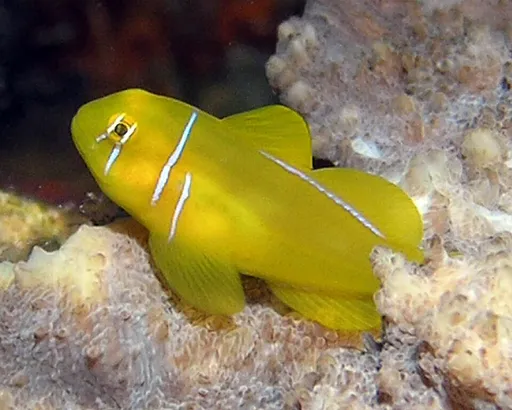
Clown gobies spend their lives wedged in the branches of Acropora corals, eating the coral's mucus and the small animals that live on it. Their skin carries a toxin that puts off predators, so the coral becomes a safe house. The coral is paid back in a way nobody expected: when a toxic seaweed touches an Acropora, the coral releases a chemical signal within minutes, and the gobies swim out and trim the seaweed back. Corals with gobies lose far less tissue to seaweed than corals without them.
A clown goby wants a branching coral to sit in, and Acropora is the natural choice, though it will settle for other branching stony corals. It is tiny, peaceful and needs small food several times a day. The one caution is the coral itself: a pair may nip a patch of Acropora or Montipora bare to lay eggs on the skeleton, and a small colony can lose a branch that way. Keep one, or a pair, per tank; two males fight.
Clown gobies
Acropora corals
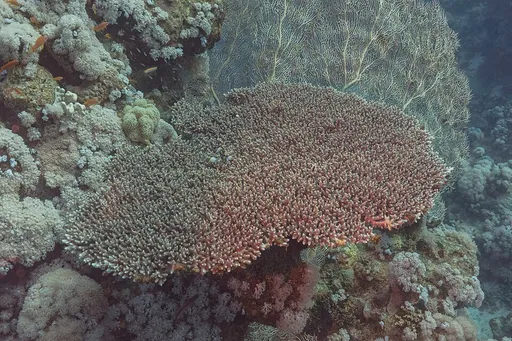
Table acropora
Acropora hyacinthus
Saltwater17.7 in (45 cm) · 53 gal (200 L)75–81°F (24–27°C)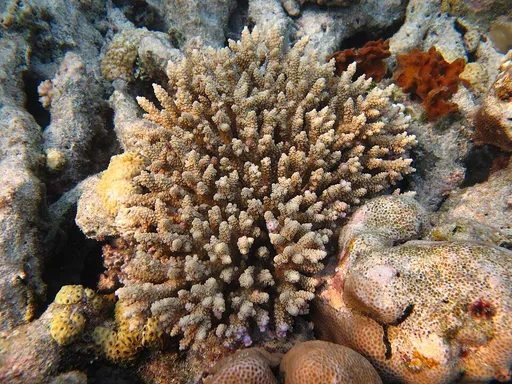
Smooth skin acropora
Acropora tenuis
Saltwater9.8 in (25 cm) · 40 gal (150 L)75–81°F (24–27°C)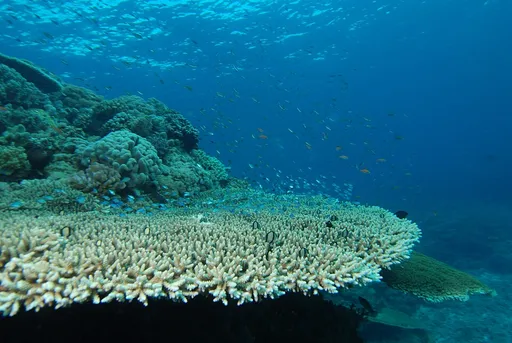
Staghorn acropora
Acropora
Saltwater9.8 in (25 cm) · 40 gal (150 L)75–81°F (24–27°C)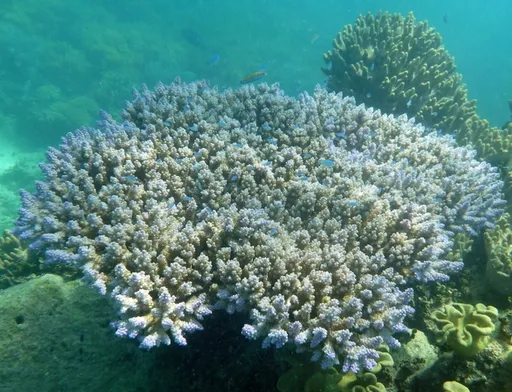
Tricolor acropora
Acropora valida
Saltwater9.8 in (25 cm) · 40 gal (150 L)75–81°F (24–27°C)
Mutualism
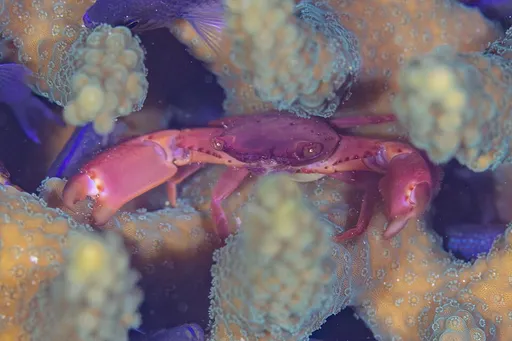
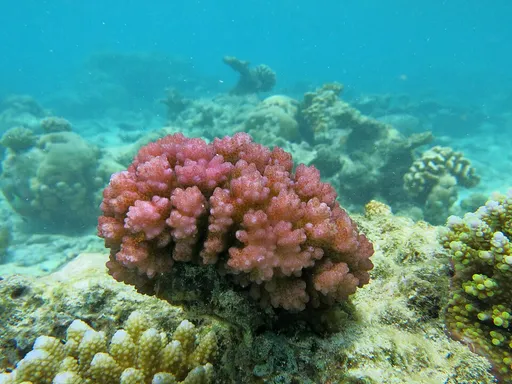
The coral guard crab and its Pocillopora
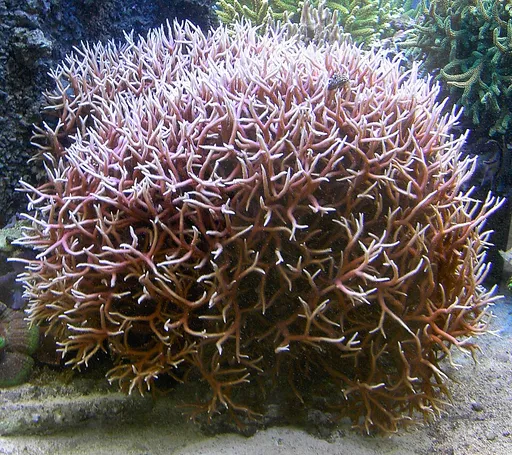
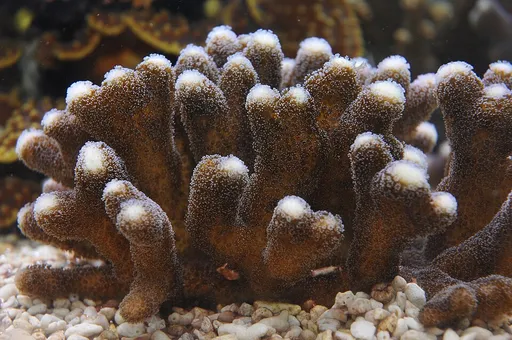
Guard crabs live deep in the branches of cauliflower, birdsnest and cat's paw corals and rarely leave. The coral feeds them: it produces fat-rich mucus and small tissue bodies the crab eats. The crab earns it. When a crown-of-thorns starfish or a coral-eating snail moves onto the colony, the crab pinches and pushes until it leaves, and when sediment settles on the branches the crab clears it, which is the difference between the coral living and smothering during a sediment pulse.
Small Pocillopora colonies often arrive with a guard crab already in residence; look for a fingernail-sized crab with a smooth, spotted or plain shell in the branches and leave it there. One crab or a mated pair per colony is the rule, they are harmless to everything else in the tank, and they need no feeding beyond the coral they live in. Without a host coral the crab has nowhere to be and does not last.
Shelter
Christmas tree worms and Porites
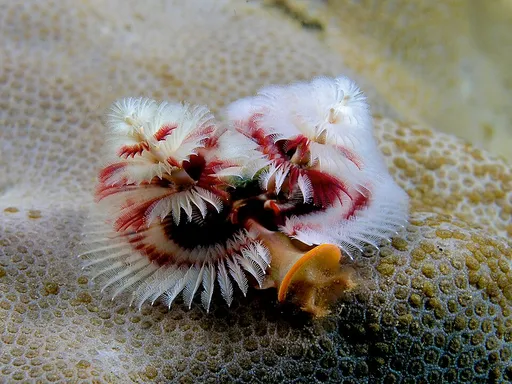
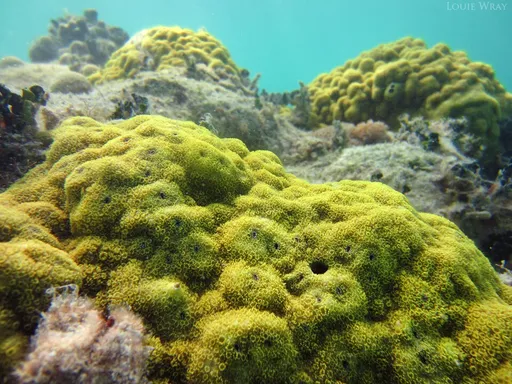
A Christmas tree worm settles as a larva on living Porites, and the coral grows up around its tube, so the adult worm lives embedded in a coral head with only its two spiral crowns showing. The crowns are gills and feeding nets; the worm snaps them back into the tube at a shadow and unfurls them again a minute later. The coral seems to gain from the tenant: a Porites head with worms in it suffers less from crown-of-thorns starfish, which avoid the worms' spiny tube plugs, and patches of coral around each worm have been seen to survive bleaching that killed the rest of the colony.
The worms are sold on a piece of living Porites, often called a worm rock, and they live only as long as the coral does. Treat it as a coral first: reef lighting, stable water, moderate flow. Feed the worms phytoplankton or a fine coral food a few times a week, since a home tank carries little natural plankton. A worm that loses its crown can regrow it, but a worm whose coral dies rarely lasts long, so keeping the Porites alive is the whole job.
Tube worms
Brood host
Bitterlings and freshwater mussels
Bitterlings do not lay their eggs in the open at all. In spring the female grows a long egg tube and slips her eggs through the outflow siphon of a living freshwater mussel, into its gill chamber, while the male releases sperm over the inflow siphon so the mussel draws it in. The embryos develop inside the mussel for about a month, protected from everything, then swim out. The mussel's own larvae attach to passing fish to develop, so the two use each other. Biologists now read it as a mild parasitism running both ways rather than a partnership: the eggs cost the mussel oxygen and food, and bitterlings have evolved to shed the mussel larvae that other fish carry.
Bitterlings are cool-water fish for an unheated tank and breed only with a live mussel present. Swan or duck mussels are the usual hosts; they are filter feeders that starve in clean water and need a mature, well fed tank with fine sand to sit in, which is why breeding bitterlings is a project rather than a happy accident. Watch the female's egg tube lengthen and the male stake out the mussel, and you have seen the whole ritual.
In the catalog
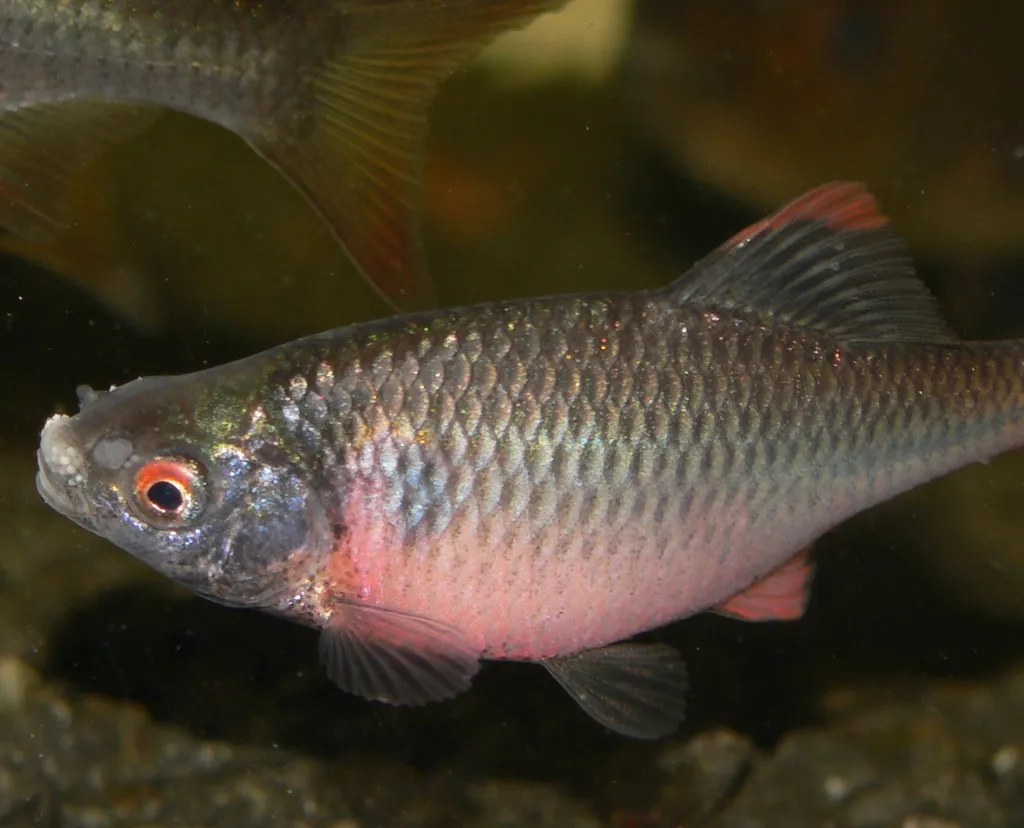
European bitterling
Rhodeus amarus
Freshwater3.9 in (10 cm) · 34 gal (130 L)55–72°F (13–22°C)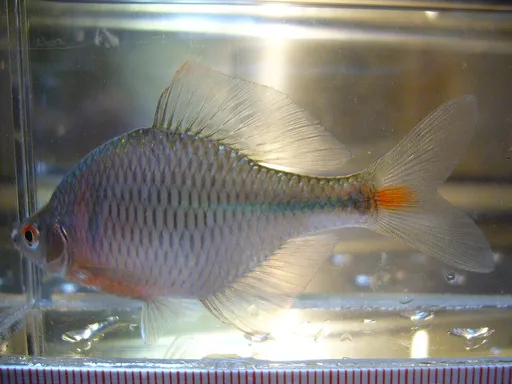
Rosy bitterling
Rhodeus ocellatus
Freshwater3.1 in (8 cm) · 21 gal (80 L)64–75°F (18–24°C)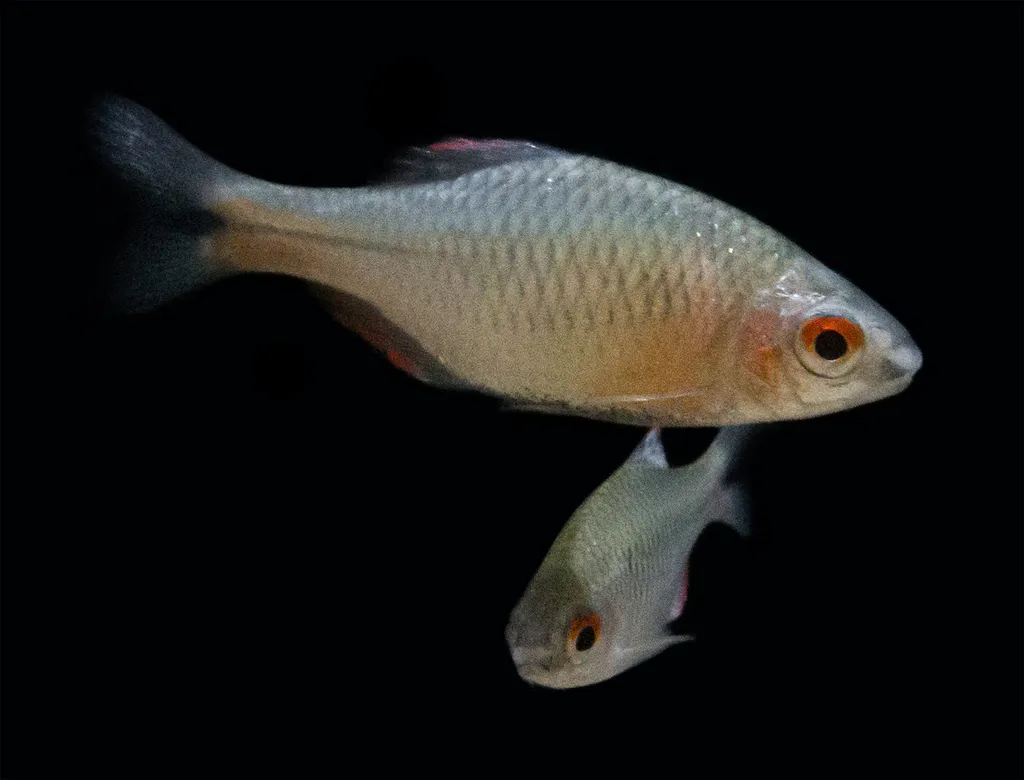
Blue Amur bitterling
Paracheilognathus himantegus
Freshwater3.1 in (8 cm) · 30 gal (112 L)57–79°F (14–26°C)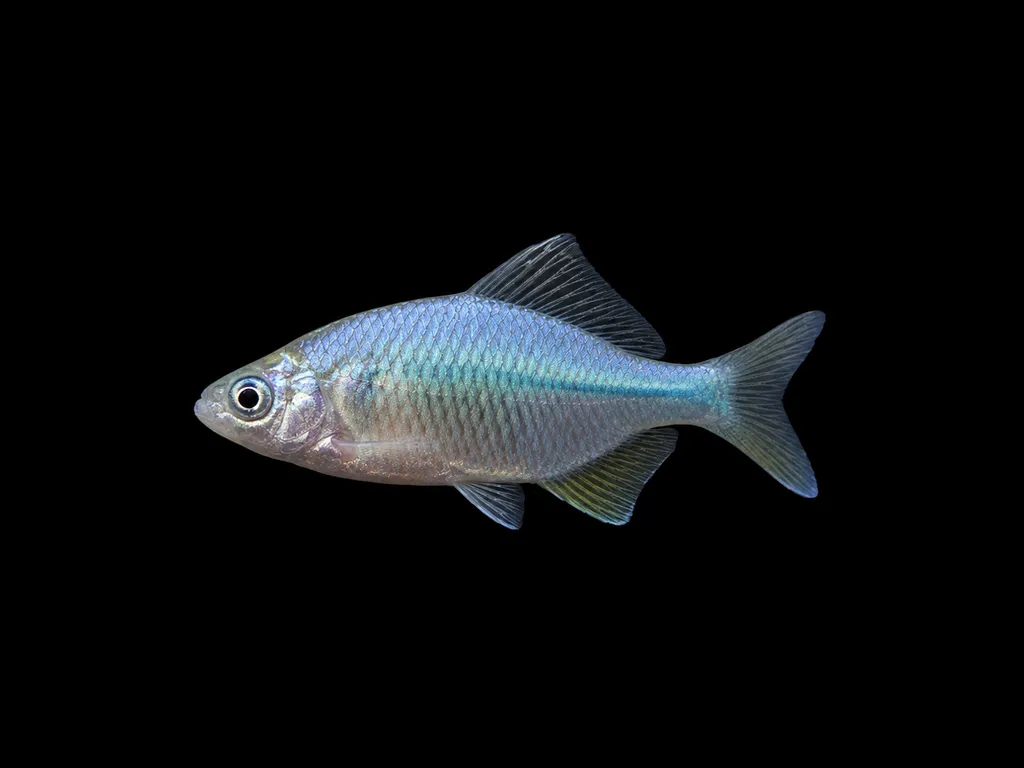
Rainbow bitterling
Acheilognathus macropterus
Freshwater10.6 in (27 cm) · 106 gal (400 L)57–79°F (14–26°C)Red-tail bitterling
Acheilognathus tonkinensis
Freshwater4.7 in (12 cm) · 40 gal (150 L)61–79°F (16–26°C)
The mussels are not in the catalog, so this one has no partner cards.
Mutualism
The boxer crab and its anemones
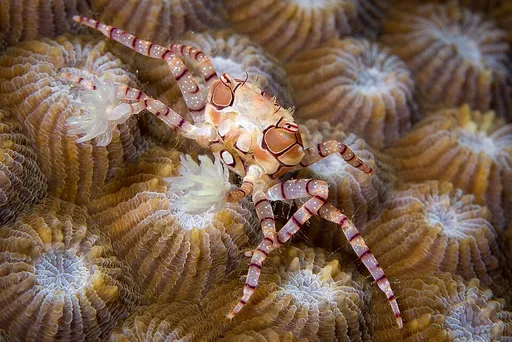
The boxer crab holds a tiny anemone in each claw and waves them at anything that comes close, the way a boxer holds up gloves. The anemones sting for the crab and mop up food particles, and the crab clips food from them to eat. Boxer crabs that lose one anemone have been filmed tearing the other in two, and both halves grow back into a whole anemone, so the crab is farming its weapons. The anemones seem to get nothing but a lifetime of being waved about.
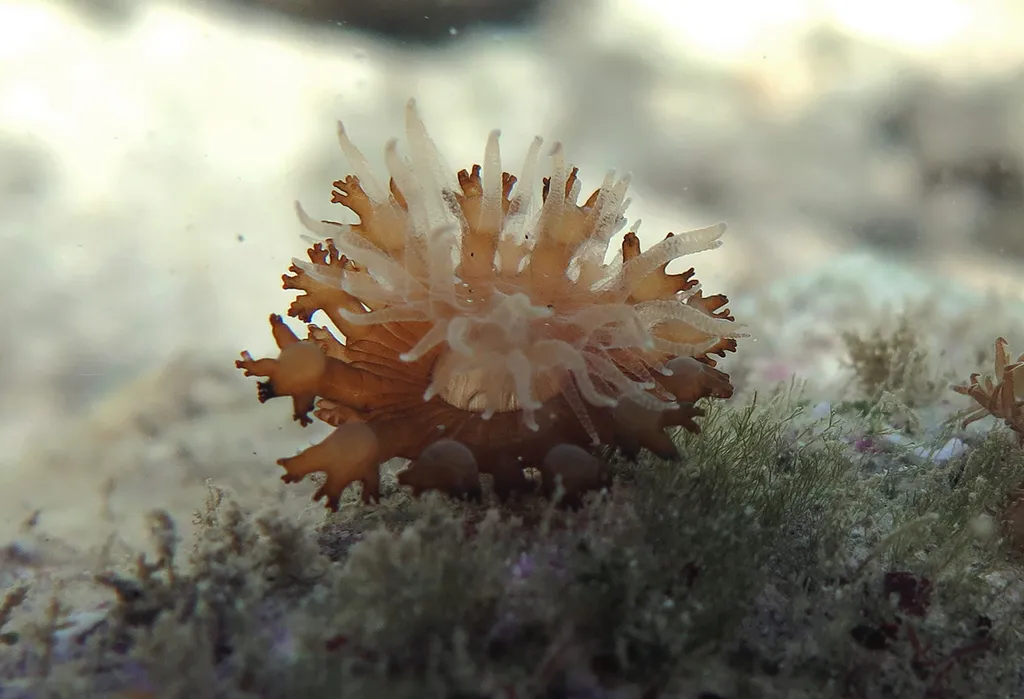
A nano reef animal about an inch (2.5 cm) across that spends much of the day under rock. It is harmless to corals and fish and needs nothing special beyond stable water and no predators. The anemones arrive in its claws and need no care of their own; a crab sold as a pom-pom crab carries Triactis producta or, from the Red Sea, an Alicia. Do not confuse it with the freshwater pom pom crab in this catalog, which has fluffy claws and no anemones at all.
Planning a tank?
TankBud checks stocking and water fit as you build a tank, then tracks water tests, reminders and photos once it is running.
Track your tanksMaintain tanks for clients? See TankBud Pro