Aurora anemone
Heteractis aurora
Also known as Beaded Anemone, Beaded Sea Anemone, Sand Anemone, Aurora Host Anemone
SaltwaterAnemone
Care at a glance
- Temperature
- 72–79°F
- 22–26°C
- pH
- 8.0–8.4
- Adult size
- 11.8 in
- 30 cm
- Minimum tank
- 50 gal
- 190 L
- Temperament
- Peaceful
- Social behavior
- Solitary
- Swim level
- Bottom
- Difficulty
- Difficult
- Breeding
- No record
- Rarity
- Common
- Reef safe
- Reef safe with caution
- Family
- Stichodactylidae
- Origin
- Indo-Pacific, anchored in sand at the base of reefs and lagoon slopes.
Overview
It needs a mature, stable reef of at least 190 litres at 22 to 26 C and pH 8.0 to 8.4, with strong light, a deep sand bed of 10 cm or more, and moderate flow. Feed it chopped meaty foods such as shrimp or fish a couple of times a week. Like all anemones it can move and sting nearby corals, and it can get pulled into powerheads, so screen intakes before adding one.
In the wild
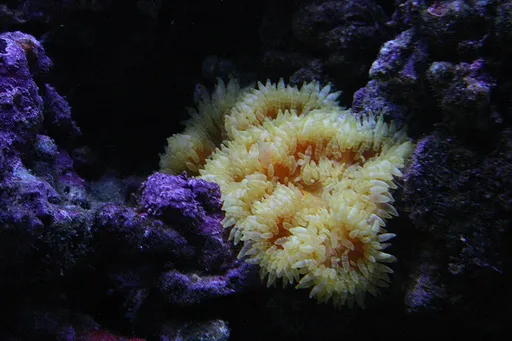
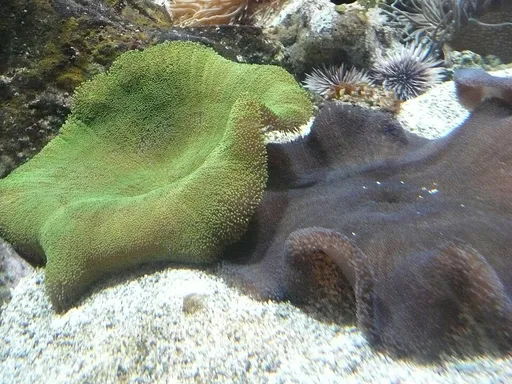
The aurora anemone is named for the bead-like swellings that ring each tentacle, giving it a knobbly strung look. Colors run from tan and beige to green and purple, and the oral disc can reach about 30 cm. It anchors its foot deep in sand with the column buried and only the disc showing.
Good to know
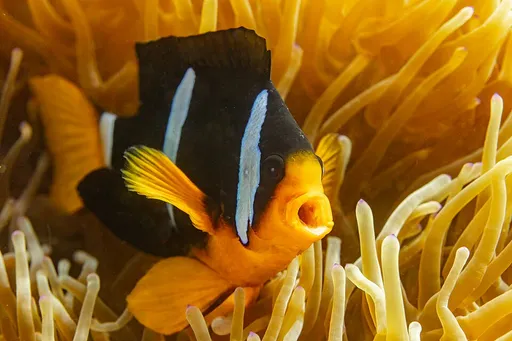
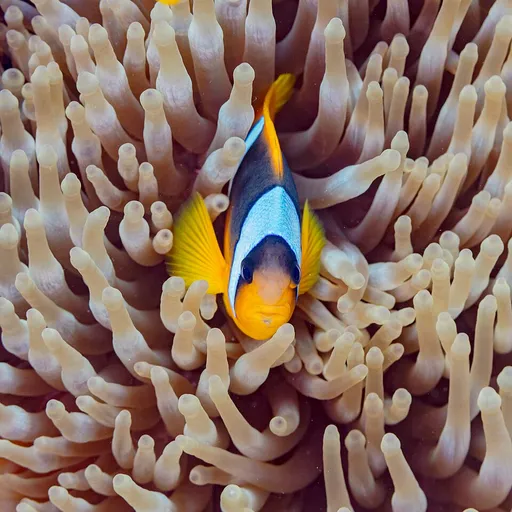
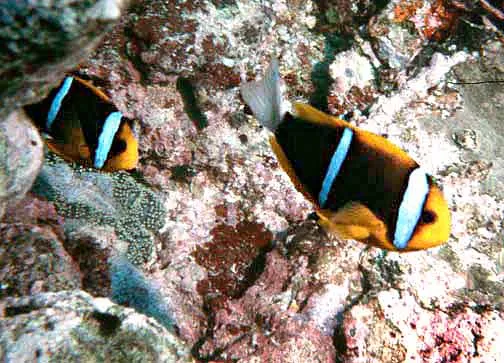
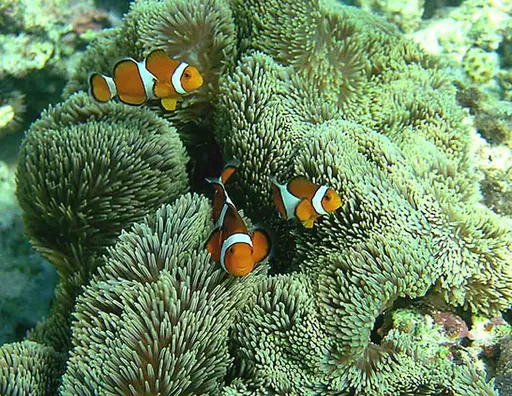
Heteractis aurora is one of the ten anemone species that host clownfish in the wild. It works mostly as a nursery host, taking in juvenile clowns, with Clark's clownfish the species most likely to settle in one in an aquarium.
Did you know
In the wild it more often shelters baby clownfish than adults, acting as a kind of nursery until the young fish move on to a larger host.
Symbiotic relationships
Clownfish and their host anemones
A clownfish lives inside an anemone that stings and eats other fish its size. Its mucus coat keeps the anemone's stinging cells from firing, and a new fish builds that protection up over hours of brief touches. The fish gets a refuge no predator will follow it into and a nest site at the anemone's base. The anemone gets a guard that drives off the butterflyfish that would graze its tentacles, a steady supply of nitrogen from the fish's waste, and water movement at night, when the fish fans its fins among the tentacles and the anemone takes up more oxygen. Only ten anemone species host clownfish in the wild, and each clownfish species uses its own short list of them.
Captive-bred clownfish have never seen an anemone and do not need one; they settle for a coral, a powerhead or a corner of the tank. If you want the pairing, the anemone is the harder animal by far and goes in first, into a mature tank with strong light and stable water, at the tank size its own profile lists. The bubble tip anemone is the hardy host, and the one most clownfish accept in captivity even when it is not a natural host, so a clownfish profile lists it as the usual tank host where that is the case. The sebae, magnificent and carpet anemones are marked difficult, and the carpets eat fish. Expect a paired clownfish to defend its anemone against everything else in the tank.
Common questions
What size tank does an Aurora anemone need?
An Aurora anemone needs at least 50 gal (190 L). It spends most of its time in the bottom.
What temperature and pH does an Aurora anemone need?
An Aurora anemone is comfortable at 72–79°F (22–26°C) with a pH of 8.0–8.4.
How big does an Aurora anemone get?
An adult Aurora anemone reaches about 11.8 in (30 cm).
Related species
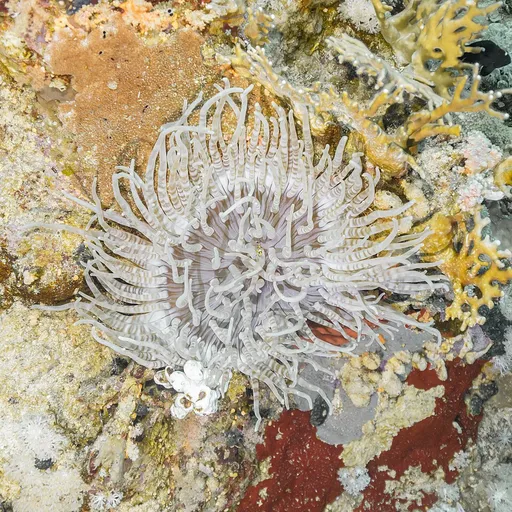 15.7 in (40 cm)40 gal (150 L)75–81°F (24–27°C)
Sebae anemone
Heteractis crispa
15.7 in (40 cm) · 40 gal (150 L)
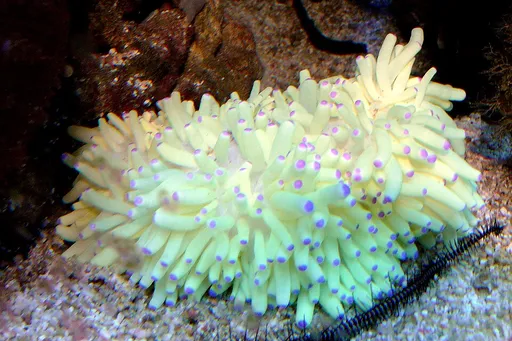 7.9 in (20 cm)40 gal (150 L)75–81°F (24–27°C)
Malu anemone
Heteractis malu
7.9 in (20 cm) · 40 gal (150 L)
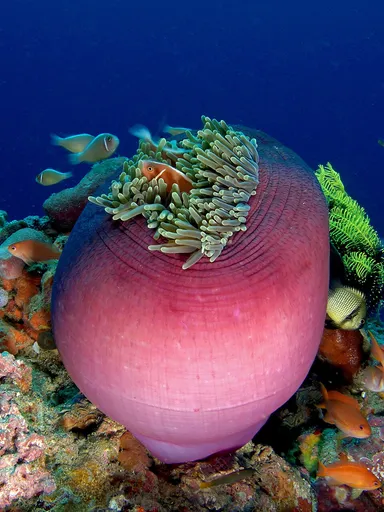 19.7 in (50 cm)53 gal (200 L)75–81°F (24–27°C)
Magnificent anemone
Heteractis magnifica
19.7 in (50 cm) · 53 gal (200 L)
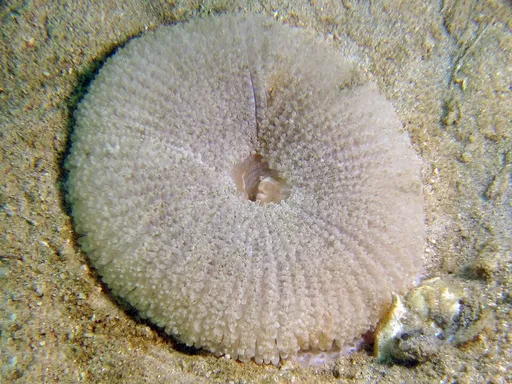 3.1 in (8 cm)20 gal (75 L)75–81°F (24–27°C)
Maxi-mini carpet anemone
Stichodactyla tapetum
3.1 in (8 cm) · 20 gal (75 L)
 19.7 in (50 cm)53 gal (200 L)75–81°F (24–27°C)
Gigantea carpet anemone
Stichodactyla gigantea
19.7 in (50 cm) · 53 gal (200 L)
 33.5 in (85 cm)53 gal (200 L)75–81°F (24–27°C)
Haddon's carpet anemone
Stichodactyla haddoni
33.5 in (85 cm) · 53 gal (200 L)