Freshwater aquarium fish
Freshwater fish cover the widest range of tanks, from a first betta to a planted community or a species-only cichlid setup. Each profile lists the tank size, temperature and pH a fish is comfortable in, plus how it behaves with tankmates.
At a glance
- Tank size
- 5–10,567 gal
- 5 gal (20 L) to 10,567 gal (40,000 L); half the list needs 29 gal (110 L) or more
- Temperature
- 73–81°F
- 23–27°C, most of the list
- pH
- 6.0–7.5
- Most of the list
- Difficulty
- 366 easy
- 1484 medium · 391 difficult
- Temperament
- 999 peaceful
- 922 mostly peaceful · 321 aggressive
2230 species and 112 varieties
Start here
Six first fish
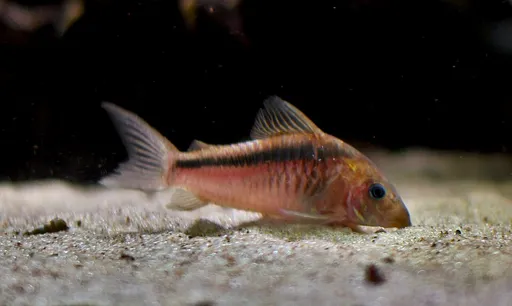
The neon tetra is marked beginner at 1.5 inches (3.75 cm) for 11 gallons (40 liters), the fish most tanks start with. The harlequin rasbora is the same rating at 2 inches (5 cm) for 15 gallons (55 liters) and takes most tap water. The zebra danio is the hardy one, 2 inches (5 cm) at 64–75°F (18–24°C). The guppy is marked beginner at 2.4 inches (6 cm) for 13 gallons (50 liters) and breeds without help. The southern platy is 2.8 inches (7 cm) for 15 gallons (55 liters), marked beginner and peaceful. The panda cory is the bottom fish for a first tank, 2 inches (5 cm) for 15 gallons (55 liters), marked easy and kept in a group of six.
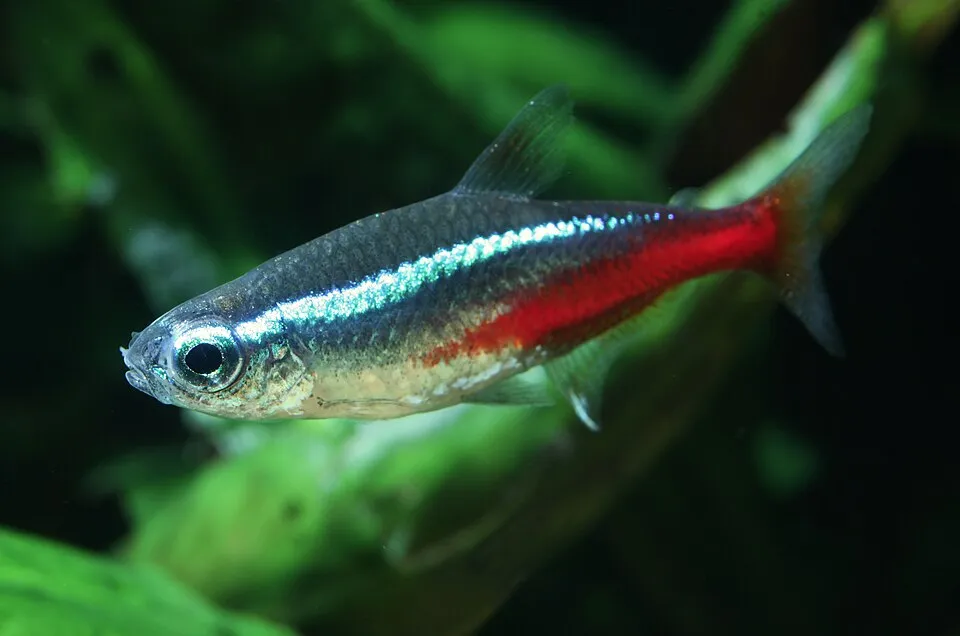
Neon tetra
Paracheirodon innesi
Freshwater- Size
- 1.5 in (3.8 cm)
- Tank
- 11 gal (40 L)
- Water
- 70–77°F (21–25°C)
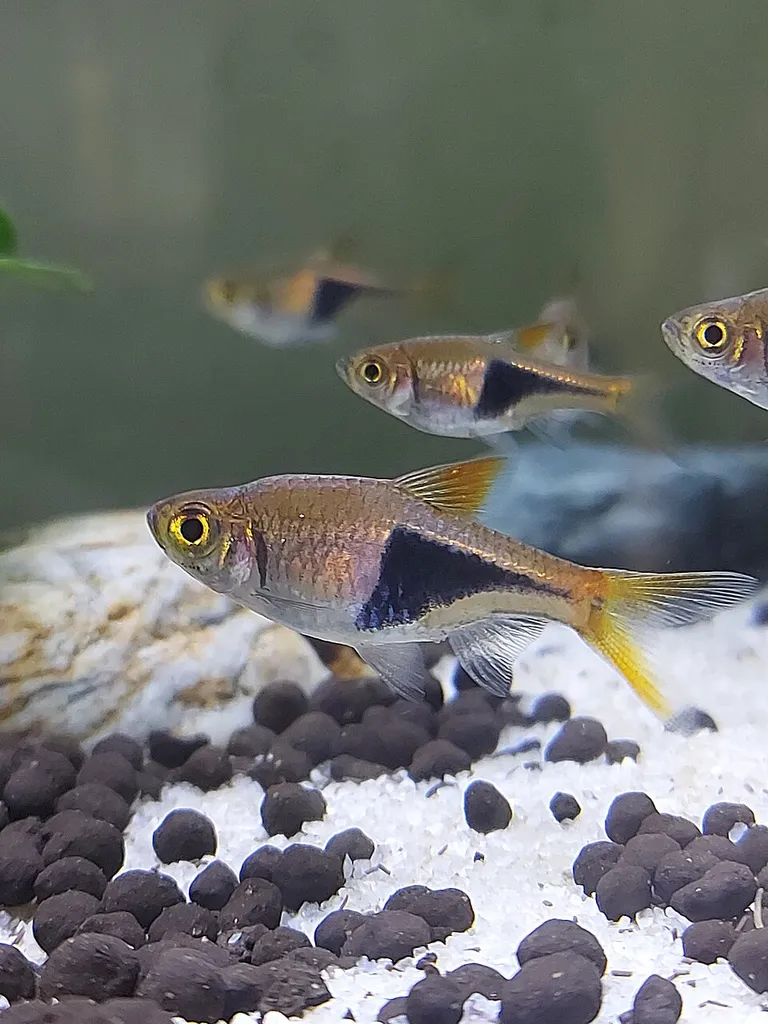
Harlequin rasbora
Trigonostigma heteromorpha
Freshwater- Size
- 2 in (5 cm)
- Tank
- 15 gal (55 L)
- Water
- 72–82°F (22–28°C)
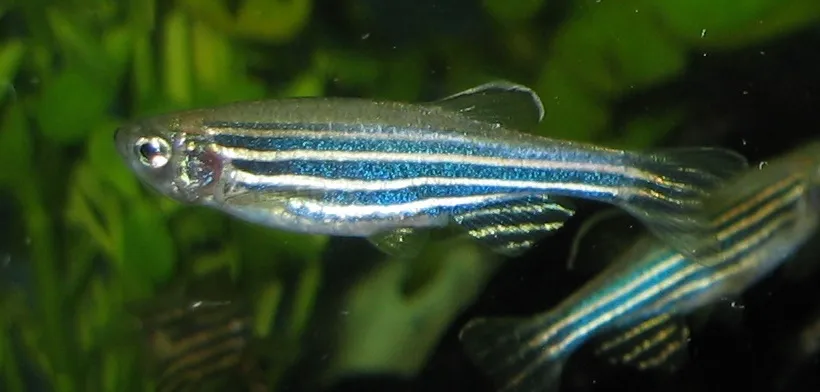
Zebra danio
Danio rerio
Freshwater- Size
- 2 in (5 cm)
- Tank
- 15 gal (55 L)
- Water
- 64–75°F (18–24°C)
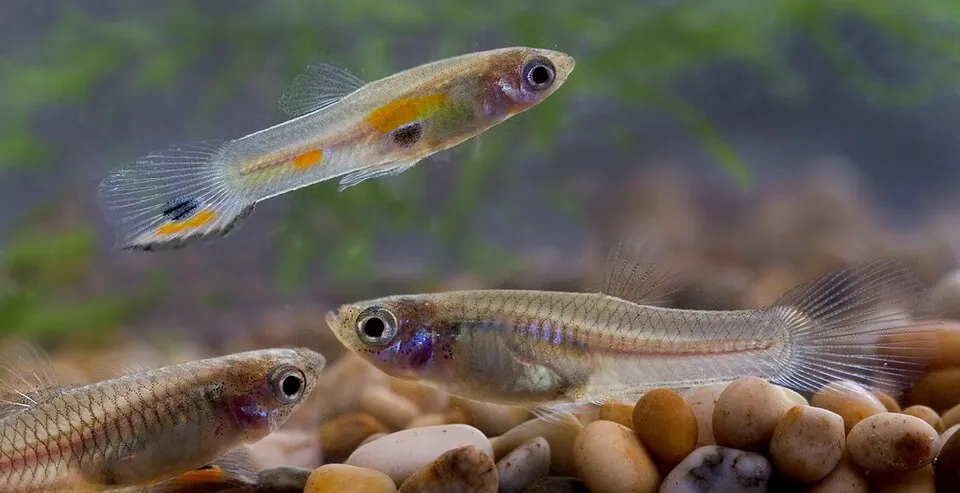
Guppy
Poecilia reticulata
FreshwaterBrackish- Size
- 2.4 in (6 cm)
- Tank
- 13 gal (50 L)
- Water
- 64–82°F (18–28°C)
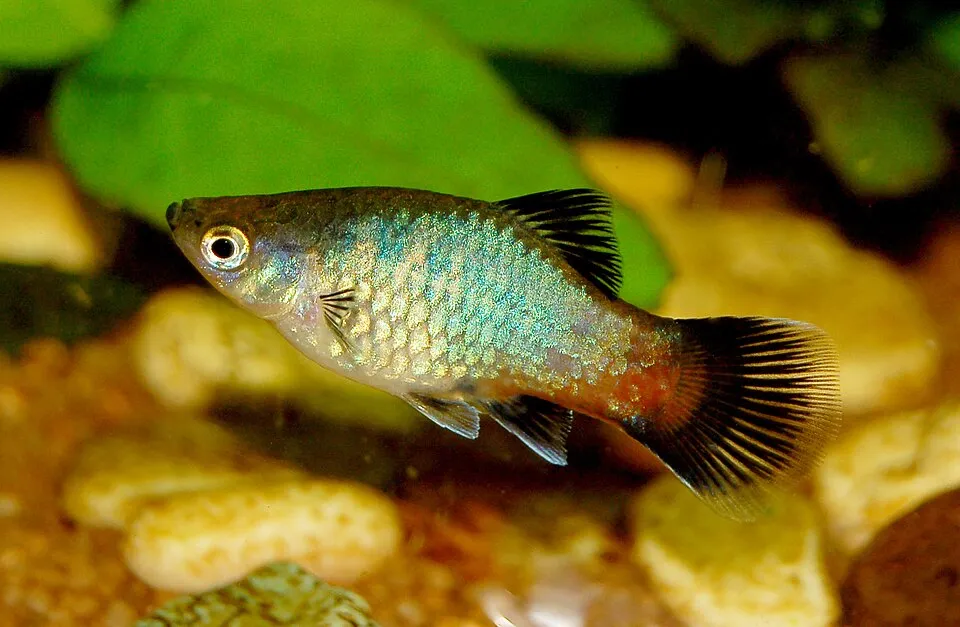
Southern platy
Xiphophorus maculatus
Freshwater- Size
- 2.8 in (7 cm)
- Tank
- 15 gal (55 L)
- Water
- 68–79°F (20–26°C)
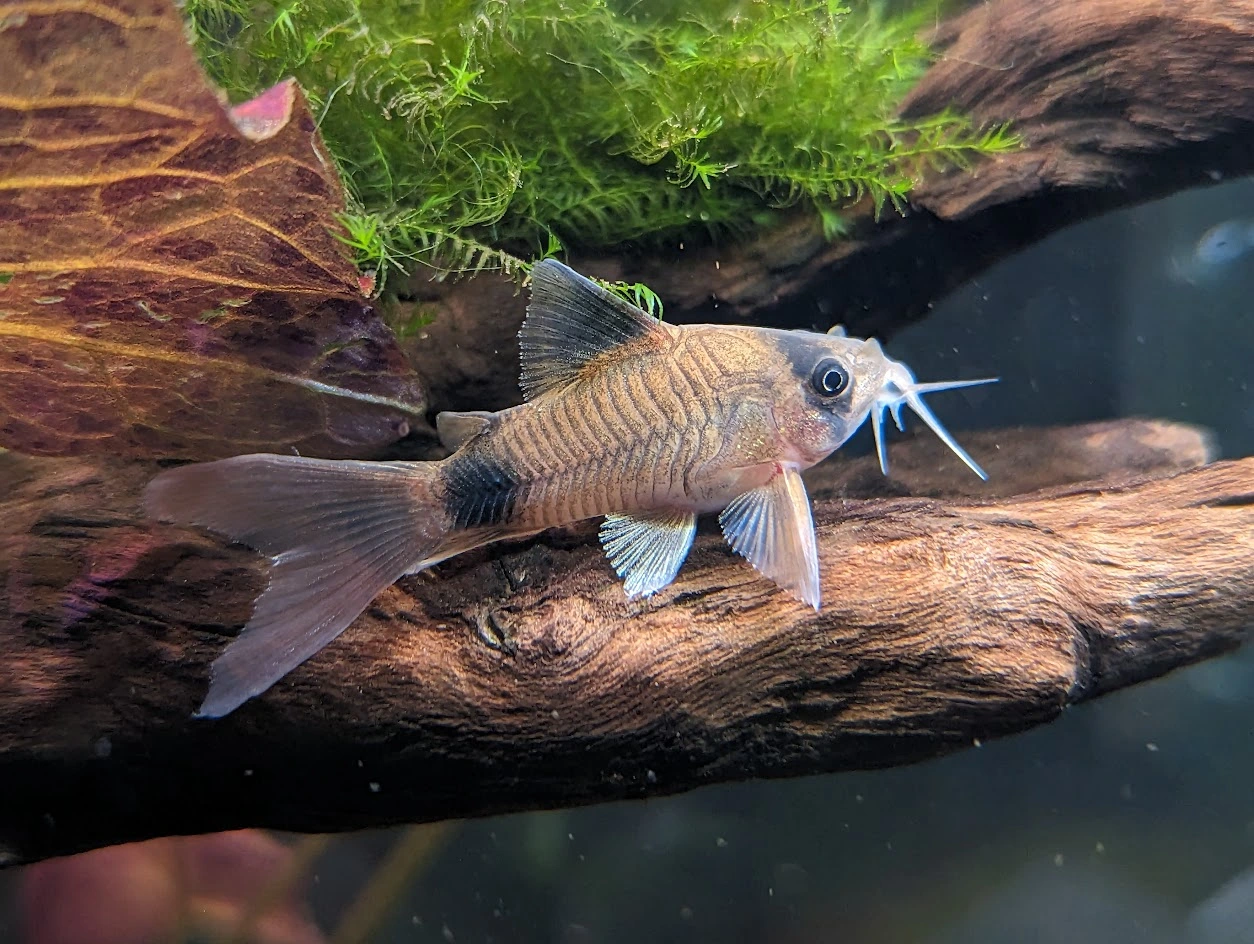
Panda cory
Hoplisoma panda
Freshwater- Size
- 2 in (5 cm)
- Tank
- 15 gal (55 L)
- Water
- 72–77°F (22–25°C)
The rule
The rules for a first freshwater tank
Cycle the tank first: four to six weeks with an ammonia source and no fish, until the test kit reads zero ammonia and zero nitrite. Match the fish to the water you have, because a guppy in soft acidic water and a cardinal tetra in hard alkaline water both fade and sicken. Buy for the adult, because the common pleco in the shop is 2 inches and reaches 15.7 inches (40 cm). And keep schooling fish in schools: six of one species, not one each of six.
- 01
Cycle first
Four to six weeks with no fish, until ammonia and nitrite read zero
- 02
Match the water
Hard and alkaline for livebearers, soft and acidic for tetras
- 03
Buy for the adult
A common pleco is 2 inches in the shop and 15.7 inches grown
- 04
Schools are schools
Six of one species, not one each of six
Water
Match the fish to your water
Hard, alkaline tap water suits the livebearers and the rift lake cichlids: the sailfin molly lists a pH from 7 to 8 and takes brackish water, the electric yellow cichlid a pH from 7.5 to 8.5, and Boeseman's rainbowfish a pH from 7 to 8 at 81–86°F (27–30°C). Soft, acidic water suits the tetras and the fish of the Amazon: the cardinal tetra lists a pH from 5 to 7, and the discus a pH from 6 to 7 at 79–90°F (26–32°C), marked difficult. The cherry barb lists a pH from 6 to 8 and lives in either.
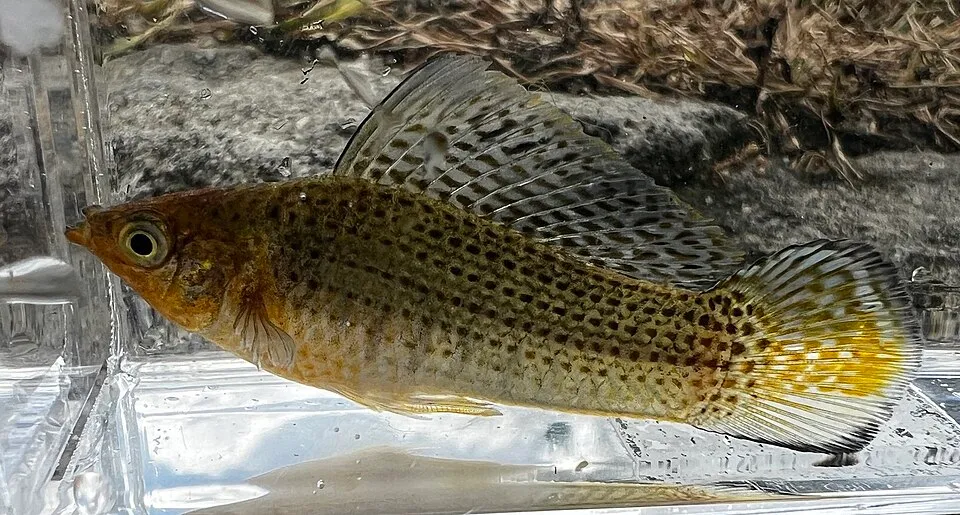
Sailfin molly
Poecilia latipinna
FreshwaterBrackish4.7 in (12 cm) · 24 gal (90 L)70–79°F (21–26°C)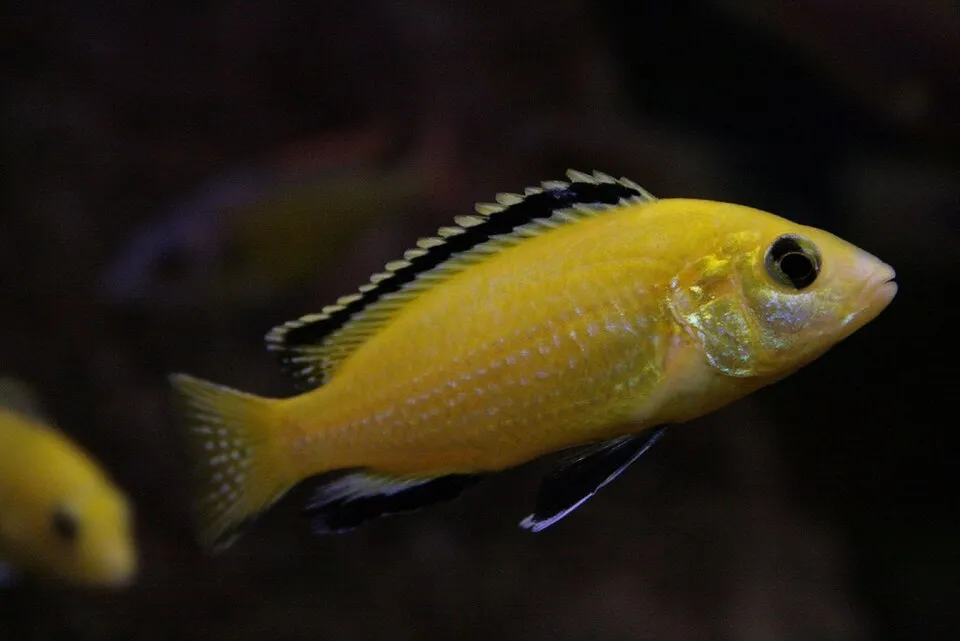
Electric yellow cichlid
Labidochromis caeruleus
Freshwater4.7 in (12 cm) · 42 gal (160 L)75–82°F (24–28°C)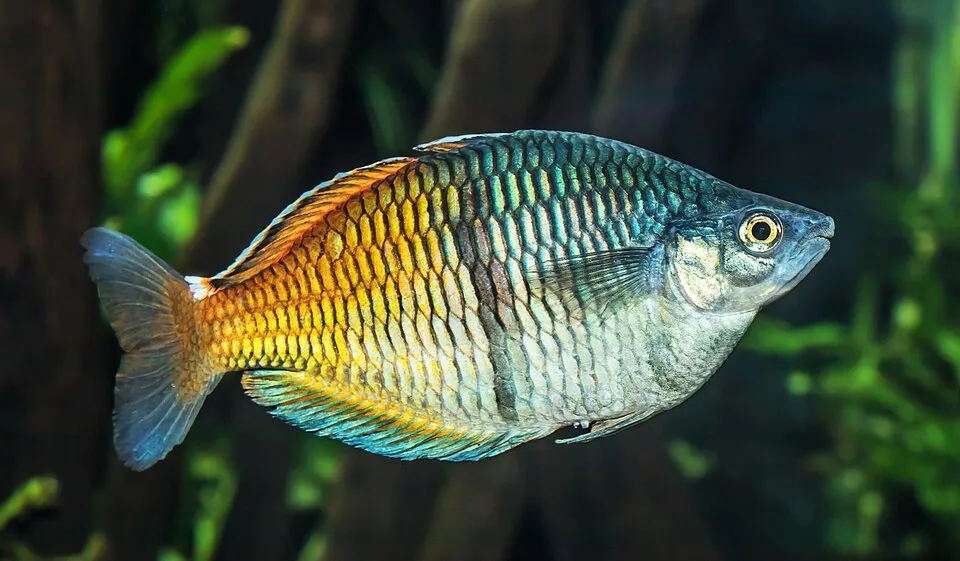
Boeseman's rainbowfish
Melanotaenia boesemani
Freshwater4.3 in (11 cm) · 30 gal (115 L)81–86°F (27–30°C)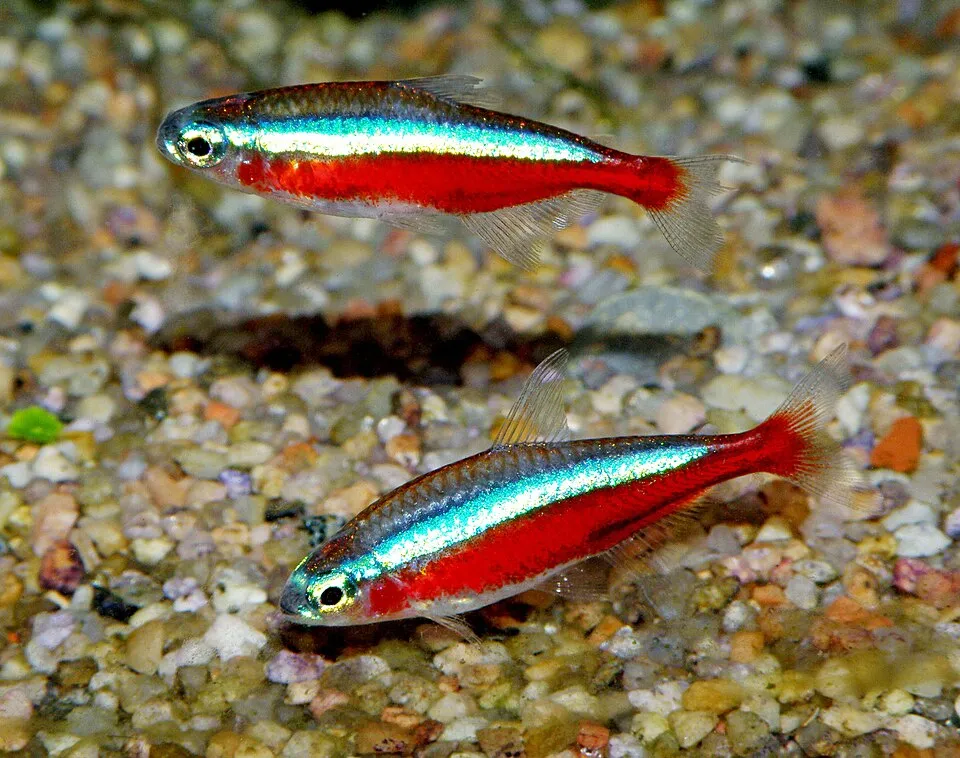
Cardinal tetra
Paracheirodon axelrodi
Freshwater1.8 in (4.5 cm) · 16 gal (60 L)73–84°F (23–29°C)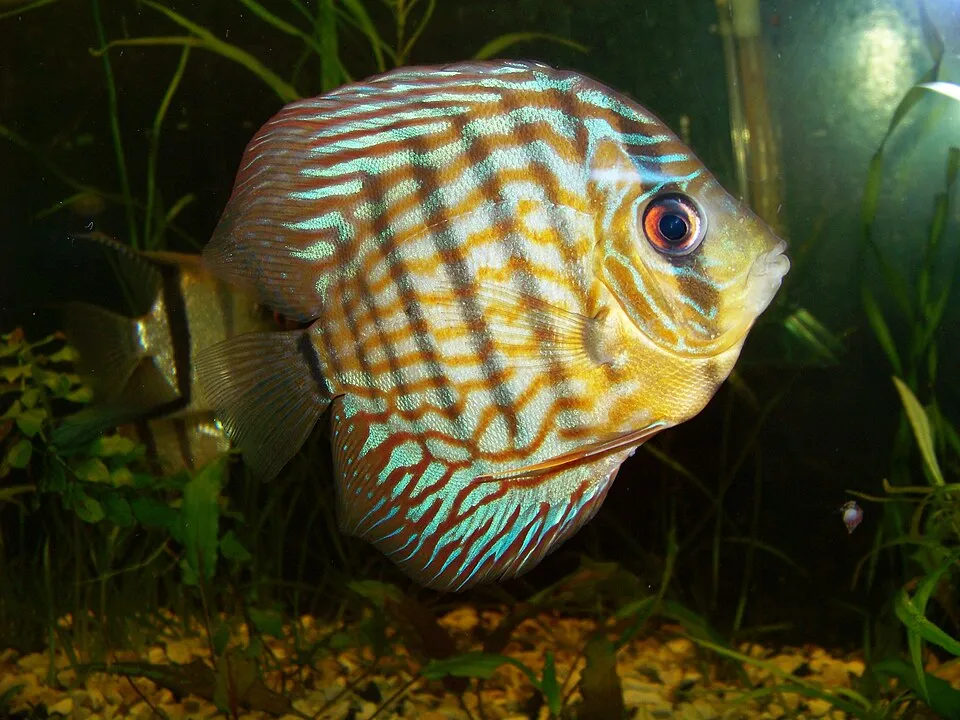
Discus
Symphysodon aequifasciatus
Freshwater7.9 in (20 cm) · 65 gal (245 L)79–90°F (26–32°C)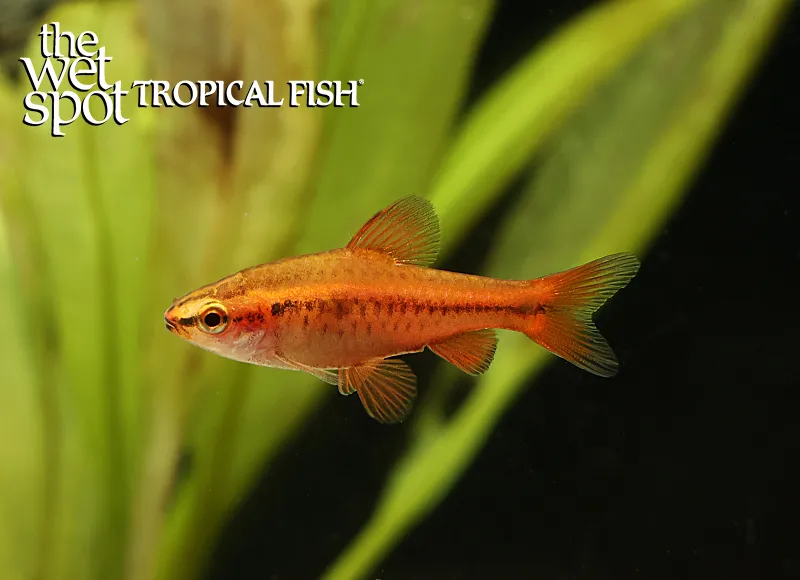
Cherry barb
Rohanella titteya
Freshwater2 in (5 cm) · 20 gal (75 L)72–81°F (22–27°C)
Adult size
Check the adult size before you buy
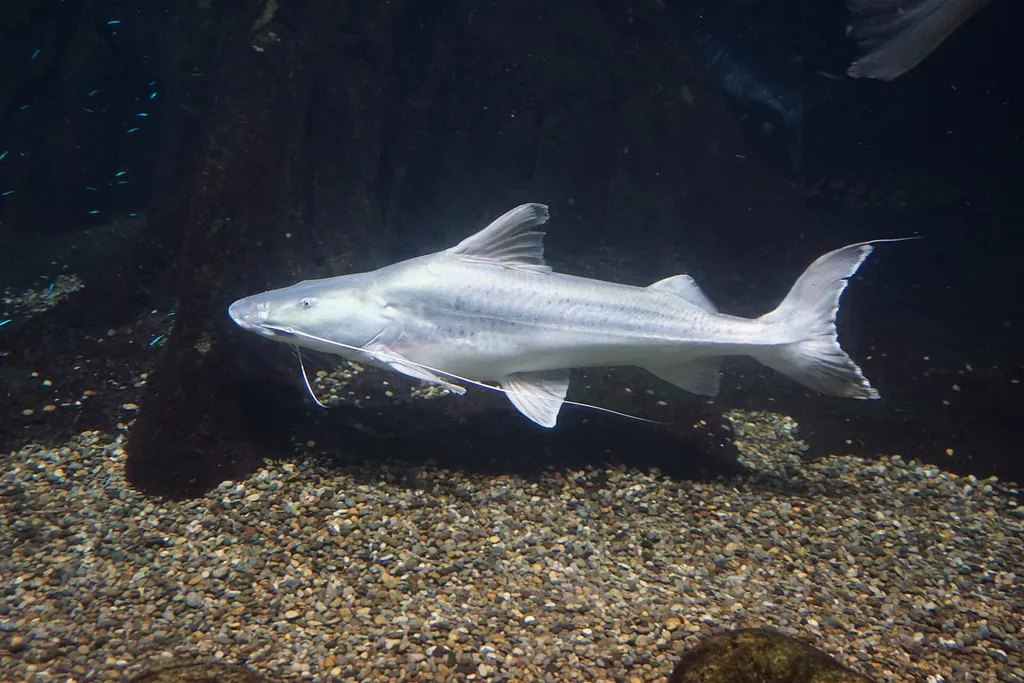
The common pleco reaches 15.7 inches (40 cm) and lists 85 gallons (320 liters). The oscar is marked aggressive at 13.8 inches (35 cm) for 95 gallons (360 liters). The silver arowana reaches 39.4 inches (100 cm) and lists 396 gallons (1,500 liters). The redtail catfish reaches the same length and lists 1,506 gallons (5,700 liters). The iridescent shark is sold as a 3 inch schooling fish and reaches 39.4 inches (100 cm) for 528 gallons (2,000 liters). The clown loach is the one most people keep, and it reaches 11.8 inches (30 cm) for 75 gallons (285 liters). All of them are sold small.
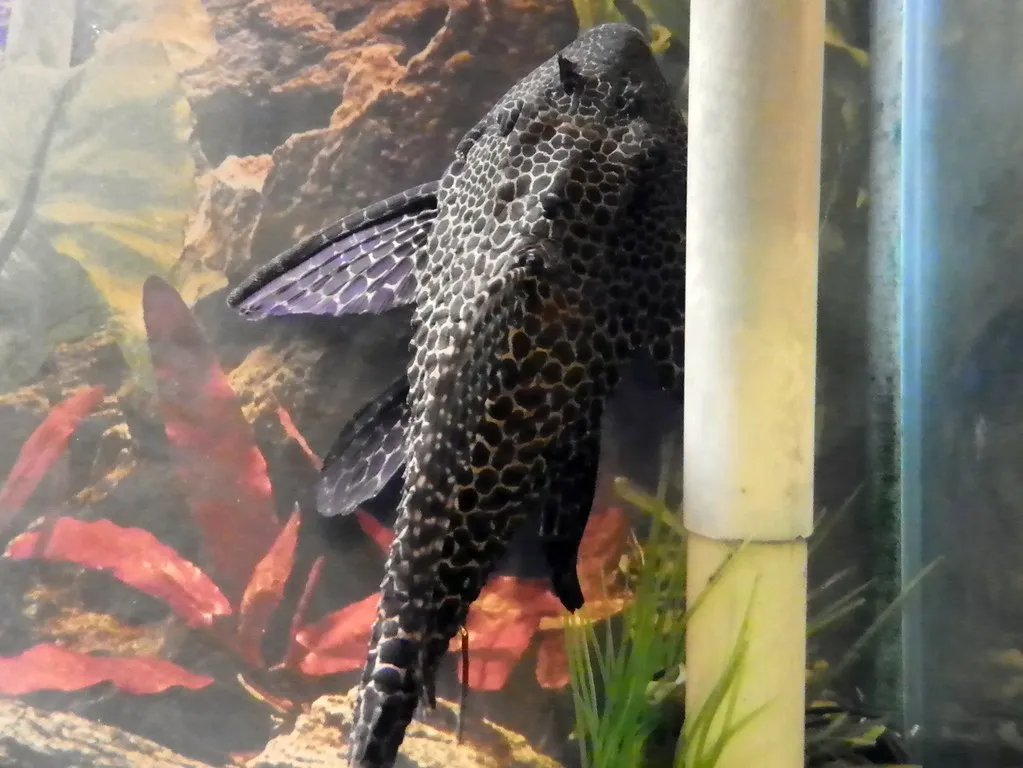
Common pleco
Hypostomus plecostomus
Freshwater15.7 in (40 cm) · 85 gal (320 L)72–86°F (22–30°C)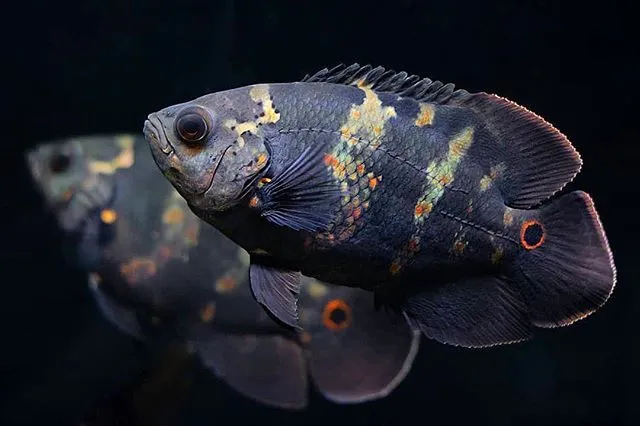
Oscar
Astronotus ocellatus
Freshwater13.8 in (35 cm) · 95 gal (360 L)68–82°F (20–28°C)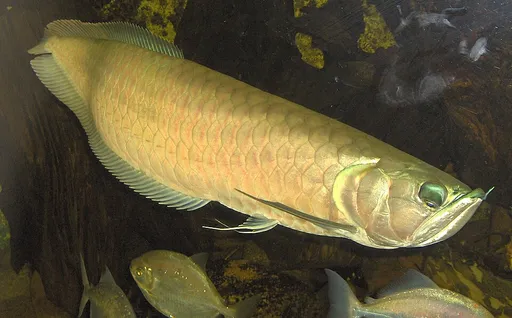
Silver arowana
Osteoglossum bicirrhosum
Freshwater39.4 in (100 cm) · 396 gal (1,500 L)75–82°F (24–28°C)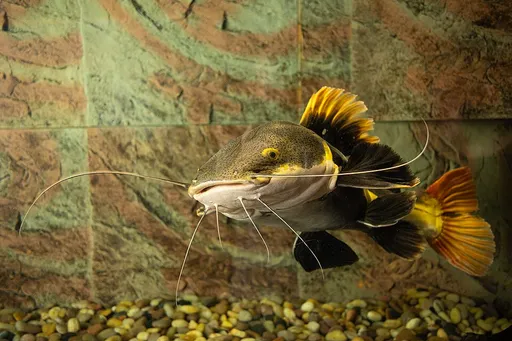
Redtail catfish
Phractocephalus hemioliopterus
Freshwater39.4 in (100 cm) · 1,506 gal (5,700 L)68–79°F (20–26°C)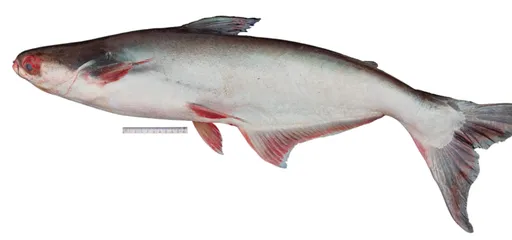
Iridescent shark
Pangasianodon hypophthalmus
Freshwater39.4 in (100 cm) · 528 gal (2,000 L)72–79°F (22–26°C)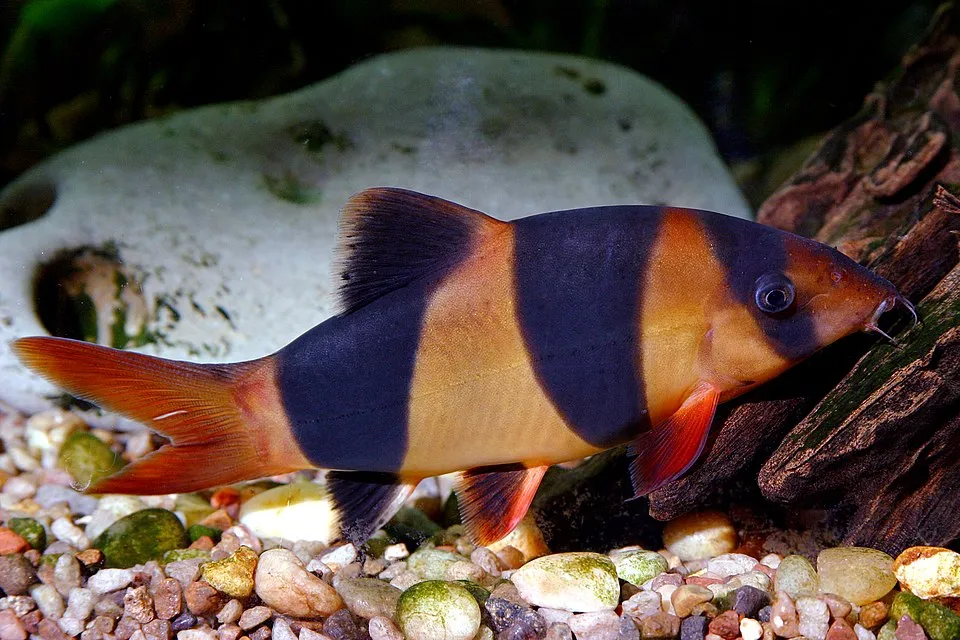
Clown loach
Chromobotia macracanthus
Freshwater11.8 in (30 cm) · 75 gal (285 L)75–86°F (24–30°C)
Centerpieces
One fish to build the tank around
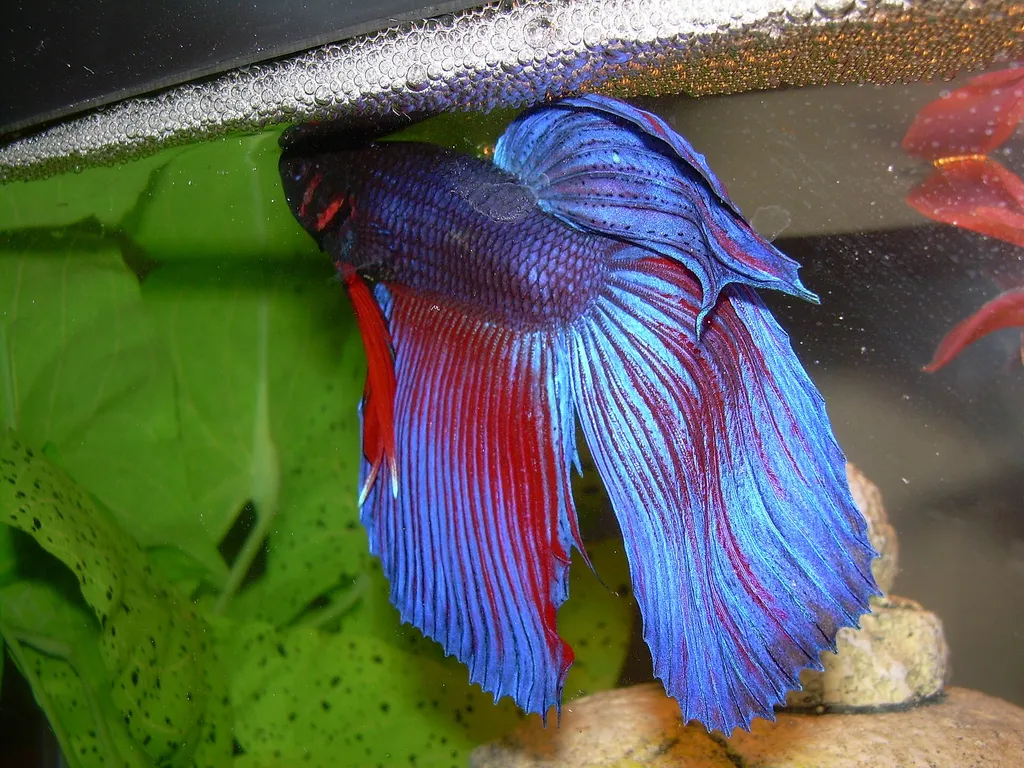
The betta is marked beginner at 3 inches (7.5 cm) for 7 gallons (25 liters), and it is marked aggressive and solitary, so it is kept alone or with calm fish that stay out of its way. The angelfish is marked easy at 5.9 inches (15 cm) for 30 gallons (115 liters). The pearl gourami is 4.7 inches (12 cm) for 30 gallons (115 liters), marked easy and peaceful. The kribensis is a 3.9 inch (10 cm) cichlid for 20 gallons (75 liters) that pairs and breeds in a cave. The Bolivian ram is the calm dwarf cichlid at 3.1 inches (8 cm), marked peaceful. The honey gourami is 2 inches (5 cm) for 20 gallons (75 liters), marked easy and peaceful.
Betta
Betta splendens
Freshwater3 in (7.5 cm) · 7 gal (25 L)72–86°F (22–30°C)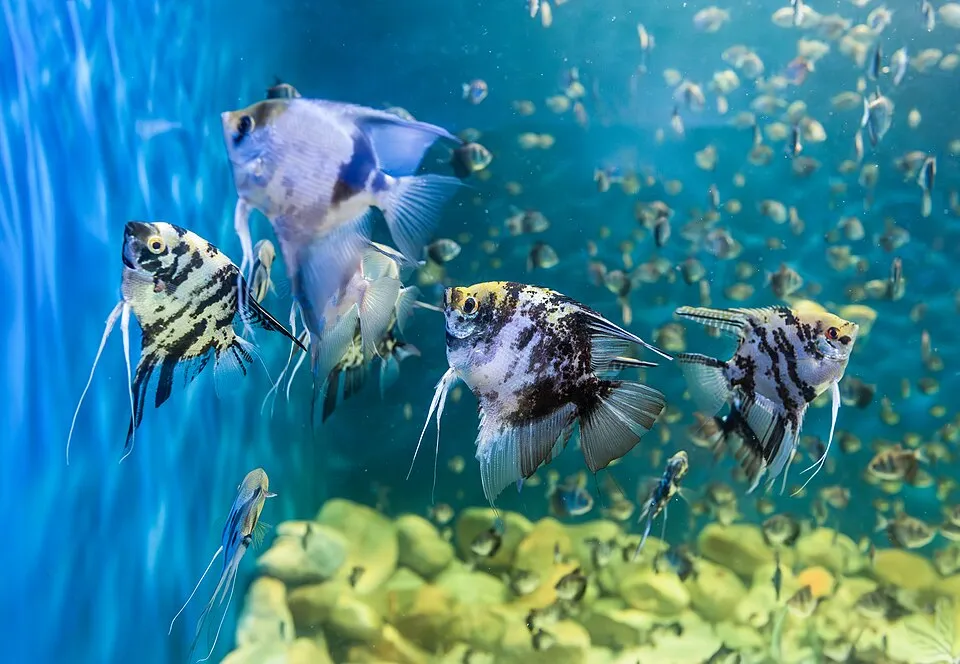
Angelfish
Pterophyllum scalare
Freshwater5.9 in (15 cm) · 30 gal (115 L)75–86°F (24–30°C)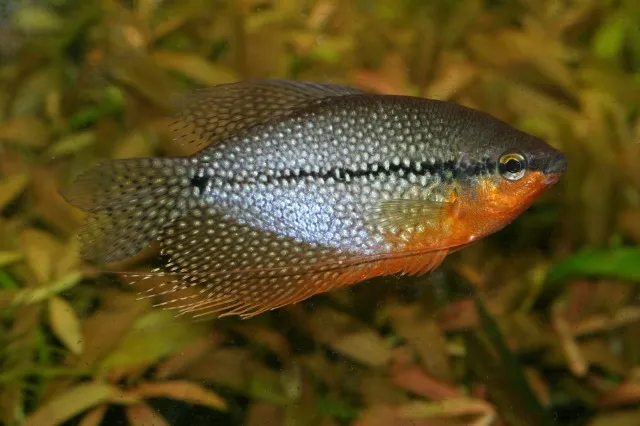
Pearl gourami
Trichopodus leerii
Freshwater4.7 in (12 cm) · 30 gal (115 L)75–86°F (24–30°C)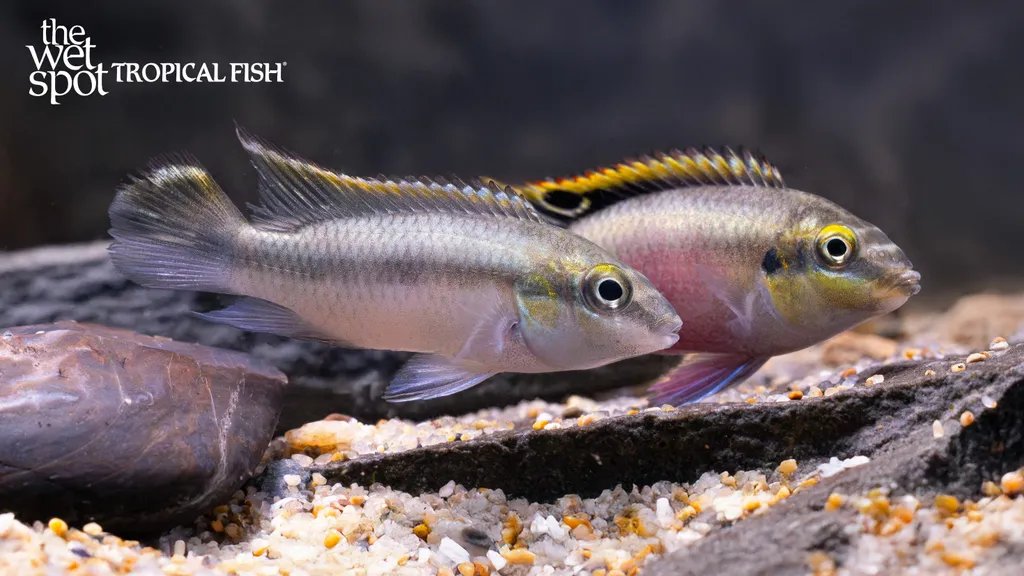
Kribensis
Pelvicachromis pulcher
Freshwater3.9 in (10 cm) · 20 gal (75 L)75–81°F (24–27°C)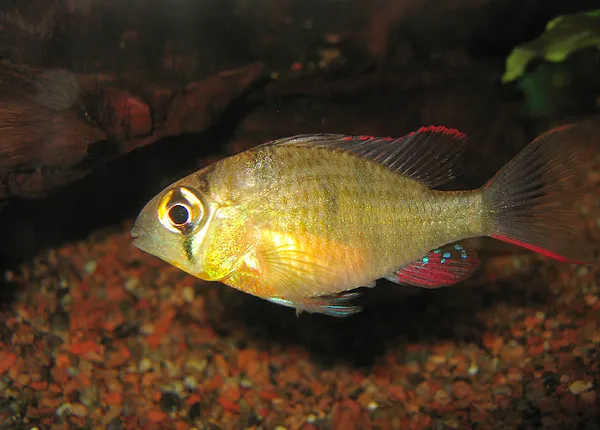
Bolivian ram
Mikrogeophagus altispinosus
Freshwater3.1 in (8 cm) · 45 gal (170 L)75–82°F (24–28°C)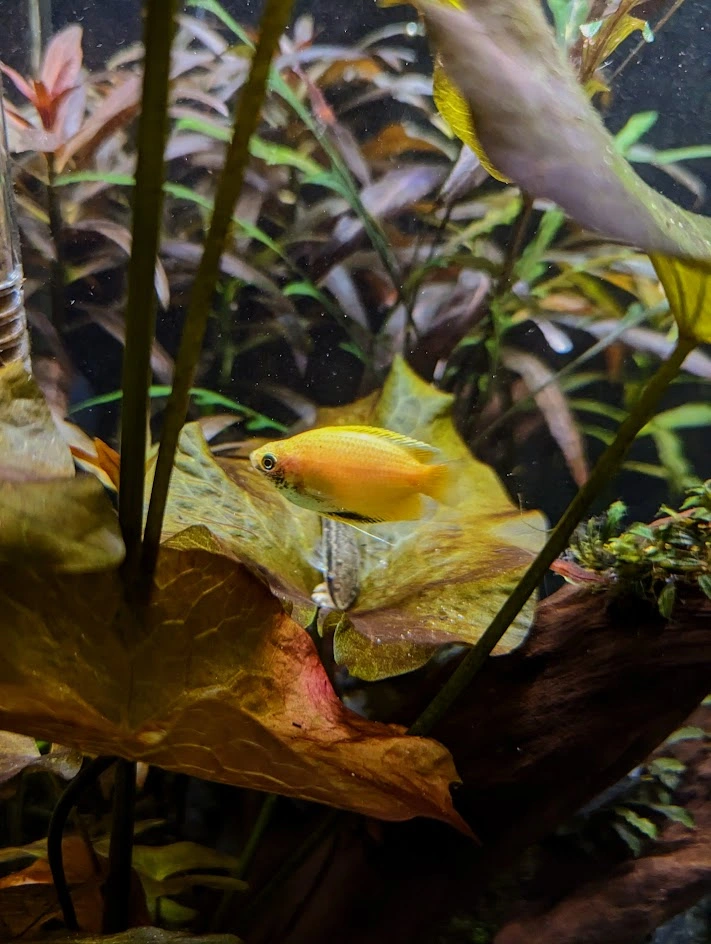
Honey gourami
Trichogaster chuna
Freshwater2 in (5 cm) · 20 gal (75 L)72–82°F (22–28°C)
The bottom
The bottom of the tank
The bronze cory is marked easy at 3 inches (7.5 cm) for 20 gallons (75 liters) and shoals in a group of six. The peppered cory is 2.8 inches (7 cm) for 21 gallons (80 liters) at 72–79°F (22–26°C), and Sterba's cory is 2.6 inches (6.5 cm) for the warm end at 75–82°F (24–28°C). The kuhli loach is a 3.9 inch (10 cm) eel-shaped fish marked easy that comes out at night. The bristlenose pleco grazes algae at 4.9 inches (12.5 cm) for 20 gallons (75 liters). The otocinclus is 2 inches (5 cm) for the same tank, marked medium because a new tank has nothing for it to eat.
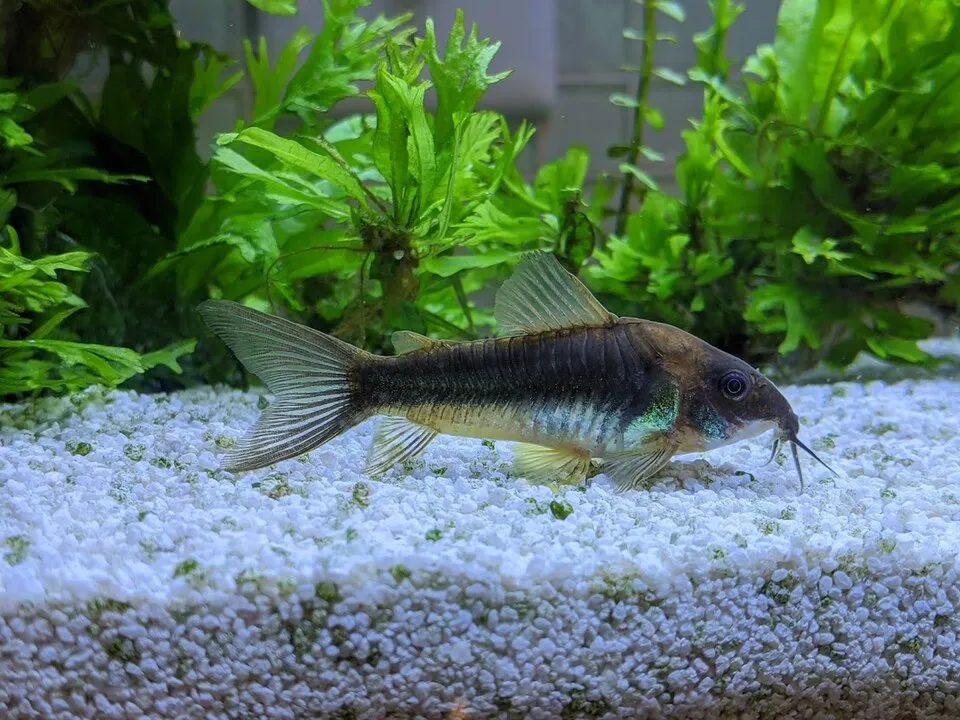
Bronze cory
Osteogaster aenea
Freshwater3 in (7.5 cm) · 20 gal (75 L)70–81°F (21–27°C)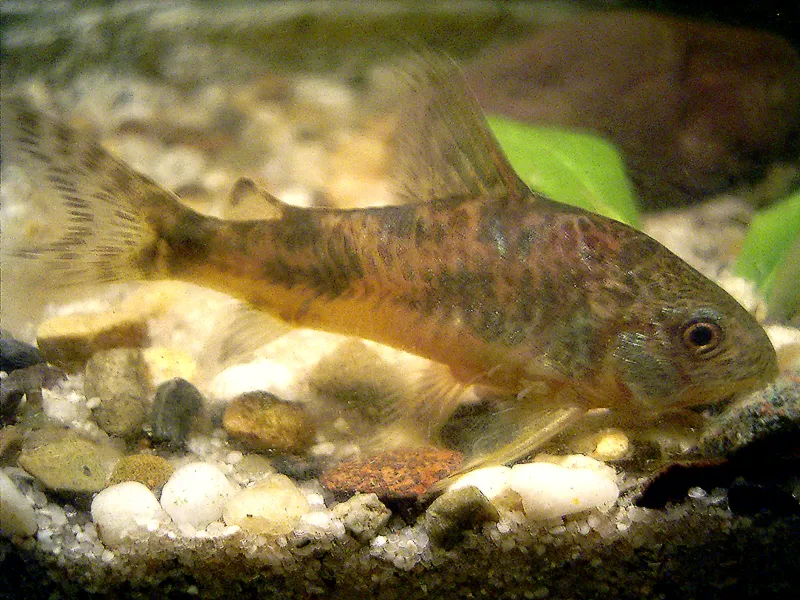
Peppered cory
Hoplisoma paleatum
Freshwater2.8 in (7 cm) · 21 gal (80 L)72–79°F (22–26°C)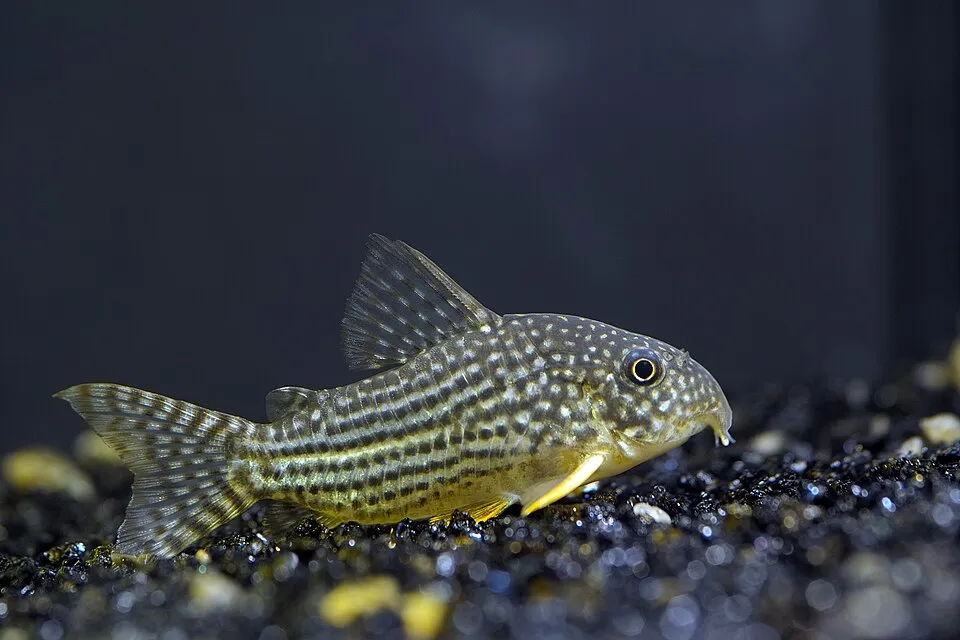
Sterba's cory
Hoplisoma sterbai
Freshwater2.6 in (6.5 cm) · 20 gal (75 L)75–82°F (24–28°C)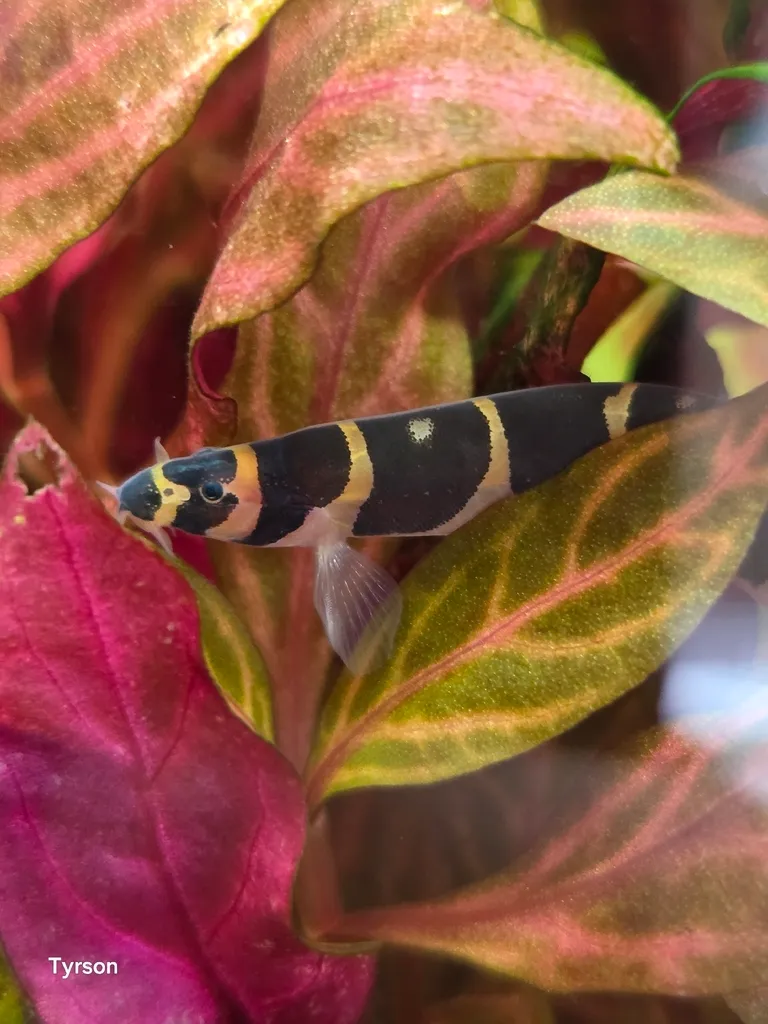
Kuhli loach
Pangio kuhlii
Freshwater3.9 in (10 cm) · 20 gal (75 L)72–82°F (22–28°C)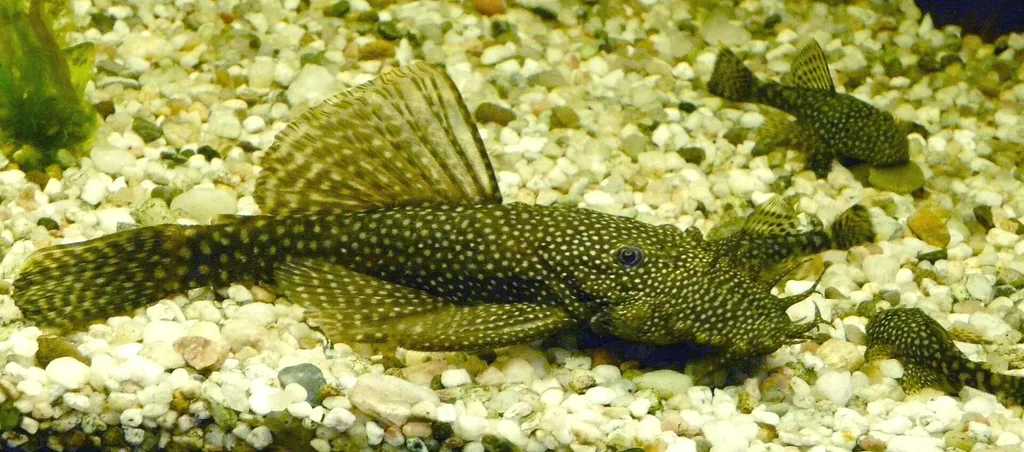
Bristlenose pleco
Ancistrus sp.
Freshwater4.9 in (12.5 cm) · 20 gal (75 L)70–79°F (21–26°C)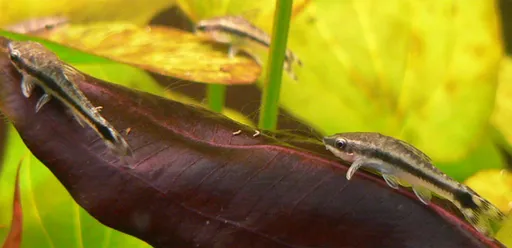
Common otocinclus
Otocinclus vittatus
Freshwater2 in (5 cm) · 20 gal (75 L)72–79°F (22–26°C)
By the numbers
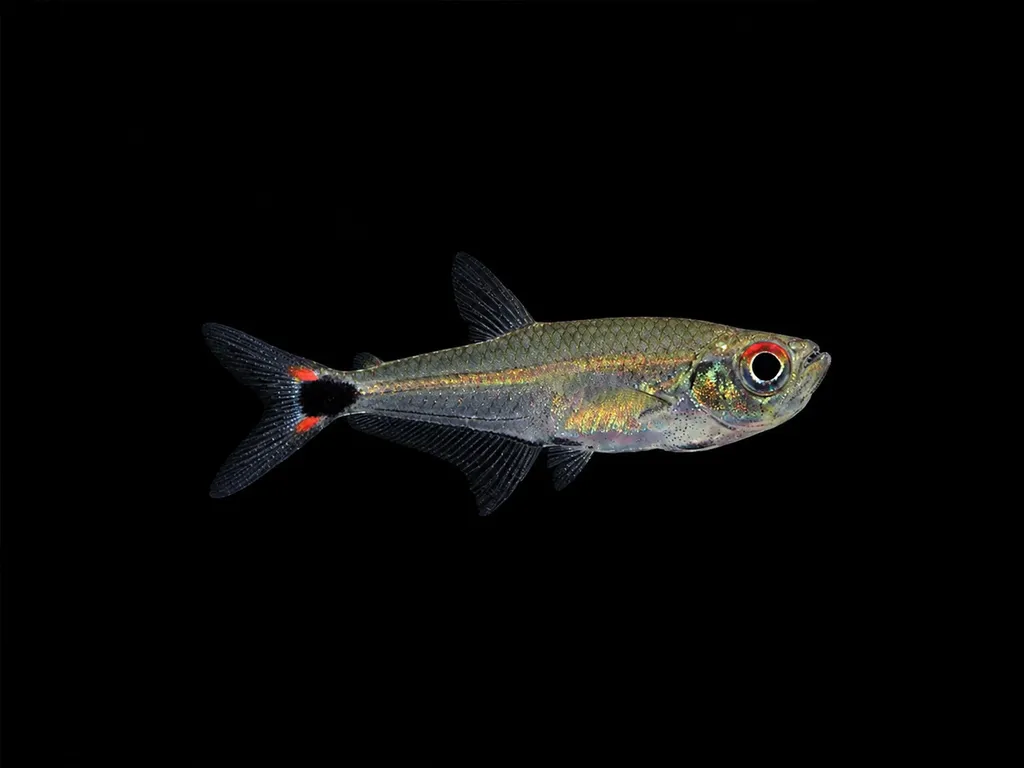
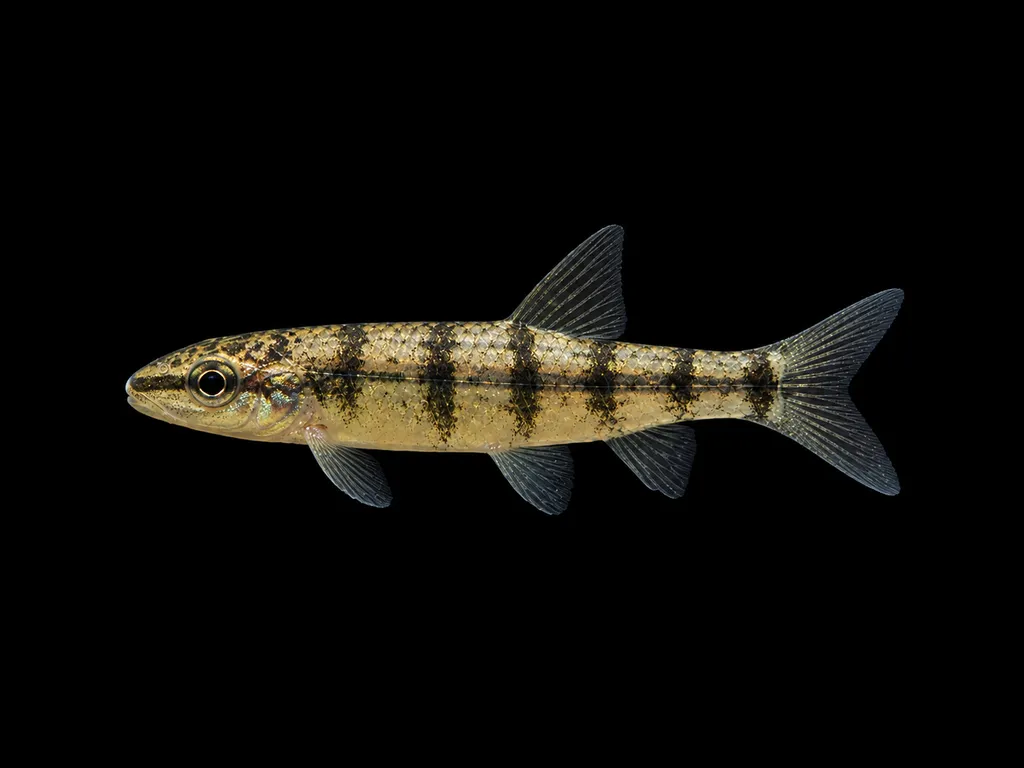
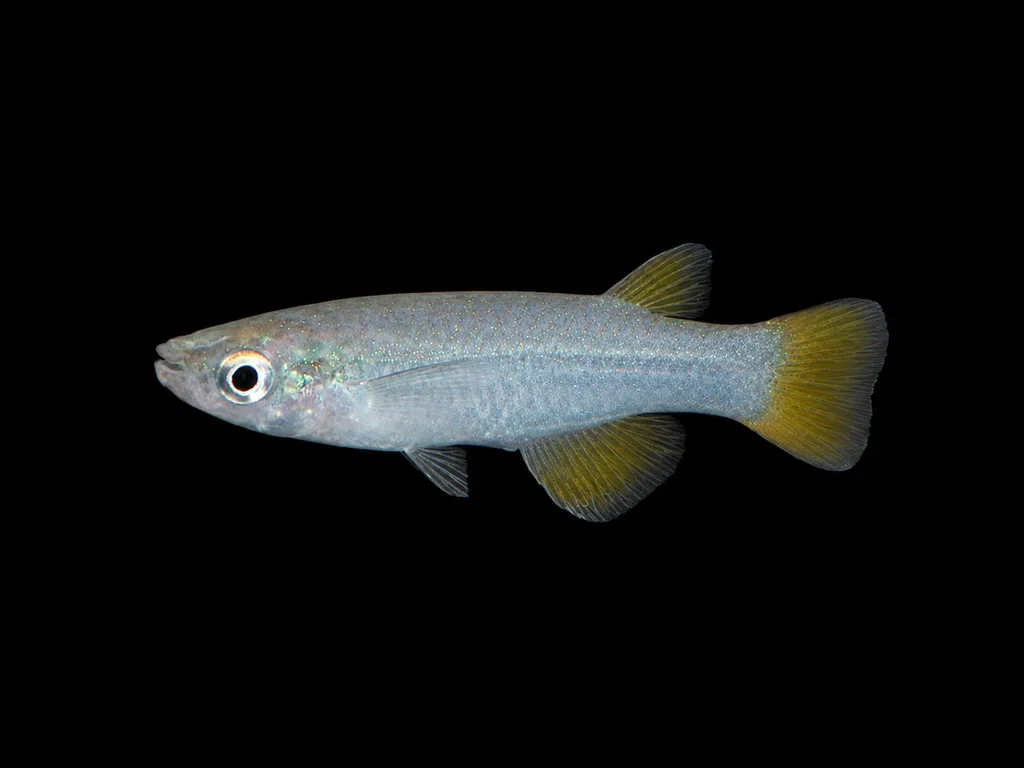
Smallest
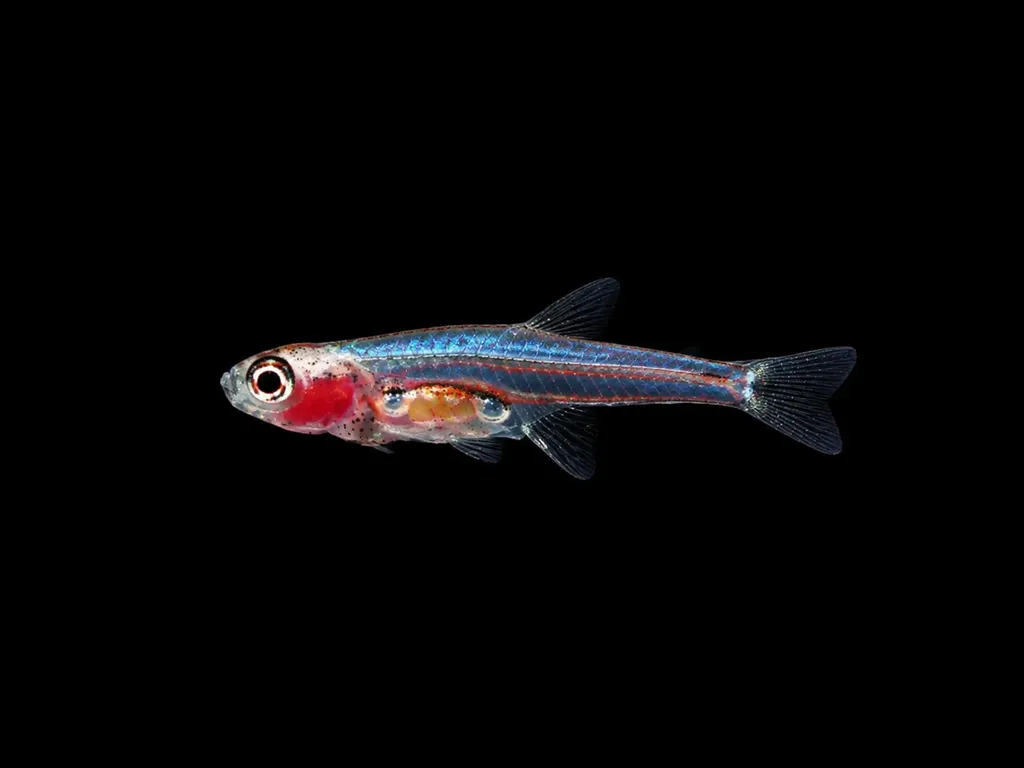
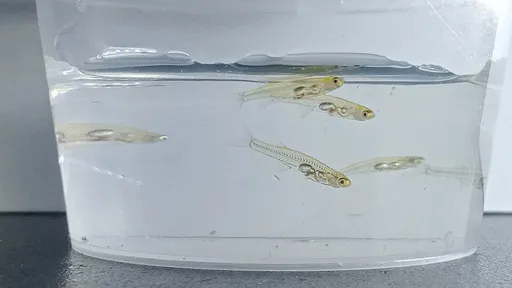
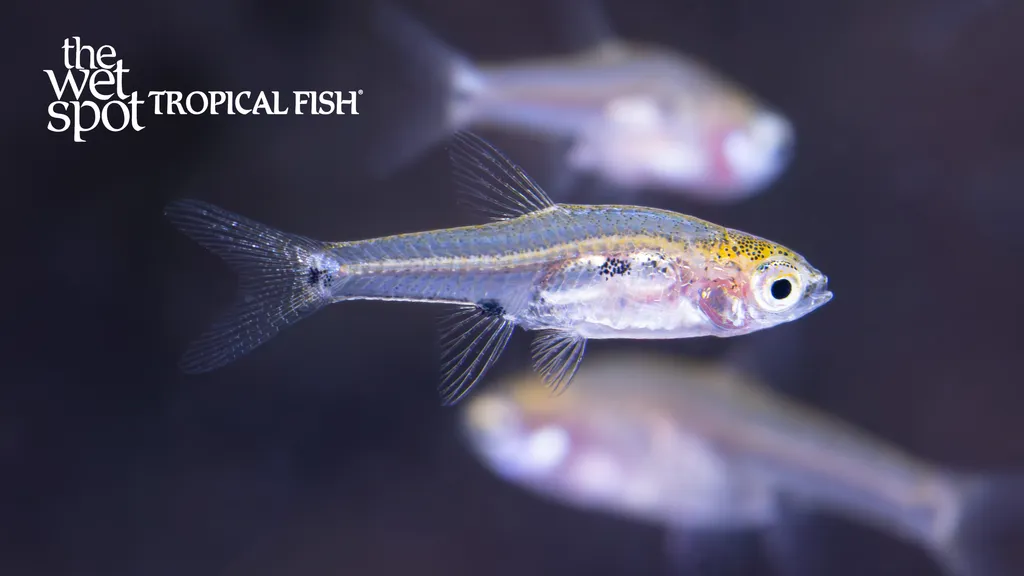
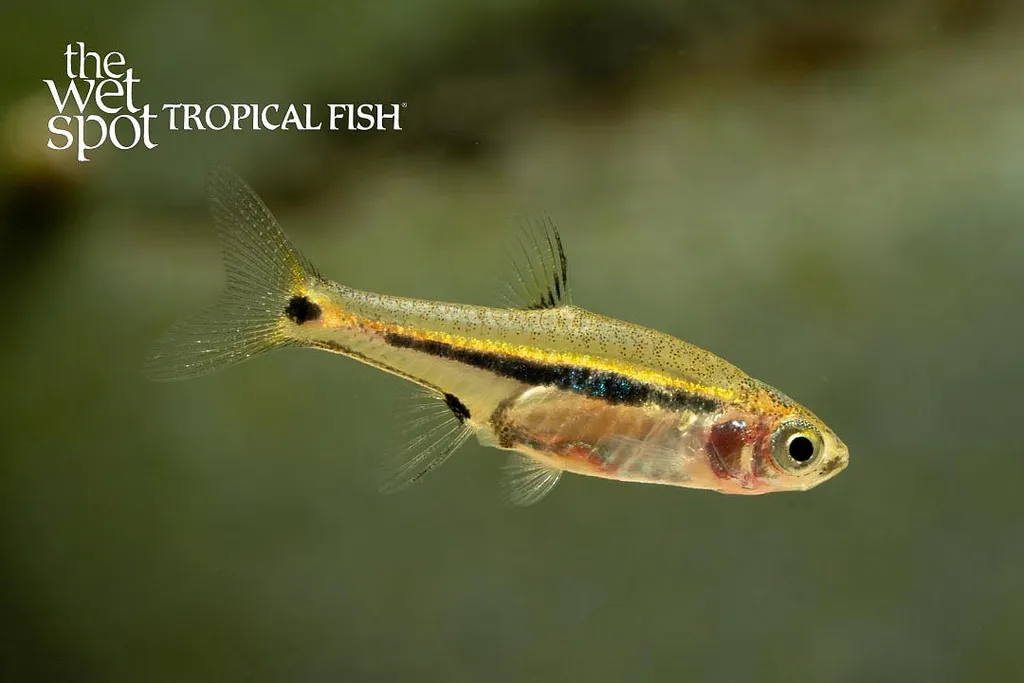
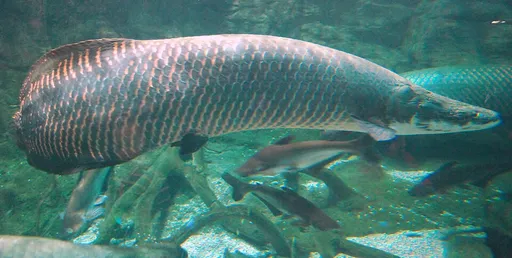
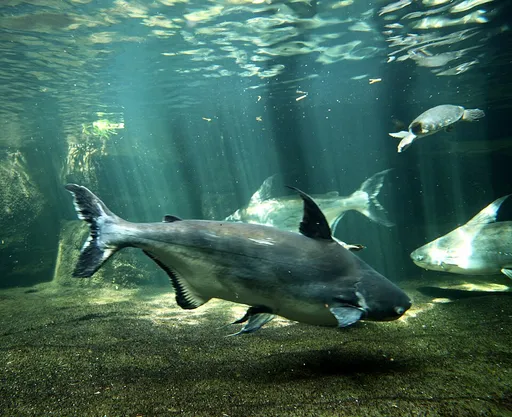
Largest
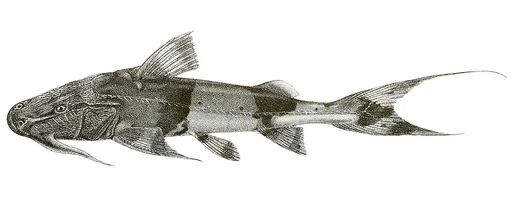
Easiest to keep
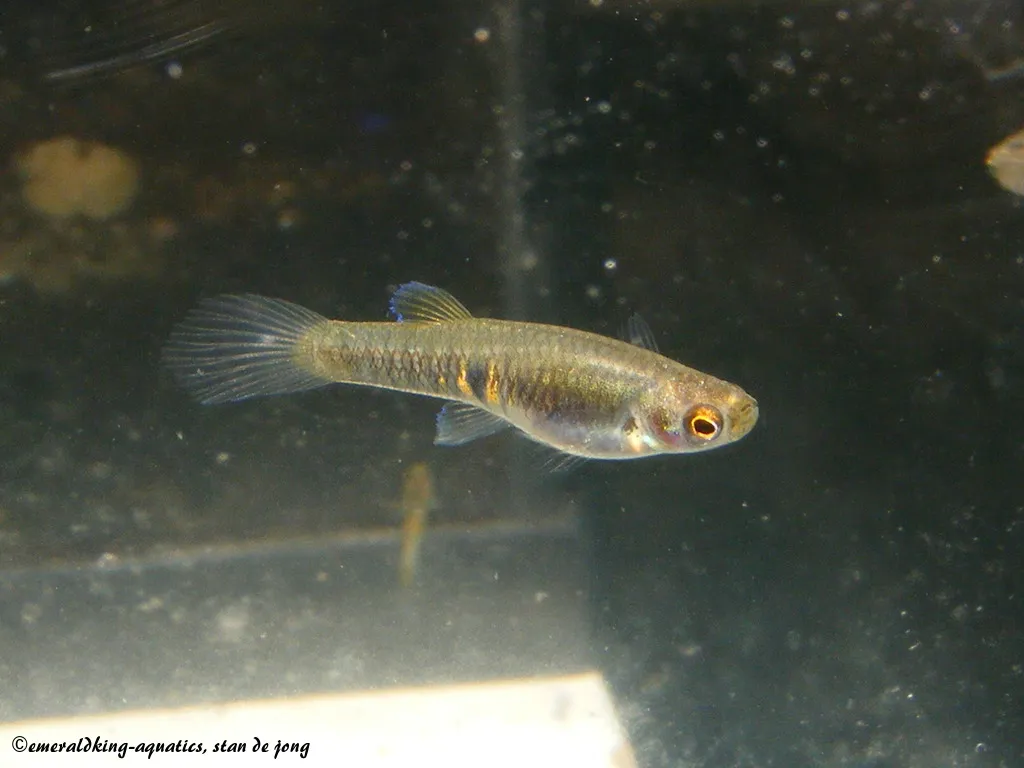
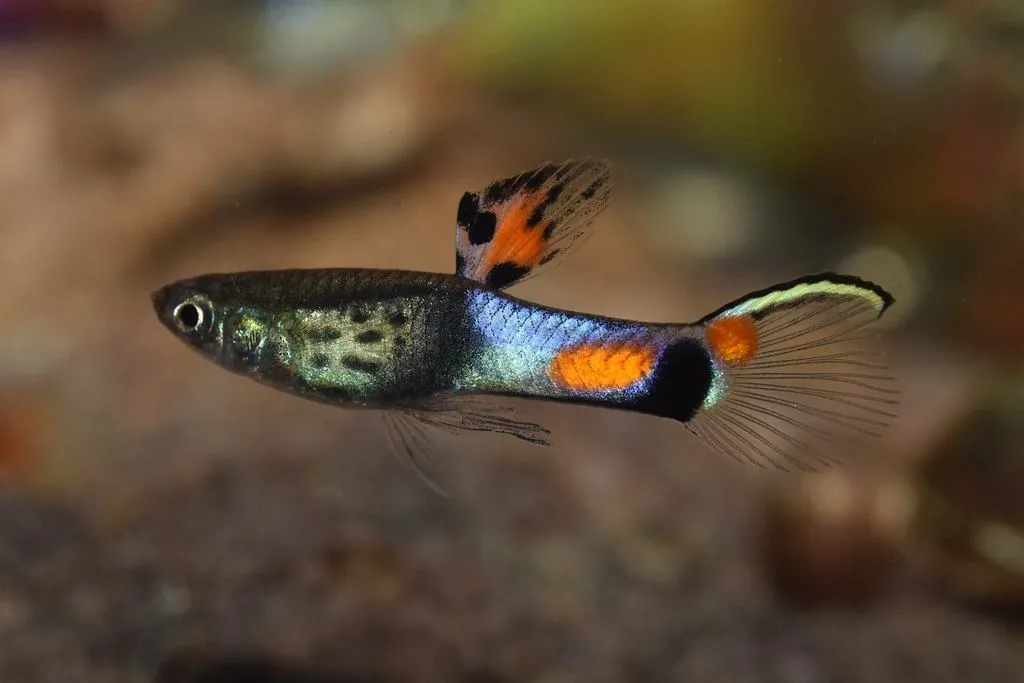
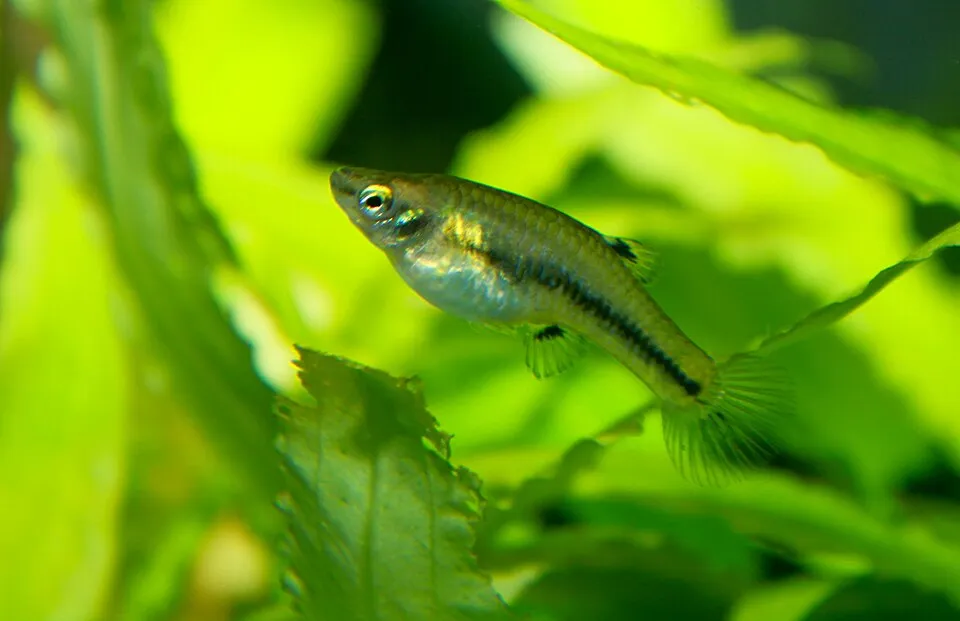
Most peaceful
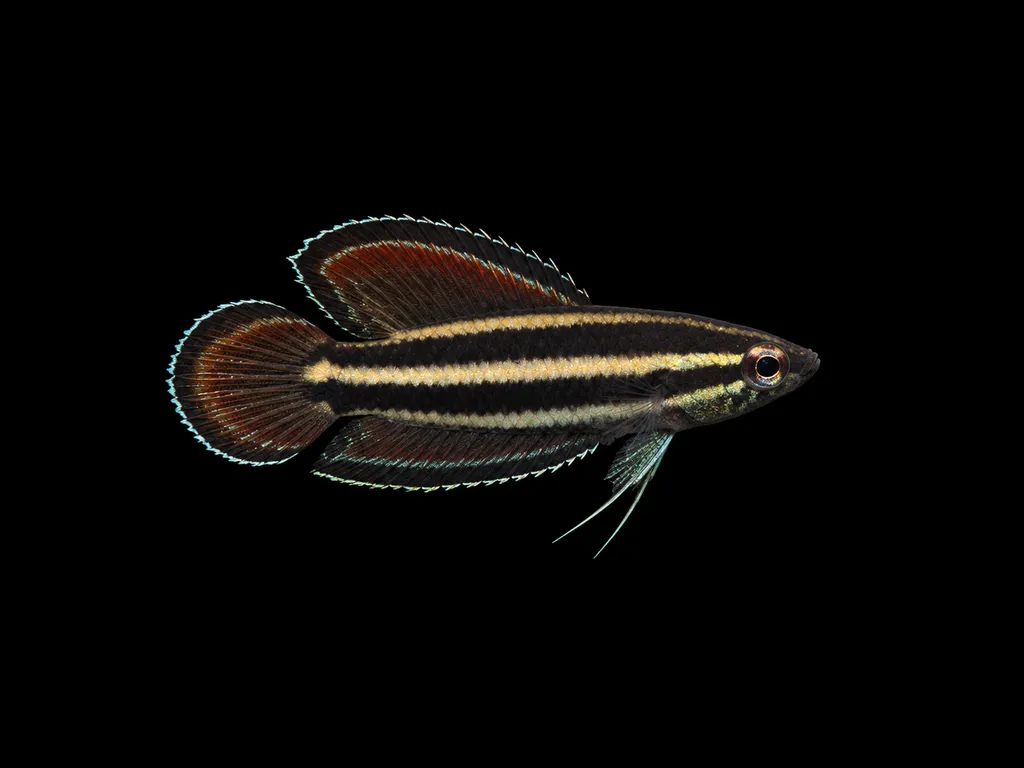
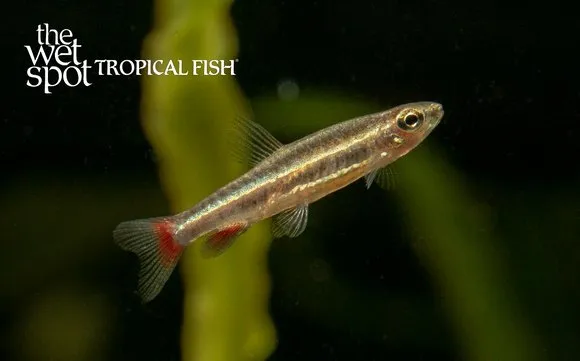
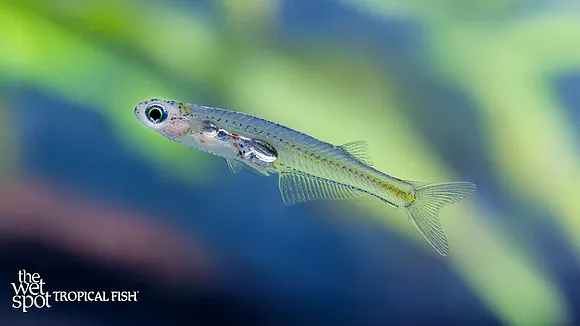
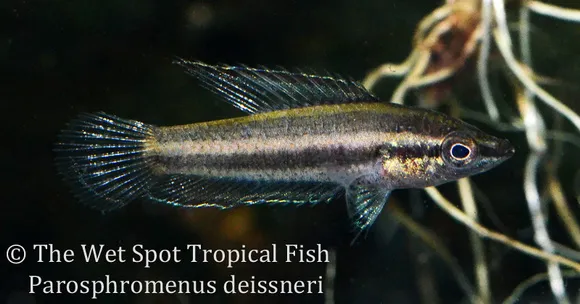
Fits a 20 gallon tank
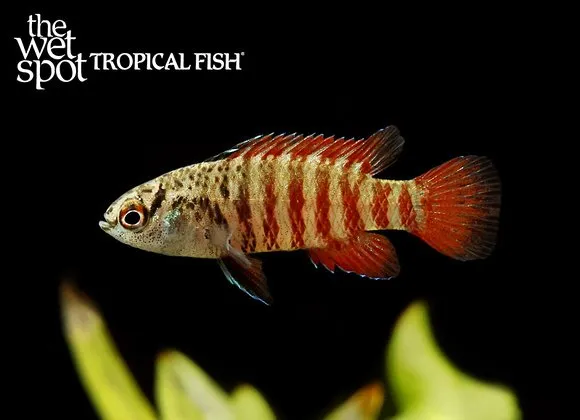
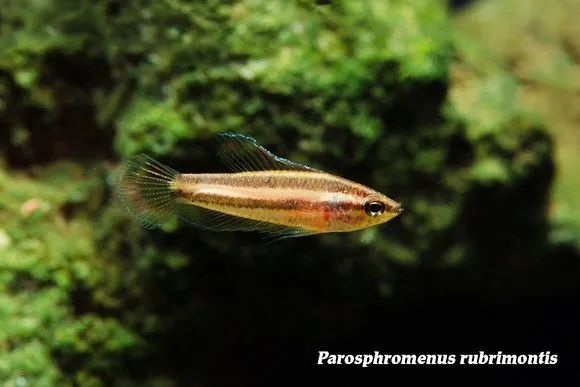
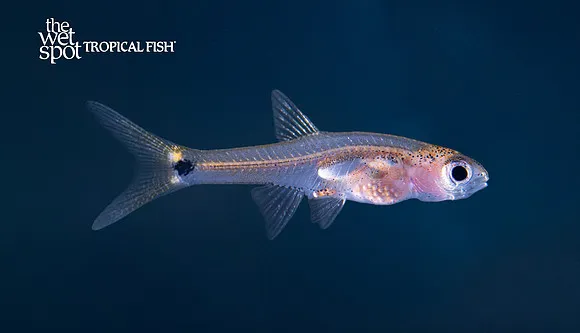
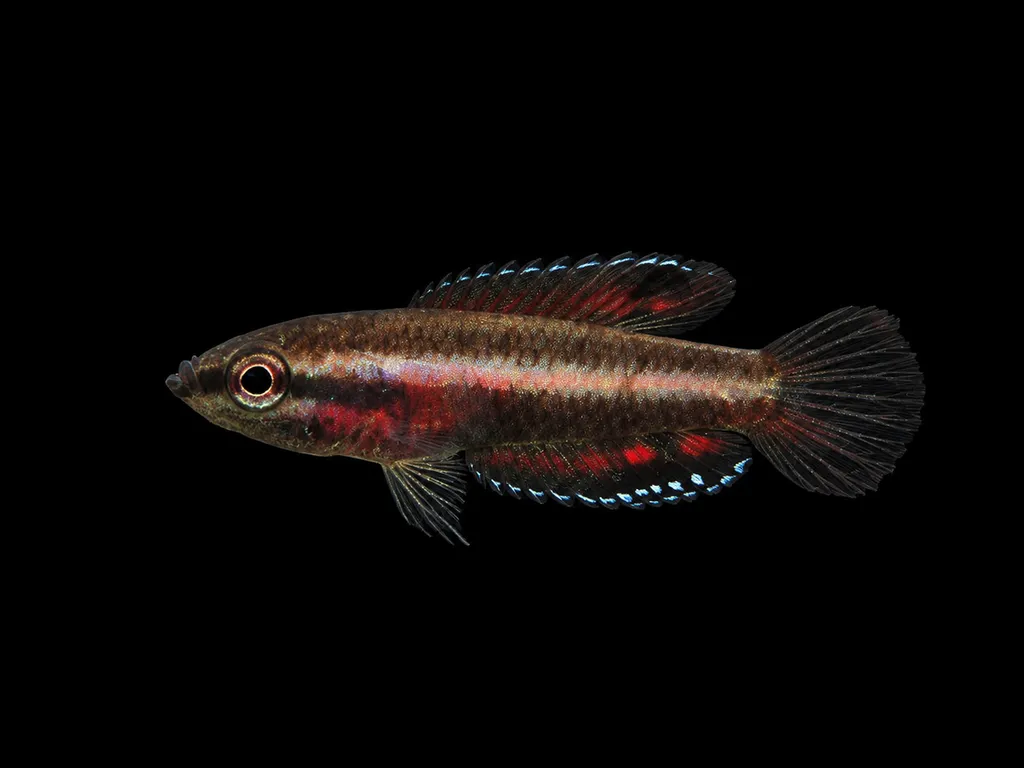
Fits a 30 gallon tank
FAQ
Common questions
What are the easiest freshwater fish?
Neon tetras, harlequin rasboras, zebra danios, guppies, platies, endler's livebearers, panda and bronze corys, cherry barbs, white cloud mountain minnows and honey gouramis. All are marked beginner or easy and are happy in a 10 to 20 gallon (40 to 75 liter) tank.
How many fish can I keep in a 10 or 20 gallon tank?
The inch-per-gallon rule fails for anything but small slim fish. Use each profile's minimum tank size as the floor, keep schooling fish in sixes, and run the mix through the stocking calculator, which weighs adult size, waste and group needs.
What temperature do freshwater fish need?
Most tropical species list 73–81°F (23–27°C). Coldwater fish such as white cloud mountain minnows, goldfish and paradise fish take an unheated room. Discus want 79–90°F (26–32°C). The range is on every profile.
What pH do freshwater fish need?
Most list 6.0 to 7.5. Livebearers and Rift lake cichlids want harder, alkaline water; blackwater tetras and licorice gouramis want it soft and acidic. A stable pH your fish were bred in beats chasing a number.
Which freshwater fish can live together?
Fish that share a temperature and pH range, that will not eat or be eaten, and that are not both trying to own the same tank. Most profiles list tank mates that pass those checks against the whole catalog; fish marked aggressive or best kept alone get none, which is its own answer.
How big do freshwater aquarium fish get?
Most community fish stay between 1 and 4 inches (2.5 and 10 cm), but more than one in ten of the list passes 12 inches (30 cm), and the redtail catfish, arowana and arapaima pass 3 feet (100 cm). Check adult size before the fish is in the bag.
Do freshwater fish need a heater?
Tropical species do, and that is most of the list. Coldwater fish do not and often do worse with one.
Index
All freshwater fish
Planning a tank?
TankBud checks stocking and water fit as you build a tank, then tracks water tests, reminders and photos once it is running.
Track your tanksMaintain tanks for clients? See TankBud Pro