Wrasses
Wrasses are active, colorful reef fish with a wide range of sizes and habits: many bury in the sand to sleep, some clean parasites off tankmates, and others grow big enough to eat inverts. Reef safety depends on the species, so it pays to check before adding one. Each profile lists tank size, diet and reef safety, and most need a tight lid because they jump.
At a glance
- Tank size
- 29–150 gal
- 29 gal (110 L) to 150 gal (568 L); half the list needs 82 gal (312 L) or more
- Temperature
- 72–79°F
- 22–26°C, most of the list
- pH
- 8.1–8.4
- Most of the list
- Difficulty
- 16 easy
- 8 medium · 6 difficult
- Temperament
- 17 peaceful
- 9 mostly peaceful · 4 aggressive
- Reef safety
- 20 reef safe
- 5 reef safe with caution · 5 not reef safe
30 species
Which wrasses are reef safe
Reef safety in wrasses follows the genus more than the species. Fairy wrasses (Cirrhilabrus) and flasher wrasses (Paracheilinus) feed on plankton in the water column and leave corals, clams and shrimp alone; they are the reef picks in this list. The Halichoeres wrasses (melanurus, Christmas, yellow coris) and the leopard wrasses hunt small invertebrates on the rock and sand: welcome when the target is flatworms and pyramidellid snails, less so when it is a small ornamental shrimp, which is why a few carry a caution flag. The Thalassoma wrasses (bluehead, lunare), red coris, green bird and dragon wrasses turn over rock and eat snails, hermits and shrimp outright; they belong in a fish-only tank. Each profile carries its reef-safe status, and the filter chips above sort the list by it.
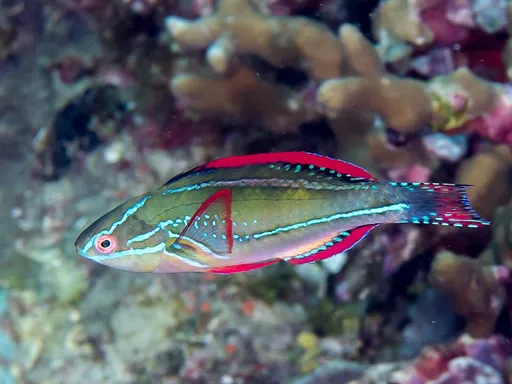
Exquisite fairy wrasse
Cirrhilabrus exquisitus
Saltwater- Size
- 4.7 in (12 cm)
- Tank
- 90 gal (340 L)
- Water
- 72–79°F (22–26°C)
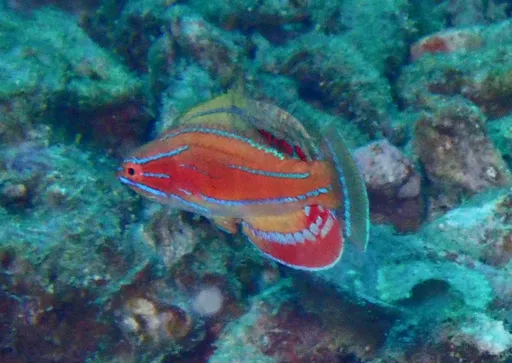
McCosker's flasher wrasse
Paracheilinus mccoskeri
Saltwater- Size
- 3.1 in (8 cm)
- Tank
- 55 gal (208 L)
- Water
- 72–79°F (22–26°C)
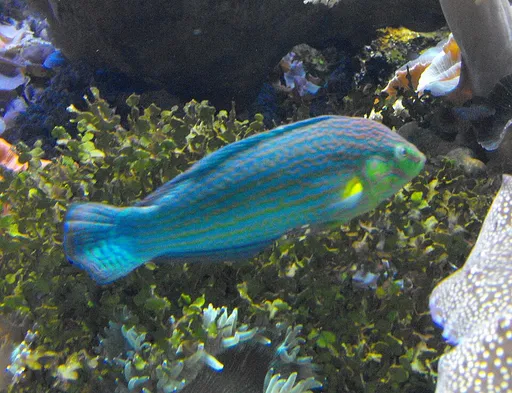
Melanurus wrasse
Halichoeres melanurus
Saltwater- Size
- 5.5 in (14 cm)
- Tank
- 100 gal (380 L)
- Water
- 72–79°F (22–26°C)
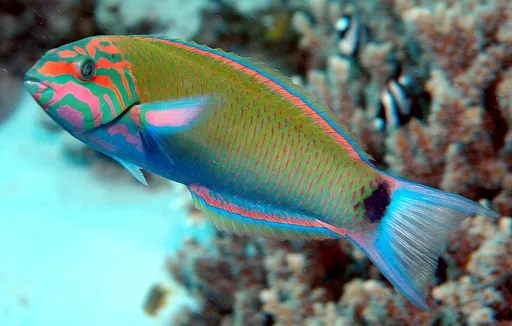
Lunare wrasse
Thalassoma lunare
Saltwater- Size
- 9.8 in (25 cm)
- Tank
- 125 gal (473 L)
- Water
- 72–79°F (22–26°C)
Sand sleepers and jumpers
Many wrasses bury themselves at night and when startled. Halichoeres, leopard (Macropharyngodon), tamarin (Anampses) and Coris wrasses all need a bed of fine sand at least 2 inches (5 cm) deep, or they spend the night wedged in rock and arrive stressed each morning. Fairy and flasher wrasses do the opposite: they sleep in a mucus cocoon among the rockwork and are the group to choose for a bare-bottom tank. Whatever they sleep in, wrasses jump, most of all in the first week and at lights-out. A tight lid or mesh top is part of the setup, not an option.
Cleaner and leopard wrasses are the hard ones
The bluestreak and Hawaiian cleaner wrasses eat parasites and mucus off other fish, and many never learn to take prepared food and slowly starve. Both are marked difficult in the catalog and want a big, busy tank to work over. The leopard wrasses, the radiant wrasse and the yellowtail tamarin are difficult for a different reason: they need constant small invertebrate prey, which means a mature tank with live rock and sand and several small feeds a day. If the tank is under a year old or you feed once a day, choose from the easy rows instead.
Wrasses for a smaller reef
Several wrasses in the list are happy from 30 gallons (110 liters). The six-line wrasse is the classic, hardy and reef safe but bold enough to bully small, shy fish; the fourline wrasse is the milder version. The twospot hogfish stays around 4 inches (10 cm) and is reef safe. The yellow coris wrasse wants 40 gallons (150 liters) and carries a caution flag for small shrimp. Carpenter's flasher wrasse and the social fairy wrasse need closer to 55 gallons (200 liters) but bring the fairy-wrasse temperament to a tank that size.
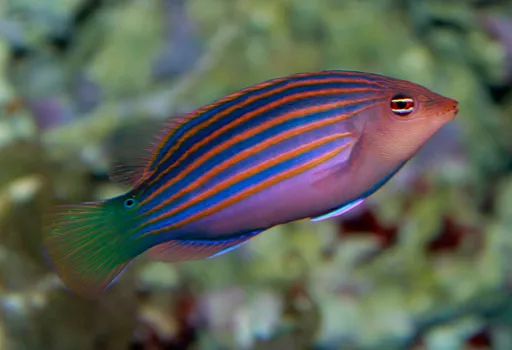
Six-line wrasse
Pseudocheilinus hexataenia
Saltwater3.1 in (8 cm) · 29 gal (110 L)72–79°F (22–26°C)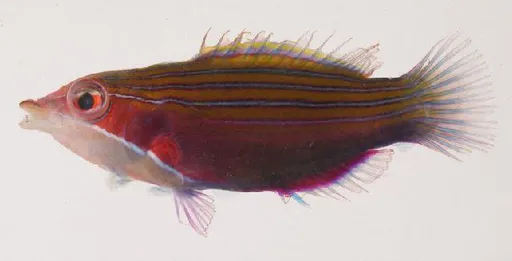
Fourline wrasse
Pseudocheilinus tetrataenia
Saltwater3 in (7.5 cm) · 30 gal (114 L)72–79°F (22–26°C)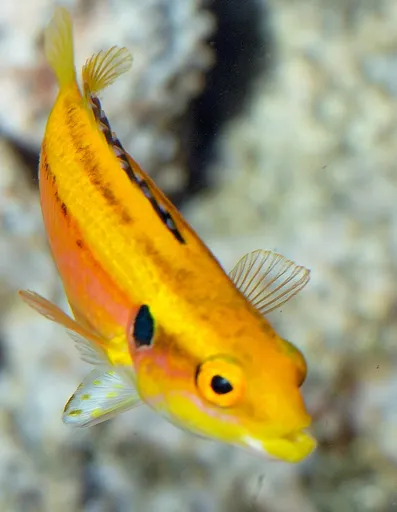
Twospot hogfish
Bodianus bimaculatus
Saltwater3.9 in (10 cm) · 30 gal (114 L)72–79°F (22–26°C)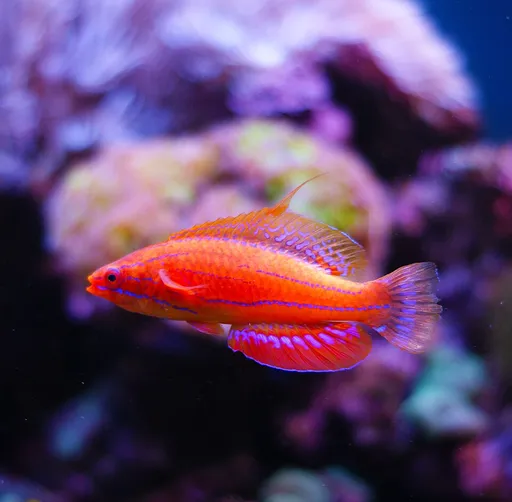
Carpenter's flasher wrasse
Paracheilinus carpenteri
Saltwater3.1 in (8 cm) · 53 gal (200 L)73–81°F (23–27°C)
By the numbers
Smallest
Largest
Easiest to keep
FAQ
Common questions
Are wrasses reef safe?
Fairy and flasher wrasses are. Halichoeres and leopard wrasses are safe with corals but eat small invertebrates, so a few carry a caution flag for ornamental shrimp. Thalassoma, Coris, green bird and dragon wrasses are not reef safe. Every profile shows its status.
Do wrasses need a sand bed?
The ones that bury to sleep do: Halichoeres, leopard, tamarin and Coris wrasses want at least 2 inches (5 cm) of fine sand. Fairy and flasher wrasses sleep in the rockwork and are fine without it.
Do wrasses jump?
Yes, especially new arrivals and at lights-out. Keep a tight lid or a mesh top on any wrasse tank.
What do wrasses eat?
Meaty frozen foods such as mysis and brine shrimp, chopped seafood and a good pellet, in small portions two or three times a day. Fairy and flasher wrasses feed on plankton and do best with frequent small feeds.
Can you keep more than one wrasse?
Fairy and flasher wrasses can be kept as a group of one male with several females in a large tank. Most other wrasses are one per species, and two males of similar-looking species will fight.
How big do wrasses get?
From about 3 inches (7 cm) for the social fairy wrasse to 12 inches (30 cm) for the dragon, green bird, harlequin tuskfish and red coris wrasses. The adult size is on every profile.
Index
All wrasses
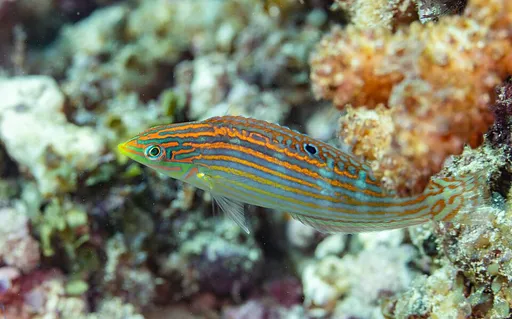
Adorned wrasse
Halichoeres cosmetus
Saltwater5.1 in (13 cm) · 50 gal (190 L)73–81°F (23–27°C)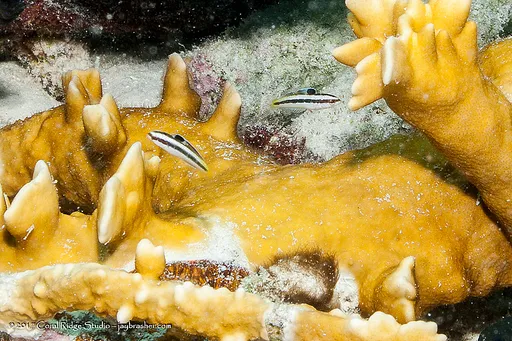
Bluehead wrasse
Thalassoma bifasciatum
Saltwater7.1 in (18 cm) · 74 gal (280 L)73–81°F (23–27°C)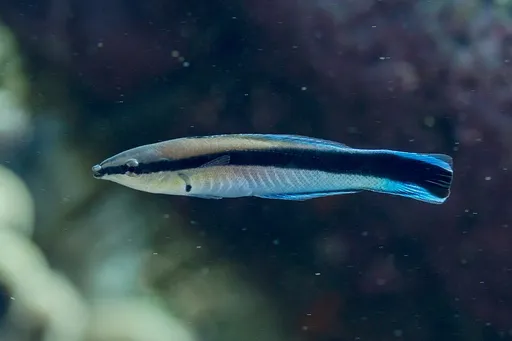
Bluestreak cleaner wrasse
Labroides dimidiatus
Saltwater4.3 in (11 cm) · 106 gal (400 L)75–81°F (24–27°C)Carpenter's flasher wrasse
Paracheilinus carpenteri
Saltwater3.1 in (8 cm) · 53 gal (200 L)73–81°F (23–27°C)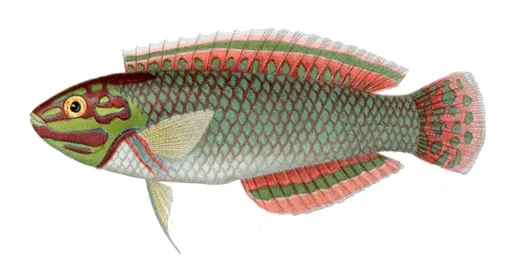
Christmas wrasse
Halichoeres ornatissimus
Saltwater5.9 in (15 cm) · 70 gal (265 L)72–79°F (22–26°C)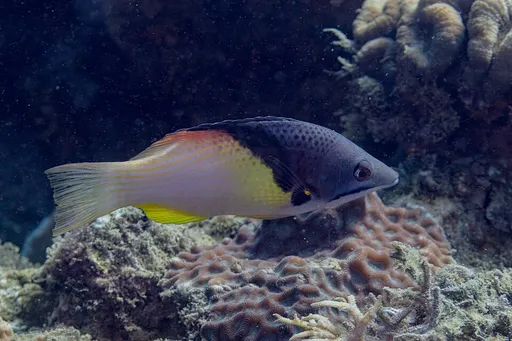
Coral hogfish
Bodianus mesothorax
Saltwater7.9 in (20 cm) · 90 gal (340 L)72–79°F (22–26°C)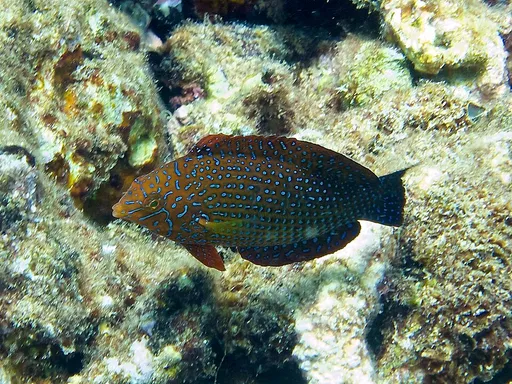
Divided leopard wrasse
Macropharyngodon bipartitus
Saltwater5.1 in (13 cm) · 55 gal (208 L)72–79°F (22–26°C)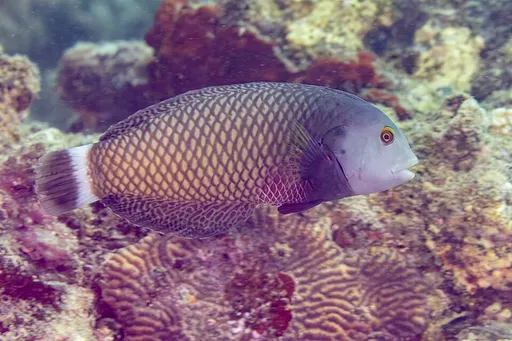
Dragon wrasse
Novaculichthys taeniourus
Saltwater11.8 in (30 cm) · 106 gal (400 L)73–81°F (23–27°C)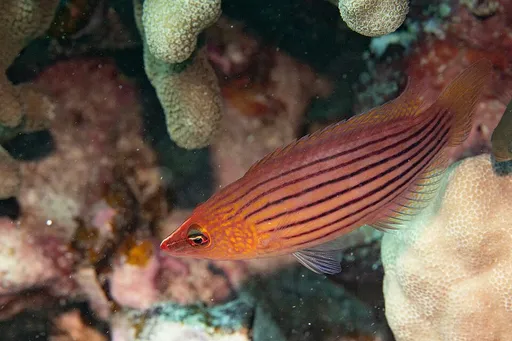
Eightline wrasse
Pseudocheilinus octotaenia
Saltwater4.7 in (12 cm) · 55 gal (208 L)72–79°F (22–26°C)Exquisite fairy wrasse
Cirrhilabrus exquisitus
Saltwater4.7 in (12 cm) · 90 gal (340 L)72–79°F (22–26°C)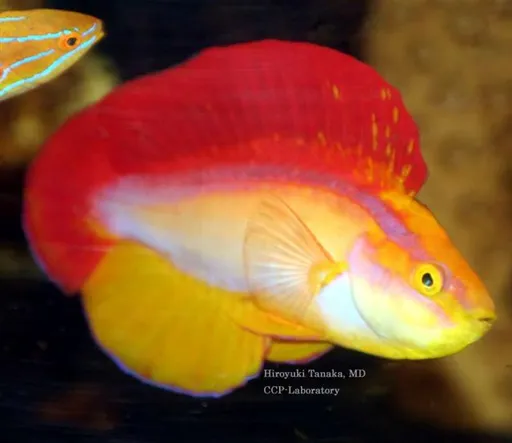
Flame fairy wrasse
Cirrhilabrus jordani
Saltwater3.9 in (10 cm) · 90 gal (340 L)72–79°F (22–26°C)Fourline wrasse
Pseudocheilinus tetrataenia
Saltwater3 in (7.5 cm) · 30 gal (114 L)72–79°F (22–26°C)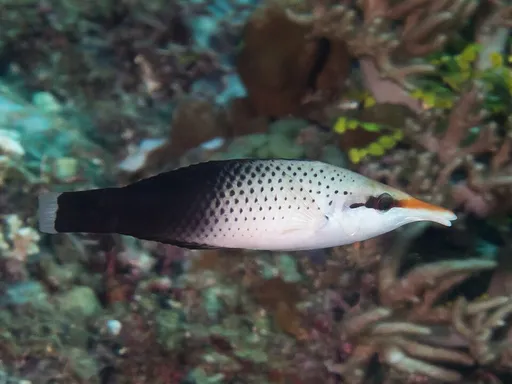
Green bird wrasse
Gomphosus varius
Saltwater11.8 in (30 cm) · 125 gal (473 L)72–79°F (22–26°C)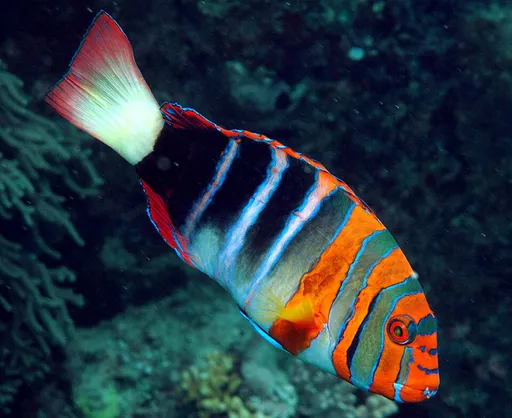
Harlequin tuskfish
Choerodon fasciatus
Saltwater11.8 in (30 cm) · 125 gal (473 L)72–79°F (22–26°C)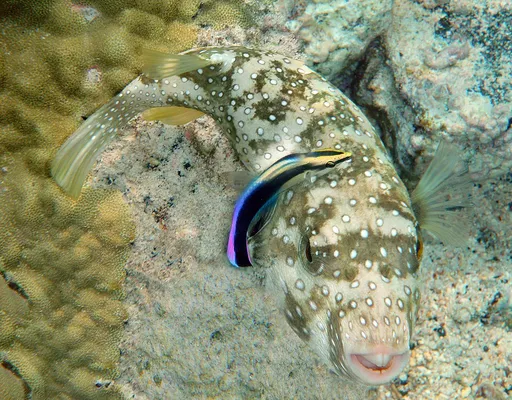
Hawaiian cleaner wrasse
Labroides phthirophagus
Saltwater3.9 in (10 cm) · 70 gal (265 L)75–81°F (24–27°C)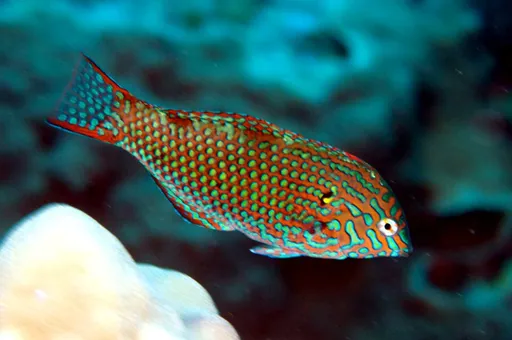
Leopard wrasse
Macropharyngodon meleagris
Saltwater5.9 in (15 cm) · 90 gal (340 L)72–79°F (22–26°C)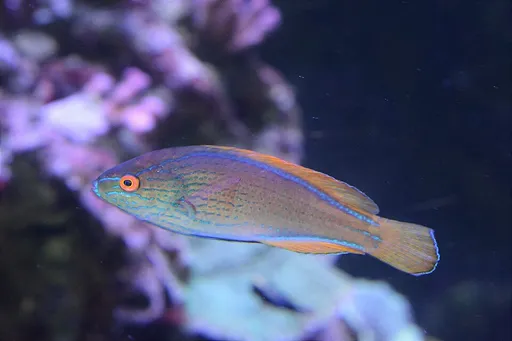
Lineatus fairy wrasse
Cirrhilabrus lineatus
Saltwater4.7 in (12 cm) · 90 gal (340 L)73–81°F (23–27°C)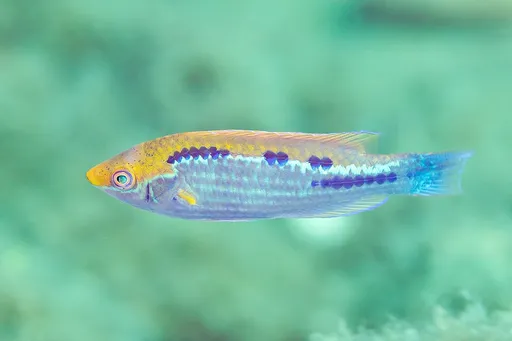
Lubbock's fairy wrasse
Cirrhilabrus lubbocki
Saltwater3.1 in (8 cm) · 55 gal (208 L)72–79°F (22–26°C)Lunare wrasse
Thalassoma lunare
Saltwater9.8 in (25 cm) · 125 gal (473 L)72–79°F (22–26°C)McCosker's flasher wrasse
Paracheilinus mccoskeri
Saltwater3.1 in (8 cm) · 55 gal (208 L)72–79°F (22–26°C)Melanurus wrasse
Halichoeres melanurus
Saltwater5.5 in (14 cm) · 100 gal (380 L)72–79°F (22–26°C)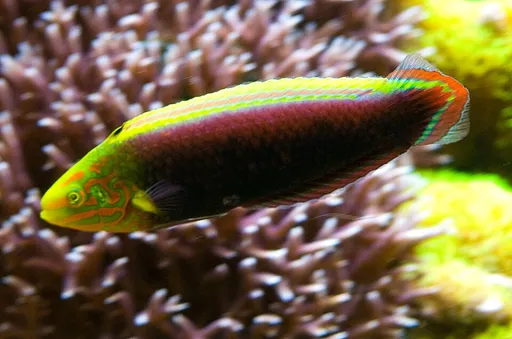
Radiant wrasse
Halichoeres iridis
Saltwater4.5 in (11.5 cm) · 75 gal (284 L)72–79°F (22–26°C)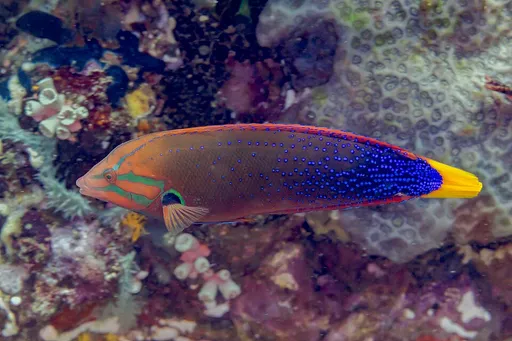
Red coris wrasse
Coris gaimard
Saltwater11.8 in (30 cm) · 150 gal (568 L)72–79°F (22–26°C)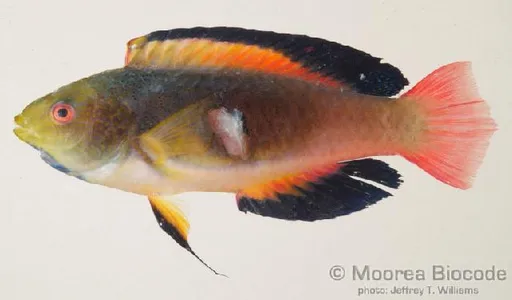
Scott's fairy wrasse
Cirrhilabrus scottorum
Saltwater5.1 in (13 cm) · 90 gal (340 L)73–81°F (23–27°C)Six-line wrasse
Pseudocheilinus hexataenia
Saltwater3.1 in (8 cm) · 29 gal (110 L)72–79°F (22–26°C)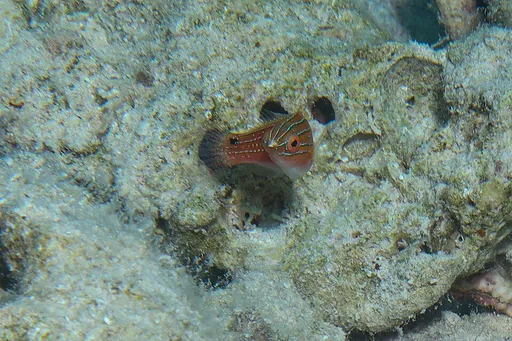
Social fairy wrasse
Cirrhilabrus rubriventralis
Saltwater2.8 in (7 cm) · 53 gal (200 L)73–81°F (23–27°C)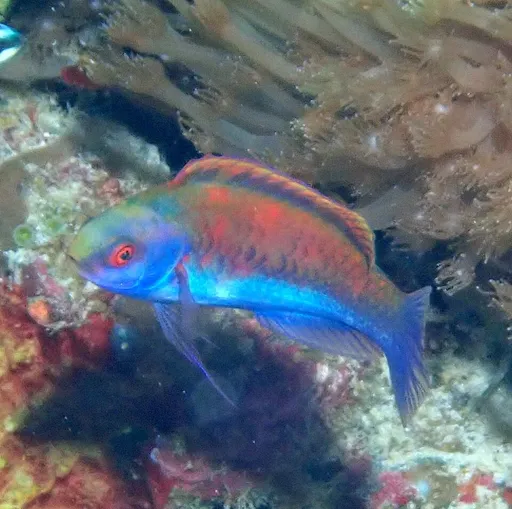
Solar fairy wrasse
Cirrhilabrus solorensis
Saltwater4.3 in (11 cm) · 90 gal (340 L)72–79°F (22–26°C)Twospot hogfish
Bodianus bimaculatus
Saltwater3.9 in (10 cm) · 30 gal (114 L)72–79°F (22–26°C)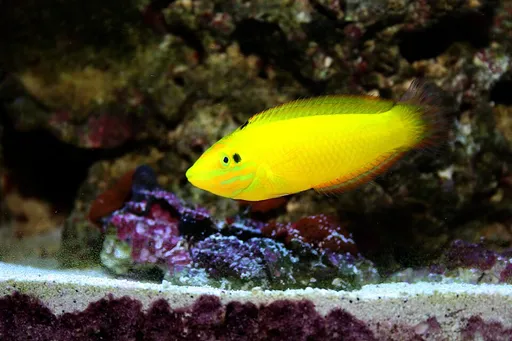
Yellow coris wrasse
Halichoeres chrysus
Saltwater4.7 in (12 cm) · 40 gal (150 L)73–81°F (23–27°C)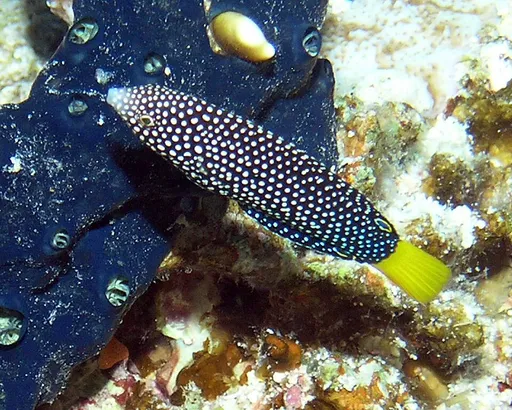
Yellowtail tamarin wrasse
Anampses meleagrides
Saltwater8.7 in (22 cm) · 90 gal (340 L)73–81°F (23–27°C)
Planning a tank?
TankBud checks stocking and water fit as you build a tank, then tracks water tests, reminders and photos once it is running.
Track your tanksMaintain tanks for clients? See TankBud Pro