Lunare wrasse
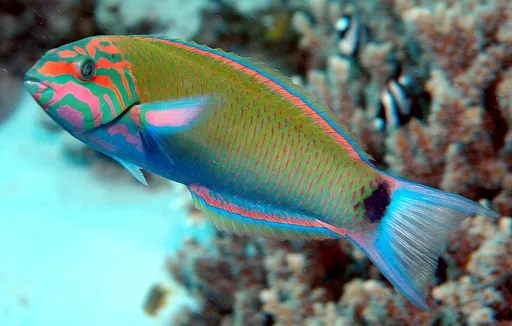
Thalassoma lunare
Also known as Moon Wrasse, Lyretail Wrasse, Crescent Wrasse, Lunar Wrasse
SaltwaterFish
Care at a glance
- Temperature
- 72–79°F
- 22–26°C
- pH
- 8.1–8.4
- Adult size
- 9.8 in
- 25 cm
- Minimum tank
- 125 gal
- 473 L
- Temperament
- Aggressive
- Social behavior
- Social
- Own kind
- One male per tank
- Tankmates
- With caution
- Swim level
- Middle
- Difficulty
- Medium
- Breeding
- No record
- Rarity
- Very common
- Reef safe
- Not reef safe
- Family
- Labridae
- Origin
- Indo-Pacific reefs, from the Red Sea and East Africa to the Line Islands, north to southern Japan, south to Lord Howe Island and New Zealand
Overview
This is a genuinely aggressive, high energy wrasse that stakes out territory and harasses new tankmates, so it should always be one of the last fish added to a tank. It is not reef safe: it flips rocks looking for crustaceans, mollusks, and worms, and will happily eat cleanup crew snails, hermit crabs, and ornamental shrimp, along with bristleworms and the occasional pest mantis shrimp. Good tankmates are other bold, active fish such as tangs, triggerfish, and puffers rather than shy or slow feeders. Feed a varied carnivore diet several times a day, especially while it settles in.
In the wild
One of the most widespread wrasses in the Indo-Pacific, found from the Red Sea and East Africa to the Line Islands, north to southern Japan and south to Lord Howe Island and New Zealand, in the upper 1–20 m of lagoons and coastal and seaward reefs. It is a fast, restless swimmer that needs at least 473 litres (125 gallons) of mostly open water to patrol, plus rockwork and a sand bed to retreat into, since it wedges into crevices or dives into the sand when startled or settling in for the night. A tight, gap-free lid is essential, since this species jumps readily.
Good to know
Thalassoma lunare is a protogynous hermaphrodite that can live as a male-female pair or in small groups with one male. Its common names, lunare, moon, lunar, and crescent wrasse, all describe the same feature: a curved, moon-shaped tail fin bordered in yellow on adults. Juveniles are blue below with a black spot at the base of the dorsal fin and another on the tail; both fade into the adult's green body and yellow crescent tail as it matures. Adults reach about 25 cm and are among the hardiest wrasses commonly kept.
Did you know
Divers across the Indo-Pacific see this fish constantly darting around reefs, making it one of the most commonly photographed wrasses in the world, and its habit of shadowing larger fish to snap up any prey they flush out of hiding is well documented by underwater naturalists.
Common questions
What size tank does a Lunare wrasse need?
A Lunare wrasse needs at least 125 gal (473 L). It spends most of its time in the middle.
What temperature and pH does a Lunare wrasse need?
A Lunare wrasse is comfortable at 72–79°F (22–26°C) with a pH of 8.1–8.4.
How big does a Lunare wrasse get?
An adult Lunare wrasse reaches about 9.8 in (25 cm).
Related species
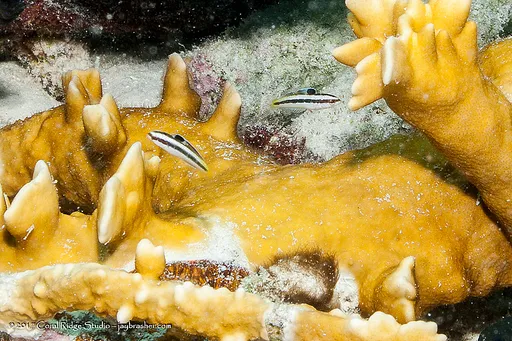 7.1 in (18 cm)74 gal (280 L)73–81°F (23–27°C)
Bluehead wrasse
Thalassoma bifasciatum
7.1 in (18 cm) · 74 gal (280 L)
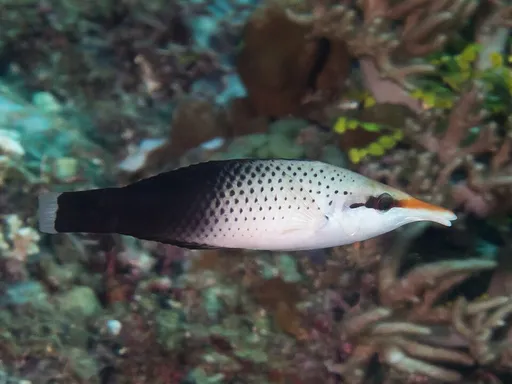 11.8 in (30 cm)125 gal (473 L)72–79°F (22–26°C)
Green bird wrasse
Gomphosus varius
11.8 in (30 cm) · 125 gal (473 L)
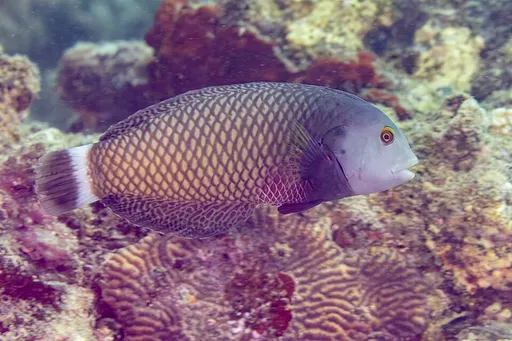 11.8 in (30 cm)106 gal (400 L)73–81°F (23–27°C)
Dragon wrasse
Novaculichthys taeniourus
11.8 in (30 cm) · 106 gal (400 L)
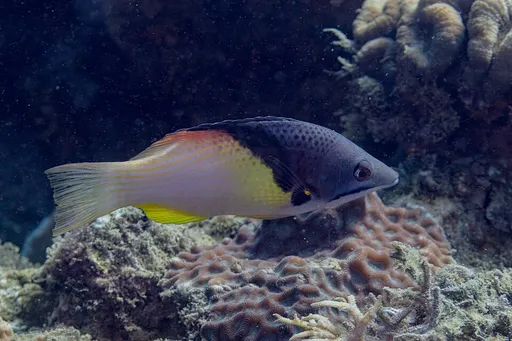 7.9 in (20 cm)90 gal (340 L)72–79°F (22–26°C)
Coral hogfish
Bodianus mesothorax
7.9 in (20 cm) · 90 gal (340 L)
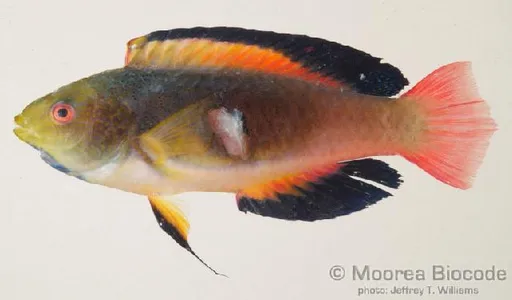 5.1 in (13 cm)90 gal (340 L)73–81°F (23–27°C)
Scott's fairy wrasse
Cirrhilabrus scottorum
5.1 in (13 cm) · 90 gal (340 L)
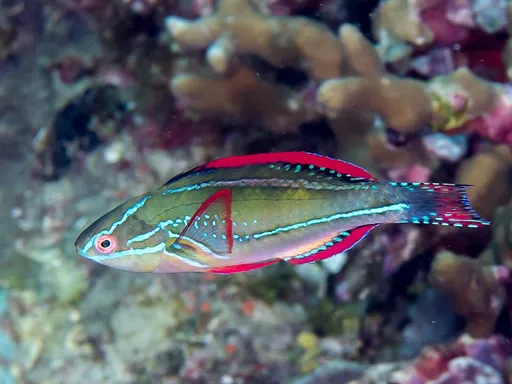 4.7 in (12 cm)90 gal (340 L)72–79°F (22–26°C)
Exquisite fairy wrasse
Cirrhilabrus exquisitus
4.7 in (12 cm) · 90 gal (340 L)