Aquarium snails
Snails graze algae and turn over the substrate, from nerites and mystery snails to marine cleanup species. Each profile lists the conditions a snail needs and how it behaves in a tank.
At a glance
- Tank size
- 5–21 gal
- 5 gal (19 L) to 21 gal (80 L); half the list needs 7 gal (25 L) or more
- Temperature
- 72–82°F
- 22–28°C, most of the list
- pH
- 7.0–8.2
- Most of the list
- Difficulty
- 43 easy
- 7 medium
- Temperament
- 49 peaceful
- 1 mostly peaceful
50 species
Start here
Nerites and mystery snails
The nerite snails are the algae eaters: the zebra, tiger, olive and horned nerites stay around 1 inch (2.5 cm), list 5 gallons (20 liters), are marked beginner and clean glass and rock without touching plants. They lay white eggs that never hatch in freshwater, so the count stays where you put it. The mystery snail is the pet snail, 2 inches (5 cm), marked easy, plant safe and fond of blanched vegetables. The red ramshorn and the Malaysian trumpet snail breed on their own and do the tidying: the ramshorn on leaves and glass, the trumpet snail in the substrate, where it turns the sand at night.
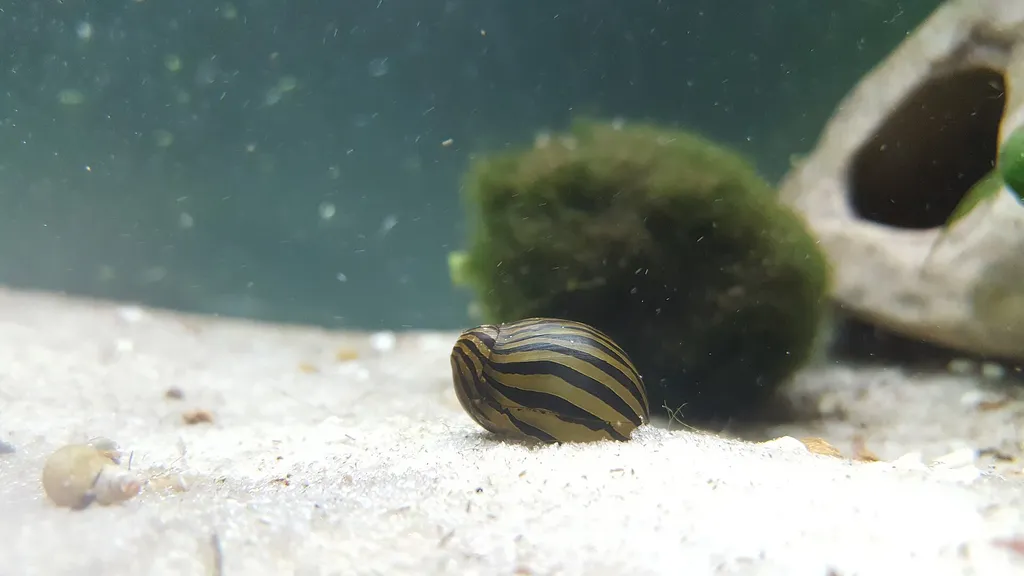
Zebra nerite
Vittina natalensis
FreshwaterBrackish- Size
- 1 in (2.5 cm)
- Tank
- 5 gal (20 L)
- Water
- 66–84°F (19–29°C)
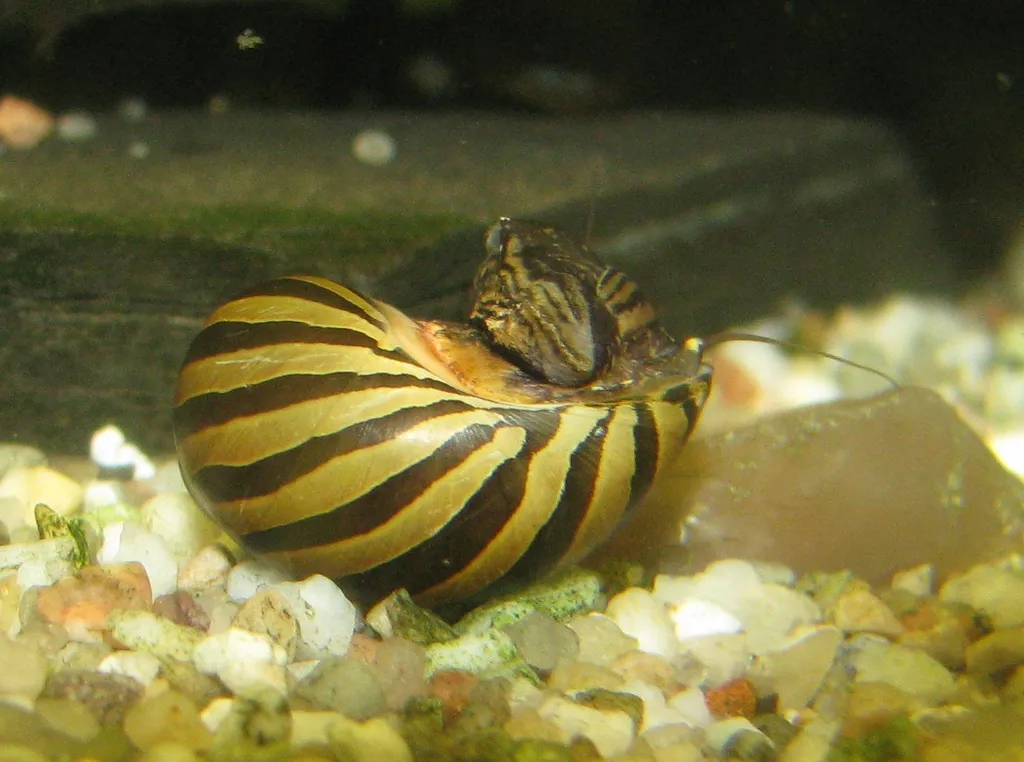
Tiger nerite
Vittina coromandeliana
FreshwaterBrackish- Size
- 1 in (2.5 cm)
- Tank
- 5 gal (19 L)
- Water
- 72–79°F (22–26°C)
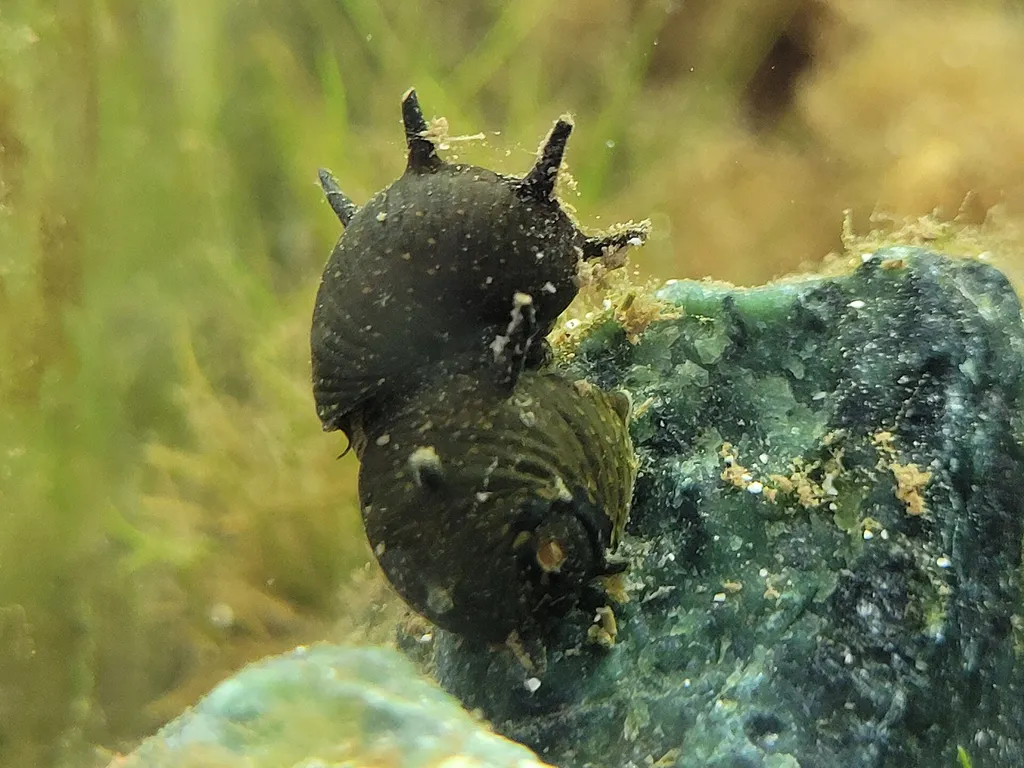
Horned nerite
Clithon corona
FreshwaterBrackish- Size
- 0.6 in (1.5 cm)
- Tank
- 5 gal (19 L)
- Water
- 72–79°F (22–26°C)
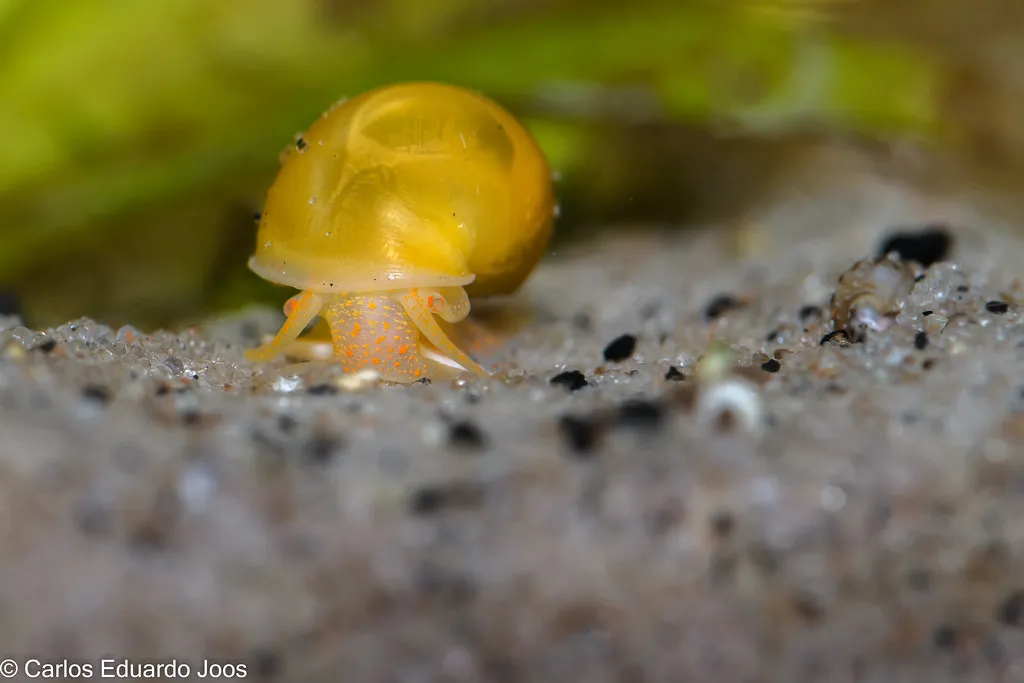
Mystery snail
Pomacea diffusa
Freshwater- Size
- 2 in (5 cm)
- Tank
- 5 gal (20 L)
- Water
- 70–79°F (21–26°C)
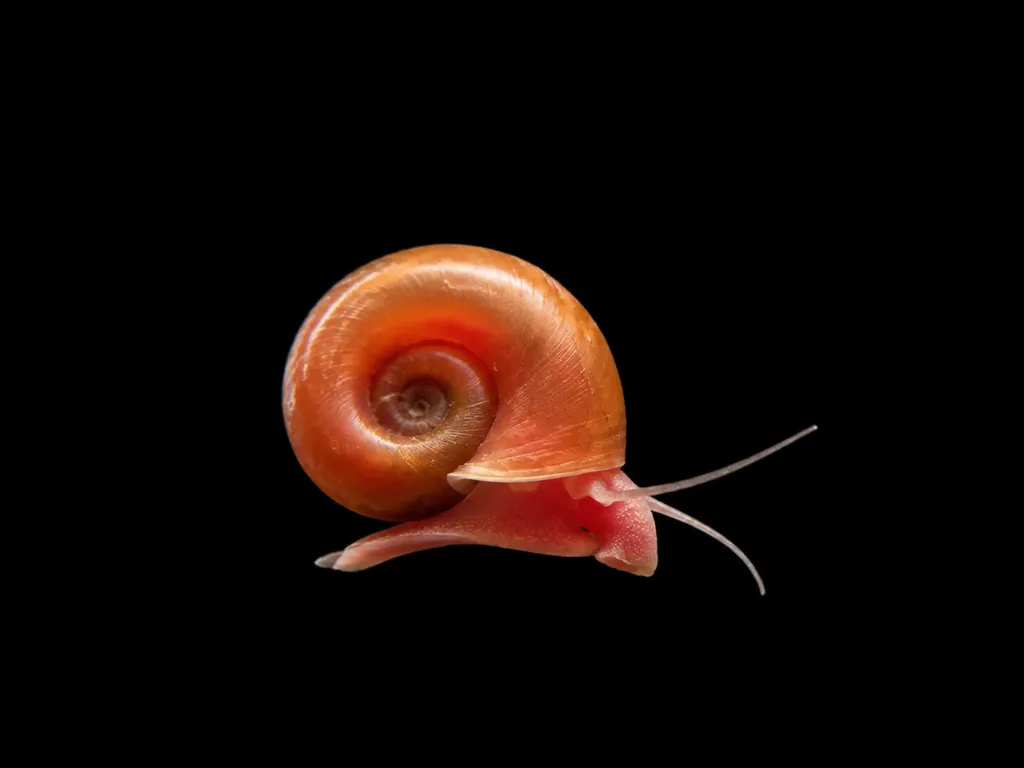
Red ramshorn snail
Indoplanorbis exustus
Freshwater- Size
- 0.8 in (2 cm)
- Tank
- 5 gal (20 L)
- Water
- 68–86°F (20–30°C)
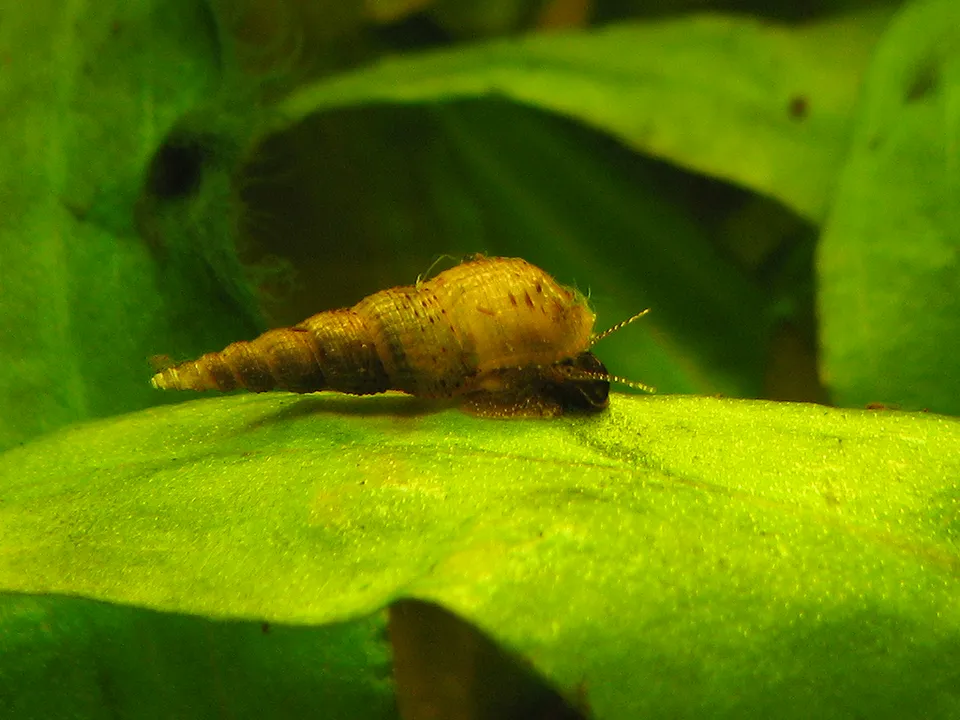
Malaysian trumpet snail
Melanoides tuberculata
Freshwater- Size
- 1.2 in (3 cm)
- Tank
- 5 gal (20 L)
- Water
- 70–77°F (21–25°C)
The rule
What a snail needs from the water
A shell is calcium carbonate, and soft, acidic water dissolves it. Snails want a pH above 7 and hard water, or a cuttlebone in the tank and calcium in the food. They also need feeding: a nerite starves once the glass is clean, so algae wafers and blanched vegetables go in when the algae runs out. Copper kills snails at any dose, which rules out most fish medications and some fertilizers. And nerites climb, so an open-topped tank loses them over the rim.
- 01
Calcium and pH above 7
Soft, acid water pits the shell
- 02
Feed them
Wafers and blanched veg once the glass is clean
- 03
No copper
Medications and some fertilizers kill snails
- 04
A lid for nerites
They climb out of an open tank
Breeders and hunters
Pest snails, and the snail that eats them
The bladder snail, the ramshorns and the Malaysian trumpet snail arrive on plants and multiply to match the food supply, which makes them a sign of overfeeding rather than a problem in themselves. The assassin snail is the fix: 1 inch (2.5 cm), marked easy, and it hunts other snails and leaves plants alone. Two snails to keep out of a planted tank: the apple snail reaches 5.9 inches (15 cm), lists 21 gallons (80 liters) and eats plants down to the stem, and the giant Colombian ramshorn does the same at 2 inches (5 cm).
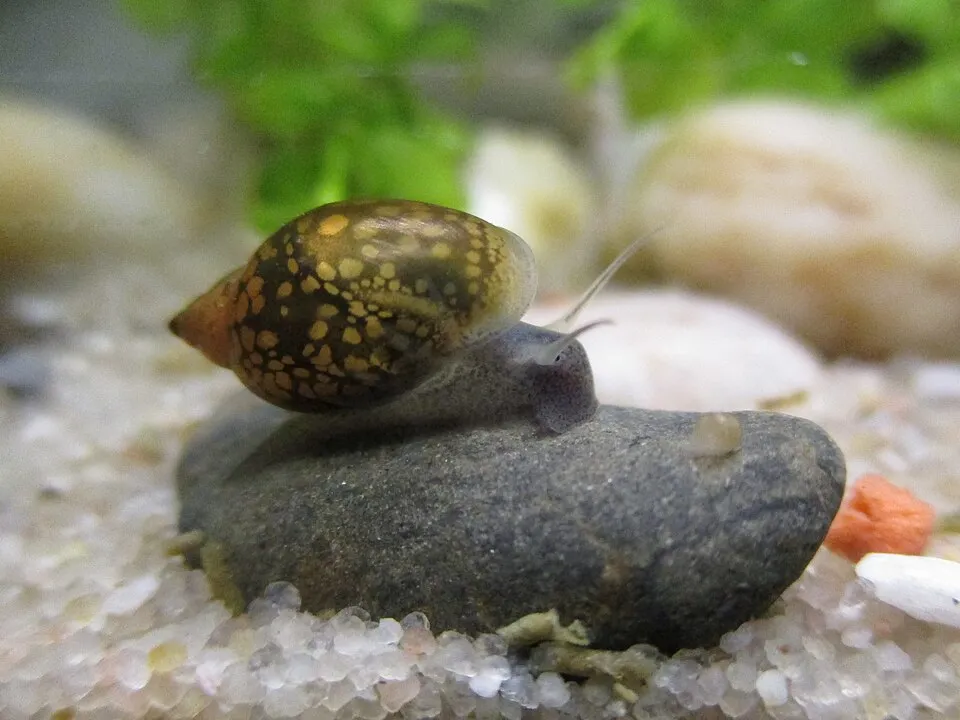
Bladder snail
Physella acuta
Freshwater0.6 in (1.5 cm) · 5 gal (20 L)57–86°F (14–30°C)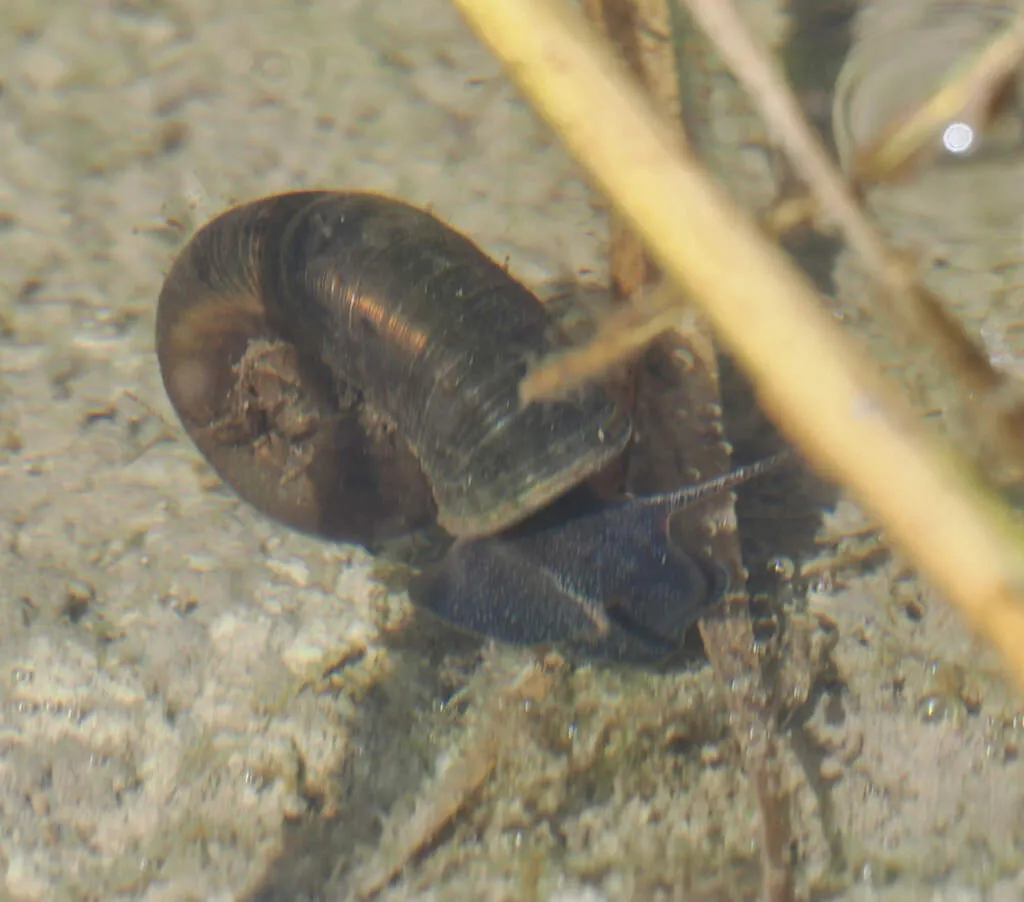
Great ramshorn
Planorbarius corneus
Freshwater1.6 in (4 cm) · 5 gal (20 L)64–77°F (18–25°C)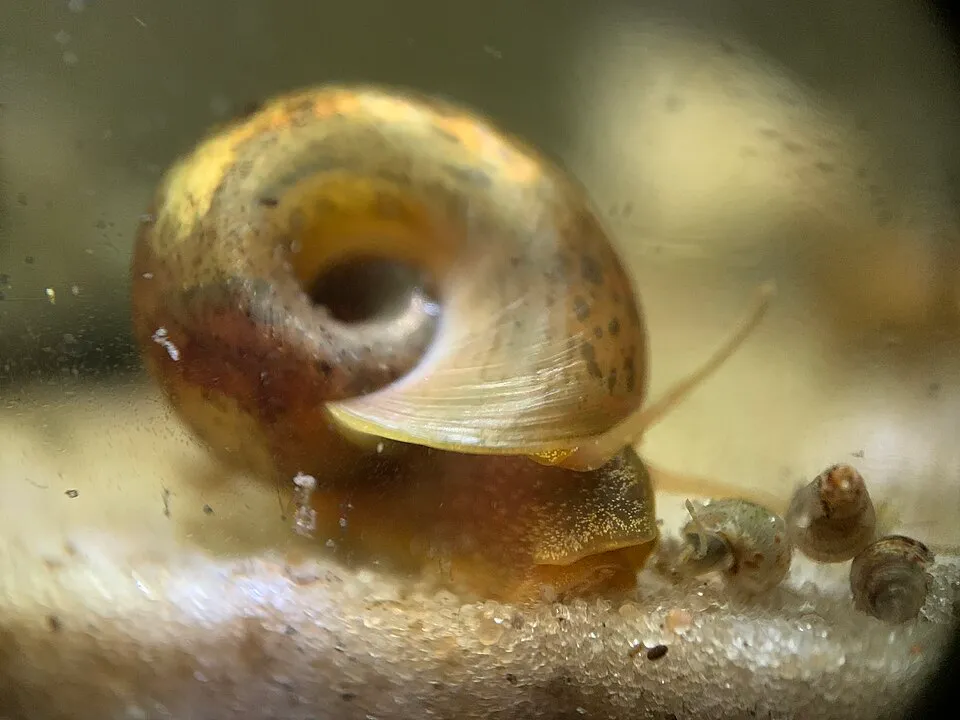
Seminole ramshorn
Planorbella duryi
Freshwater1 in (2.5 cm) · 5 gal (20 L)68–82°F (20–28°C)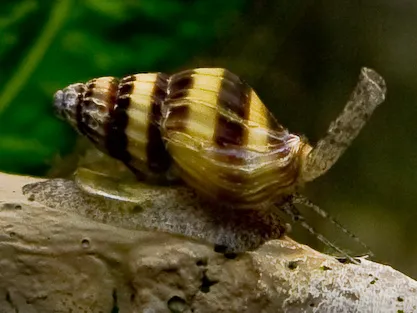
Assassin snail
Anentome helena
Freshwater1 in (2.5 cm) · 5 gal (20 L)72–81°F (22–27°C)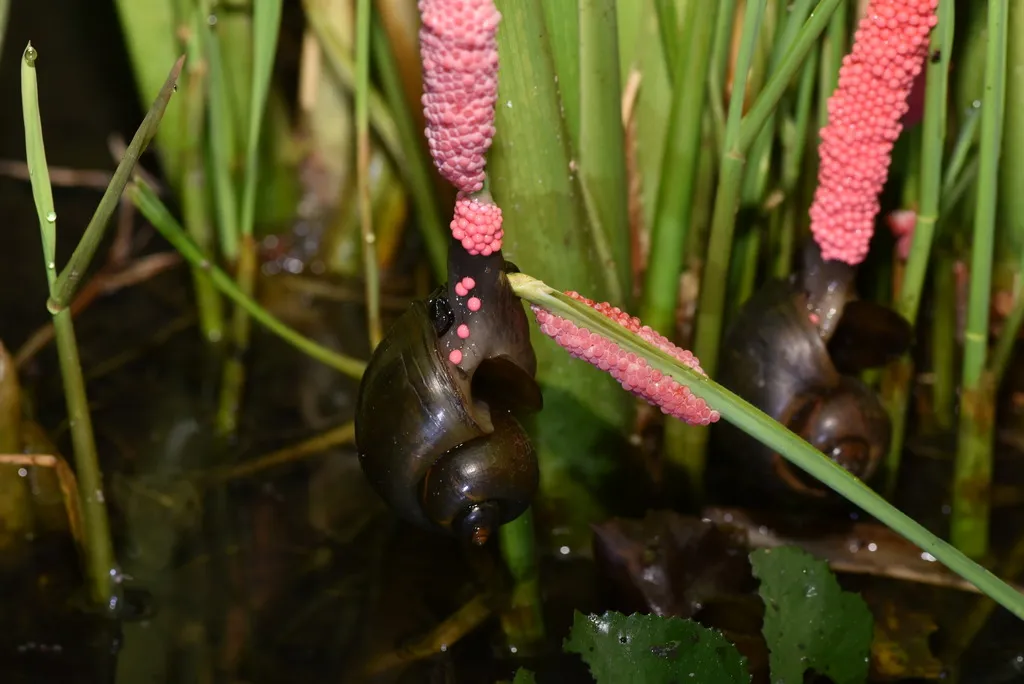
Apple snail
Pomacea canaliculata
Freshwater5.9 in (15 cm) · 21 gal (80 L)64–81°F (18–27°C)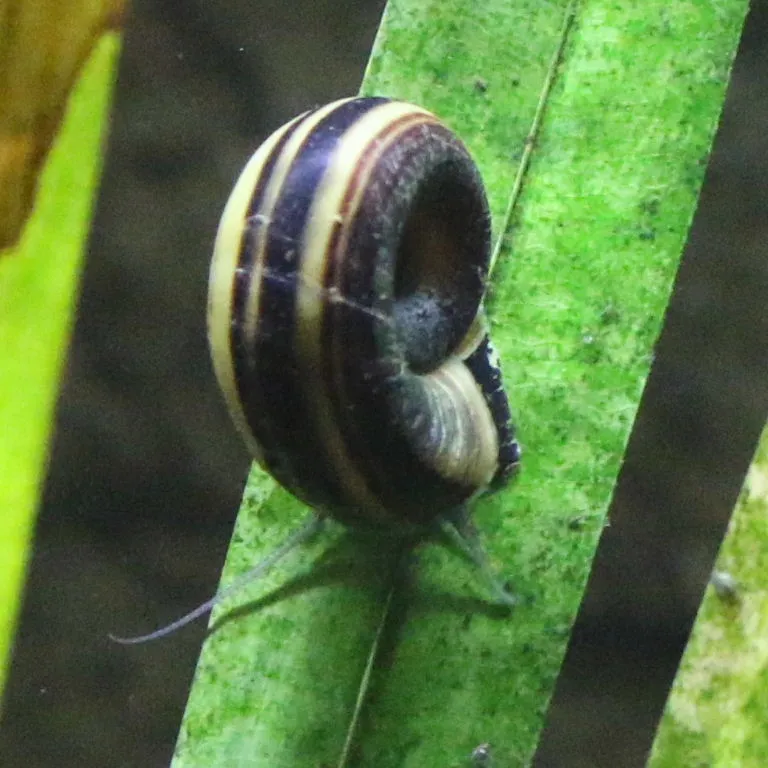
Giant Colombian ramshorn
Marisa cornuarietis
Freshwater2 in (5 cm) · 5 gal (20 L)73–81°F (23–27°C)
Warm water
Rabbit snails and the Sulawesi crowd
The rabbit snails come from the lakes of Sulawesi and want warm, hard water: the gold rabbit snail is 2.8 inches (7 cm) for 16 gallons (60 liters) at 75–82°F (24–28°C) and a pH from 7 to 8.5, the yellow giant rabbit snail 4.7 inches (12 cm) for 20 gallons (75 liters) at 79–86°F (26–30°C). They are marked medium, they give birth to one live baby at a time, and they graze on soft algae and leftovers without touching most plants. The Himalayan rabbit snail is the easy one at 2 inches (5 cm). The blue turbo snail is another Sulawesi native for 79–86°F (26–30°C), and the black devil snail is the tall, dark one at 3.9 inches (10 cm), marked easy.
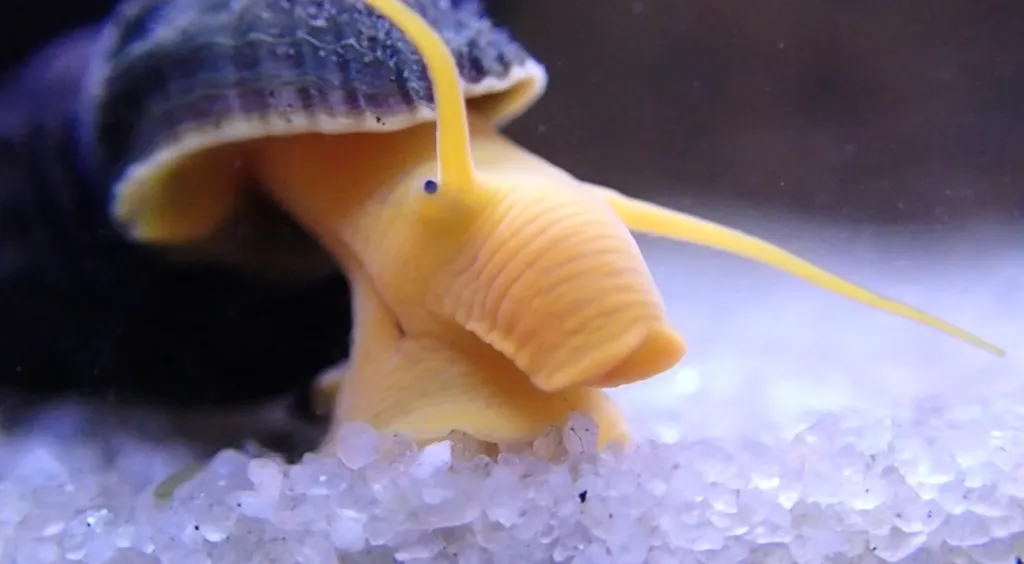
Gold rabbit snail
Tylomelania gemmifera
Freshwater2.8 in (7 cm) · 16 gal (60 L)75–82°F (24–28°C)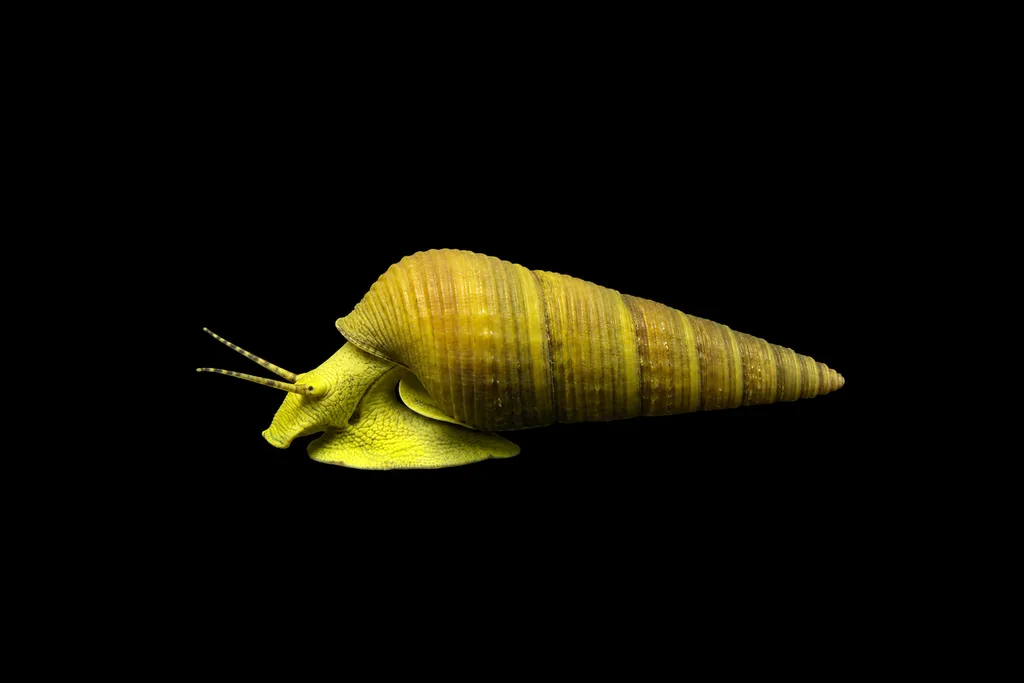
Yellow giant rabbit snail
Tylomelania sarasinorum
Freshwater4.7 in (12 cm) · 20 gal (75 L)79–86°F (26–30°C)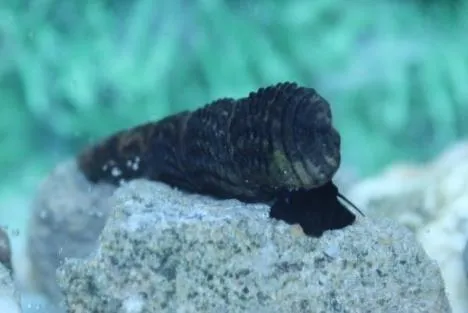
White spotted rabbit snail
Tylomelania towutica
Freshwater4.3 in (11 cm) · 16 gal (60 L)75–84°F (24–29°C)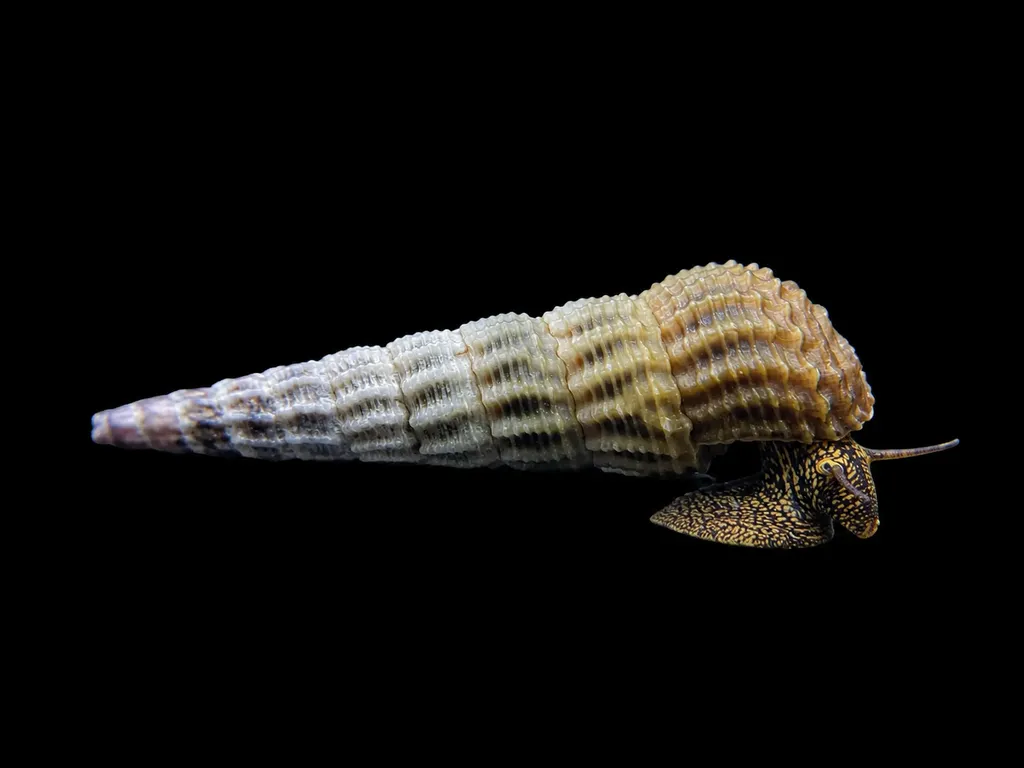
Himalayan rabbit snail
Tylomelania marwotoae
Freshwater2 in (5 cm) · 11 gal (40 L)77–86°F (25–30°C)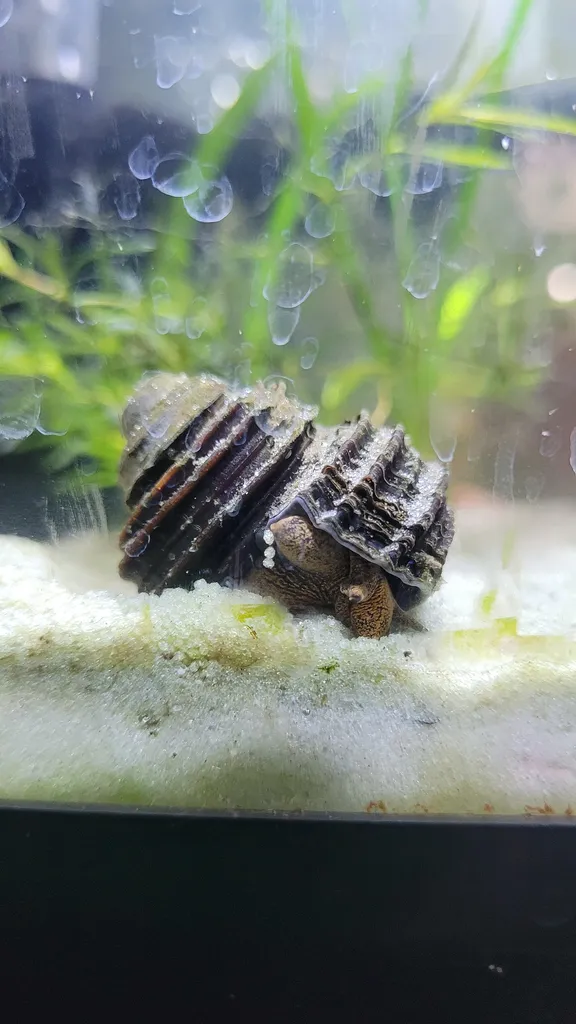
Blue turbo snail
Celetaia persculpta
Freshwater2.8 in (7 cm) · 11 gal (40 L)79–86°F (26–30°C)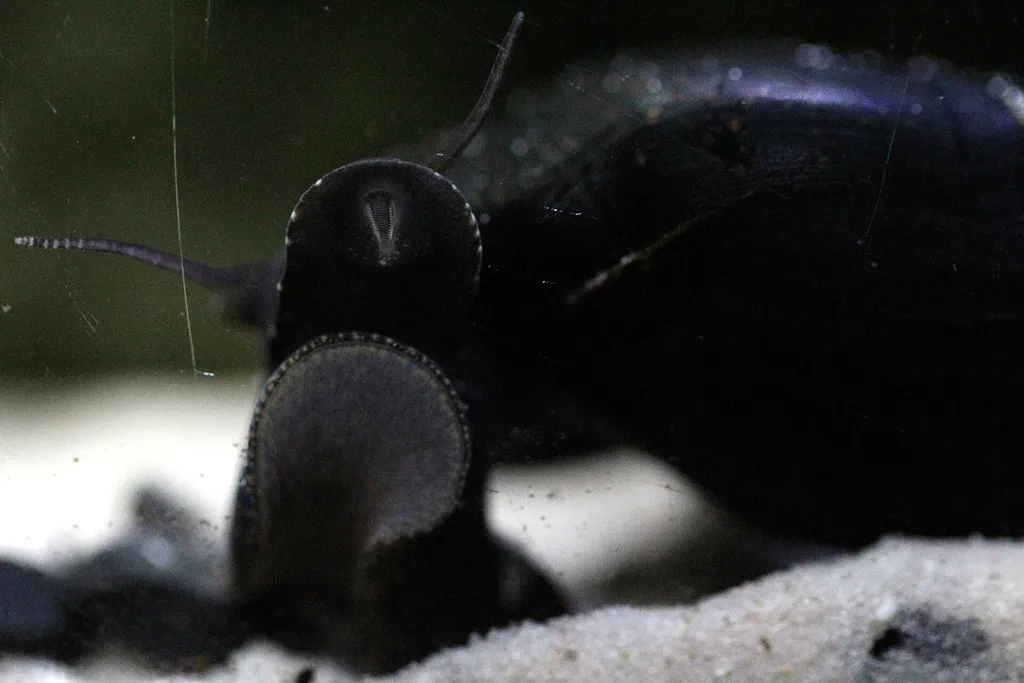
Black devil snail
Faunus ater
Freshwater3.9 in (10 cm) · 13 gal (50 L)72–86°F (22–30°C)
Saltwater
The reef clean-up snails
A reef crew is a mix, because each snail cleans a different surface. The trochus snail grazes glass and rock at 1.2 inches (3 cm), rights itself when it falls and breeds in the tank. The astraea snail does the same job but cannot turn itself over, so it needs a hand up. The cerith snail works the sand and the glass at 1.6 inches (4 cm). The nassarius snail lives in the sand and eats leftover food, not algae. The Mexican turbo snail is the big grazer at 2.4 inches (6 cm) and knocks over loose frags. The fighting conch plows the sand bed at 3.1 inches (8 cm) in 20 gallons (75 liters). All of them are marked beginner or easy.
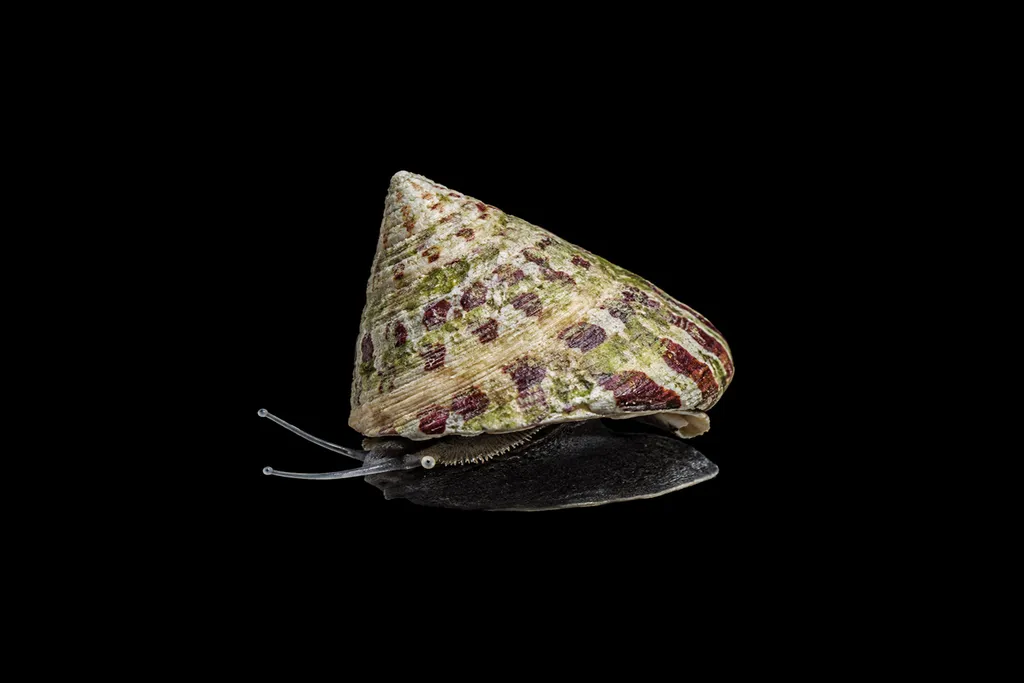
Trochus snail
Trochus sp.
Saltwater1.2 in (3 cm) · 11 gal (40 L)72–79°F (22–26°C)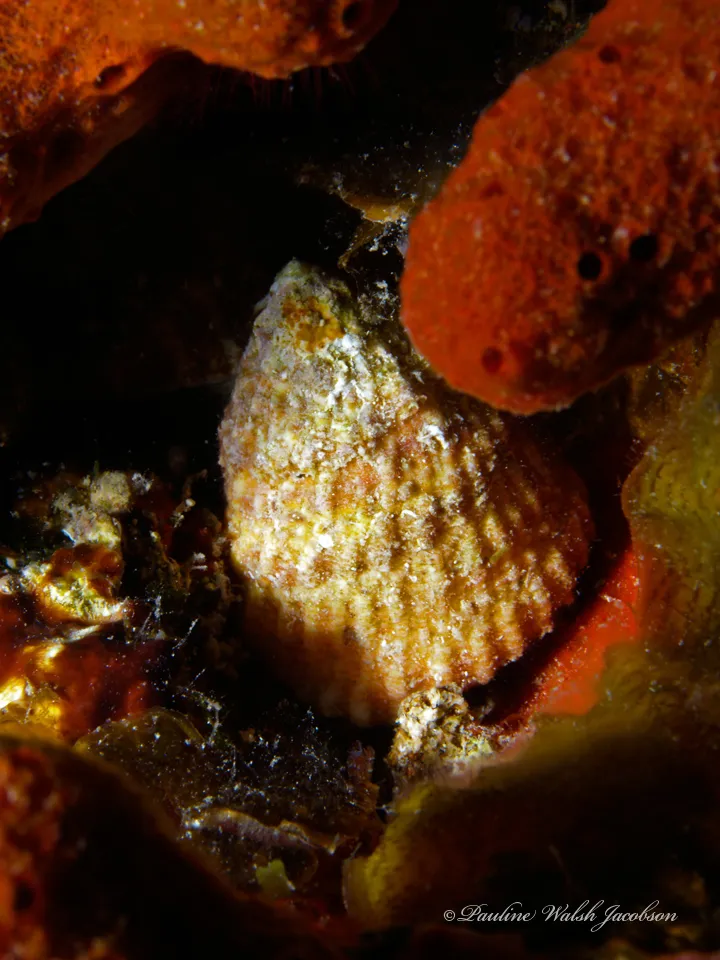
Astraea turbo snail
Astraea tecta
Saltwater1 in (2.5 cm) · 11 gal (40 L)72–79°F (22–26°C)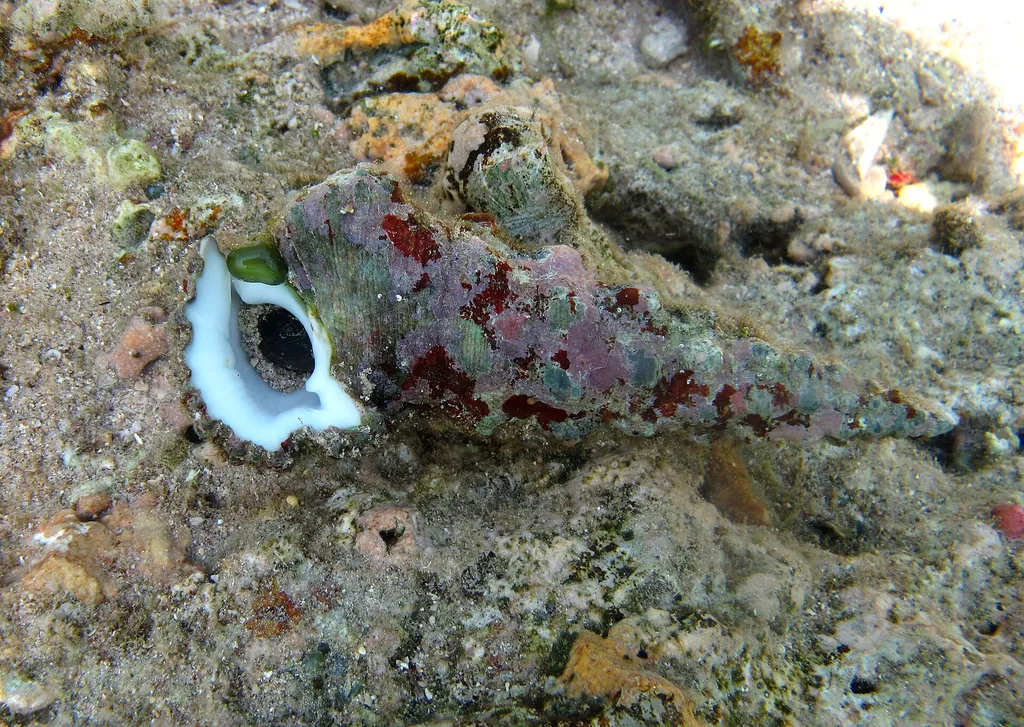
Cerith snail
Cerithium sp.
Saltwater1.6 in (4 cm) · 11 gal (40 L)72–79°F (22–26°C)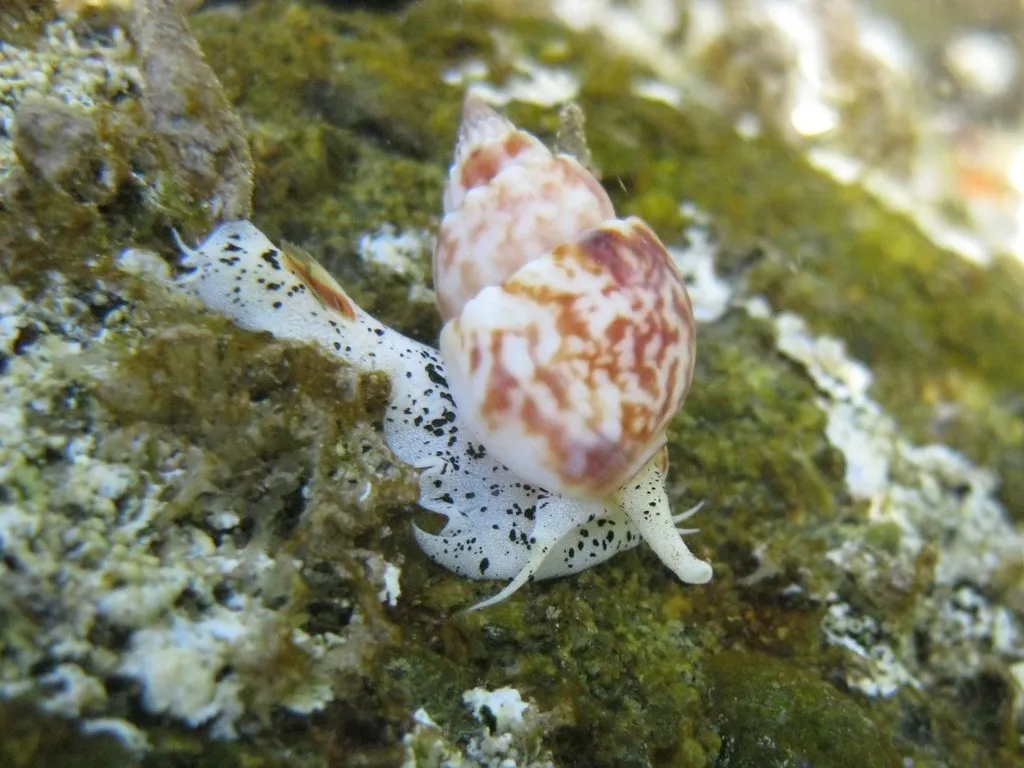
Nassarius snail
Nassarius sp.
Saltwater1 in (2.5 cm) · 11 gal (40 L)72–79°F (22–26°C)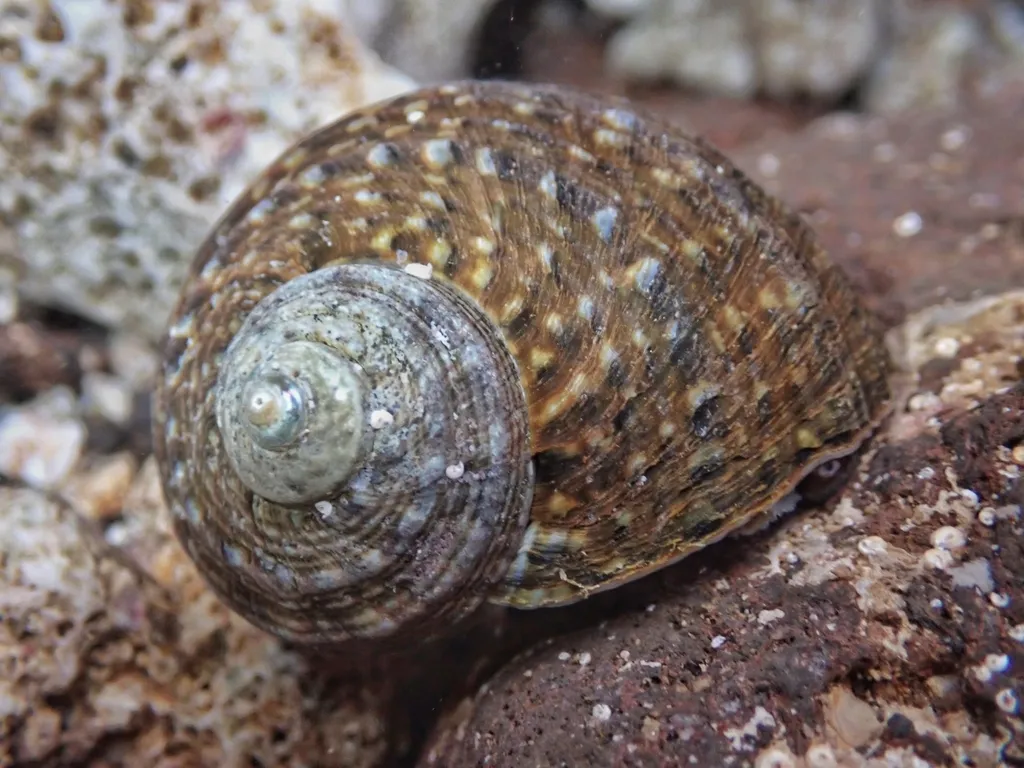
Mexican turbo snail
Turbo fluctuosus
Saltwater2.4 in (6 cm) · 11 gal (40 L)75–81°F (24–27°C)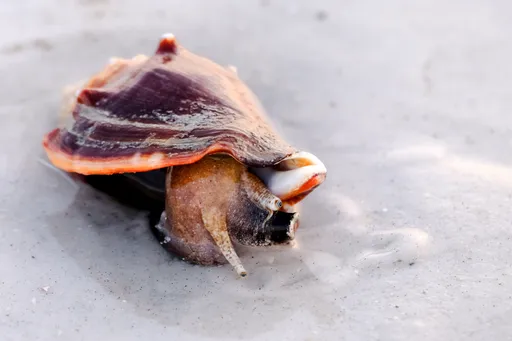
Fighting conch
Strombus alatus
Saltwater3.1 in (8 cm) · 20 gal (75 L)75–81°F (24–27°C)
By the numbers
Smallest
Largest
FAQ
Common questions
Do snails clean the tank?
They eat algae, leftover food and dead leaves, which keeps the glass and the sand tidy. They do not remove waste; they add to it, so the water changes stay the same.
Will nerite snails breed in my tank?
They lay small white eggs on the glass and the rock, but the larvae need brackish water, so the eggs never hatch in a freshwater tank. The eggs stay until you scrape them off.
How do I get rid of pest snails?
Feed less, since the population tracks the food. Add assassin snails, which hunt bladder snails and ramshorns. Skip the chemical treatments, which contain copper and kill shrimp and the snails you want.
Why is my snail's shell pitted or white?
The water is too soft or too acidic and the shell is dissolving. Raise the hardness, keep the pH above 7 and add a cuttlebone or calcium-rich food.
Are snails safe with plants?
Nerites, mystery snails, ramshorns, trumpet snails and rabbit snails leave healthy plants alone. The apple snail and the giant Colombian ramshorn eat plants and belong in a tank without them.
How many clean-up snails does a reef need?
A few of each kind rather than a crowd of one. Start with trochus and cerith snails for the rock and glass, add nassarius snails for the sand, and add more only when the algae outpaces them.
Index
Freshwater snails
Apple snail
Pomacea canaliculata
Freshwater5.9 in (15 cm) · 21 gal (80 L)64–81°F (18–27°C)Assassin snail
Anentome helena
Freshwater1 in (2.5 cm) · 5 gal (20 L)72–81°F (22–27°C)Black devil snail
Faunus ater
Freshwater3.9 in (10 cm) · 13 gal (50 L)72–86°F (22–30°C)Bladder snail
Physella acuta
Freshwater0.6 in (1.5 cm) · 5 gal (20 L)57–86°F (14–30°C)Blue turbo snail
Celetaia persculpta
Freshwater2.8 in (7 cm) · 11 gal (40 L)79–86°F (26–30°C)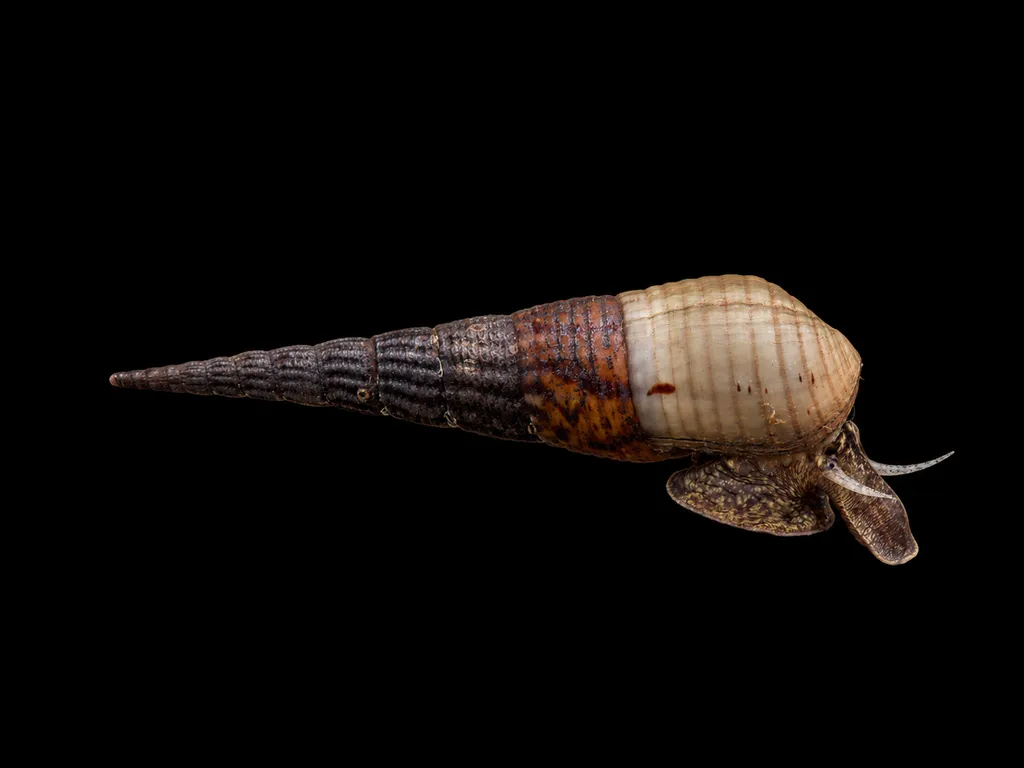
Chopstick snail
Stenomelania torulosa
Freshwater2 in (5 cm) · 11 gal (40 L)73–82°F (23–28°C)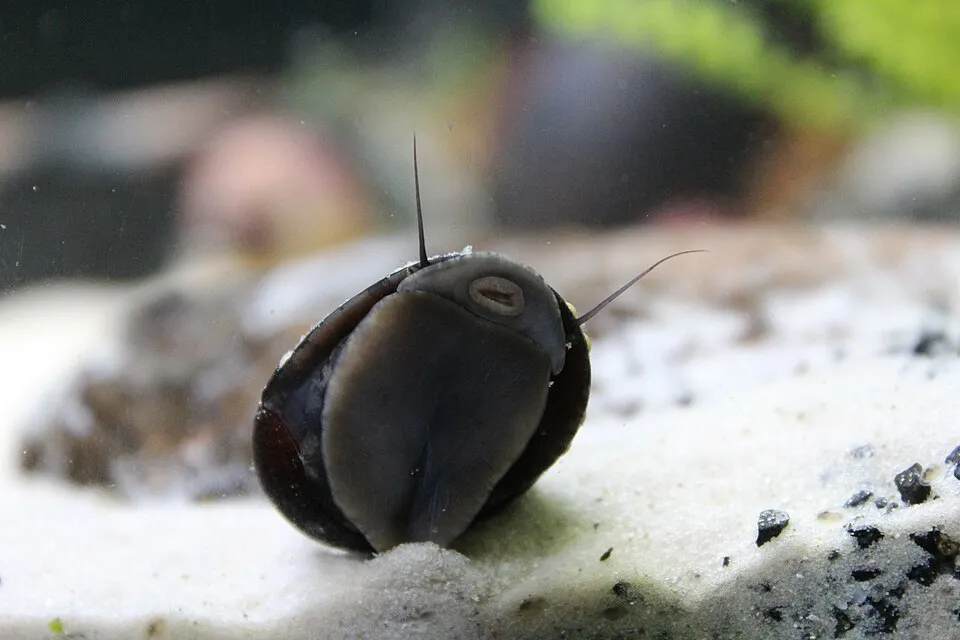
Dusky nerite snail
Neritina pulligera
FreshwaterBrackish1.6 in (4 cm) · 5 gal (20 L)72–82°F (22–28°C)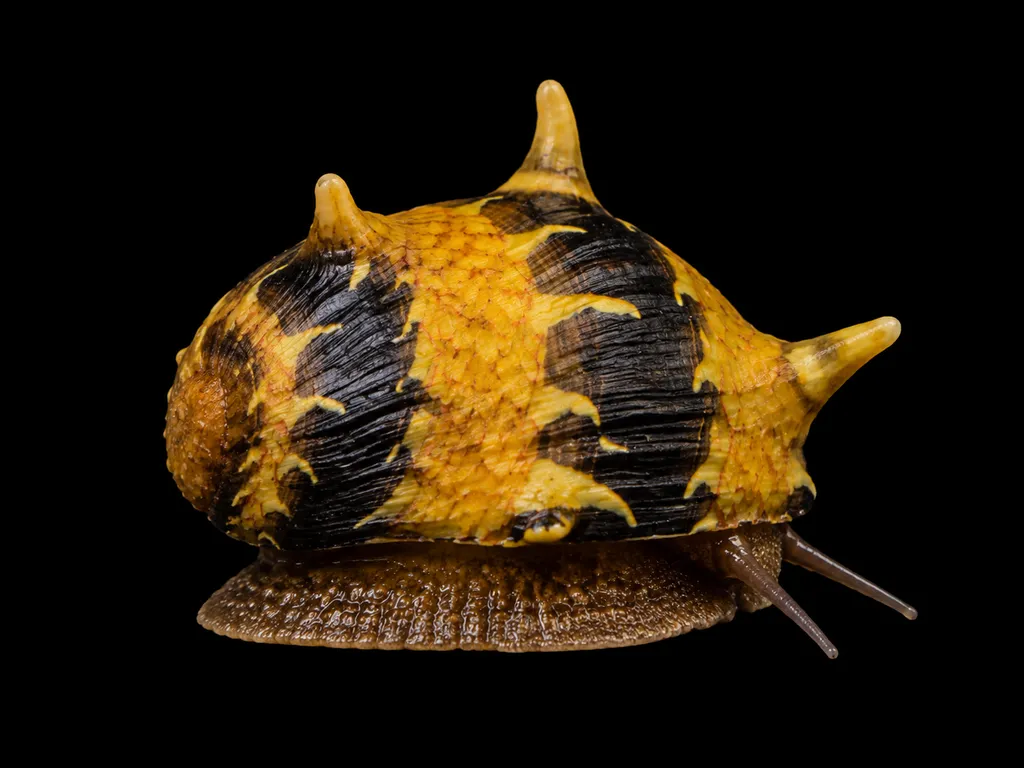
Fancy antler snail
Clithon sowerianum
FreshwaterBrackish0.8 in (2 cm) · 5 gal (19 L)72–82°F (22–28°C)Giant Colombian ramshorn
Marisa cornuarietis
Freshwater2 in (5 cm) · 5 gal (20 L)73–81°F (23–27°C)Gold rabbit snail
Tylomelania gemmifera
Freshwater2.8 in (7 cm) · 16 gal (60 L)75–82°F (24–28°C)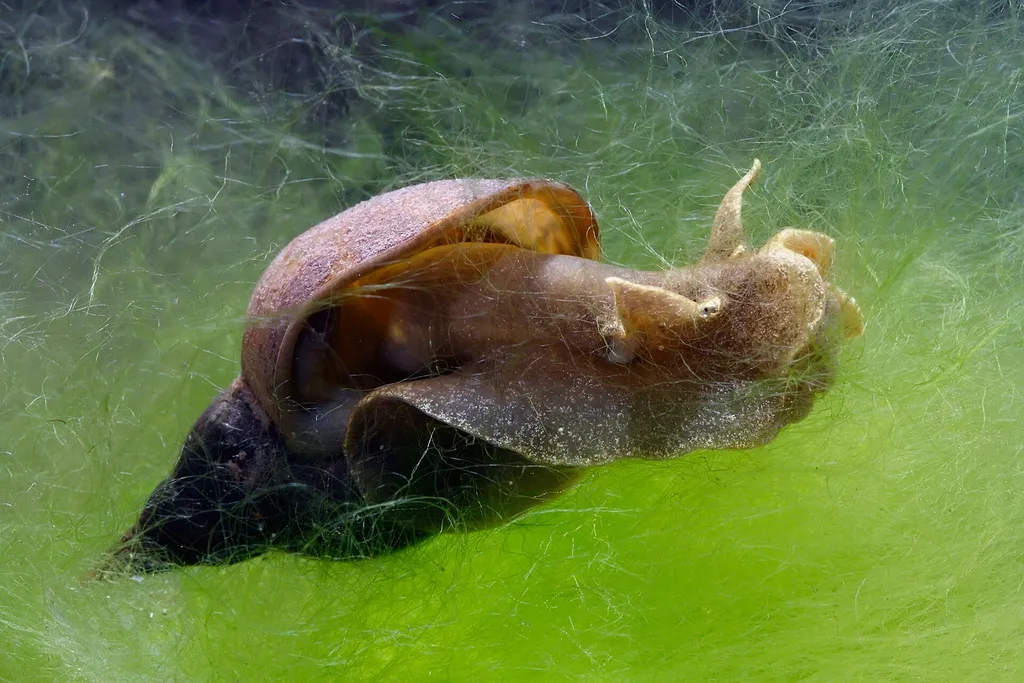
Great pond snail
Lymnaea stagnalis
Freshwater2.4 in (6 cm) · 5 gal (20 L)64–75°F (18–24°C)Great ramshorn
Planorbarius corneus
Freshwater1.6 in (4 cm) · 5 gal (20 L)64–77°F (18–25°C)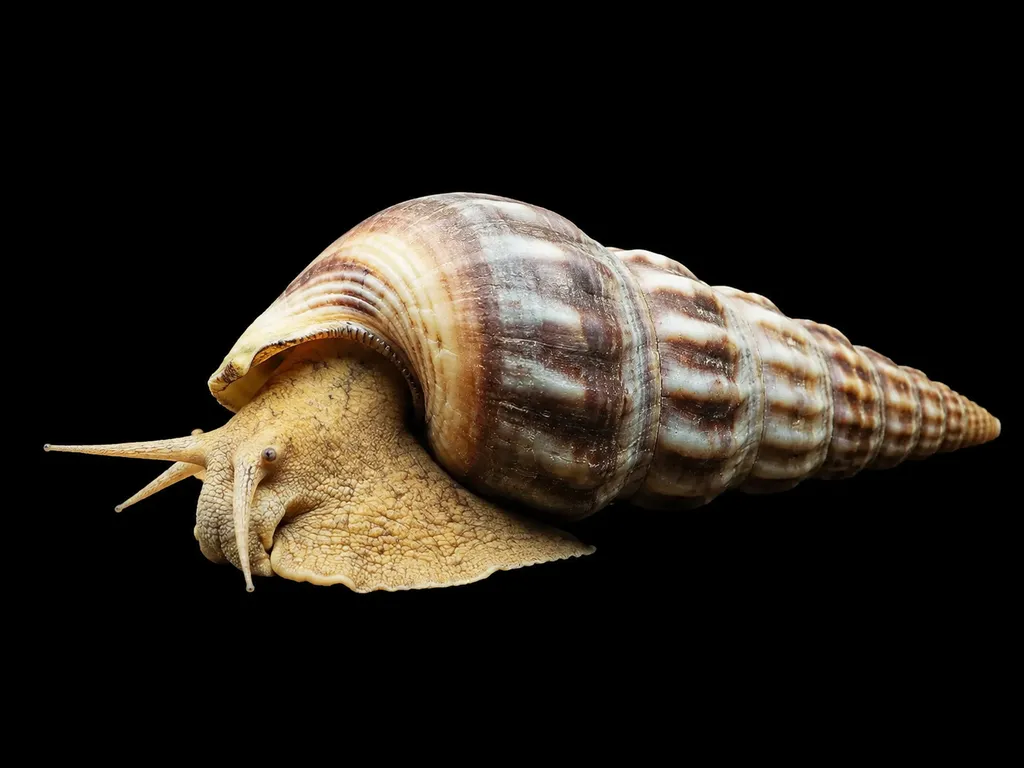
Hercules snail
Brotia herculea
Freshwater3.1 in (8 cm) · 11 gal (40 L)73–82°F (23–28°C)Himalayan rabbit snail
Tylomelania marwotoae
Freshwater2 in (5 cm) · 11 gal (40 L)77–86°F (25–30°C)Horned nerite
Clithon corona
FreshwaterBrackish0.6 in (1.5 cm) · 5 gal (19 L)72–79°F (22–26°C)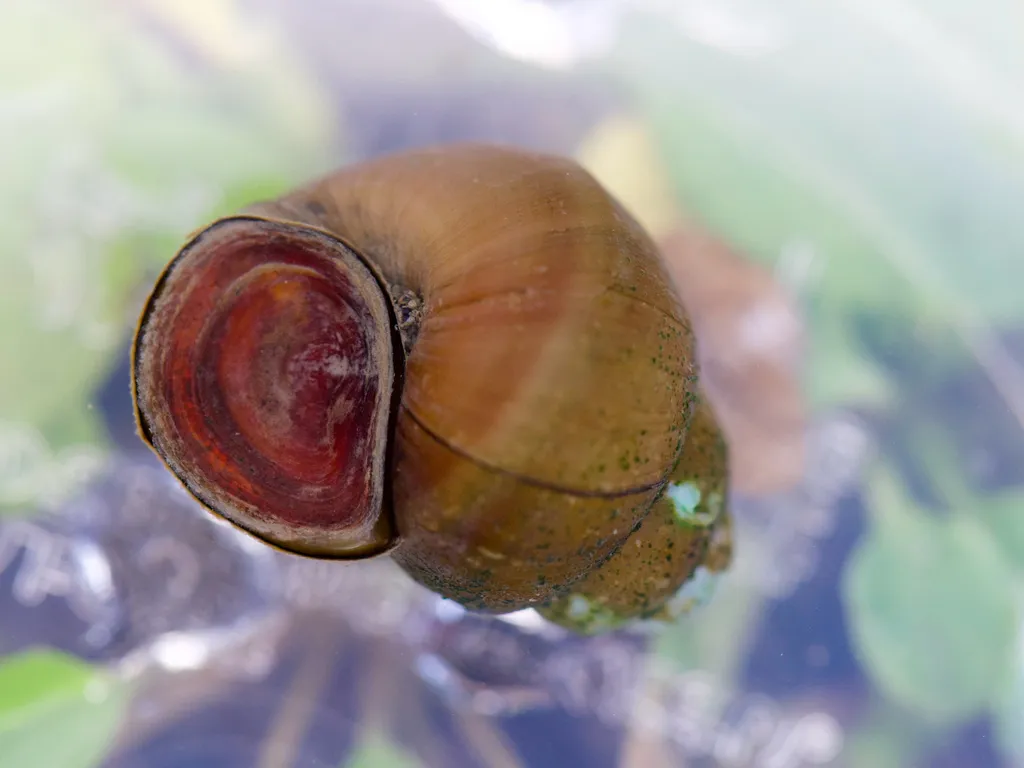
Japanese trapdoor snail
Cipangopaludina malleata
Freshwater2 in (5 cm) · 8 gal (30 L)64–77°F (18–25°C)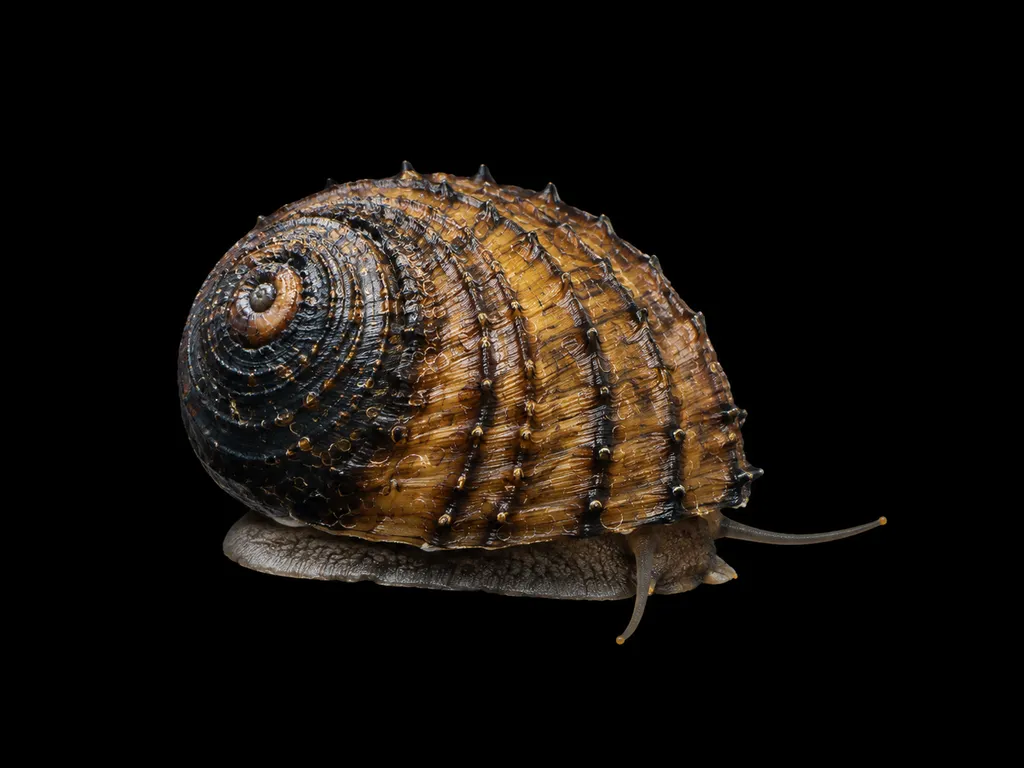
King Koopa nerite
Neritina juttingae
FreshwaterBrackish1 in (2.5 cm) · 5 gal (20 L)72–82°F (22–28°C)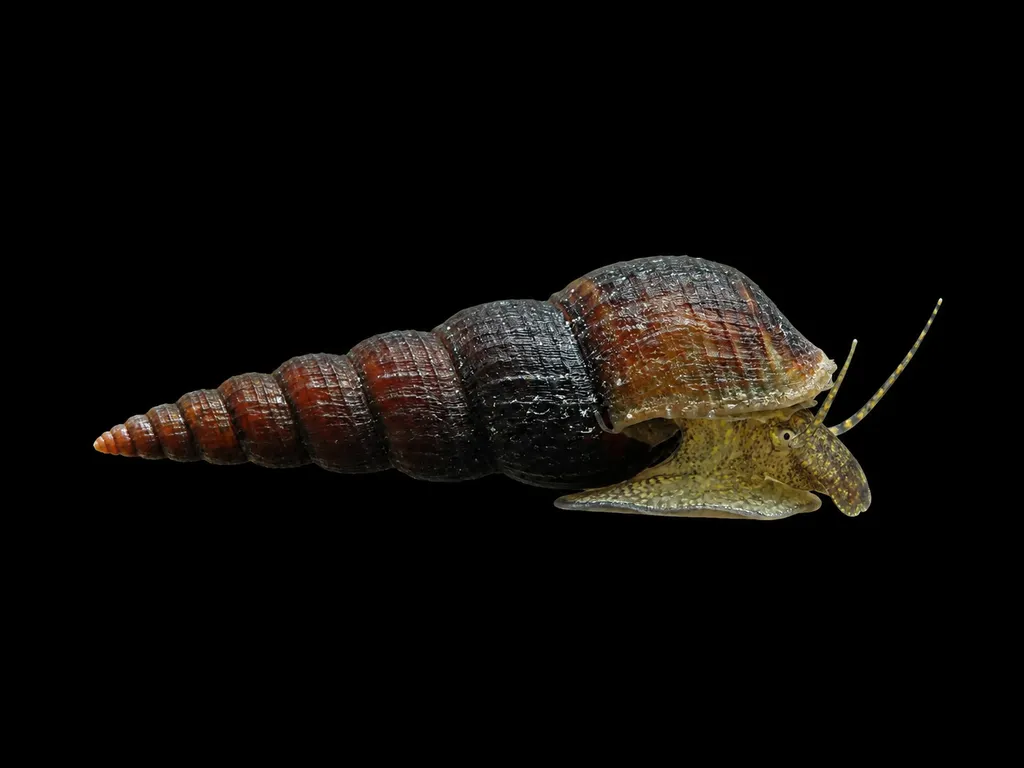
Mahogany trumpet snail
Melanoides maculata
Freshwater1.6 in (4 cm) · 5 gal (20 L)72–82°F (22–28°C)Malaysian trumpet snail
Melanoides tuberculata
Freshwater1.2 in (3 cm) · 5 gal (20 L)70–77°F (21–25°C)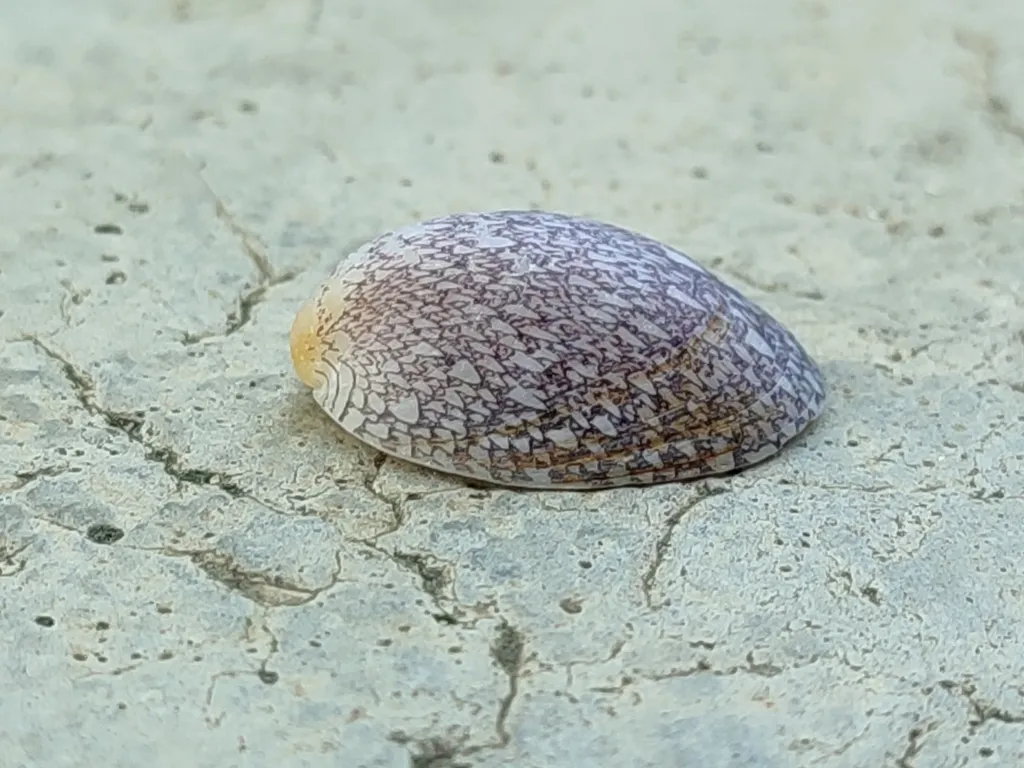
Marbled limpet nerite
Septaria porcellana
FreshwaterBrackish1.2 in (3 cm) · 5 gal (20 L)73–82°F (23–28°C)Mystery snail
Pomacea diffusa
Freshwater2 in (5 cm) · 5 gal (20 L)70–79°F (21–26°C)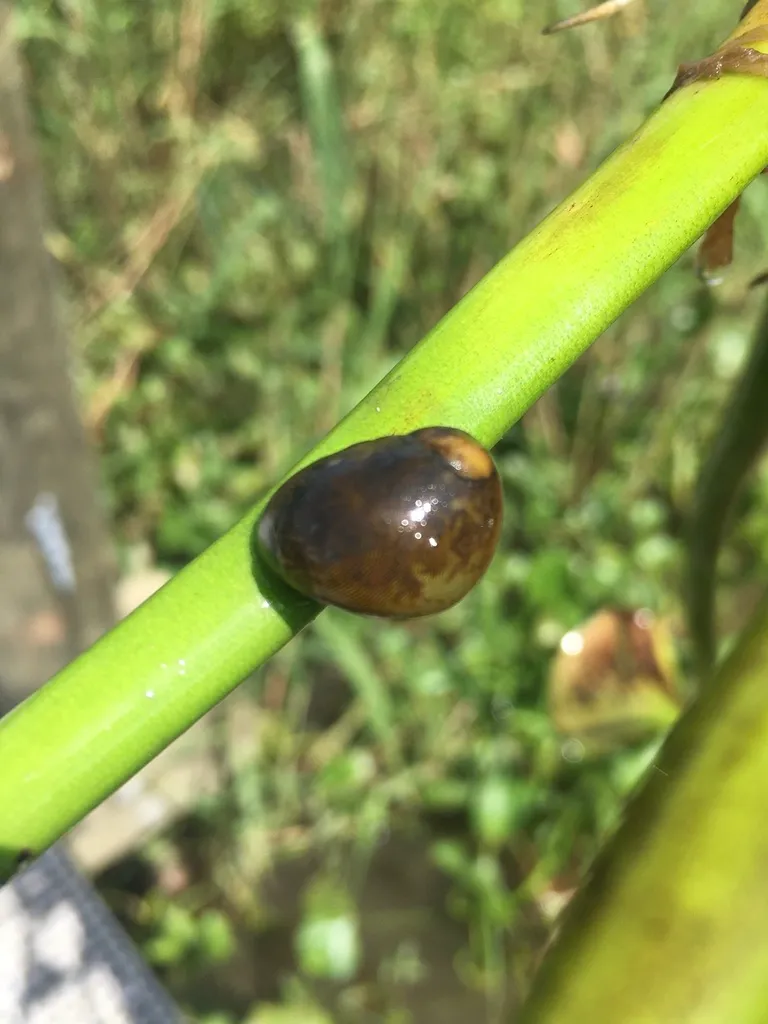
Olive nerite
Vittina usnea
FreshwaterBrackish0.8 in (2 cm) · 5 gal (20 L)72–82°F (22–28°C)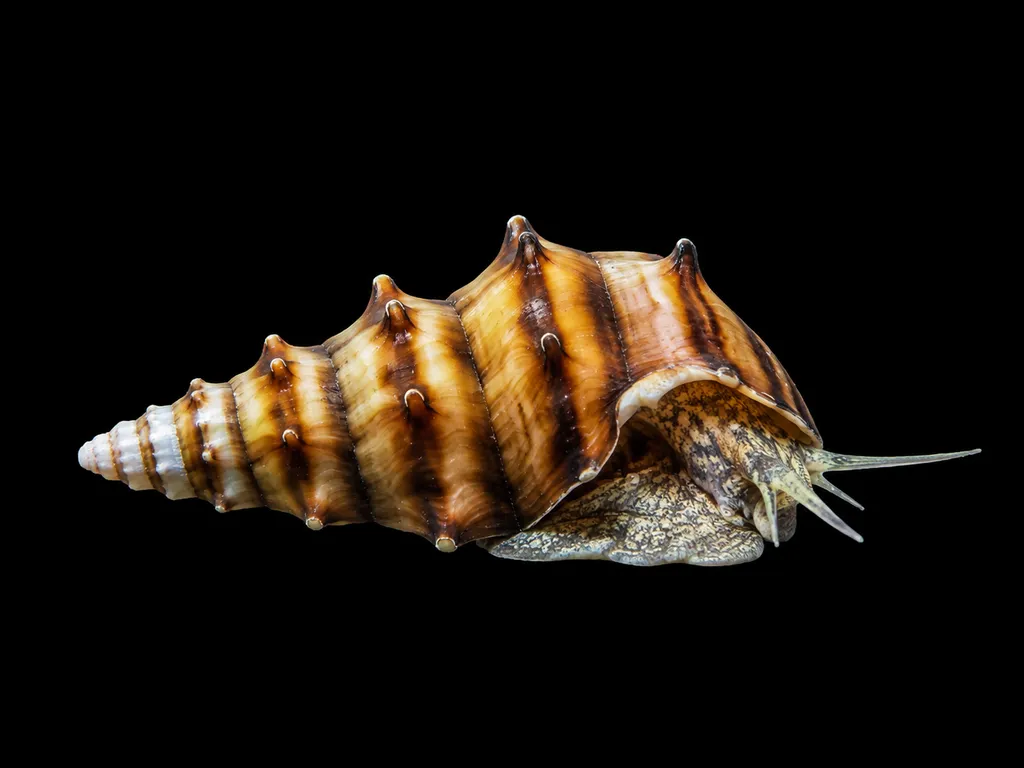
Pagoda snail
Brotia pagodula
Freshwater2.4 in (6 cm) · 5 gal (20 L)72–82°F (22–28°C)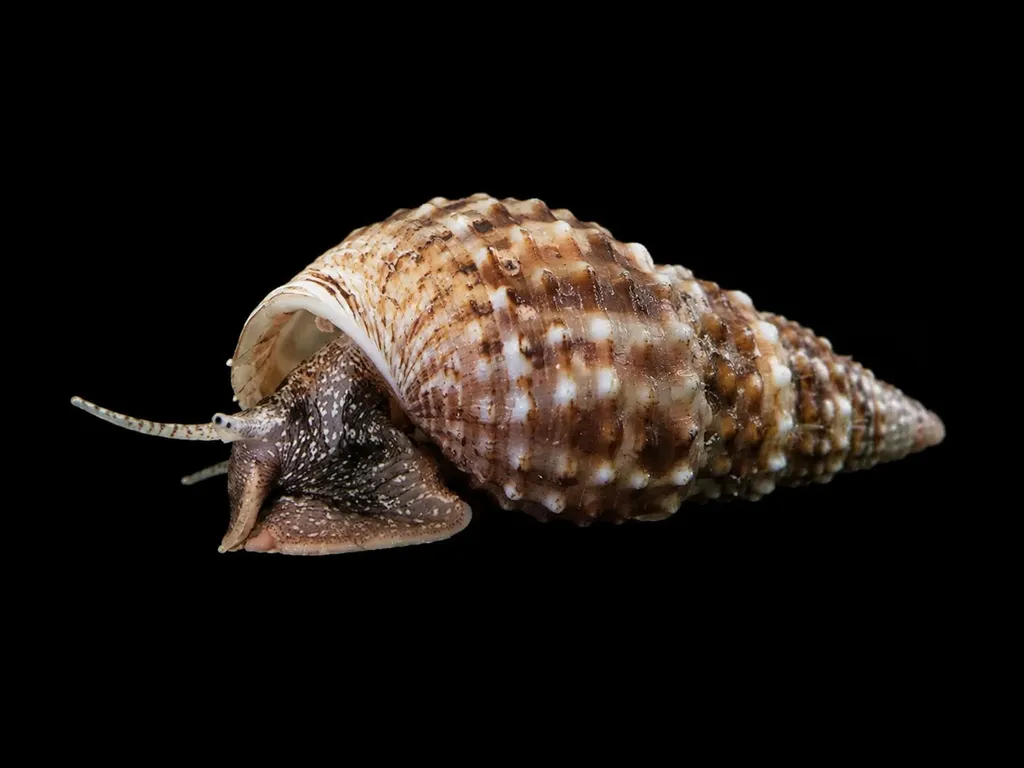
Prambanan snail
Thiara winteri
Freshwater1.6 in (4 cm) · 11 gal (40 L)73–82°F (23–28°C)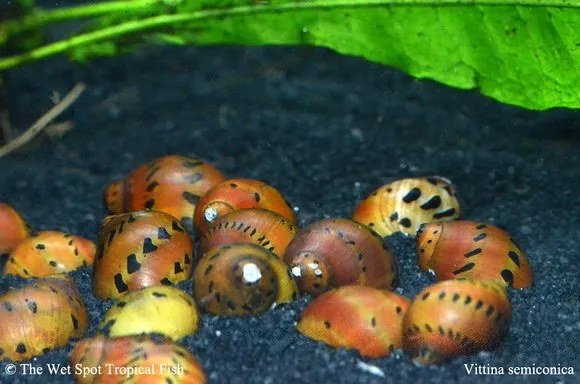
Red onion snail
Vittina semiconica
FreshwaterBrackish1 in (2.5 cm) · 5 gal (19 L)72–82°F (22–28°C)Red ramshorn snail
Indoplanorbis exustus
Freshwater0.8 in (2 cm) · 5 gal (20 L)68–86°F (20–30°C)Seminole ramshorn
Planorbella duryi
Freshwater1 in (2.5 cm) · 5 gal (20 L)68–82°F (20–28°C)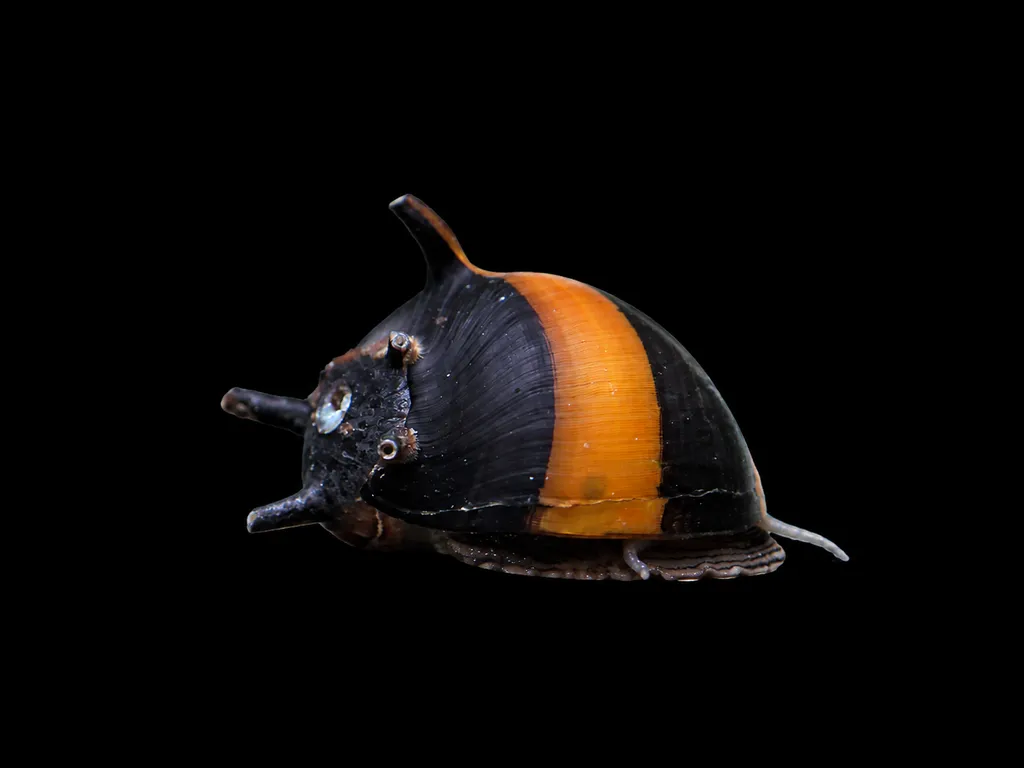
Three-color thorn snail
Clithon sowerbyana
FreshwaterBrackish0.8 in (2 cm) · 5 gal (19 L)72–82°F (22–28°C)Tiger nerite
Vittina coromandeliana
FreshwaterBrackish1 in (2.5 cm) · 5 gal (19 L)72–79°F (22–26°C)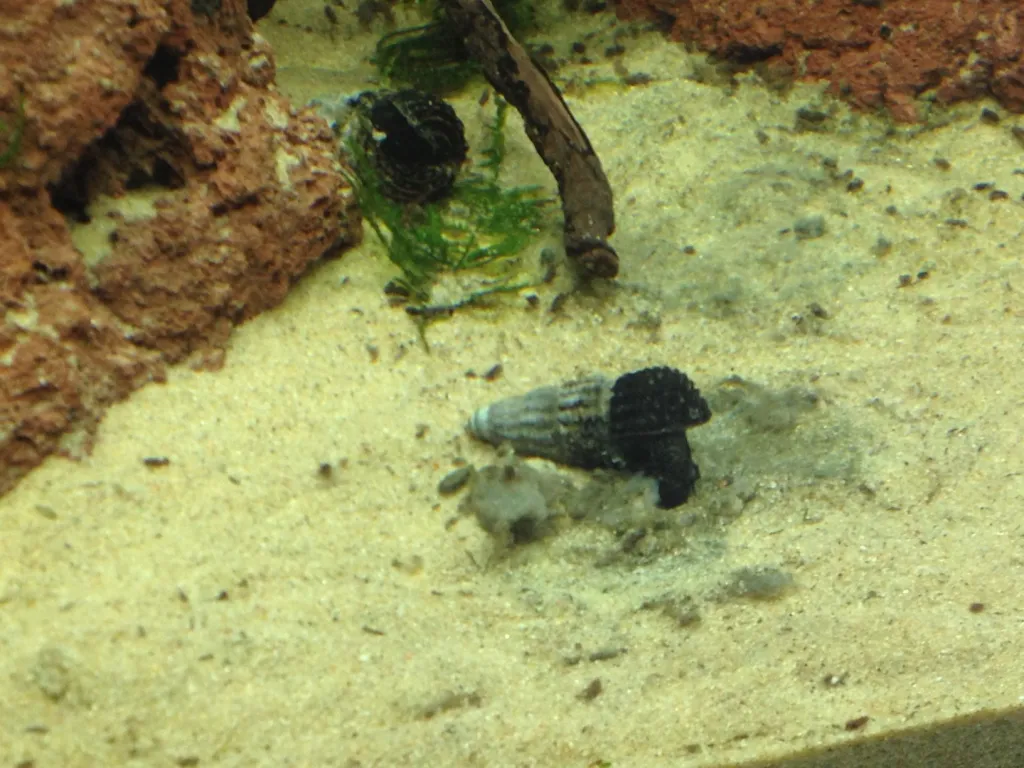
Triangle rabbit snail
Tylomelania sinabartfeldi
Freshwater2 in (5 cm) · 5 gal (20 L)75–86°F (24–30°C)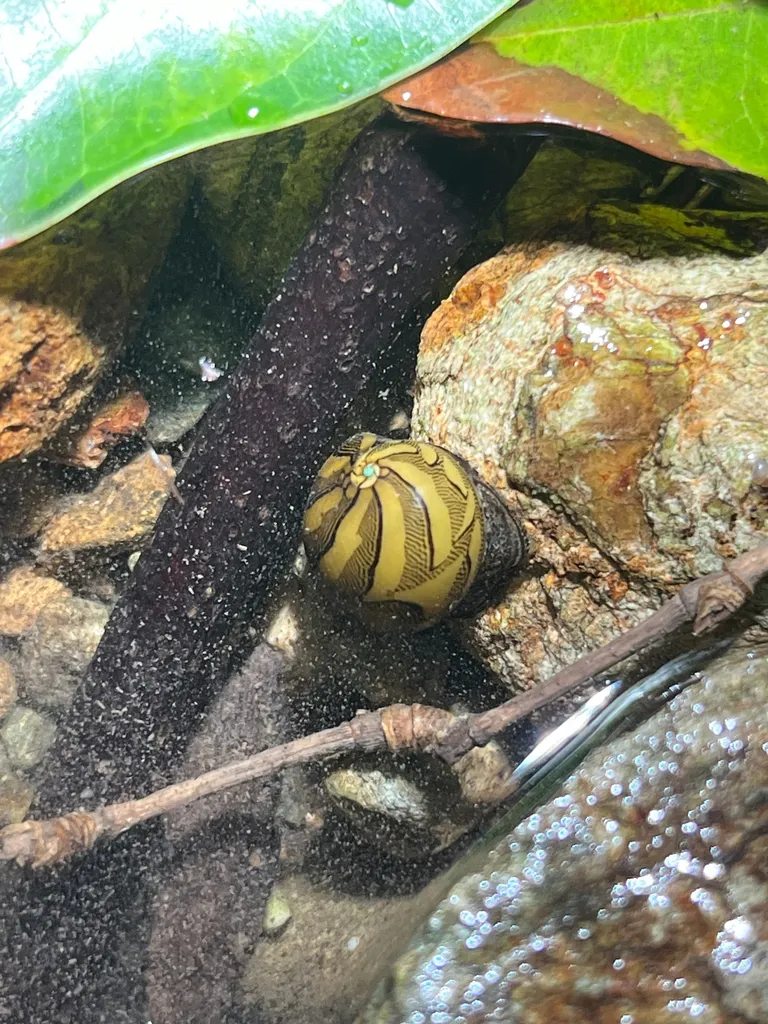
Virgin nerite
Vitta virginea
FreshwaterBrackish0.8 in (2 cm) · 5 gal (20 L)72–79°F (22–26°C)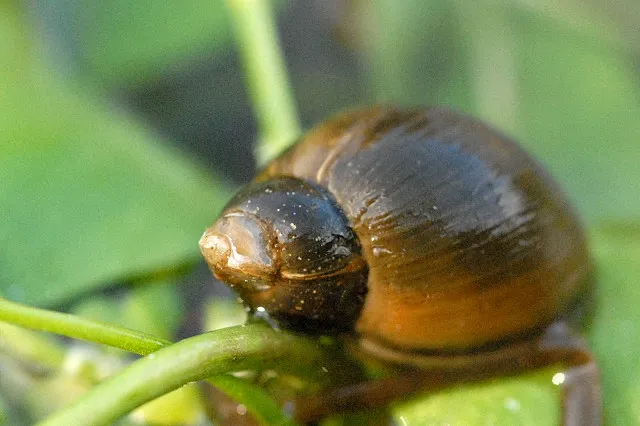
Wandering snail
Ampullaceana balthica
Freshwater0.8 in (2 cm) · 11 gal (40 L)50–84°F (10–29°C)White spotted rabbit snail
Tylomelania towutica
Freshwater4.3 in (11 cm) · 16 gal (60 L)75–84°F (24–29°C)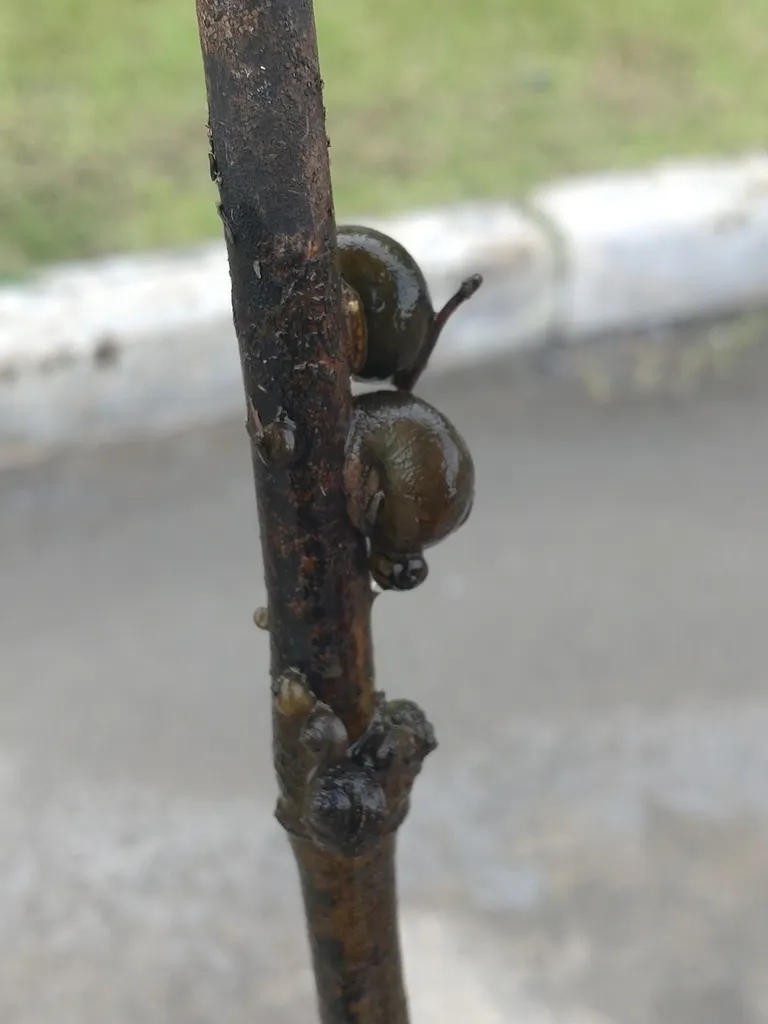
White wizard snail
Filopaludina martensi
Freshwater2 in (5 cm) · 11 gal (40 L)72–79°F (22–26°C)Yellow giant rabbit snail
Tylomelania sarasinorum
Freshwater4.7 in (12 cm) · 20 gal (75 L)79–86°F (26–30°C)Zebra nerite
Vittina natalensis
FreshwaterBrackish1 in (2.5 cm) · 5 gal (20 L)66–84°F (19–29°C)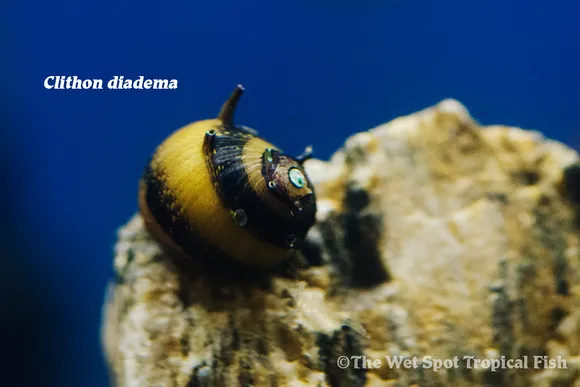
Zebra thorn snail
Clithon diadema
FreshwaterBrackish0.8 in (2 cm) · 5 gal (19 L)72–82°F (22–28°C)
Saltwater snails
Astraea turbo snail
Astraea tecta
Saltwater1 in (2.5 cm) · 11 gal (40 L)72–79°F (22–26°C)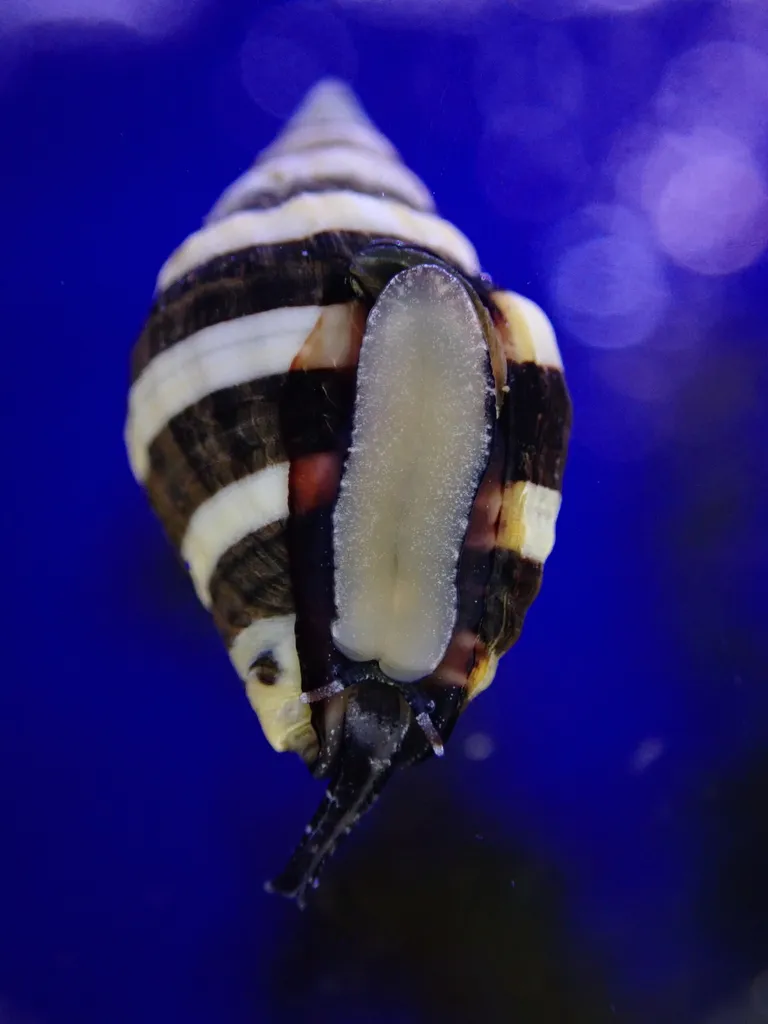
Bumble bee snail
Engina mendicaria
Saltwater0.8 in (2 cm) · 11 gal (40 L)75–81°F (24–27°C)Cerith snail
Cerithium sp.
Saltwater1.6 in (4 cm) · 11 gal (40 L)72–79°F (22–26°C)Fighting conch
Strombus alatus
Saltwater3.1 in (8 cm) · 20 gal (75 L)75–81°F (24–27°C)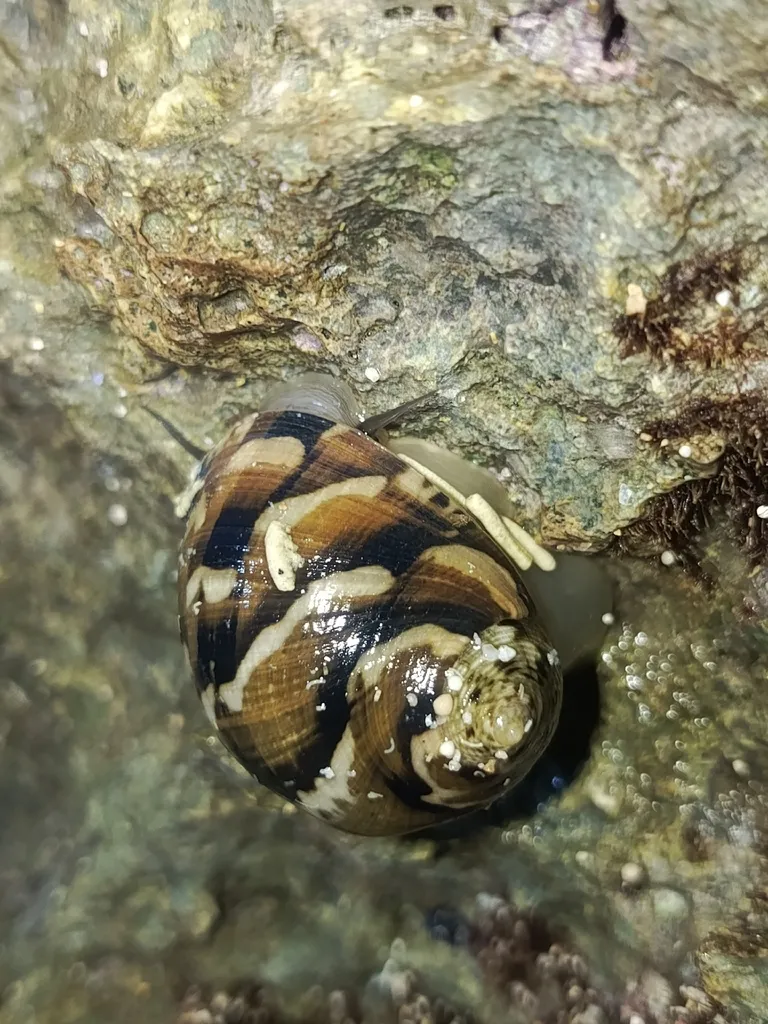
Marine nerite snail
Nerita sp.
Saltwater1 in (2.5 cm) · 11 gal (40 L)72–79°F (22–26°C)Mexican turbo snail
Turbo fluctuosus
Saltwater2.4 in (6 cm) · 11 gal (40 L)75–81°F (24–27°C)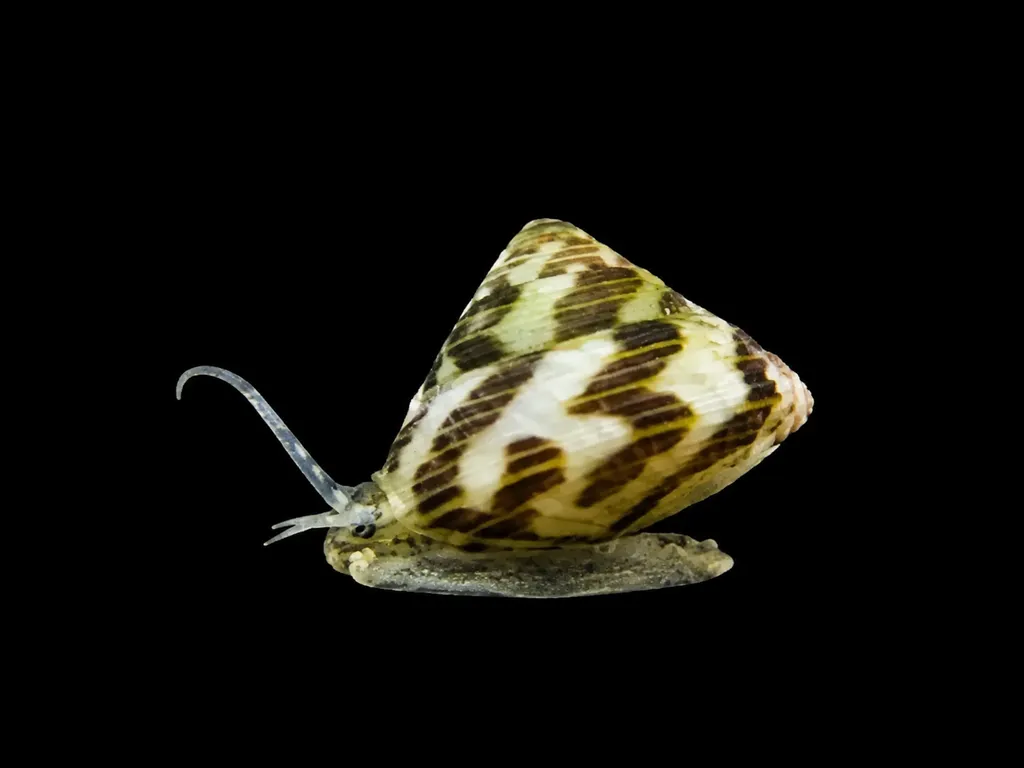
Mini trochus snail
Collonista sp.
Saltwater0.2 in (0.6 cm) · 5 gal (20 L)73–81°F (23–27°C)Nassarius snail
Nassarius sp.
Saltwater1 in (2.5 cm) · 11 gal (40 L)72–79°F (22–26°C)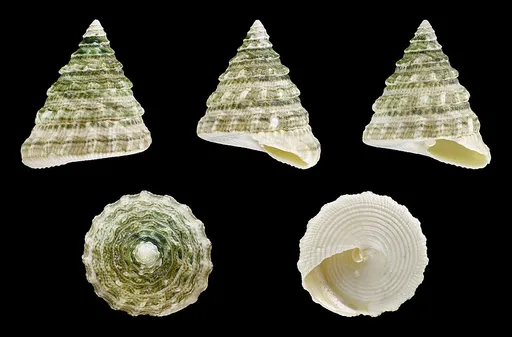
Pyramid top snail
Tectus fenestratus
Saltwater2 in (5 cm) · 11 gal (40 L)75–81°F (24–27°C)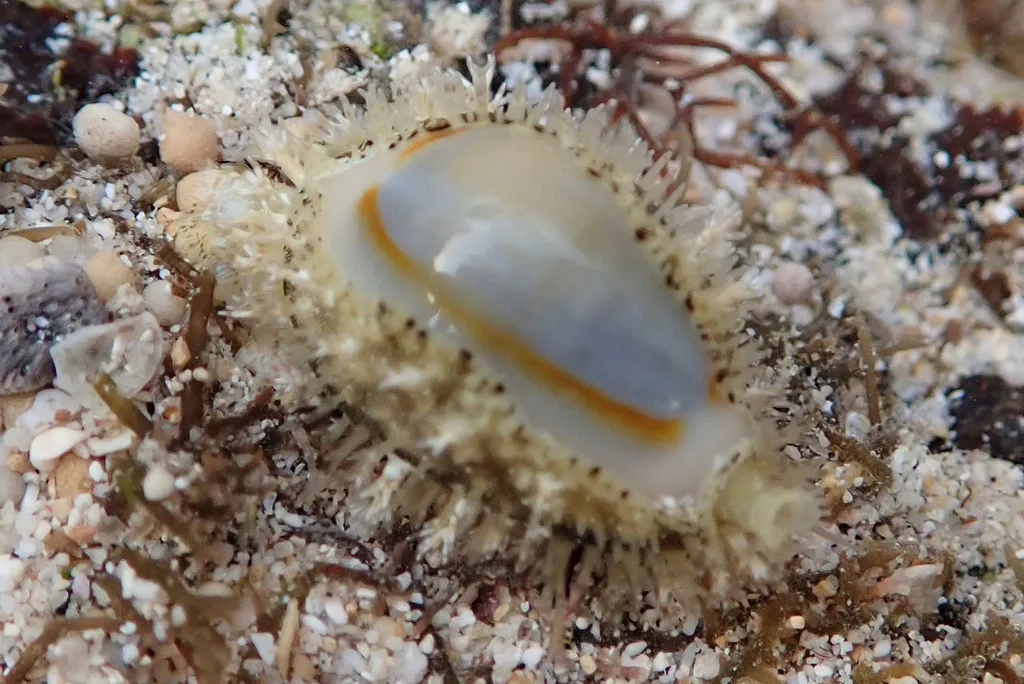
Ring cowrie
Monetaria annulus
Saltwater1.2 in (3 cm) · 20 gal (75 L)75–81°F (24–27°C)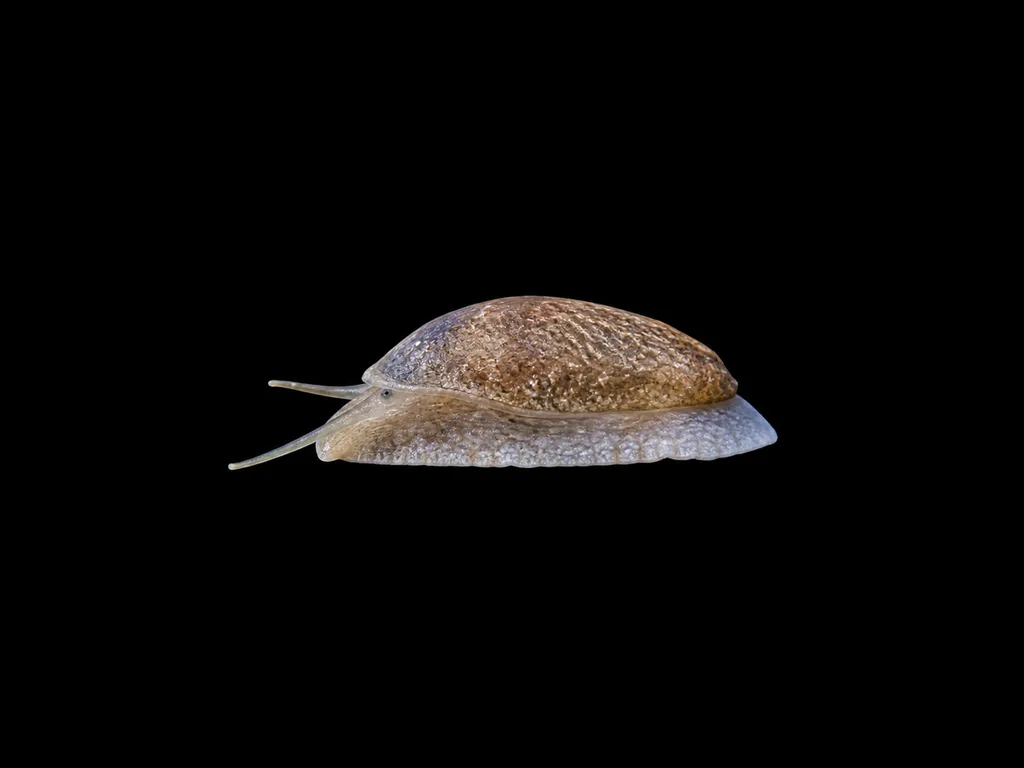
Stomatella snail
Stomatella varia
Saltwater0.8 in (2 cm) · 11 gal (40 L)75–81°F (24–27°C)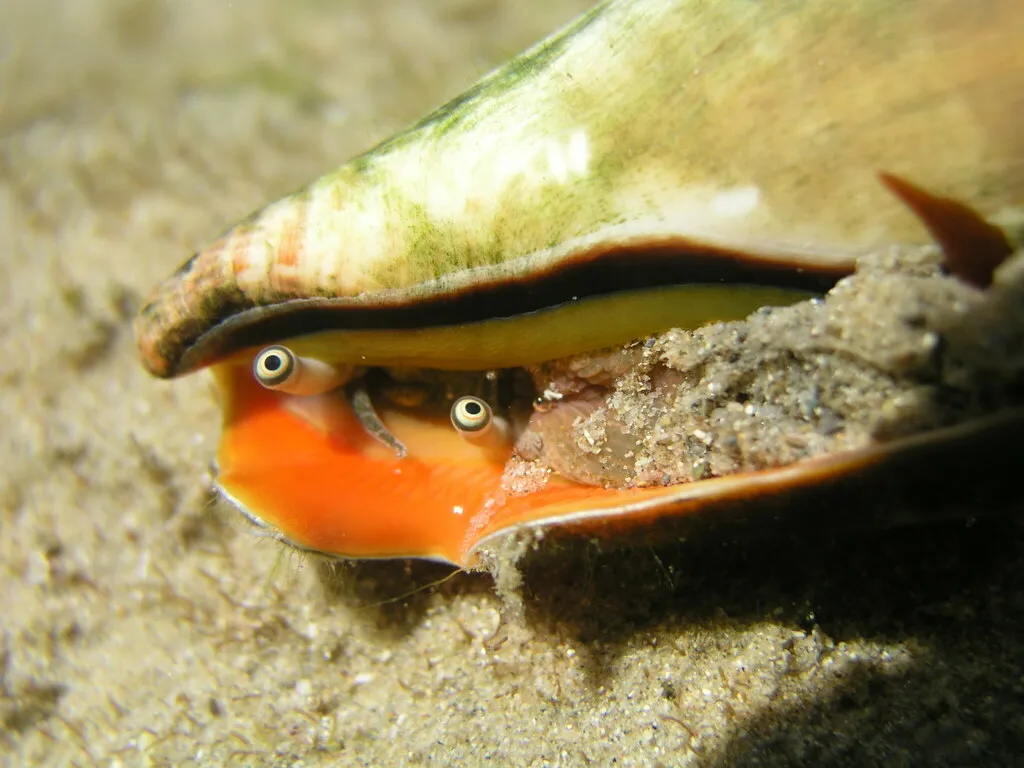
Tiger / strawberry conch
Conomurex luhuanus
Saltwater2.8 in (7 cm) · 20 gal (75 L)75–81°F (24–27°C)Trochus snail
Trochus sp.
Saltwater1.2 in (3 cm) · 11 gal (40 L)72–79°F (22–26°C)
Planning a tank?
TankBud checks stocking and water fit as you build a tank, then tracks water tests, reminders and photos once it is running.
Track your tanksMaintain tanks for clients? See TankBud Pro