High-light aquarium plants
High-light plants want strong lighting to hold their color and compact form, and most do their best with CO2 and regular fertilizing behind them. This is high-tech territory: carpets, red stems and other showpieces. Profiles list the light, CO2 and growth to expect.
At a glance
- Height
- 1.2–31.5 in
- 1.2 in (3 cm) to 31.5 in (80 cm); half the list stays at 11.8 in (30 cm) or under
- Temperature
- 68–82°F
- 20–28°C, most of the list
- CO₂
- 8 no CO₂ needed
- 44 CO₂ beneficial · 55 CO₂ required
- Growth
- 24 slow growing
- 38 medium growth · 45 fast growing
- Difficulty
- 9 easy
- 47 medium · 51 difficult
96 plants and 11 varieties
Start here
High-light plants that stay easy
The ludwigia super red is marked easy and lists high light, the brightest red on the site without injected CO2, 11.8 inches (30 cm) tall. The ludwigia brevipes is the same rating, a narrow-leaved stem for the midground. The parrot's feather is a fast, feathery stem marked easy at 15.7 inches (40 cm). The oriental sword is a compact sword that wants high light to stay short. The red root floater turns red at the surface, where the light is strongest, and needs no CO2. The Senegal tea plant is a fast green stem to 23.6 inches (60 cm), marked easy with no CO2.
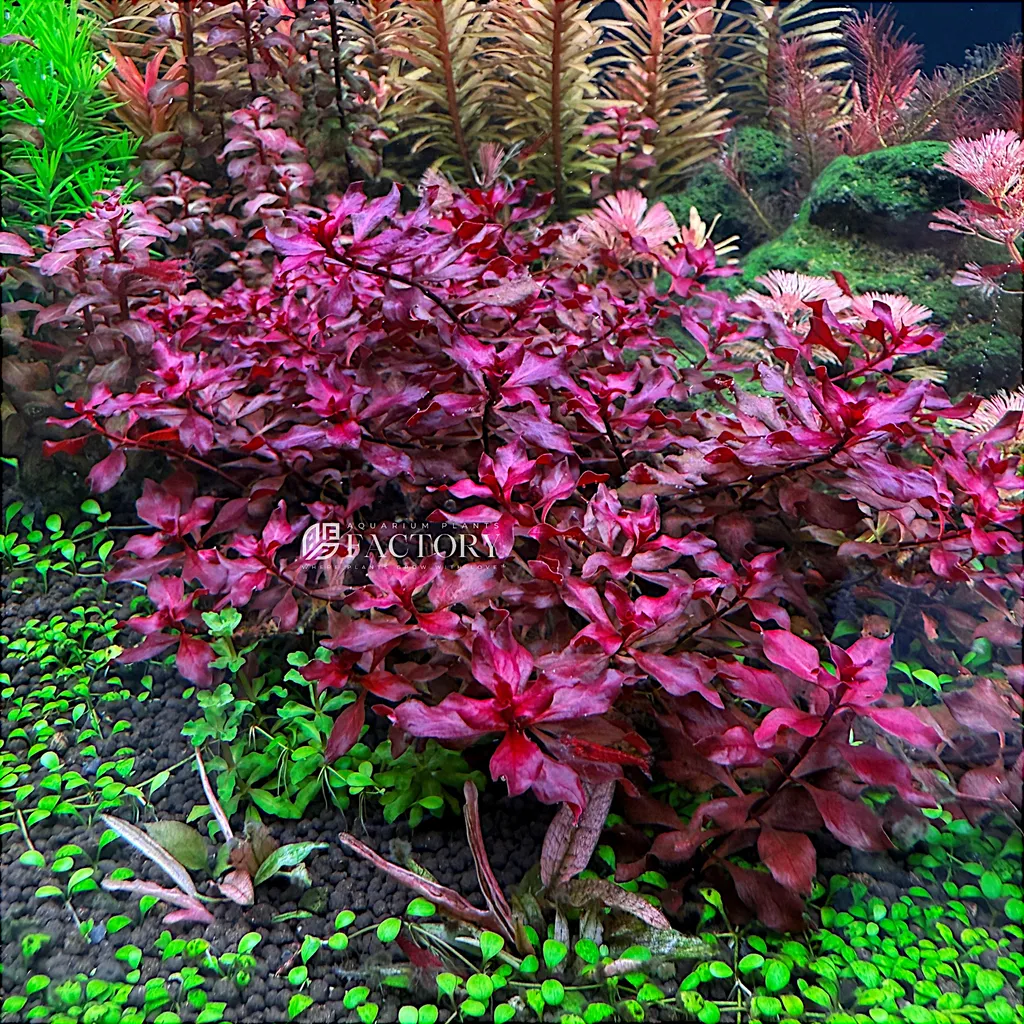
Ludwigia super red
Ludwigia palustris 'Super Red'
Freshwater- Light
- High light
- Placement
- Midground
- Height
- 11.8 in (30 cm)
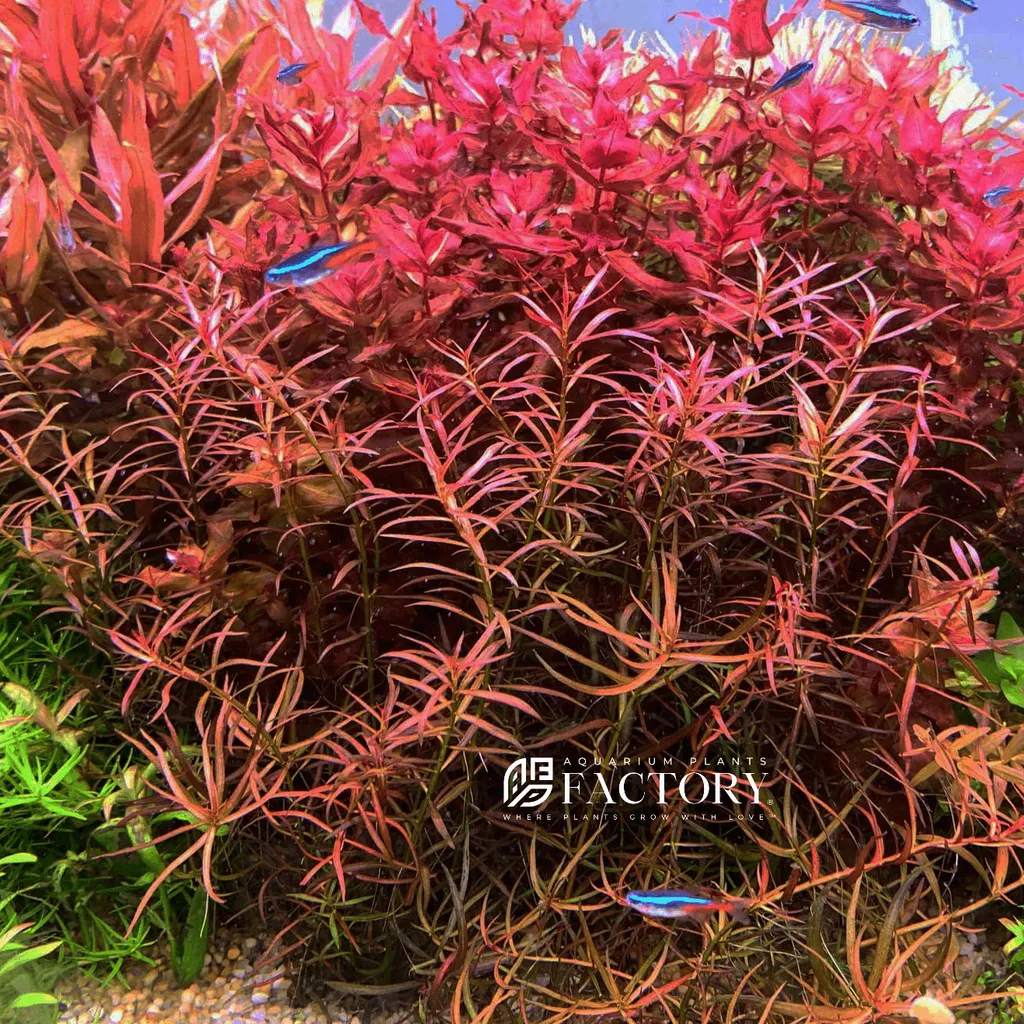
Ludwigia brevipes
Freshwater- Light
- High light
- Placement
- Midground
- Height
- 11.8 in (30 cm)
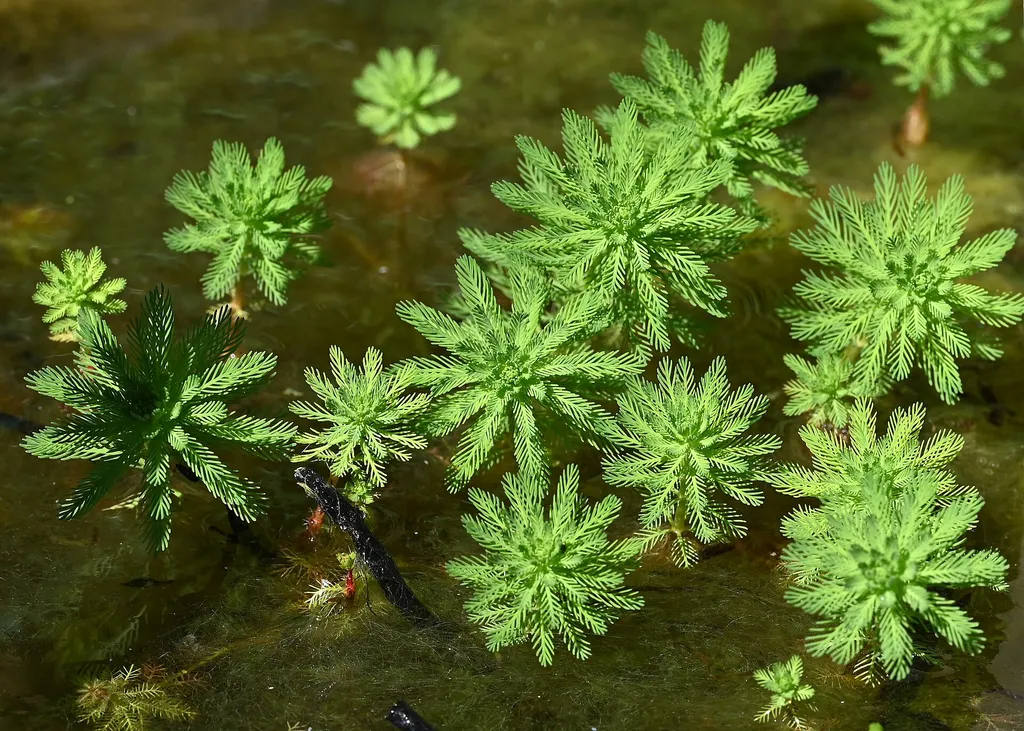
Parrot's feather
Myriophyllum aquaticum
Freshwater- Light
- High light
- Placement
- Background
- Height
- 15.7 in (40 cm)
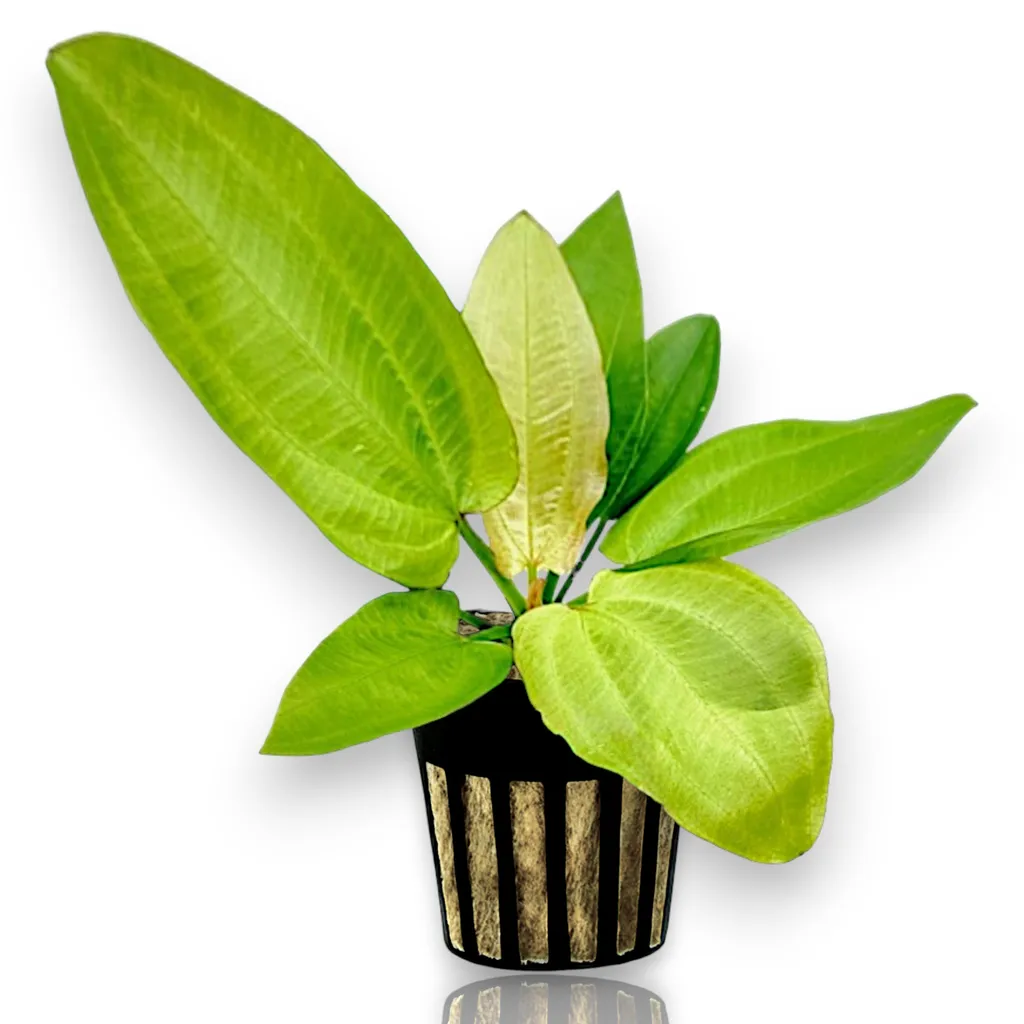
Oriental sword
Echinodorus 'Oriental'
Freshwater- Light
- High light
- Placement
- Midground
- Height
- 11.8 in (30 cm)
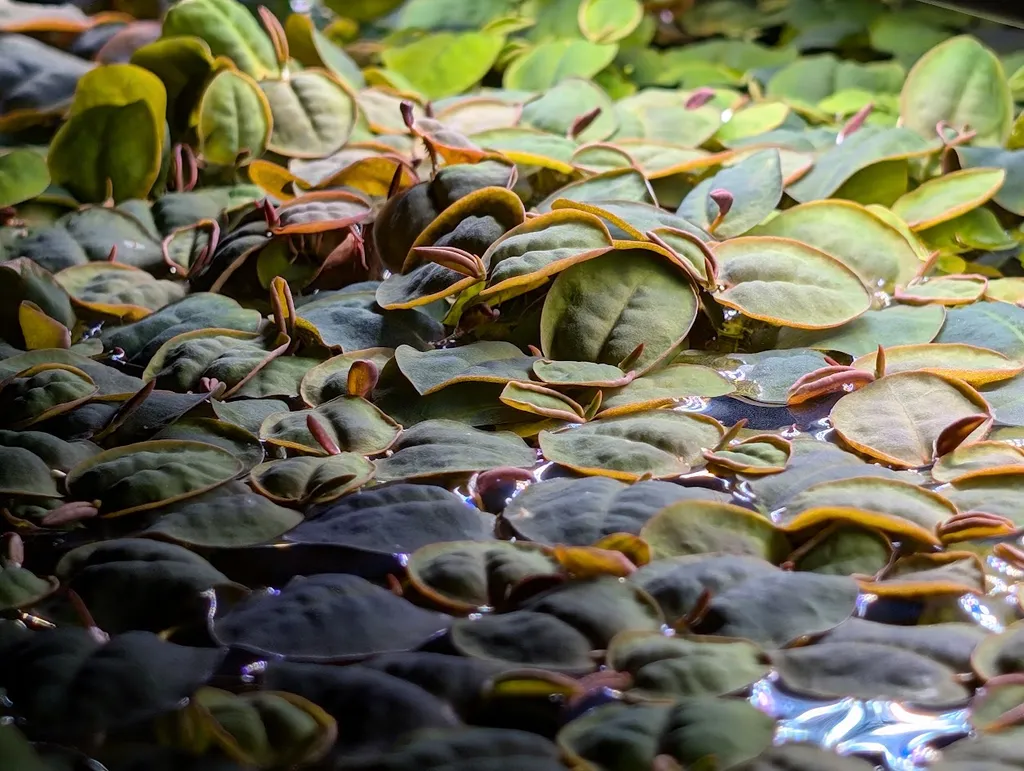
Red root floater
Phyllanthus fluitans
Freshwater- Light
- High light
- Placement
- Floating
- Height
- 1.2 in (3 cm)
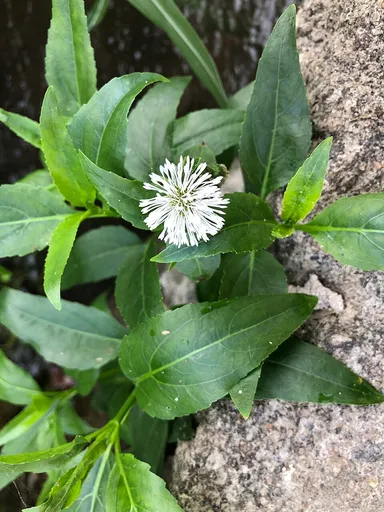
Senegal tea plant
Gymnocoronis spilanthoides
Freshwater- Light
- High light
- Placement
- Background
- Height
- 23.6 in (60 cm)
The rule
What high light asks of the rest of the tank
High light means a plant fixture running at the strong end of its range, and everything else in the tank has to keep up with it. Light drives growth, growth needs carbon and nutrients, and a tank with strong light and nothing else grows algae instead of plants. Most plants here list CO2 as required or beneficial, and the profiles that say required mean it. The stems race under this light and want trimming weekly, and the first sign of a nutrient running short is algae on the glass.
- 01
Light needs CO2
Strong light without carbon grows algae, not plants
- 02
Feed to match
Nitrate, phosphate, potassium and iron, dosed on a schedule
- 03
Trim weekly
Stems race under strong light
- 04
Algae is the gauge
The first sign that something else ran short
Reds
The red stems
The alternanthera reineckii is marked medium, 19.7 inches (50 cm) of red-purple leaves that stay compact only under high light. The ammannia gracilis is the same rating, a fast stem that goes orange-red. The Rotala H'ra is the red rotala for a tank without an expert behind it, marked medium with CO2 beneficial. The rotala macrandra is marked difficult, the scarlet rotala that needs steady CO2 and soft water. The Ludwigia Pantanal is one of the most demanding stems in the hobby. The rotala wallichii carries fine needle leaves at 11.8 inches (30 cm), marked difficult.
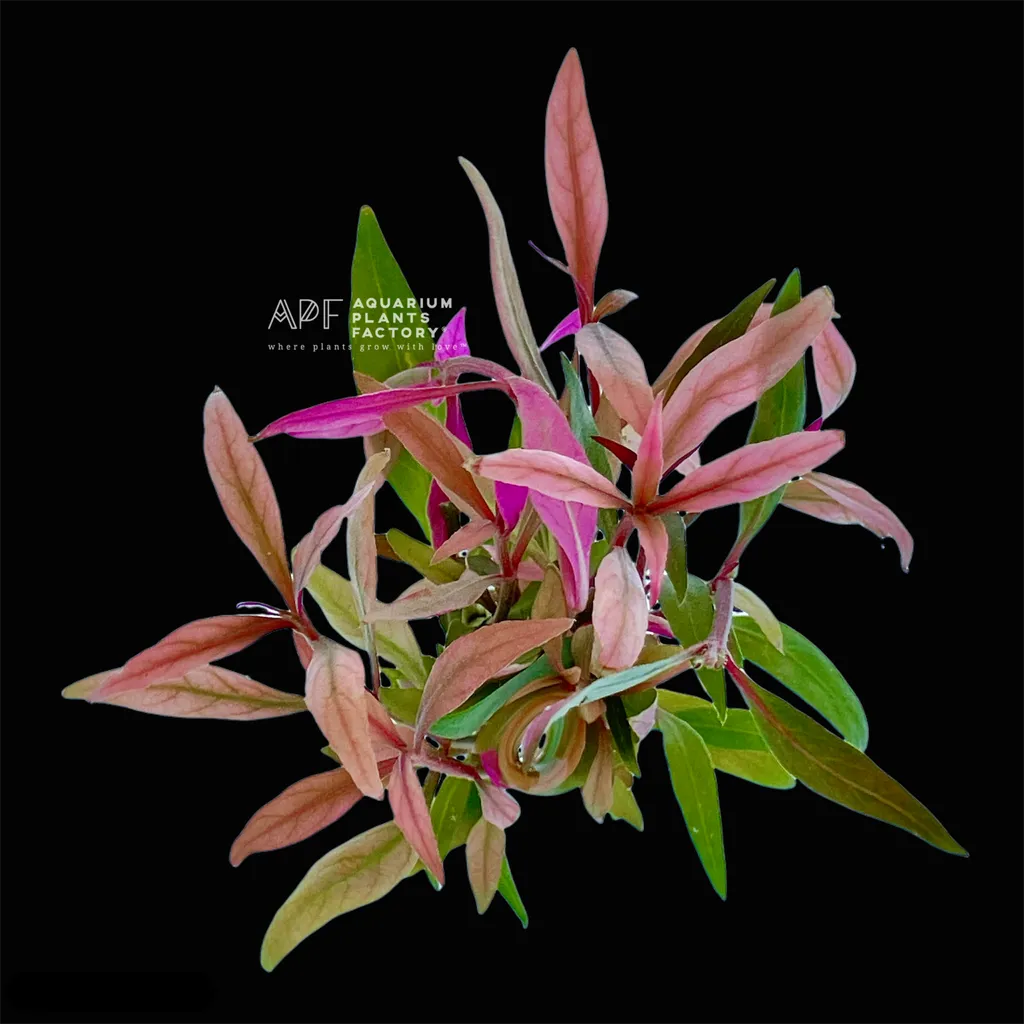
Alternanthera reineckii
FreshwaterHigh light · Midground19.7 in (50 cm)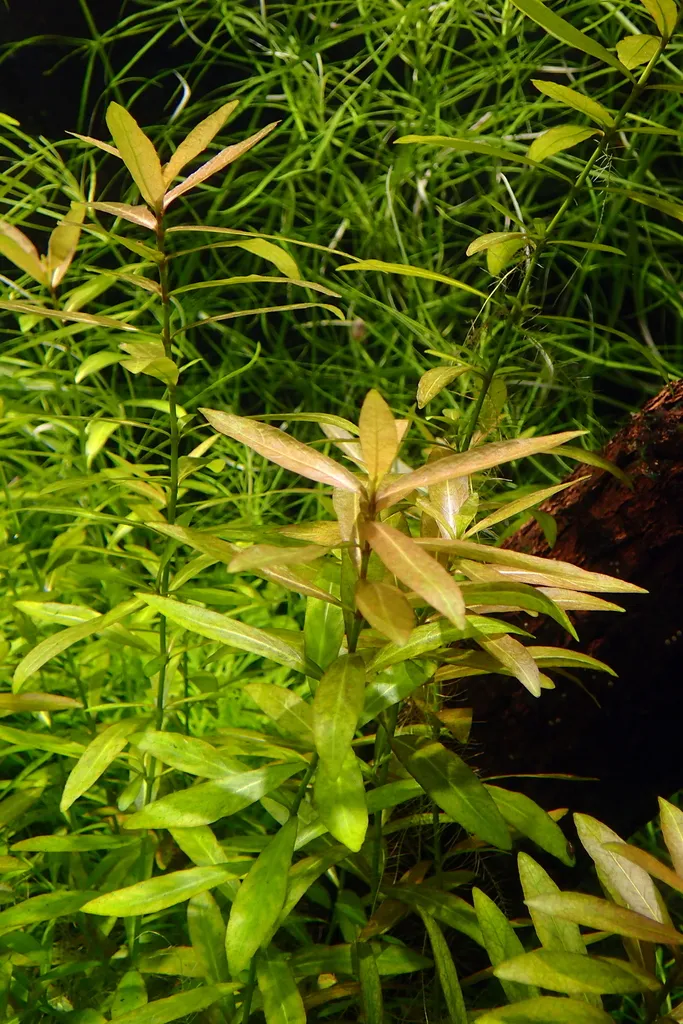
Ammannia gracilis
FreshwaterHigh light · Background19.7 in (50 cm)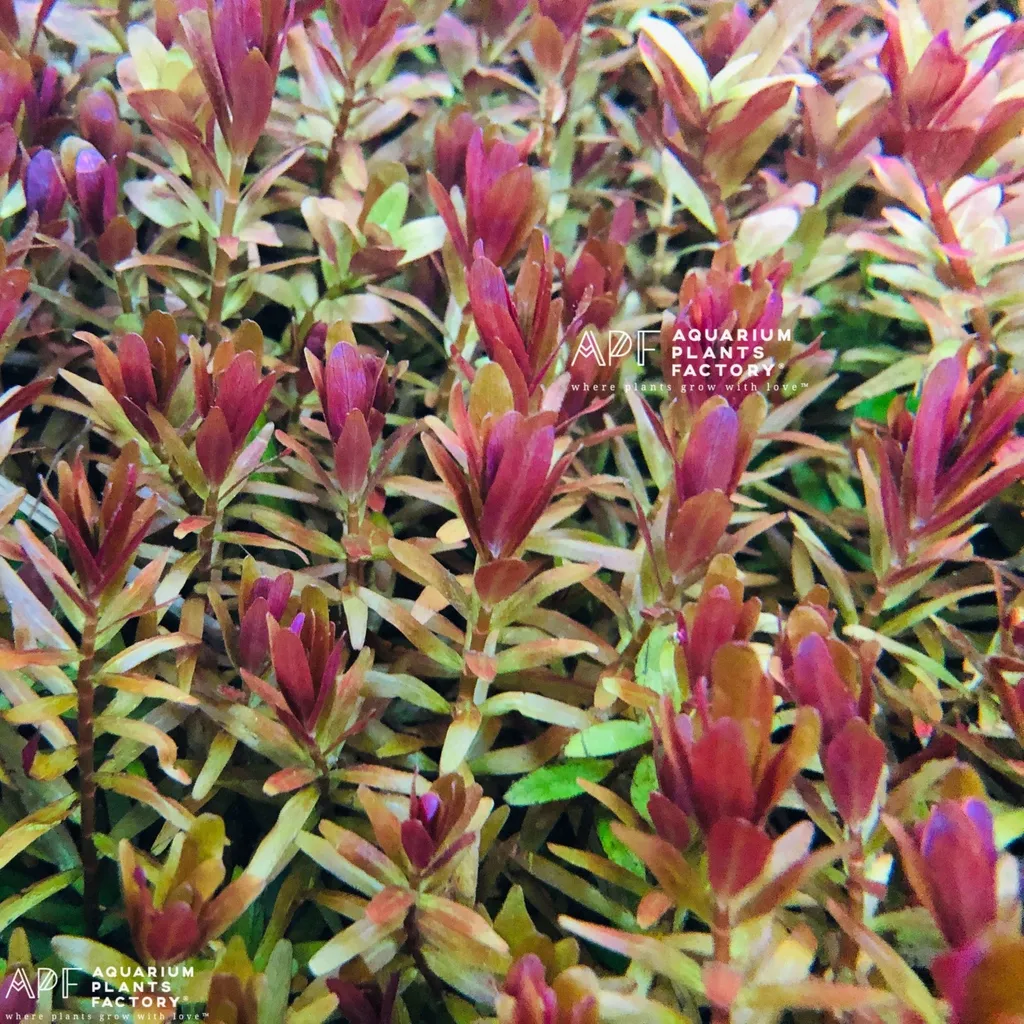
Rotala H'ra
Rotala rotundifolia 'H'ra'
FreshwaterHigh light · Background11.8 in (30 cm)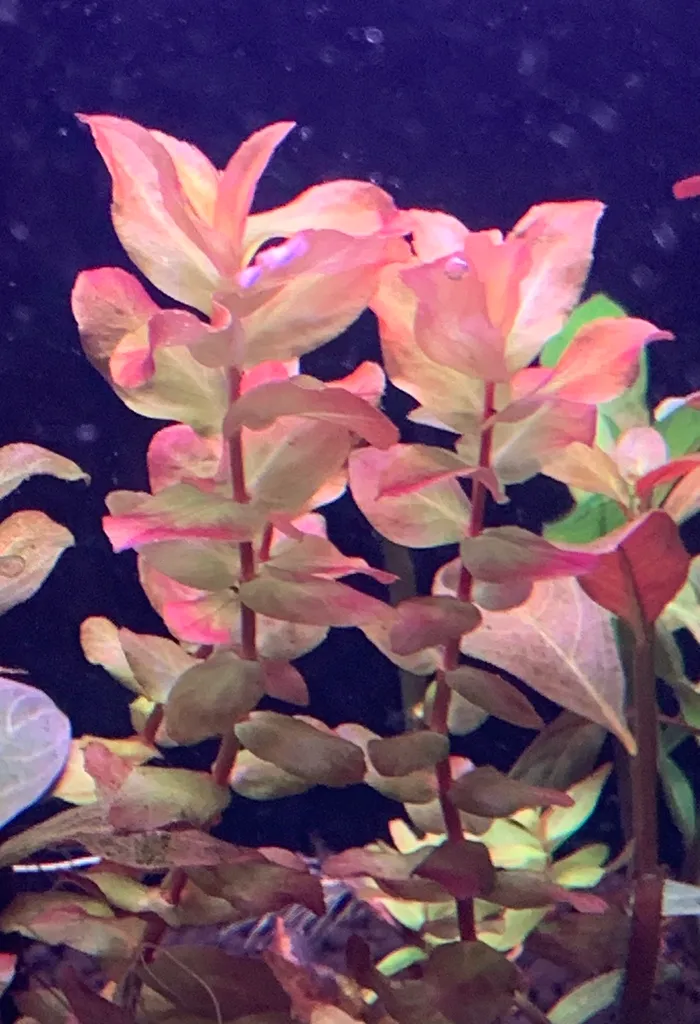
Rotala macrandra
FreshwaterHigh light · Background19.7 in (50 cm)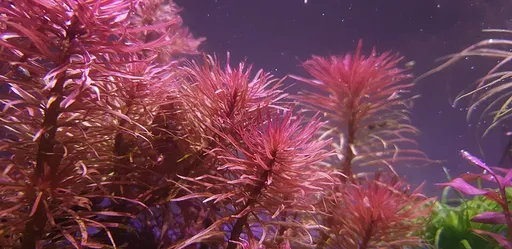
Ludwigia Pantanal
Ludwigia inclinata var. verticillata 'Pantanal'
FreshwaterHigh light · Background15.7 in (40 cm)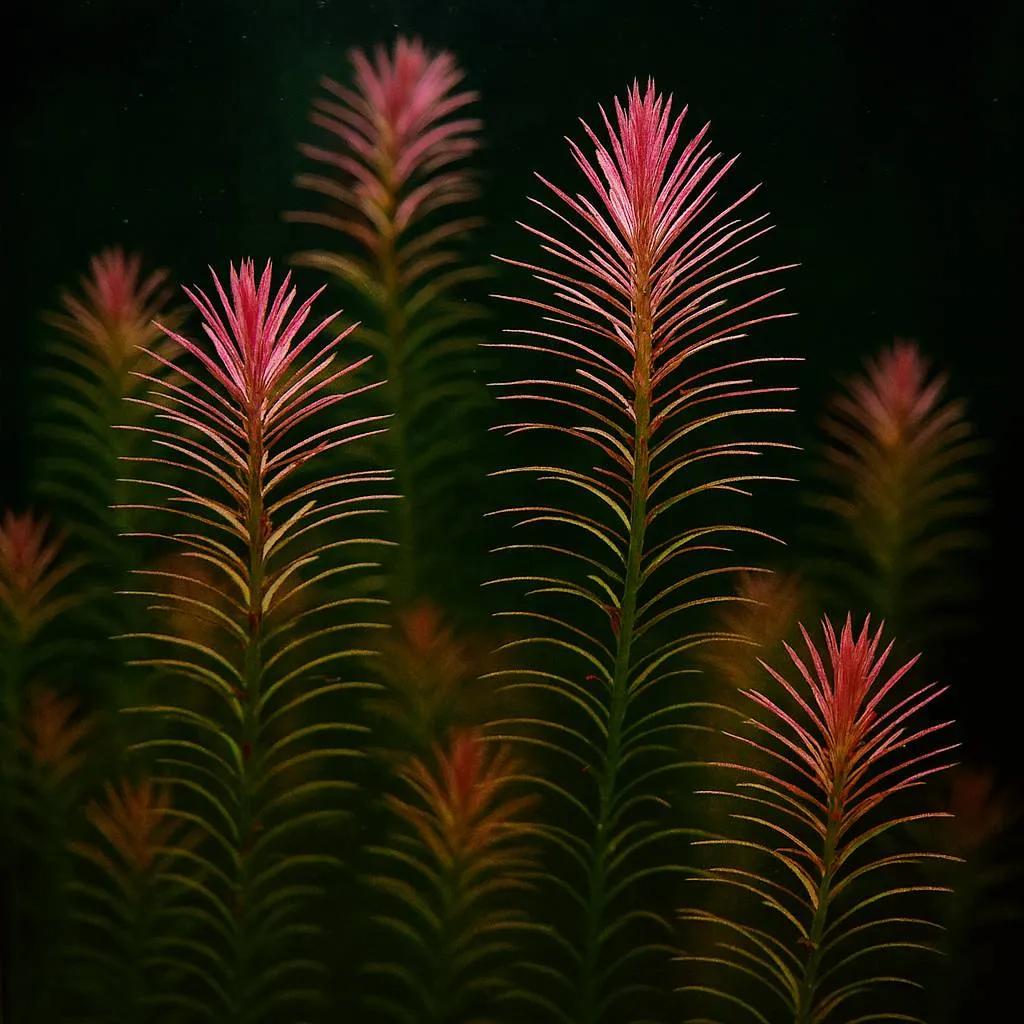
Rotala wallichii
FreshwaterHigh light · Background11.8 in (30 cm)
Carpets
Carpets that need the light
The dwarf baby tears is the carpet everyone wants and the one that lists high light and CO2 as required, 2 inches (5 cm) tall and marked difficult. The glosso is the same story at 1.6 inches (4 cm) and grows upward the moment the light drops. The Hydrocotyle mini is marked medium, a fast carpet of tiny round leaves. The Pogostemon helferi grows in crinkled rosettes at 3.1 inches (8 cm), marked medium. The UG, Utricularia graminifolia, and the waterwort are marked difficult and want a mature tank with soft water under the light.
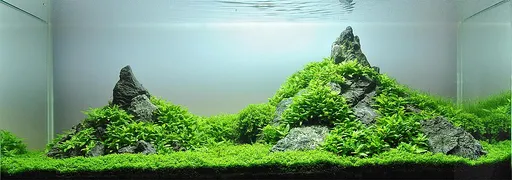
Dwarf baby tears
Hemianthus callitrichoides 'Cuba'
FreshwaterHigh light · Foreground2 in (5 cm)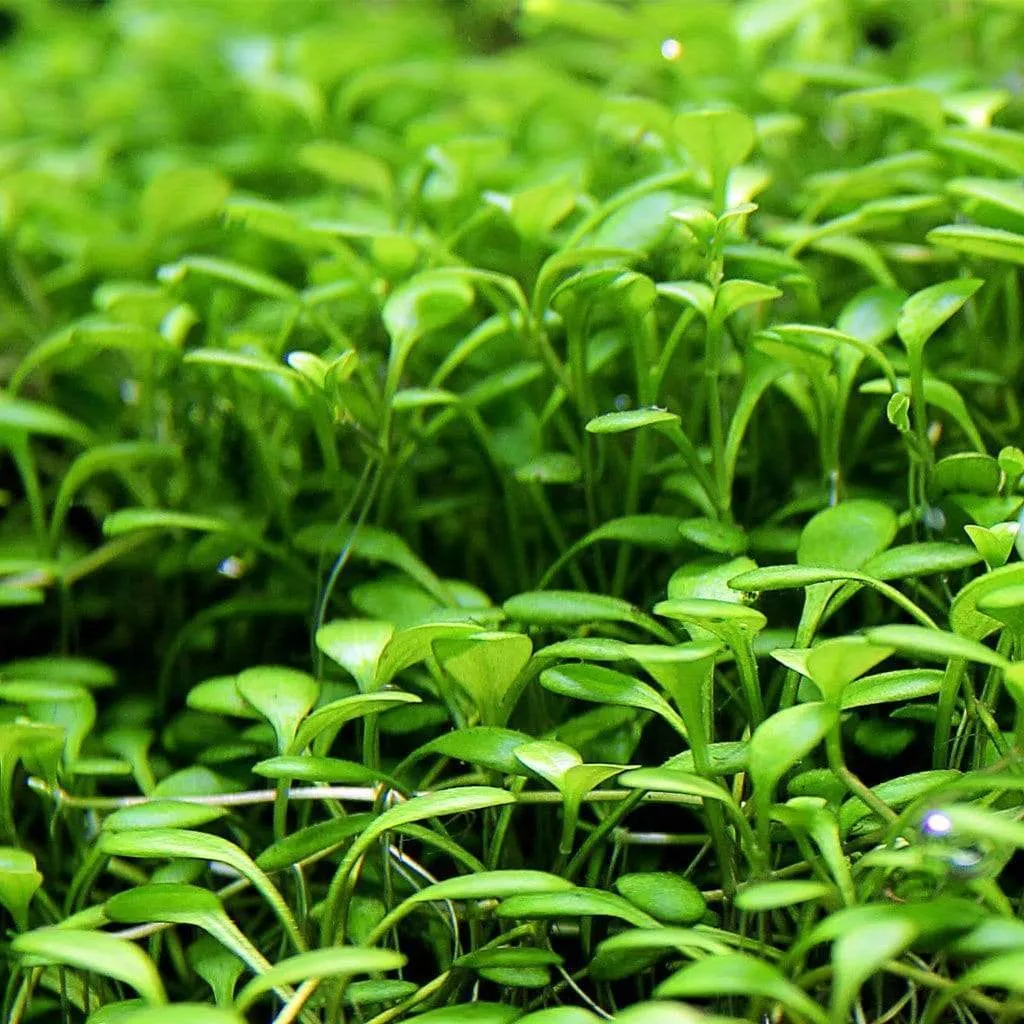
Glosso
Glossostigma elatinoides
FreshwaterHigh light · Foreground1.6 in (4 cm)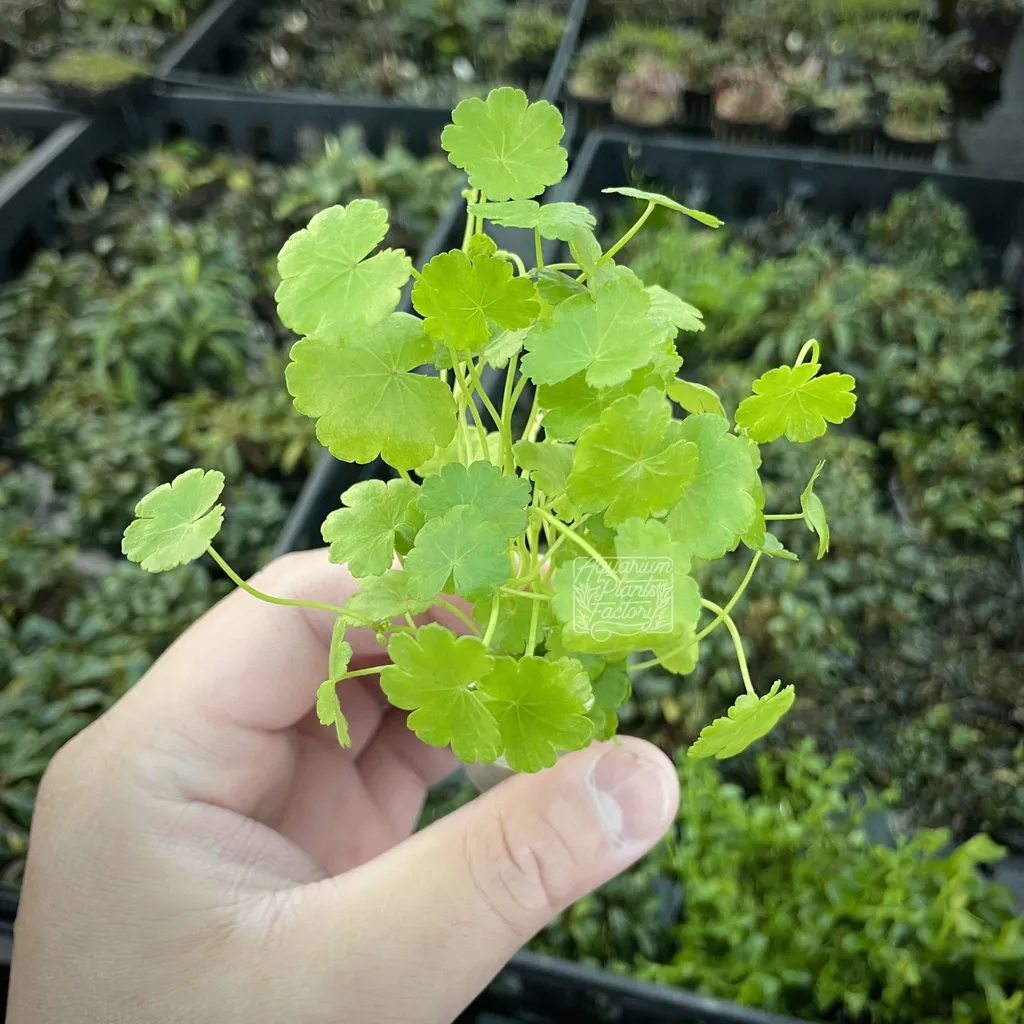
Hydrocotyle mini
Hydrocotyle sibthorpioides
FreshwaterHigh light · Foreground2 in (5 cm)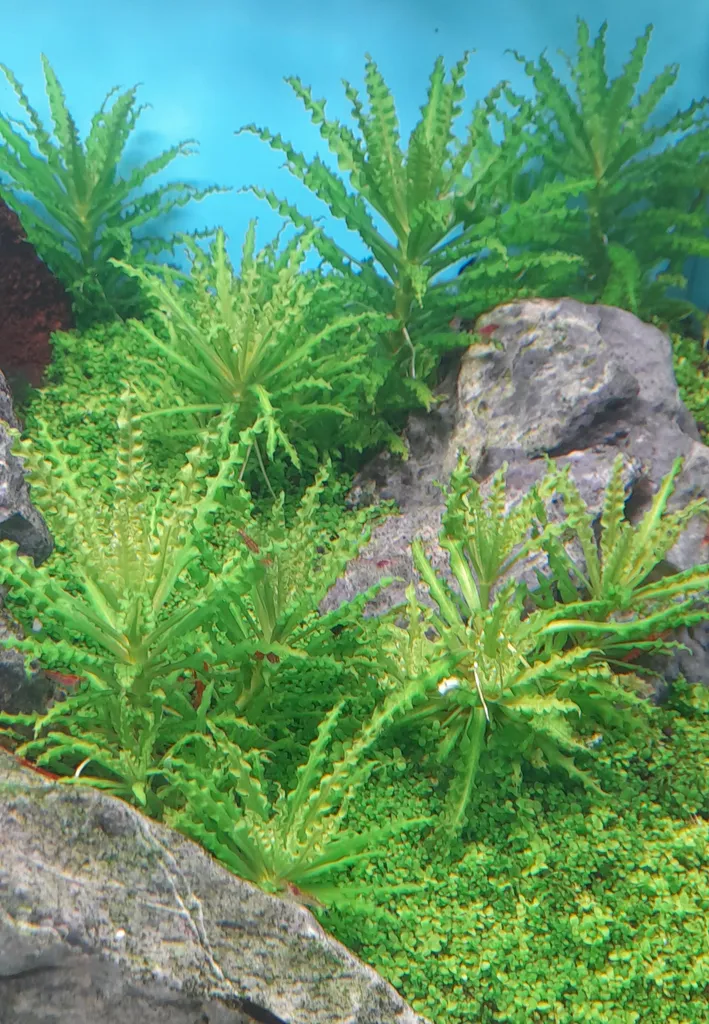
Pogostemon helferi
FreshwaterHigh light · Foreground3.1 in (8 cm)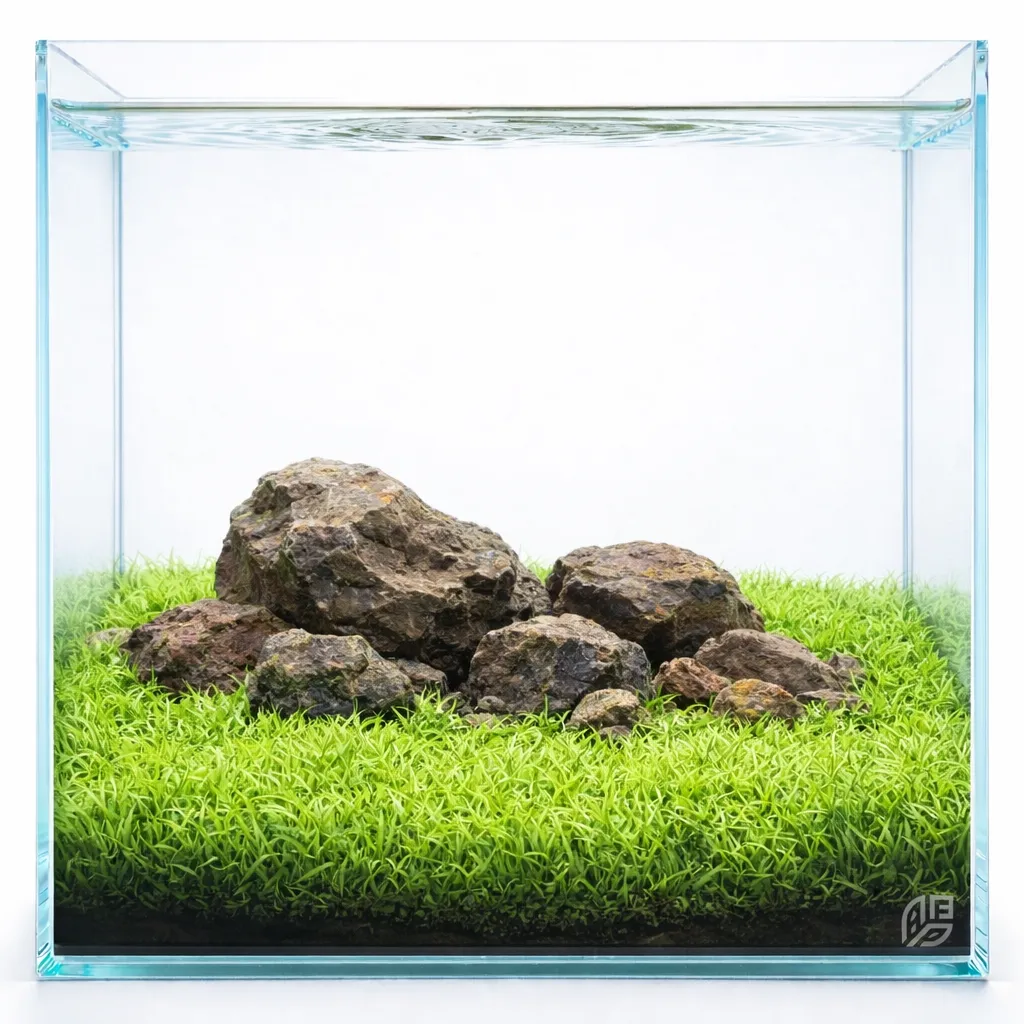
UG
Utricularia graminifolia
FreshwaterHigh light · Foreground1.6 in (4 cm)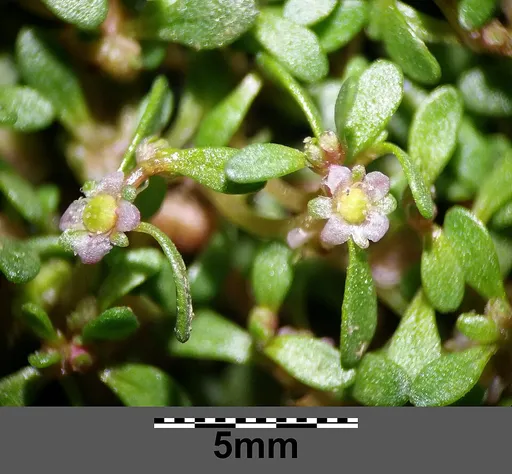
Waterwort
Elatine hydropiper
FreshwaterHigh light · Foreground2 in (5 cm)
Green stems
Green stems that want the light
The green cabomba is marked medium at 23.6 inches (60 cm), a feathery stem that falls apart under weak light. The Limnophila aromatica turns purple under strong light and stays green under less. The giant ambulia is the big Limnophila at 19.7 inches (50 cm). The star grass is a fast, bright green stem marked medium at 15.7 inches (40 cm). The Pogostemon erectus grows in stiff, pine-like stems at 9.8 inches (25 cm). The Hygrophila Araguaia is a compact stem at 7.9 inches (20 cm) that turns brown-red under high light.
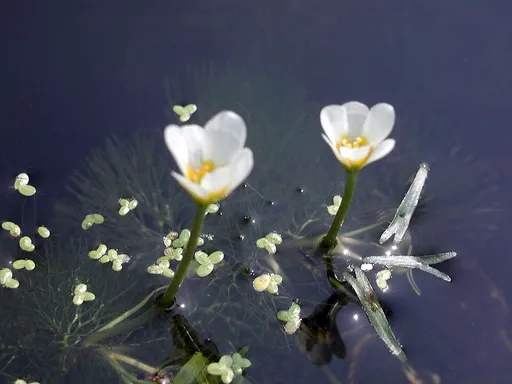
Green cabomba
Cabomba caroliniana
FreshwaterHigh light · Background23.6 in (60 cm)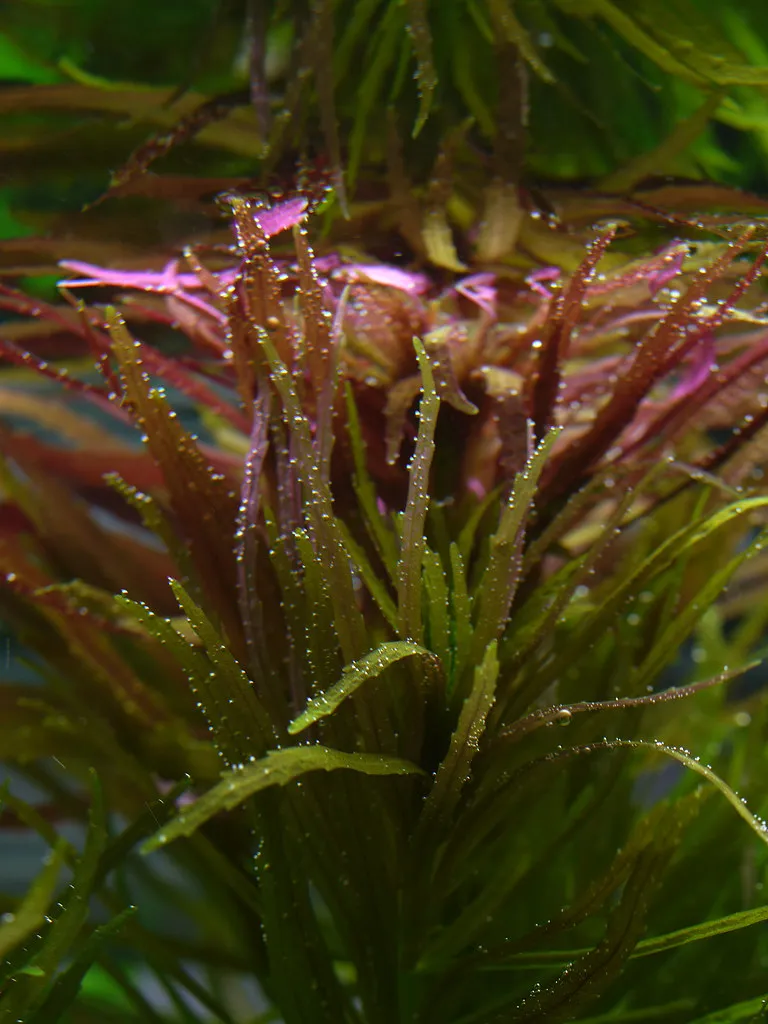
Limnophila aromatica
FreshwaterHigh light · Background15.7 in (40 cm)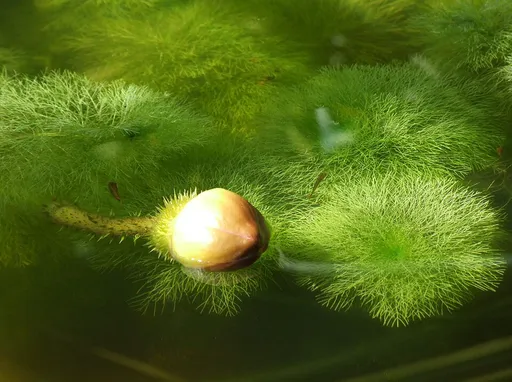
Giant ambulia
Limnophila aquatica
FreshwaterHigh light · Background19.7 in (50 cm)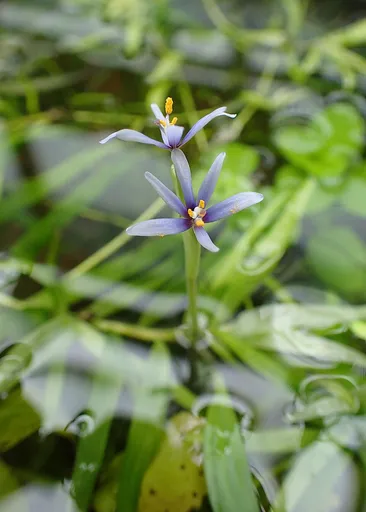
Star grass
Heteranthera zosterifolia
FreshwaterHigh light · Background15.7 in (40 cm)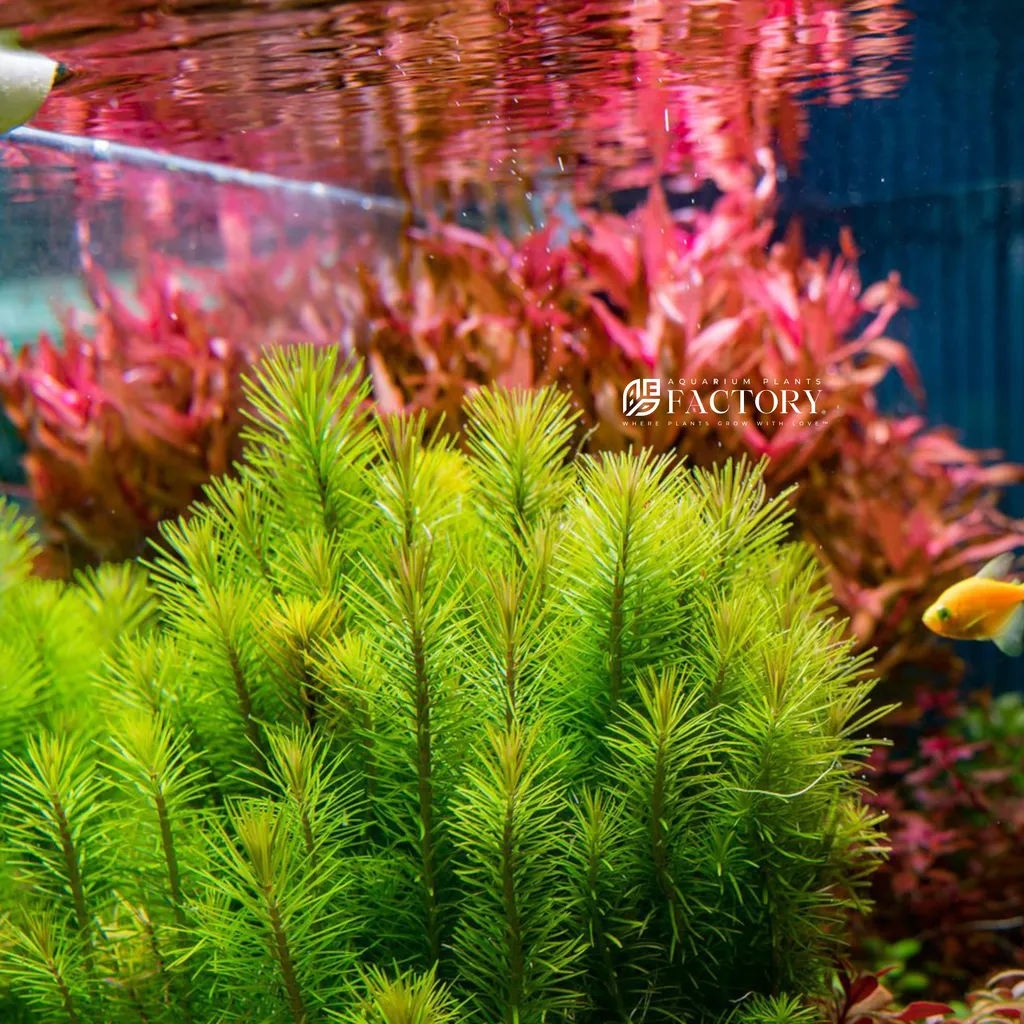
Pogostemon erectus
Pogostemon deccanensis
FreshwaterHigh light · Midground9.8 in (25 cm)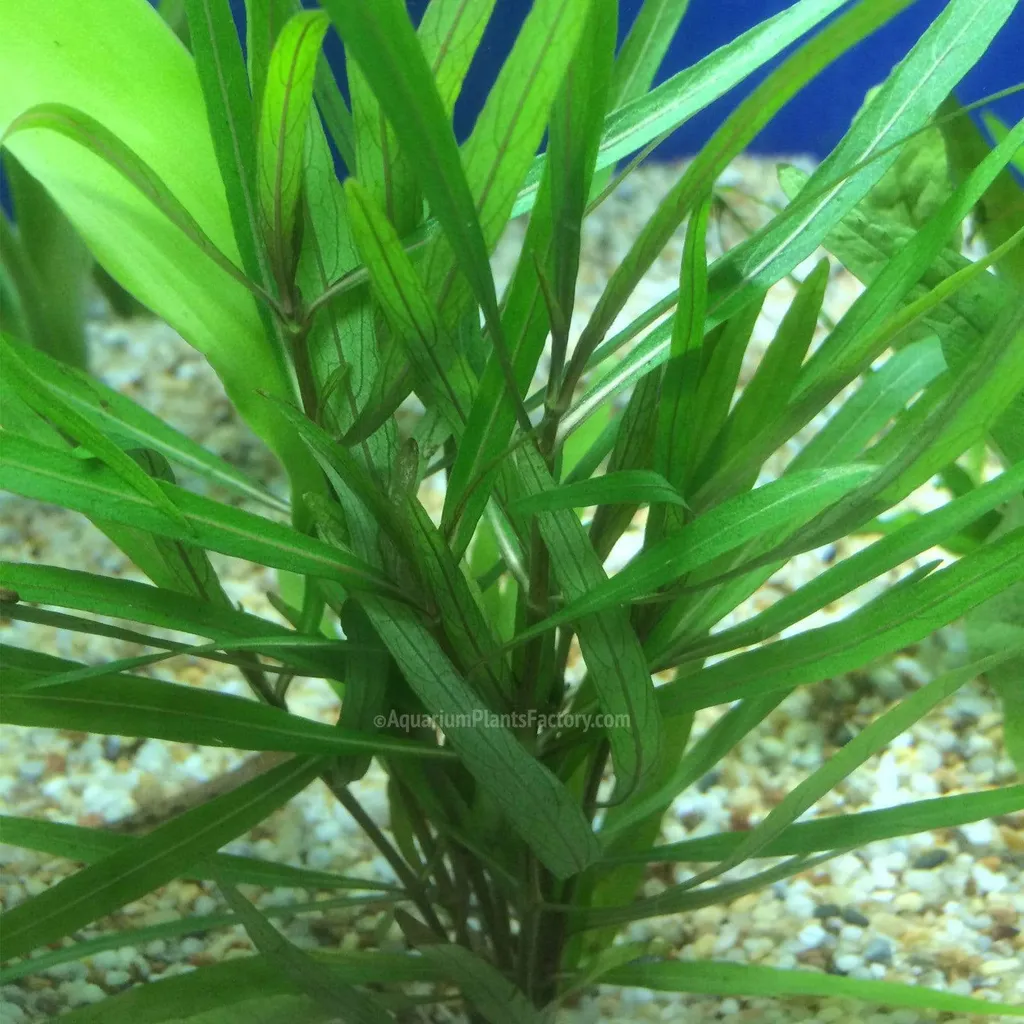
Hygrophila Araguaia
Hygrophila lancea 'Araguaia'
FreshwaterHigh light · Midground7.9 in (20 cm)
Collectors
The collectors' plants
The Blyxa japonica is a grassy rosette marked medium at 7.9 inches (20 cm) that turns golden under strong light, and the Blyxa aubertii is its demanding relative at 15.7 inches (40 cm). The Tonina fluviatilis and the Syngonanthus Belem want soft water with a carbonate hardness under 4 as well as the light. The Eriocaulon cinereum is a 3.1 inch (8 cm) rosette that feeds through its roots. The Pogostemon stellatus is a 23.6 inch (60 cm) showpiece that needs nitrate, phosphate and iron dosed without a break. All of them list high light and CO2 as required.
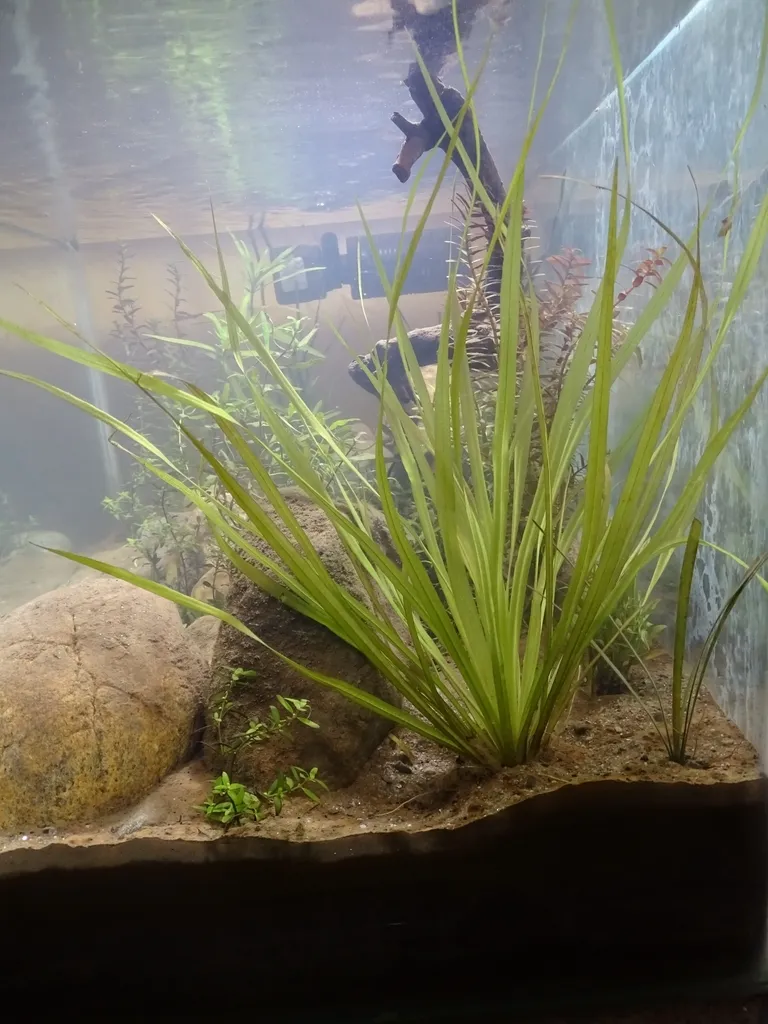
Blyxa japonica
FreshwaterHigh light · Midground7.9 in (20 cm)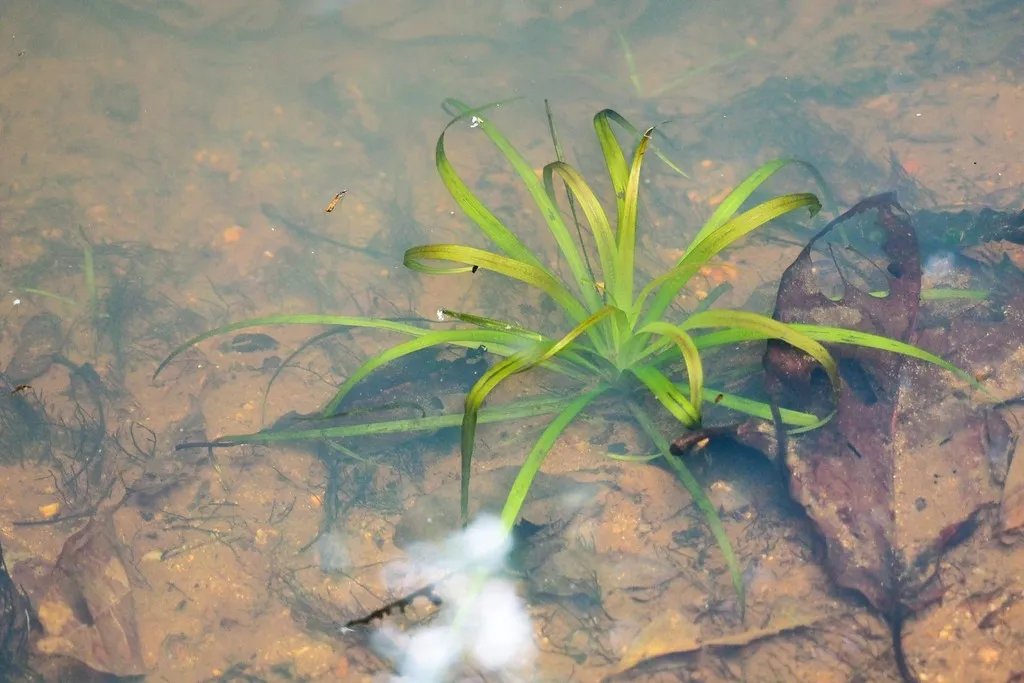
Blyxa aubertii
FreshwaterHigh light · Midground15.7 in (40 cm)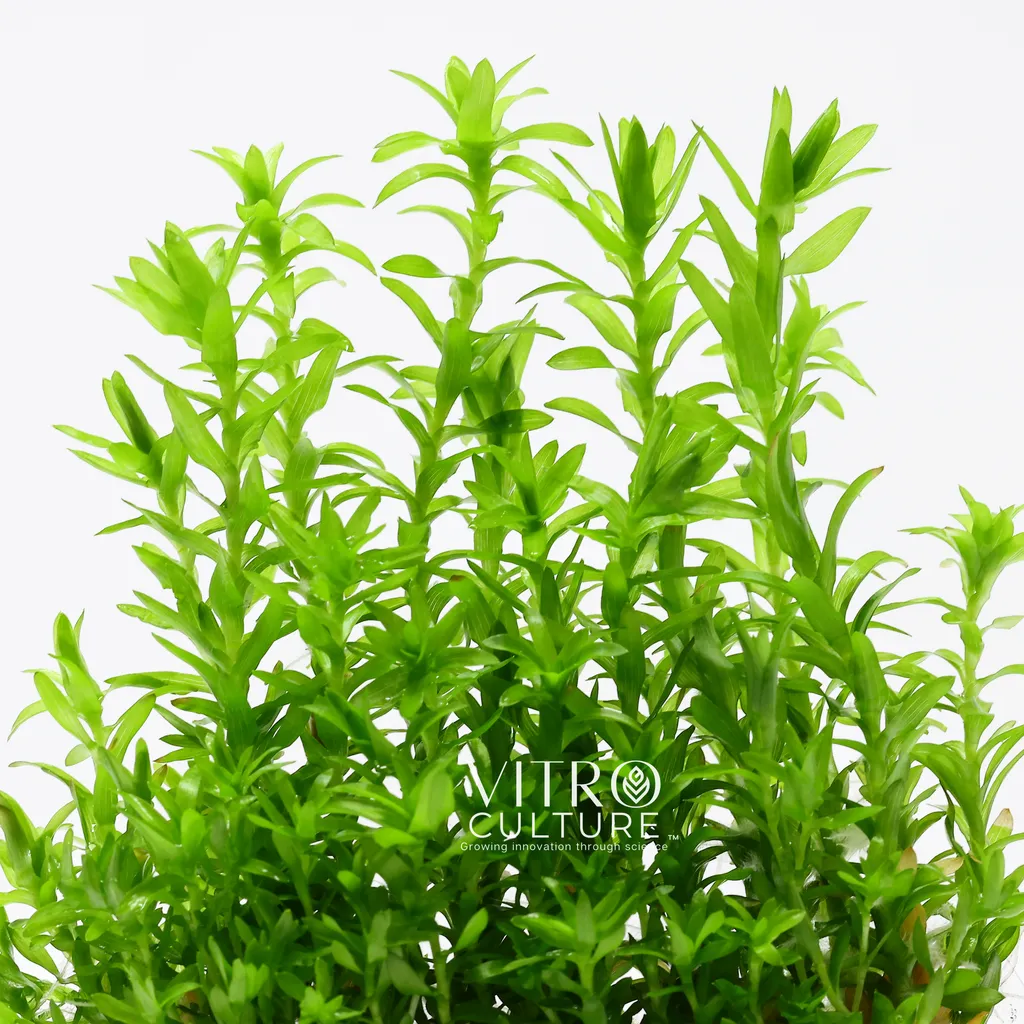
Tonina fluviatilis
FreshwaterHigh light · Background13.8 in (35 cm)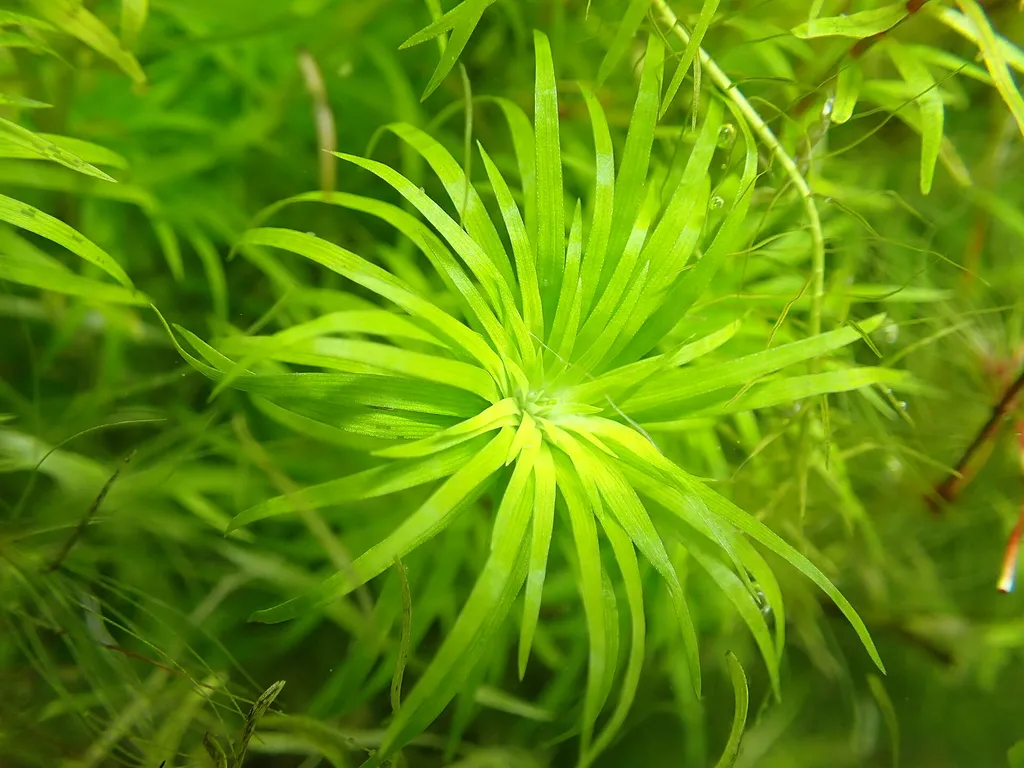
Syngonanthus Belem
Syngonanthus macrocaulon
FreshwaterHigh light · Midground7.9 in (20 cm)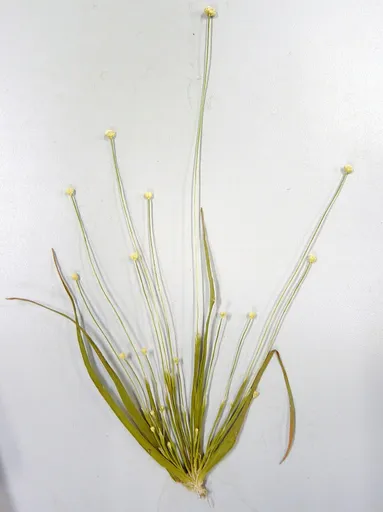
Eriocaulon cinereum
FreshwaterHigh light · Foreground3.1 in (8 cm)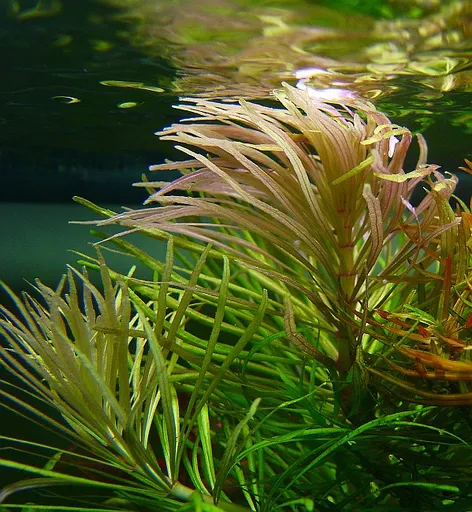
Pogostemon stellatus
FreshwaterHigh light · Background23.6 in (60 cm)
By the numbers
Smallest
Tallest
Easiest to grow
No CO₂ needed
FAQ
Common questions
Do high-light plants need CO2?
Most do. The profiles here list CO2 as required or beneficial; the ludwigia super red, parrot's feather, red root floater and Senegal tea plant are marked easy and grow under high light without it.
Why do I get algae with a strong light?
The light is outrunning the carbon and nutrients. Add CO2, dose fertilizer on a schedule, plant heavily with fast stems, and shorten the photoperiod to six hours until the plants catch up.
How many hours should a high light run?
Six to eight hours a day. A longer photoperiod grows algae, not more plant.
Which high-light plants are easiest?
The ludwigia super red, ludwigia brevipes, parrot's feather, oriental sword, red root floater and Senegal tea plant are the ones marked easy.
Do I need special substrate?
The stems feed from the water column and grow in sand or gravel with liquid fertilizer. The carpets and the Eriocaulon rosettes feed through their roots and want an aquasoil.
What does the light do to color?
Red pigment forms under strong light: the alternanthera, ludwigias and rotalas here stay green under less. Iron and lean nitrate deepen it; light is what makes it.
Index
All high-light plants
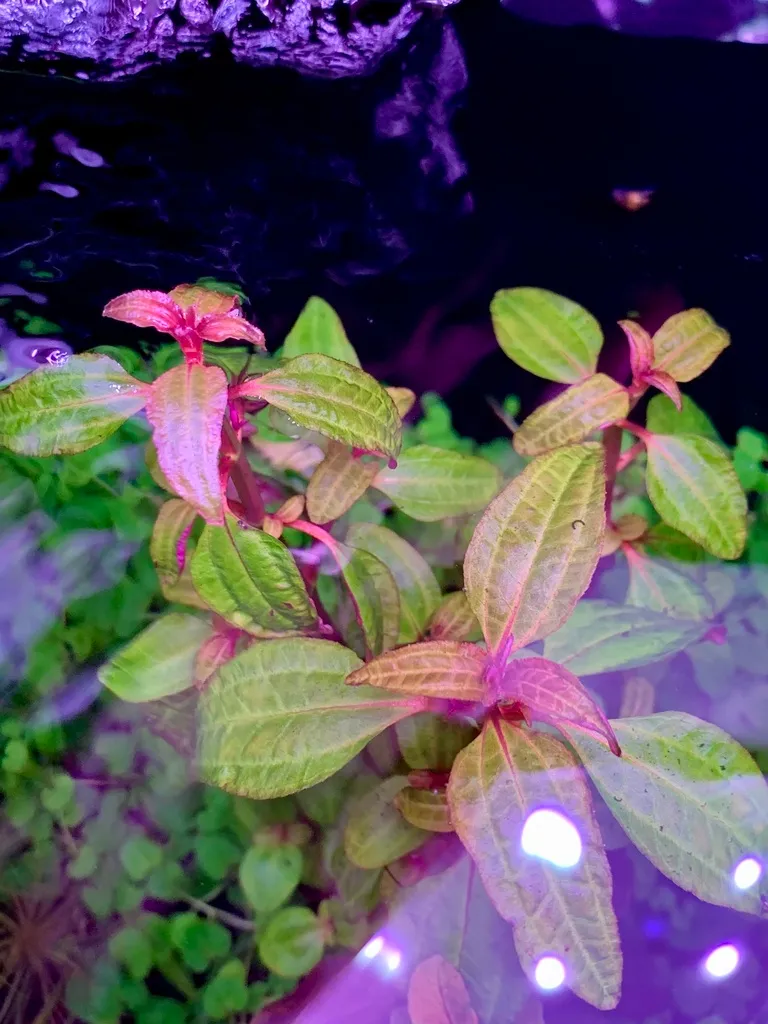
Aciotis acuminifolia
FreshwaterHigh light · Midground15.7 in (40 cm)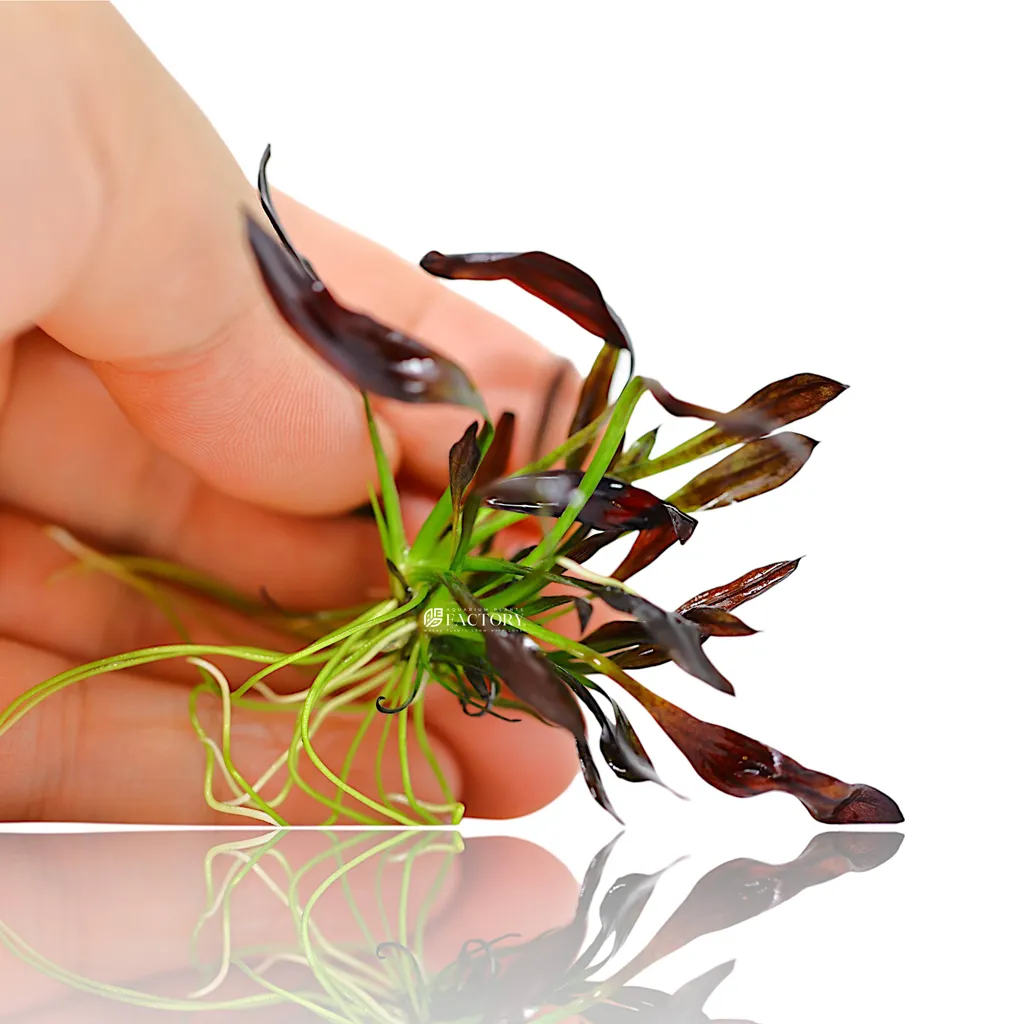
Aflame sword
Echinodorus 'Aflame'
FreshwaterHigh light · Midground11.8 in (30 cm)Alternanthera reineckii
FreshwaterHigh light · Midground19.7 in (50 cm)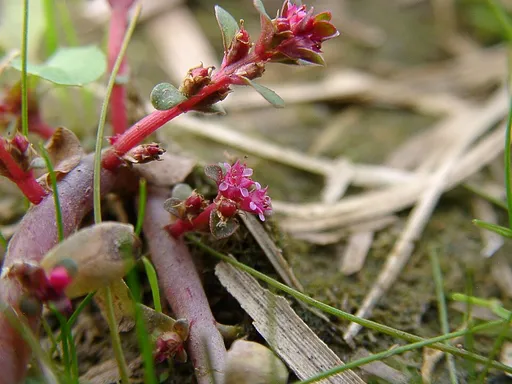
Ammannia Bonsai
Ammannia sp. 'Bonsai'
FreshwaterHigh light · Midground7.9 in (20 cm)Ammannia gracilis
FreshwaterHigh light · Background19.7 in (50 cm)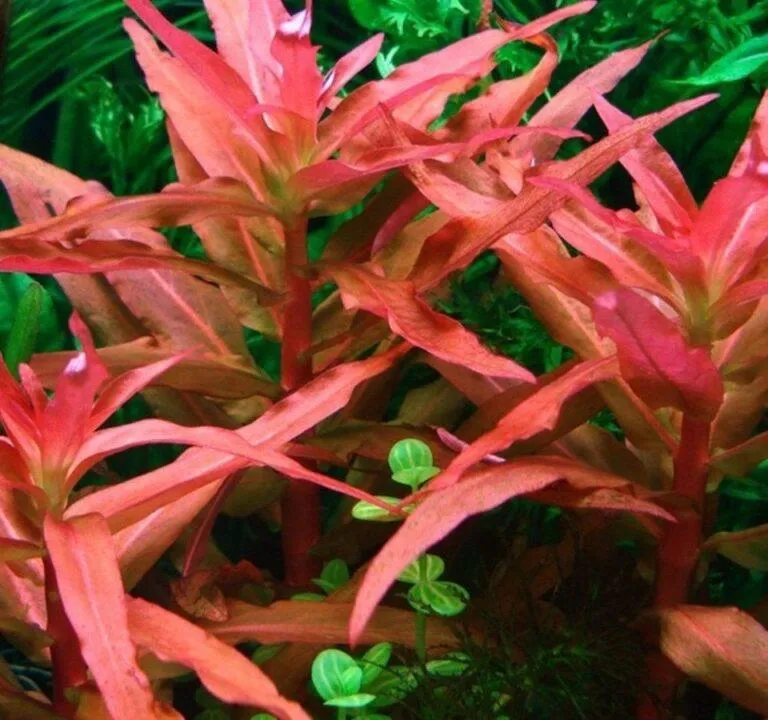
Ammannia senegalensis
FreshwaterHigh light · Midground17.7 in (45 cm)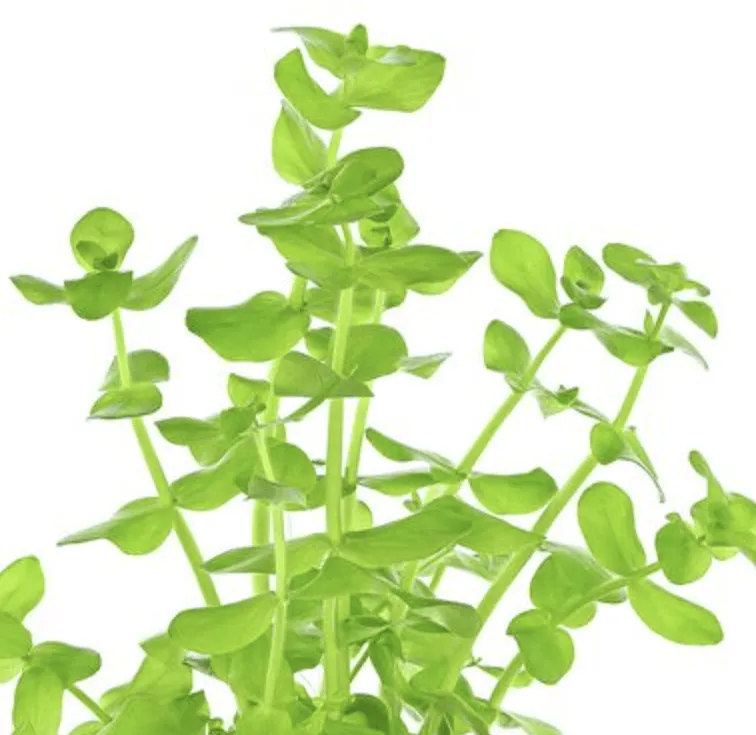
Bacopa lanigera
FreshwaterHigh light · Background11.8 in (30 cm)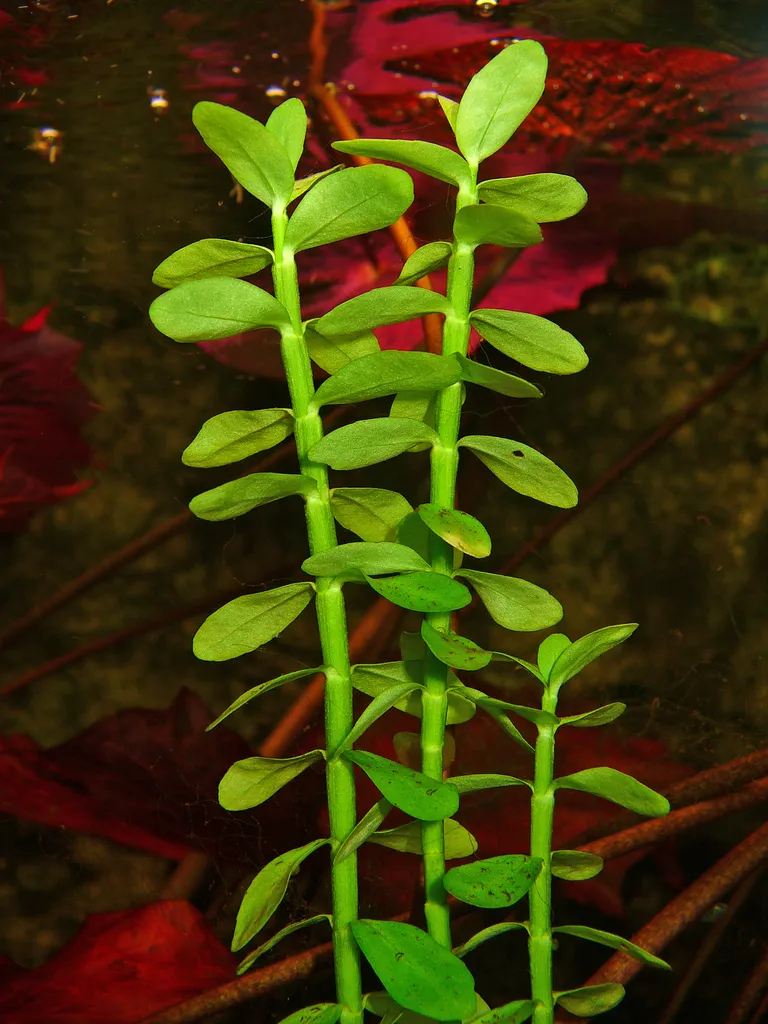
Bacopa madagascariensis
FreshwaterHigh light · Midground11.8 in (30 cm)Blyxa aubertii
FreshwaterHigh light · Midground15.7 in (40 cm)Blyxa japonica
FreshwaterHigh light · Midground7.9 in (20 cm)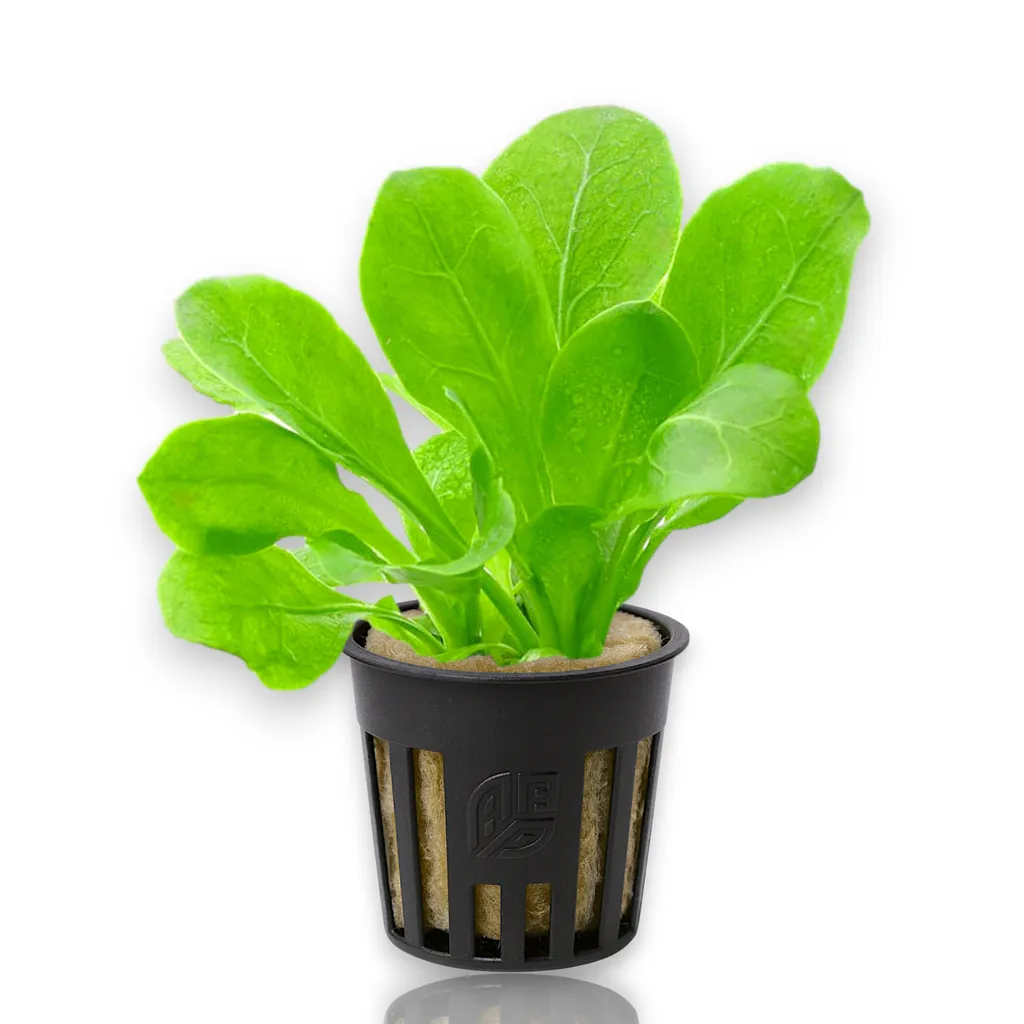
Brookweed
Samolus valerandi
FreshwaterBrackishHigh light · Foreground5.9 in (15 cm)Centrolepis Blood Vomit
Centrolepis drummondiana 'Blood Vomit'
FreshwaterHigh light · Foreground1.6 in (4 cm)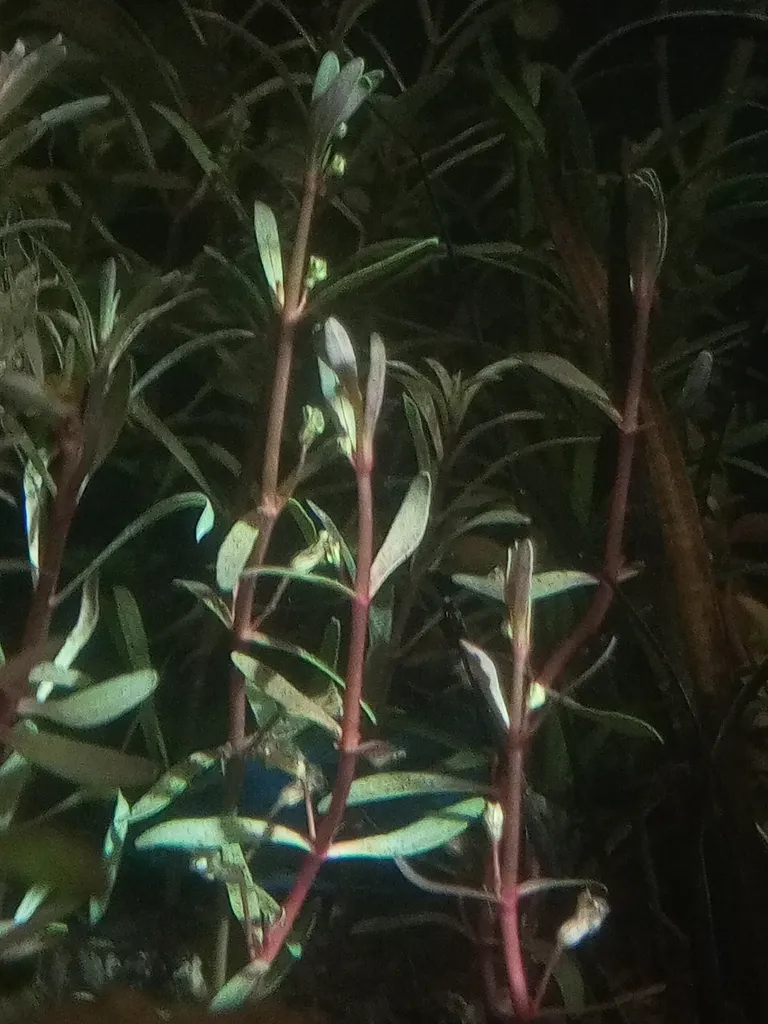
Cuphea anagalloidea
FreshwaterHigh light · Midground11.8 in (30 cm)Dwarf baby tears
Hemianthus callitrichoides 'Cuba'
FreshwaterHigh light · Foreground2 in (5 cm)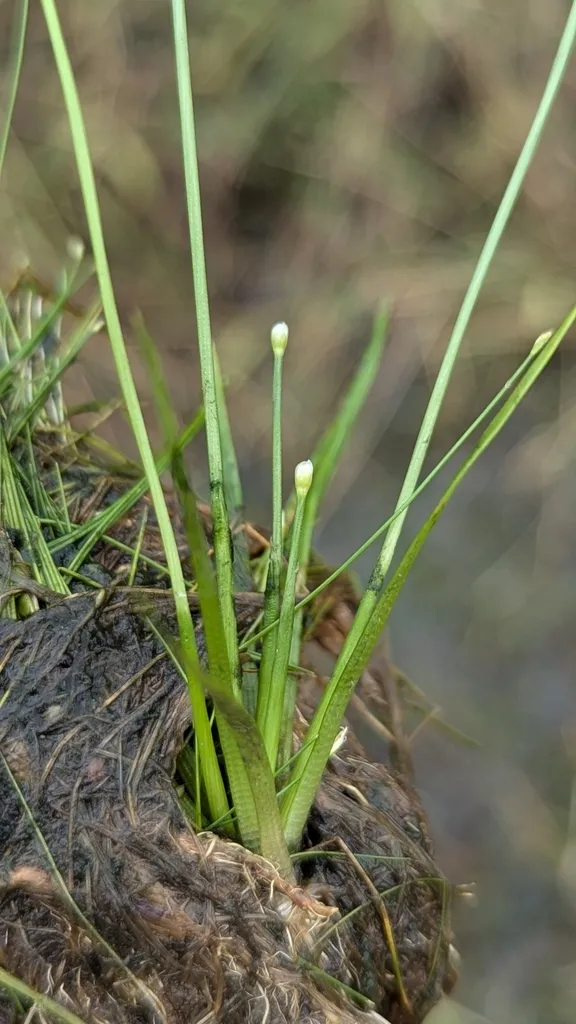
Eriocaulon buergerianum
FreshwaterHigh light · Foreground3.1 in (8 cm)Eriocaulon cinereum
FreshwaterHigh light · Foreground3.1 in (8 cm)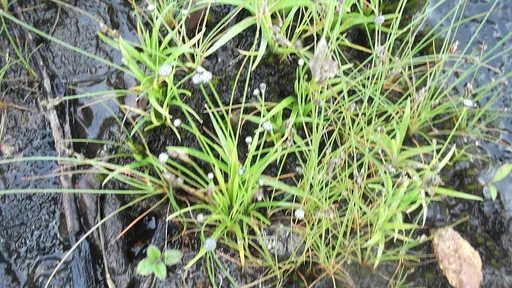
Eriocaulon quinquangulare
FreshwaterHigh light · Midground3.1 in (8 cm)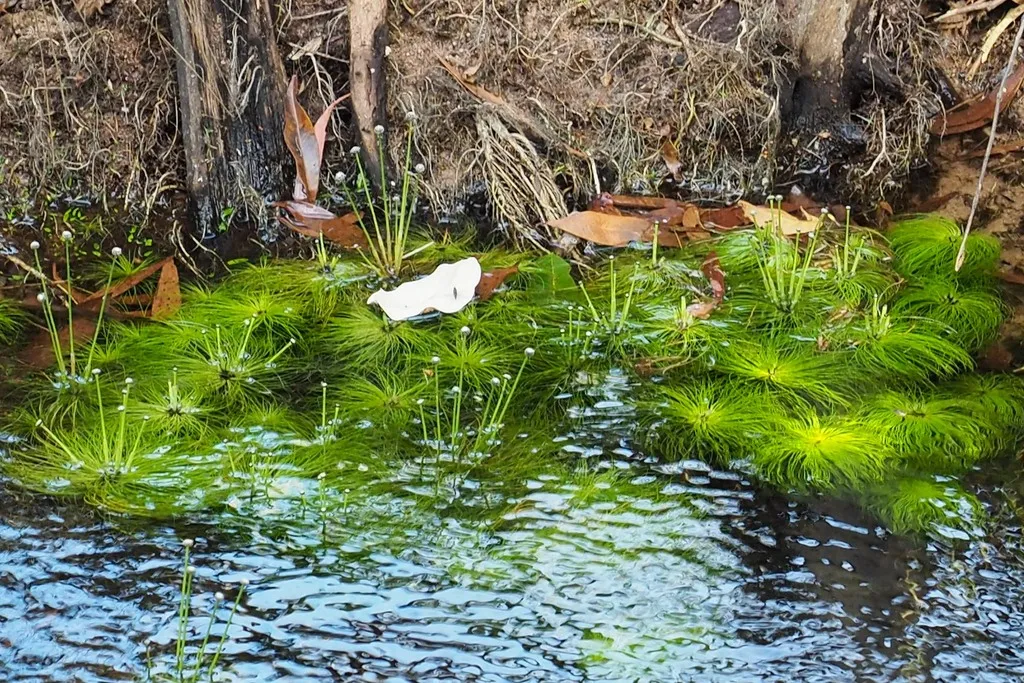
Eriocaulon setaceum
FreshwaterHigh light · Midground11.8 in (30 cm)Eriocaulon Sulawesi
Eriocaulon sp. 'Sulawesi'
FreshwaterHigh light · Foreground1.2 in (3 cm)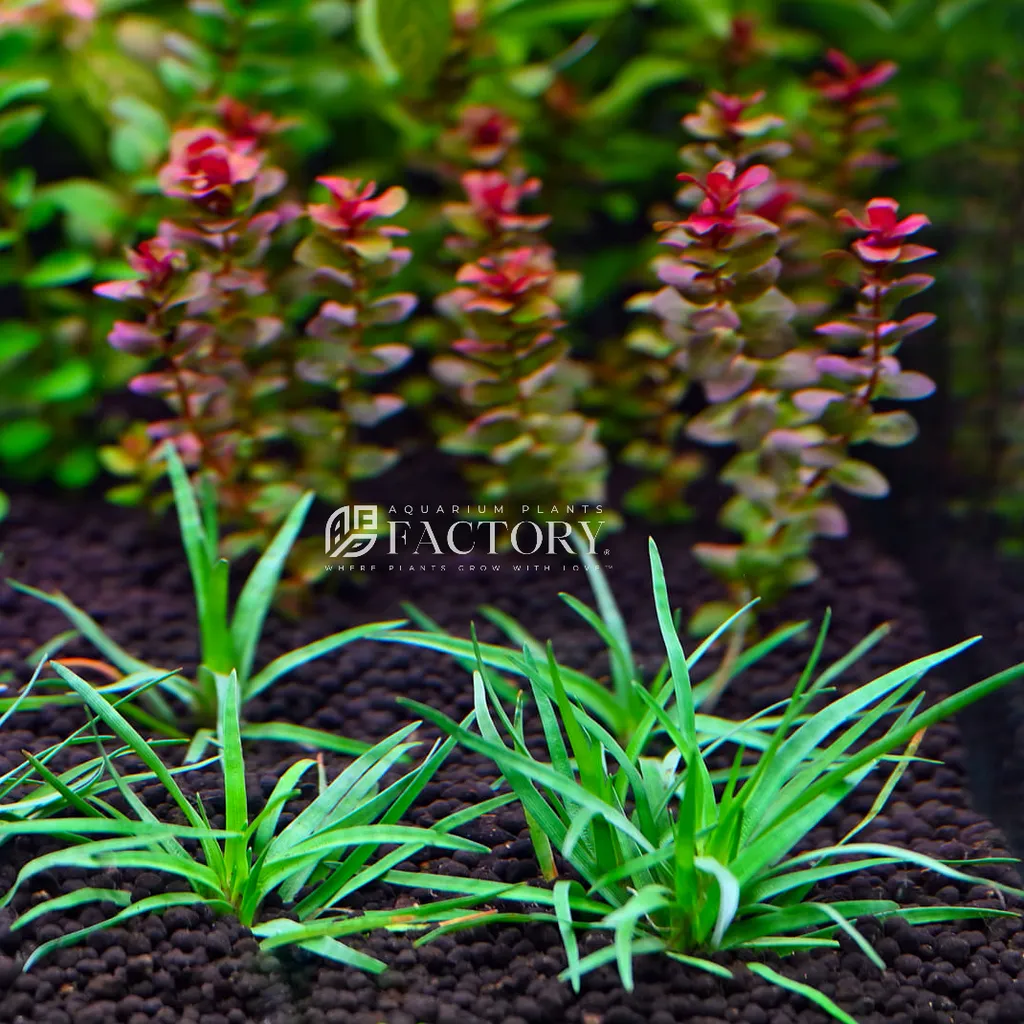
Eriocaulon Vietnam
Eriocaulon sp. 'Vietnam'
FreshwaterHigh light · Midground4.7 in (12 cm)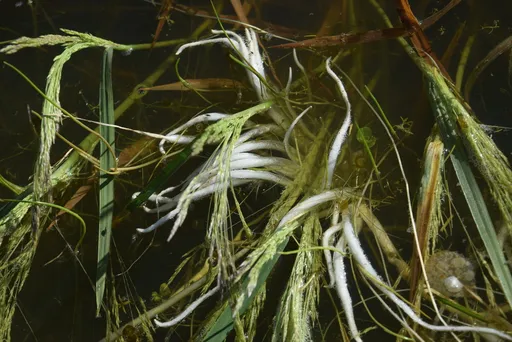
Floating ludwigia
Ludwigia helminthorrhiza
FreshwaterHigh light · Floating2 in (5 cm)Giant ambulia
Limnophila aquatica
FreshwaterHigh light · Background19.7 in (50 cm)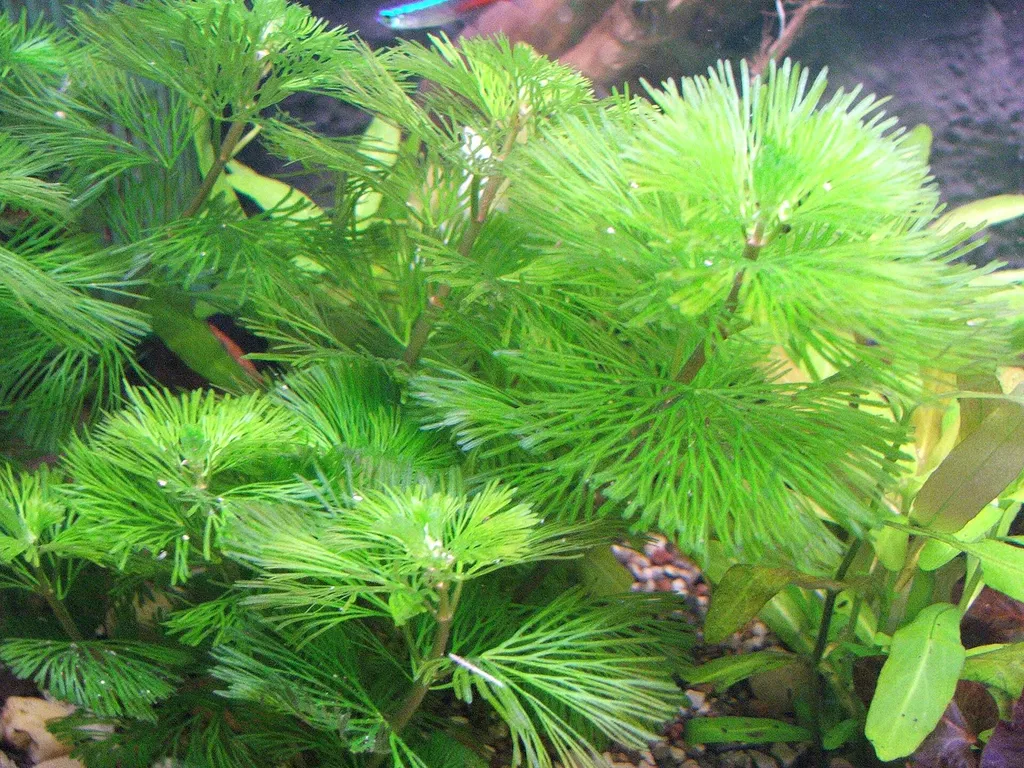
Giant cabomba
Cabomba aquatica
FreshwaterHigh light · Background31.5 in (80 cm)Glosso
Glossostigma elatinoides
FreshwaterHigh light · Foreground1.6 in (4 cm)Green cabomba
Cabomba caroliniana
FreshwaterHigh light · Background23.6 in (60 cm)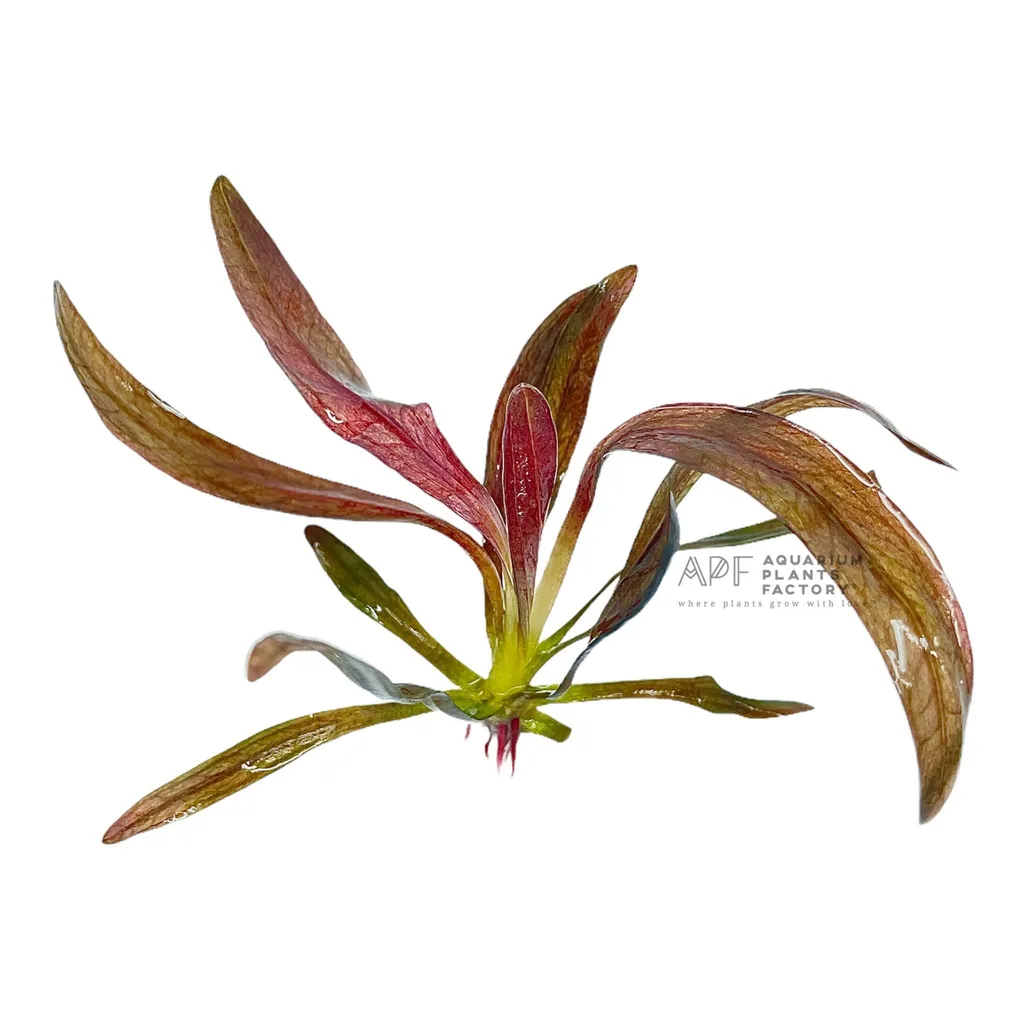
Horemanii sword
Echinodorus horemanii
FreshwaterHigh light · Background19.7 in (50 cm)Hydrocotyle mini
Hydrocotyle sibthorpioides
FreshwaterHigh light · Foreground2 in (5 cm)Hydrocotyle Variegated
Hydrocotyle tripartita 'Variegated'
FreshwaterHigh light · Foreground2 in (5 cm)Hygrophila Araguaia
Hygrophila lancea 'Araguaia'
FreshwaterHigh light · Midground7.9 in (20 cm)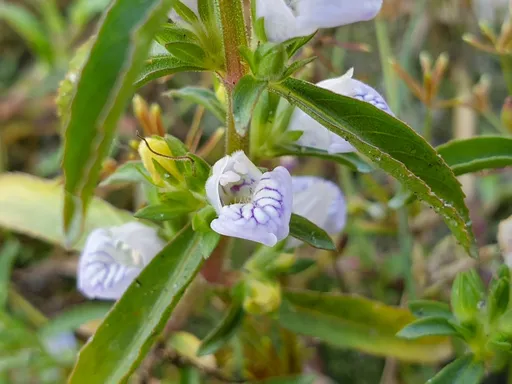
Hygrophila balsamica
FreshwaterHigh light · Background19.7 in (50 cm)Hygrophila Chai
Hygrophila lancea 'Chai'
FreshwaterHigh light · Foreground3.9 in (10 cm)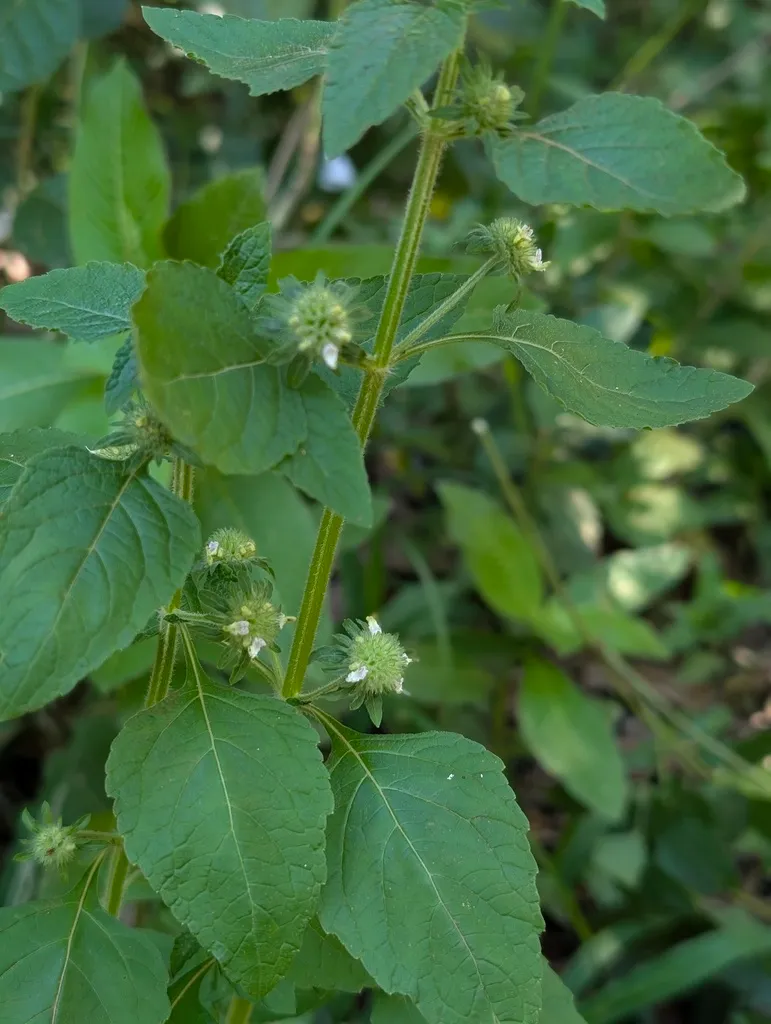
Hyptis lorentziana
FreshwaterHigh light · Midground11.8 in (30 cm)Limnophila aromatica
FreshwaterHigh light · Background15.7 in (40 cm)Limnophila Belem
Limnophila sp. 'Belem'
FreshwaterHigh light · Background11.8 in (30 cm)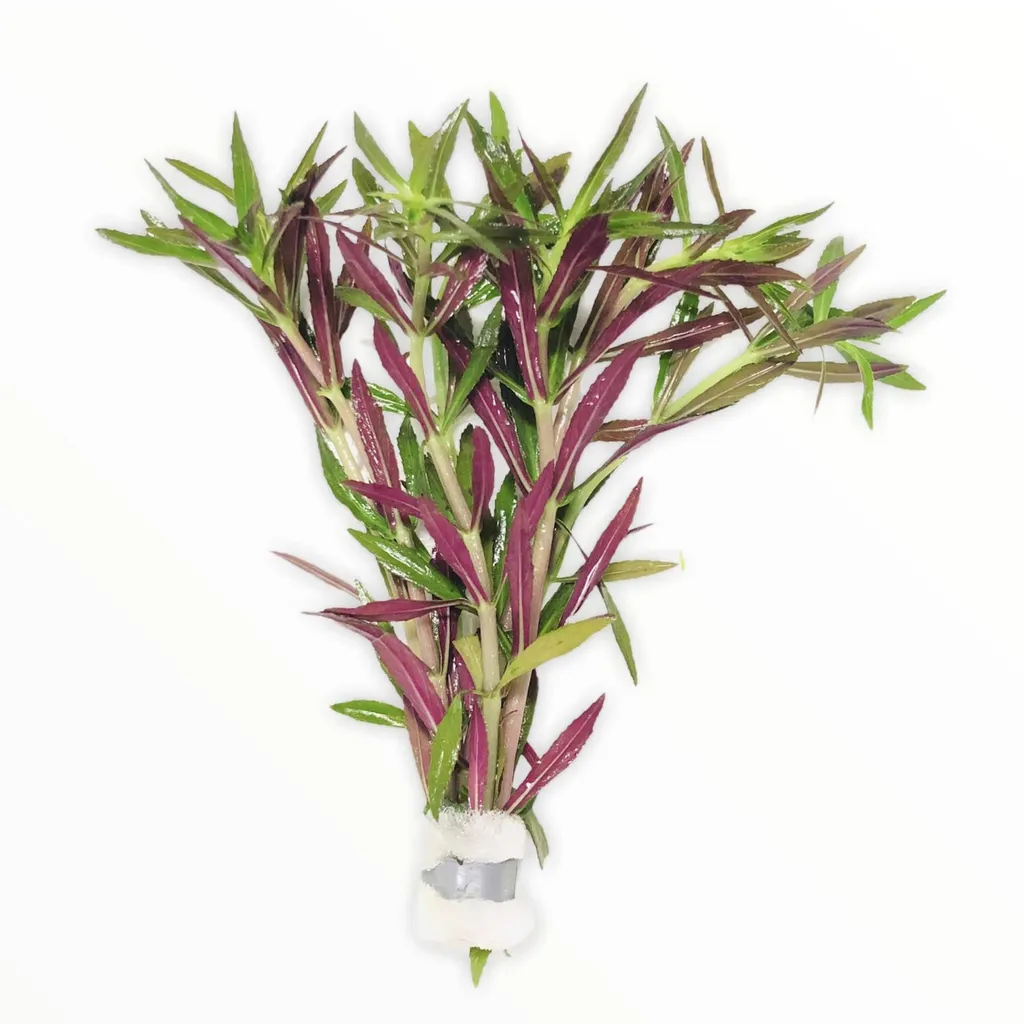
Limnophila hippuridoides
FreshwaterHigh light · Background19.7 in (50 cm)Limnophila Vietnam
Limnophila sp. 'Vietnam'
FreshwaterHigh light · Midground9.8 in (25 cm)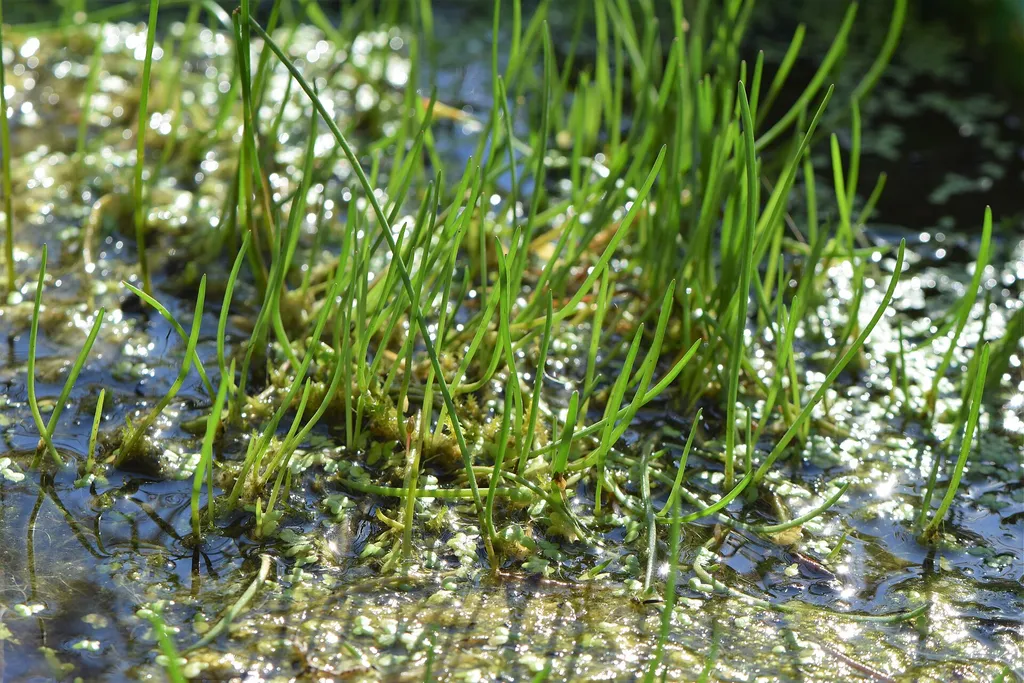
Littorella uniflora
FreshwaterHigh light · Foreground2 in (5 cm)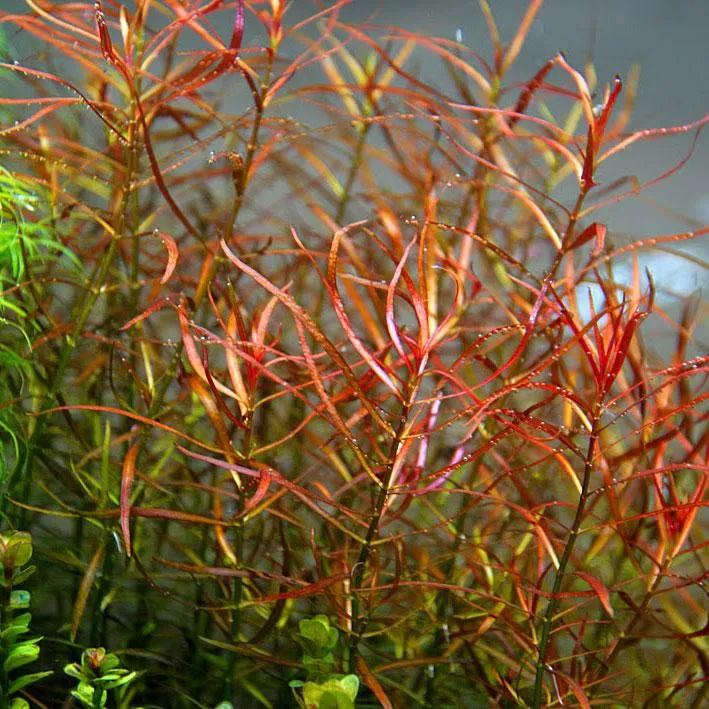
Ludwigia arcuata
FreshwaterHigh light · Midground19.7 in (50 cm)Ludwigia brevipes
FreshwaterHigh light · Midground11.8 in (30 cm)Ludwigia Cuba
Ludwigia inclinata var. verticillata 'Cuba'
FreshwaterHigh light · Background15.7 in (40 cm)Ludwigia Dark Orange
Ludwigia sp. 'Dark Orange'
FreshwaterHigh light · Background15.7 in (40 cm)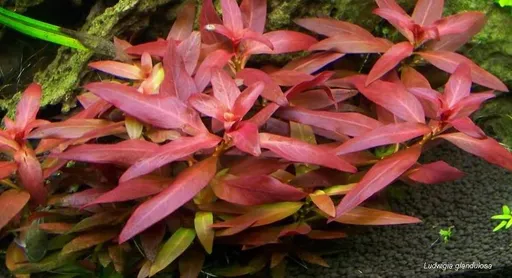
Ludwigia glandulosa
FreshwaterHigh light · Background15.7 in (40 cm)Ludwigia Meta
Ludwigia inclinata var. verticillata 'Meta'
FreshwaterHigh light · Background15.7 in (40 cm)Ludwigia ovalis Pink
Ludwigia ovalis 'Pink'
FreshwaterHigh light · Midground15.7 in (40 cm)Ludwigia Pantanal
Ludwigia inclinata var. verticillata 'Pantanal'
FreshwaterHigh light · Background15.7 in (40 cm)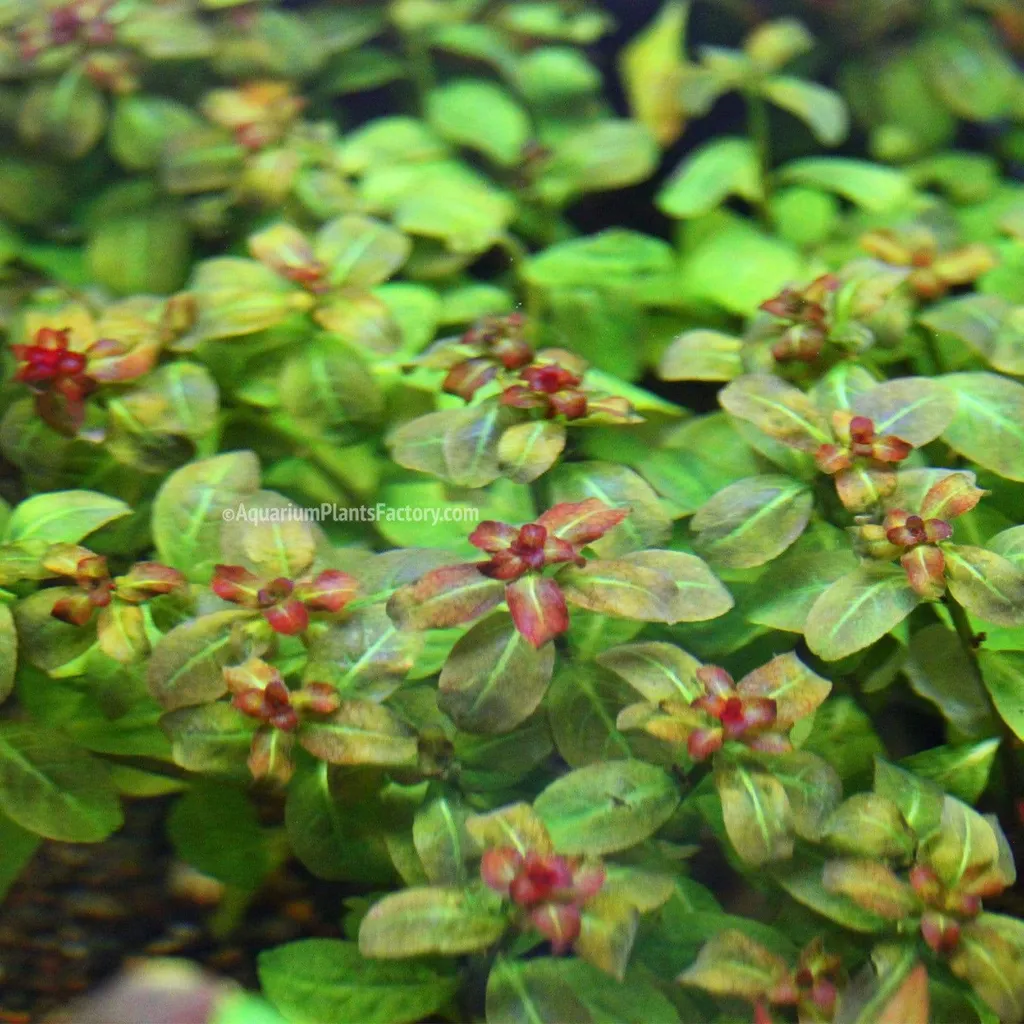
Ludwigia senegalensis
FreshwaterHigh light · Midground11.8 in (30 cm)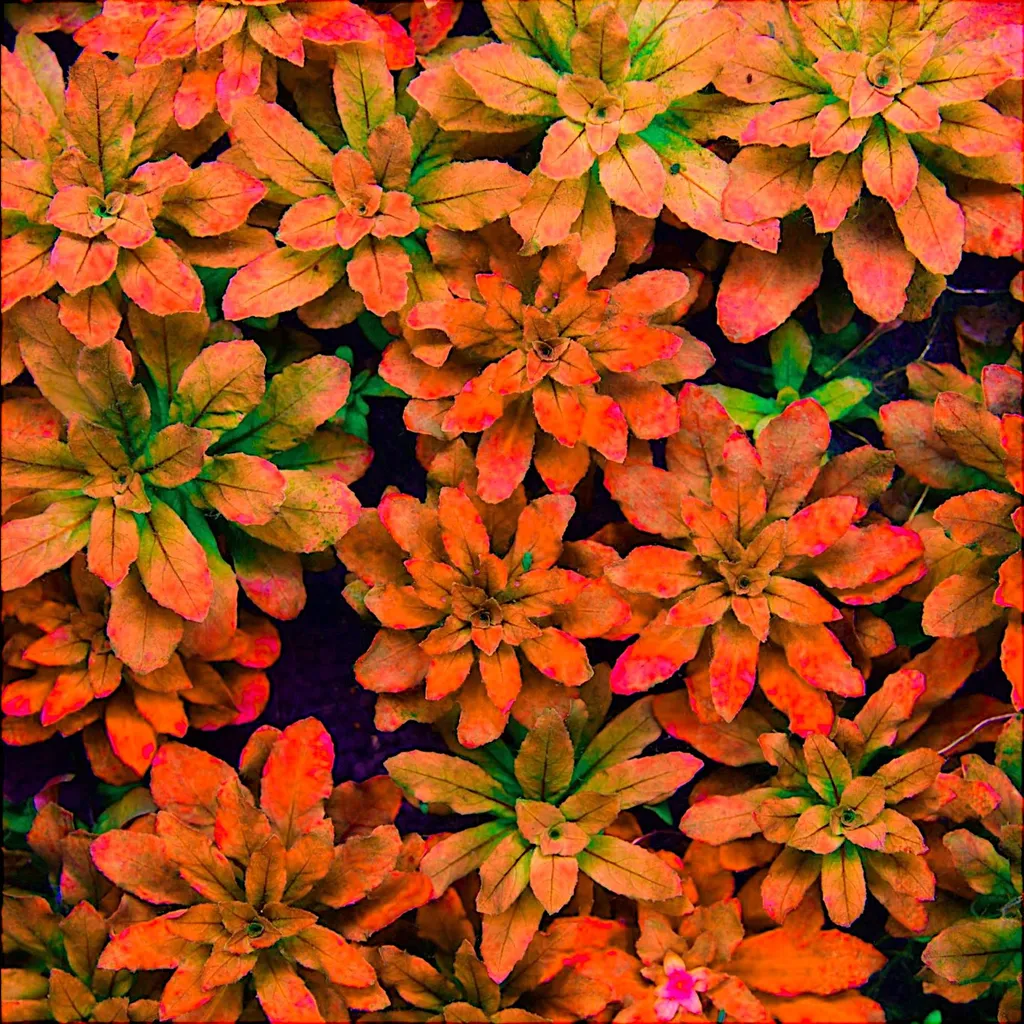
Ludwigia sphaerocarpa
FreshwaterHigh light · Midground11.8 in (30 cm)Ludwigia super red
Ludwigia palustris 'Super Red'
FreshwaterHigh light · Midground11.8 in (30 cm)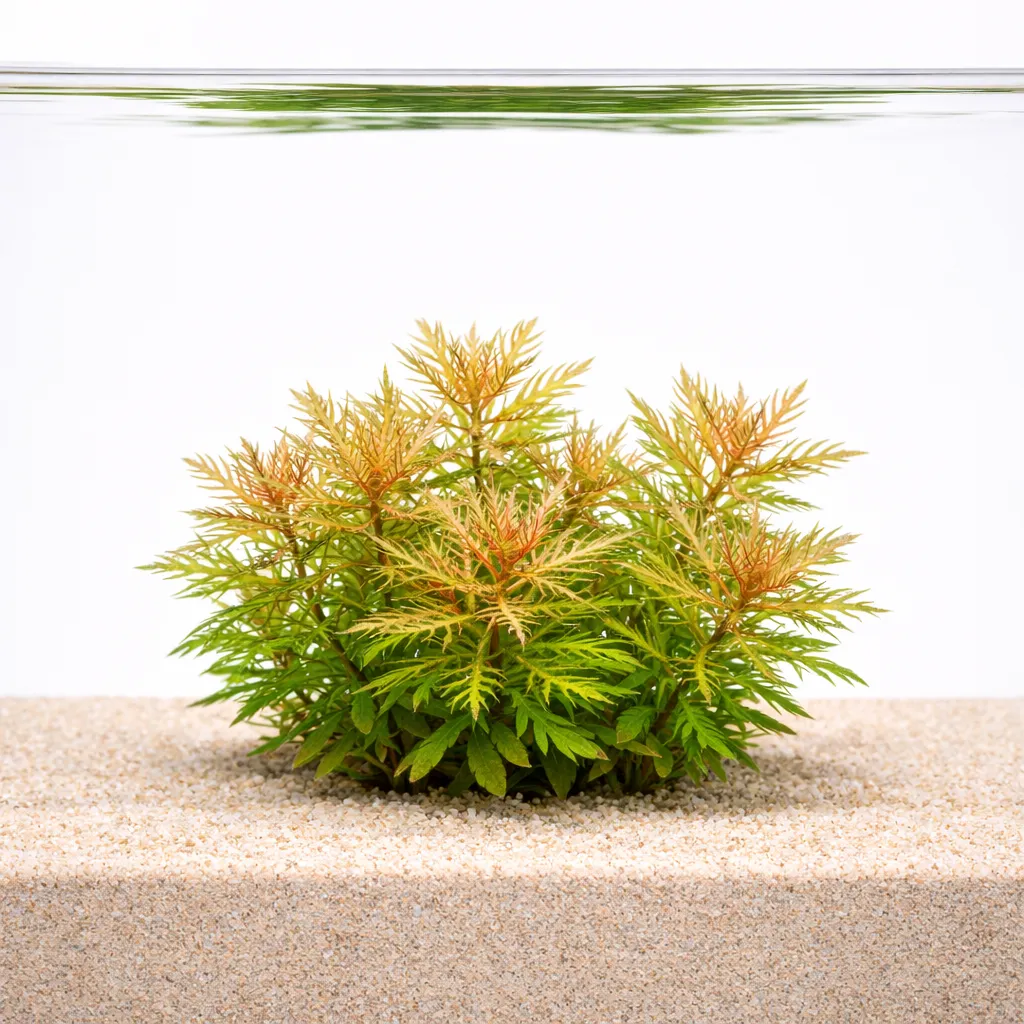
Mermaid weed
Proserpinaca palustris
FreshwaterHigh light · Midground11.8 in (30 cm)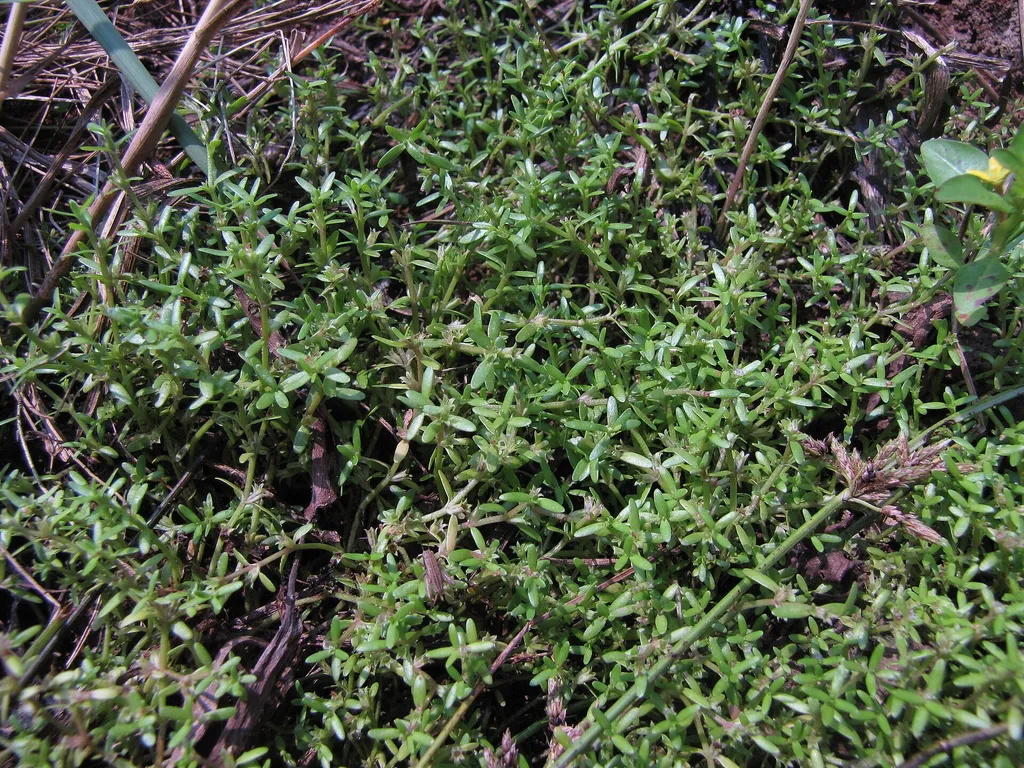
Microcarpaea minima
FreshwaterHigh light · Foreground3.9 in (10 cm)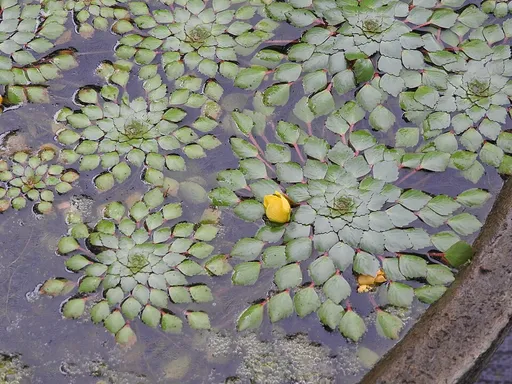
Mosaic plant
Ludwigia sedioides
FreshwaterHigh light · Floating11.8 in (30 cm)Myriophyllum Roraima
Myriophyllum sp. 'Roraima'
FreshwaterHigh light · Background23.6 in (60 cm)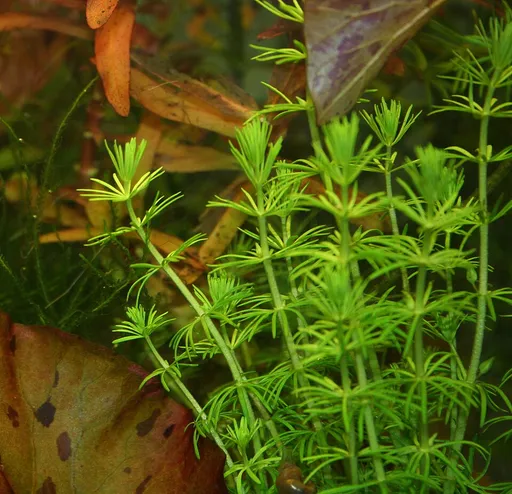
Needle leaf bacopa
Bacopa myriophylloides
FreshwaterHigh light · Midground11.8 in (30 cm)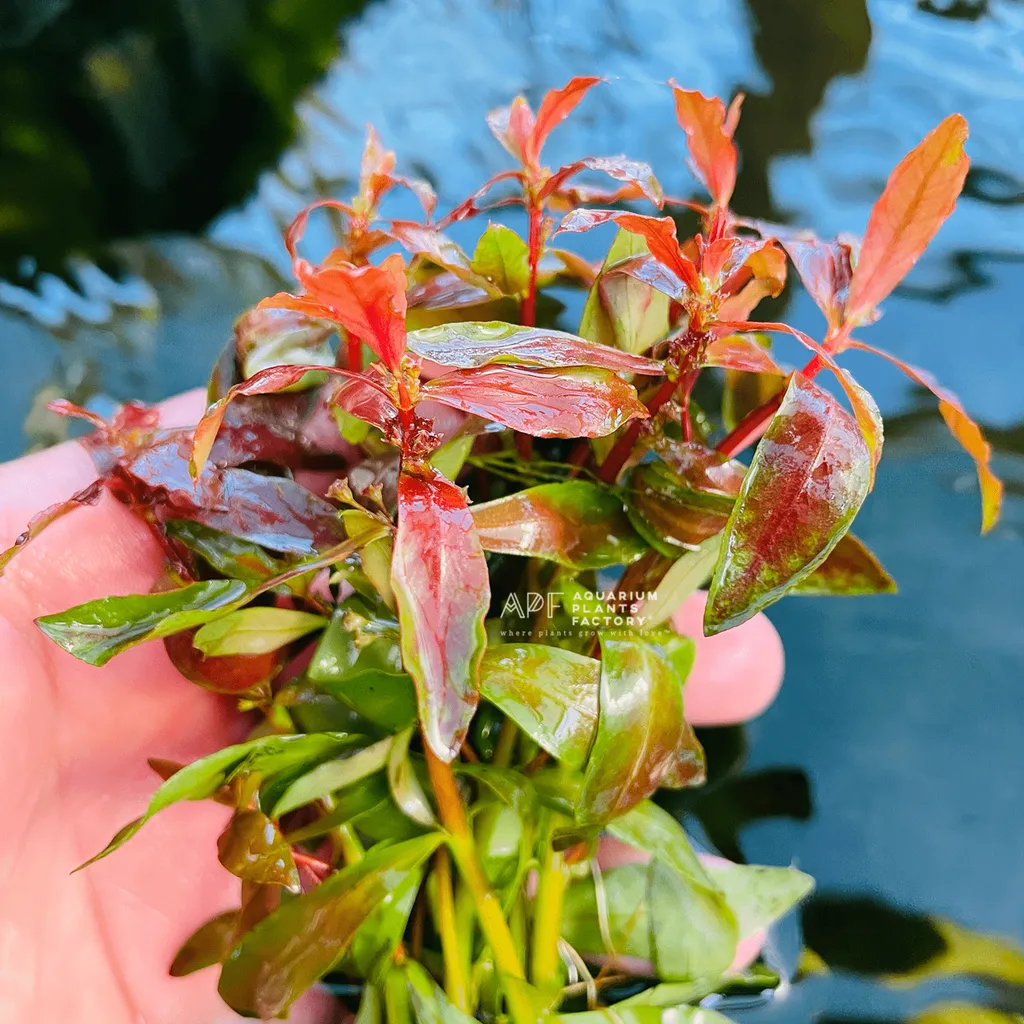
Nesaea crassicaulis
Ammannia crassicaulis
FreshwaterHigh light · Background19.7 in (50 cm)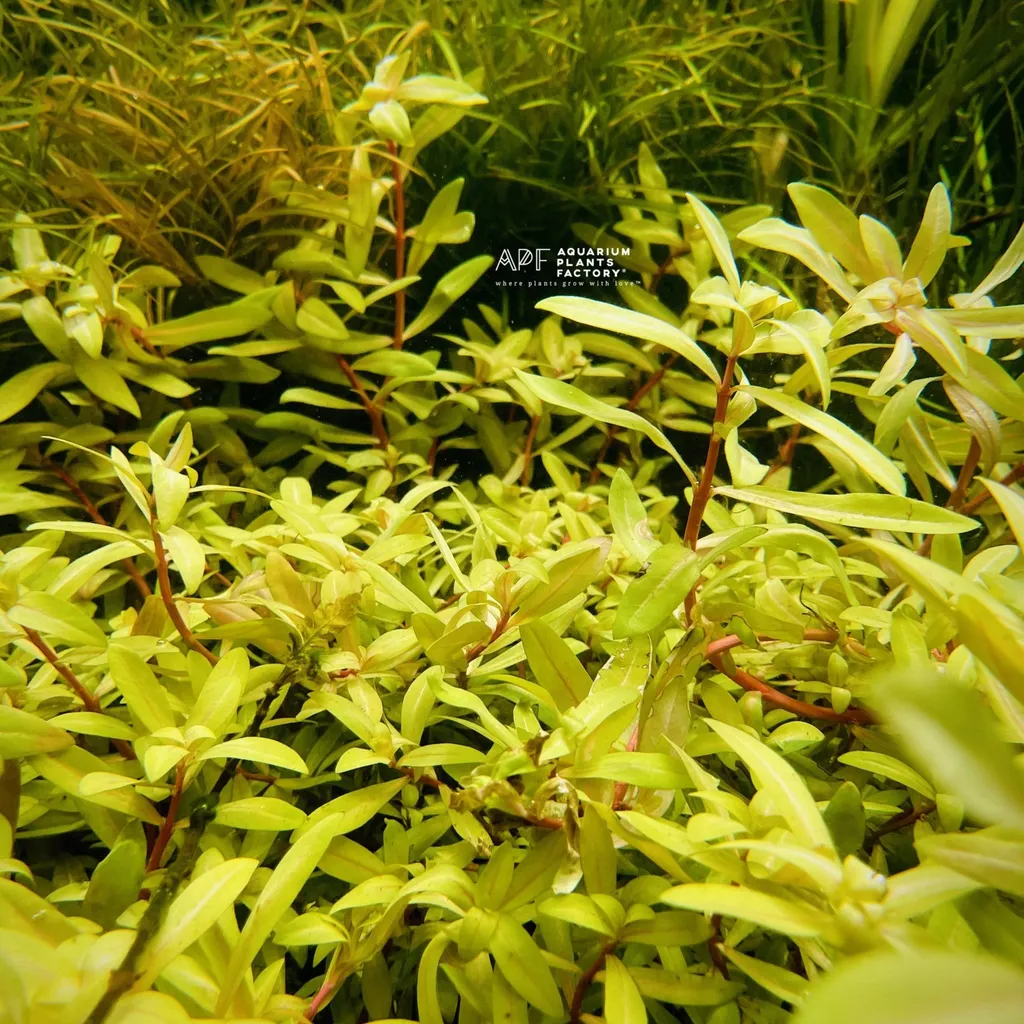
Nesaea pedicellata Golden
Ammannia pedicellata
FreshwaterHigh light · Background15.7 in (40 cm)Oriental sword
Echinodorus 'Oriental'
FreshwaterHigh light · Midground11.8 in (30 cm)Parrot's feather
Myriophyllum aquaticum
FreshwaterHigh light · Background15.7 in (40 cm)Persicaria kawagoeanum
Persicaria sp. 'Kawagoeanum'
FreshwaterHigh light · Background15.7 in (40 cm)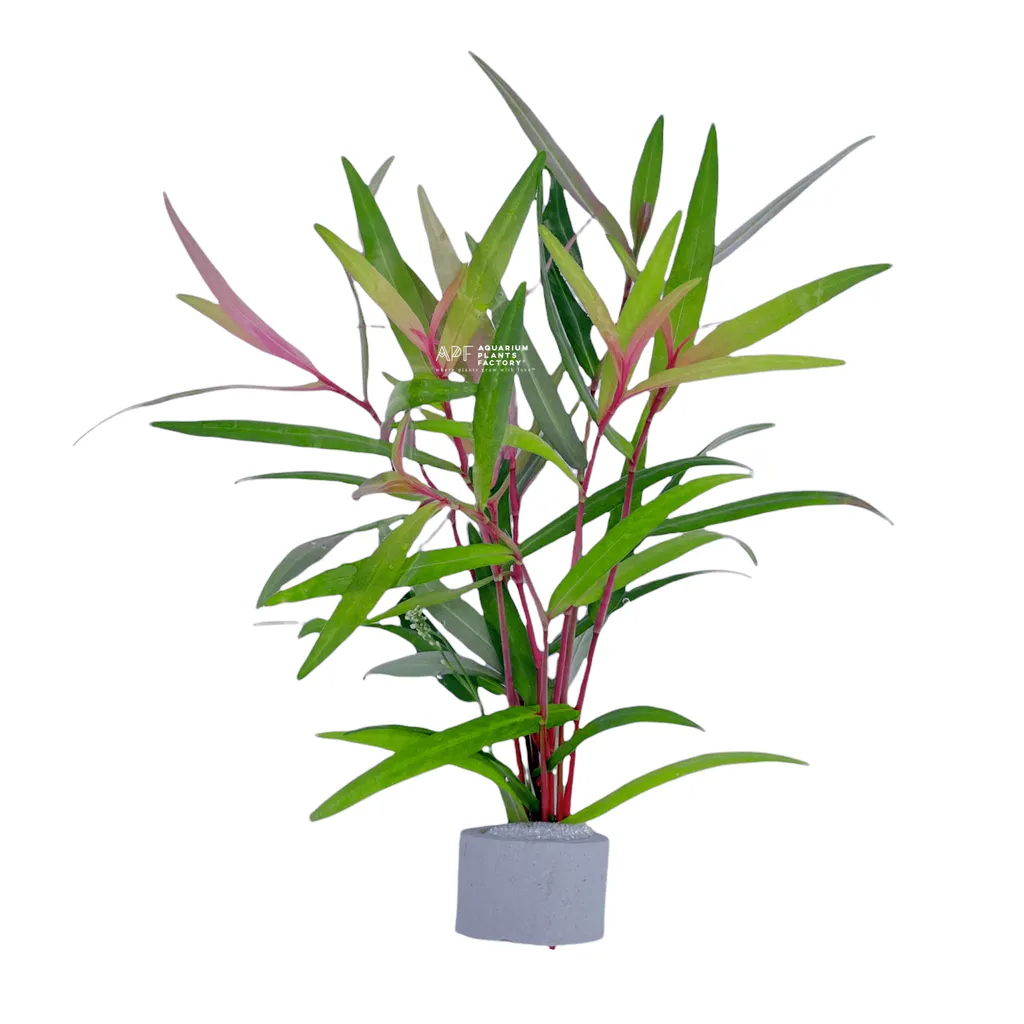
Persicaria Sao Paulo
Persicaria sp. 'Sao Paulo'
FreshwaterHigh light · Background19.7 in (50 cm)Platinum glosso
Glossostigma elatinoides 'Platinum'
FreshwaterHigh light · Foreground1.6 in (4 cm)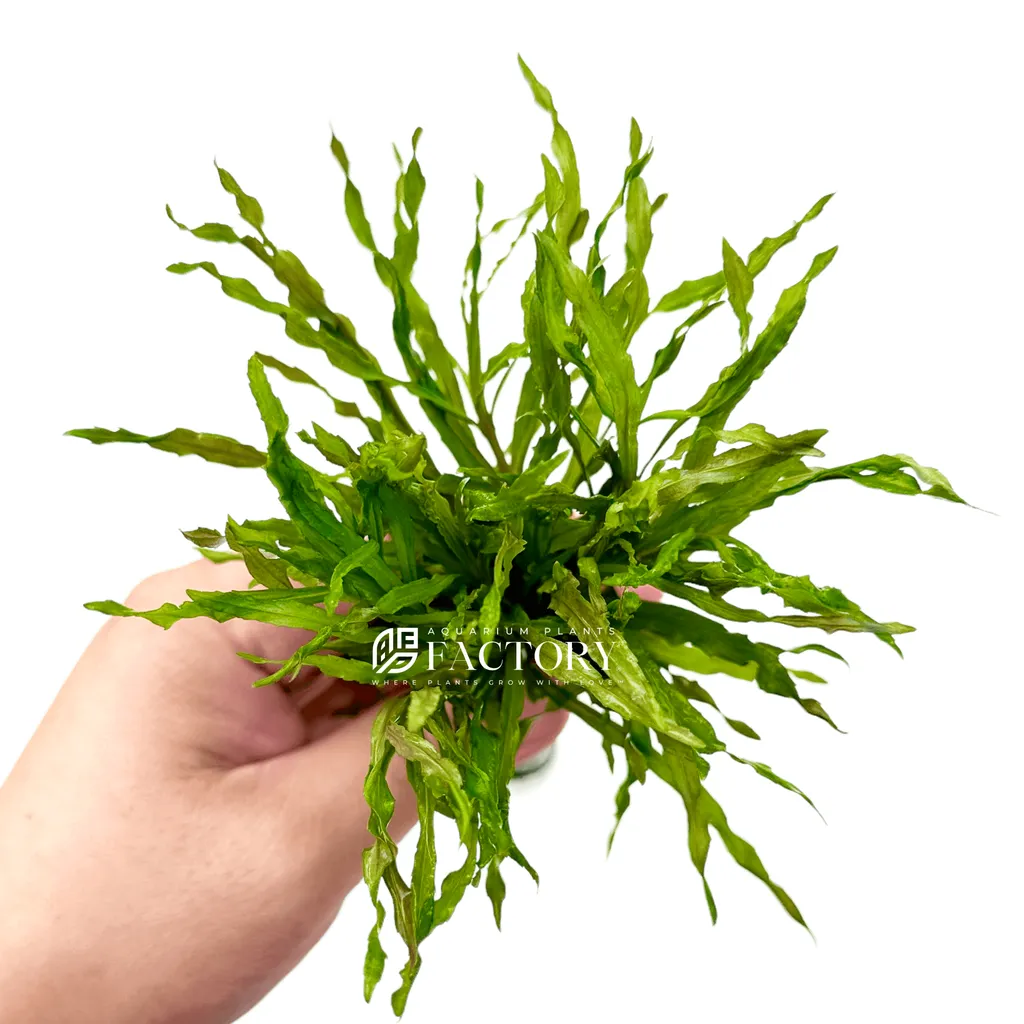
Pogostemon Dassen
Pogostemon stellatus 'Dassen'
FreshwaterHigh light · Background17.7 in (45 cm)Pogostemon erectus
Pogostemon deccanensis
FreshwaterHigh light · Midground9.8 in (25 cm)Pogostemon helferi
FreshwaterHigh light · Foreground3.1 in (8 cm)Pogostemon stellatus
FreshwaterHigh light · Background23.6 in (60 cm)Pogostemon stellatus Broad Leaf
Pogostemon stellatus 'Broad Leaf'
FreshwaterHigh light · Background23.6 in (60 cm)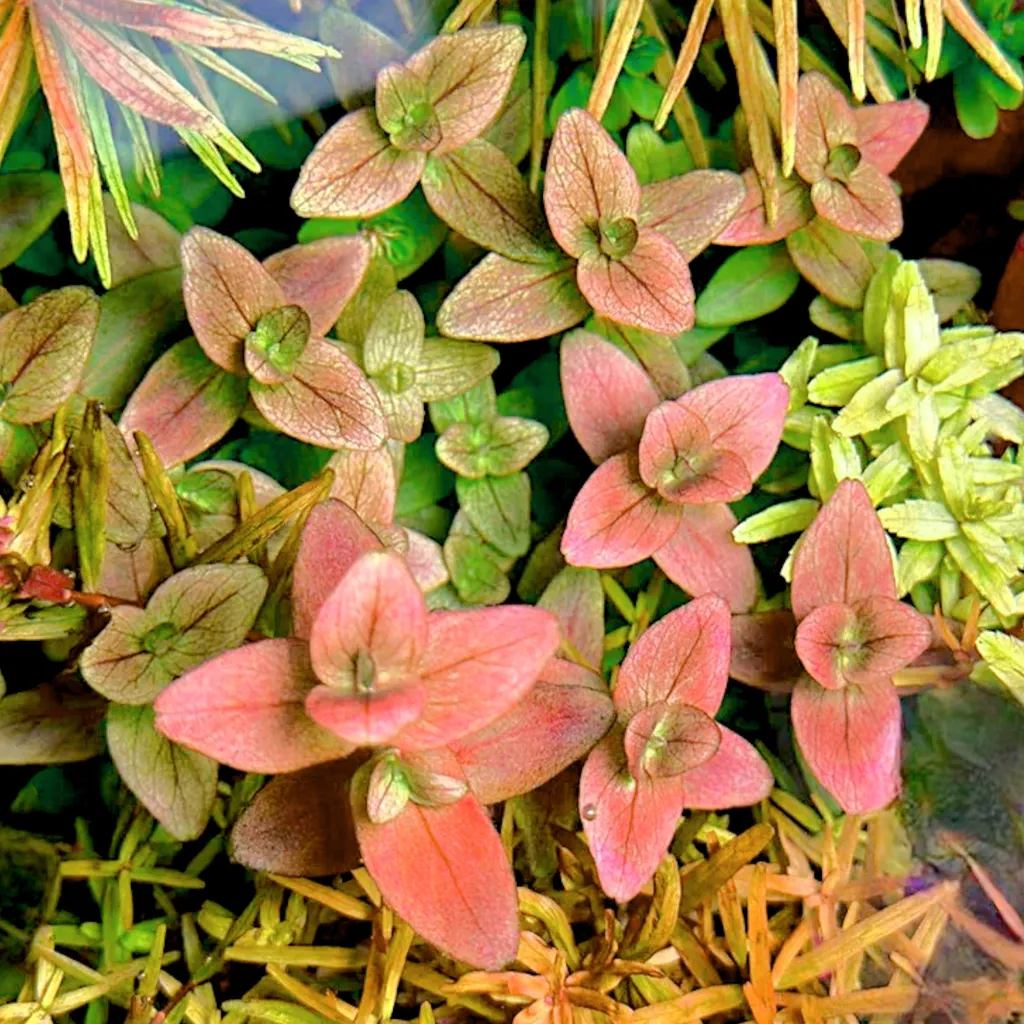
Purple bacopa
Bacopa salzmannii
FreshwaterHigh light · Midground11.8 in (30 cm)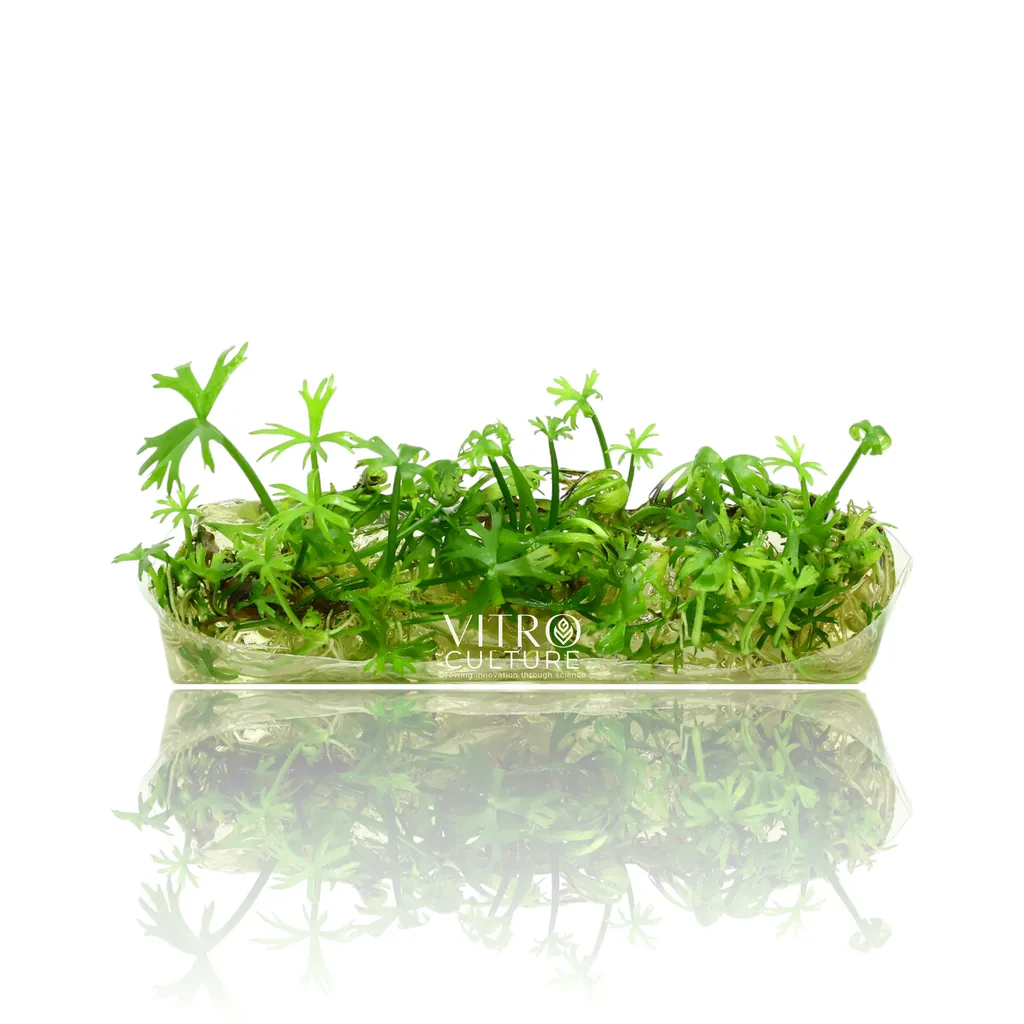
Ranunculus
Ranunculus inundatus
FreshwaterHigh light · Foreground5.9 in (15 cm)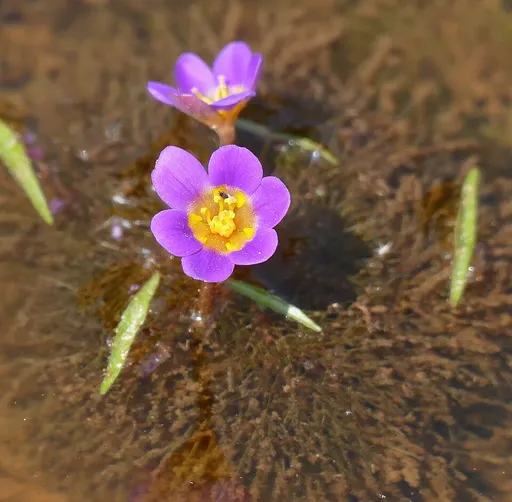
Red cabomba
Cabomba furcata
FreshwaterHigh light · Background19.7 in (50 cm)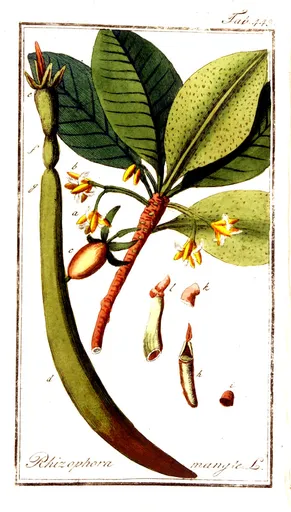
Red mangrove
Rhizophora mangle
BrackishSaltwaterHigh light · Background23.6 in (60 cm)Red myriophyllum
Myriophyllum tuberculatum
FreshwaterHigh light · Background11.8 in (30 cm)Red root floater
Phyllanthus fluitans
FreshwaterHigh light · Floating1.2 in (3 cm)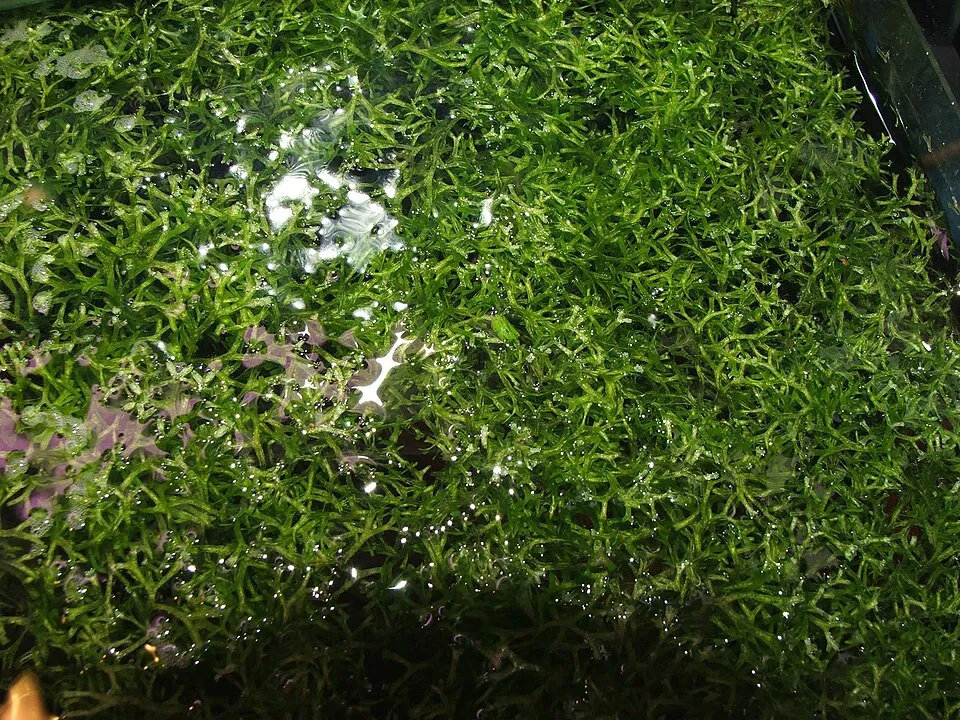
Riccia fluitans
FreshwaterHigh light · Floating1.2 in (3 cm)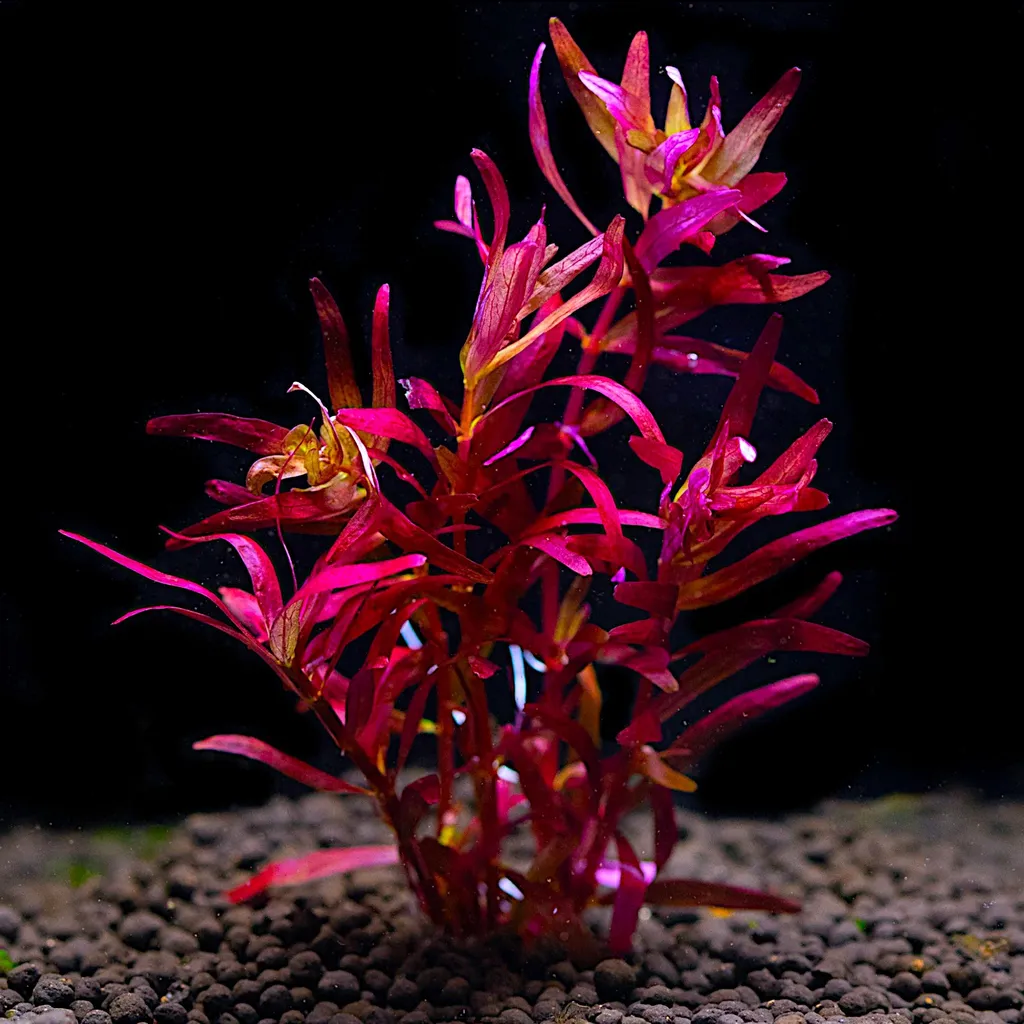
Rotala Blood Red
Rotala rotundifolia 'Blood Red'
FreshwaterHigh light · Background11.8 in (30 cm)Rotala Bossii
Rotala sp. 'Bossii'
FreshwaterHigh light · Background11.8 in (30 cm)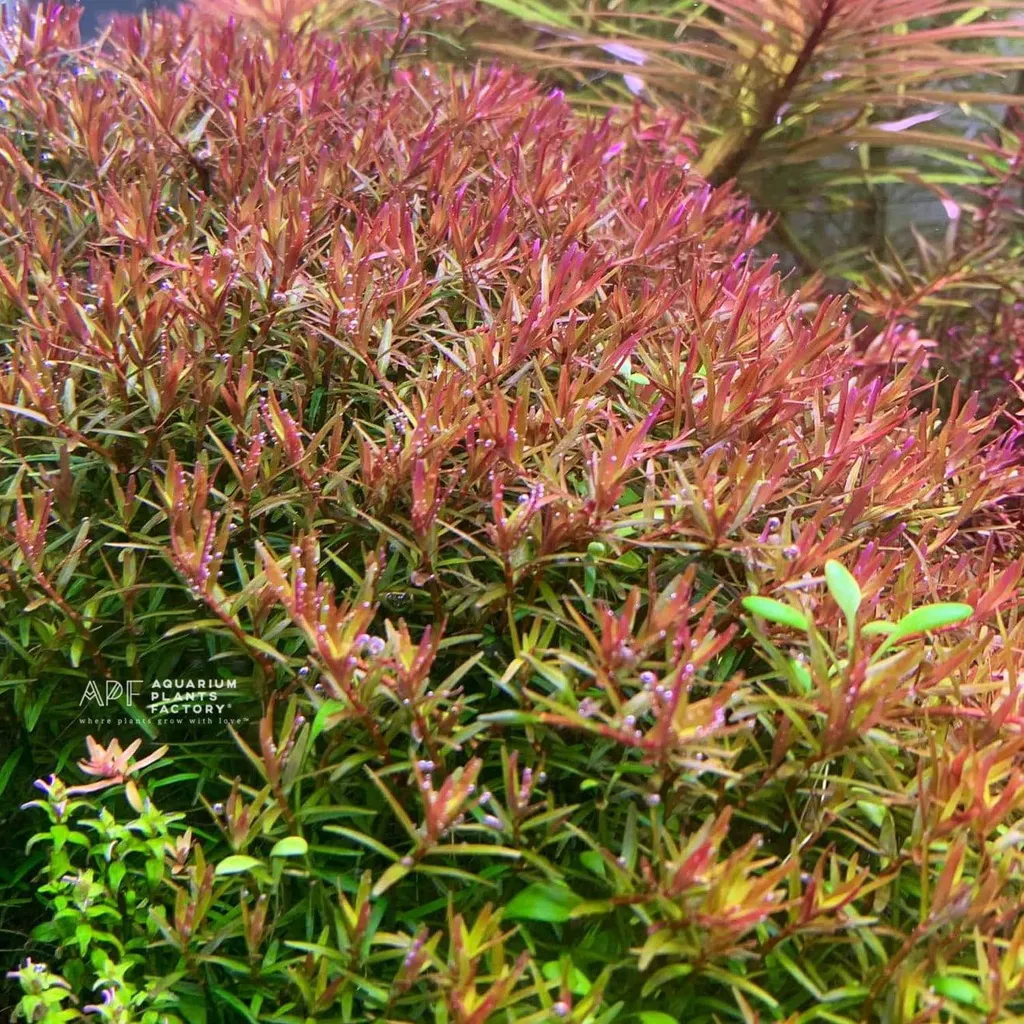
Rotala Colorata
Rotala rotundifolia 'Colorata'
FreshwaterHigh light · Background15.7 in (40 cm)Rotala Fujian
Rotala 'Fujian'
FreshwaterHigh light · Midground7.9 in (20 cm)Rotala H'ra
Rotala rotundifolia 'H'ra'
FreshwaterHigh light · Background11.8 in (30 cm)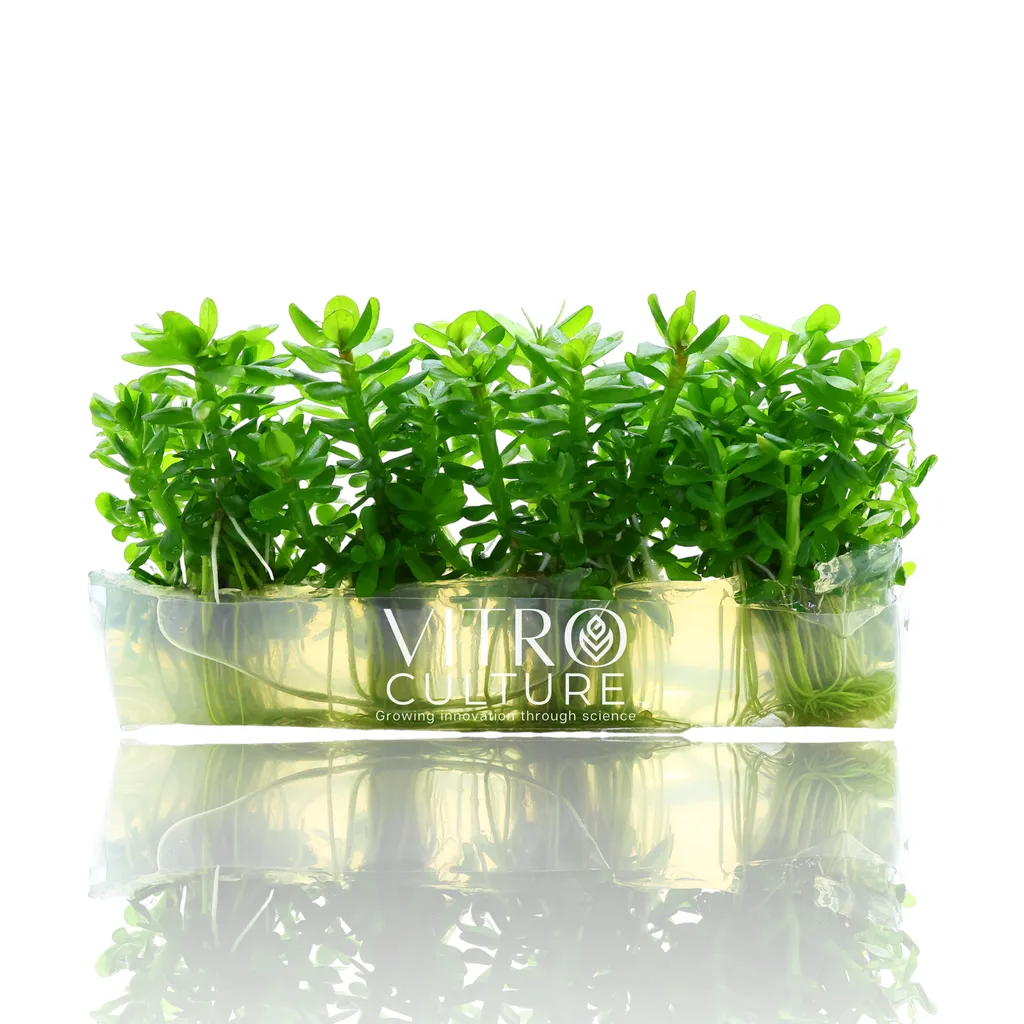
Rotala indica
FreshwaterHigh light · Midground7.9 in (20 cm)Rotala macrandra
FreshwaterHigh light · Background19.7 in (50 cm)5 formsRotala Manipurensis
Rotala rotundifolia 'Manipurensis'
FreshwaterHigh light · Background7.9 in (20 cm)Rotala Nanjenshan
Rotala sp. 'Nanjenshan'
FreshwaterHigh light · Midground15.7 in (40 cm)Rotala Orange Juice
Rotala rotundifolia 'Orange Juice'
FreshwaterHigh light · Background11.8 in (30 cm)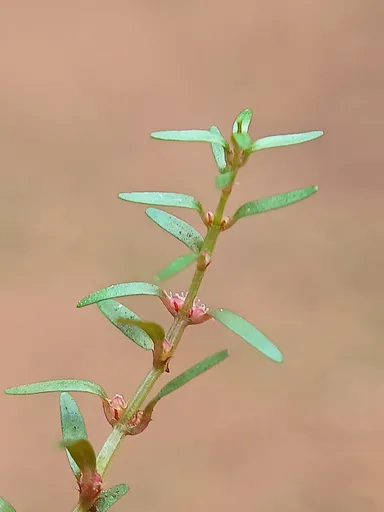
Rotala pusilla
Rotala mexicana
FreshwaterHigh light · Midground11.8 in (30 cm)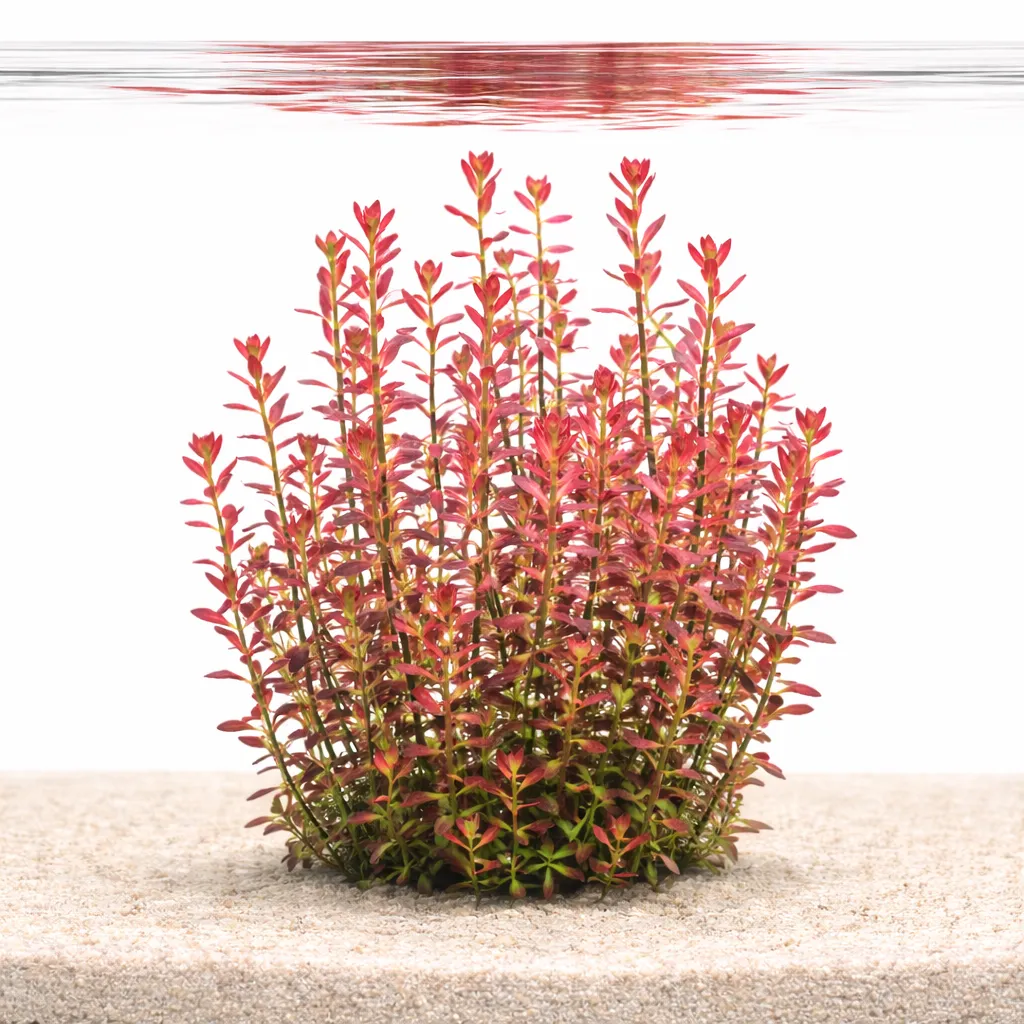
Rotala ramosior
FreshwaterHigh light · Background15.7 in (40 cm)Rotala Red Cross
Rotala 'Red Cross'
FreshwaterHigh light · Midground11.8 in (30 cm)Rotala Sunset
Rotala ramosior 'Sunset'
FreshwaterHigh light · Midground15.7 in (40 cm)Rotala wallichii
FreshwaterHigh light · Background11.8 in (30 cm)Rotala Wayanad
Rotala rotundifolia 'Wayanad'
FreshwaterHigh light · Background15.7 in (40 cm)Senegal tea plant
Gymnocoronis spilanthoides
FreshwaterHigh light · Background23.6 in (60 cm)Star grass
Heteranthera zosterifolia
FreshwaterHigh light · Background15.7 in (40 cm)Staurogyne Porto Velho
Staurogyne sp. 'Porto Velho'
FreshwaterHigh light · Foreground3.1 in (8 cm)Syngonanthus Belem
Syngonanthus macrocaulon
FreshwaterHigh light · Midground7.9 in (20 cm)Syngonanthus Manaus
Syngonanthus sp. 'Manaus'
FreshwaterHigh light · Midground11.8 in (30 cm)Tonina fluviatilis
FreshwaterHigh light · Background13.8 in (35 cm)UG
Utricularia graminifolia
FreshwaterHigh light · Foreground1.6 in (4 cm)Water hedge
Didiplis diandra
FreshwaterHigh light · Midground11.8 in (30 cm)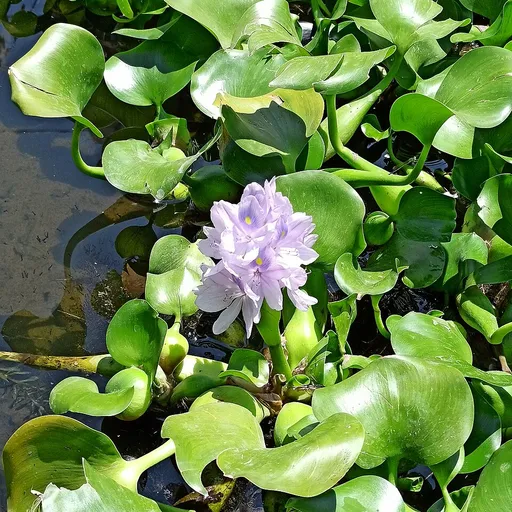
Water hyacinth
Pontederia crassipes
FreshwaterHigh light · Floating15.7 in (40 cm)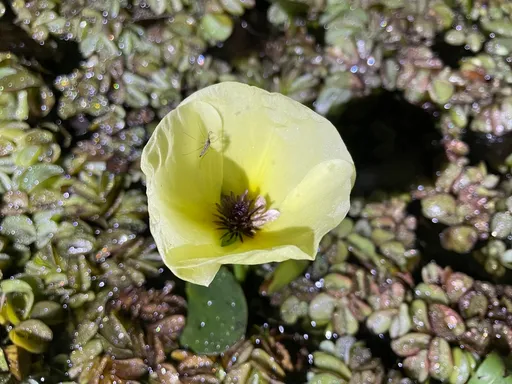
Water poppy
Hydrocleys nymphoides
FreshwaterHigh light · Floating11.8 in (30 cm)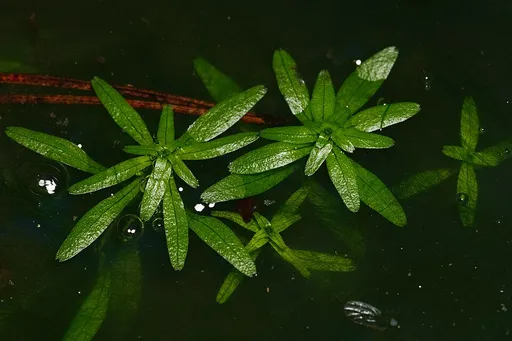
Water starwort
Callitriche palustris
FreshwaterHigh light · Midground11.8 in (30 cm)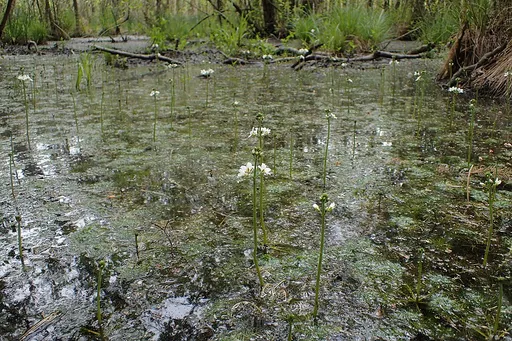
Water violet
Hottonia palustris
FreshwaterHigh light · Midground15.7 in (40 cm)Waterwort
Elatine hydropiper
FreshwaterHigh light · Foreground2 in (5 cm)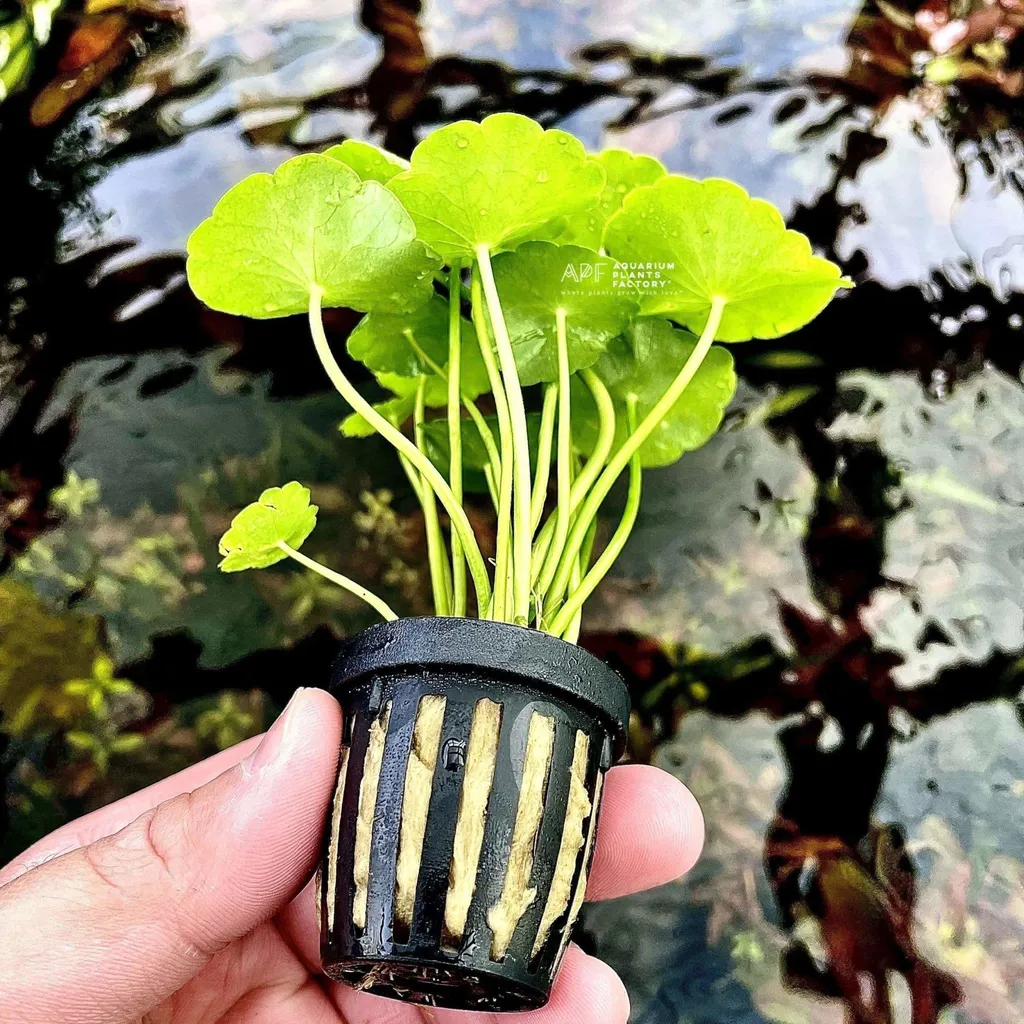
Whorled pennywort
Hydrocotyle verticillata
FreshwaterHigh light · Foreground3.9 in (10 cm)
Planning a tank?
TankBud checks stocking and water fit as you build a tank, then tracks water tests, reminders and photos once it is running.
Track your tanksMaintain tanks for clients? See TankBud Pro