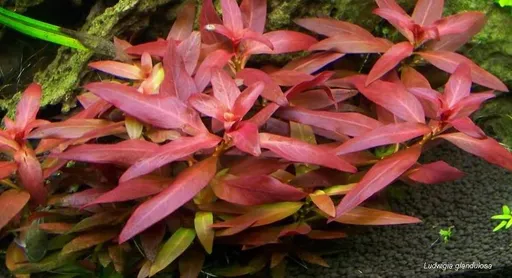
Ludwigia glandulosa
Also known as Cylindric fruited ludwigia, Cylindricfruit primrose-willow, Ludwigia perennis, Ludwigia peruensis
FreshwaterStemCuttingsSide shoots
Care at a glance
- Light
- High light
- CO2
- CO₂ required
- Temperature
- 68–82°F
- 20–28°C
- Max height
- 15.7 in
- 40 cm
- Growth rate
- Slow
- Placement
- Background
- Type
- Stem
- pH
- 5.0–7.0
- Hardness
- 2–15 dGH
- Spread
- 3.9 in (10 cm)
- Nutrient uptake
- Root + water column
- Growth region
- Submersed or emersed
- Difficulty
- Difficult
- Family
- Onagraceae
- Origin
- Southeastern and central United States (North America)
Overview
One of the more demanding red stem plants, best treated as a slow-growing background or accent plant in a high-tech tank. It really needs strong light, CO2 injection and a steady supply of micronutrients and iron to hold its deep red color, otherwise it reverts to dull olive-green and drops lower leaves. Plant stems in rich substrate, be patient with its slow growth, and trim and replant tops to bush it out.
In the wild
A North American species from wet ground, ditches and shallow margins across the southeastern and central United States. It grows emersed as a bog plant with green to olive leaves and develops its strongest wine-red, almost purple coloration when grown submersed under intense light.
Good to know
An Onagraceae stem plant whose common name, cylindric fruited ludwigia, refers to its narrow cylindrical seed capsules. It was for a long time sold in the hobby under the wrong name Ludwigia perennis. The leaves turn olive-green in low light but flush deep wine-red, with a reddish underside, when light is strong.
Did you know
Did you know Ludwigia glandulosa was sold under the wrong name, Ludwigia perennis, for years in the aquarium trade, so older plant lists and labels still carry that incorrect identification.
Related plants
 High lightBackground15.7 in (40 cm)
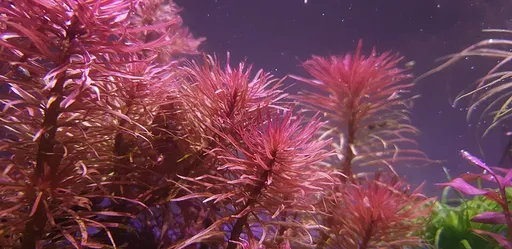
Ludwigia Pantanal
Ludwigia inclinata var. verticillata 'Pantanal'
High light · Background
- High lightBackground15.7 in (40 cm)
Ludwigia Cuba
Ludwigia inclinata var. verticillata 'Cuba'
High light · Background
- High lightBackground15.7 in (40 cm)
Ludwigia Dark Orange
Ludwigia sp. 'Dark Orange'
High light · Background
- High lightBackground15.7 in (40 cm)
Ludwigia Meta
Ludwigia inclinata var. verticillata 'Meta'
High light · Background
 Medium lightBackground19.7 in (50 cm)
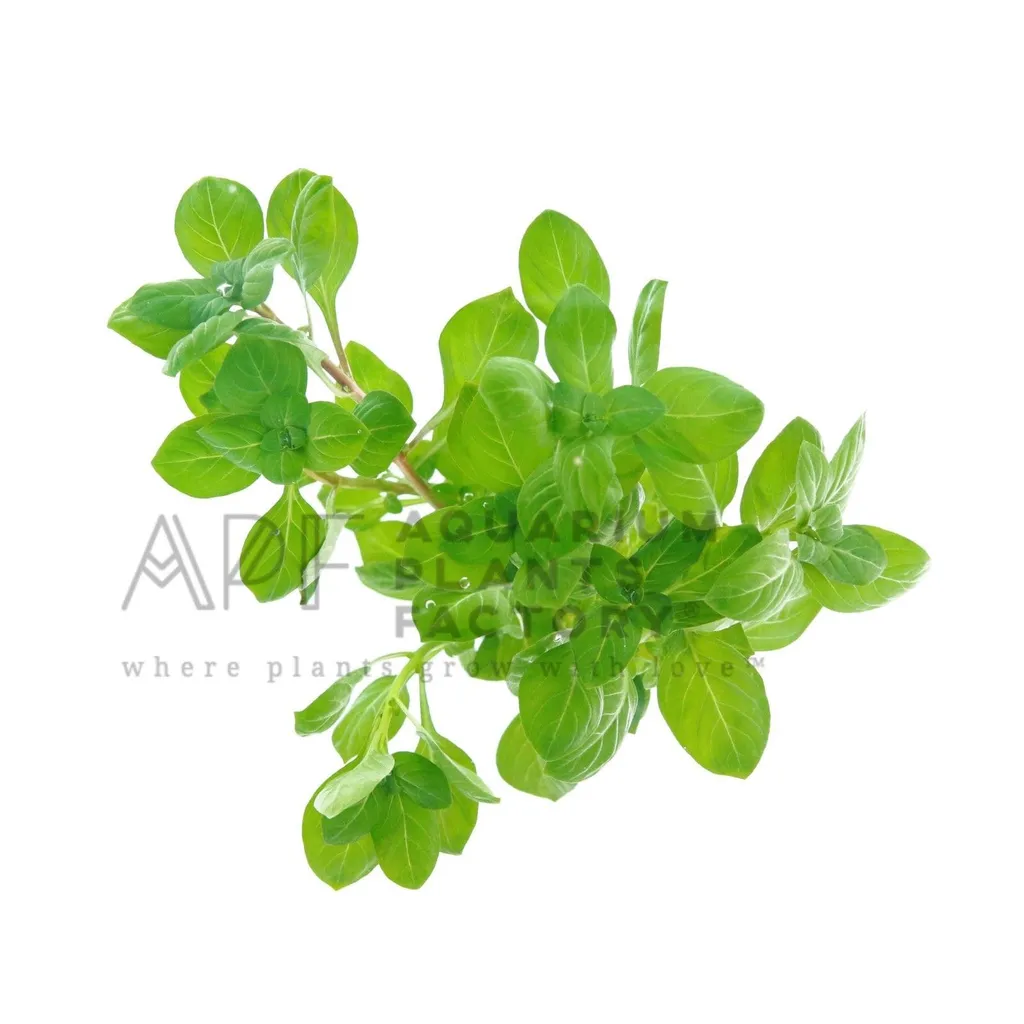
Ludwigia palustris
Medium light · Background
 Medium lightBackground19.7 in (50 cm)
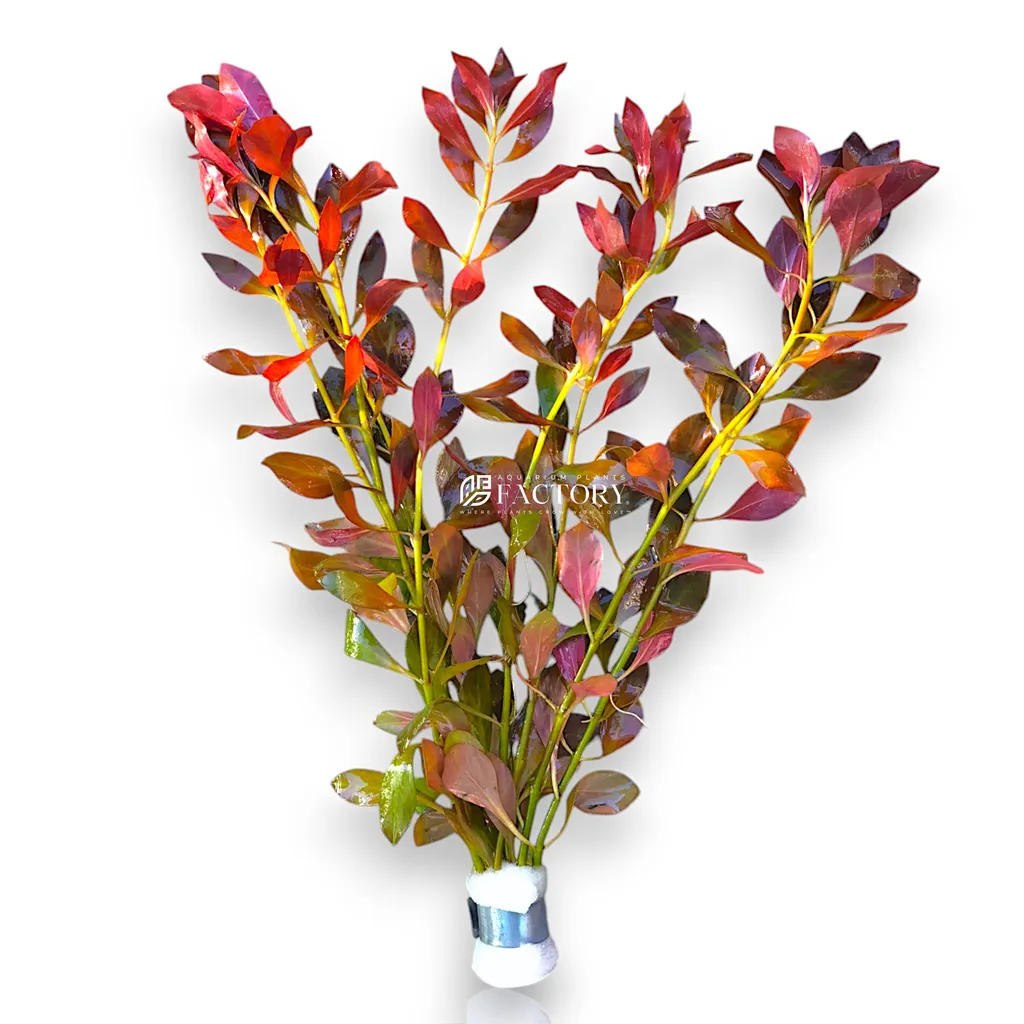
Ludwigia repens
Medium light · Background