Cryptocoryne
Cryptocoryne, or crypts, are hardy rosette plants that grow from a root crown in low to medium light, which makes them a mainstay of easy planted tanks. They often melt back after planting or a big change, dropping their leaves, then regrow from the roots, so patience beats pulling them. Each profile lists light, size and placement.
At a glance
- Height
- 3.9–47.2 in
- 3.9 in (10 cm) to 47.2 in (120 cm); half the list stays at 7.9 in (20 cm) or under
- Temperature
- 72–82°F
- 22–28°C, most of the list
- Light
- 30 low light
- 19 medium light
- CO₂
- 15 no CO₂ needed
- 34 CO₂ beneficial
- Growth
- 37 slow growing
- 12 medium growth
- Difficulty
- 35 easy
- 11 medium · 3 difficult
36 plants and 13 varieties
Start with the wendtii group
Cryptocoryne wendtii is the only crypt rated beginner, and it earns it: low light, no CO₂ needed, about 10 inches (25 cm) tall and sold in green, brown and red forms. Beckettii, undulata, the walkeri forms and lucens are the same kind of plant, easy and slow, and they fill a midground in a low-tech tank without any of the fuss stem plants bring. Plant the crown at the surface of the substrate, not under it, and leave them alone.
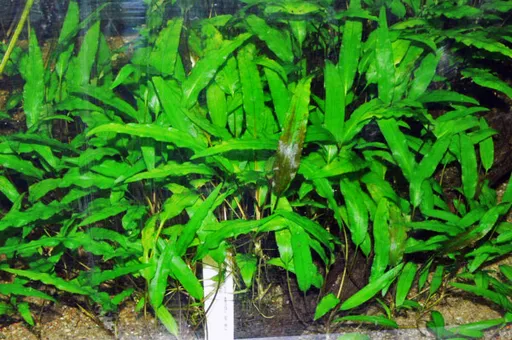
Cryptocoryne wendtii
FreshwaterBrackish- Light
- Low light
- Placement
- Midground
- Height
- 9.8 in (25 cm)
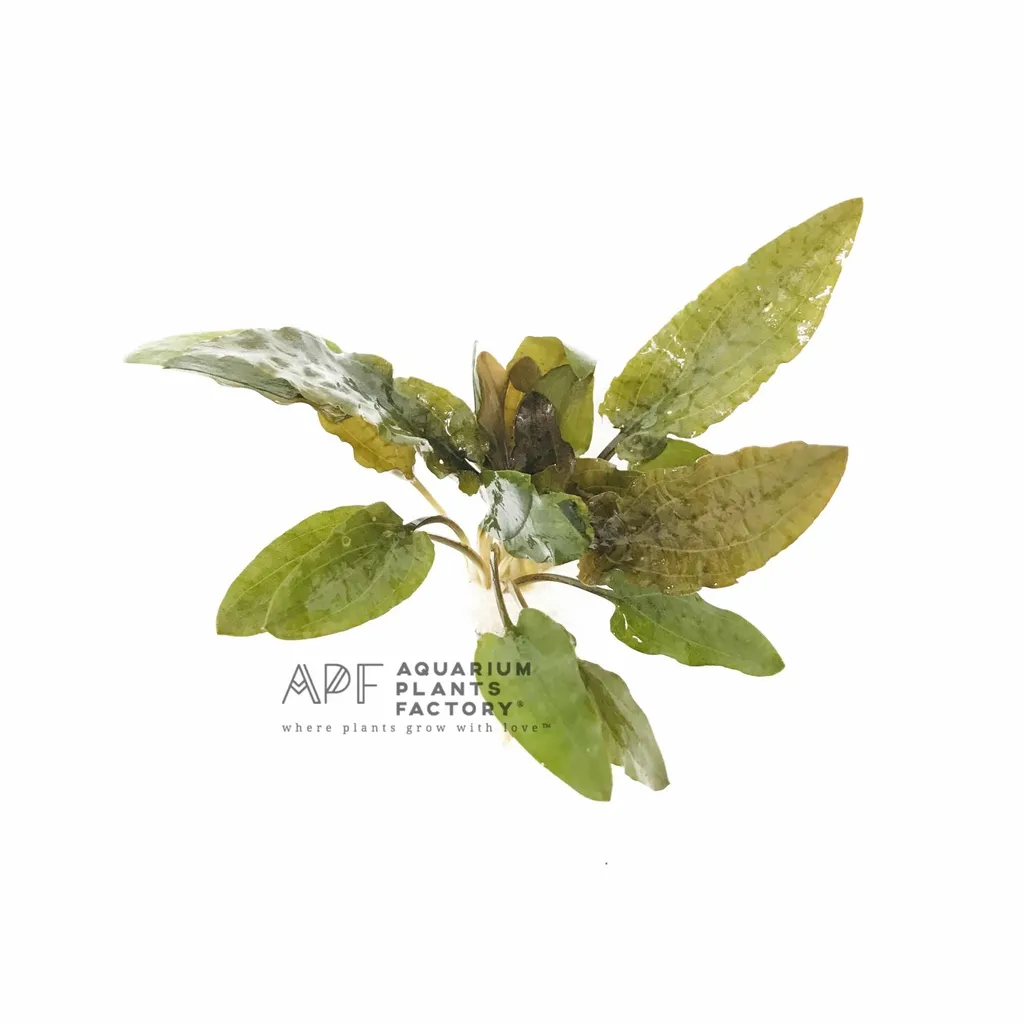
Cryptocoryne beckettii
Freshwater- Light
- Low light
- Placement
- Midground
- Height
- 7.9 in (20 cm)
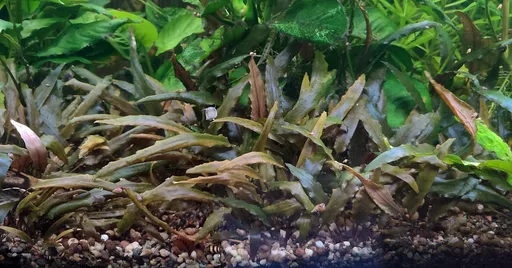
Cryptocoryne undulata
Freshwater- Light
- Low light
- Placement
- Midground
- Height
- 7.9 in (20 cm)
Cryptocoryne walkeri Lutea
Cryptocoryne walkeri 'Lutea'
Freshwater- Light
- Low light
- Placement
- Midground
- Height
- 5.9 in (15 cm)
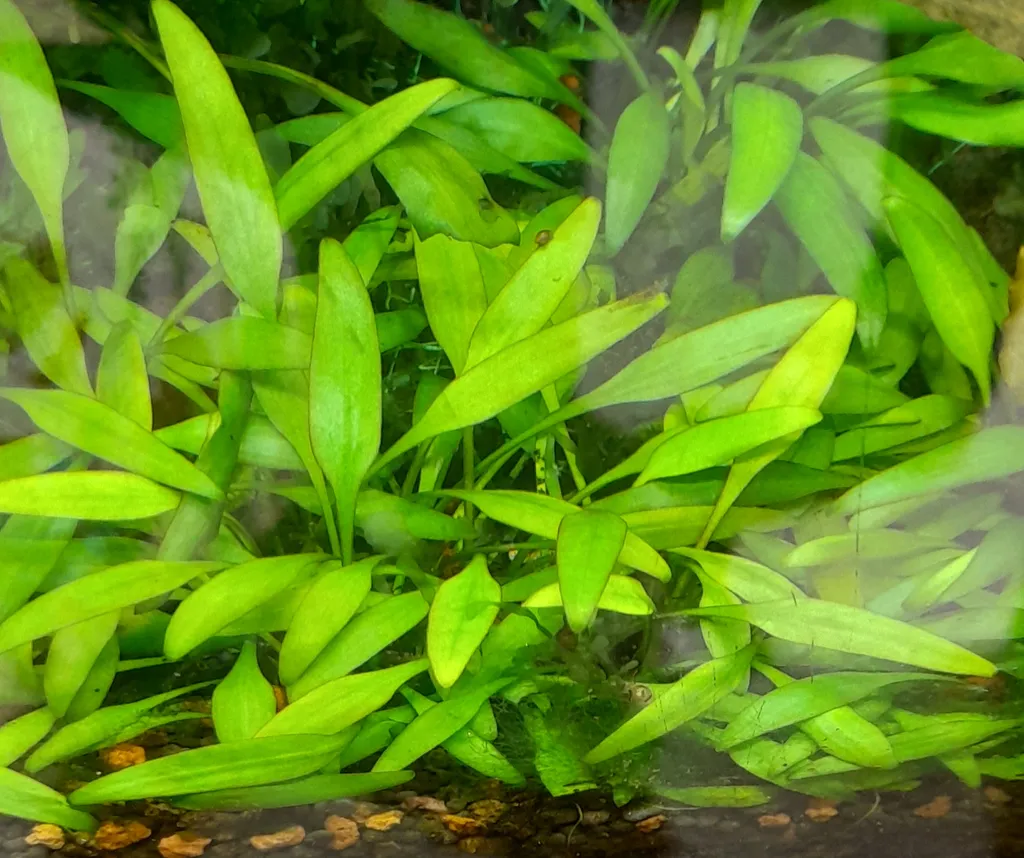
Cryptocoryne lucens
Freshwater- Light
- Low light
- Placement
- Midground
- Height
- 7.9 in (20 cm)
Small crypts for the foreground
Cryptocoryne parva is the smallest at about 4 inches (10 cm) and grows slowly even by crypt standards, so it takes patience to become a carpet. Cryptocoryne × willisii is a little taller and rated easy, and the red form of albida stays around 5 inches (13 cm). Give the small ones the medium light their profiles list and root tabs, because they feed through the roots.
Tall crypts for the back
The crispatula group, balansae and tonkinensis among them, sends up ribbon leaves of 20 inches (50 cm) and more, and Cryptocoryne sivadasanii reaches 4 feet (120 cm). Spiralis, retrospiralis and usteriana are easy, low light background crypts that suit a tank without CO₂, and usteriana in particular tolerates hard water. They look best in a clump of three or more where the leaves can sway.
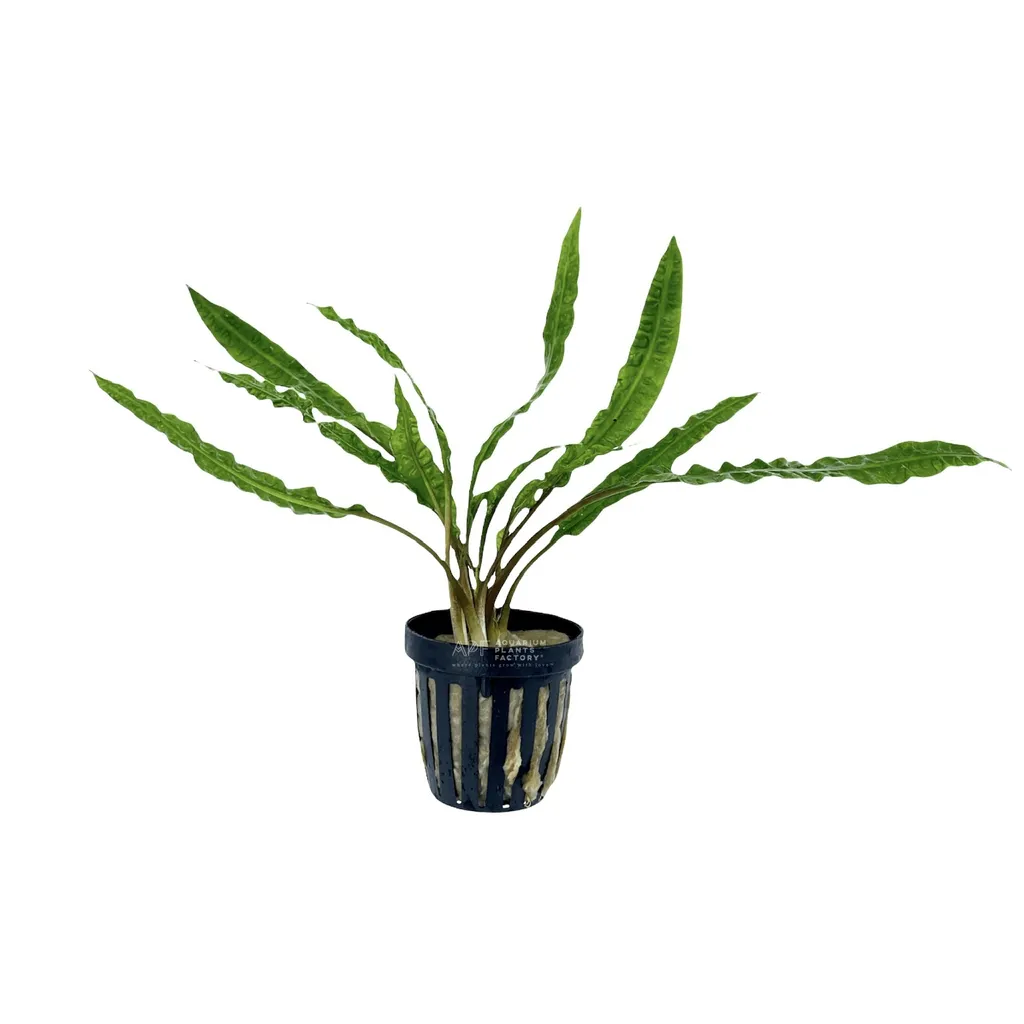
Cryptocoryne balansae
Cryptocoryne crispatula var. balansae
FreshwaterMedium light · Background19.7 in (50 cm)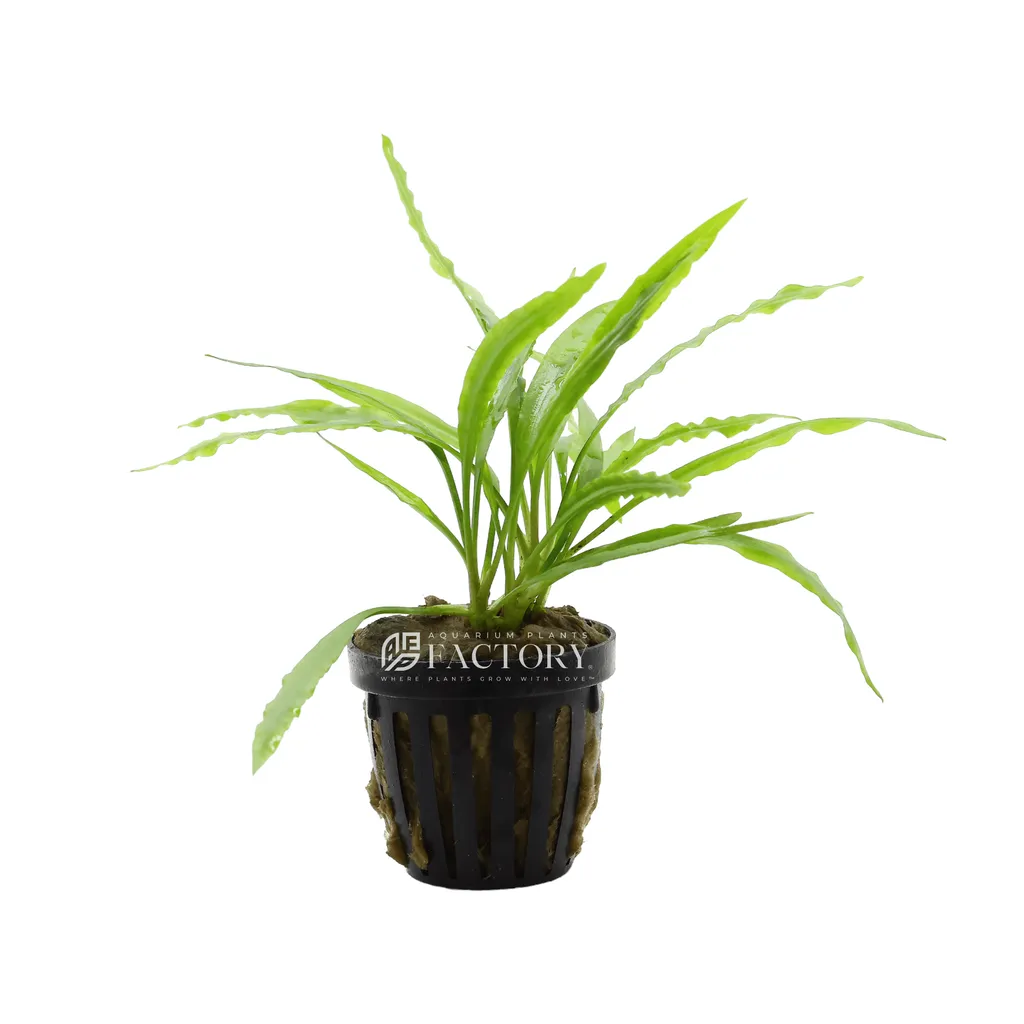
Cryptocoryne spiralis
FreshwaterLow light · Background13.8 in (35 cm)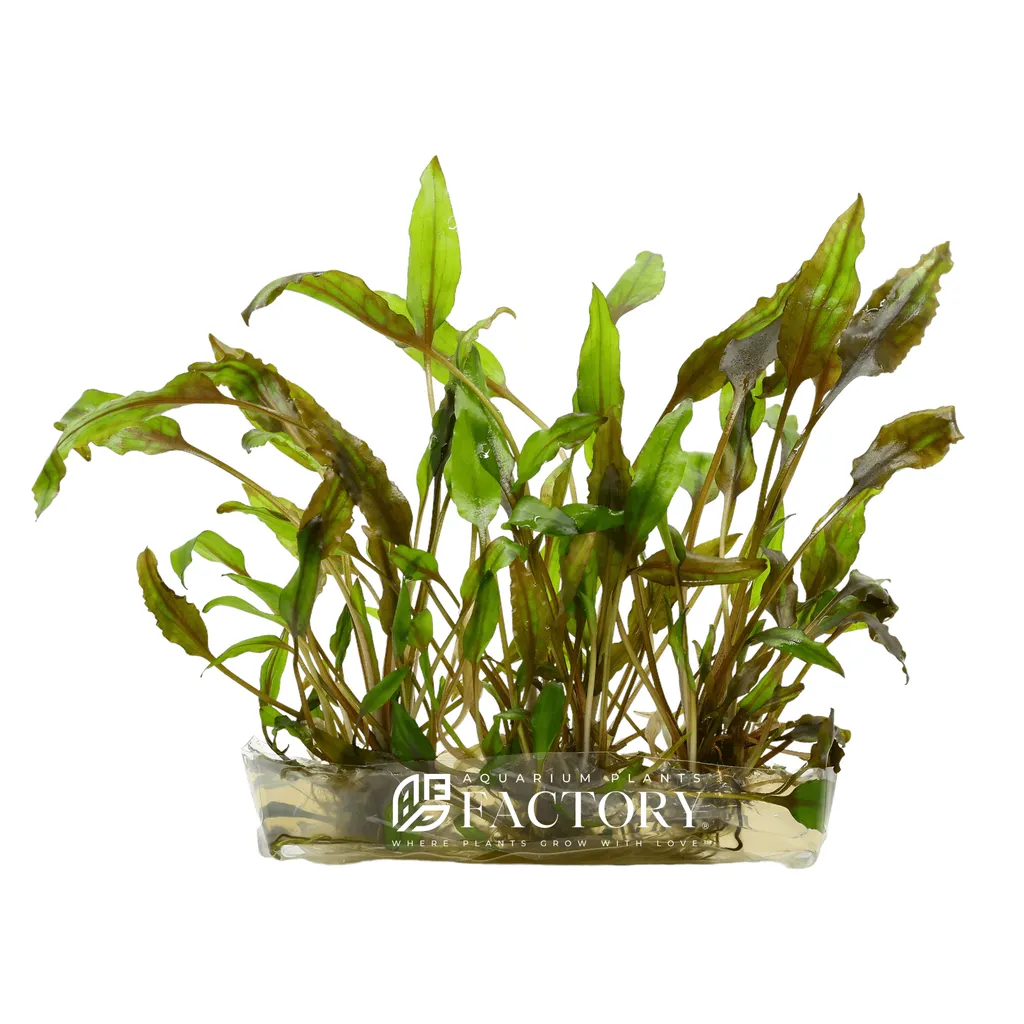
Cryptocoryne usteriana
FreshwaterLow light · Background19.7 in (50 cm)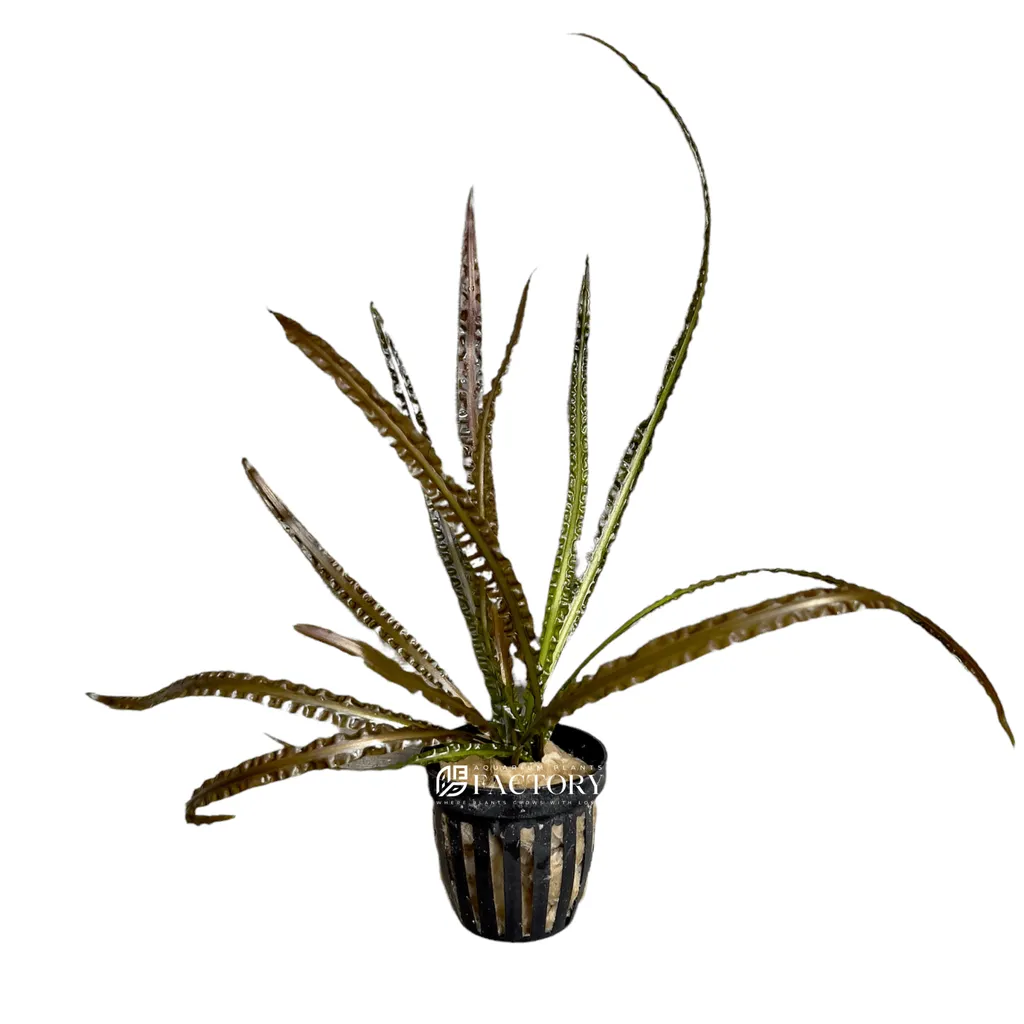
Cryptocoryne retrospiralis
FreshwaterLow light · Background19.7 in (50 cm)
Crypt melt
Move a crypt, change its water or its light, and the leaves may turn to mush within a week. This is melt, and it is the plant shedding leaves grown for one set of conditions to grow new ones for the next. The roots and crown survive. Trim the dead leaves, leave the plant where it is, and expect new growth within a few weeks. Pulling a melted crypt out to check on it is the mistake that actually kills it.
The blackwater specialists
A few crypts come from peat swamps with very soft, acidic water, and the profiles show it: thwaitesii lists a pH of 5 to 6.5, schulzei 4.5 to 6.5, and striolata, keei and nurii sit in the same soft, warm water. These are the rows rated difficult or medium, and they sulk or melt for good in hard tap water. They are collectors' plants for a tank set up around them.
By the numbers
Smallest
Tallest
Easiest to grow
No CO₂ needed
FAQ
Common questions
Why is my cryptocoryne melting?
A change in water, light or position makes a crypt drop its leaves and regrow them for the new conditions. Cut off the mush, leave the roots in place, and new leaves usually appear within a few weeks.
Do crypts need CO₂?
No crypt in the catalog lists CO₂ as required. Most grow faster and fuller with it, which is what beneficial means on the profile, and wendtii, spiralis, lucens, retrospiralis and ciliata list no need at all.
How much light do cryptocoryne need?
Low to medium. None of the rows here asks for high light, and the wendtii group, walkeri and the tall background species are all low-light plants.
Which cryptocoryne is best for beginners?
Cryptocoryne wendtii, the one rated beginner. Beckettii, undulata, walkeri and lucens are the next easiest and grow the same way.
How tall do crypts get?
From 4 inches (10 cm) for parva and yujii to 4 feet (120 cm) for sivadasanii. Most of the midground species stop between 6 and 10 inches (15 and 25 cm), and the balansae type runs to 20 inches (50 cm).
Do crypts need root tabs?
They feed mainly through the roots, so a nutrient-rich substrate or a root tab every few months makes a visible difference, especially in a tank with inert sand or gravel.
Index
All cryptocoryne
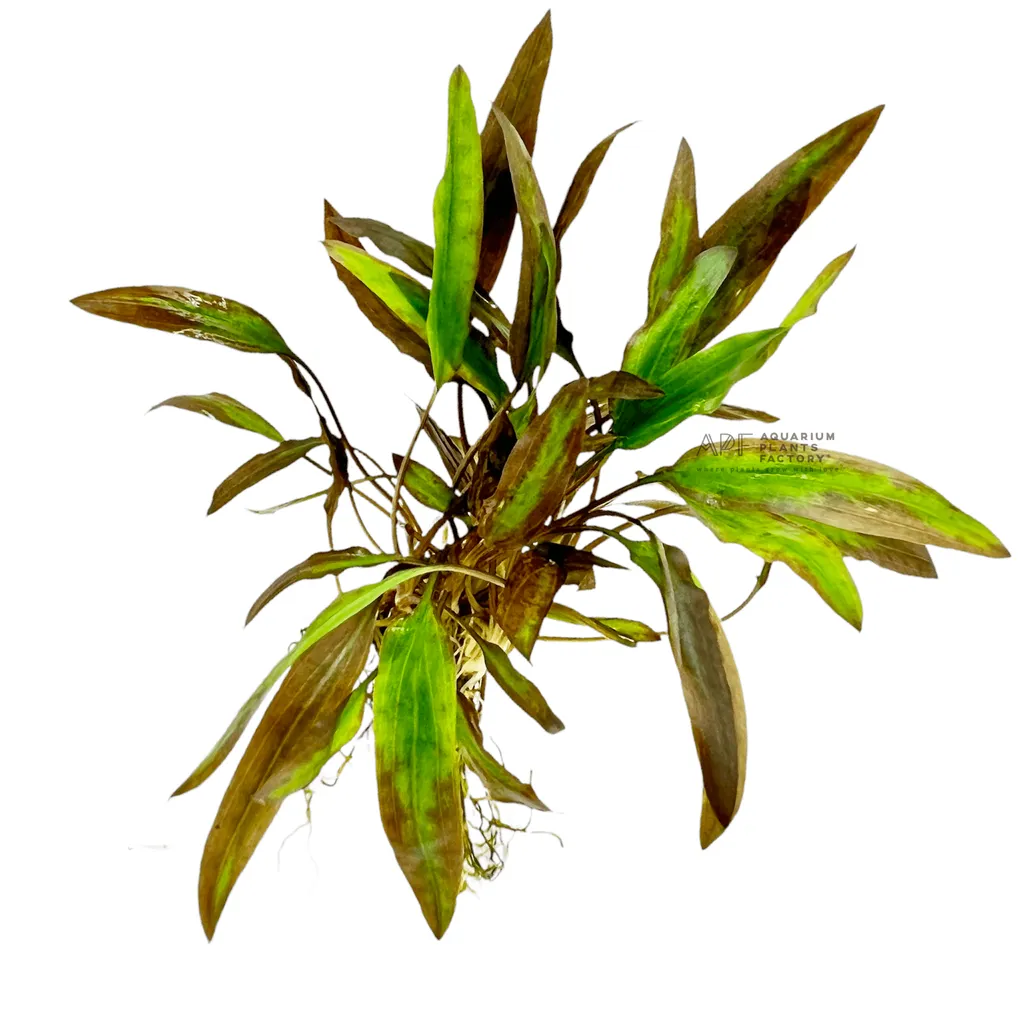
Cryptocoryne affinis
FreshwaterMedium light · Midground11.8 in (30 cm)Cryptocoryne affinis Metallic Red
Cryptocoryne affinis 'Metallic Red'
FreshwaterMedium light · Midground7.9 in (20 cm)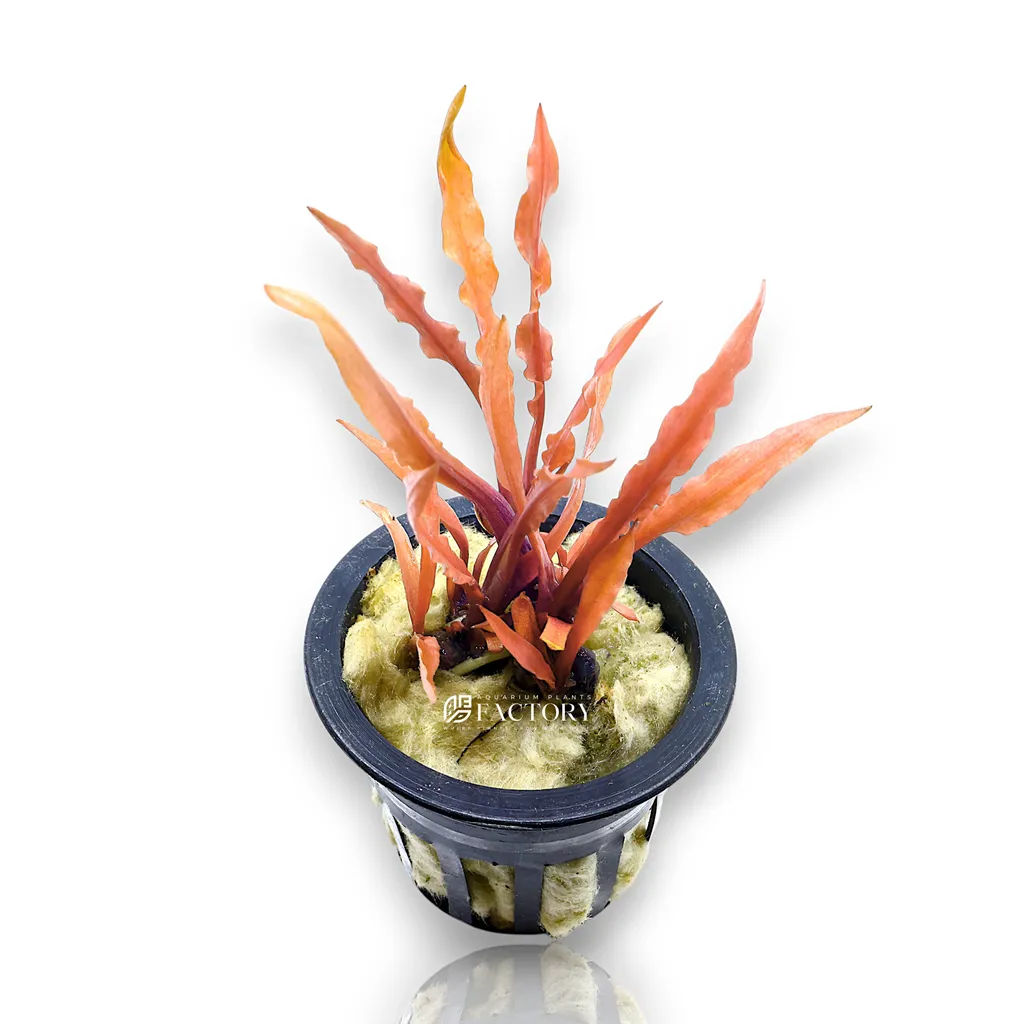
Cryptocoryne albida
FreshwaterLow light · Midground7.1 in (18 cm)Cryptocoryne albida Brown
Cryptocoryne albida 'Brown'
FreshwaterLow light · Midground7.9 in (20 cm)Cryptocoryne albida Red
Cryptocoryne albida 'Red'
FreshwaterMedium light · Foreground5.1 in (13 cm)Cryptocoryne balansae
Cryptocoryne crispatula var. balansae
FreshwaterMedium light · Background19.7 in (50 cm)Cryptocoryne beckettii
FreshwaterLow light · Midground7.9 in (20 cm)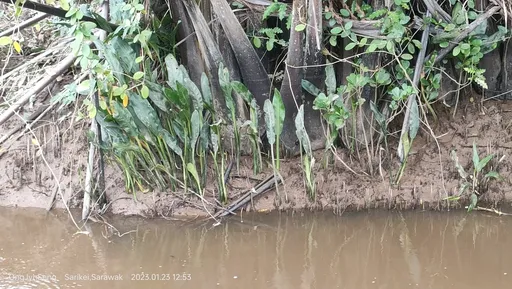
Cryptocoryne ciliata
FreshwaterBrackishMedium light · Background23.6 in (60 cm)Cryptocoryne cordata
FreshwaterLow light · Midground9.8 in (25 cm)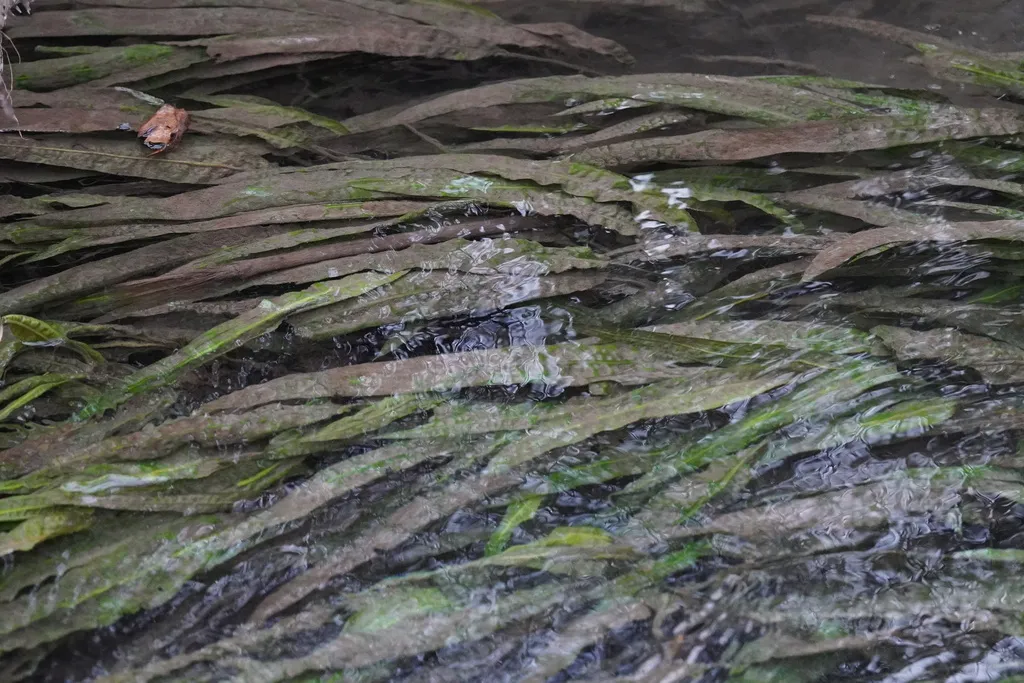
Cryptocoryne crispatula
FreshwaterMedium light · Background23.6 in (60 cm)Cryptocoryne ferruginea Sekadauensis
Cryptocoryne ferruginea var. sekadauensis
FreshwaterLow light · Midground7.9 in (20 cm)Cryptocoryne hudoroi
FreshwaterMedium light · Midground19.7 in (50 cm)Cryptocoryne keei
FreshwaterMedium light · Midground5.9 in (15 cm)Cryptocoryne lucens
FreshwaterLow light · Midground7.9 in (20 cm)Cryptocoryne moehlmannii
FreshwaterLow light · Midground7.9 in (20 cm)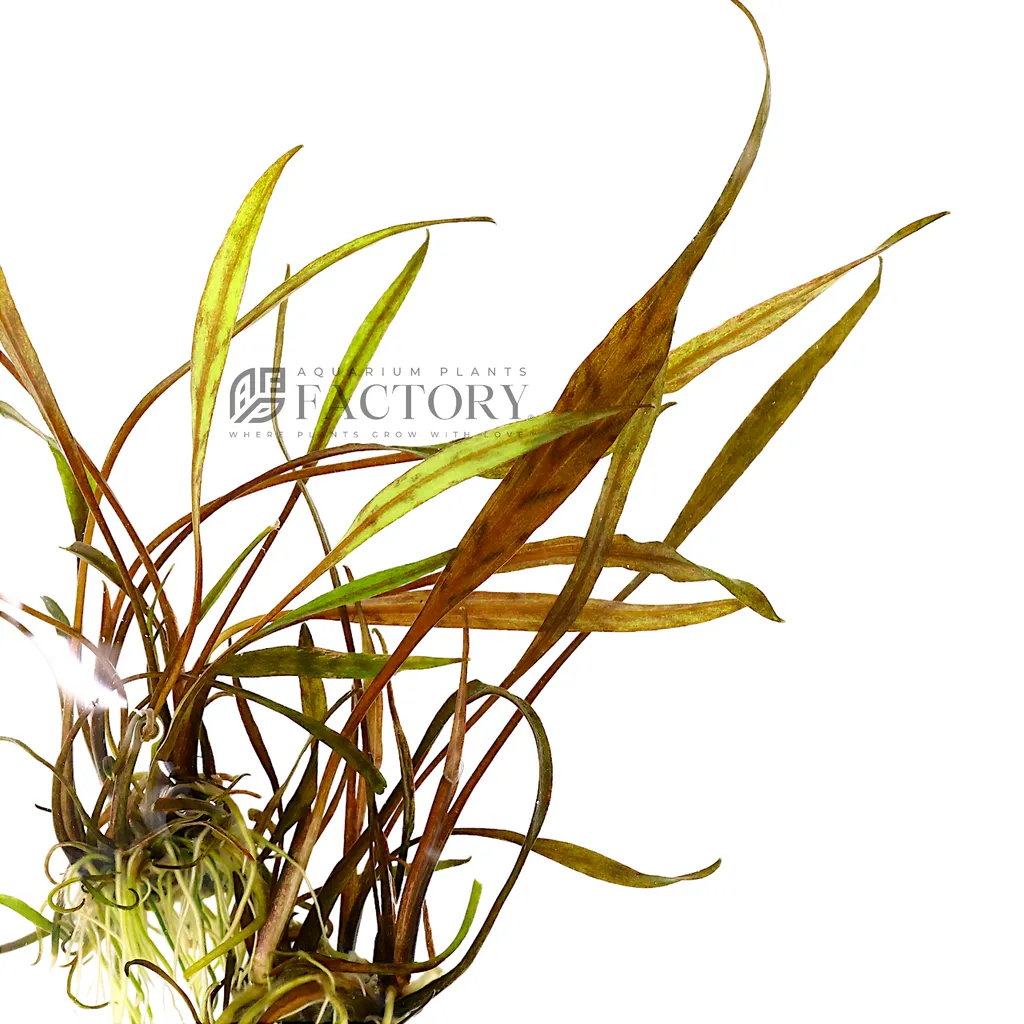
Cryptocoryne nurii
FreshwaterMedium light · Midground7.9 in (20 cm)Cryptocoryne parva
FreshwaterMedium light · Foreground3.9 in (10 cm)Cryptocoryne petchii
Cryptocoryne beckettii 'Petchii'
FreshwaterMedium light · Midground5.9 in (15 cm)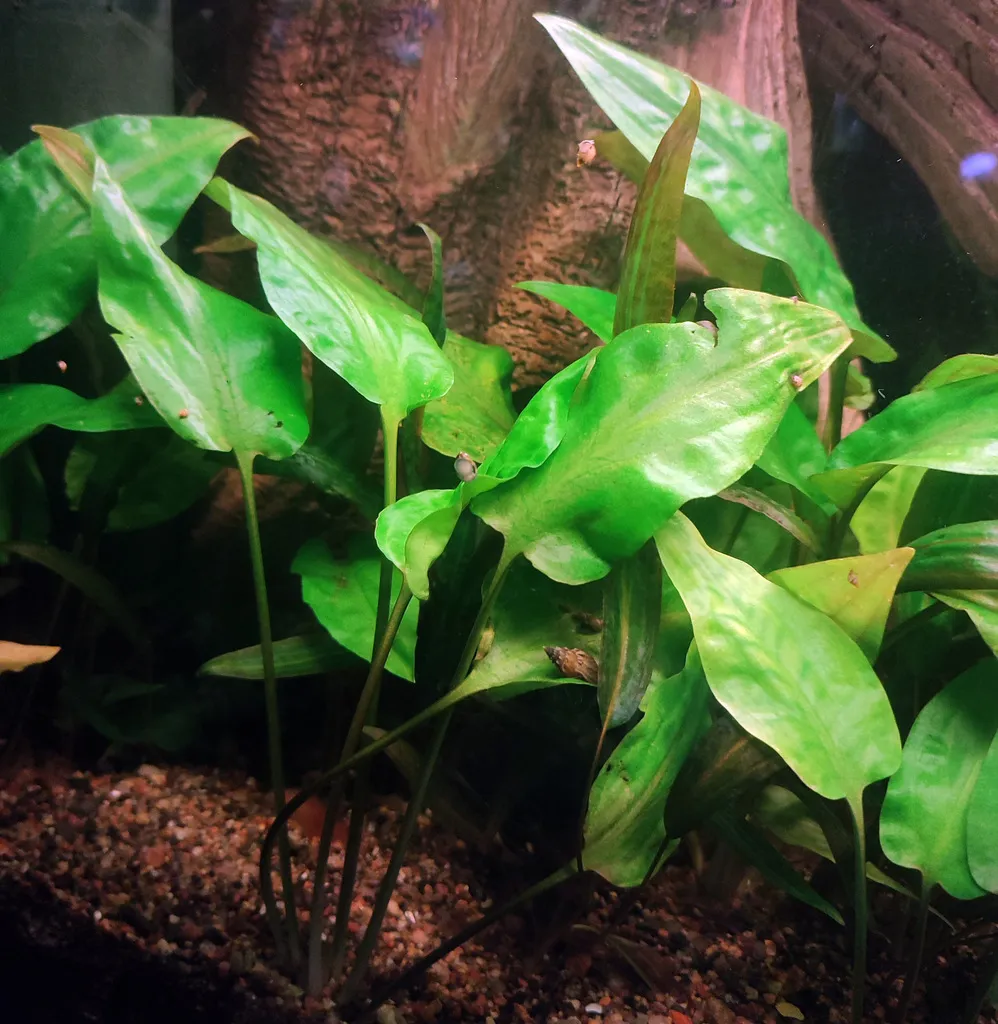
Cryptocoryne pontederiifolia
FreshwaterLow light · Midground7.9 in (20 cm)Cryptocoryne pygmaea
FreshwaterLow light · Midground7.9 in (20 cm)Cryptocoryne retrospiralis
FreshwaterLow light · Background19.7 in (50 cm)Cryptocoryne schulzei
FreshwaterLow light · Midground7.9 in (20 cm)Cryptocoryne sivadasanii
FreshwaterMedium light · Background47.2 in (120 cm)Cryptocoryne spiralis
FreshwaterLow light · Background13.8 in (35 cm)4 formsCryptocoryne striolata
FreshwaterMedium light · Midground7.9 in (20 cm)Cryptocoryne thwaitesii
FreshwaterLow light · Midground5.9 in (15 cm)Cryptocoryne tonkinensis
Cryptocoryne crispatula var. tonkinensis
FreshwaterMedium light · Background19.7 in (50 cm)Cryptocoryne undulata
FreshwaterLow light · Midground7.9 in (20 cm)Cryptocoryne undulata Broad Leaves
Cryptocoryne undulata 'Broad Leaves'
FreshwaterLow light · Midground11.8 in (30 cm)Cryptocoryne usteriana
FreshwaterLow light · Background19.7 in (50 cm)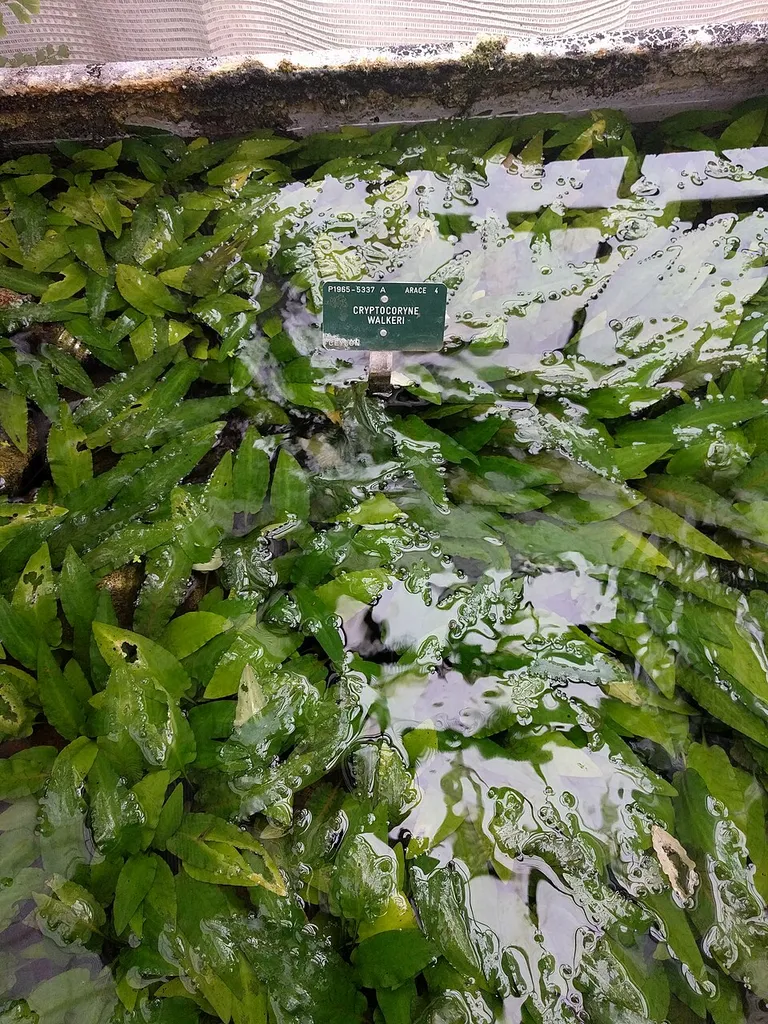
Cryptocoryne walkeri
FreshwaterLow light · Midground9.8 in (25 cm)Cryptocoryne walkeri Legroi
Cryptocoryne walkeri 'Legroi'
FreshwaterLow light · Midground5.9 in (15 cm)Cryptocoryne walkeri Lutea
Cryptocoryne walkeri 'Lutea'
FreshwaterLow light · Midground5.9 in (15 cm)Cryptocoryne wendtii
FreshwaterBrackishLow light · Midground9.8 in (25 cm)9 forms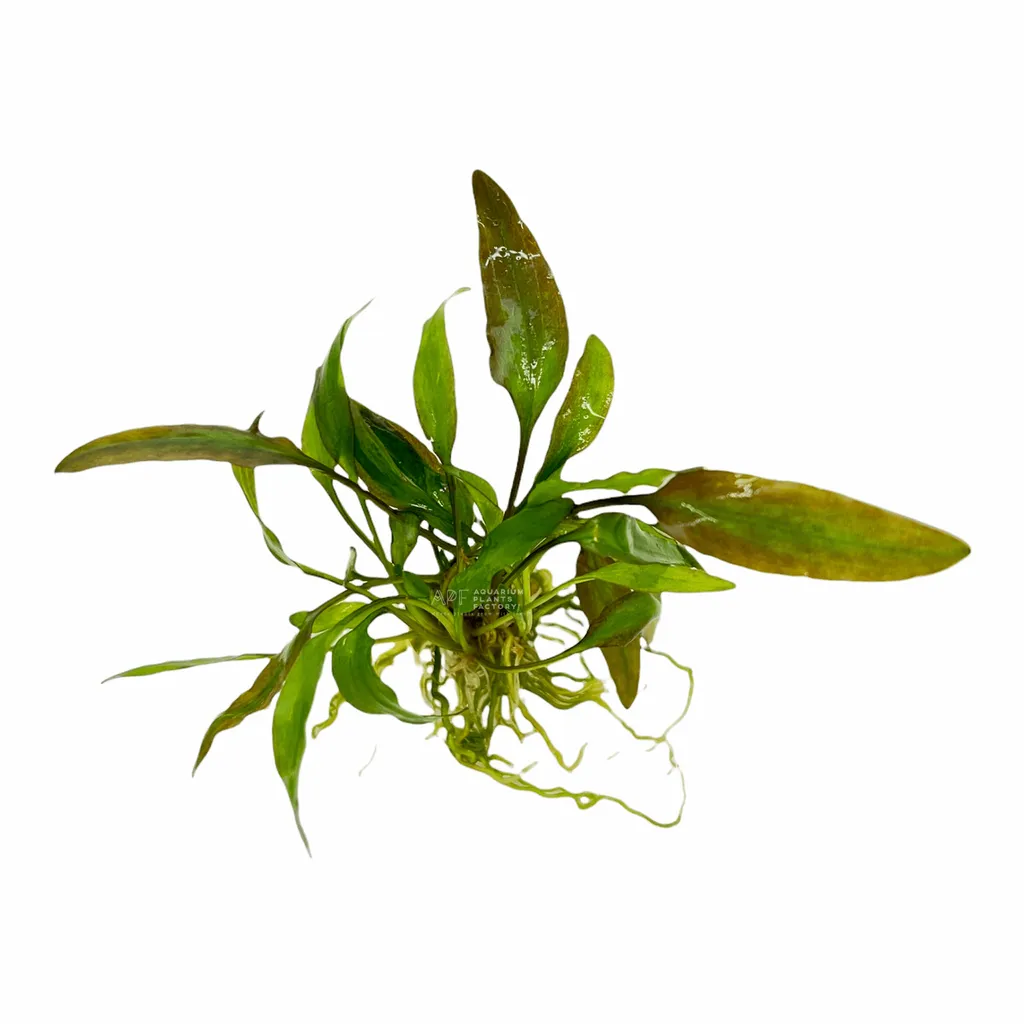
Cryptocoryne willisii
Cryptocoryne × willisii
FreshwaterLow light · Foreground5.9 in (15 cm)Cryptocoryne yujii
FreshwaterLow light · Midground3.9 in (10 cm)
Planning a tank?
TankBud checks stocking and water fit as you build a tank, then tracks water tests, reminders and photos once it is running.
Track your tanksMaintain tanks for clients? See TankBud Pro