Aquarium shrimp
Shrimp add movement and cleanup to nano and community tanks, from cherry and Amano shrimp to marine cleaner shrimp. Each profile lists the tank size and water conditions a shrimp does best in.
At a glance
- Tank size
- 1–53 gal
- 1 gal (4 L) to 53 gal (200 L); half the list needs 11 gal (40 L) or more
- Temperature
- 73–81°F
- 23–27°C, most of the list
- pH
- 7.0–8.2
- Most of the list
- Difficulty
- 22 easy
- 19 medium · 3 difficult
- Temperament
- 35 peaceful
- 6 mostly peaceful · 3 aggressive
- Reef safety
- 10 reef safe
- 6 reef safe with caution · 1 not reef safe
41 species and 16 varieties
Start here
Cherry shrimp first
The Neocaridina shrimp is the one to start with, and every cherry, blue dream, yellow and orange shrimp in the shops is the same species in a different color. It is marked beginner, stays at 1.6 inches (4 cm), lists 5 gallons (20 liters) and takes 59–84°F (15–29°C) and a pH from 6.5 to 8.0, which is most tap water. A group of ten breeds on its own within a couple of months. The Amano shrimp is the algae eater, 2 inches (5 cm) in 8 gallons (30 liters), marked beginner, and it will not breed in freshwater. The ghost shrimp is the cheap one, marked easy and mostly peaceful, and it will grab a fry if it can.
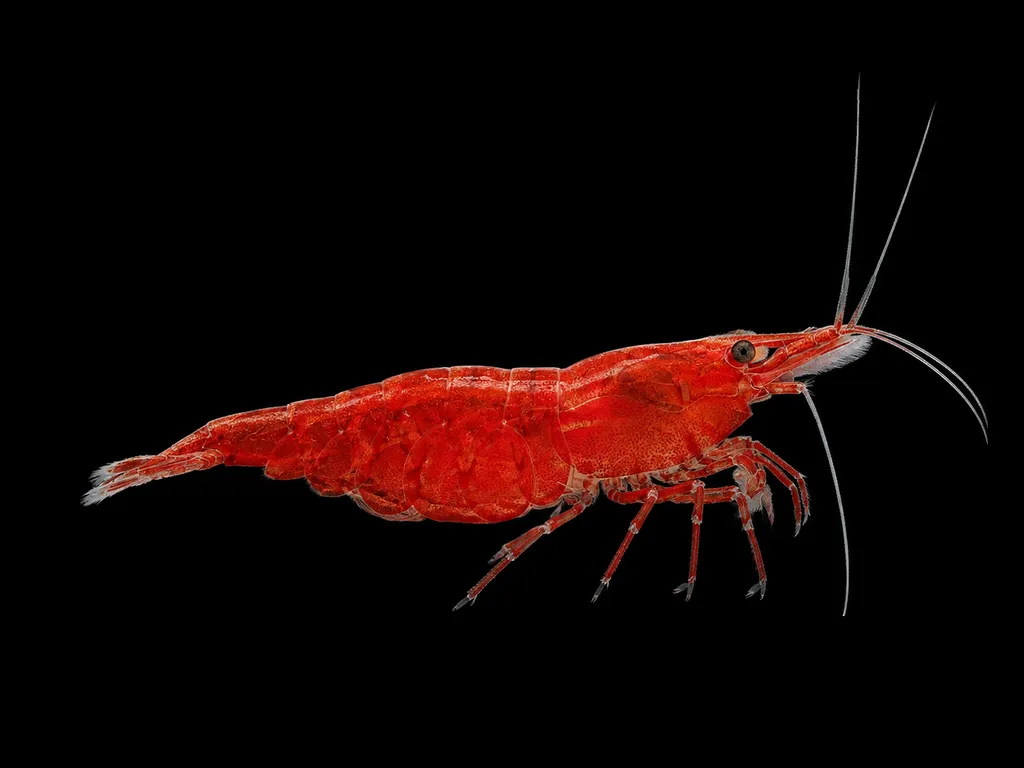
Neocaridina shrimp
Neocaridina davidi
Freshwater- Size
- 1.6 in (4 cm)
- Tank
- 5 gal (20 L)
- Water
- 59–84°F (15–29°C)
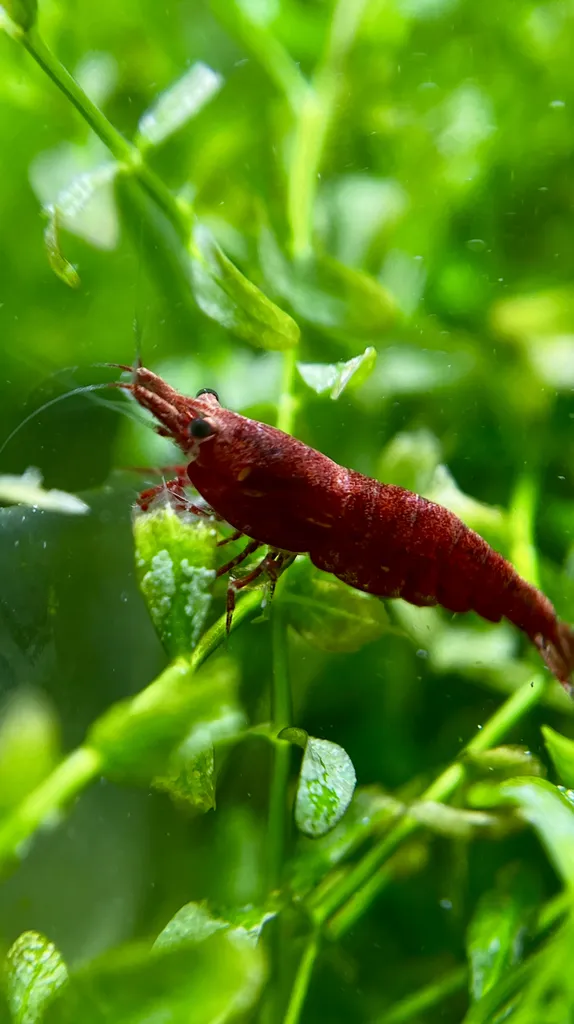
Cherry shrimp
Neocaridina davidi
Freshwater- Size
- 1.6 in (4 cm)
- Tank
- 5 gal (20 L)
- Water
- 59–84°F (15–29°C)
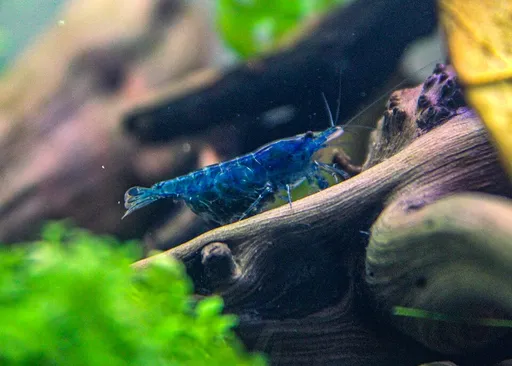
Blue dream shrimp
Neocaridina davidi
Freshwater- Size
- 1.6 in (4 cm)
- Tank
- 5 gal (20 L)
- Water
- 59–84°F (15–29°C)
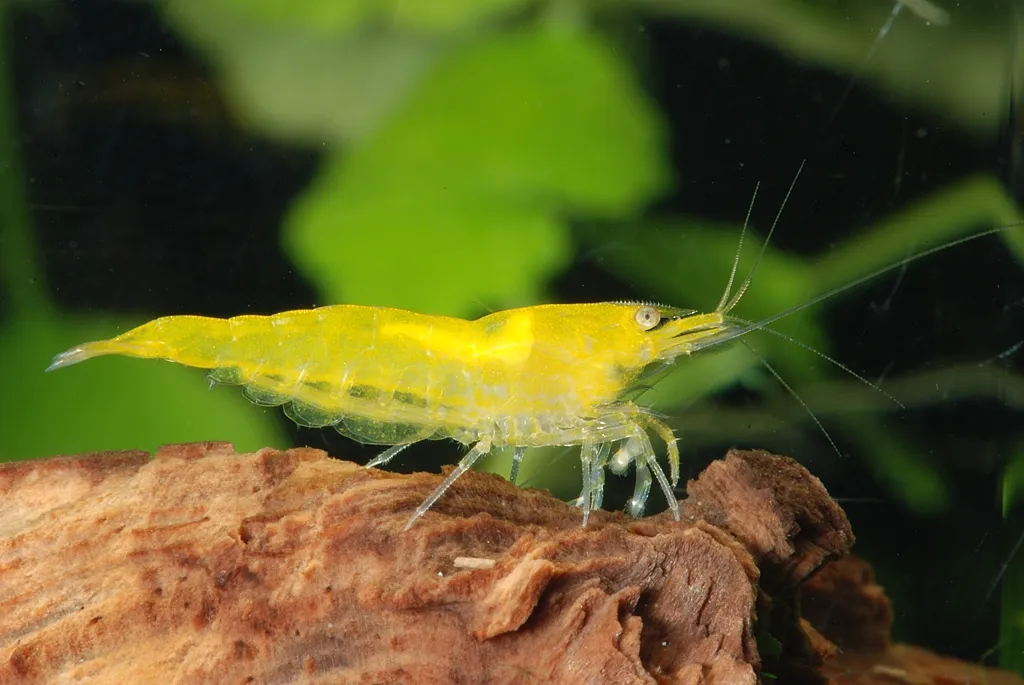
Yellow neocaridina
Neocaridina davidi
Freshwater- Size
- 1.6 in (4 cm)
- Tank
- 5 gal (20 L)
- Water
- 59–84°F (15–29°C)
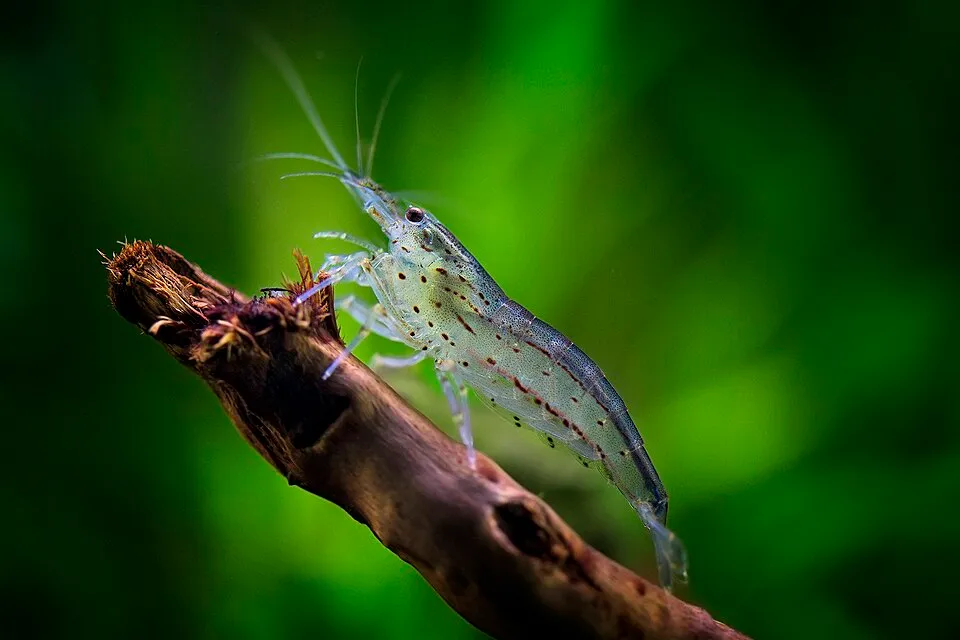
Amano shrimp
Caridina multidentata
FreshwaterBrackish- Size
- 2 in (5 cm)
- Tank
- 8 gal (30 L)
- Water
- 59–81°F (15–27°C)
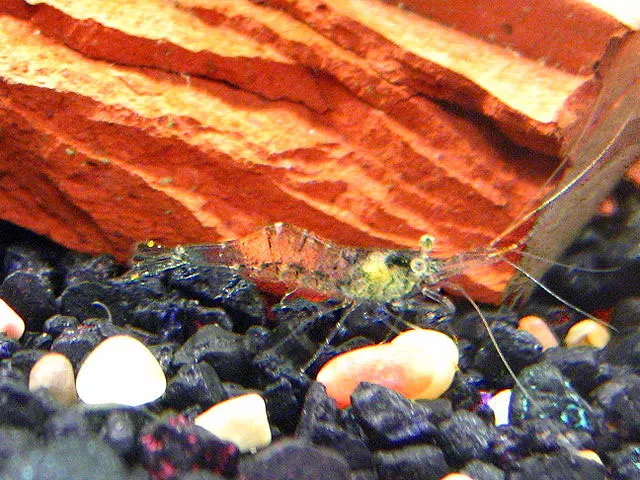
Ghost shrimp
Palaemon paludosus
Freshwater- Size
- 1.6 in (4 cm)
- Tank
- 5 gal (20 L)
- Water
- 64–84°F (18–29°C)
The rule
What keeps a shrimp alive
Copper kills shrimp at doses a fish never notices, so no copper medication goes in a shrimp tank and every fertilizer gets its label read. Sudden change kills them, so new shrimp are drip acclimated over an hour and water changes are small and slow. Filters eat the babies, so the intake wears a sponge. And fish eat shrimp: a tank with a betta, a gourami or any cichlid in it is a tank where the shrimp are the food.
- 01
No copper
Medications and some fertilizers kill shrimp
- 02
Slow changes
Drip acclimate, change water in small amounts
- 03
Sponge on the intake
A bare filter intake eats the shrimplets
- 04
No hungry fish
A mouth that fits a shrimp will eat one
Caridina
Crystals, bees and tigers want soft water
The Caridina shrimp are the second step, and the water is the difference. The bee shrimp, sold as crystal red and crystal black, stays at 1.2 inches (3 cm) in 5 gallons (20 liters) and is marked medium: it wants 64–75°F (18–24°C) and a pH from 5.8 to 6.8, which means remineralized RO water over a buffering soil. The Taiwan bee forms, the blue bolt, the King Kong and the panda, are marked difficult and want a pH from 5.2 to 6.2. The tiger shrimp is 1.6 inches (4 cm) for 7 gallons (25 liters) at 64–73°F (18–23°C). The tangerine tiger is the bridge: marked medium, it takes a pH from 6.5 to 7.5 and can share a tank with Neocaridina without interbreeding.
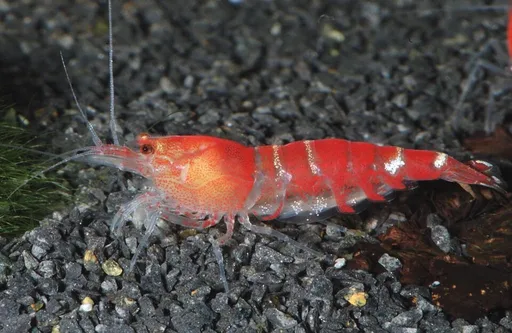
Bee shrimp
Caridina logemanni
Freshwater1.2 in (3 cm) · 5 gal (20 L)64–75°F (18–24°C)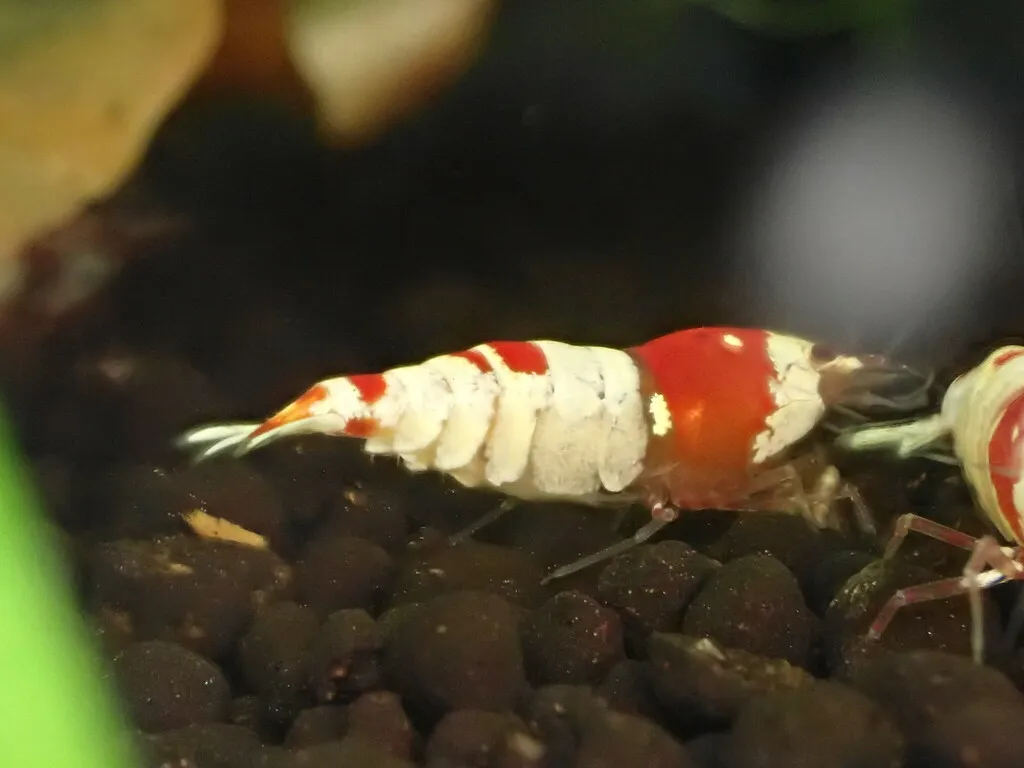
Crystal red shrimp
Caridina logemanni
Freshwater1.2 in (3 cm) · 5 gal (20 L)64–75°F (18–24°C)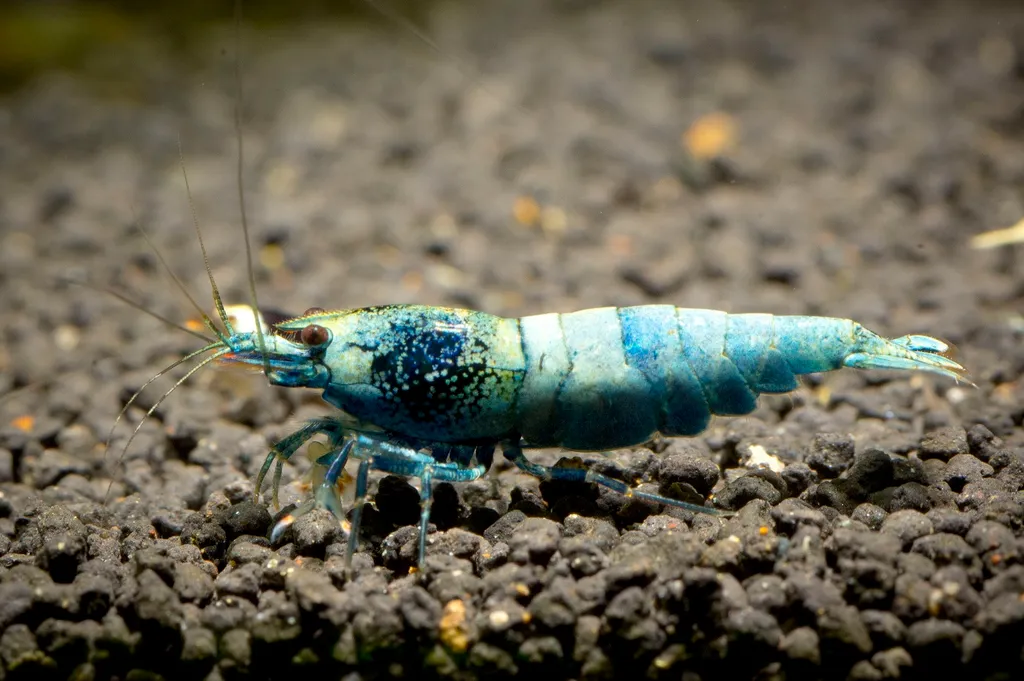
Blue bolt shrimp
Caridina logemanni
Freshwater1.2 in (3 cm) · 5 gal (20 L)64–75°F (18–24°C)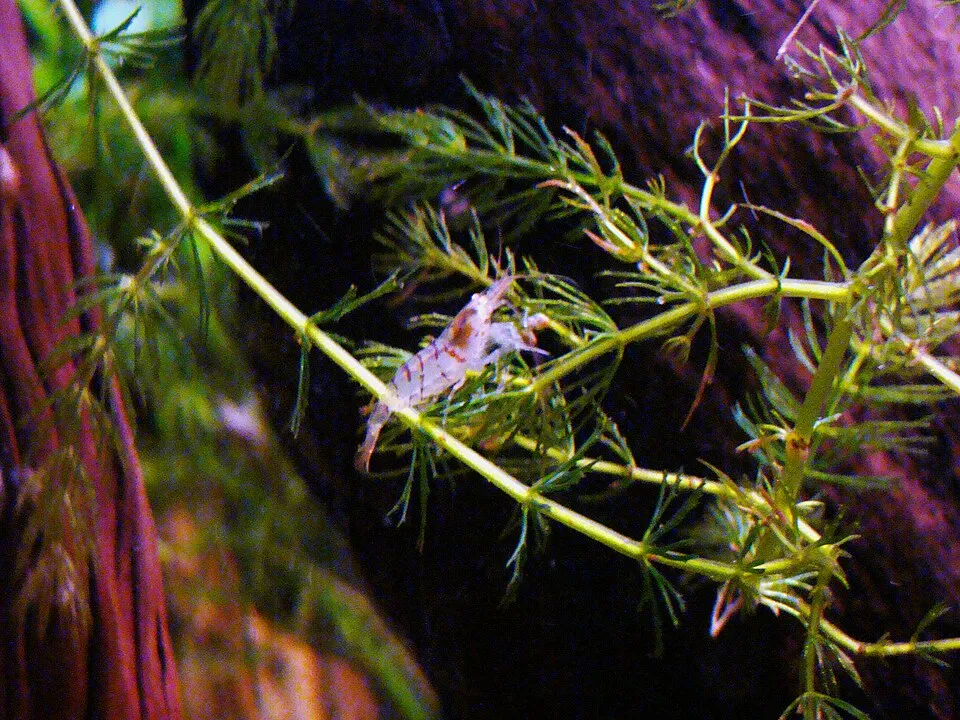
Tiger shrimp
Caridina mariae
Freshwater1.6 in (4 cm) · 7 gal (25 L)64–73°F (18–23°C)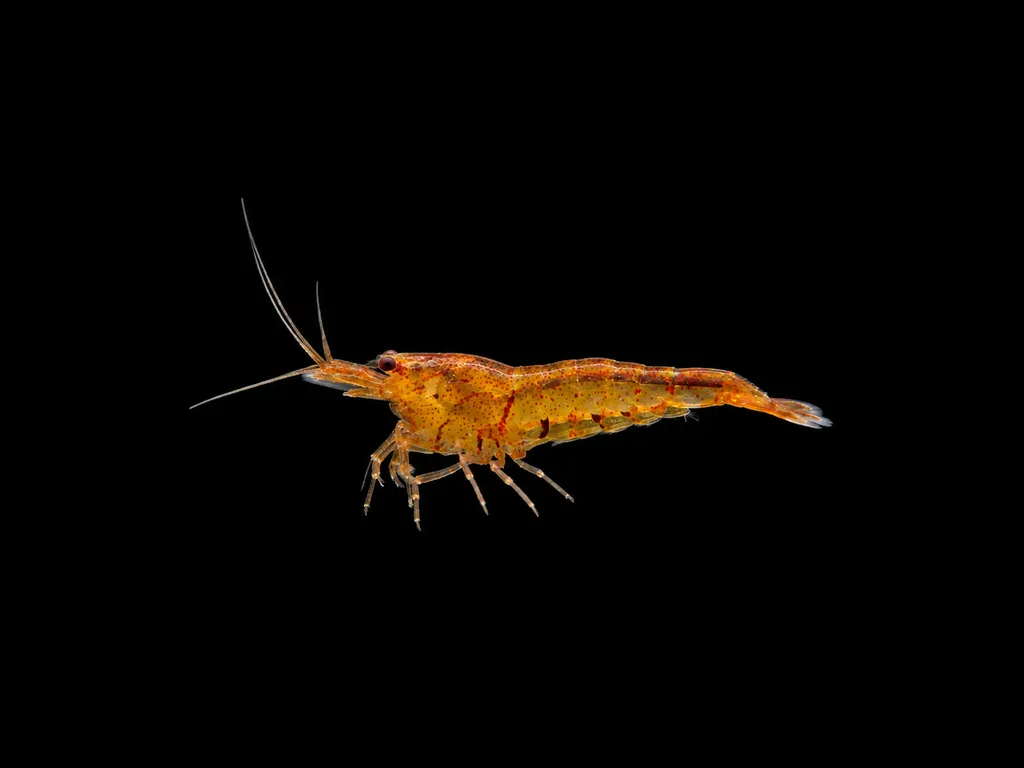
Tangerine tiger shrimp
Caridina serrata
Freshwater1.2 in (3 cm) · 5 gal (20 L)68–79°F (20–26°C)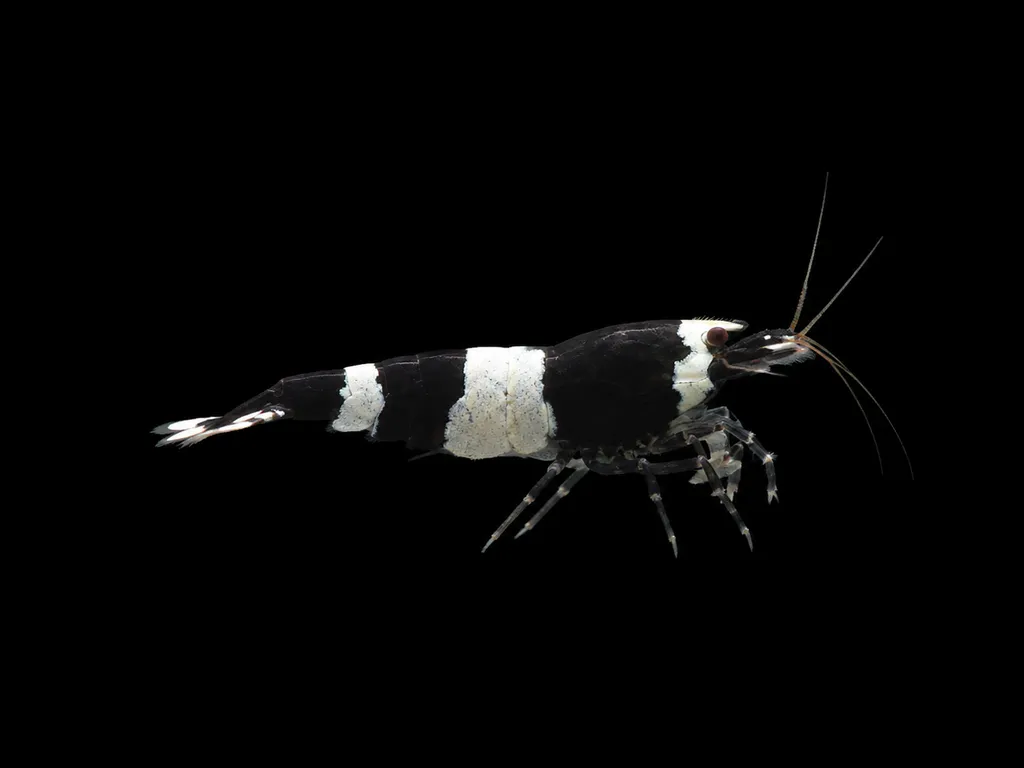
Panda shrimp
Caridina logemanni
Freshwater1.2 in (3 cm) · 5 gal (20 L)64–75°F (18–24°C)
Specialists
Filter feeders, Sulawesi shrimp and prawns
The bamboo shrimp reaches 3.9 inches (10 cm), lists 13 gallons (50 liters) and feeds by holding four fans into the current, so it wants flow and powdered food, and it is marked easy. The vampire shrimp does the same at 5.1 inches (13 cm) in 20 gallons (75 liters). The Sulawesi shrimp want the opposite of crystal water: 79–88°F (26–31°C) and a pH from 7.5 to 8.5, and they are marked medium. The opae ula is a 0.6 inch (1.5 cm) brackish shrimp for 1 gallon (4 liters) that lives for years on almost nothing. The giant freshwater prawn reaches 12.6 inches (32 cm), lists 53 gallons (200 liters) and is marked aggressive.
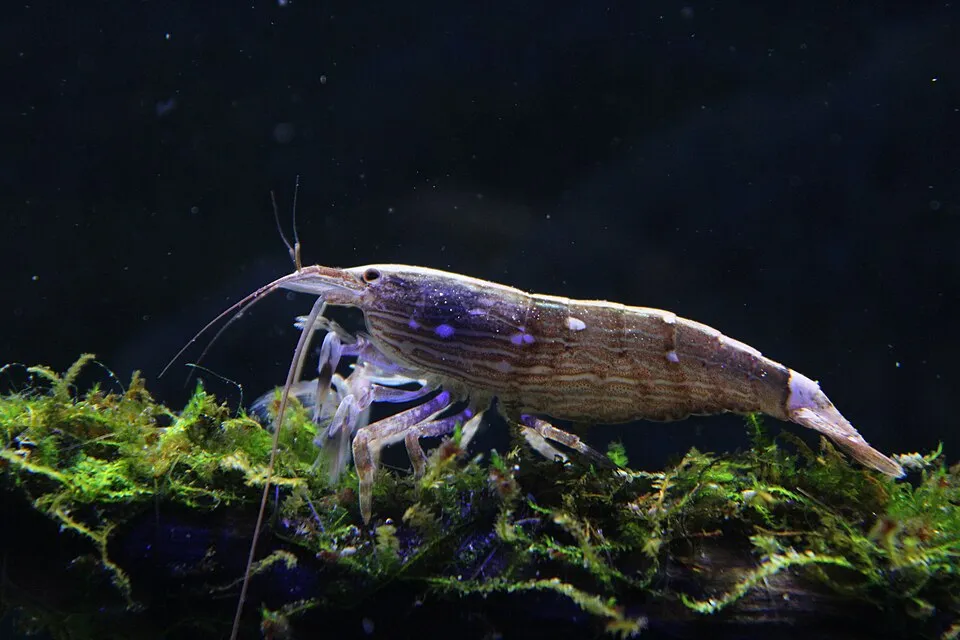
Bamboo shrimp
Atyopsis moluccensis
Freshwater3.9 in (10 cm) · 13 gal (50 L)72–84°F (22–29°C)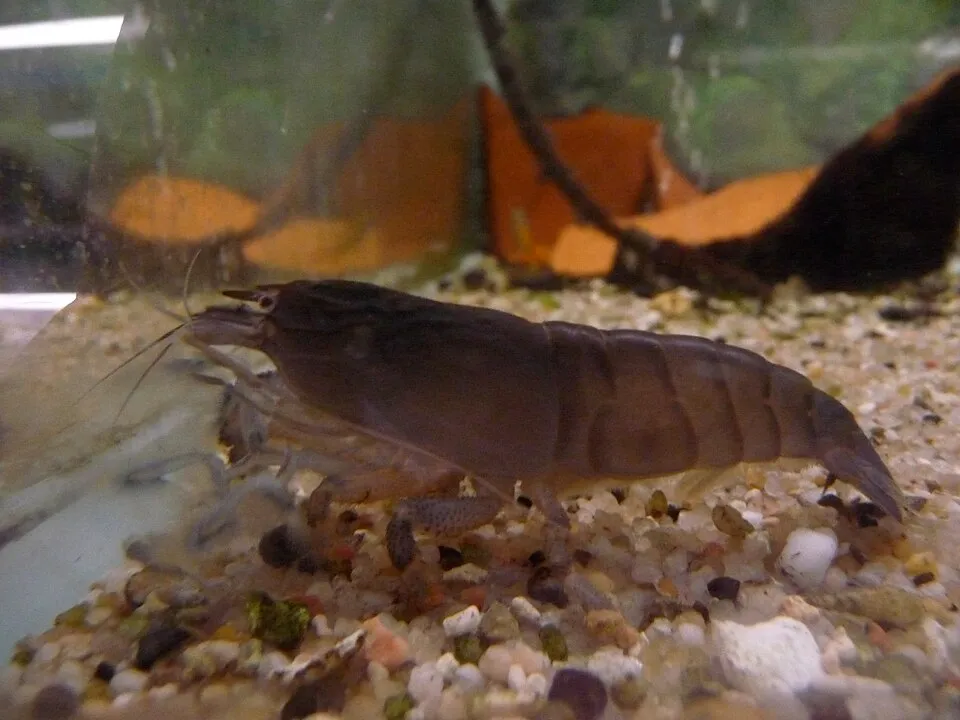
Vampire shrimp
Atya gabonensis
Freshwater5.1 in (13 cm) · 20 gal (75 L)75–82°F (24–28°C)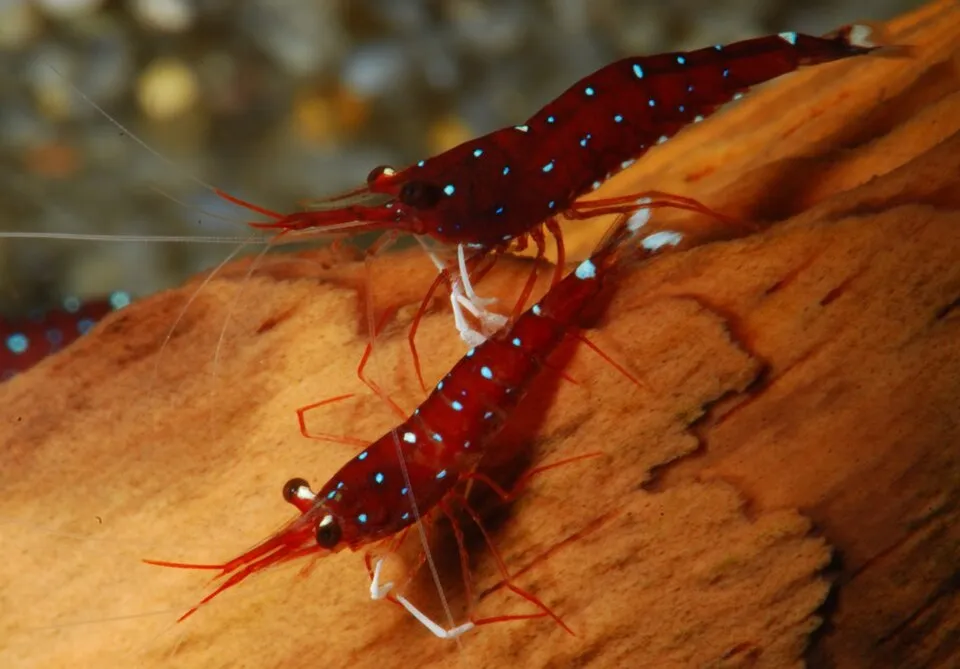
Sulawesi shrimp
Caridina dennerli
Freshwater1 in (2.5 cm) · 5 gal (20 L)79–88°F (26–31°C)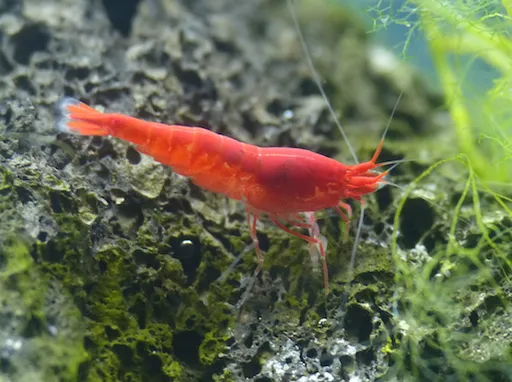
Opae ula
Halocaridina rubra
Brackish0.6 in (1.5 cm) · 1 gal (4 L)68–82°F (20–28°C)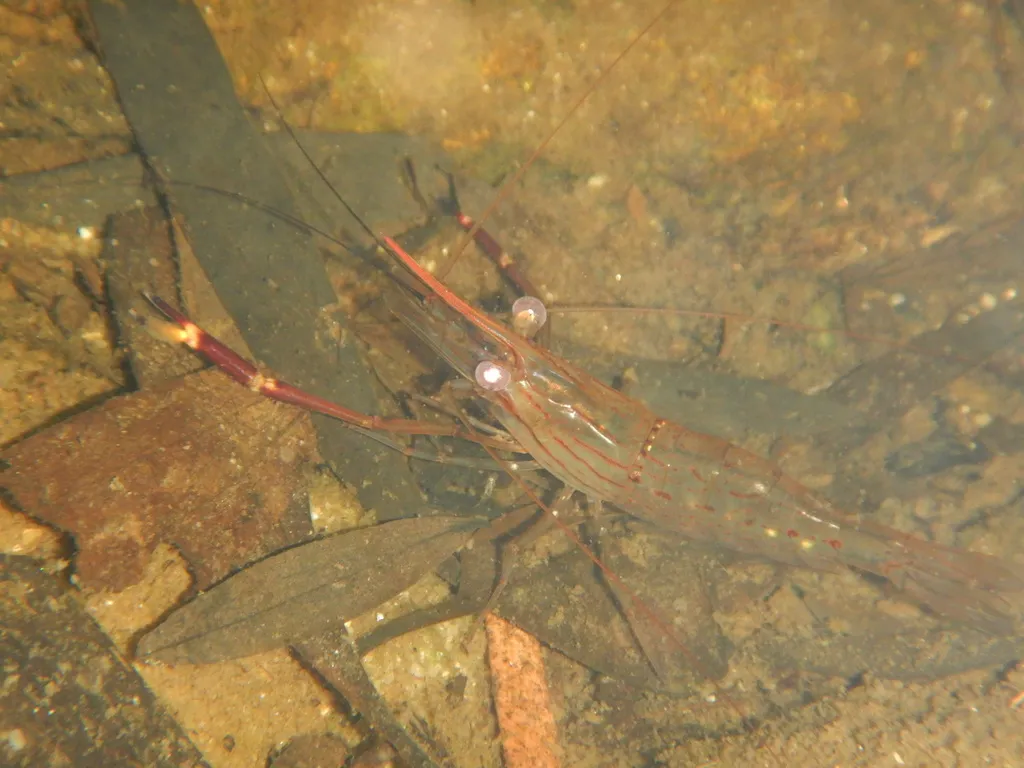
Giant freshwater prawn
Macrobrachium spinipes
FreshwaterBrackish12.6 in (32 cm) · 53 gal (200 L)75–86°F (24–30°C)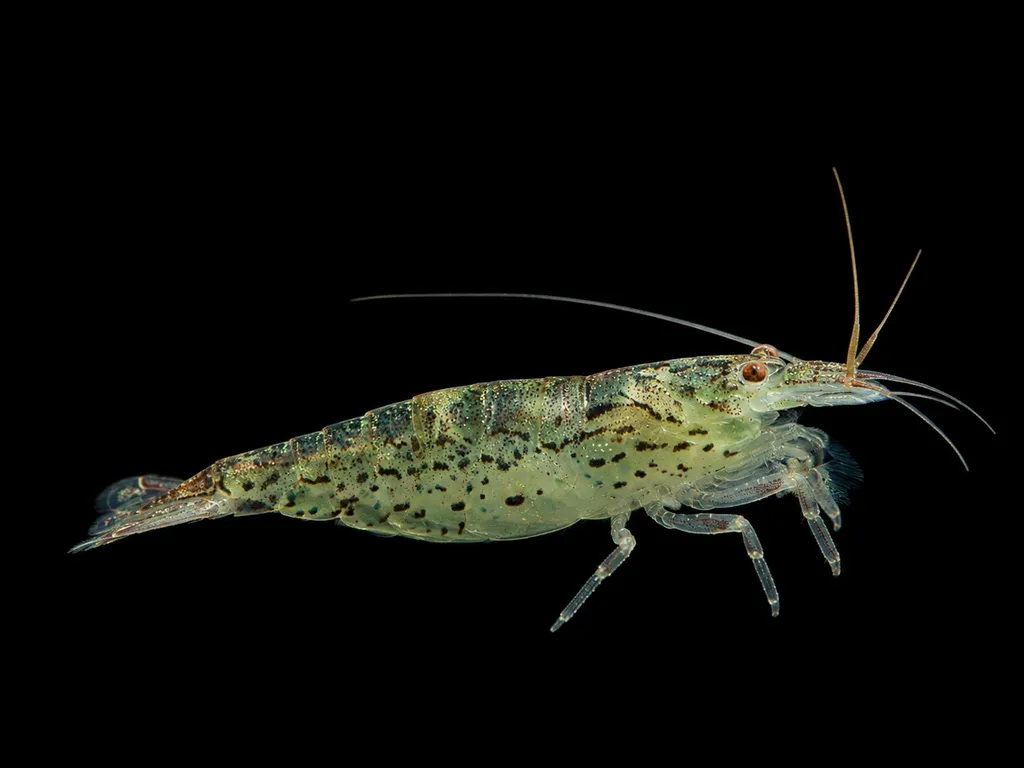
Green lace shrimp
Atyoida pilipes
Freshwater2.8 in (7 cm) · 14 gal (54 L)73–82°F (23–28°C)
Saltwater
Cleaner shrimp and the reef crew
The skunk cleaner shrimp is the saltwater beginner's shrimp, 2.4 inches (6 cm) in 20 gallons (75 liters), marked beginner and reef safe, and it will clean the hand that feeds it. The fire shrimp is its red, shyer cousin. The peppermint shrimp is 2 inches (5 cm) for 11 gallons (40 liters) and eats Aiptasia anemones. The sexy shrimp stays at 1.2 inches (3 cm) in a 5 gallon (20 liter) tank. The pistol shrimps pair with watchman gobies and dig. The harlequin shrimp eats only starfish, which is why it is marked medium. Two to leave out of a reef: the coral banded shrimp grabs small fish and carries a caution, and the peacock mantis shrimp is marked aggressive and not reef safe.
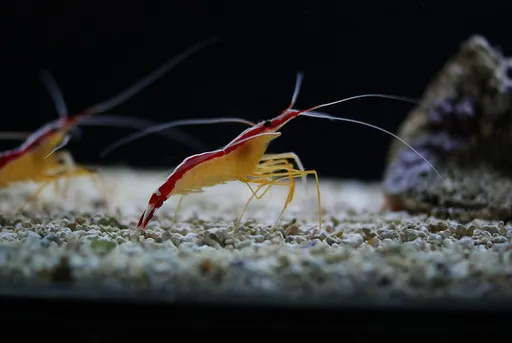
Skunk cleaner shrimp
Lysmata amboinensis
Saltwater2.4 in (6 cm) · 20 gal (75 L)73–81°F (23–27°C)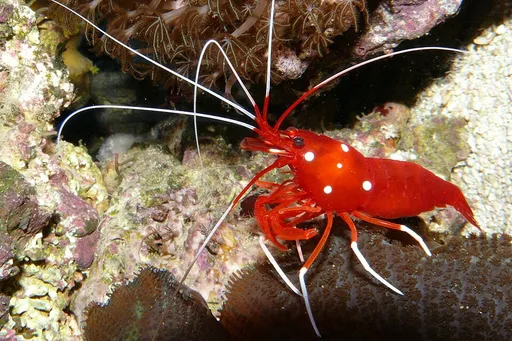
Fire shrimp
Lysmata debelius
Saltwater2.4 in (6 cm) · 20 gal (75 L)72–79°F (22–26°C)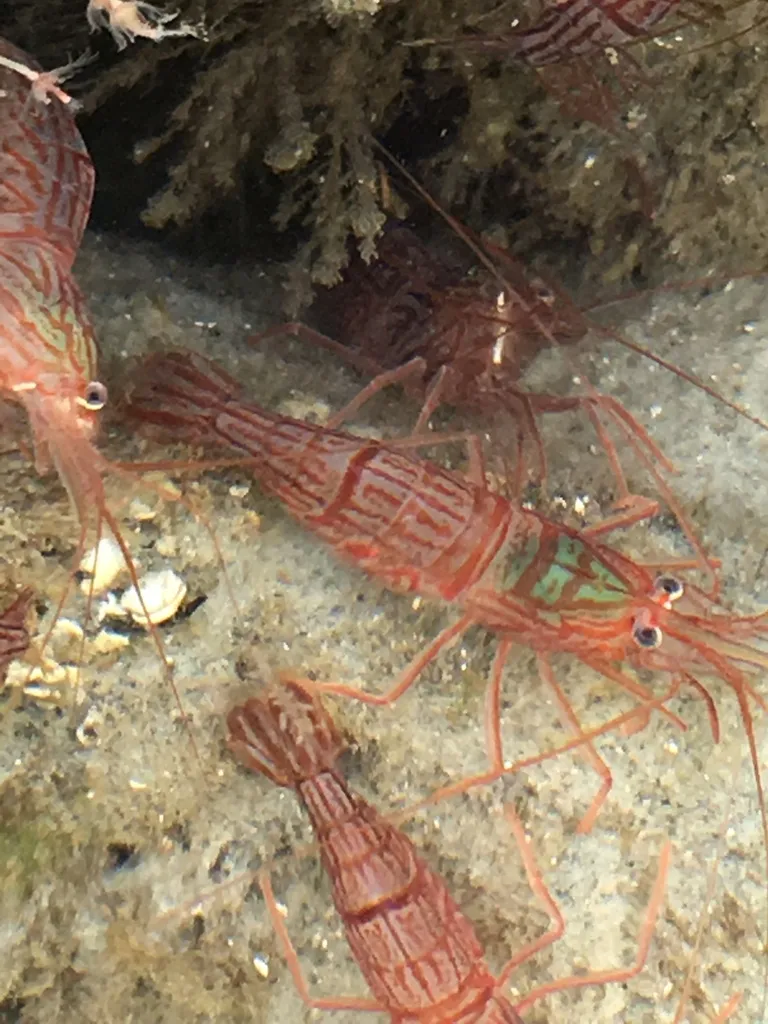
Peppermint shrimp
Lysmata wurdemanni
Saltwater2 in (5 cm) · 11 gal (40 L)72–81°F (22–27°C)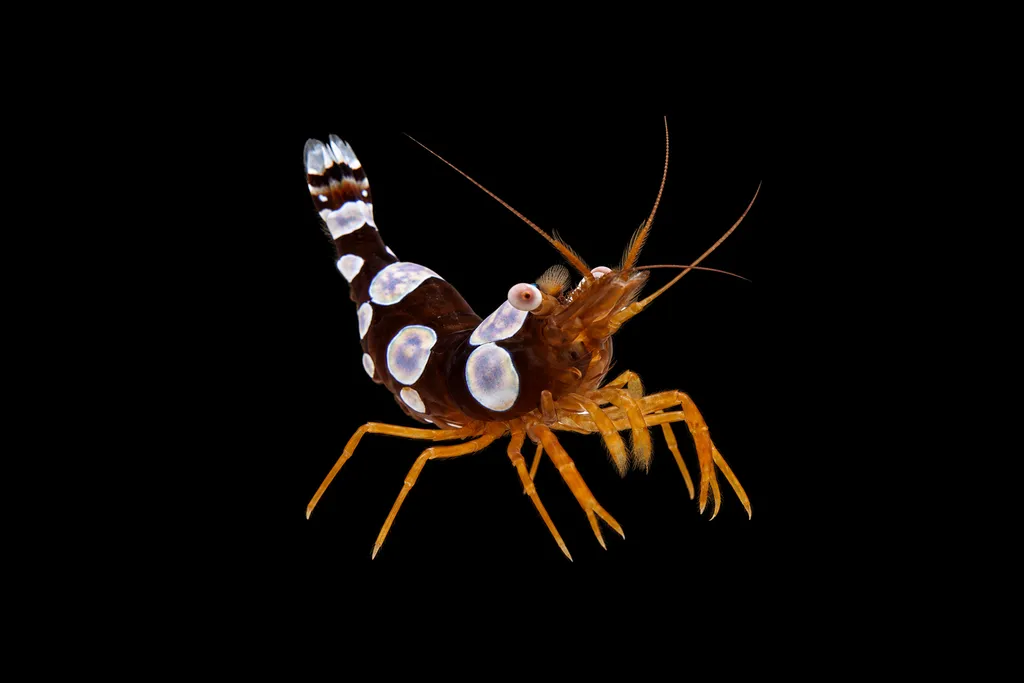
Sexy shrimp
Thor amboinensis
Saltwater1.2 in (3 cm) · 5 gal (20 L)75–81°F (24–27°C)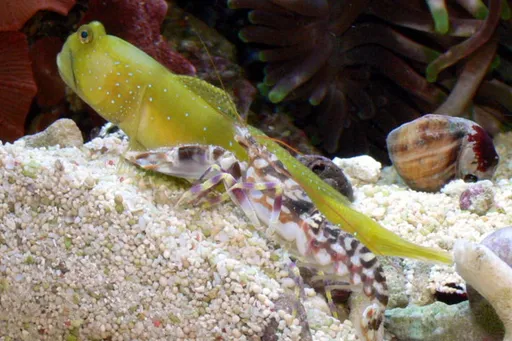
Tiger pistol shrimp
Alpheus bellulus
Saltwater2 in (5 cm) · 11 gal (40 L)75–81°F (24–27°C)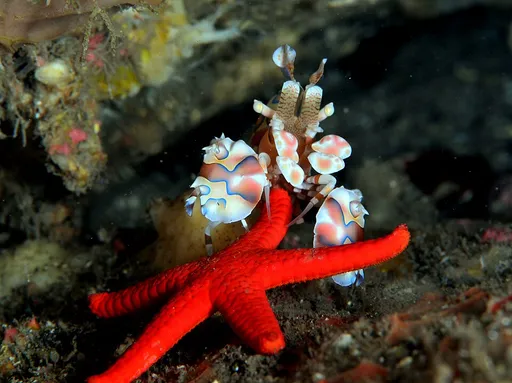
Harlequin shrimp
Hymenocera picta
Saltwater2 in (5 cm) · 11 gal (40 L)75–81°F (24–27°C)
By the numbers
Smallest
Largest
Easiest to keep
FAQ
Common questions
What is the easiest shrimp to keep?
The Neocaridina shrimp, sold as cherry, blue dream, yellow and a dozen other colors. It is marked beginner and lives in most tap water. In saltwater, the skunk cleaner and peppermint shrimp are the two marked beginner.
What size tank do shrimp need?
5 gallons (20 liters) for the dwarf shrimp, 8 gallons (30 liters) for Amano shrimp, 13 to 20 gallons (50 to 75 liters) for the bamboo and vampire shrimp. The opae ula lists 1 gallon (4 liters).
Can shrimp live with fish?
With small, peaceful fish: otocinclus, small rasboras and corydoras leave adults alone. Anything that can fit a shrimp in its mouth will eat it, and bettas, gouramis and cichlids eat the babies first.
Why did my shrimp die after a water change?
A swing in temperature or hardness. Match the new water to the tank, add it slowly, and check that nothing with copper in it went in with the change.
Can cherry shrimp and crystal shrimp live together?
Not well. Cherry shrimp want a pH from 6.5 to 8.0 and crystals a pH from 5.8 to 6.8. The tangerine tiger is the Caridina that shares Neocaridina water, and the two do not interbreed.
Do Amano shrimp breed in the tank?
No. The females carry eggs, but the larvae need salt water to develop, so they die in a freshwater tank. Neocaridina shrimp breed in freshwater with no help.
Index
Freshwater shrimp
Amano shrimp
Caridina multidentata
FreshwaterBrackish2 in (5 cm) · 8 gal (30 L)59–81°F (15–27°C)Bamboo shrimp
Atyopsis moluccensis
Freshwater3.9 in (10 cm) · 13 gal (50 L)72–84°F (22–29°C)Bee shrimp
Caridina logemanni
Freshwater1.2 in (3 cm) · 5 gal (20 L)64–75°F (18–24°C)5 varietiesGhost shrimp
Palaemon paludosus
Freshwater1.6 in (4 cm) · 5 gal (20 L)64–84°F (18–29°C)Giant freshwater prawn
Macrobrachium spinipes
FreshwaterBrackish12.6 in (32 cm) · 53 gal (200 L)75–86°F (24–30°C)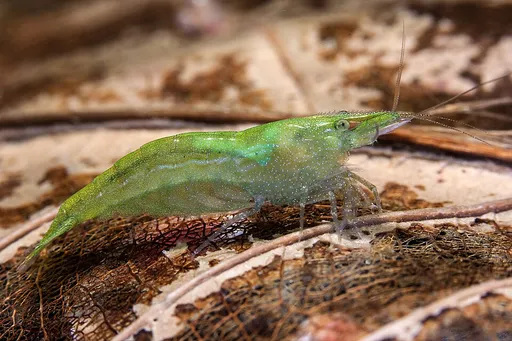
Green babaulti shrimp
Caridina babaulti
Freshwater1.2 in (3 cm) · 10 gal (38 L)72–82°F (22–28°C)Green lace shrimp
Atyoida pilipes
Freshwater2.8 in (7 cm) · 14 gal (54 L)73–82°F (23–28°C)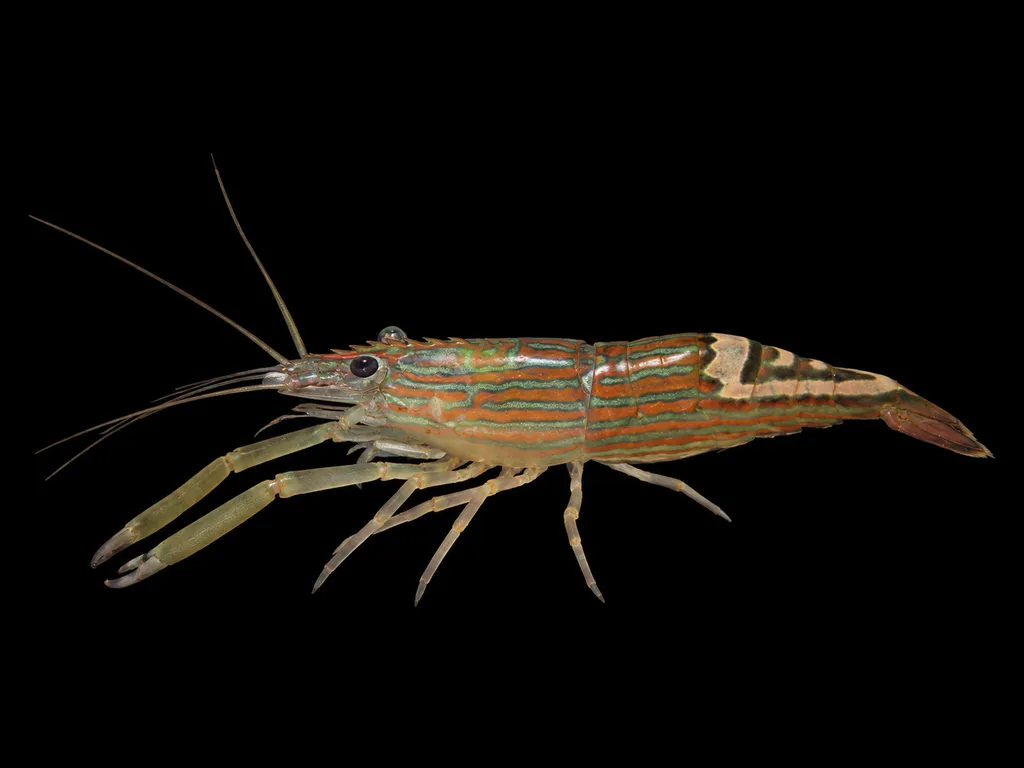
Lollipop prawn
Macrobrachium gracilirostre
Freshwater3.9 in (10 cm) · 20 gal (75 L)75–82°F (24–28°C)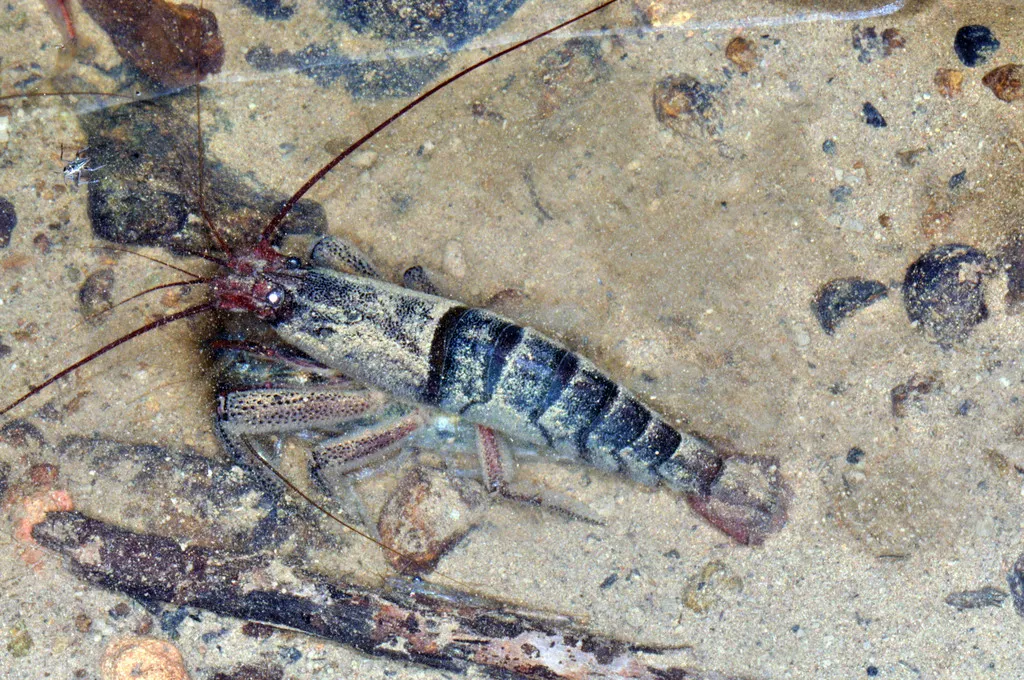
Marble wood shrimp
Atya scabra
Freshwater3.9 in (10 cm) · 20 gal (75 L)73–82°F (23–28°C)Neocaridina shrimp
Neocaridina davidi
Freshwater1.6 in (4 cm) · 5 gal (20 L)59–84°F (15–29°C)11 varieties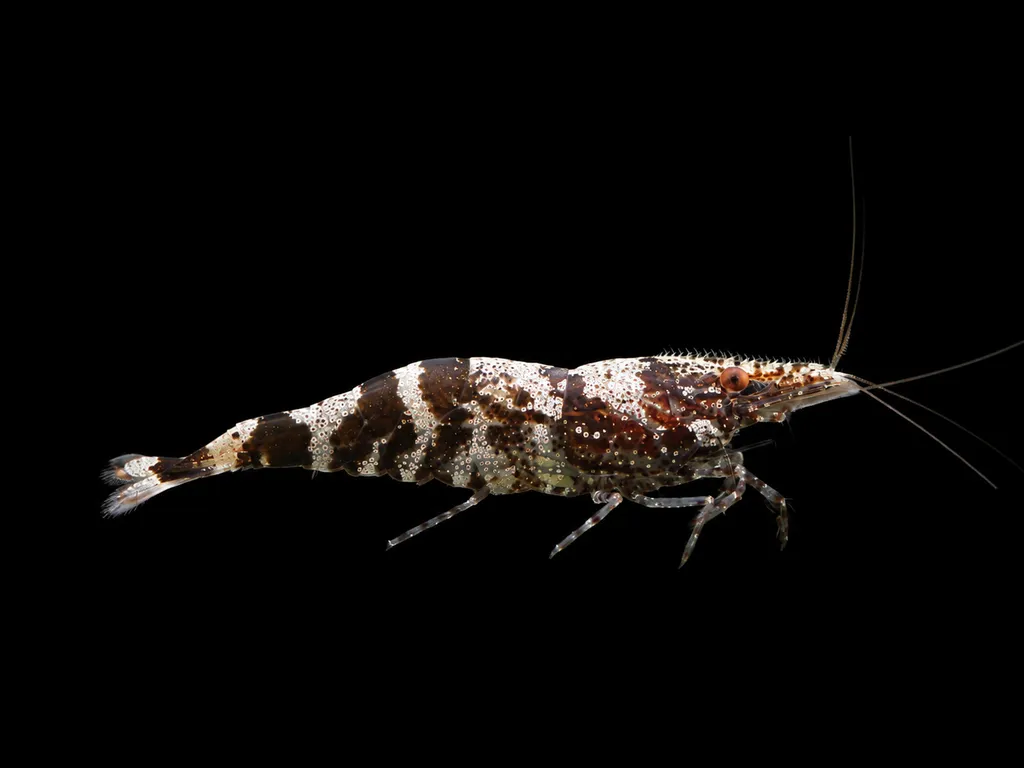
Ninja shrimp
Caridina serratirostris
Freshwater1.2 in (3 cm) · 5 gal (20 L)73–82°F (23–28°C)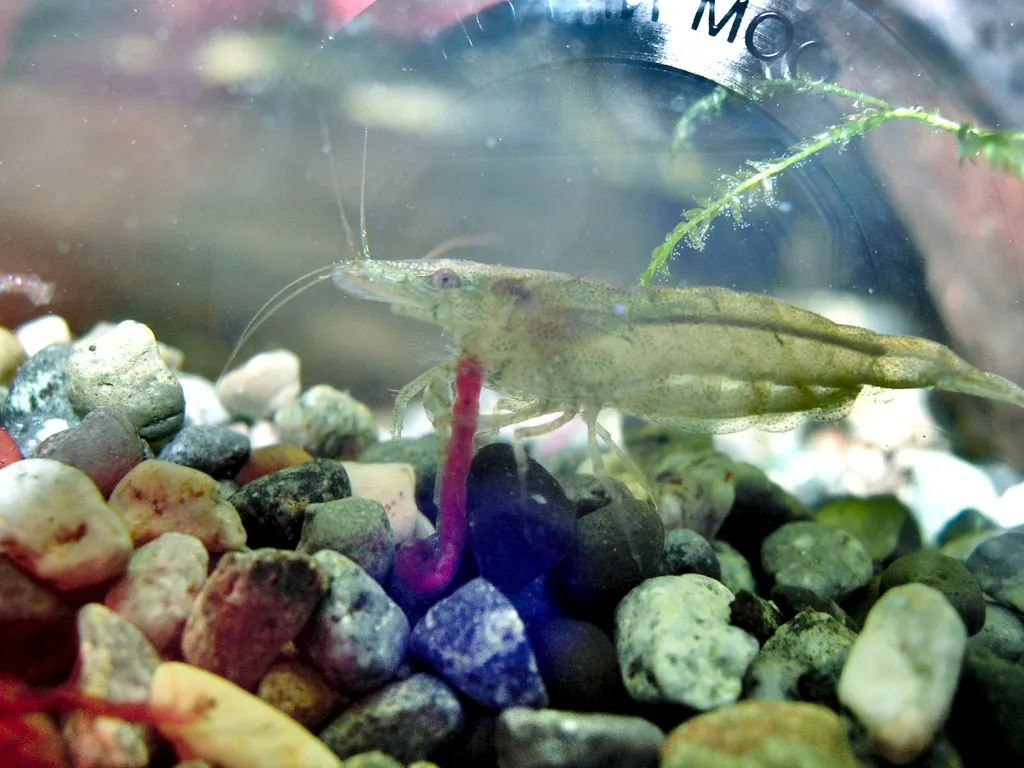
Okinawa cleaner shrimp
Neocaridina denticulata
Freshwater1.2 in (3 cm) · 5 gal (20 L)64–79°F (18–26°C)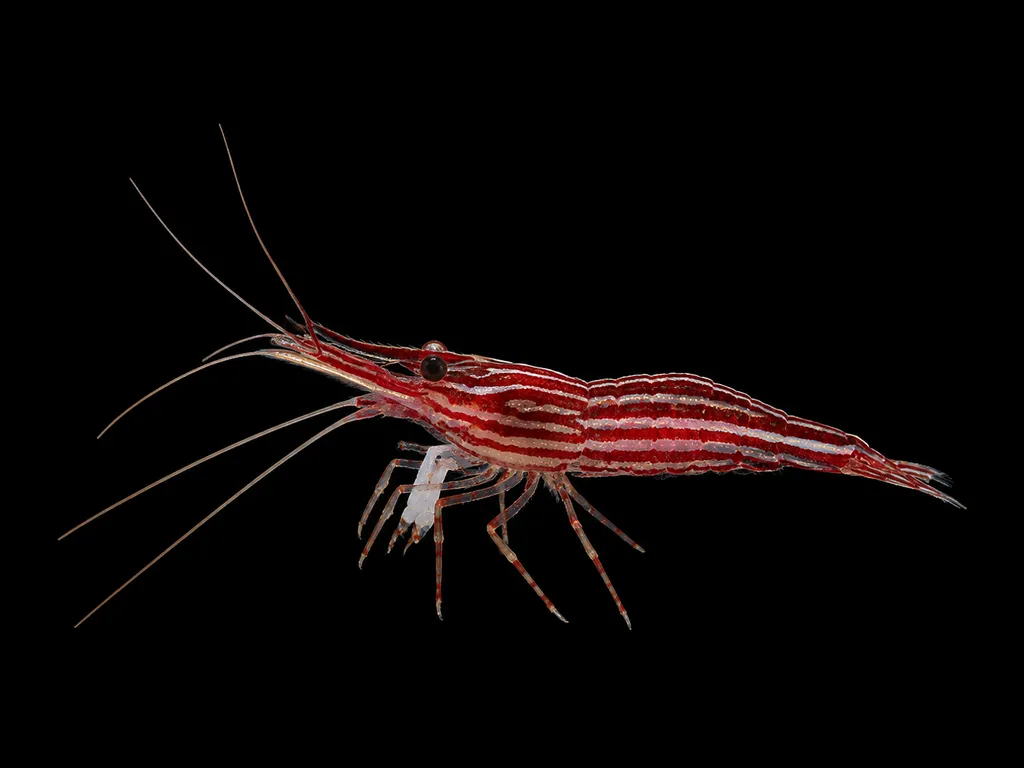
Red line shrimp
Caridina striata
Freshwater1 in (2.5 cm) · 5 gal (20 L)79–88°F (26–31°C)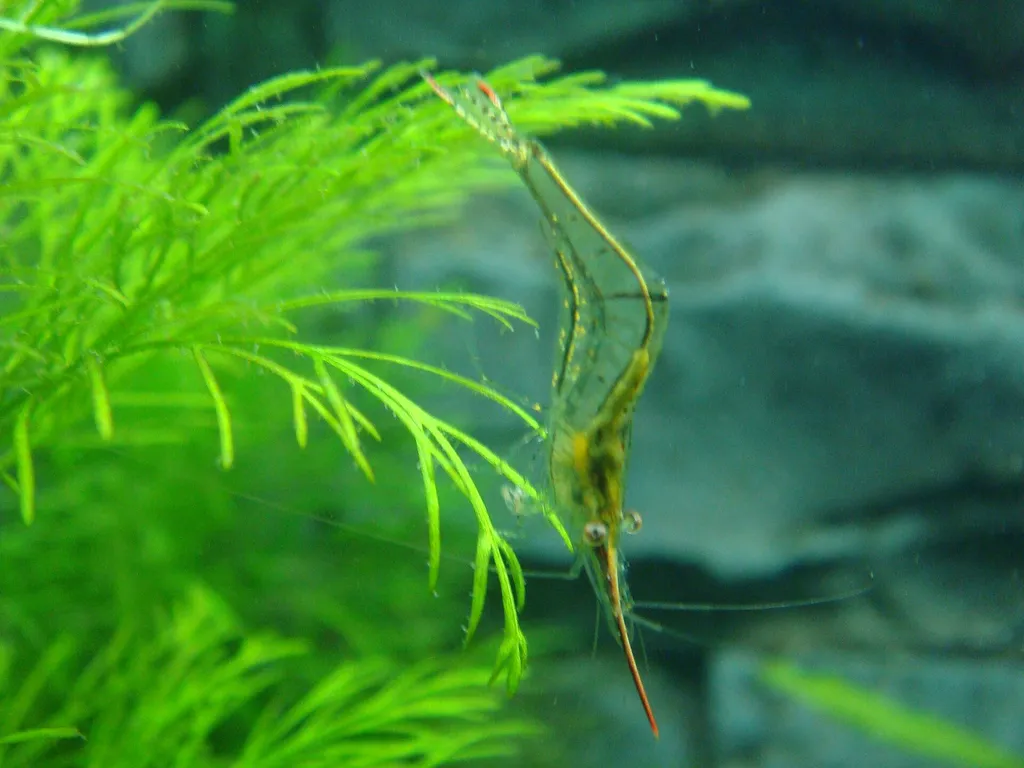
Red skunk shrimp
Caridina gracilirostris
FreshwaterBrackish1.6 in (4 cm) · 5 gal (20 L)73–82°F (23–28°C)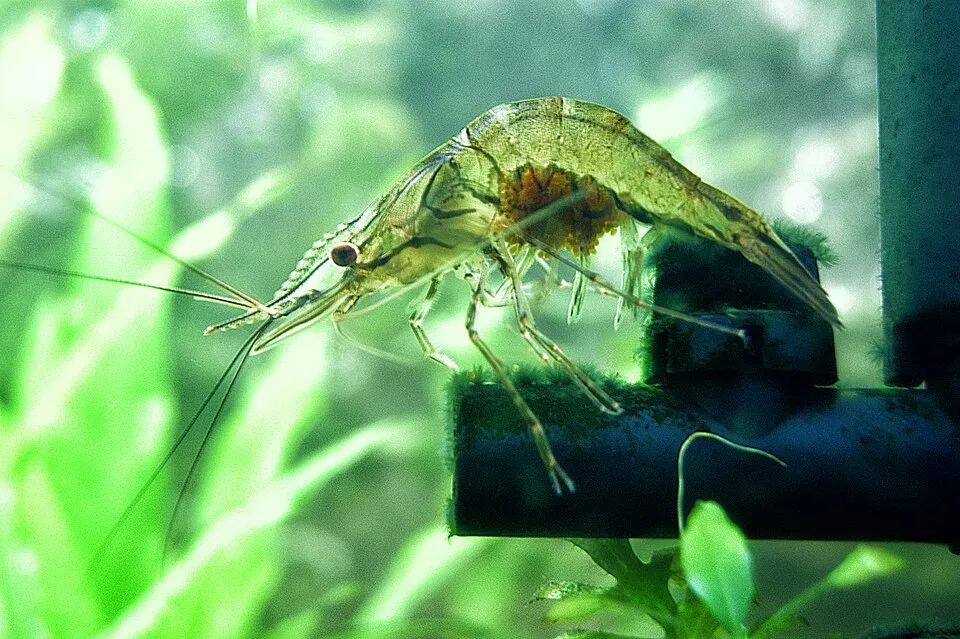
Riceland prawn
Macrobrachium lanchesteri
Freshwater2.4 in (6 cm) · 16 gal (60 L)75–86°F (24–30°C)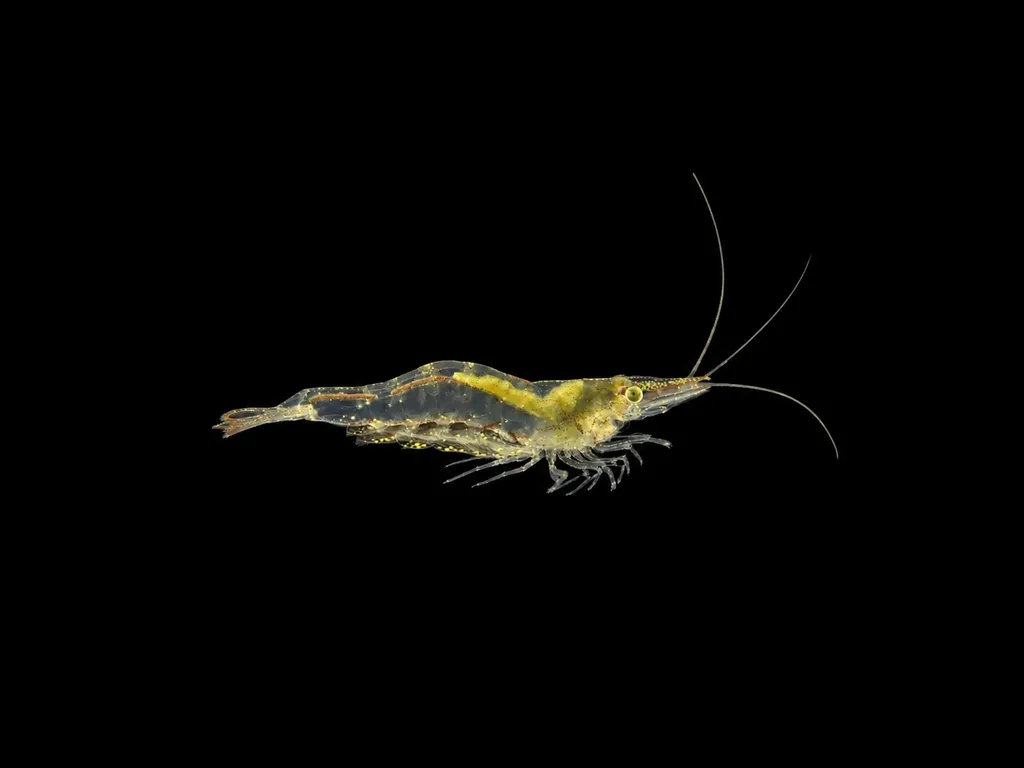
Short-nose algae shrimp
Caridina longirostris
FreshwaterBrackish1.4 in (3.5 cm) · 5 gal (20 L)73–82°F (23–28°C)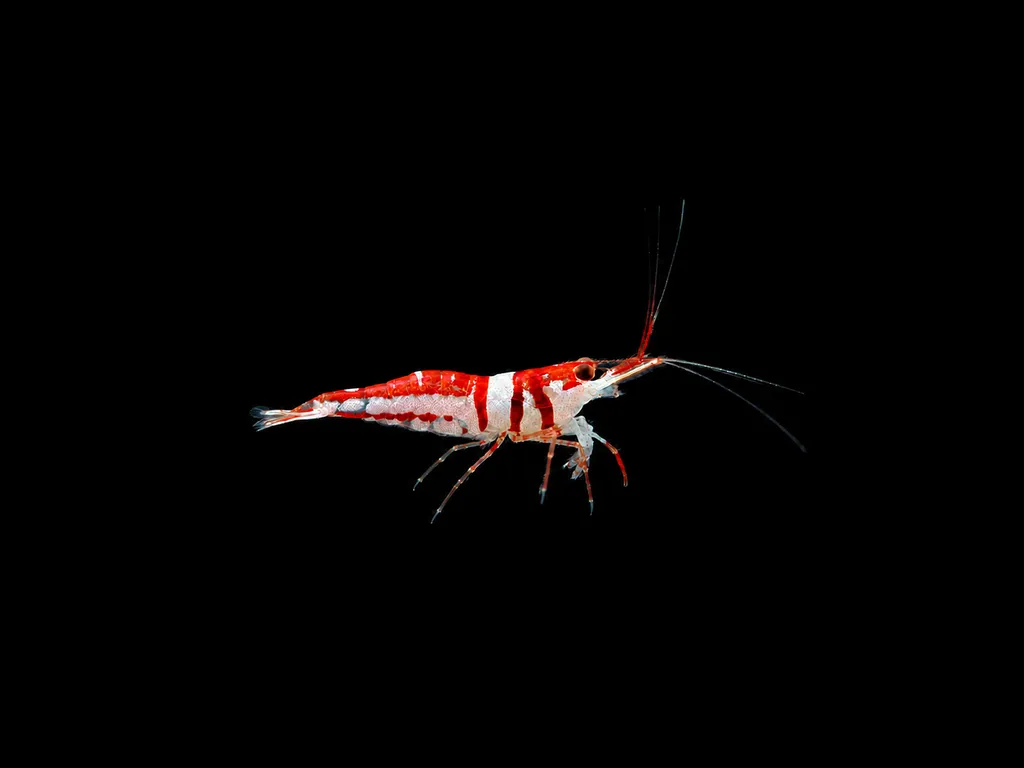
Sulawesi harlequin shrimp
Caridina woltereckae
Freshwater1 in (2.5 cm) · 5 gal (20 L)79–88°F (26–31°C)Sulawesi shrimp
Caridina dennerli
Freshwater1 in (2.5 cm) · 5 gal (20 L)79–88°F (26–31°C)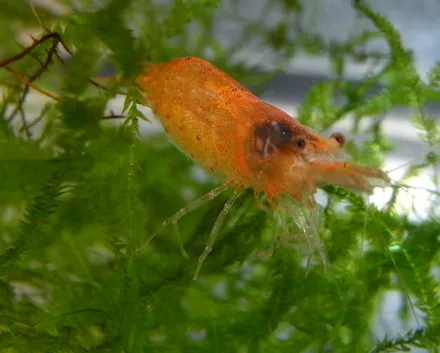
Sunkist shrimp
Caridina thambipillai
Freshwater1.4 in (3.5 cm) · 5 gal (20 L)73–82°F (23–28°C)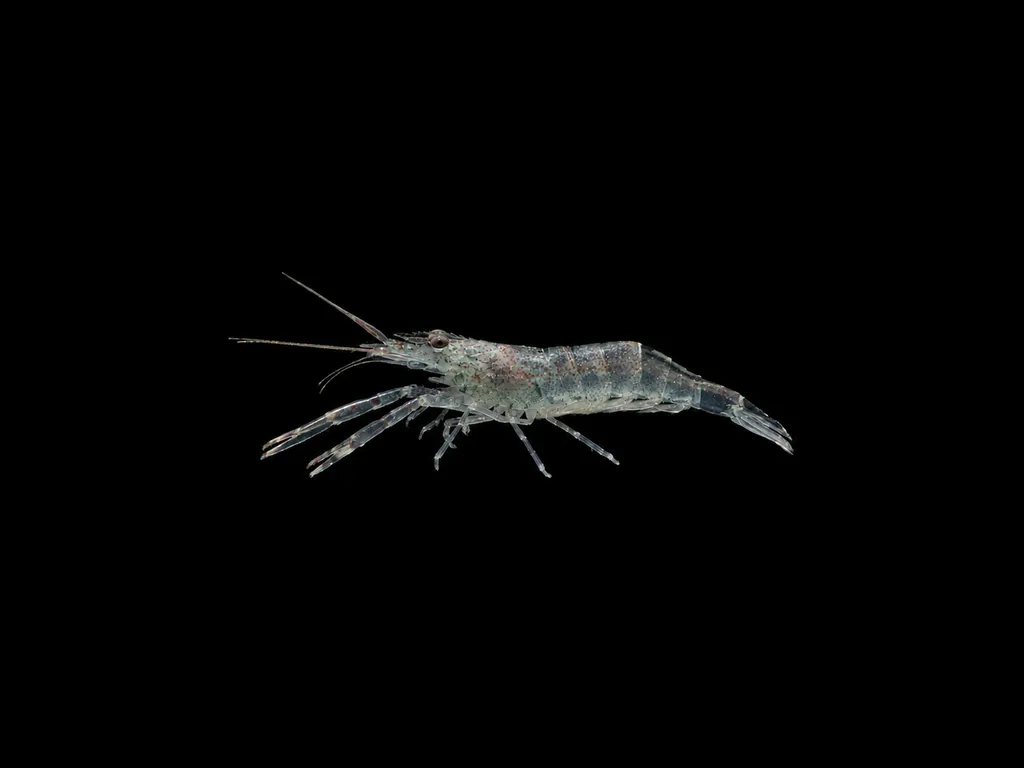
Taiwanese long claw prawn
Macrobrachium placidulum
Freshwater2.8 in (7 cm) · 11 gal (40 L)72–82°F (22–28°C)Tangerine tiger shrimp
Caridina serrata
Freshwater1.2 in (3 cm) · 5 gal (20 L)68–79°F (20–26°C)Tiger shrimp
Caridina mariae
Freshwater1.6 in (4 cm) · 7 gal (25 L)64–73°F (18–23°C)Vampire shrimp
Atya gabonensis
Freshwater5.1 in (13 cm) · 20 gal (75 L)75–82°F (24–28°C)
Brackish shrimp
Saltwater shrimp
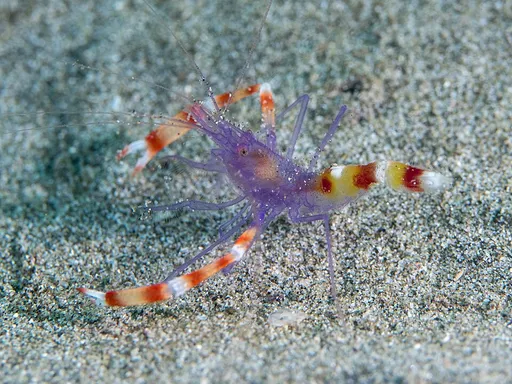
Blue / purple coral banded shrimp
Stenopus tenuirostris
Saltwater1.6 in (4 cm) · 11 gal (40 L)75–81°F (24–27°C)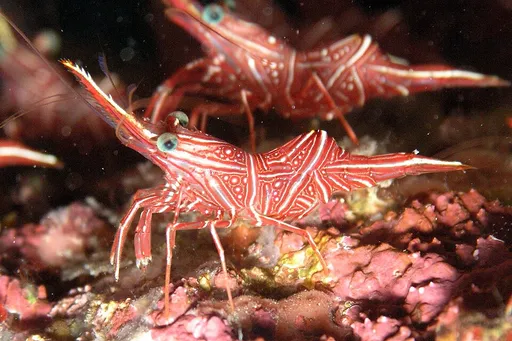
Camel / dancing shrimp
Rhynchocinetes durbanensis
Saltwater2 in (5 cm) · 16 gal (60 L)75–81°F (24–27°C)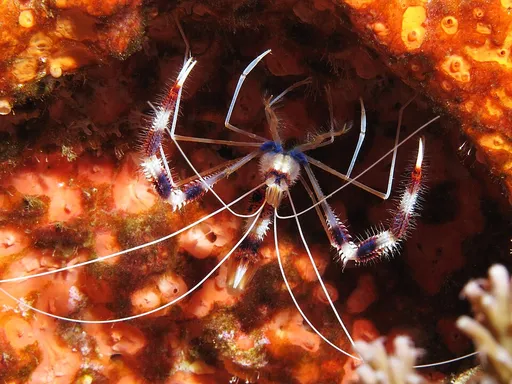
Coral banded shrimp
Stenopus hispidus
Saltwater2.4 in (6 cm) · 30 gal (115 L)72–81°F (22–27°C)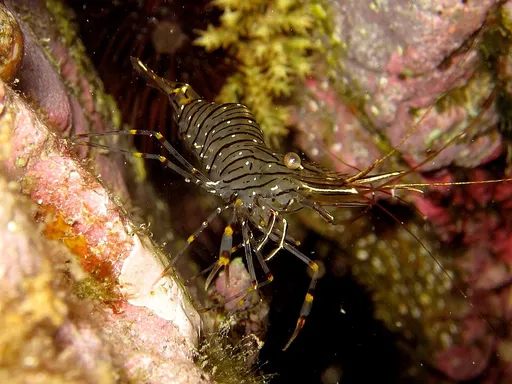
Elegant rockpool shrimp
Palaemon elegans
Saltwater2.4 in (6 cm) · 11 gal (40 L)61–79°F (16–26°C)Fire shrimp
Lysmata debelius
Saltwater2.4 in (6 cm) · 20 gal (75 L)72–79°F (22–26°C)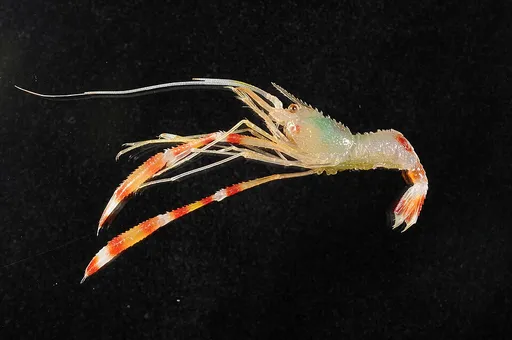
Gold coral banded shrimp
Stenopus scutellatus
Saltwater1.6 in (4 cm) · 11 gal (40 L)75–81°F (24–27°C)Harlequin shrimp
Hymenocera picta
Saltwater2 in (5 cm) · 11 gal (40 L)75–81°F (24–27°C)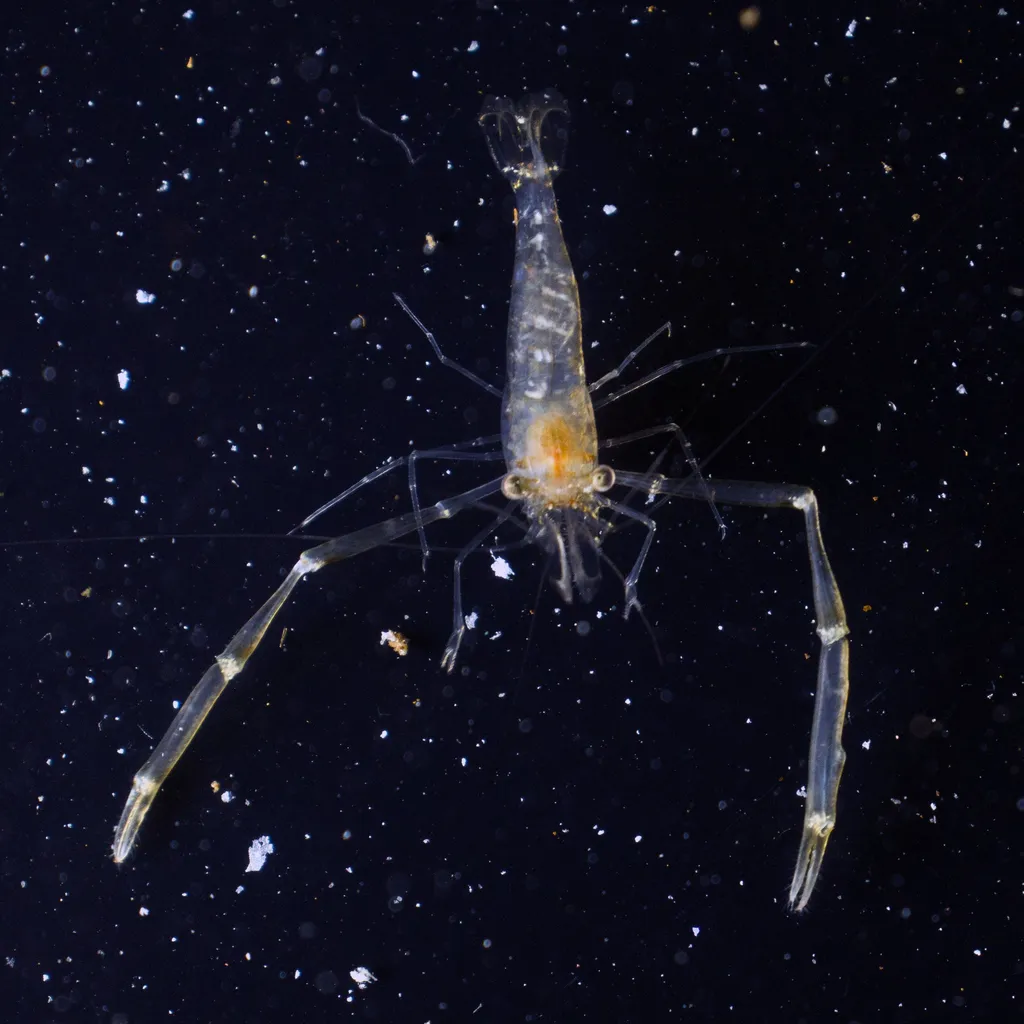
Long arm shrimp
Cuapetes sp.
Saltwater0.8 in (2 cm) · 5 gal (20 L)75–82°F (24–28°C)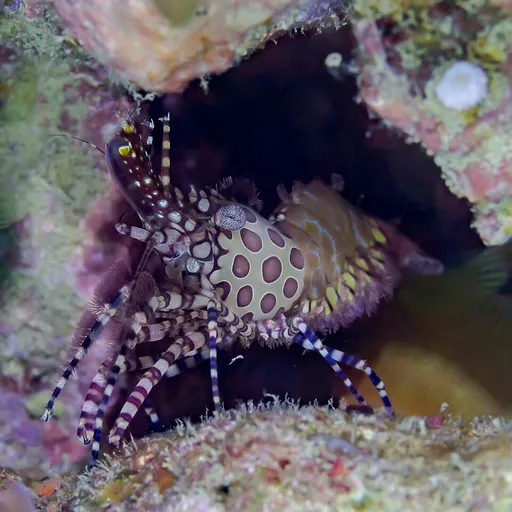
Marble shrimp
Saron marmoratus
Saltwater2 in (5 cm) · 11 gal (40 L)75–81°F (24–27°C)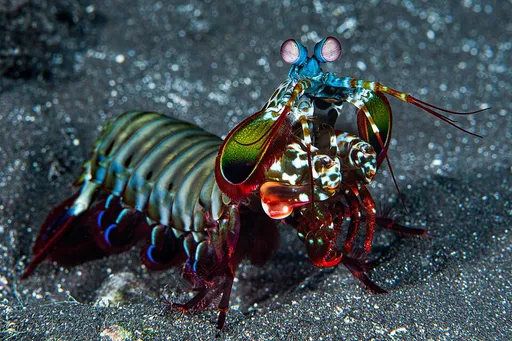
Peacock mantis shrimp
Odontodactylus scyllarus
Saltwater7.1 in (18 cm) · 20 gal (75 L)75–81°F (24–27°C)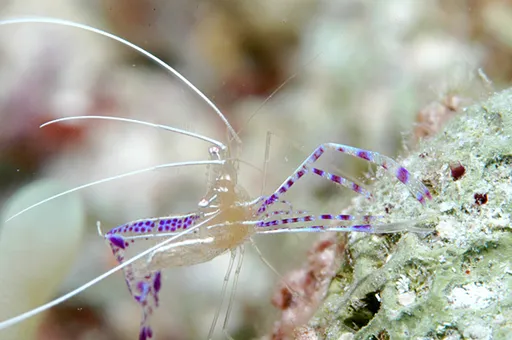
Pederson's cleaner shrimp
Ancylomenes pedersoni
Saltwater1.2 in (3 cm) · 11 gal (40 L)73–81°F (23–27°C)Peppermint shrimp
Lysmata wurdemanni
Saltwater2 in (5 cm) · 11 gal (40 L)72–81°F (22–27°C)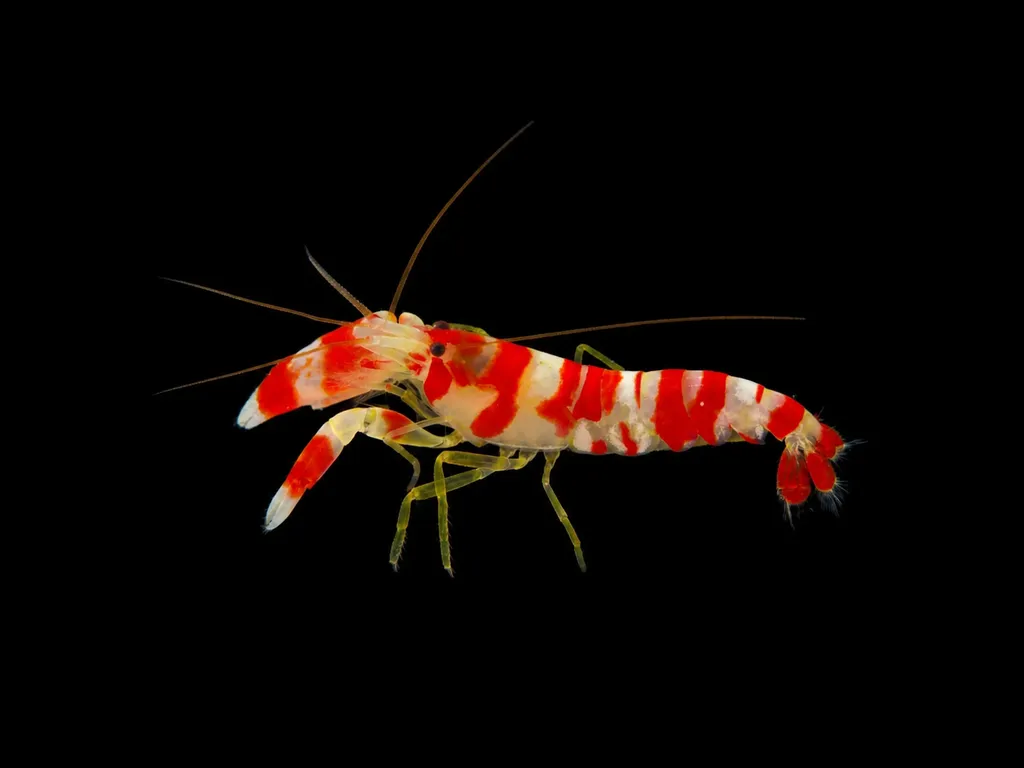
Randall's pistol shrimp
Alpheus randalli
Saltwater1.6 in (4 cm) · 11 gal (40 L)75–81°F (24–27°C)Sexy shrimp
Thor amboinensis
Saltwater1.2 in (3 cm) · 5 gal (20 L)75–81°F (24–27°C)Skunk cleaner shrimp
Lysmata amboinensis
Saltwater2.4 in (6 cm) · 20 gal (75 L)73–81°F (23–27°C)Tiger pistol shrimp
Alpheus bellulus
Saltwater2 in (5 cm) · 11 gal (40 L)75–81°F (24–27°C)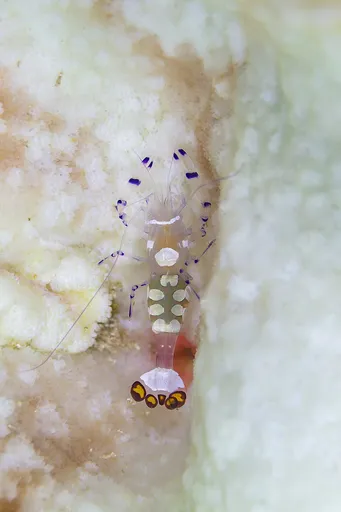
White-spot anemone shrimp
Periclimenes brevicarpalis
Saltwater1.6 in (4 cm) · 11 gal (40 L)75–81°F (24–27°C)
Planning a tank?
TankBud checks stocking and water fit as you build a tank, then tracks water tests, reminders and photos once it is running.
Track your tanksMaintain tanks for clients? See TankBud Pro