Opae ula
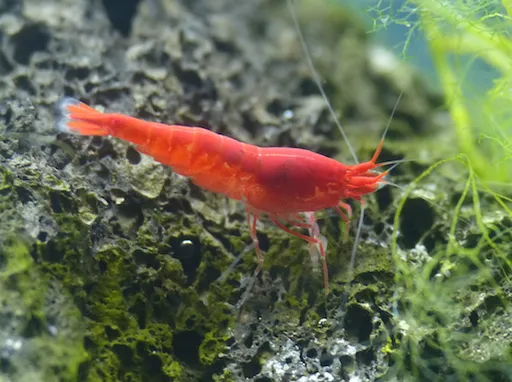
Halocaridina rubra
Also known as Hawaiian red shrimp, Volcano shrimp, Lava shrimp, Opae-ula
BrackishShrimp
Care at a glance
- Temperature
- 68–82°F
- 20–28°C
- pH
- 7.8–8.5
- Adult size
- 0.6 in
- 1.5 cm
- Minimum tank
- 1 gal
- 4 L
- Temperament
- Peaceful
- Social behavior
- Social
- Swim level
- Bottom
- Difficulty
- Beginner
- Breeding
- Easy
- Rarity
- Common
- Family
- Atyidae
- Origin
- Endemic to anchialine pools on the Hawaiian Islands
Overview
Keep them as a colony rather than a few individuals, since they are social and a group of twenty or more looks and behaves far better than a handful. A jar or small tank of a few liters suits them, with no filter or heater strictly required, though a gentle sponge filter and stable warmth do no harm and arguably make for better long-term husbandry than a fully sealed vessel. They graze the bottom and hardscape constantly and move slowly, so they mix only with other brackish-tolerant tankmates and are usually kept alone. Hold the water alkaline and stable at a pH of 7.8 to 8.5 and low-end brackish salinity, top off evaporation with fresh dechlorinated or distilled water to hold the salinity steady, and feed sparingly if at all, since an established tank grows most of their food. They tolerate neglect but not sudden swings.
In the wild
Opae ula are tiny red shrimp endemic to anchialine pools in Hawaii, landlocked brackish pools fed by underground seawater mixing with fresh groundwater. That habitat sets their whole care profile: low-end brackish water around 1.010 to 1.015 specific gravity, made with marine salt, held stable and alkaline at a pH of 7.8 to 8.5. They come from a slow, stable, nutrient-poor environment, so they want steady conditions far more than a big filtered setup. A small tank or jar of a few liters is enough, they need no heater at normal room temperature of about 20 to 28 C, and they do best with plenty of surface area for the biofilm and algae they graze.
Good to know
This is a small atyid shrimp in the family Atyidae, reaching only about 1.5 cm. It is extraordinarily long-lived for its size, with individuals reported to live well over a decade and sometimes past twenty years. Unlike most brackish inverts, it breeds readily in a home tank: females carry a small clutch and release fully-formed miniature shrimp rather than drifting larvae, so a stable colony slowly reproduces on its own.
Did you know
They are the shrimp behind the sealed self-sustaining ecosphere jars sold as living ornaments. Those jars work because the shrimp are so undemanding, but a slightly larger open tank with a bit of gentle water movement and stable low-end brackish water is kinder husbandry than a tiny sealed sphere, and it still asks for almost nothing from you.
Common questions
What size tank does an Opae ula need?
An Opae ula needs at least 1 gal (4 L). It spends most of its time in the bottom.
What temperature and pH does an Opae ula need?
An Opae ula is comfortable at 68–82°F (20–28°C) with a pH of 7.8–8.5.
How big does an Opae ula get?
An adult Opae ula reaches about 0.6 in (1.5 cm).
Related species
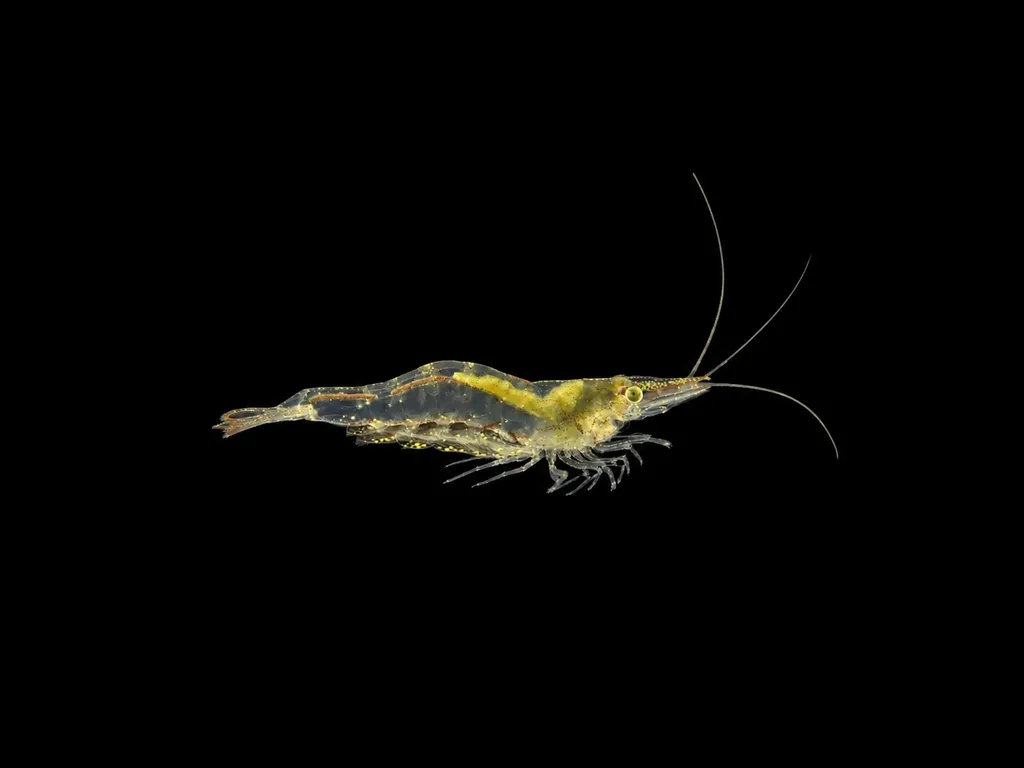 1.4 in (3.5 cm)5 gal (20 L)73–82°F (23–28°C)
Short-nose algae shrimp
Caridina longirostris
1.4 in (3.5 cm) · 5 gal (20 L)
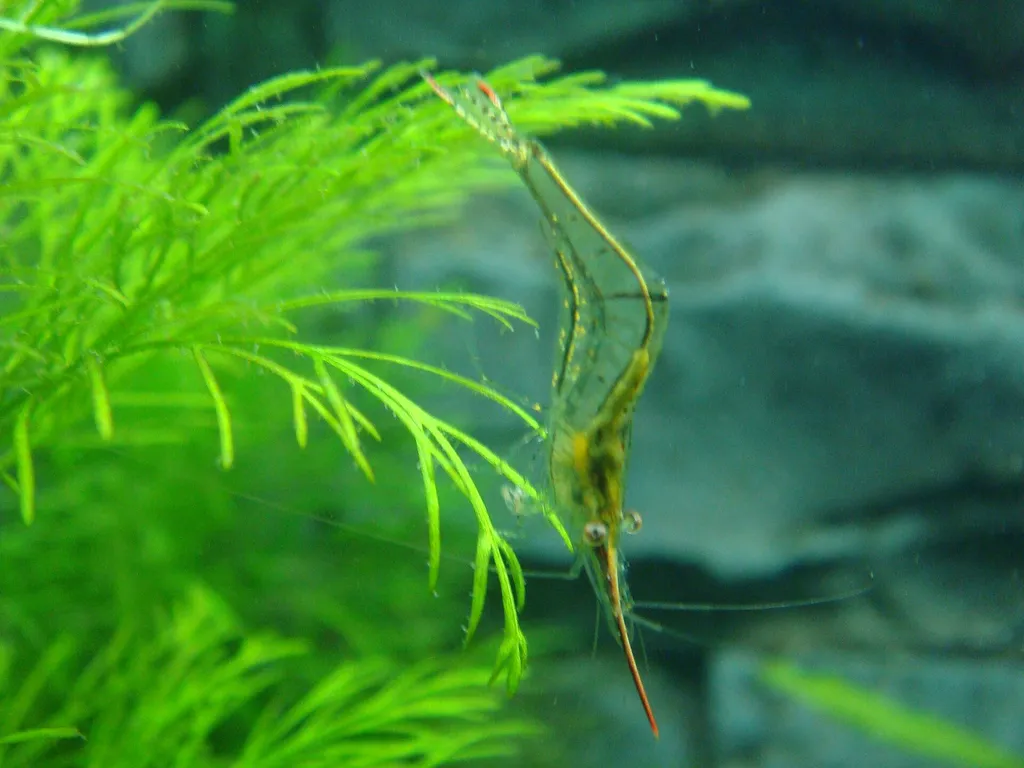 1.6 in (4 cm)5 gal (20 L)73–82°F (23–28°C)
Red skunk shrimp
Caridina gracilirostris
1.6 in (4 cm) · 5 gal (20 L)
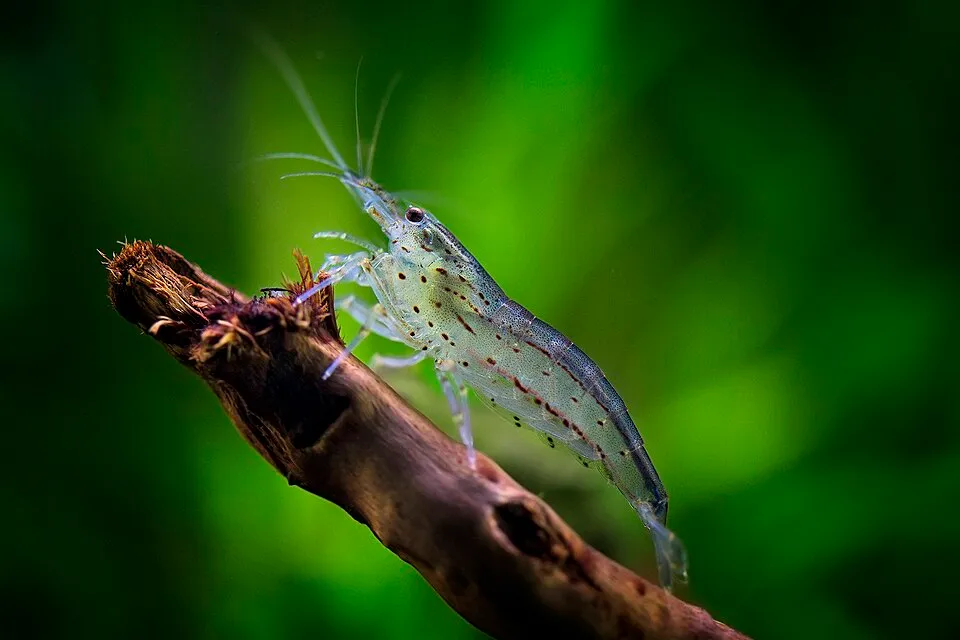 2 in (5 cm)8 gal (30 L)59–81°F (15–27°C)
Amano shrimp
Caridina multidentata
2 in (5 cm) · 8 gal (30 L)