Seahorses and pipefish
Seahorses and pipefish are slow, deliberate feeders that struggle in a normal community, so they do best in a species tank built around them. The seahorses here are all marine, but most of the pipefish are freshwater or brackish species, so check the water type before you plan the tank. They want gentle flow, frequent small meals and calm tankmates that will not outcompete them, and captive-bred seahorses are far hardier than wild-caught. Each profile lists tank size, feeding and setup notes.
At a glance
- Tank size
- 5–53 gal
- 5 gal (20 L) to 53 gal (200 L); half the list needs 30 gal (114 L) or more
- Temperature
- 73–81°F
- 23–27°C, most of the list
- pH
- 8.0–8.4
- Most of the list
- Difficulty
- 1 medium
- 22 difficult
- Temperament
- 12 peaceful
- 11 mostly peaceful
23 species
Start here
The seahorses
The lined seahorse is the one most keepers start with, 7.1 inches (18 cm) for 29 gallons (110 liters) at 68–79°F (20–26°C), cooler than a reef and marked difficult like every fish on this page. The Brazilian seahorse is the tropical one at 6.7 inches (17 cm) for 72–81°F (22–27°C). The yellow seahorse reaches 7.9 inches (20 cm) and lists 40 gallons (150 liters). White's seahorse is 6.3 inches (16 cm) for 30 gallons (114 liters) at 68–75°F (20–24°C). The dwarf seahorse is 1.4 inches (3.5 cm) for 5 gallons (20 liters) and eats only live baby brine shrimp. All of them are marked peaceful and social, and all of them lose every race for food.
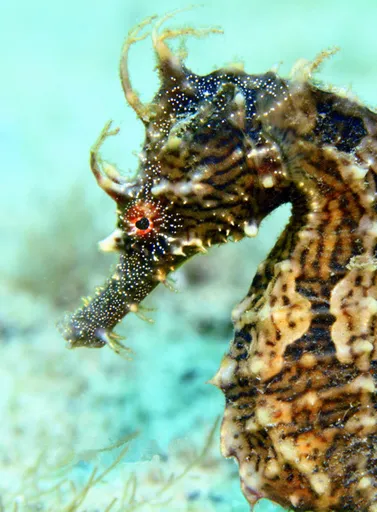
Lined seahorse
Hippocampus erectus
Saltwater- Size
- 7.1 in (18 cm)
- Tank
- 29 gal (110 L)
- Water
- 68–79°F (20–26°C)
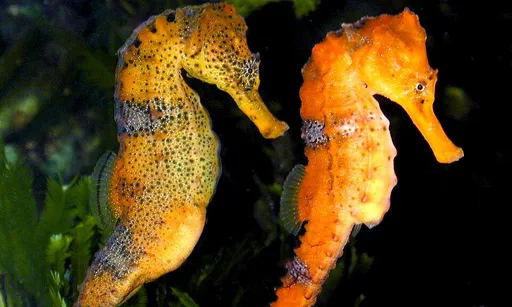
Brazilian seahorse
Hippocampus reidi
Saltwater- Size
- 6.7 in (17 cm)
- Tank
- 29 gal (110 L)
- Water
- 72–81°F (22–27°C)

Yellow seahorse
Hippocampus kuda
Saltwater- Size
- 7.9 in (20 cm)
- Tank
- 40 gal (150 L)
- Water
- 72–81°F (22–27°C)
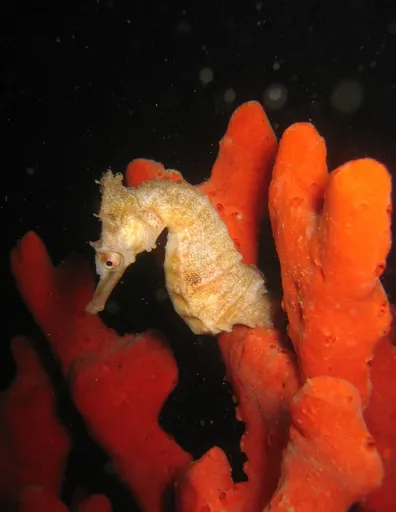
White's seahorse
Hippocampus whitei
Saltwater- Size
- 6.3 in (16 cm)
- Tank
- 30 gal (114 L)
- Water
- 68–75°F (20–24°C)
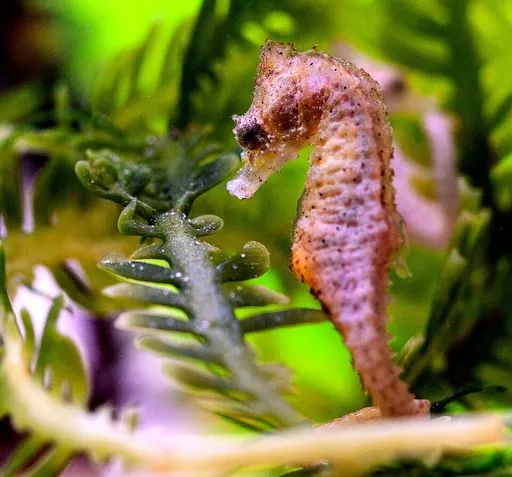
Dwarf seahorse
Hippocampus zosterae
Saltwater- Size
- 1.4 in (3.5 cm)
- Tank
- 5 gal (20 L)
- Water
- 68–79°F (20–26°C)
The rule
What the family needs
Seahorses and pipefish swim slowly, hunt by sight and eat small prey many times a day, which is why every profile here is marked difficult. They get a tank of their own, or share only with fish as slow as they are. Frozen mysis goes in two or three times a day, and a fish that has not learned frozen food gets live brine shrimp until it does. Flow stays gentle, and the tank has something to hold: gorgonians, macroalgae or artificial branches. The temperate species, the lined seahorse, White's seahorse and the Gulf pipefish, want water at 68–75°F (20–24°C), which a reef heater will not give them.
- 01
A tank of their own
Nothing faster shares it
- 02
Fed two or three times a day
Frozen mysis, live brine until they learn
- 03
Gentle flow and a hold
Branches or macroalgae to wrap a tail around
- 04
Some want it cool
Lined, White's and the Gulf pipefish list 68–75°F
Marine pipefish
The reef pipefish
The banded pipefish is 7.5 inches (19 cm) for 53 gallons (200 liters), a dragonface pipefish that hunts pods over the rock. The bluestripe pipefish is 2.8 inches (7 cm) for 26 gallons (100 liters), marked peaceful, and the one that will pair up in a mature reef. Janss' pipefish and the yellowbanded pipefish are the same group at 5.5 and 6.3 inches (14 and 16 cm) for 50 to 53 gallons (190 to 200 liters). The narrowstripe pipefish is 3.1 inches (8 cm) for 30 gallons (114 liters). The Gulf pipefish is the temperate one, 7.1 inches (18 cm) for 20 gallons (76 liters) at 68–75°F (20–24°C). All carry a reef caution: they are harmless to corals but starve in a tank with fast feeders.
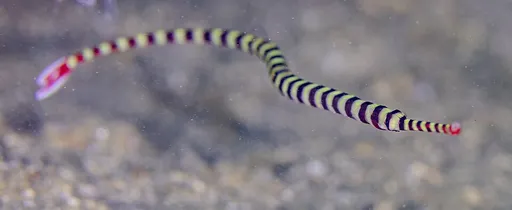
Banded pipefish
Dunckerocampus dactyliophorus
Saltwater7.5 in (19 cm) · 53 gal (200 L)75–81°F (24–27°C)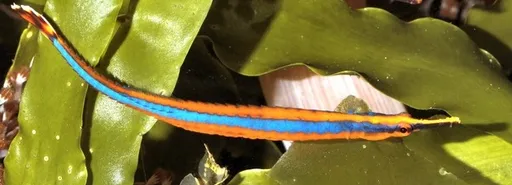
Bluestripe pipefish
Doryrhamphus excisus
Saltwater2.8 in (7 cm) · 26 gal (100 L)75–81°F (24–27°C)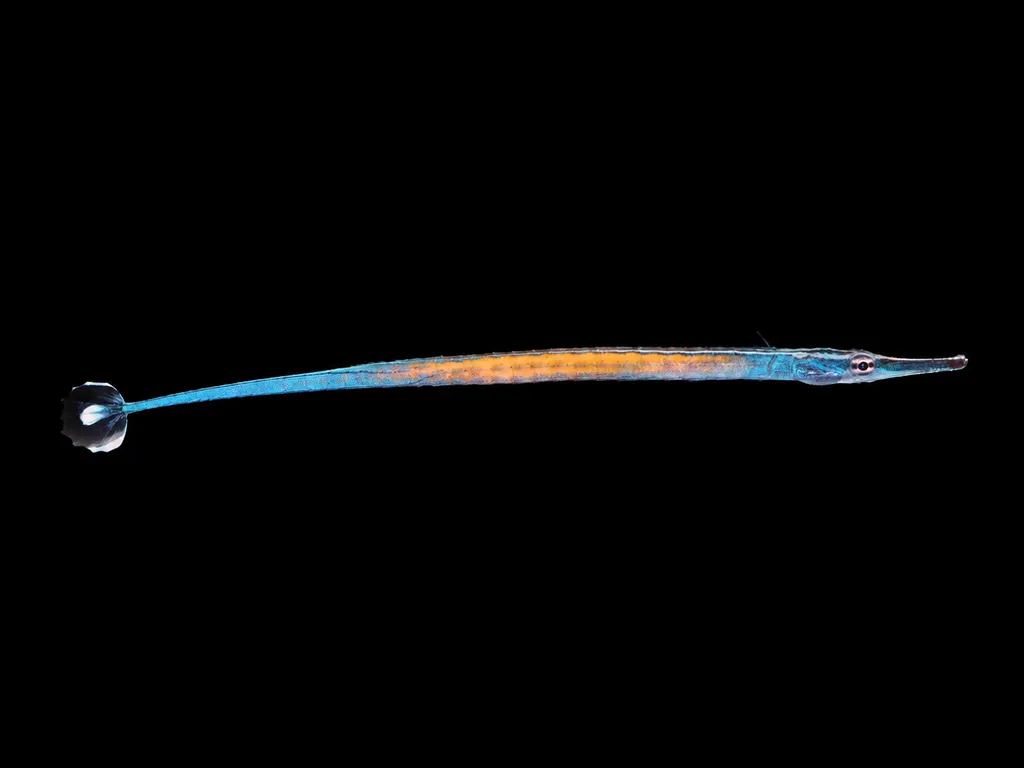
Janss' pipefish
Doryrhamphus janssi
Saltwater5.5 in (14 cm) · 50 gal (190 L)72–79°F (22–26°C)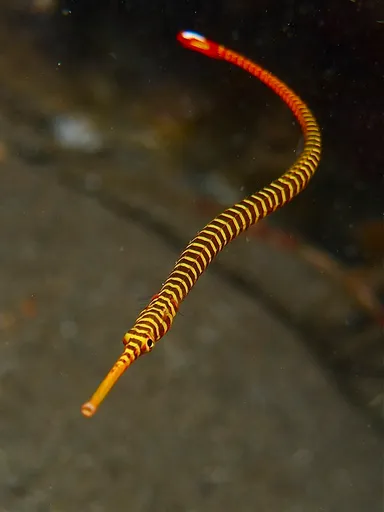
Yellowbanded pipefish
Dunckerocampus pessuliferus
Saltwater6.3 in (16 cm) · 53 gal (200 L)72–79°F (22–26°C)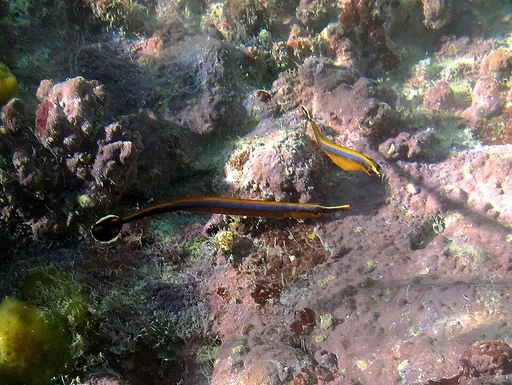
Narrowstripe pipefish
Doryrhamphus bicarinatus
Saltwater3.1 in (8 cm) · 30 gal (114 L)72–79°F (22–26°C)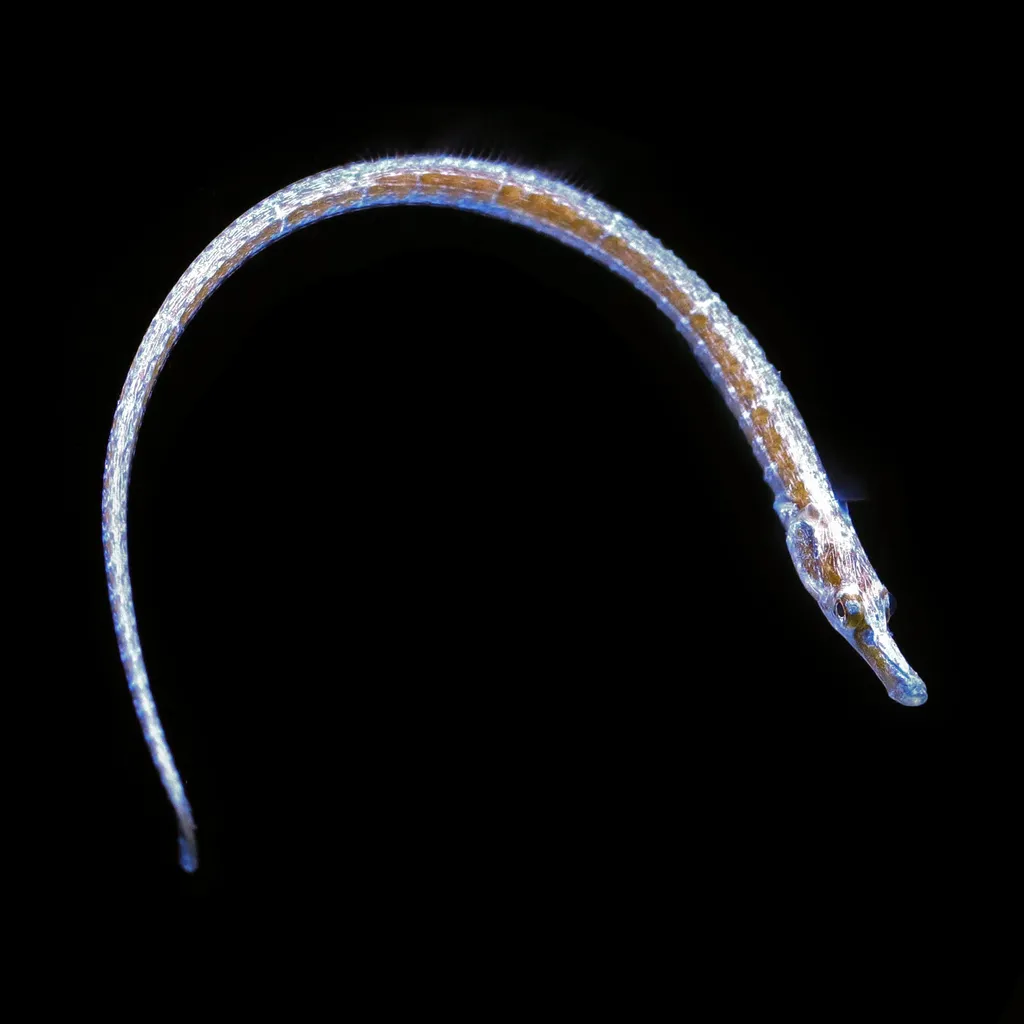
Gulf pipefish
Syngnathus scovelli
Saltwater7.1 in (18 cm) · 20 gal (76 L)68–75°F (20–24°C)
Freshwater
The freshwater pipefish
The freshwater pipefish is 5.9 inches (15 cm) for 32 gallons (120 liters), a slow hunter of live food in a calm, planted tank. The African freshwater pipefish is the one marked medium, 5.5 inches (14 cm) for the same tank. Dora's pipefish and the Indian brindled pipefish are 7.1 and 6.7 inches (18 and 17 cm) for 30 gallons (112 liters), marked peaceful. The red belly pipefish is an estuary fish that takes brackish water, 5.9 inches (15 cm) for 21 gallons (80 liters). The longmouth pipefish is the biggest a hobbyist is likely to meet at 13.4 inches (34 cm) for 53 gallons (200 liters). They eat live brine shrimp, daphnia and blackworms, and a tank of them needs a culture running alongside it.
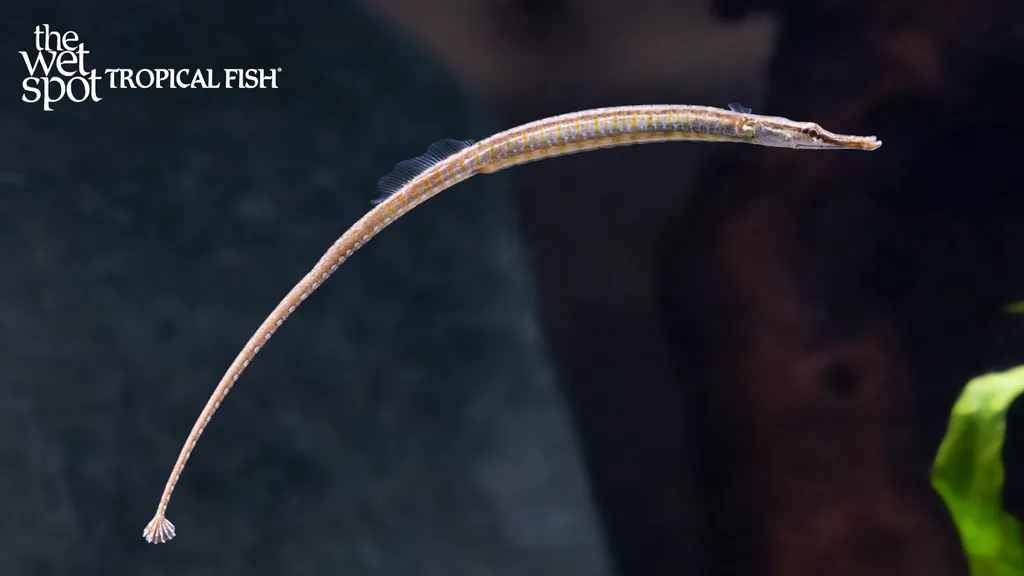
Freshwater pipefish
Doryichthys martensii
Freshwater5.9 in (15 cm) · 32 gal (120 L)75–82°F (24–28°C)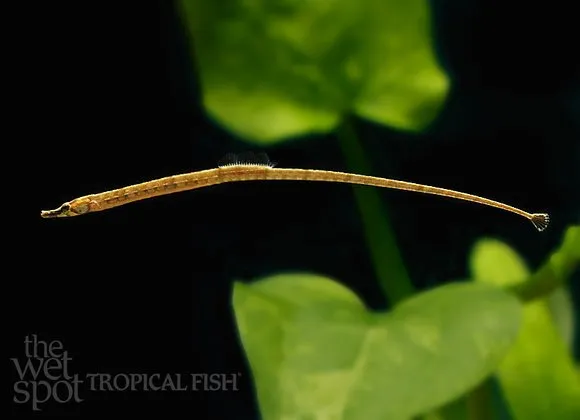
African freshwater pipefish
Enneacampus ansorgii
Freshwater5.5 in (14 cm) · 32 gal (120 L)75–82°F (24–28°C)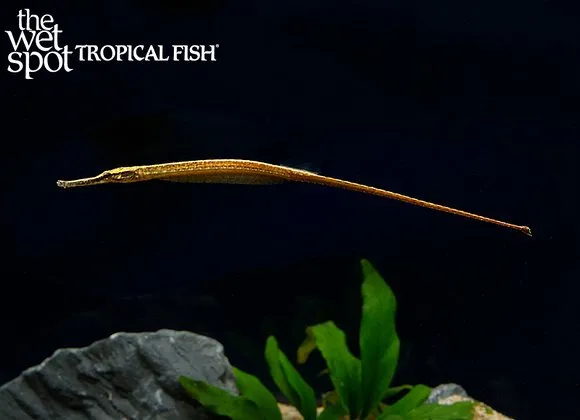
Dora's pipefish
Microphis deokhatoides
Freshwater7.1 in (18 cm) · 30 gal (112 L)73–82°F (23–28°C)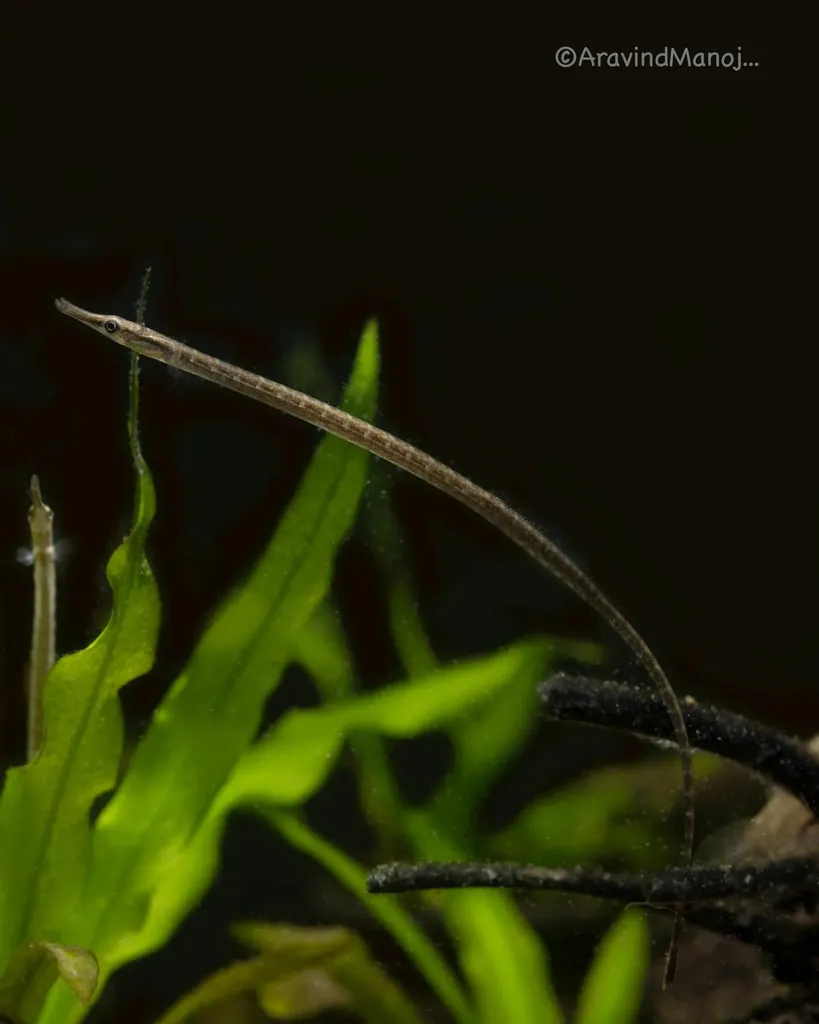
Indian brindled pipefish
Microphis cuncalus
Freshwater6.7 in (17 cm) · 30 gal (112 L)73–82°F (23–28°C)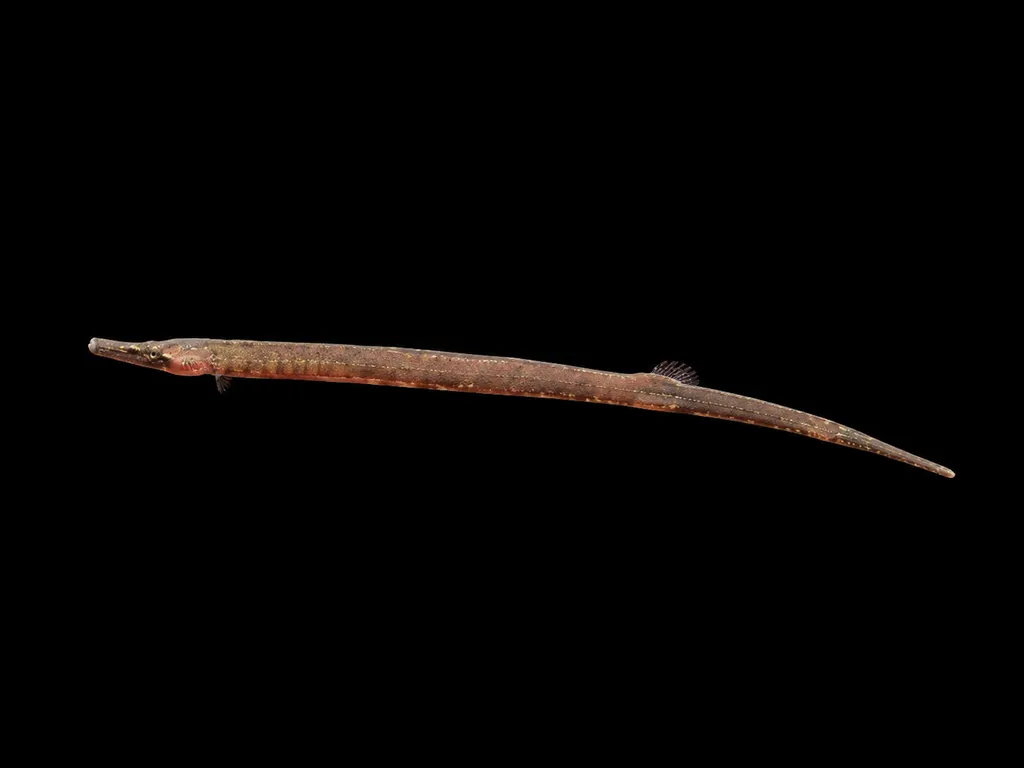
Red belly pipefish
Hippichthys heptagonus
FreshwaterBrackish5.9 in (15 cm) · 21 gal (80 L)75–84°F (24–29°C)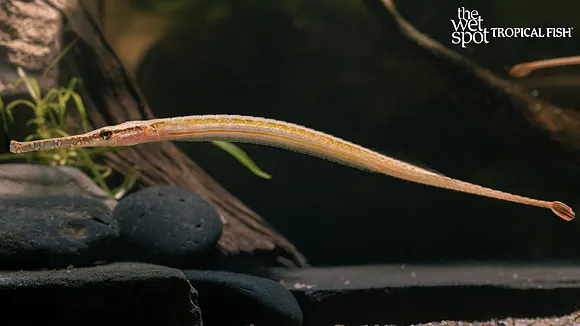
Longmouth pipefish
Doryichthys heterosoma
Freshwater13.4 in (34 cm) · 53 gal (200 L)73–82°F (23–28°C)
By the numbers
Smallest
Largest
Most peaceful
FAQ
Common questions
Are seahorses hard to keep?
Every seahorse and pipefish in the catalog is marked difficult. They need a tank of their own, frozen mysis two or three times a day, gentle flow and, for the temperate species, water at 68–75°F (20–24°C).
What size tank does a seahorse need?
The lined and Brazilian seahorses list 29 gallons (110 liters), the yellow seahorse 40 gallons (150 liters), the dwarf seahorse 5 gallons (20 liters). A pair wants a tall tank, because seahorses court and feed vertically.
What do seahorses eat?
Frozen mysis shrimp, fed two or three times a day. A wild-caught seahorse may take only live food at first; the dwarf seahorse eats live baby brine shrimp for life.
Can seahorses live in a reef tank?
With slow tank mates and no stinging corals, yes, but a normal reef is too fast for them. They lose food to every wrasse and clownfish, and a bubble tip anemone catches them.
Can a pipefish live in freshwater?
Several do. The freshwater, Dora's and Indian brindled pipefish are freshwater species, and the red belly and opossum pipefish take brackish water. All of them eat live food.
Do seahorses need a heater?
The Brazilian and yellow seahorses want 72–81°F (22–27°C). The lined seahorse, White's seahorse and the Gulf pipefish list 68–75°F (20–24°C) and often need a chiller in summer instead.
Index
Freshwater seahorses & pipefish
African freshwater pipefish
Enneacampus ansorgii
Freshwater5.5 in (14 cm) · 32 gal (120 L)75–82°F (24–28°C)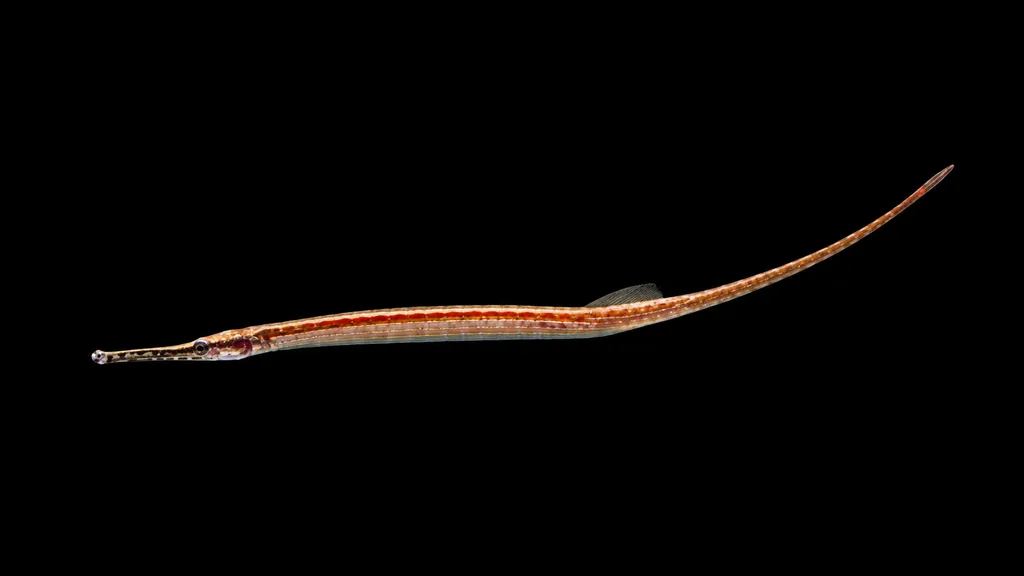
African red-striped pipefish
Microphis aculeatus
FreshwaterBrackish7.9 in (20 cm) · 32 gal (120 L)75–82°F (24–28°C)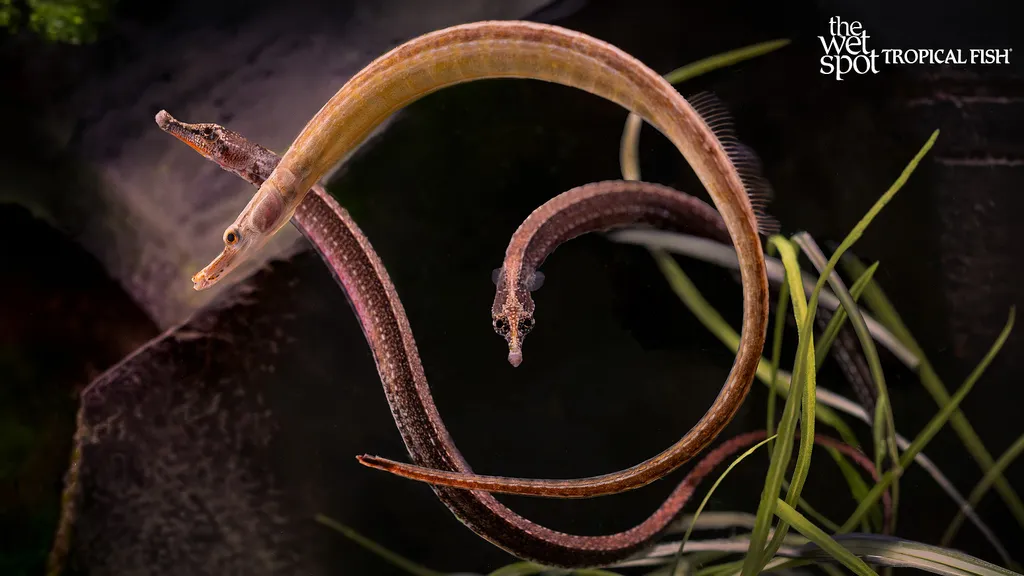
Barhead pipefish
Microphis leiaspis
FreshwaterBrackish7.5 in (19 cm) · 32 gal (120 L)72–81°F (22–27°C)Dora's pipefish
Microphis deokhatoides
Freshwater7.1 in (18 cm) · 30 gal (112 L)73–82°F (23–28°C)Freshwater pipefish
Doryichthys martensii
Freshwater5.9 in (15 cm) · 32 gal (120 L)75–82°F (24–28°C)Indian brindled pipefish
Microphis cuncalus
Freshwater6.7 in (17 cm) · 30 gal (112 L)73–82°F (23–28°C)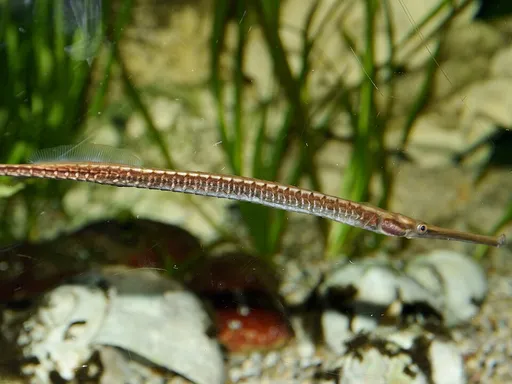
Long-snouted pipefish
Doryichthys boaja
Freshwater16.1 in (41 cm) · 53 gal (200 L)79–82°F (26–28°C)Longmouth pipefish
Doryichthys heterosoma
Freshwater13.4 in (34 cm) · 53 gal (200 L)73–82°F (23–28°C)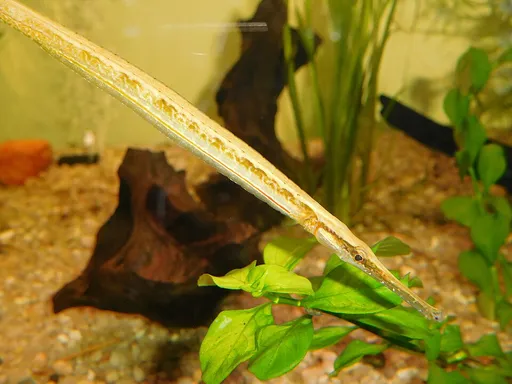
Opossum pipefish
Microphis brachyurus
FreshwaterBrackish8.7 in (22 cm) · 32 gal (120 L)75–82°F (24–28°C)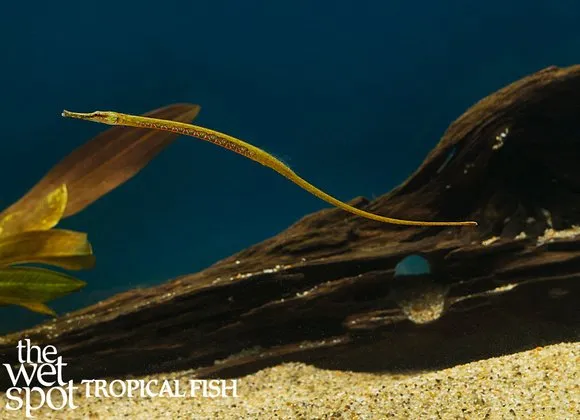
Rainbow belly pipefish
Microphis deocata
Freshwater5.9 in (15 cm) · 20 gal (75 L)77–82°F (25–28°C)Red belly pipefish
Hippichthys heptagonus
FreshwaterBrackish5.9 in (15 cm) · 21 gal (80 L)75–84°F (24–29°C)
Saltwater seahorses & pipefish
Banded pipefish
Dunckerocampus dactyliophorus
Saltwater7.5 in (19 cm) · 53 gal (200 L)75–81°F (24–27°C)Bluestripe pipefish
Doryrhamphus excisus
Saltwater2.8 in (7 cm) · 26 gal (100 L)75–81°F (24–27°C)Brazilian seahorse
Hippocampus reidi
Saltwater6.7 in (17 cm) · 29 gal (110 L)72–81°F (22–27°C)Dwarf seahorse
Hippocampus zosterae
Saltwater1.4 in (3.5 cm) · 5 gal (20 L)68–79°F (20–26°C)Gulf pipefish
Syngnathus scovelli
Saltwater7.1 in (18 cm) · 20 gal (76 L)68–75°F (20–24°C)Janss' pipefish
Doryrhamphus janssi
Saltwater5.5 in (14 cm) · 50 gal (190 L)72–79°F (22–26°C)Lined seahorse
Hippocampus erectus
Saltwater7.1 in (18 cm) · 29 gal (110 L)68–79°F (20–26°C)Narrowstripe pipefish
Doryrhamphus bicarinatus
Saltwater3.1 in (8 cm) · 30 gal (114 L)72–79°F (22–26°C)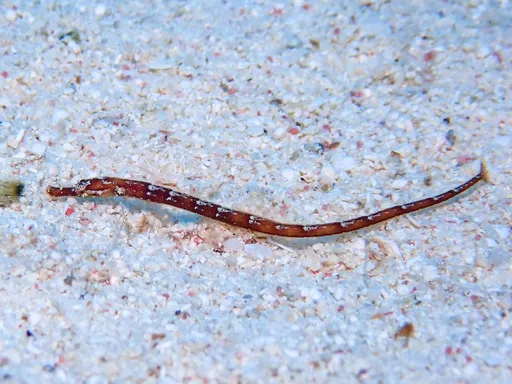
Shortfin pipefish
Cosmocampus elucens
Saltwater5.9 in (15 cm) · 20 gal (76 L)68–75°F (20–24°C)White's seahorse
Hippocampus whitei
Saltwater6.3 in (16 cm) · 30 gal (114 L)68–75°F (20–24°C)Yellow seahorse
Hippocampus kuda
Saltwater7.9 in (20 cm) · 40 gal (150 L)72–81°F (22–27°C)Yellowbanded pipefish
Dunckerocampus pessuliferus
Saltwater6.3 in (16 cm) · 53 gal (200 L)72–79°F (22–26°C)
Planning a tank?
TankBud checks stocking and water fit as you build a tank, then tracks water tests, reminders and photos once it is running.
Track your tanksMaintain tanks for clients? See TankBud Pro