Yellow seahorse
Hippocampus kuda
Also known as Spotted seahorse, Common seahorse, Estuary seahorse, Kuda seahorse
SaltwaterFish

Care at a glance
- Temperature
- 72–81°F
- 22–27°C
- pH
- 8.0–8.4
- Adult size
- 7.9 in
- 20 cm
- Minimum tank
- 40 gal
- 150 L
- Temperament
- Peaceful
- Social behavior
- Social
- Tankmates
- With caution
- Swim level
- Middle
- Diet
- Carnivore
- Difficulty
- Difficult
- Breeding
- Pouch brooder · Medium
- Rarity
- Common
- Reef safe
- Reef safe with caution
- Family
- Syngnathidae
- Origin
- Native to the Indo-Pacific, living in estuaries, seagrass and mangroves, and tolerant of slightly brackish coastal water.
Overview
The yellow seahorse is a peaceful seahorse for a calm species tank. It is a seahorse for experienced keepers.
Did you know
The yellow seahorse can tolerate brackish water, which is unusual for a fish kept in reef-style saltwater aquariums.
Caring for the yellow seahorse
Because it grows larger, give the yellow seahorse a tall species tank of at least 40 gal (150 L). Keep the flow gentle and add sturdy hitching posts, since it grips plants and decor with its tail.
Hold the water at 72 to 81°F (22 to 27°C) and a pH of 8.0 to 8.4. In the hobby it is kept in full-strength saltwater. Watch water quality closely, since seahorses are sensitive to bacterial infections.
Feed enriched frozen mysis shrimp once or twice a day. Keep captive-bred fish in pairs or groups.
The yellow seahorse is peaceful, so keep it only with slow, gentle tank mates and no fast feeders. It is reef safe with caution, and it should stay away from stinging anemones and aggressive corals.
Males brood the eggs in a pouch and give birth to hundreds of miniature seahorses. Breeding them is moderately difficult.
Good to know
The yellow seahorse, Hippocampus kuda, is a larger tropical seahorse in the family Syngnathidae. It often shows a golden yellow body, though it also comes in brown, black and blotched patterns. It has a smooth, rounded head and a stout body. It is one of the most widely kept and most farmed seahorses, so tank-raised stock is common.
In the wild
The yellow seahorse is native to the Indo-Pacific. It lives in river mouths, estuaries, seagrass and mangroves along the coast.
Common questions
What size tank does a yellow seahorse need?
A yellow seahorse needs at least 40 gal (150 L). It spends most of its time in the middle.
What temperature and pH does a yellow seahorse need?
A yellow seahorse is comfortable at 72–81°F (22–27°C) with a pH of 8.0–8.4.
What does a yellow seahorse eat?
A yellow seahorse eats enriched frozen mysis shrimp. Feed it once or twice a day.
How big does a yellow seahorse get?
An adult yellow seahorse reaches about 7.9 in (20 cm).
How can you tell a male yellow seahorse from a female?
Males have a brood pouch, where they carry the eggs, and females do not.
How does a yellow seahorse breed?
Yellow seahorse males brood the eggs in a pouch and give birth to hundreds of miniature seahorses. Breeding them is moderately difficult.
Related species
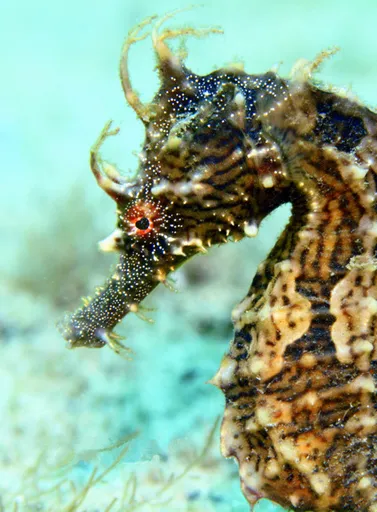 7.1 in (18 cm)29 gal (110 L)68–79°F (20–26°C)
Lined seahorse
Hippocampus erectus
7.1 in (18 cm) · 29 gal (110 L)
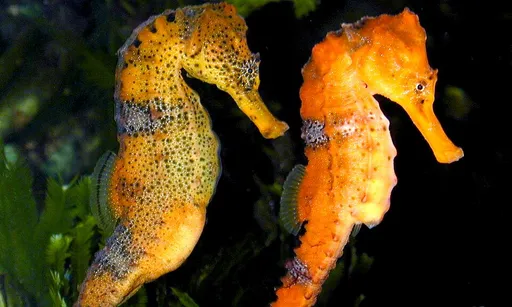 6.7 in (17 cm)29 gal (110 L)72–81°F (22–27°C)
Brazilian seahorse
Hippocampus reidi
6.7 in (17 cm) · 29 gal (110 L)
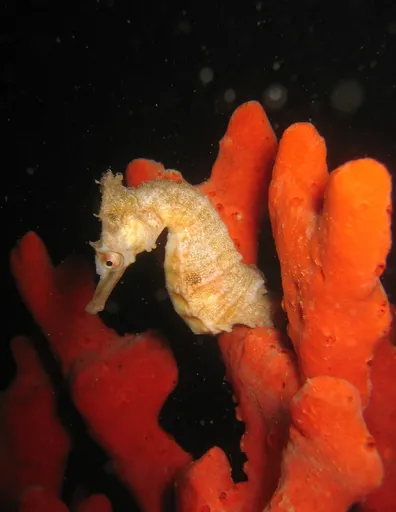 6.3 in (16 cm)30 gal (114 L)68–75°F (20–24°C)
White's seahorse
Hippocampus whitei
6.3 in (16 cm) · 30 gal (114 L)
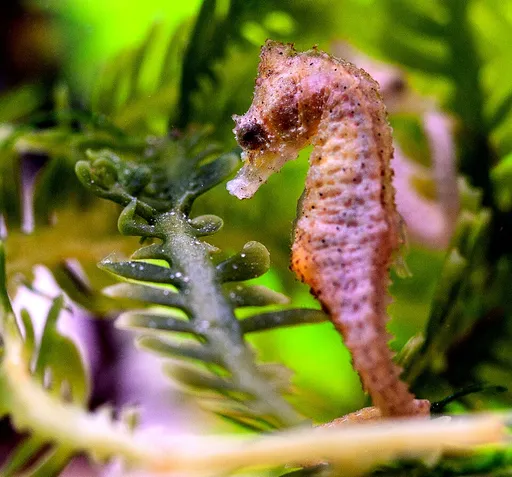 1.4 in (3.5 cm)5 gal (20 L)68–79°F (20–26°C)
Dwarf seahorse
Hippocampus zosterae
1.4 in (3.5 cm) · 5 gal (20 L)
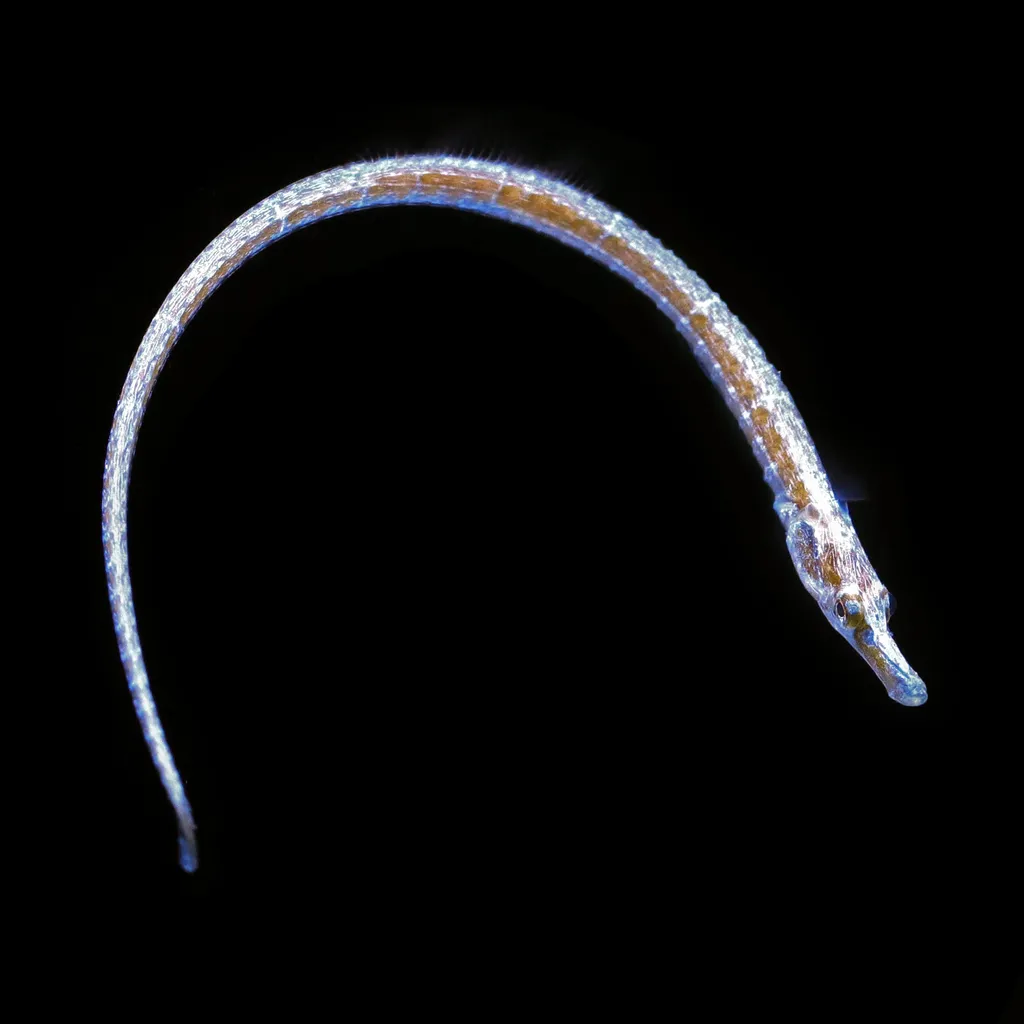 7.1 in (18 cm)20 gal (76 L)68–75°F (20–24°C)
Gulf pipefish
Syngnathus scovelli
7.1 in (18 cm) · 20 gal (76 L)
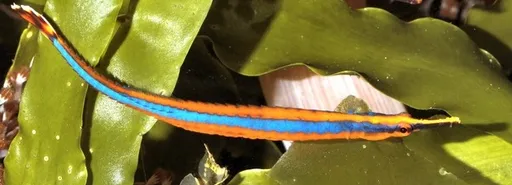 2.8 in (7 cm)26 gal (100 L)75–81°F (24–27°C)
Bluestripe pipefish
Doryrhamphus excisus
2.8 in (7 cm) · 26 gal (100 L)