Rainbowfish care
Rainbowfish color up as they mature and settle, so a drab young fish in a shop often becomes a shimmering adult in a good group. The larger melanotaenias want room to swim, while blue-eyes and threadfins stay small enough for a nano tank. Each profile lists tank size, water conditions and group size.
At a glance
- Tank size
- 11–66 gal
- 11 gal (40 L) to 66 gal (250 L); half the list needs 29 gal (110 L) or more
- Temperature
- 75–84°F
- 24–29°C, most of the list
- pH
- 6.8–8.0
- Most of the list
- Difficulty
- 17 easy
- 47 medium · 1 difficult
- Temperament
- 62 peaceful
- 3 mostly peaceful
65 species
Rainbowfish care
Rainbowfish are schooling fish and show their colour in a group: six is the minimum, more is better, and several males per species is what turns on the display. They are active open-water swimmers, so tank length matters more than volume; the 4 to 6 inch (10 to 15 cm) melanotaenias want a 4 foot tank, which is why most of them list 30 to 55 gallons (115 to 200 liters) as a minimum. Most are undemanding about water and do well in neutral to moderately hard conditions, roughly pH 6.5–8.0 and 72–86°F (22–30°C); the profiles flag the soft-water and cool-water exceptions. They eat flake, pellets and frozen foods without fuss. Give them clear swimming room down the middle with planted edges, a lid because they jump, and time: a drab juvenile becomes a coloured adult over the first year, and the big species live five years or more.
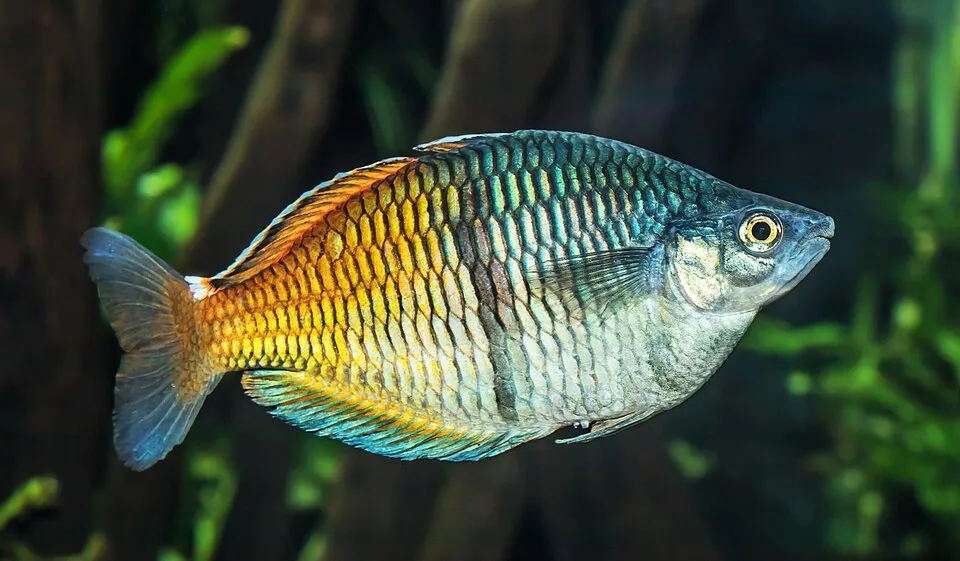
Boeseman's rainbowfish
Melanotaenia boesemani
Freshwater- Size
- 4.3 in (11 cm)
- Tank
- 30 gal (115 L)
- Water
- 81–86°F (27–30°C)
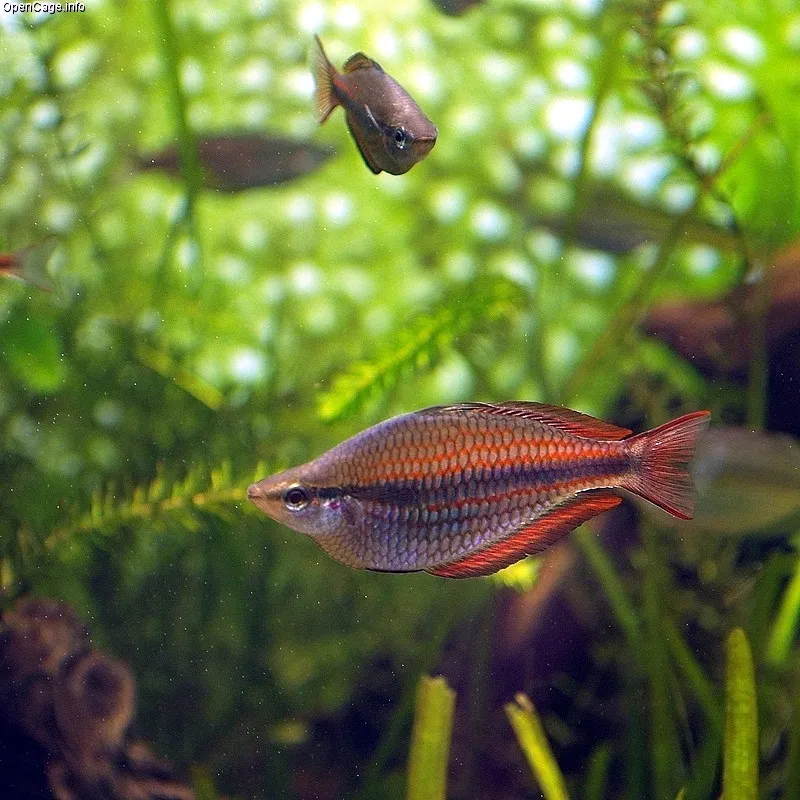
Banded rainbowfish
Melanotaenia trifasciata
Freshwater- Size
- 5.9 in (15 cm)
- Tank
- 50 gal (190 L)
- Water
- 75–84°F (24–29°C)
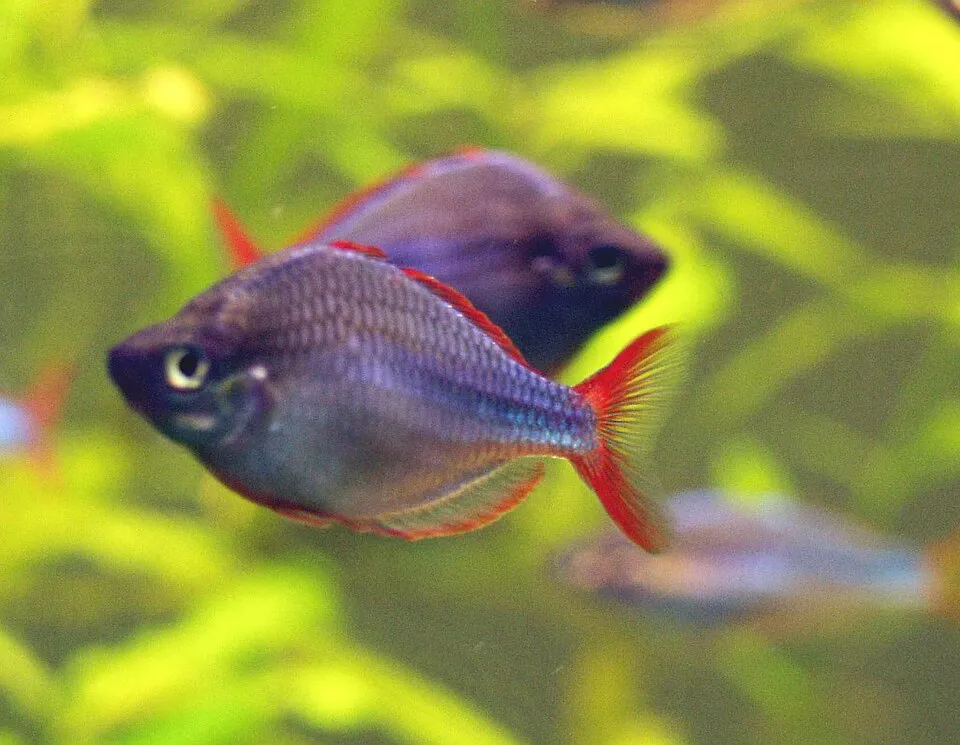
Neon rainbowfish
Melanotaenia praecox
Freshwater- Size
- 3.1 in (8 cm)
- Tank
- 29 gal (110 L)
- Water
- 73–82°F (23–28°C)
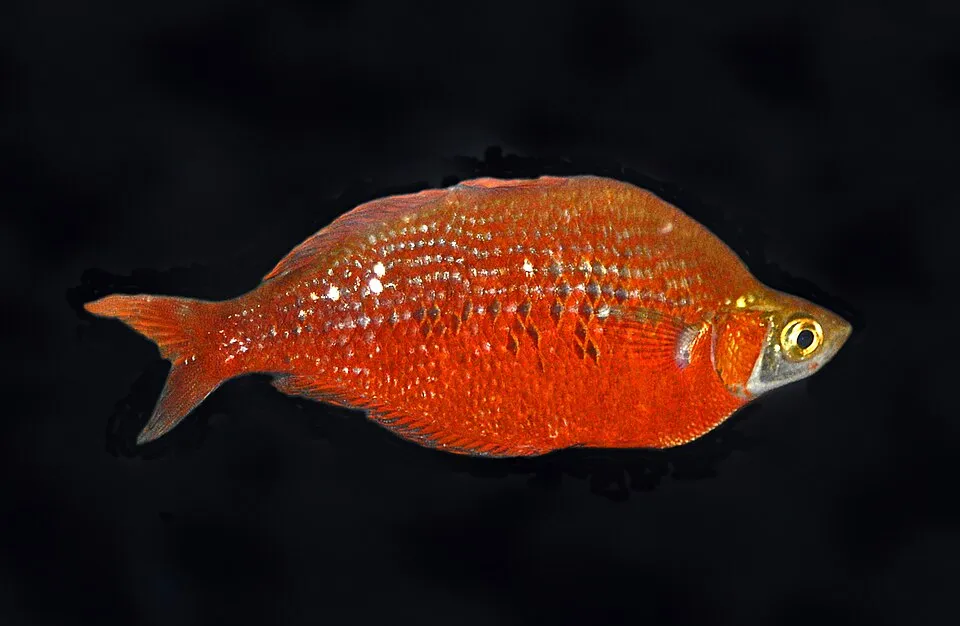
Red rainbowfish
Glossolepis incisus
Freshwater- Size
- 5.5 in (14 cm)
- Tank
- 34 gal (130 L)
- Water
- 72–77°F (22–25°C)
Blue-eyes and threadfins for nano tanks
The blue-eyes (Pseudomugil) and the threadfin rainbowfish stay between 1.5 and 3 inches (3.5 and 7 cm) and are happy from 10 to 25 gallons (40 to 95 liters). They are gentle fish for gentle company: keep them with small, calm tankmates, feed fine foods such as baby brine shrimp and crushed flake, and give them floating plants or spawning mops to display over. Their lives are shorter than the big rainbows, which is one reason they are often bred at home. The Popondetta blue-eye is the easy one to start with; the forktail, red neon and spotted blue-eyes and the threadfin follow once the tank is settled.
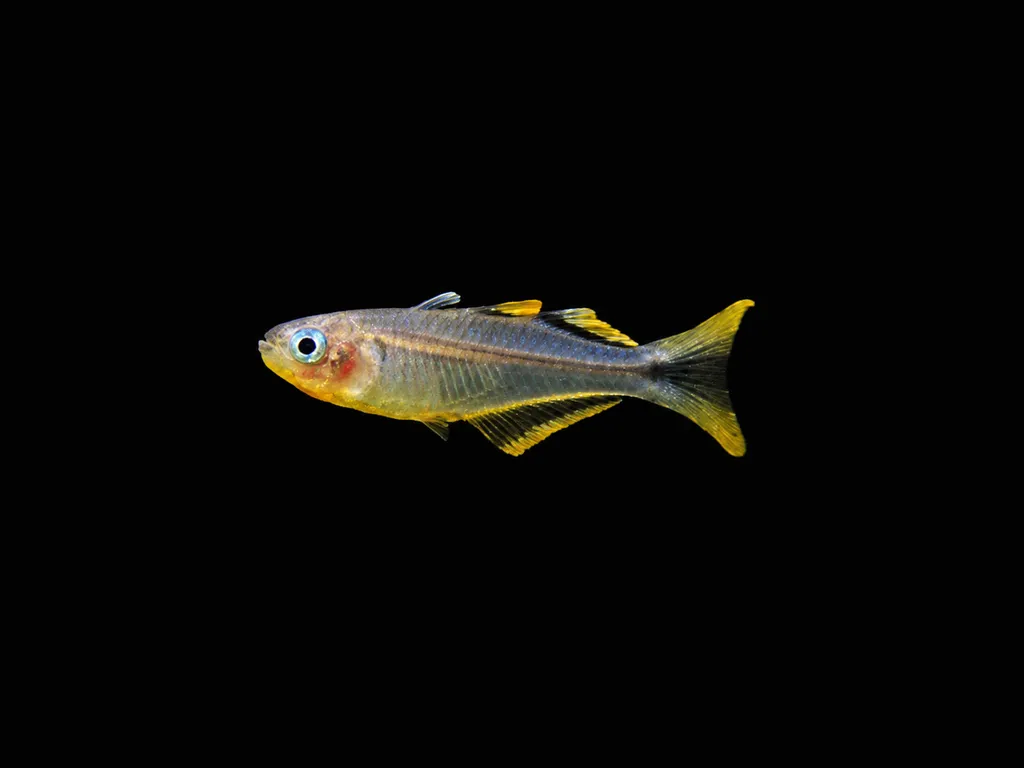
Popondetta blue-eye
Pseudomugil connieae
Freshwater2 in (5 cm) · 11 gal (40 L)75–82°F (24–28°C)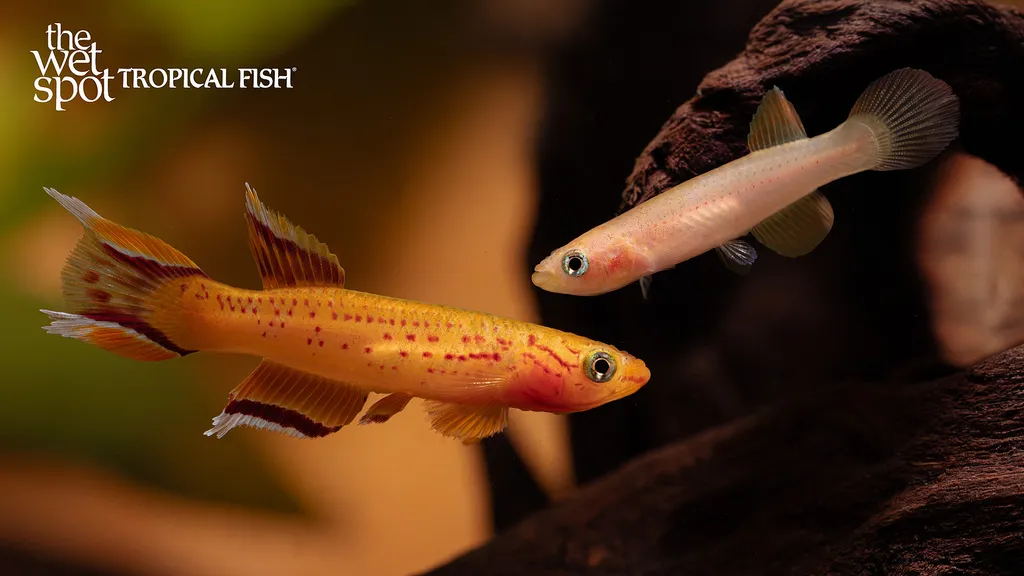
Forktail blue-eye
Pseudomugil furcatus
Freshwater2.2 in (5.5 cm) · 22 gal (85 L)75–82°F (24–28°C)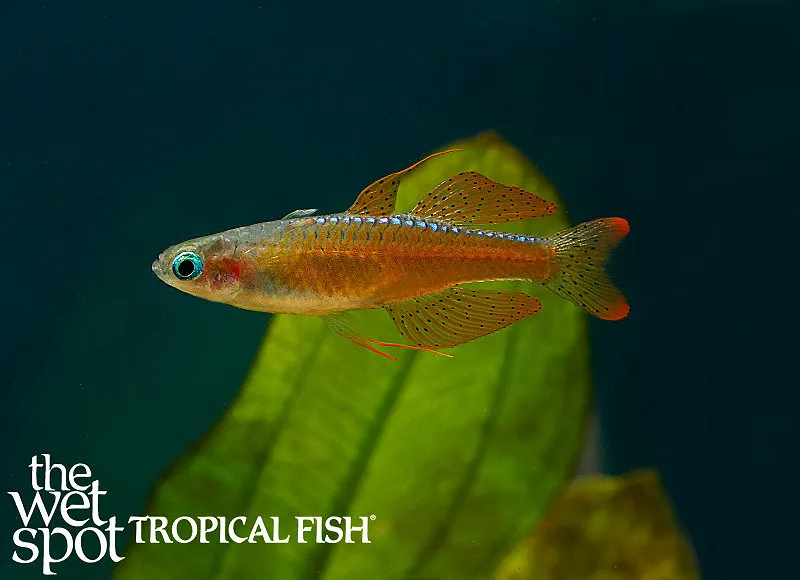
Red neon blue-eye
Pseudomugil luminatus
Freshwater1.4 in (3.5 cm) · 11 gal (40 L)72–81°F (22–27°C)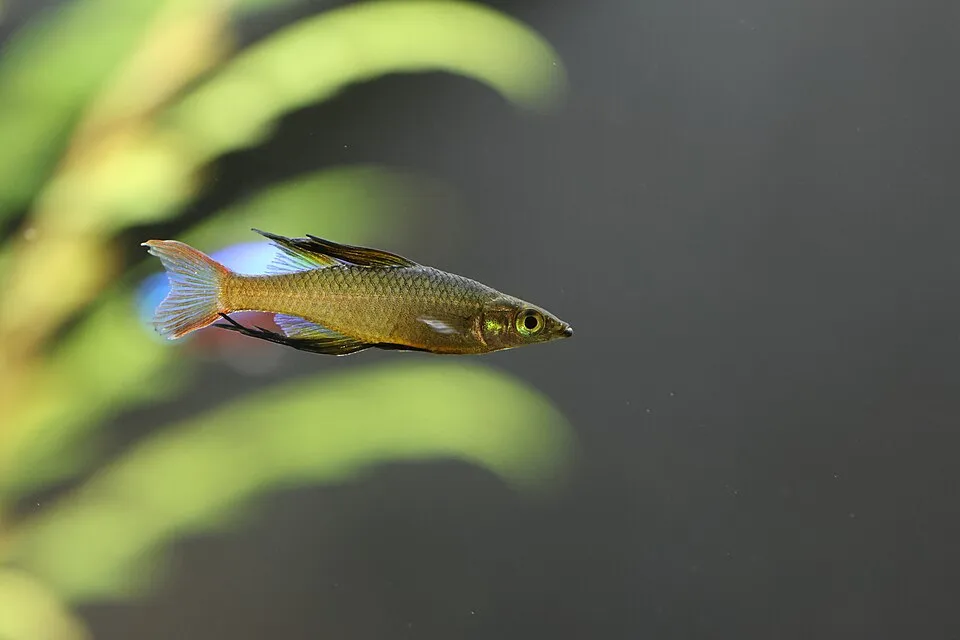
Threadfin rainbowfish
Iriatherina werneri
Freshwater1.6 in (4 cm) · 13 gal (50 L)72–86°F (22–30°C)
Cool-water rainbows
Not every rainbowfish wants a tropical tank. The Australian rainbowfish, the Lake Kutubu and Lake Tebera rainbowfish and the Pacific blue-eye all list temperatures from around 68°F (20°C), and the desert and Duboulayi's rainbowfish go lower still. The first four top out at 77–79°F (25–26°C) and will sulk in the 82°F (28°C) most community tanks run at; they suit an unheated room or a tank shared with other cool-water fish. The desert and Duboulayi's rainbowfish take the warm end as well. Check the temperature range on the profile before mixing them with warm-water species.
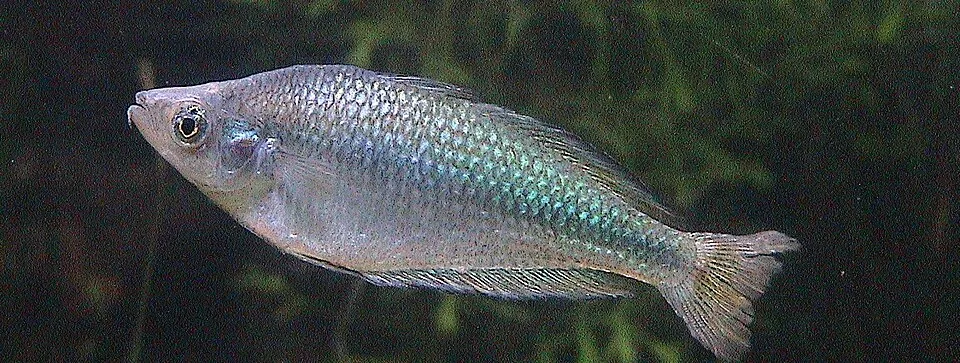
Australian rainbowfish
Melanotaenia fluviatilis
Freshwater4.3 in (11 cm) · 30 gal (115 L)68–77°F (20–25°C)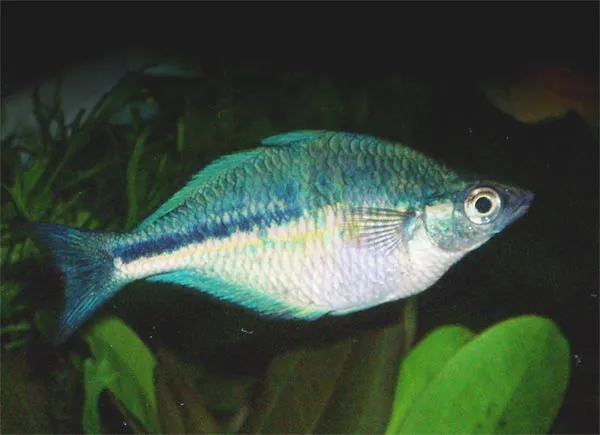
Lake Kutubu rainbowfish
Melanotaenia lacustris
Freshwater4.3 in (11 cm) · 29 gal (110 L)68–77°F (20–25°C)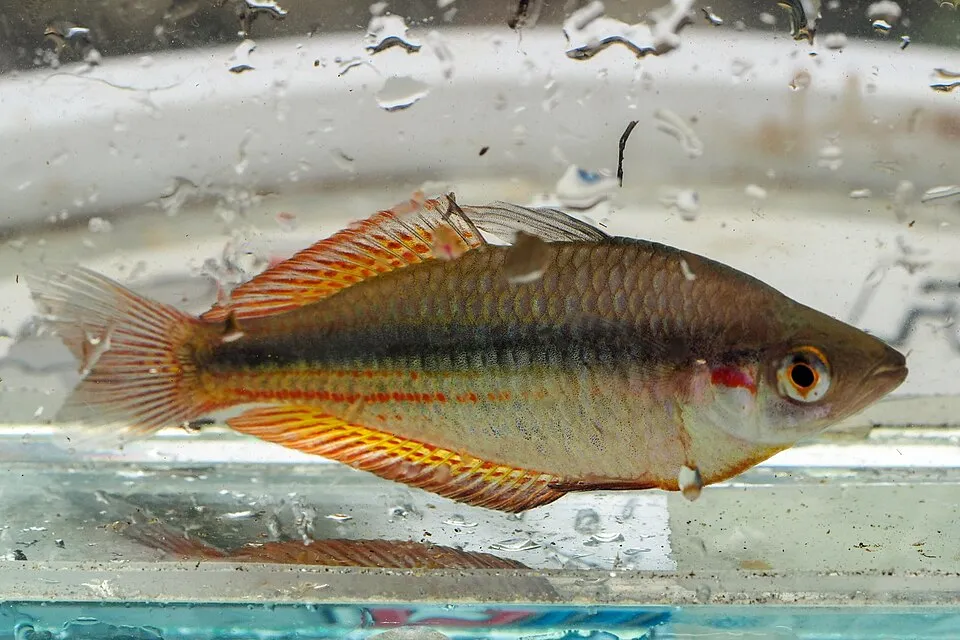
Duboulayi's rainbowfish
Melanotaenia duboulayi
Freshwater4.7 in (12 cm) · 30 gal (115 L)64–82°F (18–28°C)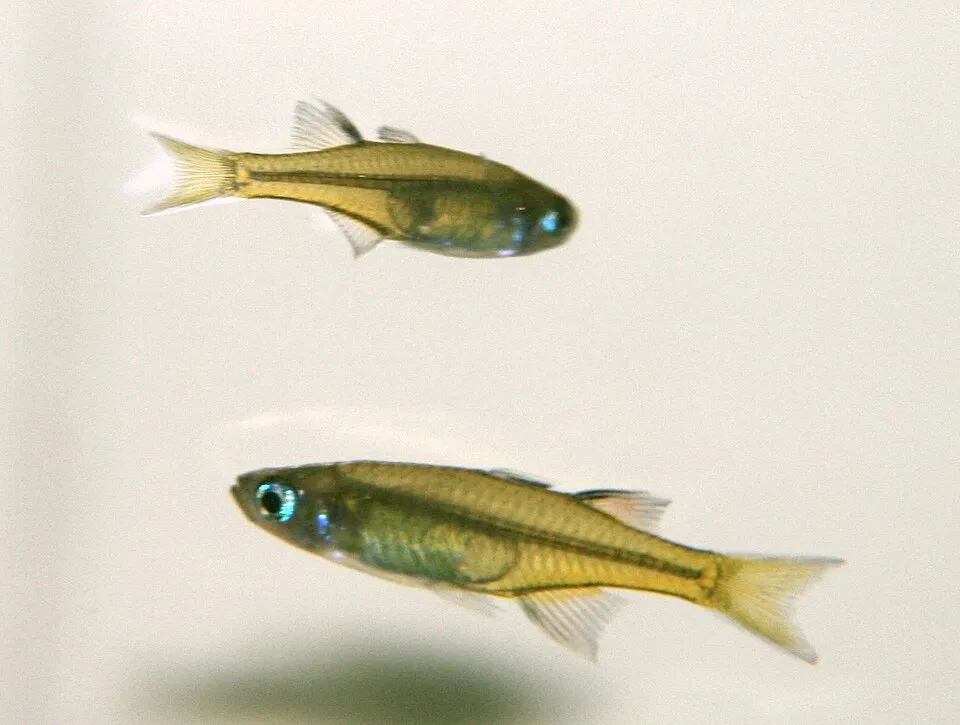
Pacific blue-eye
Pseudomugil signifer
Freshwater2.8 in (7 cm) · 25 gal (95 L)68–79°F (20–26°C)
One species per tank if you want pure lines
Melanotaenia rainbowfish hybridise freely, and the offspring are fertile and hard to identify. Serious keepers run one species per tank or, at most, one species per genus. If you are not breeding them a mixed school is fine and looks good, but do not pass the fry on as a named species. The blue-eyes are a separate family and do not cross with the larger rainbows, and neither do the Madagascar and Celebes rainbowfish, which are here by name and habit; the Celebes rainbow is marked difficult and wants hard, alkaline water.
By the numbers
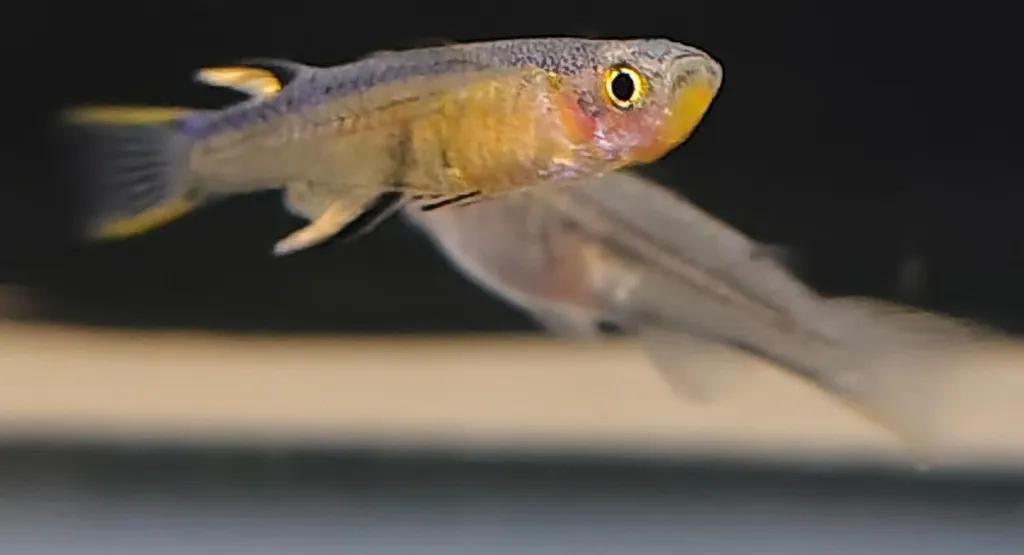
Smallest
Largest
Easiest to keep
Fits a 20 gallon tank
Fits a 30 gallon tank
FAQ
Common questions
How many rainbowfish should be kept together?
Six or more of one species, with several males. They school, and the males colour up when they have rivals to display to.
What size tank do rainbowfish need?
The 4 to 6 inch (10 to 15 cm) melanotaenias want a 4 foot tank, listed as 30 to 55 gallons (115 to 200 liters) depending on species. Blue-eyes and threadfins are happy from 10 to 25 gallons (40 to 95 liters).
Why are my rainbowfish not colourful?
Age and company. Juveniles are drab, colour arrives over the first year, and males show it when there are other males to compete with. Colour is strongest in the morning and during displays. Poor water and a lone fish both dull it.
Are rainbowfish aggressive?
No, but they are boisterous. A large school of big melanotaenias can outcompete slow or long-finned fish at feeding time. Keep them with other active mid-water fish.
What do rainbowfish eat?
Flake and pellets as the staple, with frozen bloodworm, brine shrimp and daphnia. Blue-eyes and threadfins need finer food.
Can different rainbowfish species live together?
Yes, and a mixed school gets along. The catch is that melanotaenias interbreed, so keep one species per tank if you want to breed or sell pure fish.
Index
Freshwater rainbowfish
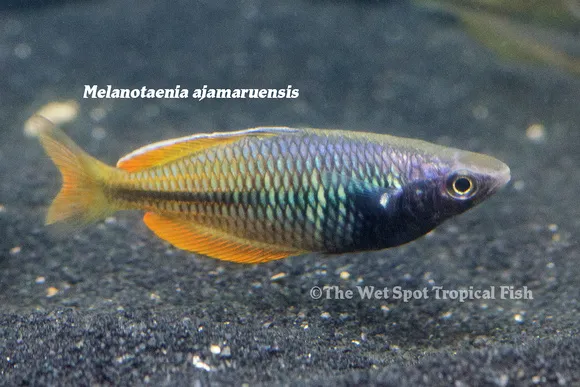
Ajamaru Lakes rainbowfish
Melanotaenia ajamaruensis
Freshwater4.3 in (11 cm) · 42 gal (160 L)75–84°F (24–29°C)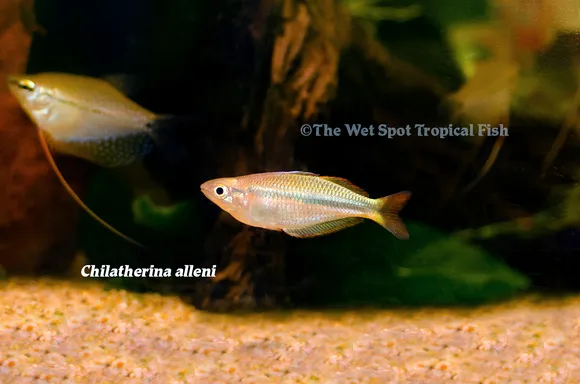
Allen's rainbowfish
Chilatherina alleni
Freshwater3 in (7.6 cm) · 29 gal (110 L)75–84°F (24–29°C)
Ammer rainbowfish
Melanotaenia ammeri
Freshwater4.6 in (11.7 cm) · 42 gal (160 L)77–86°F (25–30°C)Australian rainbowfish
Melanotaenia fluviatilis
Freshwater4.3 in (11 cm) · 30 gal (115 L)68–77°F (20–25°C)Banded rainbowfish
Melanotaenia trifasciata
Freshwater5.9 in (15 cm) · 50 gal (190 L)75–84°F (24–29°C)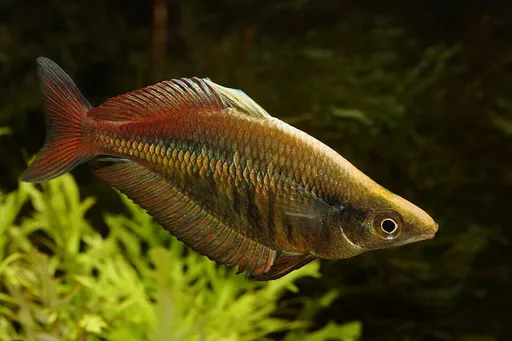
Barred rainbowfish
Chilatherina fasciata
Freshwater4.7 in (12 cm) · 53 gal (200 L)75–86°F (24–30°C)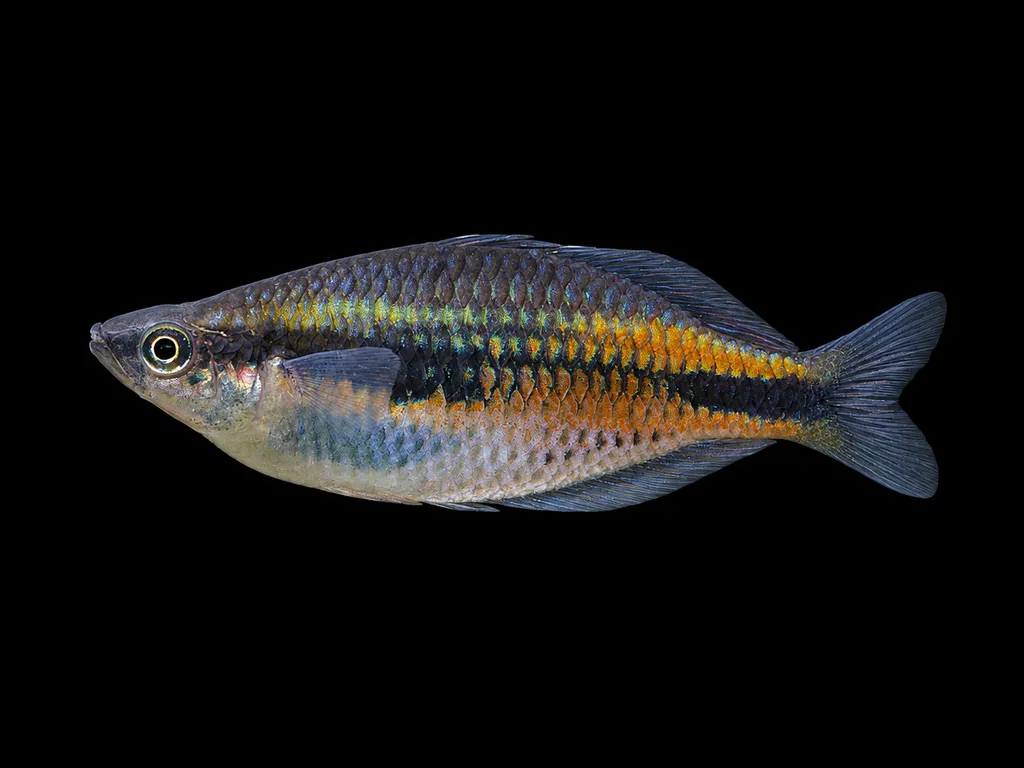
Batanta rainbowfish
Melanotaenia synergos
Freshwater3 in (7.7 cm) · 29 gal (110 L)77–86°F (25–30°C)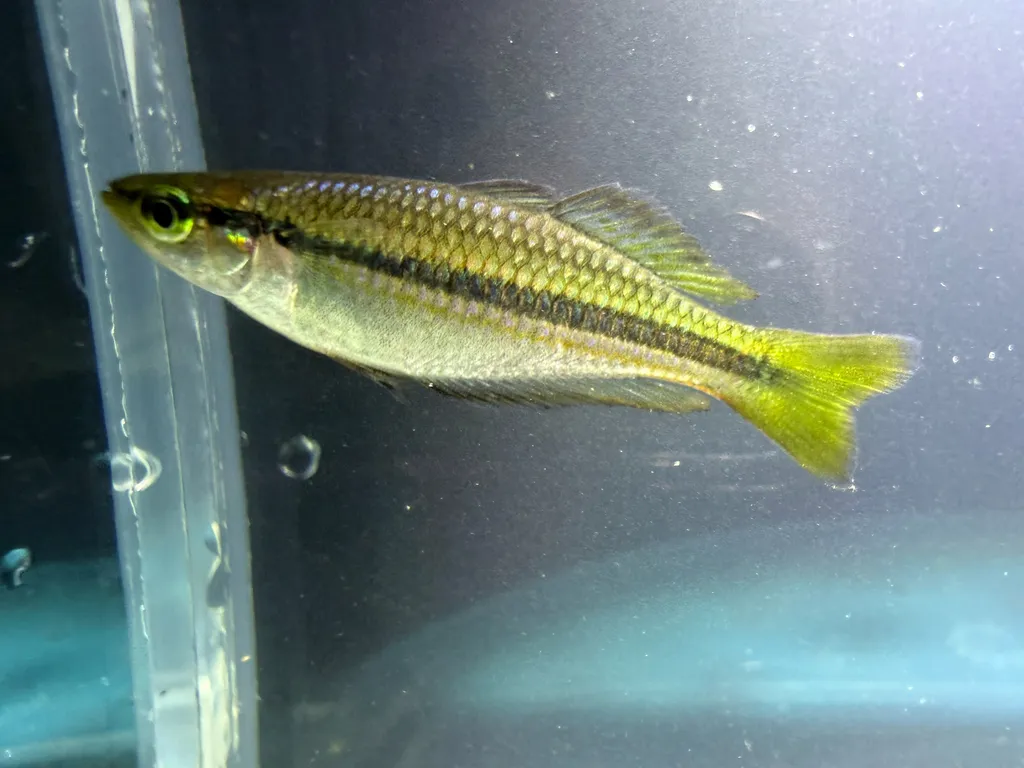
Black-banded rainbowfish
Melanotaenia nigrans
Freshwater3.9 in (10 cm) · 32 gal (120 L)72–82°F (22–28°C)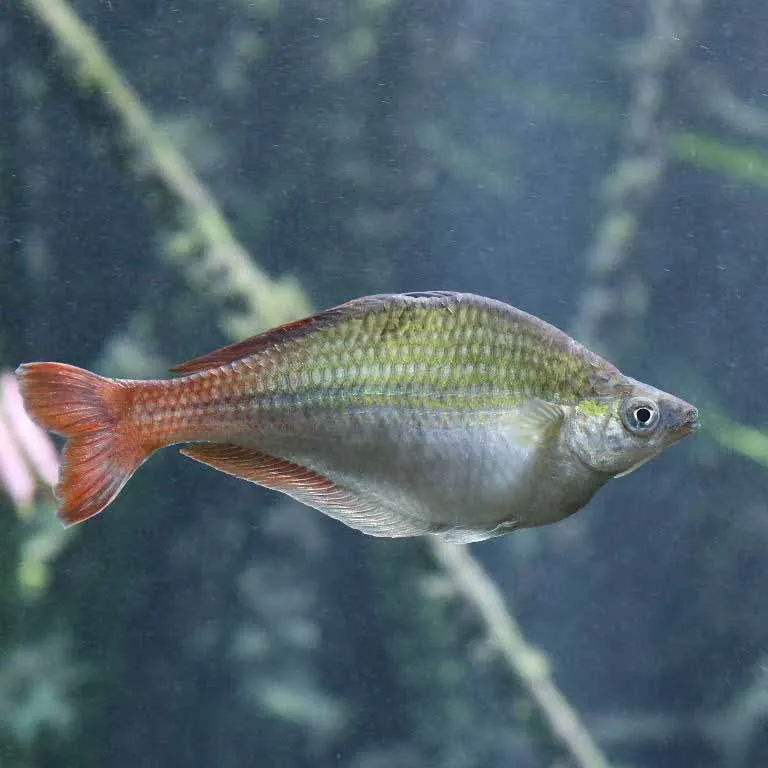
Bleher's rainbowfish
Chilatherina bleheri
Freshwater4.7 in (12 cm) · 53 gal (200 L)73–81°F (23–27°C)Boeseman's rainbowfish
Melanotaenia boesemani
Freshwater4.3 in (11 cm) · 30 gal (115 L)81–86°F (27–30°C)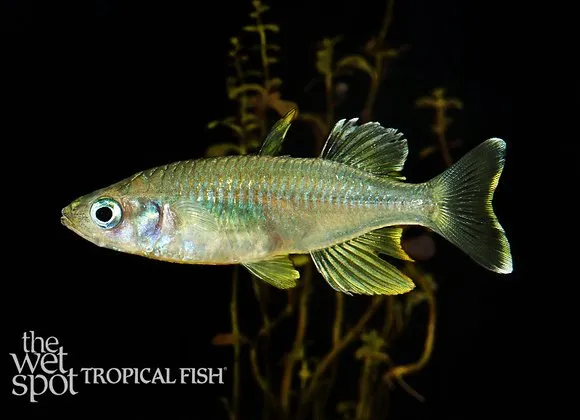
Bonti sailfin silverside
Telmatherina bonti
Freshwater3 in (7.5 cm) · 24 gal (90 L)77–84°F (25–29°C)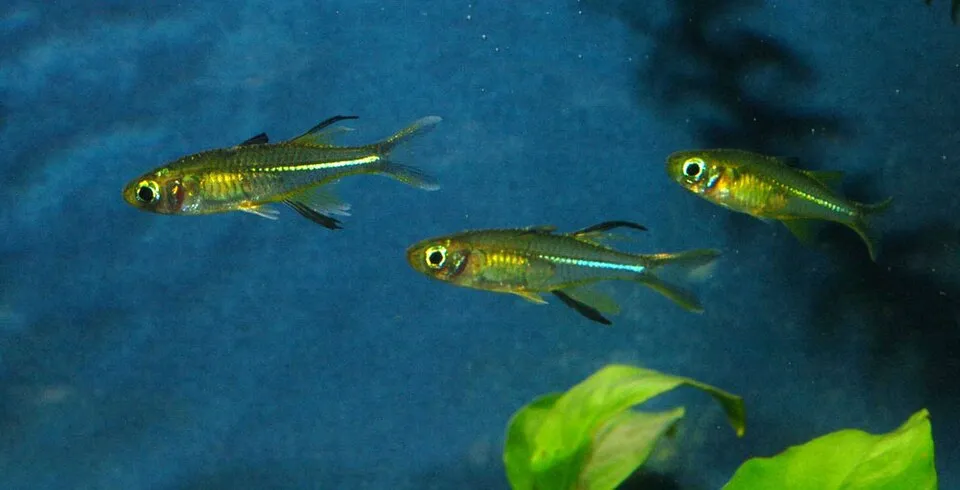
Celebes rainbow
Marosatherina ladigesi
FreshwaterBrackish3.1 in (8 cm) · 25 gal (95 L)72–82°F (22–28°C)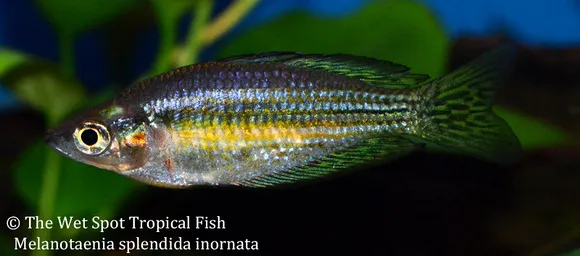
Checkered rainbowfish
Melanotaenia splendida inornata
Freshwater4.7 in (12 cm) · 53 gal (200 L)72–86°F (22–30°C)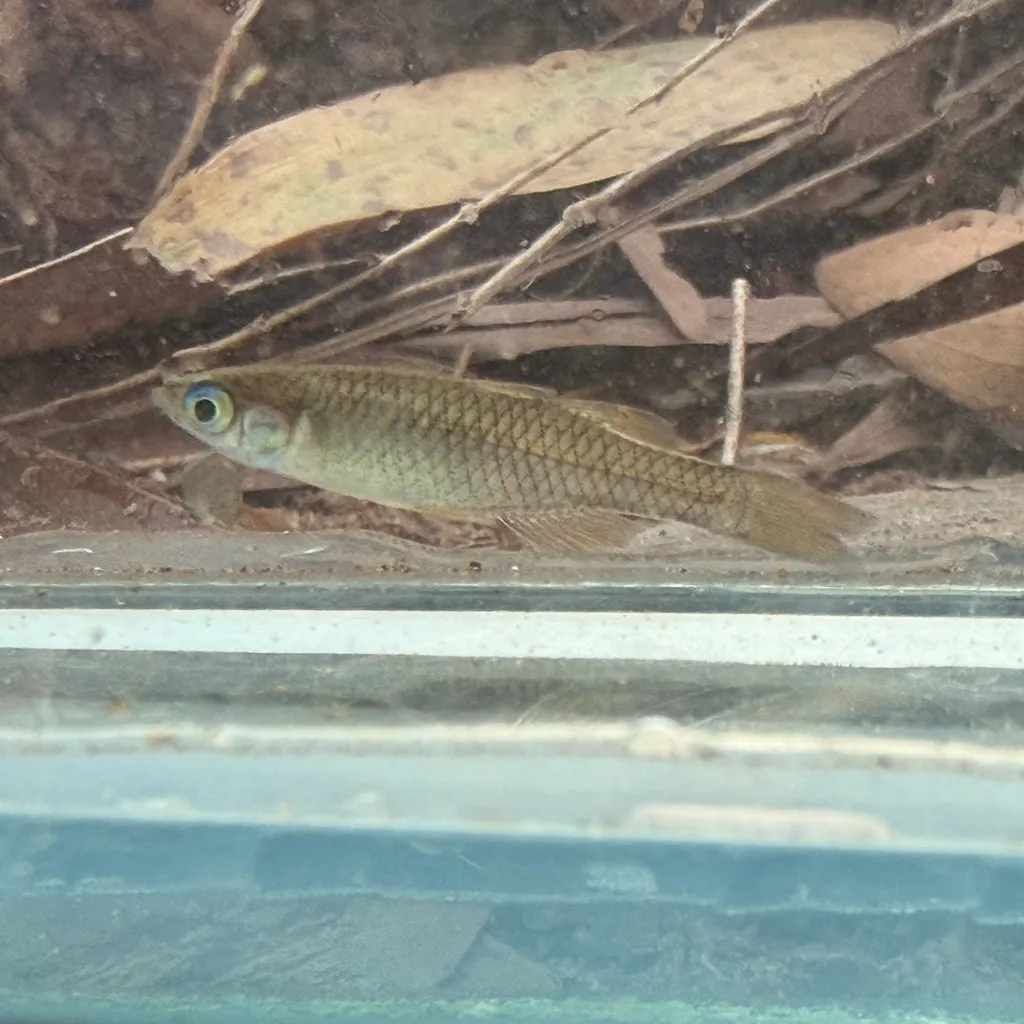
Delicate blue-eye
Pseudomugil tenellus
Freshwater2.2 in (5.5 cm) · 20 gal (75 L)77–90°F (25–32°C)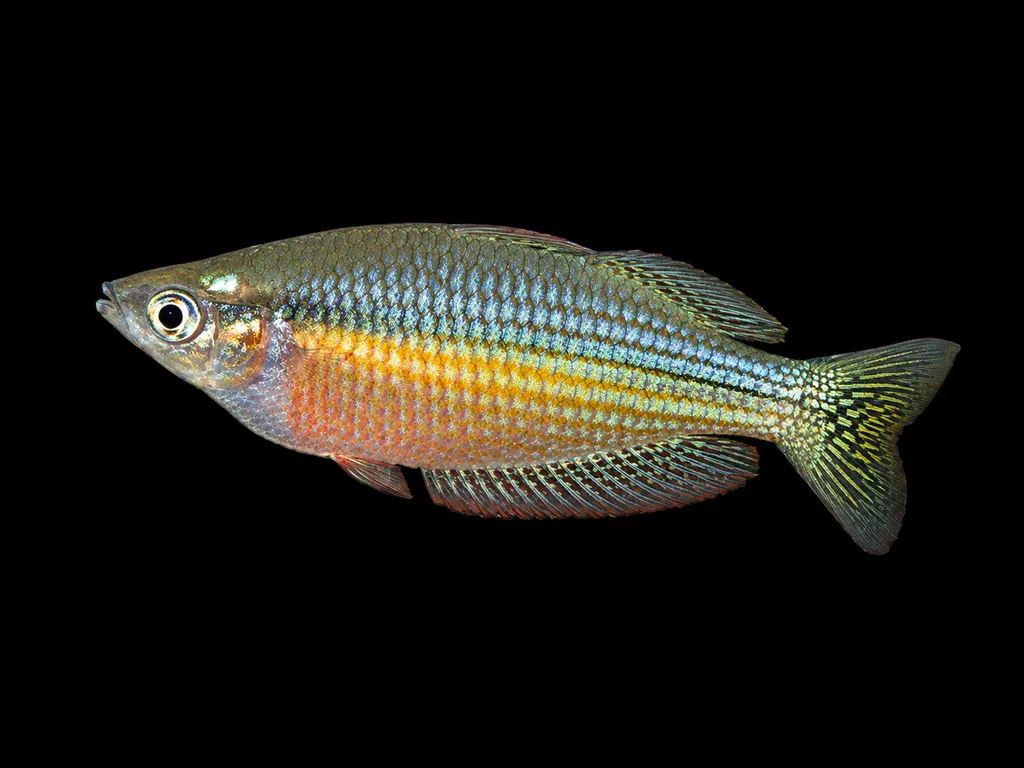
Desert rainbowfish
Melanotaenia splendida tatei
Freshwater3.9 in (10 cm) · 42 gal (160 L)64–86°F (18–30°C)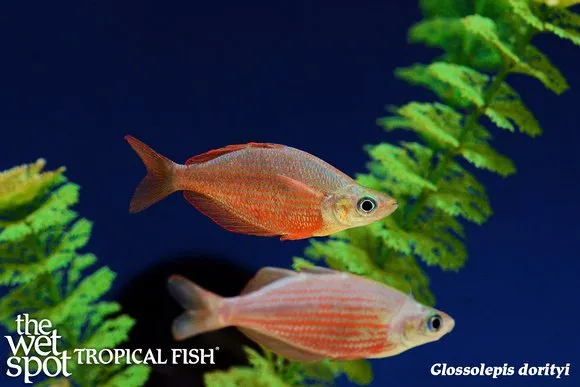
Dority's rainbowfish
Glossolepis dorityi
Freshwater5.1 in (13 cm) · 53 gal (200 L)77–86°F (25–30°C)Duboulayi's rainbowfish
Melanotaenia duboulayi
Freshwater4.7 in (12 cm) · 30 gal (115 L)64–82°F (18–28°C)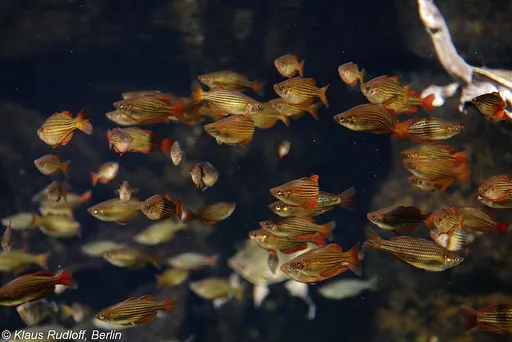
Dwarf rainbowfish
Melanotaenia maccullochi
Freshwater2.8 in (7 cm) · 20 gal (75 L)72–82°F (22–28°C)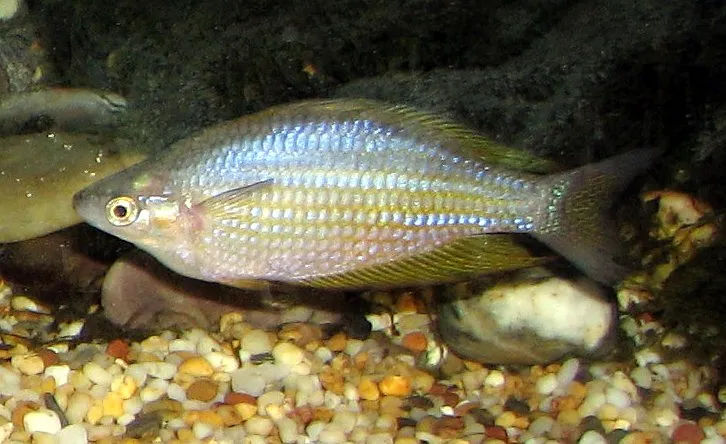
Eastern rainbowfish
Melanotaenia splendida splendida
Freshwater5.9 in (15 cm) · 50 gal (190 L)75–84°F (24–29°C)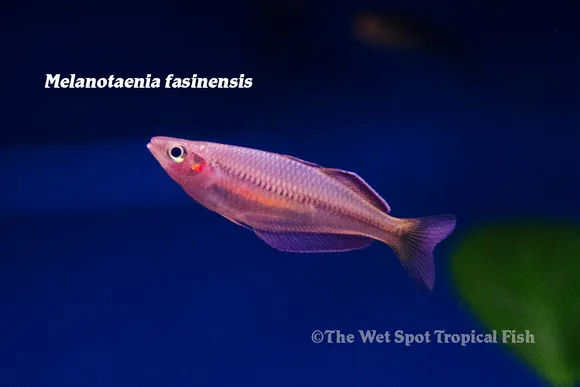
Fasin rainbowfish
Melanotaenia fasinensis
Freshwater5.4 in (13.8 cm) · 53 gal (200 L)75–84°F (24–29°C)Forktail blue-eye
Pseudomugil furcatus
Freshwater2.2 in (5.5 cm) · 22 gal (85 L)75–82°F (24–28°C)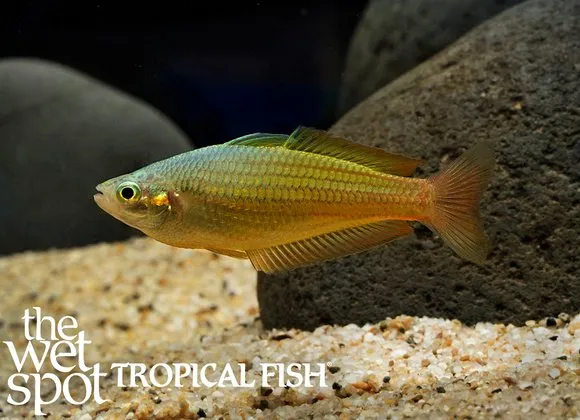
Gary Lange's rainbowfish
Melanotaenia garylangei
Freshwater3.5 in (9 cm) · 29 gal (110 L)75–84°F (24–29°C)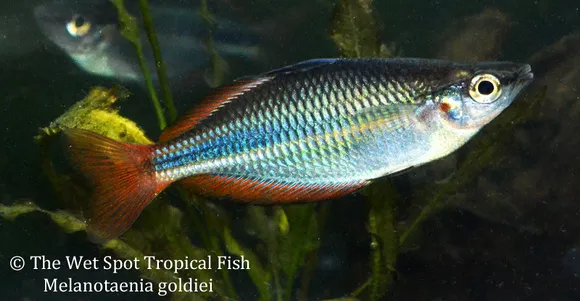
Goldie River rainbowfish
Melanotaenia goldiei
Freshwater5.1 in (13 cm) · 53 gal (200 L)75–86°F (24–30°C)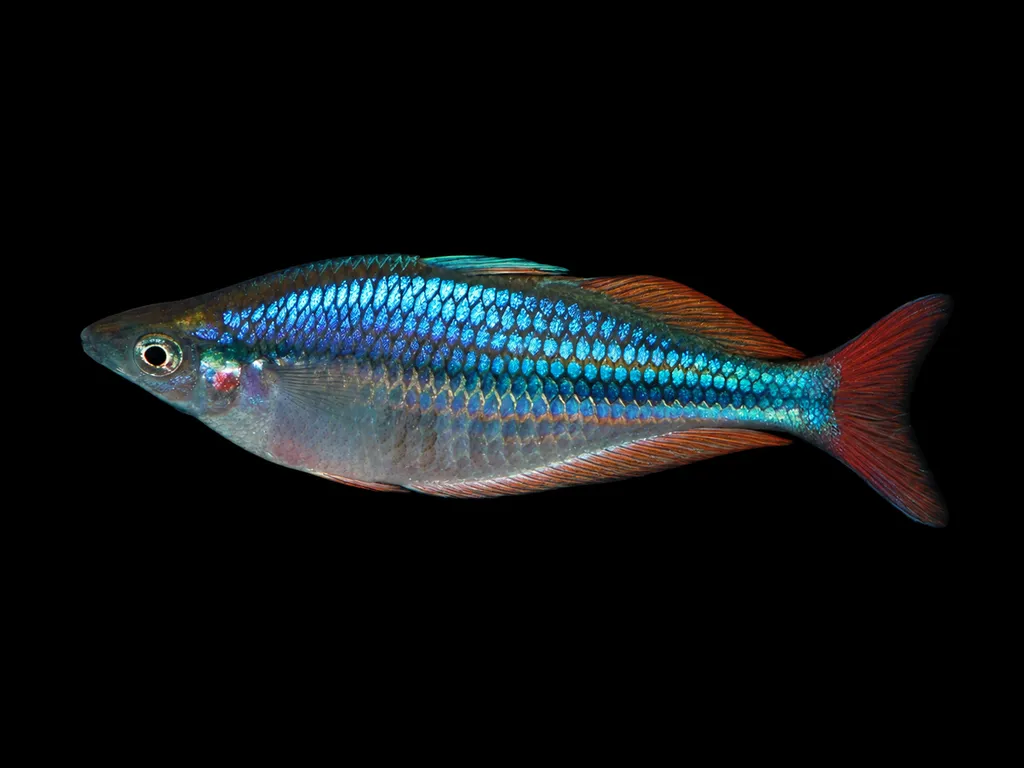
Highlands rainbowfish
Chilatherina campsi
Freshwater3.4 in (8.6 cm) · 29 gal (110 L)70–81°F (21–27°C)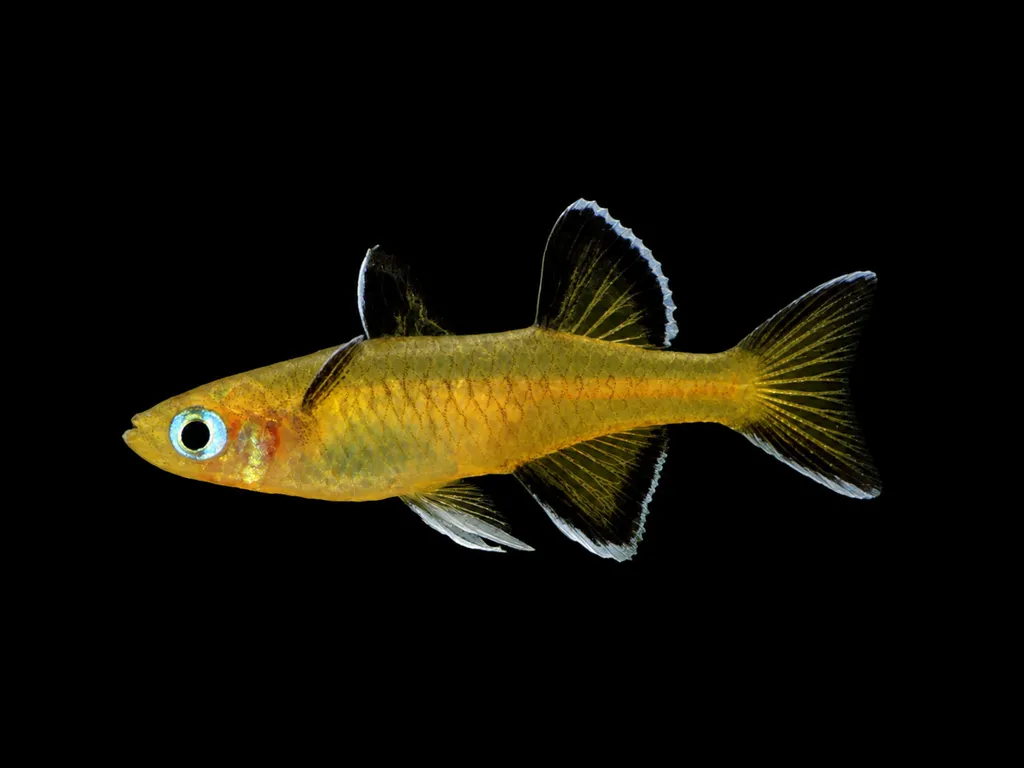
Honey blue-eye
Pseudomugil mellis
Freshwater1.4 in (3.5 cm) · 11 gal (40 L)68–82°F (20–28°C)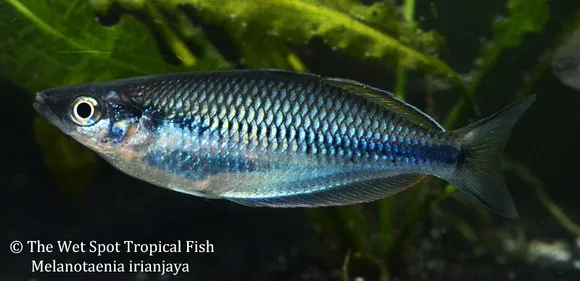
Irian Jaya rainbowfish
Melanotaenia irianjaya
Freshwater3.9 in (10 cm) · 42 gal (160 L)75–84°F (24–29°C)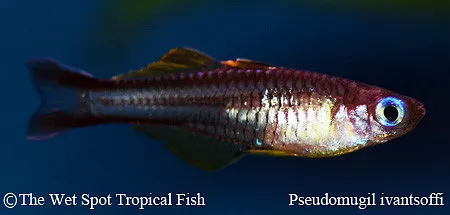
Ivantsoff's blue-eye
Pseudomugil ivantsoffi
Freshwater1.6 in (4 cm) · 11 gal (40 L)75–82°F (24–28°C)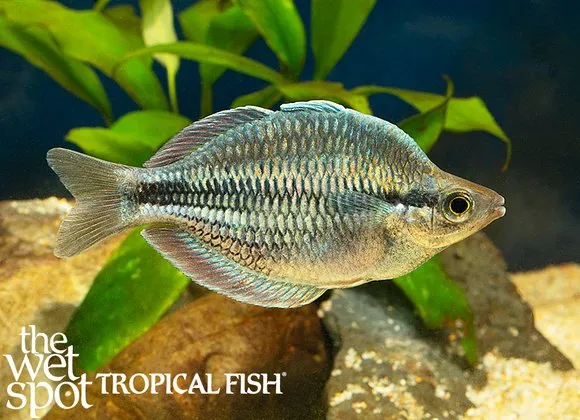
Kamaka rainbowfish
Melanotaenia kamaka
Freshwater2.8 in (7 cm) · 29 gal (110 L)77–86°F (25–30°C)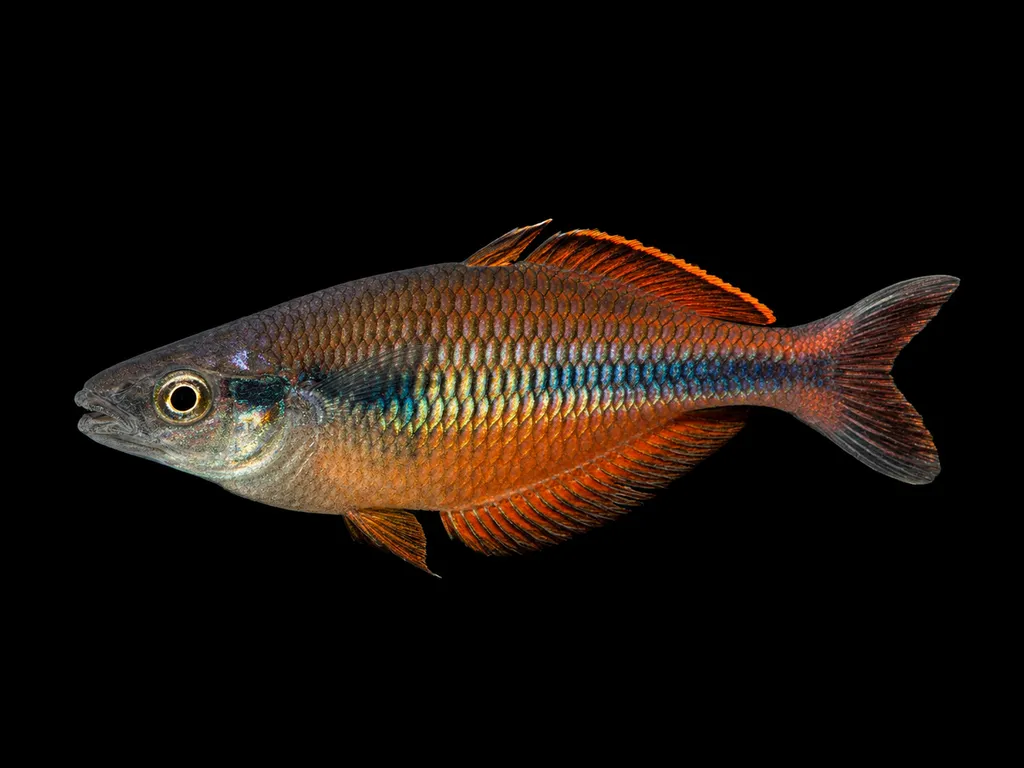
Klasio rainbowfish
Melanotaenia klasioensis
Freshwater4.2 in (10.6 cm) · 42 gal (160 L)75–84°F (24–29°C)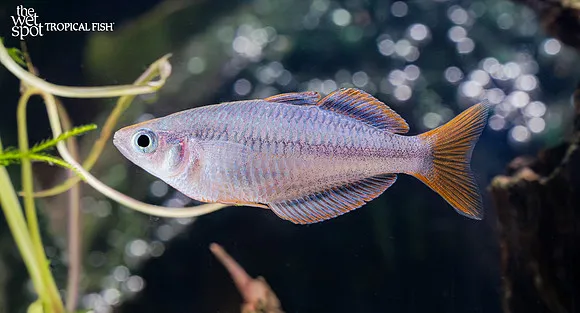
Lake Furnusu rainbowfish
Melanotaenia mairasi
Freshwater2.4 in (6.2 cm) · 29 gal (110 L)77–86°F (25–30°C)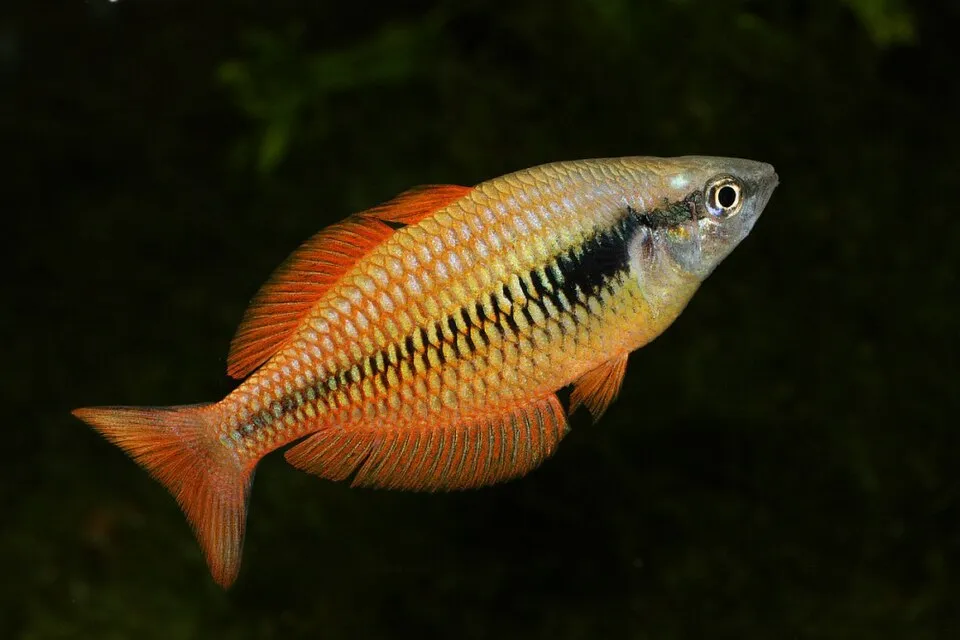
Lake Kurumoi rainbowfish
Melanotaenia parva
Freshwater3.1 in (8 cm) · 29 gal (110 L)72–79°F (22–26°C)Lake Kutubu rainbowfish
Melanotaenia lacustris
Freshwater4.3 in (11 cm) · 29 gal (110 L)68–77°F (20–25°C)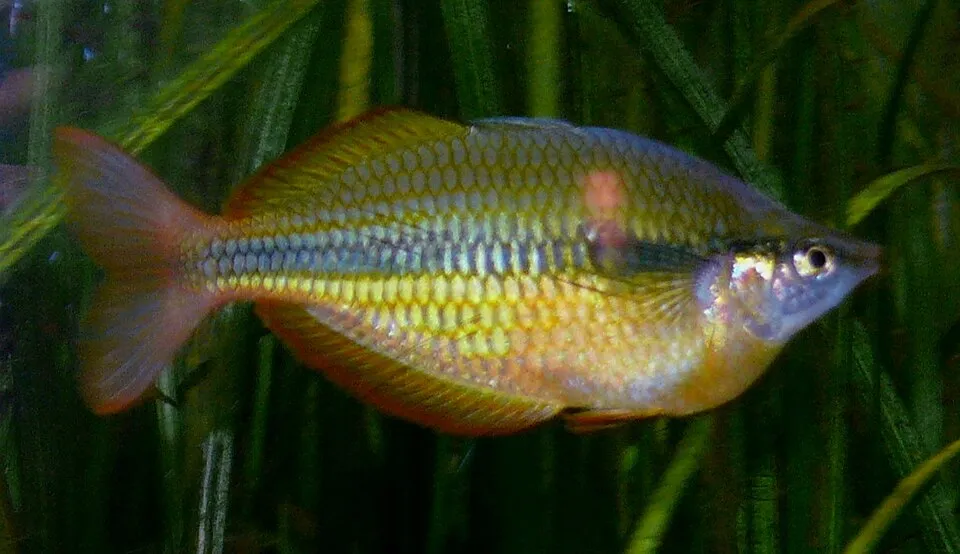
Lake Tebera rainbowfish
Melanotaenia herbertaxelrodi
Freshwater3.5 in (9 cm) · 25 gal (95 L)68–79°F (20–26°C)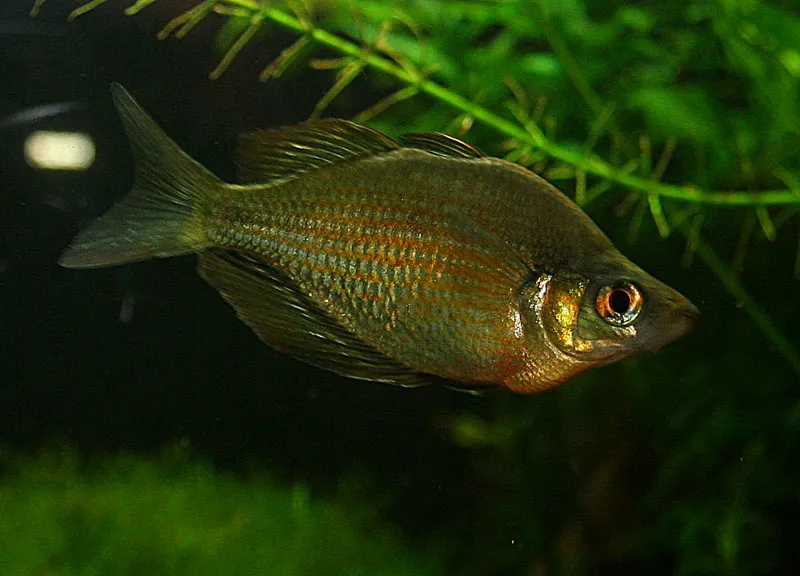
Lake Wanam rainbowfish
Glossolepis wanamensis
Freshwater3.9 in (10 cm) · 25 gal (95 L)77–86°F (25–30°C)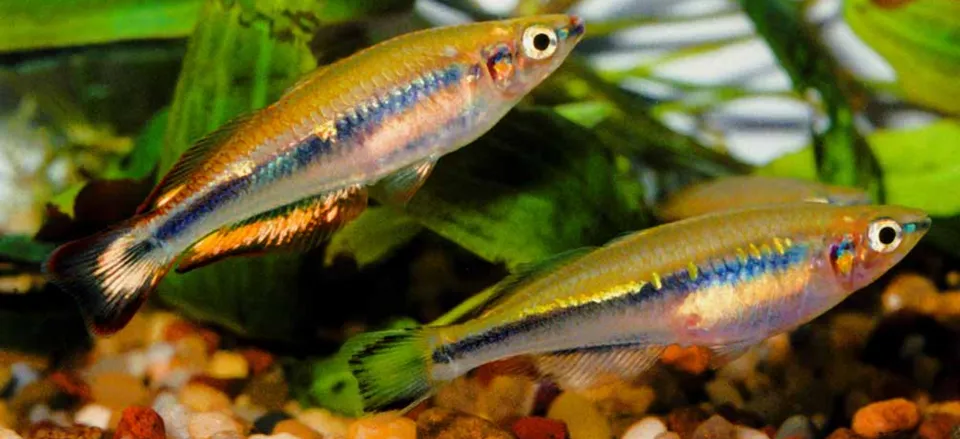
Madagascar rainbowfish
Bedotia madagascariensis
Freshwater3.3 in (8.5 cm) · 45 gal (170 L)73–90°F (23–32°C)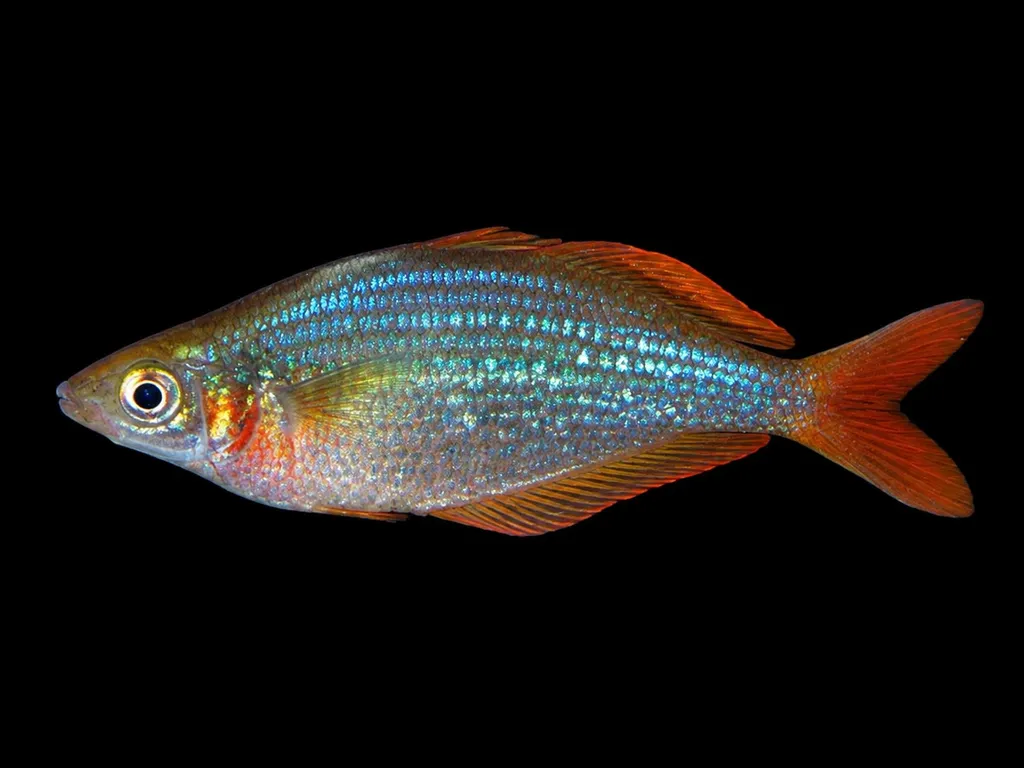
Millennium rainbowfish
Glossolepis pseudoincisa
Freshwater3.6 in (9.2 cm) · 42 gal (160 L)75–84°F (24–29°C)Neon rainbowfish
Melanotaenia praecox
Freshwater3.1 in (8 cm) · 29 gal (110 L)73–82°F (23–28°C)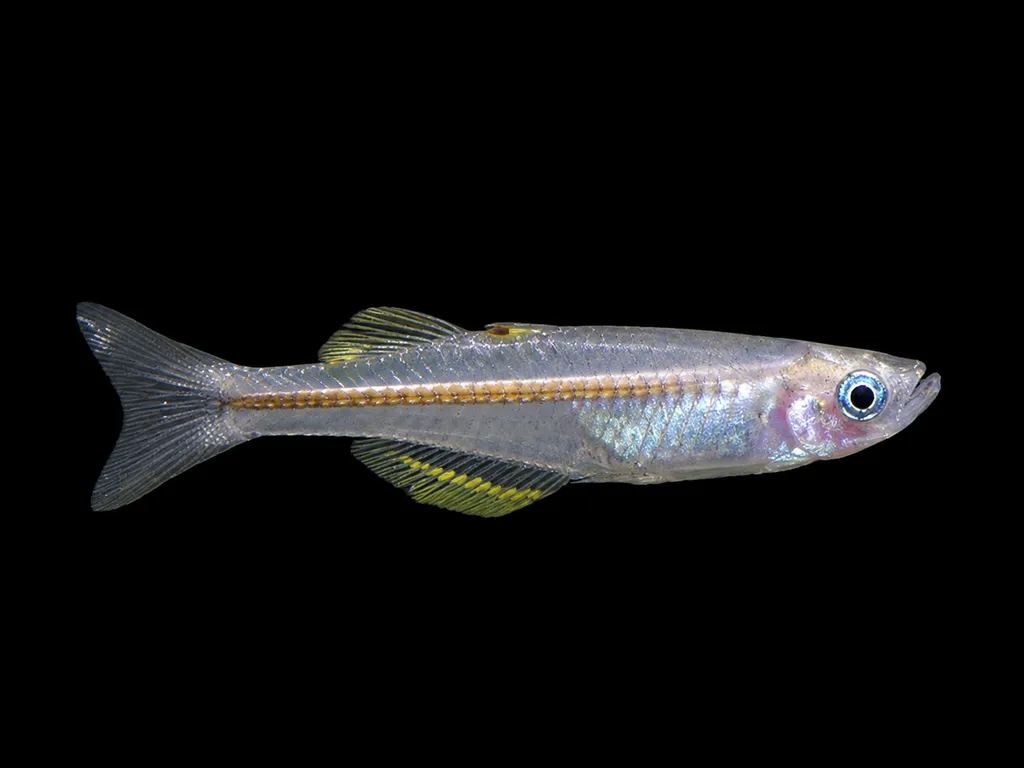
New Guinea blue-eye
Pseudomugil novaeguineae
Freshwater1.8 in (4.5 cm) · 15 gal (55 L)79–86°F (26–30°C)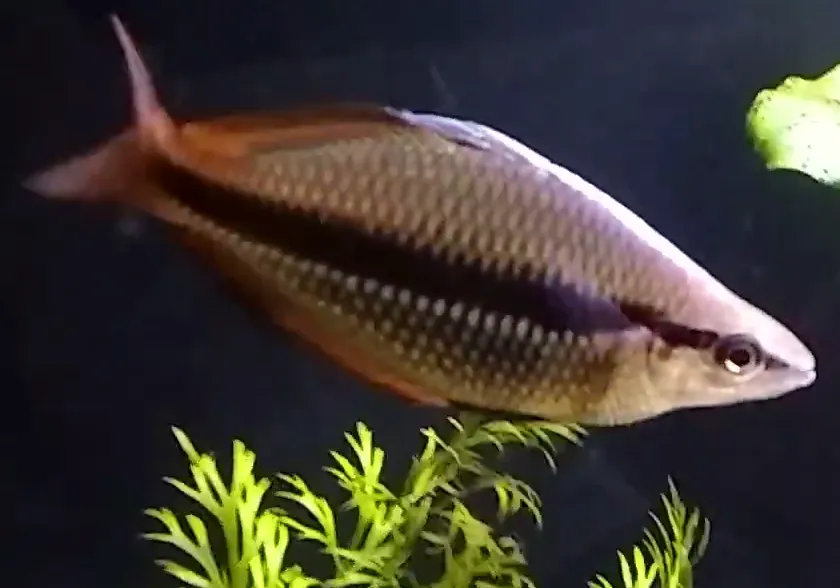
New Guinea rainbowfish
Melanotaenia affinis
Freshwater4.7 in (12 cm) · 30 gal (115 L)68–86°F (20–30°C)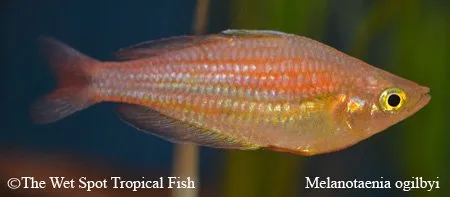
Ogilby's rainbowfish
Melanotaenia ogilbyi
Freshwater3.1 in (8 cm) · 29 gal (110 L)75–84°F (24–29°C)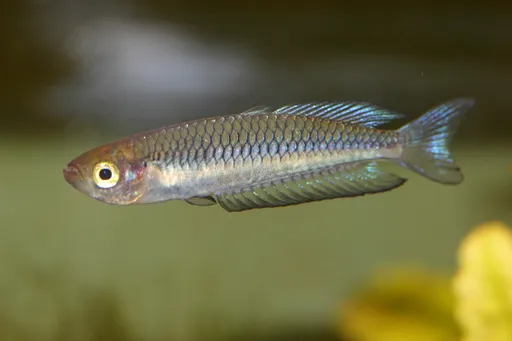
Ornate rainbowfish
Rhadinocentrus ornatus
Freshwater2.4 in (6 cm) · 20 gal (75 L)64–82°F (18–28°C)Pacific blue-eye
Pseudomugil signifer
Freshwater2.8 in (7 cm) · 25 gal (95 L)68–79°F (20–26°C)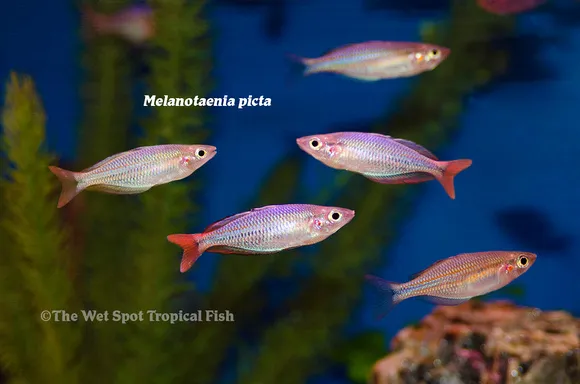
Painted rainbowfish
Melanotaenia picta
Freshwater4.2 in (10.7 cm) · 29 gal (110 L)77–86°F (25–30°C)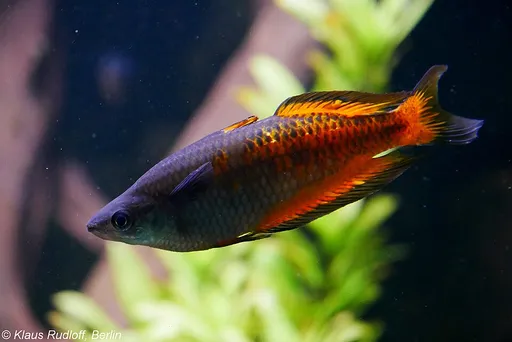
Parkinson's rainbowfish
Melanotaenia parkinsoni
Freshwater4.3 in (11 cm) · 53 gal (200 L)75–82°F (24–28°C)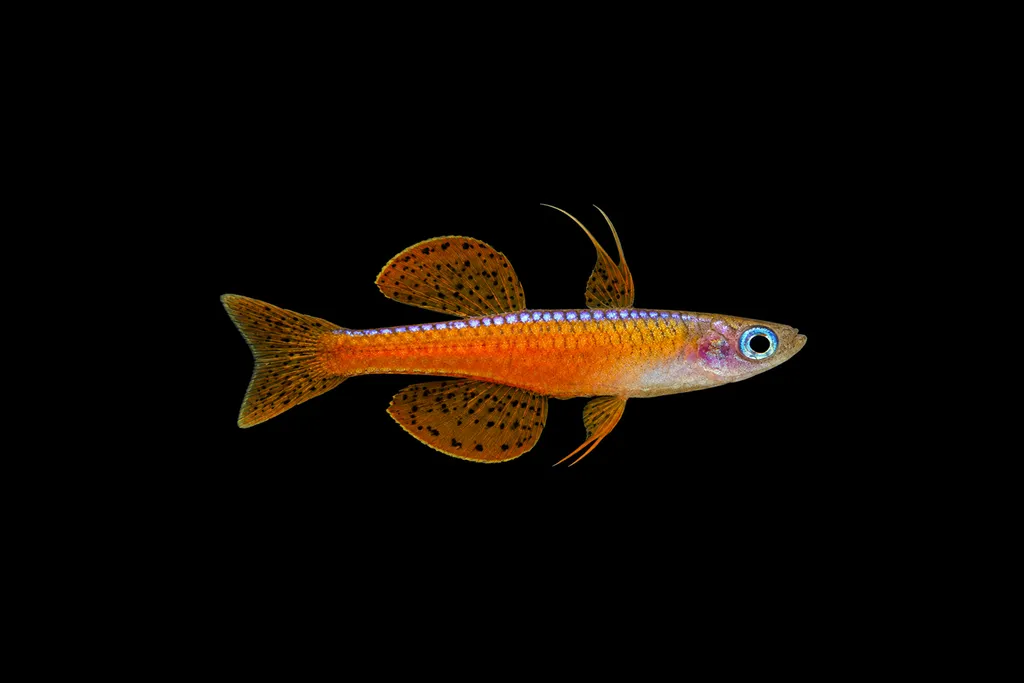
Paska's blue-eye
Pseudomugil paskai
Freshwater1.4 in (3.5 cm) · 11 gal (40 L)72–79°F (22–26°C)Popondetta blue-eye
Pseudomugil connieae
Freshwater2 in (5 cm) · 11 gal (40 L)75–82°F (24–28°C)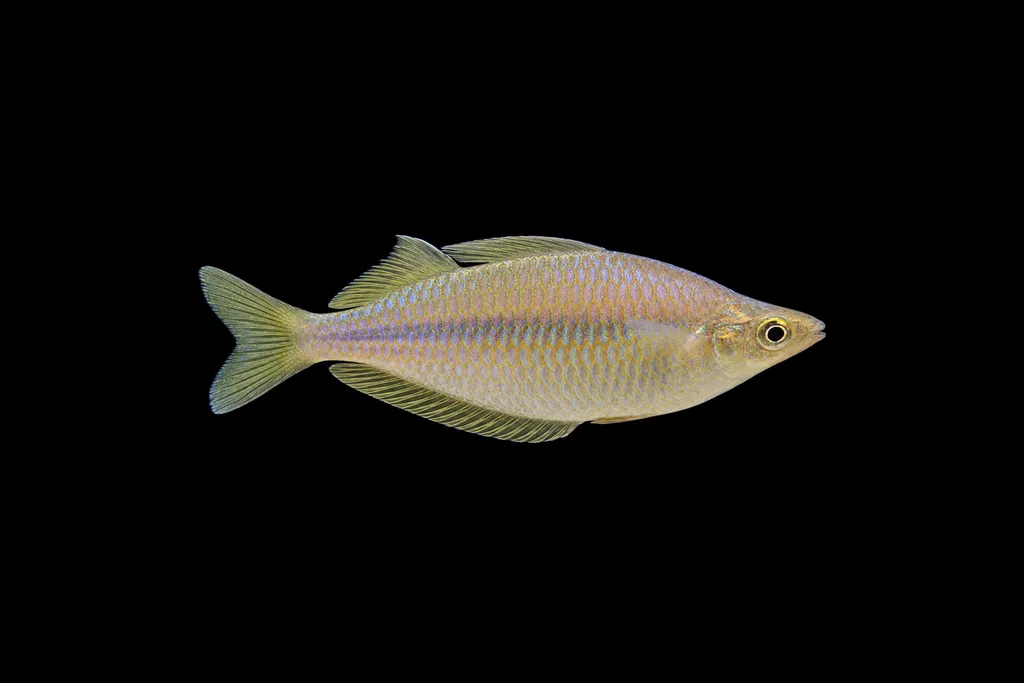
Price's rainbowfish
Chilatherina pricei
Freshwater4 in (10.2 cm) · 42 gal (160 L)75–84°F (24–29°C)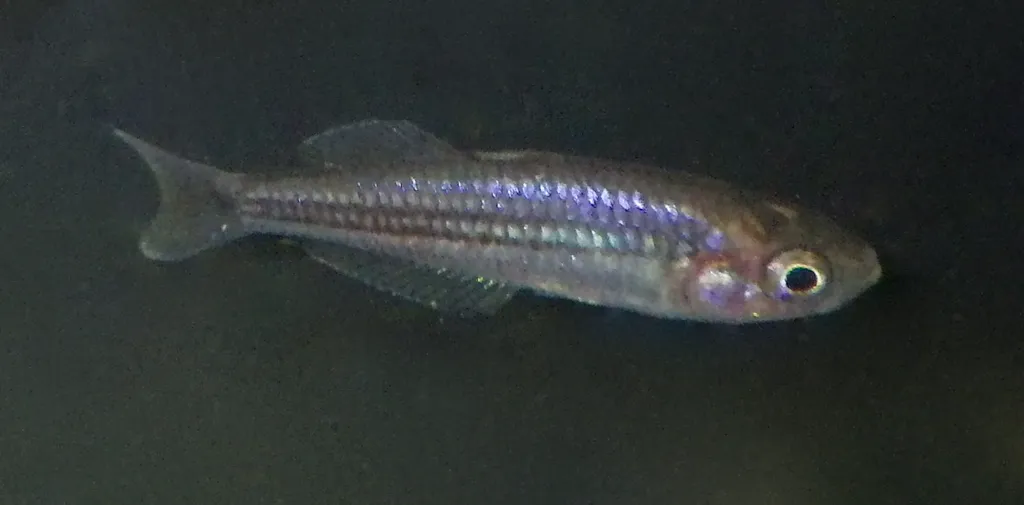
Pygmy rainbowfish
Melanotaenia pygmaea
Freshwater2.4 in (6 cm) · 20 gal (75 L)73–84°F (23–29°C)Red neon blue-eye
Pseudomugil luminatus
Freshwater1.4 in (3.5 cm) · 11 gal (40 L)72–81°F (22–27°C)Red rainbowfish
Glossolepis incisus
Freshwater5.5 in (14 cm) · 34 gal (130 L)72–77°F (22–25°C)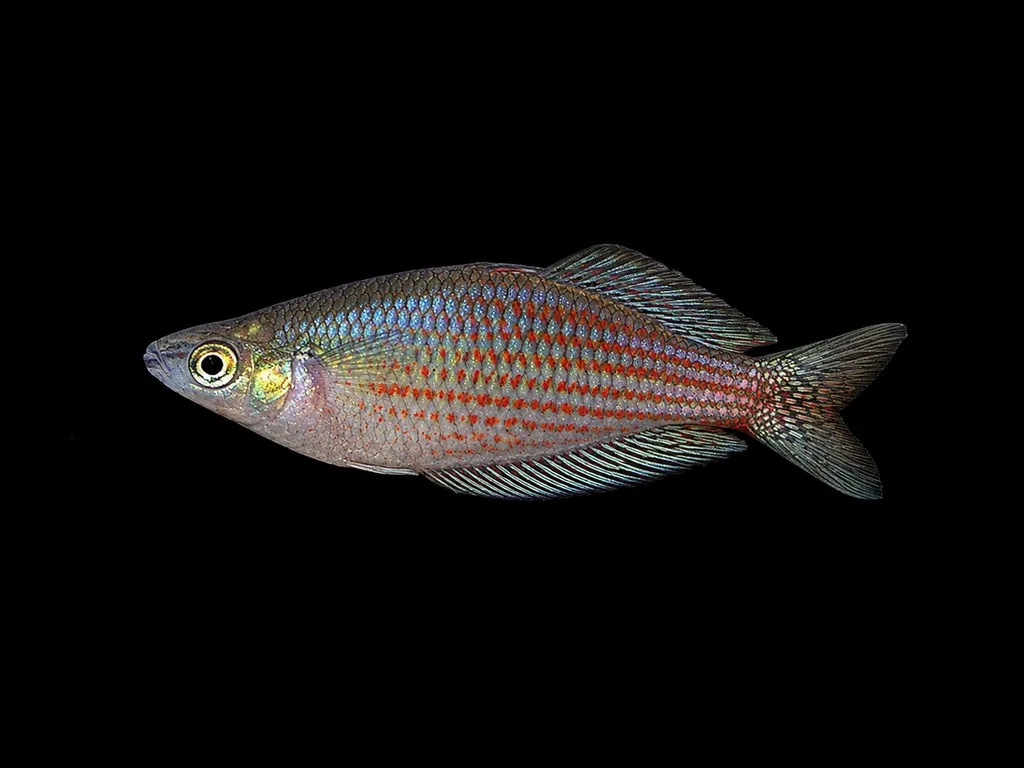
Red-striped rainbowfish
Melanotaenia rubrostriata
Freshwater5.1 in (13 cm) · 53 gal (200 L)77–86°F (25–30°C)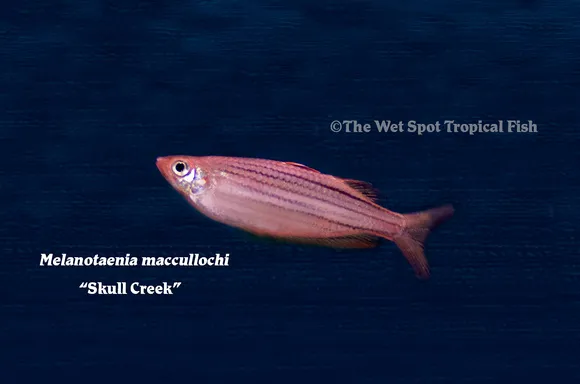
Sahul rainbowfish
Melanotaenia sahulensis
Freshwater2.2 in (5.5 cm) · 20 gal (75 L)75–86°F (24–30°C)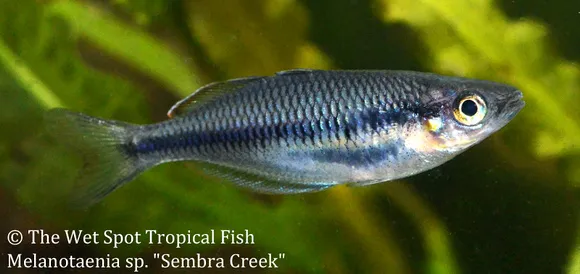
Sembra rainbowfish
Melanotaenia sembrae
Freshwater4.6 in (11.7 cm) · 42 gal (160 L)75–84°F (24–29°C)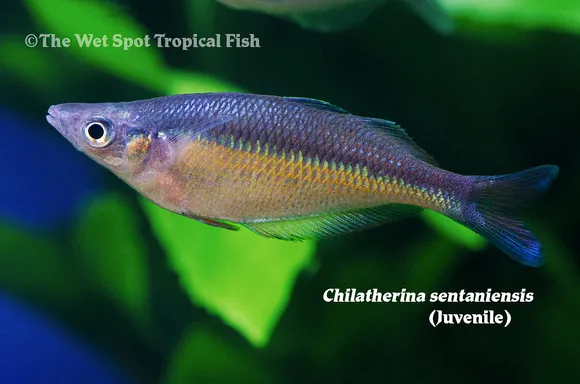
Sentani rainbowfish
Chilatherina sentaniensis
Freshwater4.5 in (11.5 cm) · 42 gal (160 L)77–86°F (25–30°C)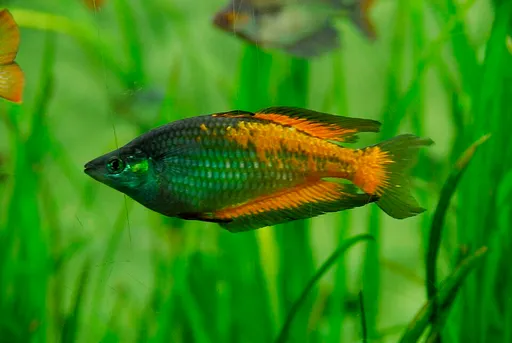
Sepik rainbowfish
Glossolepis multisquamata
Freshwater5.5 in (14 cm) · 55 gal (208 L)79–86°F (26–30°C)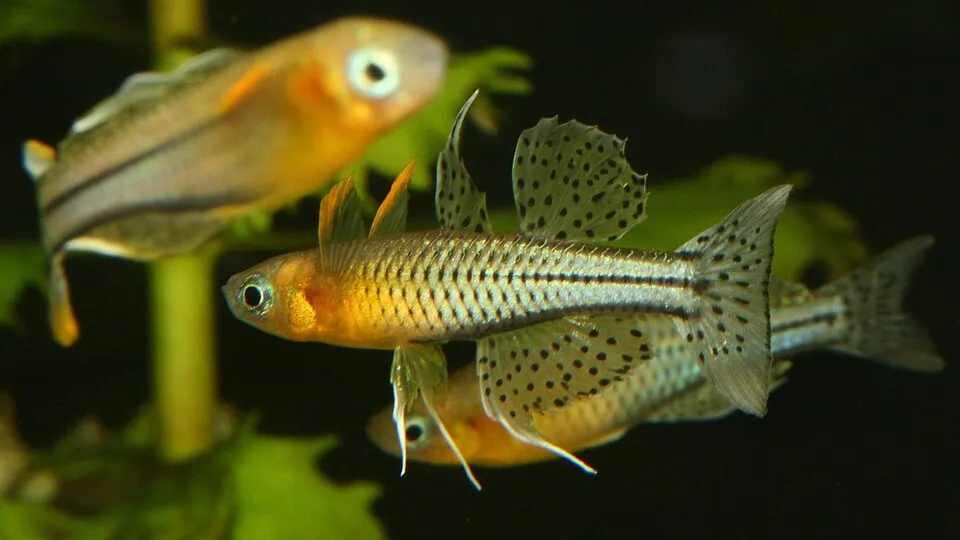
Spotted blue-eye
Pseudomugil gertrudae
Freshwater1.5 in (3.8 cm) · 17 gal (65 L)70–82°F (21–28°C)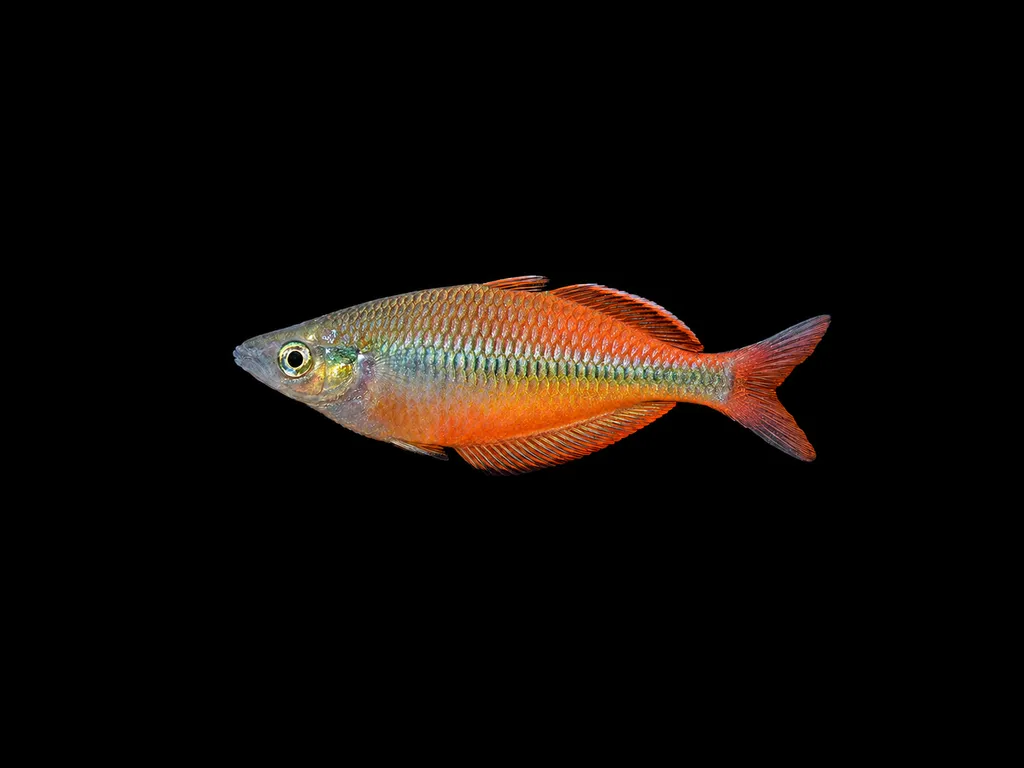
Susi rainbowfish
Melanotaenia susii
Freshwater5.5 in (14 cm) · 42 gal (160 L)75–84°F (24–29°C)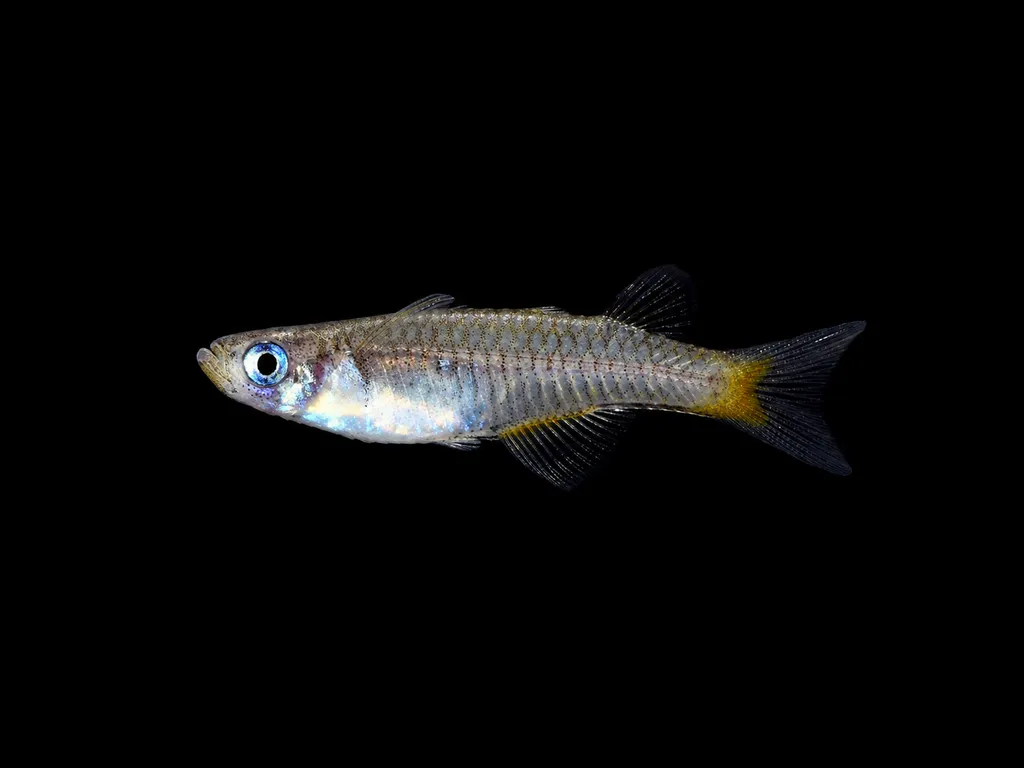
Swamp blue-eye
Pseudomugil paludicola
Freshwater1.4 in (3.5 cm) · 11 gal (40 L)79–86°F (26–30°C)Threadfin rainbowfish
Iriatherina werneri
Freshwater1.6 in (4 cm) · 13 gal (50 L)72–86°F (22–30°C)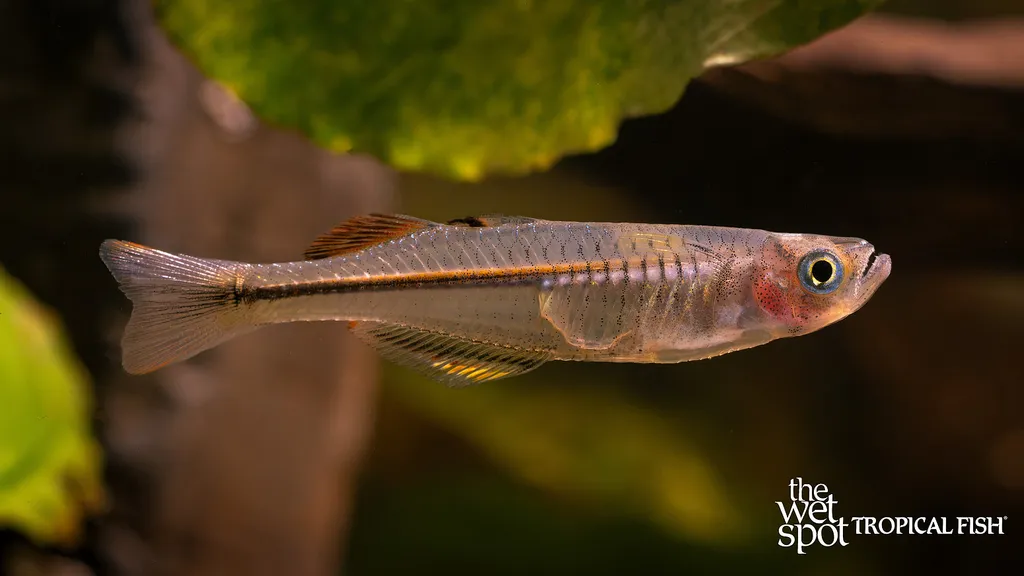
Transparent blue-eye
Pseudomugil pellucidus
Freshwater1.6 in (4 cm) · 11 gal (40 L)75–82°F (24–28°C)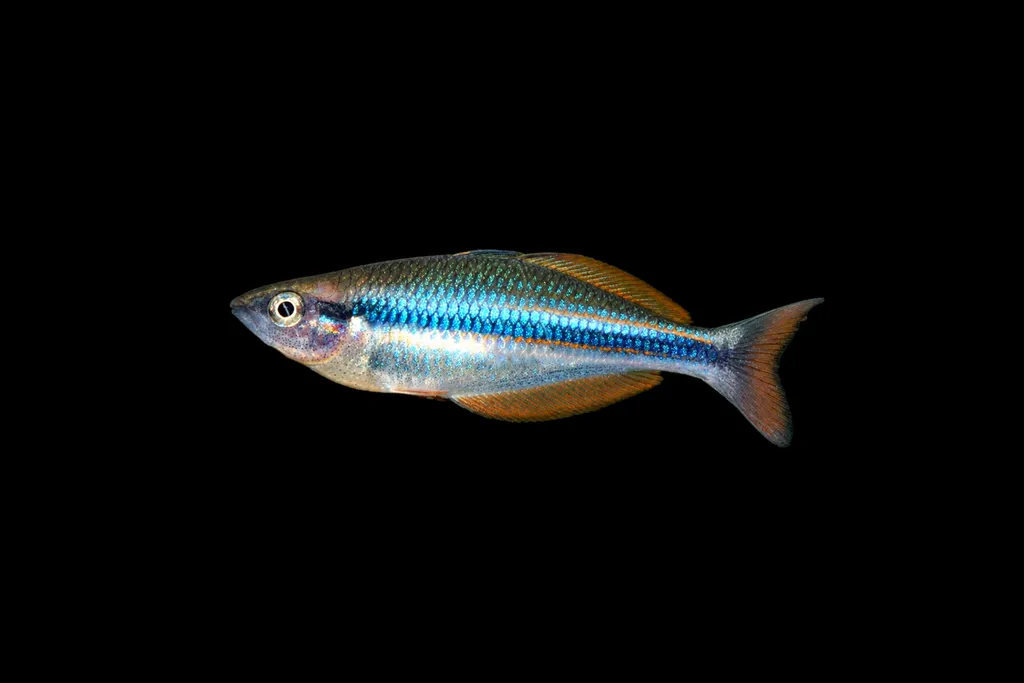
Van Heurn's rainbowfish
Melanotaenia vanheurni
Freshwater7.3 in (18.5 cm) · 66 gal (250 L)73–82°F (23–28°C)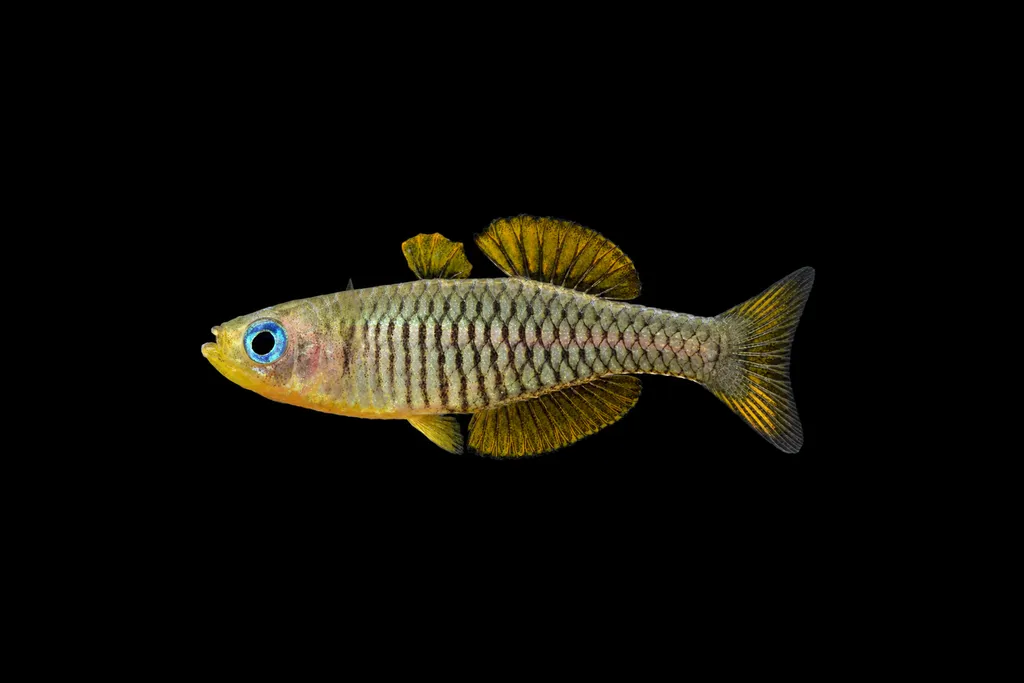
Vogelkop blue-eye
Pseudomugil reticulatus
Freshwater1.4 in (3.5 cm) · 11 gal (40 L)75–82°F (24–28°C)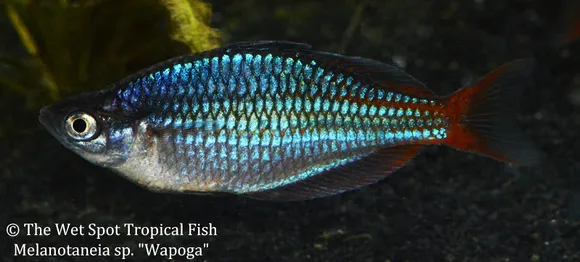
Wapoga rainbowfish
Melanotaenia rubrivittata
Freshwater2.2 in (5.6 cm) · 24 gal (90 L)75–84°F (24–29°C)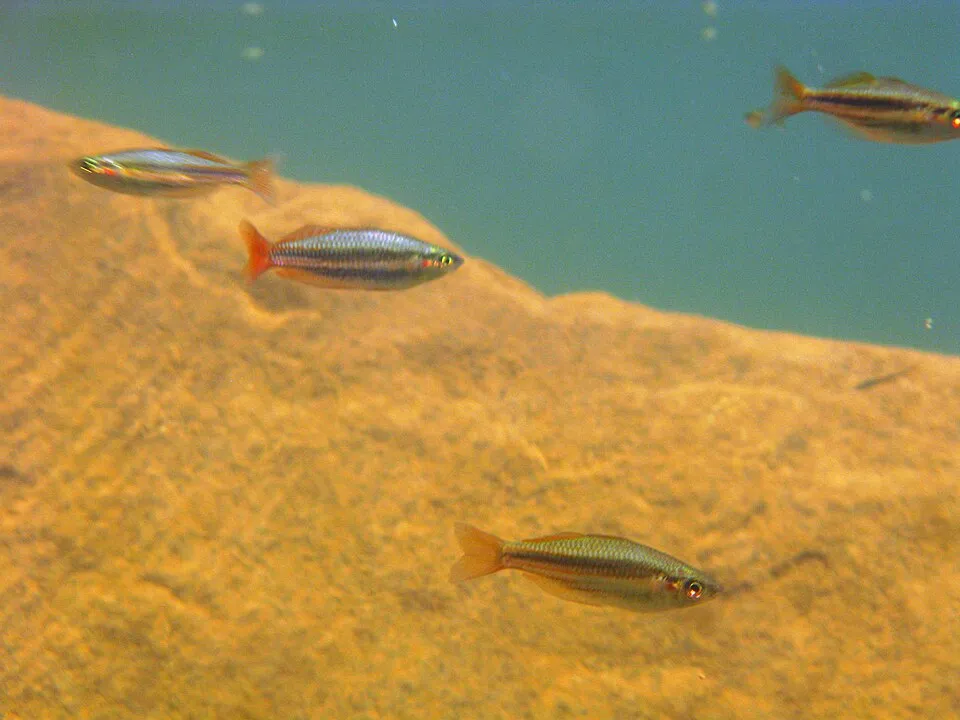
Western rainbowfish
Melanotaenia australis
Freshwater4.7 in (12 cm) · 30 gal (115 L)72–81°F (22–27°C)
Brackish rainbowfish
Planning a tank?
TankBud checks stocking and water fit as you build a tank, then tracks water tests, reminders and photos once it is running.
Track your tanksMaintain tanks for clients? See TankBud Pro