Popondetta blue-eye
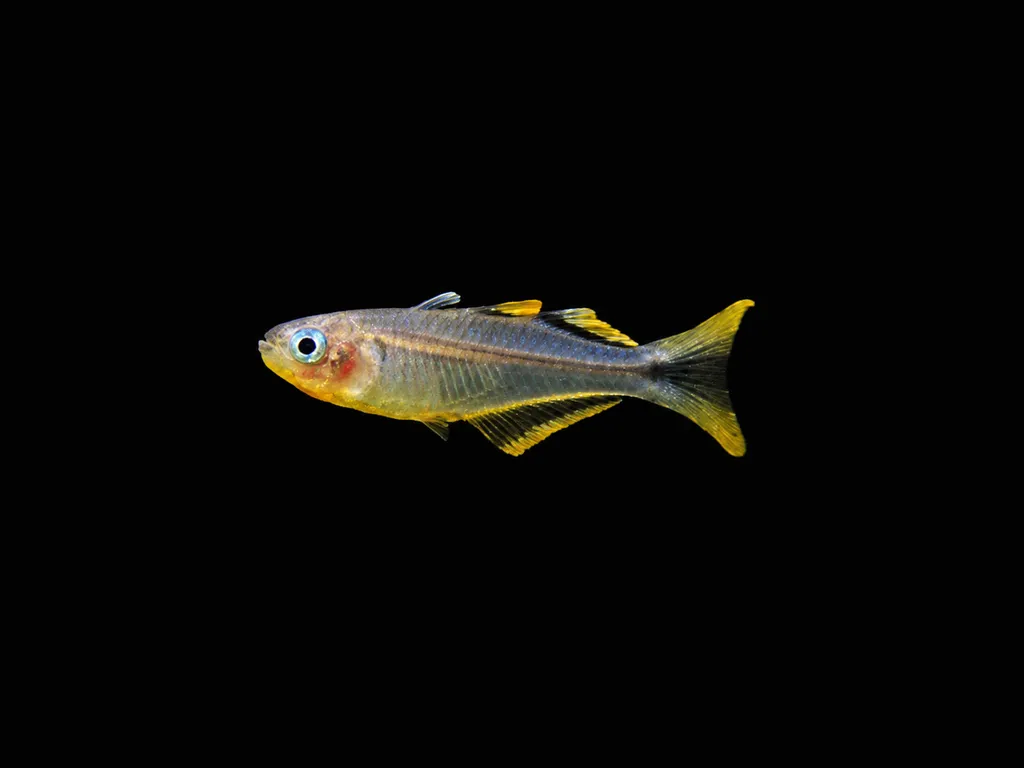
Pseudomugil connieae
Also known as Connie's blue-eye, Popondetta rainbowfish, Connie's rainbowfish
FreshwaterFish
Care at a glance
- Temperature
- 75–82°F
- 24–28°C
- pH
- 7.0–8.0
- Adult size
- 2 in
- 5 cm
- Minimum tank
- 11 gal
- 40 L
- Temperament
- Peaceful
- Social behavior
- Schooling
- Swim level
- Top
- Difficulty
- Easy
- Breeding
- Easy
- Rarity
- Common
- Family
- Pseudomugilidae
- Origin
- Endemic to a small area within about 50 km of Popondetta in eastern Papua New Guinea, in clear, moderately flowing rainforest and open streams.
Overview
Keep at least six to eight, and preferably a dozen, in a tank of 40 litres or more at 24 to 28 C with a slightly alkaline pH of 7.0 to 8.0. A group with both sexes keeps the males sparring and colorful. It is peaceful and suits community tanks with other small, calm fish that enjoy similar hard water. Feed small flake, micro pellets and frozen foods such as daphnia, cyclops and brine shrimp.
In the wild
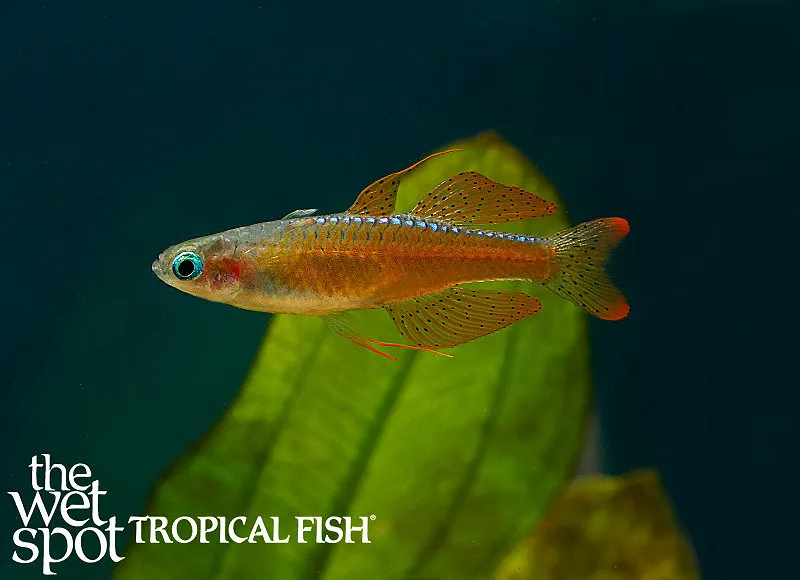
Popondetta blue-eyes live in clear, moderate to fairly quick streams, both shaded by rainforest and open to the sun, over gravel and among plants. They shoal near the surface and constantly flick their yellow-edged fins. A planted tank of 40 litres or more with open swimming lanes, some floating plants and gentle current keeps them comfortable. Unlike many blue-eyes they prefer harder, alkaline water.
Good to know
Pseudomugil connieae is a blue-eye in the family Pseudomugilidae and was long a hobby staple simply called the Popondetta after the town near its home streams. Males carry taller, more colorful fins than females and spar by flaring them side by side. It is one of the larger and hardier blue-eyes, which made it popular with breeders.
Did you know
It breeds readily, scattering a few eggs each day among fine plants or spawning mops over a long period rather than in one big batch, which makes it one of the easiest blue-eyes to raise.
Weekly picks
Tank mates
Popondetta blue-eye is a peaceful, schooling species that keeps to the top. These picks share a community profile with it, are safe together in both directions, and overlap on water type, temperature and pH.
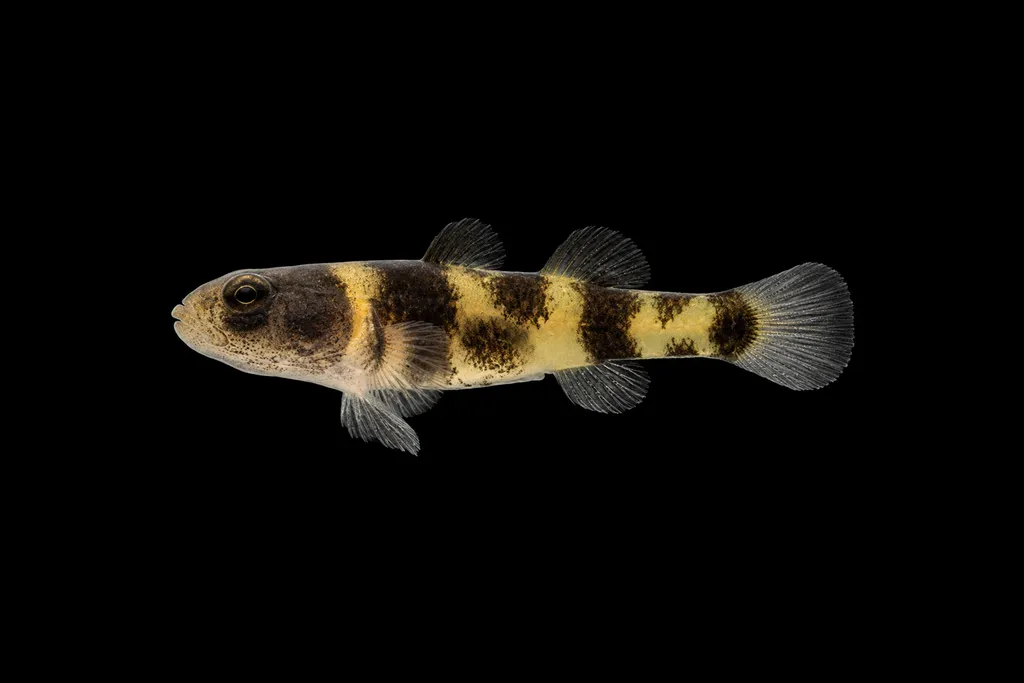
Freshwater bumblebee goby
Brachygobius aggregatus
Freshwater1.6 in (4 cm) · 11 gal (40 L)75–82°F (24–28°C)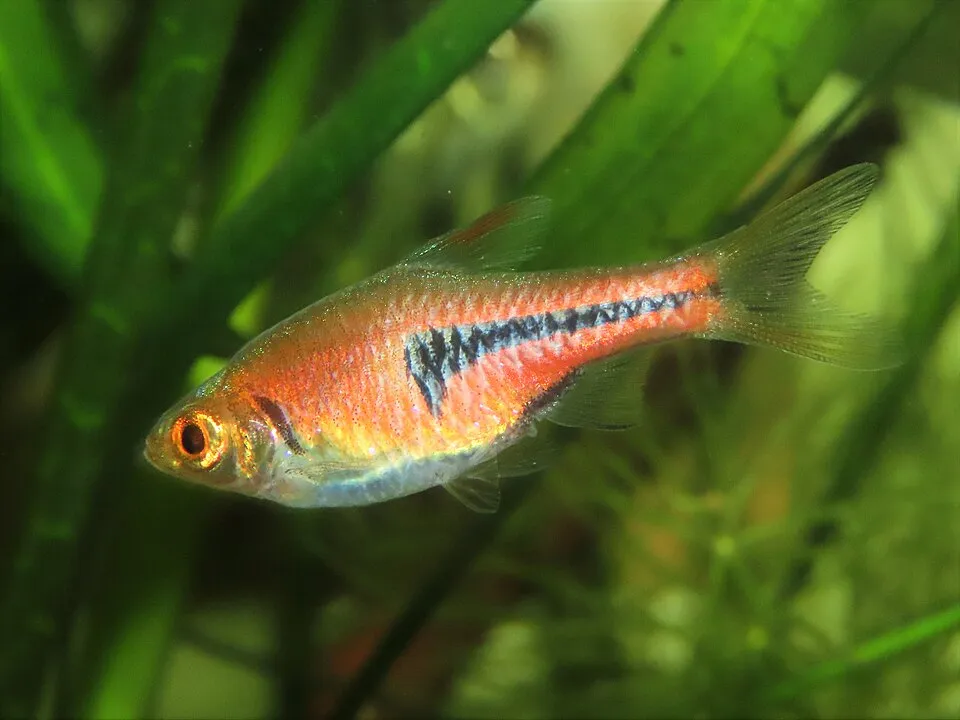
Espei rasbora
Trigonostigma espei
Freshwater1.5 in (3.8 cm) · 11 gal (40 L)73–82°F (23–28°C)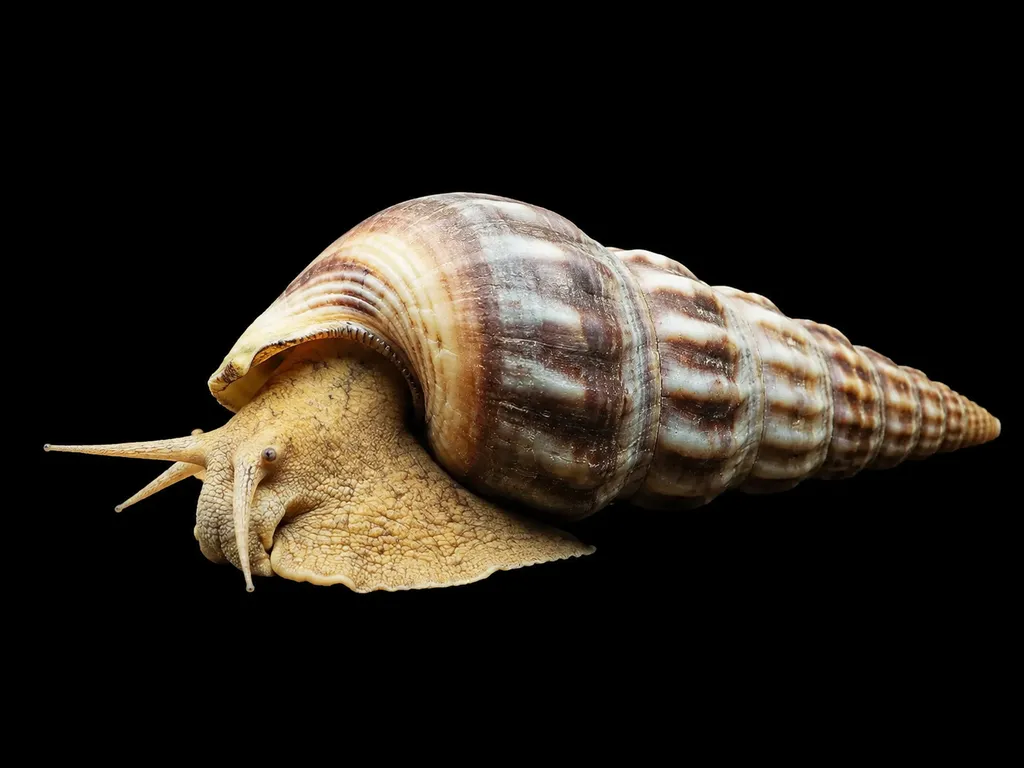
Hercules snail
Brotia herculea
Freshwater3.1 in (8 cm) · 11 gal (40 L)73–82°F (23–28°C)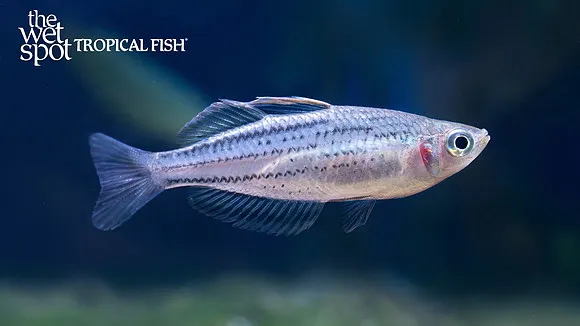
Green panchax
Aplocheilus blockii
Freshwater2 in (5 cm) · 11 gal (40 L)72–82°F (22–28°C)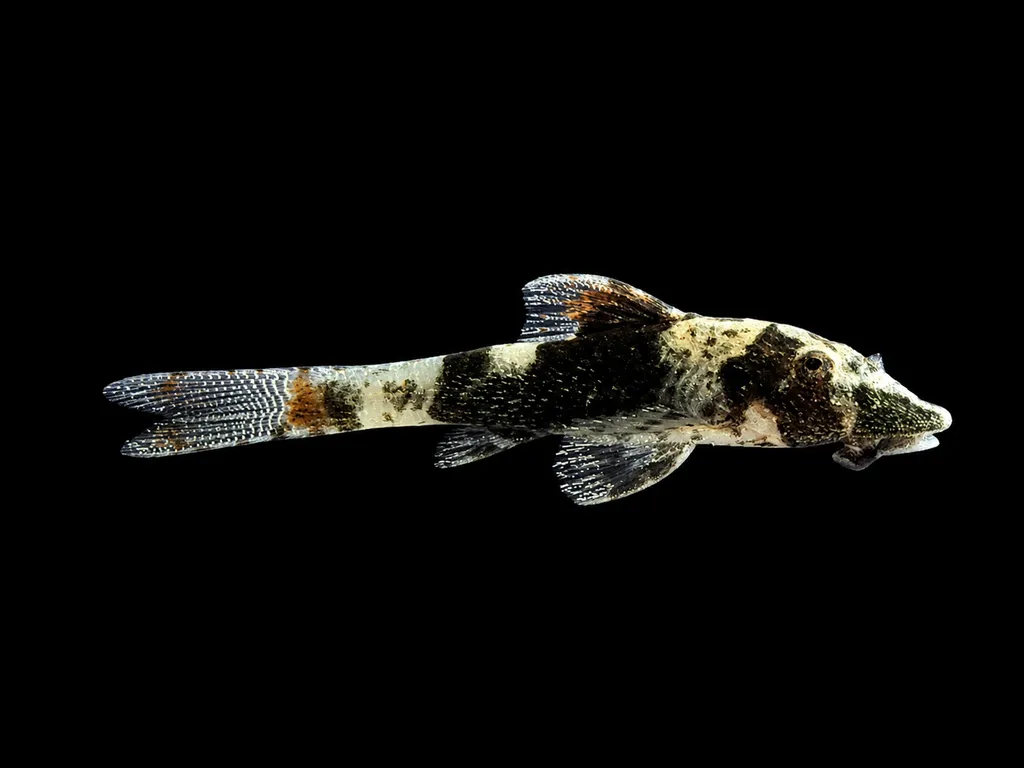
Bumblebee otocinclus
Rhinotocinclus isabelae
Freshwater0.8 in (2 cm) · 11 gal (40 L)73–82°F (23–28°C)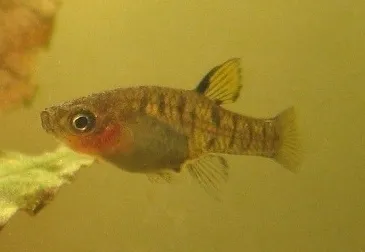
Black-barred livebearer
Quintana atrizona
Freshwater1.3 in (3.4 cm) · 11 gal (40 L)72–82°F (22–28°C)
Common questions
What size tank does a Popondetta blue-eye need?
A Popondetta blue-eye needs at least 11 gal (40 L). It spends most of its time in the top.
What temperature and pH does a Popondetta blue-eye need?
A Popondetta blue-eye is comfortable at 75–82°F (24–28°C) with a pH of 7.0–8.0.
How big does a Popondetta blue-eye get?
An adult Popondetta blue-eye reaches about 2 in (5 cm).
Does a Popondetta blue-eye need a group?
Yes. A Popondetta blue-eye is a schooling species and should be kept in a group, not singly.
Related species
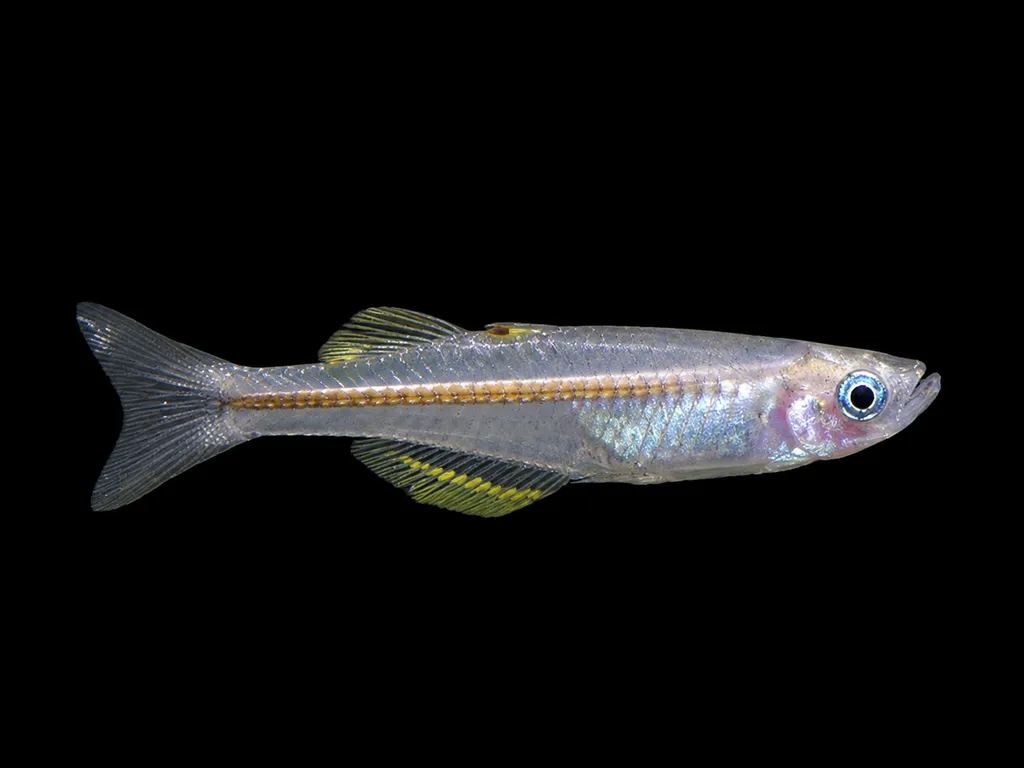 1.8 in (4.5 cm)15 gal (55 L)79–86°F (26–30°C)
New Guinea blue-eye
Pseudomugil novaeguineae
1.8 in (4.5 cm) · 15 gal (55 L)
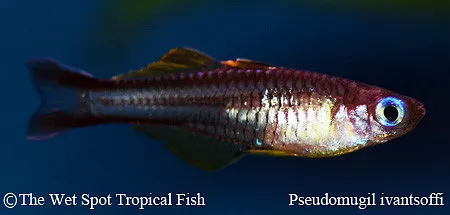 1.6 in (4 cm)11 gal (40 L)75–82°F (24–28°C)
Ivantsoff's blue-eye
Pseudomugil ivantsoffi
1.6 in (4 cm) · 11 gal (40 L)
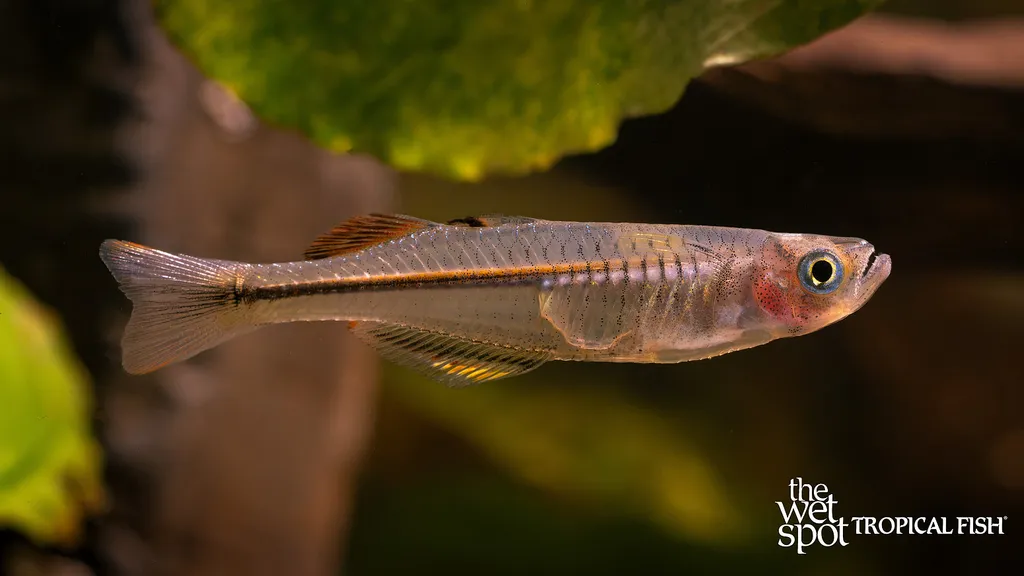 1.6 in (4 cm)11 gal (40 L)75–82°F (24–28°C)
Transparent blue-eye
Pseudomugil pellucidus
1.6 in (4 cm) · 11 gal (40 L)
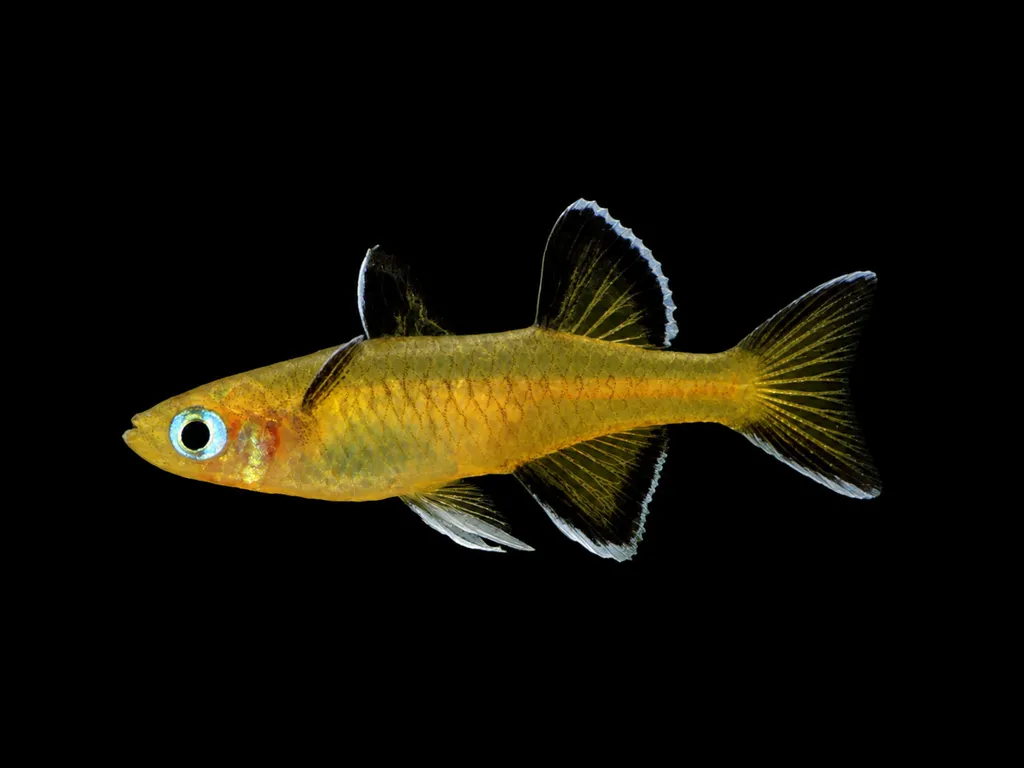 1.4 in (3.5 cm)11 gal (40 L)68–82°F (20–28°C)
Honey blue-eye
Pseudomugil mellis
1.4 in (3.5 cm) · 11 gal (40 L)
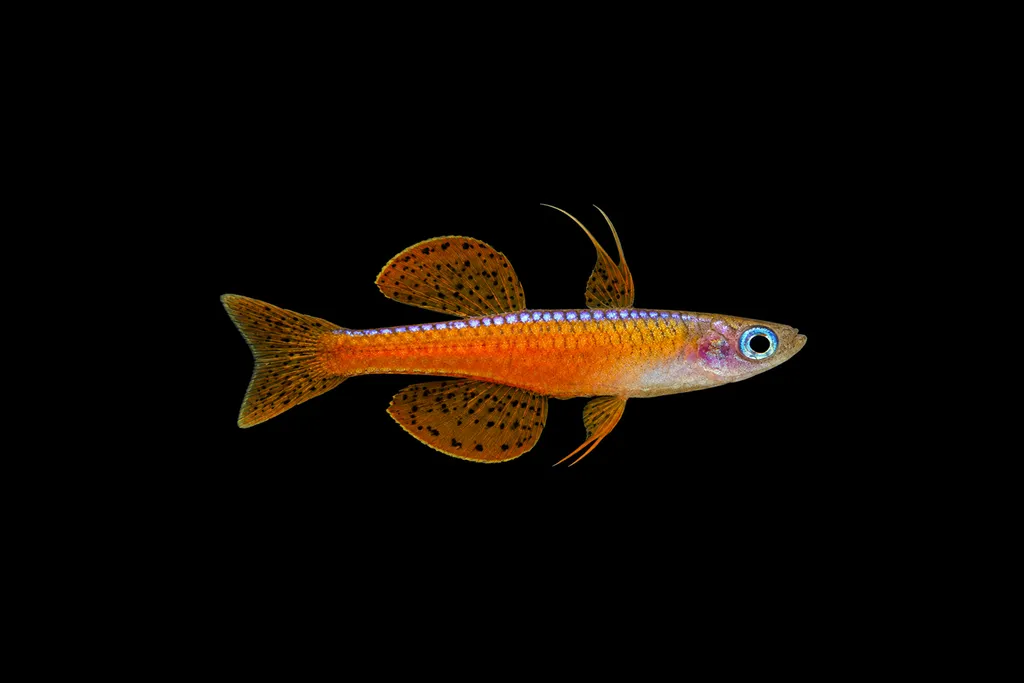 1.4 in (3.5 cm)11 gal (40 L)72–79°F (22–26°C)
Paska's blue-eye
Pseudomugil paskai
1.4 in (3.5 cm) · 11 gal (40 L)
 1.4 in (3.5 cm)11 gal (40 L)72–81°F (22–27°C)
Red neon blue-eye
Pseudomugil luminatus
1.4 in (3.5 cm) · 11 gal (40 L)