One species · 9 varieties
Guppy
Poecilia reticulata
Also known as millionfish
FreshwaterBrackishFish
Care at a glance
- Temperature
- 64–82°F
- 18–28°C
- pH
- 6.8–7.8
- Adult size
- 2.4 in
- 6 cm
- Minimum tank
- 13 gal
- 50 L
- Temperament
- Peaceful
- Social behavior
- Social
- Swim level
- Middle
- Difficulty
- Beginner
- Breeding
- Easy
- Rarity
- Very common
- Family
- Poeciliidae
- Origin
- Venezuela, The Guianas
Pick a variety
One setup covers every line on this page: care is the species' care.
Tail shapes
13 gal (50 L) minimum · grows to 2.4 in (6 cm) · 64–82°F (18–28°C) · pH 6.8–7.8
Named strains
13 gal (50 L) minimum · grows to 2.4 in (6 cm) · 64–82°F (18–28°C) · pH 6.8–7.8
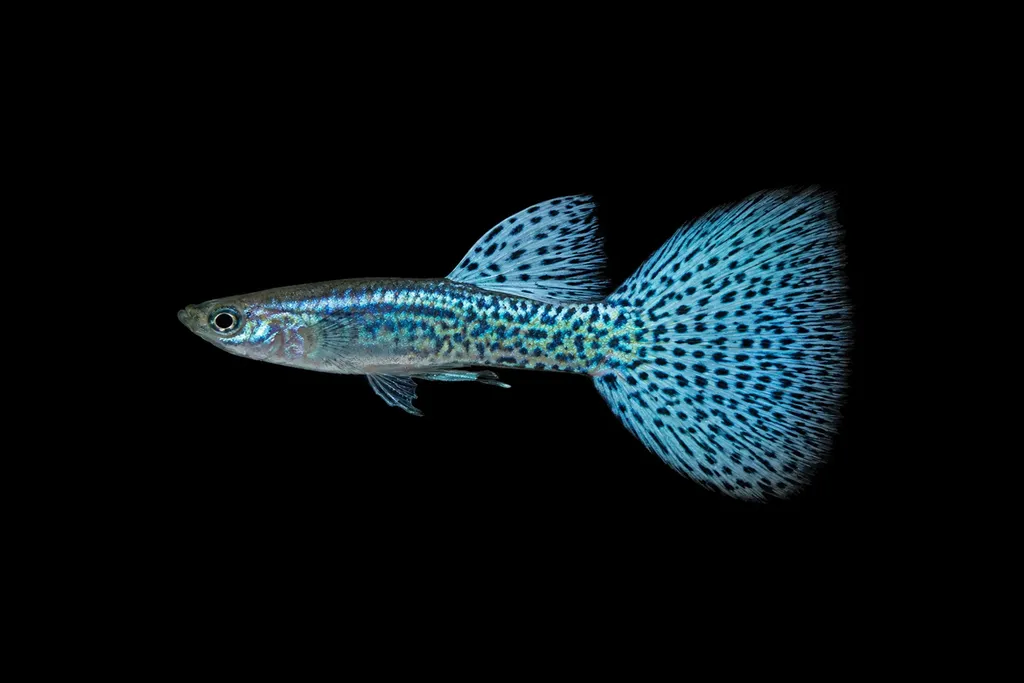
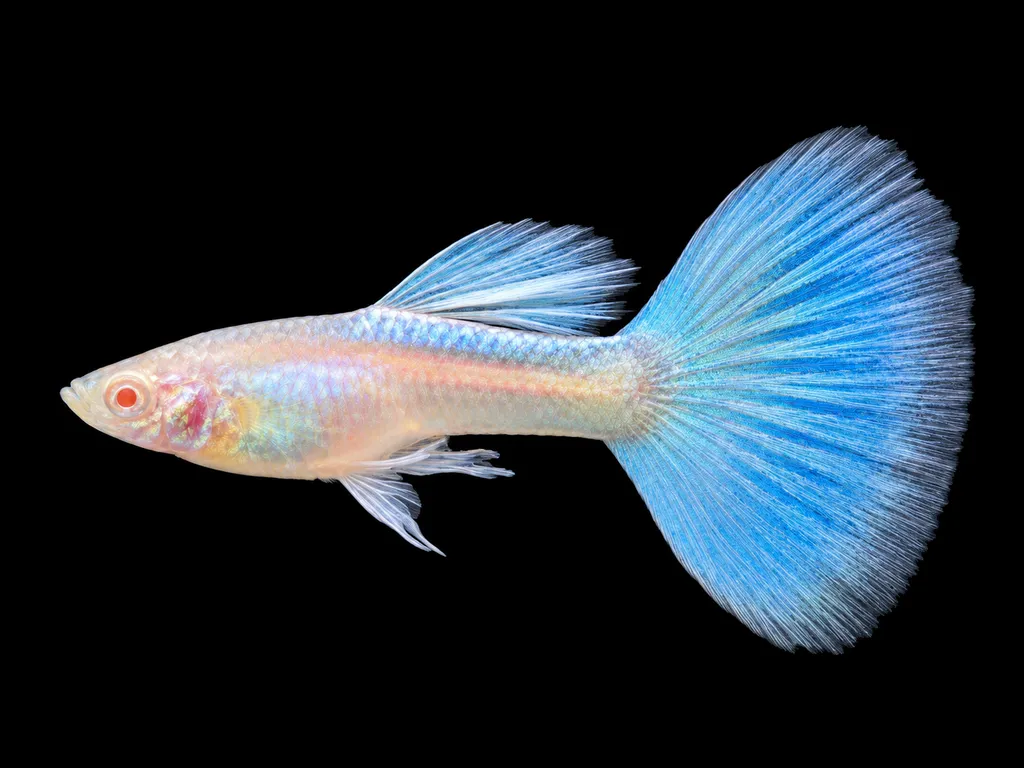
Overview
Guppies are peaceful and social and look best in a group. They favor the middle and upper water and are happy in a calm community. Keep the pH from about 6.8 to 7.8 across that broad temperature range. They eat almost anything, including quality flake, micro pellets, and frozen daphnia or brine shrimp. They breed so easily that a mixed-sex group will produce fry constantly, so plan for the numbers or keep males only. More females than males reduces pestering.
In the wild
Guppies are native to warm fresh waters in Venezuela and the Guianas, in rivers, streams, and ponds with lots of plants. The water is warm and tends toward neutral or slightly alkaline. They are very adaptable, so a planted tank with neutral to slightly hard water and a temperature anywhere from the upper teens to upper 20s C keeps them happy.
Good to know
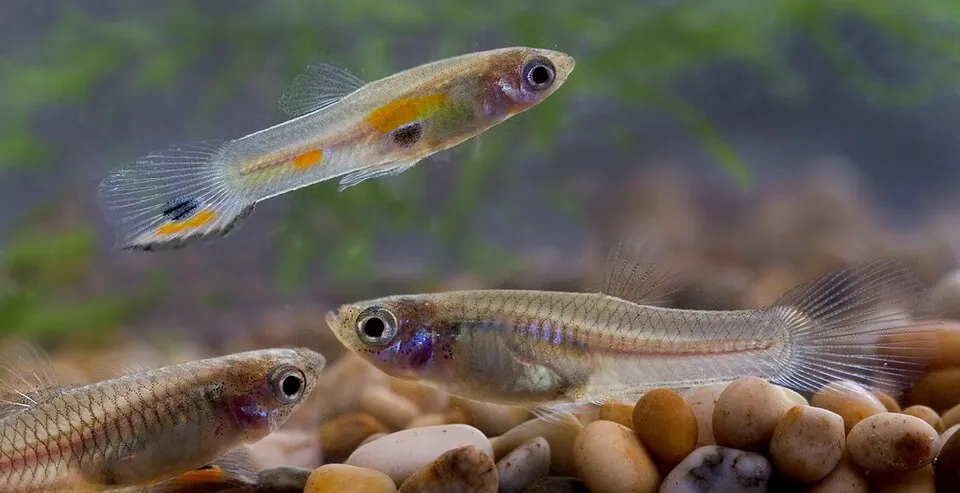
Poecilia reticulata is a livebearer in the family Poeciliidae. Adults stay small, with females reaching about 6 cm and males smaller but more colorful. They give birth to live, free-swimming young, and females can store sperm to deliver several broods from one mating. They are hardy and short-lived, often around two years.
Did you know
Wild guppy looks track their predators. In streams full of predators the fish stay smaller and drabber to avoid being seen, while in safer streams they grow brighter with bigger fins to win mates. This has made them one of the most studied fish in evolution research.
Other named lines
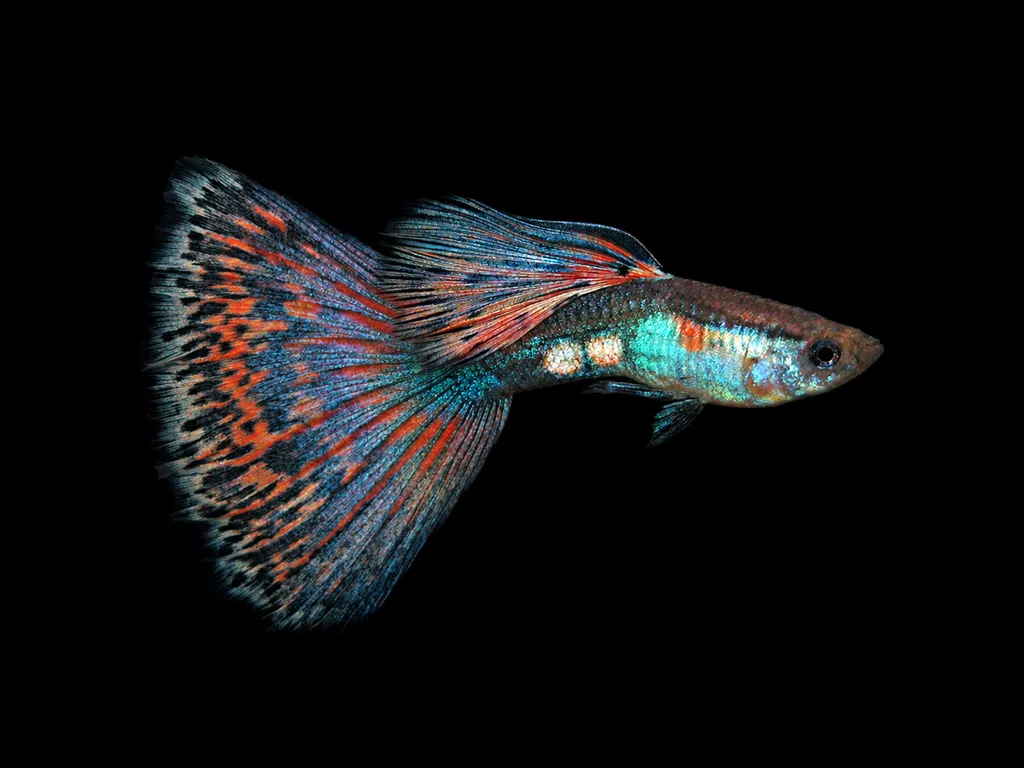
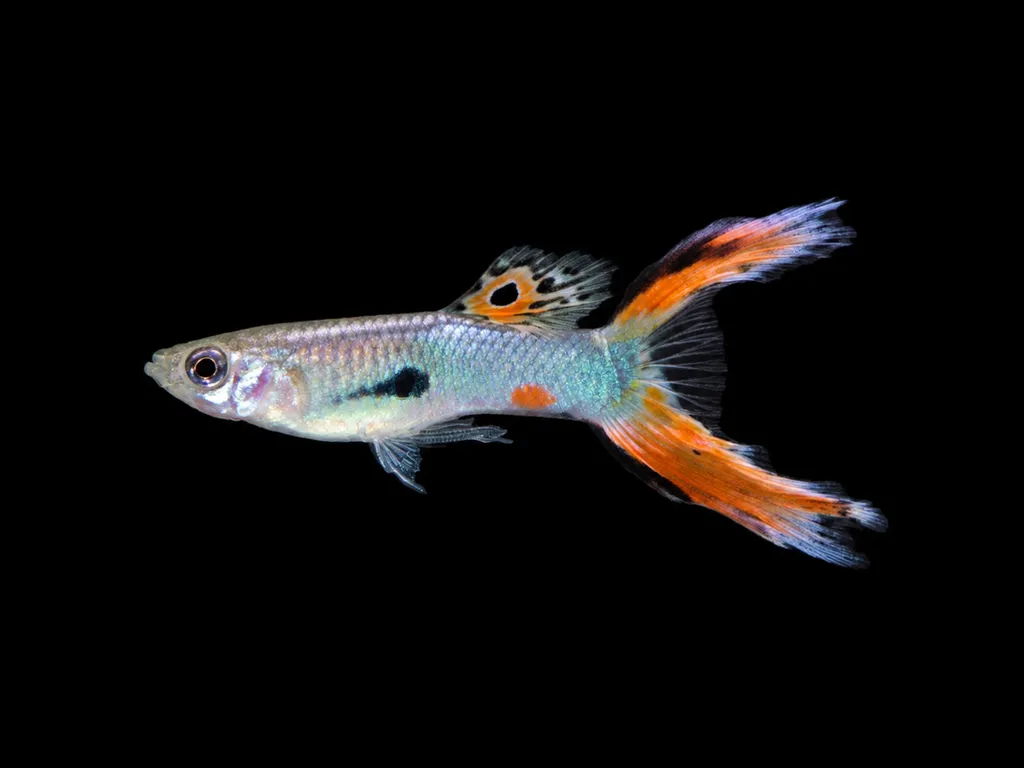
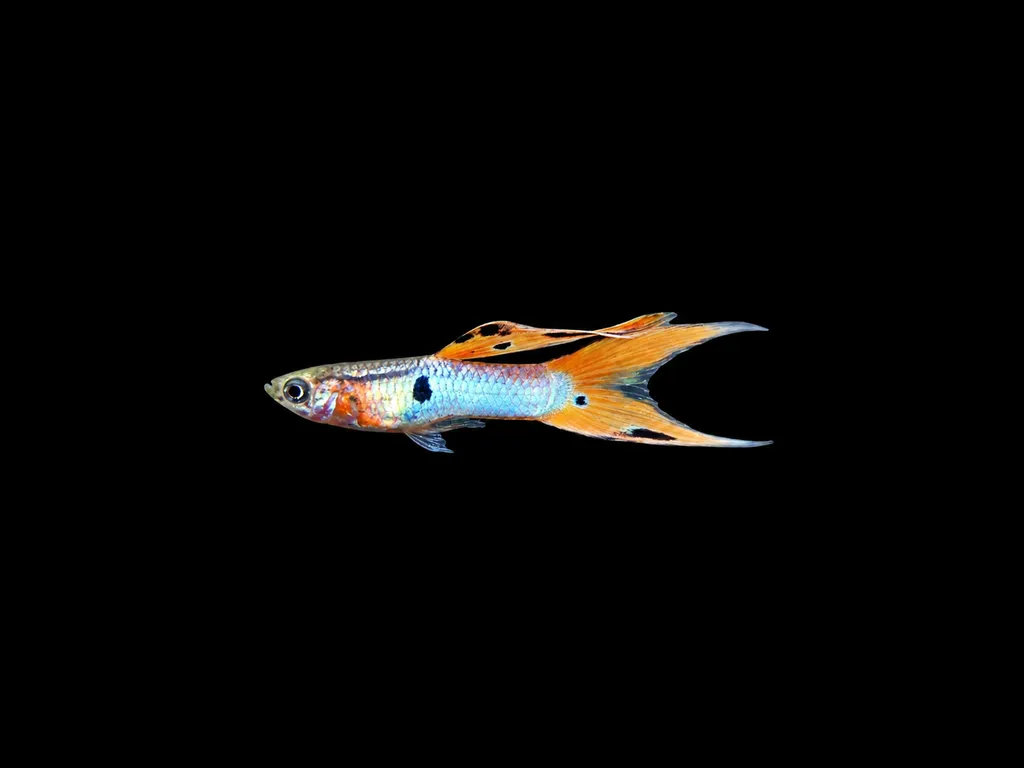
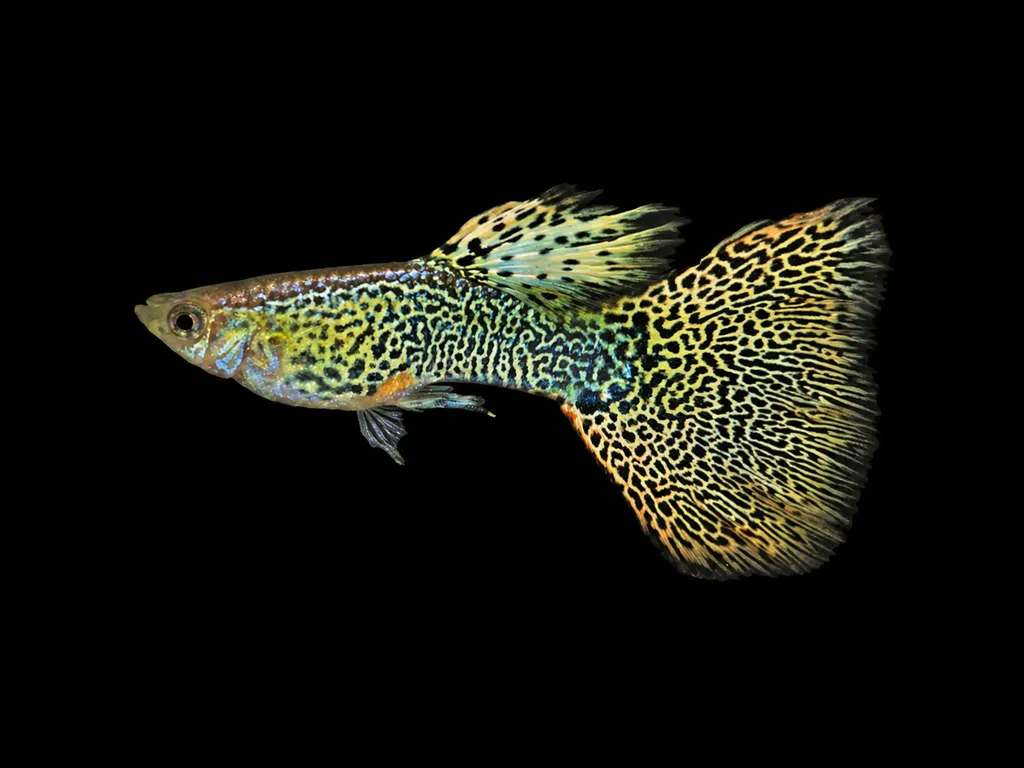
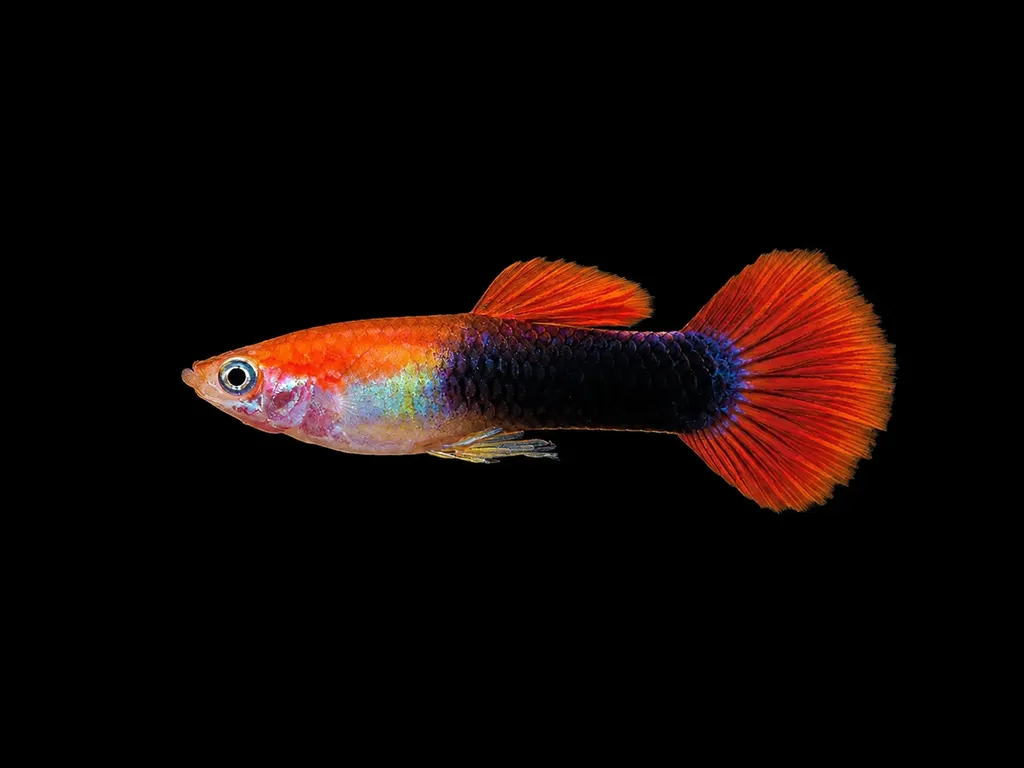
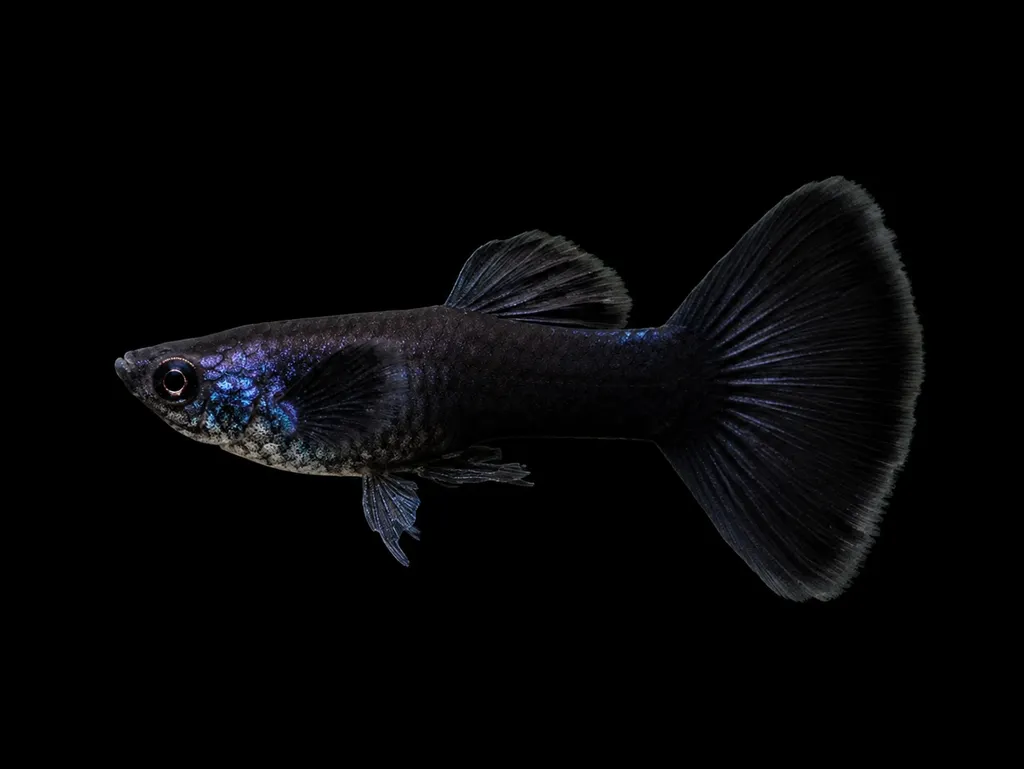
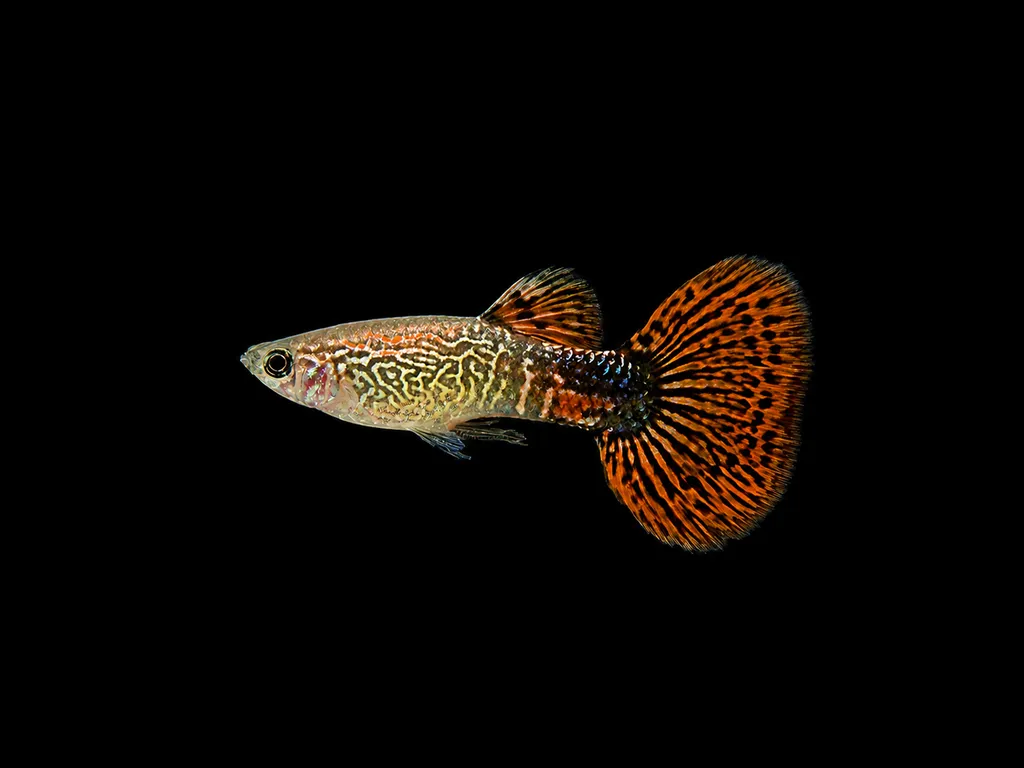
Fancy guppies are one species bred into thousands of lines. Tail shape and pattern names combine freely, so shops stack these labels on the same fish.
Tail shapes
- Fantail
- rounded fan spread
- Round tail
- short round tail, near the wild shape
Weekly picks
Tank mates
Every variety on this page wants the same water, so one set of picks fits them all. These picks match on water type, temperature, pH, size and temperament.
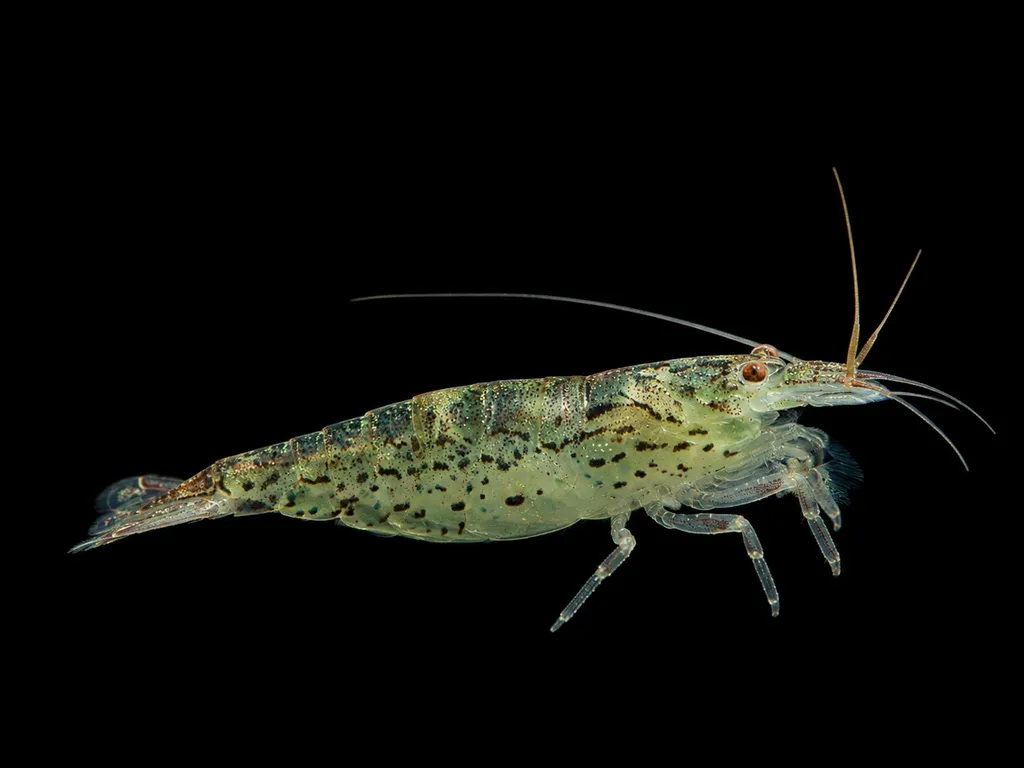
Green lace shrimp
Atyoida pilipes
Freshwater2.8 in (7 cm) · 14 gal (54 L)73–82°F (23–28°C)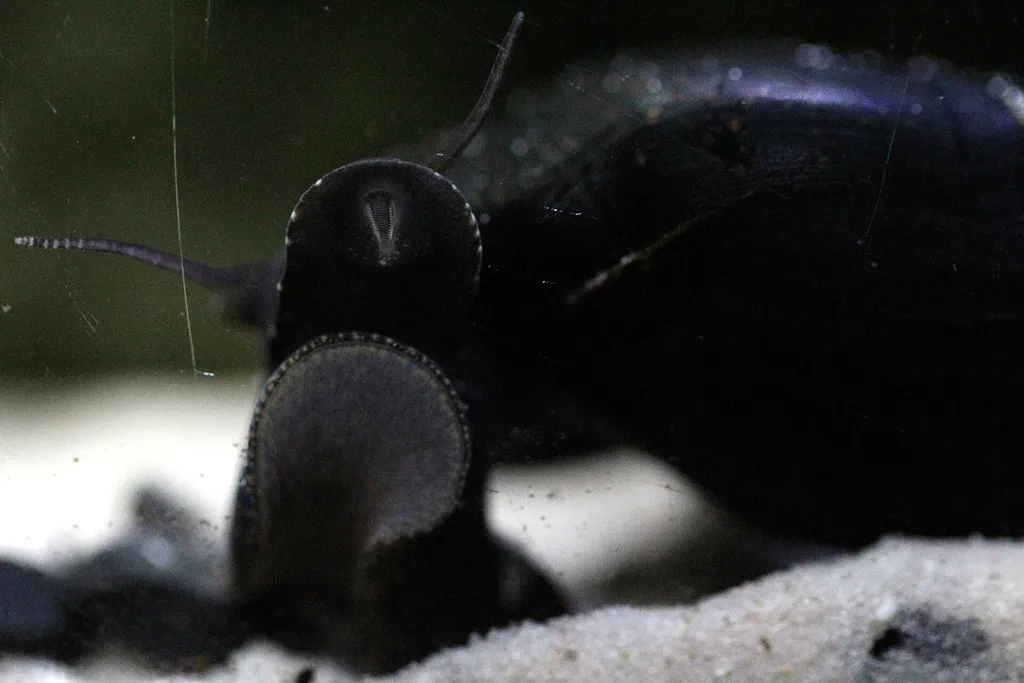
Black devil snail
Faunus ater
Freshwater3.9 in (10 cm) · 13 gal (50 L)72–86°F (22–30°C)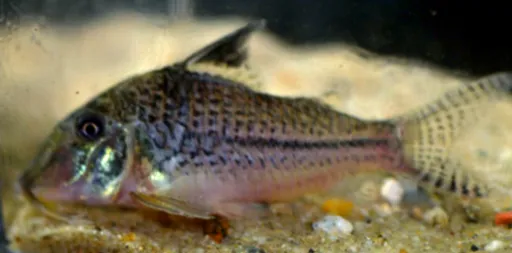
Blacktop cory
Corydoras acutus
Freshwater1.7 in (4.4 cm) · 13 gal (50 L)72–82°F (22–28°C)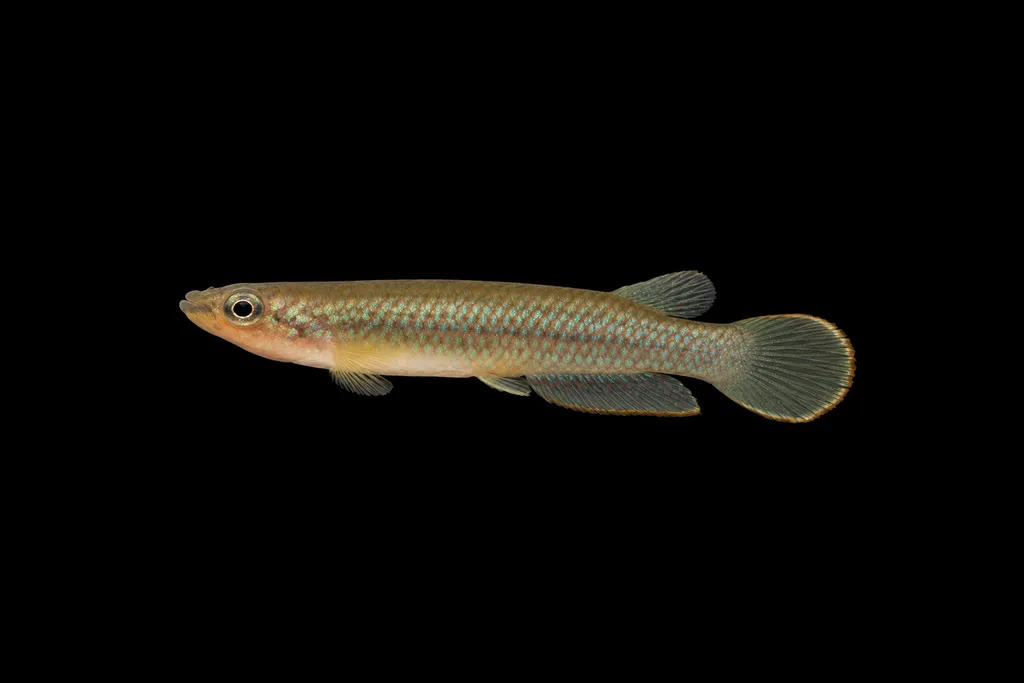
Guinean panchax
Epiplatys guineensis
Freshwater2.8 in (7 cm) · 14 gal (54 L)68–77°F (20–25°C)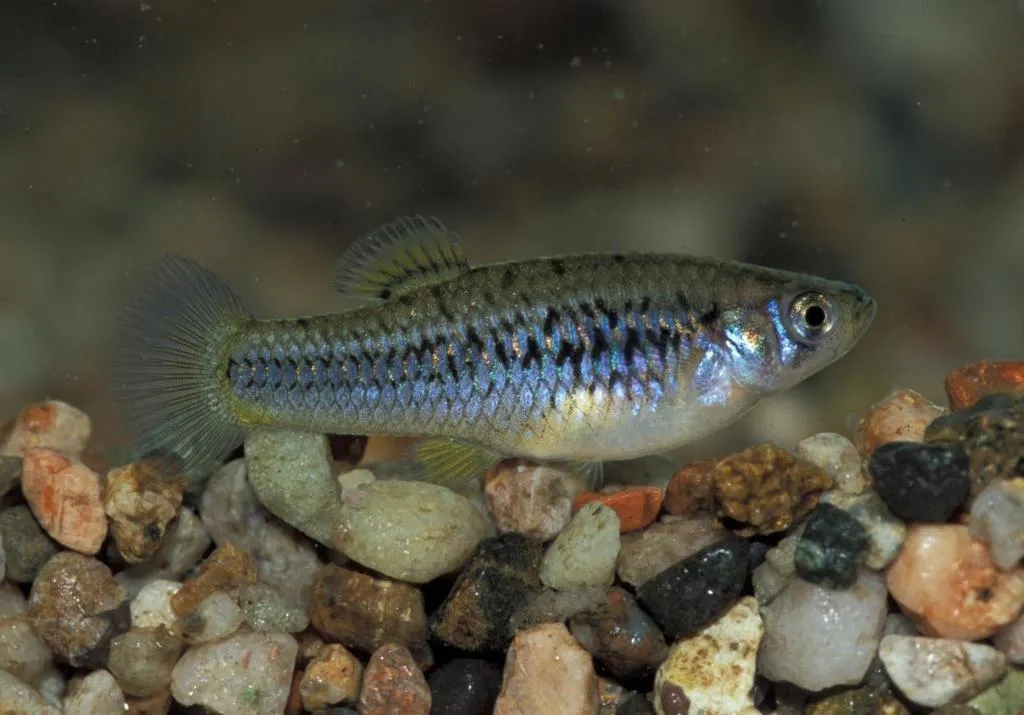
Crescent gambusia
Gambusia hurtadoi
Freshwater2 in (5 cm) · 14 gal (54 L)68–79°F (20–26°C)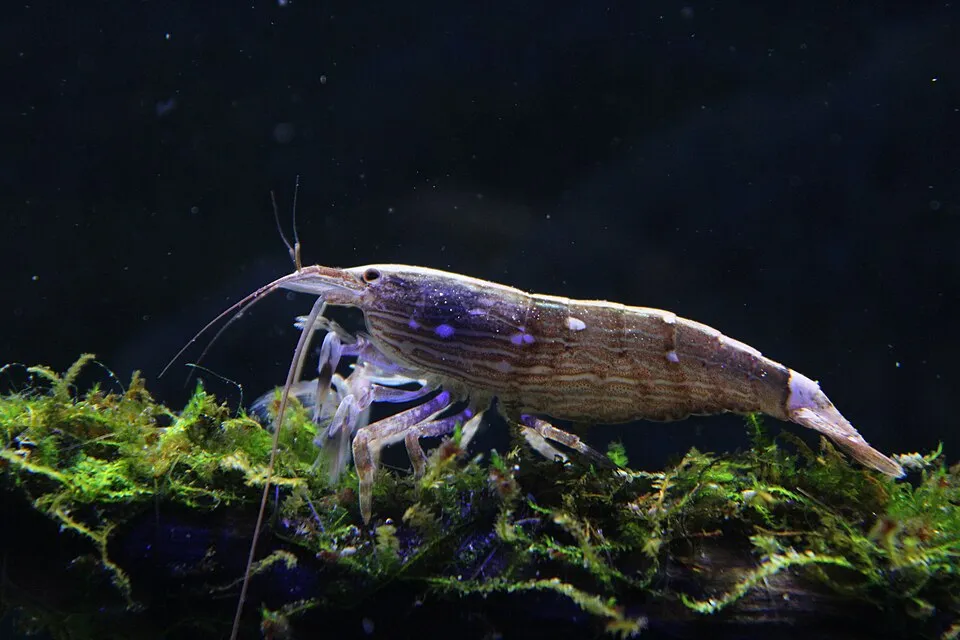
Bamboo shrimp
Atyopsis moluccensis
Freshwater3.9 in (10 cm) · 13 gal (50 L)72–84°F (22–29°C)
Common questions
What size tank does a Guppy need?
A Guppy needs at least 13 gal (50 L). It spends most of its time in the middle.
What temperature and pH does a Guppy need?
A Guppy is comfortable at 64–82°F (18–28°C) with a pH of 6.8–7.8.
How big does a Guppy get?
An adult Guppy reaches about 2.4 in (6 cm).
Related species
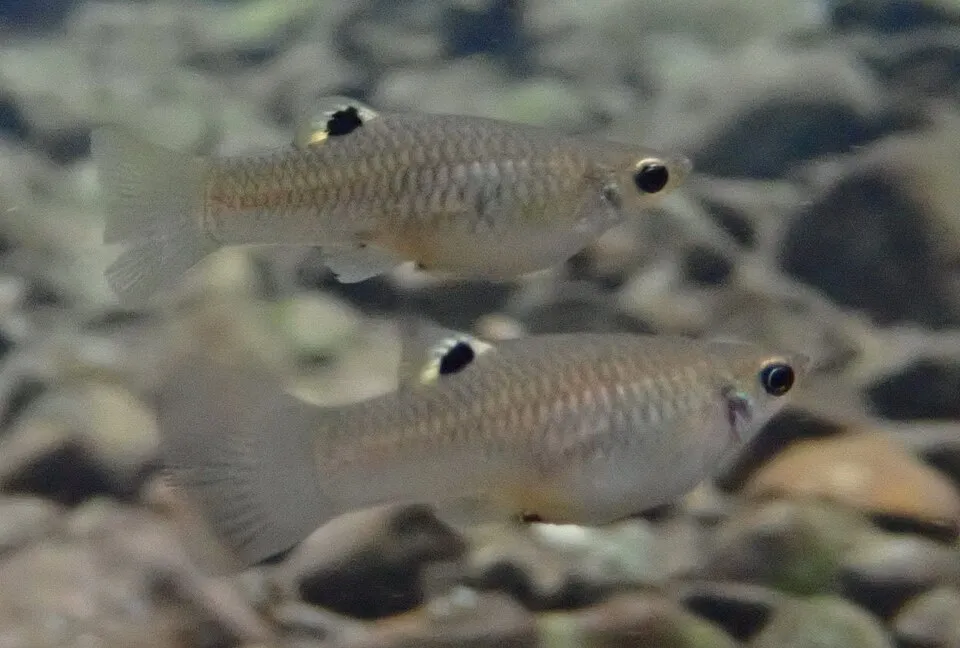 2.4 in (6 cm)16 gal (60 L)77–86°F (25–30°C)
Cauca molly
Poecilia caucana
2.4 in (6 cm) · 16 gal (60 L)
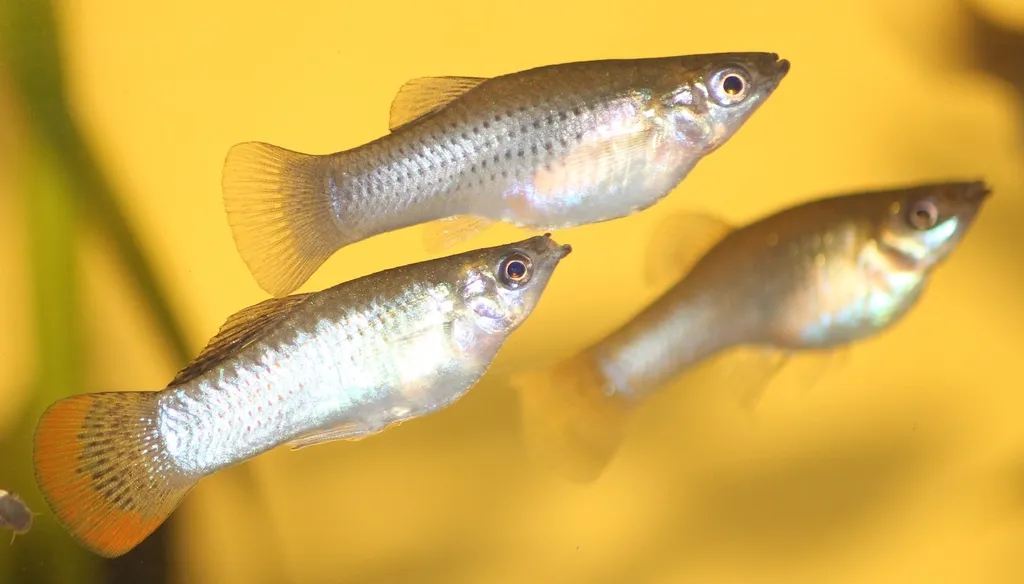 2.8 in (7 cm)29 gal (110 L)72–81°F (22–27°C)
Pacific molly
Poecilia butleri
2.8 in (7 cm) · 29 gal (110 L)
 2 in (5 cm)15 gal (55 L)75–82°F (24–28°C)
Melanzona guppy
Poecilia parae
2 in (5 cm) · 15 gal (55 L)
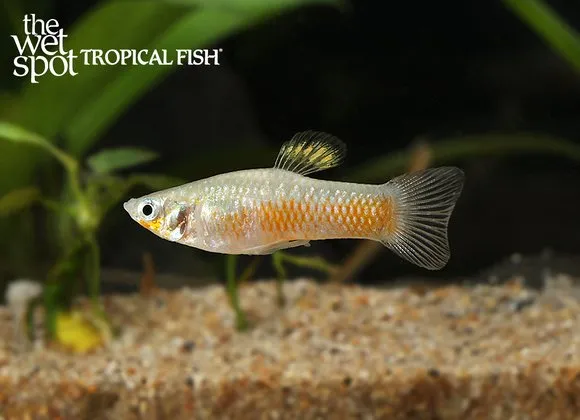 3.1 in (8 cm)20 gal (75 L)72–81°F (22–27°C)
Southern molly
Poecilia vivipara
3.1 in (8 cm) · 20 gal (75 L)
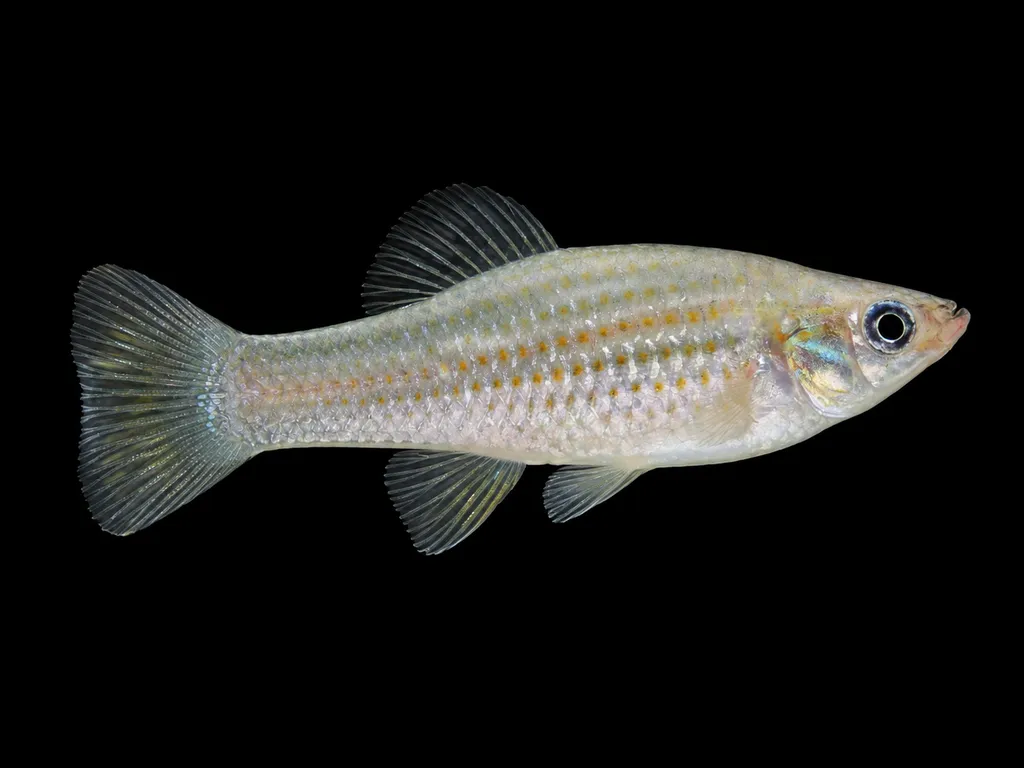 3.5 in (9 cm)20 gal (75 L)68–82°F (20–28°C)
Amazon molly
Poecilia formosa
3.5 in (9 cm) · 20 gal (75 L)
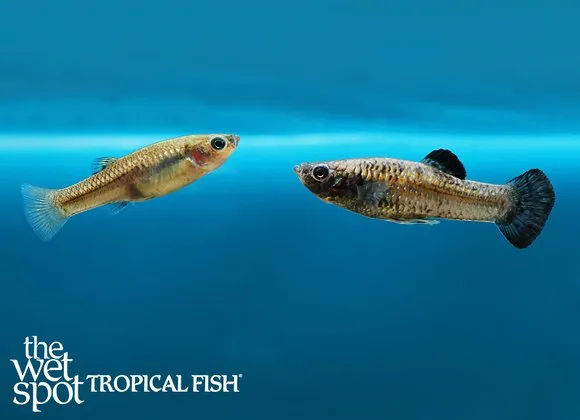 1.6 in (4 cm)11 gal (40 L)72–81°F (22–27°C)
Dwarf molly
Poecilia chica
1.6 in (4 cm) · 11 gal (40 L)