Pacific molly
Poecilia butleri
Also known as Butler's molly
FreshwaterFish
Care at a glance
- Temperature
- 72–81°F
- 22–27°C
- pH
- 7.0–8.2
- Adult size
- 2.8 in
- 7 cm
- Minimum tank
- 29 gal
- 110 L
- Temperament
- Peaceful
- Social behavior
- Social
- Swim level
- Middle
- Difficulty
- Medium
- Breeding
- Livebearer · Easy
- Rarity
- Rare
- Family
- Poeciliidae
- Origin
- Pacific slope, Mexico to Panama
Overview
The Pacific molly is a sturdy shortfin molly that suits a colony in a hard-water community tank. It is best for a keeper with a little experience.
Caring for the Pacific molly
Keep Pacific mollies as a colony in a tank of 29 gal (110 L) or larger. They patrol the middle and upper water and graze surfaces constantly, so give them open swimming room. Strong light keeps algae growing for them to graze, and they like some open current.
Give them hard, warm water at 72 to 81°F (22 to 27°C) and a pH of 7.0 to 8.2. They tolerate a little salt, but you do not need to add any to keep them well.
The Pacific molly's diet leans heavily vegetarian. Give it algae, spirulina flake, blanched greens and biofilm, rounded out with pellets and frozen foods.
Pacific mollies are generally peaceful and safe with other firm, hard-water community fish. They are too big and busy for delicate nano species. Males can be pushy and hard on females, so keep several females for each male.
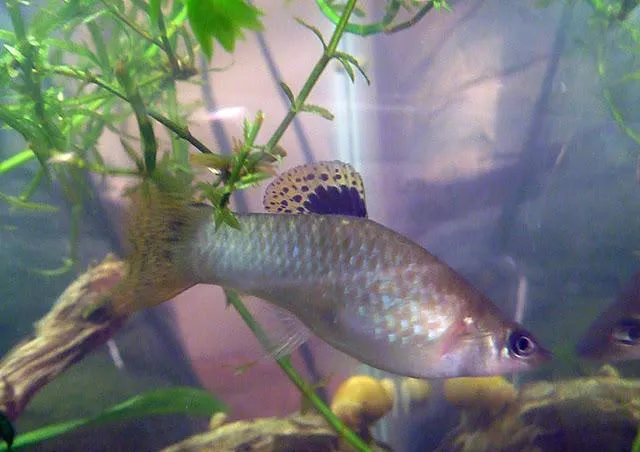
Females grow somewhat larger than males. The Pacific molly is a livebearer that breeds readily and produces large broods, often 20 to 60 young. Some adults eat fry, so give the young plenty of cover.
Good to know
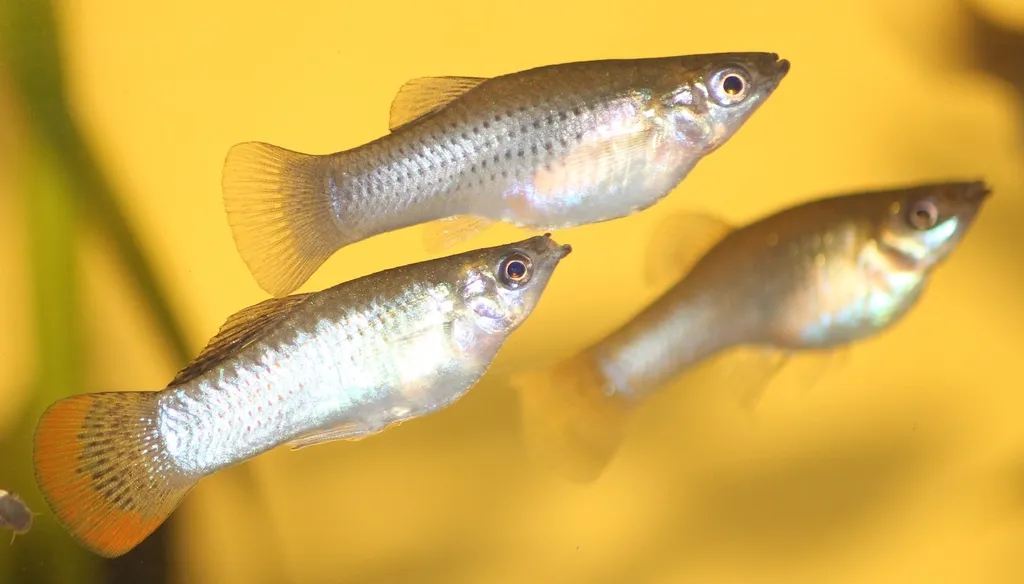
The Pacific molly, Poecilia butleri, is a member of the family Poeciliidae. David Starr Jordan described it in 1889. Unlike the sailfin mollies, neither sex grows a tall sail.
In the wild
The Pacific molly ranges down the Pacific slope of Central America, from Mexico to Panama. It lives where fresh water meets the sea, in coastal streams, lagoons and estuaries thick with algae and plants.
Weekly picks
Tank mates
The Pacific molly is a peaceful, social species that keeps to the middle. These picks share a community profile with it, are safe together in both directions, and overlap on water type, temperature and pH.
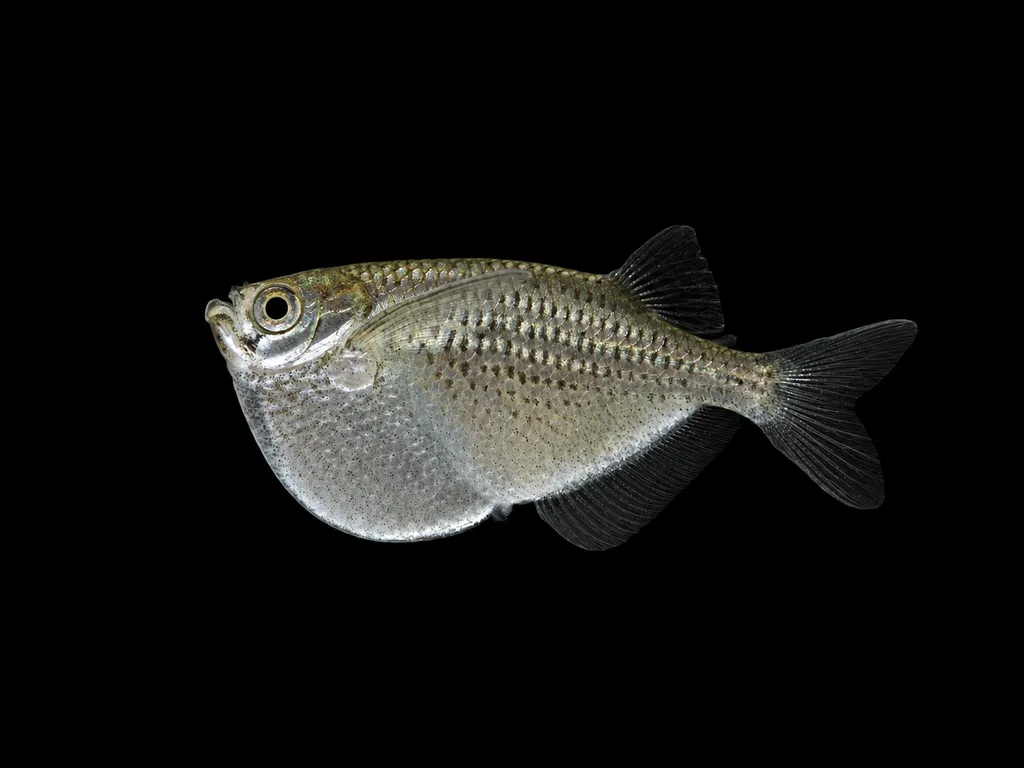
Silver hatchetfish
Gasteropelecus levis
Freshwater1.4 in (3.5 cm) · 30 gal (112 L)73–82°F (23–28°C)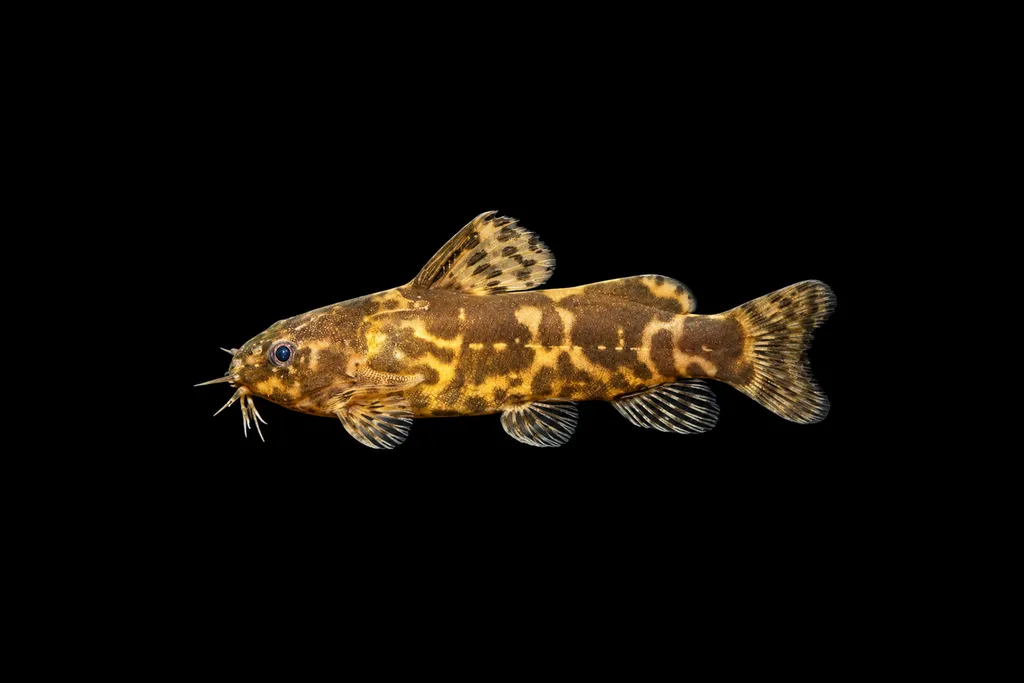
Yellow banded mochokiella
Mochokiella paynei
Freshwater2 in (5 cm) · 29 gal (110 L)73–81°F (23–27°C)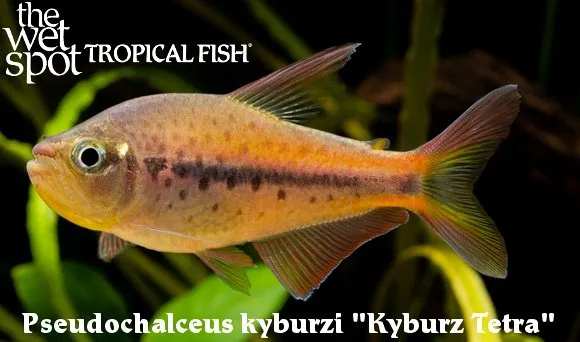
Kyburz tetra
Pseudochalceus kyburzi
Freshwater3.1 in (7.8 cm) · 29 gal (110 L)72–81°F (22–27°C)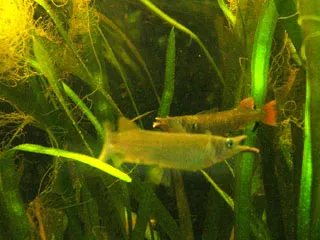
Redfin halfbeak
Nomorhamphus ebrardtii
Freshwater3.5 in (9 cm) · 29 gal (110 L)75–81°F (24–27°C)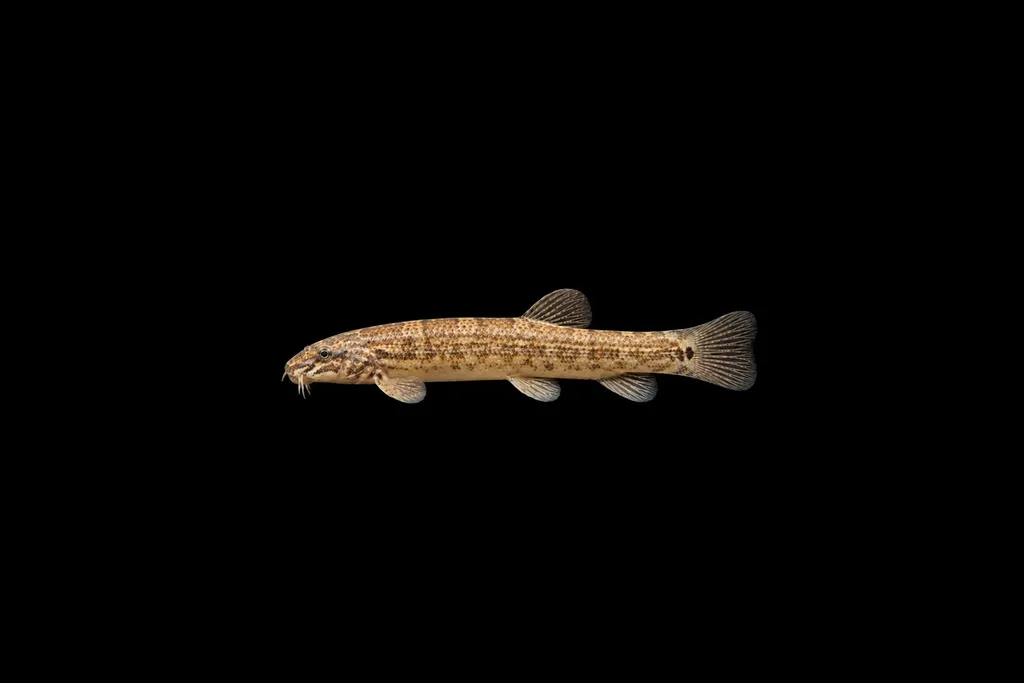
Schultz's stone loach
Schistura schultzi
Freshwater4.3 in (11 cm) · 29 gal (110 L)72–81°F (22–27°C)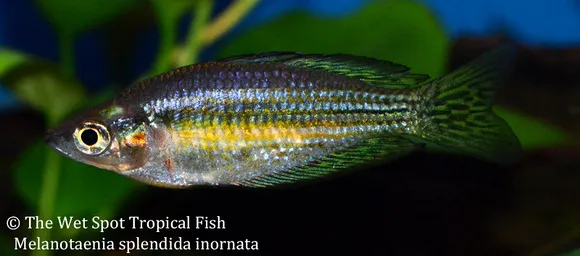
Checkered rainbowfish
Melanotaenia splendida inornata
Freshwater4.7 in (12 cm) · 29 gal (110 L)72–86°F (22–30°C)
Common questions
What size tank does a Pacific molly need?
A Pacific molly needs at least 29 gal (110 L). It spends most of its time in the middle.
What temperature and pH does a Pacific molly need?
A Pacific molly is comfortable at 72–81°F (22–27°C) with a pH of 7.0–8.2.
What does a Pacific molly eat?
A Pacific molly eats a diet that leans heavily vegetarian, with algae, spirulina flake, blanched greens and biofilm. Round it out with pellets and frozen foods.
How big does a Pacific molly get?
An adult Pacific molly reaches about 2.8 in (7 cm).
How can you tell a male Pacific molly from a female?
Males stay somewhat smaller than females.
How does a Pacific molly breed?
A Pacific molly is a livebearer and breeds readily, often producing large broods of 20 to 60 young. Some adults eat fry, so give the young plenty of cover.
Related species
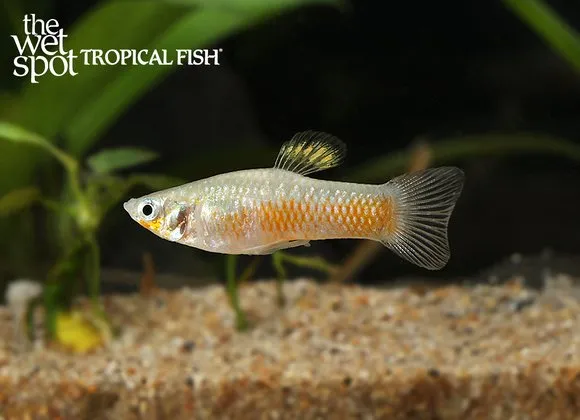 3.1 in (8 cm)20 gal (75 L)72–81°F (22–27°C)
Southern molly
Poecilia vivipara
3.1 in (8 cm) · 20 gal (75 L)
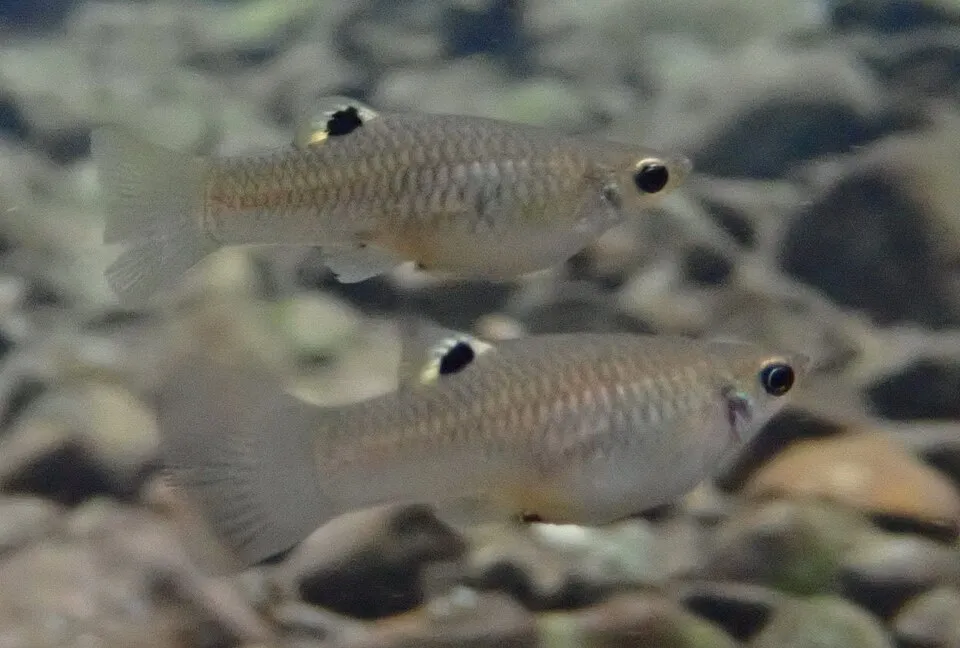 2.4 in (6 cm)16 gal (60 L)77–86°F (25–30°C)
Cauca molly
Poecilia caucana
2.4 in (6 cm) · 16 gal (60 L)
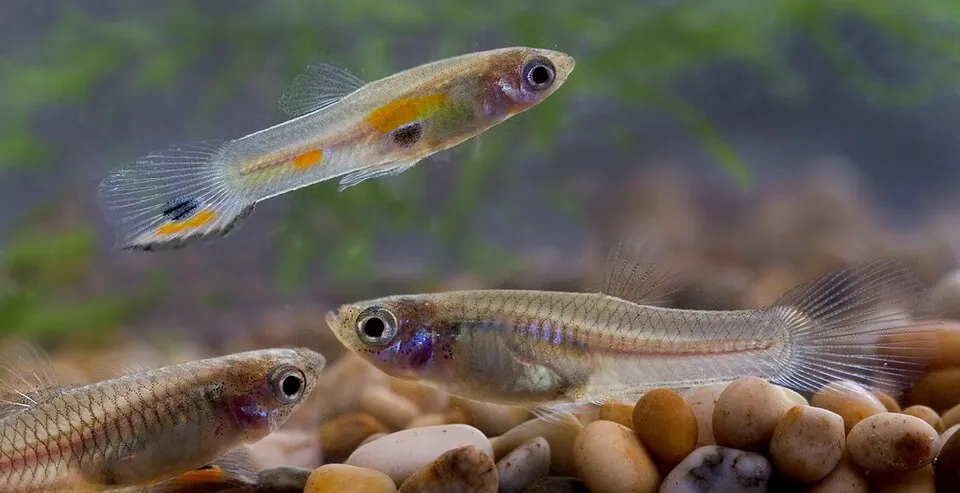 2.4 in (6 cm)10 gal (38 L)64–82°F (18–28°C)
Guppy
Poecilia reticulata
2.4 in (6 cm) · 10 gal (38 L)
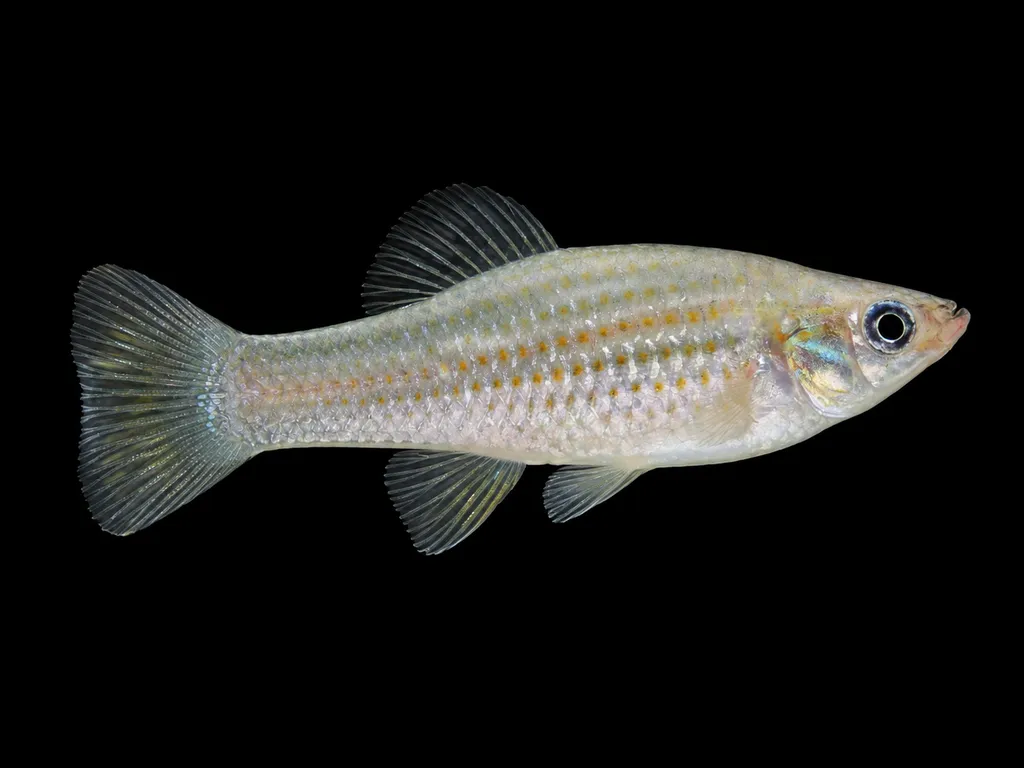 3.5 in (9 cm)20 gal (75 L)68–82°F (20–28°C)
Amazon molly
Poecilia formosa
3.5 in (9 cm) · 20 gal (75 L)
 2 in (5 cm)15 gal (55 L)75–82°F (24–28°C)
Melanzona guppy
Poecilia parae
2 in (5 cm) · 15 gal (55 L)
 3.9 in (10 cm)26 gal (100 L)72–86°F (22–30°C)
Gill's molly
Poecilia gillii
3.9 in (10 cm) · 26 gal (100 L)