Kyburz tetra
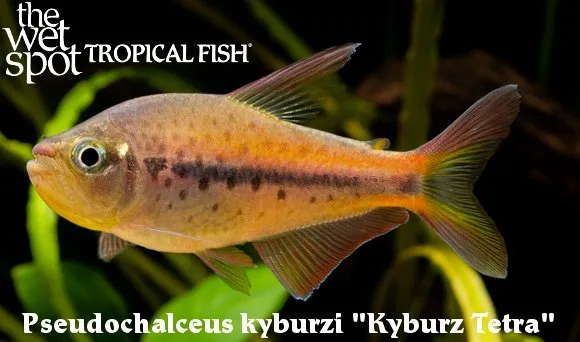
Pseudochalceus kyburzi
Also known as Kyburzi tetra, Giant spotted emperor tetra
FreshwaterFish
Care at a glance
- Temperature
- 72–81°F
- 22–27°C
- pH
- 5.5–7.0
- Adult size
- 3.1 in
- 7.8 cm
- Minimum tank
- 29 gal
- 110 L
- Temperament
- Mostly peaceful
- Social behavior
- Schooling
- Swim level
- Middle
- Difficulty
- Medium
- Breeding
- Egg scatterer
- Rarity
- Rare
- Family
- Characidae
- Origin
- Pacific-slope streams of Colombia
Overview
The Kyburz tetra is a large, boldly colored schooling fish for the middle of a roomy tank. It suits a keeper with some experience.
Did you know
Kyburz tetras stay uncommon partly because of where they come from. Fishes from the Choco, the rain-drenched Pacific coast of Colombia, seldom cross the Andes into the aquarium trade.
Caring for the Kyburz tetra
Give a group of Kyburz tetras plenty of space, at least 29 gal (110 L), and decorate the tank well. Leave open midwater for swimming, with structure around the edges. Driftwood, rocks and plants create shady retreats and break up lines of sight between rival males.
Keep the water soft and slightly acidic, at 72 to 81°F (22 to 27°C) and a pH of 5.5 to 7.0. Kyburz tetras treat feeding as a competition. They take flake, pellets, and frozen or live foods such as bloodworm, brine shrimp and mosquito larvae.
Keep them in a group of at least six, and more if you can, to spread out their energy. They are mostly peaceful but pushy, and rival males spar with one another. They can nip smaller, slower or long-finned tank mates, so choose robust, fast-moving companions of a similar size.
Breeding Kyburz tetras is not documented in home aquaria. Like other characins, they scatter their eggs and give no parental care.
Good to know
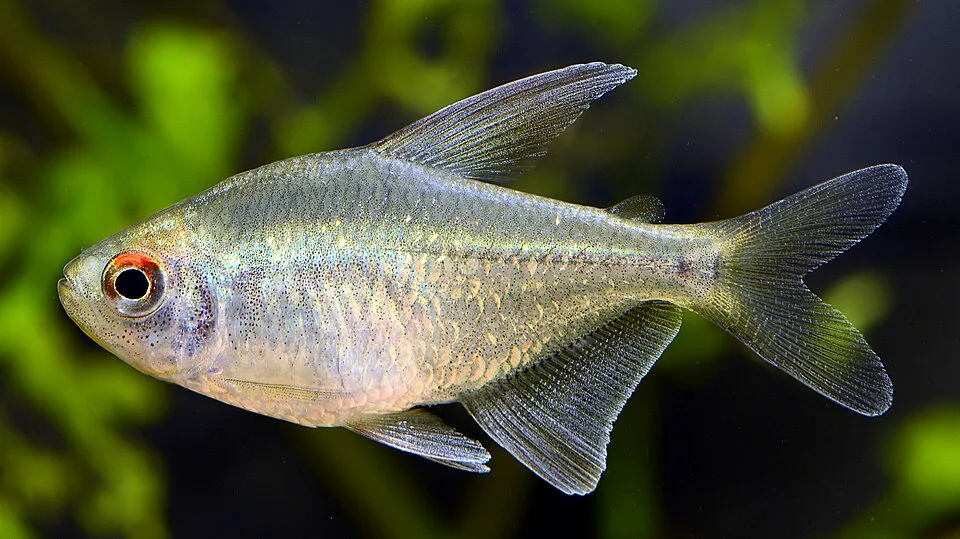
Pseudochalceus kyburzi is a robust characin in the family Characidae, with pink to turquoise spangling over a wine-red body. It honors the collector William Kyburz, and it is also sold as the giant spotted emperor tetra.
In the wild
The Kyburz tetra comes from forest streams on the Pacific slope of Colombia. It lives in the wet Choco region, rather than on the Amazon side of the Andes.
Weekly picks
Tank mates
The Kyburz tetra is a mostly peaceful, schooling species that keeps to the middle. These picks share a community profile with it, are safe together in both directions, and overlap on water type, temperature and pH.
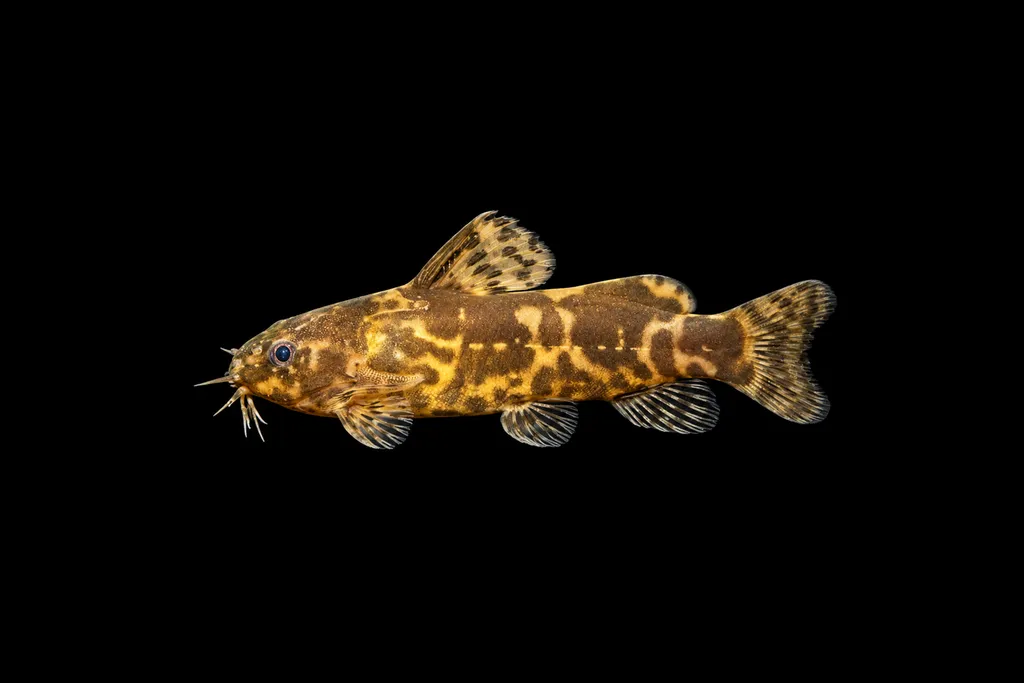
Yellow banded mochokiella
Mochokiella paynei
Freshwater2 in (5 cm) · 29 gal (110 L)73–81°F (23–27°C)
Redfin halfbeak
Nomorhamphus ebrardtii
Freshwater3.5 in (9 cm) · 29 gal (110 L)75–81°F (24–27°C)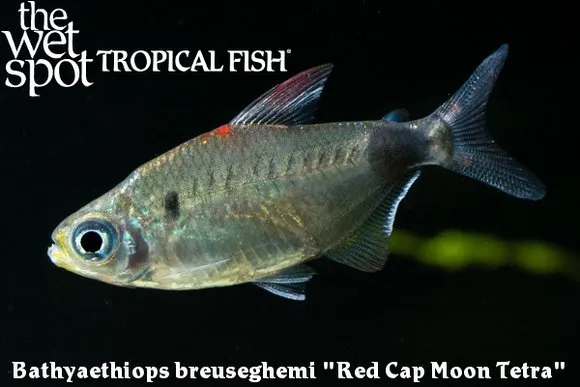
Breuseghem's moon tetra
Bathyaethiops breuseghemi
Freshwater2.8 in (7 cm) · 29 gal (110 L)73–81°F (23–27°C)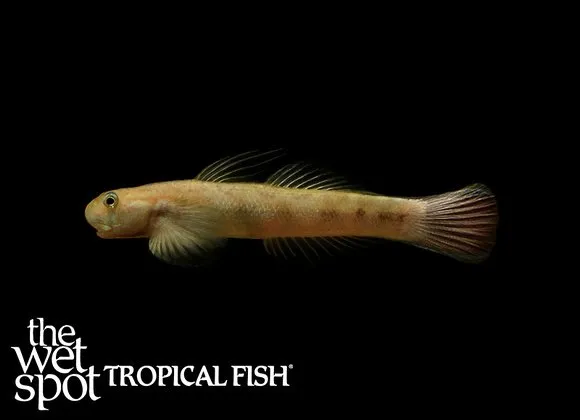
Red tail sicyopterus
Sicyopterus lagocephalus
Freshwater5.1 in (13 cm) · 29 gal (110 L)73–81°F (23–27°C)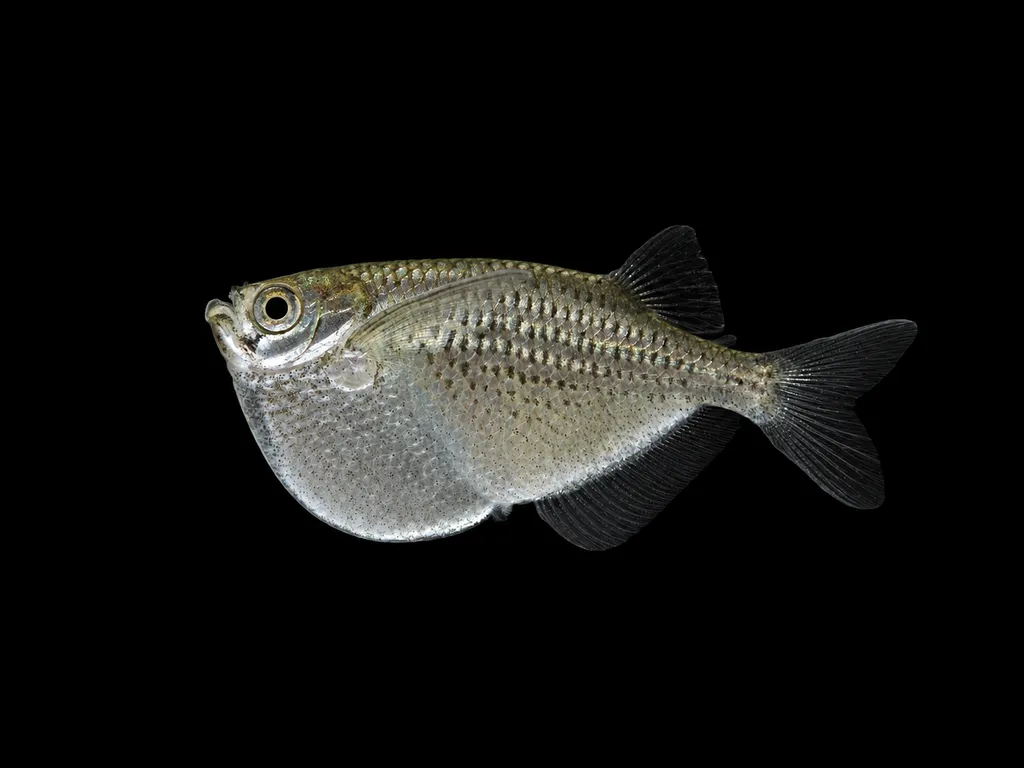
Silver hatchetfish
Gasteropelecus levis
Freshwater1.4 in (3.5 cm) · 30 gal (112 L)73–82°F (23–28°C)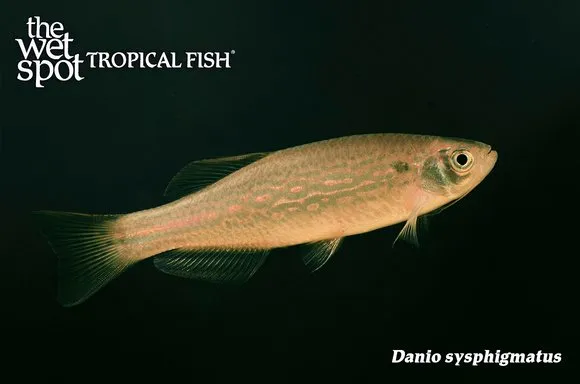
Sittaung danio
Danio sysphigmatus
Freshwater3.3 in (8.5 cm) · 29 gal (110 L)72–81°F (22–27°C)
Common questions
What size tank does a Kyburz tetra need?
A Kyburz tetra needs at least 29 gal (110 L). It spends most of its time in the middle.
What temperature and pH does a Kyburz tetra need?
A Kyburz tetra is comfortable at 72–81°F (22–27°C) with a pH of 5.5–7.0.
What does a Kyburz tetra eat?
A Kyburz tetra takes flake, pellets, and frozen or live foods such as bloodworm, brine shrimp and mosquito larvae. It treats feeding as a competition.
How big does a Kyburz tetra get?
An adult Kyburz tetra reaches about 3.1 in (7.8 cm).
Does a Kyburz tetra need a group?
Yes. A Kyburz tetra is a schooling species and should be kept in a group, not singly.
How does a Kyburz tetra breed?
A Kyburz tetra scatters its eggs and gives them no parental care, like other characins. No one has documented it breeding in a home aquarium.
Related species
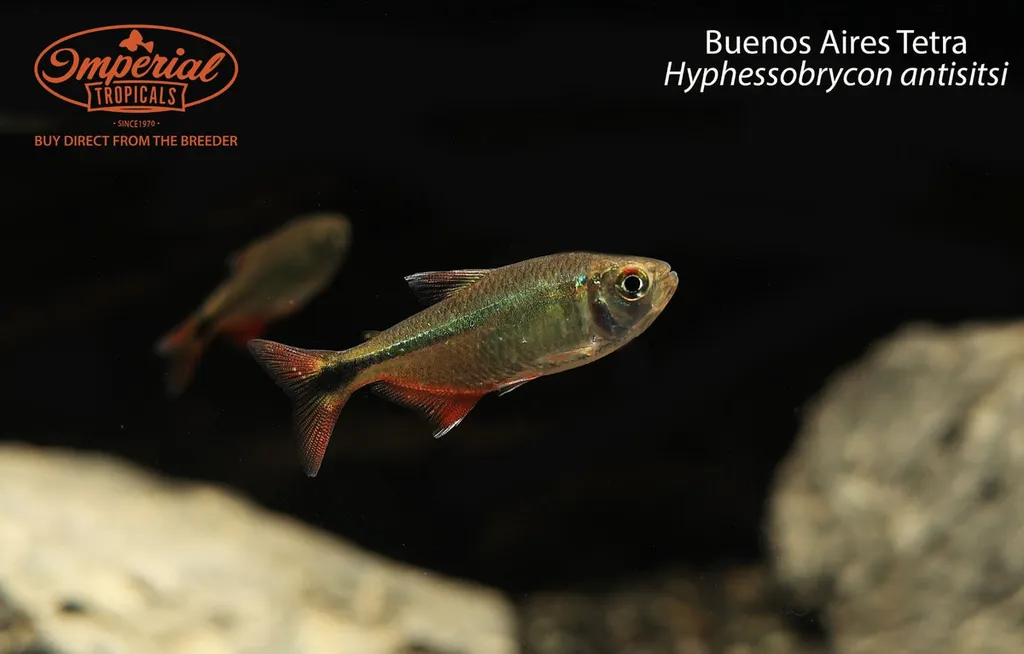 3 in (7.5 cm)25 gal (95 L)66–81°F (19–27°C)
Buenos Aires tetra
Psalidodon anisitsi
3 in (7.5 cm) · 25 gal (95 L)
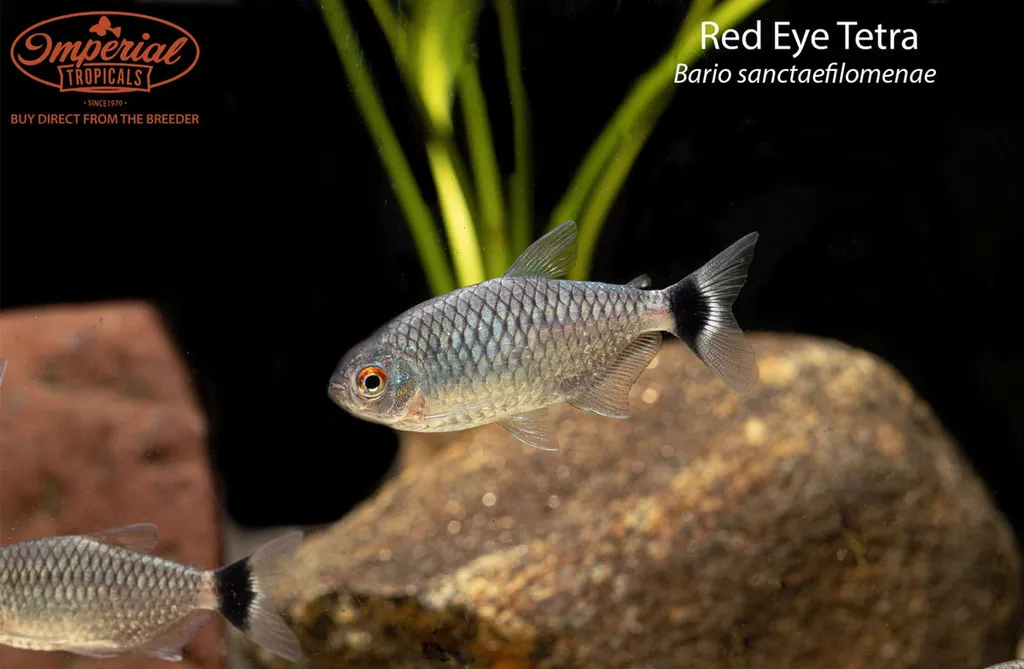 2.8 in (7 cm)28 gal (105 L)72–79°F (22–26°C)
Red eye tetra
Moenkhausia sanctaefilomenae
2.8 in (7 cm) · 28 gal (105 L)
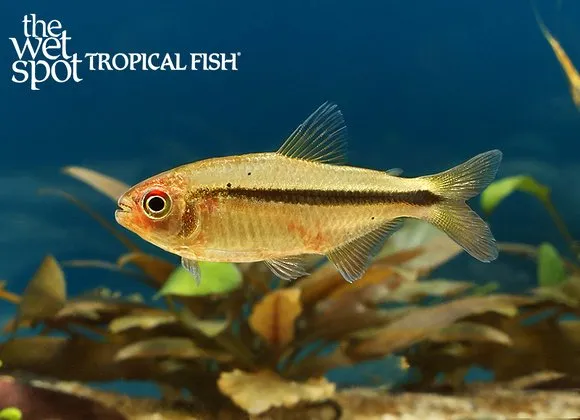 2.7 in (6.8 cm)26 gal (100 L)72–81°F (22–27°C)
Cachimbo tetra
Hyphessobrycon cachimbensis
2.7 in (6.8 cm) · 26 gal (100 L)
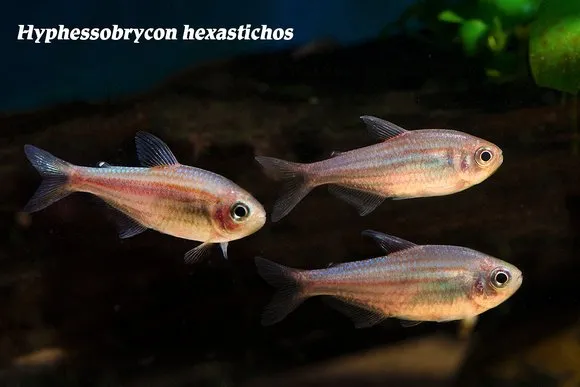 2.6 in (6.5 cm)24 gal (90 L)72–81°F (22–27°C)
Hexastichos tetra
Hyphessobrycon hexastichos
2.6 in (6.5 cm) · 24 gal (90 L)
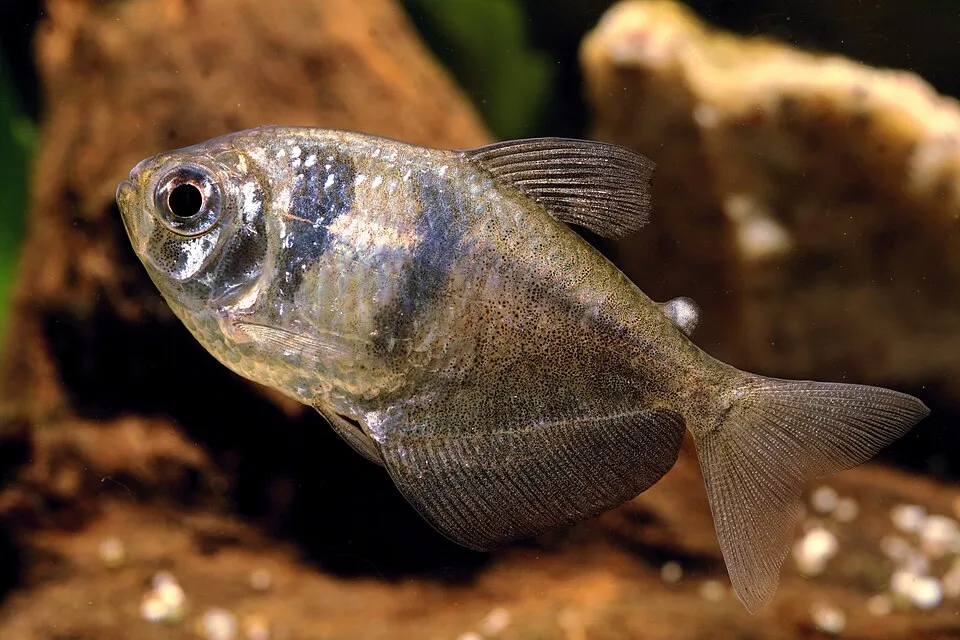 2.4 in (6 cm)15 gal (55 L)68–79°F (20–26°C)
Black widow tetra
Gymnocorymbus ternetzi
2.4 in (6 cm) · 15 gal (55 L)
 2.4 in (6 cm)20 gal (75 L)75–82°F (24–28°C)
Diamond tetra
Moenkhausia pittieri
2.4 in (6 cm) · 20 gal (75 L)