Boraras rasboras
Boraras rasboras are the smallest schooling fish most shops carry. The six species reach an inch (2.5 cm) or less and come from the peat swamps of Borneo, Malaysia and Thailand. Three of them get sold as chili rasboras, so the marks that tell them apart are on this page. Each profile lists tank size, water conditions and the group a species needs.
At a glance
- Tank size
- 7–11 gal
- 7 gal (25 L) to 11 gal (40 L); half the list needs 9 gal (35 L) or more
- Temperature
- 72–81°F
- 22–27°C, most of the list
- pH
- 5.0–7.0
- Most of the list
- Difficulty
- 1 easy
- 5 medium
6 species
Start here
The chili rasbora
The chili rasbora is a 0.8 inch (2 cm) fish from the peat swamps of Borneo, marked medium and peaceful. The mosquito rasbora is the same fish under an older name, and a few shops still spell it chilli. It lists 7 gallons (25 liters), 72–82°F (22–28°C) and a pH from 5 to 7, so it wants soft, acidic water over leaf litter. A group of ten or more brings out the red, and six is the floor. The mouth is tiny, so it eats crushed flake, micro pellets and baby brine shrimp.
The mix-ups
The three sold as chili rasboras
The phoenix rasbora comes from the same Borneo swamps as the chili, at the same 0.8 inches (2 cm). Its dark marks break into a blotch and a few dashes instead of a stripe. The red sits packed around those marks on a paler body. It lists 11 gallons (40 liters) at 72–81°F (22–27°C) and a pH from 5 to 7, marked medium. The strawberry rasbora is the Thai fish sold under the chili name, deeper in the body with one large dark blotch on the flank. Its red stops short of the head, and the males carry a bigger blotch than the females. It lists 11 gallons (40 liters) at 73–81°F (23–27°C), marked medium, and most of the stock is tank bred. The exclamation-point rasbora turns up mixed into chili shipments at 0.6 inches (1.6 cm). It has a long thin stripe and a round spot on the tail base. It is the only one of the six marked easy, and it takes a pH from 6 to 7.
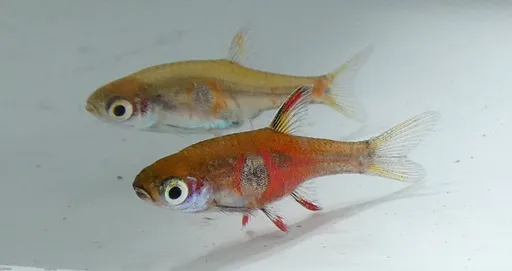
Strawberry rasbora
Boraras naevus
Freshwater- Size
- 0.8 in (2 cm)
- Tank
- 11 gal (40 L)
- Water
- 73–81°F (23–27°C)
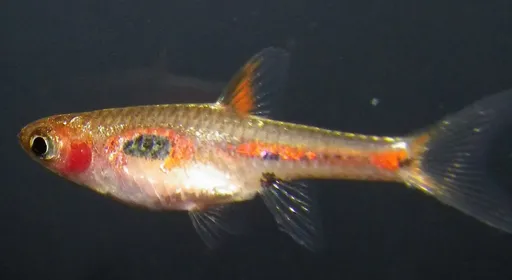
Phoenix rasbora
Boraras merah
Freshwater- Size
- 0.8 in (2 cm)
- Tank
- 11 gal (40 L)
- Water
- 72–81°F (22–27°C)
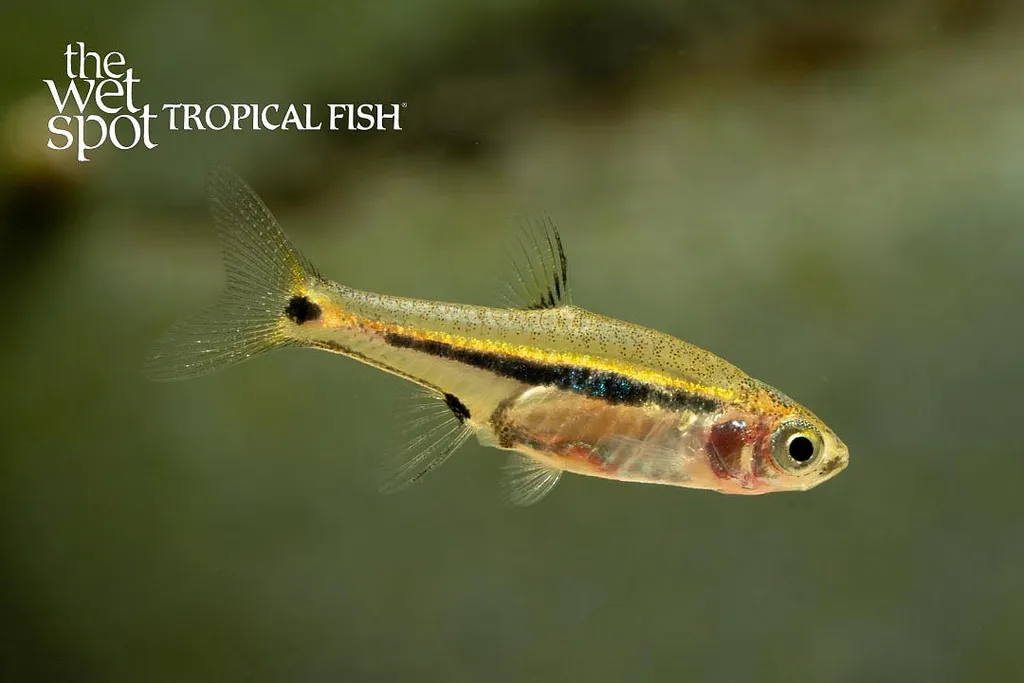
Exclamation-point rasbora
Boraras urophthalmoides
Freshwater- Size
- 0.6 in (1.6 cm)
- Tank
- 11 gal (40 L)
- Water
- 73–81°F (23–27°C)
Identification
How to tell the six apart
The three from Borneo and Malaysia, the chili, phoenix and dwarf rasboras, are slim and drawn out. The strawberry, exclamation-point and micro rasboras from Thailand and Indochina are shorter and deeper in the body. Look at the dark mark on the flank next. A stripe means a chili or an exclamation-point rasbora, and a blotch means a phoenix, a strawberry or a dwarf rasbora. A round spot on the tail base marks the exclamation-point rasbora. Red that runs into the head separates the dwarf from the strawberry. The dwarf rasbora is the largest at 1 inch (2.5 cm). The chili, phoenix and strawberry rasboras stop at 0.8 inches (2 cm). The exclamation-point and micro rasboras stay near 0.6 inches (1.5 to 1.6 cm).
- 01
The chili's stripe
A dark stripe on an evenly red body, no separate spot at the tail base
- 02
The phoenix's blotches
A blotch and dashes instead of a stripe, red packed around the marks
- 03
The strawberry's blotch
One large blotch on a deeper body, and the red stops before the head
- 04
The dwarf's spots
A big blotch plus smaller spots toward the tail, the largest at 1 inch
- 05
The exclamation point
A long thin stripe and a round spot on the tail base, 0.6 inches
- 06
The micro's pale body
Pale with small dark spots and no red, the smallest and rarely sold
The rule
What every Boraras needs
Every profile here lists a pH between 5 and 7, so hard tap water is out. Soft water over leaf litter, a dark substrate and low light bring the red out and keep the fish calm. Every one of the six is a shoaler that hides and fades when short-handed, so buy eight to ten or more. They list 7 to 11 gallons (25 to 40 liters) and 72–82°F (22–28°C) across the group. The mouths are tiny, so they need crushed flake, micro pellets, baby brine shrimp and microworms. They are safe with dwarf shrimp and too small for anything that could eat them. Keep them alone or with other nano fish.
- 01
Soft and acidic
Every profile lists a pH between 5 and 7
- 02
Eight to ten or more
A short-handed group hides and loses its color
- 03
Tiny food
Crushed flake, micro pellets, baby brine shrimp, microworms
- 04
Nano tank mates only
Shrimp-safe, and too small for anything that could eat them
The other two
The dwarf and the micro
The dwarf rasbora is the largest Boraras at 1 inch (2.5 cm), marked medium for 7 gallons (25 liters). It comes from Malaysia, Thailand and Sumatra, with a big blotch on the flank and red that runs into the head. Shops also sell it as the pygmy spotted rasbora, and the name dwarf rasbora gets used for the chili too. The micro rasbora is the smallest at 0.6 inches (1.5 cm) for 8 gallons (30 liters). It is pale yellow with small dark spots and no red. It lists 72–79°F (22–26°C) and a pH from 5 to 6.5, marked medium. It comes from marshes in northeastern Thailand and rarely reaches a shop.
By the numbers
Smallest
Largest
FAQ
Common questions
Are the chili rasbora and the mosquito rasbora the same fish?
Yes. Both names mean Boraras brigittae, the 0.8 inch (2 cm) rasbora from Borneo, and chilli with two l's is the same fish again. The profile lists 7 gallons (25 liters) and a pH from 5 to 7.
How do I tell a chili rasbora from a strawberry or a phoenix rasbora?
The chili carries a dark stripe on an evenly red body. The phoenix breaks that stripe into a blotch and dashes with the red packed around them. The strawberry is deeper in the body with one large blotch, and its red stops before the head.
How big do Boraras rasboras get?
The dwarf rasbora is the largest at 1 inch (2.5 cm). The chili, phoenix and strawberry rasboras reach 0.8 inches (2 cm). The exclamation-point and micro rasboras stay near 0.6 inches (1.5 to 1.6 cm).
What tank size do they need, and how many should I buy?
The profiles list 7 to 11 gallons (25 to 40 liters). Eight to ten of one species is the group that keeps them out in the open. The chili profile puts ten or more in a planted 7 gallon (25 liter) tank.
Do Boraras rasboras need soft water?
Yes. Every profile lists a pH between 5 and 7, and the chili, phoenix, strawberry and dwarf rasboras go down to 5. Leaf litter, wood and RO water cut with a little tap get you there.
Which Boraras is the easiest to keep?
The exclamation-point rasbora is the only one marked easy, for 11 gallons (40 liters) at a pH from 6 to 7. The other five are marked medium for their soft water and their shyness in small groups.
Which one is the least rasbora?
The exclamation-point rasbora is the least rasbora: FishBase lists Boraras urophthalmoides under that name, and it is the fish shops mean. The micro rasbora is smaller still but rarely sold, and it goes by its Latin name.
Index
All boraras rasboras
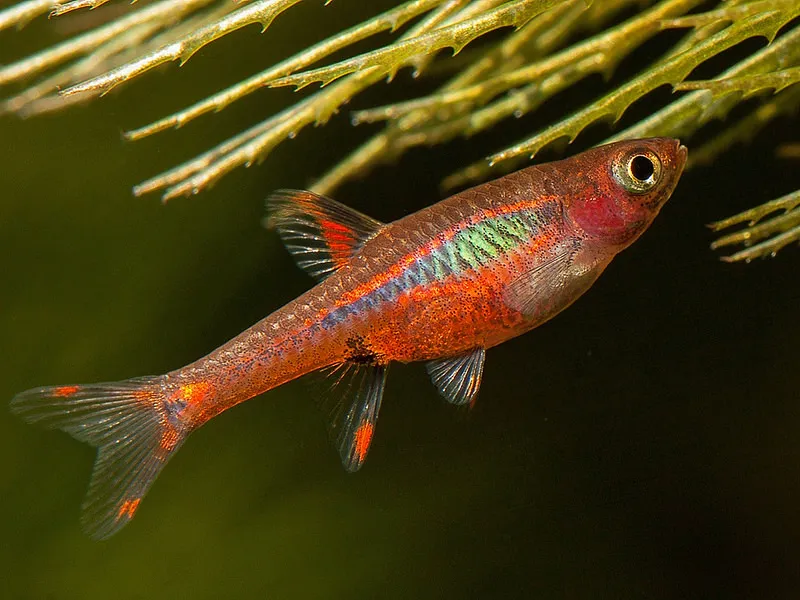
Chili rasbora
Boraras brigittae
Freshwater0.8 in (2 cm) · 7 gal (25 L)72–82°F (22–28°C)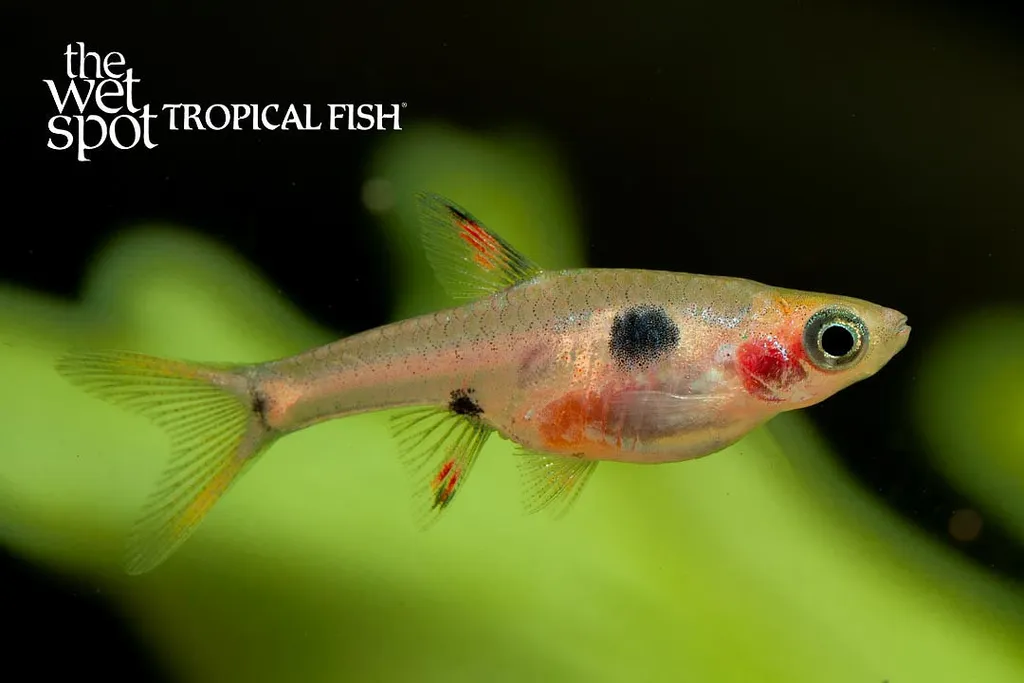
Dwarf rasbora
Boraras maculatus
Freshwater1 in (2.5 cm) · 7 gal (25 L)72–82°F (22–28°C)Exclamation-point rasbora
Boraras urophthalmoides
Freshwater0.6 in (1.6 cm) · 11 gal (40 L)73–81°F (23–27°C)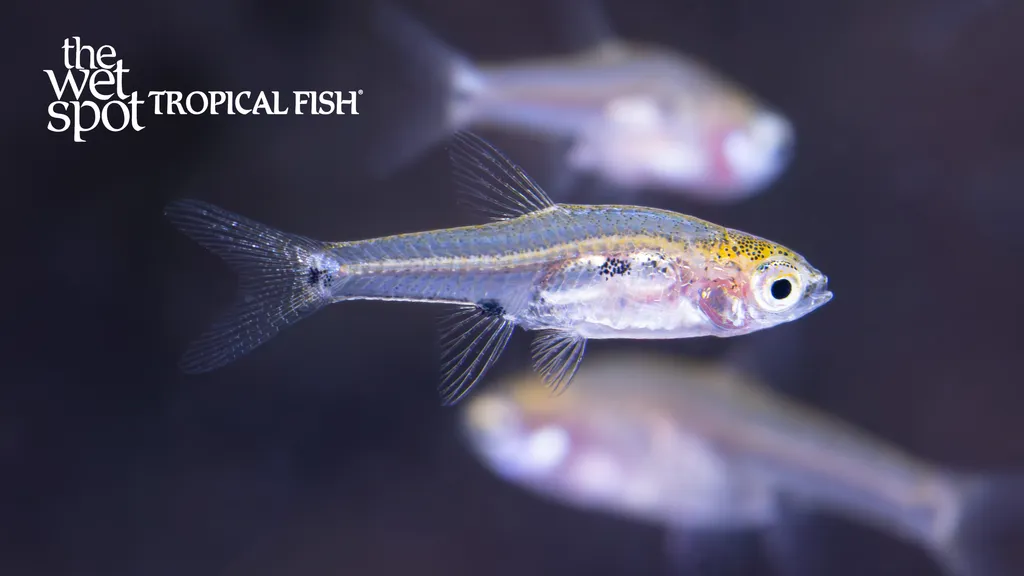
Micro rasbora
Boraras micros
Freshwater0.6 in (1.5 cm) · 8 gal (30 L)72–79°F (22–26°C)Phoenix rasbora
Boraras merah
Freshwater0.8 in (2 cm) · 11 gal (40 L)72–81°F (22–27°C)Strawberry rasbora
Boraras naevus
Freshwater0.8 in (2 cm) · 11 gal (40 L)73–81°F (23–27°C)
Planning a tank?
TankBud checks stocking and water fit as you build a tank, then tracks water tests, reminders and photos once it is running.
Track your tanksMaintain tanks for clients? See TankBud Pro