Saltwater angelfish
Saltwater angelfish are not the same as the freshwater angelfish, which is a cichlid; these are marine fish that range from palm-sized dwarf Centropyge to large angels that need a big tank. Reef safety varies, since many pick at corals and clams, so check each species before adding it to a reef. Each profile lists tank size, diet and reef safety.
At a glance
- Tank size
- 29–251 gal
- 29 gal (110 L) to 251 gal (950 L); half the list needs 100 gal (380 L) or more
- Temperature
- 72–79°F
- 22–26°C, most of the list
- pH
- 8.1–8.4
- Most of the list
- Difficulty
- 4 easy
- 28 medium · 19 difficult
- Temperament
- 4 peaceful
- 43 mostly peaceful · 4 aggressive
- Reef safety
- 5 reef safe
- 33 reef safe with caution · 13 not reef safe
51 species
Start here
The dwarf angels
The coral beauty angelfish is marked easy at 3.9 inches (10 cm) for 50 gallons (190 liters), the dwarf angel most reefs try first. The flame angelfish is the same size, marked medium, and the red one everyone wants. The cherub angelfish is 2.8 inches (7 cm) for 29 gallons (110 liters), marked easy, the smallest angel in the catalog. The African flameback is 3.1 inches (8 cm) for the same tank. The rusty angelfish is 3.9 inches (10 cm) for 30 gallons (115 liters), and Fisher's angelfish 2.8 inches (7 cm) for 53 gallons (200 liters). Every one of them carries a reef caution: most behave, and some nip clam mantles and fleshy corals.
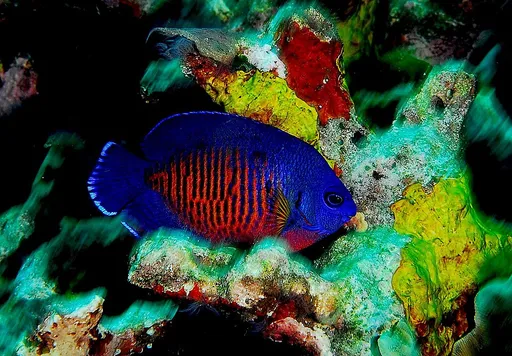
Coral beauty angelfish
Centropyge bispinosa
Saltwater- Size
- 3.9 in (10 cm)
- Tank
- 50 gal (190 L)
- Water
- 72–79°F (22–26°C)
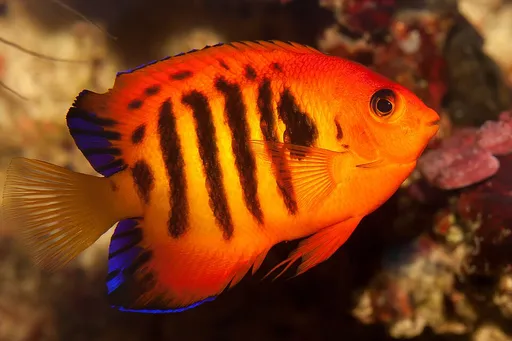
Flame angelfish
Centropyge loriculus
Saltwater- Size
- 3.9 in (10 cm)
- Tank
- 50 gal (190 L)
- Water
- 72–79°F (22–26°C)
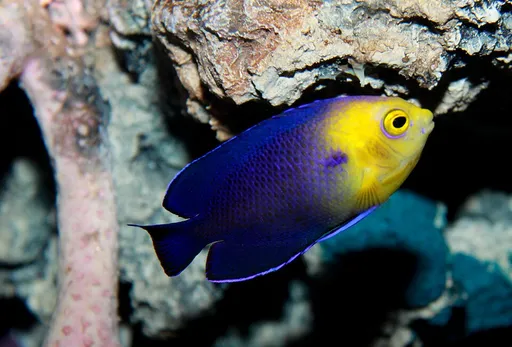
Cherub angelfish
Centropyge argi
Saltwater- Size
- 2.8 in (7 cm)
- Tank
- 29 gal (110 L)
- Water
- 72–82°F (22–28°C)
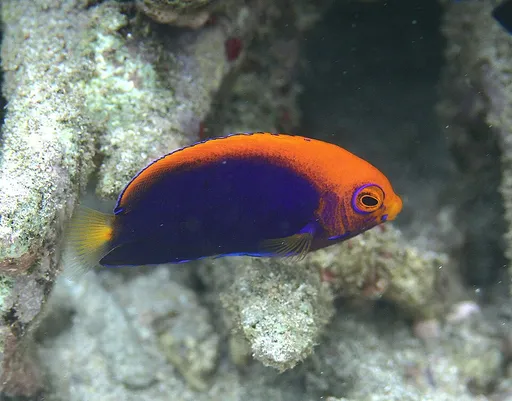
African flameback angelfish
Centropyge acanthops
Saltwater- Size
- 3.1 in (8 cm)
- Tank
- 29 gal (110 L)
- Water
- 72–79°F (22–26°C)
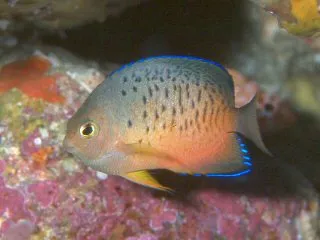
Rusty angelfish
Centropyge ferrugata
Saltwater- Size
- 3.9 in (10 cm)
- Tank
- 30 gal (115 L)
- Water
- 72–79°F (22–26°C)
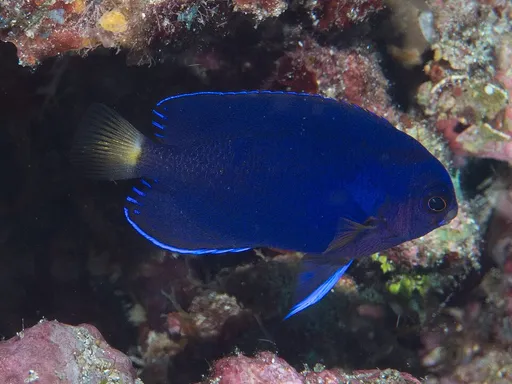
Fisher's angelfish
Centropyge fisheri
Saltwater- Size
- 2.8 in (7 cm)
- Tank
- 53 gal (200 L)
- Water
- 75–81°F (24–27°C)
The rule
What the marks on an angelfish mean
The dwarf angels, Centropyge, are marked caution across the board: a given fish may ignore corals for years or nip a clam the first week. The swallowtail angels, Genicanthus, are the only angels marked reef safe outright, because they eat plankton in open water. The large angels are marked not reef safe, because they eat sponge and coral polyps as a matter of course. Nearly every angel here is marked solitary, so it is one angel per tank unless the tank is very large, and the big ones reach 15 inches (38 cm) and list 185 gallons (700 liters) and up.
- 01
Dwarf angels, caution
Most behave, some nip clams and corals
- 02
Swallowtails, reef safe
Plankton feeders that ignore the rock
- 03
Large angels, not reef safe
They eat sponge and polyps
- 04
One per tank
Nearly every angel here is marked solitary
Reef safe
The swallowtail angels
The Genicanthus angels swim in open water and eat plankton, which is why they are the angels marked reef safe and peaceful, and the only ones marked social. The bellus angelfish is 7.1 inches (18 cm) for 85 gallons (320 liters). Lamarck's angelfish reaches 9.8 inches (25 cm) and lists 124 gallons (470 liters). The swallowtail angelfish is 7.1 inches (18 cm) for 106 gallons (400 liters). Watanabe's angelfish is the smallest at 5.9 inches (15 cm) for 79 gallons (300 liters), and the zebra angelfish is 7.9 inches (20 cm) for 90 gallons (340 liters). A male with two or three females is the usual group, and all of them jump.
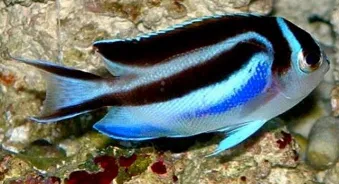
Bellus angelfish
Genicanthus bellus
Saltwater7.1 in (18 cm) · 85 gal (320 L)72–79°F (22–26°C)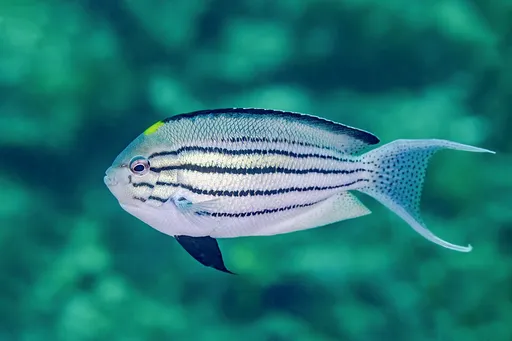
Lamarck's angelfish
Genicanthus lamarck
Saltwater9.8 in (25 cm) · 124 gal (470 L)72–79°F (22–26°C)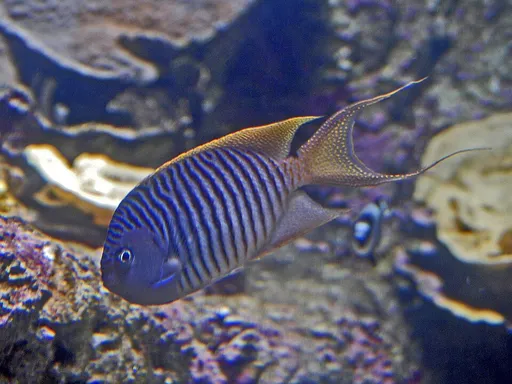
Swallowtail angelfish
Genicanthus melanospilos
Saltwater7.1 in (18 cm) · 106 gal (400 L)72–79°F (22–26°C)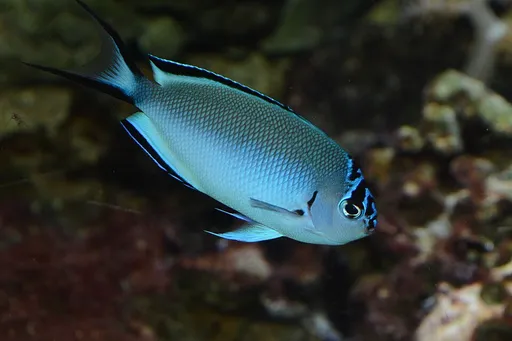
Watanabei angelfish
Genicanthus watanabei
Saltwater5.9 in (15 cm) · 79 gal (300 L)72–79°F (22–26°C)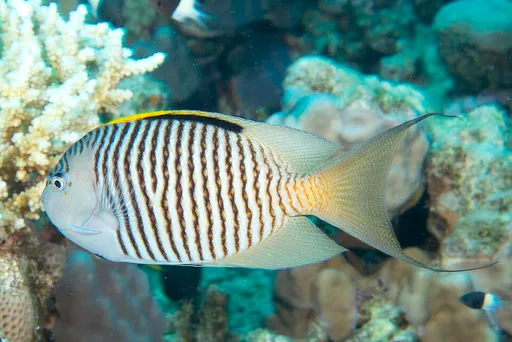
Zebra angelfish
Genicanthus caudovittatus
Saltwater7.9 in (20 cm) · 90 gal (340 L)75–82°F (24–28°C)
Mid-size
The mid-size angels
The lemonpeel angelfish is 5.5 inches (14 cm) for 55 gallons (210 liters), marked medium, and among the dwarf angels most likely to nip. The bicolor angelfish is 5.9 inches (15 cm) for the same tank. The keyhole angelfish is 7.9 inches (20 cm) for 70 gallons (265 liters). Potter's angelfish is marked difficult at 5.1 inches (13 cm) for 65 gallons (245 liters), a Hawaiian fish that settles slowly. The goldflake angelfish is 9.8 inches (25 cm) for 125 gallons (475 liters), marked medium. The vermiculated angelfish is 7.1 inches (18 cm) for 66 gallons (250 liters) and grazes algae all day.
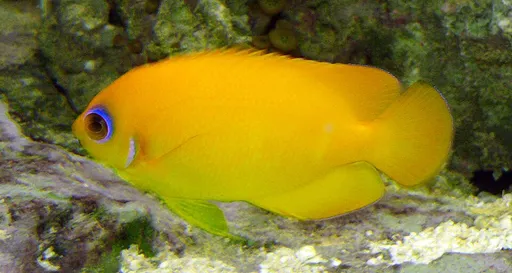
Lemonpeel angelfish
Centropyge flavissima
Saltwater5.5 in (14 cm) · 55 gal (210 L)72–79°F (22–26°C)
Bicolor angelfish
Centropyge bicolor
Saltwater5.9 in (15 cm) · 55 gal (210 L)72–81°F (22–27°C)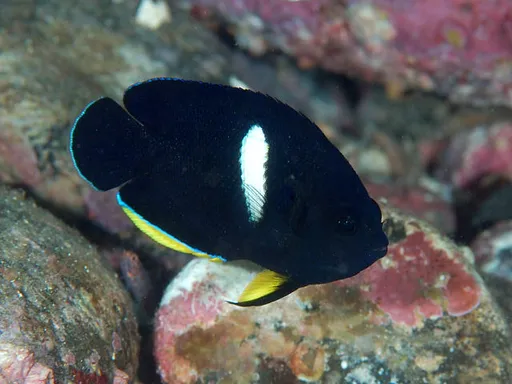
Keyhole angelfish
Centropyge tibicen
Saltwater7.9 in (20 cm) · 70 gal (265 L)72–79°F (22–26°C)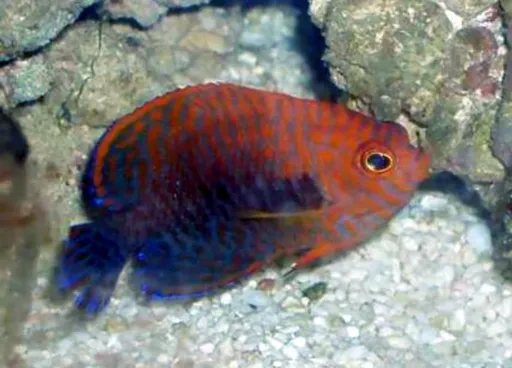
Potter's angelfish
Centropyge potteri
Saltwater5.1 in (13 cm) · 65 gal (245 L)72–79°F (22–26°C)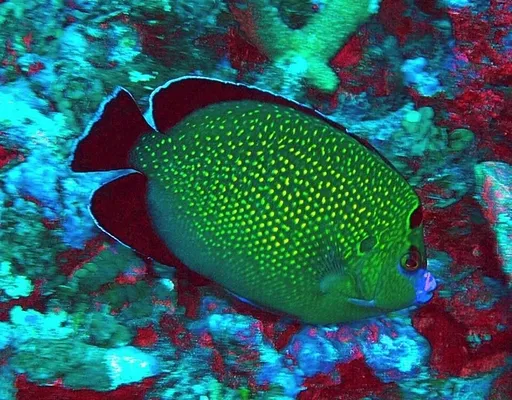
Goldflake angelfish
Apolemichthys xanthopunctatus
Saltwater9.8 in (25 cm) · 125 gal (475 L)73–81°F (23–27°C)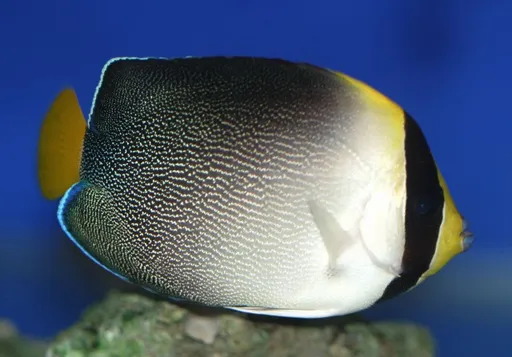
Vermiculated angelfish
Chaetodontoplus mesoleucus
Saltwater7.1 in (18 cm) · 66 gal (250 L)75–81°F (24–27°C)
The giants
The giants
The emperor angelfish reaches 15 inches (38 cm), lists 185 gallons (700 liters) and is marked difficult and not reef safe. The French angelfish reaches 16.1 inches (41 cm) for 201 gallons (760 liters). The queen angelfish is 17.7 inches (45 cm) for 251 gallons (950 liters), marked aggressive. The blue angelfish is the same size and temper, marked medium. The asfur angelfish is the Red Sea angel at 15.7 inches (40 cm) for 135 gallons (510 liters), marked medium with a reef caution. The yellowbar angelfish reaches 19.7 inches (50 cm) and lists 180 gallons (680 liters). All of them change color completely between juvenile and adult, so the fish you buy is not the fish you keep.
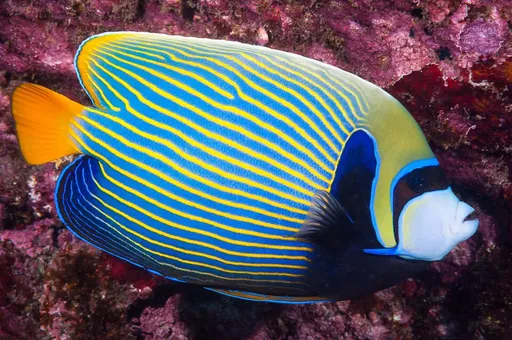
Emperor angelfish
Pomacanthus imperator
Saltwater15 in (38 cm) · 185 gal (700 L)73–81°F (23–27°C)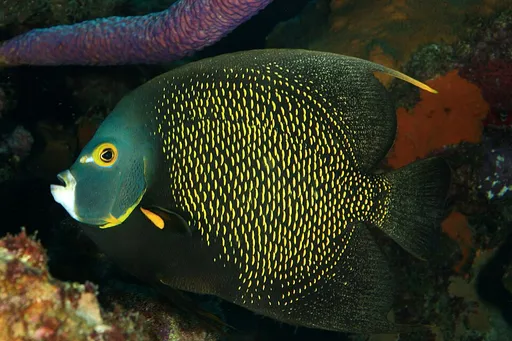
French angelfish
Pomacanthus paru
Saltwater16.1 in (41 cm) · 201 gal (760 L)72–81°F (22–27°C)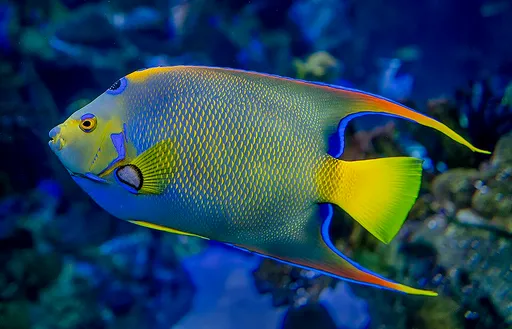
Queen angelfish
Holacanthus ciliaris
Saltwater17.7 in (45 cm) · 251 gal (950 L)75–81°F (24–27°C)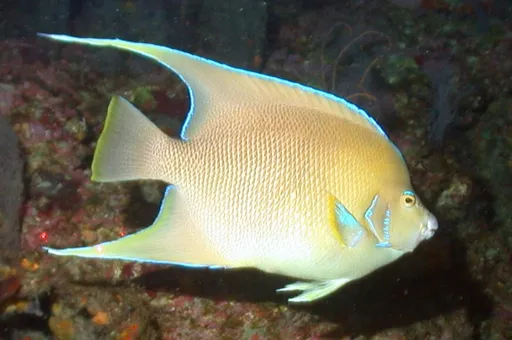
Blue angelfish
Holacanthus bermudensis
Saltwater17.7 in (45 cm) · 251 gal (950 L)72–81°F (22–27°C)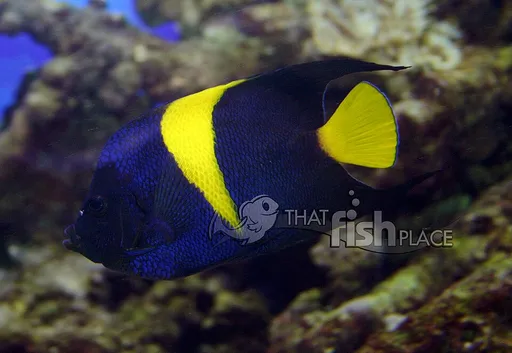
Asfur angelfish
Pomacanthus asfur
Saltwater15.7 in (40 cm) · 135 gal (510 L)75–82°F (24–28°C)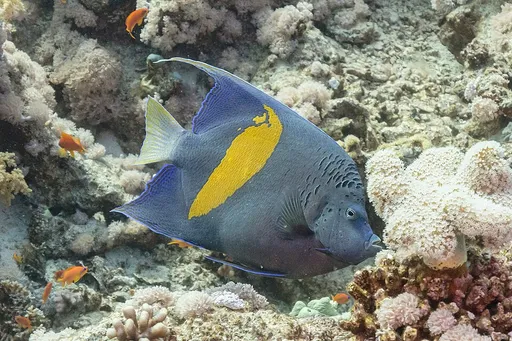
Yellowbar angelfish
Pomacanthus maculosus
Saltwater19.7 in (50 cm) · 180 gal (680 L)75–82°F (24–28°C)
By the numbers
Smallest
Largest
FAQ
Common questions
Are saltwater angelfish reef safe?
The swallowtail angels, bellus, Lamarck's, Watanabe's, zebra and swallowtail, are marked reef safe. The dwarf angels carry a caution, and the large angels are marked not reef safe.
Which angelfish is best for a beginner?
The coral beauty, cherub and African flameback angelfish are marked easy and list 29 to 50 gallons (110 to 190 liters). The flame angelfish is marked medium.
Can I keep two angelfish together?
Nearly every angel here is marked solitary and two dwarf angels fight in most tanks. The swallowtail angels are the exception: a male with two or three females is the normal group.
How big a tank does a large angelfish need?
The emperor angelfish lists 185 gallons (700 liters), the French 201 gallons (760 liters) and the queen and blue angelfish 251 gallons (950 liters), for fish of 15 to 18 inches (38 to 45 cm).
What do angelfish eat?
Sponge and algae in the wild, so the food includes a sponge-based angel preparation, nori and algae pellets, plus mysis. A dwarf angel that grazes the rock all day is getting most of its diet there.
Why does my angelfish look nothing like the adult photo?
The large angels change color completely as they grow. A juvenile emperor is blue with white rings; the adult is striped yellow and blue. The change takes a year or two.
Index
All saltwater angelfish
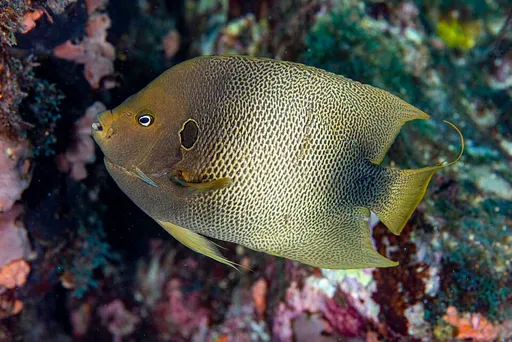
African angelfish
Holacanthus africanus
Saltwater17.7 in (45 cm) · 251 gal (950 L)73–81°F (23–27°C)African flameback angelfish
Centropyge acanthops
Saltwater3.1 in (8 cm) · 29 gal (110 L)72–79°F (22–26°C)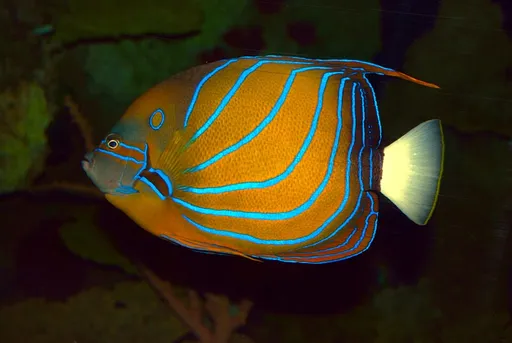
Annularis angelfish
Pomacanthus annularis
Saltwater17.7 in (45 cm) · 219 gal (830 L)73–81°F (23–27°C)Asfur angelfish
Pomacanthus asfur
Saltwater15.7 in (40 cm) · 135 gal (510 L)75–82°F (24–28°C)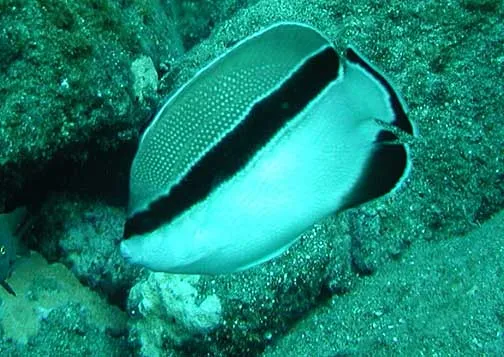
Bandit angelfish
Apolemichthys arcuatus
Saltwater7.1 in (18 cm) · 90 gal (340 L)73–79°F (23–26°C)Bellus angelfish
Genicanthus bellus
Saltwater7.1 in (18 cm) · 85 gal (320 L)72–79°F (22–26°C)Bicolor angelfish
Centropyge bicolor
Saltwater5.9 in (15 cm) · 55 gal (210 L)72–81°F (22–27°C)Blue angelfish
Holacanthus bermudensis
Saltwater17.7 in (45 cm) · 251 gal (950 L)72–81°F (22–27°C)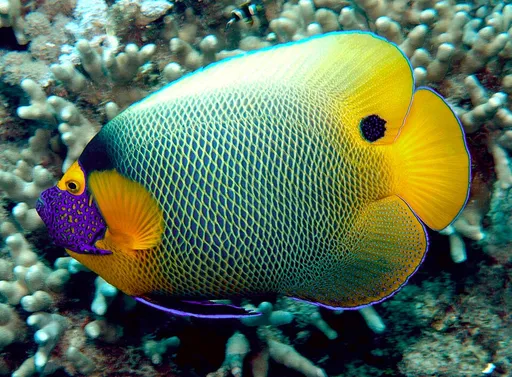
Blueface angelfish
Pomacanthus xanthometopon
Saltwater15 in (38 cm) · 219 gal (830 L)73–81°F (23–27°C)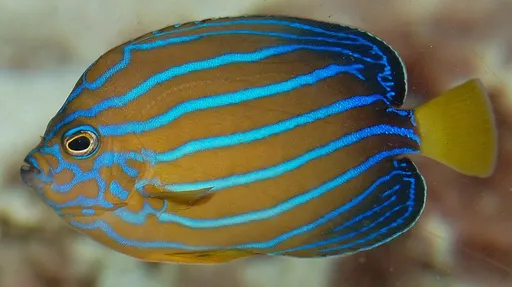
Blueline angelfish
Chaetodontoplus septentrionalis
Saltwater8.7 in (22 cm) · 185 gal (700 L)72–79°F (22–26°C)Cherub angelfish
Centropyge argi
Saltwater2.8 in (7 cm) · 29 gal (110 L)72–82°F (22–28°C)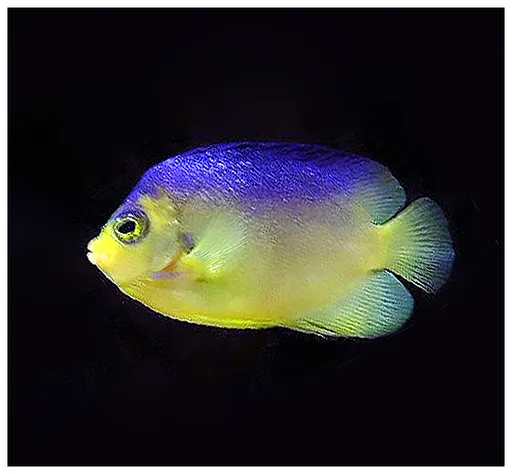
Colin's angelfish
Centropyge colini
Saltwater3.5 in (9 cm) · 55 gal (210 L)72–79°F (22–26°C)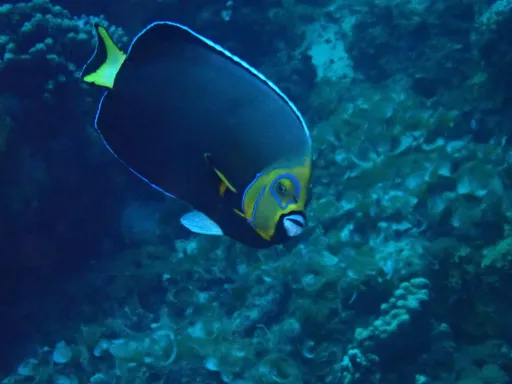
Conspicuous angelfish
Chaetodontoplus conspicillatus
Saltwater9.8 in (25 cm) · 198 gal (750 L)72–79°F (22–26°C)Coral beauty angelfish
Centropyge bispinosa
Saltwater3.9 in (10 cm) · 50 gal (190 L)72–79°F (22–26°C)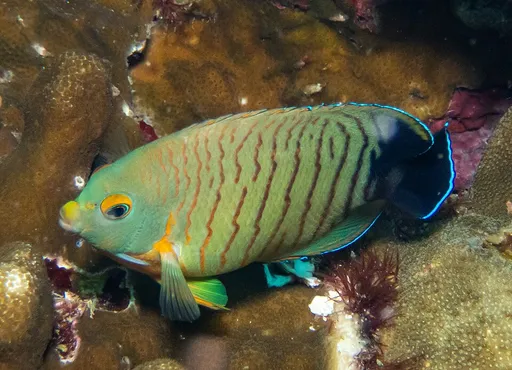
Eibli angelfish
Centropyge eibli
Saltwater5.9 in (15 cm) · 55 gal (210 L)72–79°F (22–26°C)Emperor angelfish
Pomacanthus imperator
Saltwater15 in (38 cm) · 185 gal (700 L)73–81°F (23–27°C)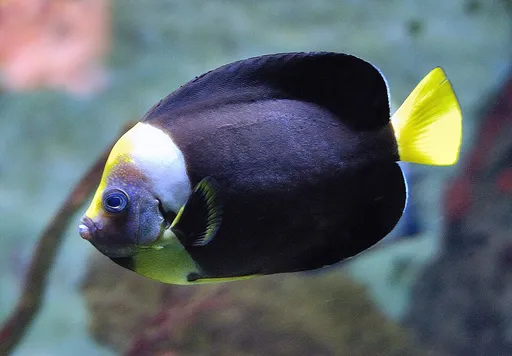
False personifer angelfish
Chaetodontoplus meredithi
Saltwater11.8 in (30 cm) · 180 gal (680 L)72–79°F (22–26°C)Fisher's angelfish
Centropyge fisheri
Saltwater2.8 in (7 cm) · 53 gal (200 L)75–81°F (24–27°C)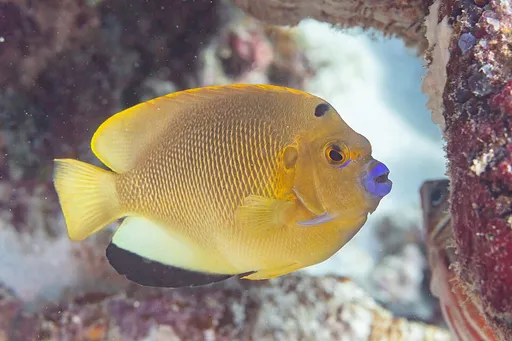
Flagfin angelfish
Apolemichthys trimaculatus
Saltwater10.2 in (26 cm) · 100 gal (380 L)73–81°F (23–27°C)Flame angelfish
Centropyge loriculus
Saltwater3.9 in (10 cm) · 50 gal (190 L)72–79°F (22–26°C)French angelfish
Pomacanthus paru
Saltwater16.1 in (41 cm) · 201 gal (760 L)72–81°F (22–27°C)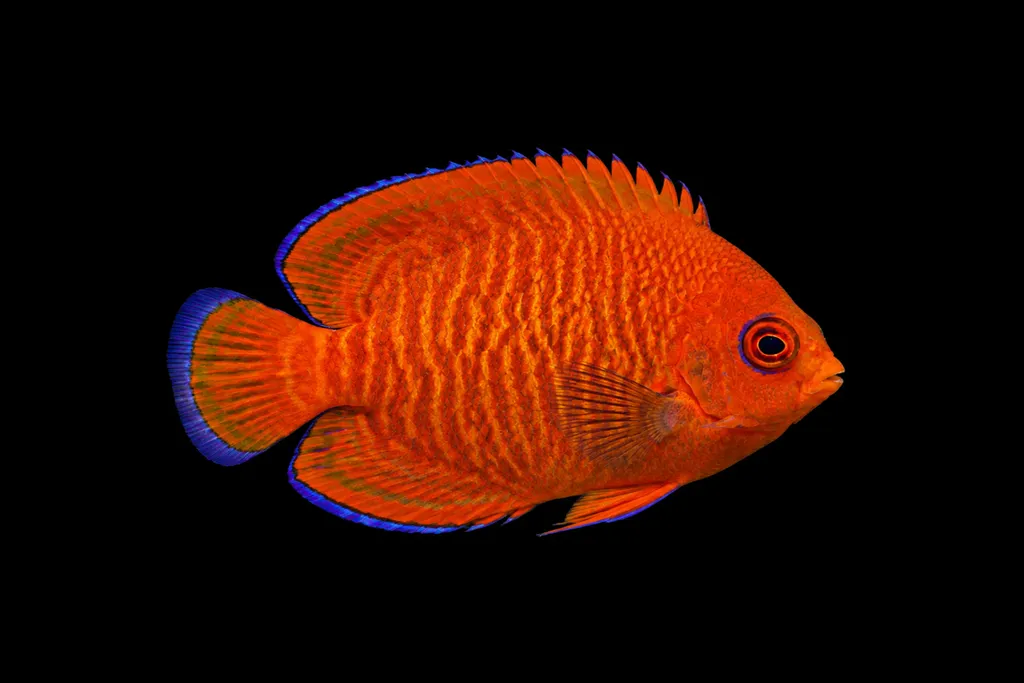
Golden angelfish
Centropyge aurantia
Saltwater3.9 in (10 cm) · 55 gal (210 L)72–79°F (22–26°C)Goldflake angelfish
Apolemichthys xanthopunctatus
Saltwater9.8 in (25 cm) · 125 gal (475 L)73–81°F (23–27°C)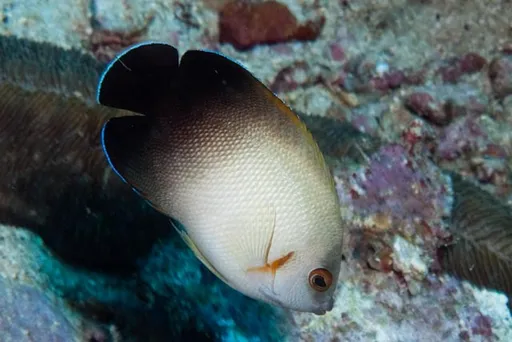
Half-black angelfish
Centropyge vroliki
Saltwater3.9 in (10 cm) · 55 gal (210 L)72–79°F (22–26°C)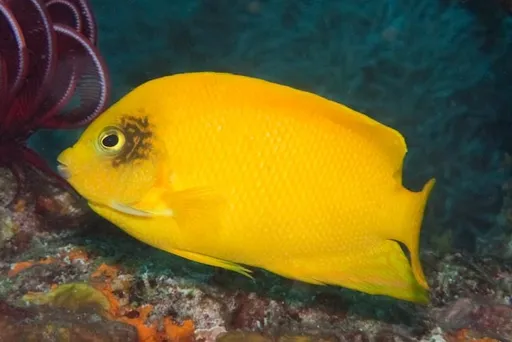
Herald's angelfish
Centropyge heraldi
Saltwater3.9 in (10 cm) · 55 gal (210 L)72–79°F (22–26°C)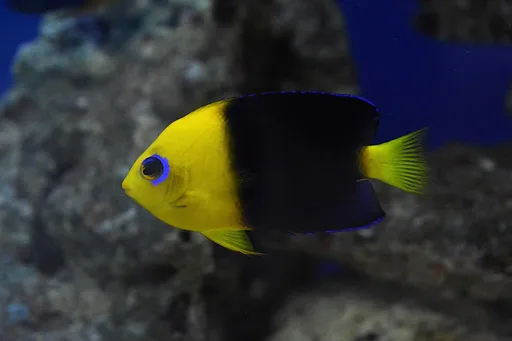
Joculator angelfish
Centropyge joculator
Saltwater3.5 in (9 cm) · 70 gal (265 L)75–81°F (24–27°C)Keyhole angelfish
Centropyge tibicen
Saltwater7.9 in (20 cm) · 70 gal (265 L)72–79°F (22–26°C)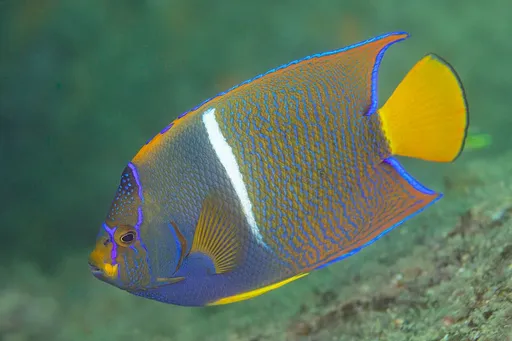
King angelfish
Holacanthus passer
Saltwater13.8 in (35 cm) · 151 gal (570 L)72–81°F (22–27°C)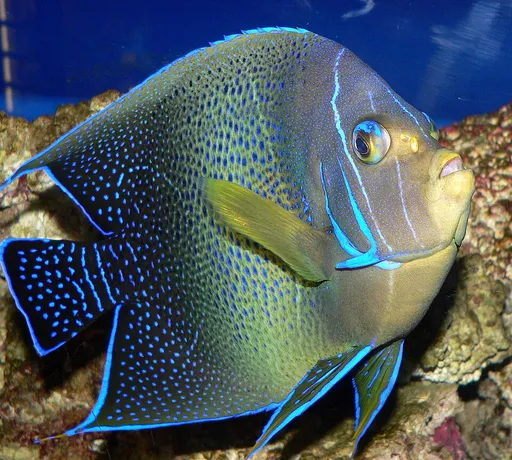
Koran angelfish
Pomacanthus semicirculatus
Saltwater15.7 in (40 cm) · 132 gal (500 L)73–81°F (23–27°C)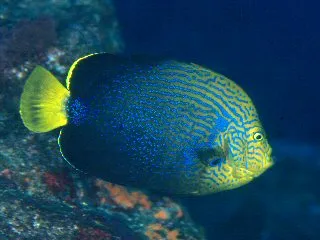
Labyrinth angelfish
Chaetodontoplus chrysocephalus
Saltwater8.7 in (22 cm) · 151 gal (570 L)72–79°F (22–26°C)Lamarck's angelfish
Genicanthus lamarck
Saltwater9.8 in (25 cm) · 124 gal (470 L)72–79°F (22–26°C)Lemonpeel angelfish
Centropyge flavissima
Saltwater5.5 in (14 cm) · 55 gal (210 L)72–79°F (22–26°C)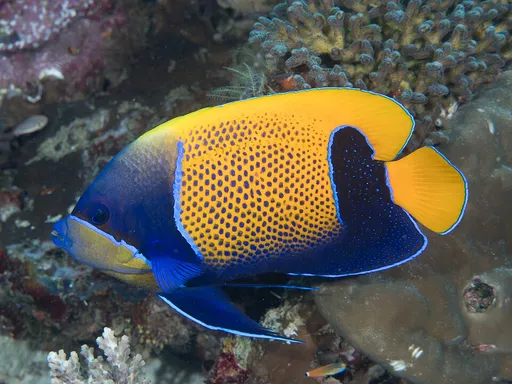
Majestic angelfish
Pomacanthus navarchus
Saltwater11.8 in (30 cm) · 145 gal (550 L)73–81°F (23–27°C)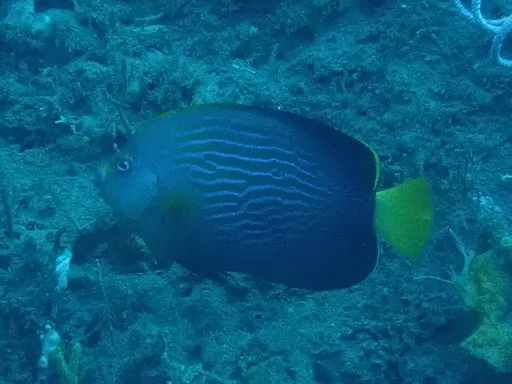
Maze angelfish
Chaetodontoplus cephalareticulatus
Saltwater11 in (28 cm) · 251 gal (950 L)72–79°F (22–26°C)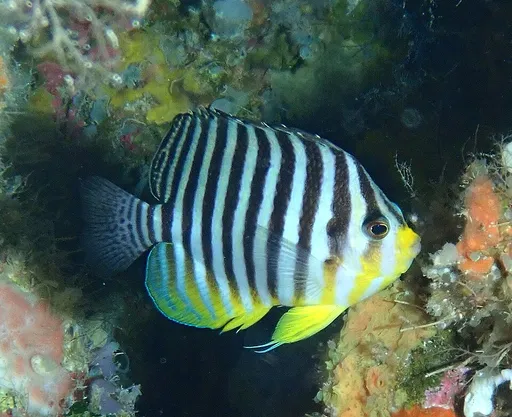
Multibarred angelfish
Centropyge multifasciata
Saltwater4.7 in (12 cm) · 59 gal (225 L)72–79°F (22–26°C)
Multicolor angelfish
Centropyge multicolor
Saltwater3.5 in (9 cm) · 70 gal (265 L)75–81°F (24–27°C)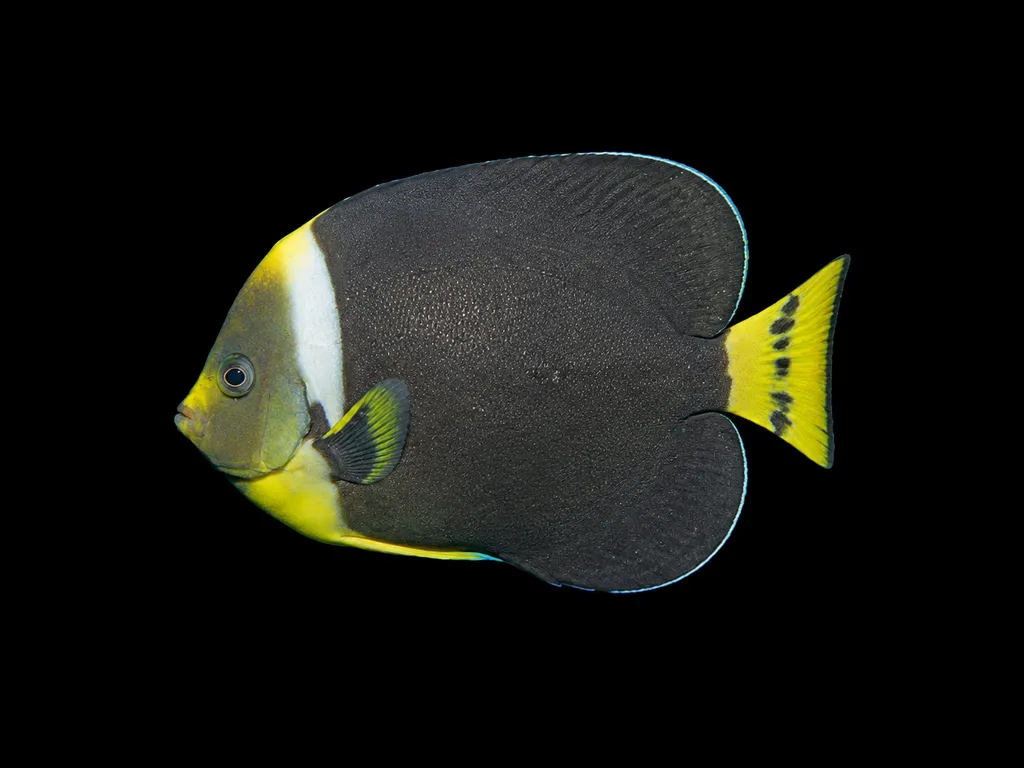
Personifer angelfish
Chaetodontoplus personifer
Saltwater13.8 in (35 cm) · 180 gal (680 L)72–79°F (22–26°C)Potter's angelfish
Centropyge potteri
Saltwater5.1 in (13 cm) · 65 gal (245 L)72–79°F (22–26°C)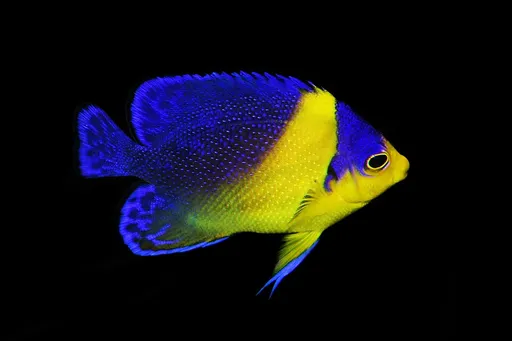
Purple masked angelfish
Centropyge venusta
Saltwater3.9 in (10 cm) · 55 gal (210 L)72–79°F (22–26°C)Queen angelfish
Holacanthus ciliaris
Saltwater17.7 in (45 cm) · 251 gal (950 L)75–81°F (24–27°C)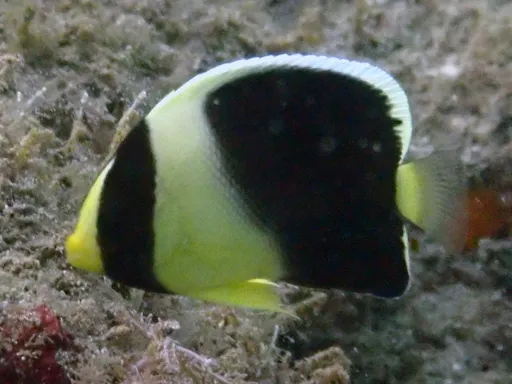
Red Sea angelfish
Apolemichthys xanthotis
Saltwater7.9 in (20 cm) · 125 gal (475 L)72–81°F (22–27°C)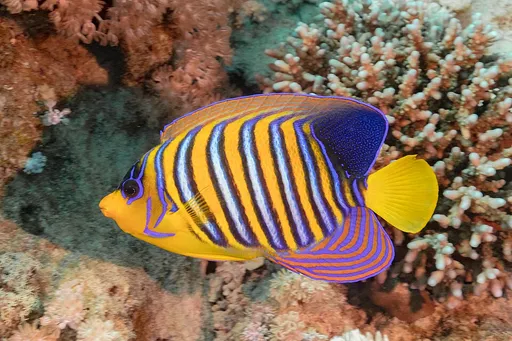
Regal angelfish
Pygoplites diacanthus
Saltwater9.8 in (25 cm) · 124 gal (470 L)73–81°F (23–27°C)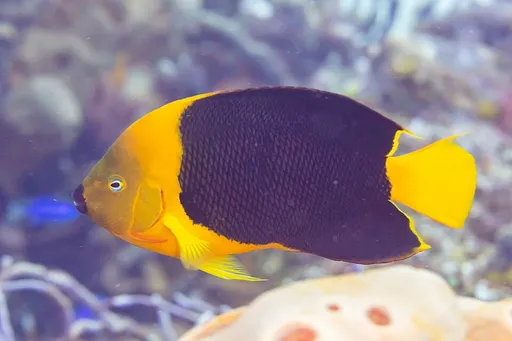
Rock beauty angelfish
Holacanthus tricolor
Saltwater13.8 in (35 cm) · 90 gal (340 L)73–81°F (23–27°C)Rusty angelfish
Centropyge ferrugata
Saltwater3.9 in (10 cm) · 30 gal (115 L)72–79°F (22–26°C)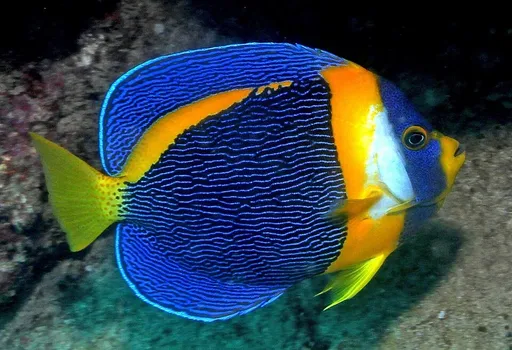
Scribbled angelfish
Chaetodontoplus duboulayi
Saltwater11 in (28 cm) · 180 gal (680 L)72–79°F (22–26°C)Swallowtail angelfish
Genicanthus melanospilos
Saltwater7.1 in (18 cm) · 106 gal (400 L)72–79°F (22–26°C)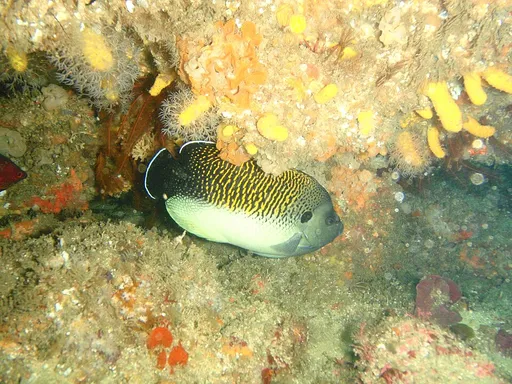
Tiger angelfish
Apolemichthys kingi
Saltwater9.8 in (25 cm) · 151 gal (570 L)72–79°F (22–26°C)Vermiculated angelfish
Chaetodontoplus mesoleucus
Saltwater7.1 in (18 cm) · 66 gal (250 L)75–81°F (24–27°C)Watanabei angelfish
Genicanthus watanabei
Saltwater5.9 in (15 cm) · 79 gal (300 L)72–79°F (22–26°C)Yellowbar angelfish
Pomacanthus maculosus
Saltwater19.7 in (50 cm) · 180 gal (680 L)75–82°F (24–28°C)Zebra angelfish
Genicanthus caudovittatus
Saltwater7.9 in (20 cm) · 90 gal (340 L)75–82°F (24–28°C)
Planning a tank?
TankBud checks stocking and water fit as you build a tank, then tracks water tests, reminders and photos once it is running.
Track your tanksMaintain tanks for clients? See TankBud Pro