Flame angelfish
Centropyge loriculus
Also known as Flame Angel, Flaming Angelfish
SaltwaterFish
Care at a glance
- Temperature
- 72–79°F
- 22–26°C
- pH
- 8.1–8.4
- Adult size
- 3.9 in
- 10 cm
- Minimum tank
- 50 gal
- 190 L
- Temperament
- Mostly peaceful
- Social behavior
- Solitary
- Own kind
- One male per tank
- Tankmates
- With caution
- Swim level
- Middle
- Difficulty
- Medium
- Breeding
- Hard
- Rarity
- Common
- Reef safe
- Reef safe with caution
- Family
- Pomacanthidae
- Origin
- Central and western Pacific, common around Hawaii, the Marshall Islands, and other Pacific island groups
Overview
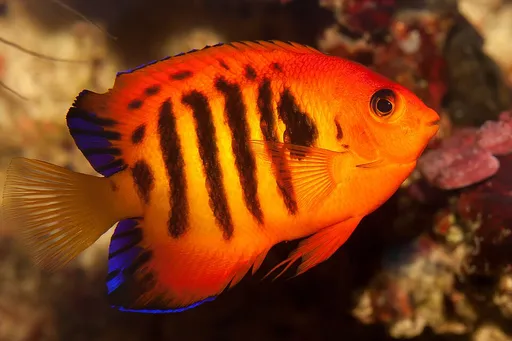
An active grazer that does best in an established tank with steady algae growth plus several small feedings of algae-based and meaty foods each day. Flame angels are semi-aggressive and highly territorial toward their own kind and other dwarf angels, so keep just one unless the tank is very large and heavily aquascaped. Reef keepers rate it caution: plenty are model reef citizens, but individuals may nip LPS, zoanthids, and clam mantles, with the risk rising if the fish is underfed.
In the wild
Found on clear, coral-rich outer reefs and lagoons, often on the deeper faces where it stays near cover. It rarely strays far from the rock, ducking into holes at the first sign of trouble and grazing algae and detritus off hard surfaces. A tank version needs lots of live rock with tight caves and mature grazing surfaces.
Good to know
Centropyge loriculus is a dwarf angel reaching about 10 cm. It is a protogynous hermaphrodite that lives in small harem groups in the wild, with one male over several females. It has been bred in captivity and tank-raised flame angels are sold, though rearing the larvae is difficult and captive-bred stock is far less common than wild-caught.
Did you know
Its bright red-orange body with vertical black bars and blue-tipped rear fins makes it one of the most recognizable dwarf angels in the hobby, and the intensity of the red varies by collection locality.
Common questions
What size tank does a Flame angelfish need?
A Flame angelfish needs at least 50 gal (190 L). It spends most of its time in the middle.
What temperature and pH does a Flame angelfish need?
A Flame angelfish is comfortable at 72–79°F (22–26°C) with a pH of 8.1–8.4.
How big does a Flame angelfish get?
An adult Flame angelfish reaches about 3.9 in (10 cm).
Related species
 3.9 in (10 cm)50 gal (190 L)72–79°F (22–26°C)
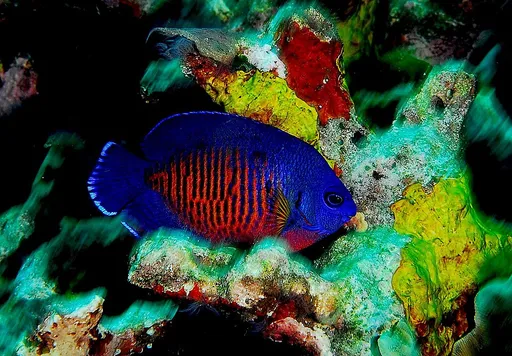
Coral beauty angelfish
Centropyge bispinosa
3.9 in (10 cm) · 50 gal (190 L)
 3.9 in (10 cm)55 gal (210 L)72–79°F (22–26°C)
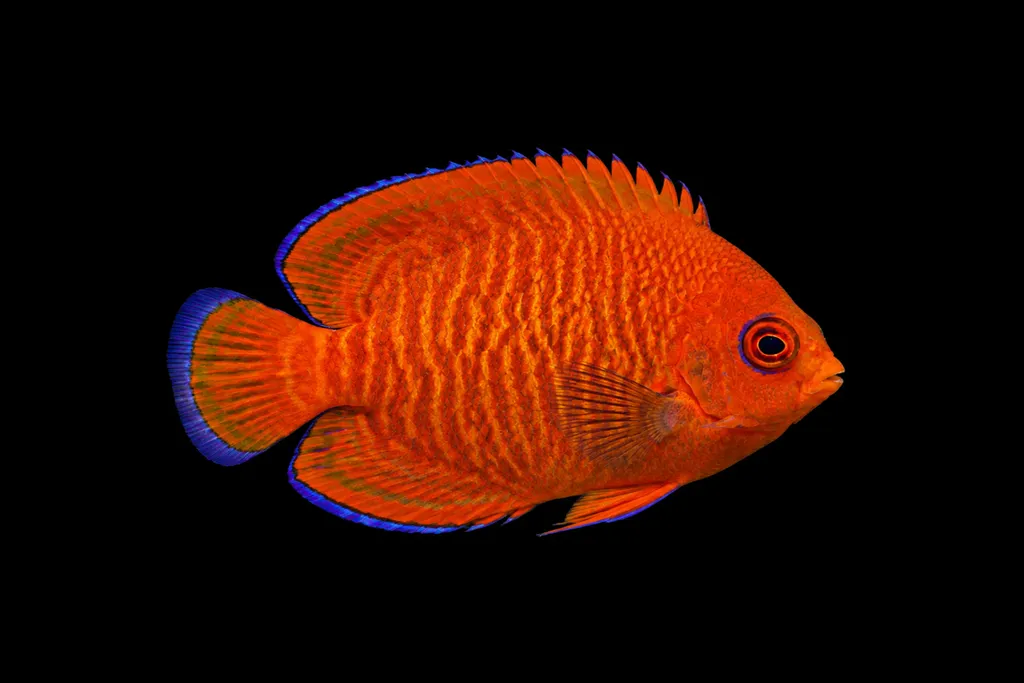
Golden angelfish
Centropyge aurantia
3.9 in (10 cm) · 55 gal (210 L)
 3.9 in (10 cm)55 gal (210 L)72–79°F (22–26°C)
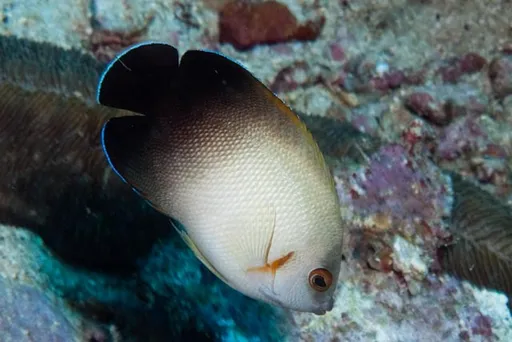
Half-black angelfish
Centropyge vroliki
3.9 in (10 cm) · 55 gal (210 L)
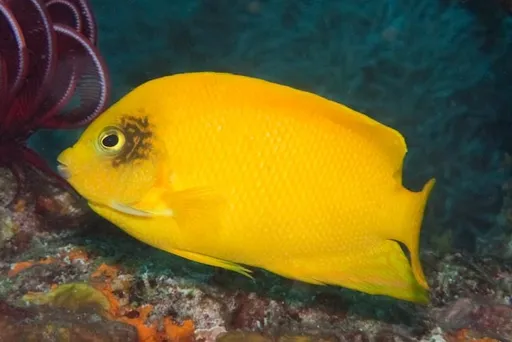 3.9 in (10 cm)55 gal (210 L)72–79°F (22–26°C)
Herald's angelfish
Centropyge heraldi
3.9 in (10 cm) · 55 gal (210 L)
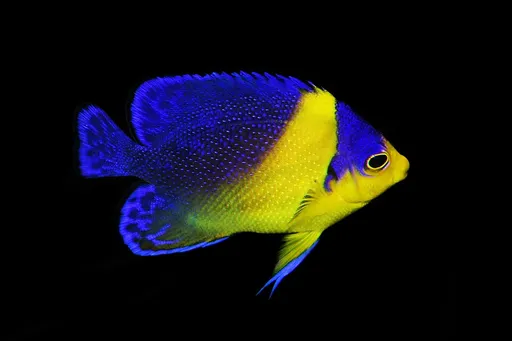 3.9 in (10 cm)55 gal (210 L)72–79°F (22–26°C)
Purple masked angelfish
Centropyge venusta
3.9 in (10 cm) · 55 gal (210 L)
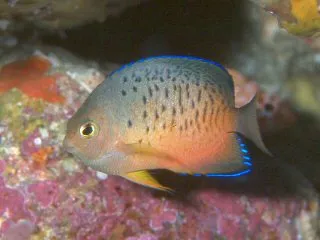 3.9 in (10 cm)30 gal (115 L)72–79°F (22–26°C)
Rusty angelfish
Centropyge ferrugata
3.9 in (10 cm) · 30 gal (115 L)