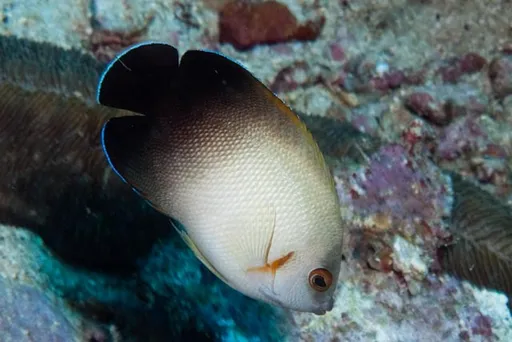
Half-black angelfish
Centropyge vroliki
Also known as Pearlscale Angelfish, Half-Black Pygmy Angelfish, Vrolik's Angelfish
SaltwaterFish
Care at a glance
- Temperature
- 72–79°F
- 22–26°C
- pH
- 8.1–8.4
- Adult size
- 3.9 in
- 10 cm
- Minimum tank
- 55 gal
- 210 L
- Temperament
- Mostly peaceful
- Social behavior
- Solitary
- Own kind
- One male per tank
- Swim level
- Middle
- Diet
- Omnivore
- Difficulty
- Medium
- Breeding
- Hard
- Rarity
- Common
- Reef safe
- Reef safe with caution
- Family
- Pomacanthidae
- Origin
- Indo-West Pacific, from Christmas Island and Indonesia through the Philippines and Micronesia to the Marshall Islands, north to Japan and south to the Great Barrier Reef
Overview
The half-black angelfish is a small, grazing dwarf angel for an established saltwater tank. It is a step up from the easiest fish to keep.
Did you know
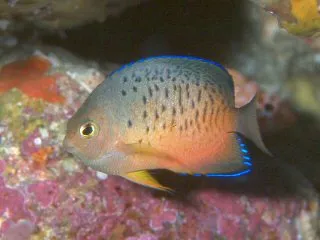
The dark rear half of the half-black angelfish carries a finely reticulated, pearl-like pattern that is visible up close. That pattern gives it the alternate name pearlscale angelfish. It also helps separate it from a few very similar Centropyge with the same half-black pattern.
Caring for the half-black angelfish
Give the half-black angelfish an established tank of at least 55 gal (210 L), with mature live rock full of nooks. It does best with constant algae growth and a healthy algae film on the rock to work over.
Keep the water at 72 to 79°F (22 to 26°C) and a pH of 8.1 to 8.4. It is a steady grazer. Besides the algae, it needs small feedings of algae-based and meaty foods several times a day.
The half-black angelfish is mostly peaceful and safe with community fish. It is generally one of the calmer readily available dwarf angels toward tank mates that are not angelfish. It will still fight other Centropyge, so keep only one per tank.
Most half-black angelfish stay out of trouble, but some nip soft coral polyps, zoanthids or clam mantles. Reef keepers rate it caution. It is hard to breed.
Good to know
Centropyge vroliki is a dwarf angel in the family Pomacanthidae, also known as Vrolik's angelfish and the half-black pygmy angelfish. Like other Centropyge, it is a protogynous hermaphrodite living in loose harems, where the largest female becomes male if needed. Its front half is pale and finely speckled, while the rear half is solid dark gray to black. That two-tone split gives it the half-black name.
In the wild
The half-black angelfish lives across a wide swath of the Indo-West Pacific. Its range runs from Christmas Island and Indonesia to the Marshall Islands, north to Japan and south to the Great Barrier Reef. It turns up on reef flats, lagoons and outer reef slopes, where it shelters in rubble and coral debris. It grazes algae off any exposed hard surface. It is one of the more adaptable dwarf angels in its choice of habitat, from shallow flats down onto deeper slopes.
Weekly picks
Tank mates
The half-black angelfish is a mostly peaceful, solitary species that keeps to the middle. Keep only one male per tank. These picks share a community profile with it, are safe together in both directions, and overlap on water type, temperature and pH.
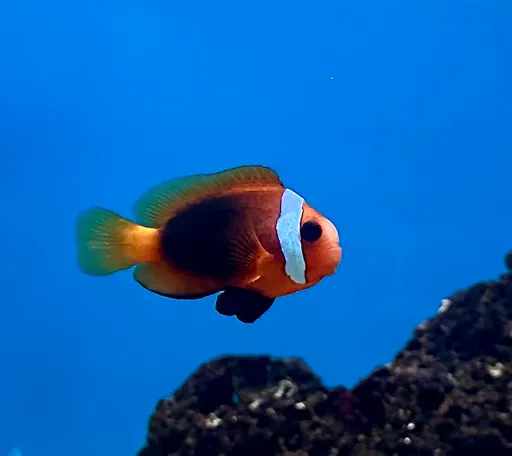
Cinnamon clownfish
Amphiprion melanopus
Saltwater4.7 in (12 cm) · 30 gal (115 L)75–82°F (24–28°C)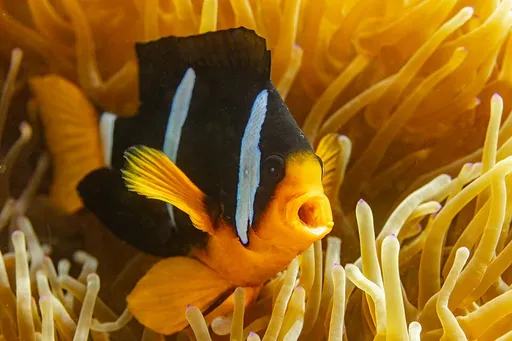
Clark's clownfish
Amphiprion clarkii
Saltwater5.5 in (14 cm) · 30 gal (115 L)75–82°F (24–28°C)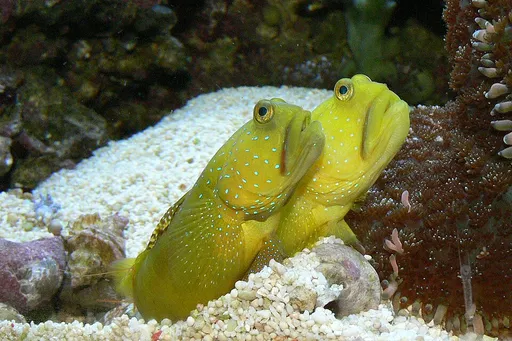
Yellow watchman goby
Cryptocentrus cinctus
Saltwater3.5 in (9 cm) · 20 gal (75 L)72–81°F (22–27°C)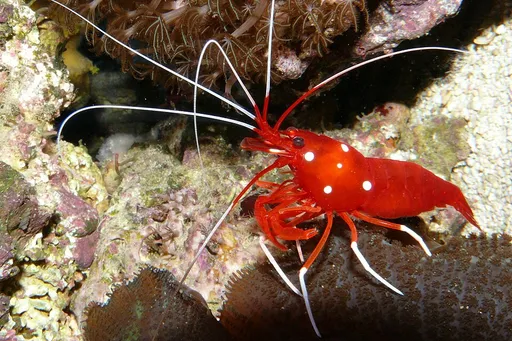
Fire shrimp
Lysmata debelius
Saltwater2.4 in (6 cm) · 20 gal (75 L)72–79°F (22–26°C)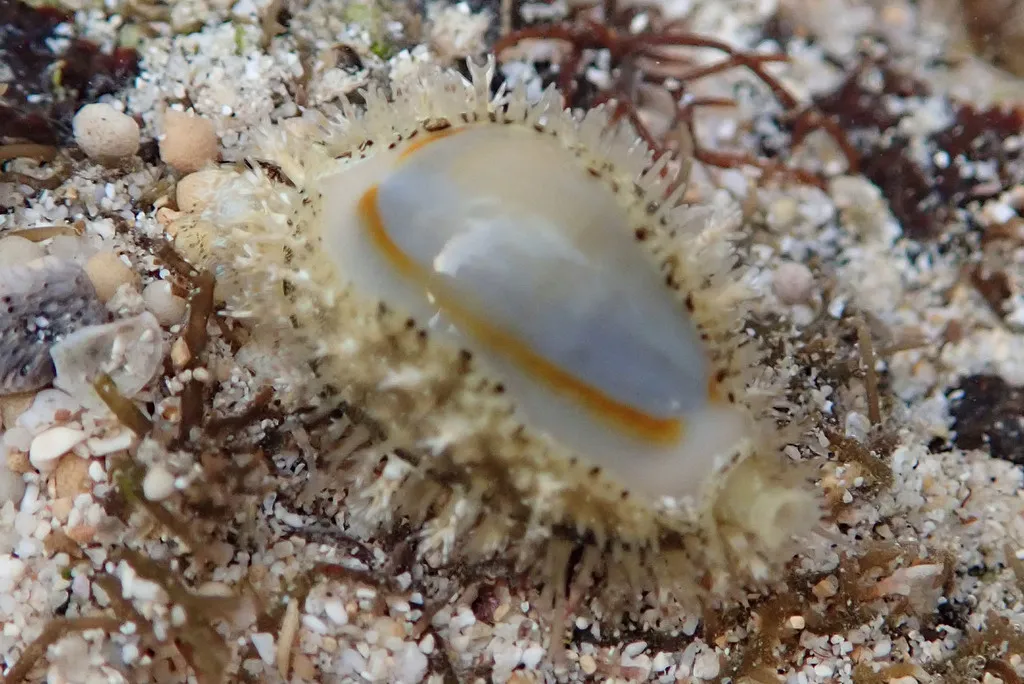
Ring cowrie
Monetaria annulus
Saltwater1.2 in (3 cm) · 20 gal (75 L)75–81°F (24–27°C)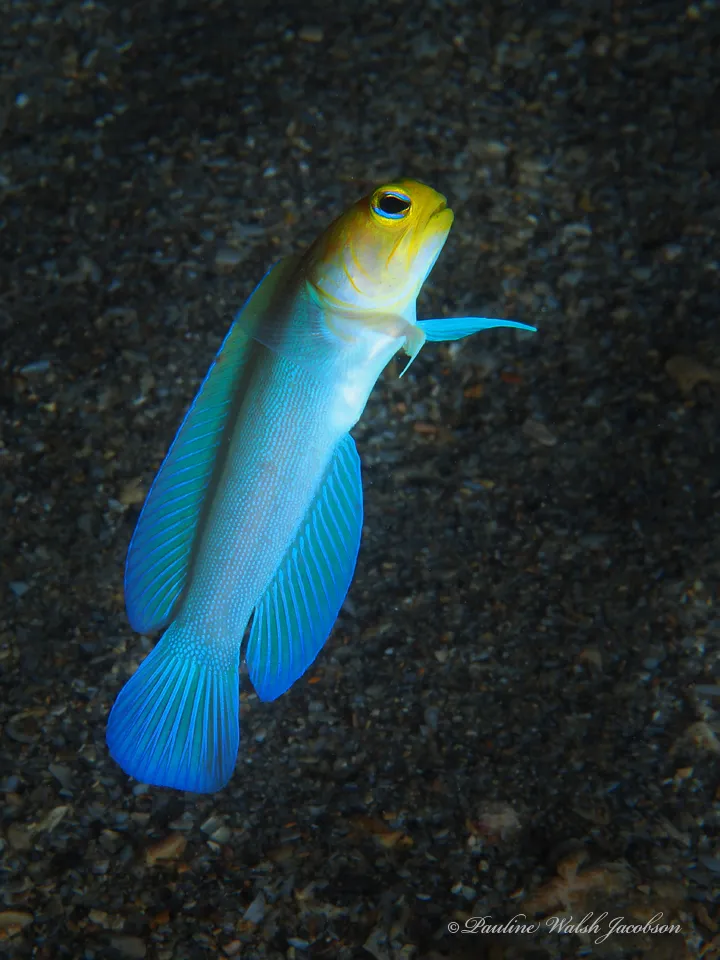
Pearly jawfish
Opistognathus aurifrons
Saltwater3.9 in (10 cm) · 29 gal (110 L)73–81°F (23–27°C)
Common questions
What size tank does a half-black angelfish need?
A half-black angelfish needs at least 55 gal (210 L). It spends most of its time in the middle.
What temperature and pH does a half-black angelfish need?
A half-black angelfish is comfortable at 72–79°F (22–26°C) with a pH of 8.1–8.4.
What does a half-black angelfish eat?
A half-black angelfish is a steady grazer and does best with constant algae growth in the tank. It also takes small feedings of algae-based and meaty foods several times a day.
How big does a half-black angelfish get?
An adult half-black angelfish reaches about 3.9 in (10 cm).
Related species
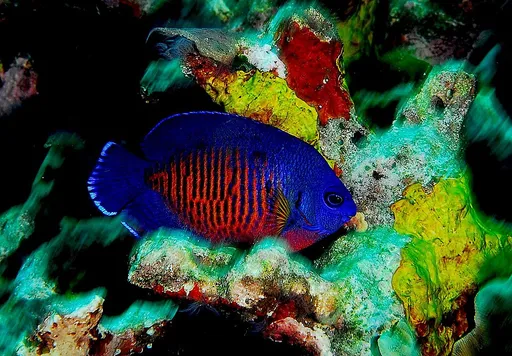 3.9 in (10 cm)50 gal (190 L)72–79°F (22–26°C)
Coral beauty angelfish
Centropyge bispinosa
3.9 in (10 cm) · 50 gal (190 L)
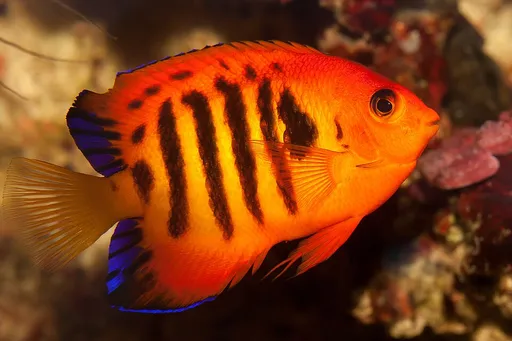 3.9 in (10 cm)50 gal (190 L)72–79°F (22–26°C)
Flame angelfish
Centropyge loriculus
3.9 in (10 cm) · 50 gal (190 L)
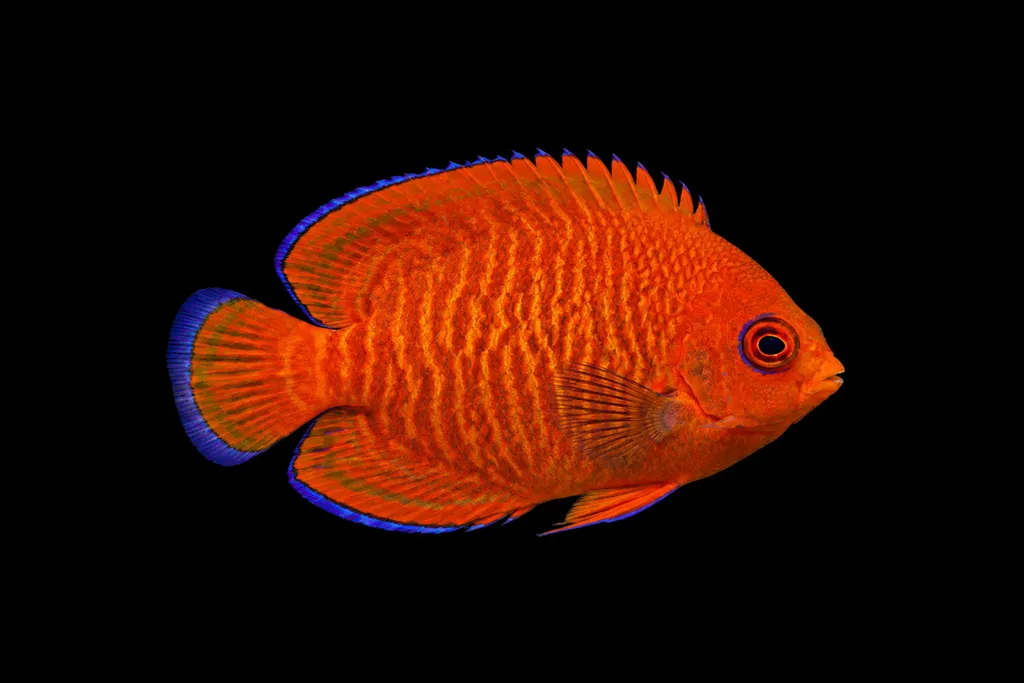 3.9 in (10 cm)55 gal (210 L)72–79°F (22–26°C)
Golden angelfish
Centropyge aurantia
3.9 in (10 cm) · 55 gal (210 L)
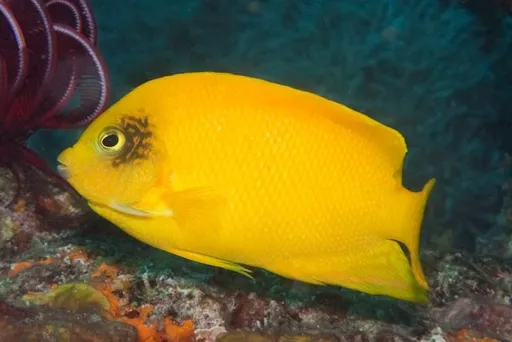 3.9 in (10 cm)55 gal (210 L)72–79°F (22–26°C)
Herald's angelfish
Centropyge heraldi
3.9 in (10 cm) · 55 gal (210 L)
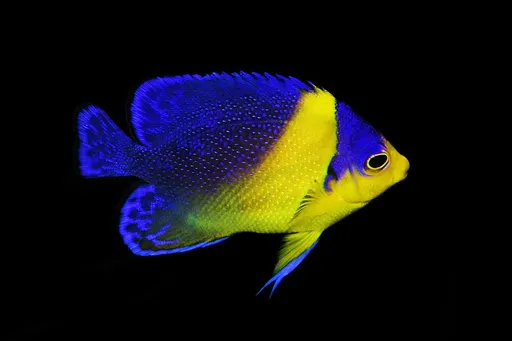 3.9 in (10 cm)55 gal (210 L)72–79°F (22–26°C)
Purple masked angelfish
Centropyge venusta
3.9 in (10 cm) · 55 gal (210 L)
 3.9 in (10 cm)69 gal (260 L)72–79°F (22–26°C)
Rusty angelfish
Centropyge ferrugata
3.9 in (10 cm) · 69 gal (260 L)