Purple masked angelfish
Centropyge venusta
Also known as Venustus Angelfish, Purplemask Angelfish, Blue-backed Angelfish, Paracentropyge venusta, Holacanthus venustus
SaltwaterFish
Care at a glance
- Temperature
- 72–79°F
- 22–26°C
- pH
- 8.1–8.4
- Adult size
- 3.9 in
- 10 cm
- Minimum tank
- 55 gal
- 210 L
- Temperament
- Mostly peaceful
- Social behavior
- Solitary
- Tankmates
- With caution
- Swim level
- Middle
- Difficulty
- Difficult
- Breeding
- Hard
- Rarity
- Rare
- Reef safe
- Reef safe with caution
- Family
- Pomacanthidae
- Origin
- Northwestern Pacific
Overview
The purple masked angelfish is a shy, cave-loving dwarf angel for a mature saltwater tank. Experienced keepers do best with it.
Did you know
The purple masked angelfish routinely swims upside down beneath overhangs, with its belly to the rock above rather than the sea floor. A settled fish can look like it is patrolling the roof of its cave.
Caring for the purple masked angelfish
Give the purple masked angelfish a mature tank of at least 55 gal (210 L), with heavy rockwork and peaceful company. Keep the water at 72 to 79°F (22 to 26°C) and a pH of 8.1 to 8.4.
The purple masked angelfish is a shy, deliberate feeder. A new fish may take weeks to cruise in the open, so offer small feedings near its shelter.
It is solitary and mostly peaceful. Choose its tank mates with caution.
It is gentler on corals than most dwarf angels. It is still untrustworthy with clam mantles and fleshy polyps, so treat it as reef safe with caution. It is hard to breed.
Good to know
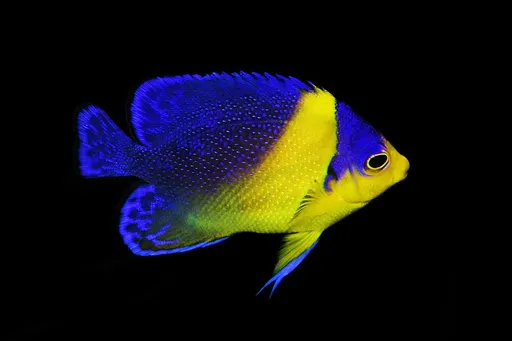
Centropyge venusta belongs to the family Pomacanthidae and also goes by purplemask, venustus or blue-backed angelfish. It has moved between genera since its 1969 description as Holacanthus venustus. Eschmeyer's Catalog currently places it in Centropyge, while many references still use Paracentropyge venusta. Adults are easy to recognize by the violet mask and back set against a yellow body.
In the wild
The purple masked angelfish is found in the northwestern Pacific, from the Philippines and Taiwan north through the Ryukyu Islands to southern Japan. It keeps to caves, overhangs and steep rocky drop-offs, usually staying within touching distance of shelter.
Common questions
What size tank does a purple masked angelfish need?
A purple masked angelfish needs at least 55 gal (210 L). It spends most of its time in the middle.
What temperature and pH does a purple masked angelfish need?
A purple masked angelfish is comfortable at 72–79°F (22–26°C) with a pH of 8.1–8.4.
How big does a purple masked angelfish get?
An adult purple masked angelfish reaches about 3.9 in (10 cm).
Related species
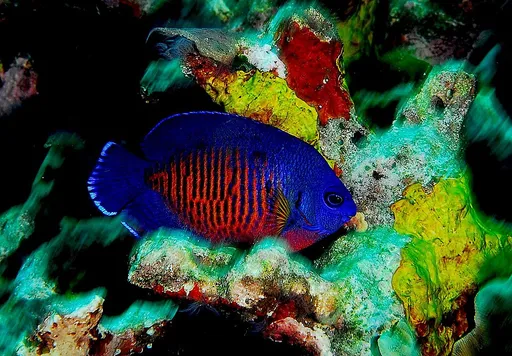 3.9 in (10 cm)50 gal (190 L)72–79°F (22–26°C)
Coral beauty angelfish
Centropyge bispinosa
3.9 in (10 cm) · 50 gal (190 L)
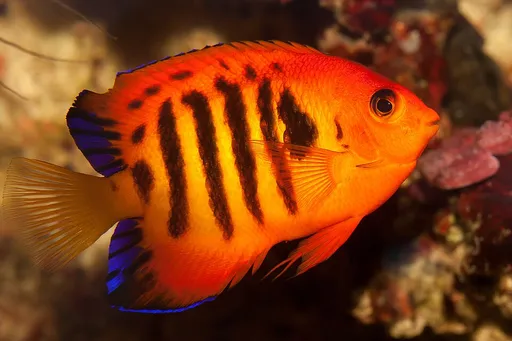 3.9 in (10 cm)50 gal (190 L)72–79°F (22–26°C)
Flame angelfish
Centropyge loriculus
3.9 in (10 cm) · 50 gal (190 L)
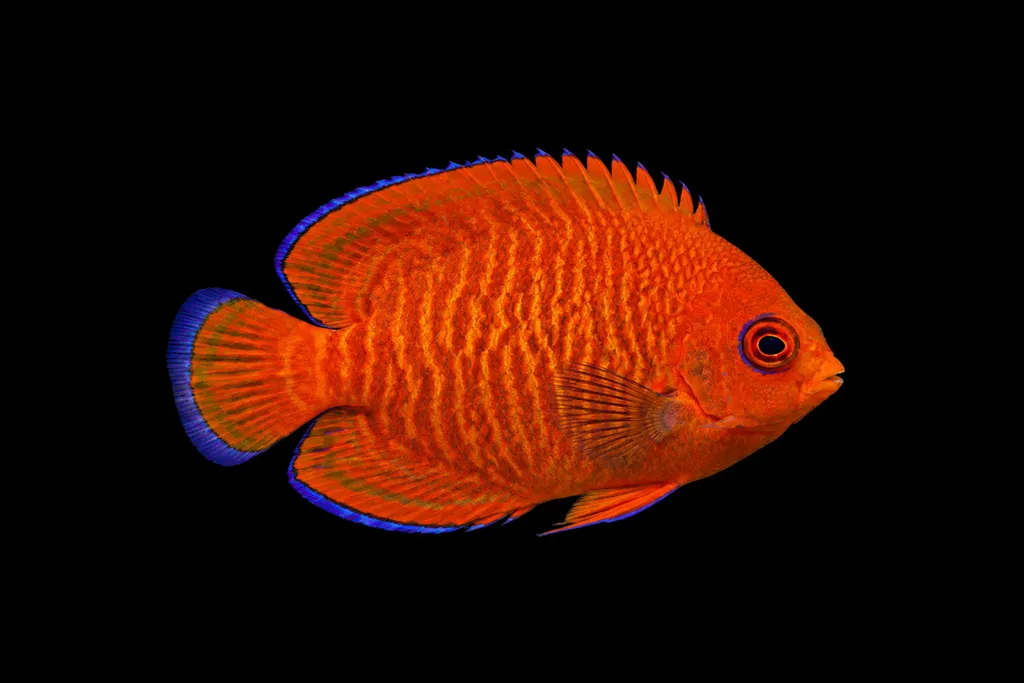 3.9 in (10 cm)55 gal (210 L)72–79°F (22–26°C)
Golden angelfish
Centropyge aurantia
3.9 in (10 cm) · 55 gal (210 L)
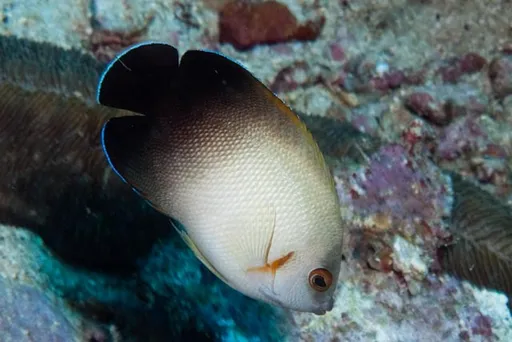 3.9 in (10 cm)55 gal (210 L)72–79°F (22–26°C)
Half-black angelfish
Centropyge vroliki
3.9 in (10 cm) · 55 gal (210 L)
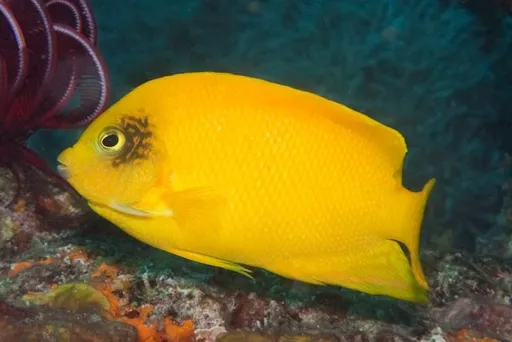 3.9 in (10 cm)55 gal (210 L)72–79°F (22–26°C)
Herald's angelfish
Centropyge heraldi
3.9 in (10 cm) · 55 gal (210 L)
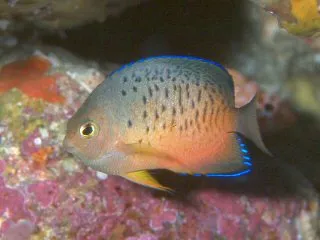 3.9 in (10 cm)69 gal (260 L)72–79°F (22–26°C)
Rusty angelfish
Centropyge ferrugata
3.9 in (10 cm) · 69 gal (260 L)