Epiphyte aquarium plants
Epiphytes grow attached to hardscape instead of planted in substrate: tie or glue them to wood and rock and they take care of the rest. Anubias, java fern and bucephalandra all sit here, and most are fine in low light. Bury the rhizome and it rots. Profiles list light, CO2 and growth for each plant.
At a glance
- Height
- 0.6–15.7 in
- 0.6 in (1.5 cm) to 15.7 in (40 cm); half the list stays at 3.9 in (10 cm) or under
- Temperature
- 70–82°F
- 21–28°C, most of the list
- Light
- 72 low light
- 9 medium light
- CO₂
- 34 no CO₂ needed
- 47 CO₂ beneficial
- Growth
- 75 slow growing
- 6 medium growth
- Difficulty
- 66 easy
- 13 medium · 2 difficult
54 plants and 27 varieties
What counts as an epiphyte
An epiphyte grows attached to something rather than rooted in substrate. In an aquarium that means five groups: the anubias, the java ferns and their many cultivars, the bucephalandra, the bolbitis or African water ferns, and the mosses. A handful of rarer Bornean aroids (Homalomena, Schismatoglottis, Piptospatha and Aridarum) grow the same way and are here too. What they share is a rhizome or a creeping stem that has to stay above the substrate, roots that mostly grip, and a habit of taking most of their nutrients from the water. This page is every plant in the catalog placed as an epiphyte.
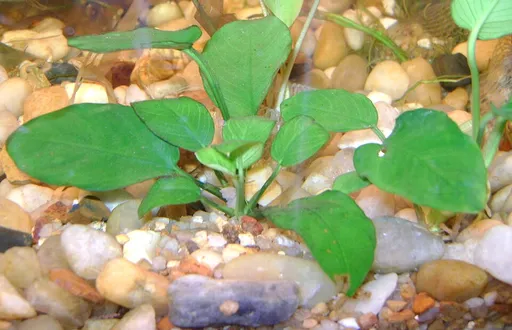
Anubias nana
Anubias barteri var. nana
FreshwaterBrackish- Light
- Low light
- Placement
- Epiphyte
- Height
- 4.7 in (12 cm)
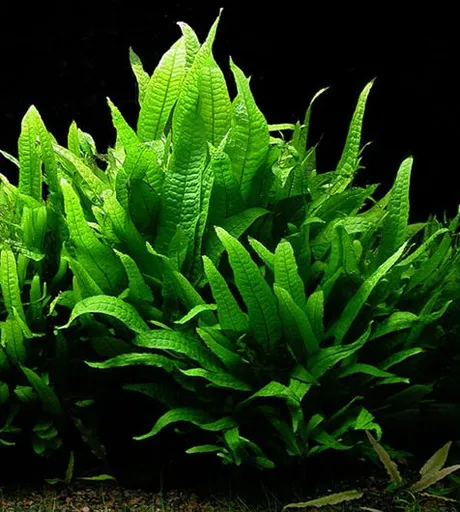
Java fern
Leptochilus pteropus
FreshwaterBrackish- Light
- Low light
- Placement
- Epiphyte
- Height
- 11.8 in (30 cm)
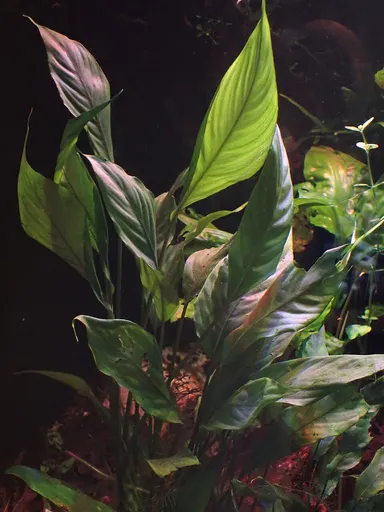
Bucephalandra motleyana
Freshwater- Light
- Low light
- Placement
- Epiphyte
- Height
- 3.9 in (10 cm)
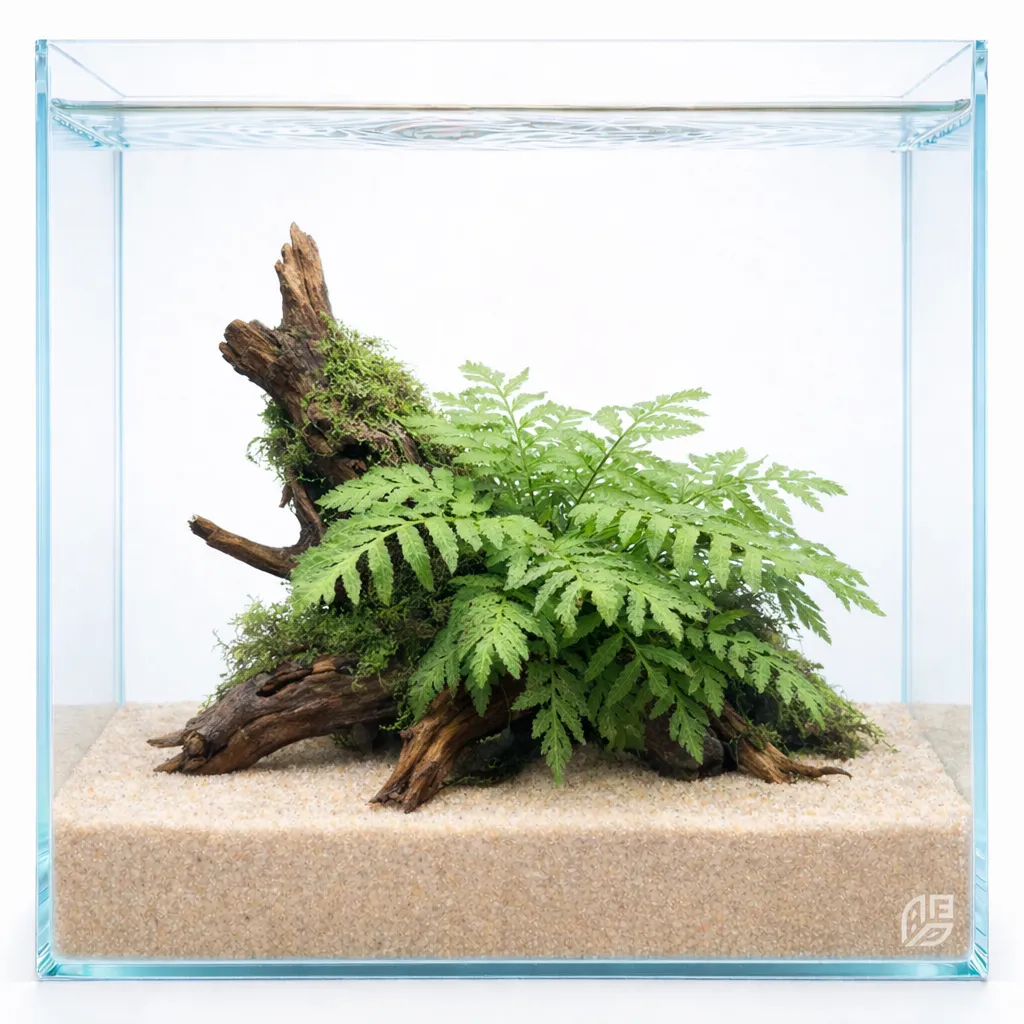
African water fern
Bolbitis heudelotii
Freshwater- Light
- Low light
- Placement
- Epiphyte
- Height
- 15.7 in (40 cm)
Attaching them
Tie the rhizome to wood or rock with cotton thread, which rots away once the roots have gripped, or with fishing line, or put a dab of cyanoacrylate gel (super glue gel) on the rhizome and press it on for thirty seconds; the glue is safe once it sets. Wedging a rhizome into a crack in the wood works too. Roots take hold in a few weeks. Never bury the rhizome: roots may go into the substrate, but a rhizome under gravel rots and the plant dies from the middle out. The same rule covers a plant sold in a pot of rock wool, which should come out of the pot.
Low light, no CO2, slow growth
Nearly every plant here lists low light and no or beneficial CO2, which is why they are the plants for a low-tech tank. The price is slow growth, and slow growth means algae has time to settle on the leaves. Keep the light modest, put epiphytes in the shade of faster plants, and let shrimp, otocinclus and nerite snails clean the leaves. A new anubias or bucephalandra often melts its leaves in the first weeks after import, because many are grown out of water: leave a firm rhizome alone and new leaves come from it.
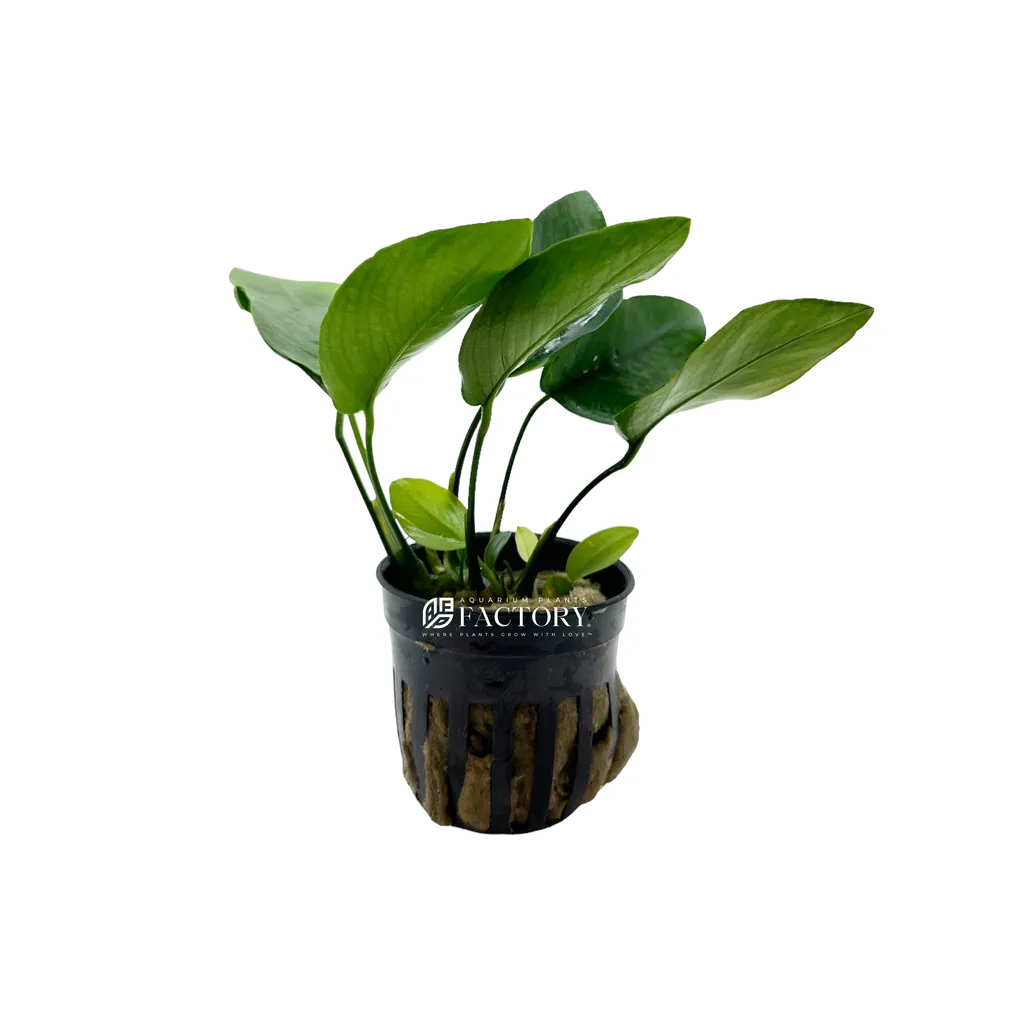
Anubias barteri
FreshwaterBrackishLow light · Epiphyte13.8 in (35 cm)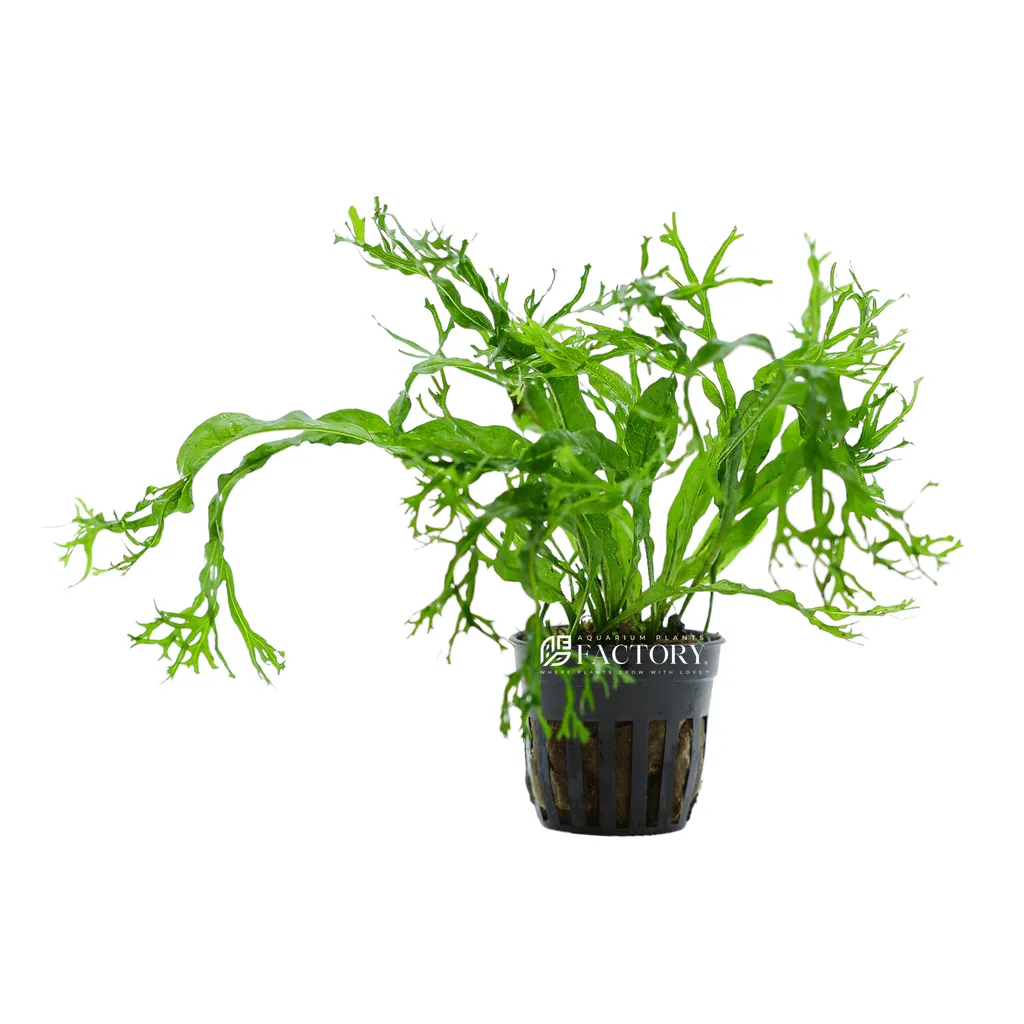
Windelov java fern
Leptochilus pteropus 'Windelov'
FreshwaterBrackishLow light · Epiphyte7.9 in (20 cm)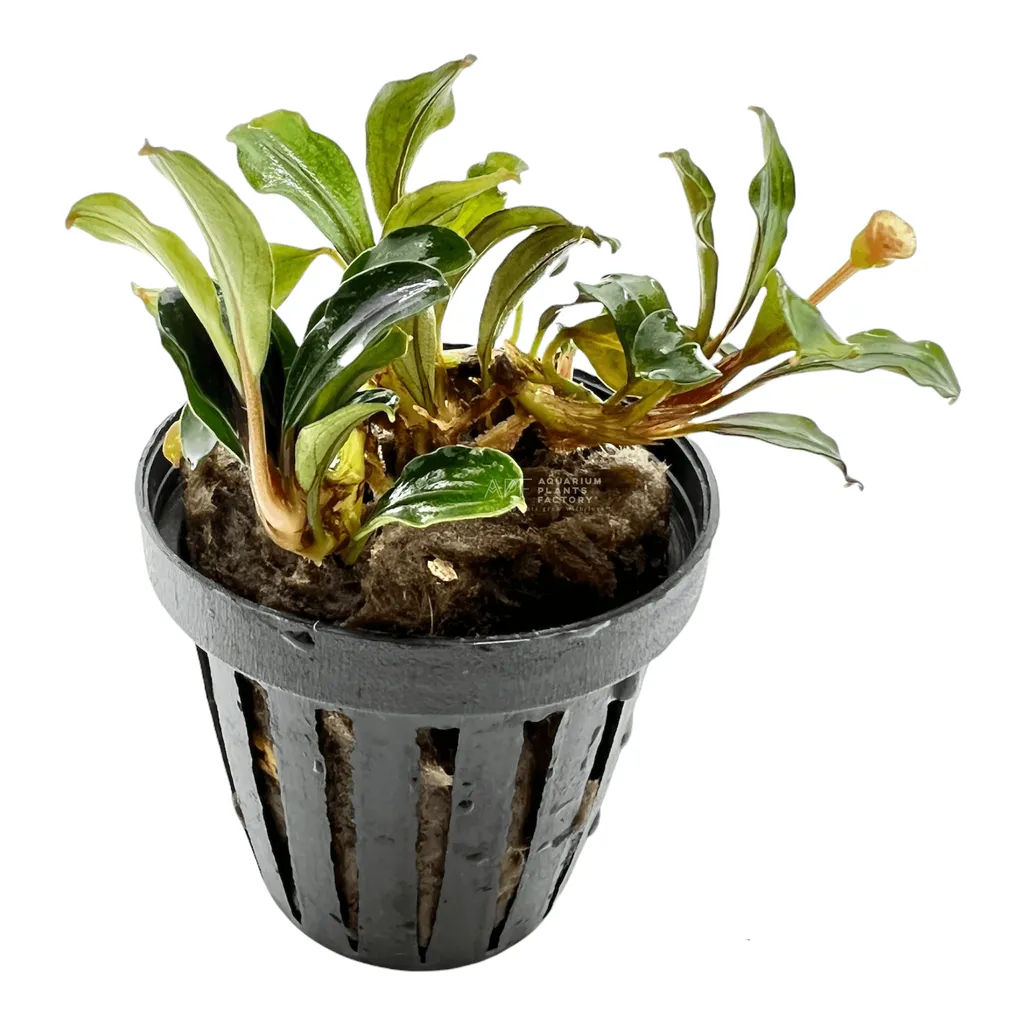
Bucephalandra kedagang
Bucephalandra sp. 'Kedagang'
FreshwaterLow light · Epiphyte4.7 in (12 cm)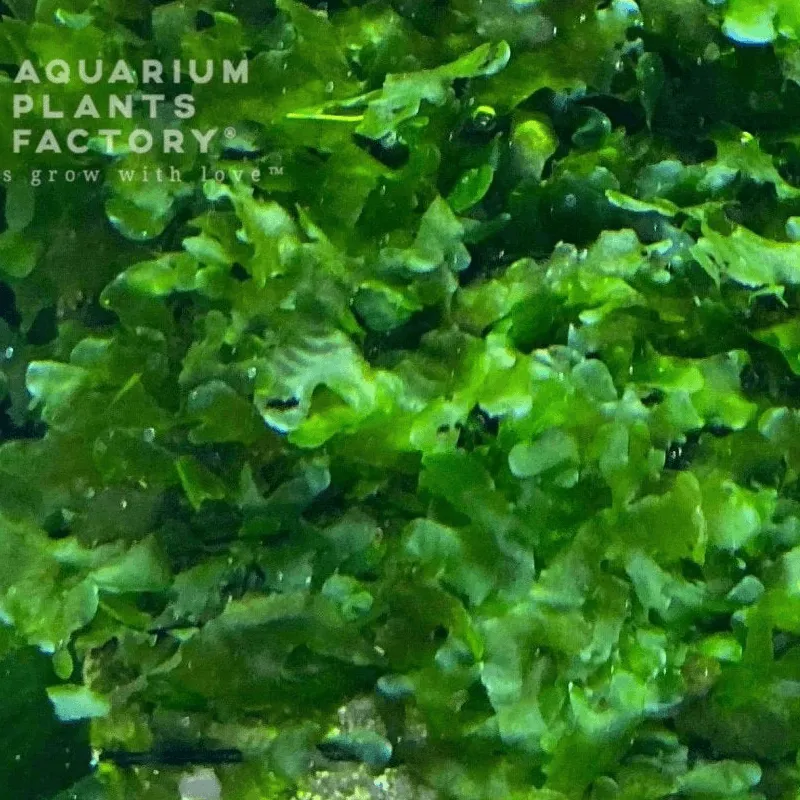
Süsswassertang
Lomariopsis cf. lineata
FreshwaterLow light · Epiphyte2 in (5 cm)
Small epiphytes for nano tanks
Several epiphytes stay under 2 inches (5 cm) and suit a shrimp tank or a bonsai-style scape. Anubias petite stops at 2 inches (5 cm), anubias micro at 1.2 inches (3 cm) and anubias pangolino at under an inch (2 cm). Bucephalandra mini coin stays at 1.6 inches (4 cm). The petite java fern stops at 3 inches (8 cm), against 12 inches (30 cm) for the standard form. Among the mosses, mini fissidens stays at half an inch (1.5 cm) and nano moss at 1.2 inches (3 cm). All of them grow slowly, so buy the size you want rather than waiting for it.
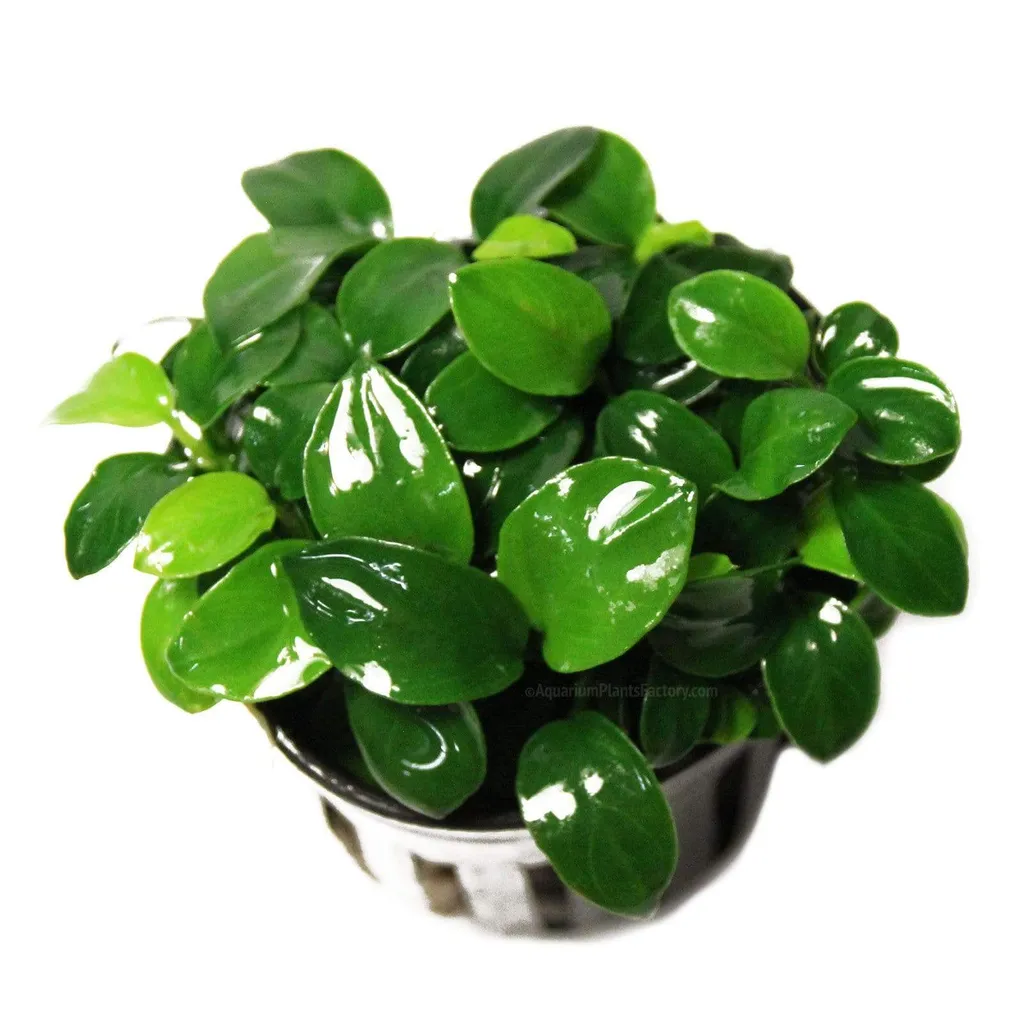
Anubias petite
Anubias barteri var. nana 'Petite'
FreshwaterBrackishLow light · Epiphyte2 in (5 cm)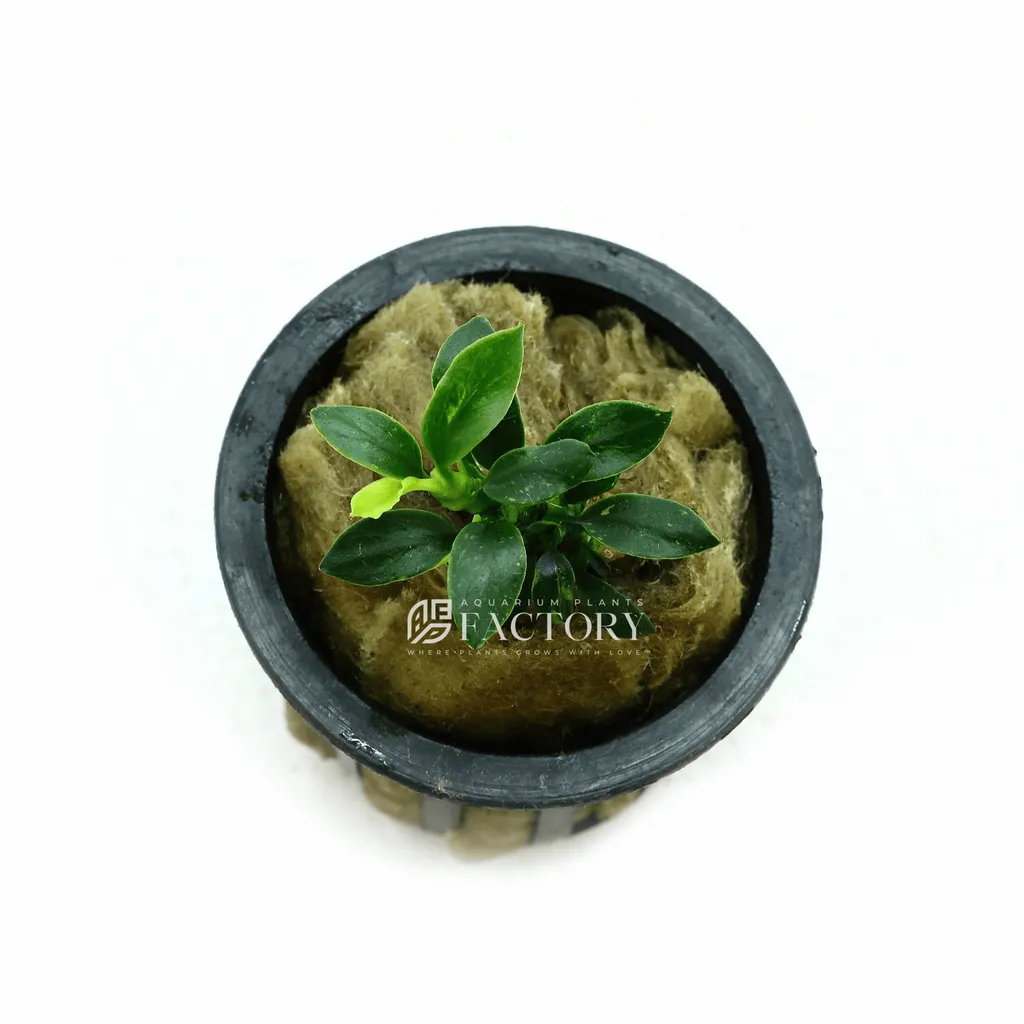
Anubias Pangolino
Anubias barteri var. nana 'Pangolino'
FreshwaterBrackishLow light · Epiphyte0.8 in (2 cm)Bucephalandra Mini Coin
Bucephalandra sp. 'Mini Coin'
FreshwaterLow light · Epiphyte1.6 in (4 cm)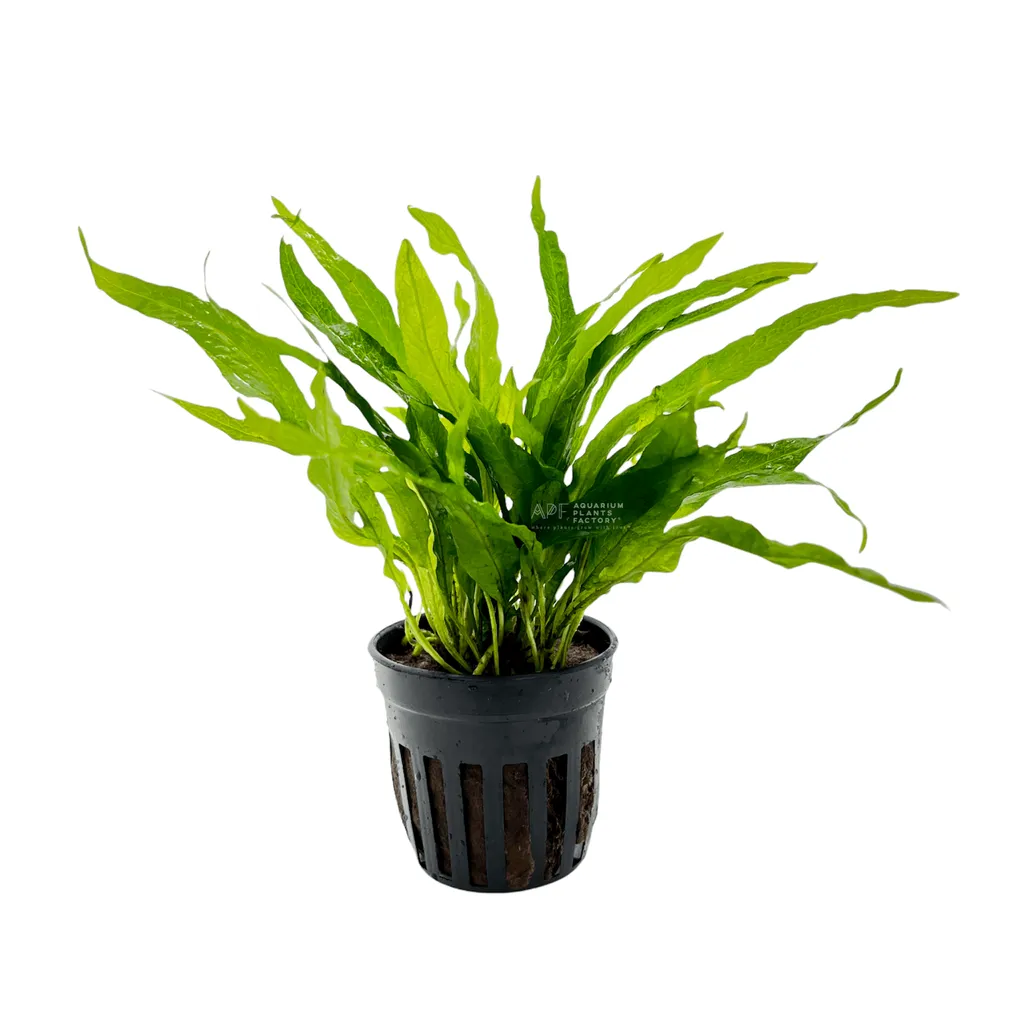
Petite java fern
Leptochilus pteropus 'Petite'
FreshwaterBrackishLow light · Epiphyte3.1 in (8 cm)
The ones that want more
A few epiphytes are marked medium or difficult. The white and variegated anubias (snow white, broad white) carry little chlorophyll and list medium light and beneficial CO2 to hold their colour. Bucephalandra godzilla lists medium light. Bolbitis heteroclita is marked difficult and wants a narrow 72–77°F (22–25°C) range. Fissidens nobilis is the difficult moss, wanting stable, cool water. The Bornean aroids (Homalomena, Piptospatha, Aridarum) are medium: slow, sensitive to change and best in a mature tank.
Anubias Snow White
Anubias barteri var. nana 'Snow White'
FreshwaterBrackishMedium light · Epiphyte3.9 in (10 cm)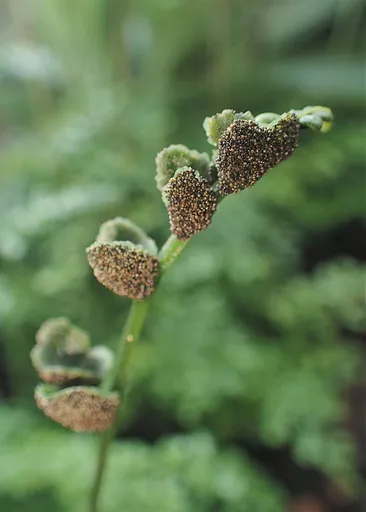
Bolbitis heteroclita
FreshwaterLow light · Epiphyte9.8 in (25 cm)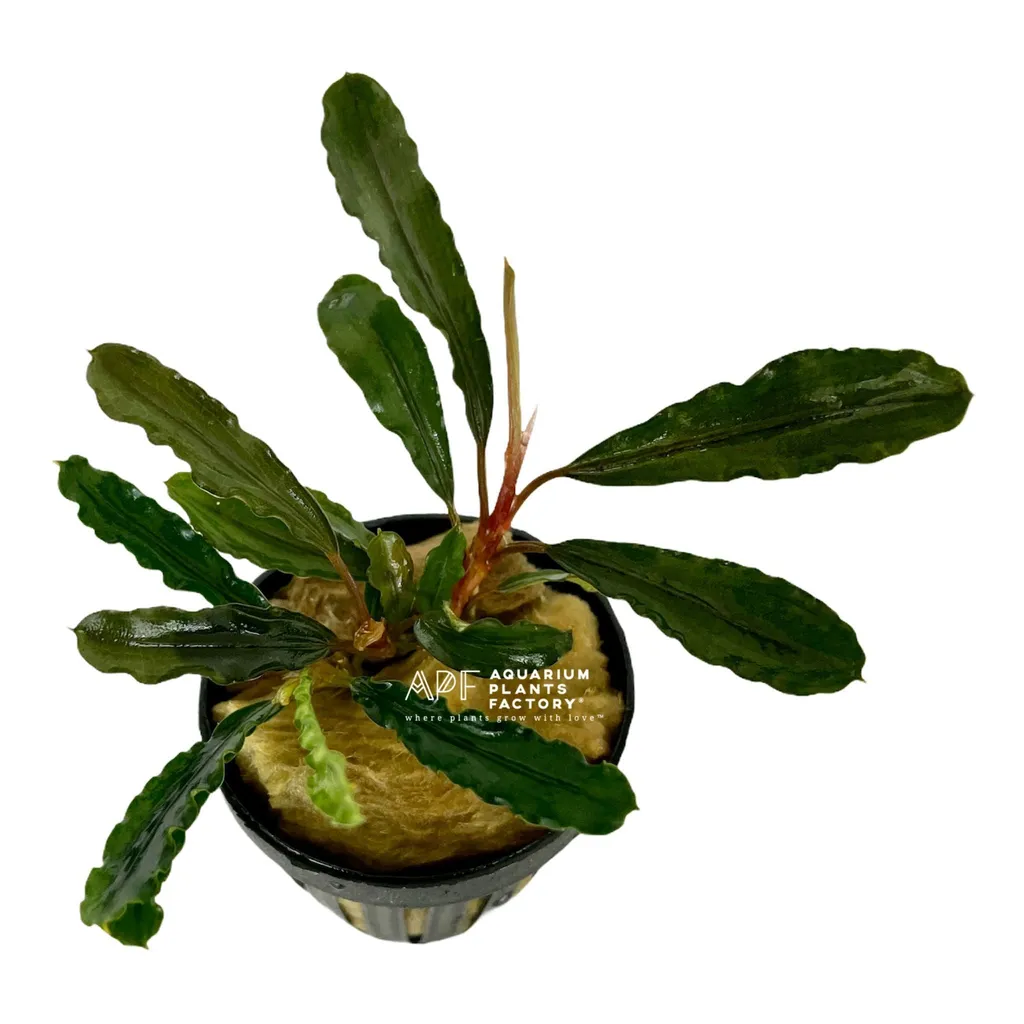
Bucephalandra Godzilla
Bucephalandra sp. 'Godzilla'
FreshwaterMedium light · Epiphyte3.9 in (10 cm)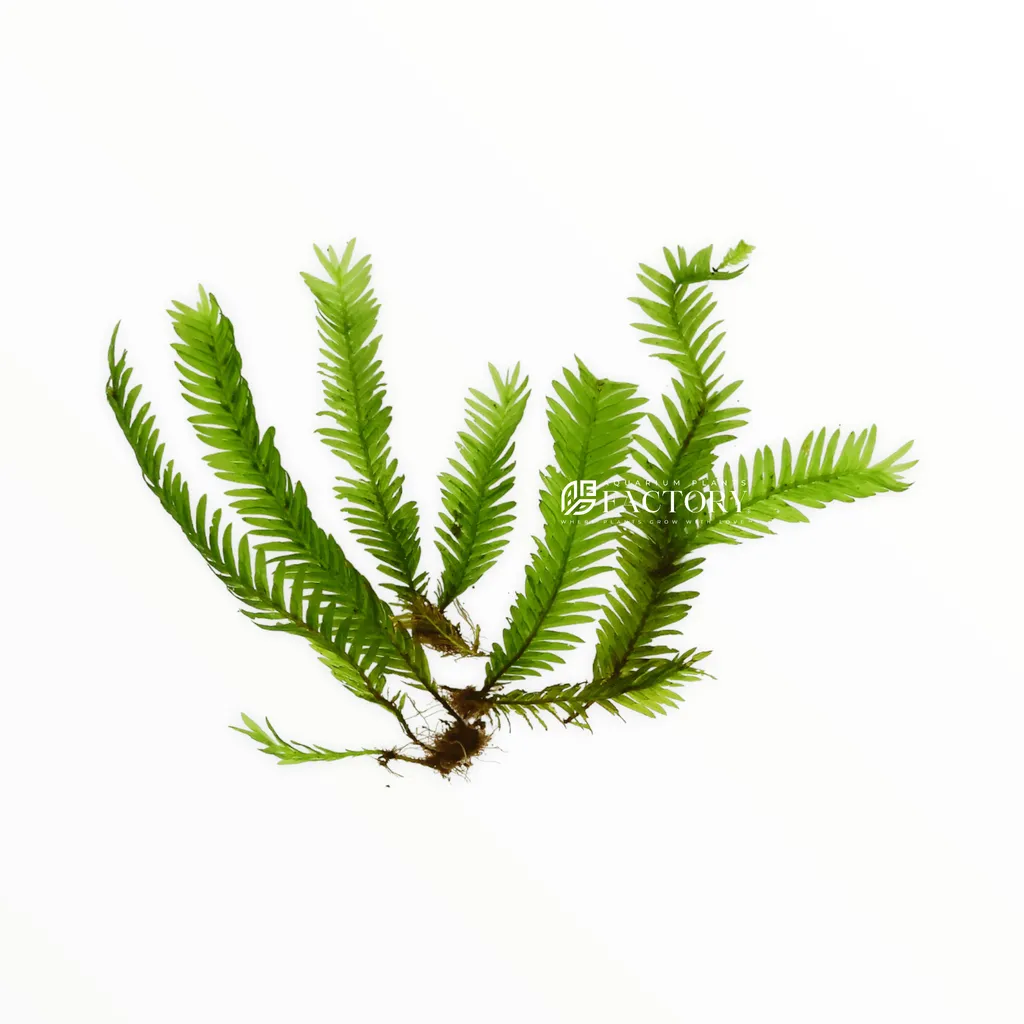
Fissidens nobilis
FreshwaterLow light · Epiphyte1.6 in (4 cm)
By the numbers
Smallest
Tallest
FAQ
Common questions
What are epiphyte aquarium plants?
Plants that grow attached to wood and rock instead of rooted in substrate: anubias, java fern, bucephalandra, bolbitis and the mosses. The rhizome takes water and nutrients from the water column and the roots only grip.
How do you attach epiphytes?
Cotton thread, fishing line or super glue gel on the rhizome, pressed onto wood or rock. Roots take hold in a few weeks and the thread rots away.
Can you plant anubias in gravel?
Only if the rhizome stays above it. Roots can go into the substrate; a buried rhizome rots.
Do epiphytes need CO2?
No. Almost every plant here lists CO2 as none or beneficial. They grow slowly with or without it; CO2 speeds them up and helps the pale variegated cultivars.
Why are my anubias or bucephalandra leaves melting?
A change of conditions, most often the move from emersed growth to your tank. Trim mushy leaves and leave the rhizome; if it stays firm, new leaves follow.
Which epiphytes are good for a nano tank?
Anubias petite, micro and pangolino, bucephalandra mini coin, petite java fern, mini fissidens and nano moss all stay under about 2 inches (5 cm).
Index
All epiphytes
African water fern
Bolbitis heudelotii
FreshwaterLow light · Epiphyte15.7 in (40 cm)Anubias barteri
FreshwaterBrackishLow light · Epiphyte13.8 in (35 cm)20 forms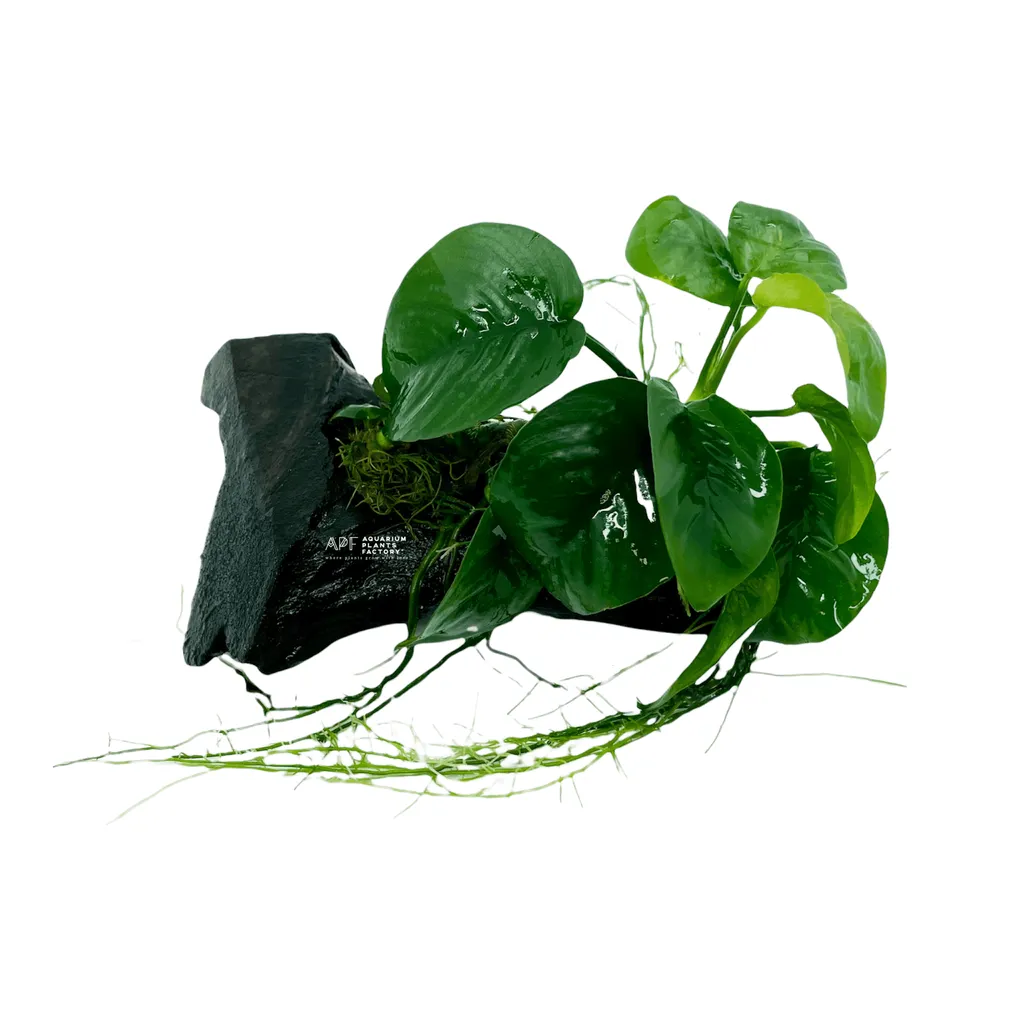
Anubias Butterfly
Anubias 'Butterfly'
FreshwaterLow light · Epiphyte5.9 in (15 cm)Anubias Chili Jalapeno
Anubias 'Chili Jalapeno'
FreshwaterLow light · Epiphyte3.9 in (10 cm)Anubias Frazeri
Anubias 'Frazeri'
FreshwaterLow light · Epiphyte9.8 in (25 cm)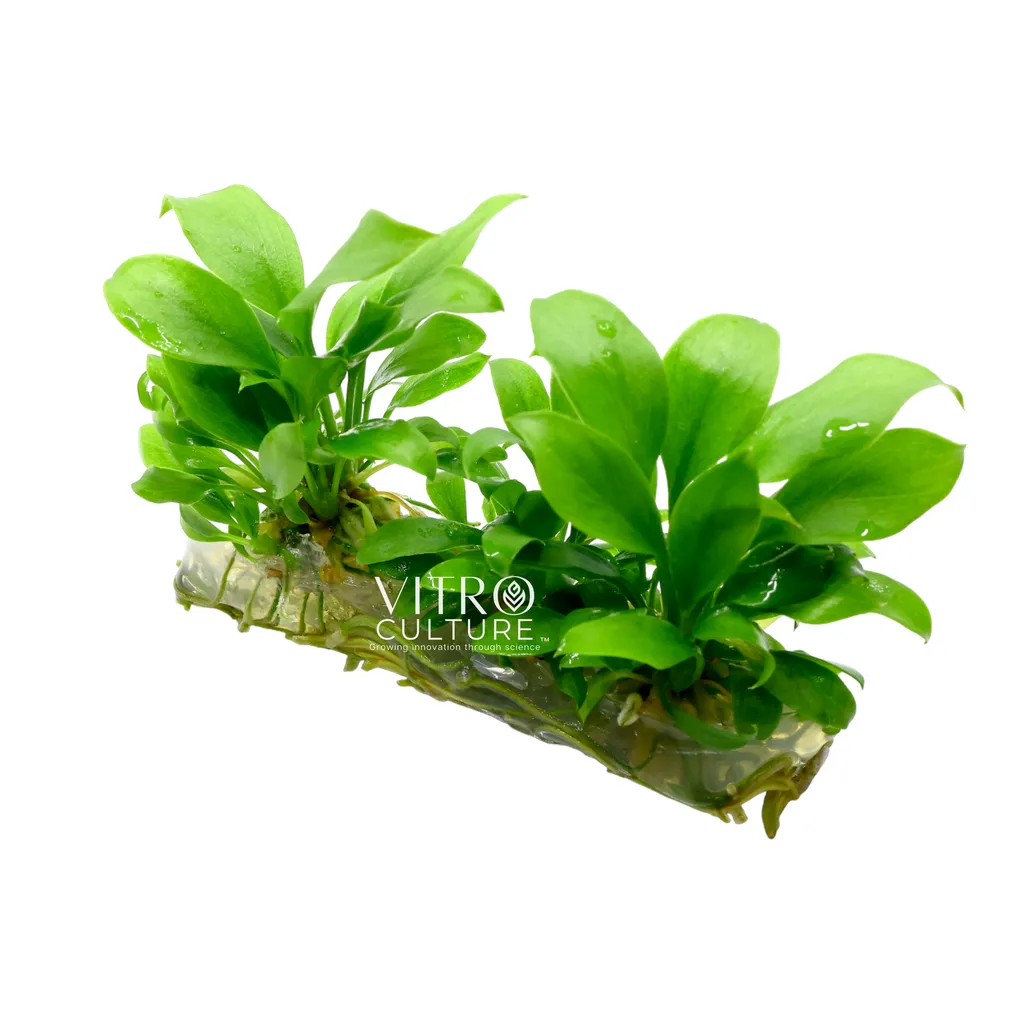
Anubias gilletii
FreshwaterLow light · Epiphyte11.8 in (30 cm)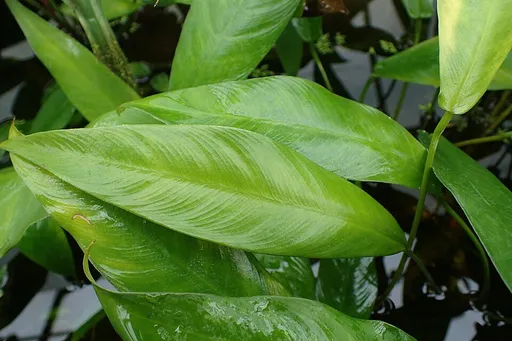
Anubias gracilis
FreshwaterLow light · Epiphyte15.7 in (40 cm)Anubias Nangi
Anubias 'Nangi'
FreshwaterLow light · Epiphyte7.9 in (20 cm)Aridarum caulescens
Burttianthus caulescens
FreshwaterLow light · Epiphyte5.9 in (15 cm)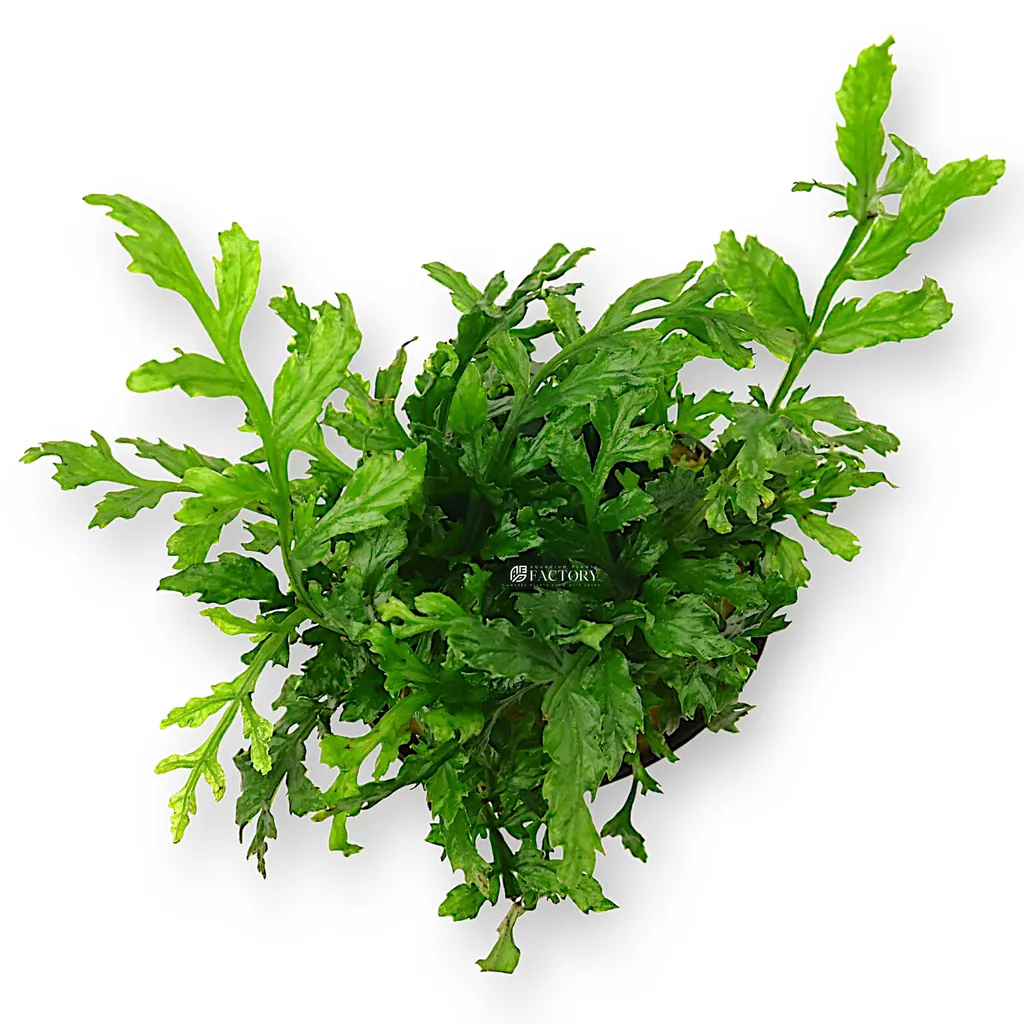
Bolbitis Difformis
Bolbitis difformis
FreshwaterLow light · Epiphyte2.8 in (7 cm)Bolbitis heteroclita
FreshwaterLow light · Epiphyte9.8 in (25 cm)Bucephalandra Apple Leaf
Bucephalandra sp. 'Apple Leaf'
FreshwaterLow light · Epiphyte3.9 in (10 cm)Bucephalandra Brownie Blue
Bucephalandra sp. 'Brownie Blue'
FreshwaterLow light · Epiphyte3.1 in (8 cm)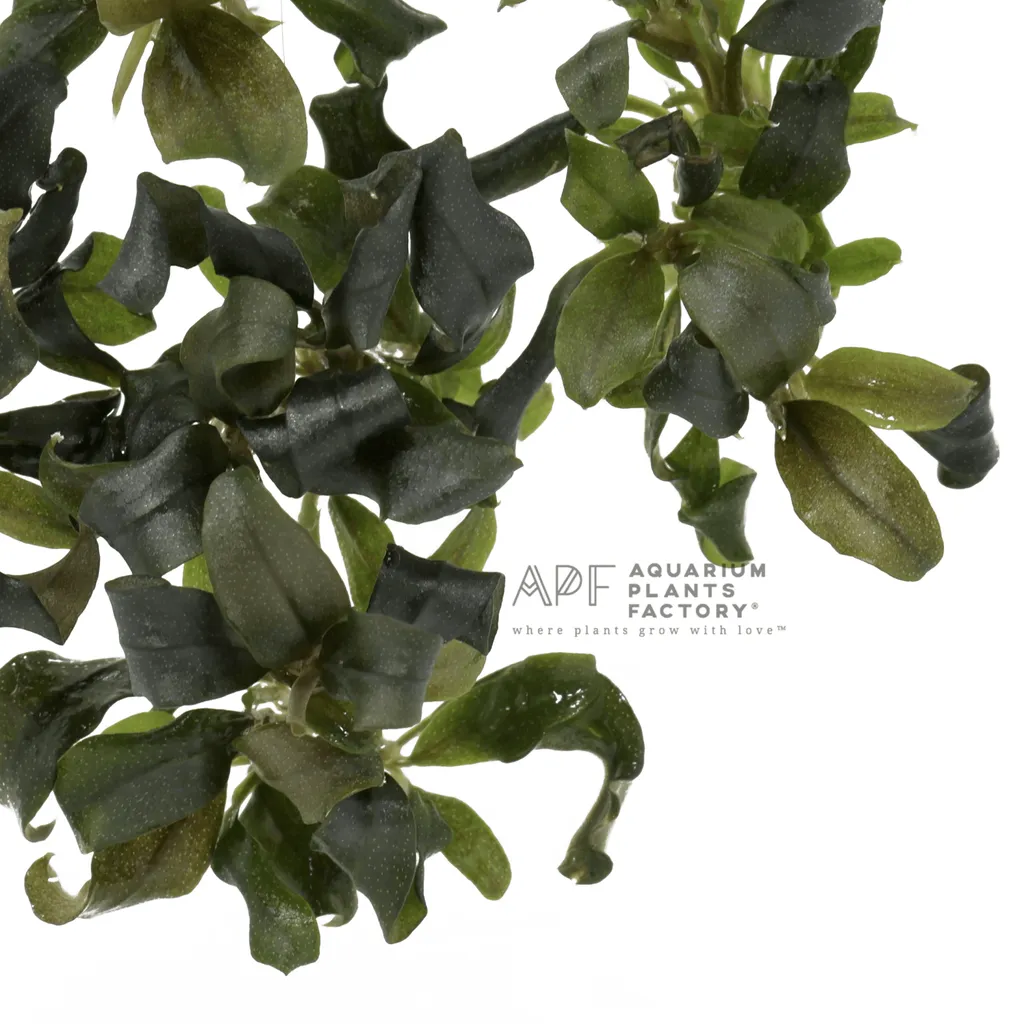
Bucephalandra brownie ghost
Bucephalandra sp. 'Brownie Ghost'
FreshwaterMedium light · Epiphyte2.4 in (6 cm)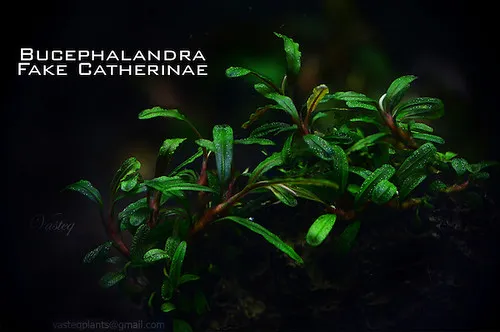
Bucephalandra catherinae
FreshwaterLow light · Epiphyte2.4 in (6 cm)Bucephalandra Dark Velvet
Bucephalandra sp. 'Dark Velvet'
FreshwaterLow light · Epiphyte3.1 in (8 cm)Bucephalandra Deep Purple
Bucephalandra sp. 'Deep Purple'
FreshwaterLow light · Epiphyte3.1 in (8 cm)Bucephalandra Godzilla
Bucephalandra sp. 'Godzilla'
FreshwaterMedium light · Epiphyte3.9 in (10 cm)Bucephalandra Grappa Red
Bucephalandra sp. 'Grappa Red'
FreshwaterLow light · Epiphyte3.1 in (8 cm)Bucephalandra kedagang
Bucephalandra sp. 'Kedagang'
FreshwaterLow light · Epiphyte4.7 in (12 cm)Bucephalandra Kedagang Long
Bucephalandra sp. 'Kedagang Long'
FreshwaterLow light · Epiphyte5.9 in (15 cm)Bucephalandra Kedagang Round
Bucephalandra sp. 'Kedagang Round'
FreshwaterLow light · Epiphyte4.7 in (12 cm)Bucephalandra Mini Coin
Bucephalandra sp. 'Mini Coin'
FreshwaterLow light · Epiphyte1.6 in (4 cm)Bucephalandra motleyana
FreshwaterLow light · Epiphyte3.9 in (10 cm)Bucephalandra Red
Bucephalandra sp. 'Red'
FreshwaterLow light · Epiphyte3.9 in (10 cm)Bucephalandra Red Blade
Bucephalandra sp. 'Red Blade'
FreshwaterLow light · Epiphyte4.7 in (12 cm)Bucephalandra Sintang
Bucephalandra sp. 'Sintang'
FreshwaterLow light · Epiphyte3.9 in (10 cm)Bucephalandra sordidula
FreshwaterLow light · Epiphyte3.9 in (10 cm)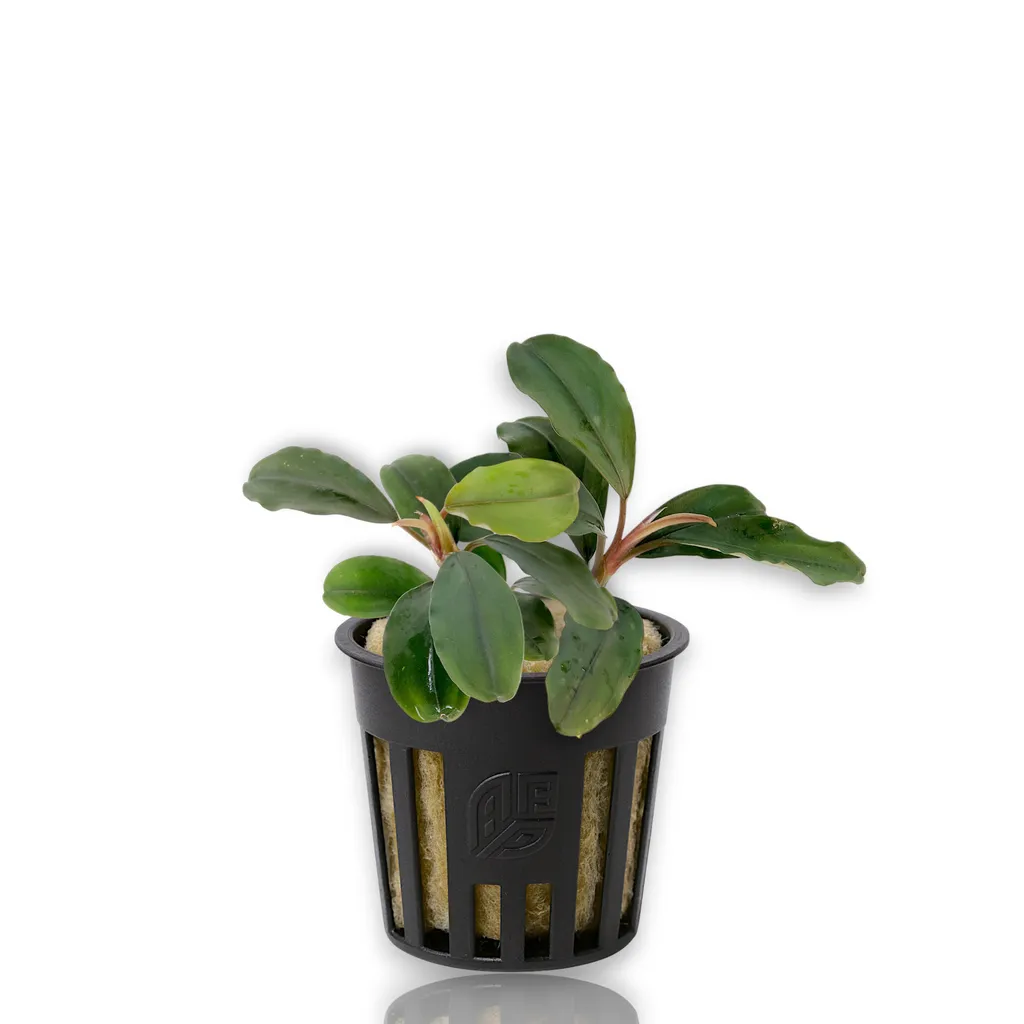
Bucephalandra Theia
Bucephalandra sp. 'Theia'
FreshwaterLow light · Epiphyte3.9 in (10 cm)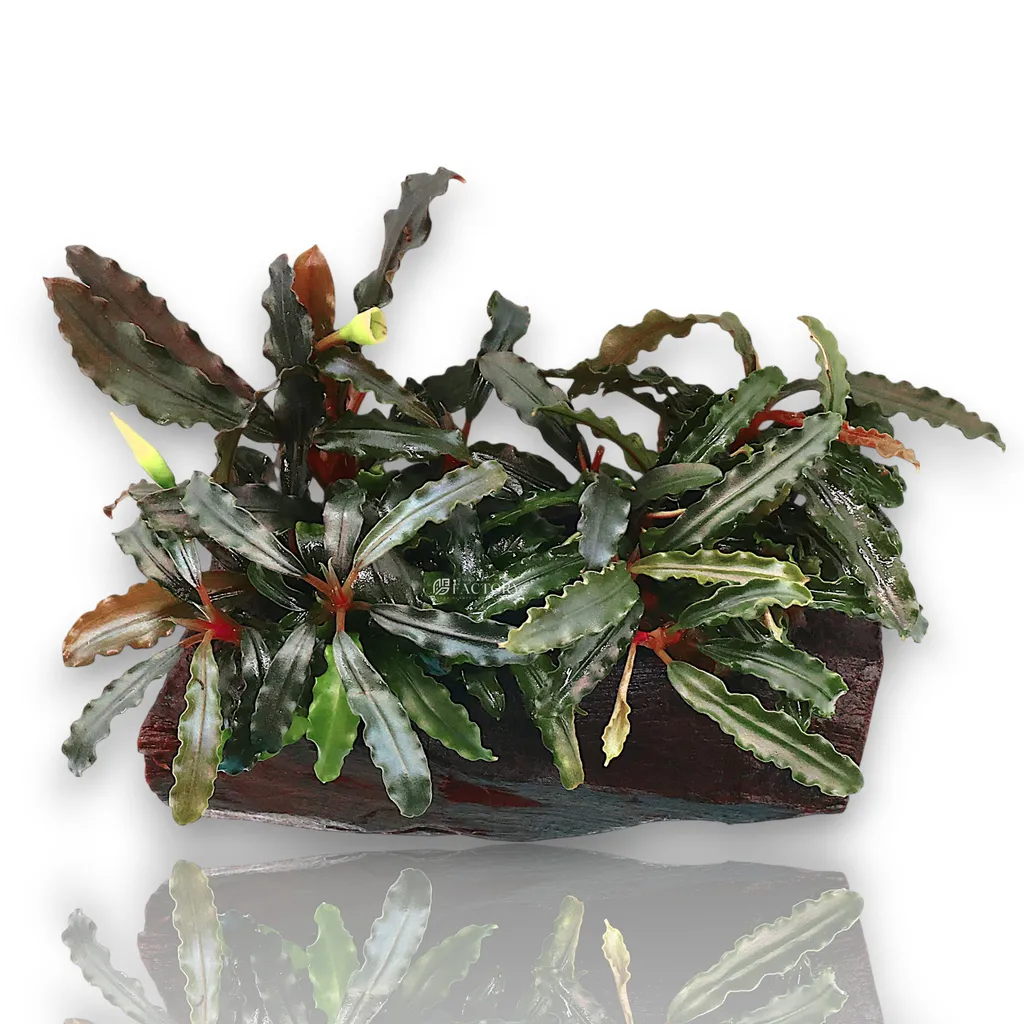
Bucephalandra Velvet
Bucephalandra sp. 'Velvet'
FreshwaterLow light · Epiphyte3.9 in (10 cm)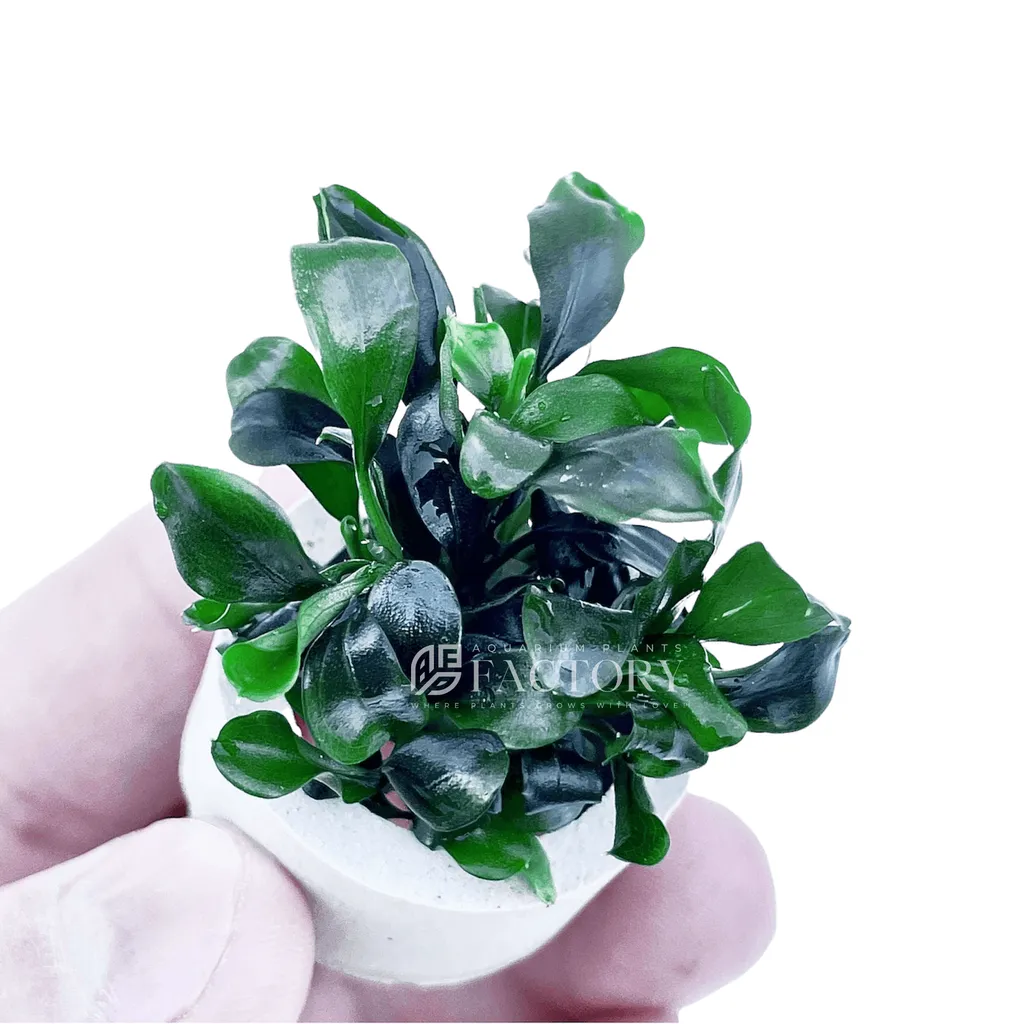
Bucephalandra Wavy Green
Bucephalandra sp. 'Wavy Green'
FreshwaterLow light · Epiphyte3.1 in (8 cm)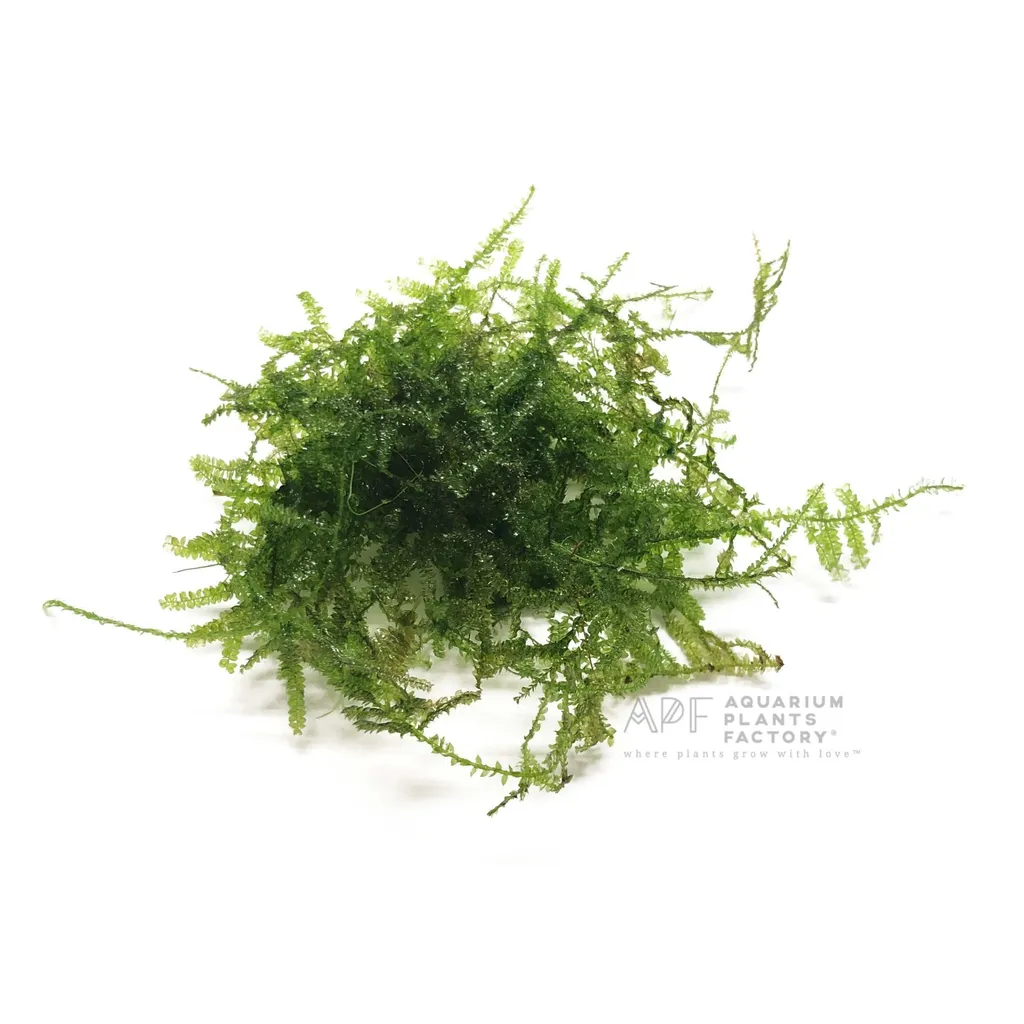
Christmas moss
Vesicularia montagnei
FreshwaterLow light · Epiphyte2 in (5 cm)Erect moss
Vesicularia reticulata
FreshwaterMedium light · Epiphyte2 in (5 cm)Fissidens nobilis
FreshwaterLow light · Epiphyte1.6 in (4 cm)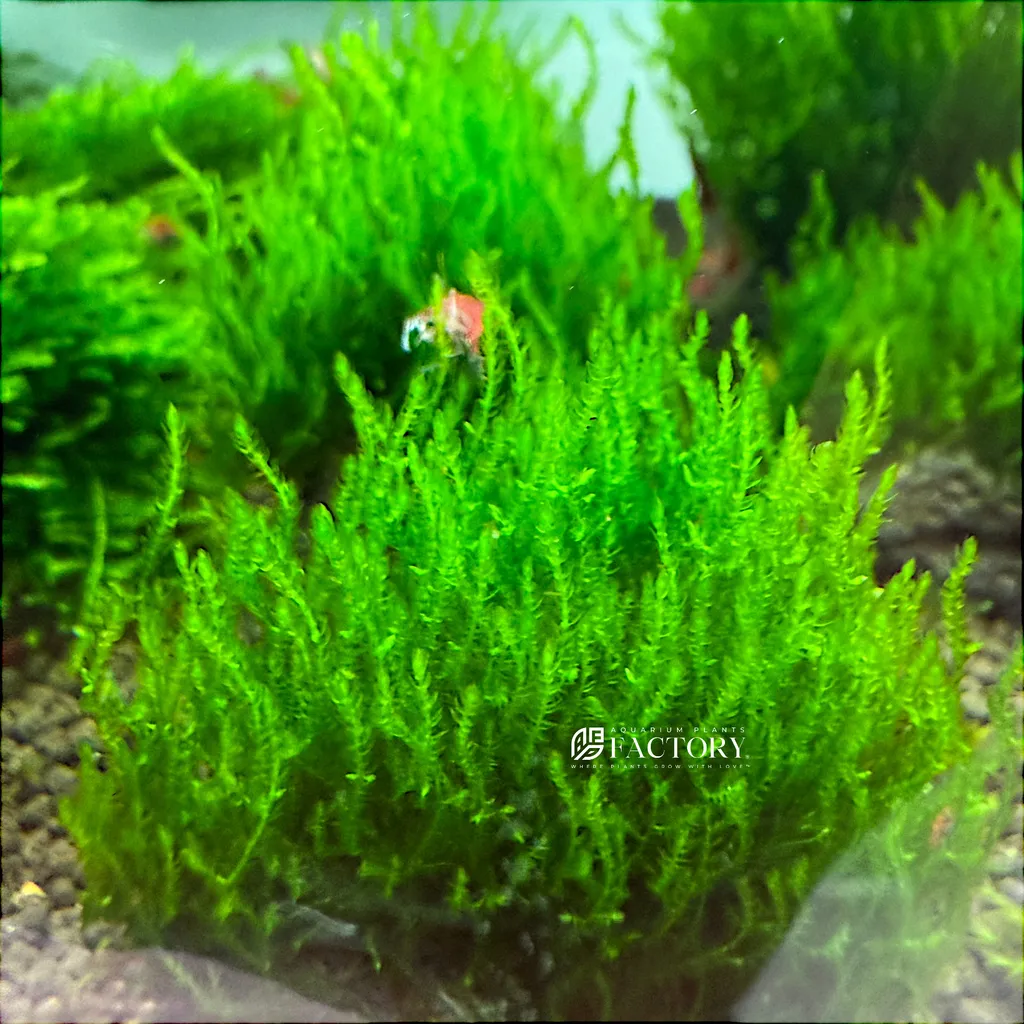
Flame moss
Taxiphyllum sp. 'Flame'
FreshwaterLow light · Epiphyte3.1 in (8 cm)Homalomena Sekadau South
Homalomena sp. 'Sekadau South'
FreshwaterLow light · Epiphyte5.9 in (15 cm)Java fern
Leptochilus pteropus
FreshwaterBrackishLow light · Epiphyte11.8 in (30 cm)7 varieties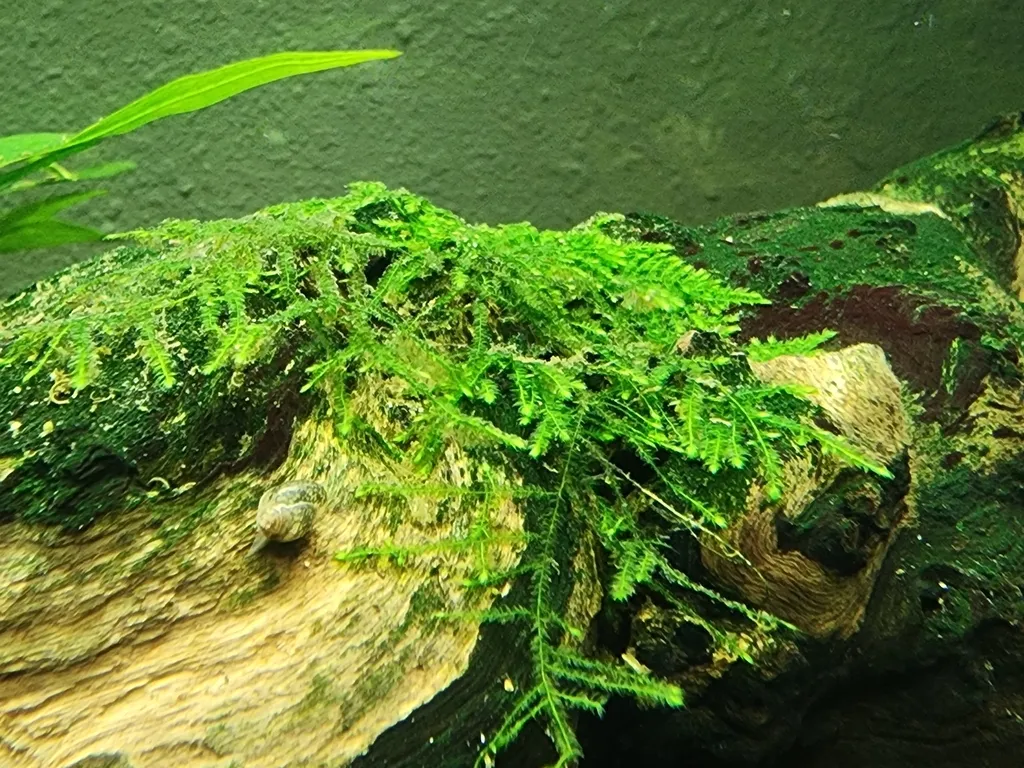
Java moss
Taxiphyllum barbieri
FreshwaterBrackishLow light · Epiphyte3.9 in (10 cm)Mini fissidens
Fissidens sp. 'Mini'
FreshwaterMedium light · Epiphyte0.6 in (1.5 cm)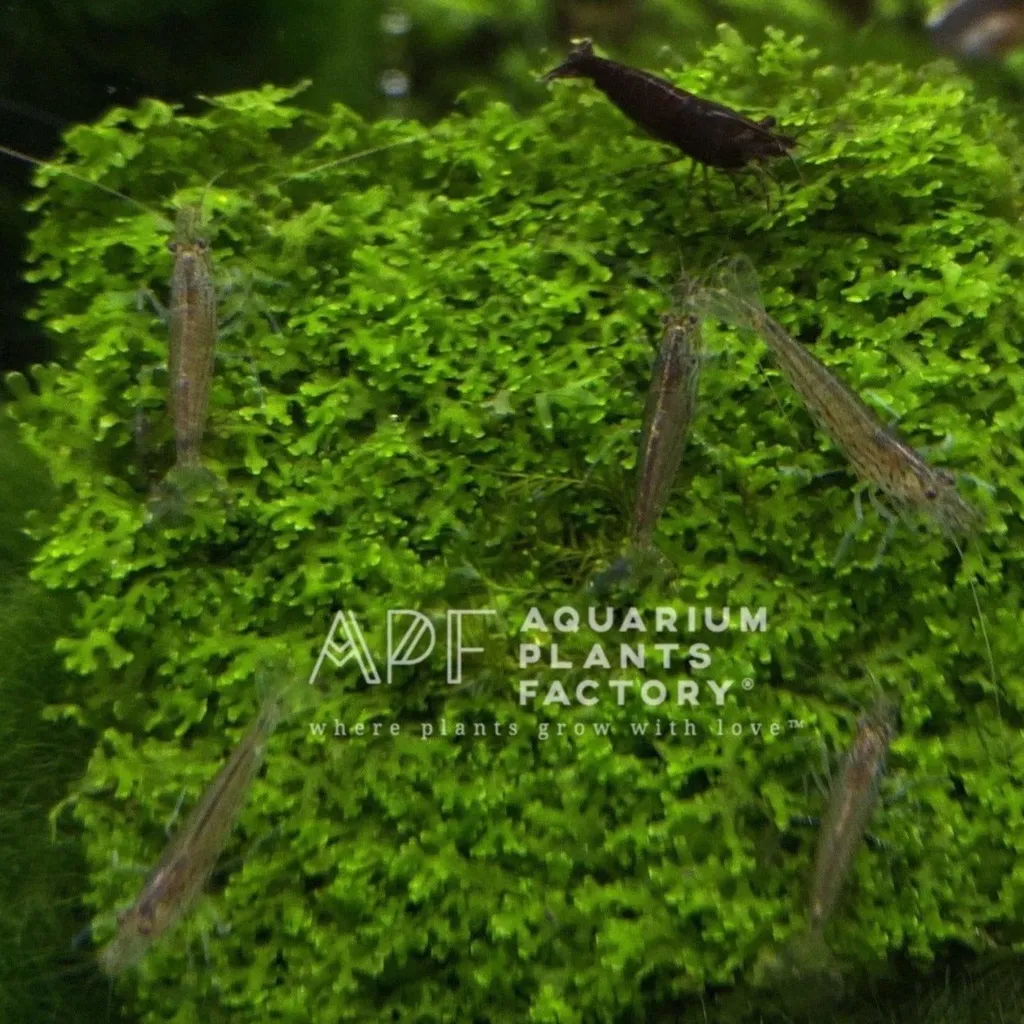
Mini pellia
Riccardia chamedryfolia
FreshwaterMedium light · Epiphyte1.2 in (3 cm)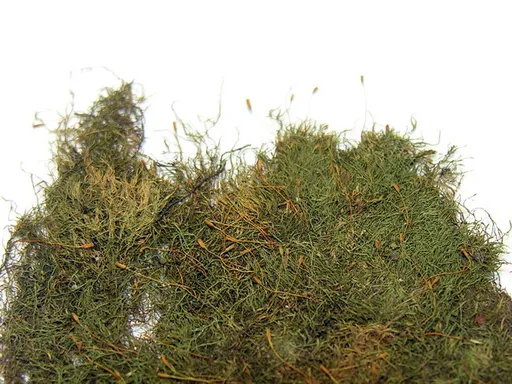
Nano moss
Amblystegium serpens
FreshwaterLow light · Epiphyte1.2 in (3 cm)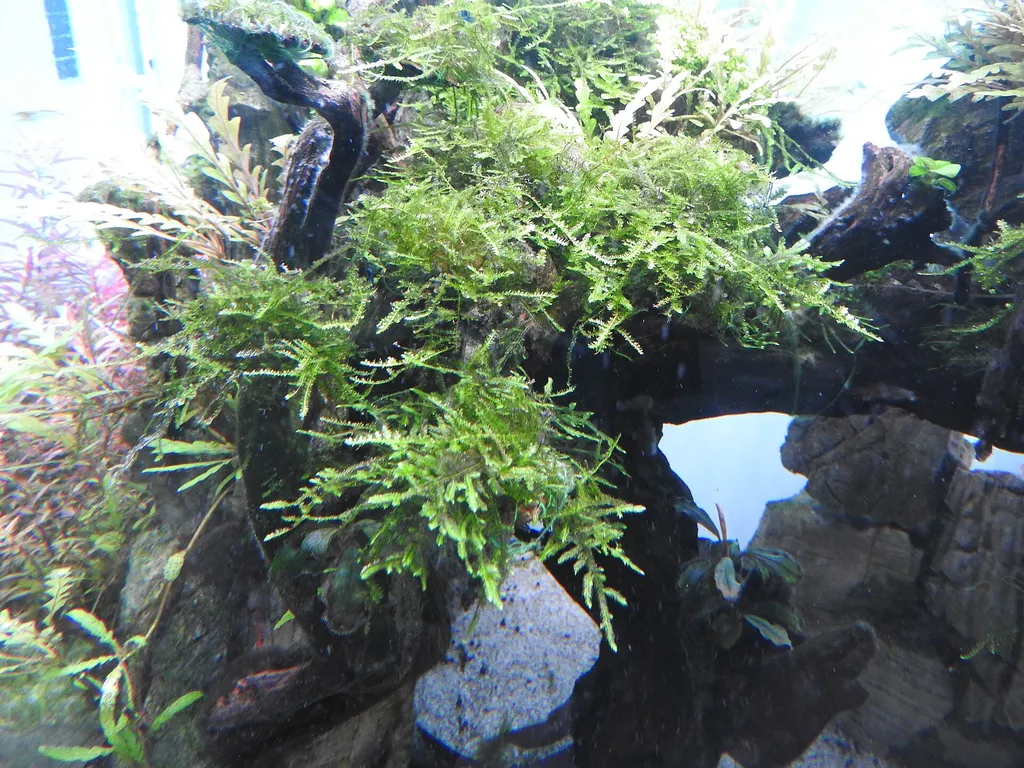
Peacock moss
Taxiphyllum sp. 'Peacock'
FreshwaterLow light · Epiphyte2 in (5 cm)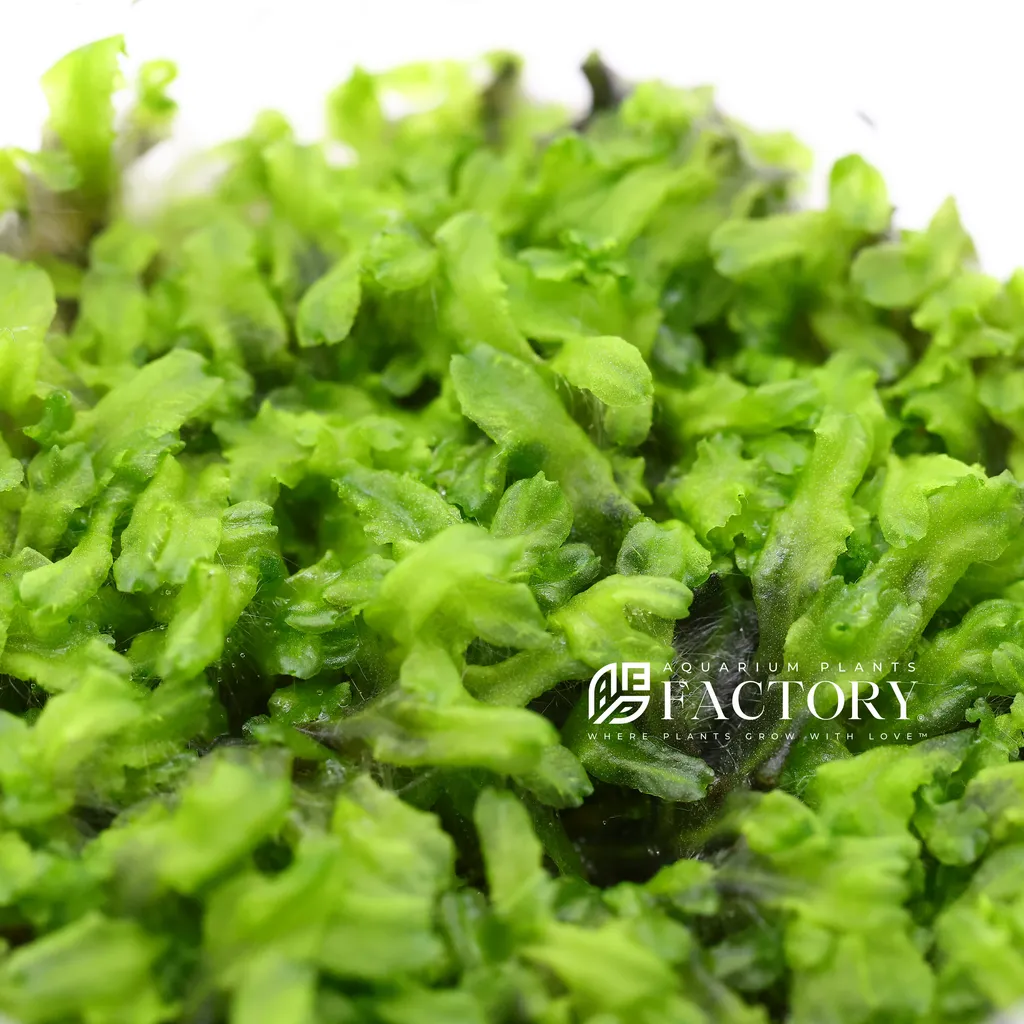
Pellia
Monosolenium tenerum
FreshwaterLow light · Epiphyte2 in (5 cm)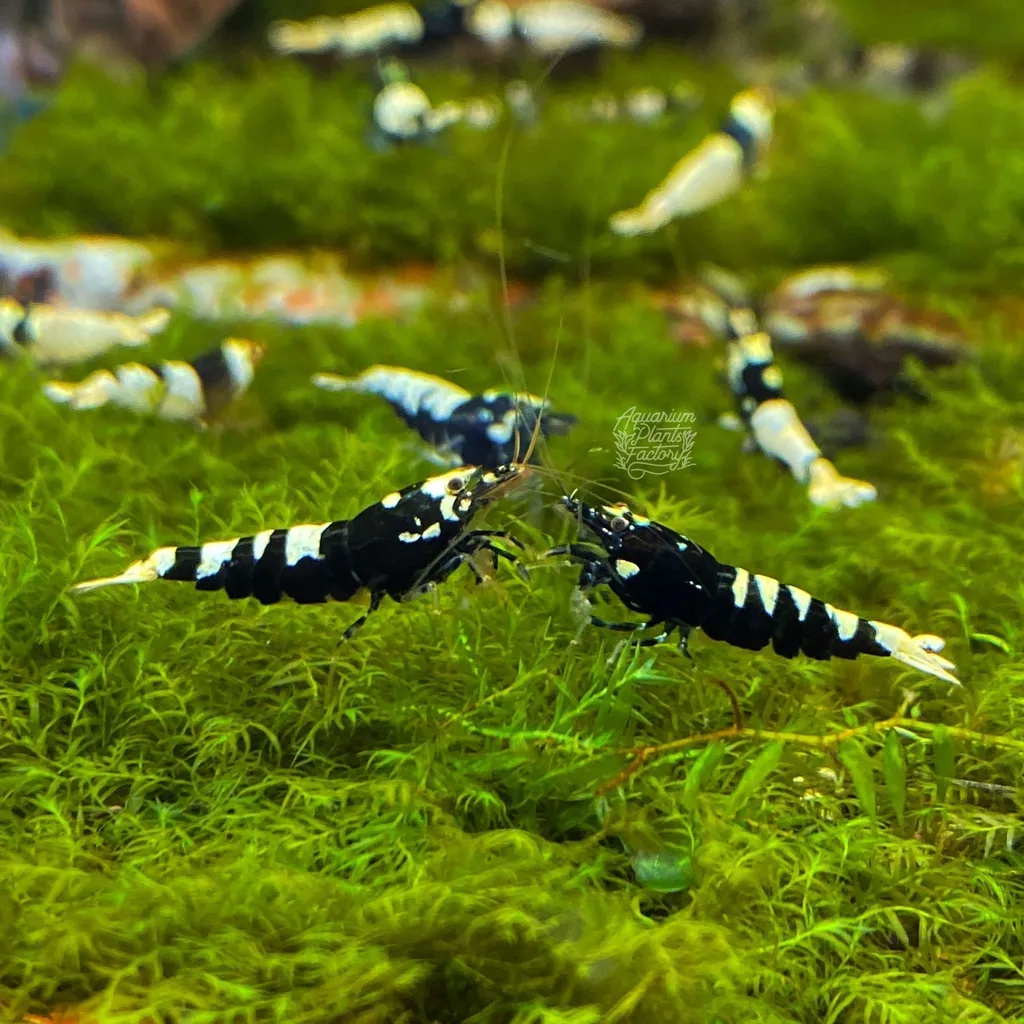
Phoenix moss
Fissidens fontanus
FreshwaterMedium light · Epiphyte1.2 in (3 cm)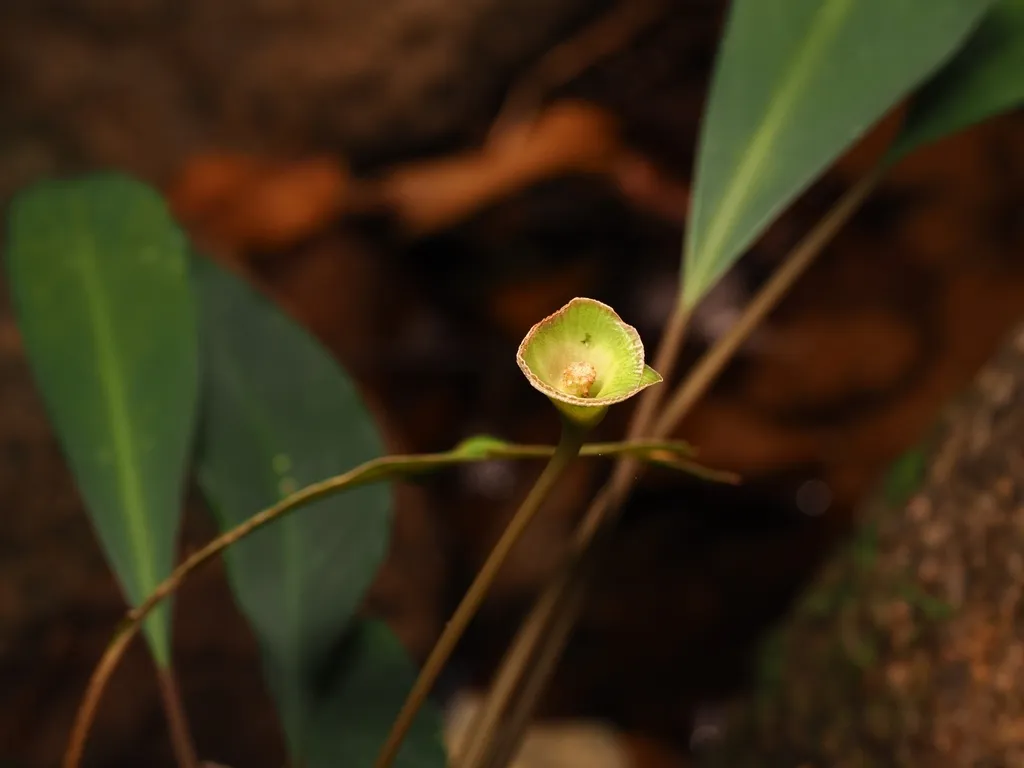
Piptospatha ridleyi
Kiewia ridleyi
FreshwaterLow light · Epiphyte11.8 in (30 cm)Schismatoglottis roseospatha
FreshwaterLow light · Epiphyte3.1 in (8 cm)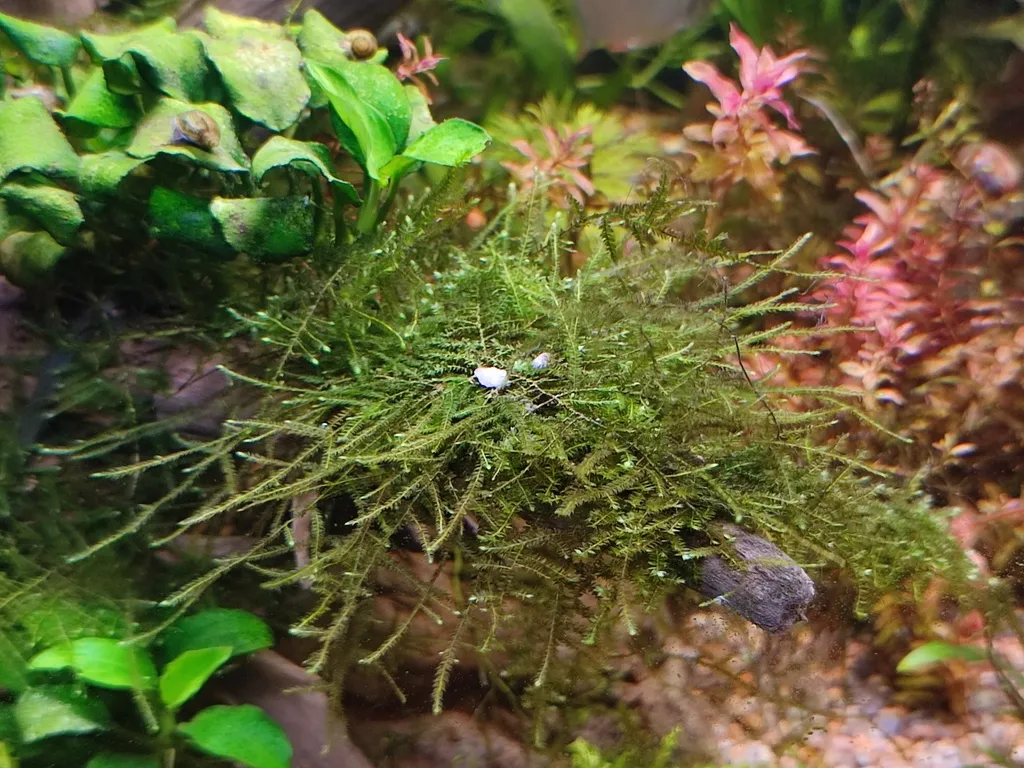
Singapore moss
Vesicularia dubyana
FreshwaterBrackishLow light · Epiphyte2 in (5 cm)Solenostoma tetragonum
FreshwaterMedium light · Epiphyte2 in (5 cm)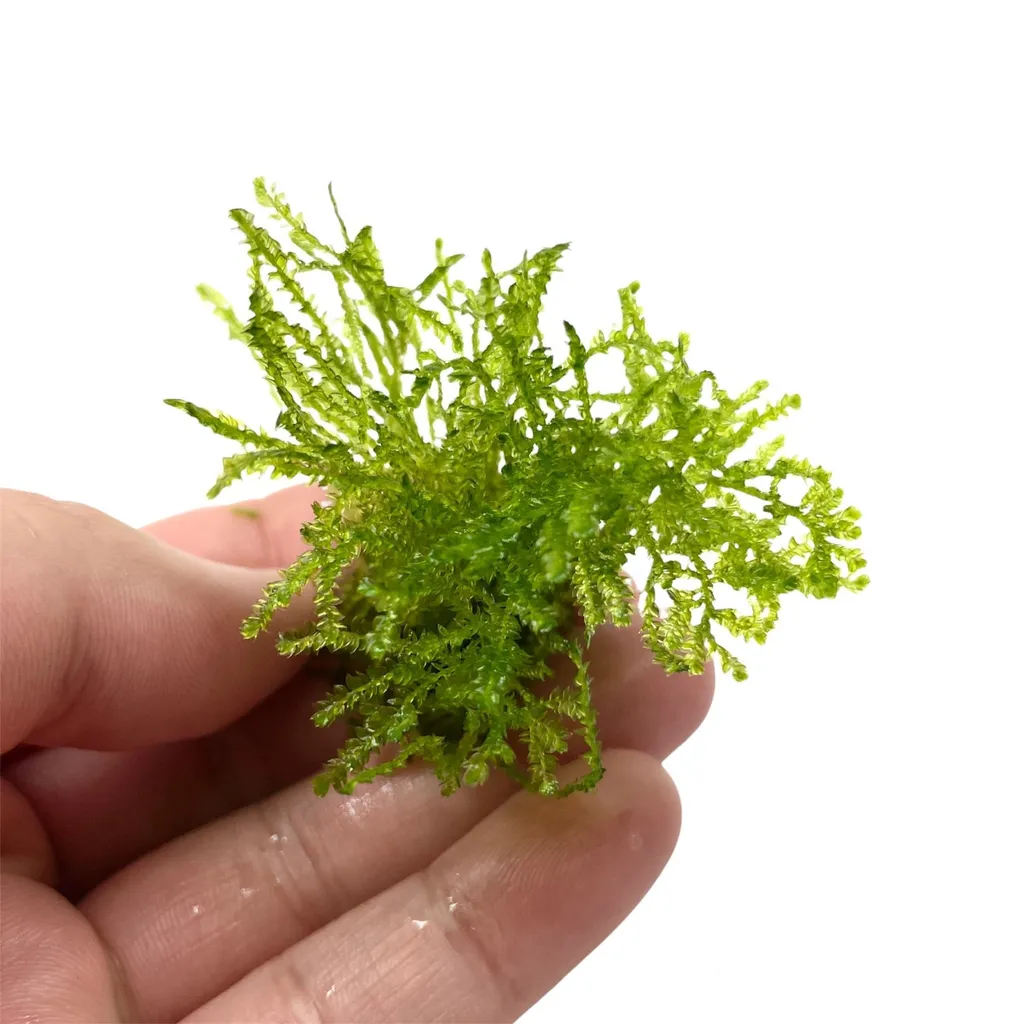
Spiky moss
Taxiphyllum sp. 'Spiky'
FreshwaterLow light · Epiphyte2 in (5 cm)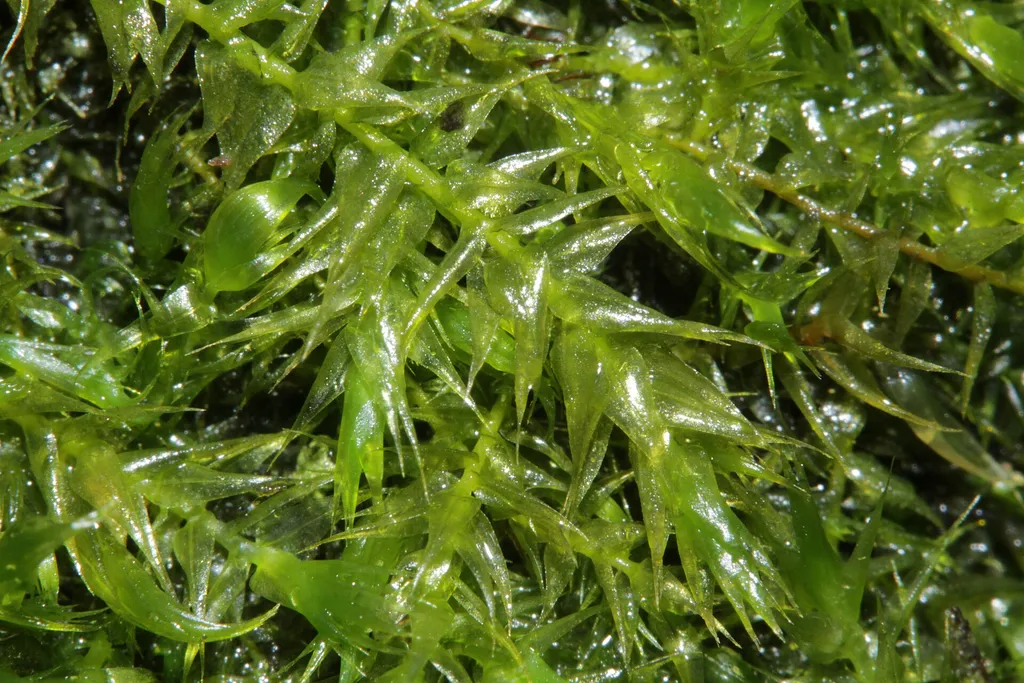
Stringy moss
Leptodictyum riparium
FreshwaterLow light · Epiphyte3.9 in (10 cm)Süsswassertang
Lomariopsis cf. lineata
FreshwaterLow light · Epiphyte2 in (5 cm)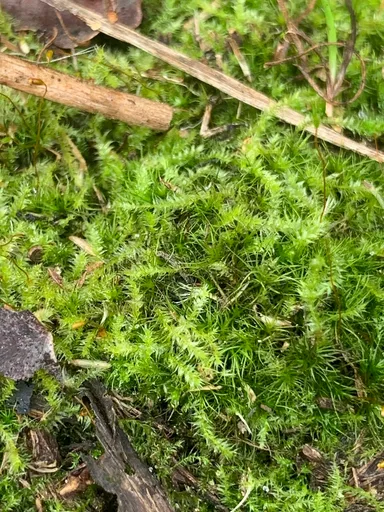
Taiwan moss
Taxiphyllum alternans
FreshwaterLow light · Epiphyte3.9 in (10 cm)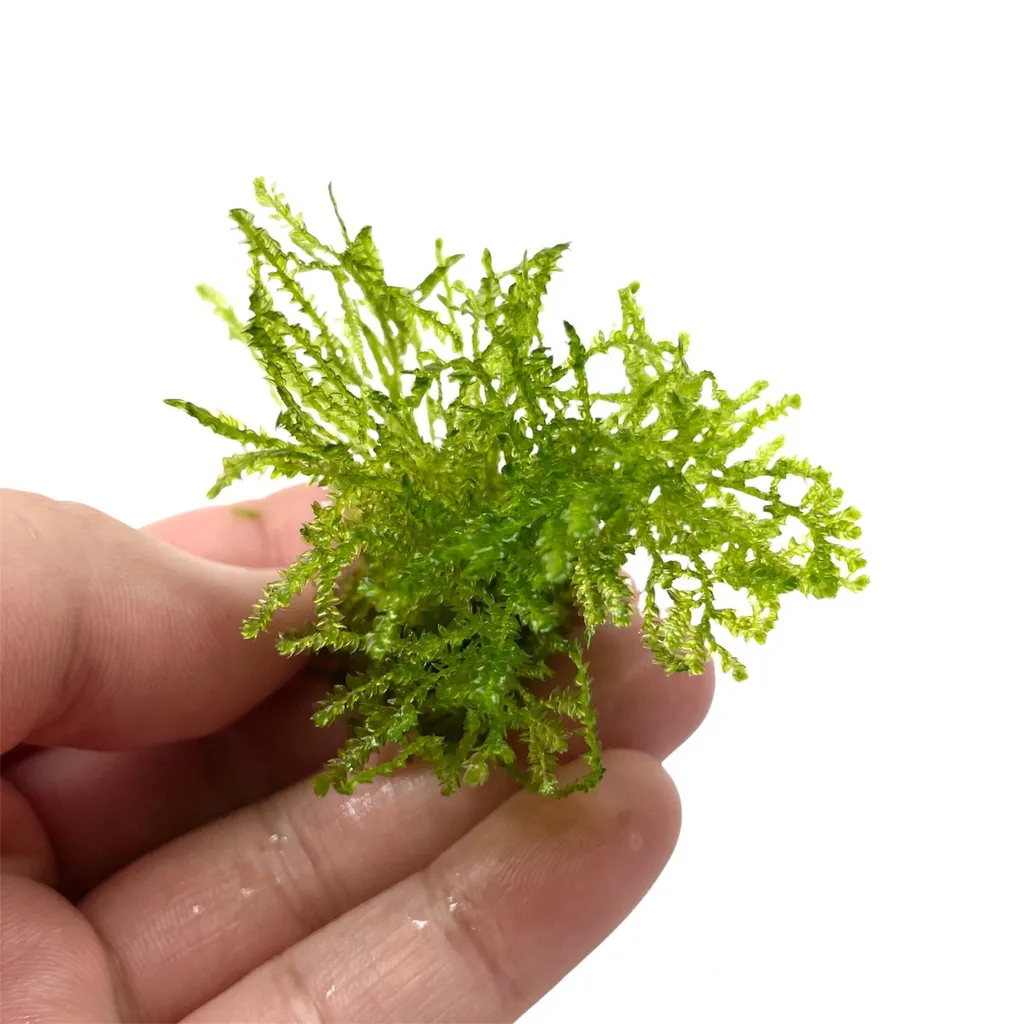
Weeping moss
Vesicularia ferriei
FreshwaterLow light · Epiphyte2 in (5 cm)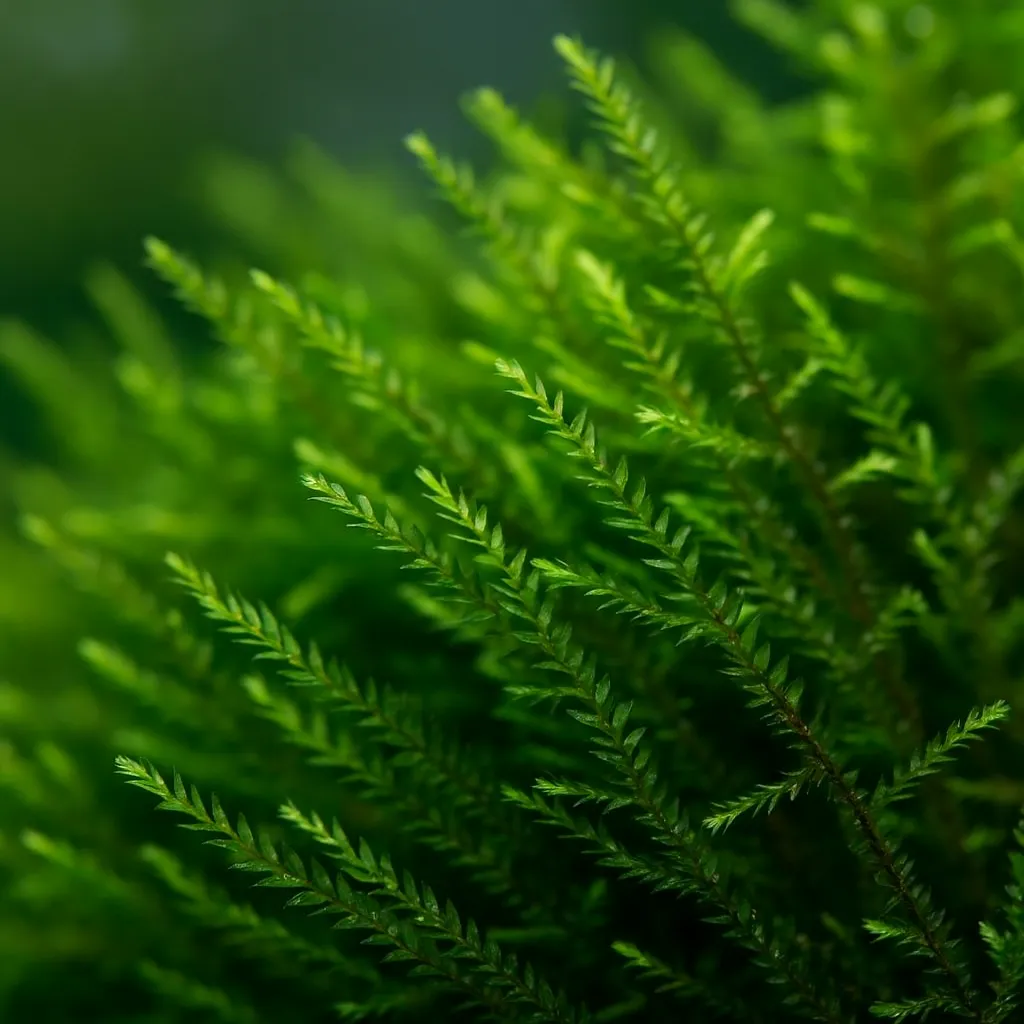
Willow moss
Fontinalis antipyretica
FreshwaterLow light · Epiphyte4.7 in (12 cm)
Planning a tank?
TankBud checks stocking and water fit as you build a tank, then tracks water tests, reminders and photos once it is running.
Track your tanksMaintain tanks for clients? See TankBud Pro