Singapore moss
Vesicularia dubyana
Also known as True Vesicularia dubyana
FreshwaterBrackishMossDivisionFragmentation
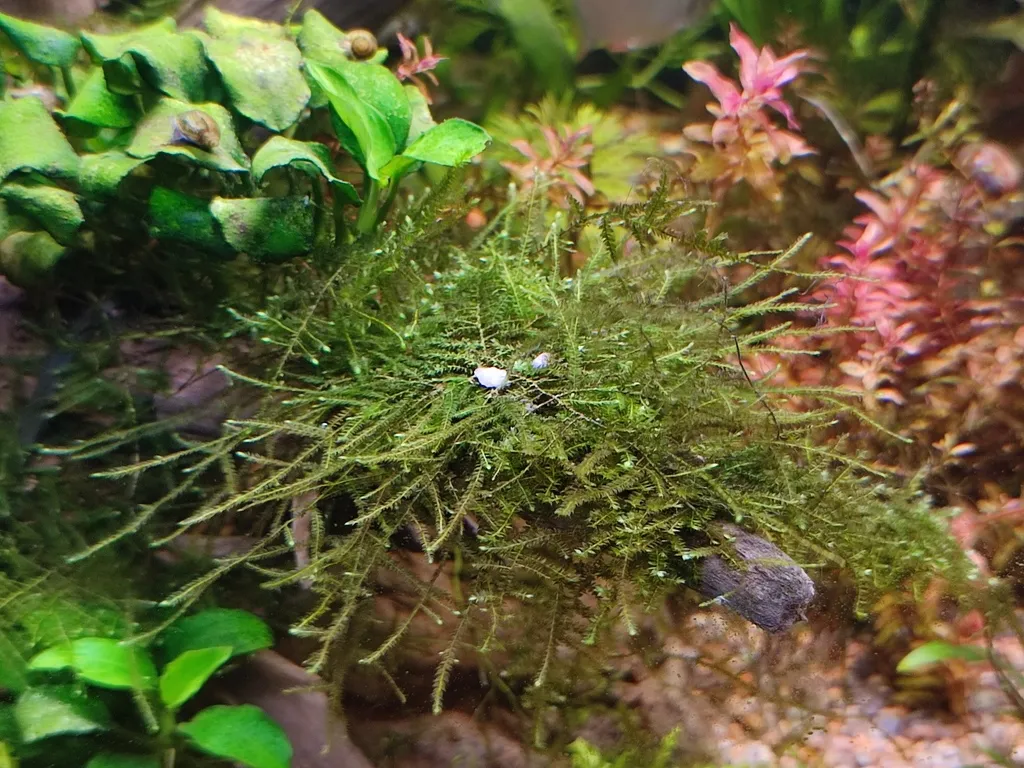
Care at a glance
- Light
- Low light
- CO2
- CO₂ beneficial
- Temperature
- 59–86°F
- 15–30°C
- Max height
- 2 in
- 5 cm
- Growth rate
- Slow
- Placement
- Epiphyte
- Type
- Moss
- pH
- 5.0–8.0
- Hardness
- 2–20 dGH
- Spread
- 5.9 in (15 cm)
- Nutrient uptake
- Water column
- Growth region
- Submersed or emersed
- Difficulty
- Easy
- Family
- Hypnaceae
- Origin
- Tropical Asia
Overview
Singapore moss is an easy, slow-growing moss for hardscape. It is a solid choice for nano tanks and shrimp tanks, and as a spawning substrate.
Did you know
Singapore moss is monoecious, unlike Taxiphyllum. It readily forms spore capsules, or sporophytes, even while growing fully submerged.
Caring for Singapore moss
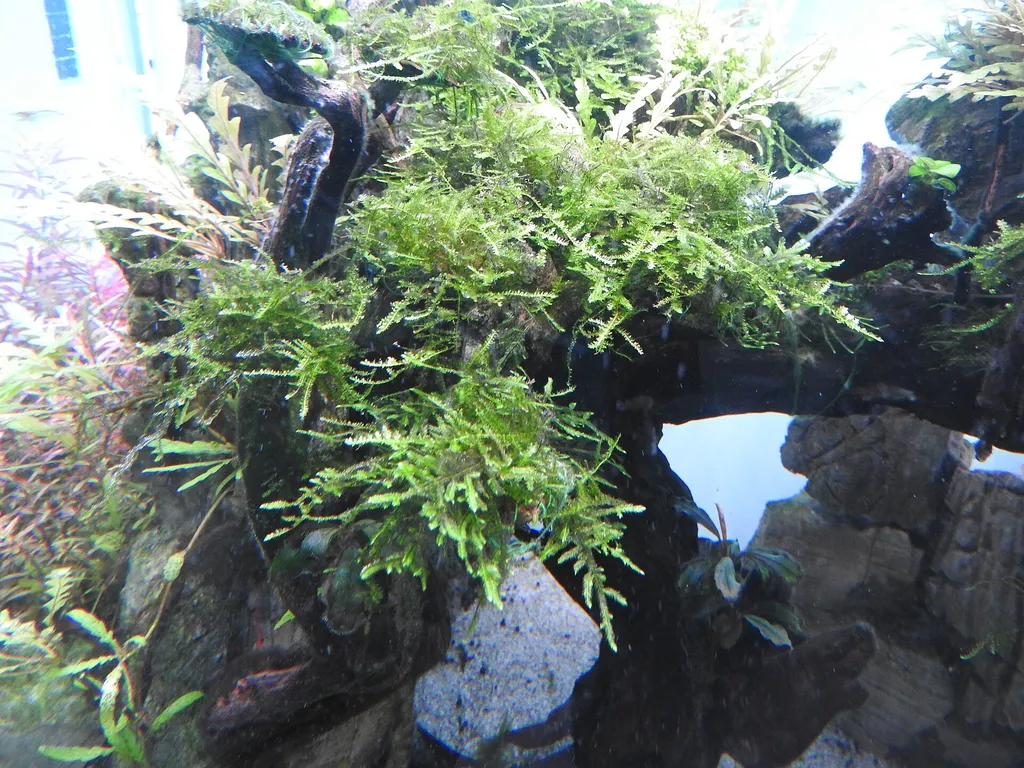
Tie or glue Singapore moss to wood or rock and let it attach. It is forgiving of light, temperature and hardness, and it handles 59 to 86°F (15 to 30°C).
Singapore moss grows in low light without CO2, but at least moderate light and some CO2 improve its branching. It feeds from the water column, so dose a liquid fertilizer.
It grows more slowly than the Taxiphyllum sold as java moss and branches more densely, for a finer, more compact look. To spread it, pull a clump apart and tie the pieces down.
Good to know
Singapore moss is the true Vesicularia dubyana, a moss in the family Hypnaceae. In 1982 the moss expert Zennosuke Iwatsuki showed that the fast-growing plant sold as java moss is actually Taxiphyllum barbieri. True Vesicularia dubyana is a distinct, slower species, and the mix-up has persisted in the trade for over forty years.
In the wild
Singapore moss is a true moss spread widely across the Asian tropics. It grows on rocks, roots and wood in and beside slow fresh water, and it even tolerates brackish margins. It attaches by rhizoids and forms irregular, densely branched cushions. In nature it handles a wide range of light and water conditions, which is why it is so hardy in tanks.
Common questions
Does Singapore moss need to be planted in the substrate?
No. Singapore moss grows on rock or wood rather than in the substrate. Tie it on with cotton thread or fishing line, or use gel superglue, until it anchors itself.
Does Singapore moss need CO2?
No, but it helps. Singapore moss can grow without injected CO2, and added CO2 makes it grow faster.
How much light does Singapore moss need?
Singapore moss is a low-light plant, and the light that comes with a standard tank kit is enough for it.
How do you propagate Singapore moss?
Singapore moss propagates by division and fragmentation. Pull a clump apart into smaller pieces and tie each one down. Pieces that break off keep growing, so pulling a clump apart spreads it.
How tall does Singapore moss grow?
Singapore moss grows to about 2 in (5 cm) tall. It grows slowly.
Related plants
 Low lightEpiphyte2 in (5 cm)
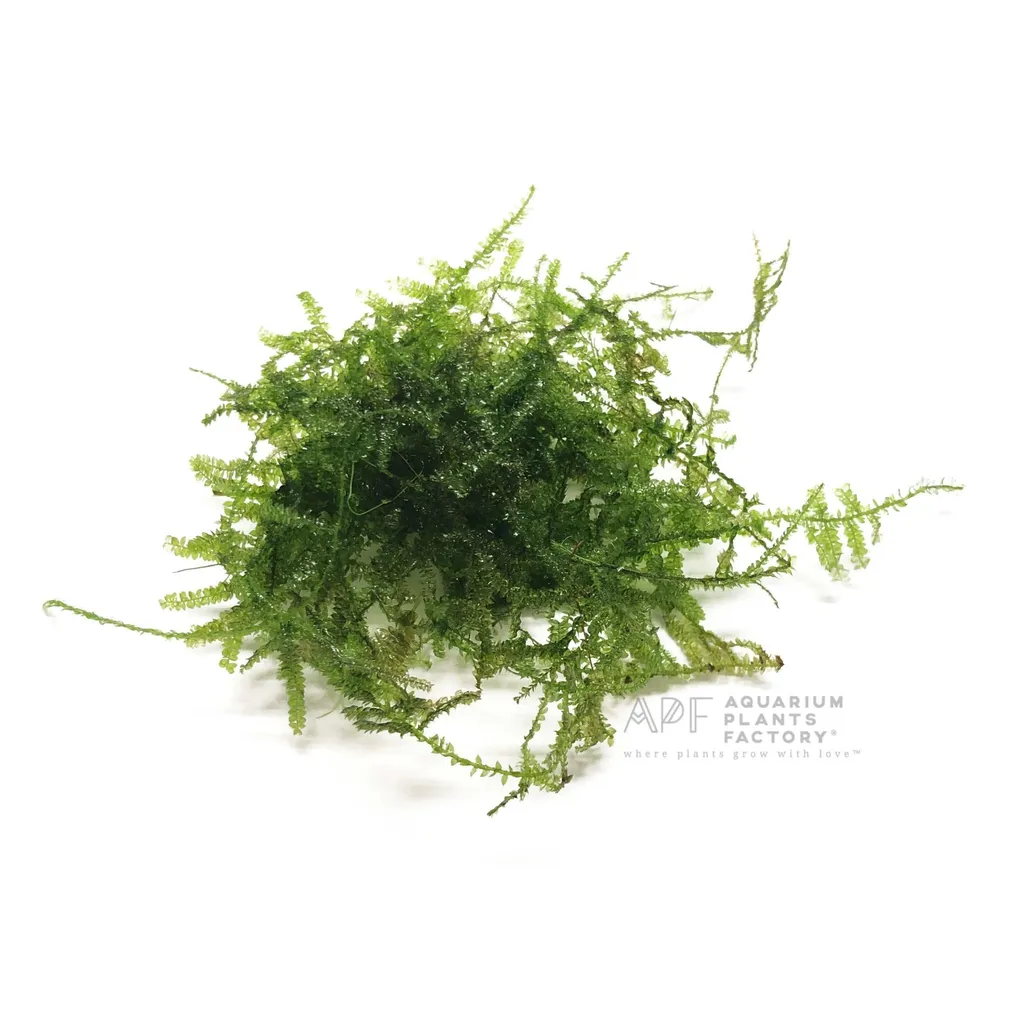
Christmas moss
Vesicularia montagnei
Low light · Epiphyte
 Low lightEpiphyte2 in (5 cm)
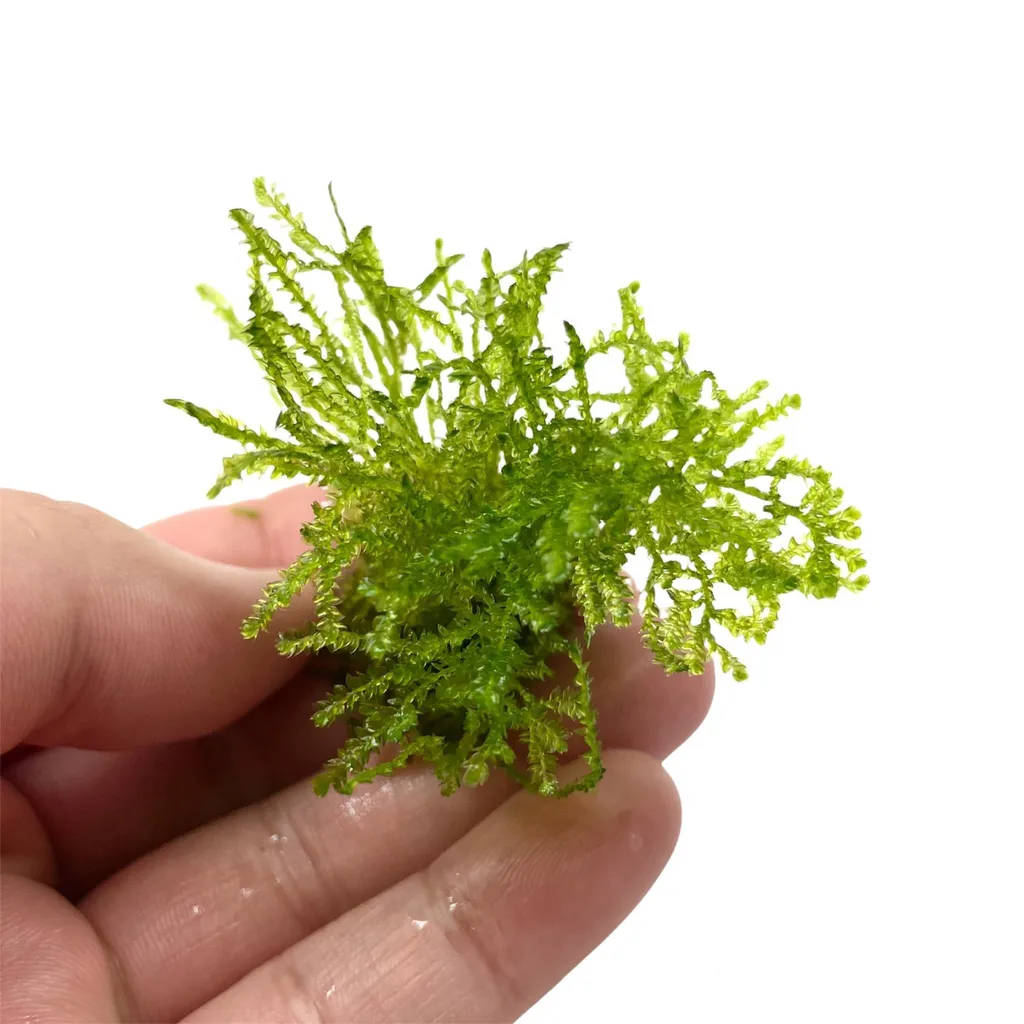
Weeping moss
Vesicularia ferriei
Low light · Epiphyte
- Medium lightEpiphyte2 in (5 cm)
Erect moss
Vesicularia reticulata
Medium light · Epiphyte
- Low lightEpiphyte2 in (5 cm)
Mini Christmas moss
Vesicularia sp. 'Mini Christmas'
Low light · Epiphyte
 Low lightEpiphyte2 in (5 cm)
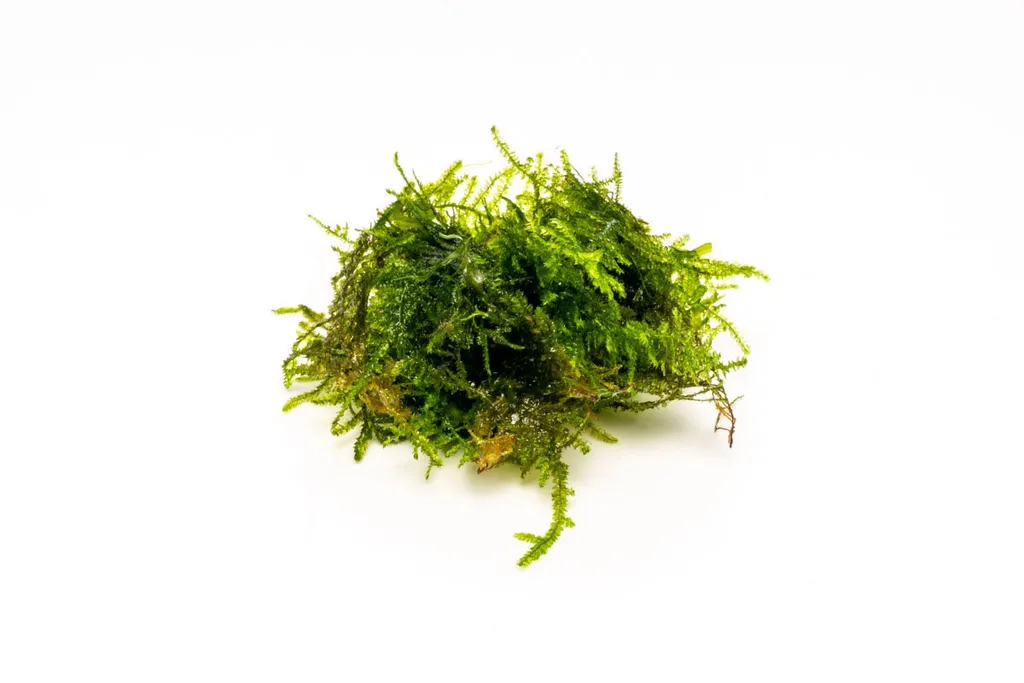
Anchor moss
Vesicularia sp. 'Anchor'
Low light · Epiphyte
 Low lightEpiphyte2 in (5 cm)
Peacock moss
Taxiphyllum sp. 'Peacock'
Low light · Epiphyte