Java moss
Taxiphyllum barbieri
Also known as Bogor moss, Taxiphyllum barberi
FreshwaterBrackishMossDivisionFragmentation
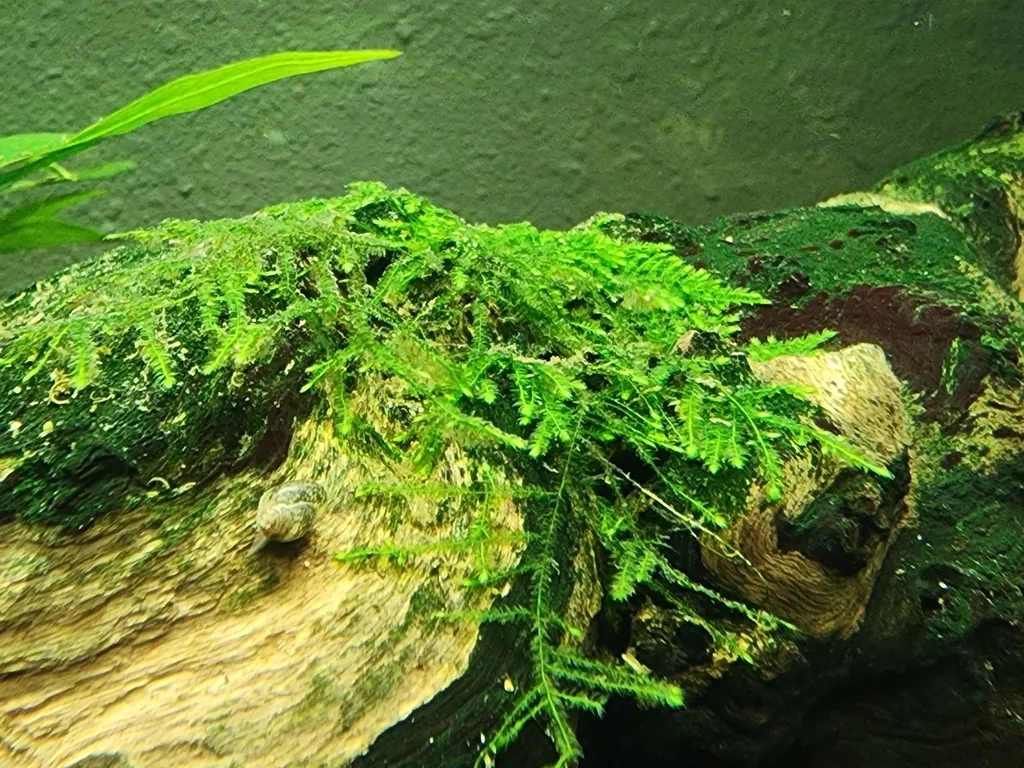
Care at a glance
- Light
- Low light
- CO2
- No CO₂ needed
- Temperature
- 59–86°F
- 15–30°C
- Max height
- 3.9 in
- 10 cm
- Growth rate
- Medium
- Placement
- Epiphyte
- Type
- Moss
- pH
- 5.5–8.0
- Hardness
- 0–20 dGH
- Spread
- 11.8 in (30 cm)
- Nutrient uptake
- Water column
- Growth region
- Submersed or emersed
- Difficulty
- Beginner
- Family
- Hypnaceae
- Origin
- Southeast Asia
Overview
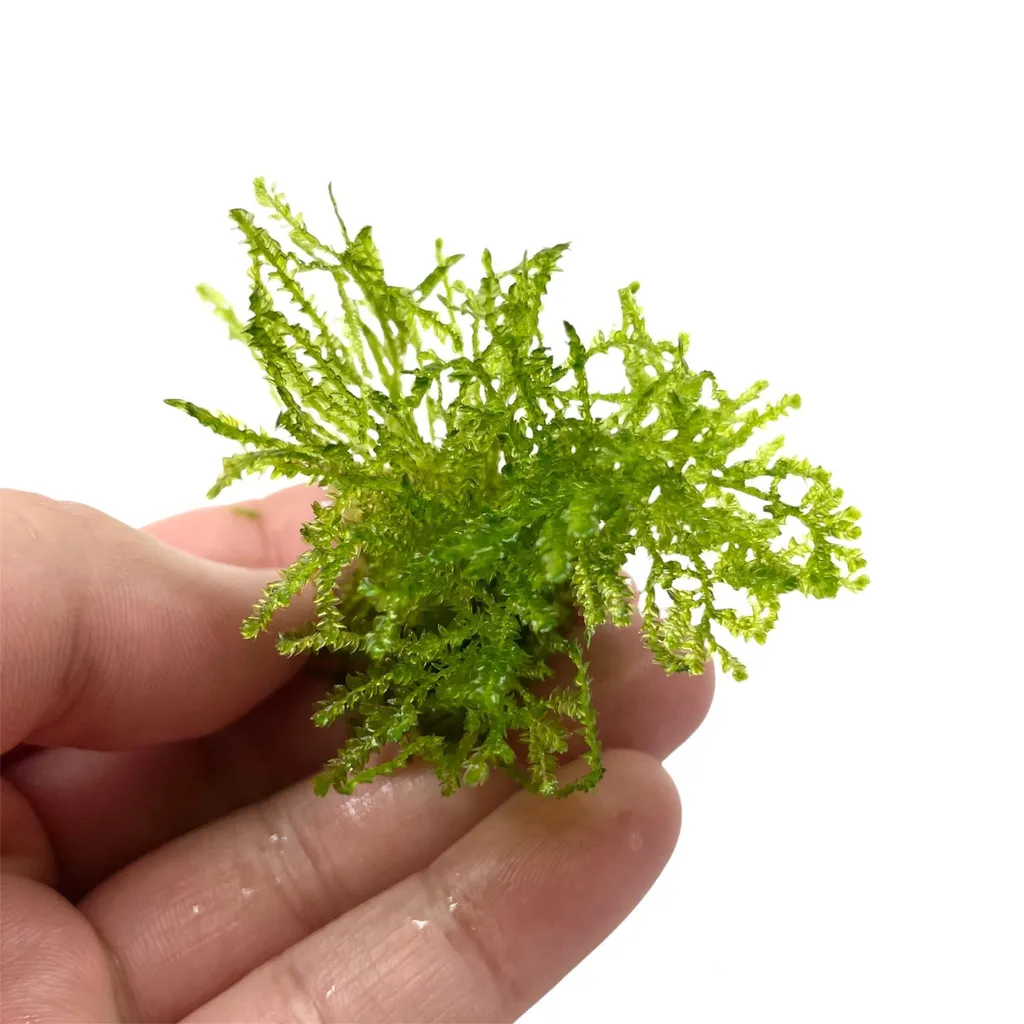
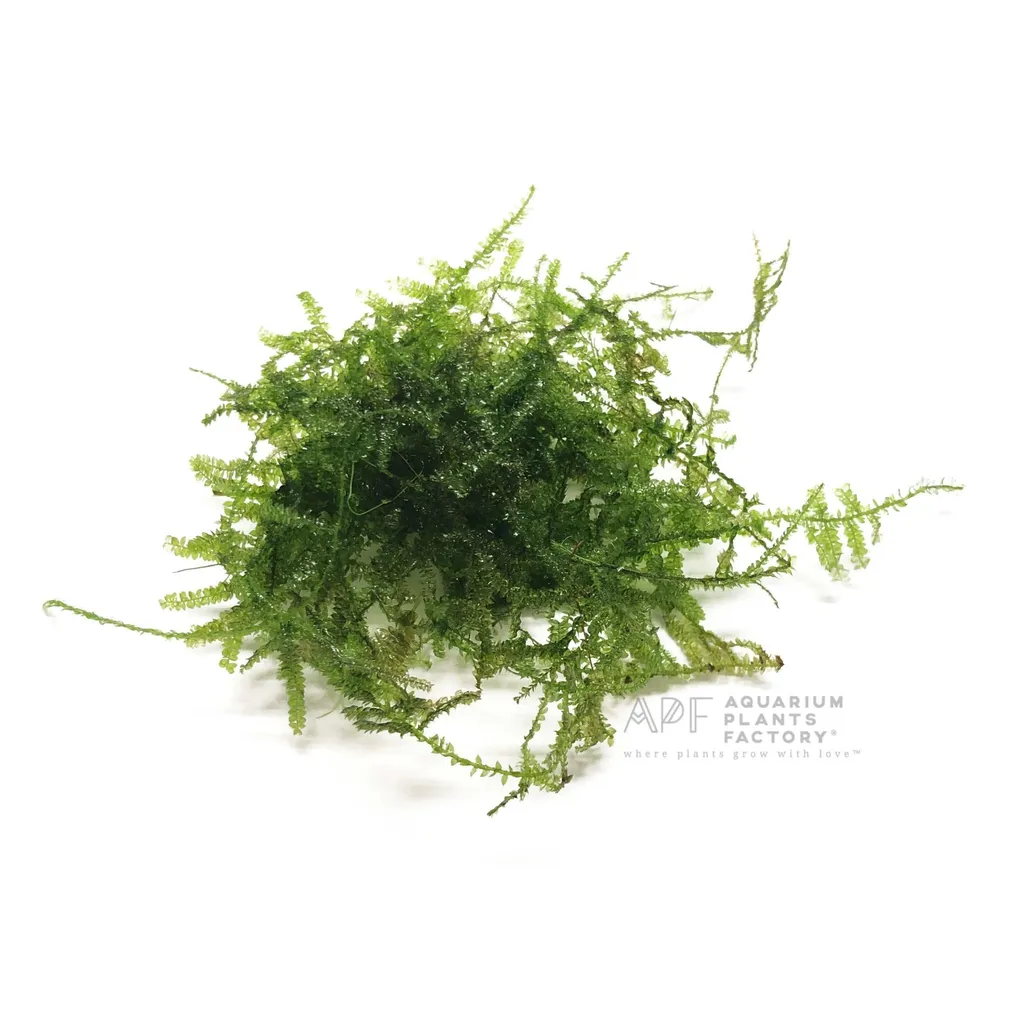
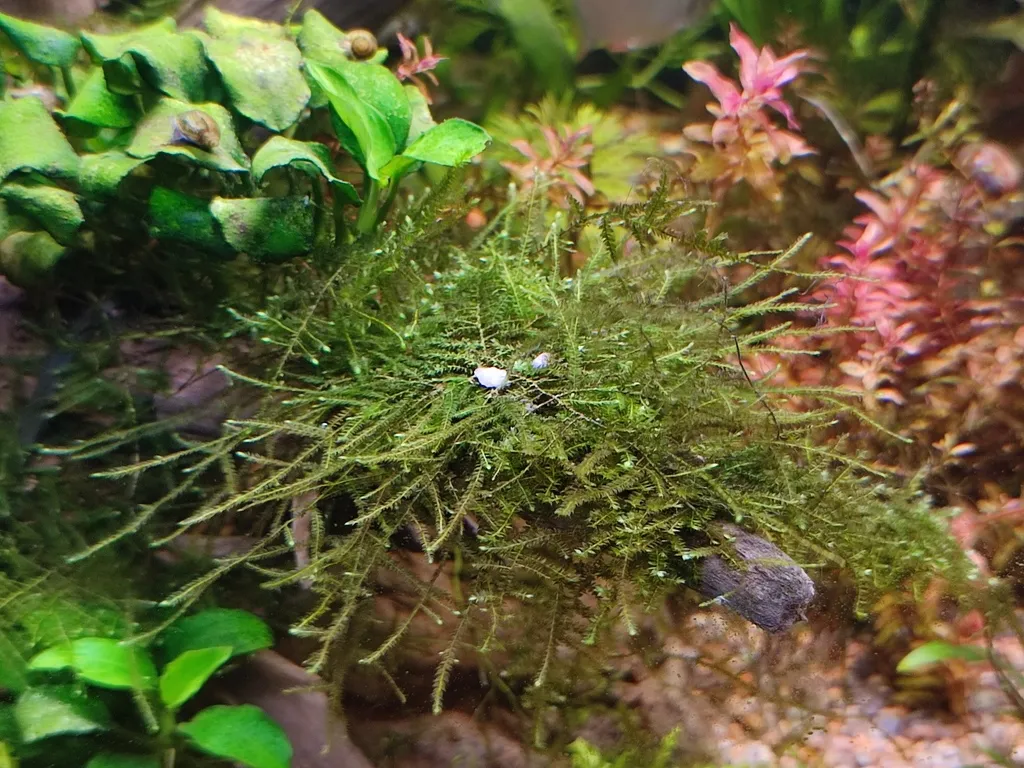
Java moss is a beginner moss that you attach to wood, rock or mesh to make a carpet or cushion. It tolerates a wide range of conditions, including brackish water.
Did you know
Java moss is a favorite spawning surface for egg-scattering fish and shrimp, because its tangled threads catch and hide the eggs. Shrimp also graze the biofilm and microfauna that collect in it.
Caring for java moss
Tie or glue a thin layer of java moss onto wood, rock or mesh. It needs no substrate and attaches on its own over a few weeks.
Java moss grows in low light with no added CO2. Brighter light makes it branch more compactly, while dim light gives thin, straggly shoots. It feeds from the water column, so a liquid fertilizer does more for it than root tabs. It handles 59 to 86°F (15 to 30°C).
It grows at a medium pace, so trim it flat now and then to keep a tidy carpet or cushion. To spread it, pull a clump apart and tie the pieces down, since any broken piece keeps growing.
Never let it build into a thick clump. The inner layers get starved of light and flow, trap debris and brown out. Thin it regularly and keep water moving through it.
Good to know
Java moss is a true moss in the family Hypnaceae, with the accepted name Taxiphyllum barbieri, and it is also called Bogor moss. It has no real roots and anchors with thread-like rhizoids. For decades it was sold as Vesicularia dubyana, which is actually a different species. Most plants traded under that name are really T. barbieri. In nature it reproduces from spores.
In the wild
Java moss is native to Southeast Asia. It grows on rocks, riverbanks, tree trunks and submerged wood in streams and along the edges of slow rivers. It lives both underwater and emersed on damp surfaces above the waterline. In the wild it forms dense mats over hard surfaces rather than rooting into soil.
Common questions
Does java moss need to be planted in the substrate?
No. Java moss grows on rock or wood rather than in the substrate. Tie it on with cotton thread or fishing line, or use gel superglue, until it anchors itself.
How much light does java moss need?
Java moss is a low-light plant, and the light that comes with a standard tank kit is enough for it.
How do you propagate java moss?
Java moss propagates by division and fragmentation. Pull a clump apart into smaller pieces and tie each one down. Pieces that break off keep growing, so pulling a clump apart spreads it.
How tall does java moss grow?
Java moss grows to about 3.9 in (10 cm) tall. It grows at a moderate pace.
Related plants
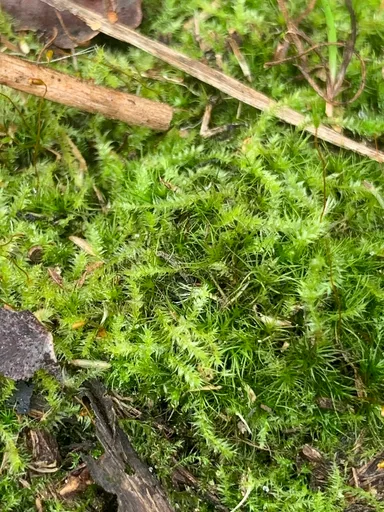 Low lightEpiphyte3.9 in (10 cm)
Taiwan moss
Taxiphyllum alternans
Low light · Epiphyte
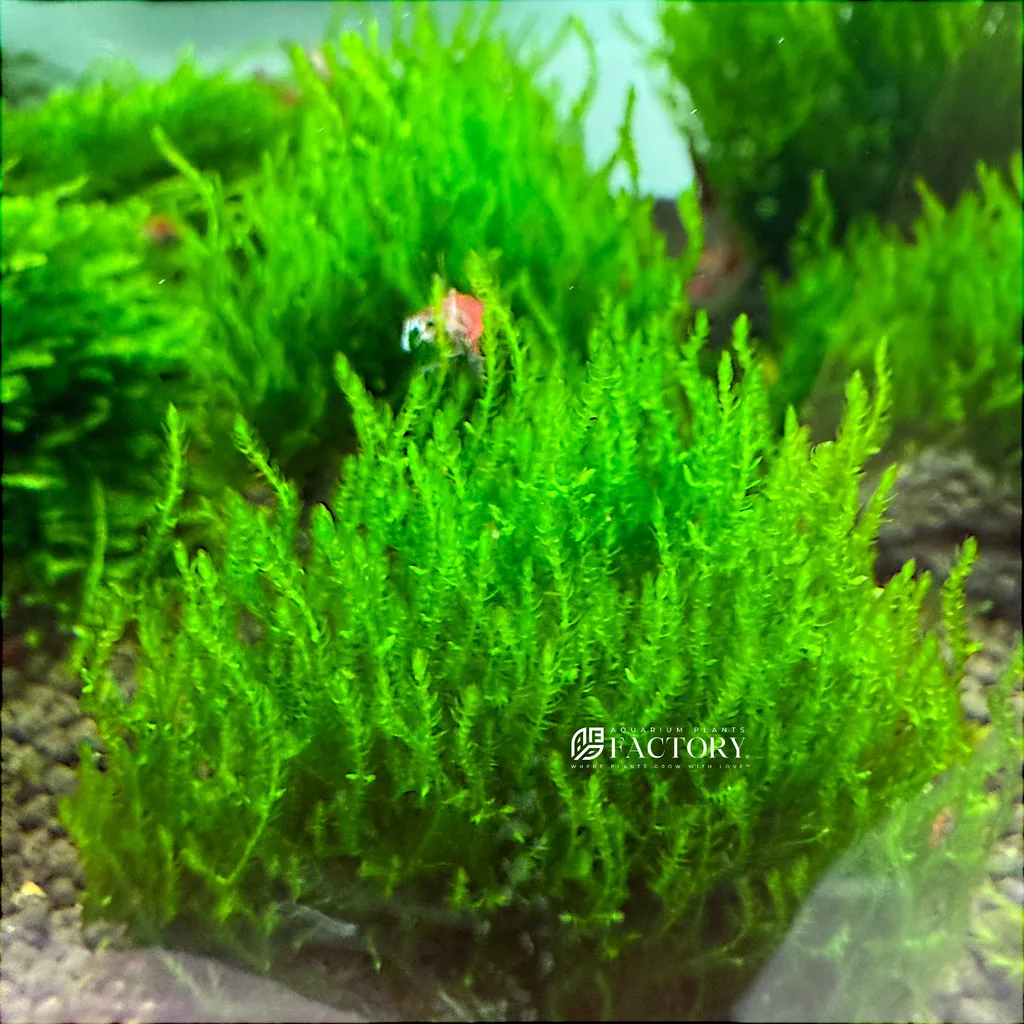 Low lightEpiphyte3.1 in (8 cm)
Flame moss
Taxiphyllum sp. 'Flame'
Low light · Epiphyte
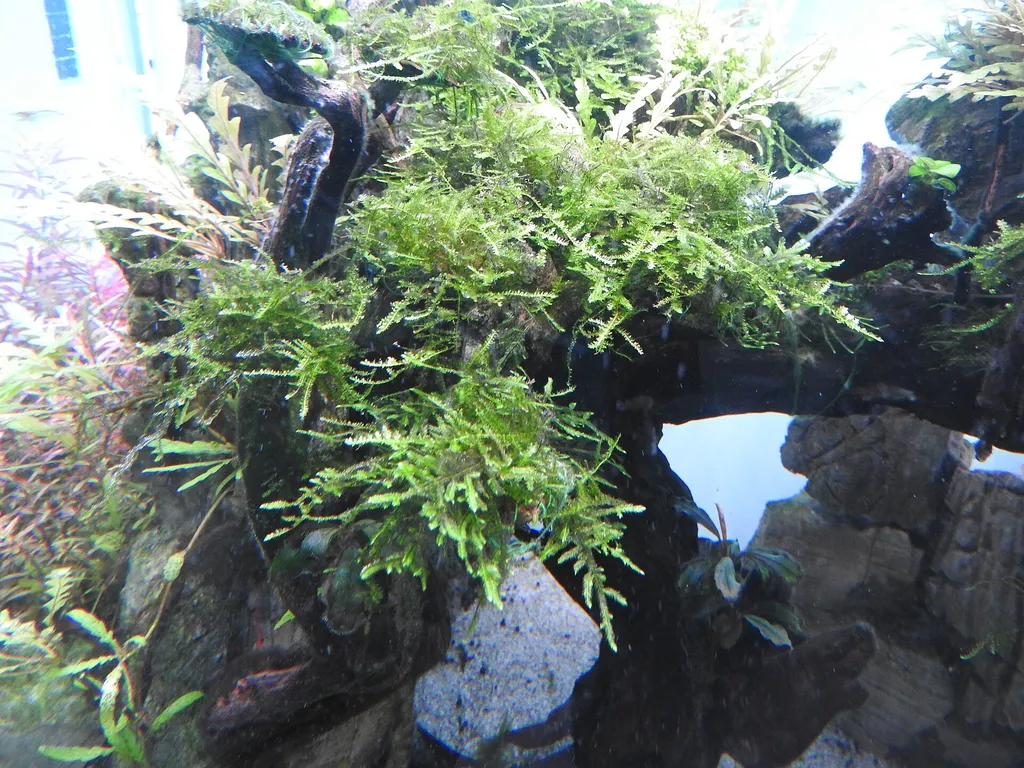 Low lightEpiphyte2 in (5 cm)
Peacock moss
Taxiphyllum sp. 'Peacock'
Low light · Epiphyte
 Low lightEpiphyte2 in (5 cm)
Spiky moss
Taxiphyllum sp. 'Spiky'
Low light · Epiphyte
 Low lightEpiphyte2 in (5 cm)
Christmas moss
Vesicularia montagnei
Low light · Epiphyte
 Low lightEpiphyte2 in (5 cm)
Singapore moss
Vesicularia dubyana
Low light · Epiphyte