Macroalgae
Macroalgae are the plants of a saltwater tank, grown in a refugium or the display to pull nitrate and phosphate out of the water. Chaeto is the workhorse, growing into a ball under a grow light, while caulerpa and others add form but can go sexual and crash if left too long. Each profile lists light, flow and how to harvest.
At a glance
- Height
- 3.1–11.8 in
- 3.1 in (8 cm) to 11.8 in (30 cm); half the list stays at 5.9 in (15 cm) or under
- Temperature
- 73–81°F
- 23–27°C, most of the list
- Light
- 9 medium light
- 3 high light
- Growth
- 2 slow growing
- 5 medium growth · 5 fast growing
- Difficulty
- 7 easy
- 5 medium
12 plants
Start here
The macroalgae for a refugium
The chaetomorpha is marked beginner, a tangle of green filaments that floats and tumbles in a refugium, 7.9 inches (20 cm) across, and the usual first macroalgae. The caulerpa is marked easy and grows fast along runners at 5.9 inches (15 cm). The sea grapes are a caulerpa with round green beads. The red gracilaria is marked easy at 7.9 inches (20 cm), a red bush that tangs eat. The sea lettuce grows in green sheets under high light and soaks up nitrate. The Dragon's Breath is the showpiece, a red macroalgae marked medium at 11.8 inches (30 cm) for high light.
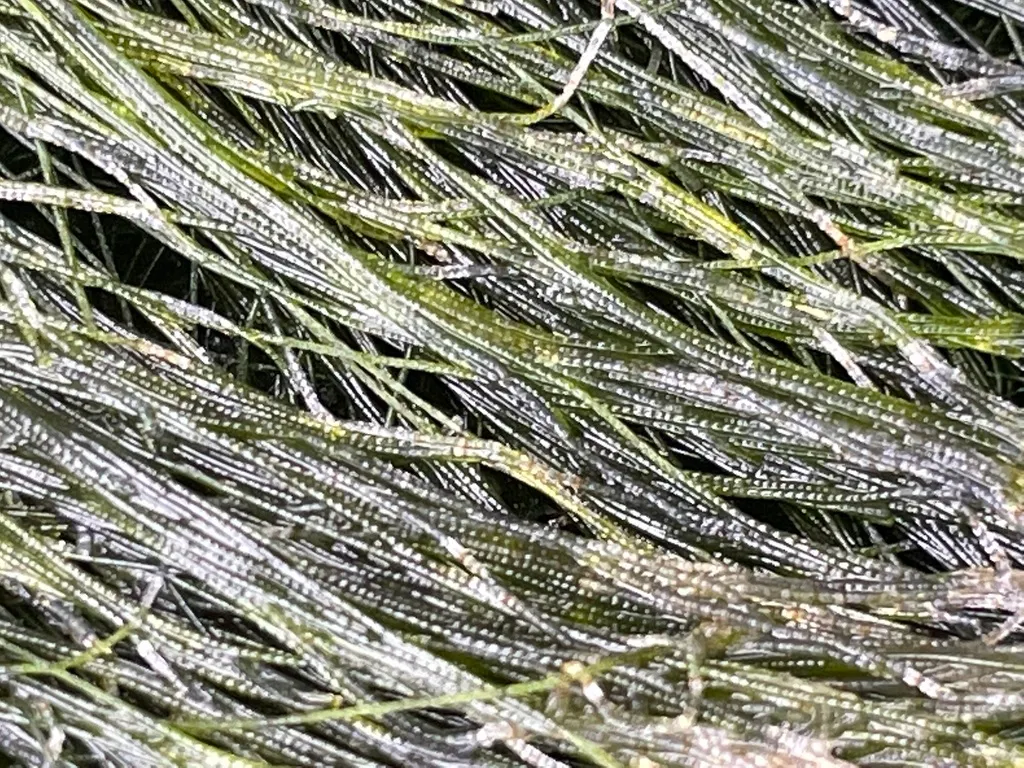
Chaetomorpha
Chaetomorpha linum
Saltwater- Light
- Medium light
- Placement
- Floating
- Height
- 7.9 in (20 cm)
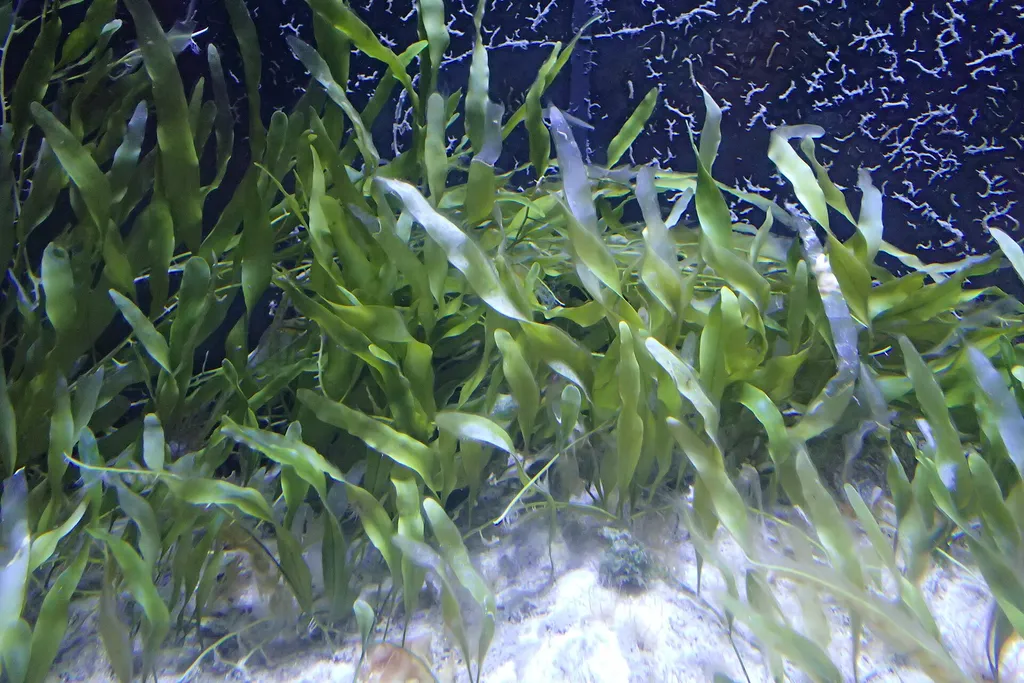
Caulerpa
Caulerpa prolifera
Saltwater- Light
- Medium light
- Placement
- Background
- Height
- 5.9 in (15 cm)
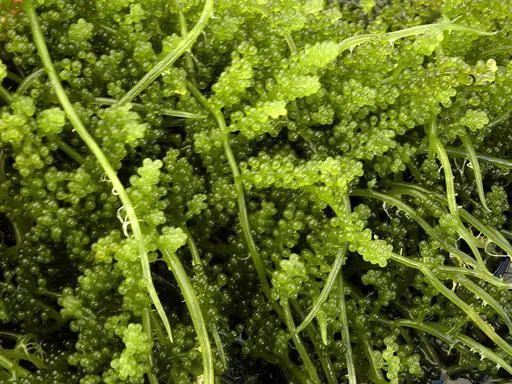
Sea grapes
Caulerpa lentillifera
Saltwater- Light
- Medium light
- Placement
- Background
- Height
- 3.9 in (10 cm)
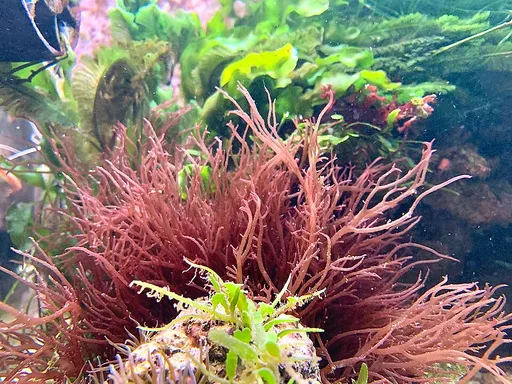
Red Gracilaria
Gracilaria parvispora
Saltwater- Light
- Medium light
- Placement
- Background
- Height
- 7.9 in (20 cm)
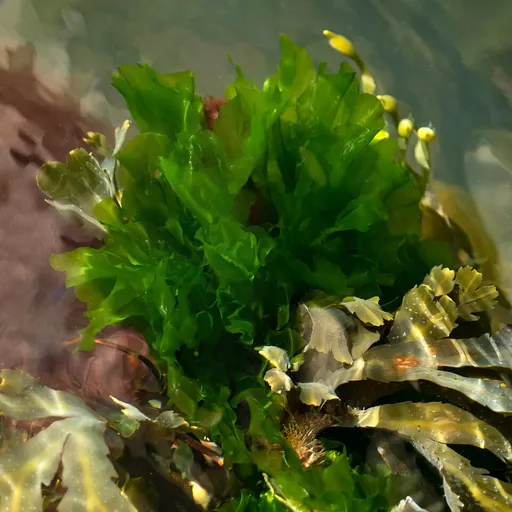
Sea Lettuce
Ulva lactuca
Saltwater- Light
- High light
- Placement
- Floating
- Height
- 9.8 in (25 cm)
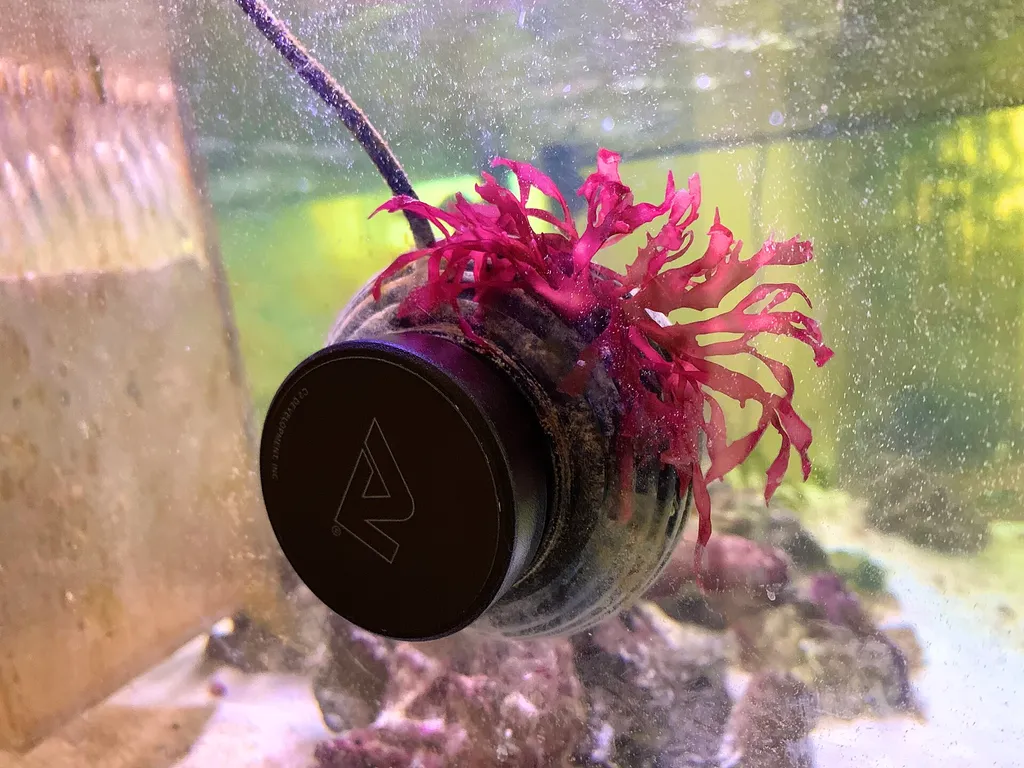
Dragon's Breath
Halymenia durvillei
Saltwater- Light
- High light
- Placement
- Midground
- Height
- 11.8 in (30 cm)
The rule
What macroalgae do
Macroalgae grow on the nitrate and phosphate a reef wants rid of, and the keeper harvests a handful every week or two, which is how a refugium exports nutrients. They run under a light on the opposite schedule to the display, which also holds the tank's pH steady overnight. Every macroalgae here lists CO2 as not needed. A caulerpa can go sexual and dissolve overnight, clouding the tank, so it is harvested before it gets old, and tangs, rabbitfish and angels eat most of them, so the display and the refugium are different places.
- 01
Nutrient export
Harvest a handful every week or two
- 02
A reverse light cycle
Lit at night, it steadies the pH
- 03
No CO2
Every macroalgae here lists none
- 04
Fish eat it
Tangs and rabbitfish clear a display macro in days
Display
Macroalgae for the display
The red grape algae is a red macroalgae with beaded branches, marked easy at 4.7 inches (12 cm). The Dead Man's Fingers is a spongy green Codium marked medium at 9.8 inches (25 cm). The watercress algae is a calcifying Halimeda, marked medium, that grows slowly in jointed green plates and needs calcium like a coral. The Maiden's Hair Algae grows in fine green tufts on rock at 3.1 inches (8 cm), marked medium for high light. The Money Plant is another calcifying green, marked medium at 5.9 inches (15 cm). The grape caulerpa is marked easy, the beaded caulerpa for the rock.
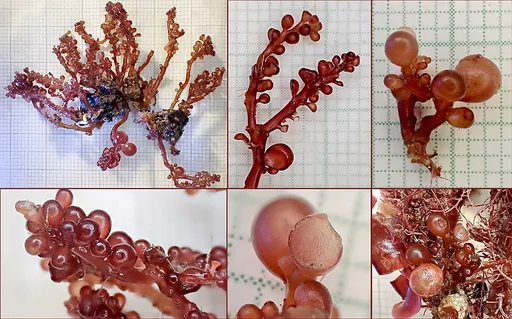
Red Grape Algae
Botryocladia botryoides
SaltwaterMedium light · Midground4.7 in (12 cm)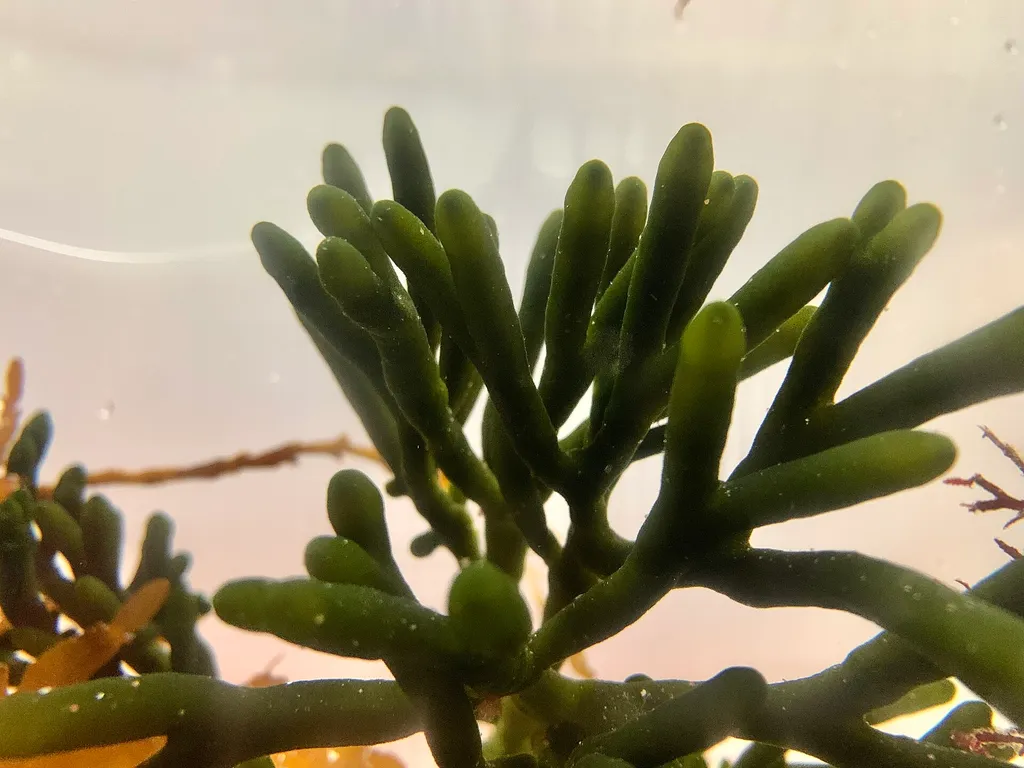
Dead Man's Fingers
Codium fragile
SaltwaterMedium light · Background9.8 in (25 cm)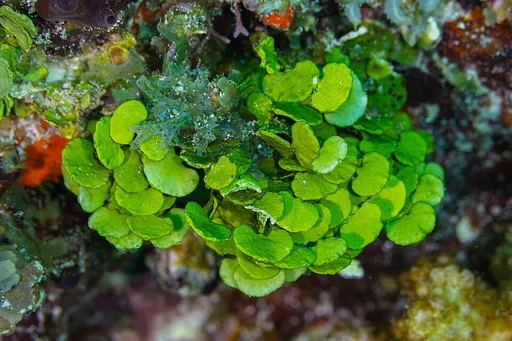
Watercress algae
Halimeda tuna
SaltwaterMedium light · Midground5.9 in (15 cm)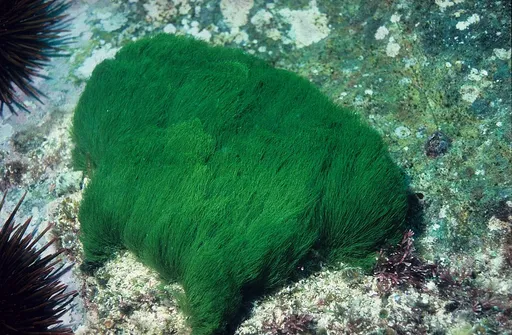
Maiden's Hair Algae
Chlorodesmis fastigiata
SaltwaterHigh light · Epiphyte3.1 in (8 cm)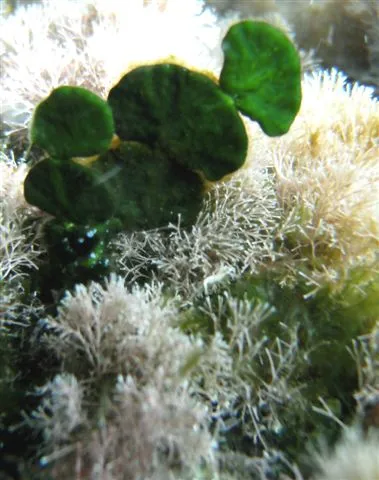
Money Plant
Halimeda
SaltwaterMedium light · Midground5.9 in (15 cm)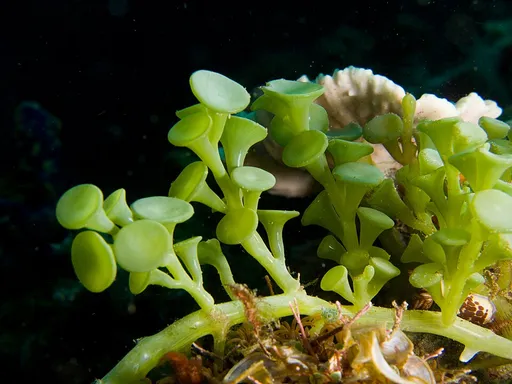
Grape Caulerpa
Caulerpa racemosa
SaltwaterMedium light · Background4.7 in (12 cm)
By the numbers
Smallest
Tallest
Easiest to grow
FAQ
Common questions
What is the best macroalgae for a refugium?
The chaetomorpha, marked beginner. It floats, tumbles, grows fast on nitrate and phosphate and cannot go sexual the way a caulerpa can.
How much light does macroalgae need?
Medium for most, high for the sea lettuce, Dragon's Breath and Maiden's Hair. A refugium light runs on the opposite schedule to the display.
Why did my caulerpa dissolve overnight?
It went sexual: an old, crowded caulerpa releases its contents and turns white and slimy. Harvest it every week or two so it never gets old, or keep chaetomorpha instead.
Can macroalgae live in the display tank?
The red grape algae, the Halimeda and the Dragon's Breath can, if nothing eats them. Tangs, rabbitfish and angelfish clear most macroalgae in days.
Do macroalgae need CO2 or fertilizer?
No CO2, ever. They feed on the nitrate and phosphate the fish produce, and iron helps the red ones; a tank too clean to feed them is a tank that no longer needs them.
How often do I harvest?
Remove a third to a half of the mass every week or two. Harvesting is the export; algae left to fill the refugium stops taking anything up.
Index
All macroalgae
Caulerpa
Caulerpa prolifera
SaltwaterMedium light · Background5.9 in (15 cm)Chaetomorpha
Chaetomorpha linum
SaltwaterMedium light · Floating7.9 in (20 cm)Dead Man's Fingers
Codium fragile
SaltwaterMedium light · Background9.8 in (25 cm)Dragon's Breath
Halymenia durvillei
SaltwaterHigh light · Midground11.8 in (30 cm)Grape Caulerpa
Caulerpa racemosa
SaltwaterMedium light · Background4.7 in (12 cm)Maiden's Hair Algae
Chlorodesmis fastigiata
SaltwaterHigh light · Epiphyte3.1 in (8 cm)Money Plant
Halimeda
SaltwaterMedium light · Midground5.9 in (15 cm)Red Gracilaria
Gracilaria parvispora
SaltwaterMedium light · Background7.9 in (20 cm)Red Grape Algae
Botryocladia botryoides
SaltwaterMedium light · Midground4.7 in (12 cm)Sea grapes
Caulerpa lentillifera
SaltwaterMedium light · Background3.9 in (10 cm)Sea Lettuce
Ulva lactuca
SaltwaterHigh light · Floating9.8 in (25 cm)Watercress algae
Halimeda tuna
SaltwaterMedium light · Midground5.9 in (15 cm)
Planning a tank?
TankBud checks stocking and water fit as you build a tank, then tracks water tests, reminders and photos once it is running.
Track your tanksMaintain tanks for clients? See TankBud Pro