Grape Caulerpa
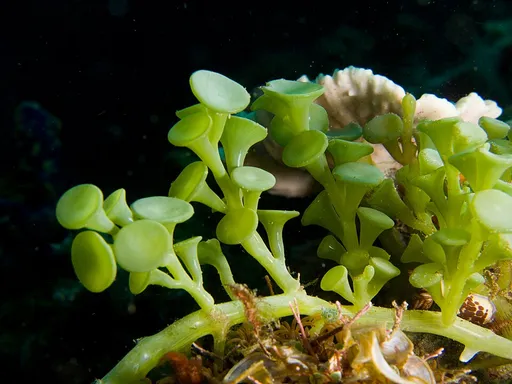
Caulerpa racemosa
Also known as Sea Grapes, Green Grape Algae, Grape Macroalgae
SaltwaterMacroalgaeCuttings
Invasive. Caulerpa racemosa is a well-documented invasive species, notably in the Mediterranean where it spreads aggressively and smothers native seabed communities. Even fragments can establish new colonies, so never release it or dispose of it in any waterway. The closely related Caulerpa taxifolia is prohibited in many regions.
Care at a glance
- Light
- Medium light
- CO2
- No CO₂ needed
- Temperature
- 73–81°F
- 23–27°C
- Max height
- 4.7 in
- 12 cm
- Growth rate
- Fast
- Placement
- Background
- Type
- Macroalgae
- pH
- 8.0–8.4
- Spread
- 15.7 in (40 cm)
- Nutrient uptake
- Water column
- Growth region
- Submersed
- Difficulty
- Easy
- Family
- Caulerpaceae
- Origin
- Tropical and subtropical seas worldwide, including the Indo-Pacific, Caribbean, and Mediterranean
Overview
Grape Caulerpa is a popular refugium and display macroalga valued for fast nutrient export, pulling nitrate and phosphate down while giving pods a place to shelter. It does best under medium light with moderate flow and roots into sand, so it wants a substrate. Its defining hazard is that it is the Caulerpa most likely to go sexual: a sharp drop in nutrients, a big light or parameter swing, or aggressive pruning can trigger it to release its contents, cloud the water milky white, and crash back its captured nitrogen and phosphate overnight. Watching for thorn or whisker-like appendages gives early warning, and running the refugium light continuously plus keeping nutrients off zero greatly reduces the risk. Harvest regularly to genuinely export nutrients.
In the wild
A bright green macroalga of warm shallow reefs and lagoons worldwide, spreading by a creeping stolon that roots into sand and rubble and sends up upright branches studded with round, grape-like vesicles. It favors nutrient-rich, well-lit shallows and forms dense clusters over rock and sediment.
Good to know
Like all Caulerpa, C. racemosa is coenocytic, a single multinucleate cell whose cytoplasm streams throughout the plant. Its distinctive spherical branchlets increase surface area for photosynthesis and nutrient uptake from the water column. It is the Caulerpa species most prone to holocarpic sexual reproduction (sporulation), in which the whole colony converts to gametes and dies back at once, and it produces defensive secondary metabolites such as caulerpin.
Did you know
In some coastal cultures the grape-like vesicles of Caulerpa racemosa are eaten fresh as a sea vegetable called sea grapes or umi-budou, where they pop like tiny salty caviar.
Related plants
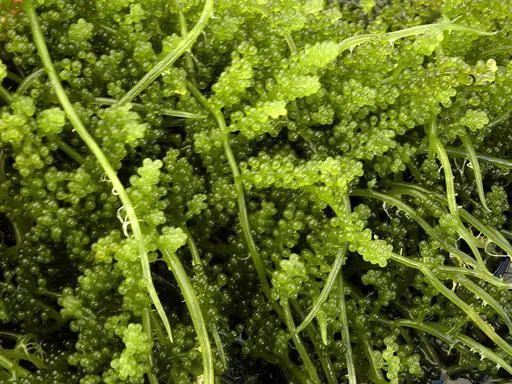 Medium lightBackground3.9 in (10 cm)
Sea grapes
Caulerpa lentillifera
Medium light · Background
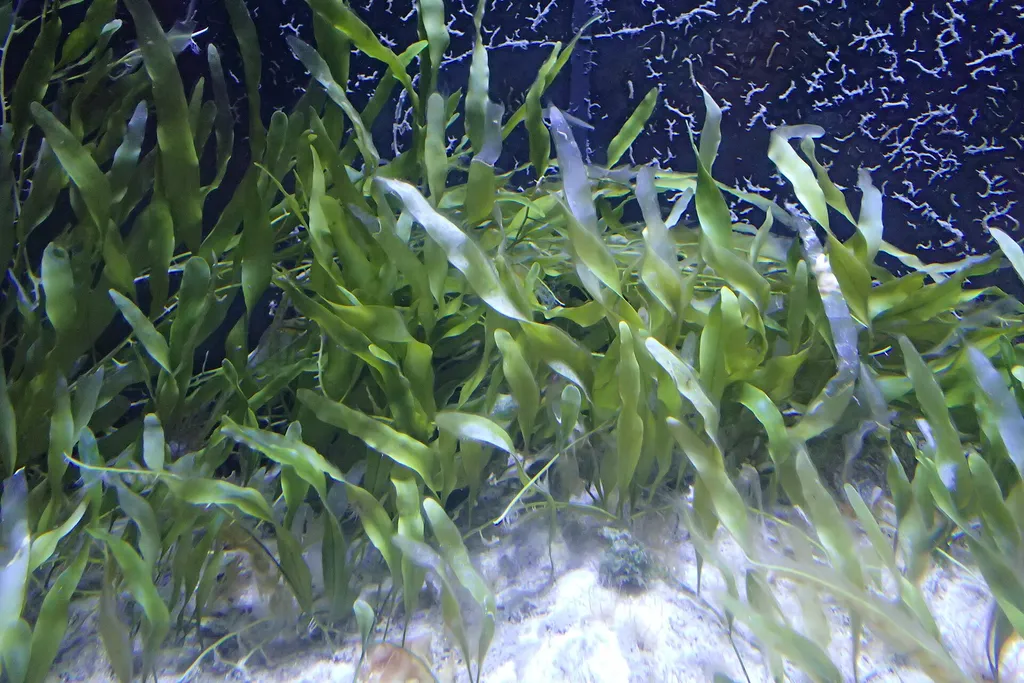 Medium lightBackground5.9 in (15 cm)
Caulerpa
Caulerpa prolifera
Medium light · Background
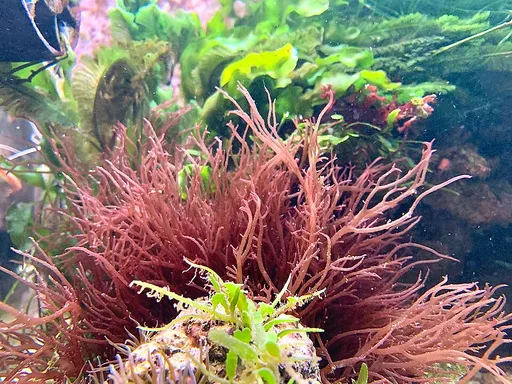 Medium lightBackground7.9 in (20 cm)
Red Gracilaria
Gracilaria parvispora
Medium light · Background
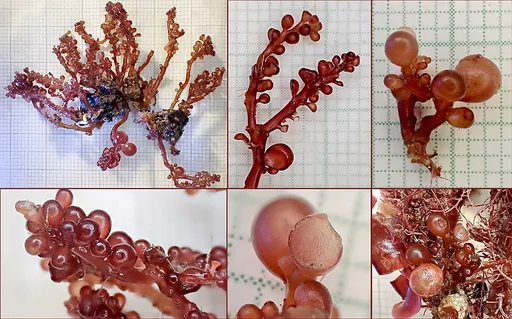 Medium lightMidground4.7 in (12 cm)
Red Grape Algae
Botryocladia botryoides
Medium light · Midground
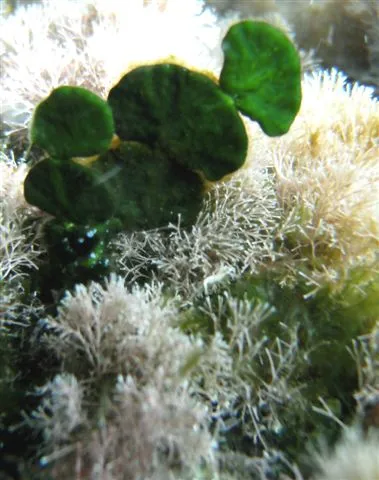 Medium lightMidground5.9 in (15 cm)
Money Plant
Halimeda
Medium light · Midground
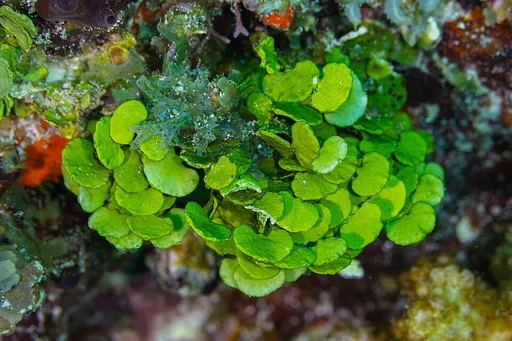 Medium lightMidground5.9 in (15 cm)
Watercress algae
Halimeda tuna
Medium light · Midground