Money Plant
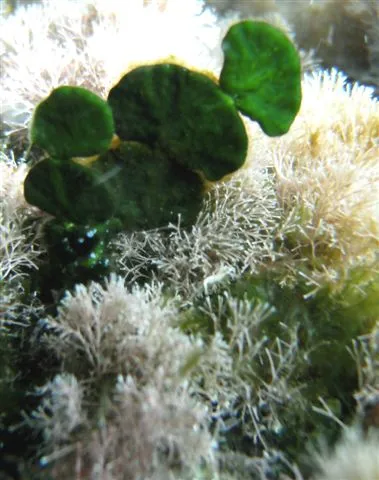
Halimeda
Also known as Cactus Algae, Money Plant Algae
SaltwaterMacroalgaeCuttings
Care at a glance
- Light
- Medium light
- CO2
- No CO₂ needed
- Temperature
- 73–81°F
- 23–27°C
- Max height
- 5.9 in
- 15 cm
- Growth rate
- Slow
- Placement
- Midground
- Type
- Macroalgae
- pH
- 8.0–8.4
- Spread
- 7.9 in (20 cm)
- Nutrient uptake
- Water column
- Growth region
- Submersed
- Difficulty
- Medium
- Family
- Halimedaceae
- Origin
- Tropical oceans worldwide, including the Caribbean and Indo-Pacific reefs
Overview
Halimeda is grown as a decorative reef macroalga rather than a heavy nutrient exporter, prized for its coin-chain shape and its resistance to being grazed. It does best under moderate to strong light with a stable calcium level of roughly 350 to 450 ppm and good alkalinity, since it must build a calcium carbonate skeleton to grow, which also makes its growth slow. Unlike Caulerpa it is not invasive and will not overrun a tank, but it is less tolerant of high nitrate and phosphate and dislikes heavy pruning, so it suits a well-maintained display more than a nutrient-abused refugium. It roots into sand and adds pod habitat while quietly building substrate.
In the wild
A calcareous green macroalga of tropical reefs worldwide, made of chains of flat, coin-shaped calcified segments joined end to end. It roots into sand and rubble around reef bases and lagoons where stable calcium and alkalinity let it lay down its hard skeleton, contributing significantly to reef and beach sand over time.
Good to know
Halimeda deposits aragonite (calcium carbonate) crystals within its tissues, so it is a major calcifying alga and a globally important producer of carbonate sediment. Each plant is coenocytic, and calcification is tied to photosynthesis: the alga raises local pH as it consumes CO2, which favors carbonate precipitation between its filaments. Because its segments are armored with calcium carbonate and it produces deterrent metabolites, most herbivorous fish leave it alone.
Did you know
Halimeda is nicknamed the money plant because its stacked round segments look like little green coins glued end to end, and when the plant dies its calcified segments break down into the white carbonate sand that builds tropical beaches.
Related plants
 Medium lightMidground5.9 in (15 cm)
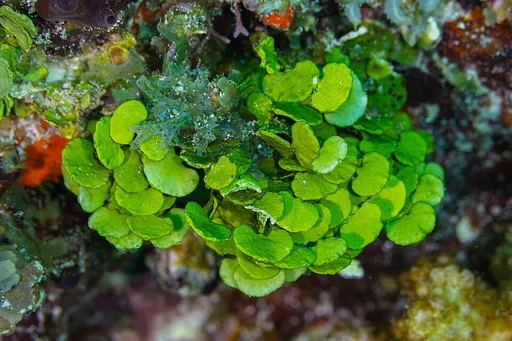
Watercress algae
Halimeda tuna
Medium light · Midground
 Medium lightMidground4.7 in (12 cm)
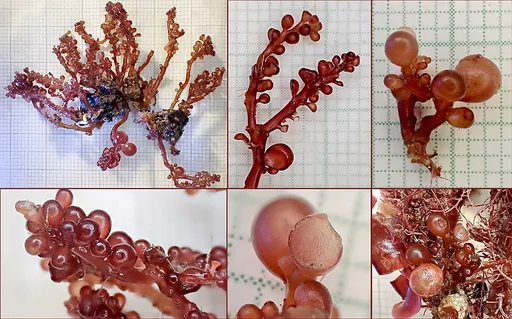
Red Grape Algae
Botryocladia botryoides
Medium light · Midground
 Medium lightBackground5.9 in (15 cm)
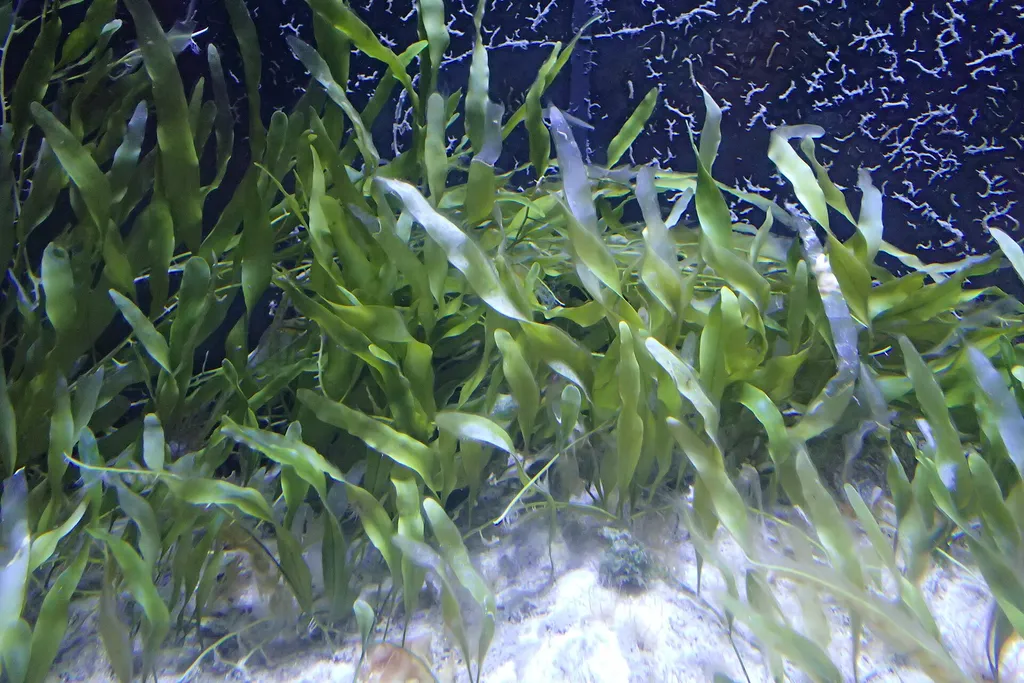
Caulerpa
Caulerpa prolifera
Medium light · Background
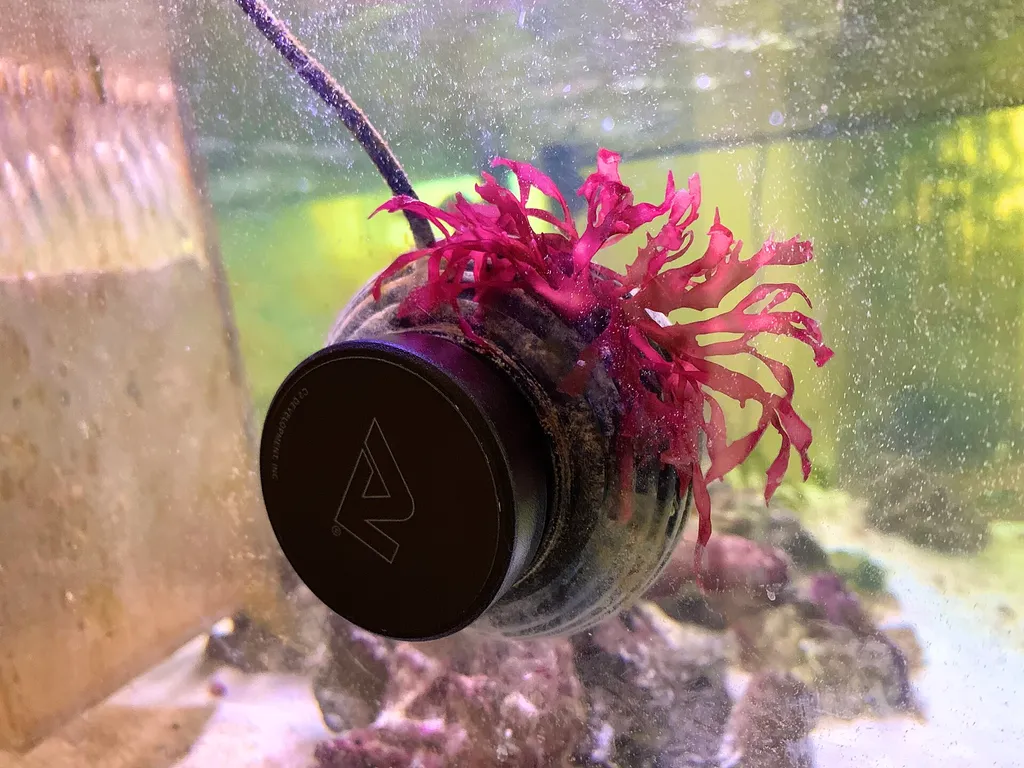 High lightMidground11.8 in (30 cm)
Dragon's Breath
Halymenia durvillei
High light · Midground
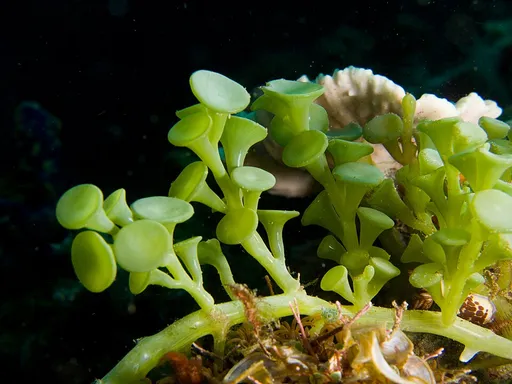 Medium lightBackground4.7 in (12 cm)
Grape Caulerpa
Caulerpa racemosa
Medium light · Background
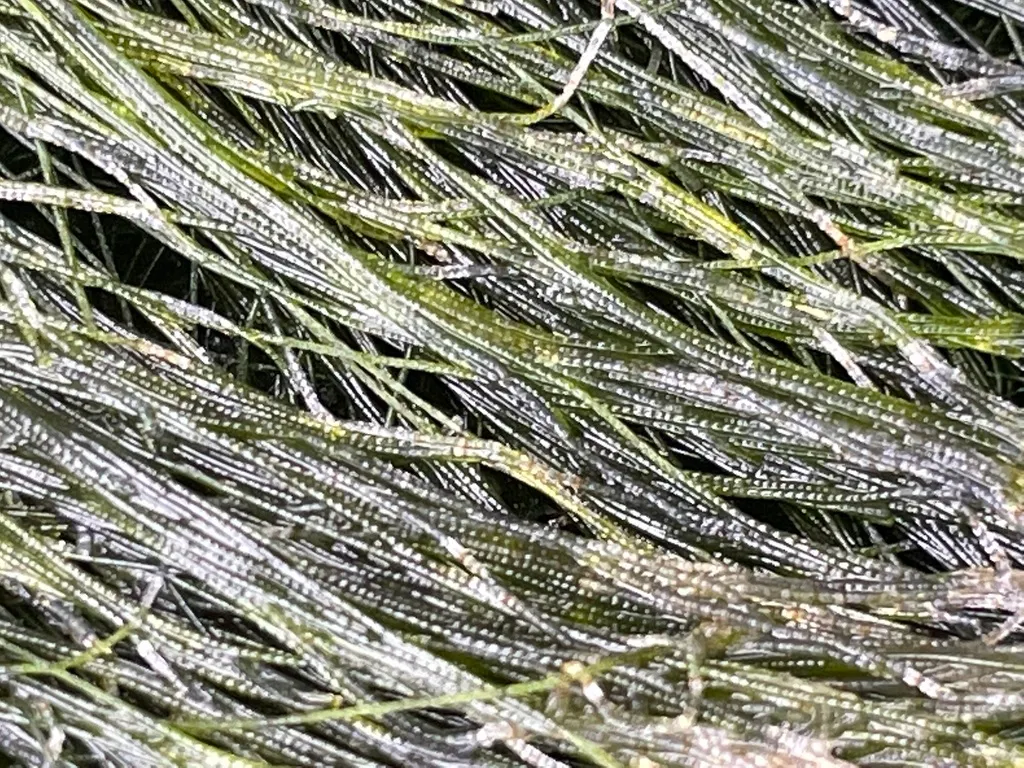 Medium lightFloating7.9 in (20 cm)
Chaetomorpha
Chaetomorpha linum
Medium light · Floating