Livebearers
Livebearers give birth to free-swimming fry and breed readily in a healthy tank, which is half the fun of keeping them. Most prefer harder, slightly alkaline water. Profiles cover tank size, conditions and what to expect from each species.
At a glance
- Tank size
- 5–44 gal
- 5 gal (20 L) to 44 gal (165 L); half the list needs 16 gal (60 L) or more
- Temperature
- 72–82°F
- 22–28°C, most of the list
- pH
- 7.0–8.0
- Most of the list
- Difficulty
- 25 easy
- 24 medium · 1 difficult
- Temperament
- 32 peaceful
- 16 mostly peaceful · 2 aggressive
50 species and 30 varieties
Start here
The livebearers to start with
The guppy is marked beginner at 2.4 inches (6 cm) for 13 gallons (50 liters) and takes 64–82°F (18–28°C). Endler's livebearer is the wild-type cousin at 1.6 inches (4 cm) for 5 gallons (20 liters), marked beginner. The southern platy is 2.8 inches (7 cm) for 15 gallons (55 liters), marked beginner and peaceful, in every color the shops can breed. The green swordtail reaches 5.9 inches (15 cm), lists 24 gallons (90 liters) and is marked beginner. The sailfin molly is 4.7 inches (12 cm) for 24 gallons (90 liters), marked easy, and wants hard water. The least killifish is a 1.4 inch (3.5 cm) livebearer marked easy for 5 gallons (20 liters), and not a killifish at all.
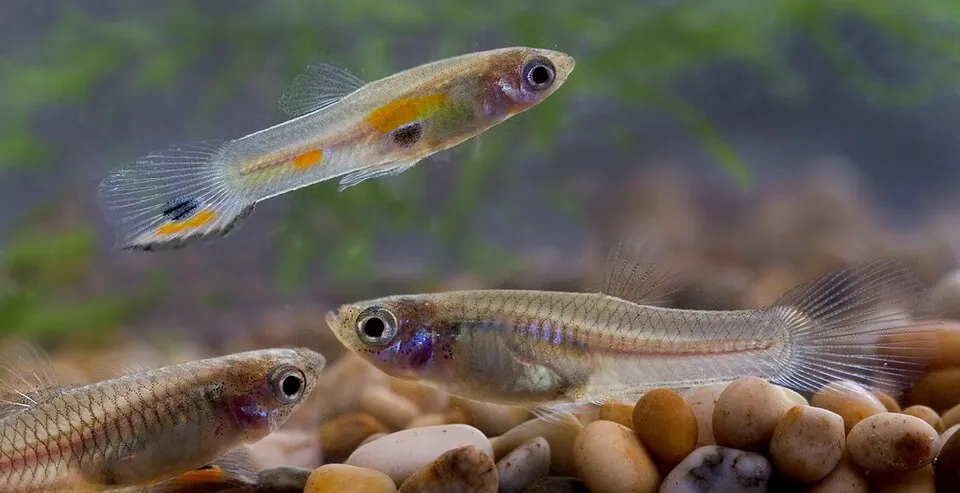
Guppy
Poecilia reticulata
FreshwaterBrackish- Size
- 2.4 in (6 cm)
- Tank
- 13 gal (50 L)
- Water
- 64–82°F (18–28°C)
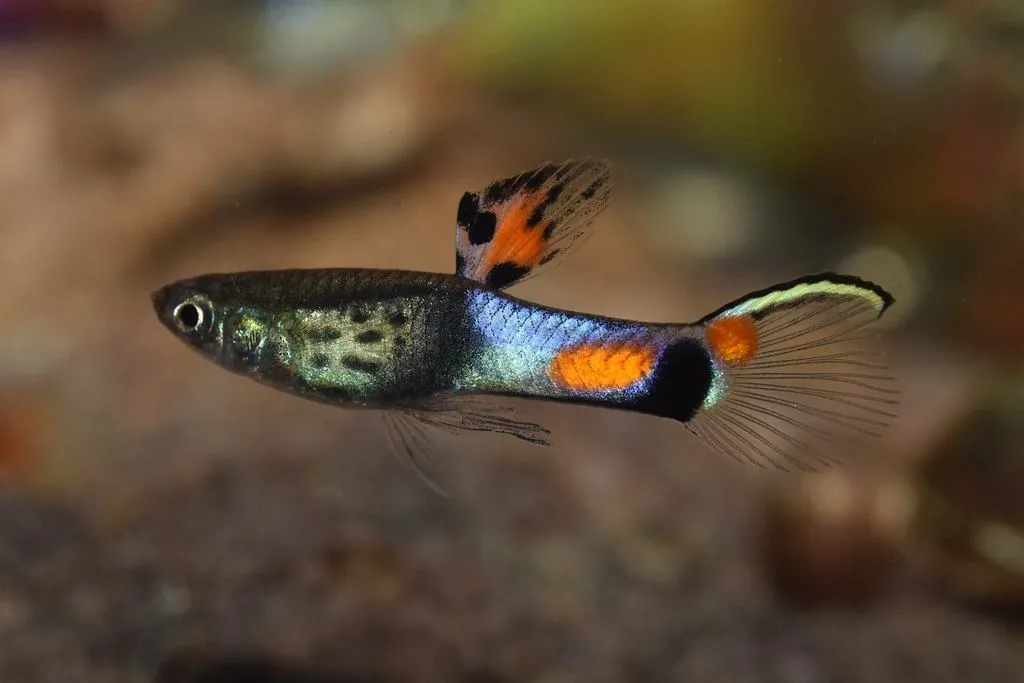
Endler's livebearer
Poecilia wingei
FreshwaterBrackish- Size
- 1.6 in (4 cm)
- Tank
- 5 gal (20 L)
- Water
- 72–86°F (22–30°C)
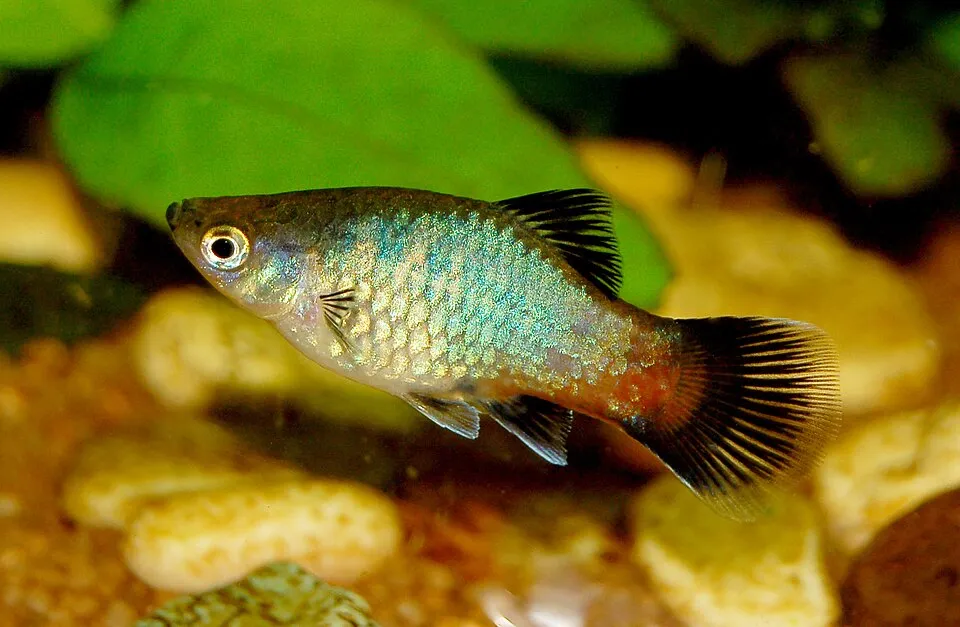
Southern platy
Xiphophorus maculatus
Freshwater- Size
- 2.8 in (7 cm)
- Tank
- 15 gal (55 L)
- Water
- 68–79°F (20–26°C)
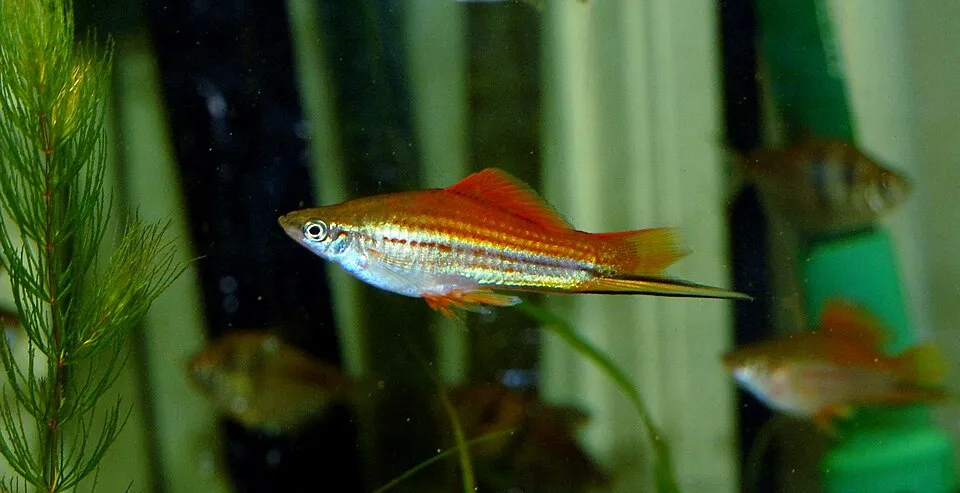
Green swordtail
Xiphophorus hellerii
Freshwater- Size
- 5.9 in (15 cm)
- Tank
- 24 gal (90 L)
- Water
- 68–82°F (20–28°C)
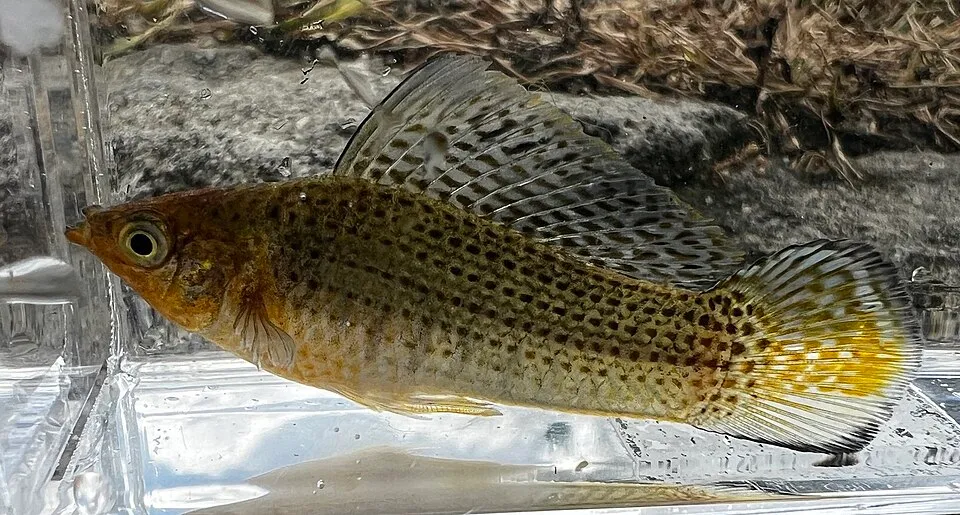
Sailfin molly
Poecilia latipinna
FreshwaterBrackish- Size
- 4.7 in (12 cm)
- Tank
- 24 gal (90 L)
- Water
- 70–79°F (21–26°C)
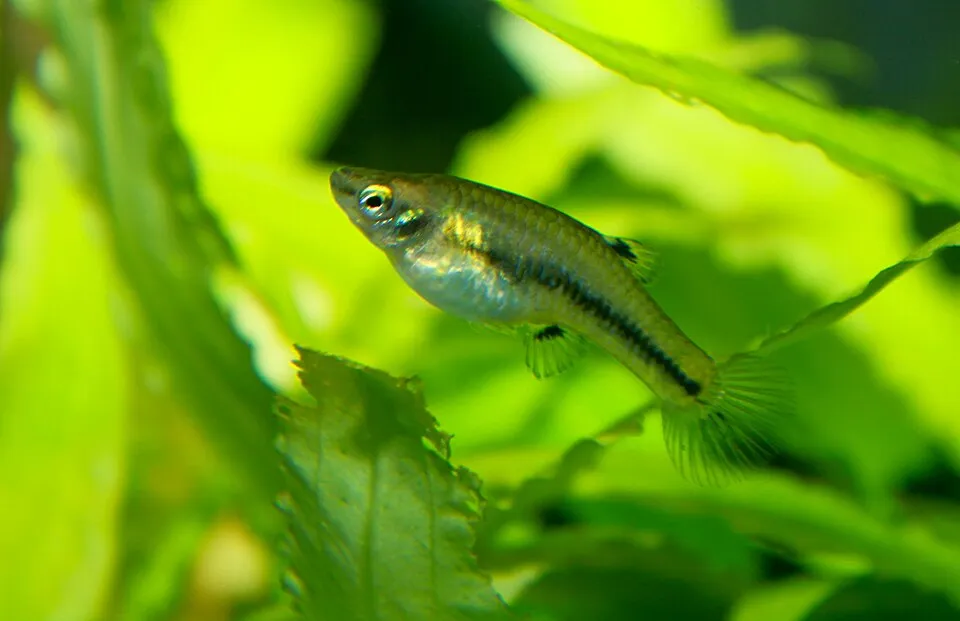
Least killifish
Heterandria formosa
FreshwaterBrackish- Size
- 1.4 in (3.5 cm)
- Tank
- 5 gal (20 L)
- Water
- 68–79°F (20–26°C)
The rule
What livebearers have in common
Nearly every profile on this page lists a pH from 7 to 8, and most list hard water; a livebearer in soft, acidic water fades and sickens. Males chase females all day, so the usual ratio is one male to two or three females, or all males and no fry. Fry arrive every four to six weeks and a tank of guppies or platies fills itself, which is either the point or the problem. Salt is optional: the mollies and the guppy take brackish water and list it, but none of the fish here needs it.
- 01
Hard, alkaline water
A pH from 7 to 8 on nearly every profile
- 02
More females than males
One male to two or three females, or all males
- 03
Fry every month
A tank of livebearers fills itself
- 04
Salt is optional
Mollies and guppies take brackish water, none needs it
Guppies
Guppies and endlers
The guppy forms in the catalog are one species with the same care: the cobra guppy carries a snakeskin pattern, the Moscow guppy is a solid metallic color, the tuxedo guppy is dark behind and pale in front. All list 13 gallons (50 liters). The endlers are smaller and wilder: the black bar endler is the classic form at 1.6 inches (4 cm) for 5 gallons (20 liters), the tiger endler and the blue star endler are line-bred colors of the same fish. Guppies and endlers are close enough to interbreed, so a mixed tank produces hybrids.
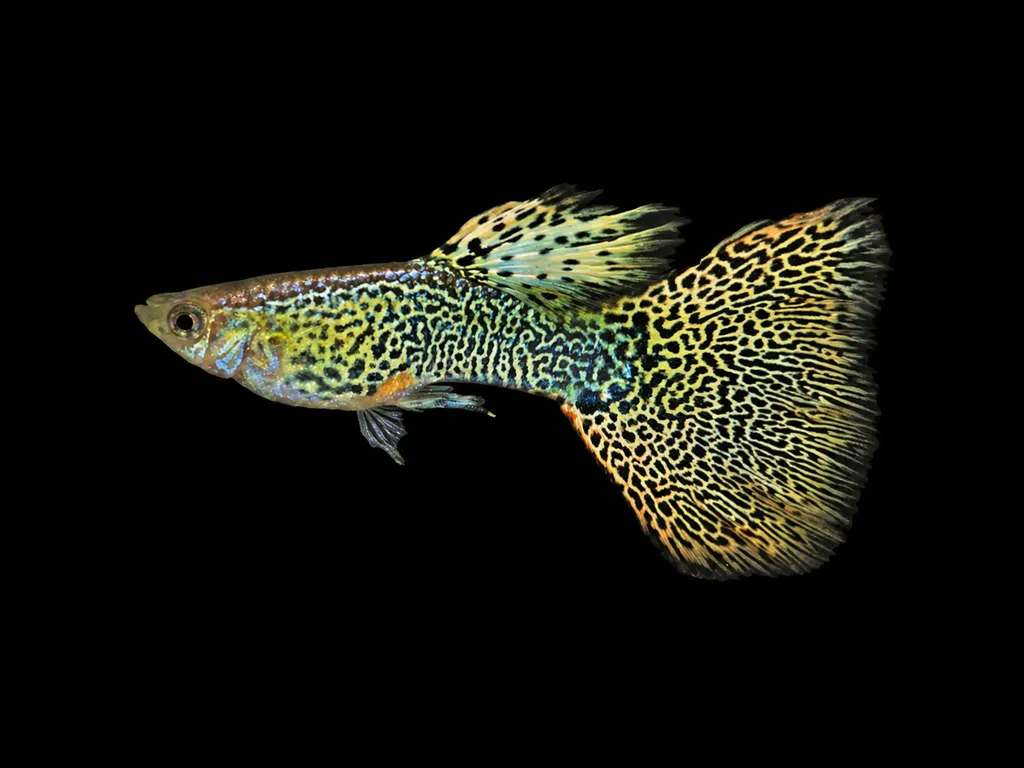
Cobra guppy
Poecilia reticulata
FreshwaterBrackish2.4 in (6 cm) · 13 gal (50 L)64–82°F (18–28°C)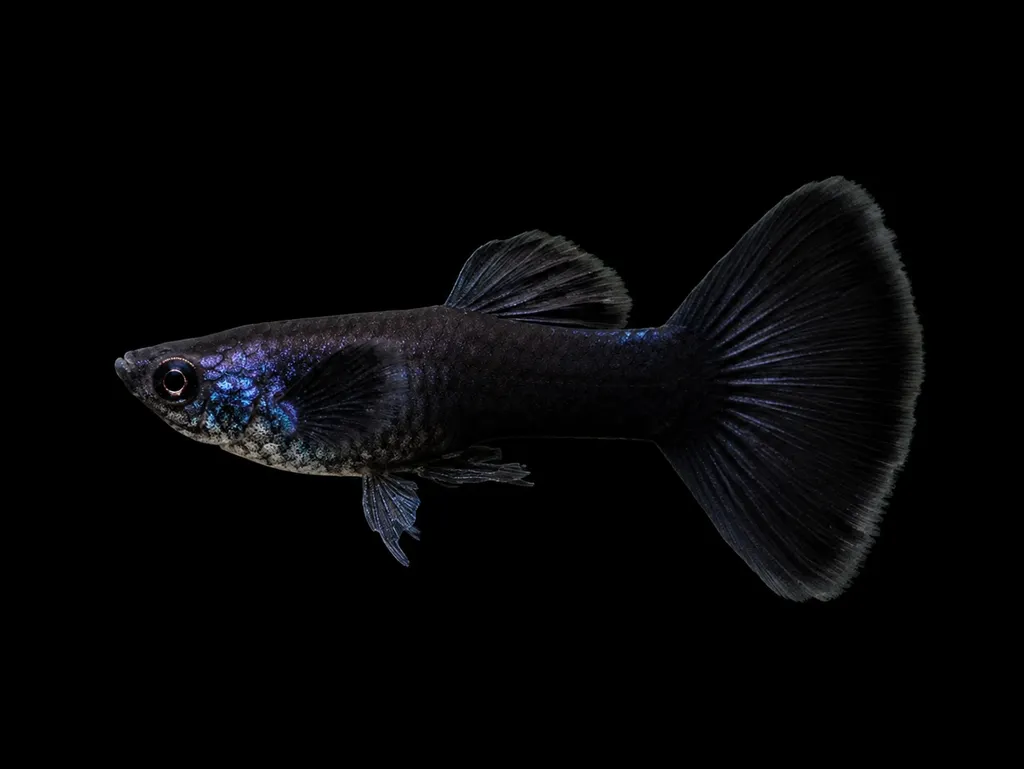
Moscow guppy
Poecilia reticulata
FreshwaterBrackish2.4 in (6 cm) · 13 gal (50 L)64–82°F (18–28°C)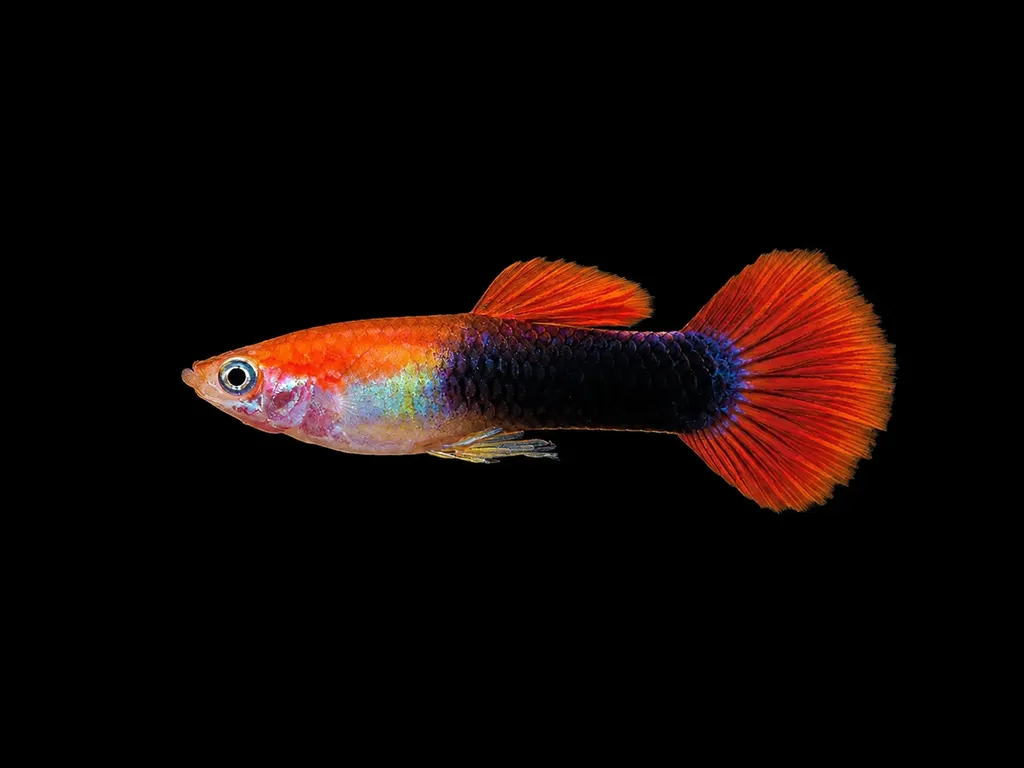
Tuxedo guppy
Poecilia reticulata
FreshwaterBrackish2.4 in (6 cm) · 13 gal (50 L)64–82°F (18–28°C)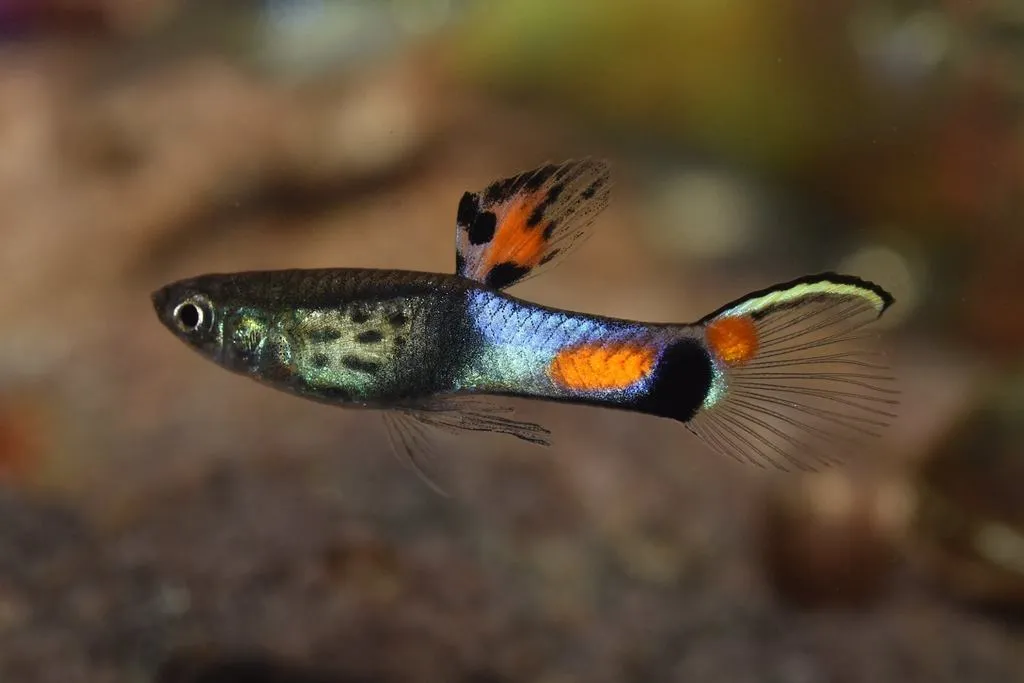
Black bar endler
Poecilia wingei
FreshwaterBrackish1.6 in (4 cm) · 5 gal (20 L)72–86°F (22–30°C)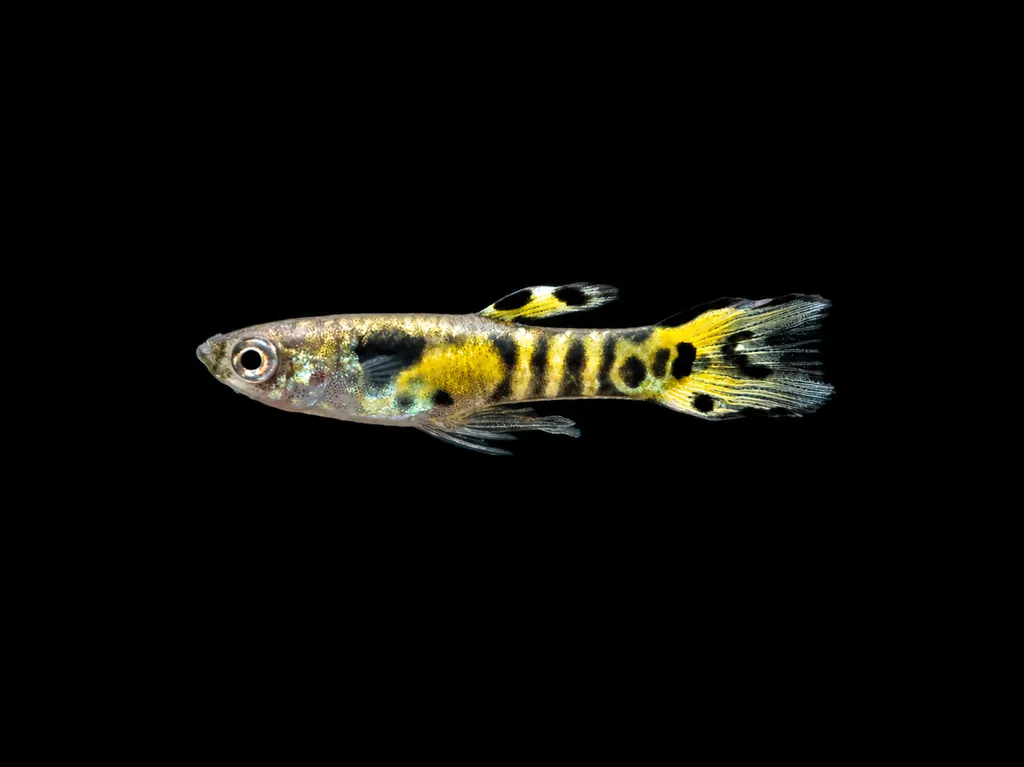
Tiger endler
Poecilia wingei
FreshwaterBrackish1.6 in (4 cm) · 5 gal (20 L)72–86°F (22–30°C)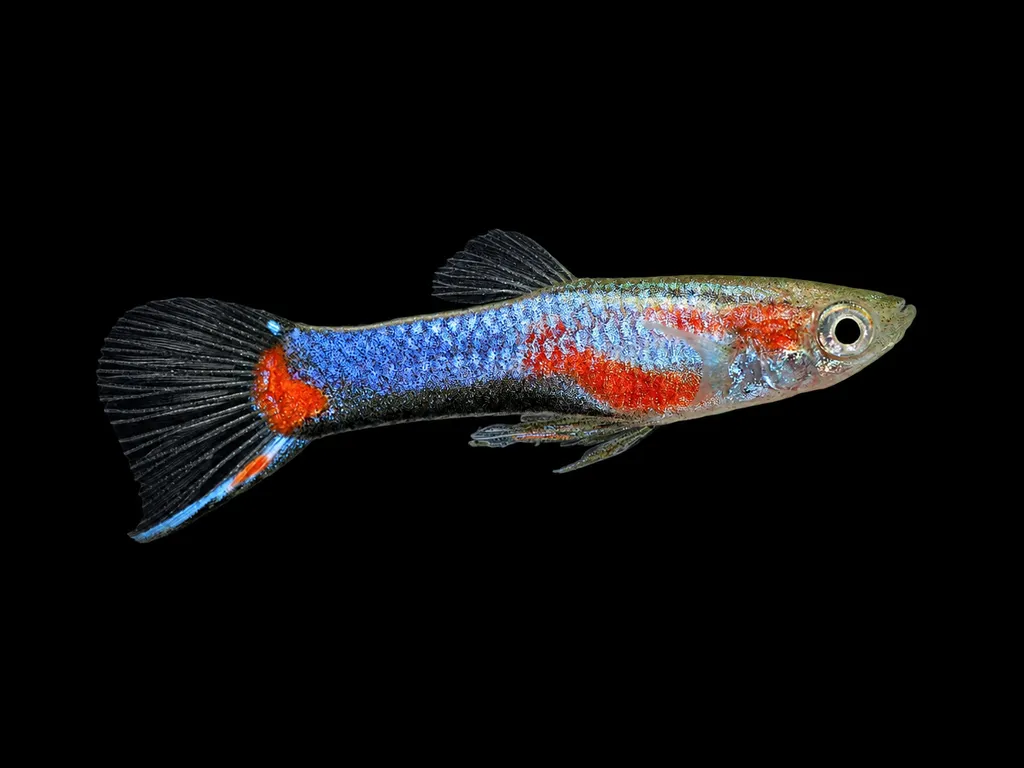
Blue star endler
Poecilia wingei
FreshwaterBrackish1.6 in (4 cm) · 5 gal (20 L)72–86°F (22–30°C)
Platies and swords
Platies and swordtails
The variable platy and the southern platy are the two species behind every platy in the shops, 2.8 inches (7 cm) for 15 gallons (55 liters), marked beginner and peaceful. The Mickey Mouse platy and the wagtail platy are color forms of the same fish. The swordtails are the same genus a size up: the red swordtail and the koi swordtail reach 5.9 inches (15 cm) for 24 gallons (90 liters), marked beginner. The Montezuma swordtail is the wild one, marked medium at 5.5 inches (14 cm) for 32 gallons (120 liters), with the longest sword of any.
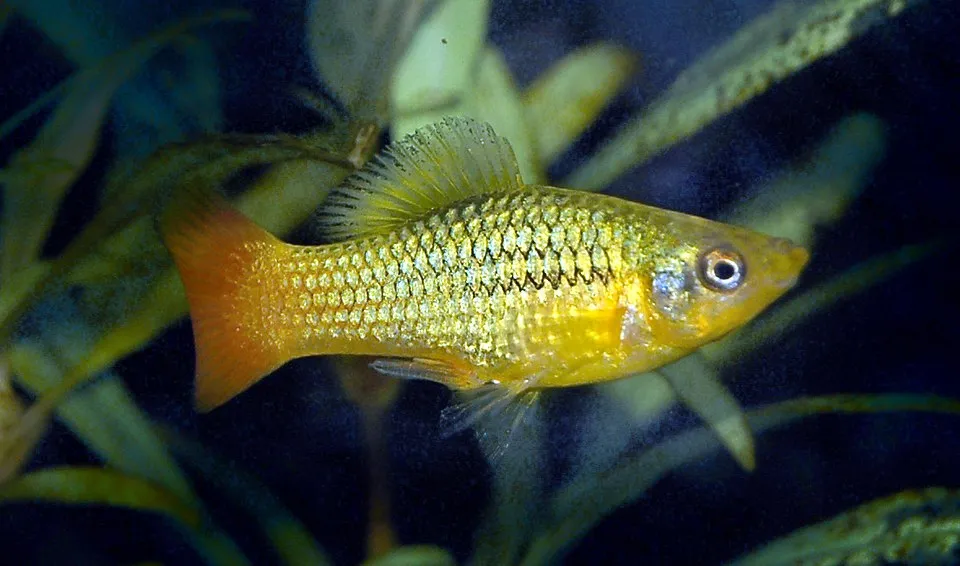
Variable platy
Xiphophorus variatus
Freshwater2.8 in (7 cm) · 15 gal (55 L)68–79°F (20–26°C)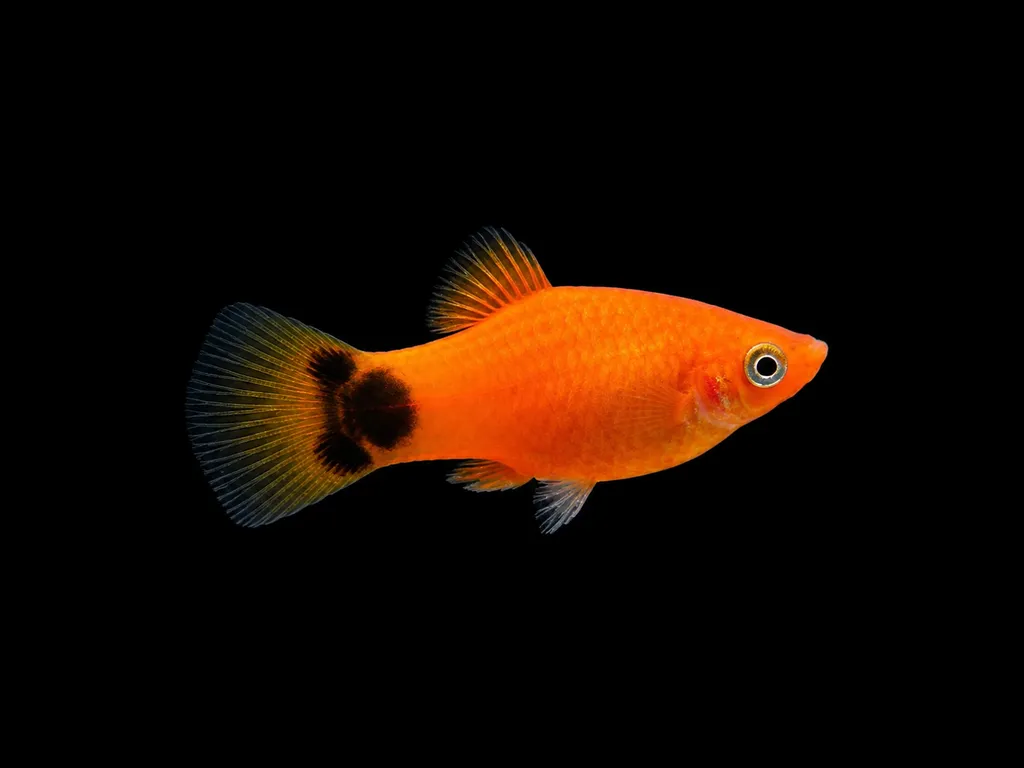
Mickey Mouse platy
Xiphophorus maculatus
Freshwater2.8 in (7 cm) · 15 gal (55 L)68–79°F (20–26°C)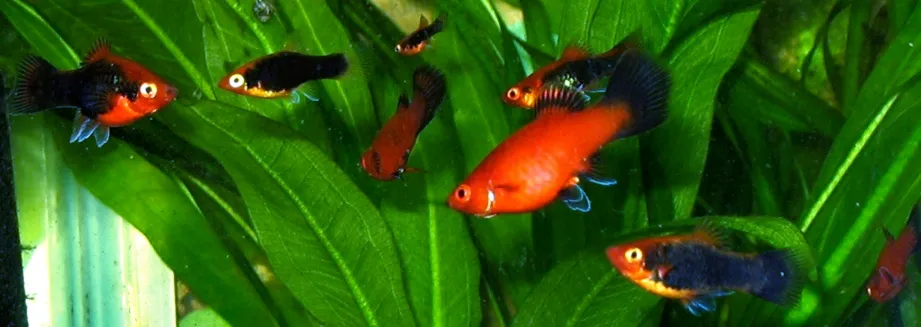
Wagtail platy
Xiphophorus maculatus
Freshwater2.8 in (7 cm) · 15 gal (55 L)68–79°F (20–26°C)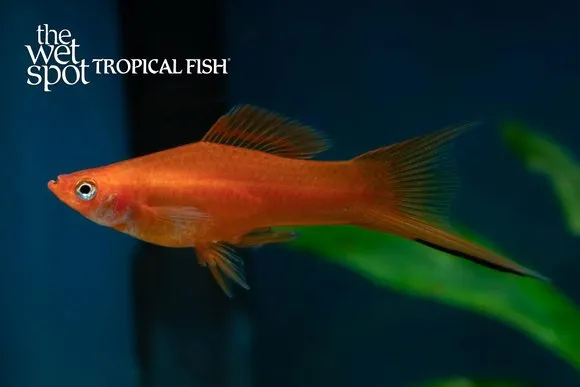
Red swordtail
Xiphophorus hellerii
Freshwater5.9 in (15 cm) · 24 gal (90 L)68–82°F (20–28°C)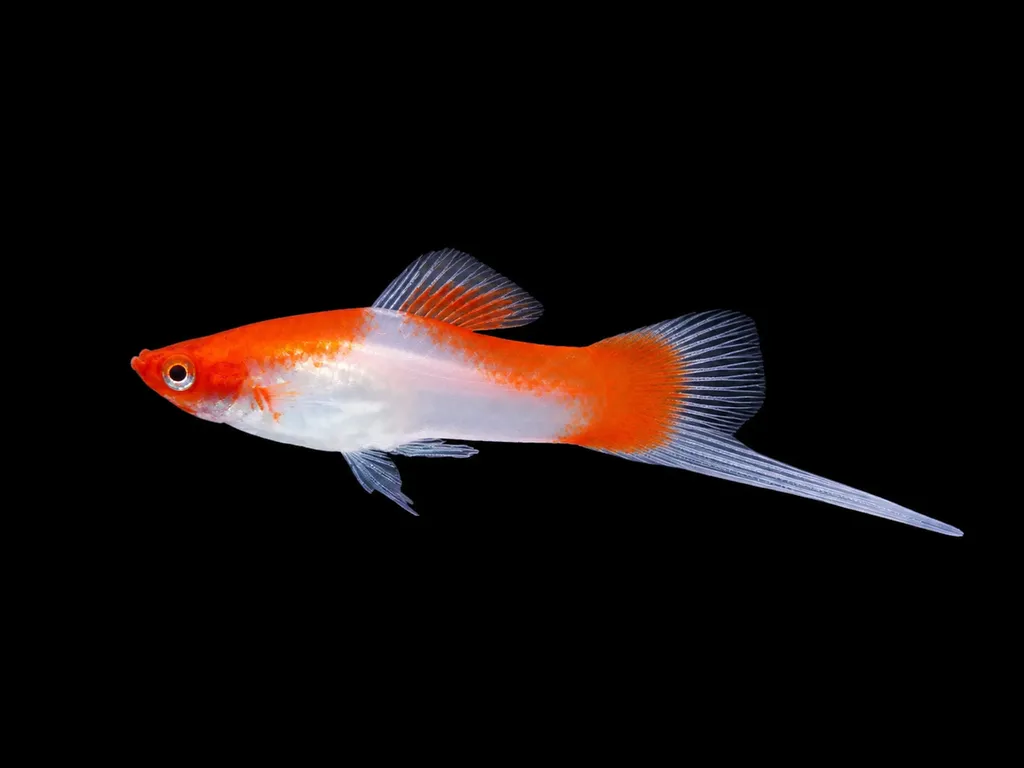
Koi swordtail
Xiphophorus hellerii
Freshwater5.9 in (15 cm) · 24 gal (90 L)68–82°F (20–28°C)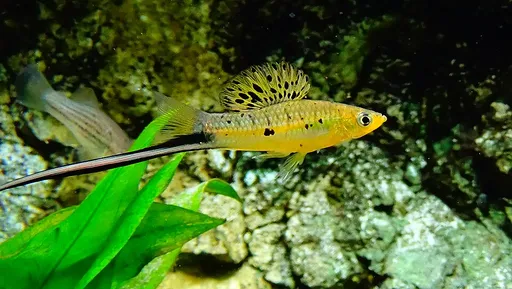
Montezuma swordtail
Xiphophorus montezumae
Freshwater5.5 in (14 cm) · 32 gal (120 L)68–79°F (20–26°C)
Mollies
Mollies
The black molly and the dalmatian molly are 4.7 inches (12 cm) for 24 gallons (90 liters), marked easy and mostly peaceful, and both list brackish water as well as fresh. The giant sailfin molly is the big one at 5.9 inches (15 cm) for 30 gallons (113 liters), marked medium, and it wants a pH from 7.5 to 8.5 and a male with room to show the fin. The lyretail molly is a fin form of the same fish. The balloon molly is bred with a shortened body and swims like it. The shortfin molly is the wild species behind most of them, 4.3 inches (11 cm) for 32 gallons (120 liters), marked easy and peaceful.
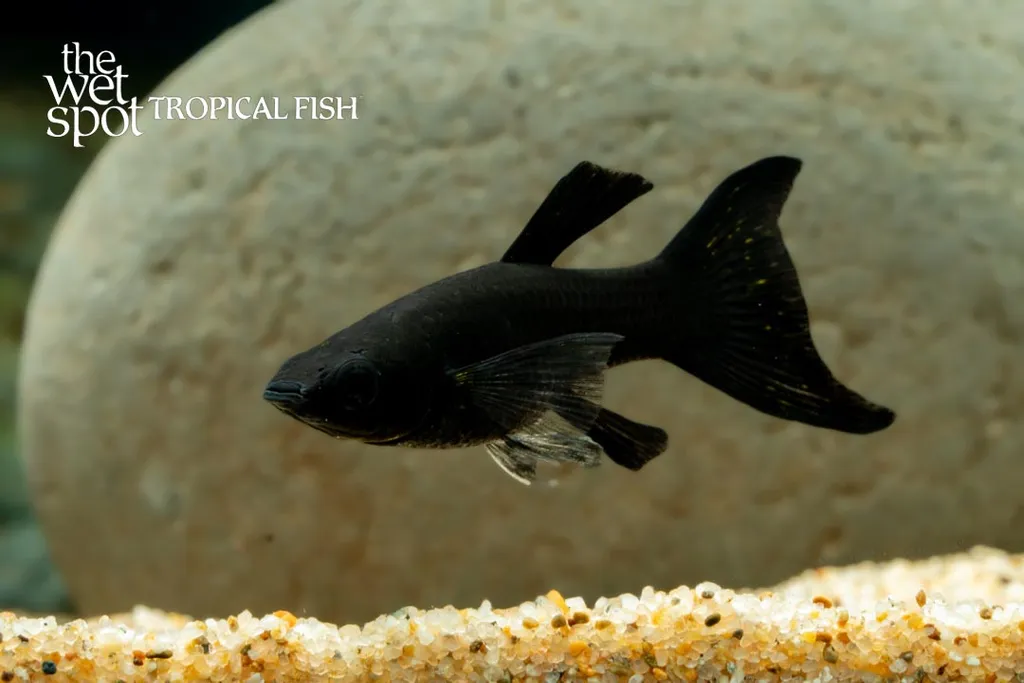
Black molly
Poecilia sphenops
FreshwaterBrackish4.7 in (12 cm) · 24 gal (90 L)70–82°F (21–28°C)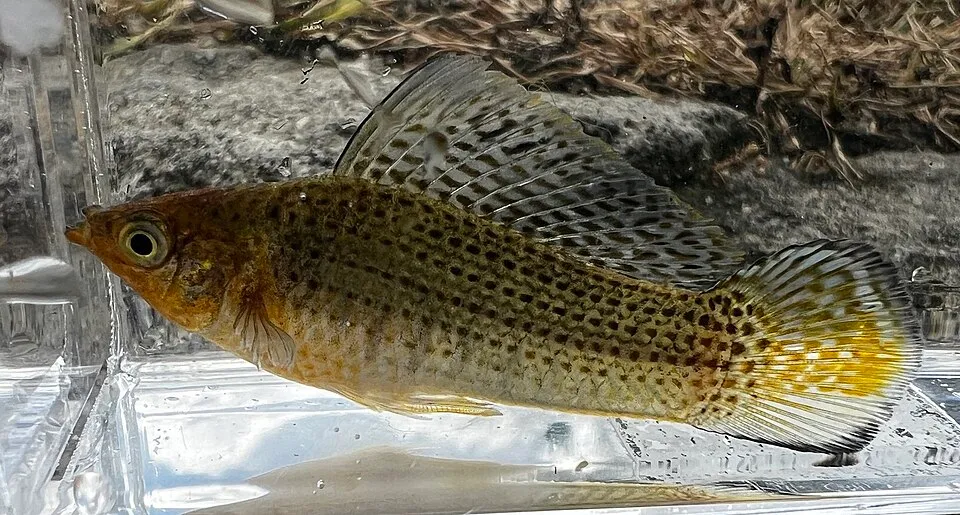
Dalmatian molly
Poecilia latipinna
FreshwaterBrackish4.7 in (12 cm) · 24 gal (90 L)70–79°F (21–26°C)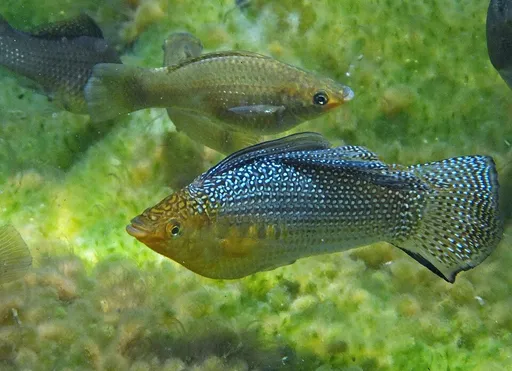
Giant sailfin molly
Poecilia velifera
FreshwaterBrackish5.9 in (15 cm) · 30 gal (113 L)75–82°F (24–28°C)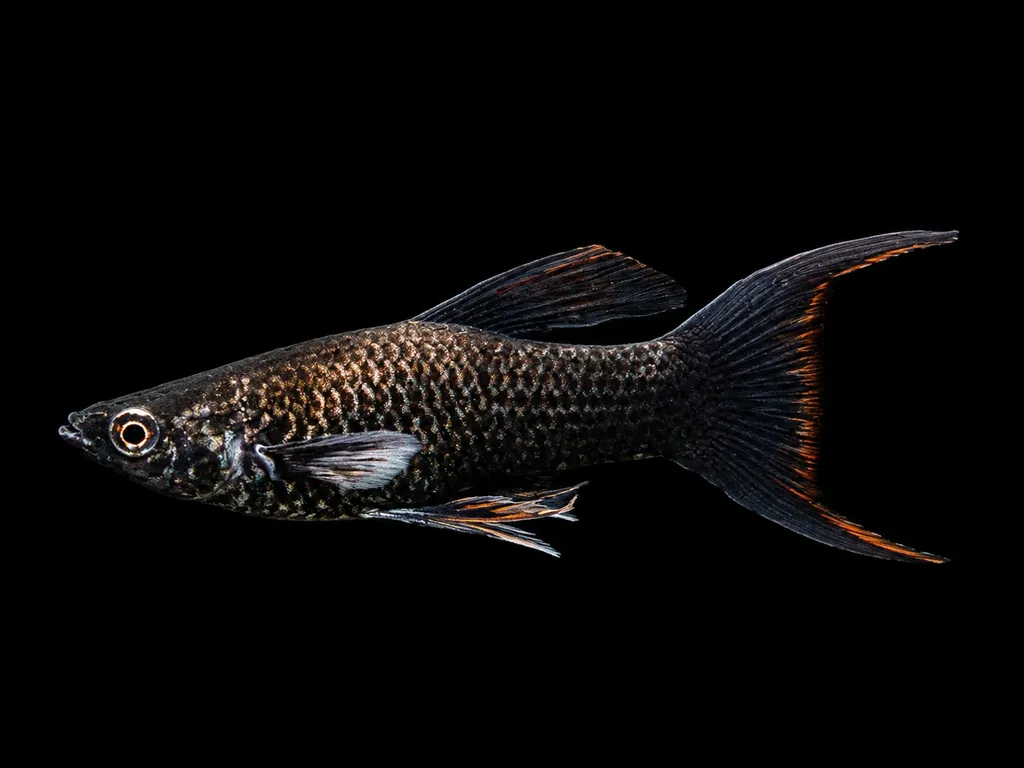
Lyretail molly
Poecilia sphenops
FreshwaterBrackish4.7 in (12 cm) · 24 gal (90 L)70–82°F (21–28°C)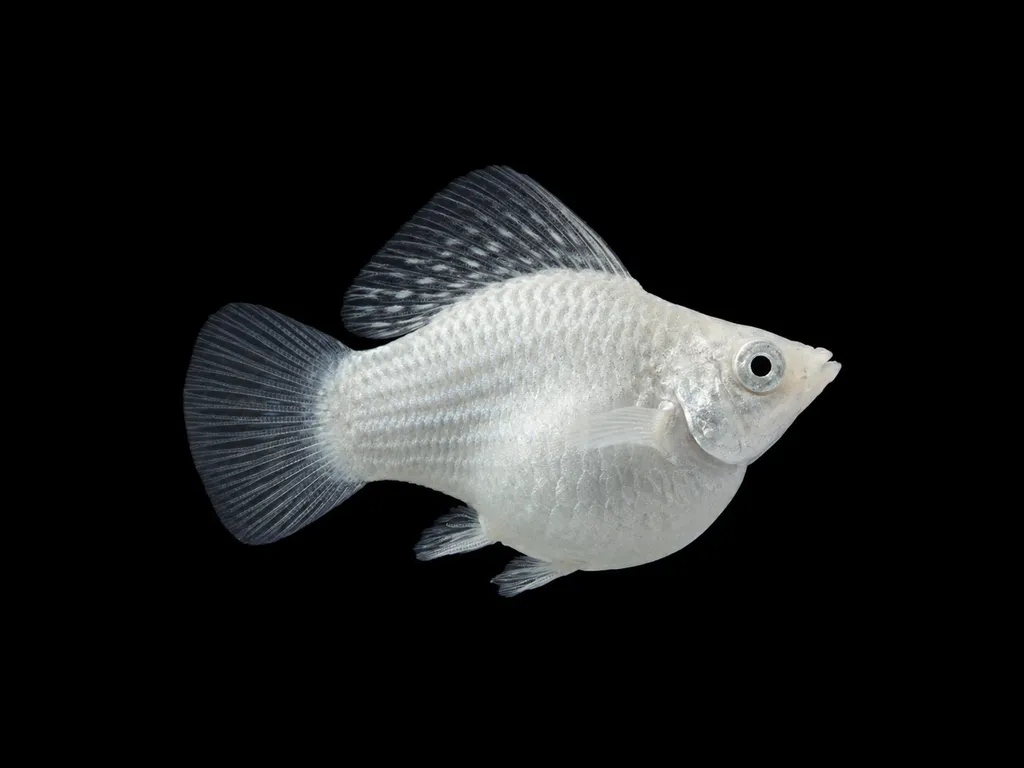
Balloon molly
Poecilia sphenops
FreshwaterBrackish4.7 in (12 cm) · 24 gal (90 L)70–82°F (21–28°C)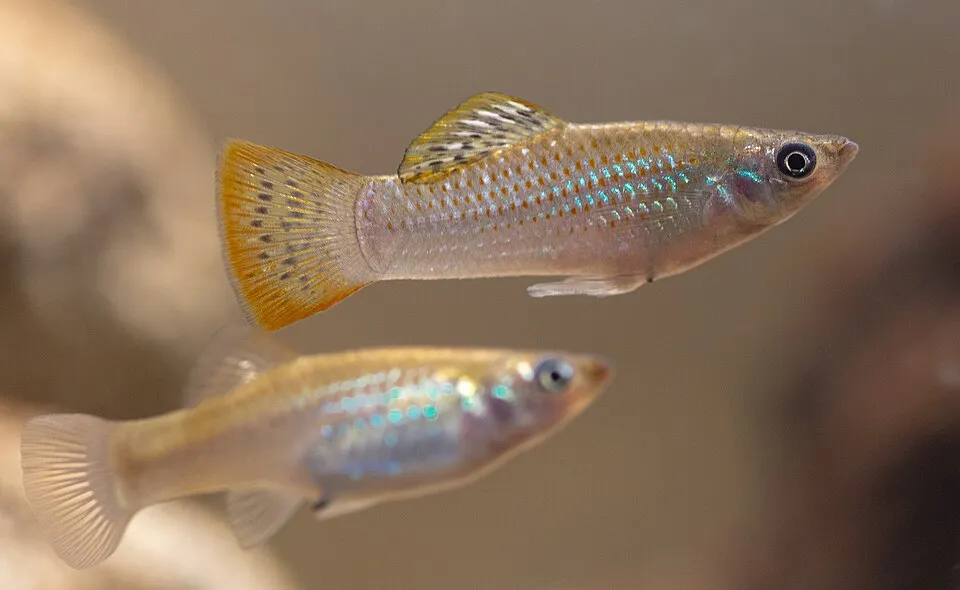
Shortfin molly
Poecilia mexicana
FreshwaterBrackish4.3 in (11 cm) · 32 gal (120 L)72–82°F (22–28°C)
Wild types
The wild ones
The blackbelly limia is 2.4 inches (6 cm) for 16 gallons (60 liters), marked easy and peaceful, for hard water at a pH from 7.5 to 8.5. The merry widow livebearer is 2.5 inches (6.4 cm) for the same tank, marked easy, with a black-edged dorsal on the male. The porthole livebearer is marked beginner at 3.5 inches (9 cm) for 11 gallons (40 liters). The dwarf livebearer is 1 inch (2.5 cm) for 5 gallons (20 liters), marked easy. The blue-eyed livebearer is 2.8 inches (7 cm) for 24 gallons (90 liters), marked medium. The pike topminnow is the predator of the family, 7.9 inches (20 cm) for 44 gallons (165 liters), and it eats every other fish on this page.
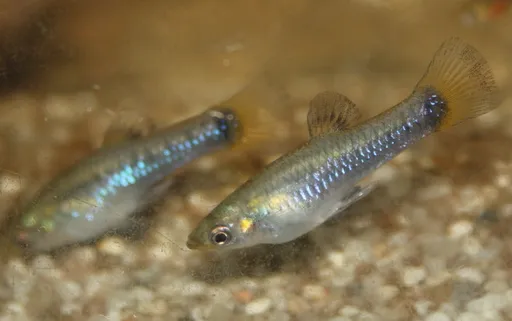
Blackbelly limia
Limia melanogaster
Freshwater2.4 in (6 cm) · 16 gal (60 L)72–82°F (22–28°C)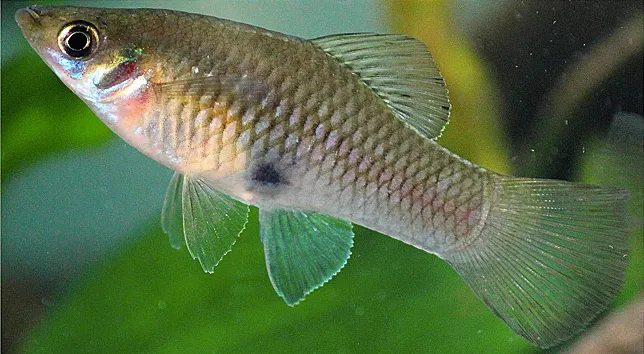
Merry widow livebearer
Phallichthys amates
Freshwater2.5 in (6.4 cm) · 16 gal (60 L)72–86°F (22–30°C)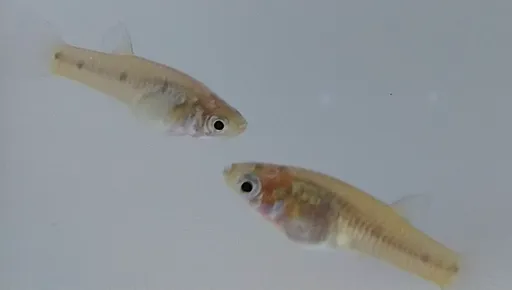
Porthole livebearer
Poeciliopsis gracilis
Freshwater3.5 in (9 cm) · 11 gal (40 L)72–82°F (22–28°C)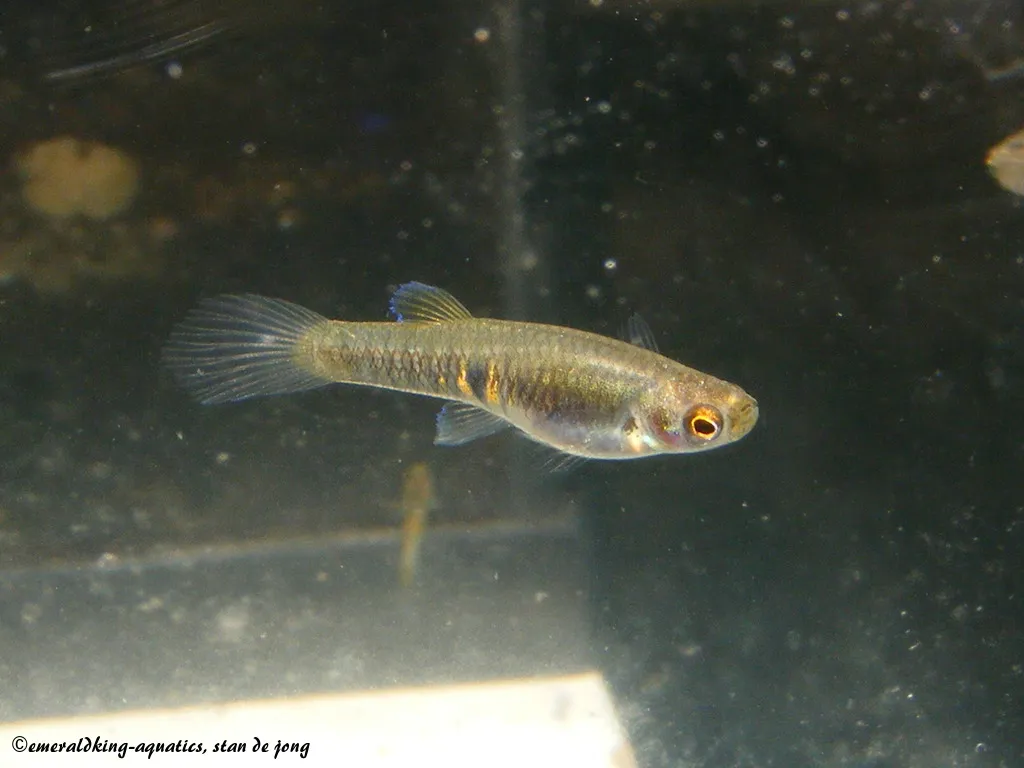
Dwarf livebearer
Neoheterandria elegans
Freshwater1 in (2.5 cm) · 5 gal (20 L)75–82°F (24–28°C)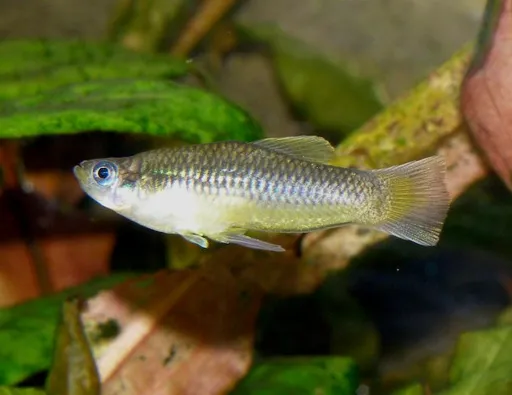
Blue-eyed livebearer
Priapella intermedia
Freshwater2.8 in (7 cm) · 24 gal (90 L)72–82°F (22–28°C)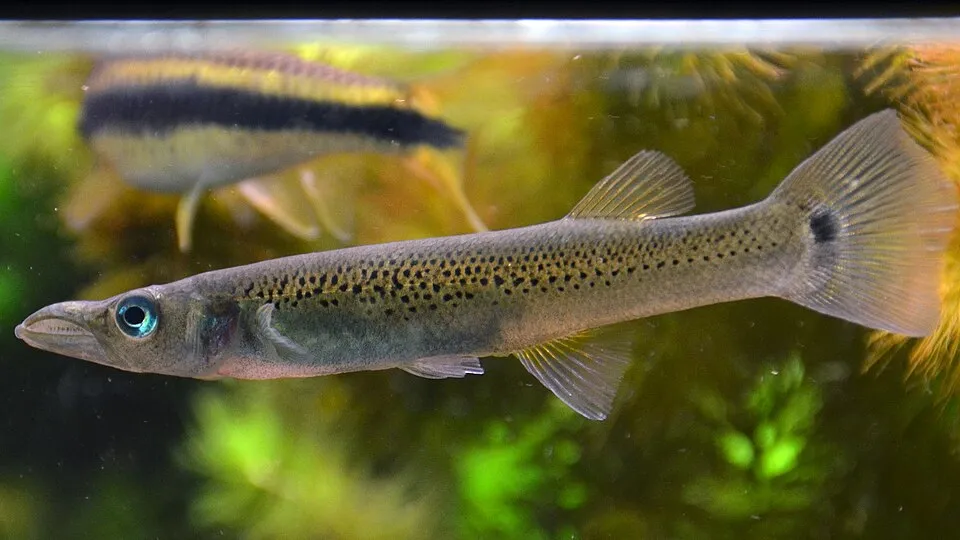
Pike topminnow
Belonesox belizanus
Freshwater7.9 in (20 cm) · 44 gal (165 L)73–82°F (23–28°C)
By the numbers
Smallest
Largest
Easiest to keep
Most peaceful
Fits a 20 gallon tank
Fits a 30 gallon tank
FAQ
Common questions
How many livebearers fit in a 10 gallon tank?
A trio of Endler's livebearers or least killifish, which list 5 gallons (20 liters), or a trio of guppies at a stretch. Platies list 15 gallons (55 liters) and mollies 24 gallons (90 liters).
Do livebearers need salt?
No. The mollies and the guppy take brackish water and list it, and a little salt helps a molly in soft water, but hard, alkaline freshwater is what every fish here lists.
Why do my guppies keep dying?
Soft or acidic water, most often, or a tank that is not cycled. Guppies list a pH from 6.8 to 7.8 and hard water, and they arrive from farms weak, so quarantine new fish for two weeks.
How do I stop livebearers breeding?
Keep only males. A female bought from a mixed tank is already carrying and can drop fry for months from one mating.
Can guppies and endlers live together?
They can, and they interbreed. Keep the lines apart if you want either to stay true.
Can platies and swordtails breed together?
Yes, they are the same genus and cross freely. Most shop platies and swordtails already carry genes from both.
Index
All livebearers
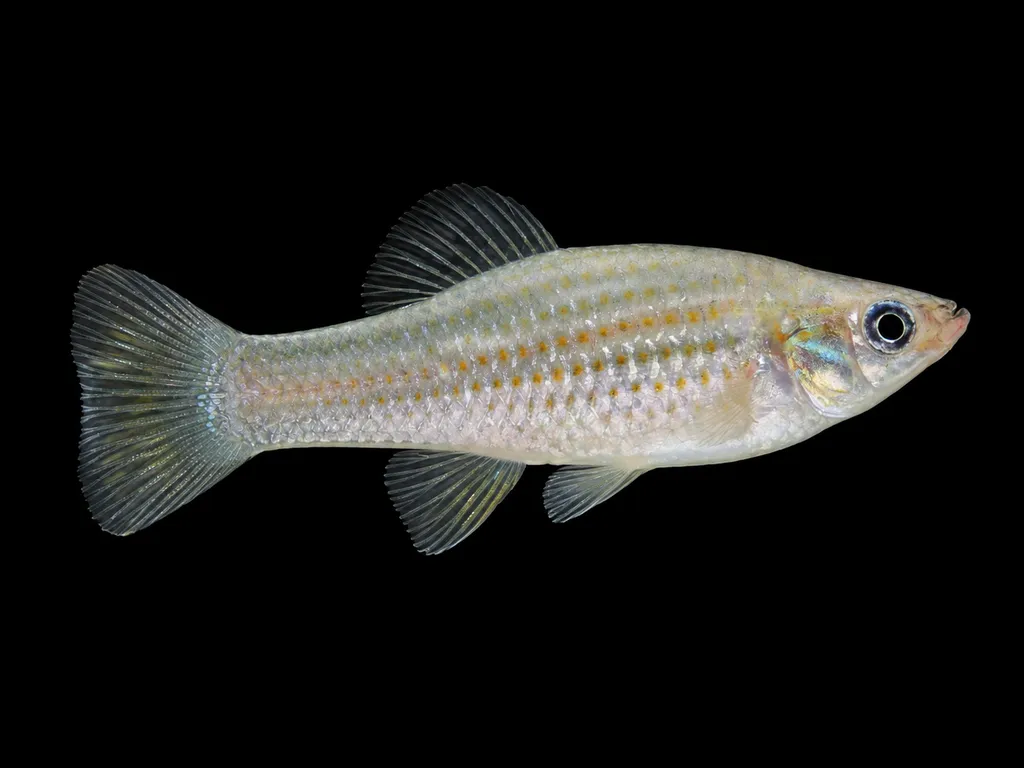
Amazon molly
Poecilia formosa
Freshwater3.5 in (9 cm) · 20 gal (75 L)68–82°F (20–28°C)Black molly
Poecilia sphenops
FreshwaterBrackish4.7 in (12 cm) · 24 gal (90 L)70–82°F (21–28°C)4 varieties
Black-barred livebearer
Quintana atrizona
Freshwater1.3 in (3.4 cm) · 11 gal (40 L)72–82°F (22–28°C)Blackbelly limia
Limia melanogaster
Freshwater2.4 in (6 cm) · 16 gal (60 L)72–82°F (22–28°C)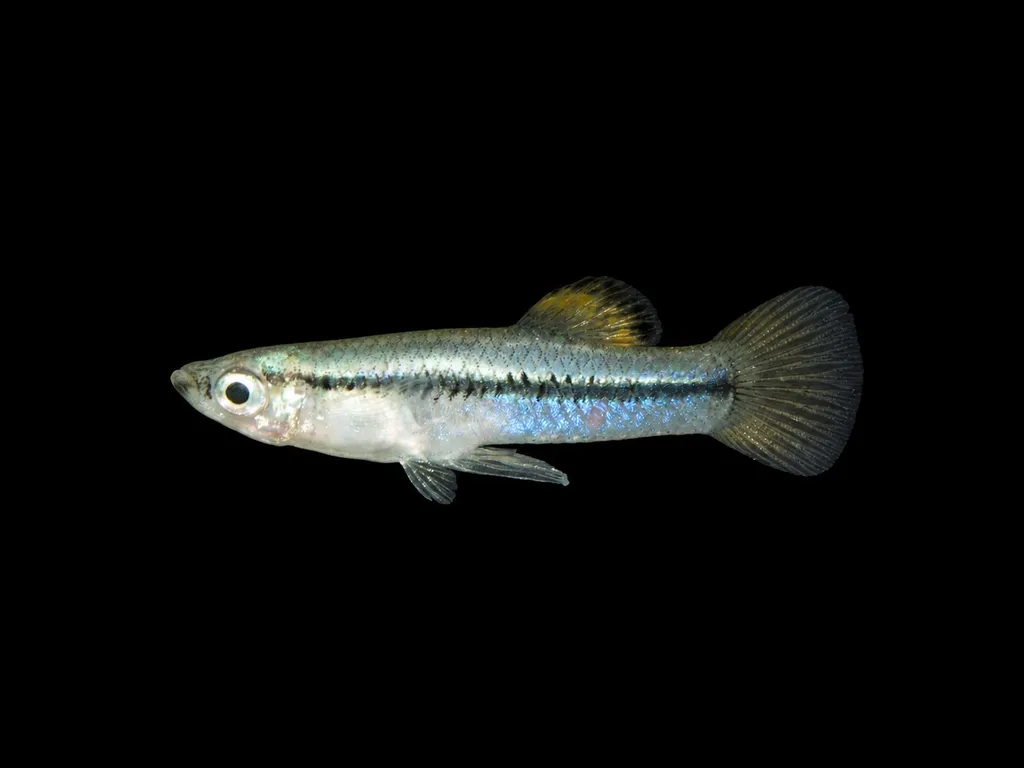
Blackline mosquitofish
Gambusia vittata
Freshwater1.8 in (4.5 cm) · 14 gal (54 L)72–81°F (22–27°C)Blue-eyed livebearer
Priapella intermedia
Freshwater2.8 in (7 cm) · 24 gal (90 L)72–82°F (22–28°C)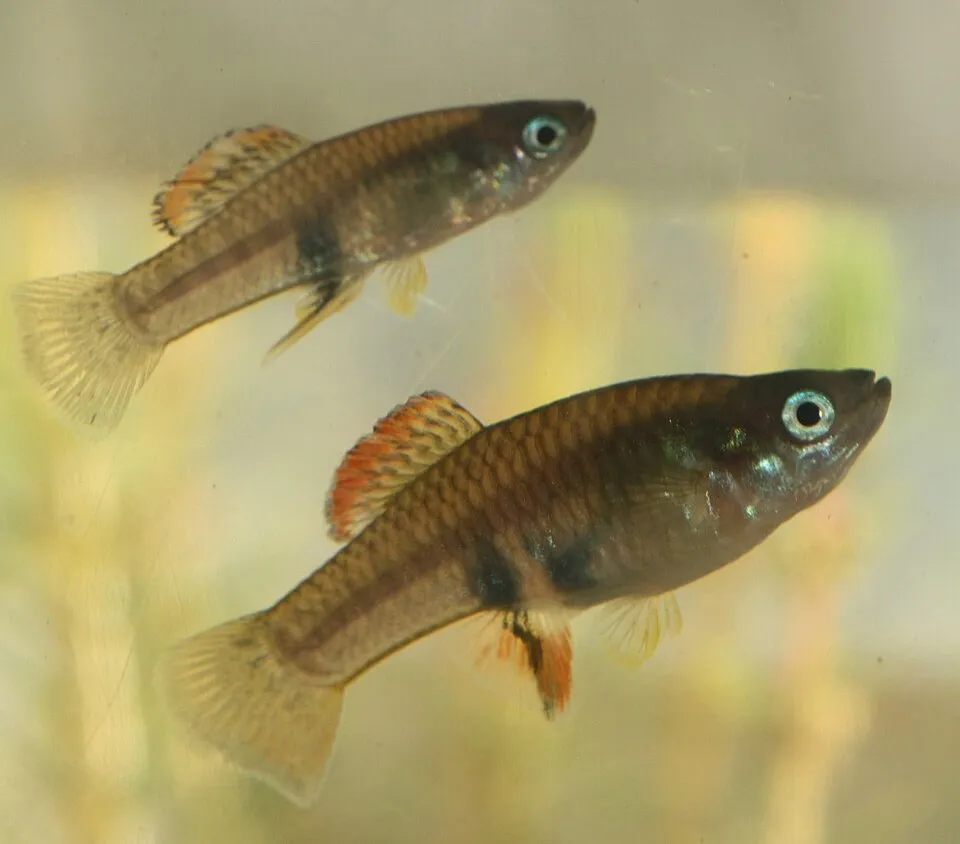
Cardinal toothcarp
Brachyrhaphis roseni
Freshwater2.4 in (6 cm) · 16 gal (60 L)72–86°F (22–30°C)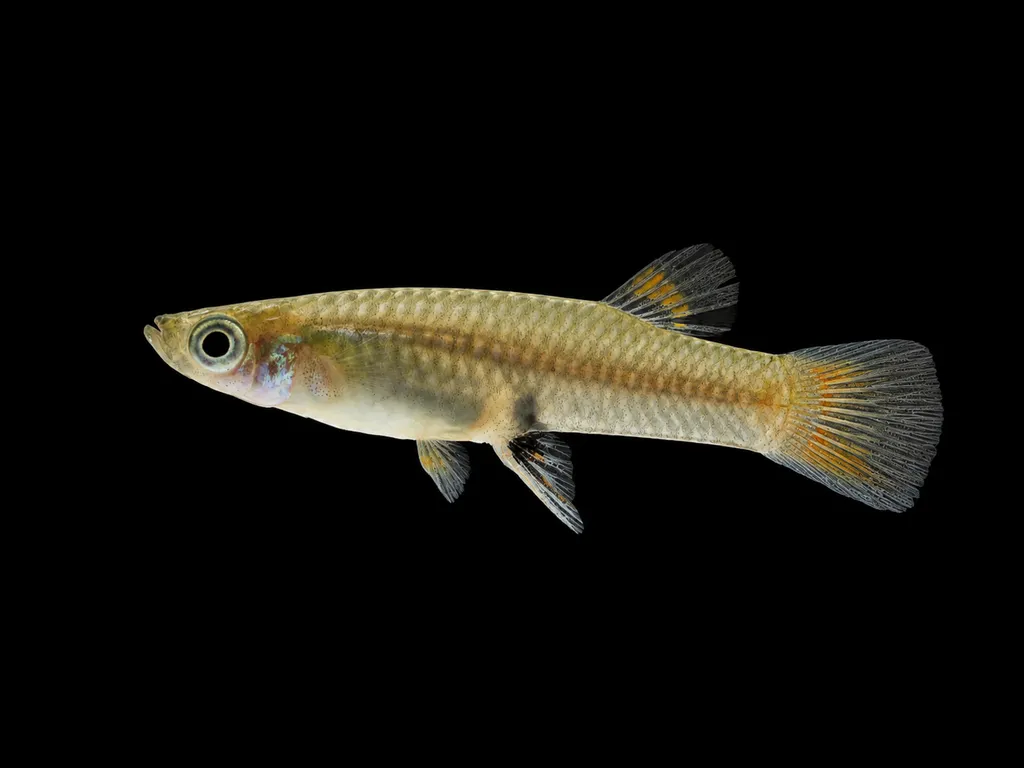
Cascajal toothcarp
Brachyrhaphis cascajalensis
Freshwater3 in (7.5 cm) · 11 gal (40 L)75–82°F (24–28°C)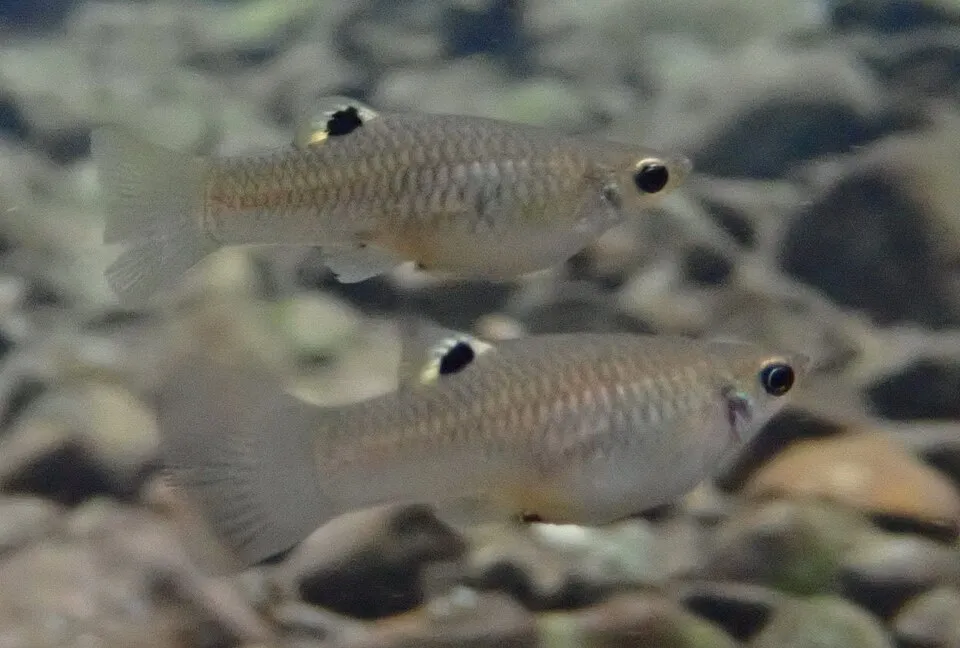
Cauca molly
Poecilia caucana
FreshwaterBrackish2.4 in (6 cm) · 16 gal (60 L)77–86°F (25–30°C)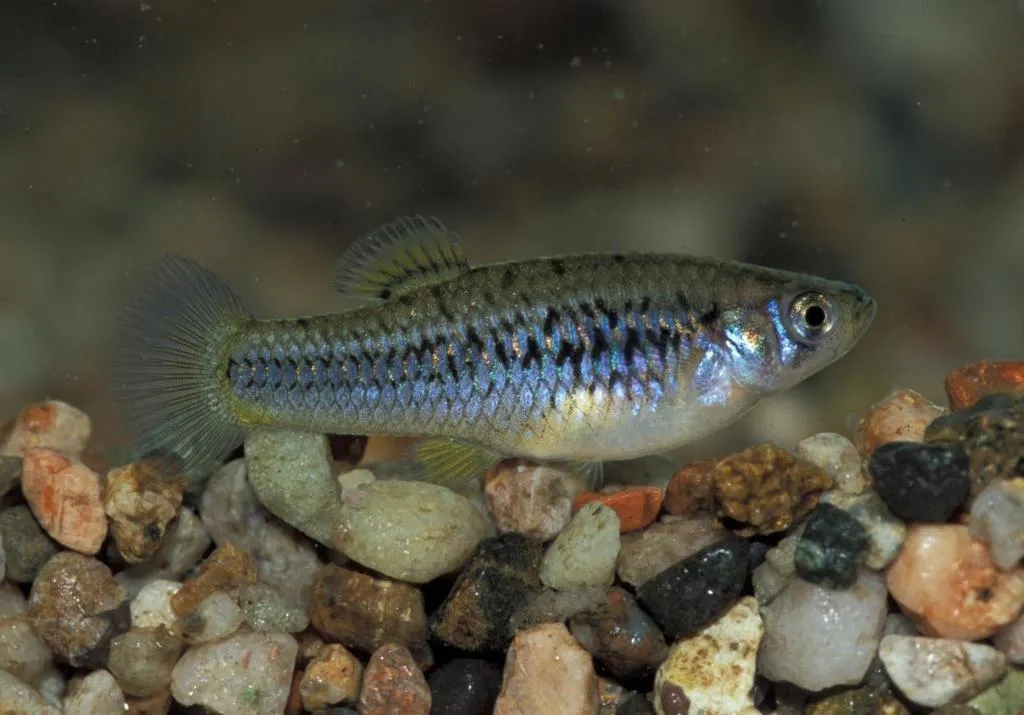
Crescent gambusia
Gambusia hurtadoi
Freshwater2 in (5 cm) · 14 gal (54 L)68–79°F (20–26°C)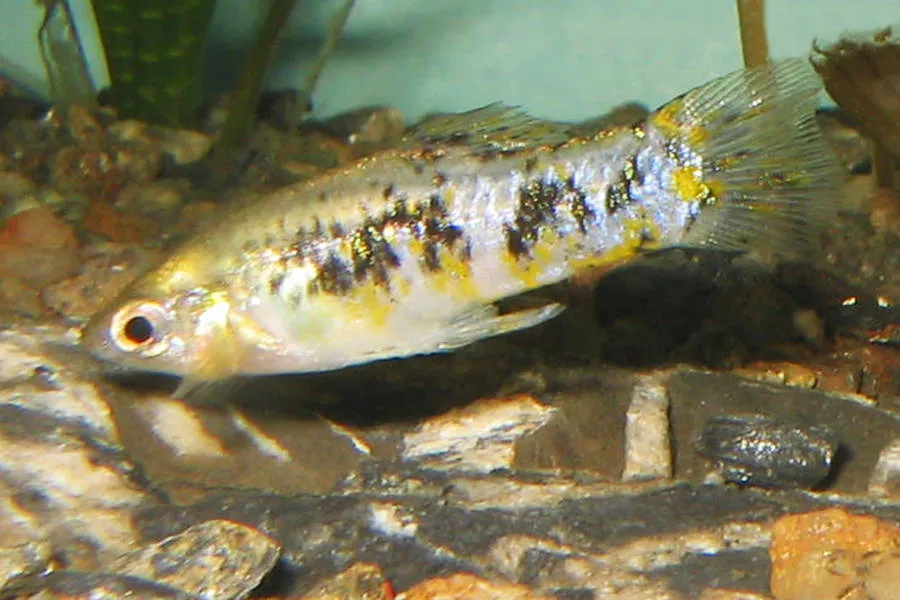
Cuban limia
Limia vittata
Freshwater3.9 in (10 cm) · 18 gal (70 L)73–82°F (23–28°C)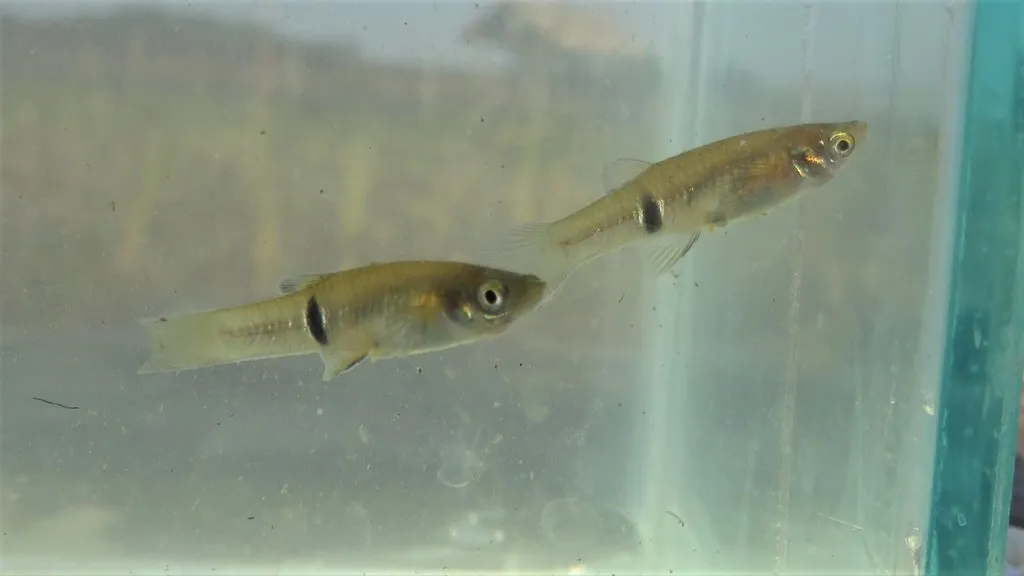
Dusky millions fish
Phalloceros caudimaculatus
Freshwater2.4 in (6 cm) · 12 gal (45 L)64–75°F (18–24°C)Dwarf livebearer
Neoheterandria elegans
Freshwater1 in (2.5 cm) · 5 gal (20 L)75–82°F (24–28°C)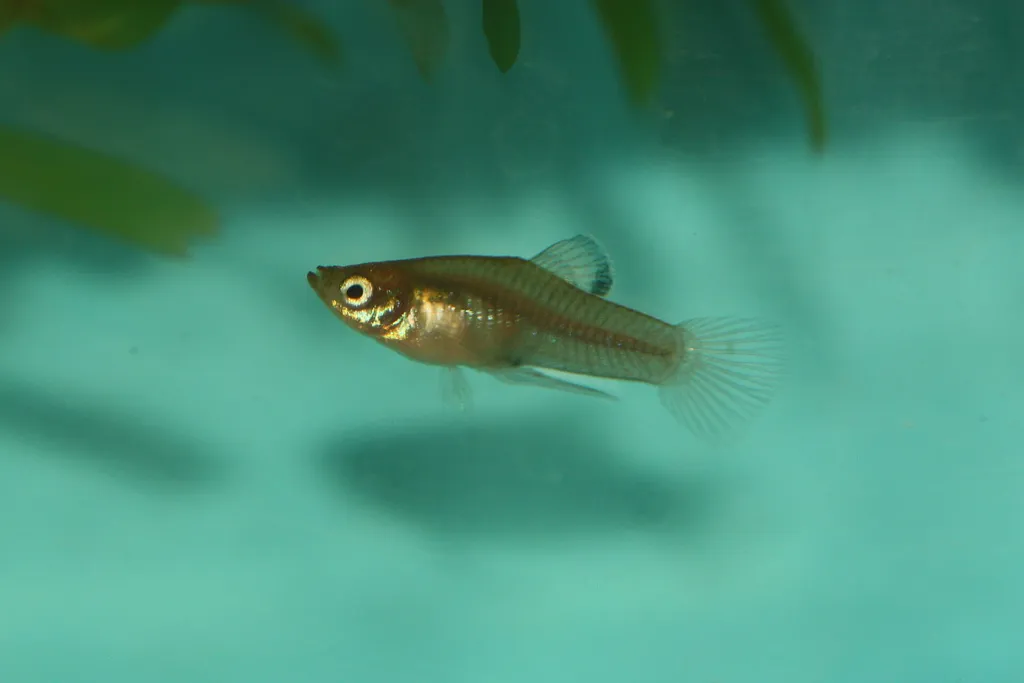
Dwarf merry widow
Phallichthys tico
Freshwater1.4 in (3.5 cm) · 11 gal (40 L)72–81°F (22–27°C)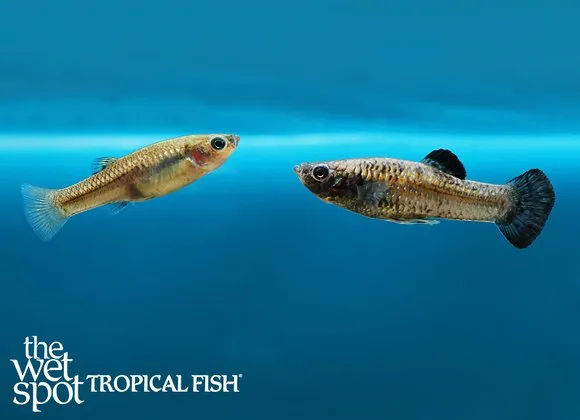
Dwarf molly
Poecilia chica
Freshwater1.6 in (4 cm) · 11 gal (40 L)72–81°F (22–27°C)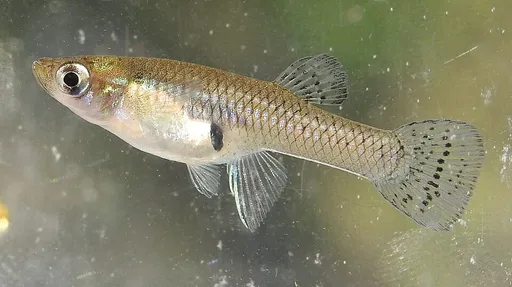
Eastern mosquitofish
Gambusia holbrooki
Freshwater3.1 in (8 cm) · 11 gal (40 L)59–84°F (15–29°C)Endler's livebearer
Poecilia wingei
FreshwaterBrackish1.6 in (4 cm) · 5 gal (20 L)72–86°F (22–30°C)4 varieties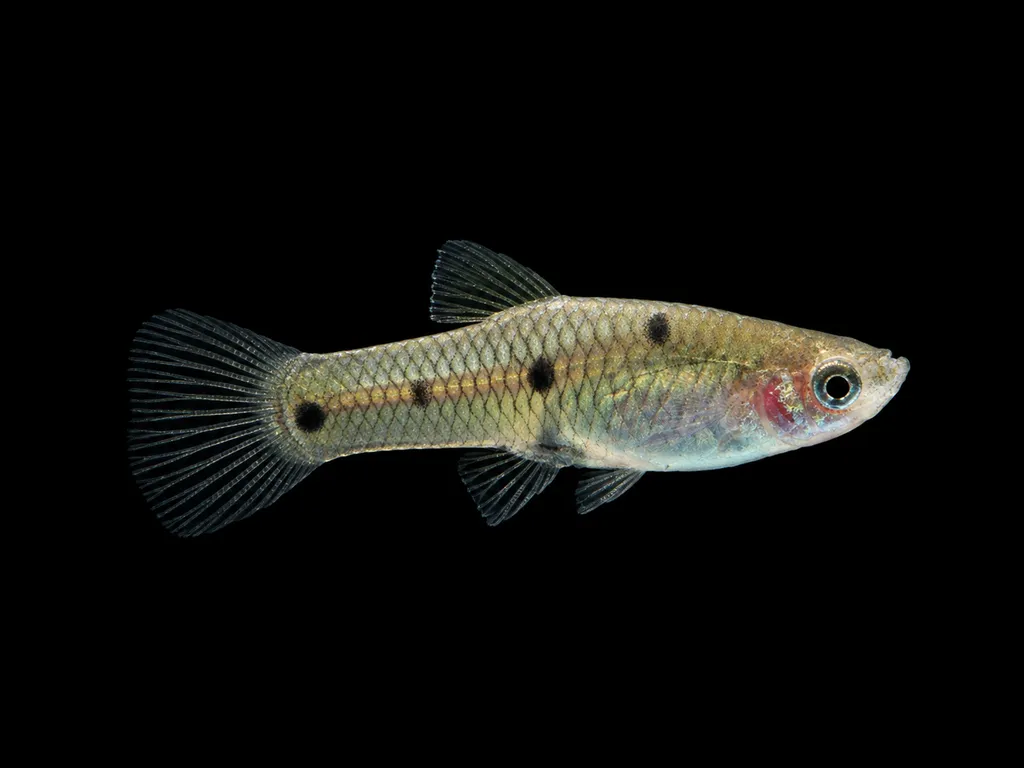
Fourspotted toothcarp
Phallichthys quadripunctatus
Freshwater1.4 in (3.5 cm) · 11 gal (40 L)68–86°F (20–30°C)Giant sailfin molly
Poecilia velifera
FreshwaterBrackish5.9 in (15 cm) · 30 gal (113 L)75–82°F (24–28°C)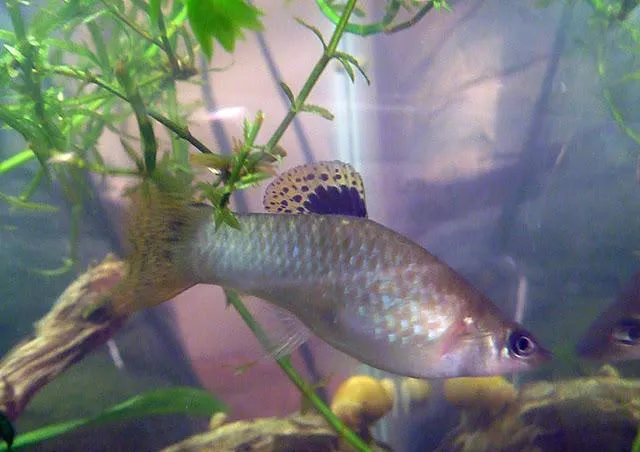
Gill's molly
Poecilia gillii
FreshwaterBrackish3.9 in (10 cm) · 26 gal (100 L)72–86°F (22–30°C)Green swordtail
Xiphophorus hellerii
Freshwater5.9 in (15 cm) · 24 gal (90 L)68–82°F (20–28°C)6 varietiesGuppy
Poecilia reticulata
FreshwaterBrackish2.4 in (6 cm) · 13 gal (50 L)64–82°F (18–28°C)9 varieties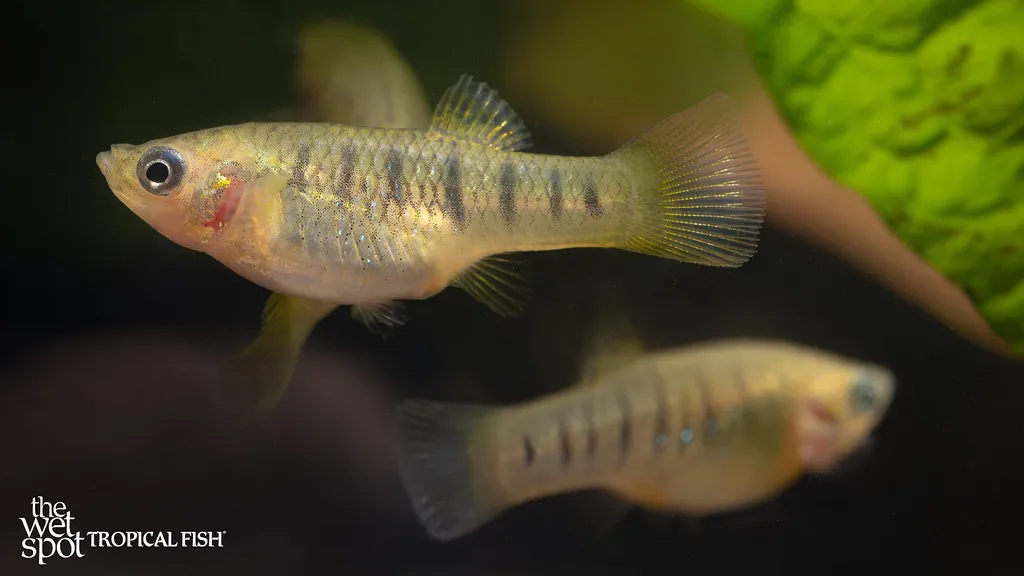
Humpbacked limia
Limia nigrofasciata
Freshwater2.4 in (6 cm) · 20 gal (75 L)72–82°F (22–28°C)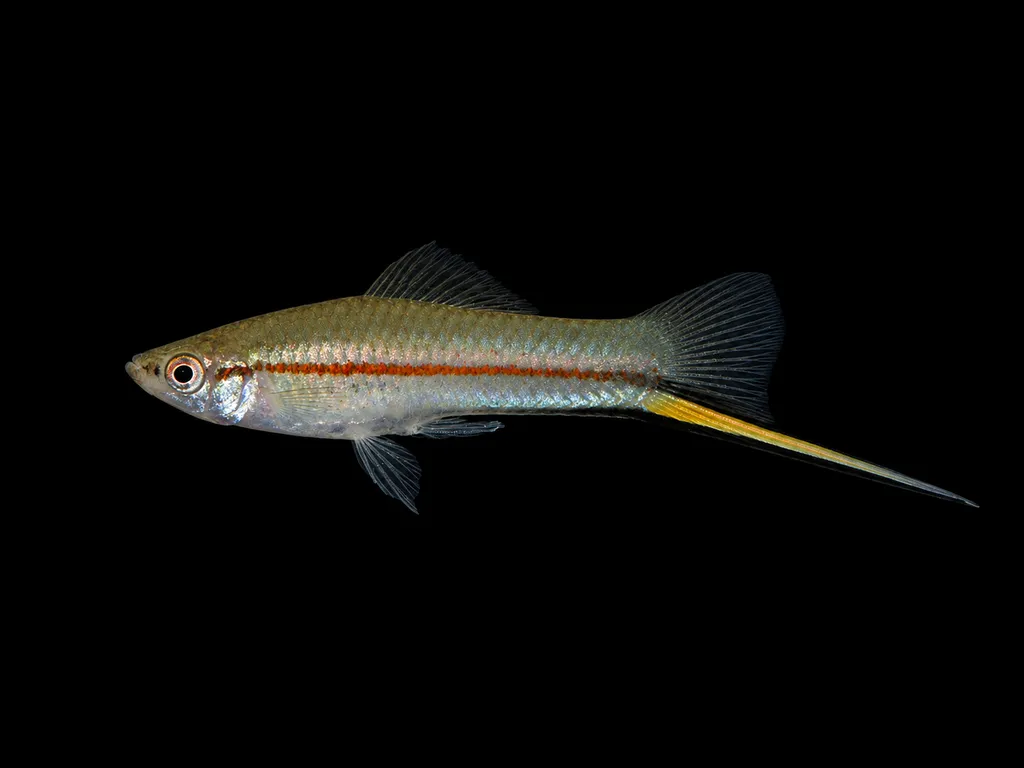
Kallman's swordtail
Xiphophorus kallmani
Freshwater4.1 in (10.5 cm) · 29 gal (110 L)73–82°F (23–28°C)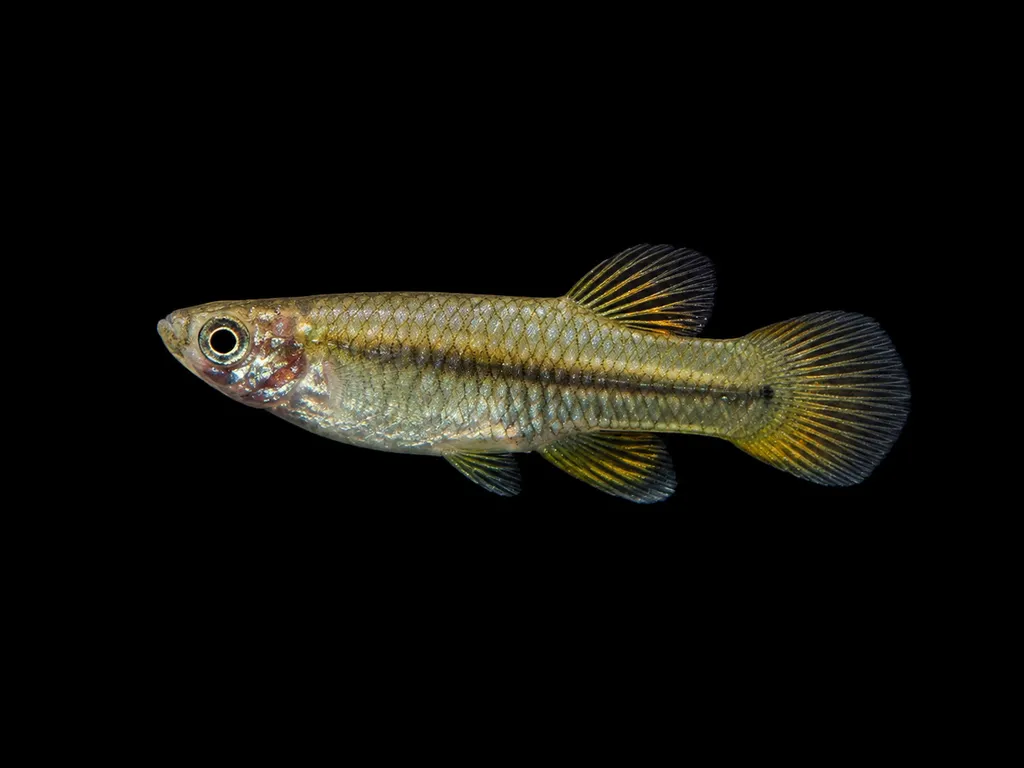
Kidder's livebearer
Carlhubbsia kidderi
Freshwater2 in (5 cm) · 14 gal (54 L)72–81°F (22–27°C)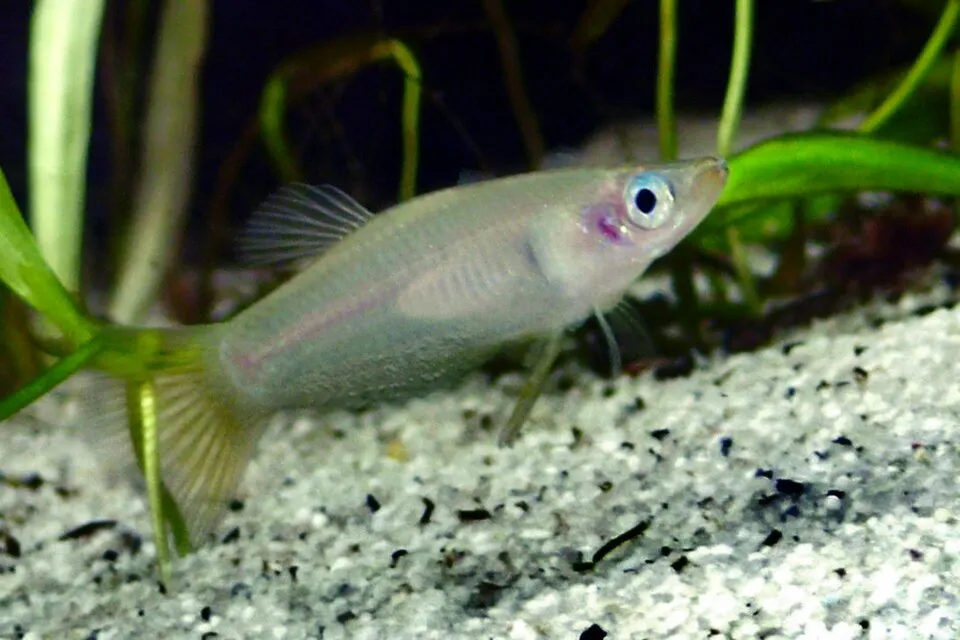
Knife livebearer
Alfaro cultratus
Freshwater3 in (7.6 cm) · 32 gal (120 L)75–82°F (24–28°C)Least killifish
Heterandria formosa
FreshwaterBrackish1.4 in (3.5 cm) · 5 gal (20 L)68–79°F (20–26°C)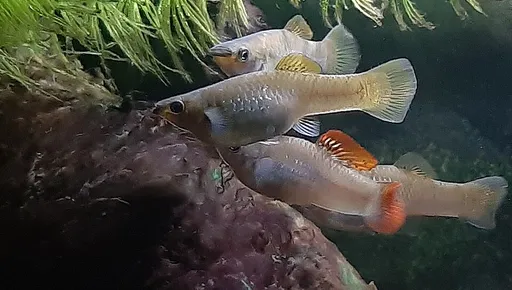
Liberty molly
Poecilia salvatoris
FreshwaterBrackish3.9 in (10 cm) · 24 gal (90 L)72–82°F (22–28°C)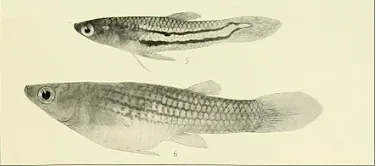
Melanzona guppy
Poecilia parae
FreshwaterBrackish2 in (5 cm) · 15 gal (55 L)75–82°F (24–28°C)Merry widow livebearer
Phallichthys amates
Freshwater2.5 in (6.4 cm) · 16 gal (60 L)72–86°F (22–30°C)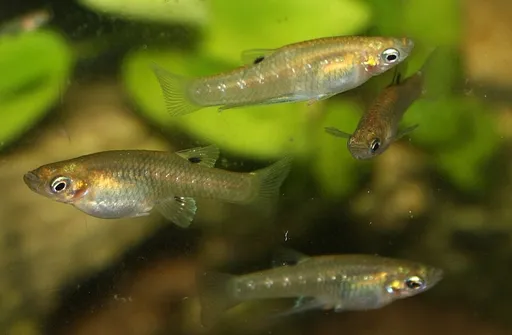
Metallic livebearer
Girardinus metallicus
Freshwater2.4 in (6 cm) · 11 gal (40 L)72–81°F (22–27°C)Montezuma swordtail
Xiphophorus montezumae
Freshwater5.5 in (14 cm) · 32 gal (120 L)68–79°F (20–26°C)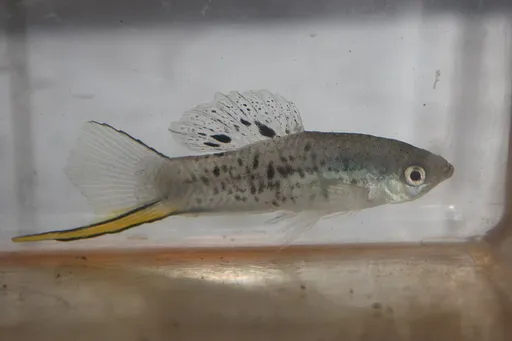
Northern mountain swordtail
Xiphophorus nezahualcoyotl
Freshwater3.5 in (9 cm) · 29 gal (110 L)68–79°F (20–26°C)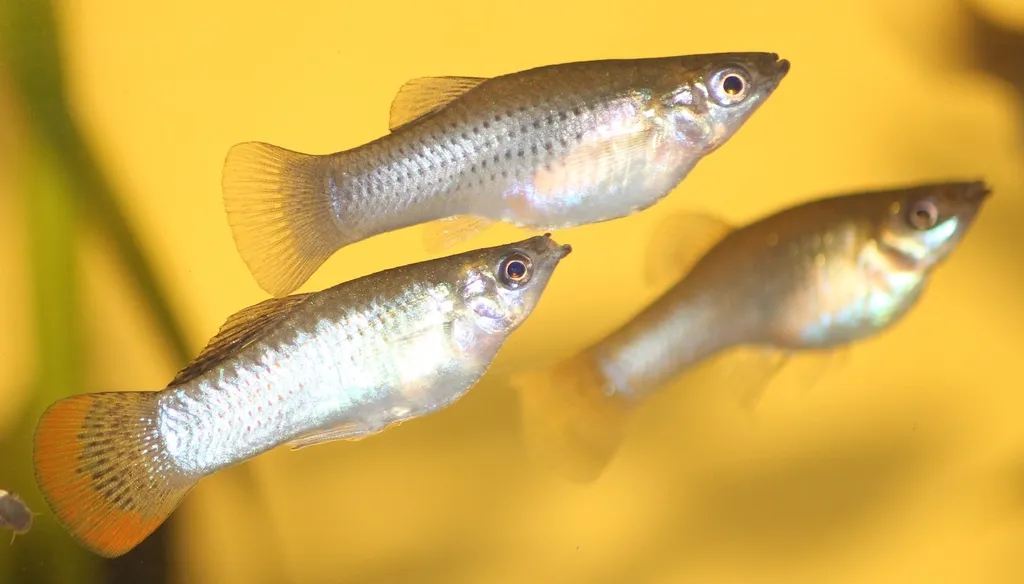
Pacific molly
Poecilia butleri
Freshwater2.8 in (7 cm) · 29 gal (110 L)72–81°F (22–27°C)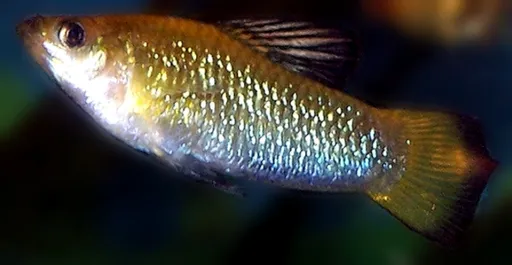
Perugia's limia
Limia perugiae
Freshwater2.8 in (7 cm) · 20 gal (75 L)72–82°F (22–28°C)Pike topminnow
Belonesox belizanus
Freshwater7.9 in (20 cm) · 44 gal (165 L)73–82°F (23–28°C)Porthole livebearer
Poeciliopsis gracilis
Freshwater3.5 in (9 cm) · 11 gal (40 L)72–82°F (22–28°C)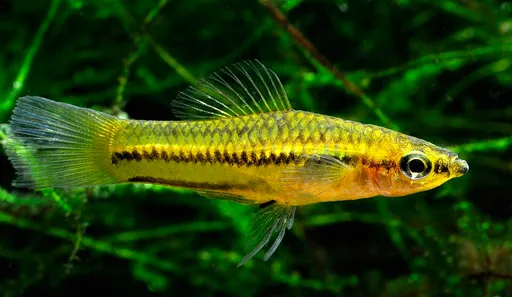
Pygmy swordtail
Xiphophorus pygmaeus
Freshwater1.6 in (4 cm) · 11 gal (40 L)75–82°F (24–28°C)Sailfin molly
Poecilia latipinna
FreshwaterBrackish4.7 in (12 cm) · 24 gal (90 L)70–79°F (21–26°C)1 variety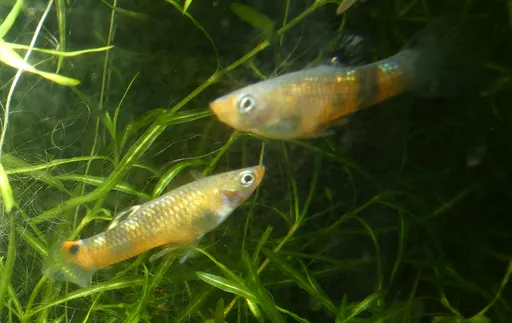
Scarlet livebearer
Micropoecilia picta
FreshwaterBrackish1.6 in (4 cm) · 16 gal (60 L)72–82°F (22–28°C)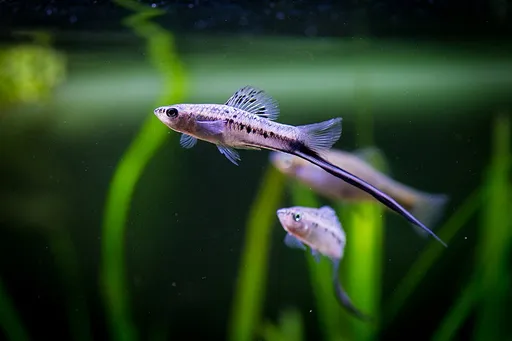
Sheepshead swordtail
Xiphophorus birchmanni
Freshwater2.8 in (7 cm) · 24 gal (90 L)68–81°F (20–27°C)Shortfin molly
Poecilia mexicana
FreshwaterBrackish4.3 in (11 cm) · 32 gal (120 L)72–82°F (22–28°C)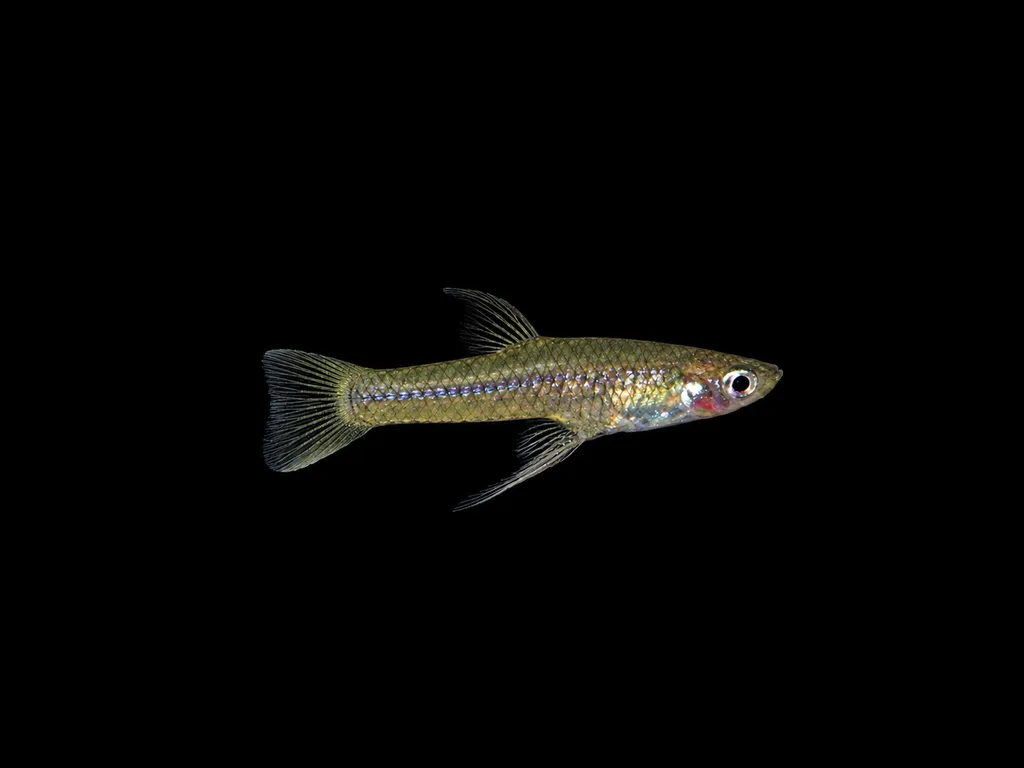
Sicklefin livebearer
Girardinus falcatus
Freshwater2.6 in (6.5 cm) · 11 gal (40 L)68–82°F (20–28°C)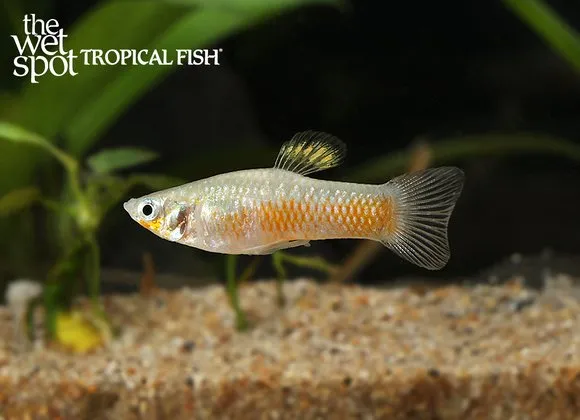
Southern molly
Poecilia vivipara
Freshwater3.1 in (8 cm) · 20 gal (75 L)72–81°F (22–27°C)Southern platy
Xiphophorus maculatus
Freshwater2.8 in (7 cm) · 15 gal (55 L)68–79°F (20–26°C)4 varieties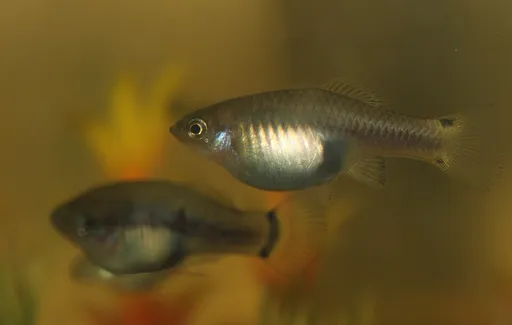
Spiketail platy
Xiphophorus xiphidium
Freshwater2 in (5 cm) · 16 gal (60 L)68–79°F (20–26°C)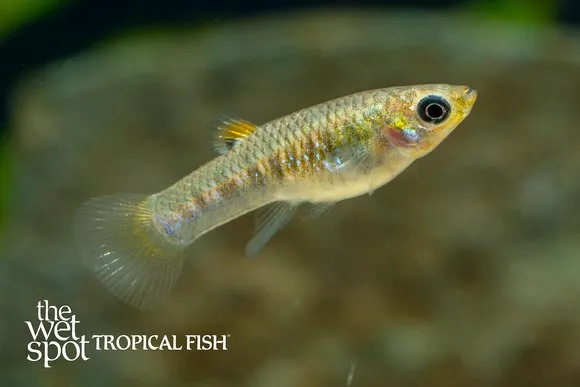
Tiburon limia
Limia tridens
Freshwater2 in (5 cm) · 14 gal (54 L)72–81°F (22–27°C)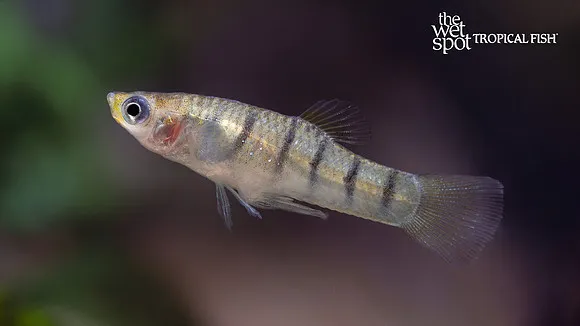
Tiger limia
Limia islai
Freshwater2.6 in (6.5 cm) · 14 gal (54 L)72–81°F (22–27°C)Variable platy
Xiphophorus variatus
Freshwater2.8 in (7 cm) · 15 gal (55 L)68–79°F (20–26°C)2 varieties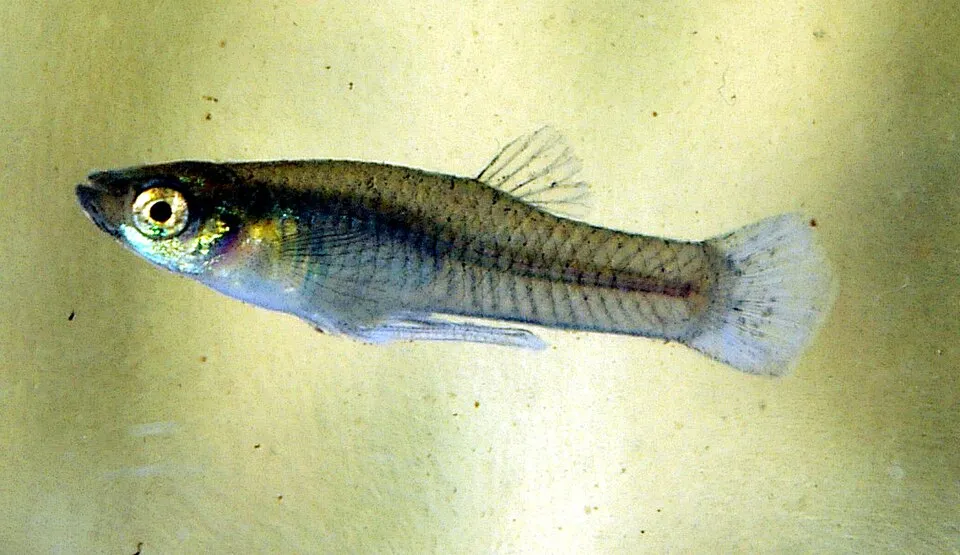
Western mosquitofish
Gambusia affinis
Freshwater3 in (7.5 cm) · 7 gal (25 L)64–81°F (18–27°C)
Planning a tank?
TankBud checks stocking and water fit as you build a tank, then tracks water tests, reminders and photos once it is running.
Track your tanksMaintain tanks for clients? See TankBud Pro