Variety of Sailfin molly
Dalmatian molly
Poecilia latipinna
The named variety of Poecilia latipinna · See the species →
FreshwaterBrackishFish
Care at a glance
- Temperature
- 70–79°F
- 21–26°C
- pH
- 7.0–8.0
- Adult size
- 4.7 in
- 12 cm
- Minimum tank
- 24 gal
- 90 L
- Temperament
- Mostly peaceful
- Social behavior
- Social
- Swim level
- Middle
- Difficulty
- Easy
- Breeding
- Easy
- Rarity
- Common
- Family
- Poeciliidae
Overview
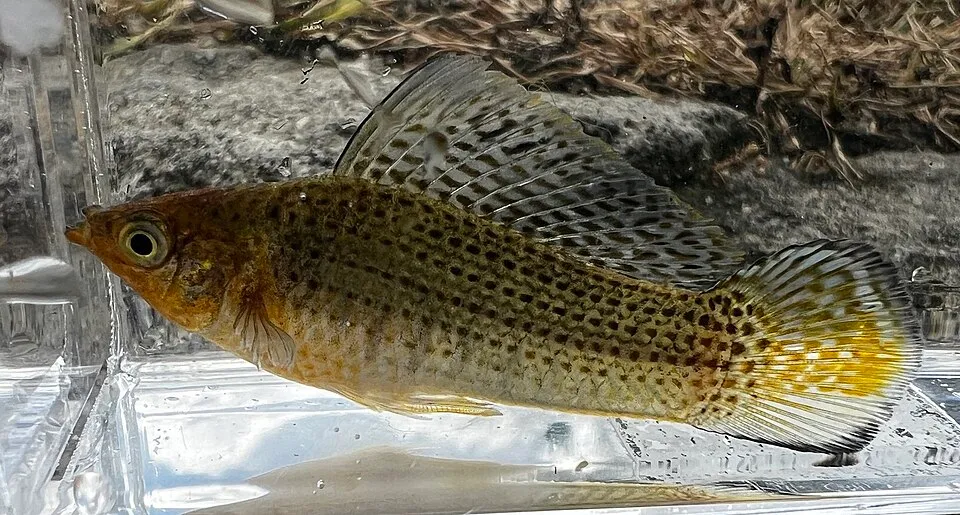
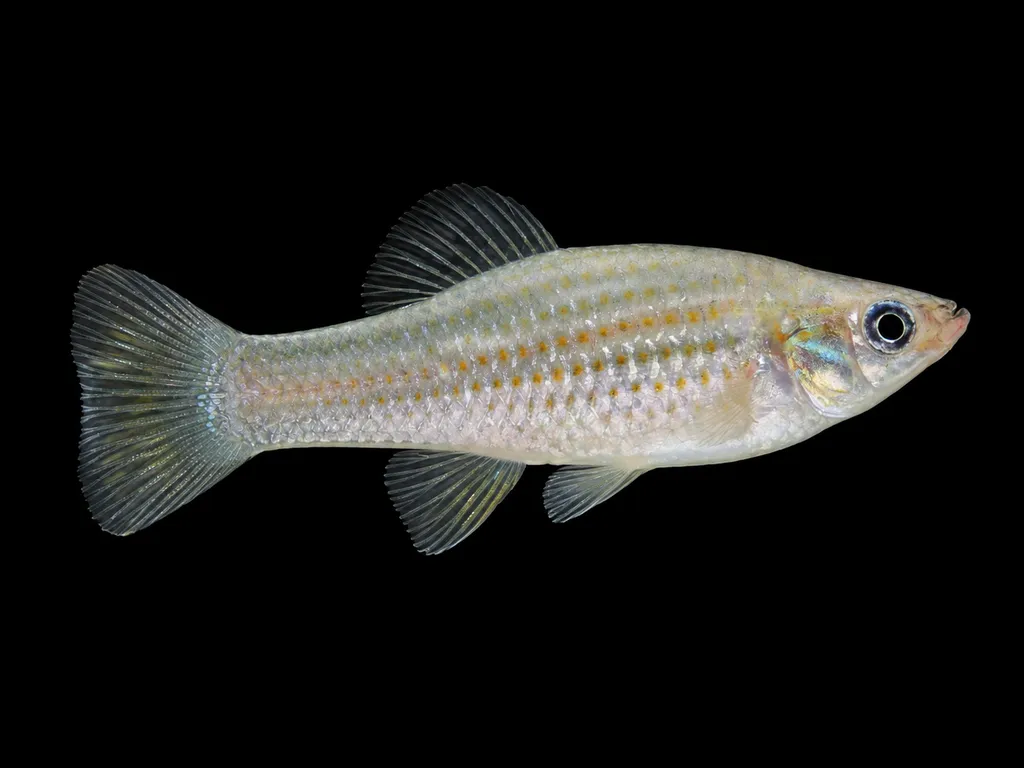
A dalmatian molly is a white fish with irregular black spots and blotches, and the amount of black runs from mostly white fish to mostly black ones. No two carry the same pattern, and shops ship from a batch rather than the fish pictured, so the black on the fish that arrives rarely matches the listing photo. The same spotting is sold on standard, lyretail and balloon bodies, and some shops sell the look as marbled or salt-and-pepper molly. Mollies with the black laid out in streaks rather than blotches usually go by harlequin instead.
In the wild
Wild mollies are sometimes caught with black blotches. Breeders working in the late 1920s and early 1930s, Bill Schomberg of Crescent Fish Farm in New Orleans among the first, bred the blackest fish together until they had a solid black molly. Bill Allen, writing in Tropical Fish Hobbyist, traces the marbled molly to the part-blotched fish thrown along the way and has seen the same fish sold as salt-and-pepper or dalmatian. Shop mollies are hybrids of the sailfin and short-finned species, so the label moves with the seller: most list the dalmatian as Poecilia latipinna, some as P. sphenops, and one shop files its standard fish under latipinna and its balloons under sphenops. No breeder, farm, country or date is on record for the dalmatian line itself.
Good to know
The black sits in macromelanophores, pigment cells about three times the size of the small ones that give a molly its normal gray, and where they overlap the spots merge into blotches. In a black-spotted wild sailfin pair from Key Largo, Florida, the spotting traced to a single gene with incomplete dominance and very uneven expression; no study has tested trade dalmatians for it. Wild spotted sailfins are born unspotted, reach the full pattern only after maturity and keep adding black with age, males more than females. Keepers see the same darkening in dalmatians, some almost fully black within six or seven months. Marbled mollies bred together throw fry from solid black to no black at all, so the pattern does not come true.
Did you know
The spotting gene found in wild Key Largo sailfins responds to temperature: fry raised at 68°F (20°C) spotted most heavily and fry raised at 82°F (28°C) least. Carriers kept at 77–82°F (25–28°C) stayed almost unspotted for more than 200 days while identical fish at 72°F (22°C) kept adding black, and warm-raised carriers developed spots after a move to cooler water.
Weekly picks
Tank mates
Dalmatian molly is a mostly peaceful, social species that keeps to the middle. These picks share a community profile with it, are safe together in both directions, and overlap on water type, temperature and pH.
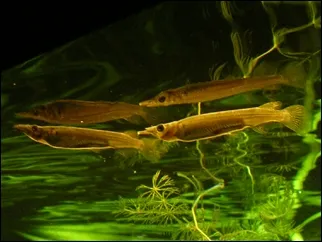
Wrestling halfbeak
Dermogenys pusilla
FreshwaterBrackish2.8 in (7 cm) · 25 gal (95 L)75–82°F (24–28°C)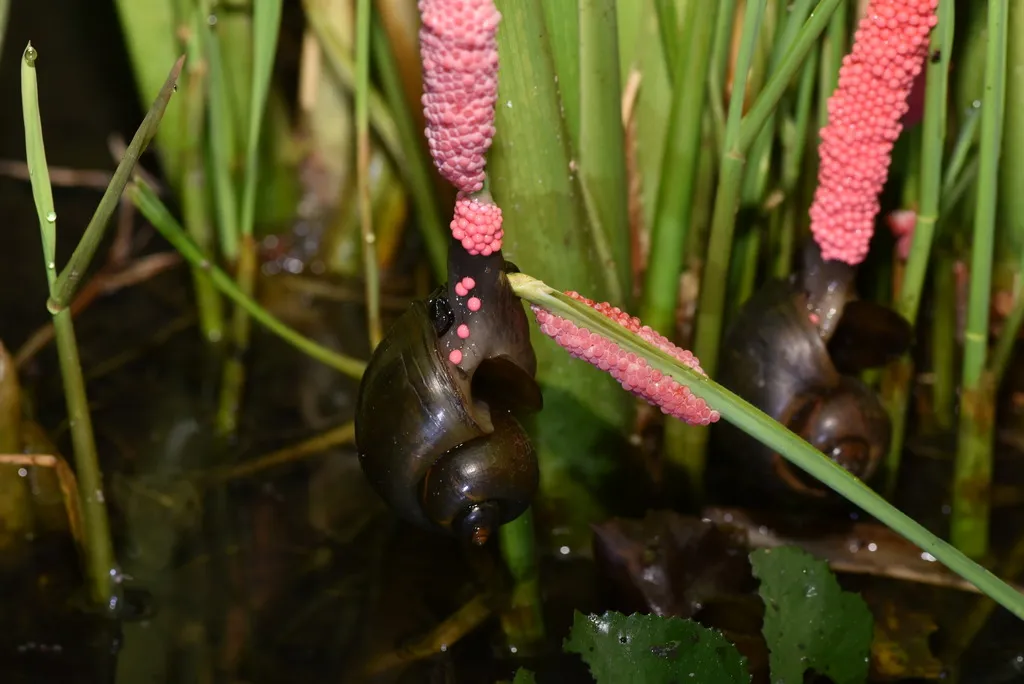
Apple snail
Pomacea canaliculata
Freshwater5.9 in (15 cm) · 21 gal (80 L)64–81°F (18–27°C)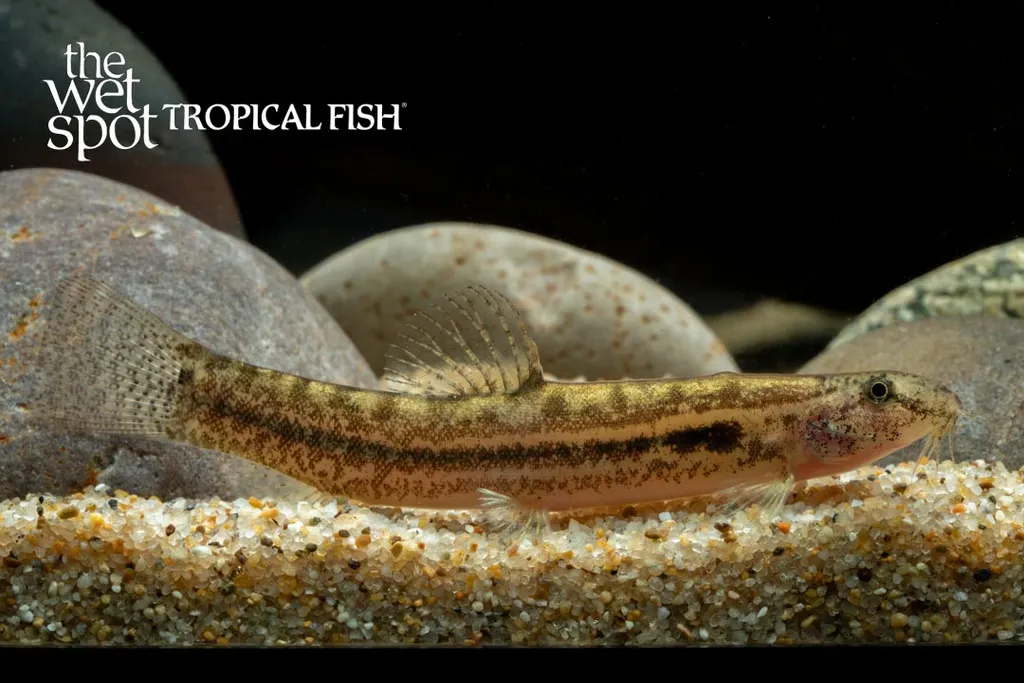
Guntea loach
Lepidocephalichthys guntea
Freshwater4.7 in (12 cm) · 24 gal (90 L)64–82°F (18–28°C)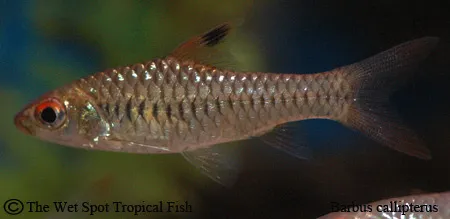
Clipper barb
Enteromius callipterus
Freshwater3.5 in (9 cm) · 24 gal (90 L)72–81°F (22–27°C)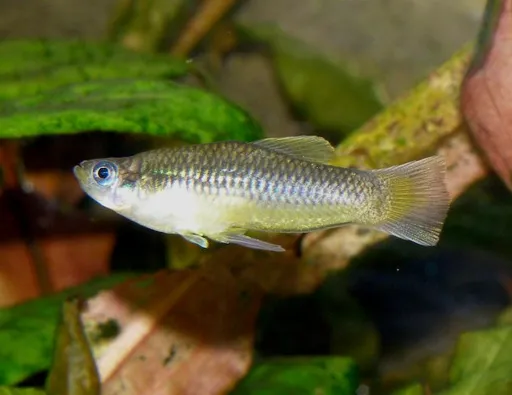
Blue-eyed livebearer
Priapella intermedia
Freshwater2.8 in (7 cm) · 24 gal (90 L)72–82°F (22–28°C)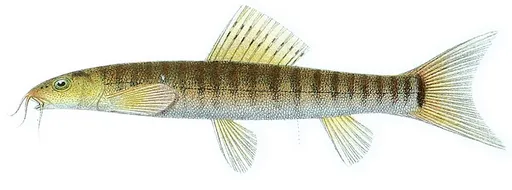
Barred loach
Nemacheilus fasciatus
Freshwater3.1 in (8 cm) · 24 gal (90 L)68–77°F (20–25°C)
Common questions
Is a Dalmatian molly a different species from the Sailfin molly?
No. A Dalmatian molly is a variety of the Sailfin molly, Poecilia latipinna, and it wants the same tank, water and food as the species.
What size tank does a Dalmatian molly need?
A Dalmatian molly needs at least 24 gal (90 L). It spends most of its time in the middle.
How big does a Dalmatian molly get?
An adult Dalmatian molly reaches about 4.7 in (12 cm).
Related species
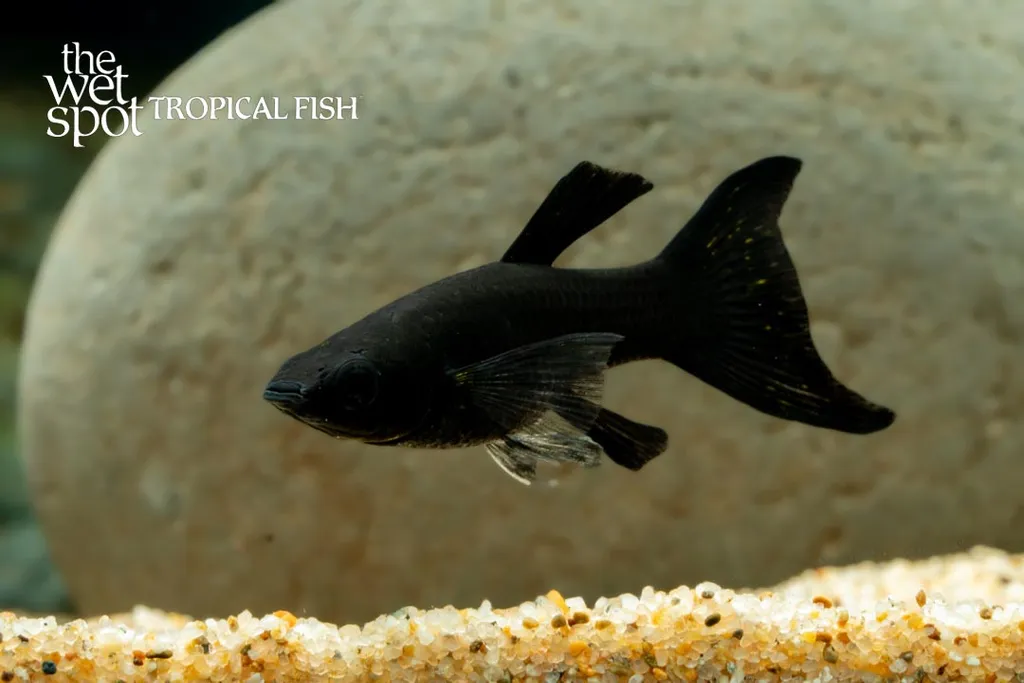 4.7 in (12 cm)24 gal (90 L)70–82°F (21–28°C)
Black molly
Poecilia sphenops
4.7 in (12 cm) · 24 gal (90 L)
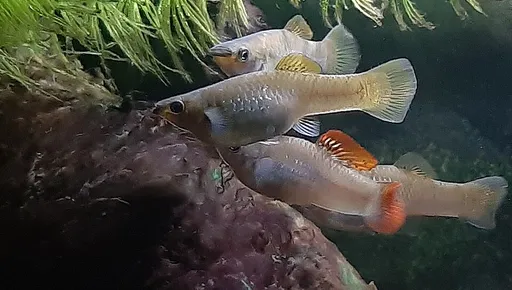 3.9 in (10 cm)24 gal (90 L)72–82°F (22–28°C)
Liberty molly
Poecilia salvatoris
3.9 in (10 cm) · 24 gal (90 L)
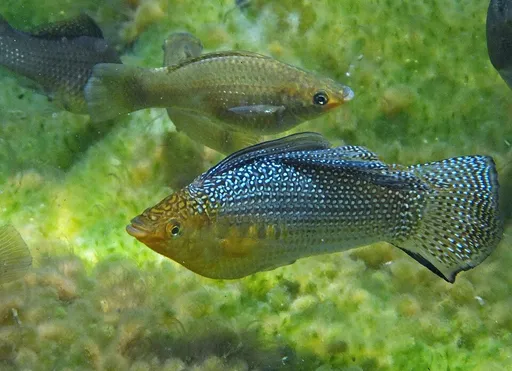 5.9 in (15 cm)30 gal (113 L)75–82°F (24–28°C)
Giant sailfin molly
Poecilia velifera
5.9 in (15 cm) · 30 gal (113 L)
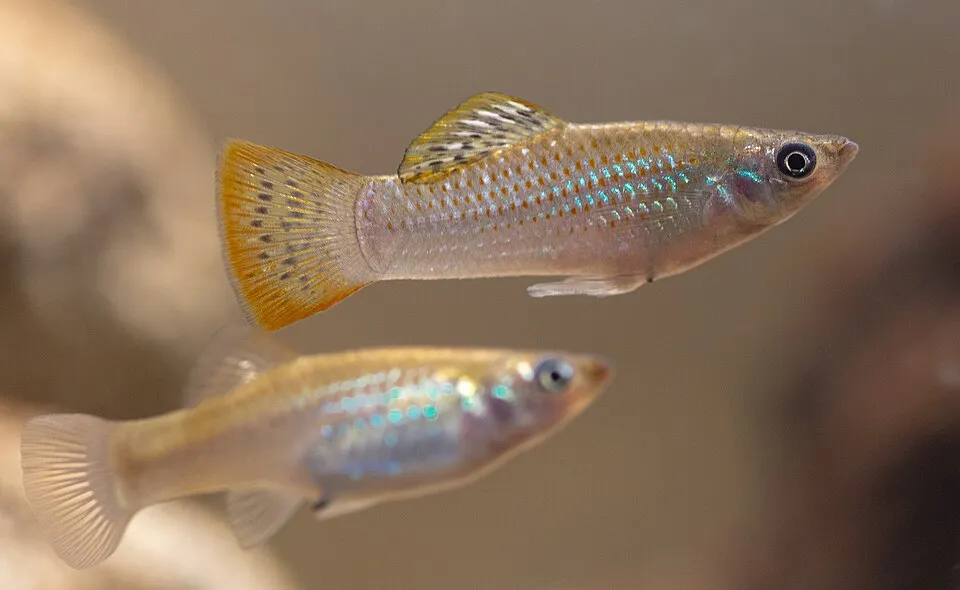 4.3 in (11 cm)32 gal (120 L)72–82°F (22–28°C)
Shortfin molly
Poecilia mexicana
4.3 in (11 cm) · 32 gal (120 L)
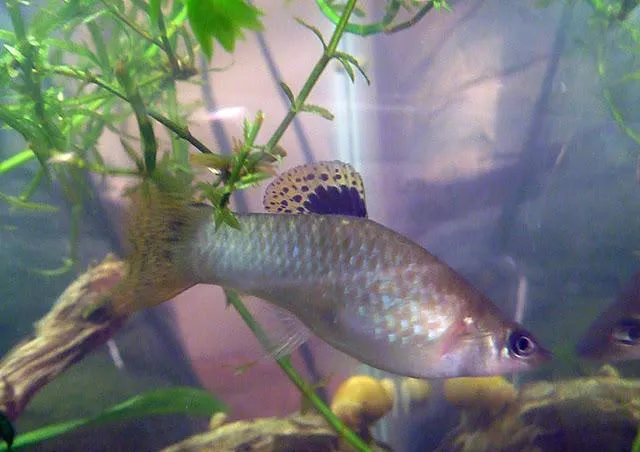 3.9 in (10 cm)26 gal (100 L)72–86°F (22–30°C)
Gill's molly
Poecilia gillii
3.9 in (10 cm) · 26 gal (100 L)
 3.5 in (9 cm)20 gal (75 L)68–82°F (20–28°C)
Amazon molly
Poecilia formosa
3.5 in (9 cm) · 20 gal (75 L)