Siamese flying barb
Laubuka siamensis
Also known as Siamese laubuka, Siamese hatchet
FreshwaterFish
Care at a glance
- Temperature
- 72–81°F
- 22–27°C
- pH
- 6.5–7.5
- Adult size
- 2.6 in
- 6.5 cm
- Minimum tank
- 24 gal
- 90 L
- Temperament
- Peaceful
- Social behavior
- Schooling
- Swim level
- Top
- Difficulty
- Easy
- Breeding
- No record
- Rarity
- Rare
- Family
- Danionidae
- Origin
- Thailand
Overview
The Siamese flying barb is a dedicated surface fish for the top layer of a peaceful community tank. It is a good first fish.
Did you know
The Siamese flying barb does not truly glide the way hatchetfish do. It launches clear of the water with a beat of its pectoral fins. Keepers usually meet that talent the first time they leave the lid open.
Caring for the Siamese flying barb
Keep Siamese flying barbs in a group of at least six. A tank of 24 gal (90 L) or more with plenty of open surface suits a group. Add some floating or tall plants for cover. A tight-fitting lid is essential, because they can jump and will find any gap.
Give them calm water at 72 to 81°F (22 to 27°C) and a pH of 6.5 to 7.5, on the soft to neutral side. They feed at the top, taking floating flake and small foods the instant they land. Add small insects and frozen bloodworm and daphnia.
Siamese flying barbs are a peaceful schooling species, and a lone fish feels exposed. As surface fish, they layer well above midwater rasboras and bottom-dwelling loaches to fill the whole tank. Their breeding in aquariums is not documented, though the genus scatters eggs among surface vegetation.
Good to know
The Siamese flying barb, Laubuka siamensis, belongs to the family Danionidae. Like other flying barbs, it has a deep chest and greatly enlarged pectoral fins. They give it the muscle and surface area behind its leaps after insects at the waterline.
In the wild
The Siamese flying barb lives at the surface of streams, canals and quiet pools across Thailand. Its water is warm and gently flowing, with plants near the top. It often moves into flooded forest in the wet season.
Weekly picks
Tank mates
The Siamese flying barb is a peaceful, schooling species that keeps to the top. These picks share a community profile with it, are safe together in both directions, and overlap on water type, temperature and pH.
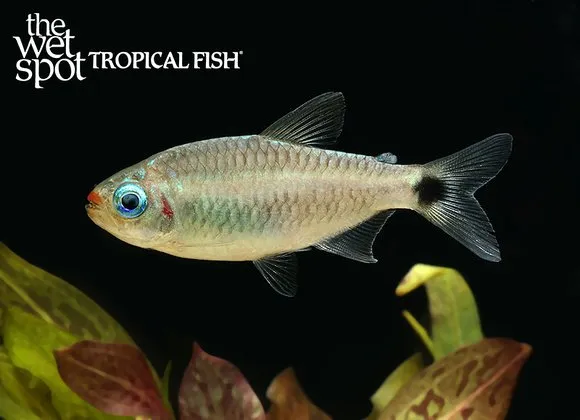
Cosmops tetra
Bario cosmops
Freshwater2.6 in (6.5 cm) · 24 gal (90 L)73–82°F (23–28°C)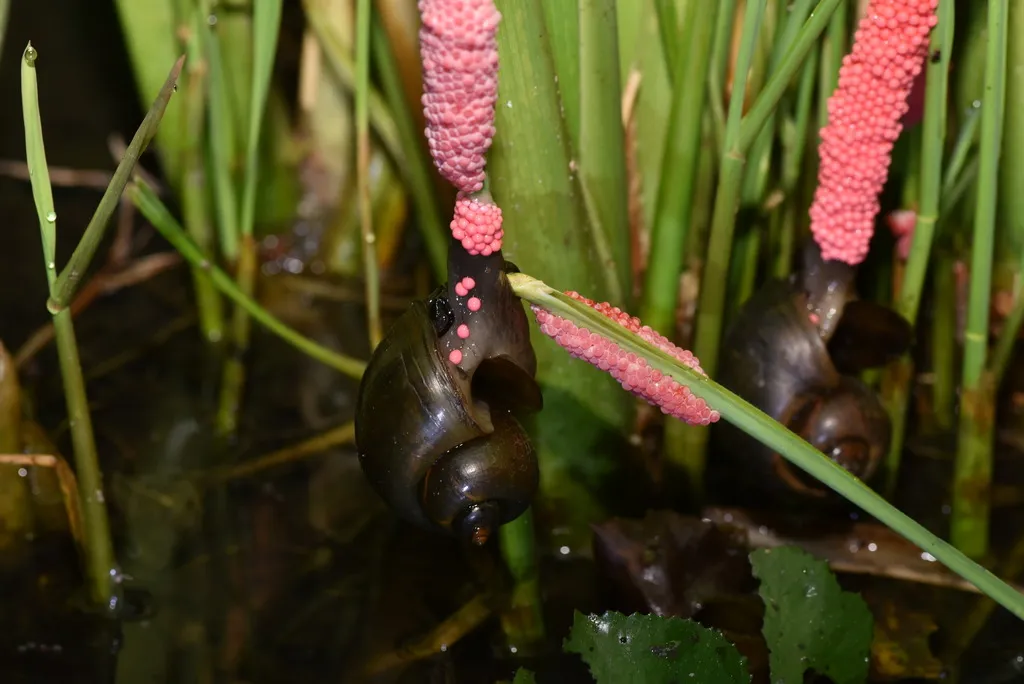
Apple snail
Pomacea canaliculata
Freshwater5.9 in (15 cm) · 21 gal (80 L)64–81°F (18–27°C)
Leopard cory
Brochis leopardus
Freshwater2.8 in (7 cm) · 24 gal (90 L)72–79°F (22–26°C)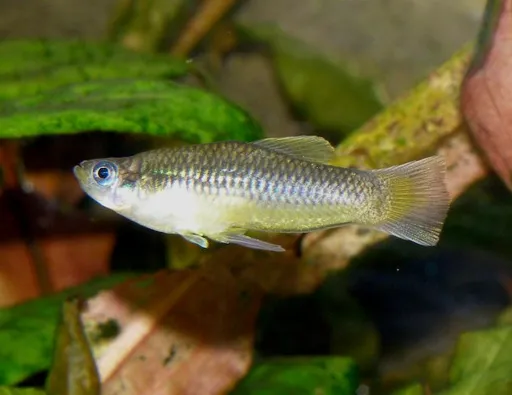
Blue-eyed livebearer
Priapella intermedia
Freshwater2.8 in (7 cm) · 24 gal (90 L)72–82°F (22–28°C)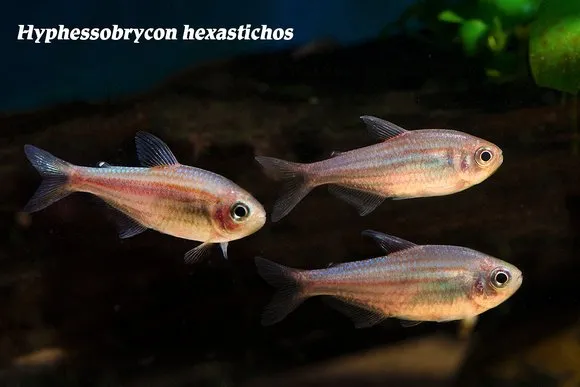
Hexastichos tetra
Hyphessobrycon hexastichos
Freshwater2.6 in (6.5 cm) · 24 gal (90 L)72–81°F (22–27°C)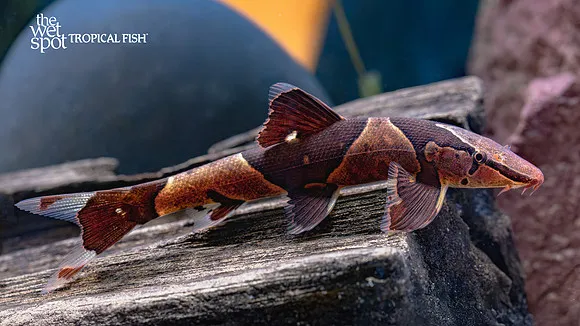
Mekong lizard loach
Homaloptera confuzona
Freshwater3.2 in (8.2 cm) · 24 gal (90 L)70–81°F (21–27°C)
Common questions
What size tank does a Siamese flying barb need?
A Siamese flying barb needs at least 24 gal (90 L). It spends most of its time in the top.
What temperature and pH does a Siamese flying barb need?
A Siamese flying barb is comfortable at 72–81°F (22–27°C) with a pH of 6.5–7.5.
What does a Siamese flying barb eat?
A Siamese flying barb feeds at the top, taking floating flake and small foods the instant they land. It also eats small insects and frozen bloodworm and daphnia.
How big does a Siamese flying barb get?
An adult Siamese flying barb reaches about 2.6 in (6.5 cm).
Does a Siamese flying barb need a group?
Yes. A Siamese flying barb is a schooling species and should be kept in a group, not singly.
Related species
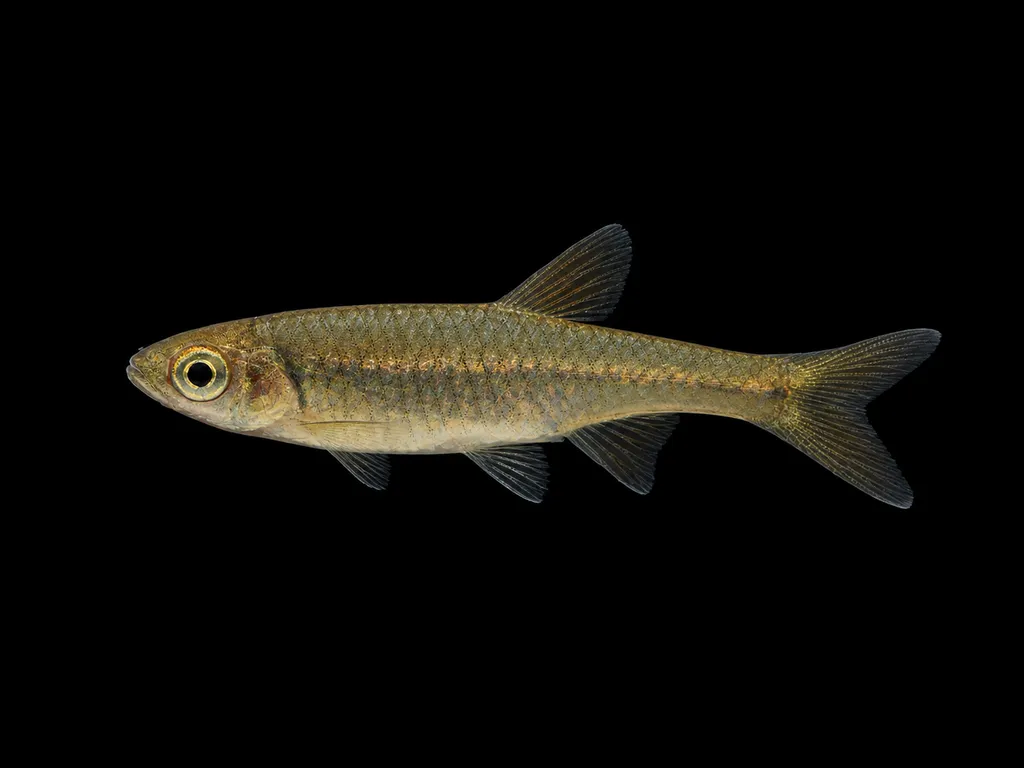 2.8 in (7 cm)24 gal (90 L)72–81°F (22–27°C)
Bangka rasbora
Rasbora bankanensis
2.8 in (7 cm) · 24 gal (90 L)
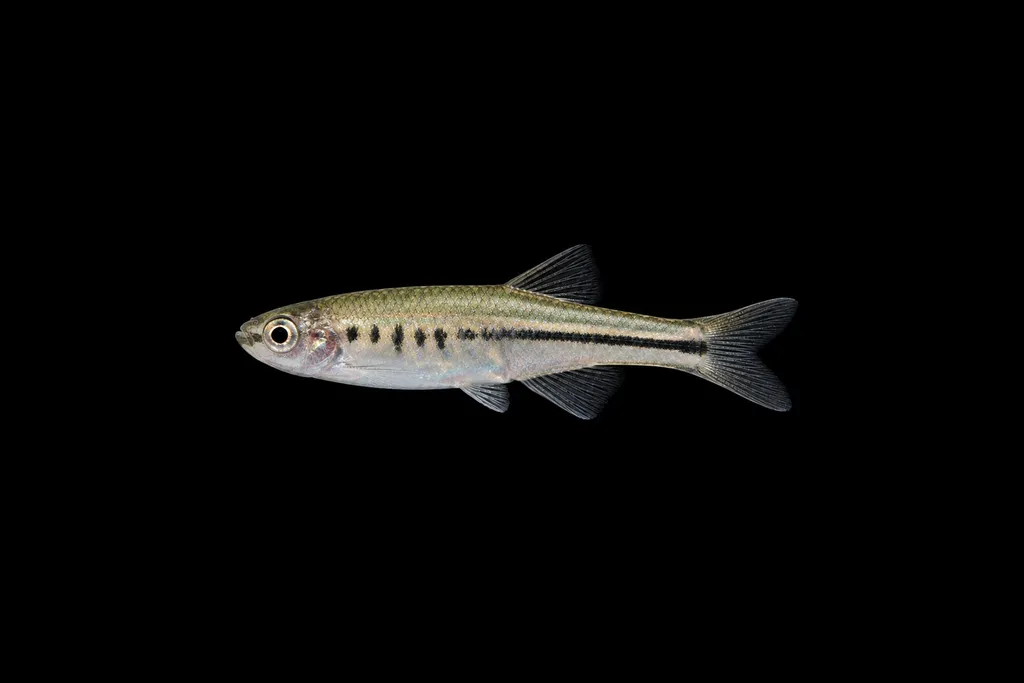 2.8 in (7 cm)24 gal (90 L)64–77°F (18–25°C)
Interrupted danio
Devario interruptus
2.8 in (7 cm) · 24 gal (90 L)
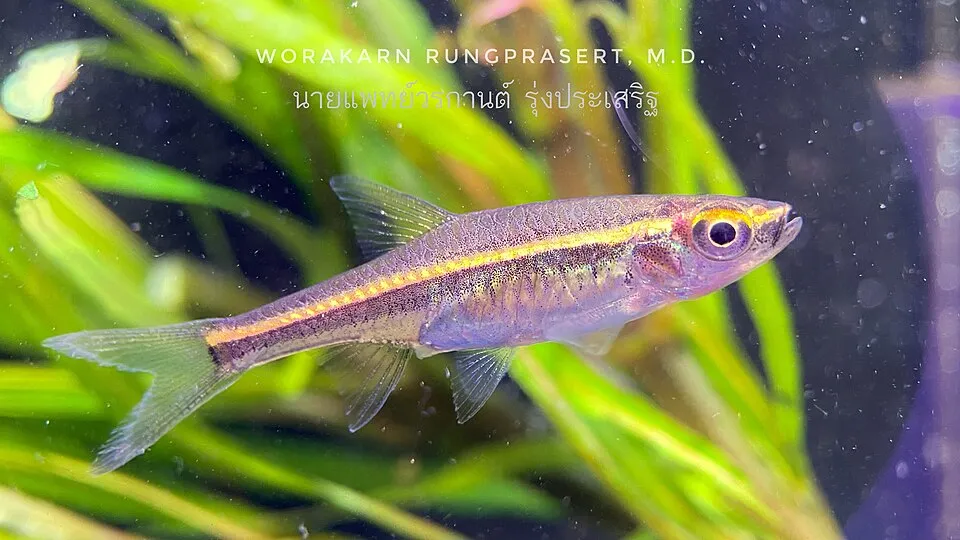 2.8 in (7 cm)22 gal (85 L)72–79°F (22–26°C)
Red-striped rasbora
Trigonopoma pauciperforatum
2.8 in (7 cm) · 22 gal (85 L)
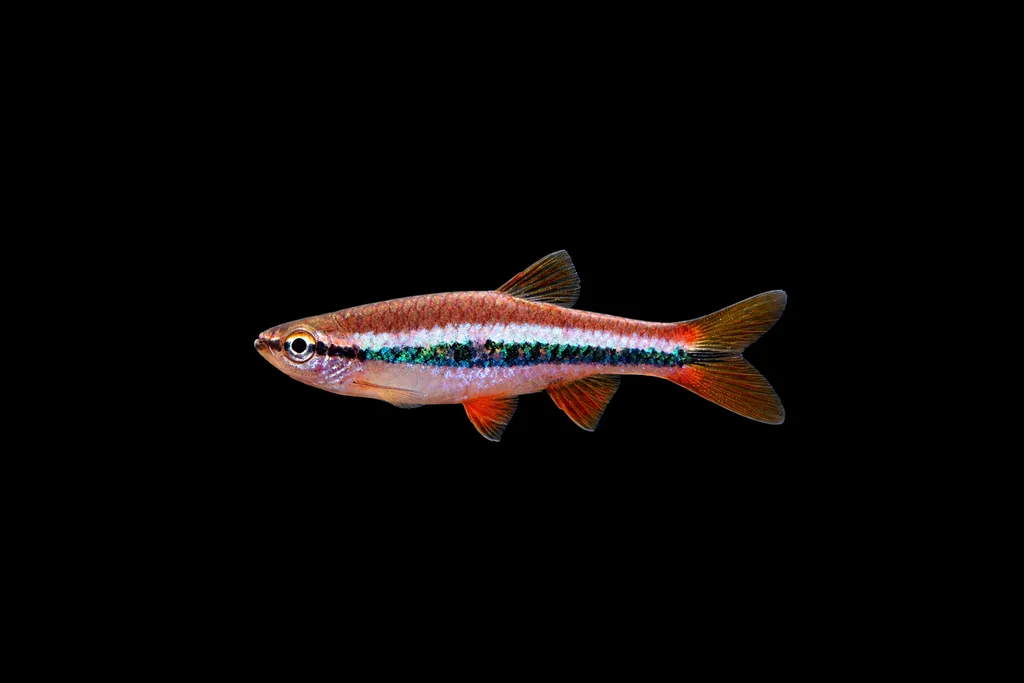 2.8 in (7 cm)24 gal (90 L)73–81°F (23–27°C)
Yap's rasbora
Rasbora patrickyapi
2.8 in (7 cm) · 24 gal (90 L)
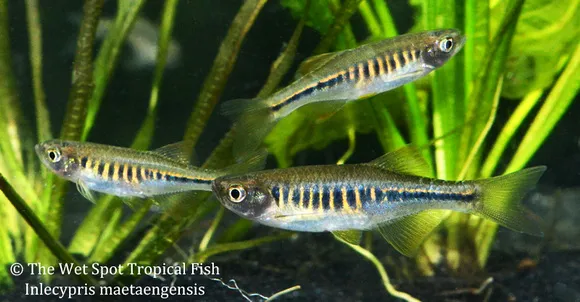 2.4 in (6 cm)20 gal (75 L)64–77°F (18–25°C)
Fire bar danio
Devario maetaengensis
2.4 in (6 cm) · 20 gal (75 L)
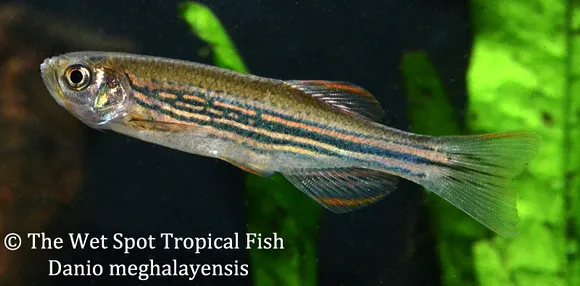 2.4 in (6 cm)24 gal (90 L)64–75°F (18–24°C)
Meghalaya danio
Danio meghalayensis
2.4 in (6 cm) · 24 gal (90 L)