Red-striped rasbora
Trigonopoma pauciperforatum
Also known as Redstripe rasbora, Glowlight rasbora, Rasbora pauciperforata, Rasbora agilis, Trigonopoma pauciperforata, Red line rasbora
FreshwaterFish
Care at a glance
- Temperature
- 72–79°F
- 22–26°C
- pH
- 5.0–6.8
- Adult size
- 2.8 in
- 7 cm
- Minimum tank
- 22 gal
- 85 L
- Temperament
- Peaceful
- Social behavior
- Schooling
- Swim level
- Middle
- Difficulty
- Easy
- Breeding
- Medium
- Rarity
- Rare
- Family
- Danionidae
- Origin
- Malay Peninsula, Sumatra and Borneo
Overview
Red striped rasboras are peaceful, shoaling fish that should be kept in a group of at least eight, as a good shoal keeps them confident and lights up the glowing red line that runs along their bodies. They swim in the middle water and suit a quiet community or a planted blackwater tank with other small, gentle species. Avoid boisterous or nippy tankmates that would keep them hiding. Feed small foods they can take mid water, such as fine flake, micro pellets, and frozen or live daphnia and cyclops. A tank around 85 liters or larger will hold a lively shoal.
In the wild
This rasbora comes from the soft, acidic blackwater streams and peat swamps of Southeast Asia, where the water is dark with tannins and dimly lit beneath forest cover. It shows its best in warm water of about 21–26 C and an acidic pH of 6.0–7.0. Recreate that with a dark substrate, driftwood, leaf litter, and gentle filtration, and let botanicals stain the water a soft tea color. Subdued lighting and generous planting complete the setting and make the red stripe stand out.
Good to know
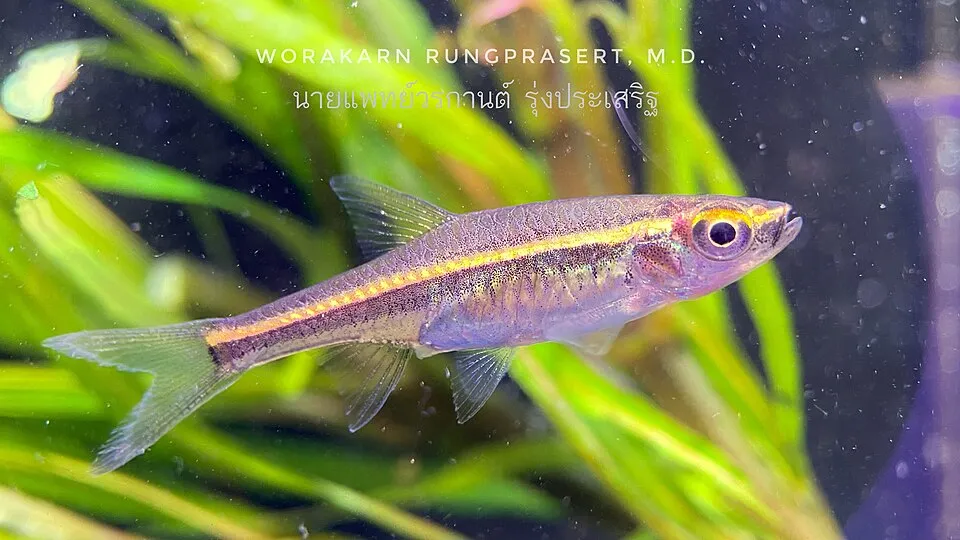
Trigonopoma pauciperforatum is a slender member of the family Danionidae that reaches around 7 cm. Its signature feature is a brilliant red to orange line that runs the length of the body above a darker band, a marking that seems to glow against dark water. It was once placed in the genus Rasbora, as Rasbora pauciperforata; the epithet took its neuter ending when the fish moved to Trigonopoma. It is an egg scattering, non guarding spawner that can be bred in soft, acidic water with moderate effort.
Did you know
The red stripe that gives this fish its name is at its most vivid in soft, tannin stained blackwater, where it can look almost like a glowing neon line. In brighter, harder water the color fades, which is why keepers who want the full effect go to the trouble of recreating a dark, acidic tank.
Weekly picks
Tank mates
Red-striped rasbora is a peaceful, schooling species that keeps to the middle. These picks share a community profile with it, are safe together in both directions, and overlap on water type, temperature and pH.
Siamese flying barb
Laubuka siamensis
Freshwater2.6 in (6.5 cm) · 24 gal (90 L)72–81°F (22–27°C)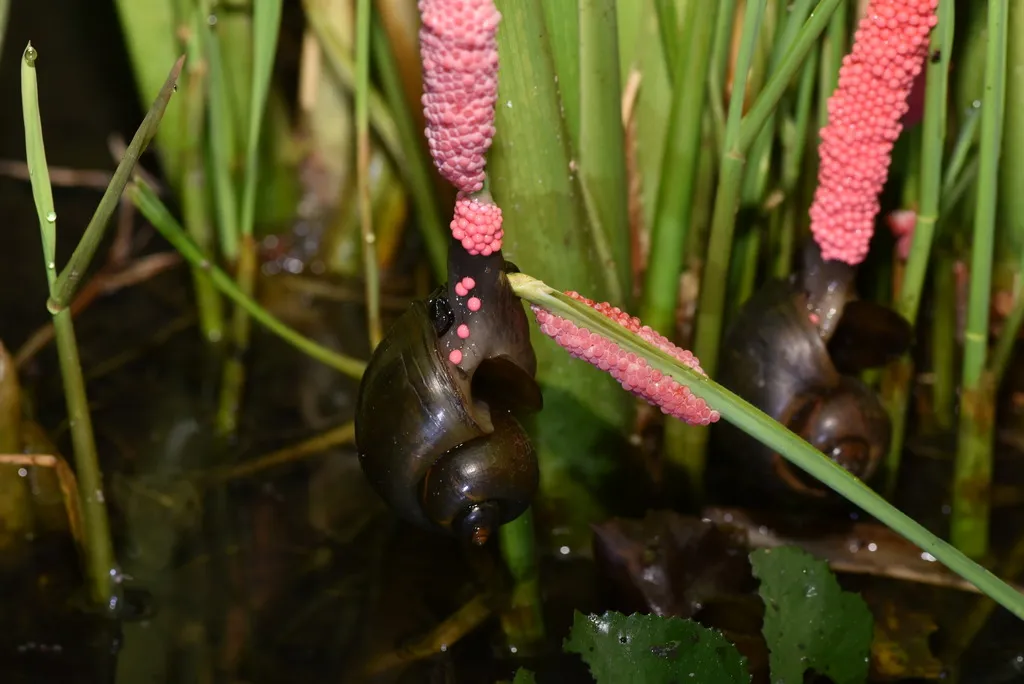
Apple snail
Pomacea canaliculata
Freshwater5.9 in (15 cm) · 21 gal (80 L)64–81°F (18–27°C)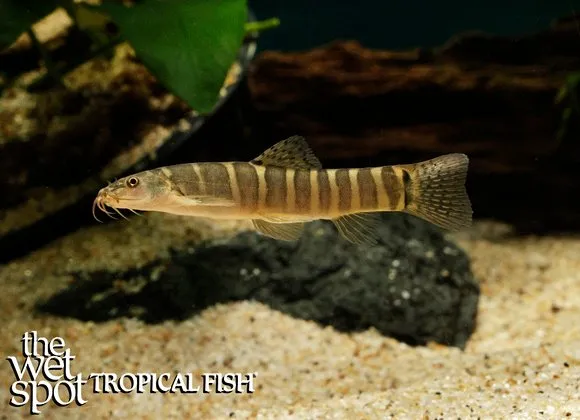
Koh Chang loach
Schistura kohchangensis
Freshwater3.5 in (9 cm) · 24 gal (90 L)72–81°F (22–27°C)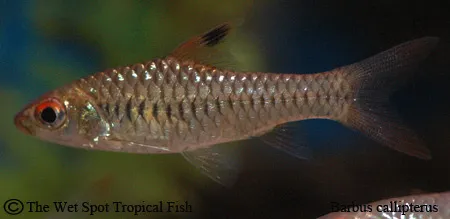
Clipper barb
Enteromius callipterus
Freshwater3.5 in (9 cm) · 24 gal (90 L)72–81°F (22–27°C)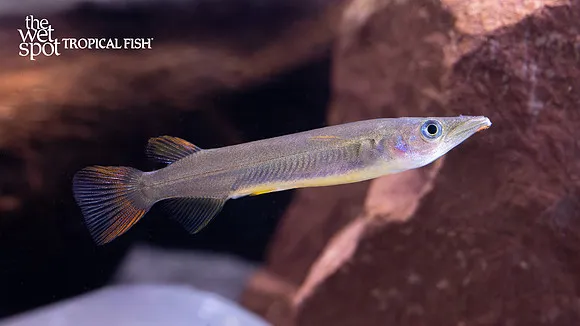
Rex halfbeak
Nomorhamphus rex
Freshwater2.2 in (5.5 cm) · 20 gal (75 L)72–79°F (22–26°C)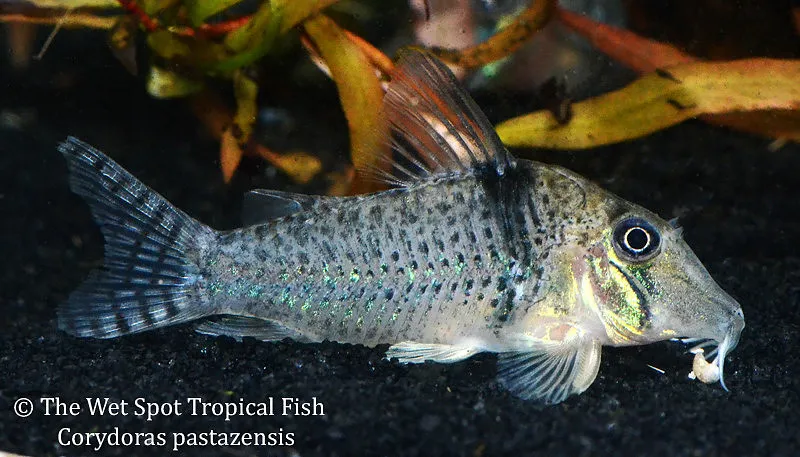
Pastaza cory
Corydoras pastazensis
Freshwater2.8 in (7 cm) · 22 gal (85 L)72–82°F (22–28°C)
Common questions
What size tank does a Red-striped rasbora need?
A Red-striped rasbora needs at least 22 gal (85 L). It spends most of its time in the middle.
What temperature and pH does a Red-striped rasbora need?
A Red-striped rasbora is comfortable at 72–79°F (22–26°C) with a pH of 5.0–6.8.
How big does a Red-striped rasbora get?
An adult Red-striped rasbora reaches about 2.8 in (7 cm).
Does a Red-striped rasbora need a group?
Yes. A Red-striped rasbora is a schooling species and should be kept in a group, not singly.
Related species
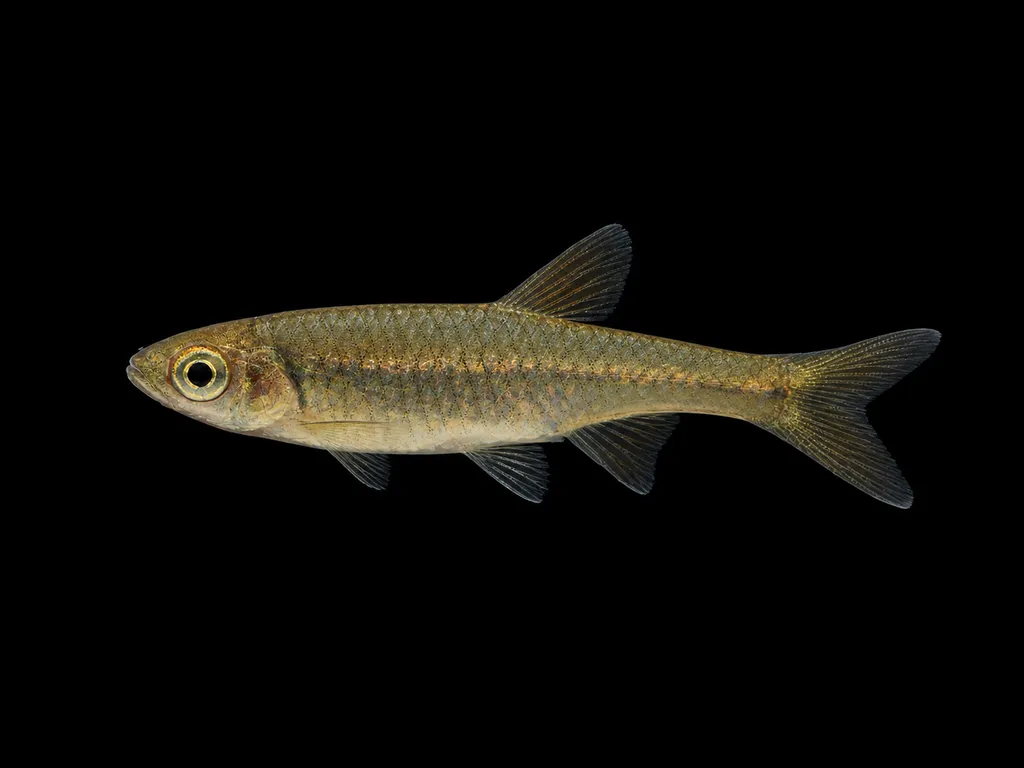 2.8 in (7 cm)24 gal (90 L)72–81°F (22–27°C)
Bangka rasbora
Rasbora bankanensis
2.8 in (7 cm) · 24 gal (90 L)
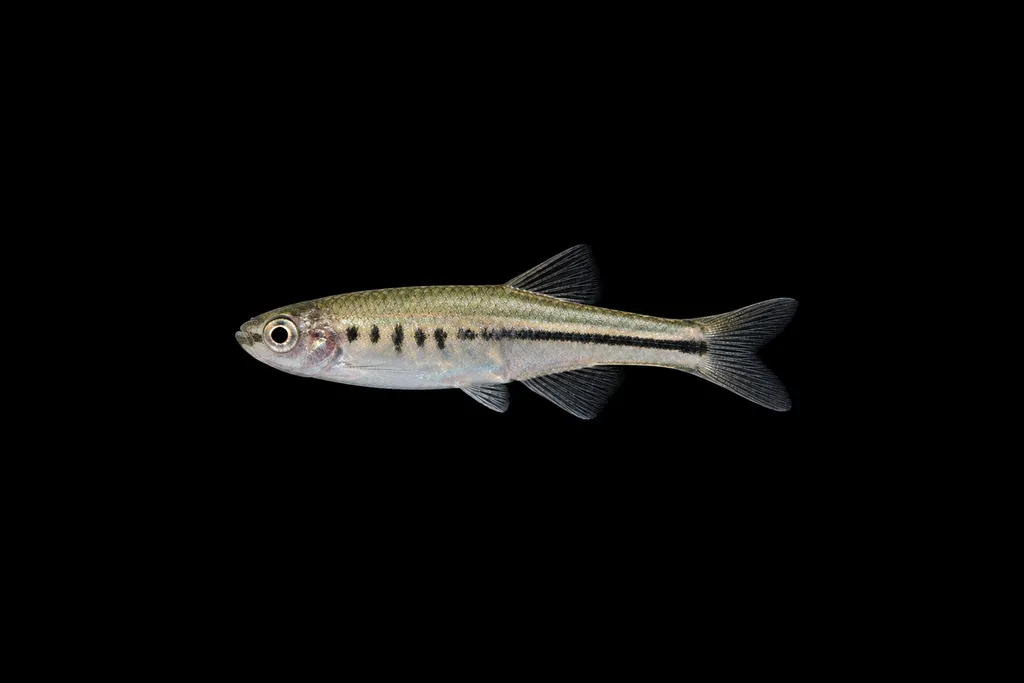 2.8 in (7 cm)24 gal (90 L)64–77°F (18–25°C)
Interrupted danio
Devario interruptus
2.8 in (7 cm) · 24 gal (90 L)
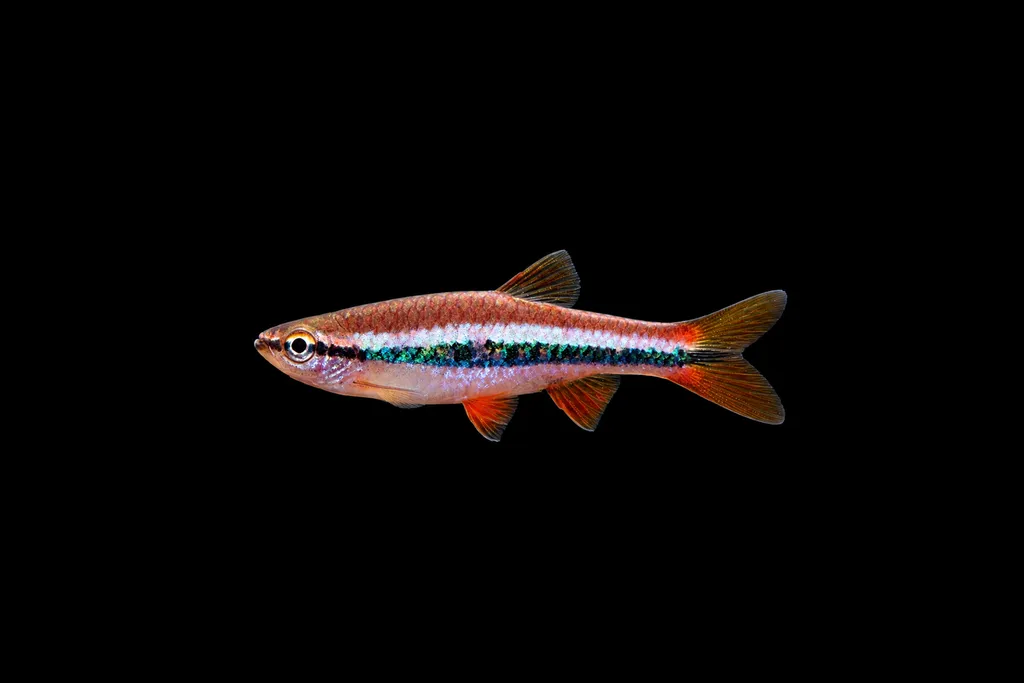 2.8 in (7 cm)24 gal (90 L)73–81°F (23–27°C)
Yap's rasbora
Rasbora patrickyapi
2.8 in (7 cm) · 24 gal (90 L)
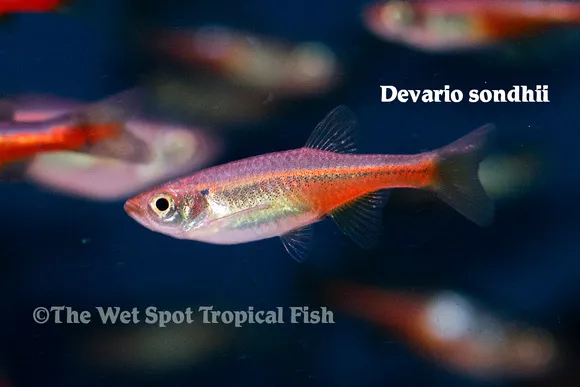 3.1 in (8 cm)24 gal (90 L)68–79°F (20–26°C)
Sondhi danio
Devario sondhii
3.1 in (8 cm) · 24 gal (90 L)
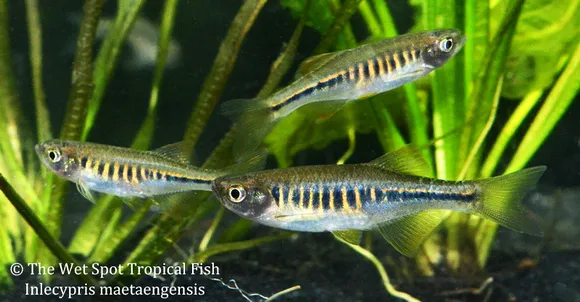 2.4 in (6 cm)20 gal (75 L)64–77°F (18–25°C)
Fire bar danio
Devario maetaengensis
2.4 in (6 cm) · 20 gal (75 L)
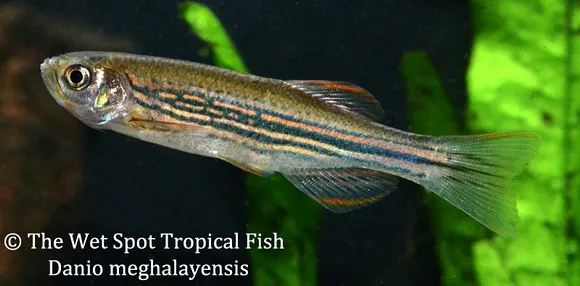 2.4 in (6 cm)24 gal (90 L)64–75°F (18–24°C)
Meghalaya danio
Danio meghalayensis
2.4 in (6 cm) · 24 gal (90 L)