Red aquarium plants
Red plants are the contrast in a planted tank, from a single tiger lotus to a whole bank of red stems. Most stay green in low light and only turn red under strong lighting, CO2 and iron, so the color rewards a well-run tank rather than coming for free. This list gathers the reliable reds and oranges, from rotala and ludwigia to alternanthera and red swords. Each profile lists the light and CO2 a plant needs.
At a glance
- Height
- 1.2–23.6 in
- 1.2 in (3 cm) to 23.6 in (60 cm); half the list stays at 11.8 in (30 cm) or under
- Temperature
- 72–82°F
- 22–28°C, most of the list
- Light
- 2 low light
- 14 medium light · 24 high light
- CO₂
- 2 no CO₂ needed
- 25 CO₂ beneficial · 13 CO₂ required
- Growth
- 5 slow growing
- 19 medium growth · 16 fast growing
- Difficulty
- 16 easy
- 11 medium · 13 difficult
32 plants and 8 varieties
Start here
Reds that do not need CO2
The ludwigia repens is marked easy in medium light with no CO2 required, a 19.7 inch (50 cm) stem whose leaves turn red on top and stay green underneath. The cryptocoryne wendtii red is the red plant for low light, marked beginner at 5.9 inches (15 cm), and bronze-red rather than scarlet. The red tiger lotus is a bulb marked easy that sends up red, spotted leaves to 23.6 inches (60 cm). The red root floater floats, turns red under the bright light at the surface and needs no CO2. The ludwigia super red is marked easy and lists high light, the brightest red on this list without injection. The red rubin sword is a broad-leaved sword marked easy, 19.7 inches (50 cm), with red-brown new leaves.
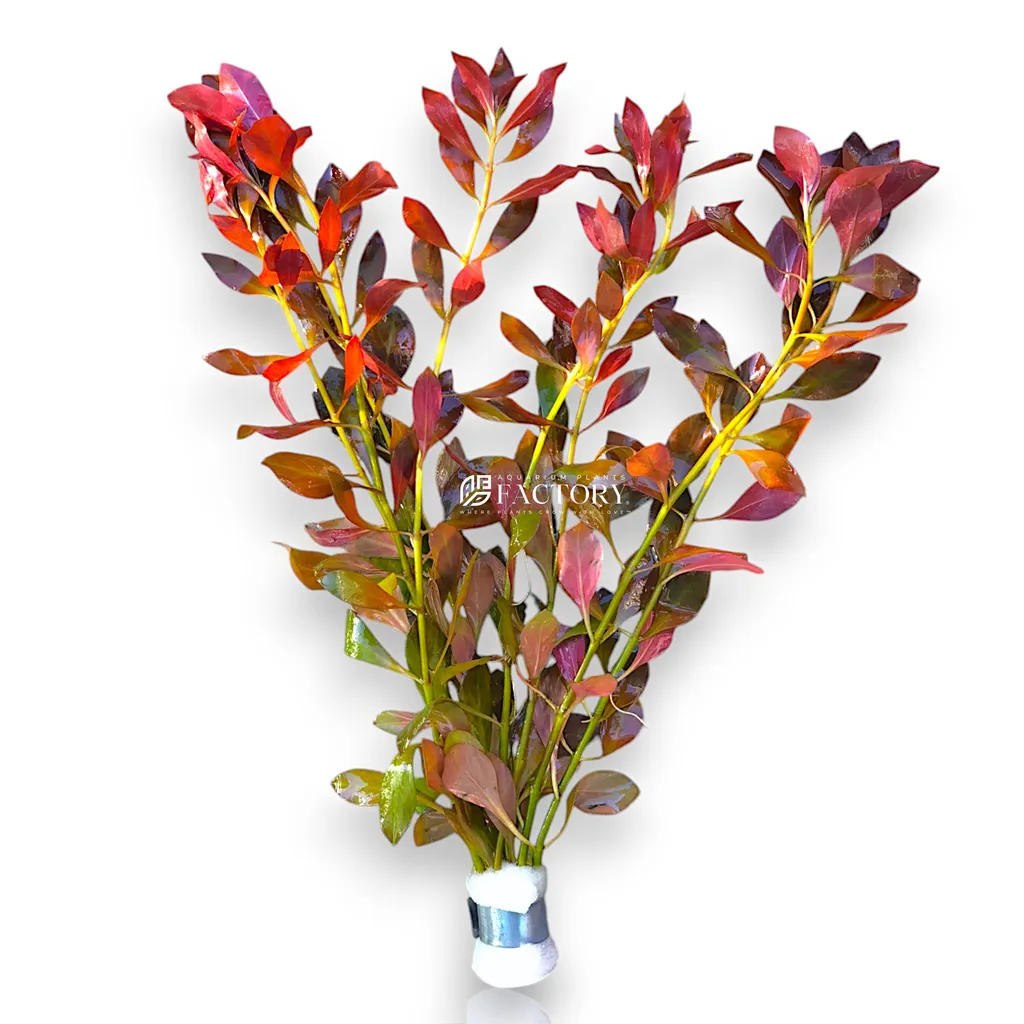
Ludwigia repens
Freshwater- Light
- Medium light
- Placement
- Background
- Height
- 19.7 in (50 cm)
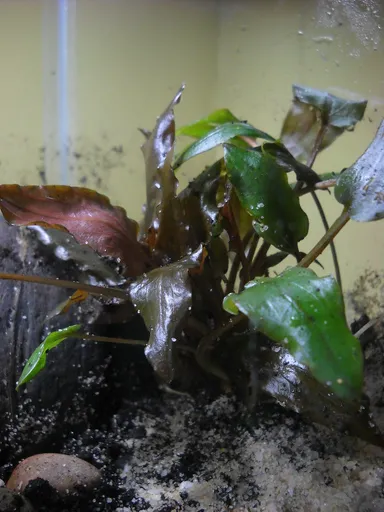
Cryptocoryne wendtii red
Cryptocoryne wendtii 'Red'
FreshwaterBrackish- Light
- Low light
- Placement
- Midground
- Height
- 5.9 in (15 cm)
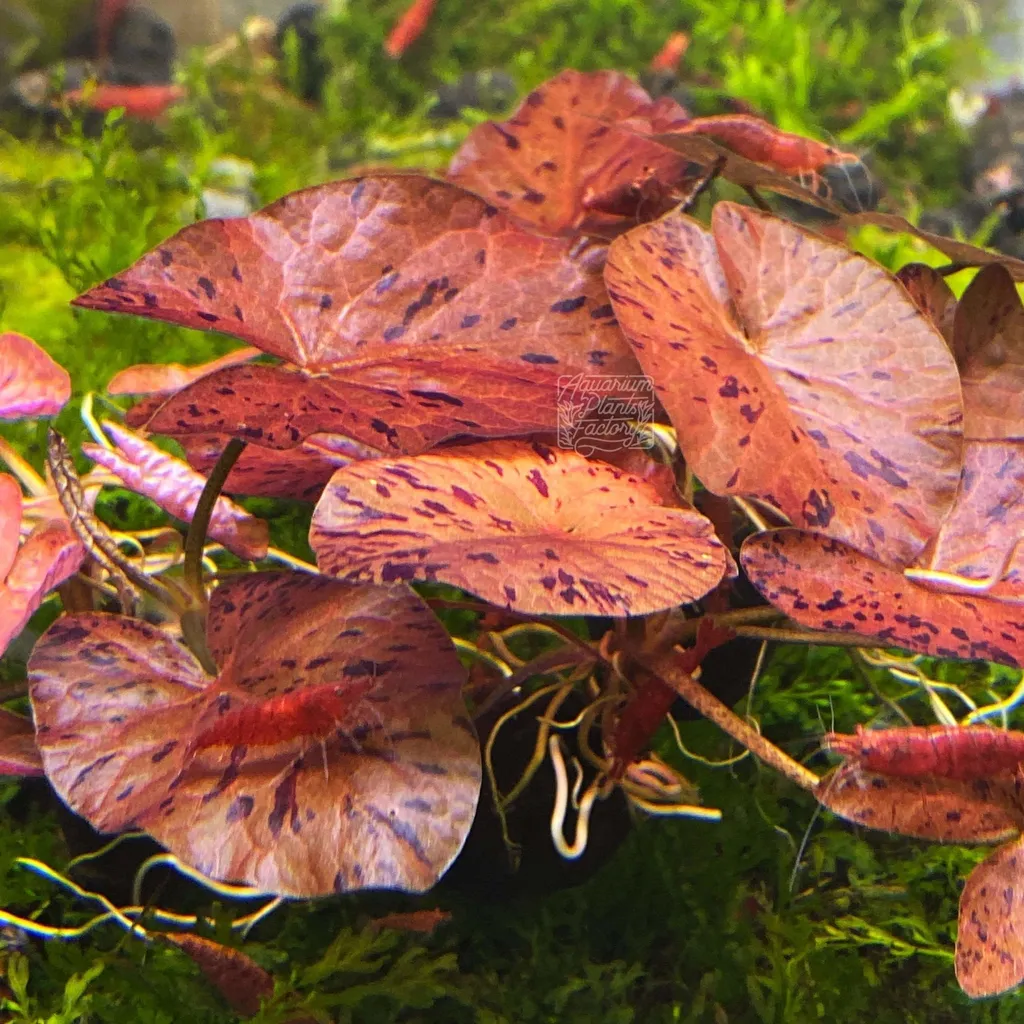
Red tiger lotus
Nymphaea lotus
Freshwater- Light
- Medium light
- Placement
- Midground
- Height
- 23.6 in (60 cm)
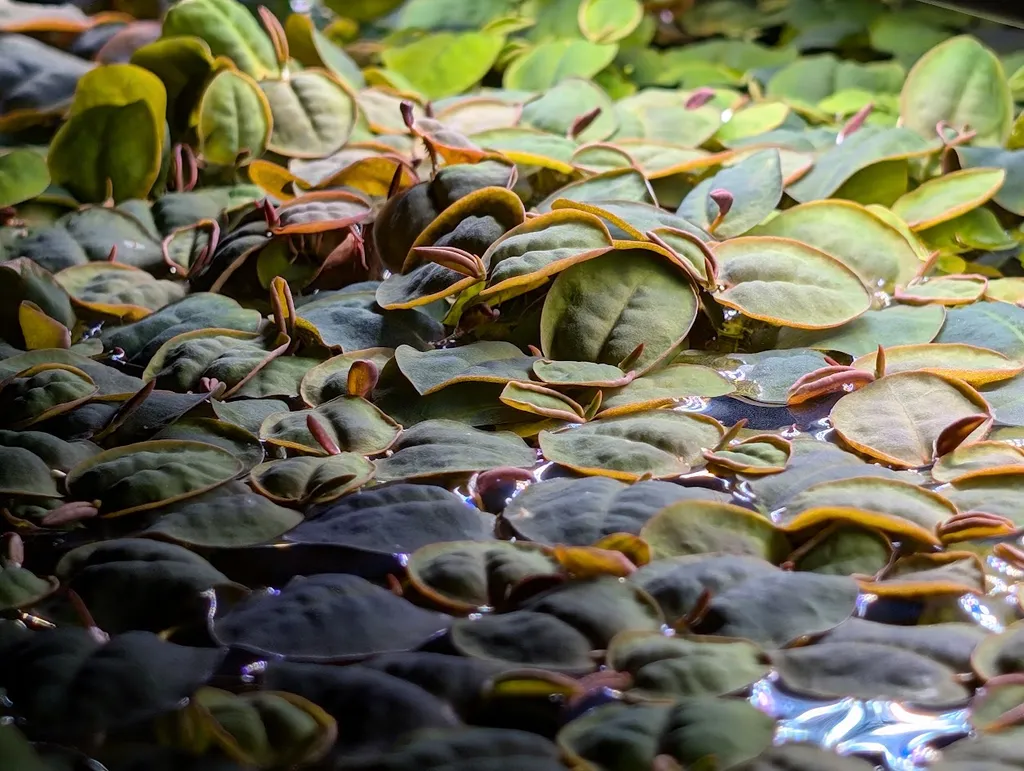
Red root floater
Phyllanthus fluitans
Freshwater- Light
- High light
- Placement
- Floating
- Height
- 1.2 in (3 cm)
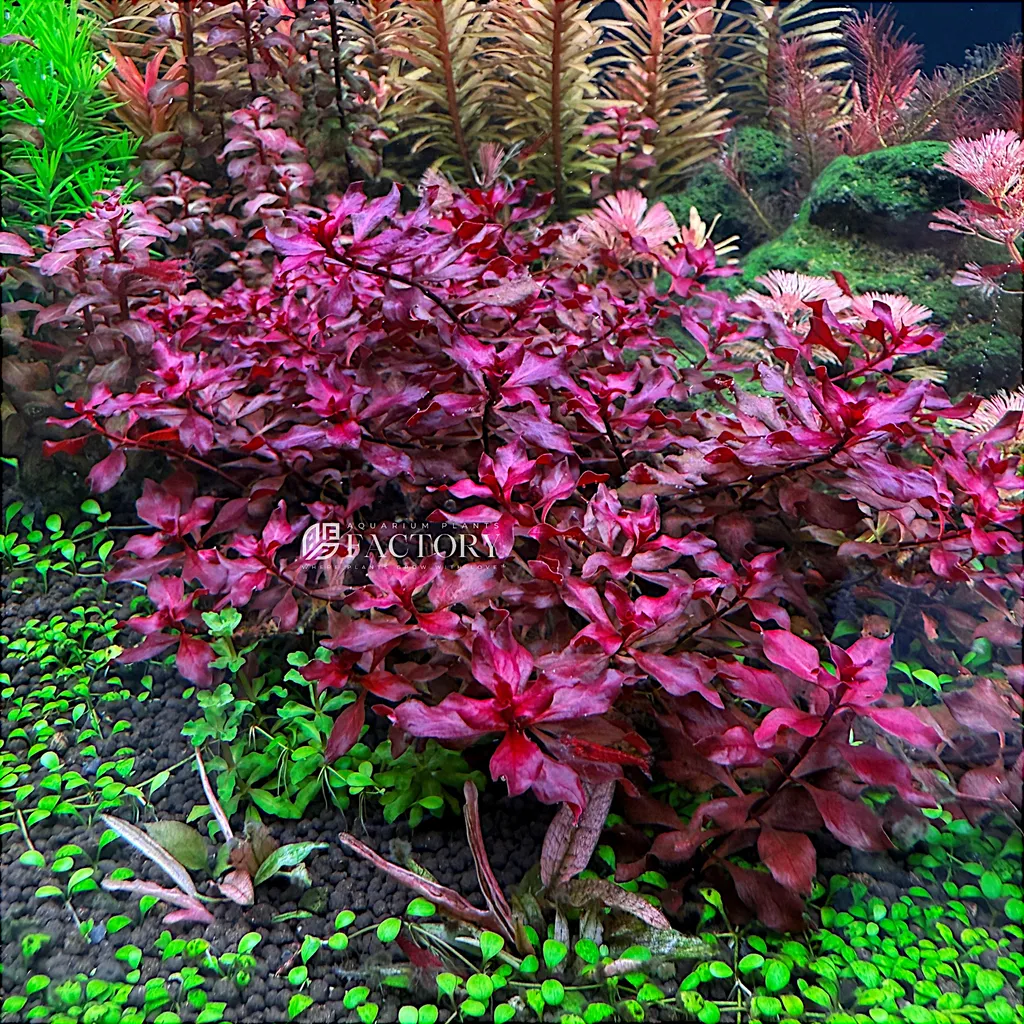
Ludwigia super red
Ludwigia palustris 'Super Red'
Freshwater- Light
- High light
- Placement
- Midground
- Height
- 11.8 in (30 cm)
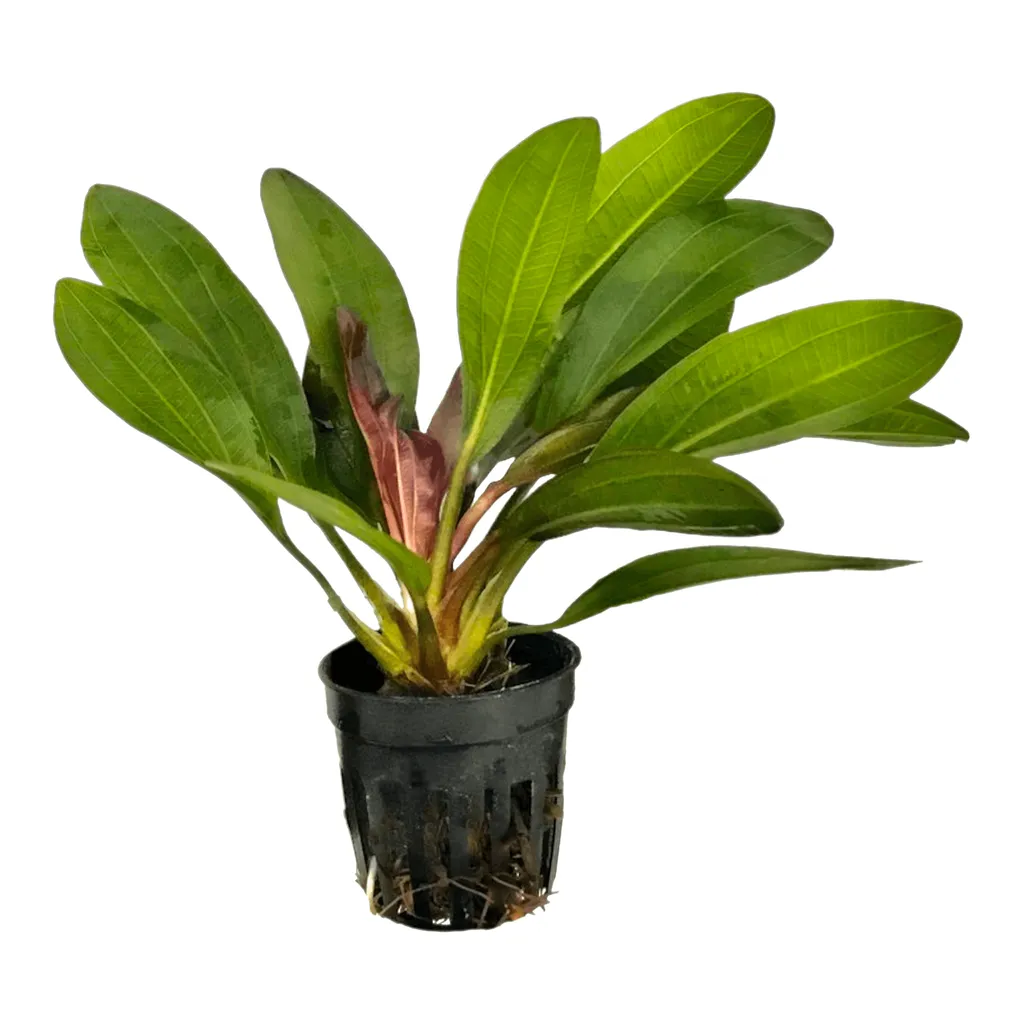
Red rubin sword
Echinodorus 'Red Rubin'
Freshwater- Light
- Medium light
- Placement
- Midground
- Height
- 19.7 in (50 cm)
The rule
What turns a plant red
Red is a stress color, and the plants on this page only show it when the tank pushes them. Light comes first: most of these stems list high light and stay green under less. CO2 keeps the growth compact and the color holding; the easy plants manage without it, the rotalas and the Pantanal do not. Iron and the other micronutrients build the pigment, so a red tank gets dosed. And many rotalas and ludwigias redden hardest when nitrate runs lean, which is the one lever that costs nothing.
- 01
Light makes red
Most of these plants stay green under low light
- 02
CO2 holds it
The easy reds manage without, the rotalas do not
- 03
Iron in the mix
Red pigment needs iron and micronutrients
- 04
Lean nitrate
Many rotalas redden when nitrate runs low
Rotalas
Rotala and ammannia
The Rotala H'ra is the red rotala for a tank without an expert behind it, marked medium at 11.8 inches (30 cm) with high light and CO2 beneficial. The rotala macrandra is marked difficult, 19.7 inches (50 cm) of scarlet that needs high light, steady CO2 and soft water. The Rotala Blood Red is a background stem that reverts to green and stretches in low light. The rotala wallichii is the fine-leaved one at 11.8 inches (30 cm), marked difficult. The Ammannia gracilis is marked medium, a fast 19.7 inch (50 cm) stem that goes orange-red under high light, and the Ammannia Bonsai is its slow, compact cousin at 7.9 inches (20 cm).
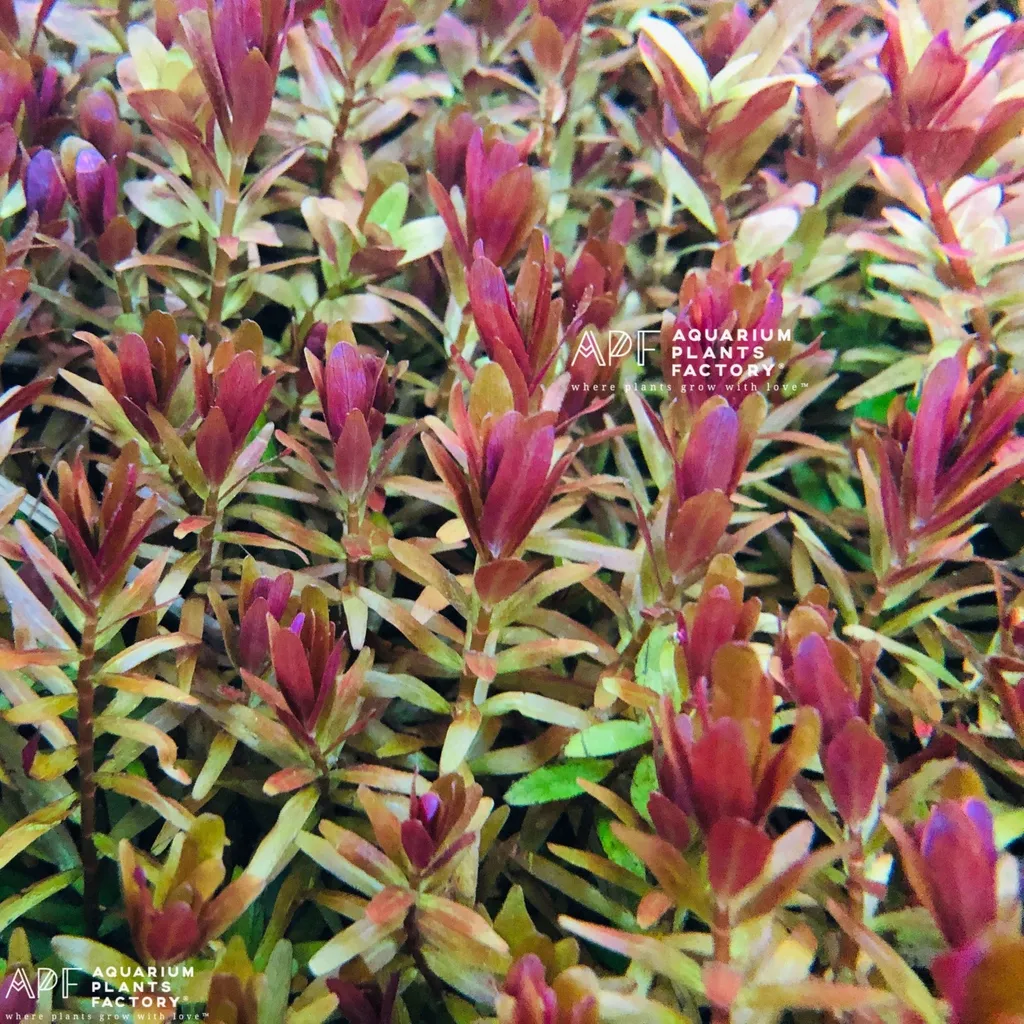
Rotala H'ra
Rotala rotundifolia 'H'ra'
FreshwaterHigh light · Background11.8 in (30 cm)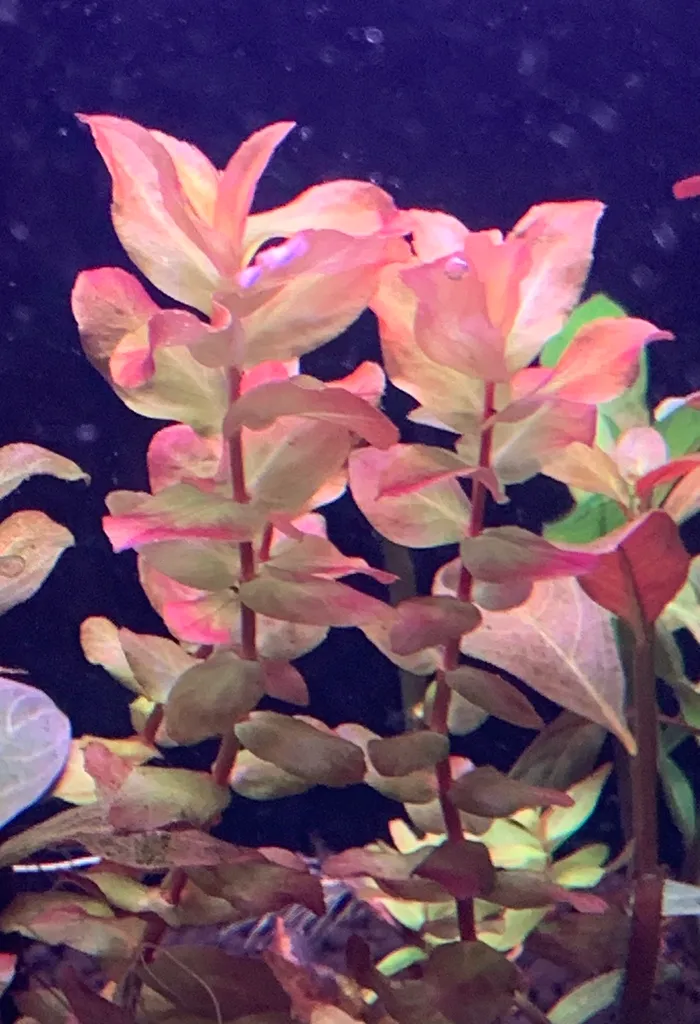
Rotala macrandra
FreshwaterHigh light · Background19.7 in (50 cm)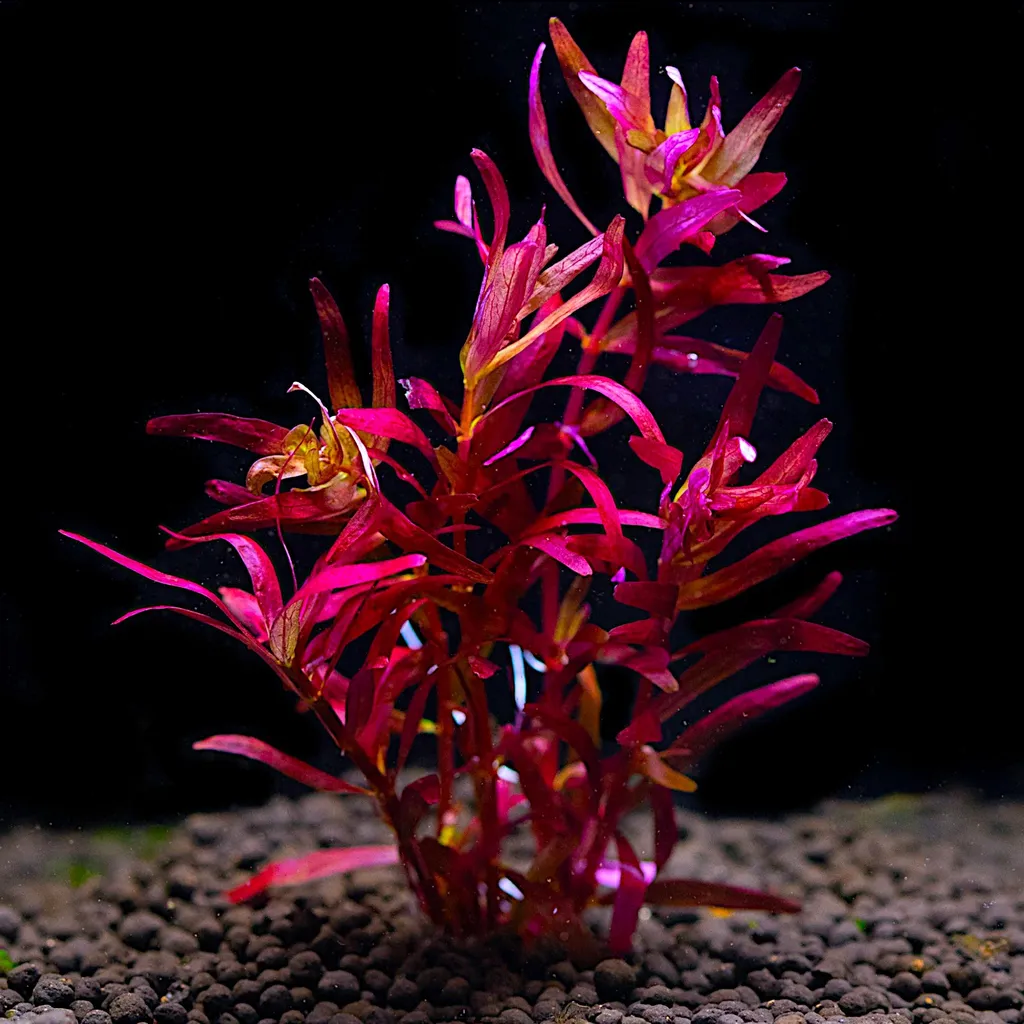
Rotala Blood Red
Rotala rotundifolia 'Blood Red'
FreshwaterHigh light · Background11.8 in (30 cm)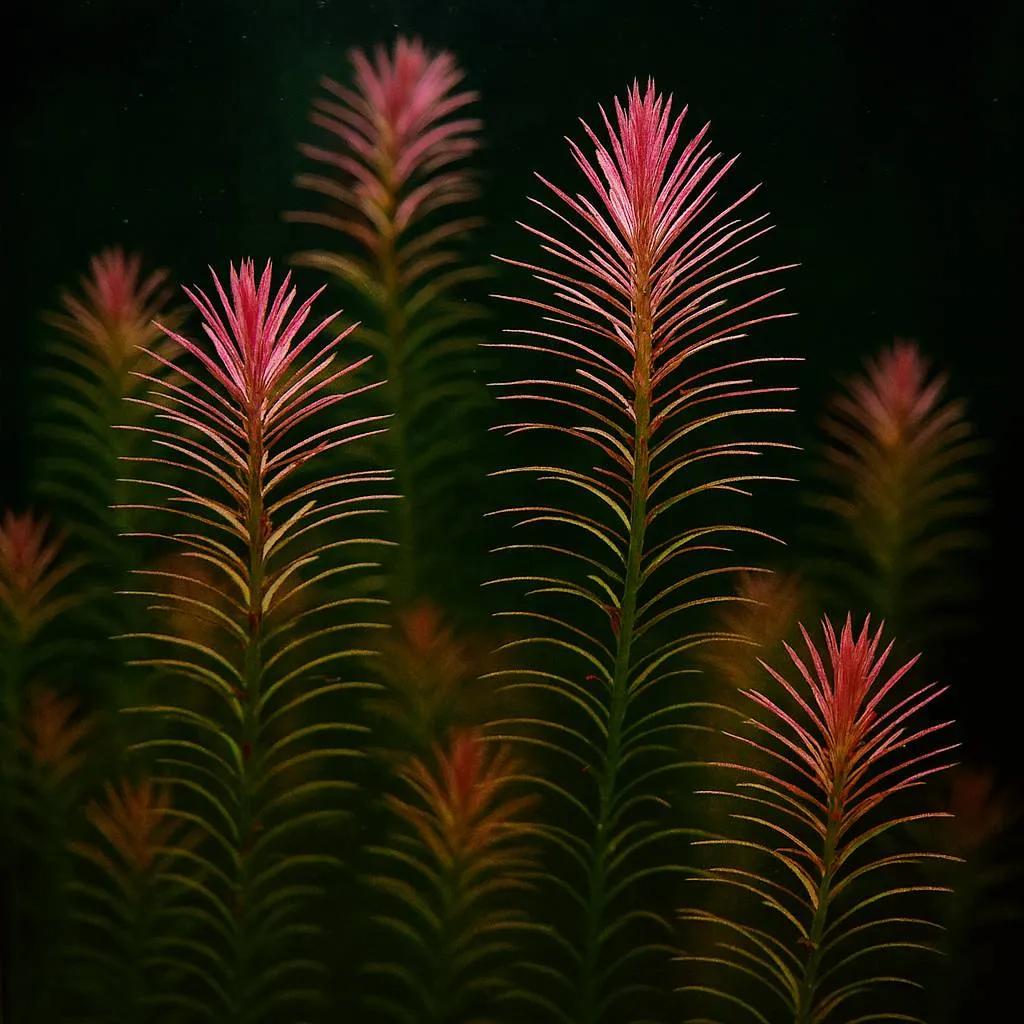
Rotala wallichii
FreshwaterHigh light · Background11.8 in (30 cm)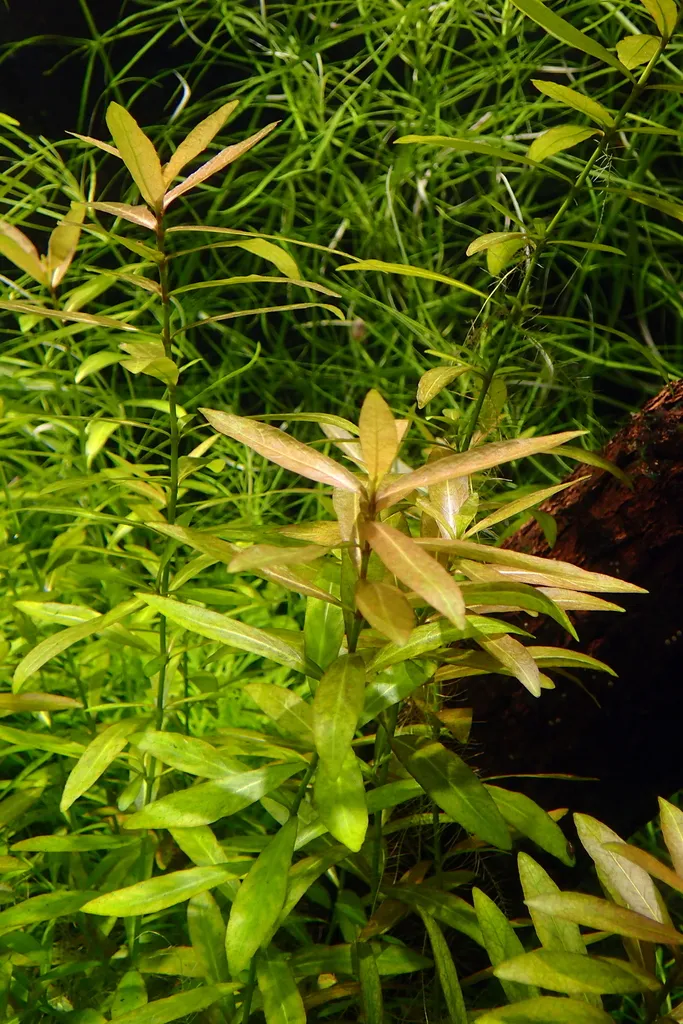
Ammannia gracilis
FreshwaterHigh light · Background19.7 in (50 cm)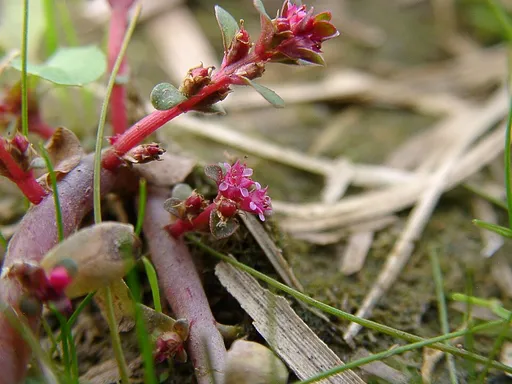
Ammannia Bonsai
Ammannia sp. 'Bonsai'
FreshwaterHigh light · Midground7.9 in (20 cm)
Ludwigias
Ludwigia, from easy to expert
The ludwigia palustris is marked easy in medium light, a fast 19.7 inch (50 cm) stem. The Ludwigia Rubin is the same rating with broader, darker red leaves. The ludwigia brevipes is marked easy but lists high light, a narrow-leaved stem for the midground at 11.8 inches (30 cm). The ludwigia arcuata is marked medium with needle leaves that turn orange-red in high light. The ludwigia glandulosa is marked difficult, slow and deep red at 15.7 inches (40 cm), and it needs CO2 to hold. The Ludwigia Pantanal is the expert's ludwigia, marked difficult for high light, CO2 and very soft water.
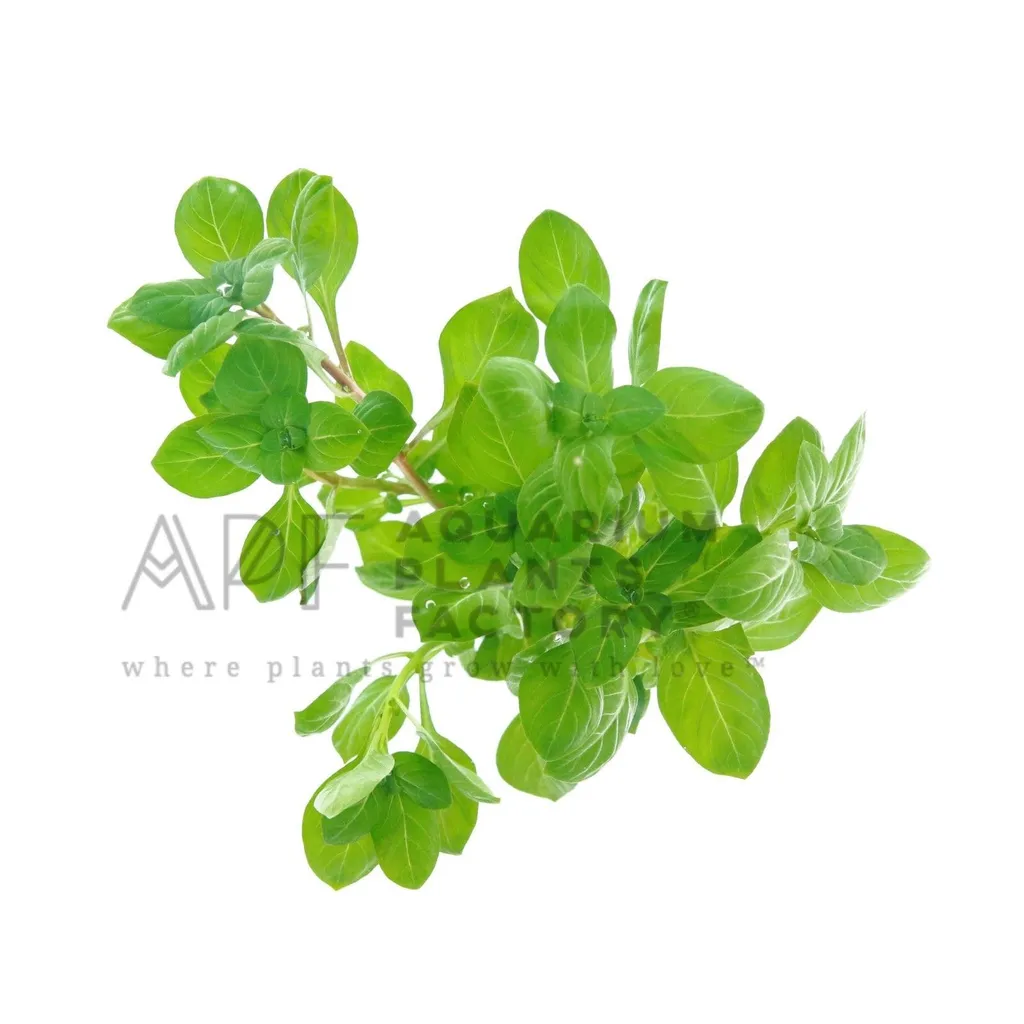
Ludwigia palustris
FreshwaterMedium light · Background19.7 in (50 cm)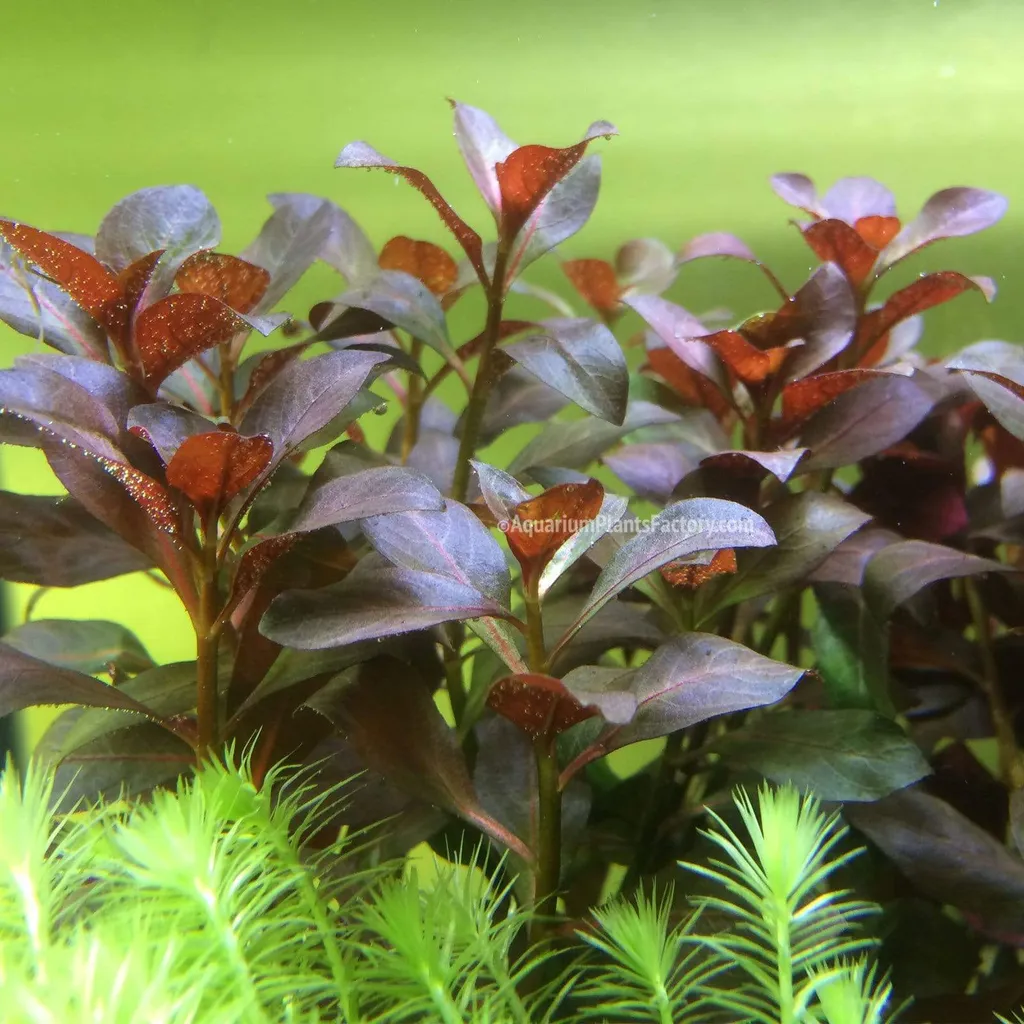
Ludwigia Rubin
Ludwigia repens 'Rubin'
FreshwaterMedium light · Midground19.7 in (50 cm)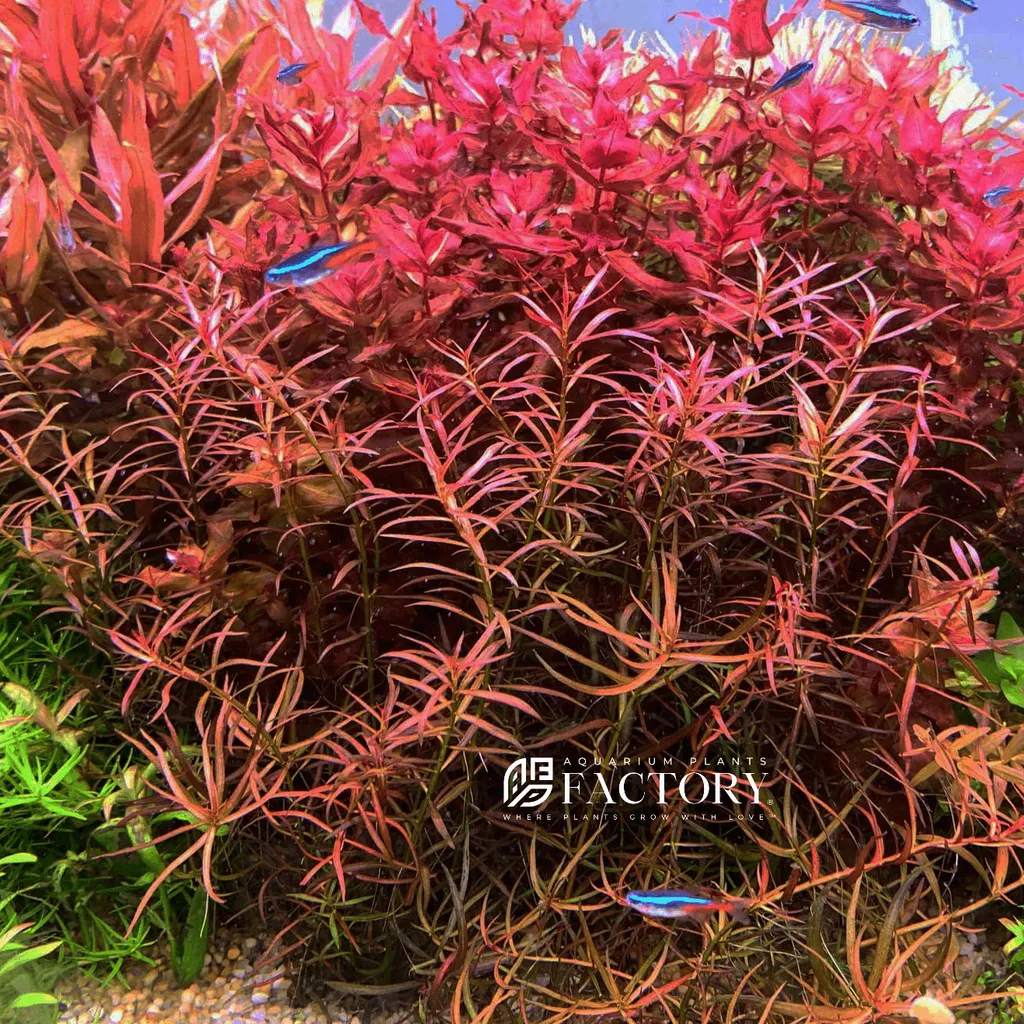
Ludwigia brevipes
FreshwaterHigh light · Midground11.8 in (30 cm)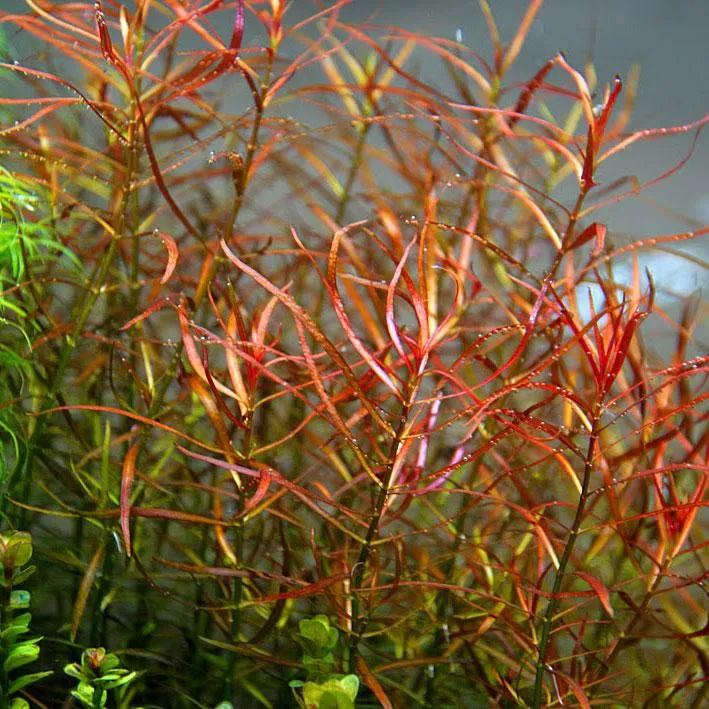
Ludwigia arcuata
FreshwaterHigh light · Midground19.7 in (50 cm)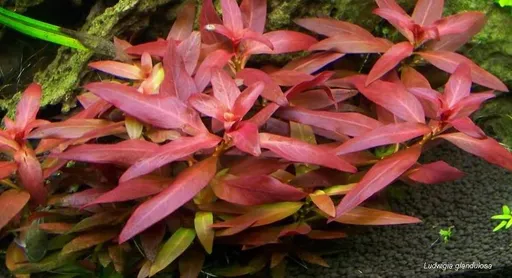
Ludwigia glandulosa
FreshwaterHigh light · Background15.7 in (40 cm)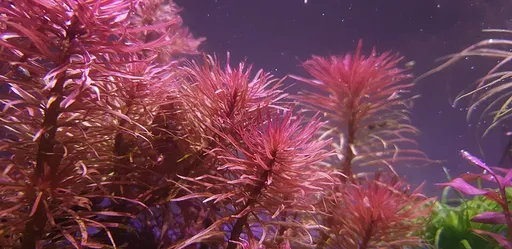
Ludwigia Pantanal
Ludwigia inclinata var. verticillata 'Pantanal'
FreshwaterHigh light · Background15.7 in (40 cm)
Broad leaves
Alternanthera, swords and lilies
The alternanthera reineckii is marked medium, a 19.7 inch (50 cm) stem with red-purple leaves that needs high light to stay compact. The Alternanthera reineckii Mini is the foreground form at 3.9 inches (10 cm), marked medium for medium light, and the closest thing to a red carpet. The Alternanthera Rosanervig carries pink veins on red leaves. The Aflame sword is a slow sword marked medium for high light, 11.8 inches (30 cm) of red-brown leaves. The red water lily is a bulb marked easy that grows fast to 23.6 inches (60 cm). The dwarf aquarium lily is the small one at 9.8 inches (25 cm), marked easy, with red-brown leaves that float if you let them.
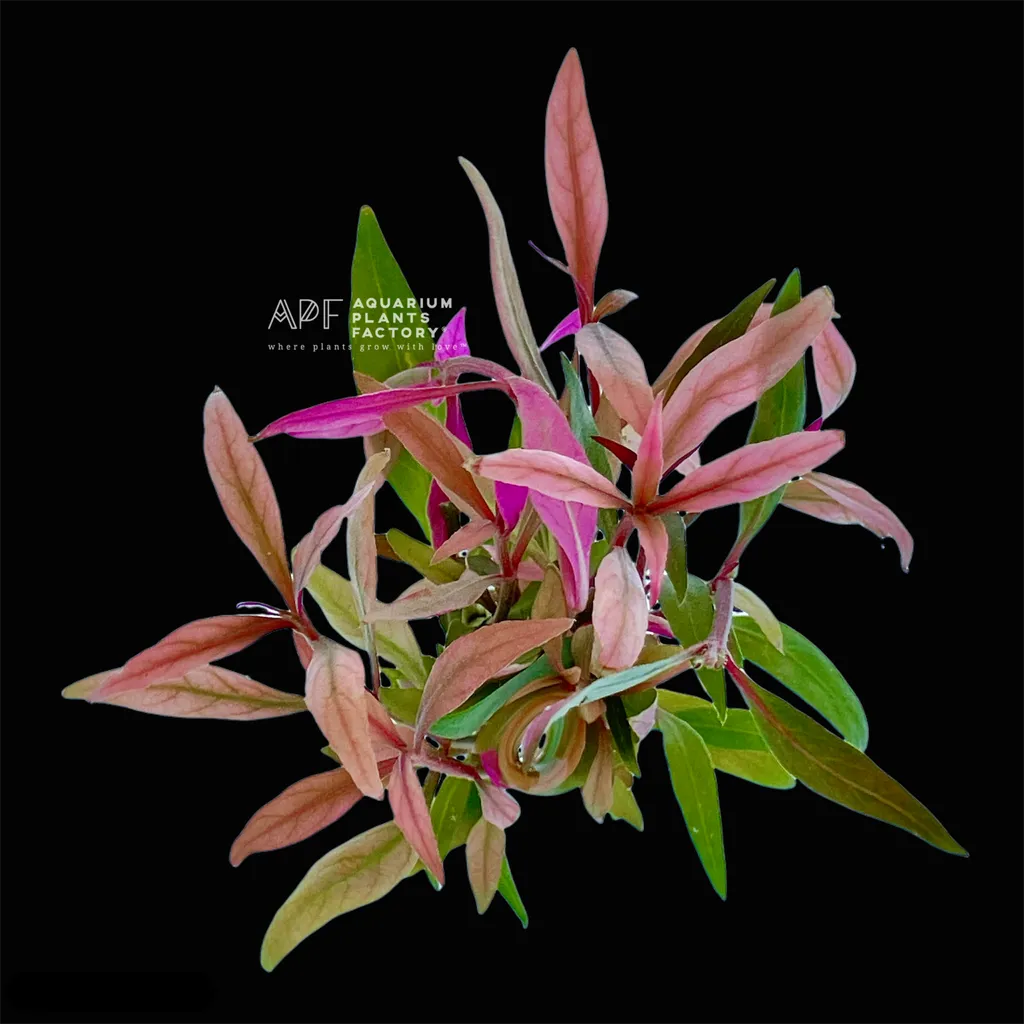
Alternanthera reineckii
FreshwaterHigh light · Midground19.7 in (50 cm)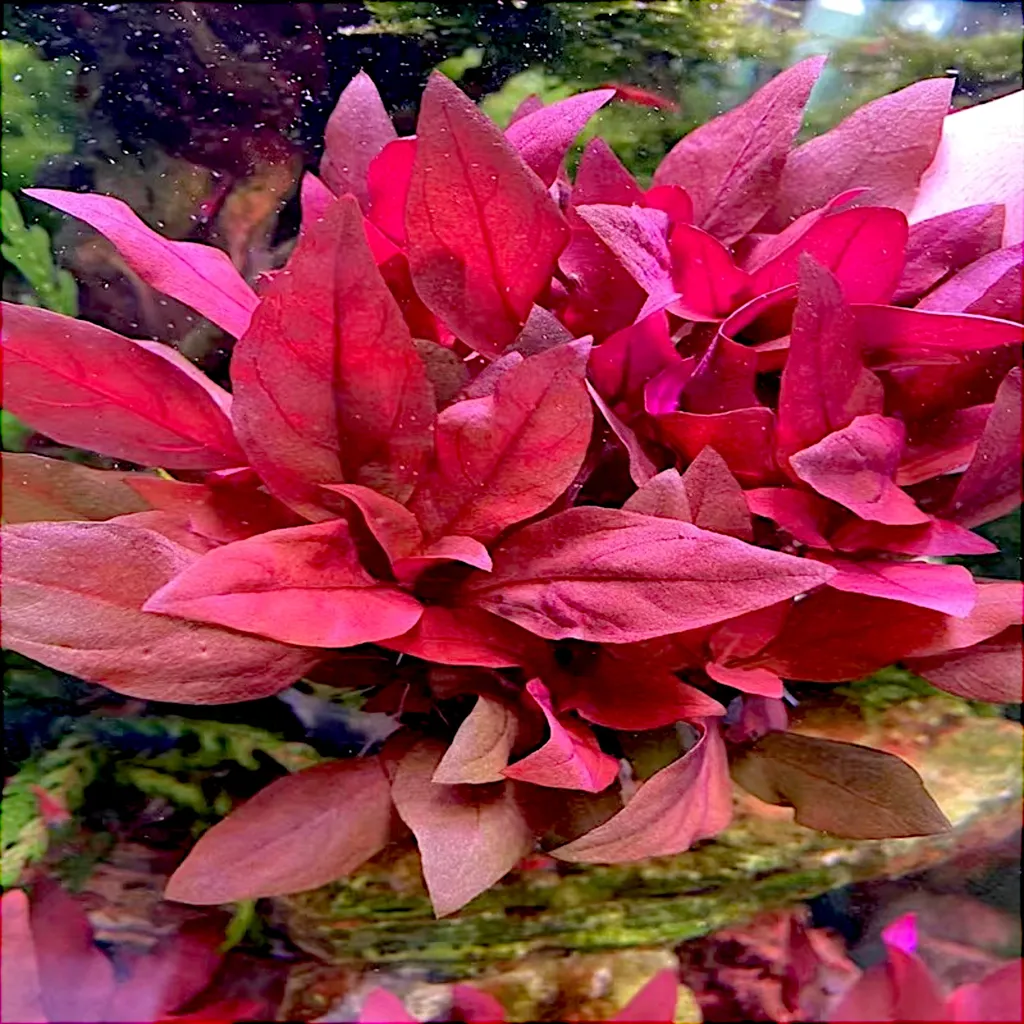
Alternanthera reineckii mini
Alternanthera reineckii 'Mini'
FreshwaterMedium light · Foreground3.9 in (10 cm)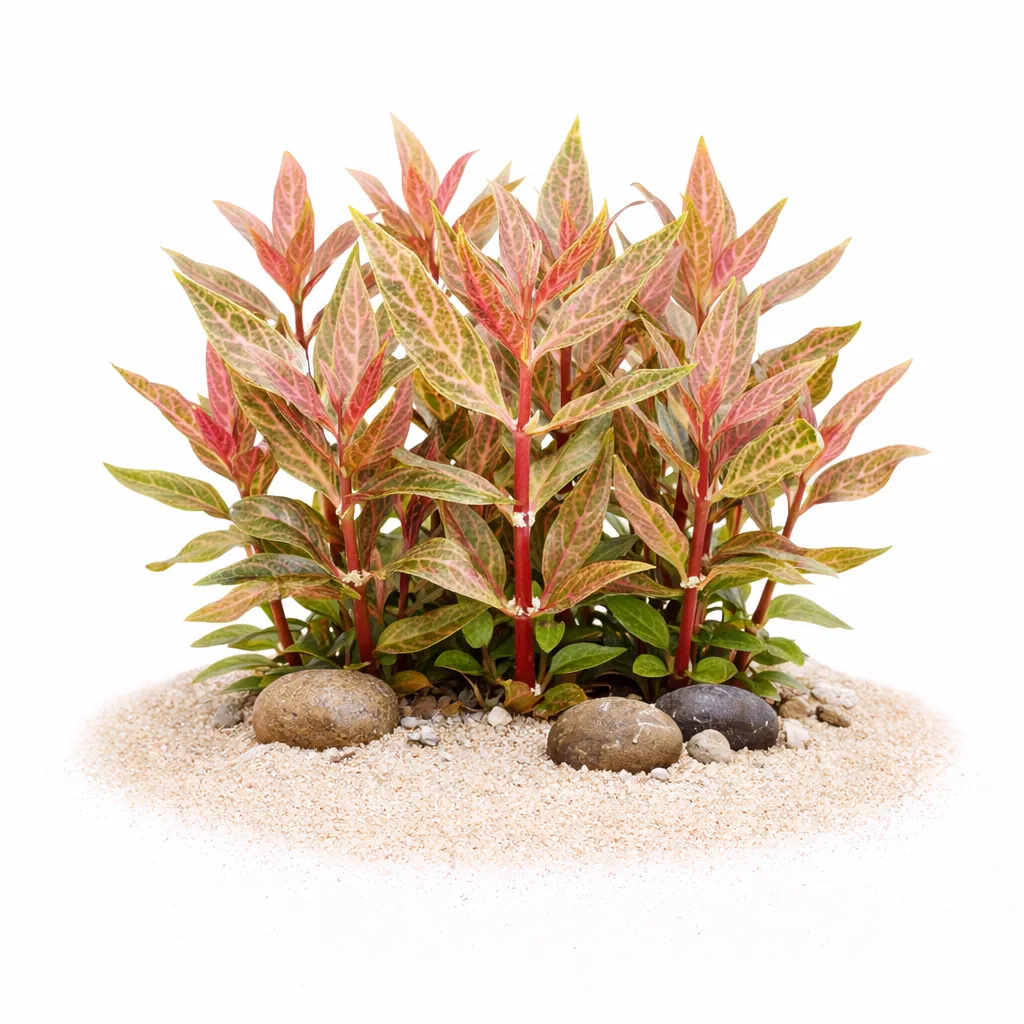
Alternanthera Rosanervig
Alternanthera reineckii 'Rosanervig'
FreshwaterMedium light · Midground9.8 in (25 cm)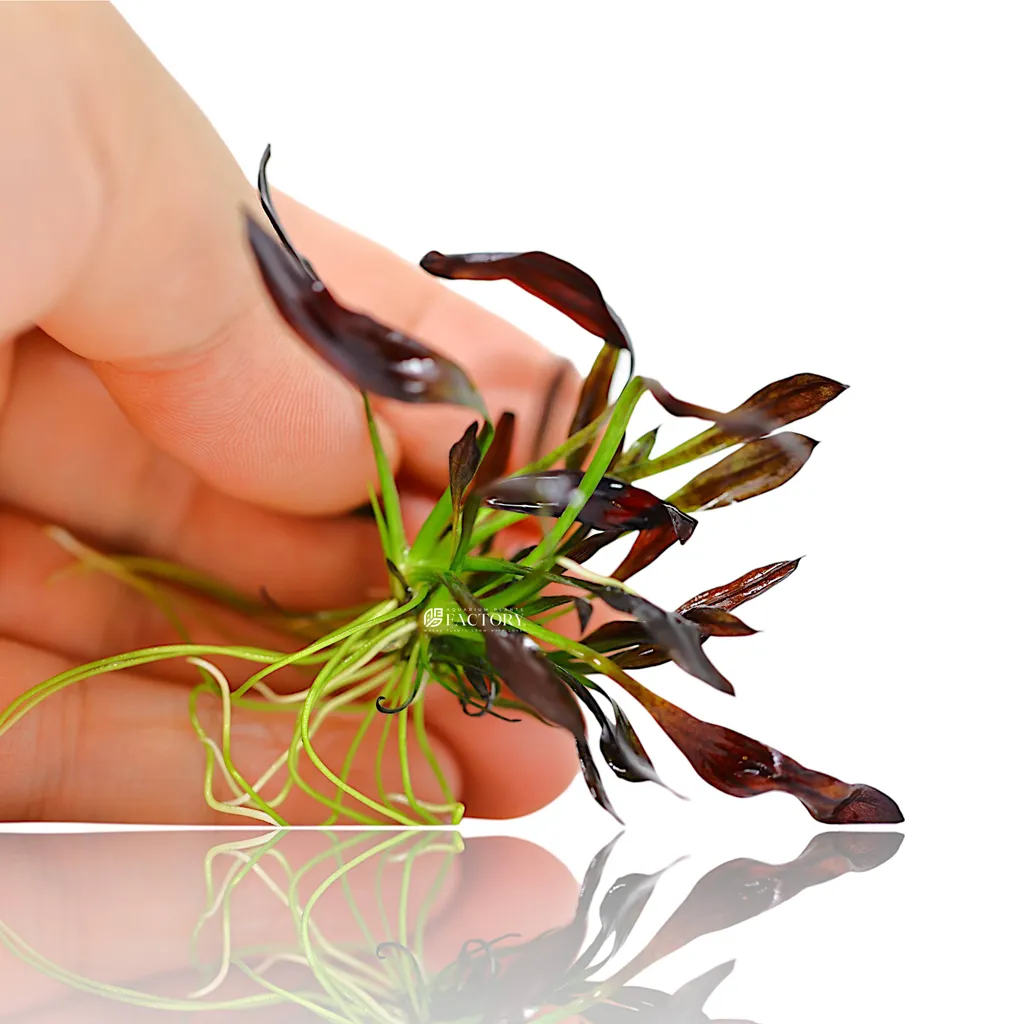
Aflame sword
Echinodorus 'Aflame'
FreshwaterHigh light · Midground11.8 in (30 cm)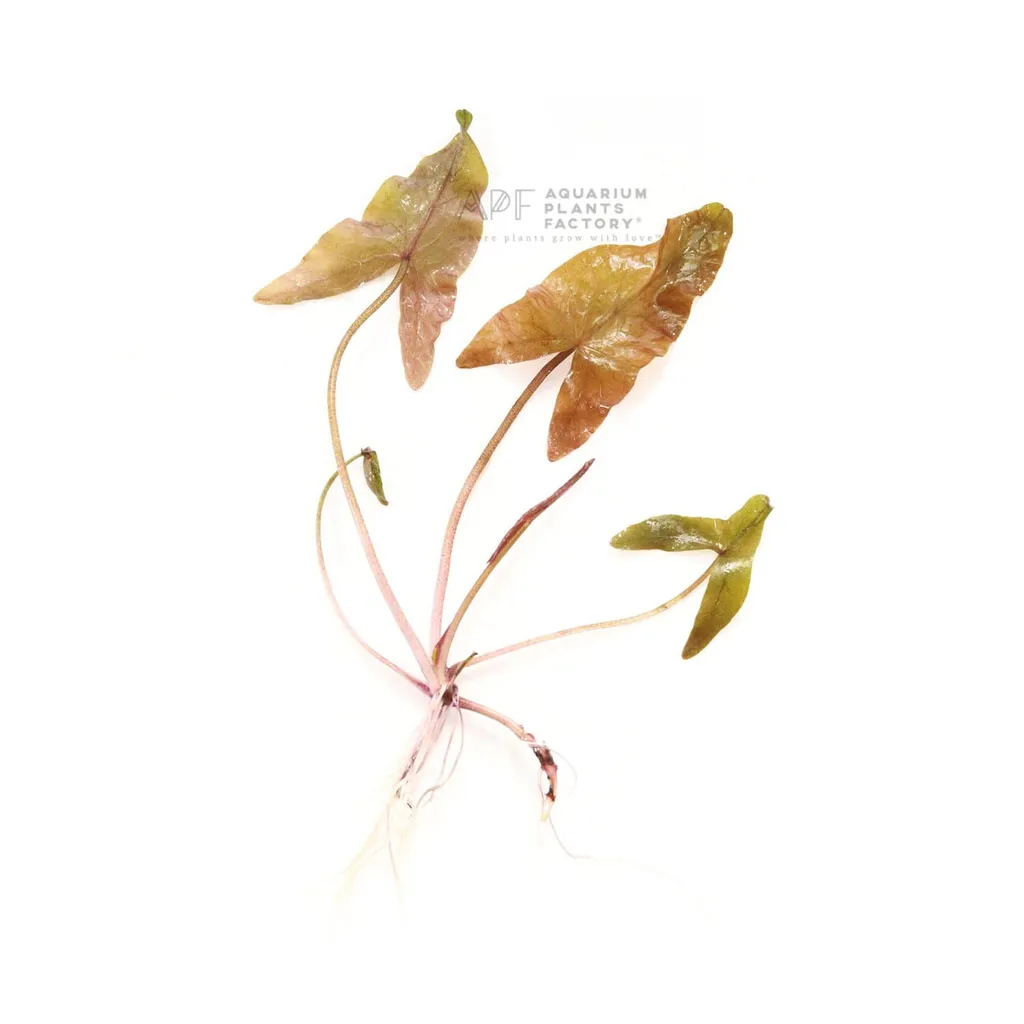
Red water lily
Nymphaea rubra
FreshwaterMedium light · Midground23.6 in (60 cm)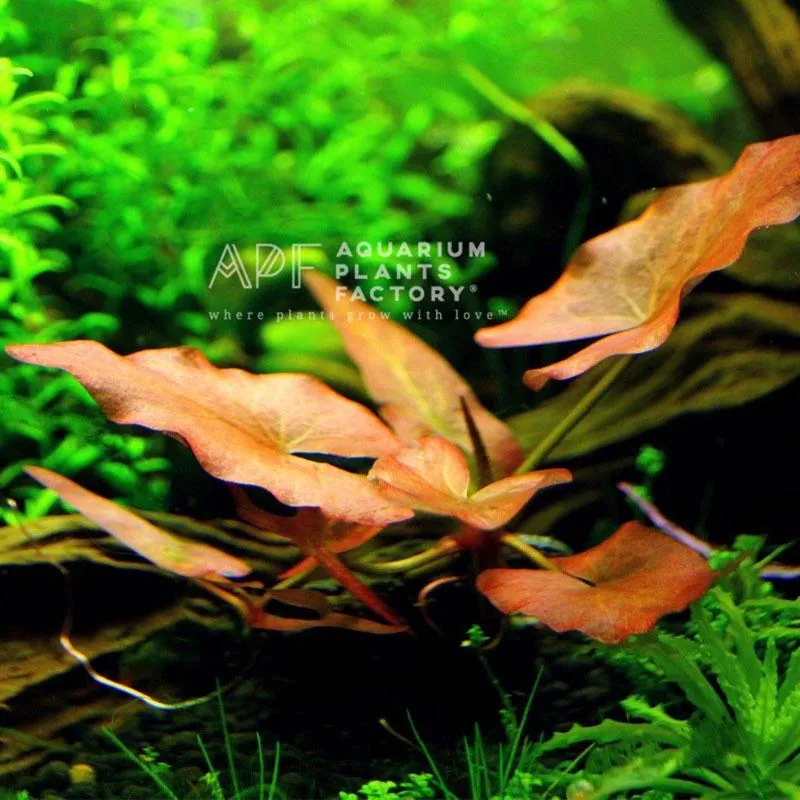
Dwarf aquarium lily
Nymphaea nouchali
FreshwaterMedium light · Midground9.8 in (25 cm)
Experts
The fine-leaved reds for a dialed-in tank
The red cabomba is marked difficult, a 19.7 inch (50 cm) stem for warm, soft, acidic water at 75–82°F (24–28°C) under very high light. The Nesaea crassicaulis colors up only under bright, unobstructed light with CO2, at 19.7 inches (50 cm). The Nesaea pedicellata Golden is the yellow-gold one on orange-red stems. The Ammannia senegalensis is copper and red under intense light and dull green in shade. The mermaid weed is marked medium, a feathery 11.8 inch (30 cm) stem that turns orange-red at the tips under high light. The Hadi Red Pearl sword is marked easy, a compact sword at 9.8 inches (25 cm) with red-speckled leaves.
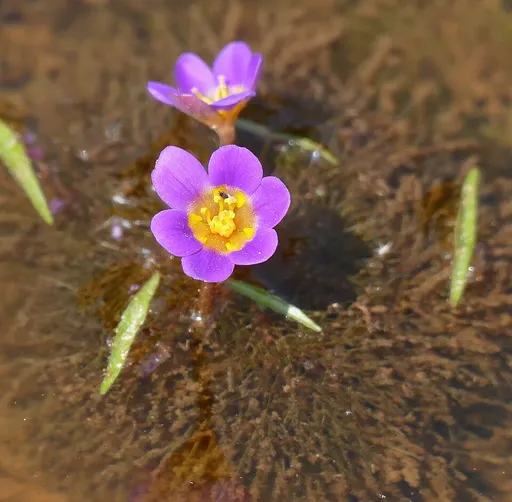
Red cabomba
Cabomba furcata
FreshwaterHigh light · Background19.7 in (50 cm)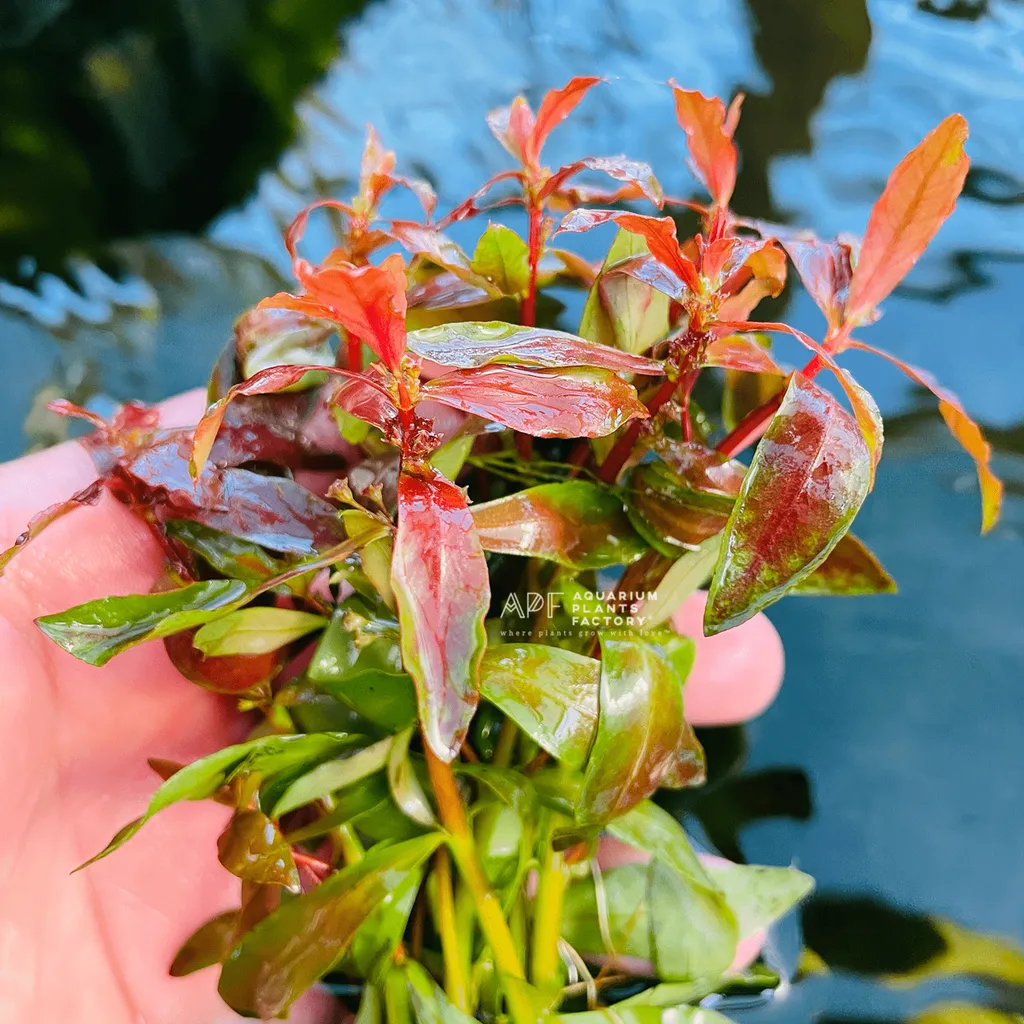
Nesaea crassicaulis
Ammannia crassicaulis
FreshwaterHigh light · Background19.7 in (50 cm)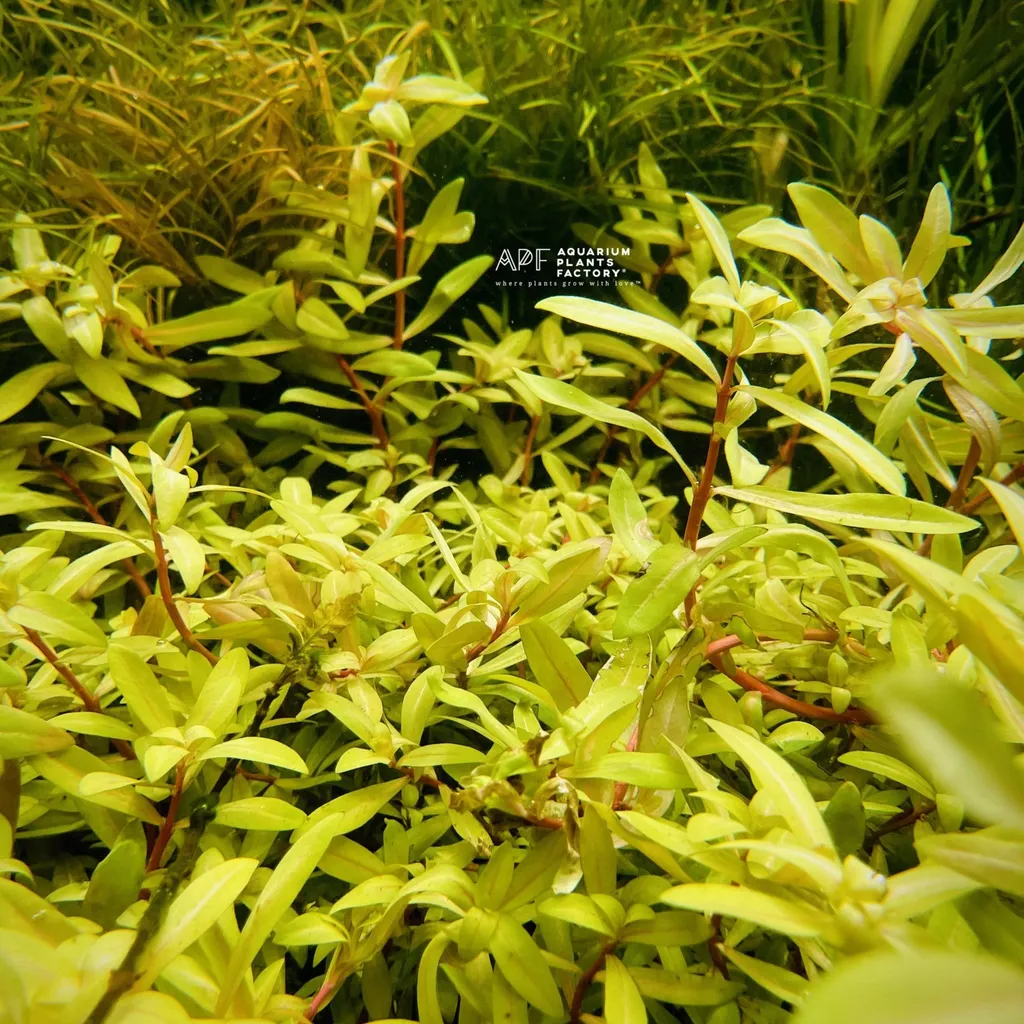
Nesaea pedicellata Golden
Ammannia pedicellata
FreshwaterHigh light · Background15.7 in (40 cm)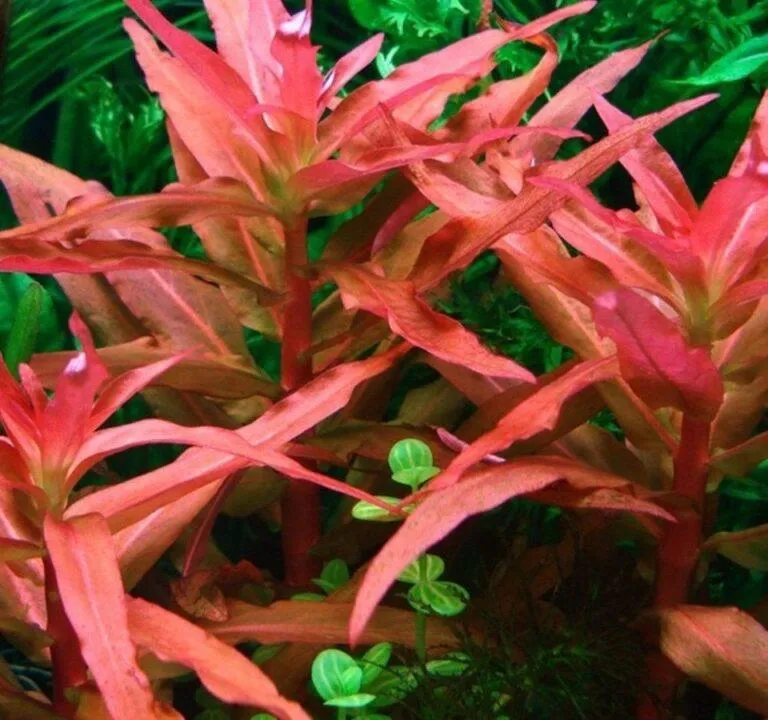
Ammannia senegalensis
FreshwaterHigh light · Midground17.7 in (45 cm)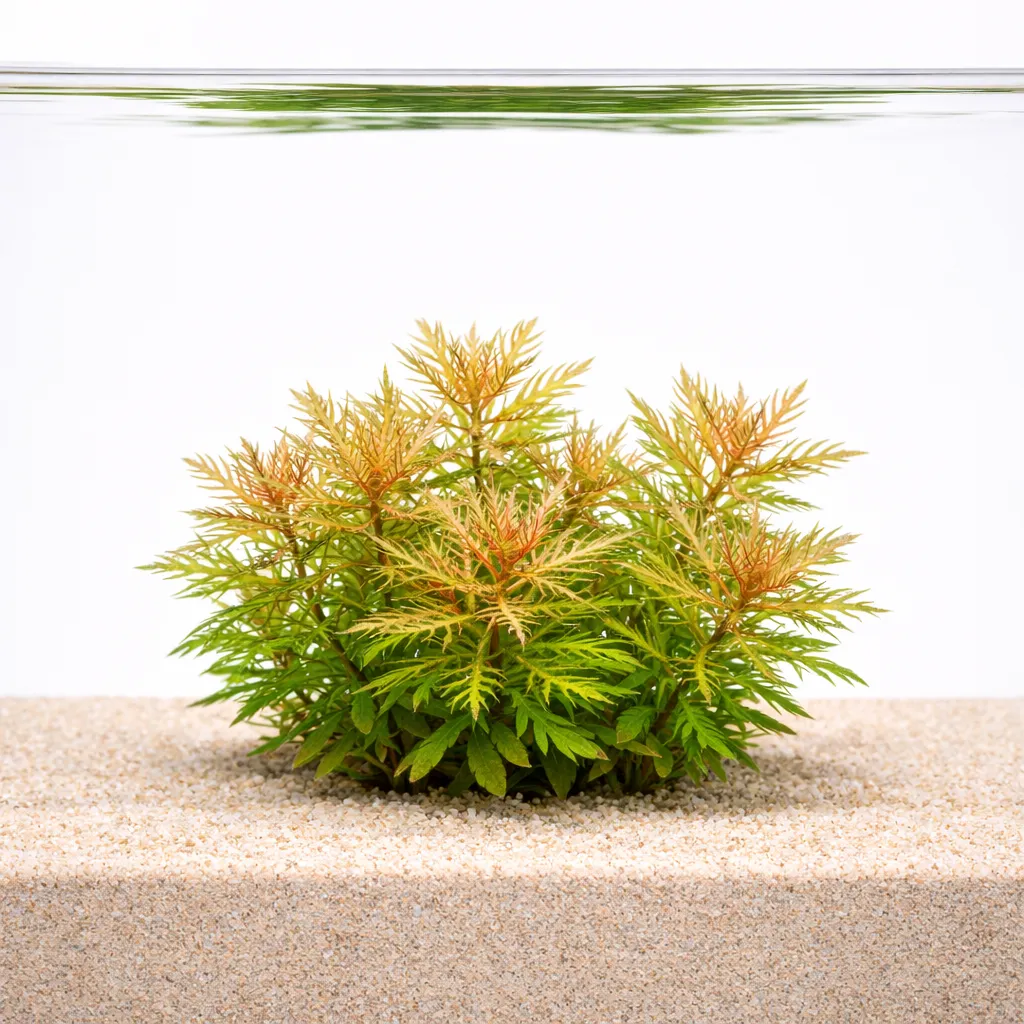
Mermaid weed
Proserpinaca palustris
FreshwaterHigh light · Midground11.8 in (30 cm)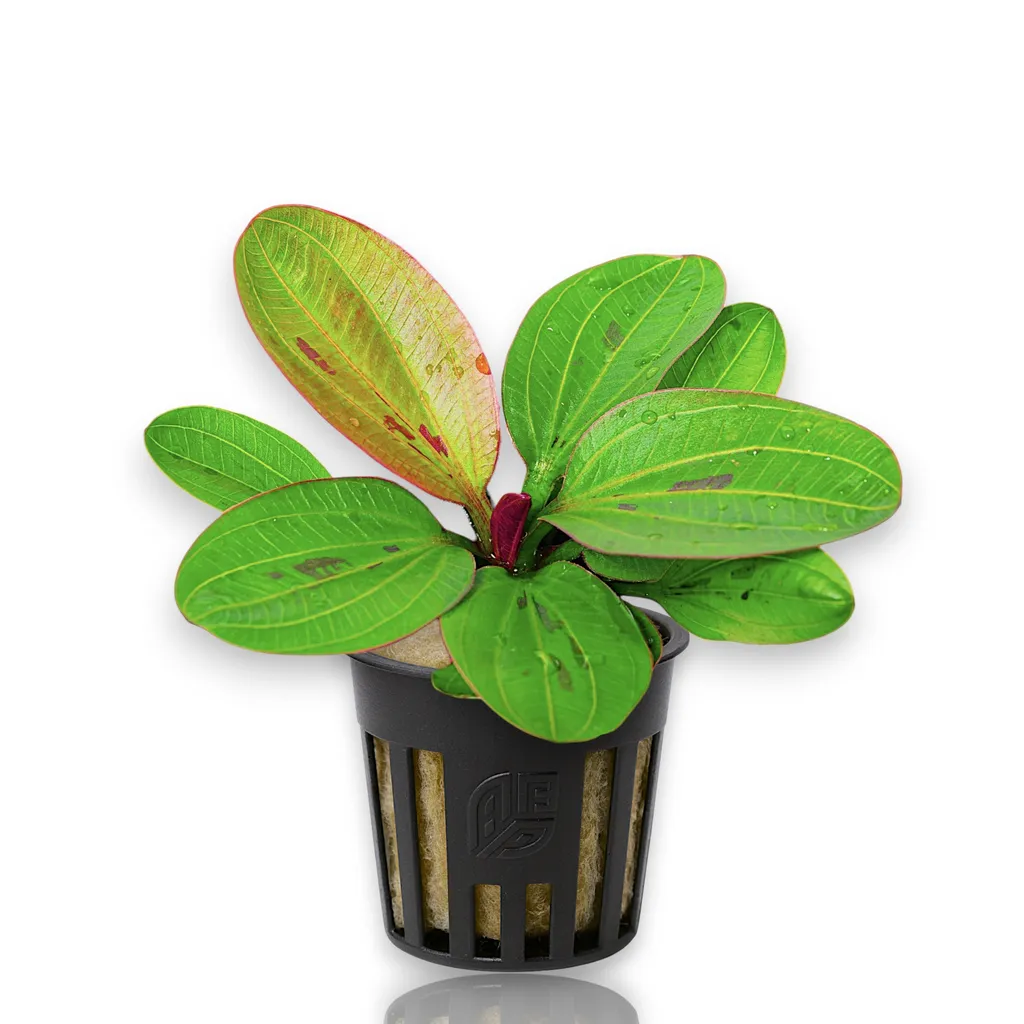
Hadi Red Pearl sword
Echinodorus 'Hadi Red Pearl'
FreshwaterMedium light · Midground9.8 in (25 cm)
By the numbers
Smallest
Tallest
Easiest to grow
FAQ
Common questions
Why is my red plant not red?
Not enough light, first. Then unstable CO2, then missing iron. Check the profile's light rating against the fixture, and move the plant up or the light closer before changing anything else.
Which red plants are easy?
The ludwigia repens, palustris, Rubin and super red, the cryptocoryne wendtii red, the red tiger lotus, the red water lily, the red root floater and the red rubin sword are all marked beginner or easy.
Do red plants need CO2?
The easy ones list it as beneficial, not required, and color up without it under enough light. The rotala macrandra, the Ludwigia Pantanal and the red cabomba list CO2 as required.
How much light do red plants need?
Most list high light. The Alternanthera reineckii mini and the ludwigia repens list medium, and the cryptocoryne wendtii red lists low, which makes it the red for a low-tech tank.
Which red plants suit a low-tech tank?
The cryptocoryne wendtii red, the red tiger lotus, the ludwigia repens and the red root floater. None of them lists CO2 as required, and the floater gets its high light from sitting at the surface.
Is there a red carpet plant?
Not a true carpet. The Alternanthera reineckii Mini stays at 3.9 inches (10 cm) in the foreground and is the closest, planted in a dense group under medium to high light.
Index
All red plants
Aflame sword
Echinodorus 'Aflame'
FreshwaterHigh light · Midground11.8 in (30 cm)Alternanthera reineckii
FreshwaterHigh light · Midground19.7 in (50 cm)2 formsAmmannia Bonsai
Ammannia sp. 'Bonsai'
FreshwaterHigh light · Midground7.9 in (20 cm)Ammannia gracilis
FreshwaterHigh light · Background19.7 in (50 cm)Ammannia senegalensis
FreshwaterHigh light · Midground17.7 in (45 cm)Bucephalandra Red
Bucephalandra sp. 'Red'
FreshwaterLow light · Epiphyte3.9 in (10 cm)Cryptocoryne wendtii red
Cryptocoryne wendtii 'Red'
FreshwaterBrackishLow light · Midground5.9 in (15 cm)Dwarf aquarium lily
Nymphaea nouchali
FreshwaterMedium light · Midground9.8 in (25 cm)Hadi Red Pearl sword
Echinodorus 'Hadi Red Pearl'
FreshwaterMedium light · Midground9.8 in (25 cm)Ludwigia arcuata
FreshwaterHigh light · Midground19.7 in (50 cm)Ludwigia brevipes
FreshwaterHigh light · Midground11.8 in (30 cm)Ludwigia Cuba
Ludwigia inclinata var. verticillata 'Cuba'
FreshwaterHigh light · Background15.7 in (40 cm)Ludwigia glandulosa
FreshwaterHigh light · Background15.7 in (40 cm)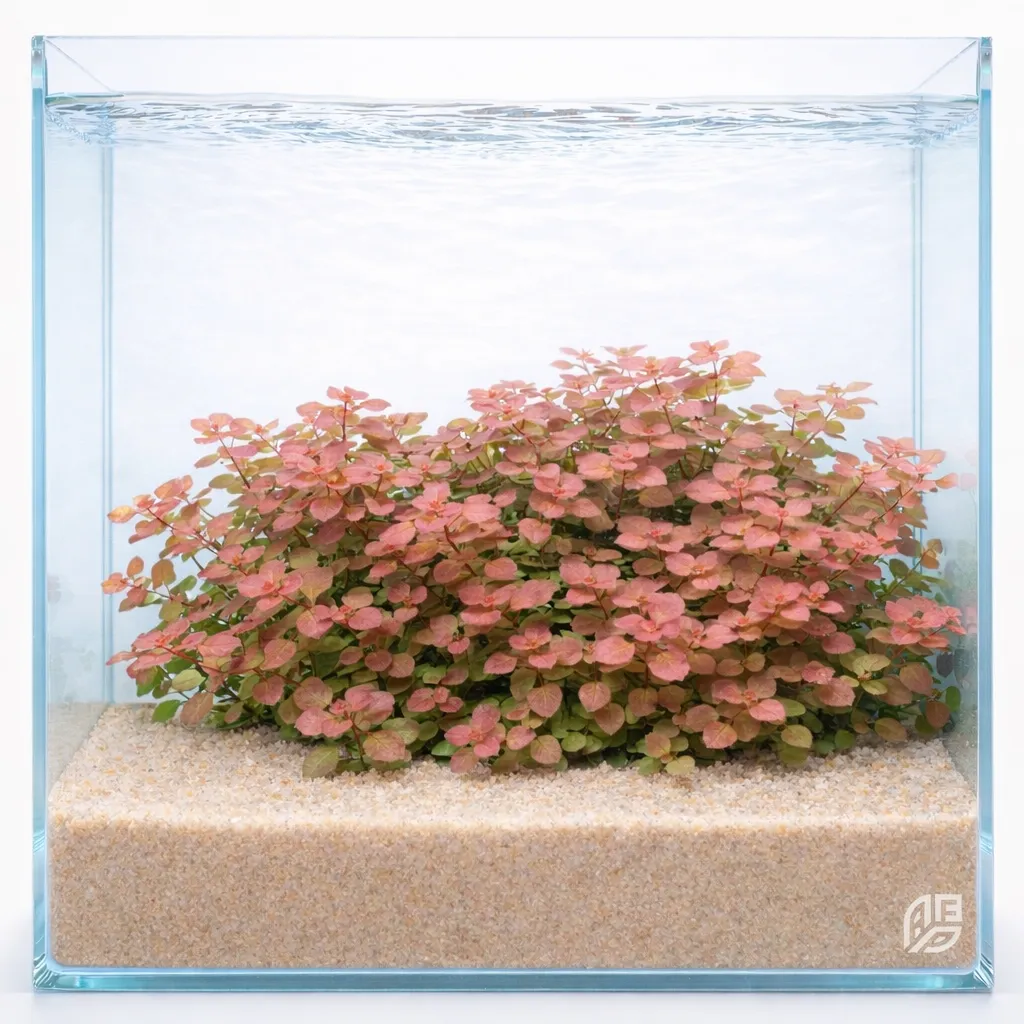
Ludwigia ovalis
FreshwaterMedium light · Midground11.8 in (30 cm)Ludwigia palustris
FreshwaterMedium light · Background19.7 in (50 cm)Ludwigia Pantanal
Ludwigia inclinata var. verticillata 'Pantanal'
FreshwaterHigh light · Background15.7 in (40 cm)Ludwigia repens
FreshwaterMedium light · Background19.7 in (50 cm)Ludwigia Rubin
Ludwigia repens 'Rubin'
FreshwaterMedium light · Midground19.7 in (50 cm)Ludwigia super red
Ludwigia palustris 'Super Red'
FreshwaterHigh light · Midground11.8 in (30 cm)Mermaid weed
Proserpinaca palustris
FreshwaterHigh light · Midground11.8 in (30 cm)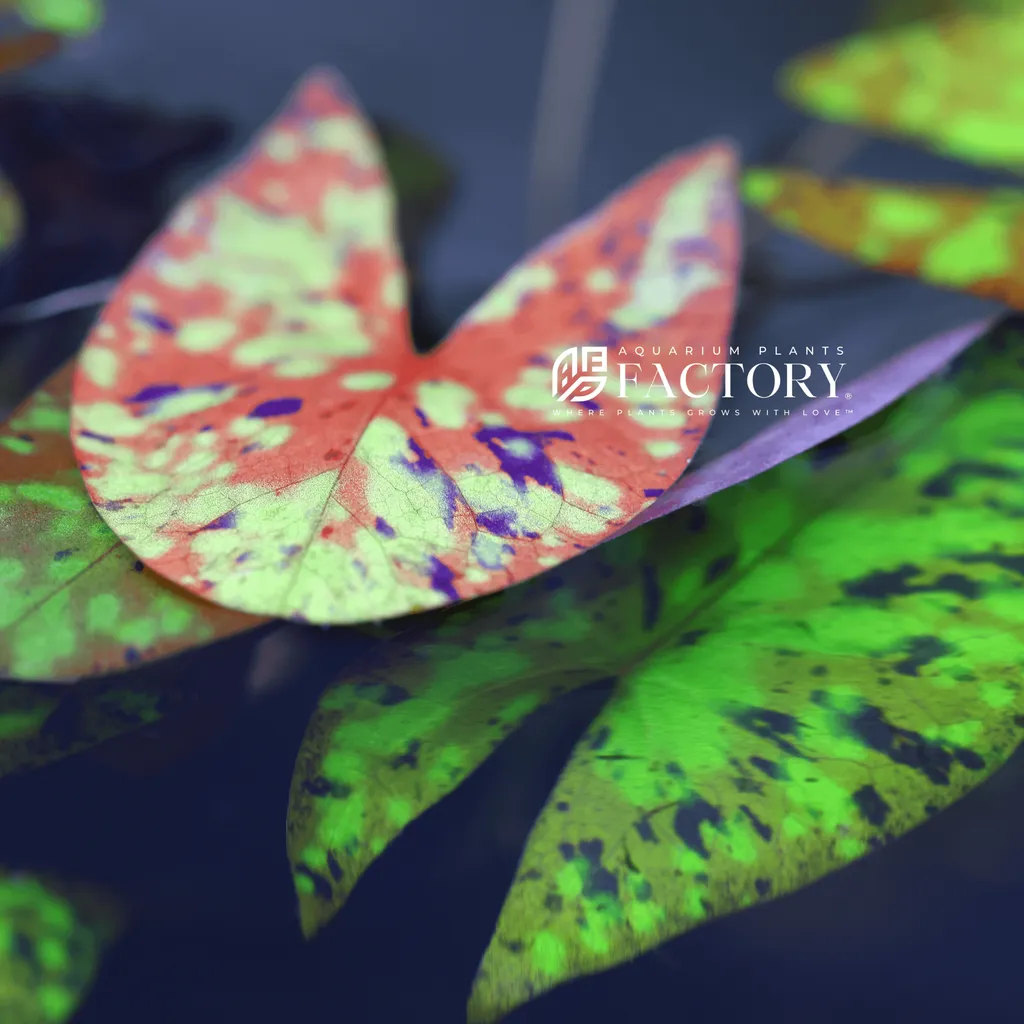
Micrantha lily
Nymphaea micrantha
FreshwaterMedium light · Midground9.8 in (25 cm)Nesaea crassicaulis
Ammannia crassicaulis
FreshwaterHigh light · Background19.7 in (50 cm)Nesaea pedicellata Golden
Ammannia pedicellata
FreshwaterHigh light · Background15.7 in (40 cm)Red cabomba
Cabomba furcata
FreshwaterHigh light · Background19.7 in (50 cm)Red Devil sword
Echinodorus 'Red Devil'
FreshwaterMedium light · Midground11.8 in (30 cm)Red myriophyllum
Myriophyllum tuberculatum
FreshwaterHigh light · Background11.8 in (30 cm)Red root floater
Phyllanthus fluitans
FreshwaterHigh light · Floating1.2 in (3 cm)Red rubin sword
Echinodorus 'Red Rubin'
FreshwaterMedium light · Midground19.7 in (50 cm)Red tiger lotus
Nymphaea lotus
FreshwaterMedium light · Midground23.6 in (60 cm)Red water lily
Nymphaea rubra
FreshwaterMedium light · Midground23.6 in (60 cm)Rotala Blood Red
Rotala rotundifolia 'Blood Red'
FreshwaterHigh light · Background11.8 in (30 cm)Rotala H'ra
Rotala rotundifolia 'H'ra'
FreshwaterHigh light · Background11.8 in (30 cm)Rotala macrandra
FreshwaterHigh light · Background19.7 in (50 cm)2 formsRotala Orange Juice
Rotala rotundifolia 'Orange Juice'
FreshwaterHigh light · Background11.8 in (30 cm)Rotala wallichii
FreshwaterHigh light · Background11.8 in (30 cm)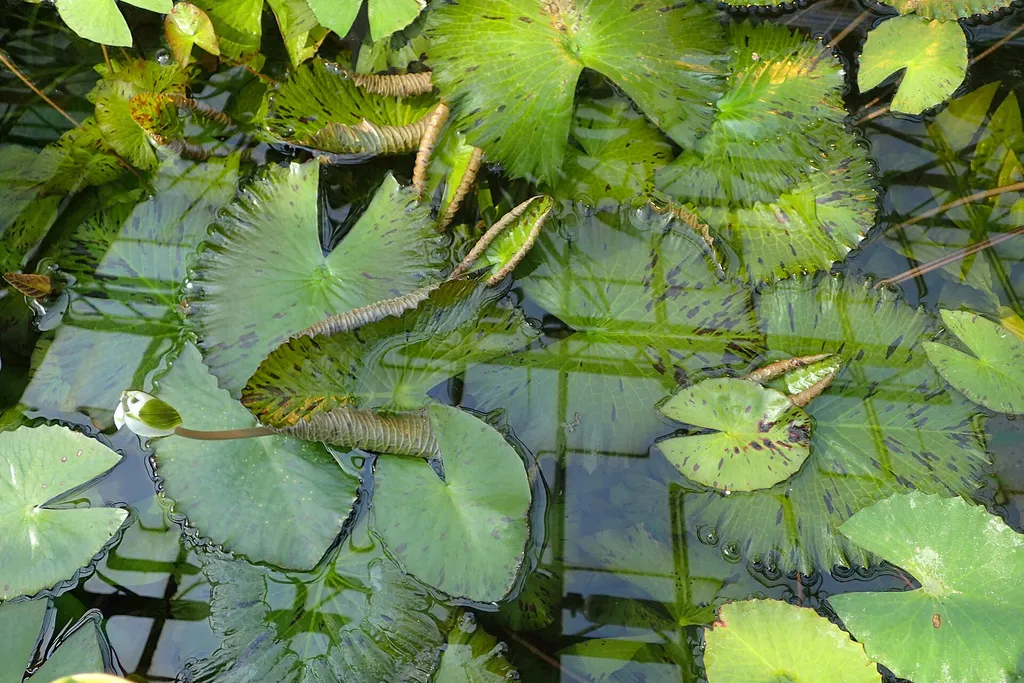
Tiger lotus
Nymphaea lotus
FreshwaterMedium light · Midground19.7 in (50 cm)
Planning a tank?
TankBud checks stocking and water fit as you build a tank, then tracks water tests, reminders and photos once it is running.
Track your tanksMaintain tanks for clients? See TankBud Pro