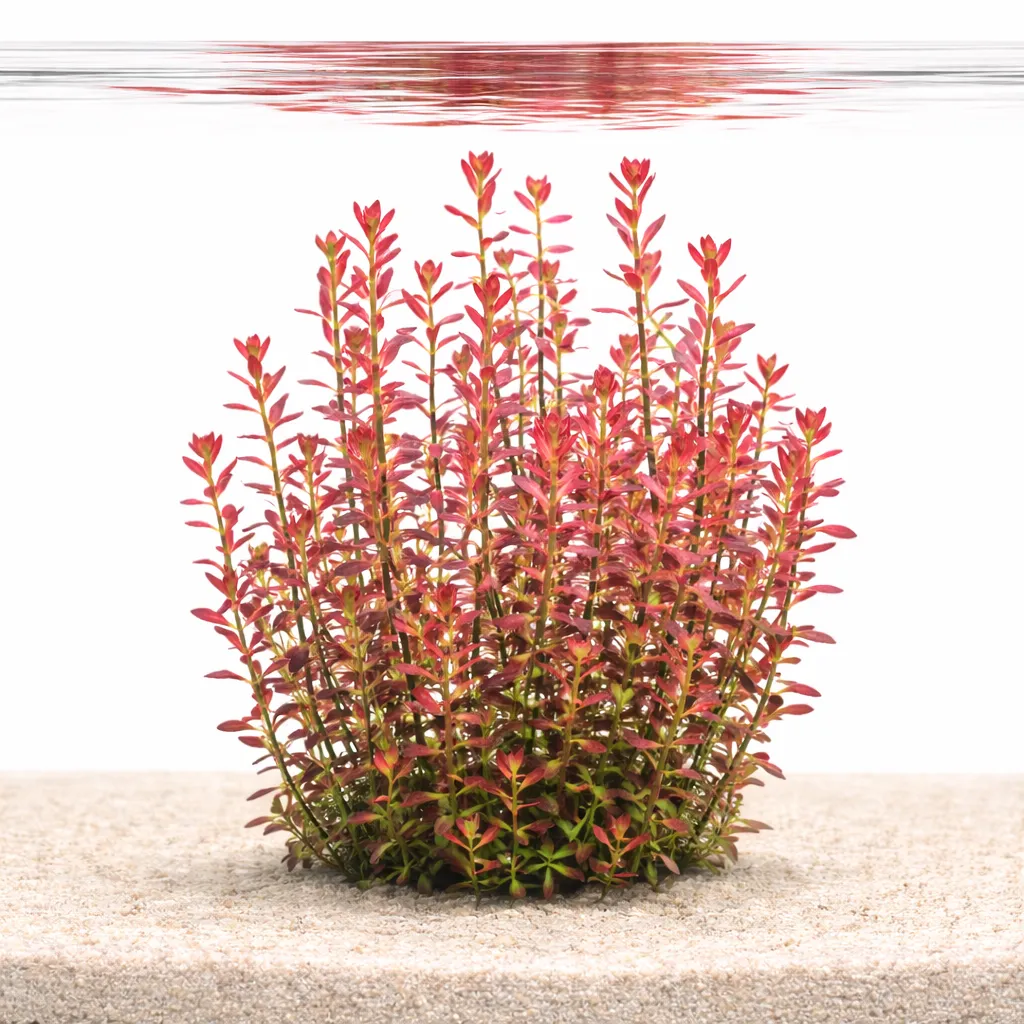
Rotala wallichii
Also known as Whorly Rotala, Whorled Rotala, Mayaca-like Rotala
FreshwaterStemCuttingsSide shoots
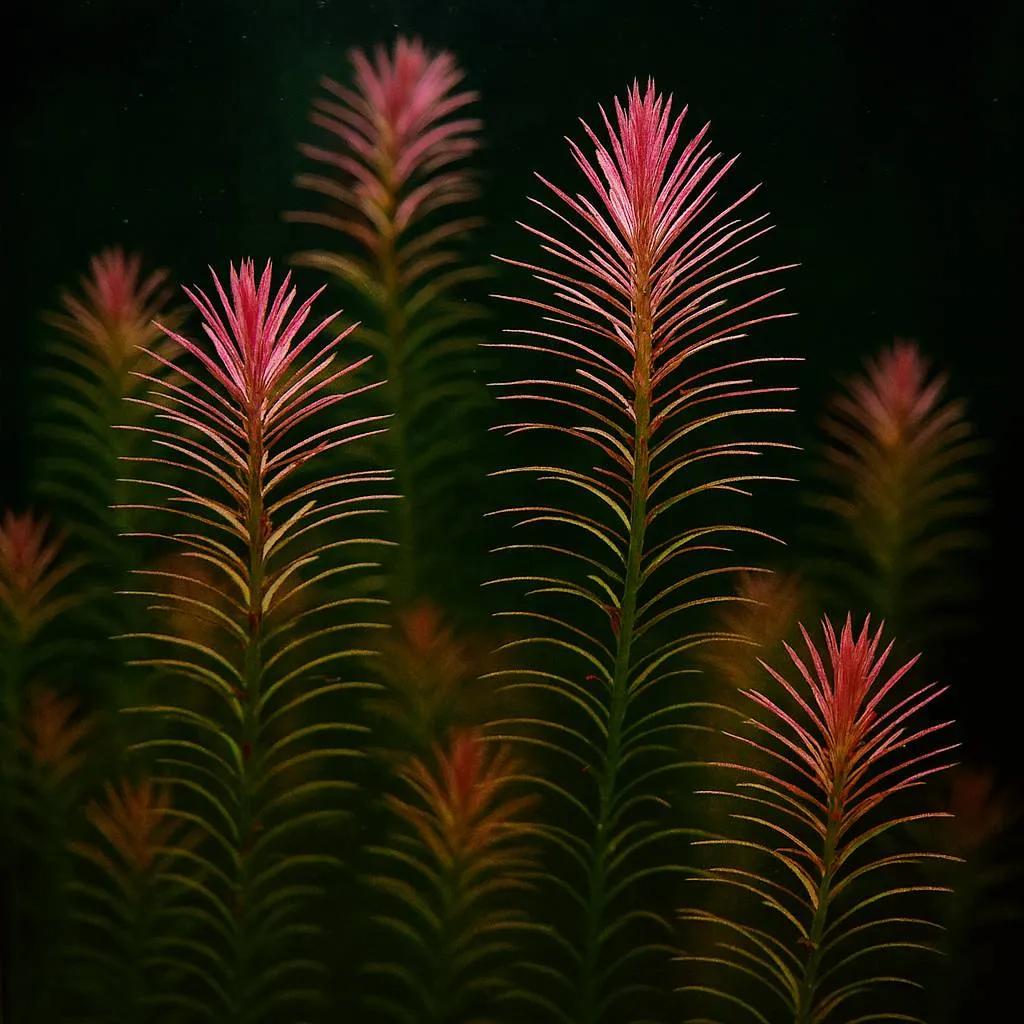
Care at a glance
- Light
- High light
- CO2
- CO₂ required
- Temperature
- 72–81°F
- 22–27°C
- Max height
- 11.8 in
- 30 cm
- Growth rate
- Fast
- Placement
- Background
- Type
- Stem
- pH
- 6.0–6.9
- Hardness
- 4–12 dGH
- Spread
- 1.6 in (4 cm)
- Nutrient uptake
- Root + water column
- Growth region
- Submersed or emersed
- Difficulty
- Difficult
- Family
- Lythraceae
- Origin
- Tropical Southeast Asia (slow-moving streams, ponds and ricefields)
Overview
This is a demanding background stem that needs high light, pressurized CO2 around 25 to 30 ppm, and stable, soft, slightly acidic water to hold its feathery pink form. It punishes neglect quickly: low light, swinging CO2, or poor ferts cause the lower stem to drop its needles and rot, leaving bare legs. Keep nitrate moderate and iron and micros steady for the best colour, plant stems individually with a few millimetres between them, and propagate from healthy side shoots and tops rather than fighting failing old stems. Not a plant for a low-tech tank.
In the wild
Native to tropical Southeast Asia, where it grows in slow-moving streams, ponds, and seasonally flooded ricefields in soft, slightly acidic water. It is found both emersed on wet ground and submersed, and the submersed form produces the fine whorled needle leaves prized in the hobby. It favours warm, mineral-poor water typical of its lowland tropical range.
Good to know
A stem plant in the family Lythraceae with leaves arranged in dense whorls around the stem, giving it a feathery, bottlebrush look unlike most broad-leaved Rotala. Submersed foliage is thread-fine and flushes pink to red at the tips under strong light, while emersed growth is coarser and greener. The whorled phyllotaxy and needle leaves make it superficially resemble Mayaca, though the two are unrelated.
Did you know
Did you know its delicate pink needle-whorls are basically a stress signal made beautiful? The fine submersed leaves only develop fully underwater, and the red-pink tips appear when intense light forces the plant to build protective pigments over its chlorophyll.
Related plants
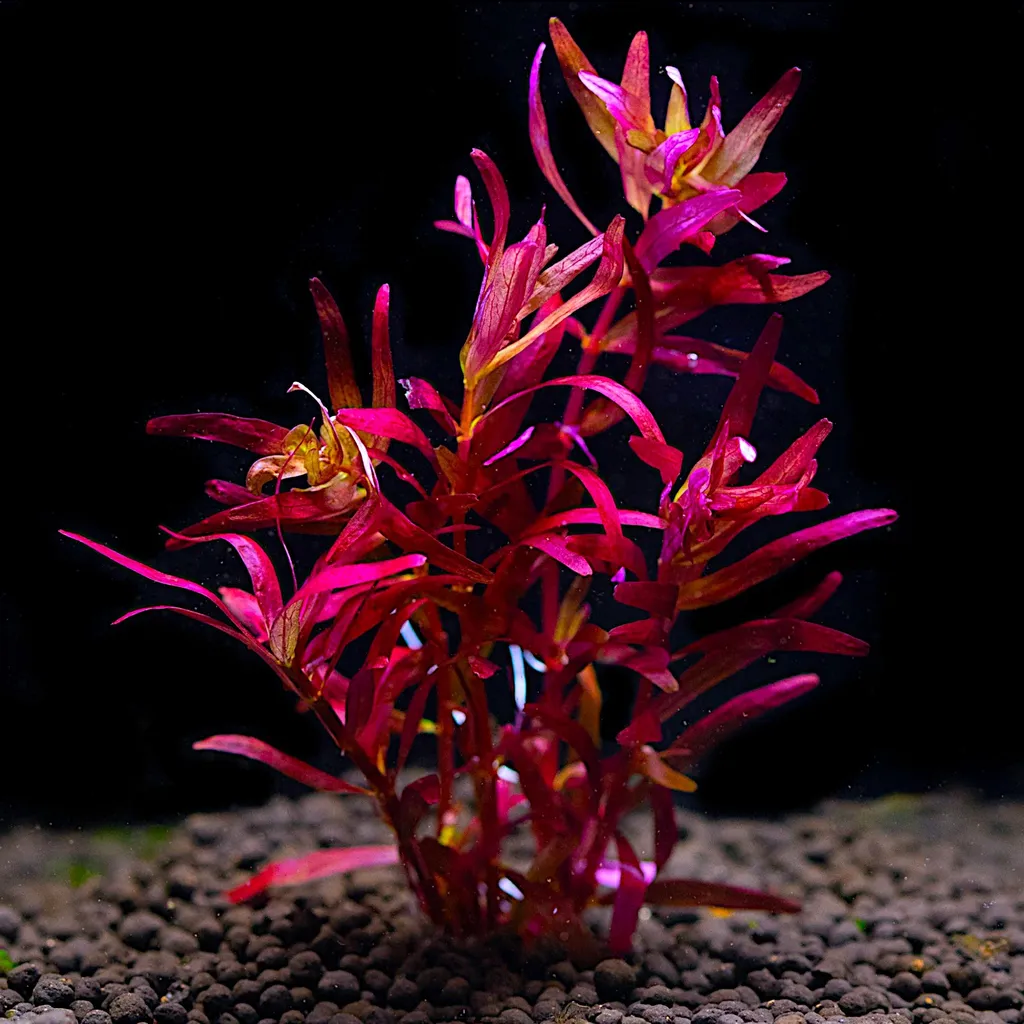 High lightBackground11.8 in (30 cm)
Rotala Blood Red
Rotala rotundifolia 'Blood Red'
High light · Background
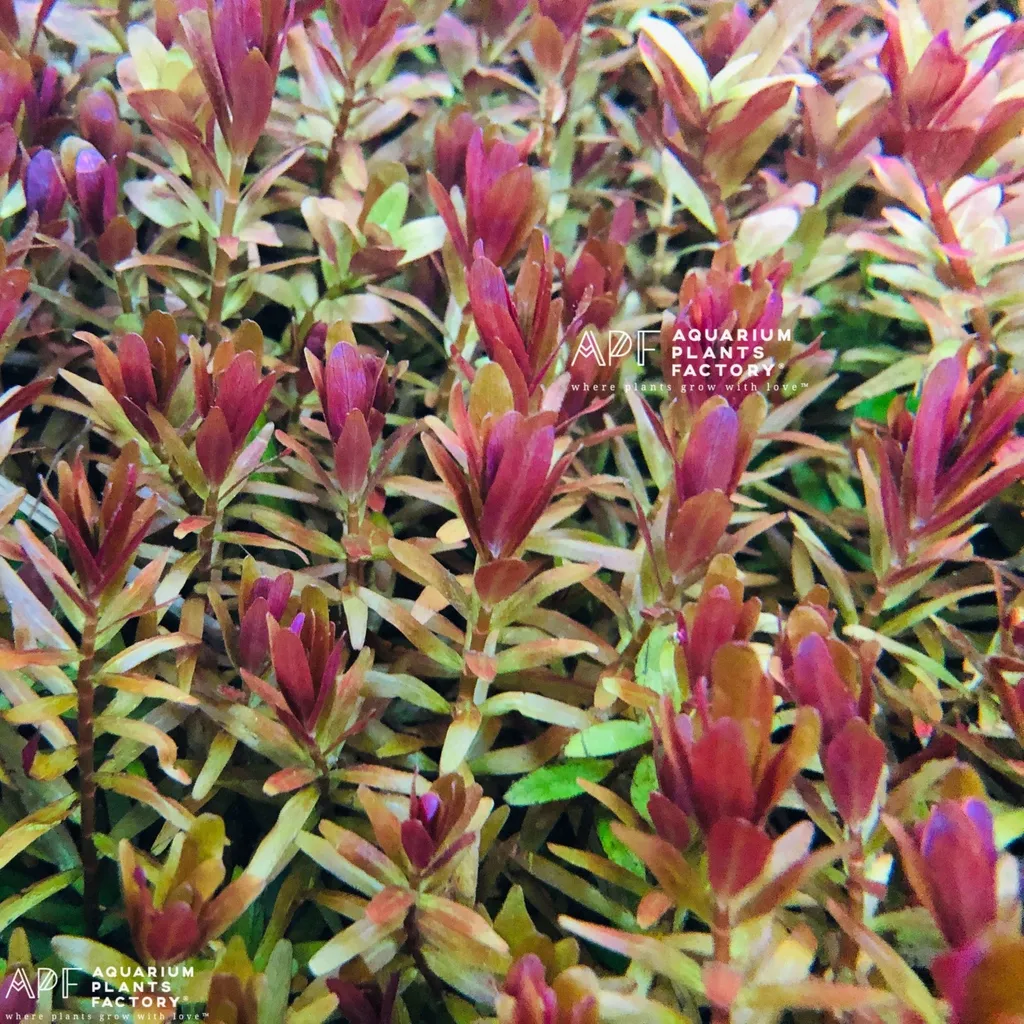 High lightBackground11.8 in (30 cm)
Rotala H'ra
Rotala rotundifolia 'H'ra'
High light · Background
- High lightBackground11.8 in (30 cm)
Rotala Orange Juice
Rotala rotundifolia 'Orange Juice'
High light · Background
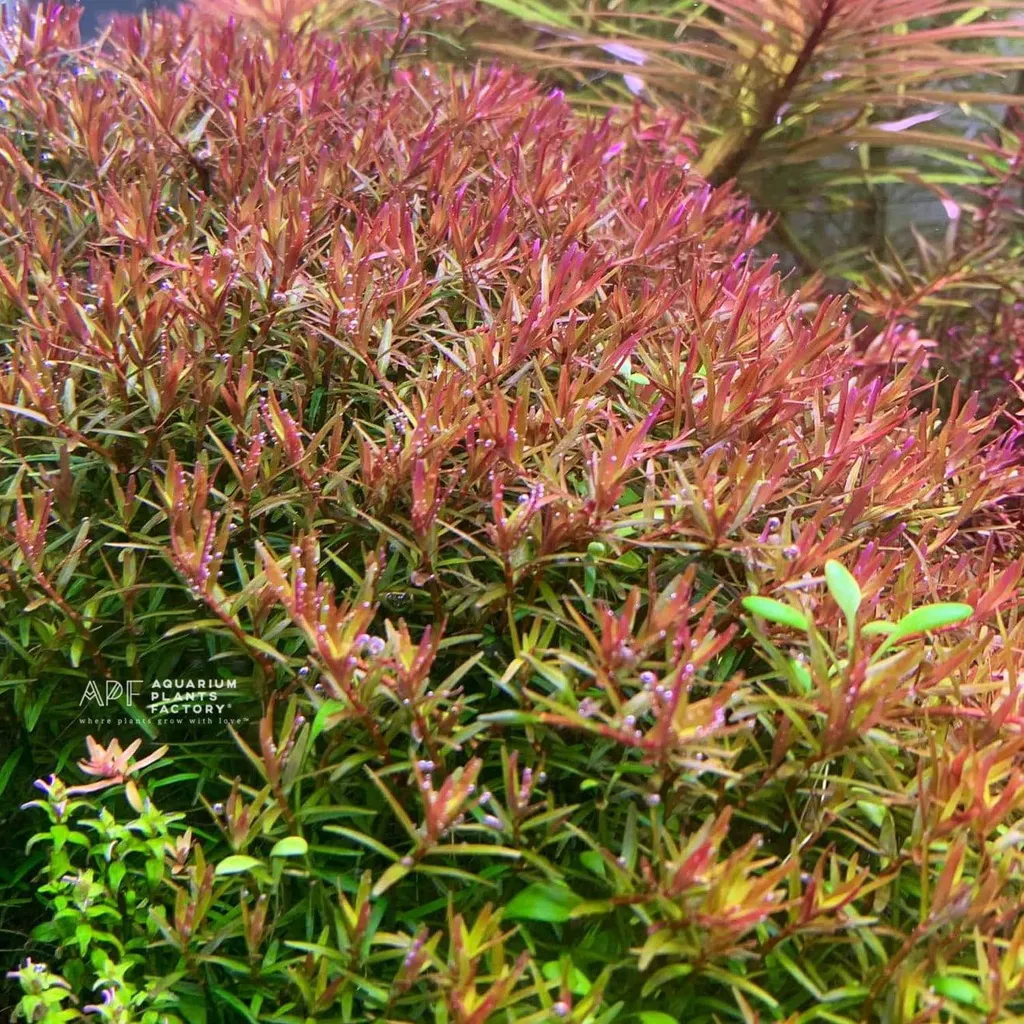 High lightBackground15.7 in (40 cm)
Rotala Colorata
Rotala rotundifolia 'Colorata'
High light · Background
 High lightBackground15.7 in (40 cm)
Rotala ramosior
High light · Background
- High lightBackground15.7 in (40 cm)
Rotala macrandra Bangladesh
Rotala macrandra 'Bangladesh'
High light · Background