Tetras
Tetras are the backbone of the community tank: small, colorful and happiest in a proper school. Most want soft, slightly acidic water and a group of six or more. Each profile lists the tank size and conditions a species does best in.
At a glance
- Tank size
- 5–264 gal
- 5 gal (20 L) to 264 gal (1,000 L); half the list needs 18 gal (70 L) or more
- Temperature
- 72–81°F
- 22–27°C, most of the list
- pH
- 5.5–7.2
- Most of the list
- Difficulty
- 45 easy
- 97 medium · 6 difficult
- Temperament
- 126 peaceful
- 21 mostly peaceful · 1 aggressive
148 species and 3 varieties
Tetras for a community tank
The community tetras are the fish the hobby is built on, and the profiles separate them on tank size and temperature. The neon tetra stays at 1.5 inches (3.75 cm), lists 10 gallons (40 liters) and wants cooler water than most people give it, 70–77°F (21–25°C). The cardinal tetra is a little larger at 1.8 inches (4.5 cm), lists 15 gallons (60 liters) and runs warm, 73–84°F (23–29°C). The ember tetra is the nano fish of the group at under an inch (2 cm). The rummy-nose tetra is the tightest schooler, 2 inches (5 cm) in 20 gallons (75 liters). The glowlight, black neon, lemon and X-ray tetras are the forgiving middle: 1.4 to 2 inches (3.5 to 5 cm), 15 to 20 gallons (60 to 75 liters), and forgiving about water; the lemon and X-ray tetras list pH up to 8.
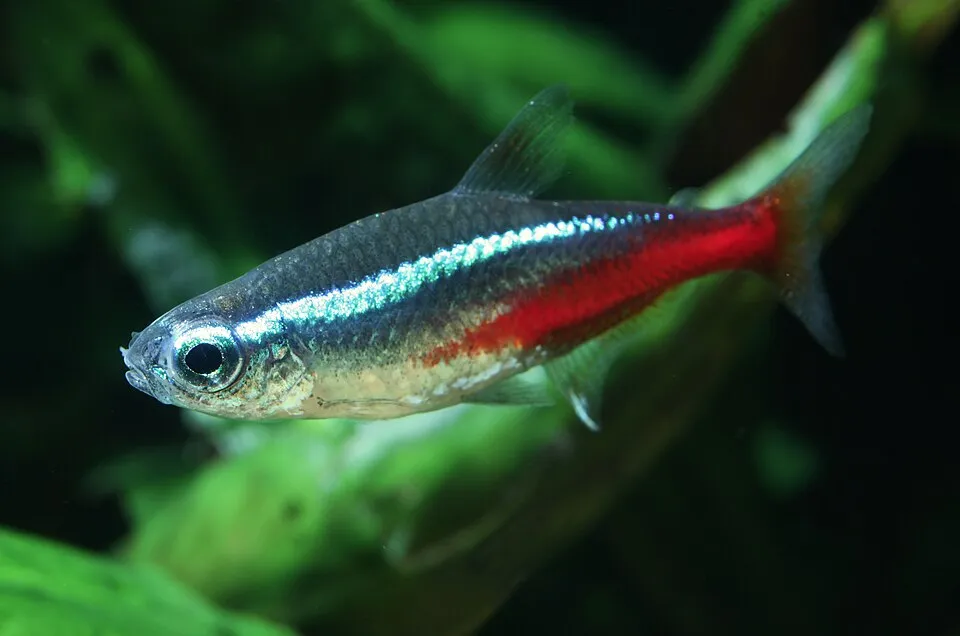
Neon tetra
Paracheirodon innesi
Freshwater- Size
- 1.5 in (3.8 cm)
- Tank
- 11 gal (40 L)
- Water
- 70–77°F (21–25°C)
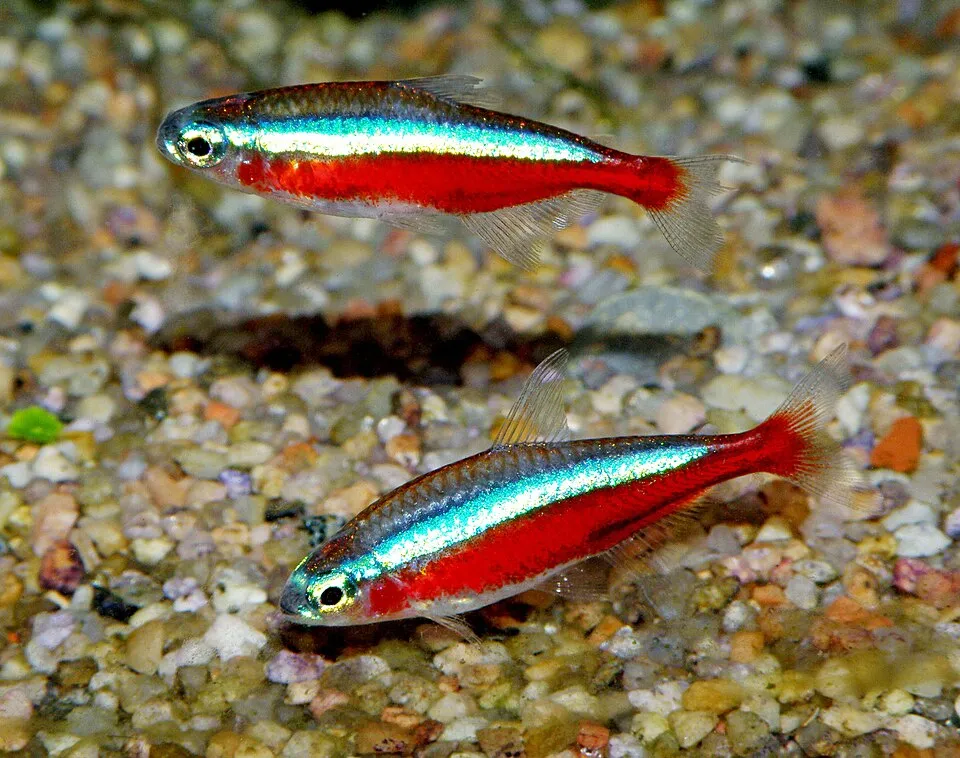
Cardinal tetra
Paracheirodon axelrodi
Freshwater- Size
- 1.8 in (4.5 cm)
- Tank
- 16 gal (60 L)
- Water
- 73–84°F (23–29°C)
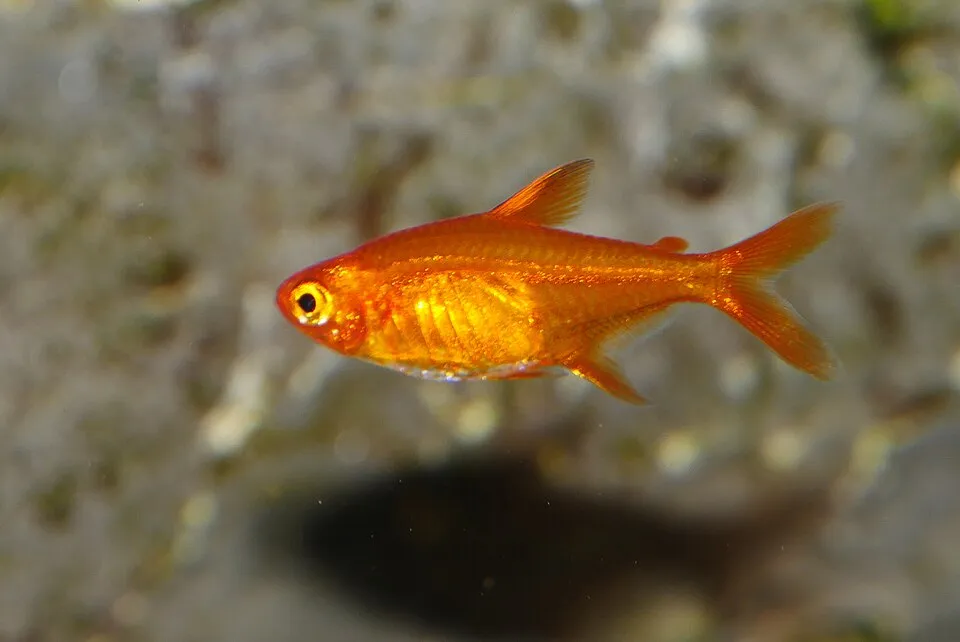
Ember tetra
Hyphessobrycon amandae
Freshwater- Size
- 0.8 in (2 cm)
- Tank
- 9 gal (35 L)
- Water
- 72–82°F (22–28°C)
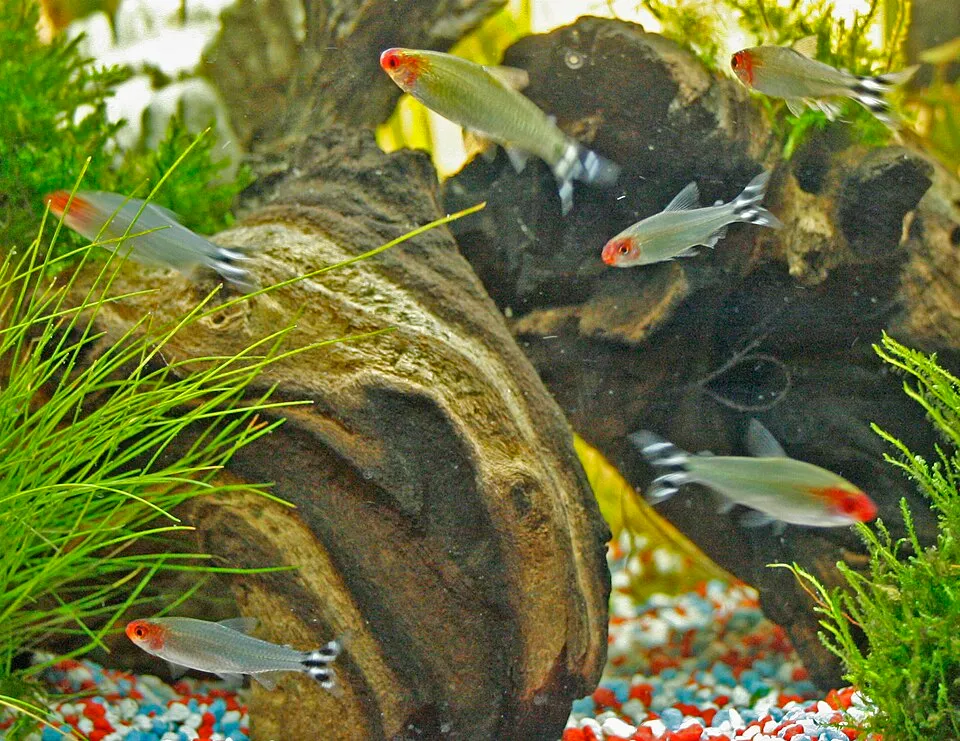
Rummy-nose tetra
Hemigrammus rhodostomus
Freshwater- Size
- 2 in (5 cm)
- Tank
- 20 gal (75 L)
- Water
- 75–81°F (24–27°C)
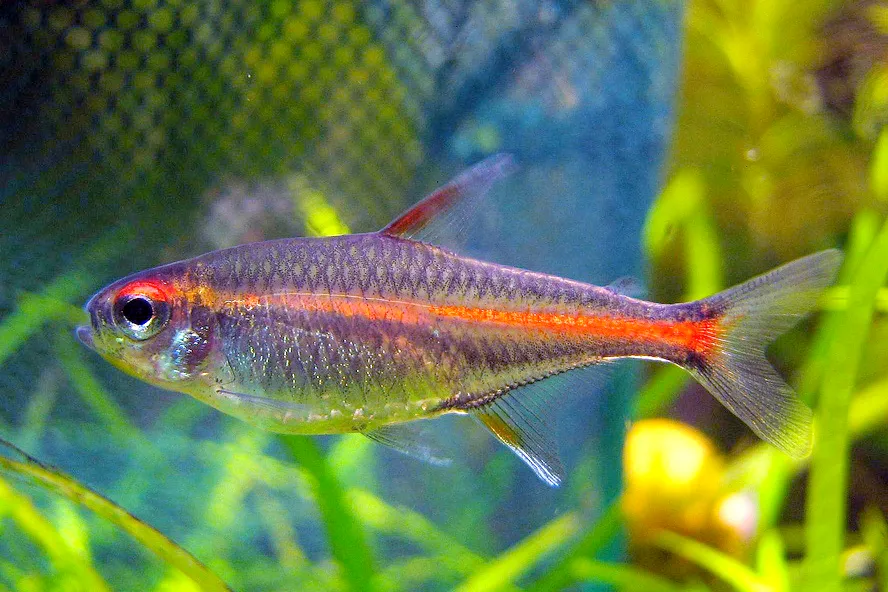
Glowlight tetra
Hemigrammus erythrozonus
Freshwater- Size
- 1.6 in (4 cm)
- Tank
- 18 gal (70 L)
- Water
- 75–82°F (24–28°C)
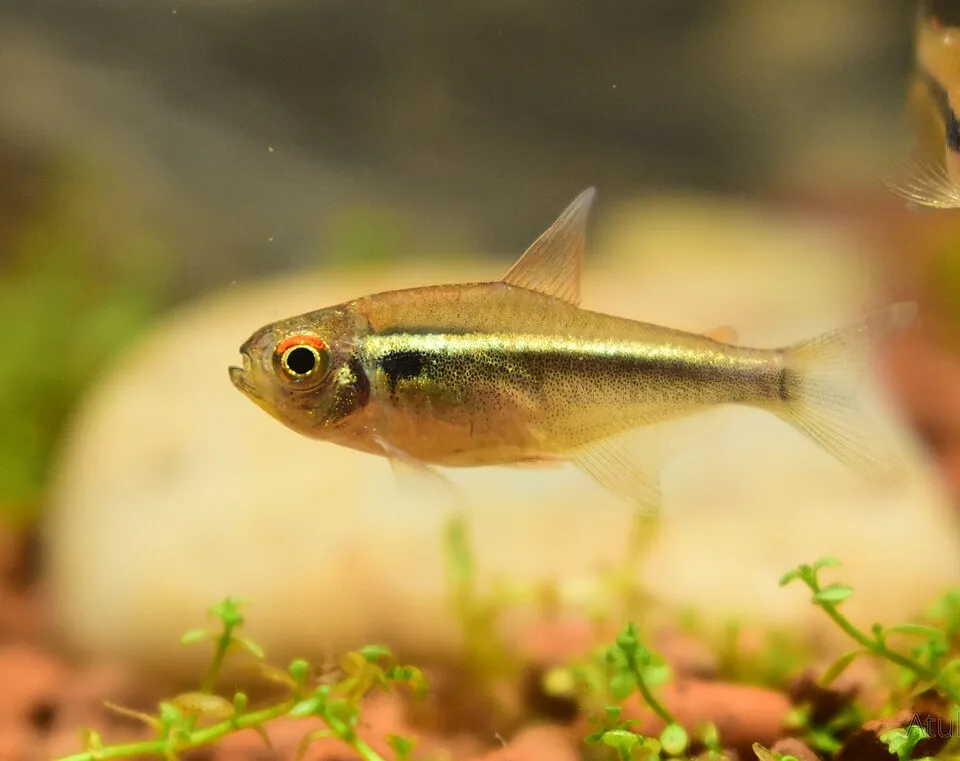
Black neon tetra
Hyphessobrycon herbertaxelrodi
Freshwater- Size
- 1.4 in (3.5 cm)
- Tank
- 16 gal (60 L)
- Water
- 72–82°F (22–28°C)
Six is the minimum, ten is better
Nearly every tetra here is a schooling fish. In a group of three they hide, lose colour and pick at each other; in a group of ten they swim in the open and behave. One species in numbers beats three species in threes, both for the fish and for the look. The rummy-nose is the useful one: its nose fades when the water is off, before anything else in the tank shows a problem.
Match the water
Most tetras list soft to neutral water and 72–82°F (22–28°C), and the common species adapt to a wide range. The blackwater specialists do not: the tucano tetra, the hummingbird tetra, the adonis tetra and Axelrod's glass tetra list pH no higher than 6.5 and are marked difficult, and they belong in a peat-stained tank, not a community. At the other end, the X-ray, lemon, bloodfin, silvertip, Buenos Aires and blind cave tetras list pH up to 8 and are the tetras for hard tap water. Temperature is the quiet killer: the neon tetra tops out at 77°F (25°C), so a neon in an 82°F (28°C) discus tank is living short.
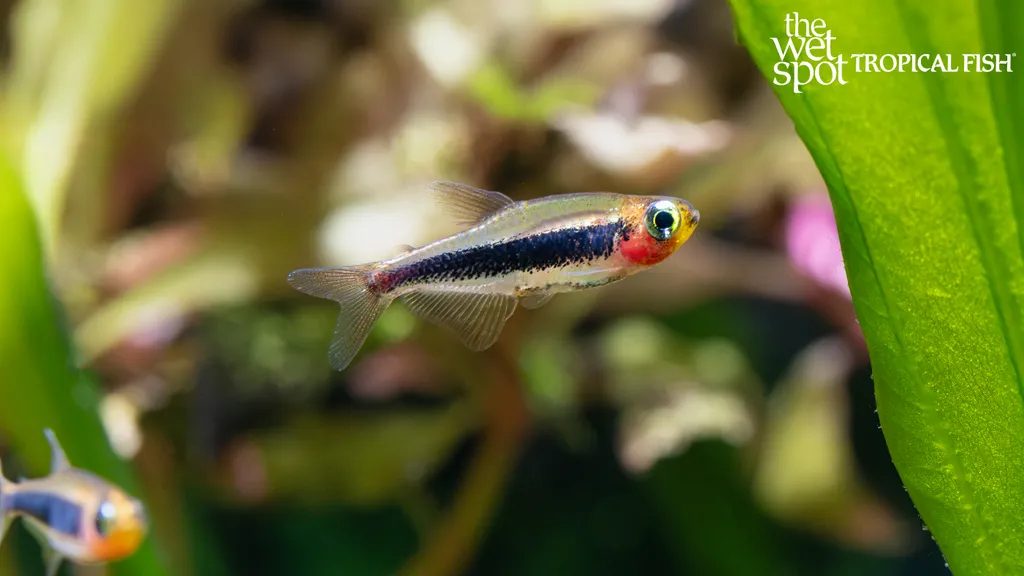
Tucano tetra
Tucanoichthys tucano
Freshwater0.8 in (2 cm) · 12 gal (45 L)75–82°F (24–28°C)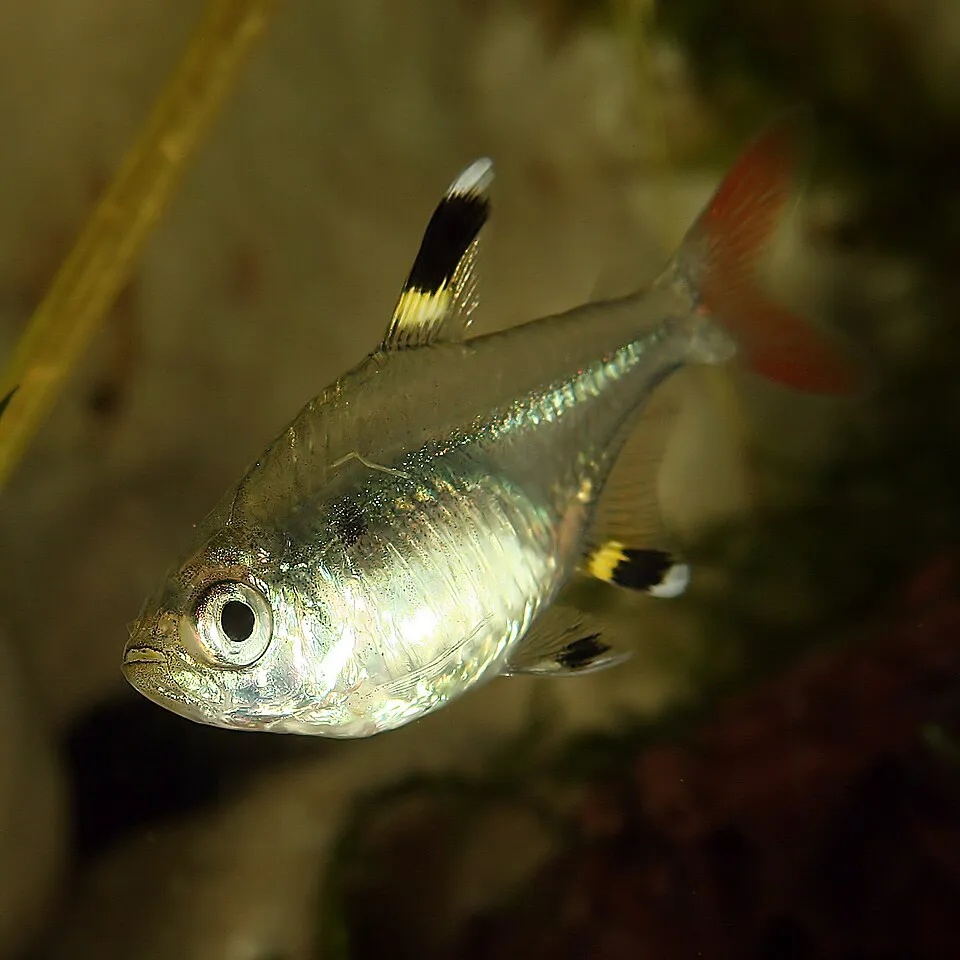
X-ray tetra
Pristella maxillaris
Freshwater1.8 in (4.5 cm) · 18 gal (70 L)72–82°F (22–28°C)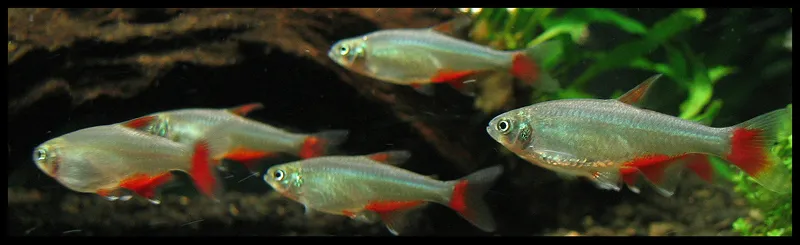
Bloodfin tetra
Aphyocharax anisitsi
Freshwater2.2 in (5.5 cm) · 20 gal (75 L)72–82°F (22–28°C)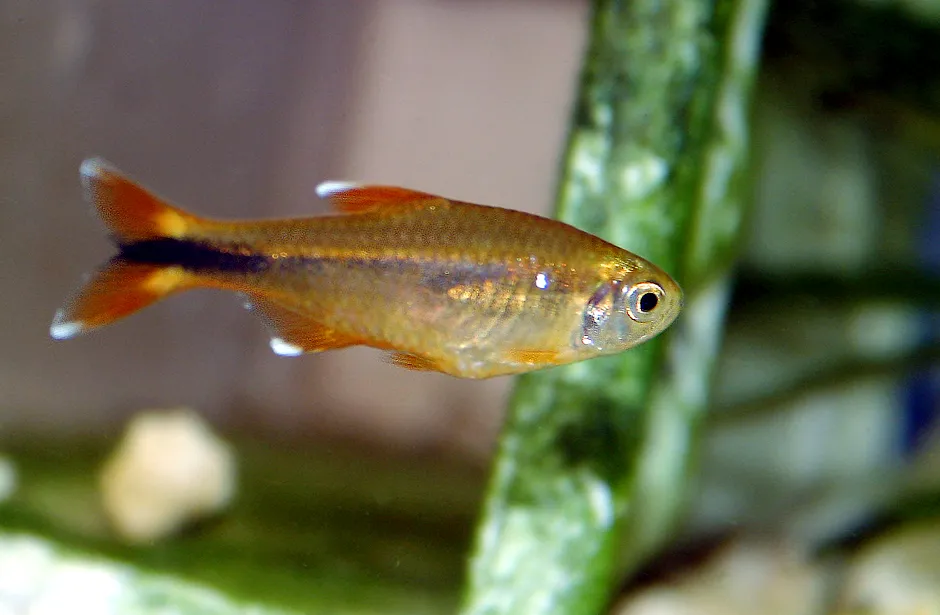
Silvertip tetra
Hasemania nana
Freshwater1.6 in (4 cm) · 18 gal (70 L)73–82°F (23–28°C)
The nippers and the plant eaters
A few tetras earn their reputation. The serpae tetra and the black widow tetra are marked peaceful and mostly peaceful in the catalog, and they earn it only in a school: in threes and fours they nip fins and each other, in a school of eight or more they keep it among themselves, and neither belongs with a betta or a long-finned guppy. The Buenos Aires tetra is hardy, grows to 3 inches (7.5 cm) and eats soft plants down to the stem. The bucktooth tetra is the outlier: a scale eater marked aggressive, kept in a species tank in a group of twelve or more so no single fish takes the damage.
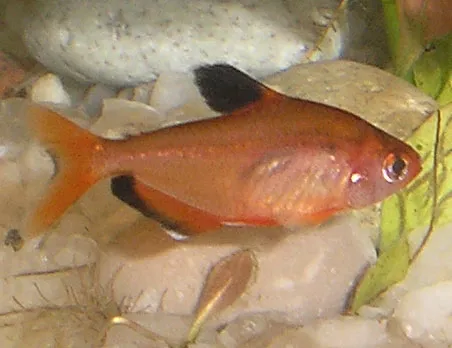
Serpae tetra
Hyphessobrycon eques
Freshwater1.8 in (4.5 cm) · 17 gal (65 L)68–82°F (20–28°C)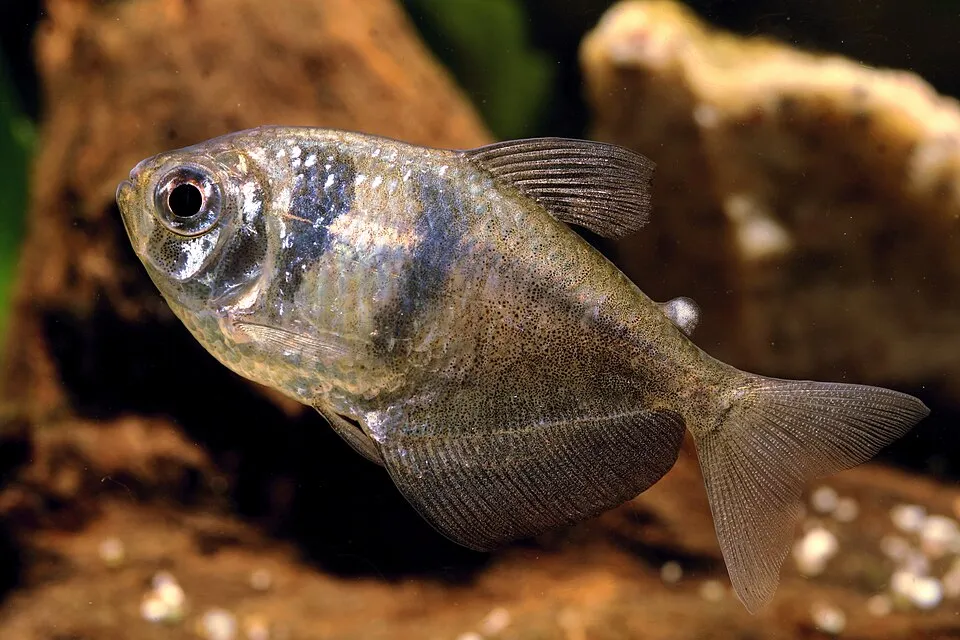
Black widow tetra
Gymnocorymbus ternetzi
Freshwater2.4 in (6 cm) · 20 gal (75 L)68–79°F (20–26°C)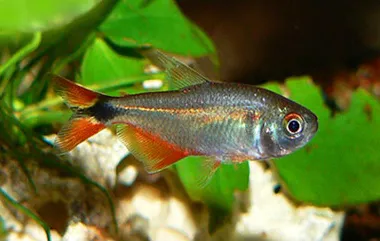
Buenos Aires tetra
Psalidodon anisitsi
Freshwater3 in (7.5 cm) · 25 gal (95 L)66–81°F (19–27°C)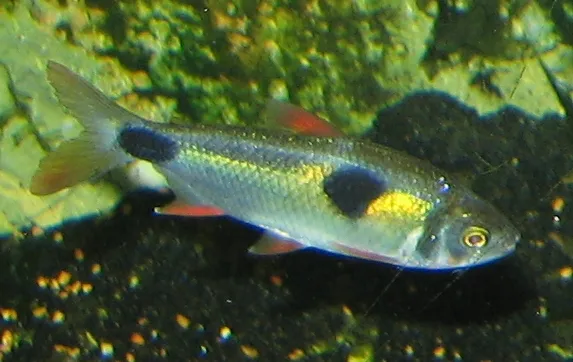
Bucktooth tetra
Exodon paradoxus
Freshwater4.7 in (12 cm) · 45 gal (170 L)73–82°F (23–28°C)
Not every tetra is small
The Congo tetra reaches 3 inches (8 cm), lists 25 gallons (90 liters) and is the best known of the African tetras, which have longer fins and want more room than their South American cousins. The diamond, bleeding heart, emperor and penguin tetras sit between 2 and 2.5 inches (5 and 6.5 cm). The silver dollars are filed here too, at 6 inches (15 cm) in 70 gallons (265 liters), and they eat plants. The blind cave tetra reaches 5 inches (12 cm), the nurse tetra 10 inches (25 cm), and the red-tail brycinus, an African relative at 21 inches (53 cm) on 264 gallons (1000 liters), is the largest fish on this page. The family's two giants, the African tigerfish and the goliath tigerfish, are kept off this list on purpose: at 30 inches (75 cm) and 52 inches (133 cm) they are predators, not tetras, and they have their own profiles under monster fish.
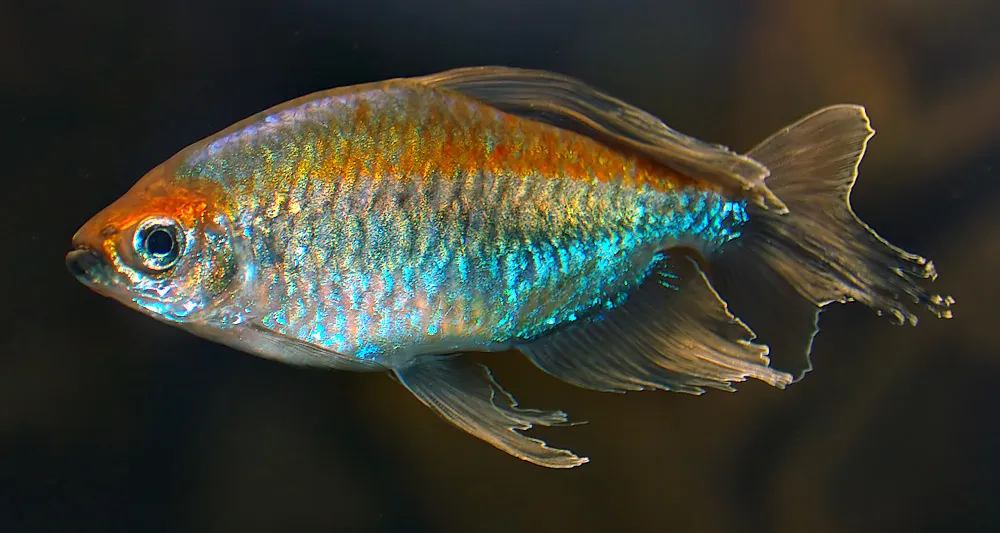
Congo tetra
Phenacogrammus interruptus
Freshwater3.1 in (8 cm) · 24 gal (90 L)73–82°F (23–28°C)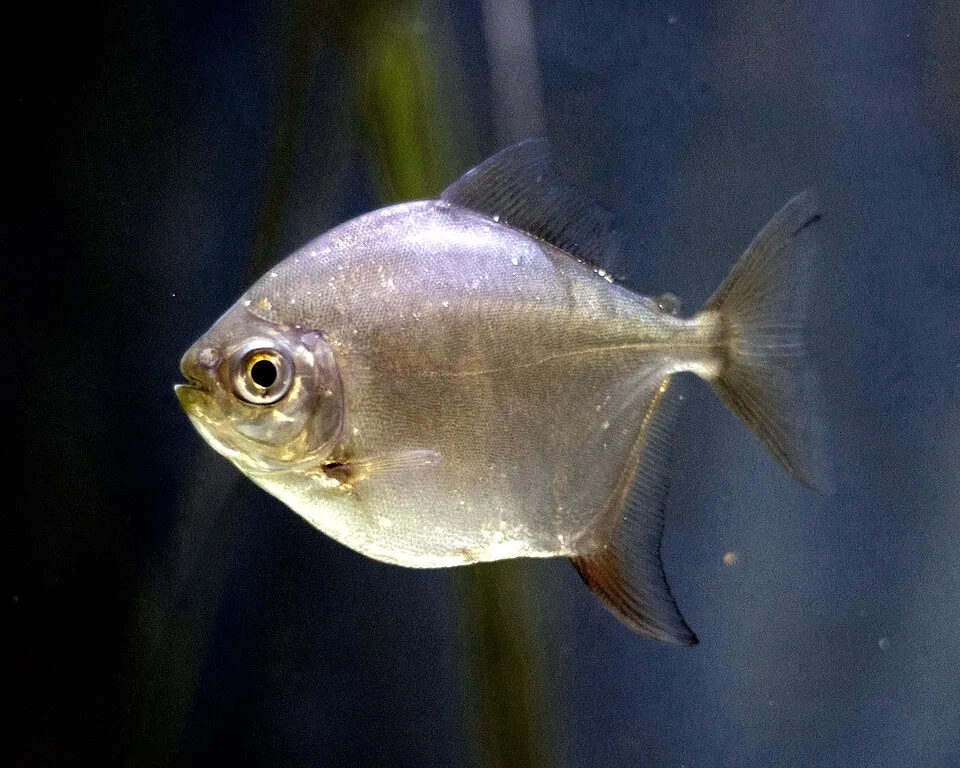
Silver dollar
Metynnis argenteus
Freshwater5.9 in (15 cm) · 70 gal (265 L)75–82°F (24–28°C)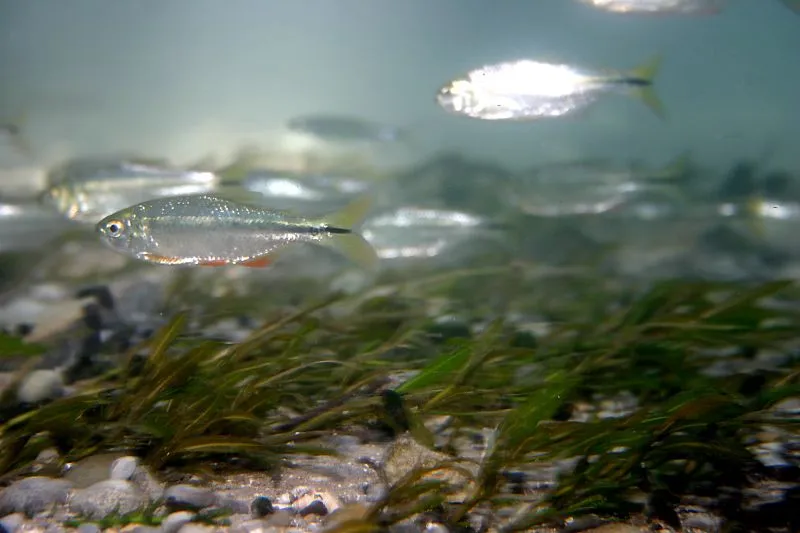
Blind cave tetra
Astyanax mexicanus
Freshwater4.7 in (12 cm) · 25 gal (95 L)70–77°F (21–25°C)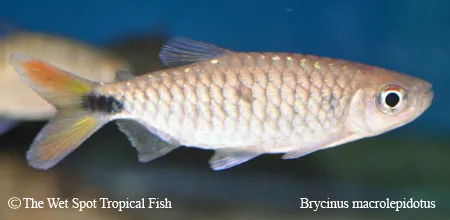
Red-tail brycinus
Brycinus macrolepidotus
Freshwater20.9 in (53 cm) · 264 gal (1,000 L)73–82°F (23–28°C)
By the numbers
Smallest
Largest
Easiest to keep
Fits a 20 gallon tank
Fits a 30 gallon tank
FAQ
Common questions
How many tetras should be kept together?
Six at least, ten or more if the tank allows, of one species. They are schooling fish and behave badly in small groups.
What size tank do neon tetras need?
10 gallons (40 liters) for a school of six to eight. They stay at 1.5 inches (3.75 cm).
What temperature do tetras need?
Most list 72–82°F (22–28°C). Neons run cooler at 70–77°F (21–25°C); cardinals run warmer, up to 84°F (29°C); green neons list 72–86°F (22–30°C). The range is on each profile.
Can neon tetras live with cardinal tetras?
Yes, but their ranges only overlap at 73–77°F (23–25°C). Set the heater there and pick one of the two as the school you build up.
How big do tetras get?
Most stay between 1 and 2.5 inches (2.5 and 6 cm). The Congo tetra reaches 3 inches (8 cm) and the silver dollars 6 inches (15 cm). The red-tail brycinus, at 21 inches (53 cm), is the largest fish on the page; the two tigerfish are relatives kept off this list.
Are tetras aggressive?
Mostly no. Serpae, black widow and Buenos Aires tetras nip in small groups, and the bucktooth tetra is a scale eater kept in a species tank.
What do tetras eat?
Flake, micro pellets and frozen foods such as daphnia, brine shrimp and bloodworm. The ember and other tiny tetras need fine food.
Index
All tetras
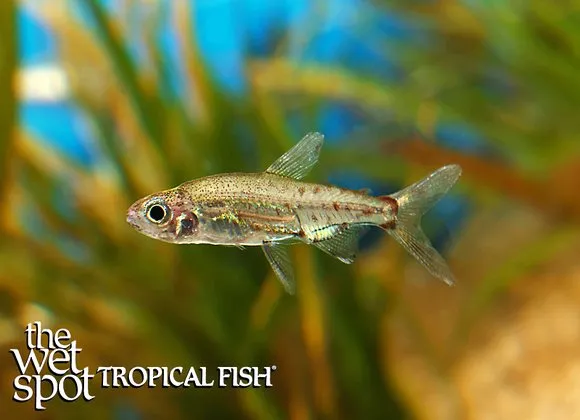
Adonis tetra
Lepidarchus adonis
Freshwater1 in (2.5 cm) · 11 gal (40 L)72–79°F (22–26°C)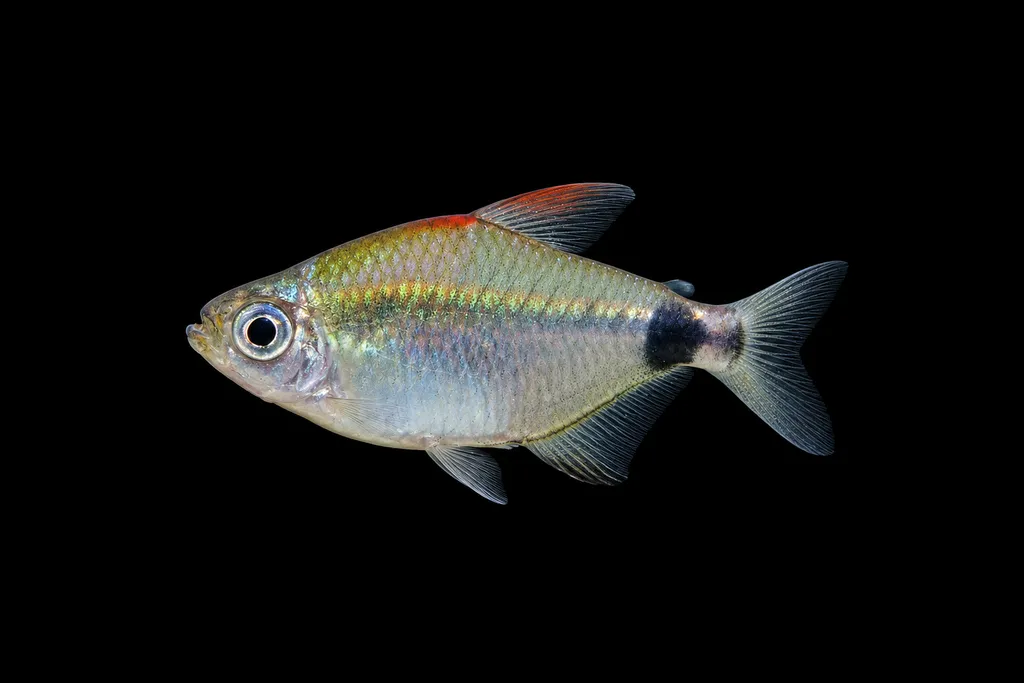
African moon tetra
Bathyaethiops caudomaculatus
Freshwater3.1 in (8 cm) · 22 gal (85 L)72–77°F (22–25°C)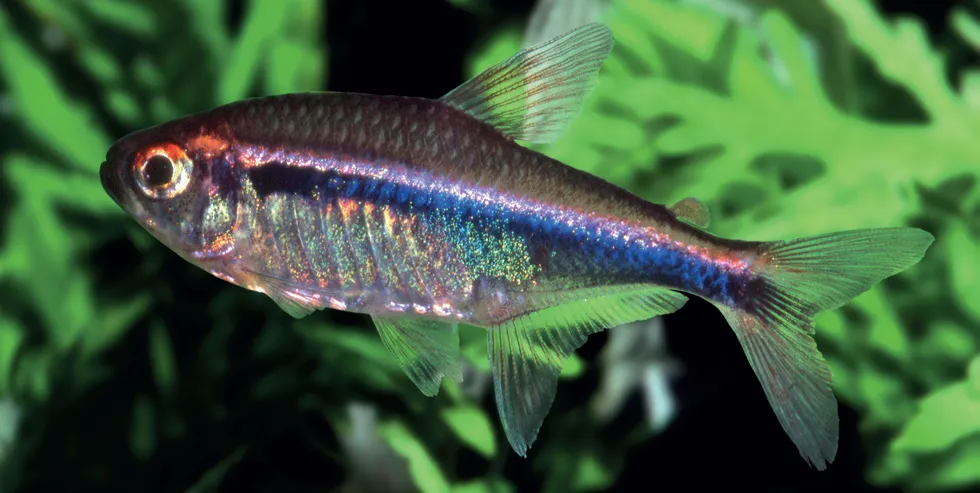
Agulha tetra
Hyphessobrycon agulha
Freshwater2 in (5.2 cm) · 17 gal (65 L)72–81°F (22–27°C)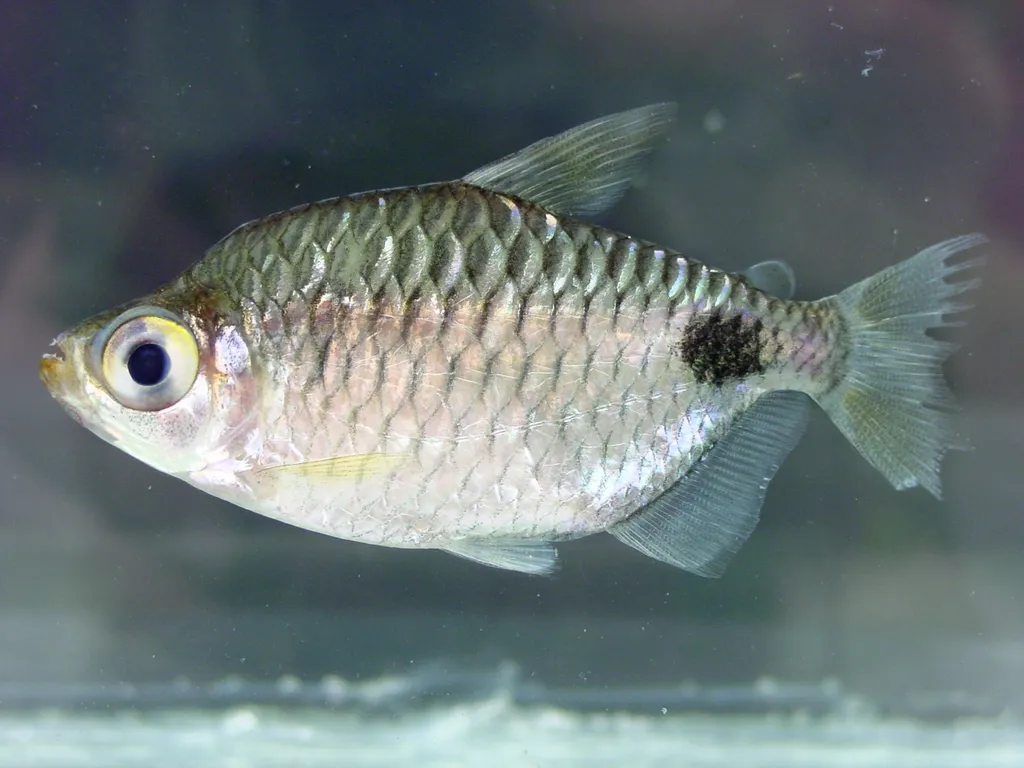
Altus tetra
Brachypetersius altus
Freshwater2.6 in (6.5 cm) · 30 gal (112 L)73–82°F (23–28°C)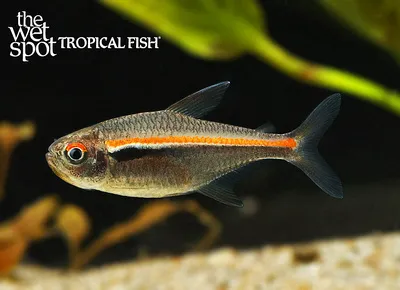
Amapa tetra
Hyphessobrycon amapaensis
Freshwater1.4 in (3.6 cm) · 15 gal (55 L)73–82°F (23–28°C)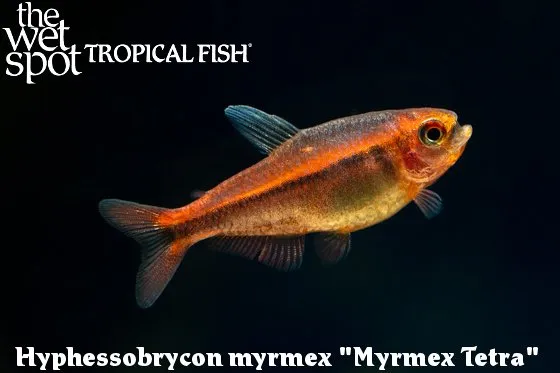
Ant tetra
Hyphessobrycon myrmex
Freshwater1.1 in (2.9 cm) · 10 gal (38 L)72–81°F (22–27°C)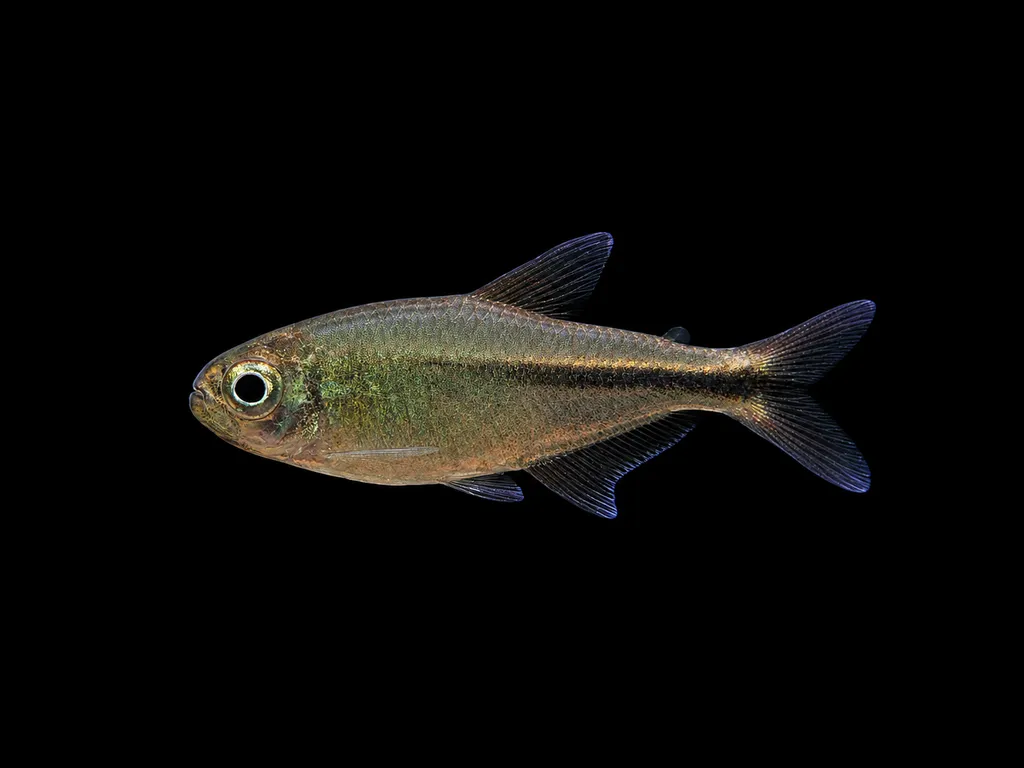
Aurora tetra
Moenkhausia aurora
Freshwater2 in (5.2 cm) · 20 gal (75 L)73–82°F (23–28°C)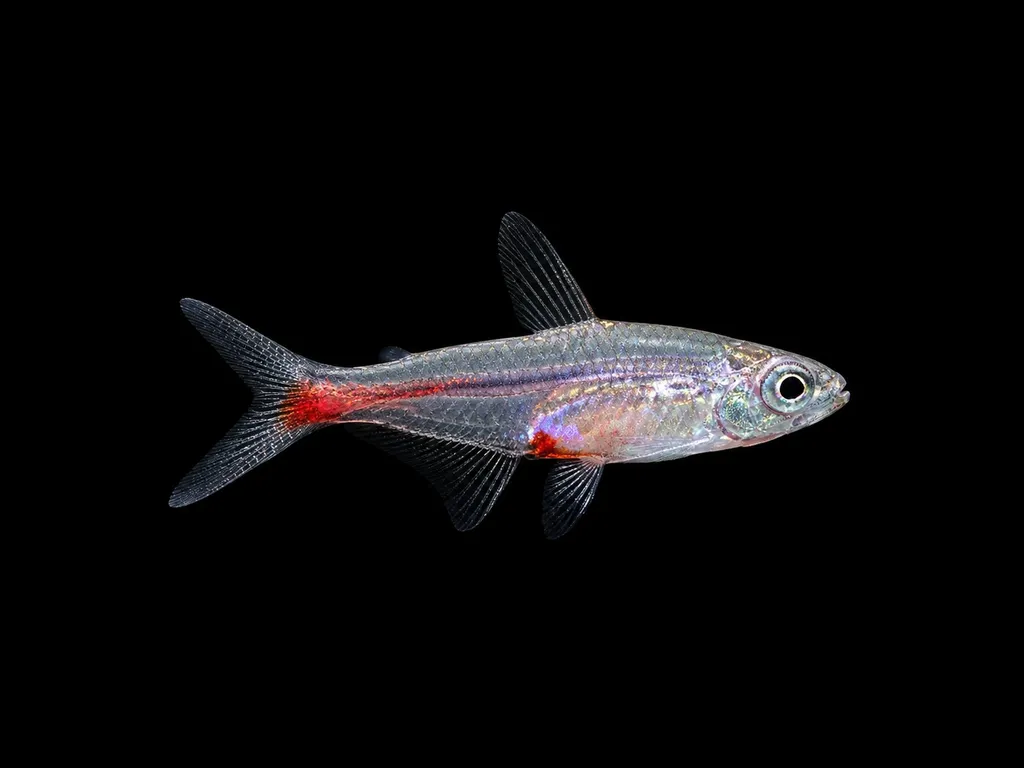
Axelrod's glass tetra
Brittanichthys axelrodi
Freshwater1.3 in (3.3 cm) · 14 gal (54 L)75–82°F (24–28°C)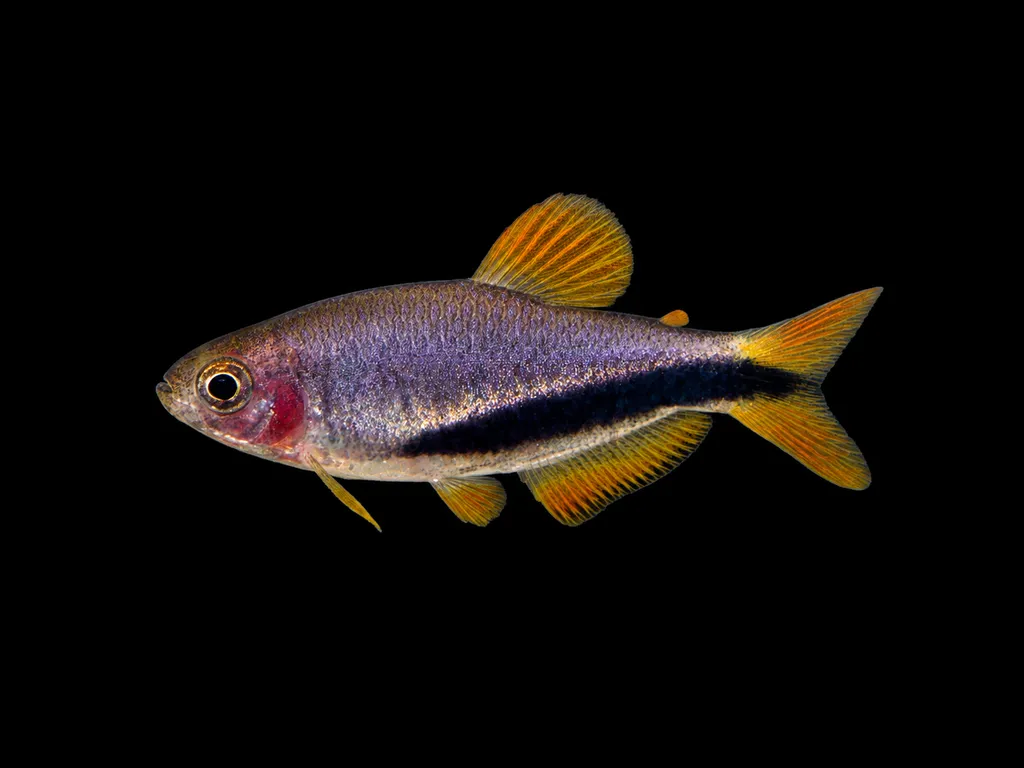
Black arrow tetra
Inpaichthys luizae
Freshwater1.4 in (3.5 cm) · 14 gal (54 L)72–81°F (22–27°C)Black neon tetra
Hyphessobrycon herbertaxelrodi
Freshwater1.4 in (3.5 cm) · 16 gal (60 L)72–82°F (22–28°C)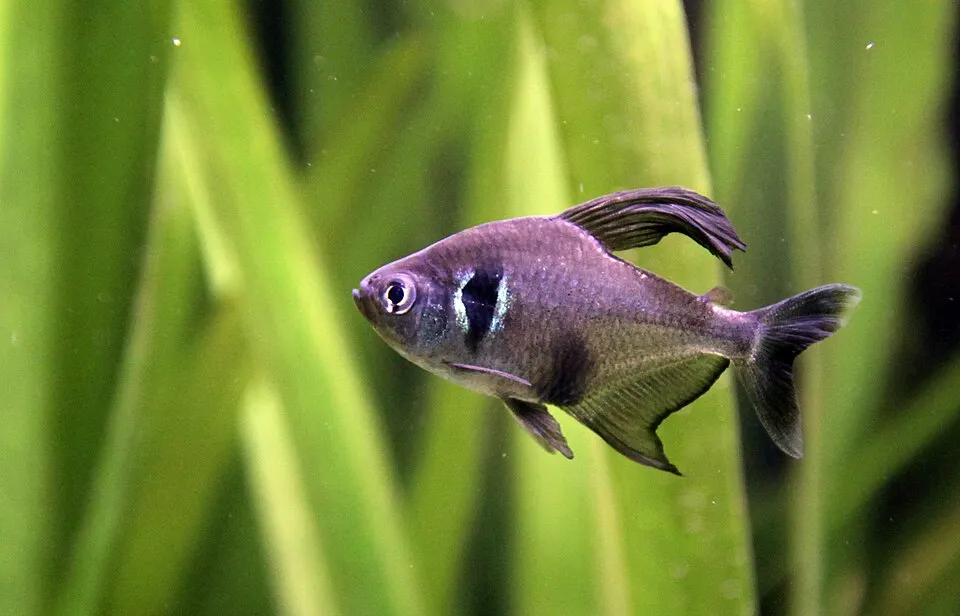
Black phantom tetra
Hyphessobrycon megalopterus
Freshwater1.4 in (3.6 cm) · 17 gal (65 L)70–82°F (21–28°C)Black widow tetra
Gymnocorymbus ternetzi
Freshwater2.4 in (6 cm) · 20 gal (75 L)68–79°F (20–26°C)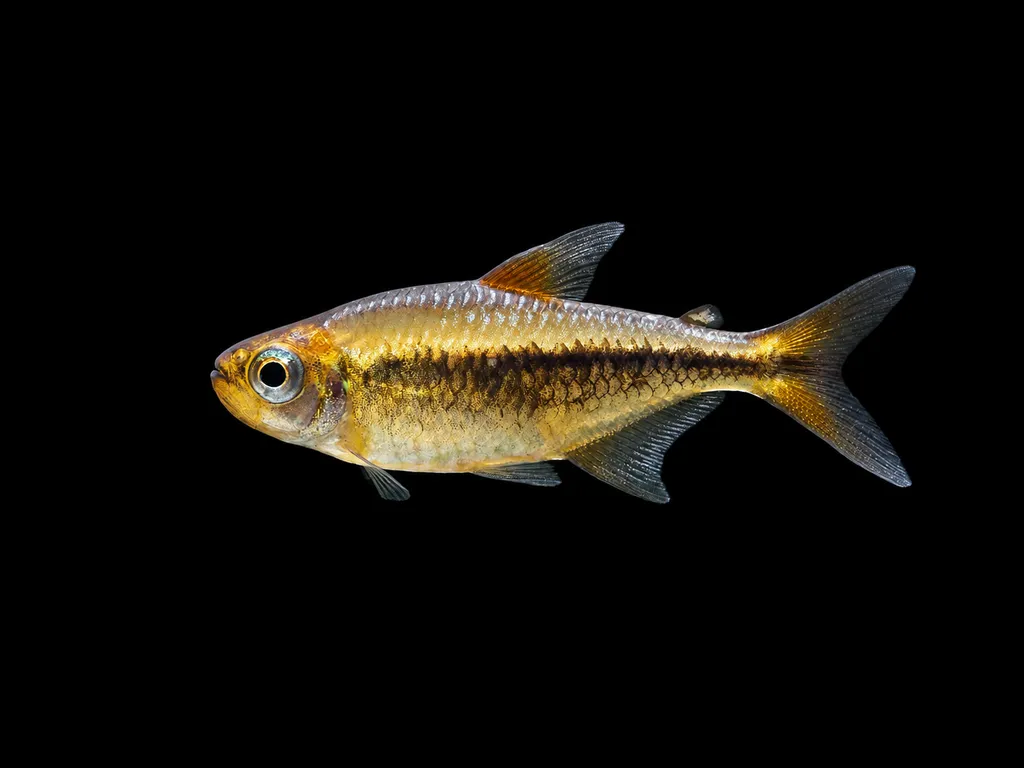
Blackmargin tetra
Moenkhausia nigromarginata
Freshwater2.1 in (5.3 cm) · 20 gal (75 L)73–82°F (23–28°C)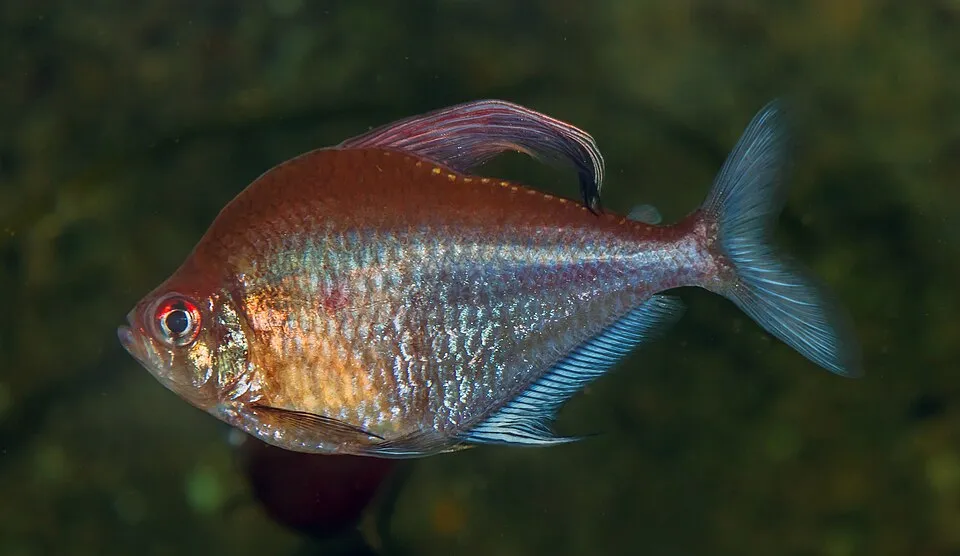
Bleeding heart tetra
Hyphessobrycon erythrostigma
Freshwater2.4 in (6 cm) · 20 gal (75 L)70–81°F (21–27°C)Blind cave tetra
Astyanax mexicanus
Freshwater4.7 in (12 cm) · 25 gal (95 L)70–77°F (21–25°C)Bloodfin tetra
Aphyocharax anisitsi
Freshwater2.2 in (5.5 cm) · 20 gal (75 L)72–82°F (22–28°C)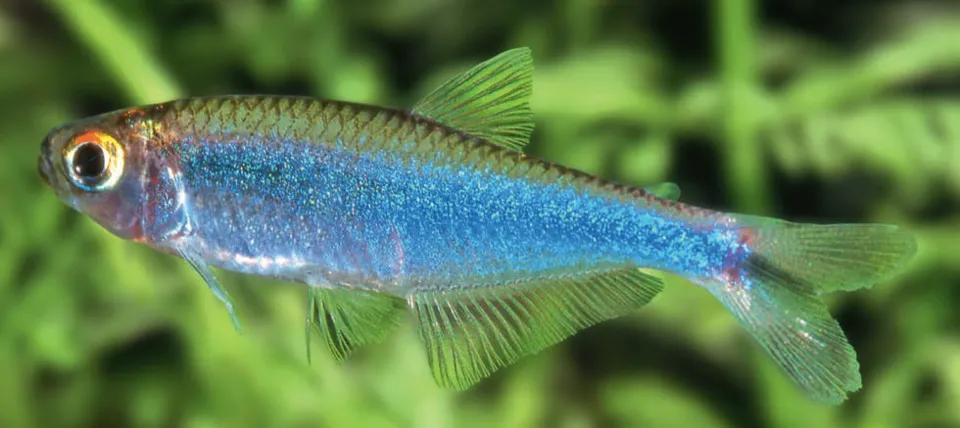
Blue tetra
Knodus borki
Freshwater2 in (5 cm) · 22 gal (85 L)72–79°F (22–26°C)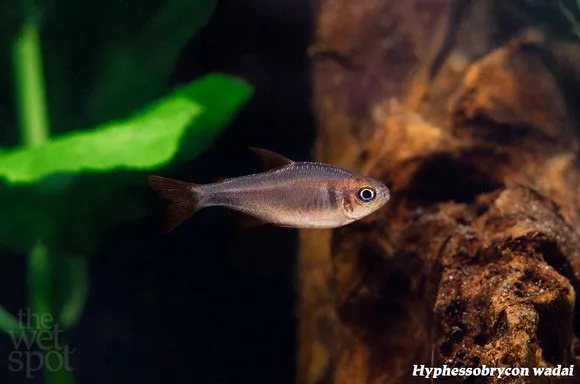
Blueberry tetra
Hyphessobrycon wadai
Freshwater1.7 in (4.2 cm) · 16 gal (60 L)72–81°F (22–27°C)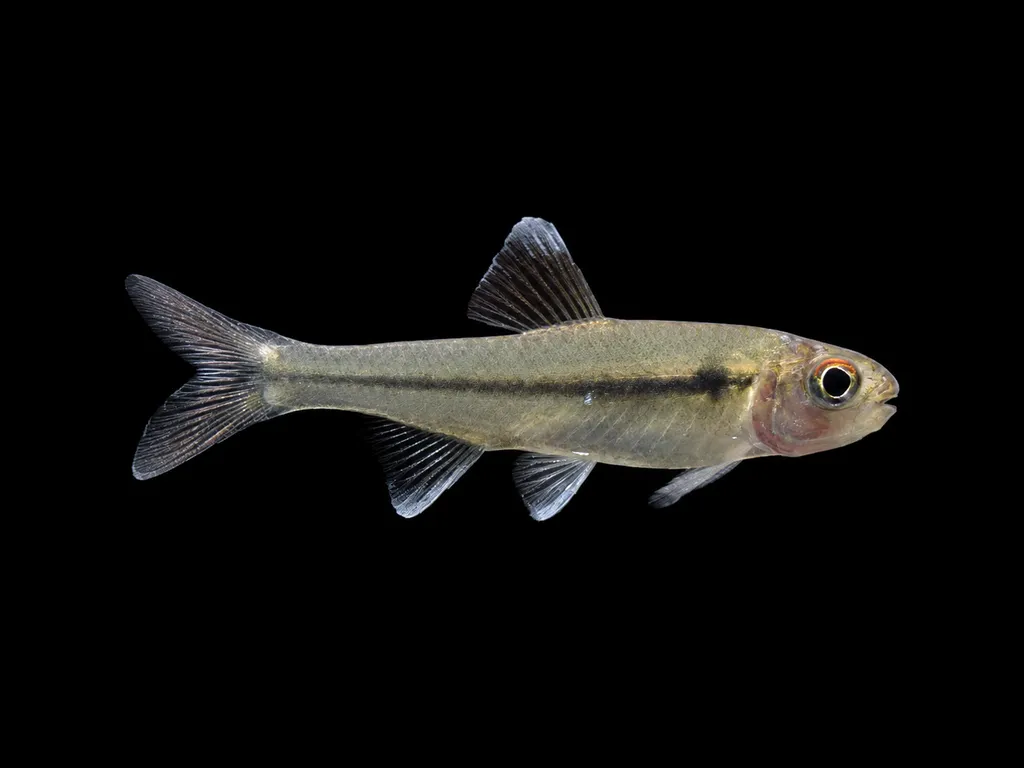
Bluntnose ceratobranchia
Ceratobranchia obtusirostris
Freshwater2.4 in (6 cm) · 20 gal (75 L)72–81°F (22–27°C)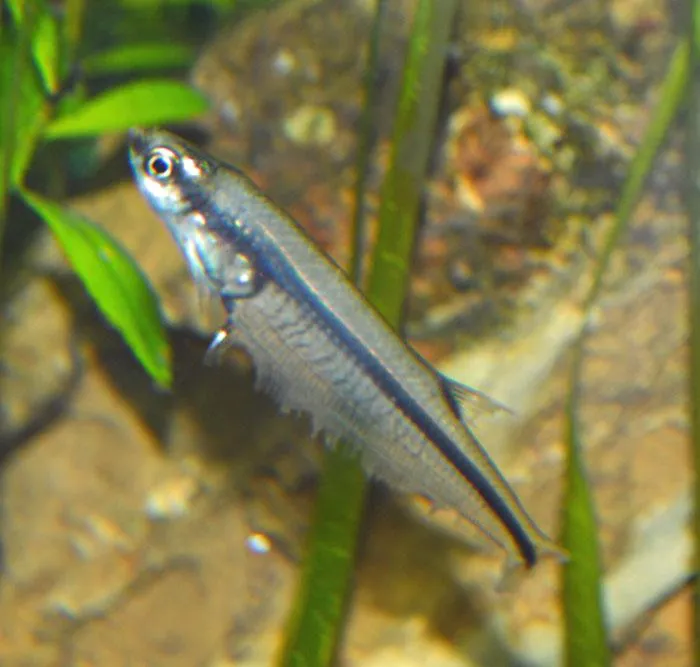
Bond's glass tetra
Xenagoniates bondi
Freshwater2.6 in (6.5 cm) · 21 gal (80 L)73–82°F (23–28°C)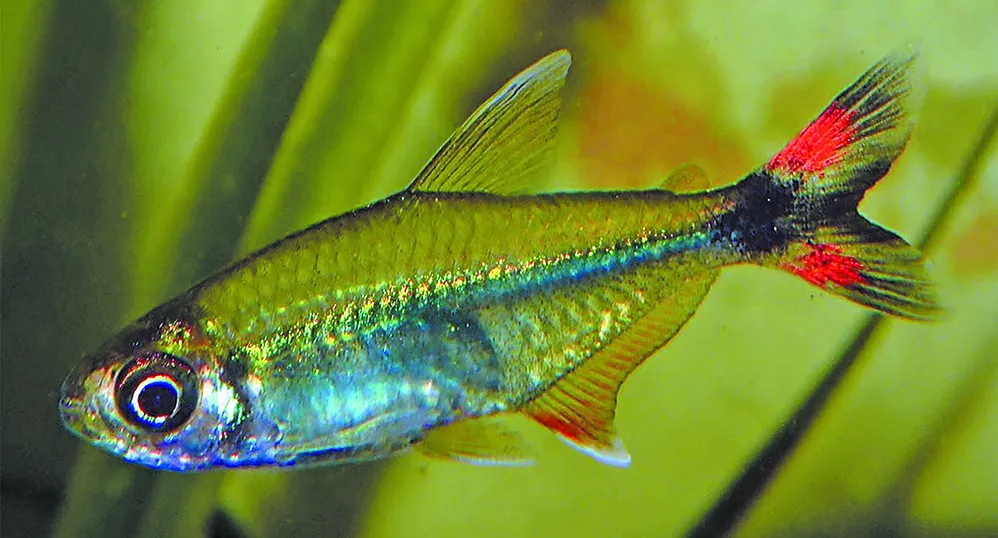
Bonita tetra
Moenkhausia bonita
Freshwater3.3 in (8.5 cm) · 29 gal (110 L)72–81°F (22–27°C)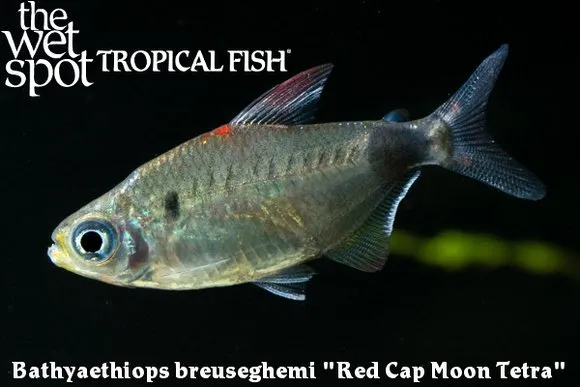
Breuseghem's moon tetra
Bathyaethiops breuseghemi
Freshwater2.8 in (7 cm) · 29 gal (110 L)73–81°F (23–27°C)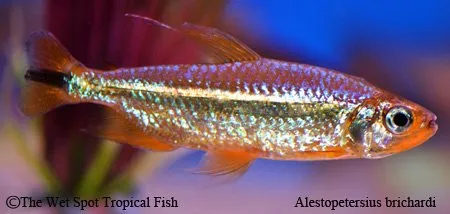
Brichard's Congo tetra
Alestopetersius brichardi
Freshwater3.5 in (9 cm) · 29 gal (110 L)73–81°F (23–27°C)Bucktooth tetra
Exodon paradoxus
Freshwater4.7 in (12 cm) · 45 gal (170 L)73–82°F (23–28°C)Buenos Aires tetra
Psalidodon anisitsi
Freshwater3 in (7.5 cm) · 25 gal (95 L)66–81°F (19–27°C)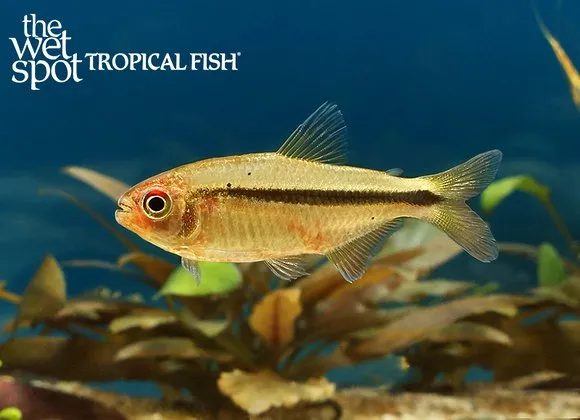
Cachimbo tetra
Hyphessobrycon cachimbensis
Freshwater2.7 in (6.8 cm) · 26 gal (100 L)72–81°F (22–27°C)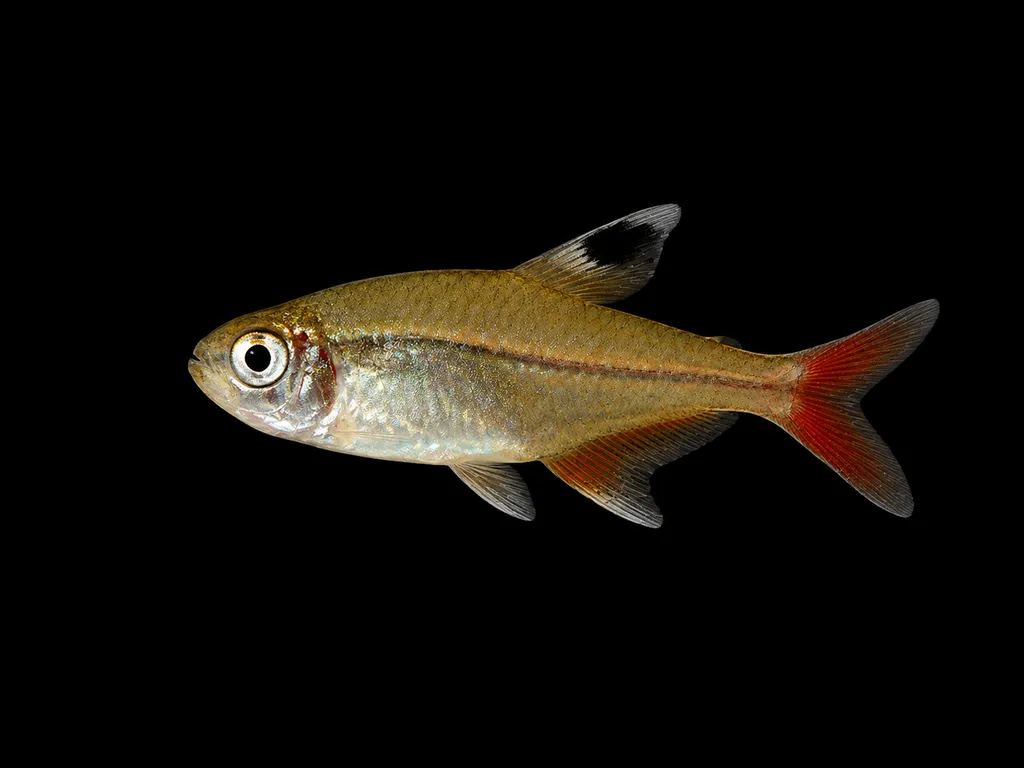
Calypso tetra
Hyphessobrycon axelrodi
Freshwater1.1 in (2.8 cm) · 10 gal (38 L)72–82°F (22–28°C)Cardinal tetra
Paracheirodon axelrodi
Freshwater1.8 in (4.5 cm) · 16 gal (60 L)73–84°F (23–29°C)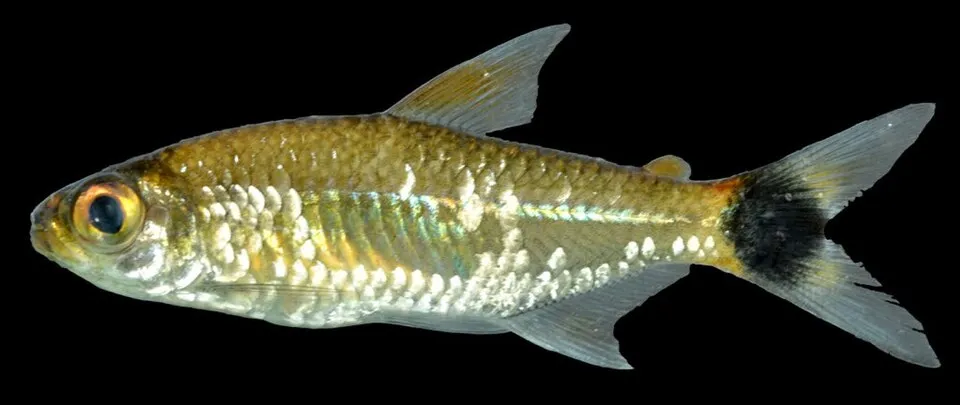
Ceros tetra
Moenkhausia ceros
Freshwater2 in (5 cm) · 16 gal (60 L)75–82°F (24–28°C)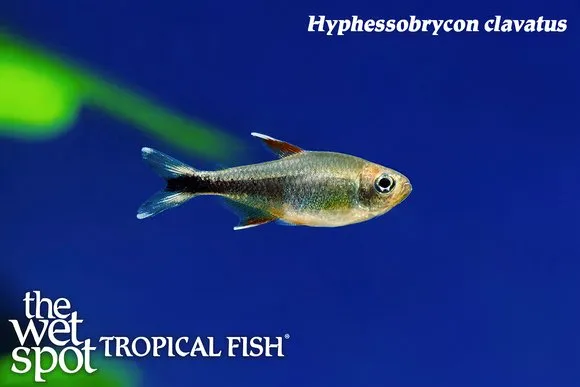
Clavatus tetra
Hyphessobrycon clavatus
Freshwater1.5 in (3.7 cm) · 15 gal (55 L)72–81°F (22–27°C)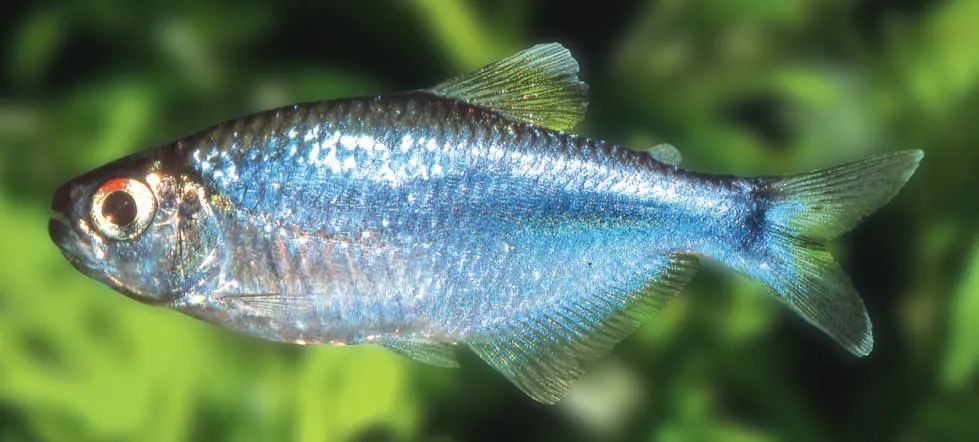
Cochu's blue tetra
Boehlkea fredcochui
Freshwater2.2 in (5.5 cm) · 20 gal (75 L)72–82°F (22–28°C)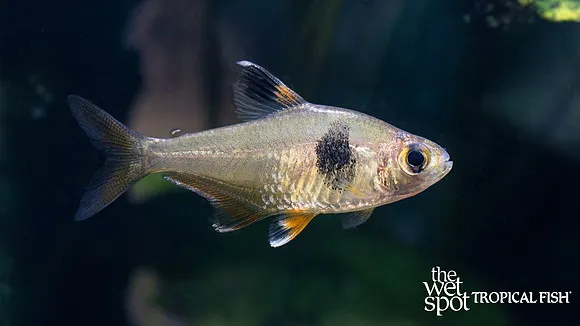
Coffee bean tetra
Hyphessobrycon takasei
Freshwater1.4 in (3.6 cm) · 15 gal (55 L)73–82°F (23–28°C)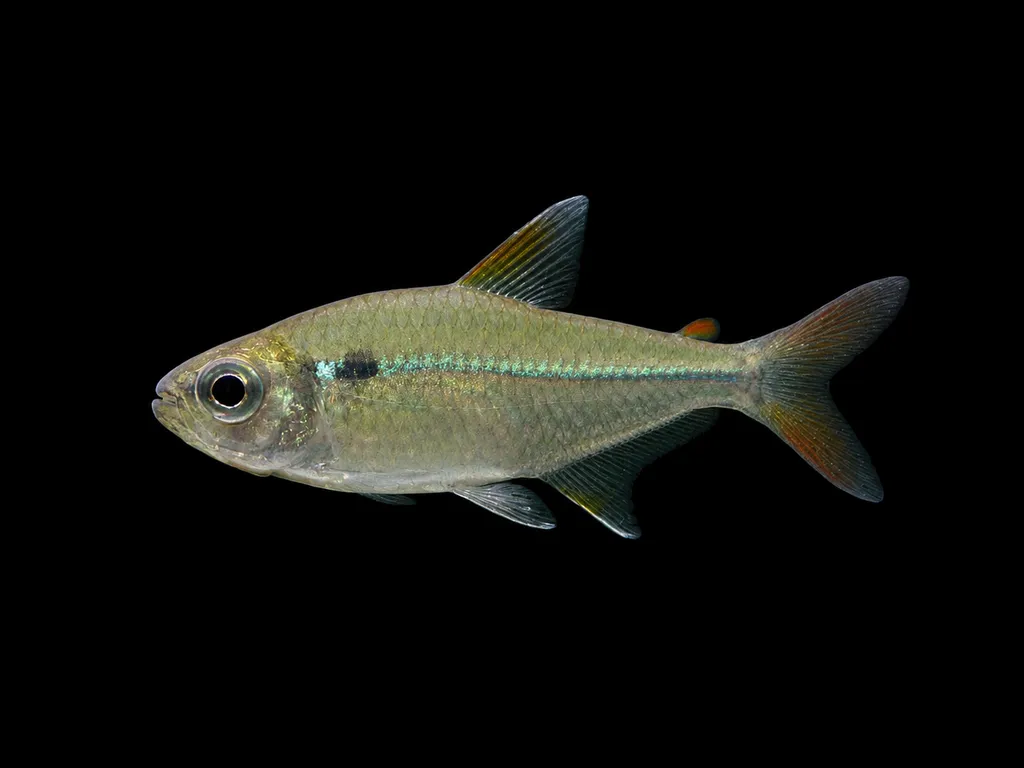
Collett's tetra
Hemigrammus collettii
Freshwater2 in (5 cm) · 20 gal (75 L)73–82°F (23–28°C)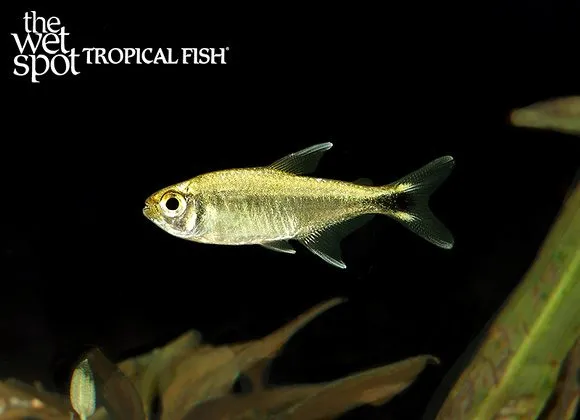
Colombian gold tetra
Hyphessobrycon saizi
Freshwater1.4 in (3.5 cm) · 14 gal (54 L)73–82°F (23–28°C)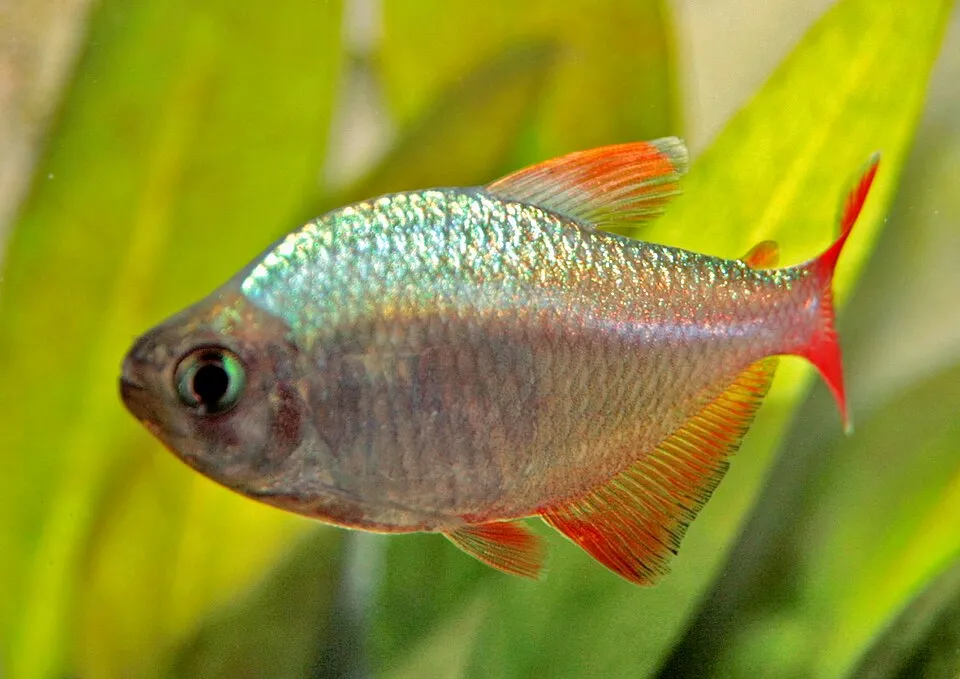
Colombian tetra
Hyphessobrycon columbianus
Freshwater2.6 in (6.5 cm) · 20 gal (75 L)73–82°F (23–28°C)Congo tetra
Phenacogrammus interruptus
Freshwater3.1 in (8 cm) · 24 gal (90 L)73–82°F (23–28°C)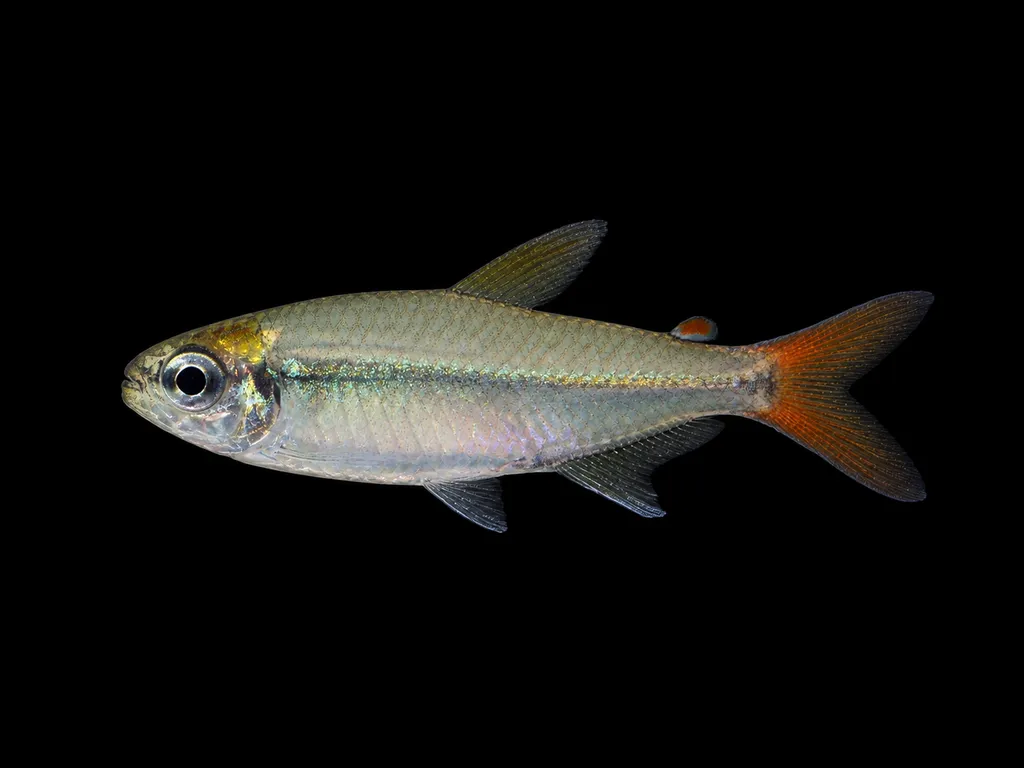
Cope's tetra
Moenkhausia copei
Freshwater2.4 in (6 cm) · 20 gal (75 L)73–82°F (23–28°C)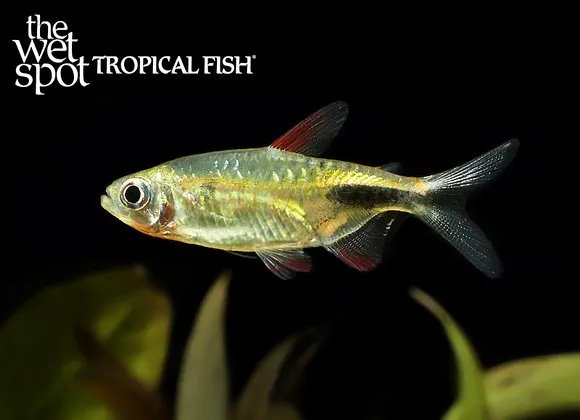
Copper Congo tetra
Hemigrammopetersius pulcher
Freshwater2.4 in (6 cm) · 24 gal (90 L)73–81°F (23–27°C)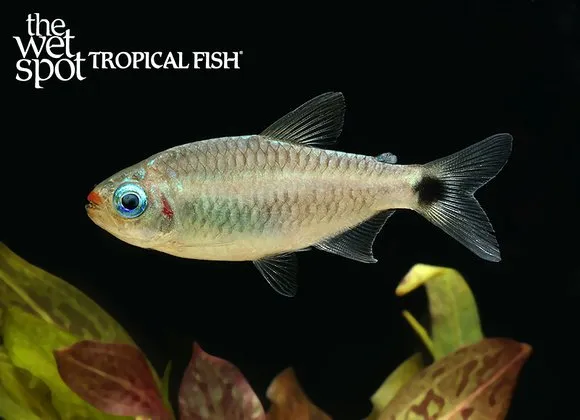
Cosmops tetra
Bario cosmops
Freshwater2.6 in (6.5 cm) · 24 gal (90 L)73–82°F (23–28°C)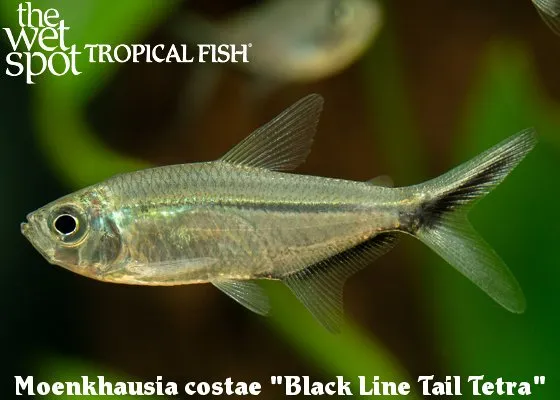
Costae tetra
Moenkhausia costae
Freshwater2.8 in (7 cm) · 29 gal (110 L)72–82°F (22–28°C)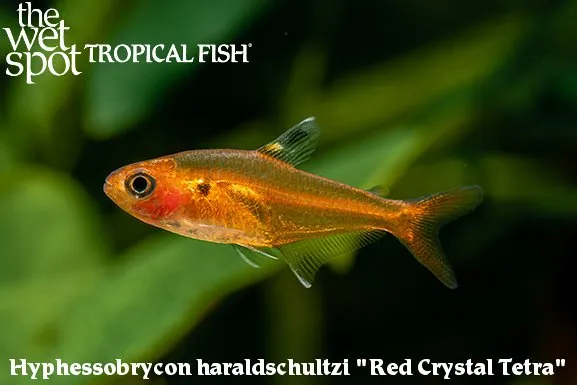
Crystal red tetra
Hyphessobrycon haraldschultzi
Freshwater1 in (2.5 cm) · 10 gal (38 L)73–82°F (23–28°C)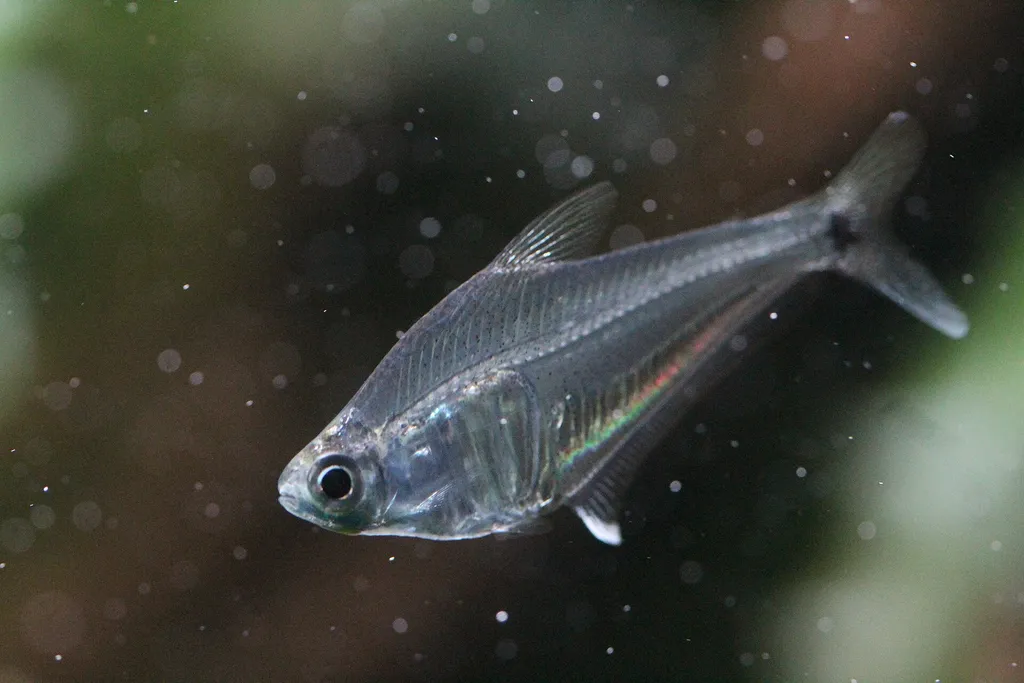
Crystal tetra
Protocheirodon pi
Freshwater1.2 in (3.1 cm) · 11 gal (40 L)73–82°F (23–28°C)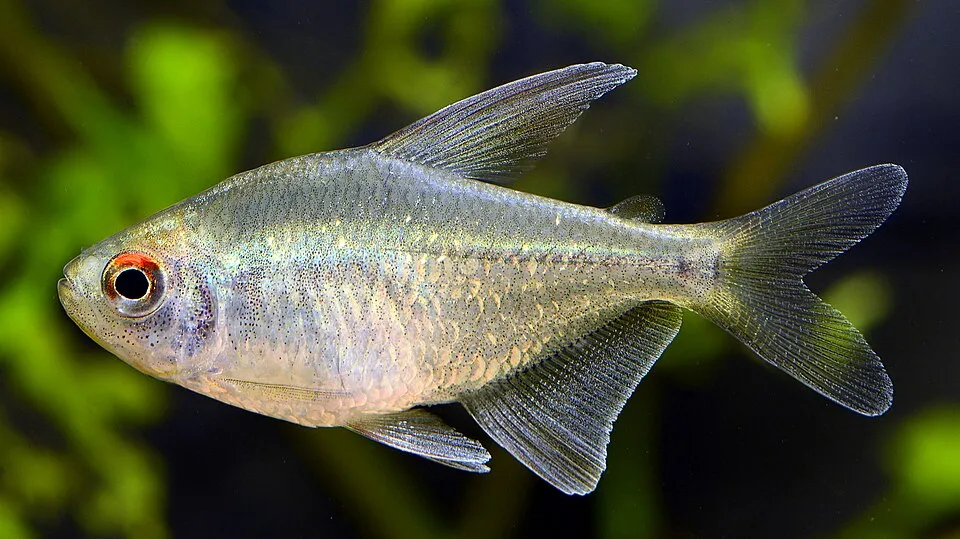
Diamond tetra
Moenkhausia pittieri
Freshwater2.4 in (6 cm) · 20 gal (75 L)75–82°F (24–28°C)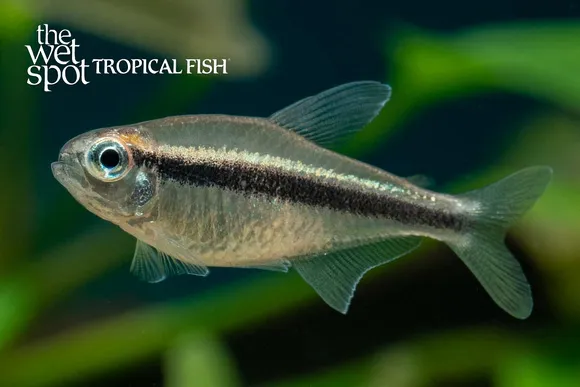
Dusky tetra
Moenkhausia phaeonota
Freshwater2.2 in (5.6 cm) · 20 gal (75 L)73–82°F (23–28°C)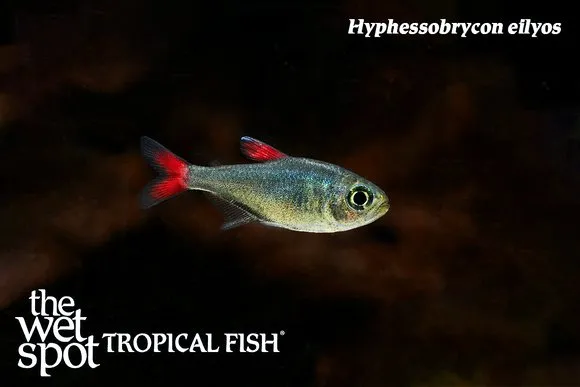
Eilyos tetra
Hyphessobrycon eilyos
Freshwater1.2 in (3 cm) · 12 gal (45 L)72–81°F (22–27°C)Ember tetra
Hyphessobrycon amandae
Freshwater0.8 in (2 cm) · 9 gal (35 L)72–82°F (22–28°C)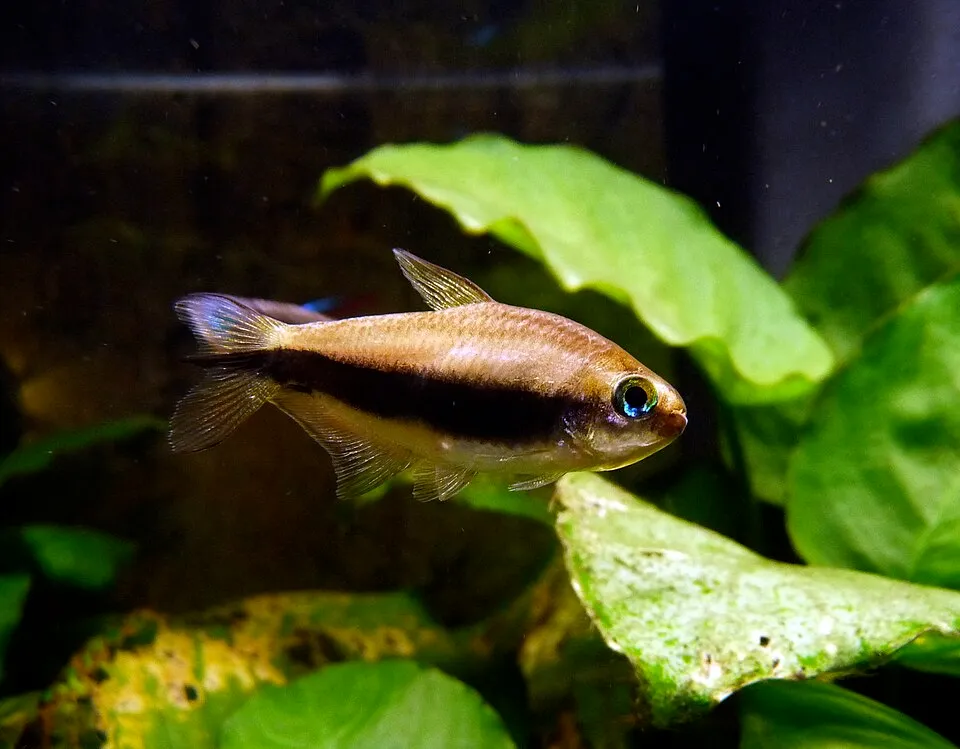
Emperor tetra
Nematobrycon palmeri
Freshwater2 in (5 cm) · 20 gal (75 L)73–81°F (23–27°C)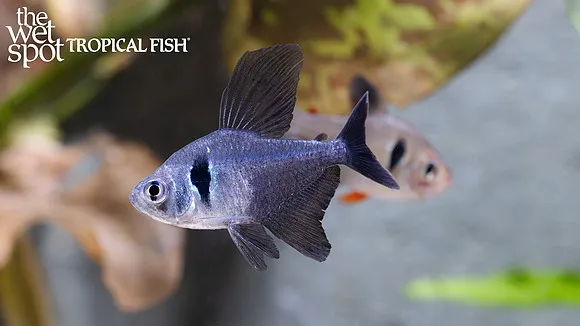
Epicharis tetra
Hyphessobrycon epicharis
Freshwater1.6 in (4 cm) · 16 gal (60 L)73–82°F (23–28°C)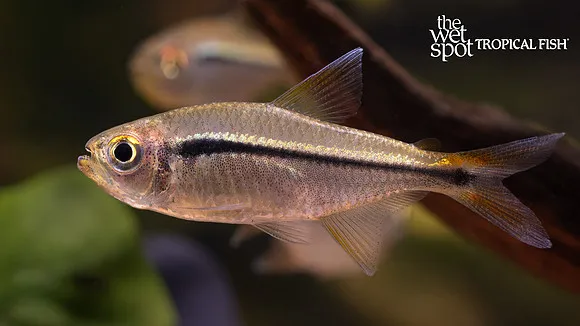
Eschwartzae tetra
Hyphessobrycon eschwartzae
Freshwater1.5 in (3.8 cm) · 15 gal (55 L)72–81°F (22–27°C)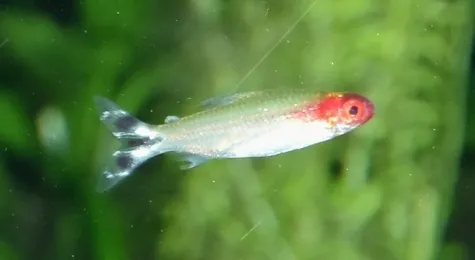
False rummynose tetra
Petitella georgiae
Freshwater2 in (5 cm) · 29 gal (110 L)72–79°F (22–26°C)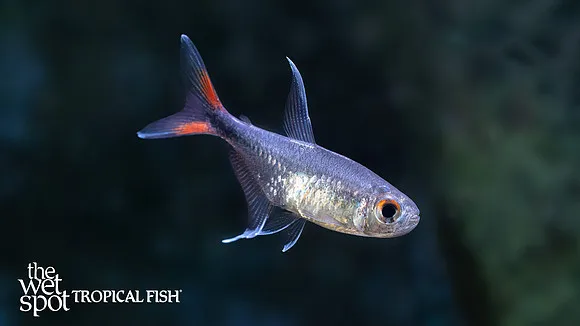
Filament tetra
Hemigrammus filamentosus
Freshwater1.7 in (4.3 cm) · 20 gal (75 L)75–82°F (24–28°C)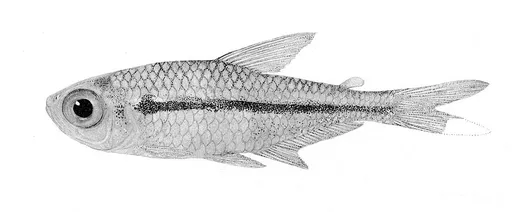
Flag tetra
Hyphessobrycon heterorhabdus
Freshwater1.4 in (3.5 cm) · 16 gal (60 L)70–81°F (21–27°C)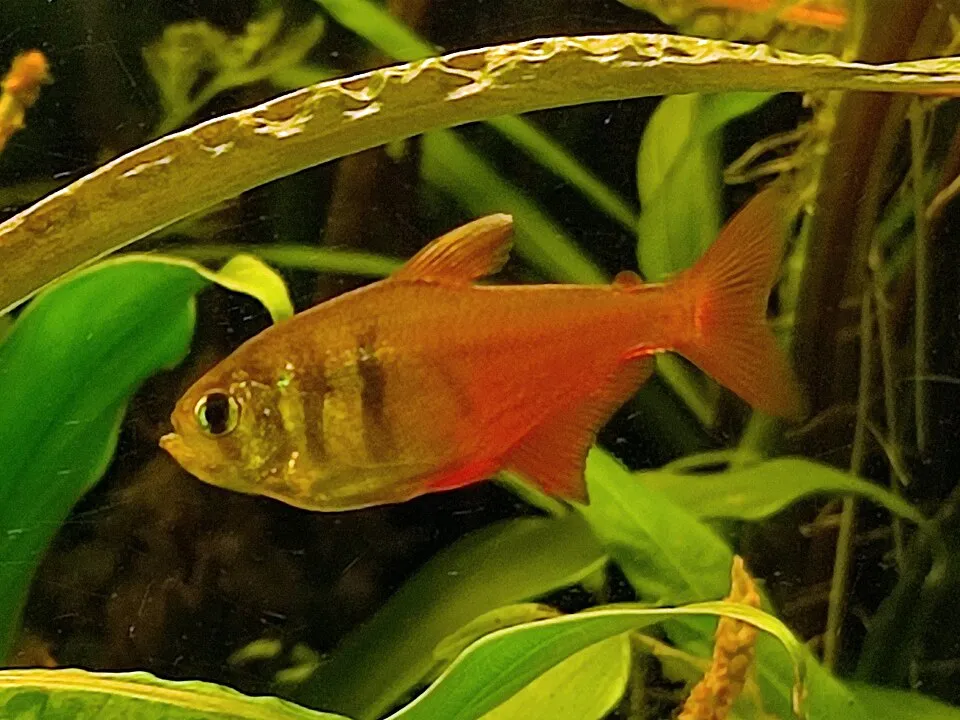
Flame tetra
Hyphessobrycon flammeus
Freshwater1 in (2.5 cm) · 10 gal (38 L)68–79°F (20–26°C)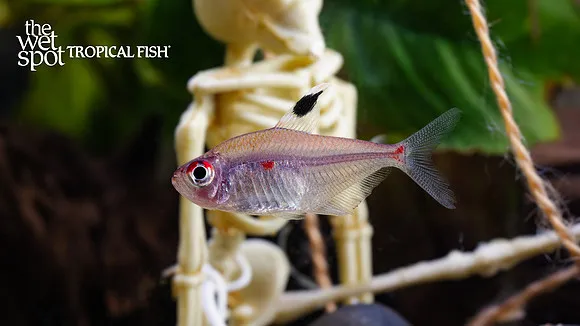
Flameback bleeding heart tetra
Hyphessobrycon pyrrhonotus
Freshwater2.1 in (5.4 cm) · 20 gal (75 L)75–82°F (24–28°C)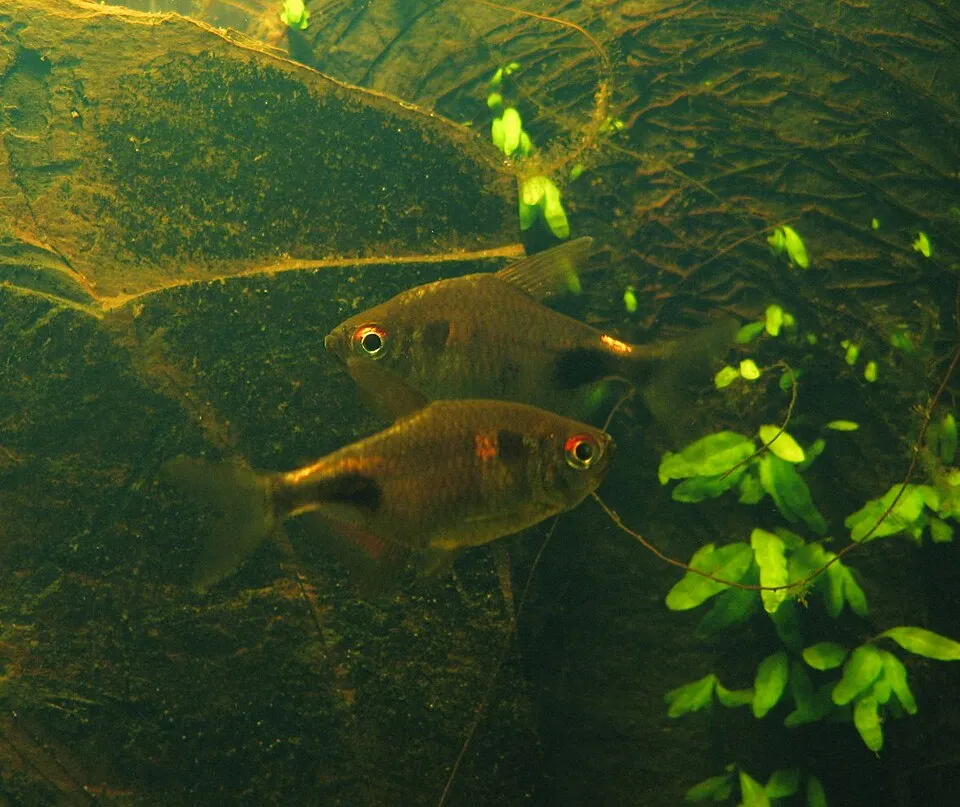
Garnet tetra
Hemigrammus pulcher
Freshwater1.8 in (4.5 cm) · 20 gal (75 L)73–82°F (23–28°C)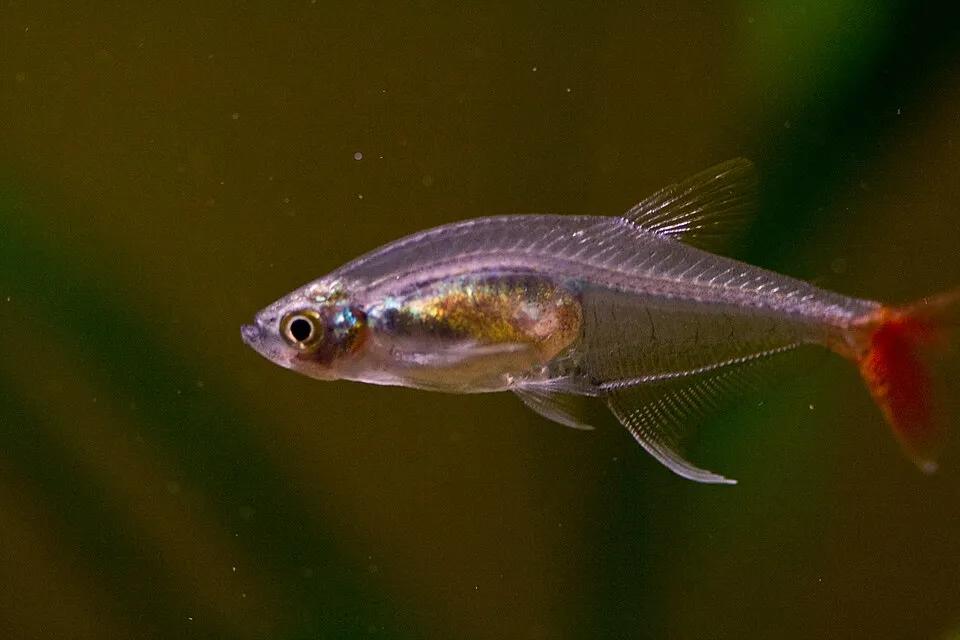
Glass bloodfin tetra
Prionobrama filigera
Freshwater2.4 in (6 cm) · 20 gal (75 L)73–81°F (23–27°C)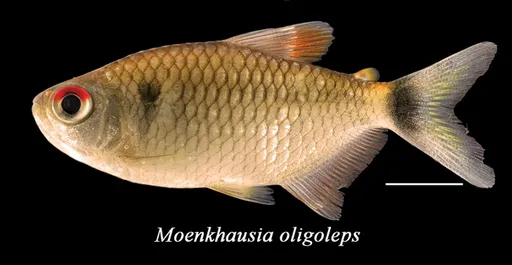
Glass tetra
Moenkhausia oligolepis
Freshwater2 in (5 cm) · 18 gal (70 L)75–82°F (24–28°C)Glowlight tetra
Hemigrammus erythrozonus
Freshwater1.6 in (4 cm) · 18 gal (70 L)75–82°F (24–28°C)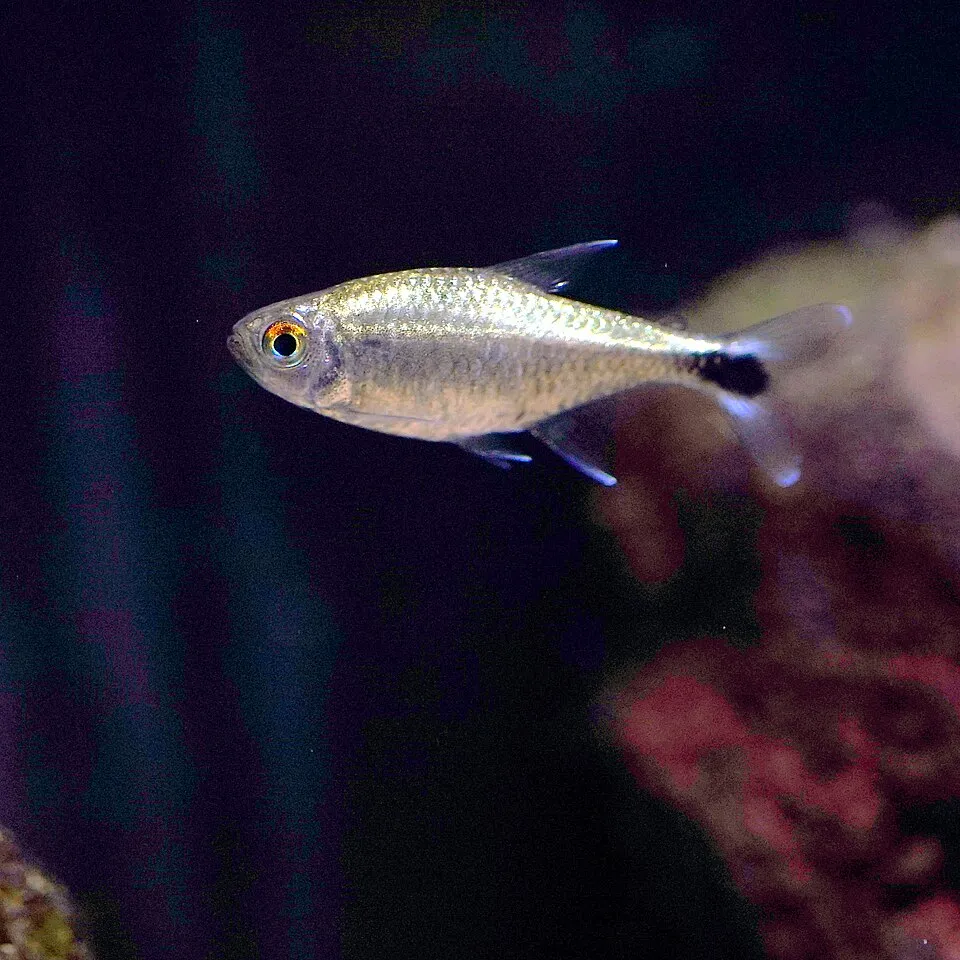
Golden tetra
Hemigrammus rodwayi
Freshwater2.2 in (5.5 cm) · 20 gal (75 L)75–82°F (24–28°C)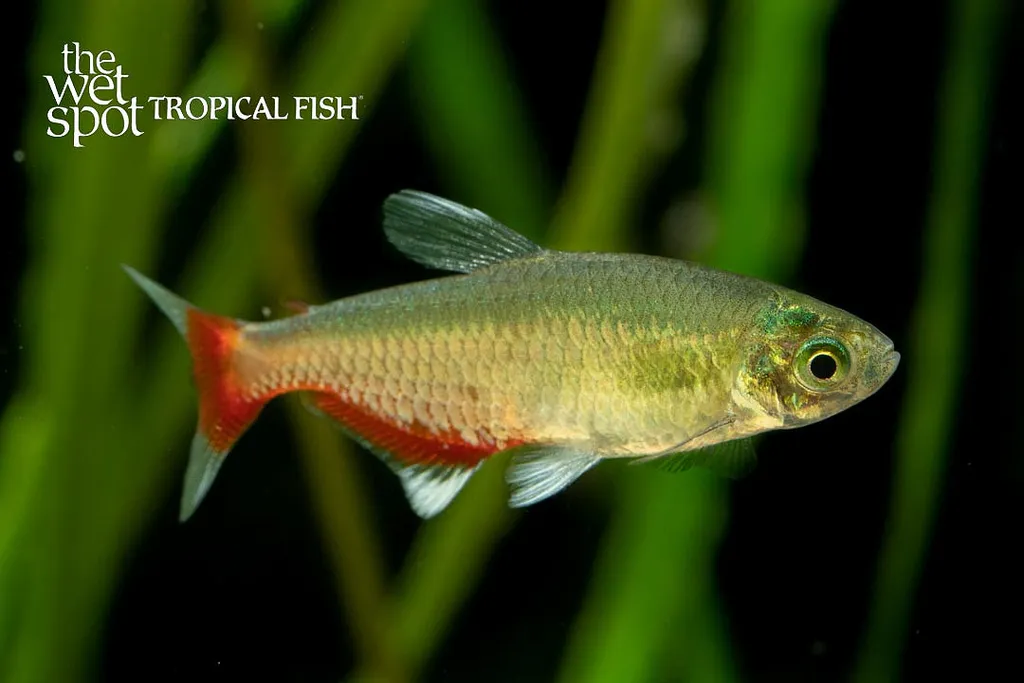
Green fire tetra
Aphyocharax rathbuni
Freshwater2 in (5 cm) · 20 gal (75 L)72–79°F (22–26°C)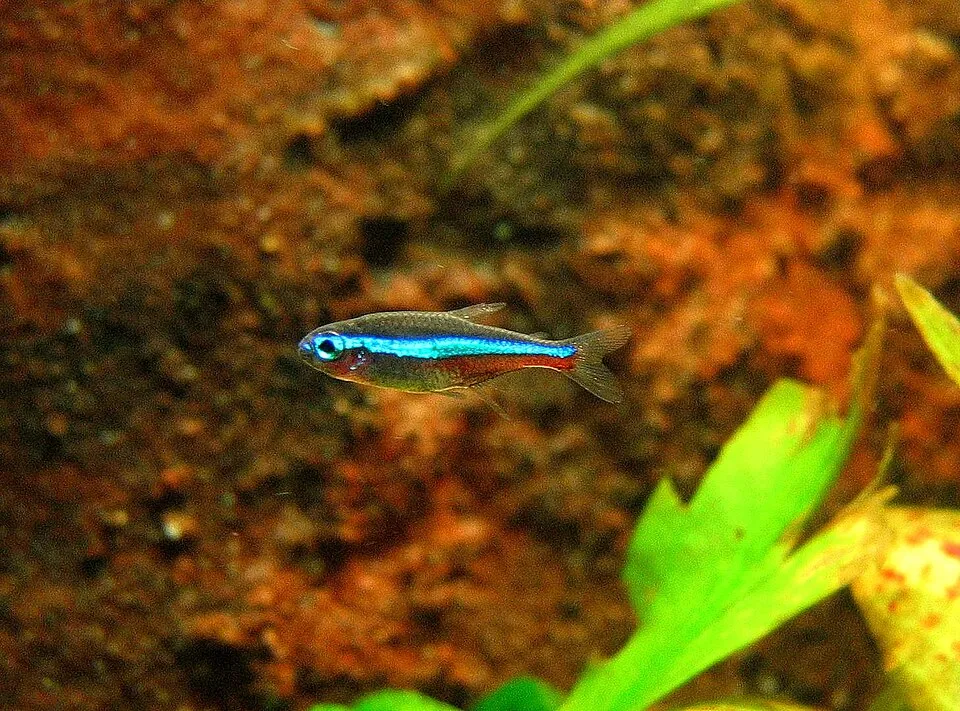
Green neon tetra
Paracheirodon simulans
Freshwater1 in (2.5 cm) · 15 gal (55 L)72–86°F (22–30°C)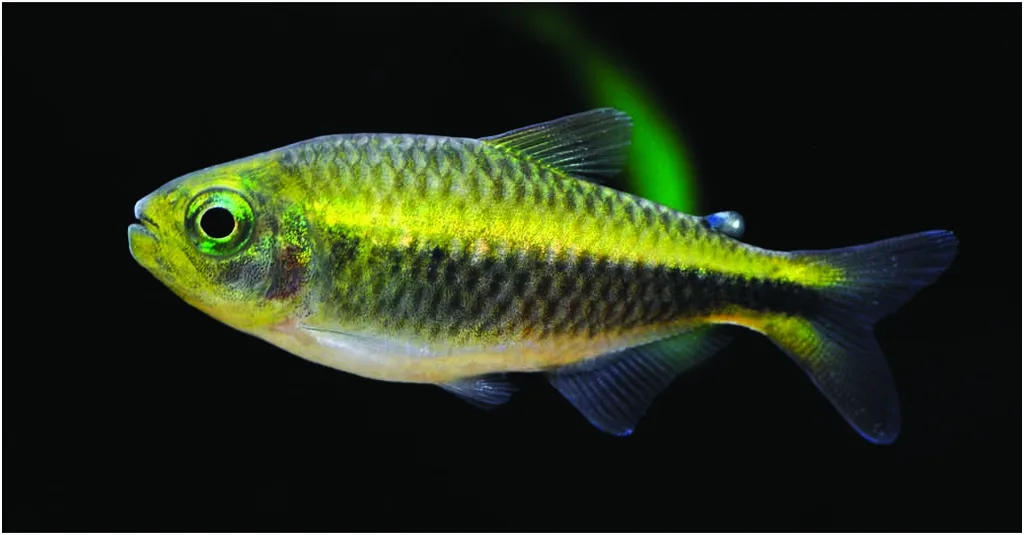
Green-eye tetra
Moenkhausia chlorophthalma
Freshwater3.1 in (8 cm) · 24 gal (90 L)75–82°F (24–28°C)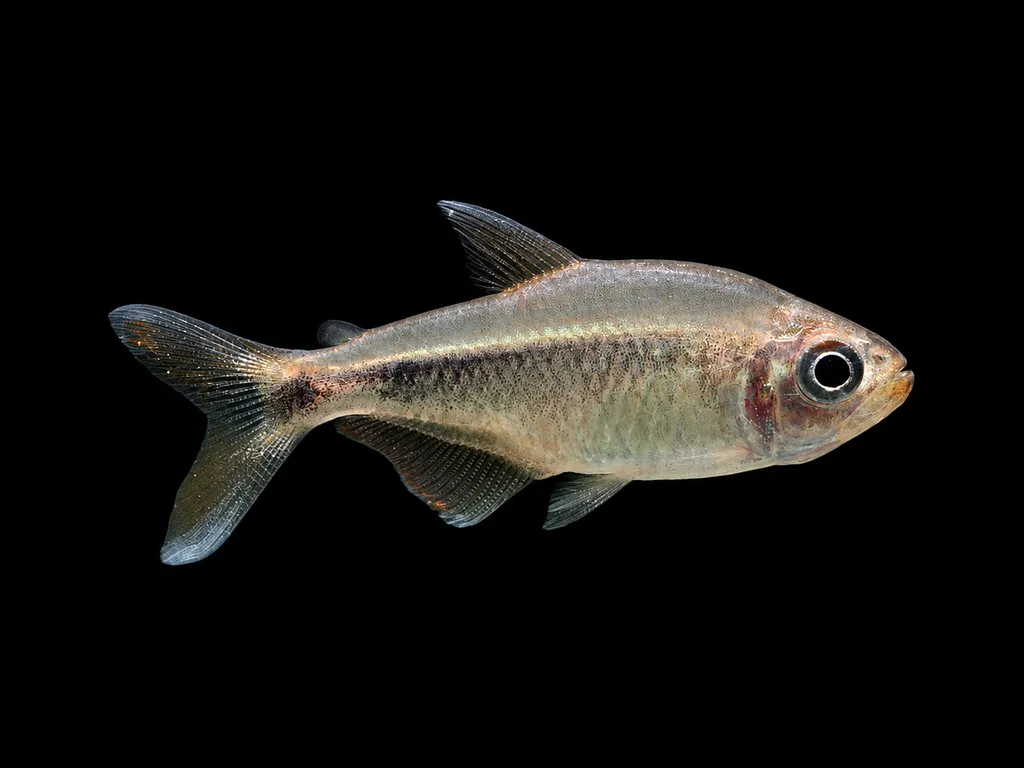
Hansen's hasemania
Hasemania hanseni
Freshwater1.6 in (4 cm) · 14 gal (54 L)72–81°F (22–27°C)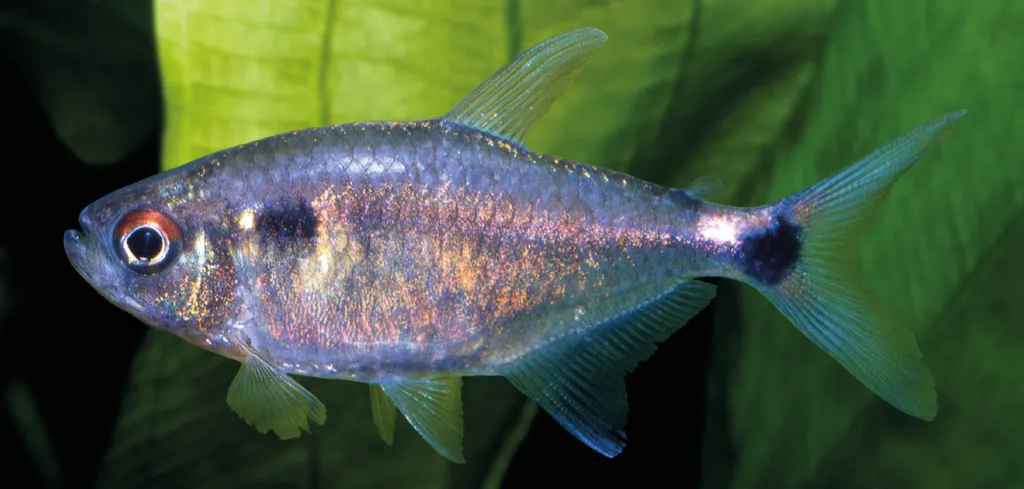
Head-and-taillight tetra
Hemigrammus ocellifer
Freshwater1.8 in (4.5 cm) · 17 gal (65 L)75–82°F (24–28°C)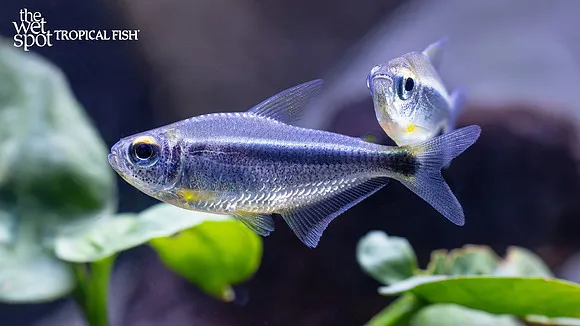
Heiko's tetra
Moenkhausia heikoi
Freshwater3.4 in (8.7 cm) · 29 gal (110 L)75–84°F (24–29°C)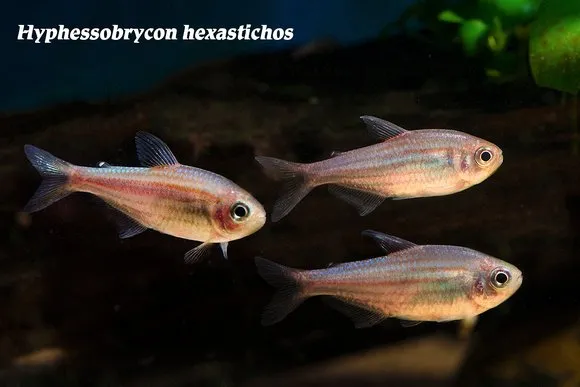
Hexastichos tetra
Hyphessobrycon hexastichos
Freshwater2.6 in (6.5 cm) · 24 gal (90 L)72–81°F (22–27°C)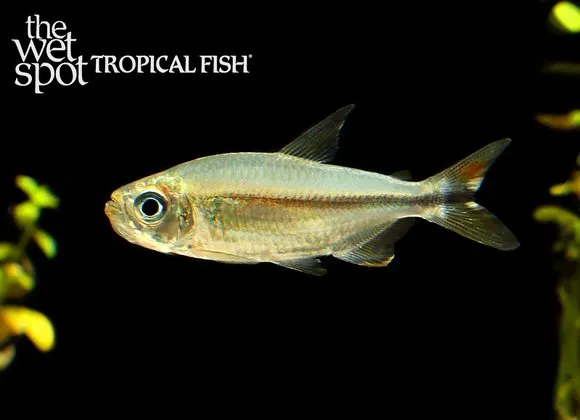
Hilgendorf's Congo tetra
Alestopetersius hilgendorfi
Freshwater3.9 in (10 cm) · 42 gal (160 L)73–81°F (23–27°C)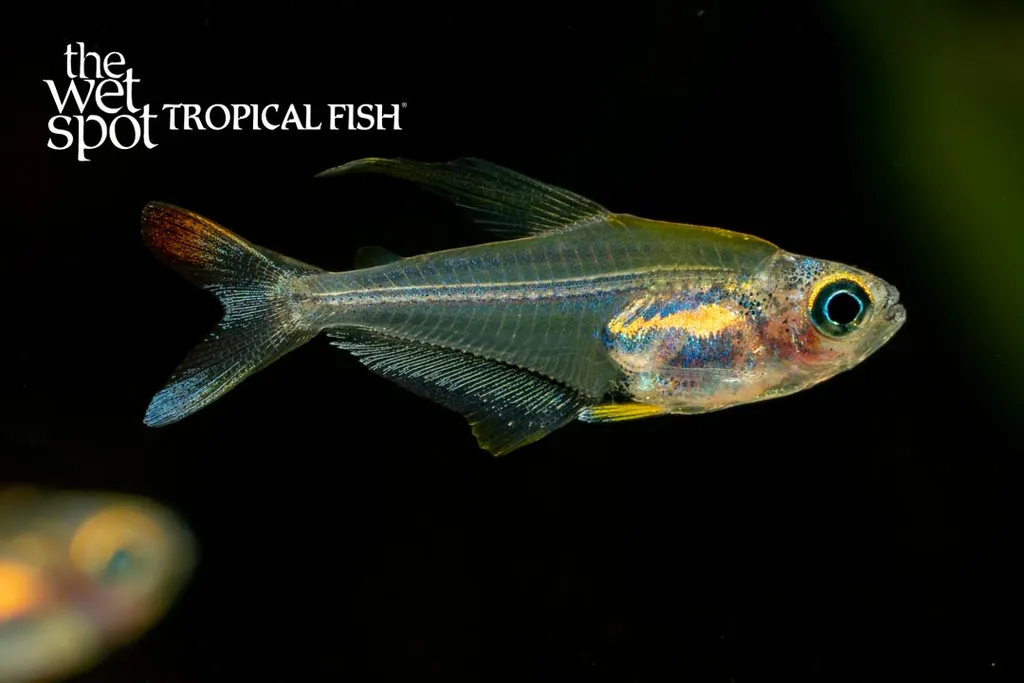
Hummingbird tetra
Trochilocharax ornatus
Freshwater0.8 in (2 cm) · 12 gal (45 L)73–81°F (23–27°C)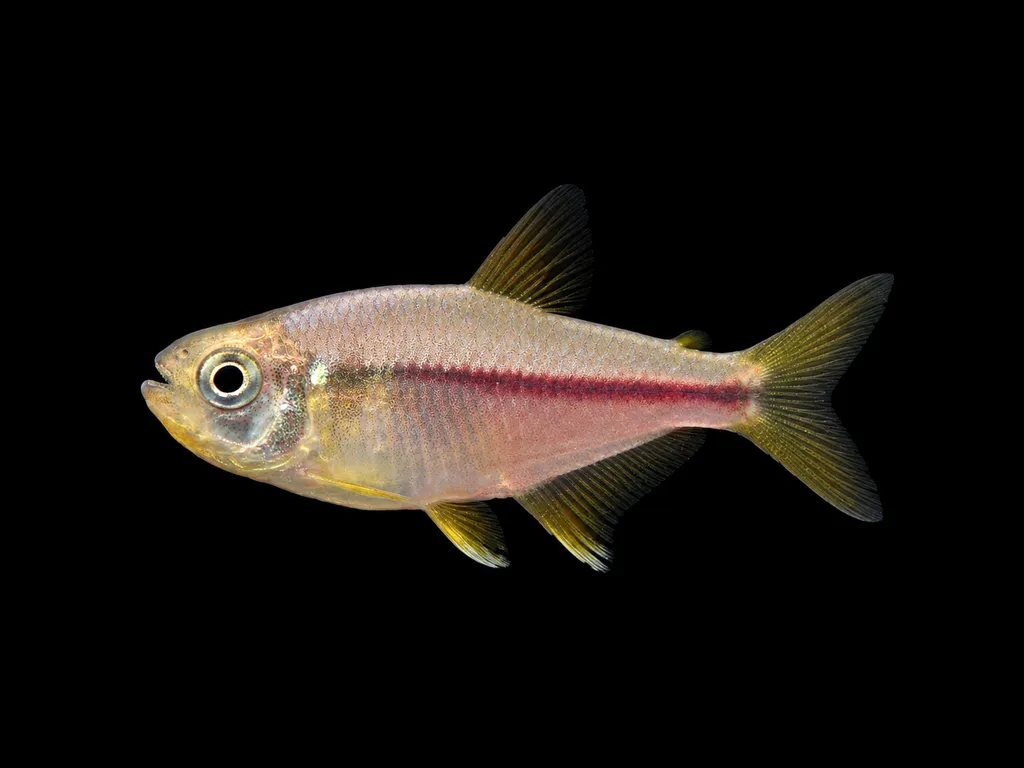
Itaparica tetra
Hyphessobrycon itaparicensis
Freshwater1.8 in (4.6 cm) · 16 gal (60 L)72–82°F (22–28°C)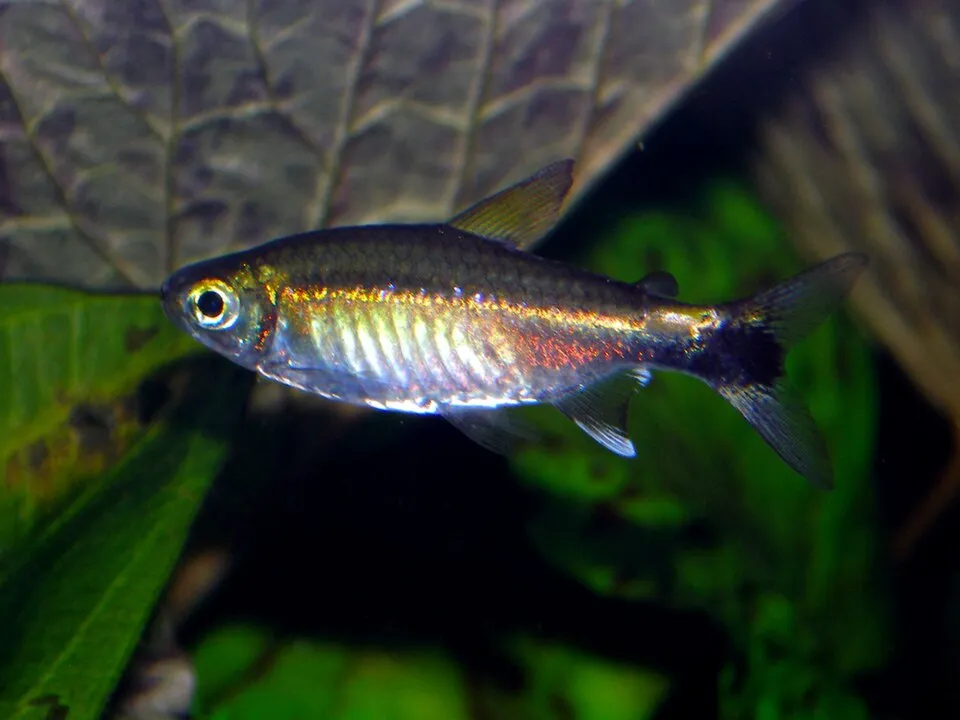
January tetra
Hemigrammus hyanuary
Freshwater1.6 in (4 cm) · 17 gal (65 L)73–81°F (23–27°C)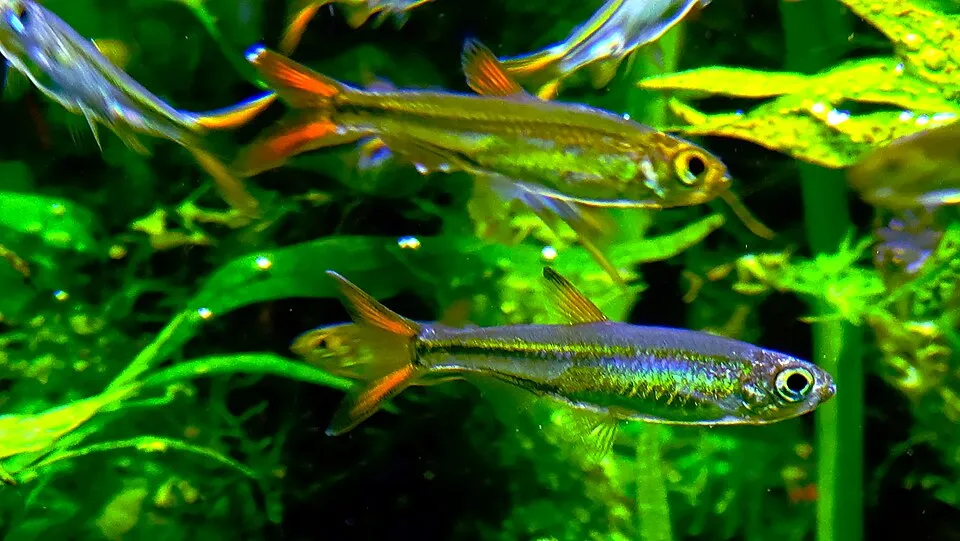
Jellybean tetra
Ladigesia roloffi
Freshwater1.2 in (3 cm) · 10 gal (37 L)72–81°F (22–27°C)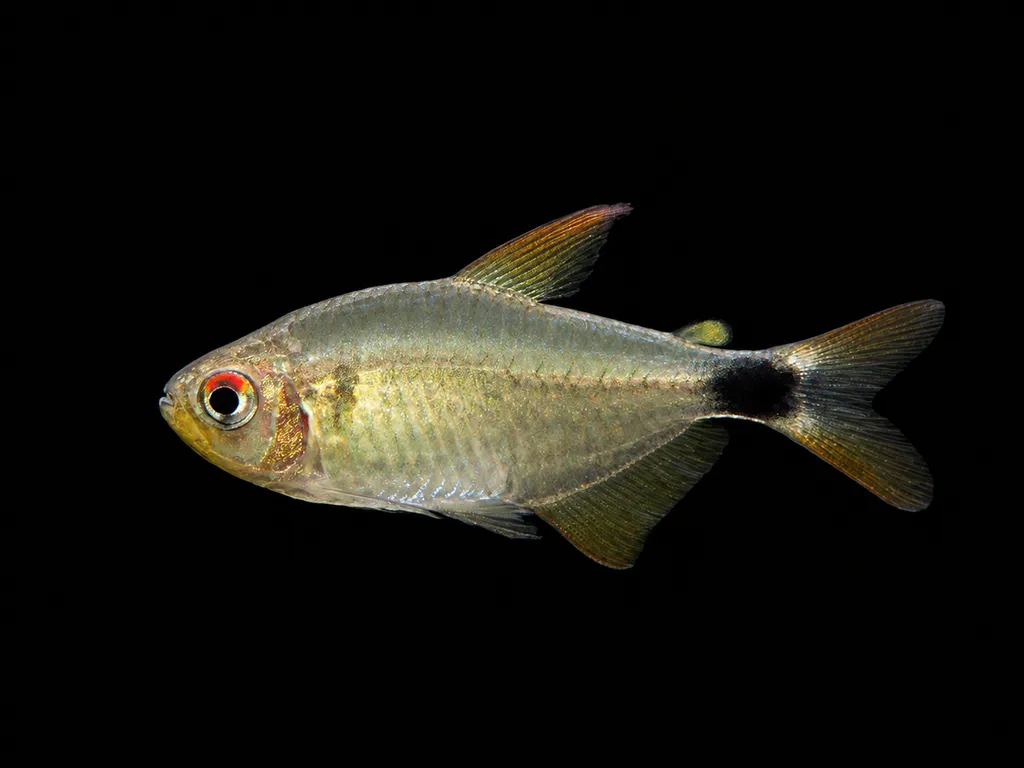
Kitty tetra
Hyphessobrycon heliacus
Freshwater1.3 in (3.4 cm) · 12 gal (45 L)72–82°F (22–28°C)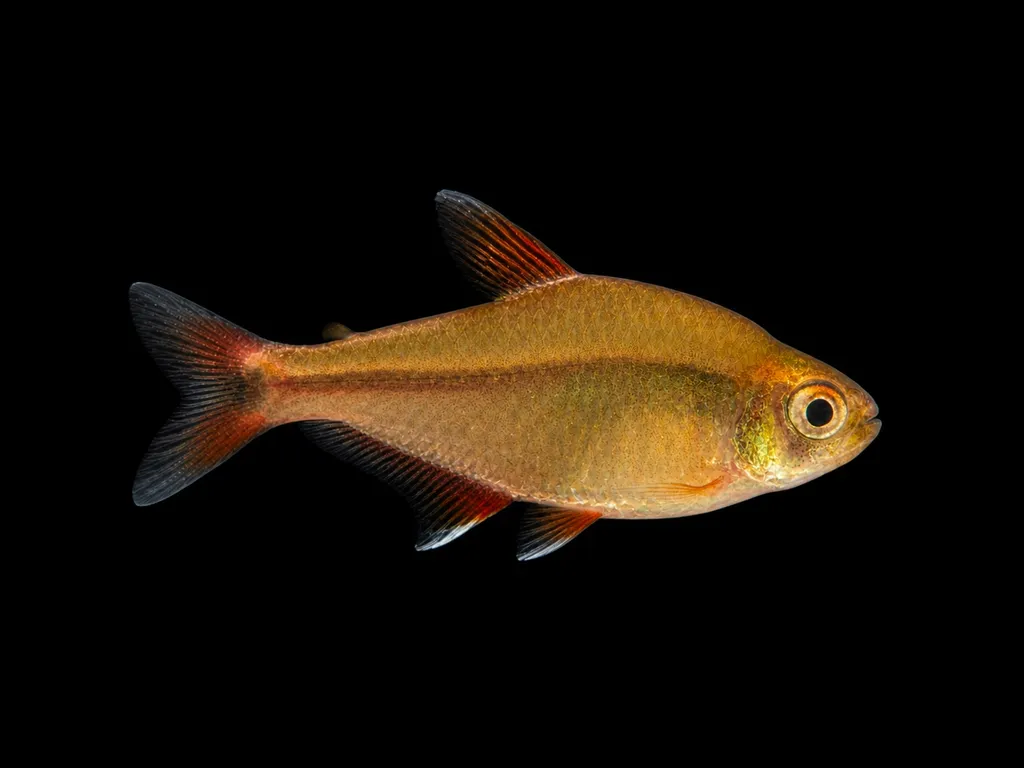
Krenakore tetra
Hyphessobrycon krenakore
Freshwater1.4 in (3.5 cm) · 15 gal (55 L)72–81°F (22–27°C)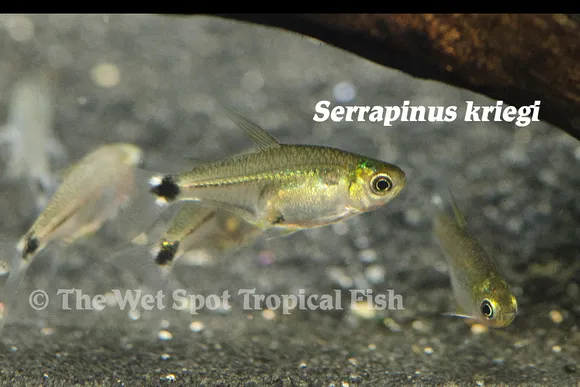
Krieg's tetra
Serrapinnus kriegi
Freshwater0.9 in (2.4 cm) · 11 gal (40 L)68–79°F (20–26°C)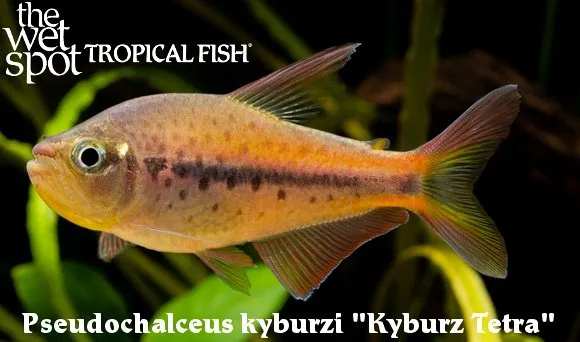
Kyburz tetra
Pseudochalceus kyburzi
Freshwater3.1 in (7.8 cm) · 29 gal (110 L)72–81°F (22–27°C)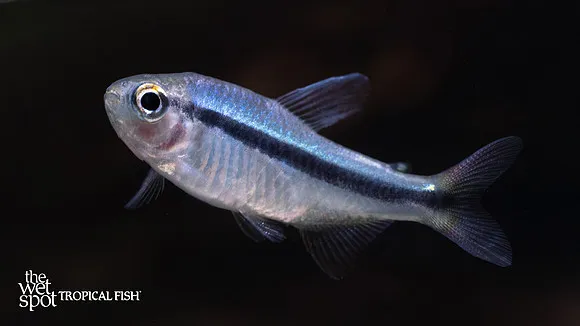
Lapis tetra
Hyphessobrycon cyanotaenia
Freshwater1.7 in (4.4 cm) · 16 gal (60 L)72–81°F (22–27°C)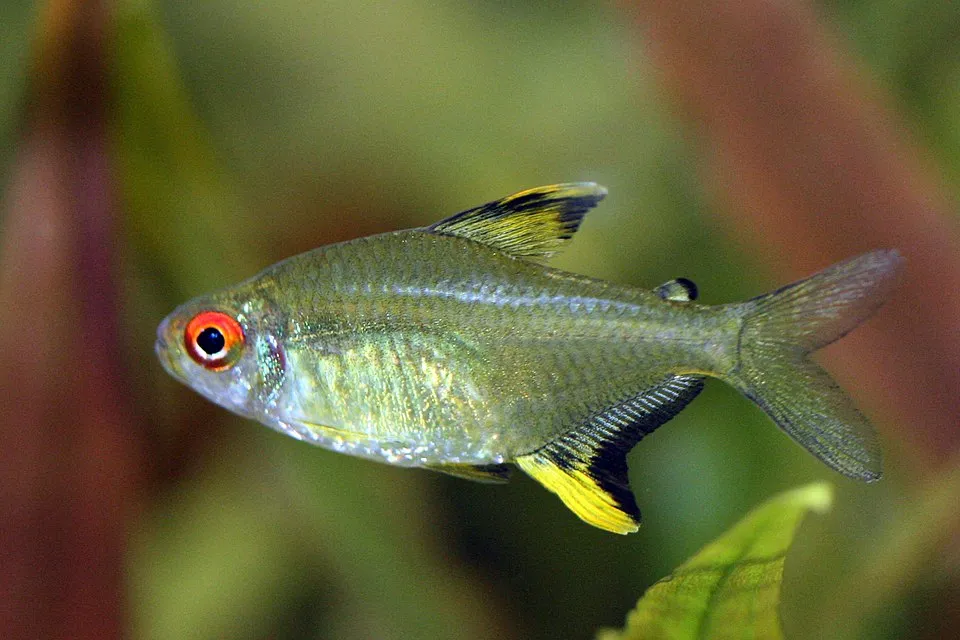
Lemon tetra
Hyphessobrycon pulchripinnis
Freshwater2 in (5 cm) · 17 gal (65 L)72–82°F (22–28°C)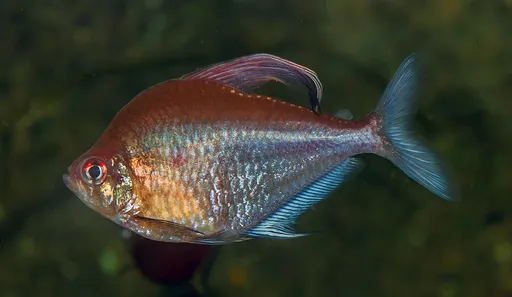
Lesser bleeding heart tetra
Hyphessobrycon socolofi
Freshwater2.2 in (5.6 cm) · 24 gal (90 L)73–82°F (23–28°C)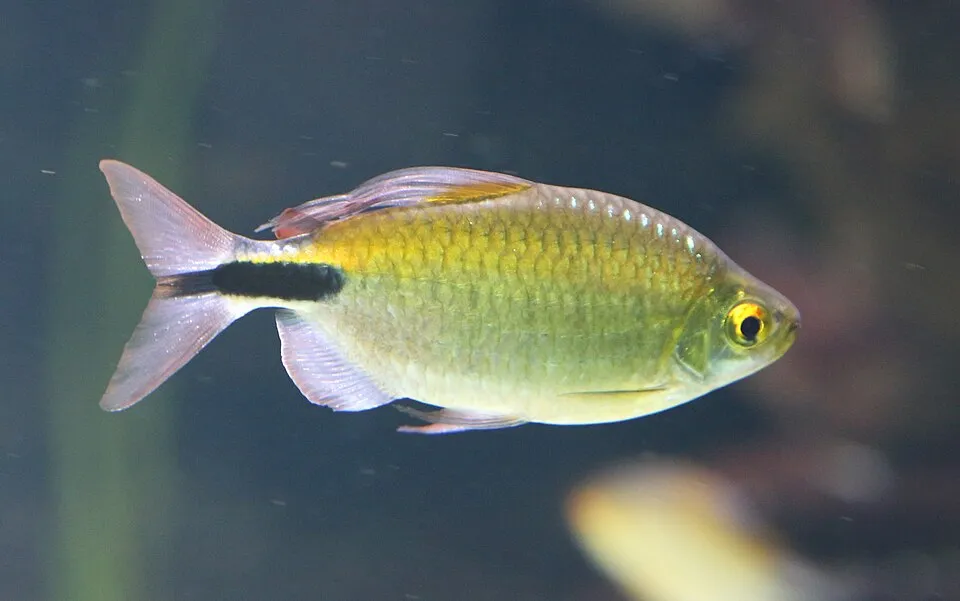
Long-fin tetra
Brycinus longipinnis
Freshwater4.9 in (12.5 cm) · 50 gal (190 L)72–79°F (22–26°C)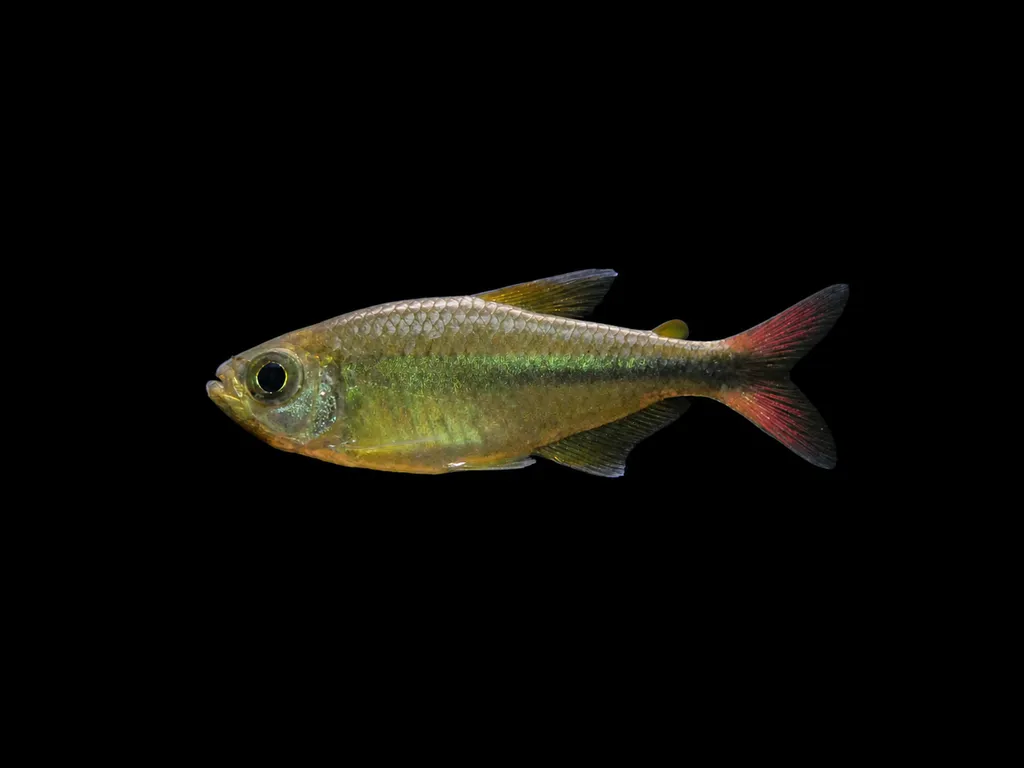
Lopes's tetra
Moenkhausia lopesi
Freshwater1.9 in (4.7 cm) · 20 gal (75 L)72–81°F (22–27°C)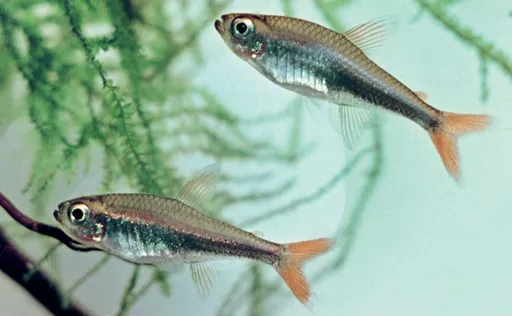
Loreto tetra
Hyphessobrycon loretoensis
Freshwater1.4 in (3.5 cm) · 16 gal (60 L)72–81°F (22–27°C)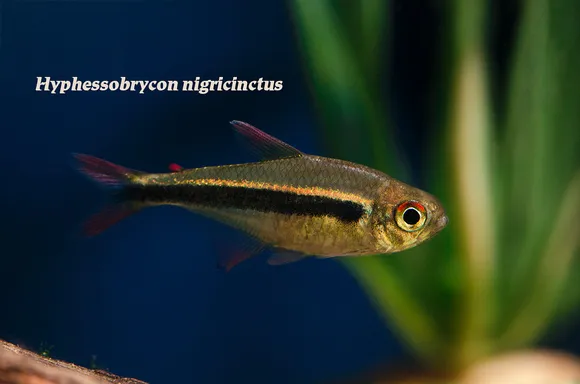
Madre de Dios tetra
Hyphessobrycon nigricinctus
Freshwater1.6 in (4 cm) · 15 gal (55 L)72–81°F (22–27°C)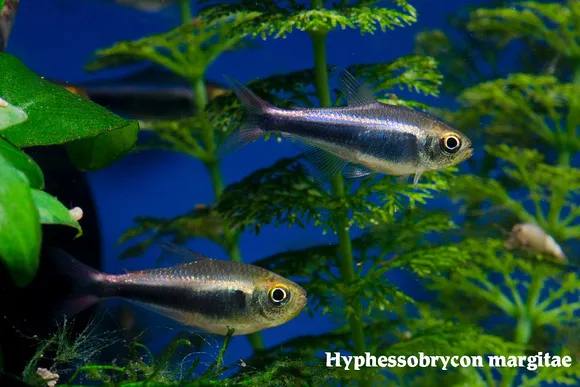
Margitae tetra
Hyphessobrycon margitae
Freshwater1.9 in (4.8 cm) · 16 gal (60 L)72–81°F (22–27°C)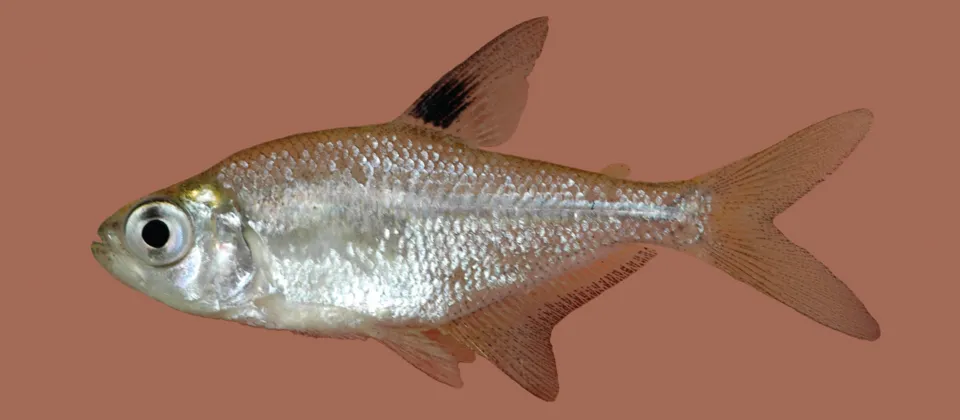
Mayan tetra
Hyphessobrycon compressus
Freshwater1.8 in (4.5 cm) · 16 gal (60 L)68–79°F (20–26°C)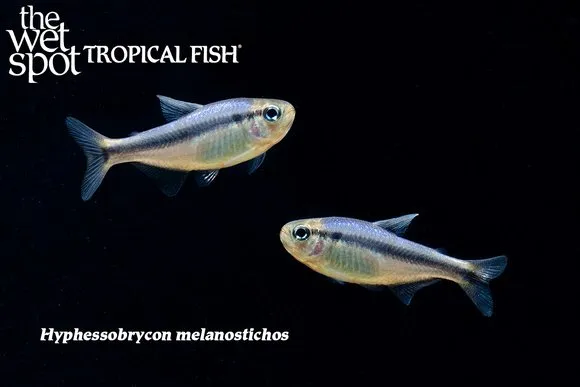
Melanostichos tetra
Hyphessobrycon melanostichos
Freshwater1.7 in (4.4 cm) · 16 gal (60 L)72–81°F (22–27°C)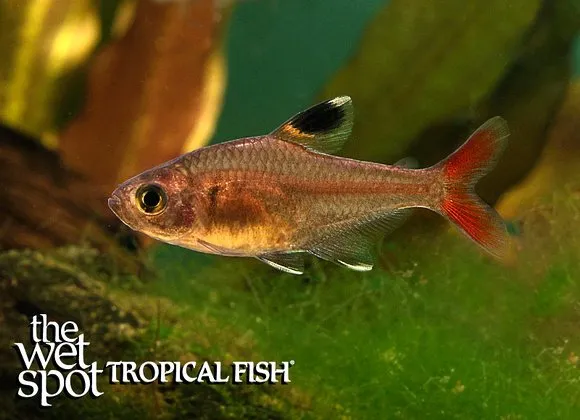
Micropterus tetra
Hyphessobrycon micropterus
Freshwater1.3 in (3.2 cm) · 12 gal (45 L)72–81°F (22–27°C)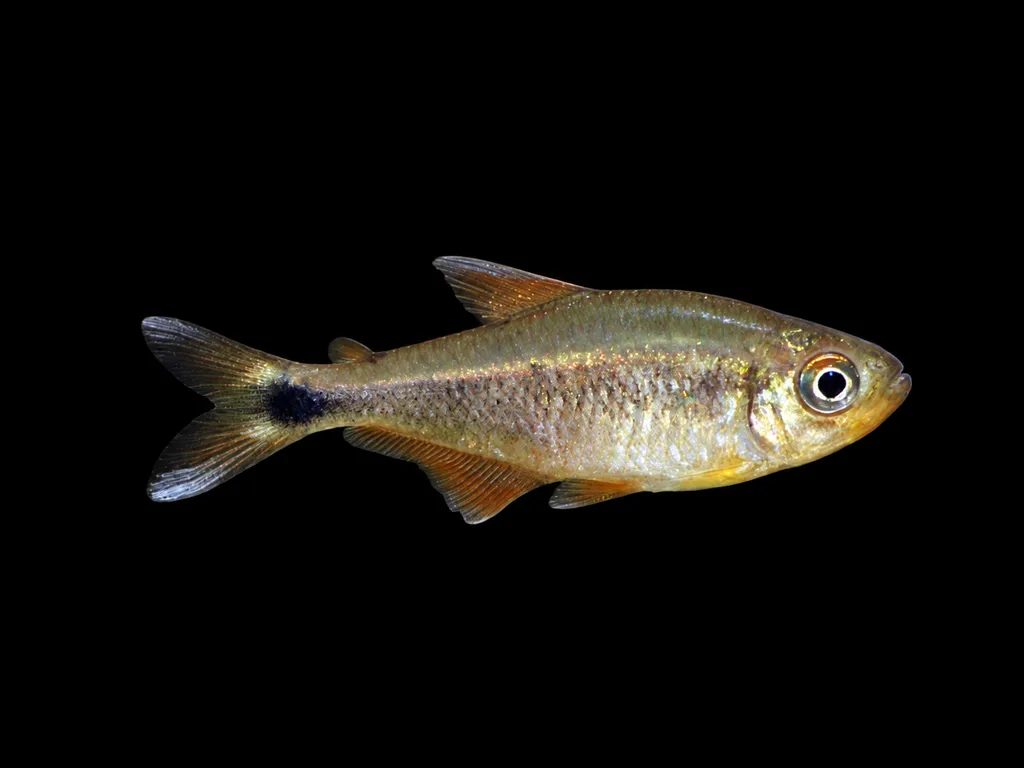
Moniliger tetra
Hyphessobrycon moniliger
Freshwater1.5 in (3.7 cm) · 15 gal (55 L)72–82°F (22–28°C)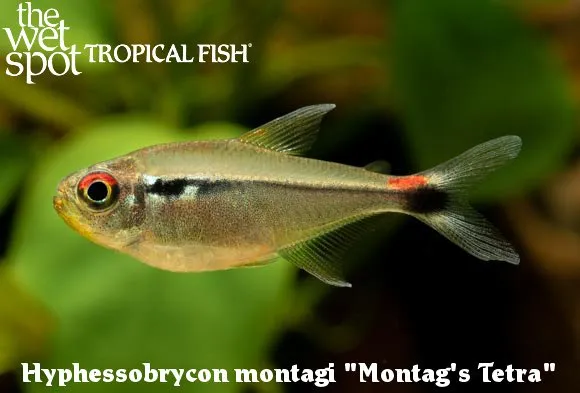
Montag's tetra
Hyphessobrycon montagi
Freshwater1.5 in (3.7 cm) · 15 gal (55 L)73–82°F (23–28°C)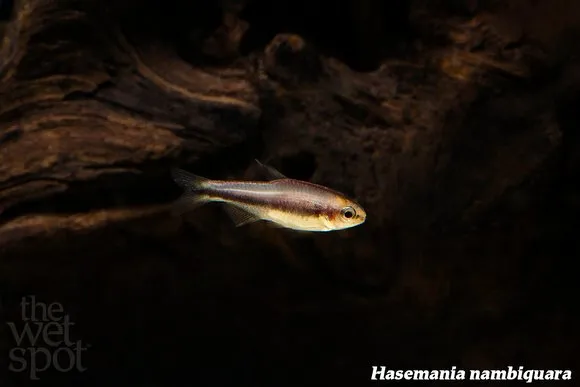
Nambiquara royal tetra
Inpaichthys nambiquara
Freshwater1.3 in (3.4 cm) · 14 gal (54 L)73–81°F (23–27°C)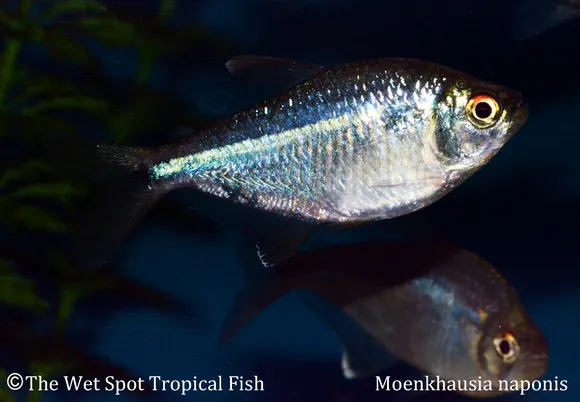
Napo tetra
Moenkhausia naponis
Freshwater2.6 in (6.5 cm) · 20 gal (75 L)73–81°F (23–27°C)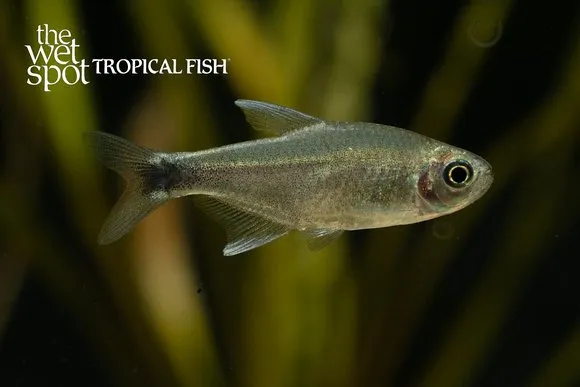
Negodagua tetra
Hyphessobrycon negodagua
Freshwater1.3 in (3.4 cm) · 15 gal (55 L)68–79°F (20–26°C)Neon tetra
Paracheirodon innesi
Freshwater1.5 in (3.8 cm) · 11 gal (40 L)70–77°F (21–25°C)3 varieties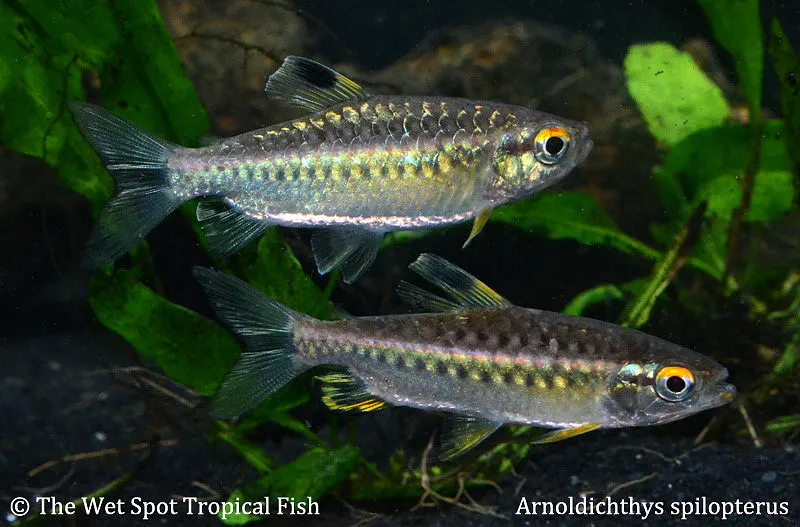
Niger tetra
Arnoldichthys spilopterus
Freshwater3.9 in (10 cm) · 50 gal (190 L)75–81°F (24–27°C)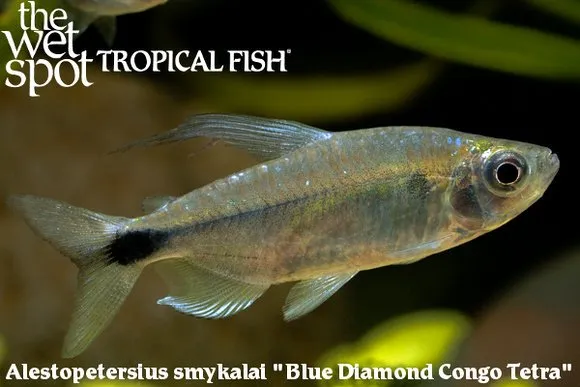
Niger yellow Congo tetra
Alestopetersius smykalai
Freshwater2.8 in (7 cm) · 29 gal (110 L)73–81°F (23–27°C)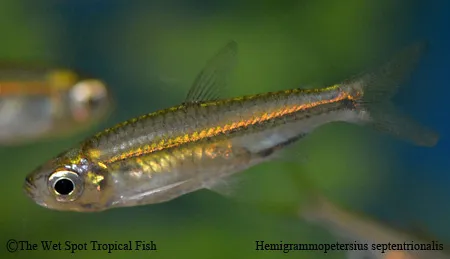
Nigerian yellow line tetra
Rhabdalestes septentrionalis
Freshwater2.8 in (7 cm) · 21 gal (80 L)73–82°F (23–28°C)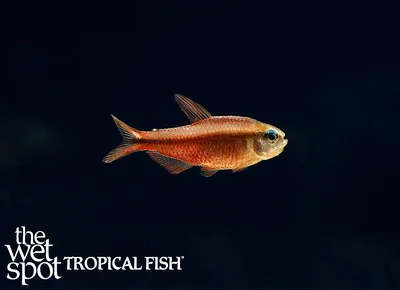
Notidanos tetra
Hyphessobrycon notidanos
Freshwater1.4 in (3.5 cm) · 15 gal (55 L)72–81°F (22–27°C)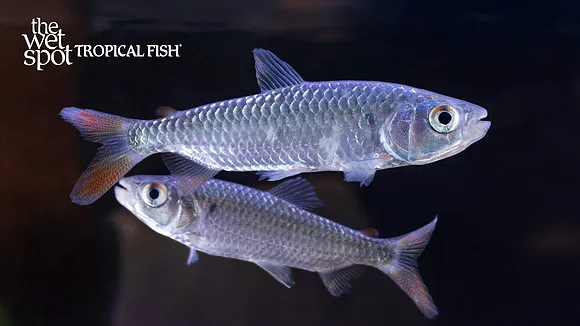
Nurse tetra
Brachyalestes nurse
Freshwater9.8 in (25 cm) · 106 gal (400 L)73–82°F (23–28°C)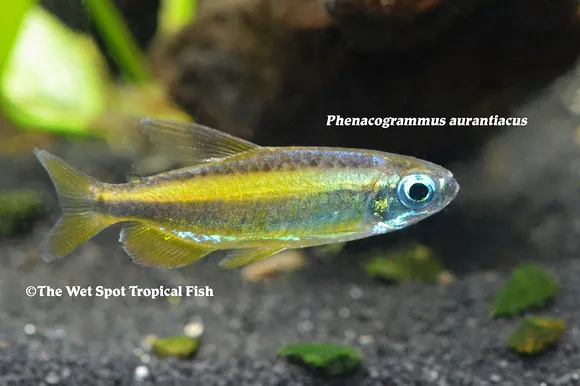
Orange Congo tetra
Phenacogrammus aurantiacus
Freshwater3.9 in (10 cm) · 42 gal (160 L)73–81°F (23–27°C)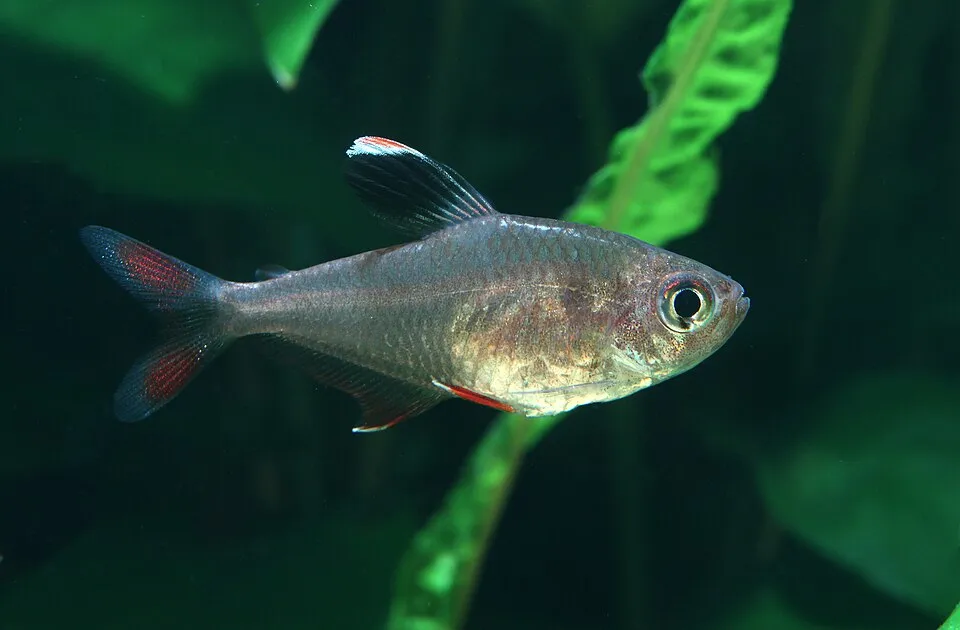
Ornate tetra
Hyphessobrycon bentosi
Freshwater1.8 in (4.5 cm) · 20 gal (75 L)72–82°F (22–28°C)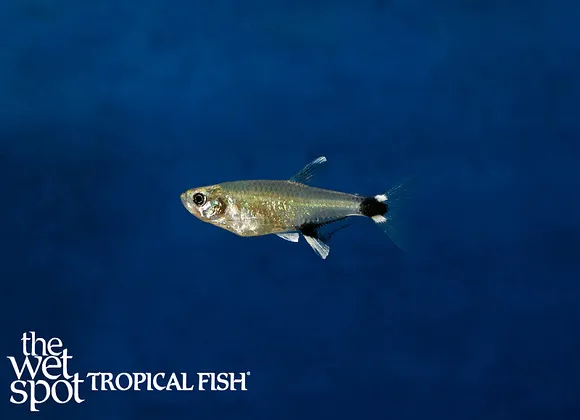
Panda darter tetra
Aphyocharax nattereri
Freshwater1.4 in (3.5 cm) · 14 gal (54 L)72–81°F (22–27°C)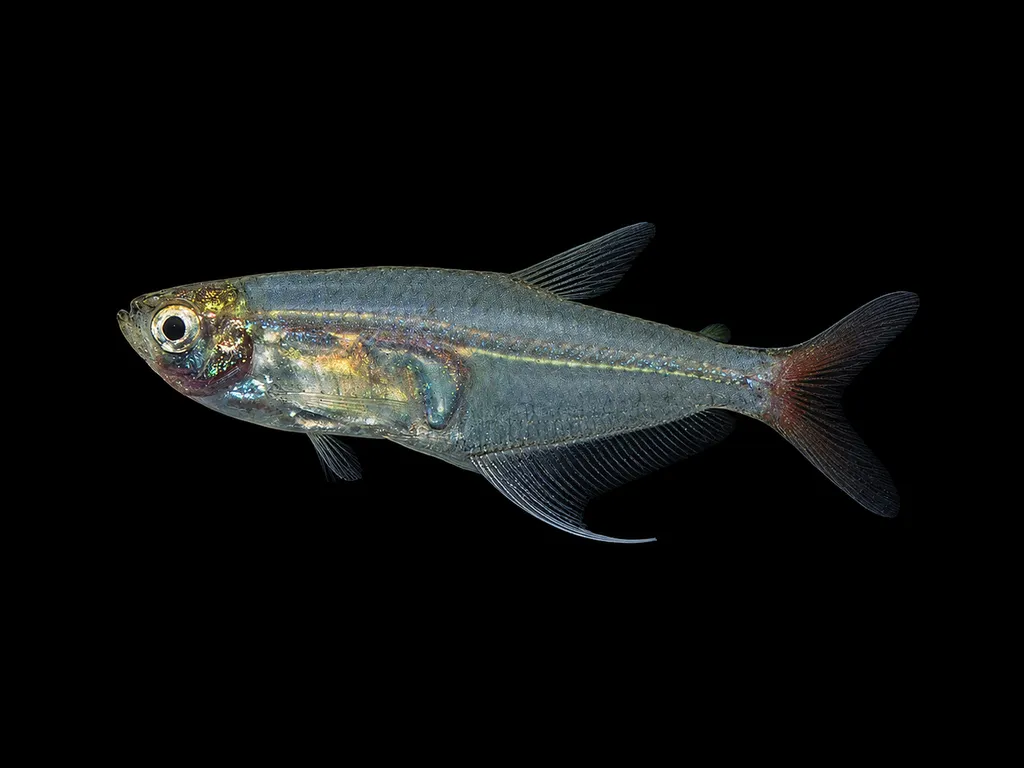
Paraguay glass tetra
Prionobrama paraguayensis
Freshwater2.4 in (6 cm) · 20 gal (75 L)68–81°F (20–27°C)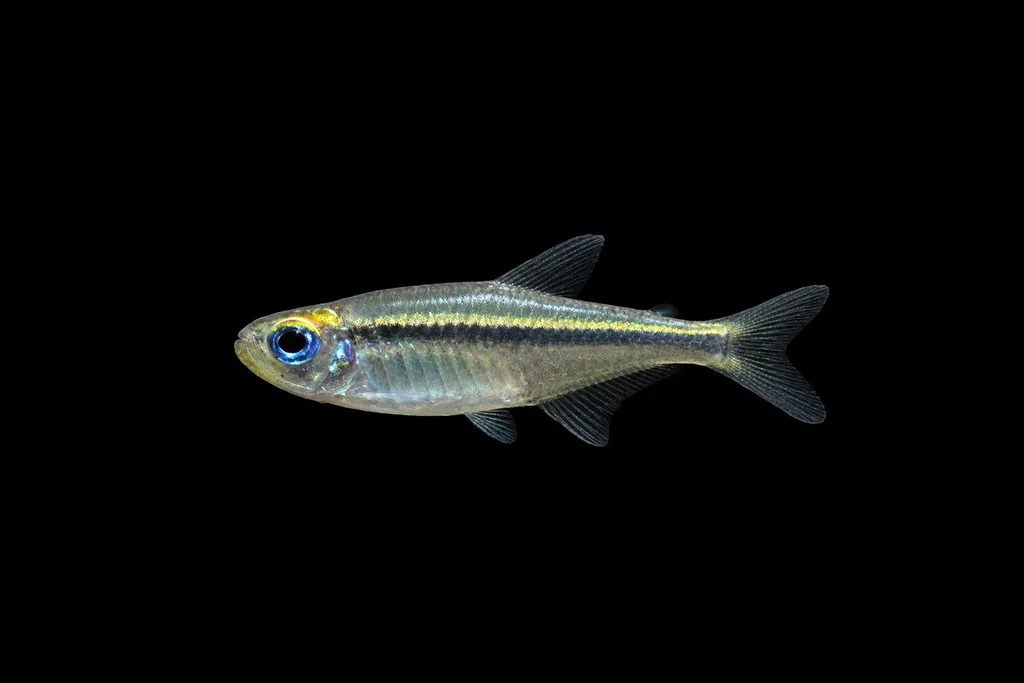
Parrot tetra
Hyphessobrycon psittacus
Freshwater1.6 in (4 cm) · 16 gal (60 L)72–81°F (22–27°C)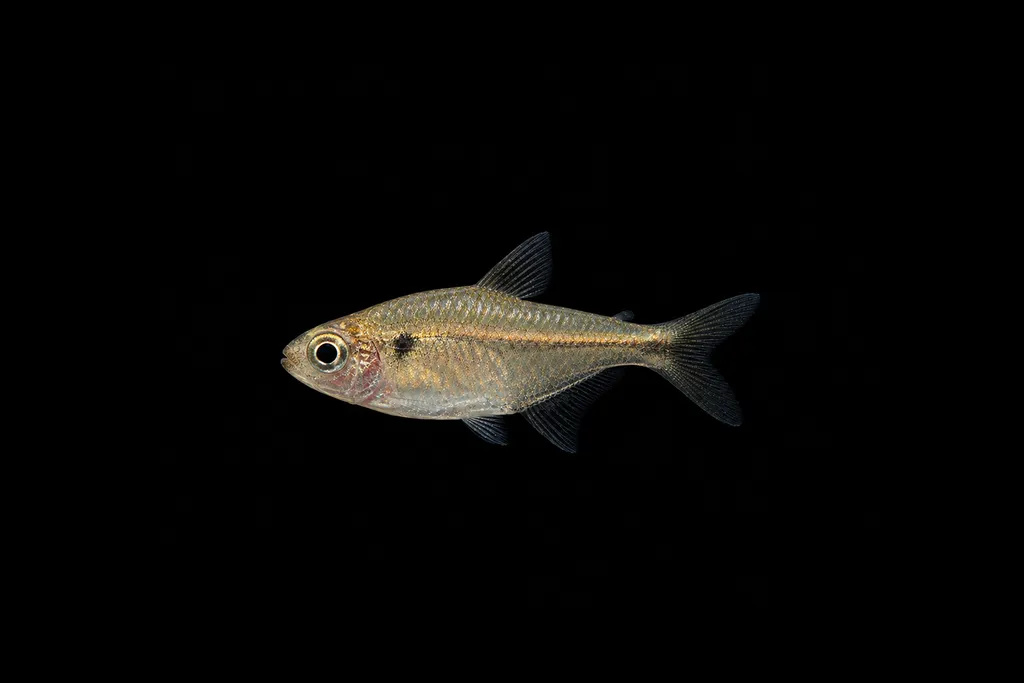
Parvellus tetra
Hyphessobrycon parvellus
Freshwater1 in (2.6 cm) · 10 gal (38 L)72–82°F (22–28°C)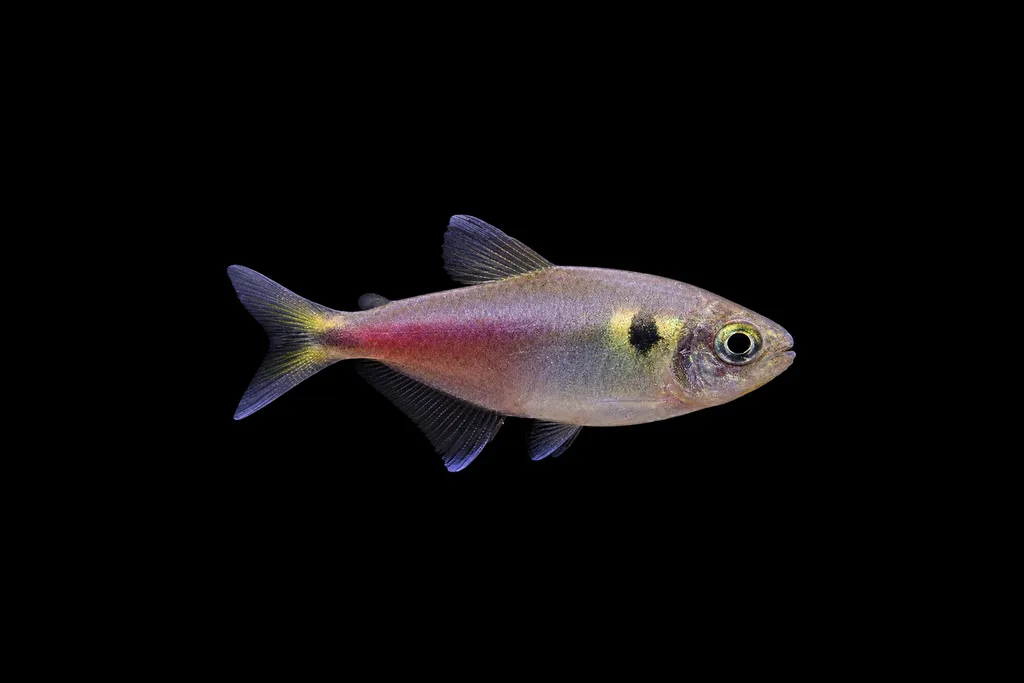
Pastel lily tetra
Psalidodon xavante
Freshwater2.4 in (6 cm) · 21 gal (80 L)72–81°F (22–27°C)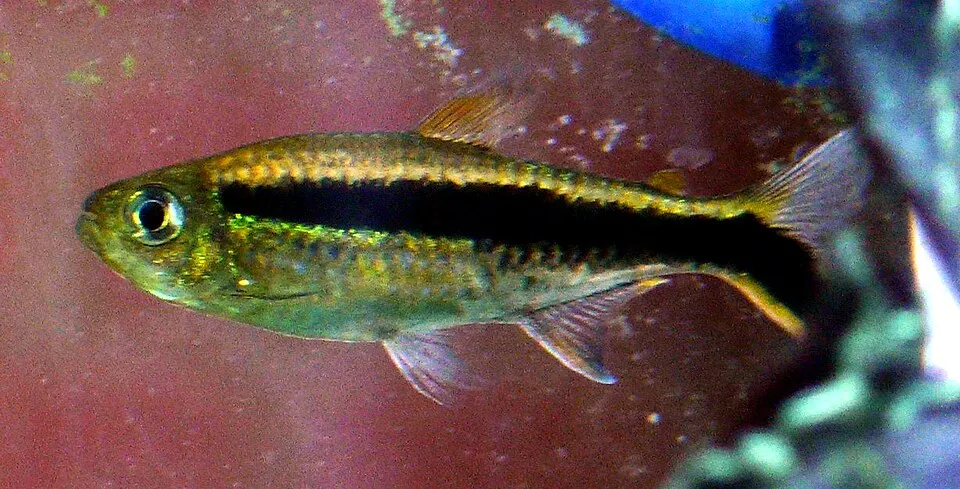
Penguin tetra
Thayeria boehlkei
Freshwater2.6 in (6.5 cm) · 20 gal (75 L)72–82°F (22–28°C)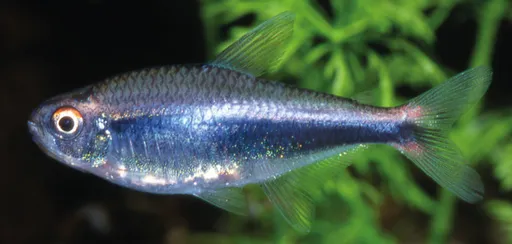
Peruvian tetra
Hyphessobrycon peruvianus
Freshwater1.6 in (4 cm) · 16 gal (60 L)72–81°F (22–27°C)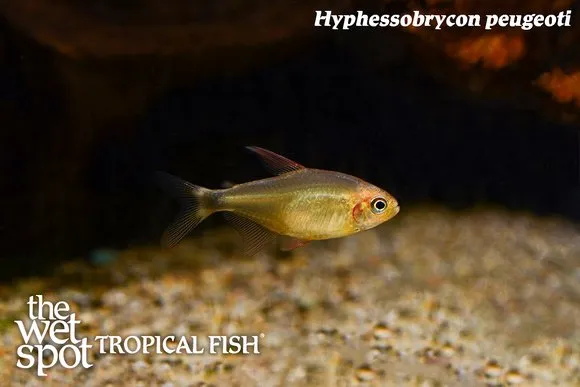
Peugeot's tetra
Hyphessobrycon peugeoti
Freshwater1.5 in (3.8 cm) · 15 gal (55 L)72–81°F (22–27°C)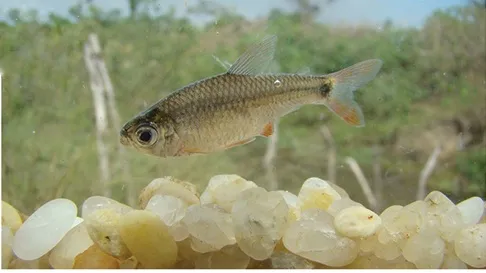
Piaba tetra
Serrapinnus piaba
Freshwater1.6 in (4 cm) · 11 gal (40 L)72–82°F (22–28°C)Piabinhas tetra
Hyphessobrycon piabinhas
Freshwater1.5 in (3.8 cm) · 15 gal (55 L)73–82°F (23–28°C)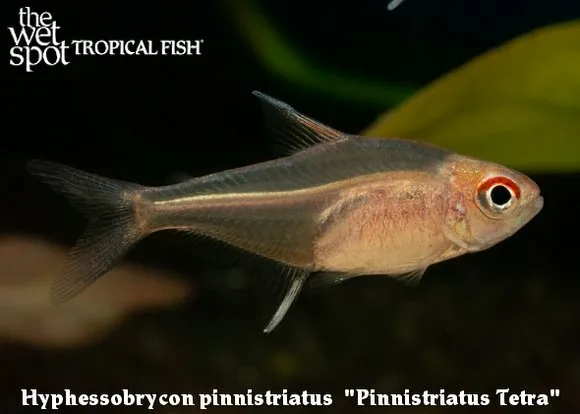
Pinnistriatus tetra
Hyphessobrycon pinnistriatus
Freshwater1.4 in (3.6 cm) · 15 gal (55 L)72–81°F (22–27°C)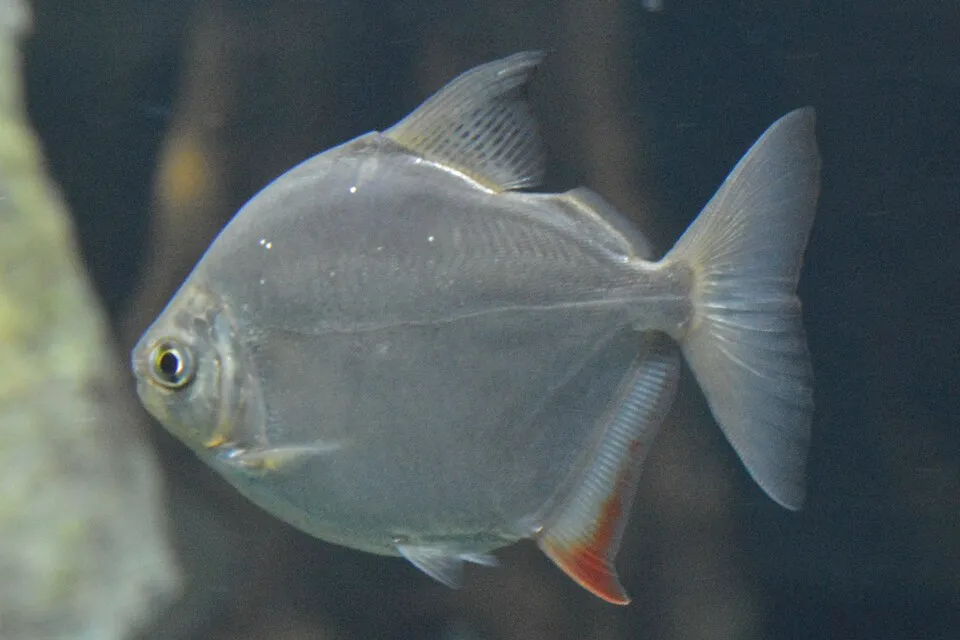
Plain metynnis
Metynnis hypsauchen
Freshwater5.5 in (14 cm) · 70 gal (265 L)75–82°F (24–28°C)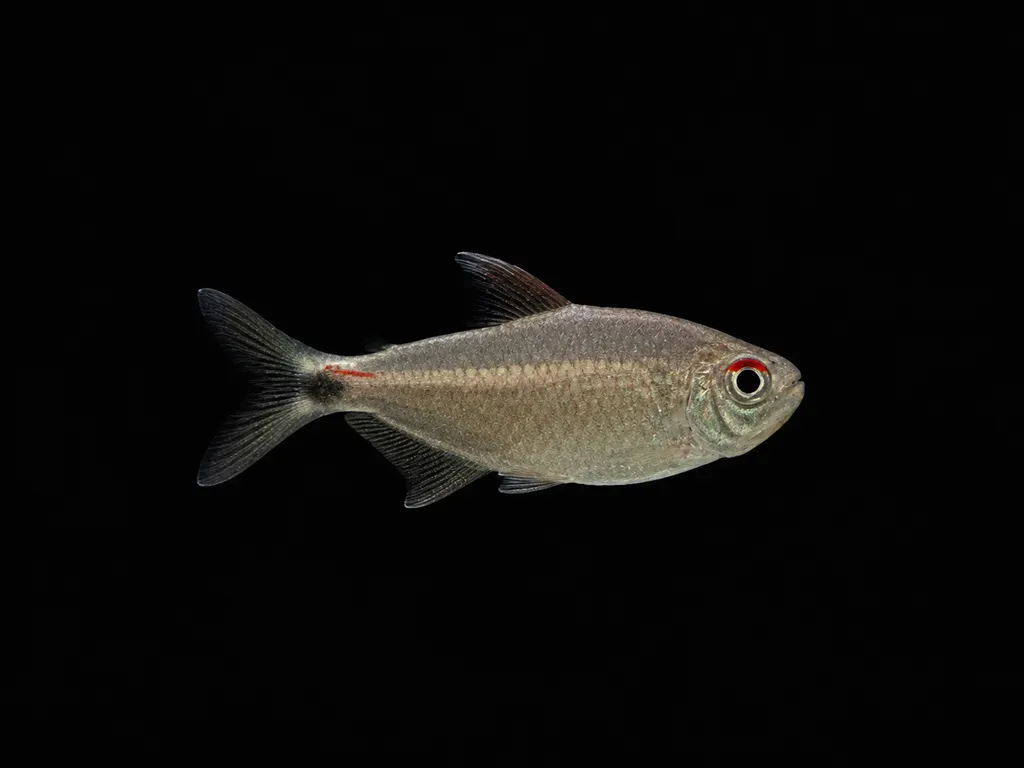
Preto tetra
Moenkhausia pretoensis
Freshwater2.4 in (6 cm) · 20 gal (75 L)73–82°F (23–28°C)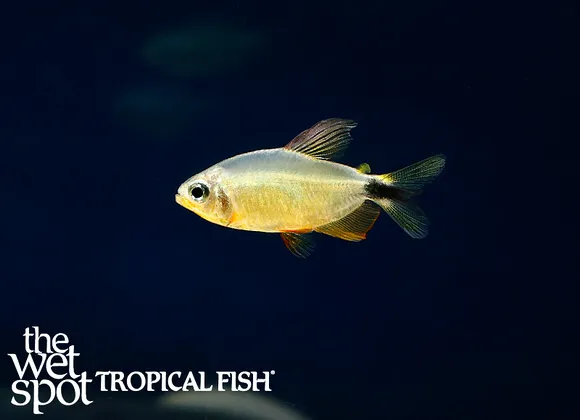
Procyon tetra
Hyphessobrycon procyon
Freshwater1.5 in (3.8 cm) · 15 gal (55 L)72–81°F (22–27°C)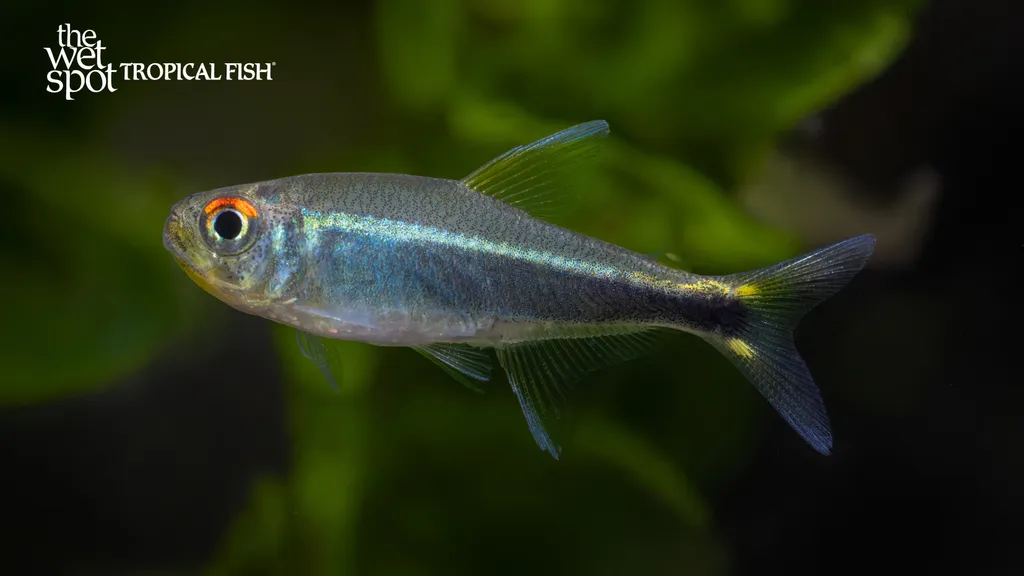
Purple tetra
Hyphessobrycon metae
Freshwater1.8 in (4.5 cm) · 20 gal (75 L)73–82°F (23–28°C)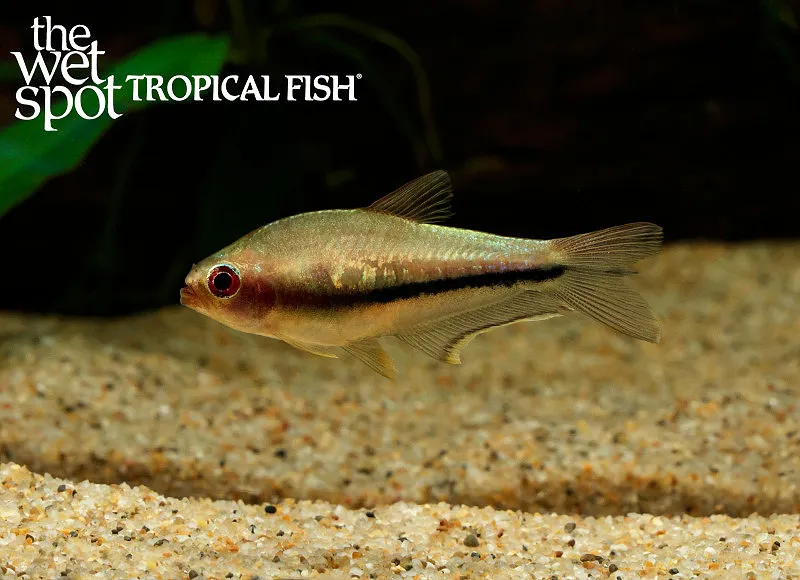
Rainbow emperor tetra
Nematobrycon lacortei
Freshwater2 in (5 cm) · 20 gal (75 L)73–81°F (23–27°C)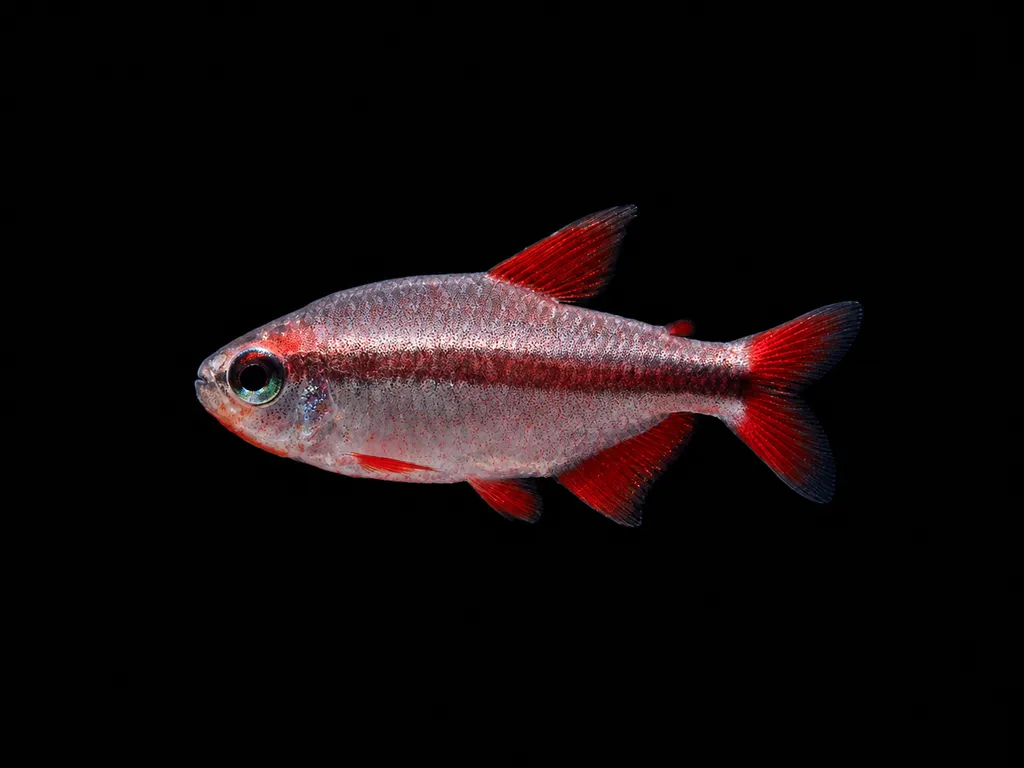
Red devil tetra
Hyphessobrycon piranga
Freshwater1 in (2.5 cm) · 10 gal (38 L)73–82°F (23–28°C)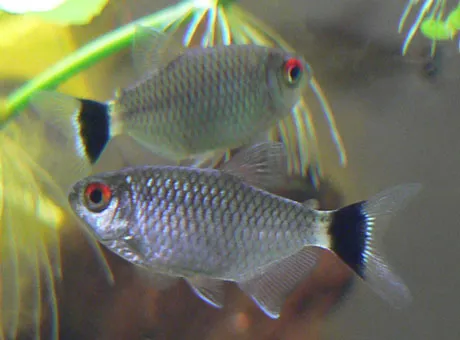
Red eye tetra
Moenkhausia sanctaefilomenae
Freshwater2.8 in (7 cm) · 28 gal (105 L)72–79°F (22–26°C)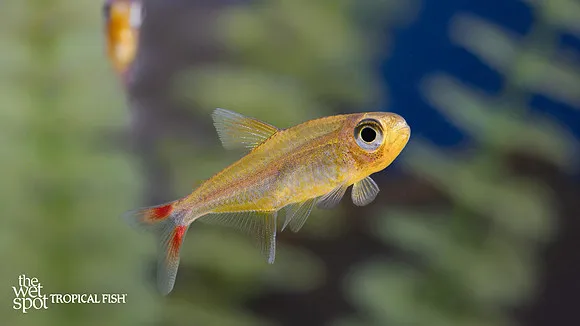
Red flush tetra
Hemigrammus stictus
Freshwater2 in (5 cm) · 20 gal (75 L)73–82°F (23–28°C)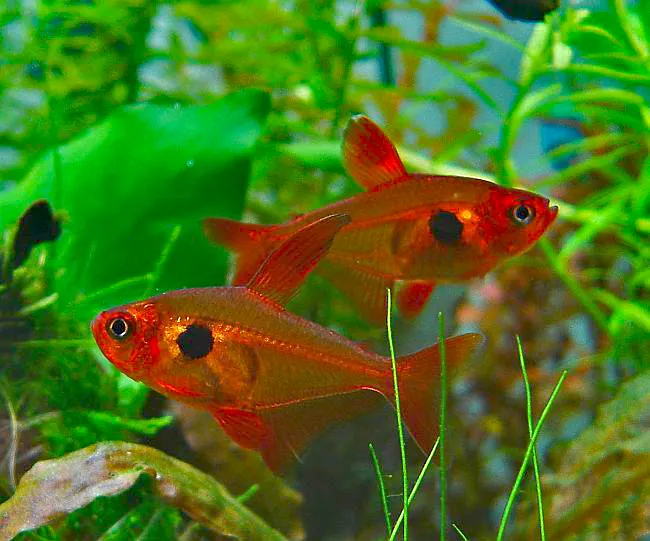
Red phantom tetra
Hyphessobrycon sweglesi
Freshwater1.6 in (4 cm) · 15 gal (55 L)72–82°F (22–28°C)Red-back moon tetra
Bathyaethiops flammeus
Freshwater2 in (5 cm) · 24 gal (90 L)73–81°F (23–27°C)Red-tail brycinus
Brycinus macrolepidotus
Freshwater20.9 in (53 cm) · 264 gal (1,000 L)73–82°F (23–28°C)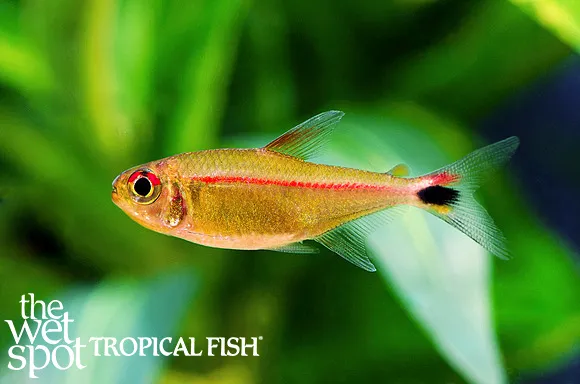
Redstripe hemigrammus
Hemigrammus rubrostriatus
Freshwater2.4 in (6 cm) · 20 gal (75 L)73–82°F (23–28°C)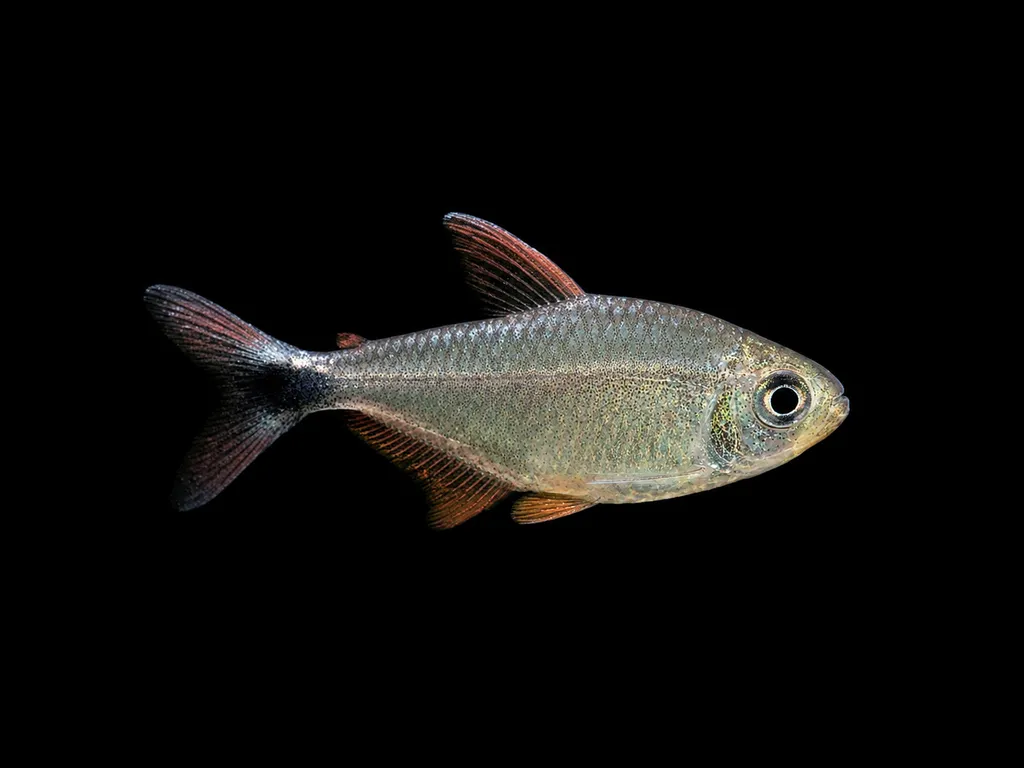
Robustulus tetra
Hyphessobrycon robustulus
Freshwater1.7 in (4.4 cm) · 16 gal (60 L)70–81°F (21–27°C)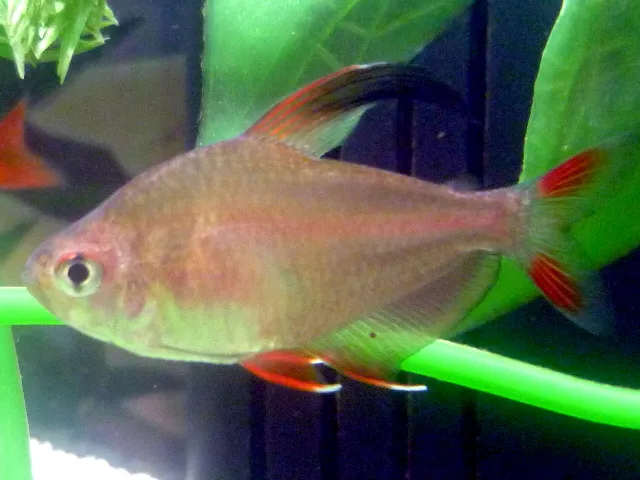
Rosy tetra
Hyphessobrycon rosaceus
Freshwater1.6 in (4 cm) · 15 gal (55 L)75–82°F (24–28°C)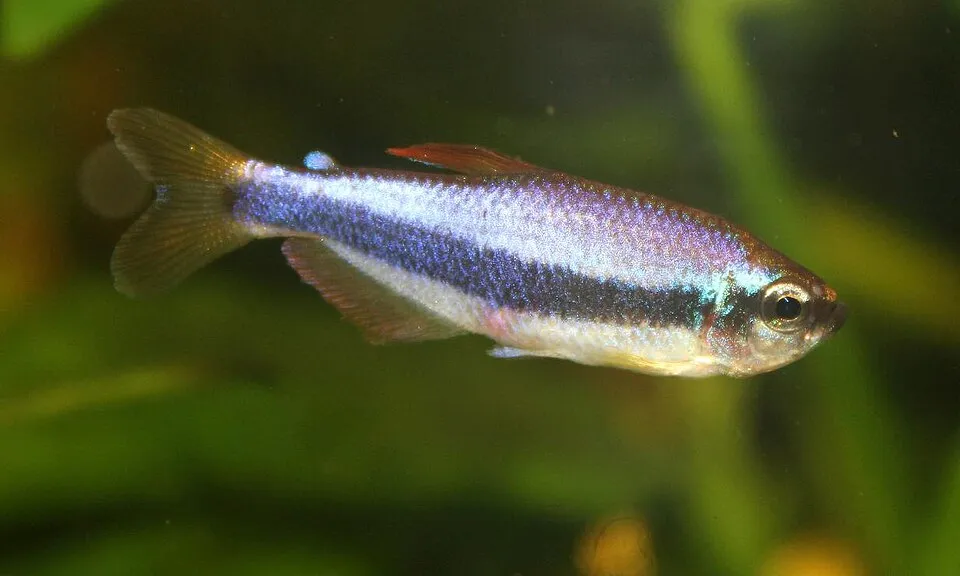
Royal tetra
Inpaichthys kerri
Freshwater1.4 in (3.5 cm) · 15 gal (55 L)75–81°F (24–27°C)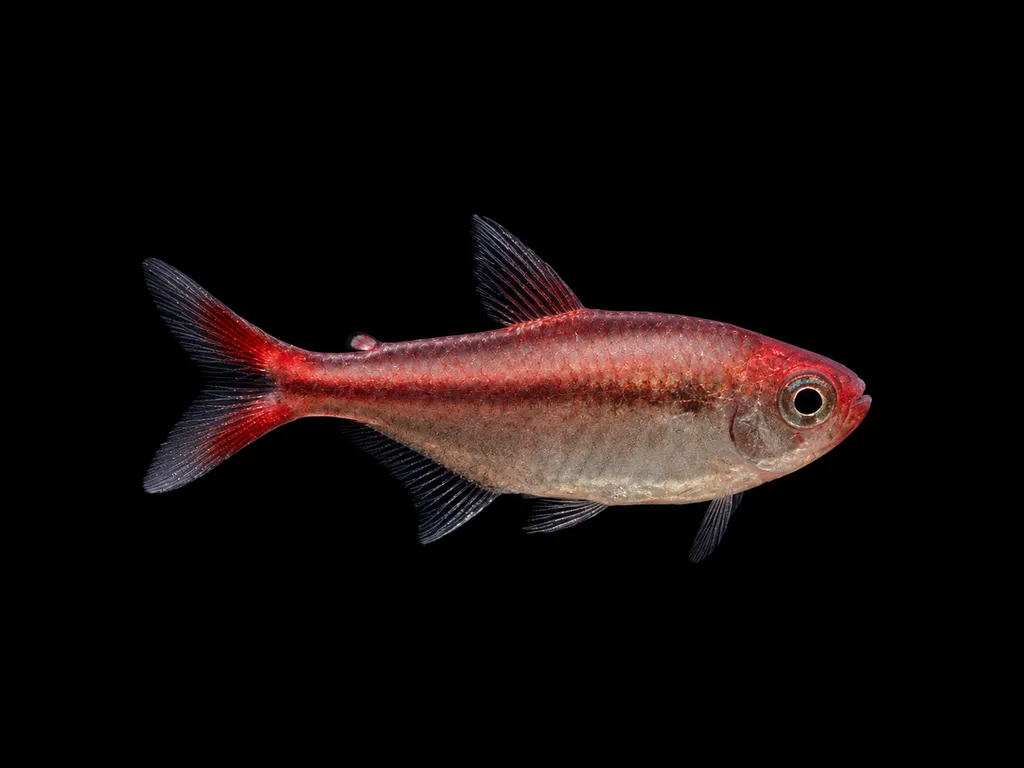
Ruby moenkhausia
Moenkhausia rubra
Freshwater2.1 in (5.4 cm) · 20 gal (75 L)73–82°F (23–28°C)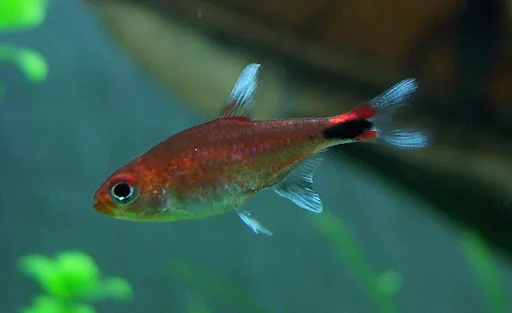
Ruby tetra
Axelrodia riesei
Freshwater0.8 in (2 cm) · 12 gal (45 L)73–81°F (23–27°C)Rummy-nose tetra
Hemigrammus rhodostomus
Freshwater2 in (5 cm) · 20 gal (75 L)75–81°F (24–27°C)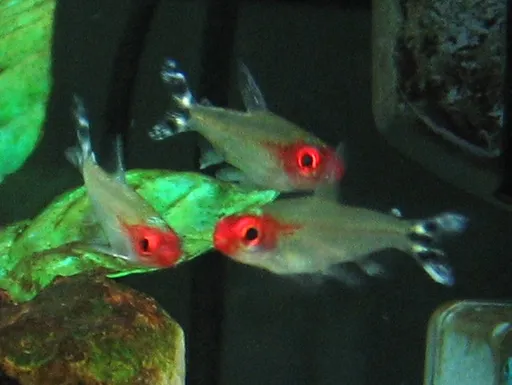
Rummynose tetra
Petitella bleheri
Freshwater2 in (5 cm) · 20 gal (75 L)75–81°F (24–27°C)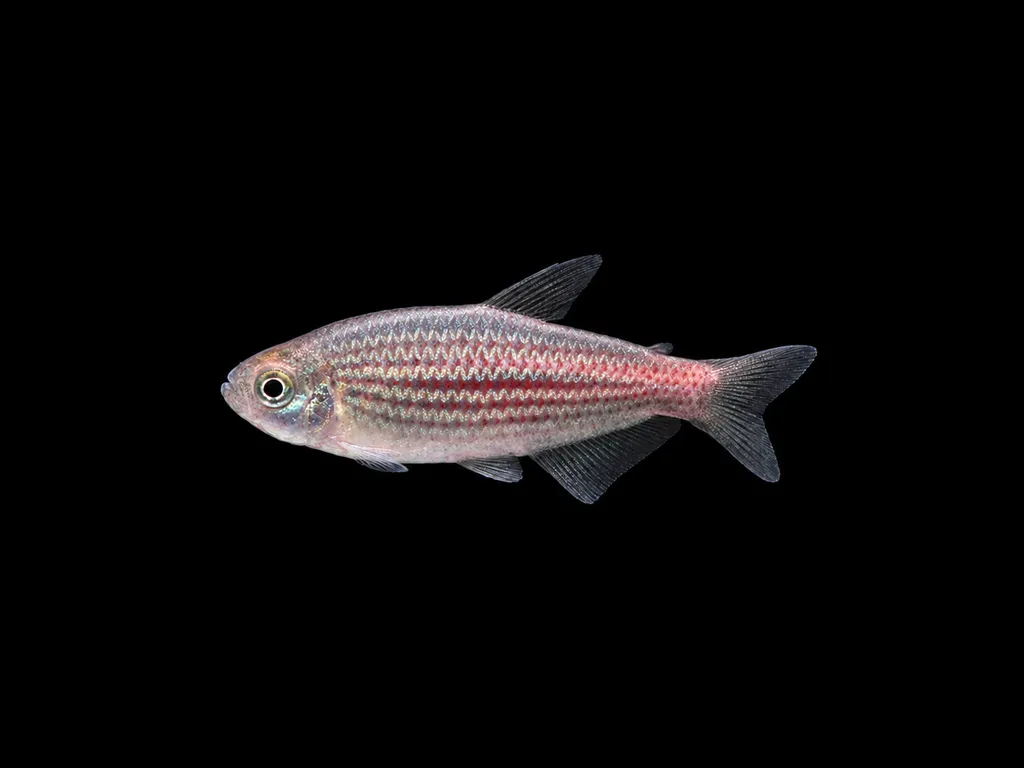
Scratched inpa tetra
Inpaichthys parauapiranga
Freshwater1.2 in (3 cm) · 14 gal (54 L)72–81°F (22–27°C)Serpae tetra
Hyphessobrycon eques
Freshwater1.8 in (4.5 cm) · 17 gal (65 L)68–82°F (20–28°C)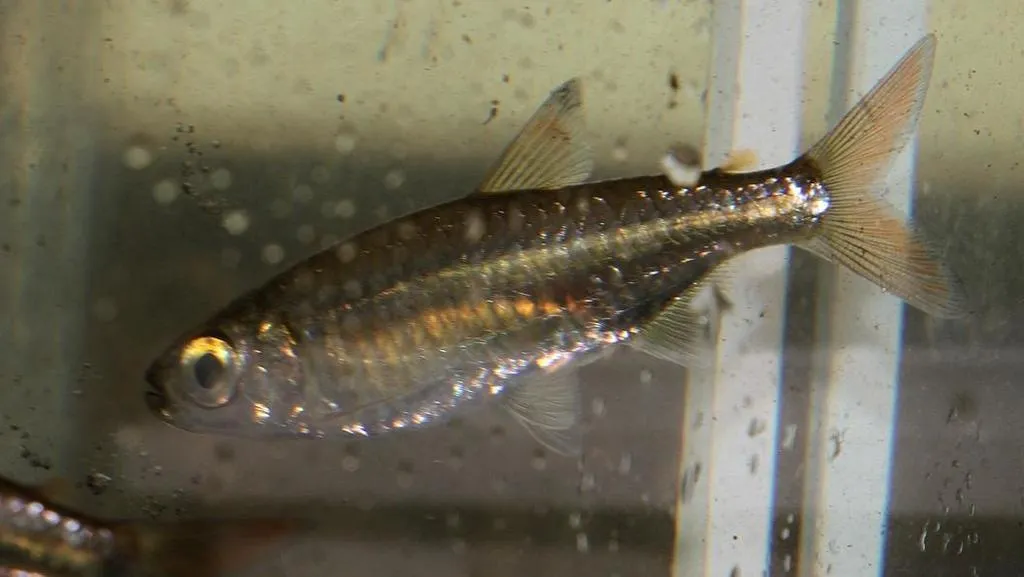
Sharptooth tetra
Micralestes acutidens
Freshwater3.5 in (9 cm) · 32 gal (120 L)72–79°F (22–26°C)Silver dollar
Metynnis argenteus
Freshwater5.9 in (15 cm) · 70 gal (265 L)75–82°F (24–28°C)Silvertip tetra
Hasemania nana
Freshwater1.6 in (4 cm) · 18 gal (70 L)73–82°F (23–28°C)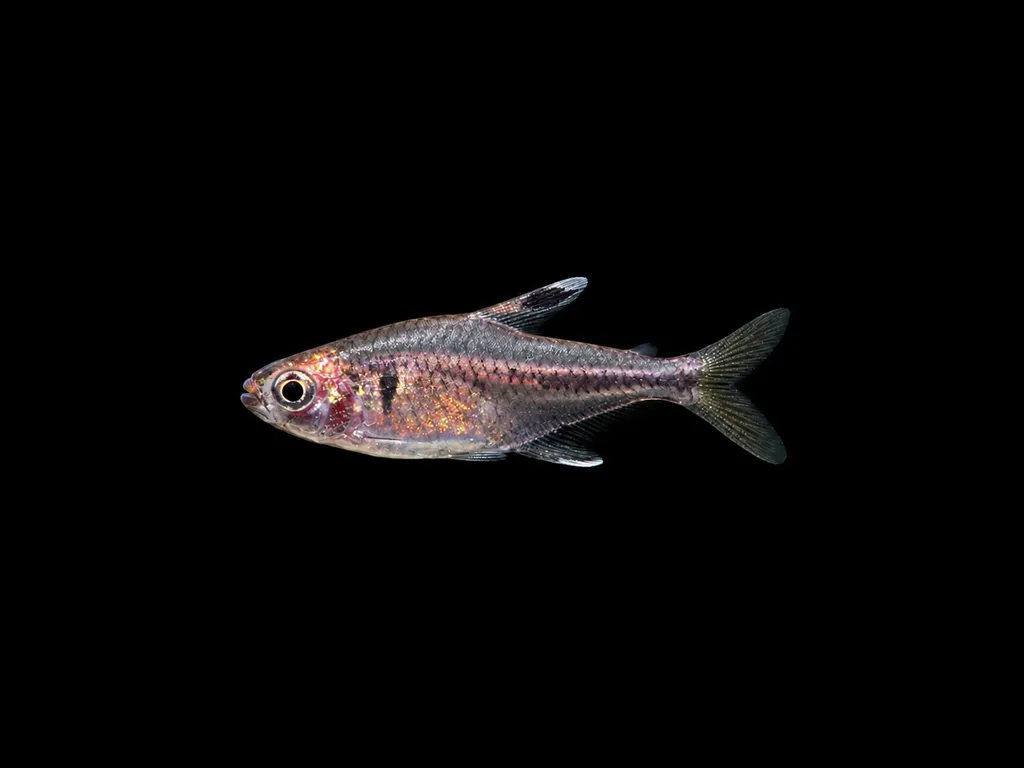
Simulatus tetra
Hyphessobrycon simulatus
Freshwater1.4 in (3.6 cm) · 15 gal (55 L)72–81°F (22–27°C)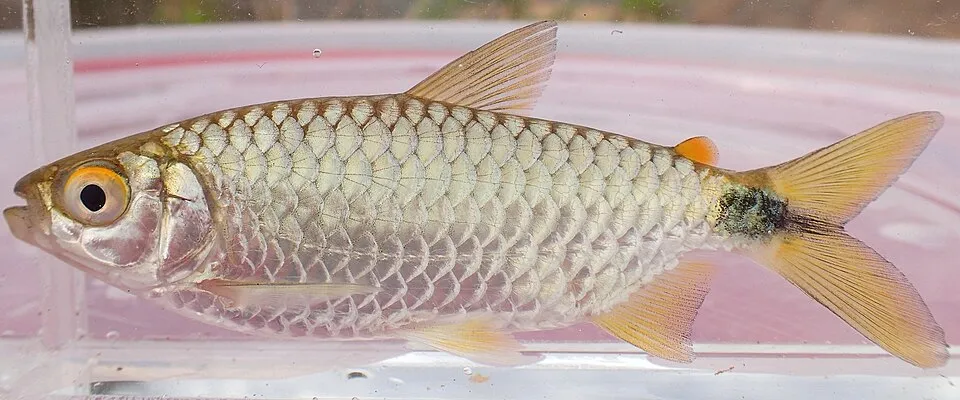
Spot-tail tetra
Brycinus imberi
Freshwater7.9 in (20 cm) · 65 gal (245 L)72–81°F (22–27°C)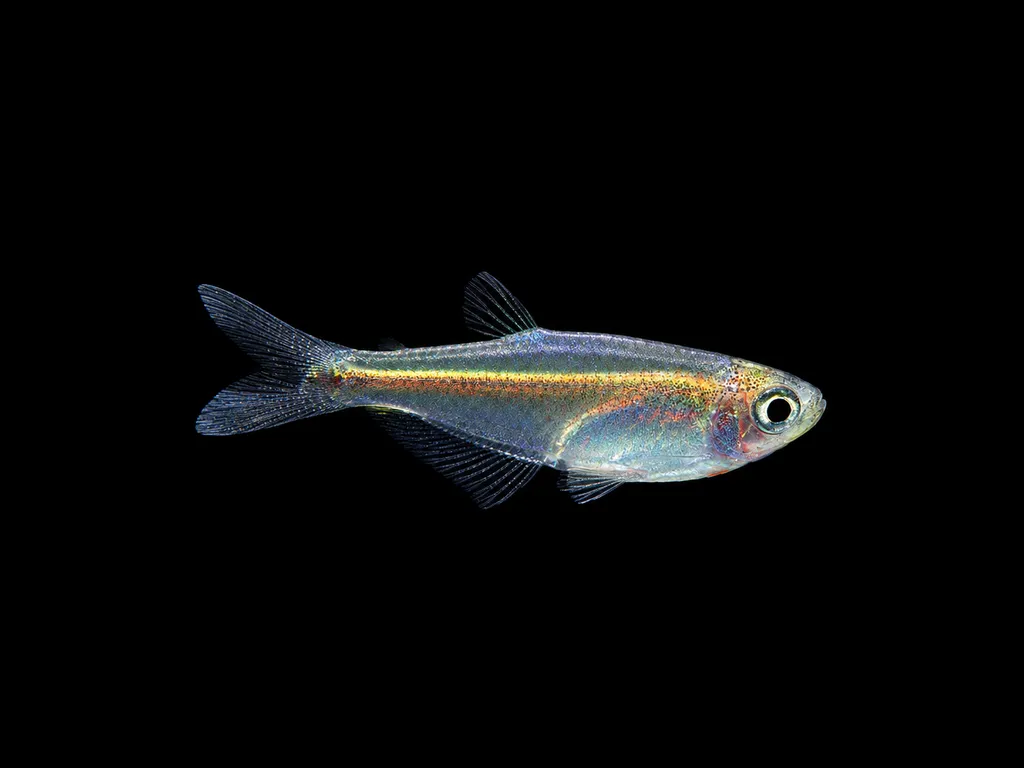
Tambopata glass tetra
Tyttocharax tambopatensis
Freshwater0.7 in (1.9 cm) · 5 gal (20 L)73–81°F (23–27°C)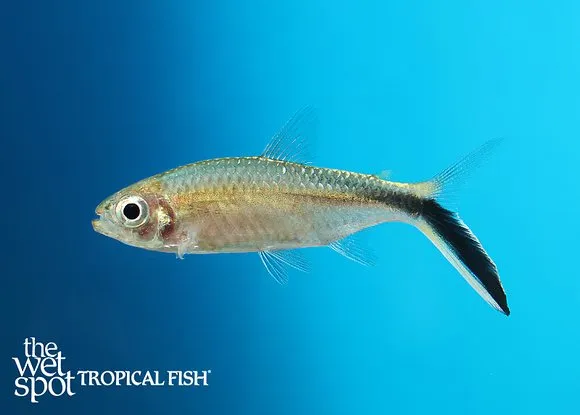
True penguin tetra
Thayeria obliqua
Freshwater3 in (7.6 cm) · 29 gal (110 L)73–82°F (23–28°C)Tucano tetra
Tucanoichthys tucano
Freshwater0.8 in (2 cm) · 12 gal (45 L)75–82°F (24–28°C)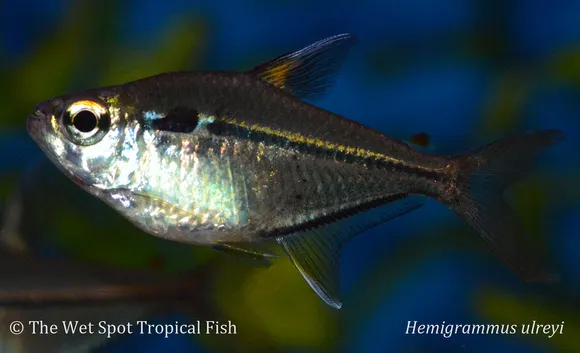
Ulrey's tetra
Hemigrammus ulreyi
Freshwater1.7 in (4.4 cm) · 20 gal (75 L)72–81°F (22–27°C)Unicorn tetra
Erythrocharax altipinnis
Freshwater1.3 in (3.3 cm) · 14 gal (54 L)75–82°F (24–28°C)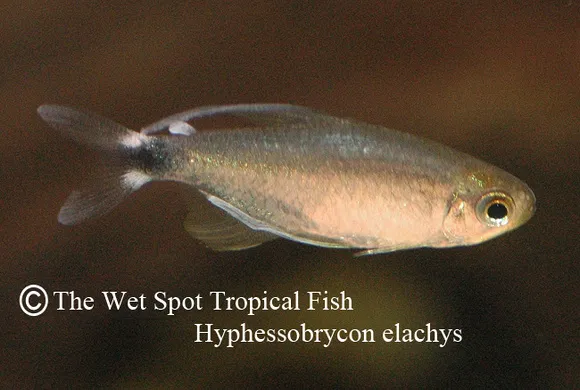
Veiltail tetra
Hyphessobrycon elachys
Freshwater0.9 in (2.4 cm) · 10 gal (38 L)68–79°F (20–26°C)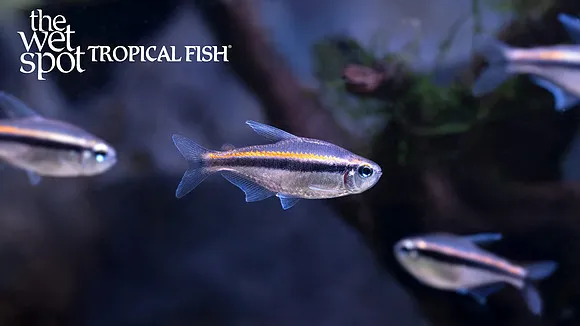
Vilma's tetra
Hyphessobrycon vilmae
Freshwater1.4 in (3.5 cm) · 15 gal (55 L)72–81°F (22–27°C)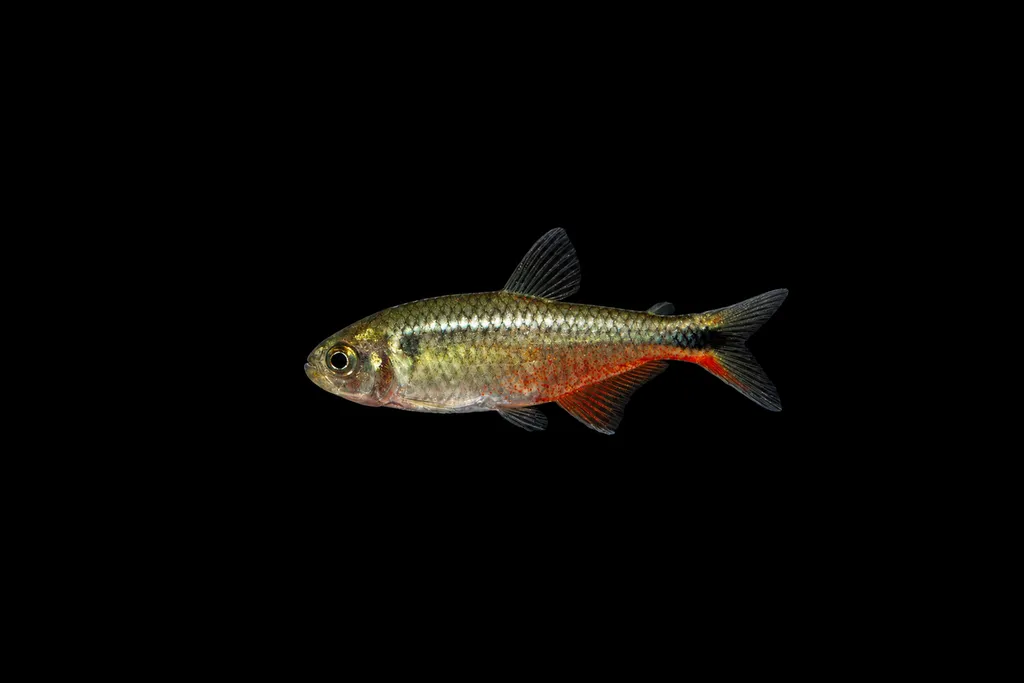
Vinaceus tetra
Hyphessobrycon vinaceus
Freshwater1.6 in (4 cm) · 14 gal (54 L)72–81°F (22–27°C)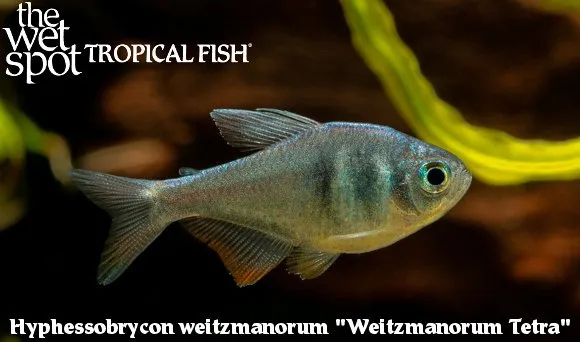
Weitzman's tetra
Hyphessobrycon weitzmanorum
Freshwater1.2 in (3 cm) · 12 gal (45 L)72–81°F (22–27°C)X-ray tetra
Pristella maxillaris
Freshwater1.8 in (4.5 cm) · 18 gal (70 L)72–82°F (22–28°C)
Yellow phantom tetra
Hyphessobrycon roseus
Freshwater0.8 in (2 cm) · 7 gal (25 L)68–82°F (20–28°C)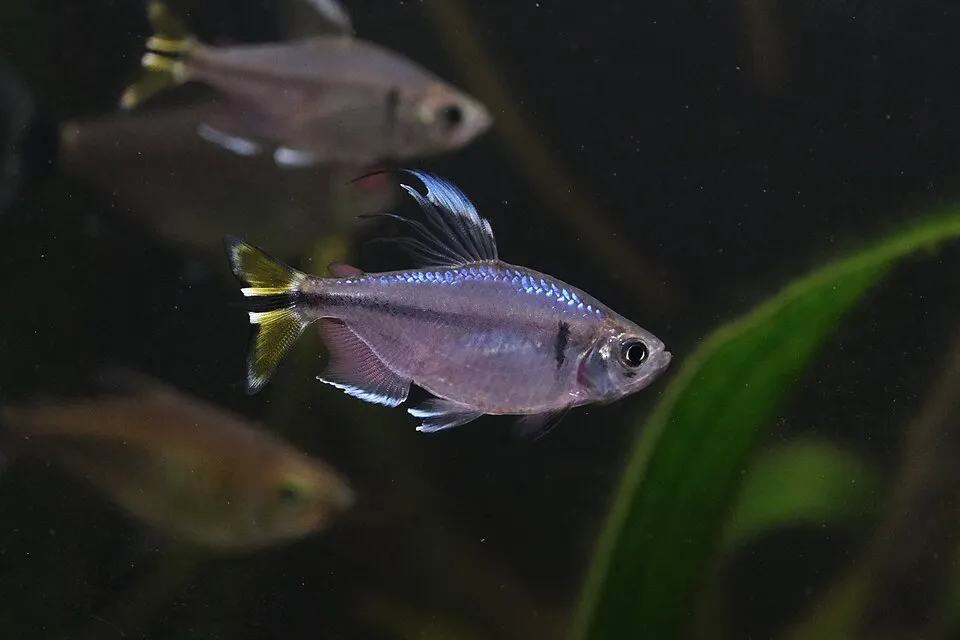
Yellow-tailed Congo tetra
Alestopetersius caudalis
Freshwater2.4 in (6 cm) · 20 gal (75 L)72–79°F (22–26°C)
Planning a tank?
TankBud checks stocking and water fit as you build a tank, then tracks water tests, reminders and photos once it is running.
Track your tanksMaintain tanks for clients? See TankBud Pro