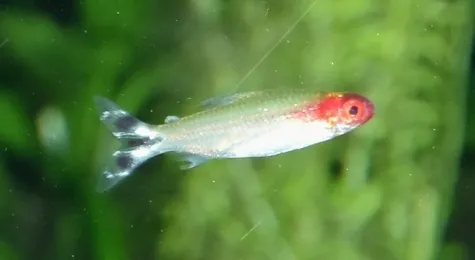
False rummynose tetra
Petitella georgiae
Also known as False rummynose, Hemigrammus georgiae, Peruvian Rummynose Tetra
FreshwaterFish
Care at a glance
- Temperature
- 72–79°F
- 22–26°C
- pH
- 5.5–7.0
- Adult size
- 2 in
- 5 cm
- Minimum tank
- 29 gal
- 110 L
- Temperament
- Peaceful
- Social behavior
- Schooling
- Swim level
- Middle
- Difficulty
- Medium
- Breeding
- Hard
- Rarity
- Common
- Family
- Characidae
- Origin
- Upper Amazon basin (Rio Purus, Rio Negro, Rio Madeira), Peru and Brazil
Overview
Keep them in a group of at least ten, and more is better, in a tank of 110 liters or larger. This is one of the tighter shoaling tetras, and a small group turns nervous and washes out in color. They are peaceful, active middle swimmers that hold a tight school. Water should run soft and acidic to neutral, roughly 22 to 26 C with a pH from 5.5 to 7. They have tiny mouths, so feed small foods like crushed flake, micro pellets, and small frozen items such as daphnia or baby brine. They are poor competitors, so skip boisterous or larger tankmates and keep the lid tight, since they will jump. Do not release any aquarium fish into local waters, and check your local rules before rehoming.
In the wild
False rummynose tetras come from the upper Amazon basin, in soft, acidic blackwater rivers like the Rio Purus, Rio Negro, and Rio Madeira across Peru and Brazil. These are dim, tannin-stained waters with leaf litter and submerged wood. To match that, give them a planted blackwater-style tank with dark substrate, bogwood, leaf litter, and floating plants to soften the light. They need swimming length, so a tank of at least 110 liters works best despite the small body. Keep the water soft and slightly acidic, from 22 to 26 C, with a pH between 5.5 and 7. They show their best red over a dark bottom in lower light.
Good to know
This is a characin in the family Characidae, reaching about 5 cm with the tail, though FishBase lists closer to 3.9 cm standard length. The genus saw a recent reshuffle, and Petitella now takes in the former Hemigrammus rummynose species. The true rummynose, Hemigrammus rhodostomus, and the firehead or Bleher's rummynose are still separate fish. It is an egg scatterer with no parental care.
Did you know
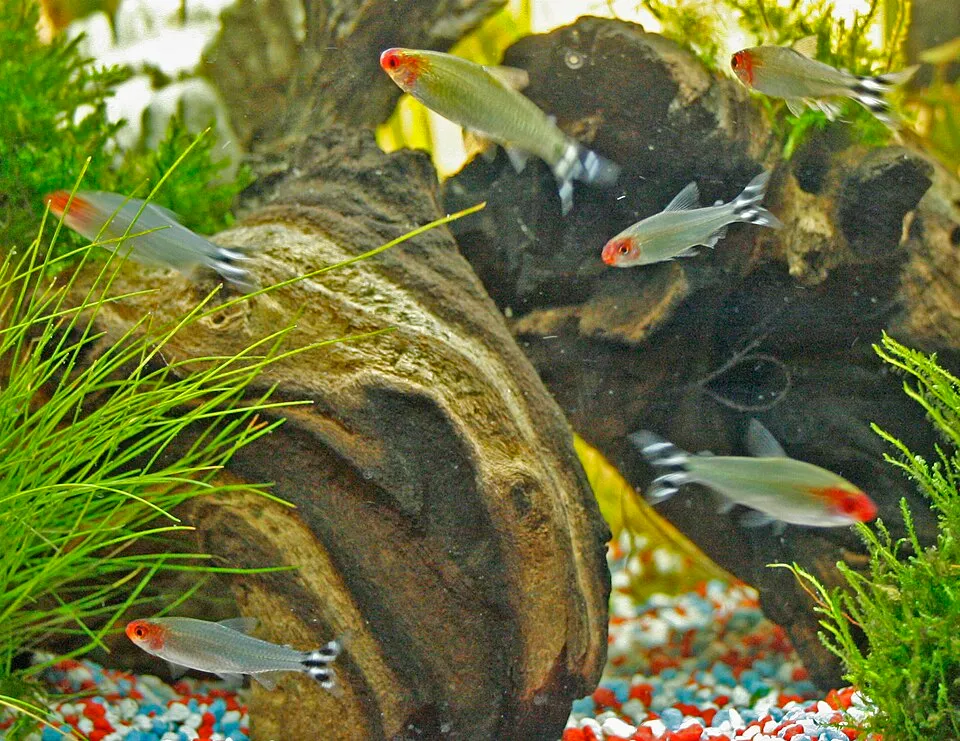
For a long time this fish was sold under the wrong name, mixed in with the true rummynose and Bleher's rummynose, and many tanks of so-called rummynose tetras were actually this species. The red nose and barred tail also work as a health gauge. When the color fades or goes pale, it usually means stress, poor water, or a group that is too small.
Weekly picks
Tank mates
False rummynose tetra is a peaceful, schooling species that keeps to the middle. These picks share a community profile with it, are safe together in both directions, and overlap on water type, temperature and pH.
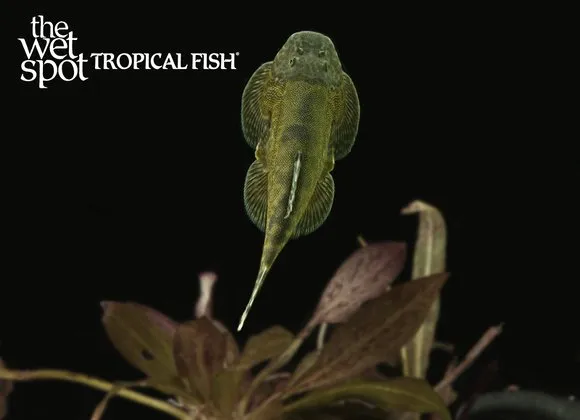
Green Borneo sucker
Gastromyzon lepidogaster
Freshwater4.7 in (12 cm) · 29 gal (110 L)68–77°F (20–25°C)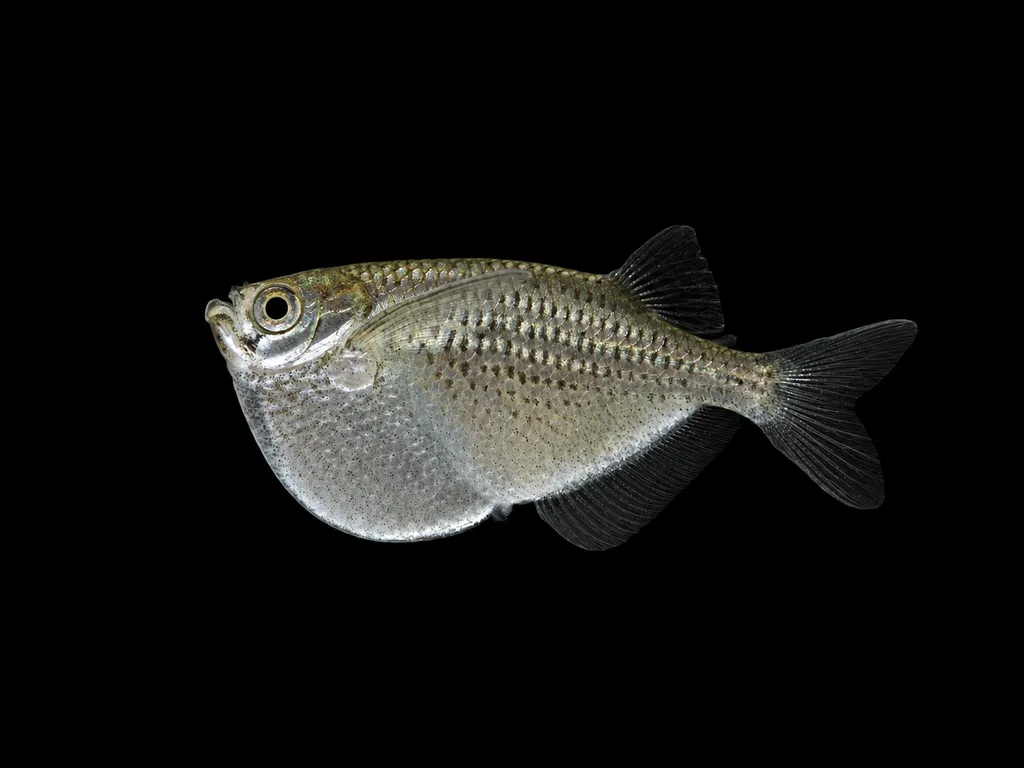
Silver hatchetfish
Gasteropelecus levis
Freshwater1.4 in (3.5 cm) · 30 gal (112 L)73–82°F (23–28°C)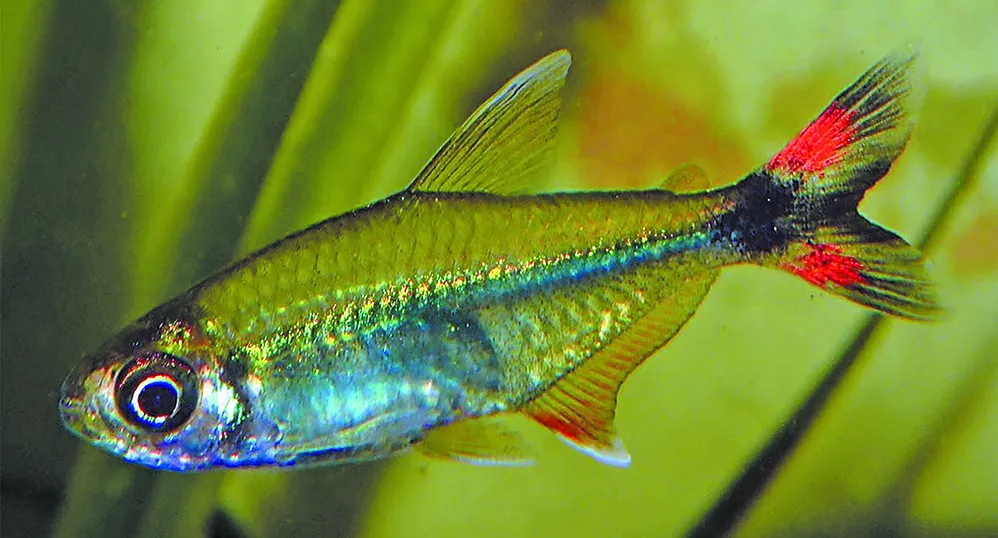
Bonita tetra
Moenkhausia bonita
Freshwater3.3 in (8.5 cm) · 29 gal (110 L)72–81°F (22–27°C)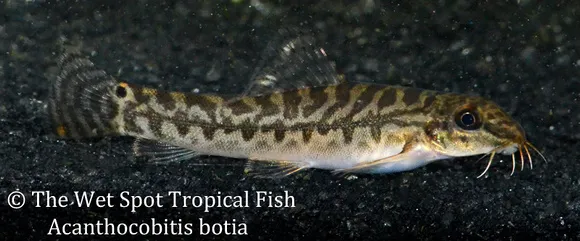
Zipper loach
Paracanthocobitis botia
Freshwater3.9 in (10 cm) · 29 gal (110 L)70–79°F (21–26°C)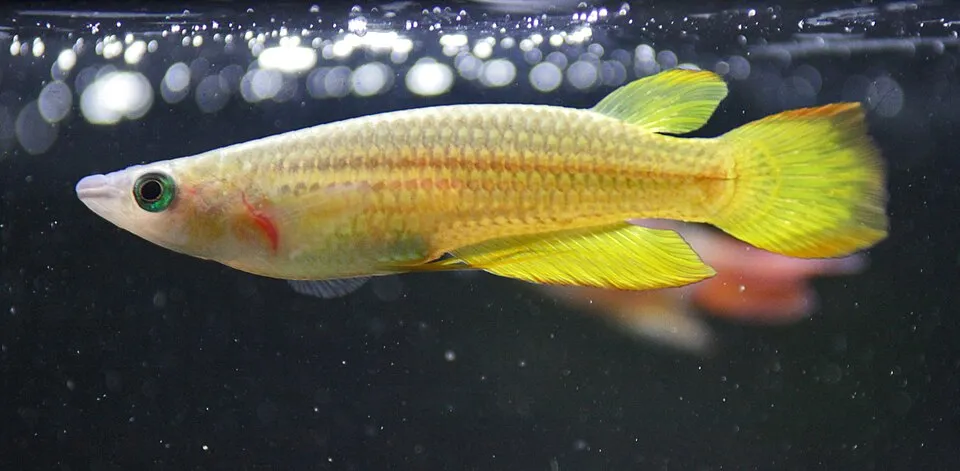
Striped panchax
Aplocheilus lineatus
Freshwater4.3 in (11 cm) · 30 gal (115 L)72–77°F (22–25°C)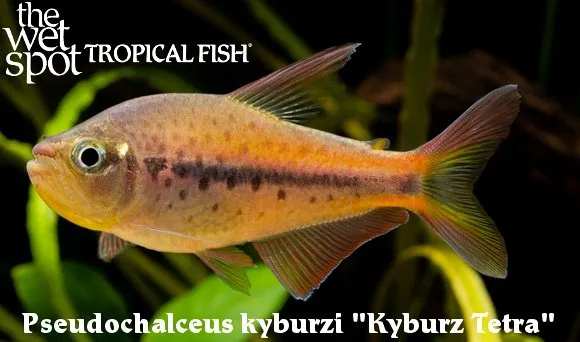
Kyburz tetra
Pseudochalceus kyburzi
Freshwater3.1 in (7.8 cm) · 29 gal (110 L)72–81°F (22–27°C)
Common questions
What size tank does a False rummynose tetra need?
A False rummynose tetra needs at least 29 gal (110 L). It spends most of its time in the middle.
What temperature and pH does a False rummynose tetra need?
A False rummynose tetra is comfortable at 72–79°F (22–26°C) with a pH of 5.5–7.0.
How big does a False rummynose tetra get?
An adult False rummynose tetra reaches about 2 in (5 cm).
Does a False rummynose tetra need a group?
Yes. A False rummynose tetra is a schooling species and should be kept in a group, not singly.
Related species
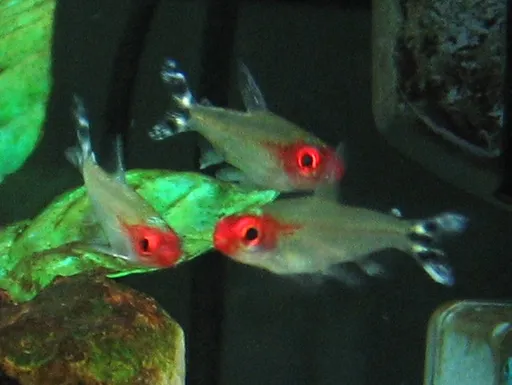 2 in (5 cm)20 gal (75 L)75–81°F (24–27°C)
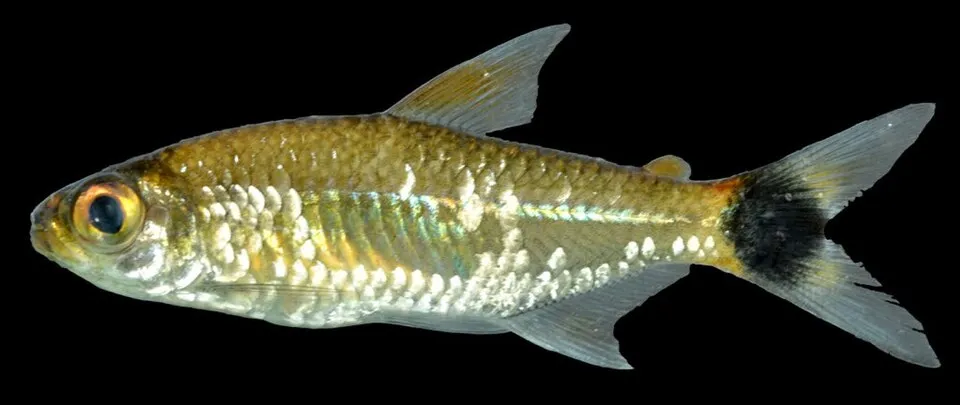
Rummynose tetra
Petitella bleheri
2 in (5 cm) · 20 gal (75 L)
 2 in (5 cm)16 gal (60 L)75–82°F (24–28°C)
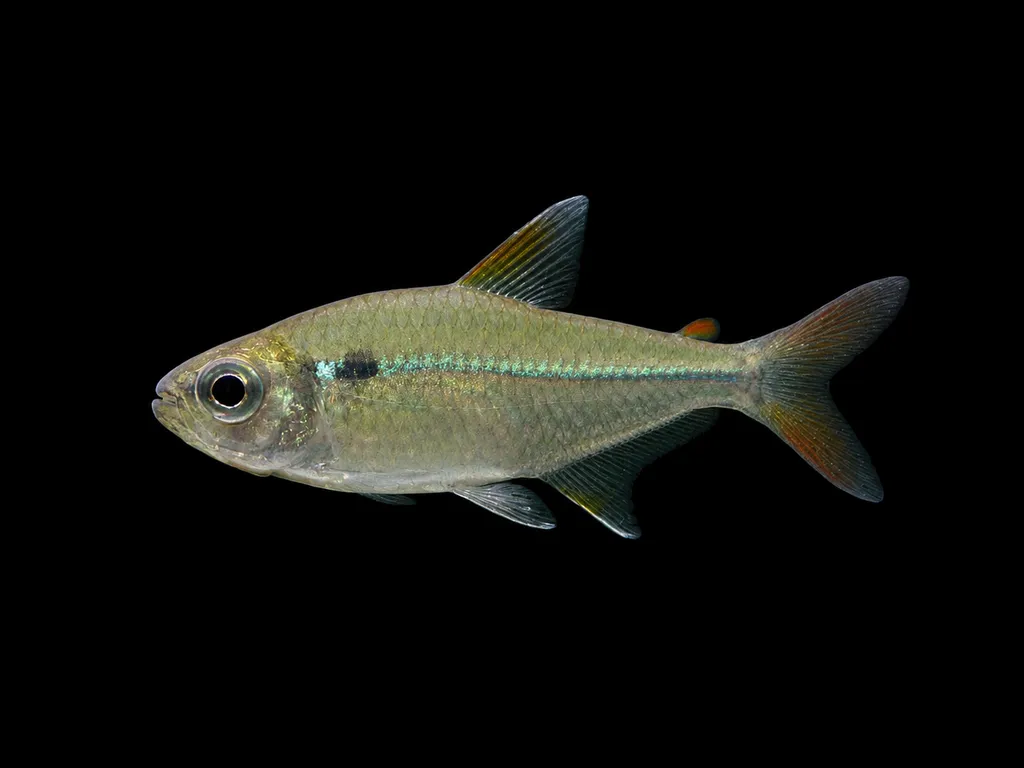
Ceros tetra
Moenkhausia ceros
2 in (5 cm) · 16 gal (60 L)
 2 in (5 cm)20 gal (75 L)73–82°F (23–28°C)
Collett's tetra
Hemigrammus collettii
2 in (5 cm) · 20 gal (75 L)
 2 in (5 cm)17 gal (65 L)72–82°F (22–28°C)
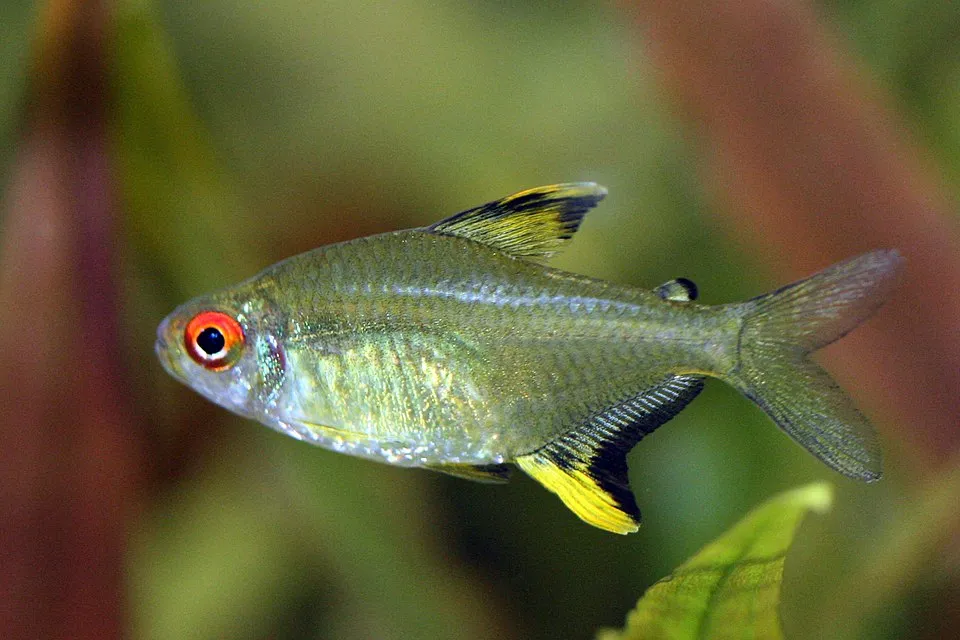
Lemon tetra
Hyphessobrycon pulchripinnis
2 in (5 cm) · 17 gal (65 L)
 2 in (5 cm)20 gal (75 L)73–82°F (23–28°C)
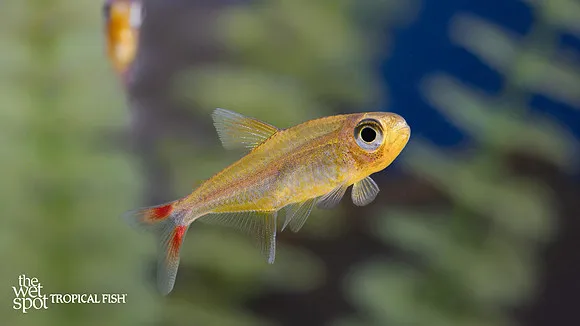
Red flush tetra
Hemigrammus stictus
2 in (5 cm) · 20 gal (75 L)
 2 in (5 cm)20 gal (75 L)75–81°F (24–27°C)
Rummy-nose tetra
Hemigrammus rhodostomus
2 in (5 cm) · 20 gal (75 L)