Rummy-nose tetra
Hemigrammus rhodostomus
FreshwaterFish
Care at a glance
- Temperature
- 75–81°F
- 24–27°C
- pH
- 5.5–7.0
- Adult size
- 2 in
- 5 cm
- Minimum tank
- 20 gal
- 75 L
- Temperament
- Peaceful
- Social behavior
- Schooling
- Swim level
- Middle
- Difficulty
- Easy
- Breeding
- Hard
- Rarity
- Common
- Family
- Characidae
- Origin
- Brazil, Venezuela
Overview
These are true schooling fish and should be kept in groups of six or more, though larger groups look and behave far better. They are active swimmers that hold the middle of the tank, so give them at least 75 liters with swimming space. They stay peaceful with other calm species. Feed quality flake, micro-pellets, and occasional live or frozen foods like brine shrimp and bloodworms. Keep them in soft, acidic to neutral water at about 24 to 27 C.
In the wild
Rummy-nose tetras come from the Amazon and Orinoco basins in Brazil and Venezuela. They live in soft, slightly acidic water over fine sand and leaf litter, shaded by rainforest and often stained with tannins. A tank with plenty of plants, some open swimming room, and dimmer light suits them. They are sensitive to water quality, so a mature, well-filtered setup is important before you add them.
Good to know
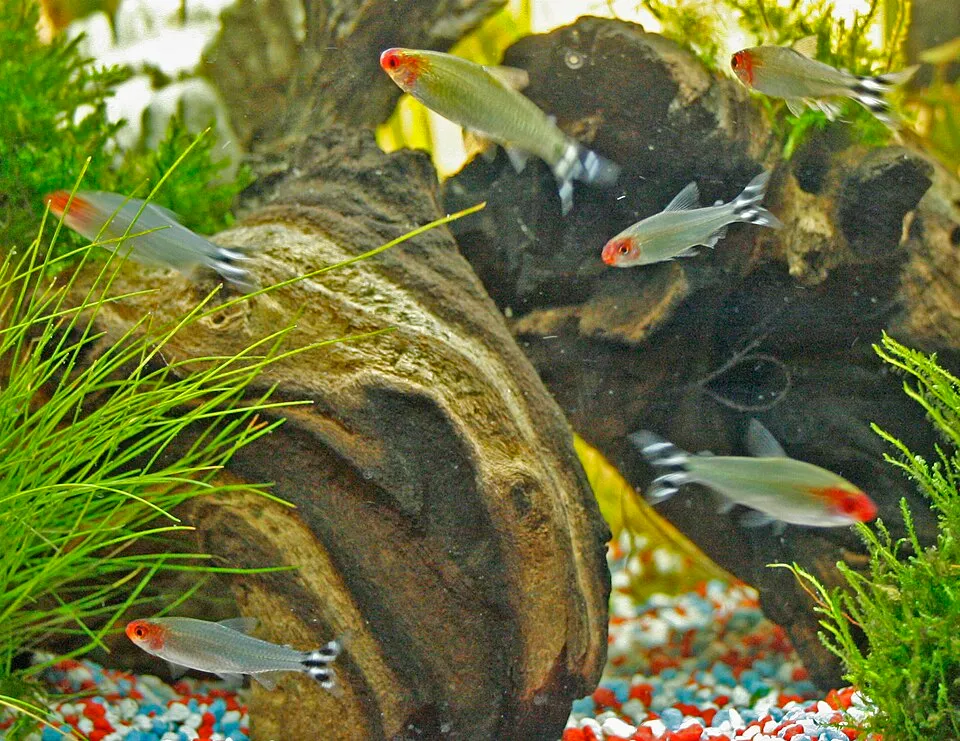
This is a characin in the family Characidae, reaching about 5 cm as an adult. The species is known for a bright red nose and a bold black-and-white striped tail. They are egg scatterers with no parental care, and eggs hatch in roughly a day to a day and a half. The IUCN lists them as Least Concern. Breeding them is difficult and needs very soft, acidic water.
Did you know
Rummy-nose tetras are one of the best schooling fish in the hobby for tightness. A healthy group moves and turns almost as a single unit, and the red nose works as a built-in health gauge, fading fast when water quality slips or the fish is stressed.
Weekly picks
Tank mates
Rummy-nose tetra is a peaceful, schooling species that keeps to the middle. These picks share a community profile with it, are safe together in both directions, and overlap on water type, temperature and pH.
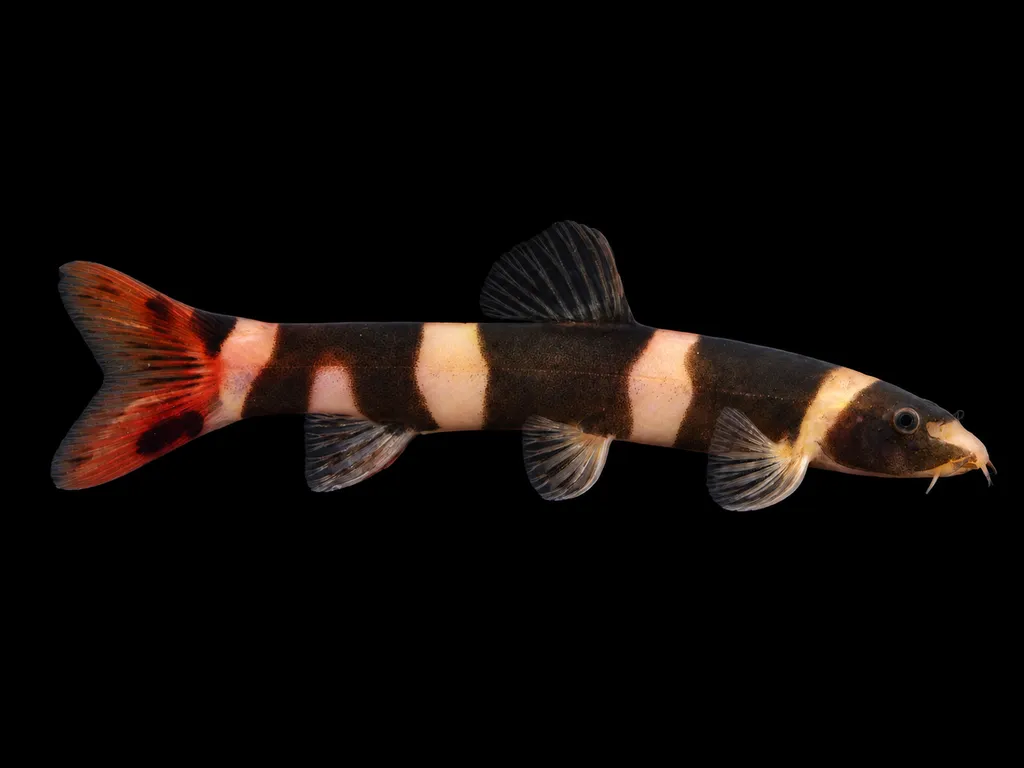
Barito loach
Kapuasia falaris
Freshwater2.6 in (6.5 cm) · 20 gal (75 L)73–81°F (23–27°C)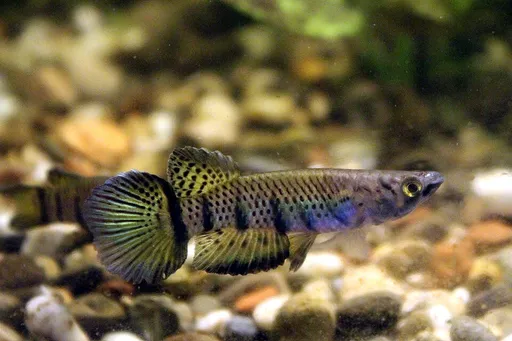
Six-barred panchax
Epiplatys sexfasciatus
Freshwater3.9 in (10 cm) · 20 gal (75 L)72–81°F (22–27°C)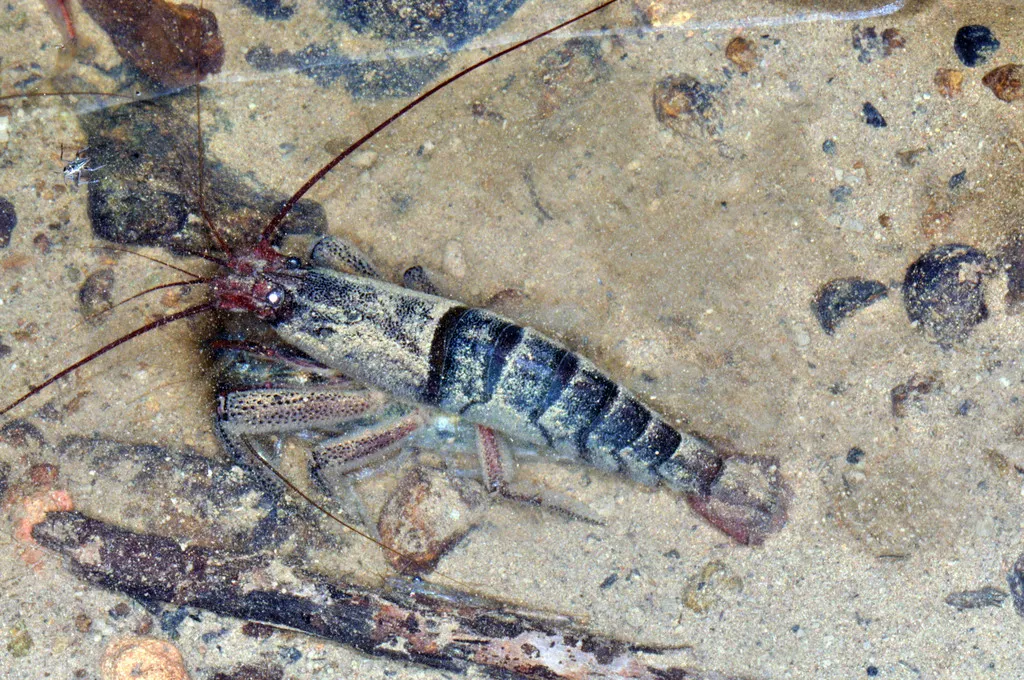
Marble wood shrimp
Atya scabra
Freshwater3.9 in (10 cm) · 20 gal (75 L)73–82°F (23–28°C)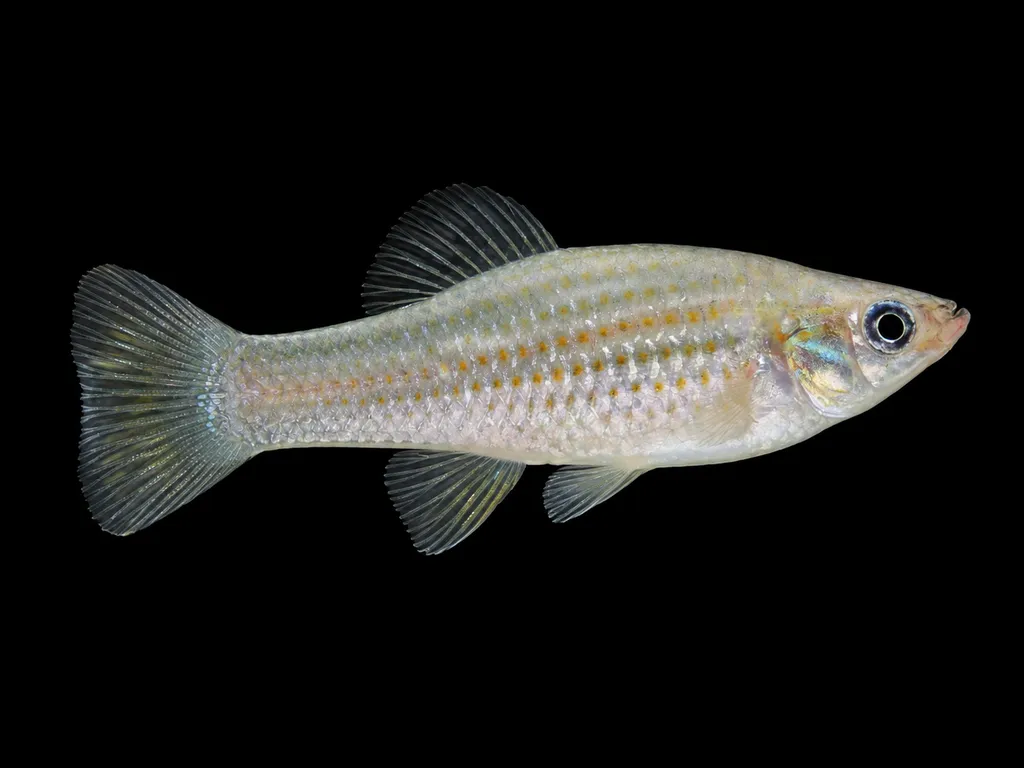
Amazon molly
Poecilia formosa
Freshwater3.5 in (9 cm) · 20 gal (75 L)68–82°F (20–28°C)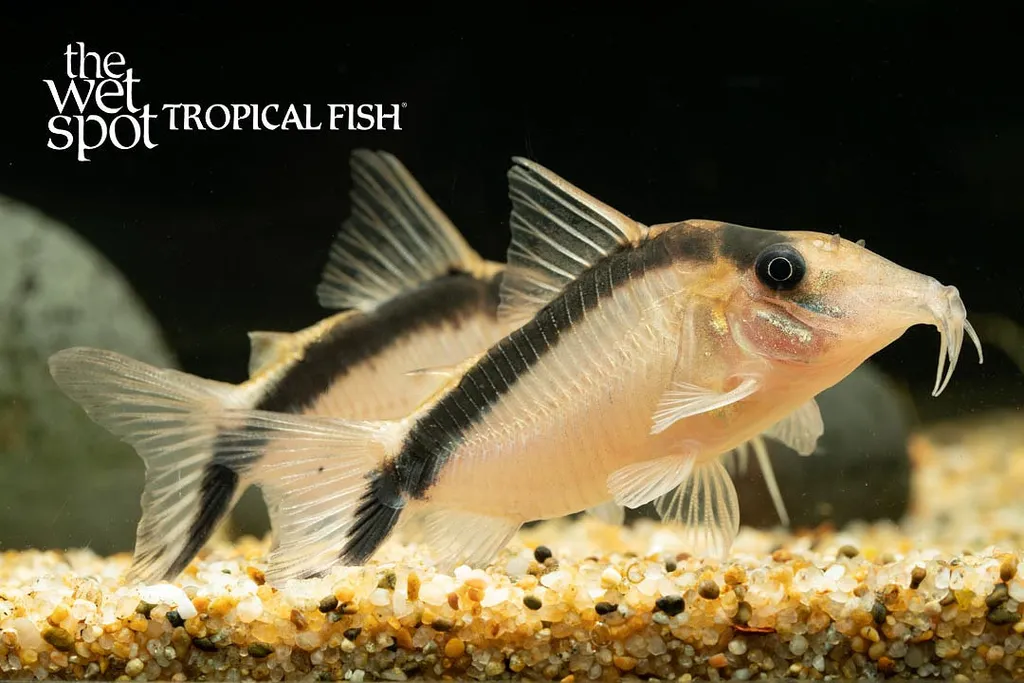
Bethan's cory
Brochis bethanae
Freshwater2.6 in (6.5 cm) · 20 gal (75 L)73–81°F (23–27°C)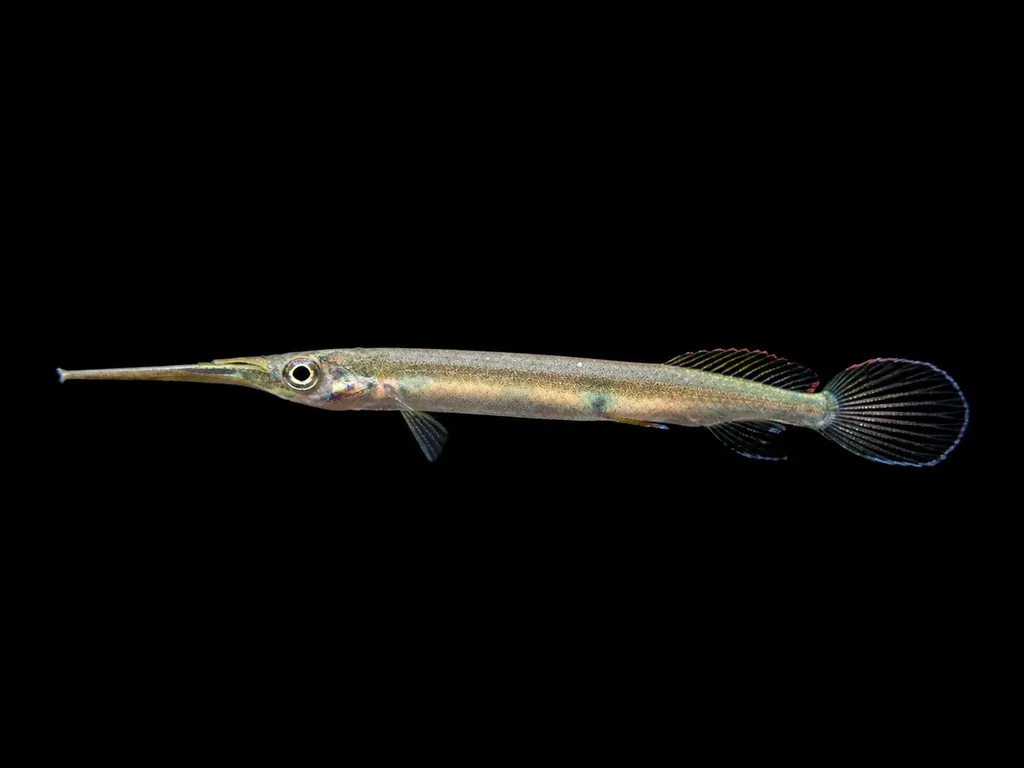
Kuekenthal's halfbeak
Hemirhamphodon kuekenthali
Freshwater3.3 in (8.5 cm) · 20 gal (75 L)73–81°F (23–27°C)
Common questions
What size tank does a Rummy-nose tetra need?
A Rummy-nose tetra needs at least 20 gal (75 L). It spends most of its time in the middle.
What temperature and pH does a Rummy-nose tetra need?
A Rummy-nose tetra is comfortable at 75–81°F (24–27°C) with a pH of 5.5–7.0.
How big does a Rummy-nose tetra get?
An adult Rummy-nose tetra reaches about 2 in (5 cm).
Does a Rummy-nose tetra need a group?
Yes. A Rummy-nose tetra is a schooling species and should be kept in a group, not singly.
Related species
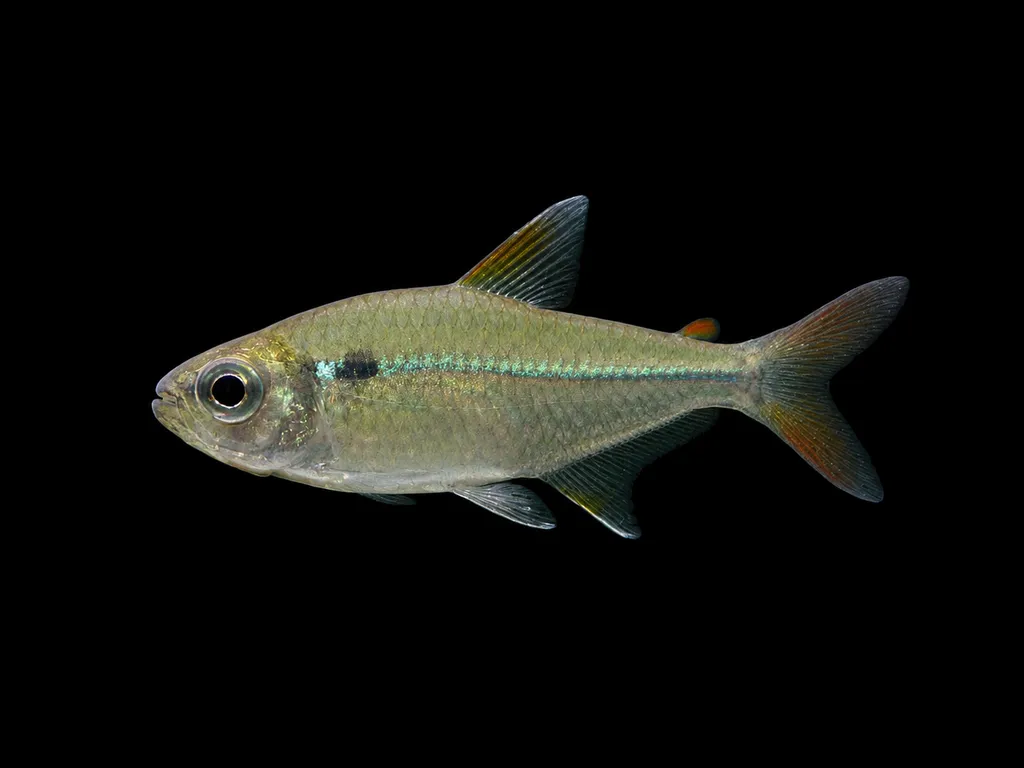 2 in (5 cm)20 gal (75 L)73–82°F (23–28°C)
Collett's tetra
Hemigrammus collettii
2 in (5 cm) · 20 gal (75 L)
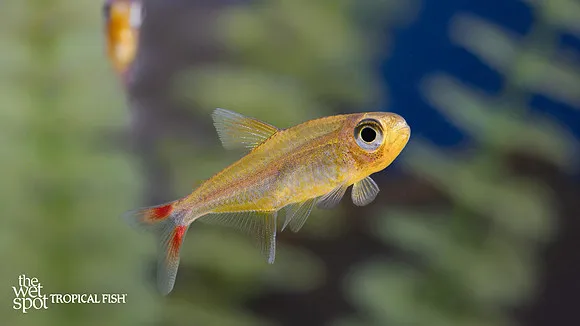 2 in (5 cm)20 gal (75 L)73–82°F (23–28°C)
Red flush tetra
Hemigrammus stictus
2 in (5 cm) · 20 gal (75 L)
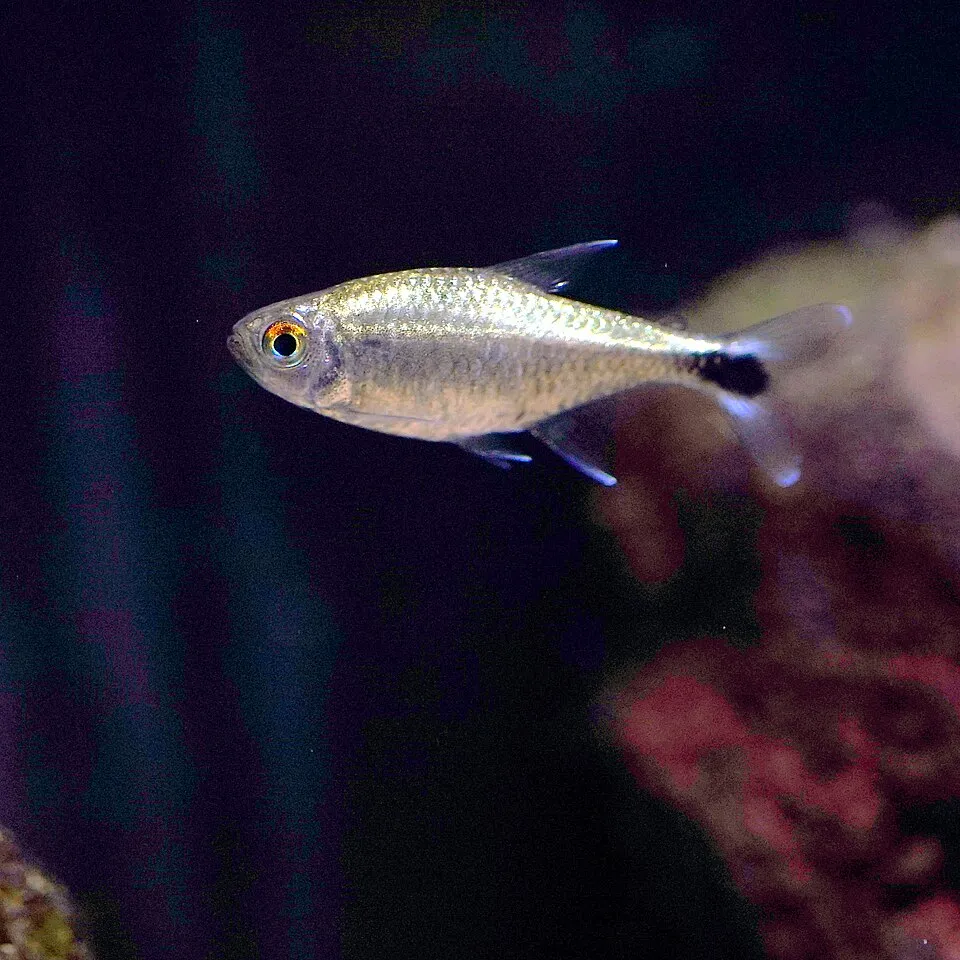 2.2 in (5.5 cm)20 gal (75 L)75–82°F (24–28°C)
Golden tetra
Hemigrammus rodwayi
2.2 in (5.5 cm) · 20 gal (75 L)
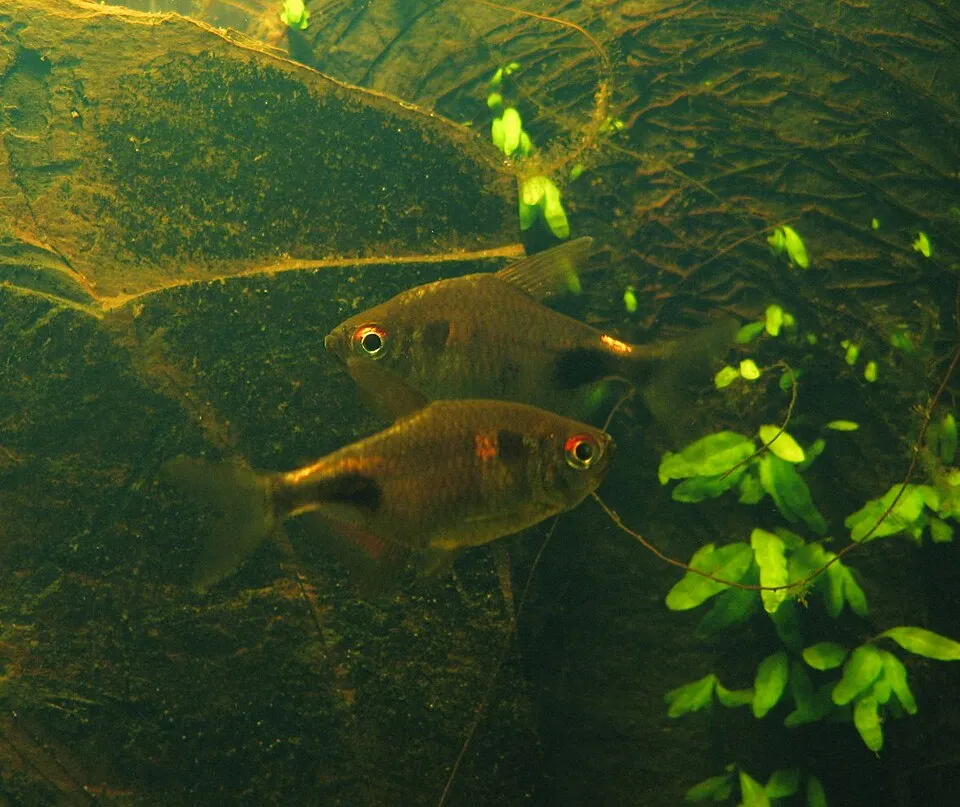 1.8 in (4.5 cm)20 gal (75 L)73–82°F (23–28°C)
Garnet tetra
Hemigrammus pulcher
1.8 in (4.5 cm) · 20 gal (75 L)
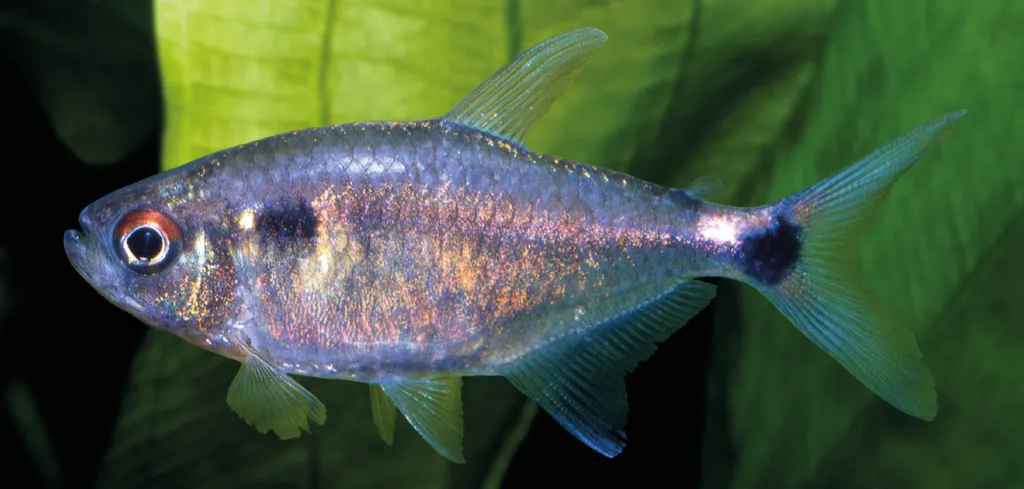 1.8 in (4.5 cm)17 gal (65 L)75–82°F (24–28°C)
Head-and-taillight tetra
Hemigrammus ocellifer
1.8 in (4.5 cm) · 17 gal (65 L)
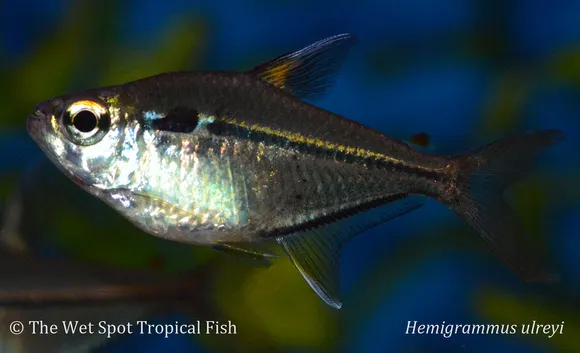 1.7 in (4.4 cm)20 gal (75 L)72–81°F (22–27°C)
Ulrey's tetra
Hemigrammus ulreyi
1.7 in (4.4 cm) · 20 gal (75 L)