Golden tetra
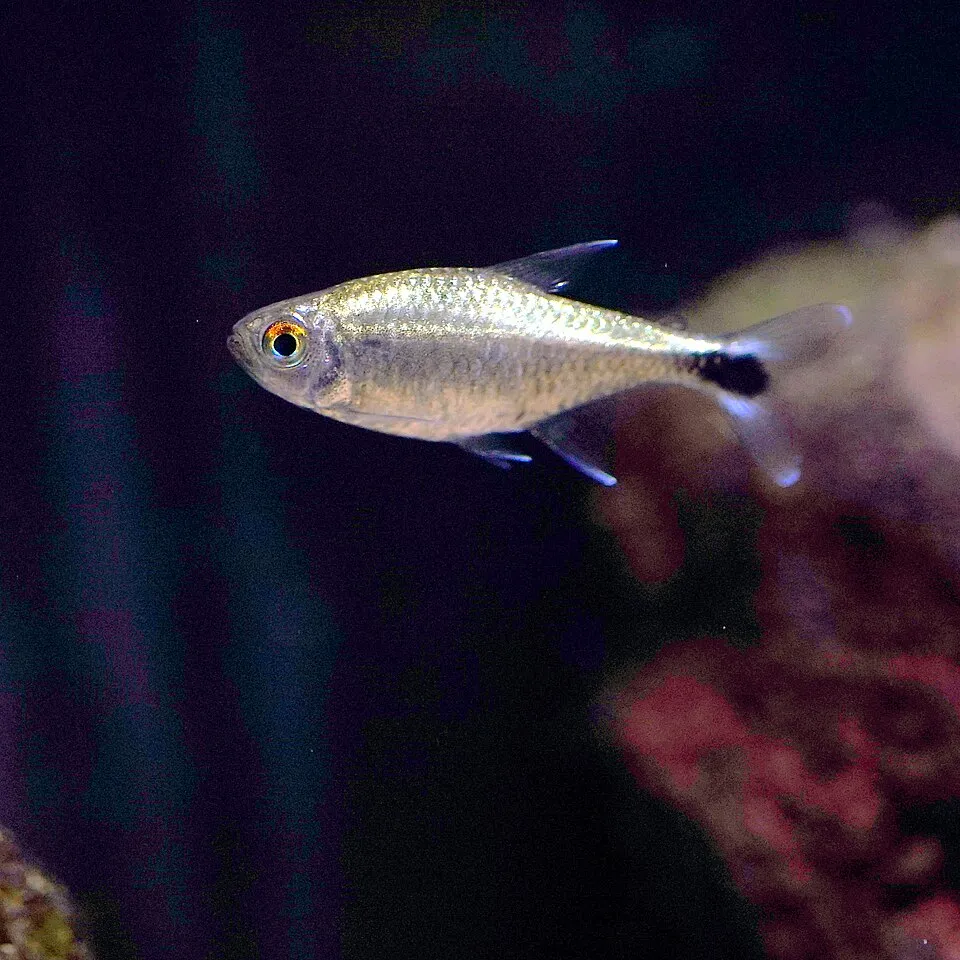
Hemigrammus rodwayi
Also known as Gold tetra, Guyanese gold tetra
FreshwaterFish
Care at a glance
- Temperature
- 75–82°F
- 24–28°C
- pH
- 5.5–7.5
- Adult size
- 2.2 in
- 5.5 cm
- Minimum tank
- 20 gal
- 75 L
- Temperament
- Peaceful
- Social behavior
- Schooling
- Swim level
- Middle
- Difficulty
- Medium
- Breeding
- Hard
- Rarity
- Rare
- Family
- Characidae
- Origin
- The Guianas, Peru, Brazil
Overview
The golden tetra is a peaceful shoaling fish best kept in a group of at least six, which keeps it confident and shows off its bright sides. It swims mostly in the middle of the tank and gets along easily with other small, calm community fish, plants, and gentle bottom dwellers. Give it a well-planted tank with some shade and open water to school in. It is an easy eater that does well on a quality flake rounded out with small frozen and live foods such as daphnia, brine shrimp, and bloodworm. A tank of around 75 liters or larger gives a group room to move.
In the wild
Golden tetras come from the coastal drainages of the Guianas and on into parts of Peru and Brazil, living in slow, soft, tannin-stained creeks and forest pools. Warm, gentle water suits them, so aim for 24 to 28 C with a pH from about 5.5 to 7.5 and soft to moderate hardness. A dark substrate, driftwood, dried leaves, and some floating cover mimic their shaded home and settle the fish, while a mature planted layout gives the shoal both cover and room to swim.
Good to know
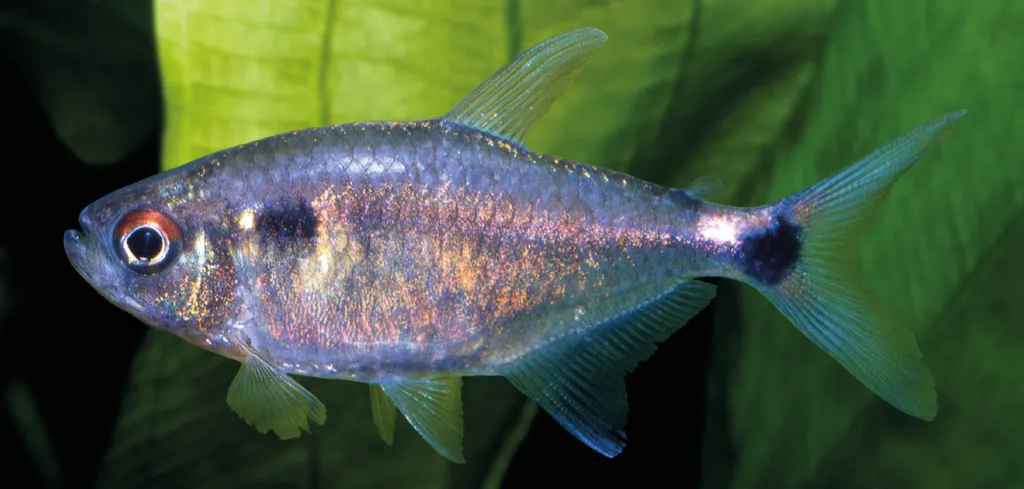
The golden tetra belongs to Characidae, the American tetra family, and is a small, slim fish of about 5 to 6 cm. Wild fish carry a bright metallic gold sheen, while tank-bred ones are a plainer silver, a difference explained by biology rather than genetics. It is an egg-scattering species with no parental care and is regarded as hard to breed reliably in the aquarium, needing soft, acidic, dimly lit conditions to trigger spawning. Most golden colour seen in shops comes from wild-caught stock.
Did you know
The gold that gives this tetra its name is not really its own colour. In the wild it is caused by a skin reaction to a trematode parasite, which makes the fish lay down a golden layer of guanine as a defence. Tank-bred golden tetras never meet the parasite, so they stay a simple silver and lack the shine.
Weekly picks
Tank mates
Golden tetra is a peaceful, schooling species that keeps to the middle. These picks share a community profile with it, are safe together in both directions, and overlap on water type, temperature and pH.
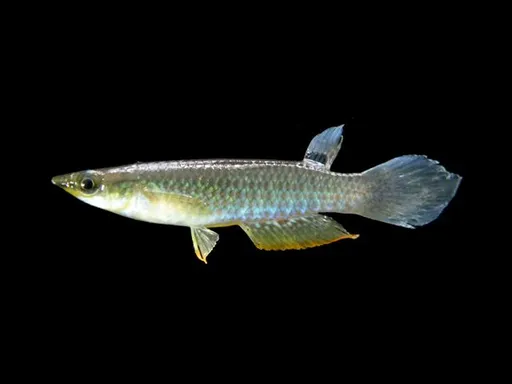
Blue panchax
Aplocheilus panchax
Freshwater3.5 in (9 cm) · 20 gal (75 L)72–82°F (22–28°C)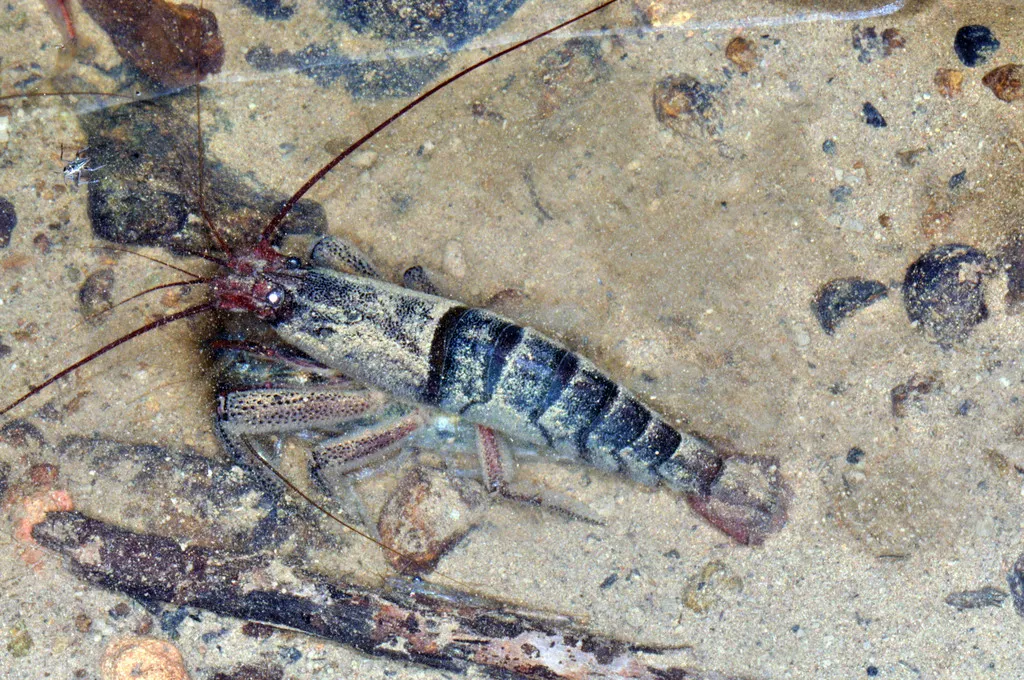
Marble wood shrimp
Atya scabra
Freshwater3.9 in (10 cm) · 20 gal (75 L)73–82°F (23–28°C)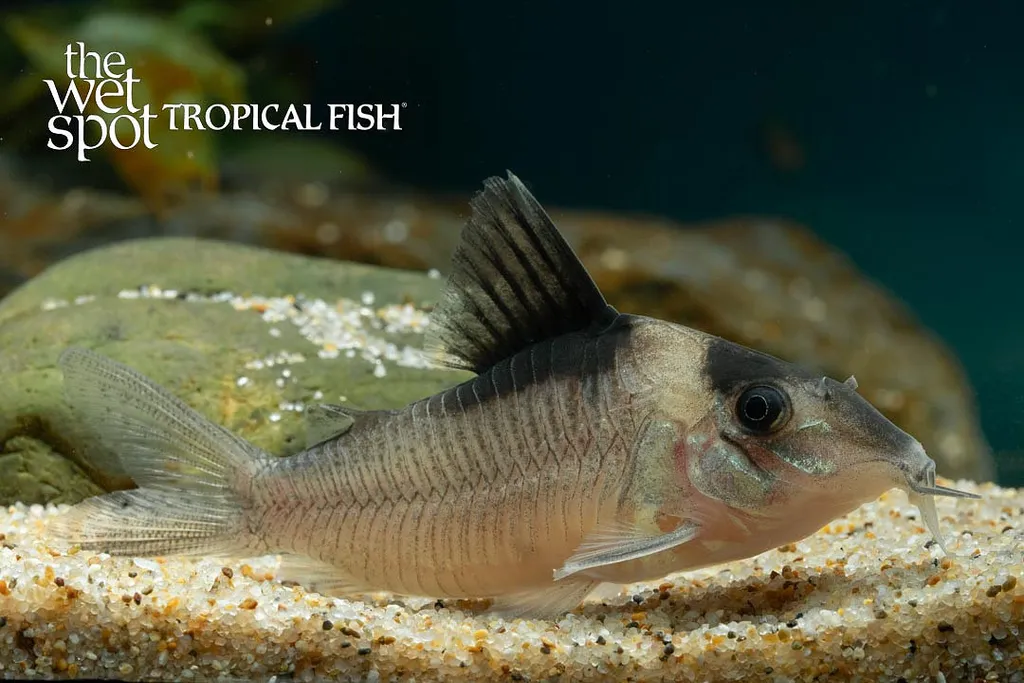
Amanda Jane's cory
Brochis amandajanea
Freshwater2.6 in (6.5 cm) · 20 gal (75 L)75–82°F (24–28°C)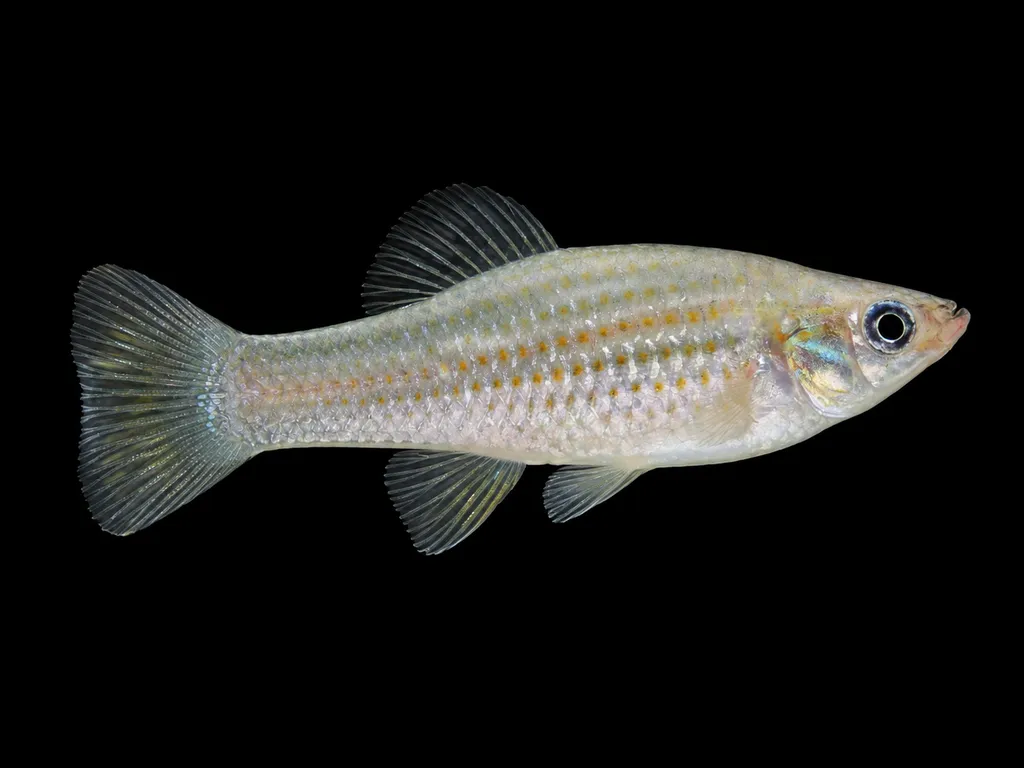
Amazon molly
Poecilia formosa
Freshwater3.5 in (9 cm) · 20 gal (75 L)68–82°F (20–28°C)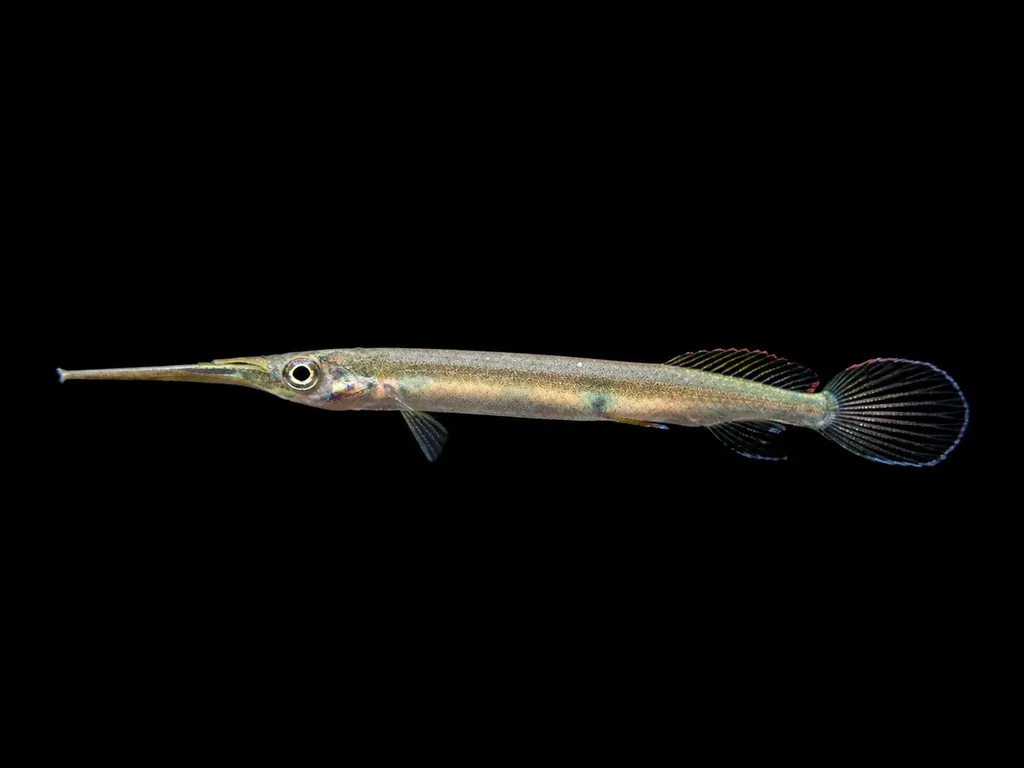
Kuekenthal's halfbeak
Hemirhamphodon kuekenthali
Freshwater3.3 in (8.5 cm) · 20 gal (75 L)73–81°F (23–27°C)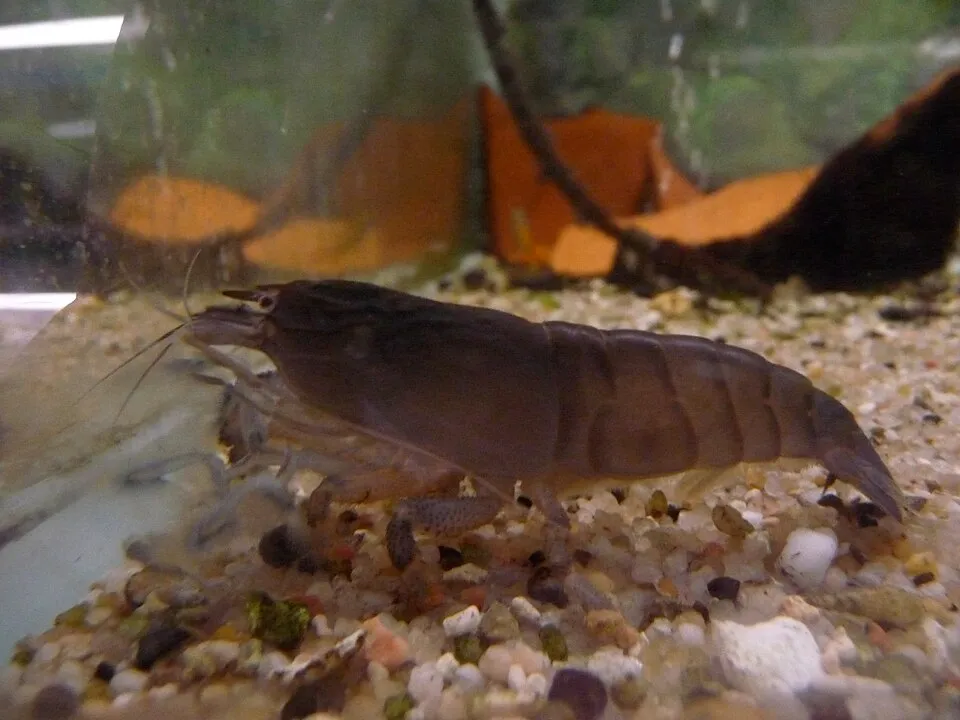
Vampire shrimp
Atya gabonensis
Freshwater5.1 in (13 cm) · 20 gal (75 L)75–82°F (24–28°C)
Common questions
What size tank does a Golden tetra need?
A Golden tetra needs at least 20 gal (75 L). It spends most of its time in the middle.
What temperature and pH does a Golden tetra need?
A Golden tetra is comfortable at 75–82°F (24–28°C) with a pH of 5.5–7.5.
How big does a Golden tetra get?
An adult Golden tetra reaches about 2.2 in (5.5 cm).
Does a Golden tetra need a group?
Yes. A Golden tetra is a schooling species and should be kept in a group, not singly.
Related species
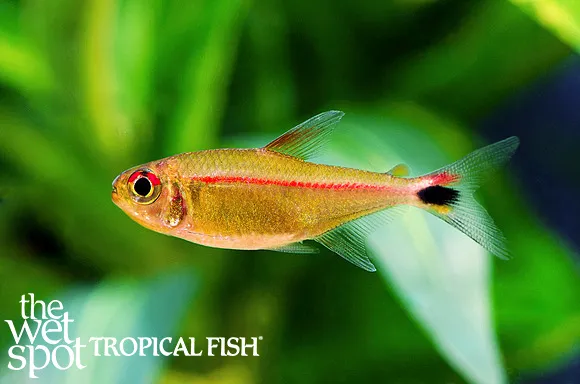 2.4 in (6 cm)20 gal (75 L)73–82°F (23–28°C)
Redstripe hemigrammus
Hemigrammus rubrostriatus
2.4 in (6 cm) · 20 gal (75 L)
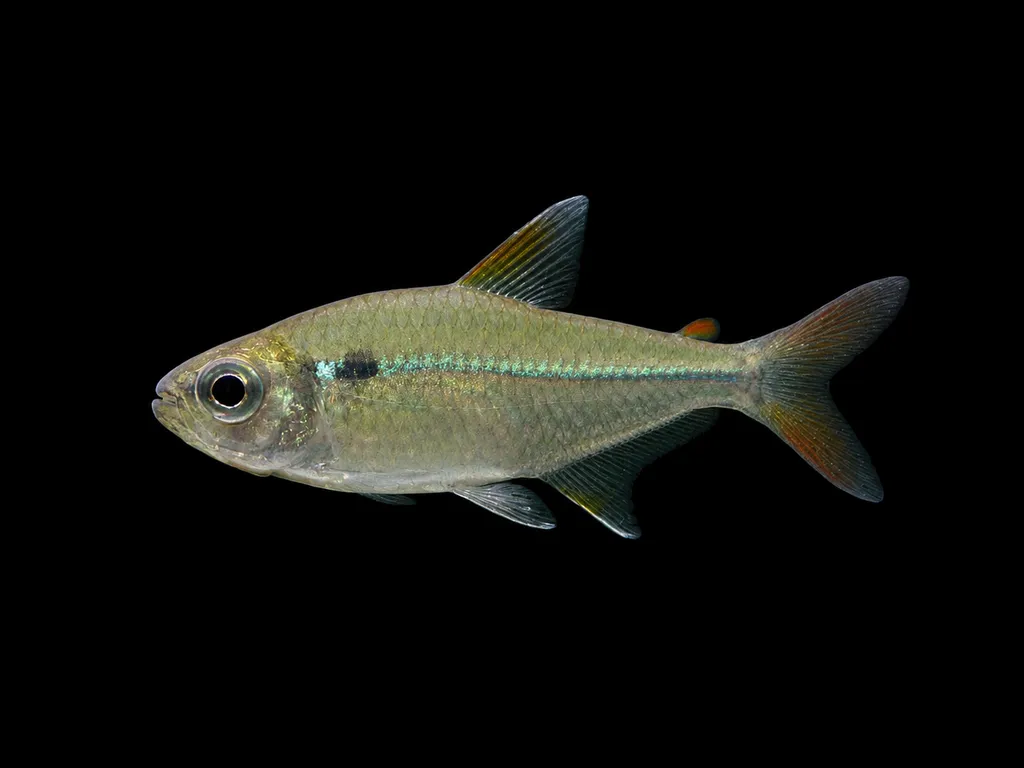 2 in (5 cm)20 gal (75 L)73–82°F (23–28°C)
Collett's tetra
Hemigrammus collettii
2 in (5 cm) · 20 gal (75 L)
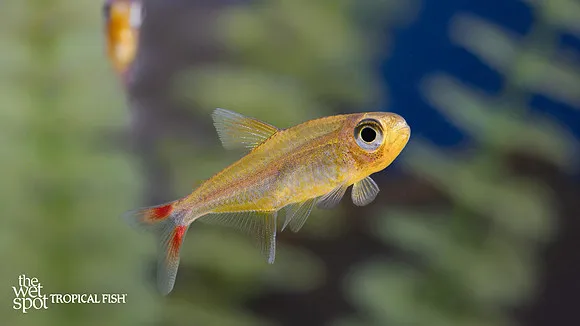 2 in (5 cm)20 gal (75 L)73–82°F (23–28°C)
Red flush tetra
Hemigrammus stictus
2 in (5 cm) · 20 gal (75 L)
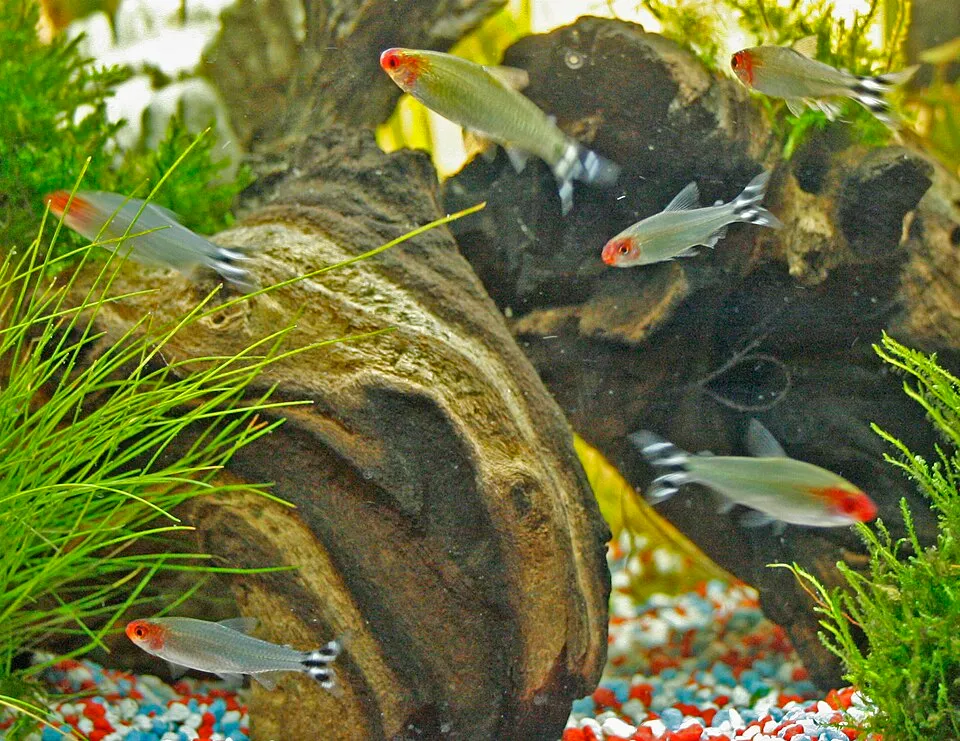 2 in (5 cm)20 gal (75 L)75–81°F (24–27°C)
Rummy-nose tetra
Hemigrammus rhodostomus
2 in (5 cm) · 20 gal (75 L)
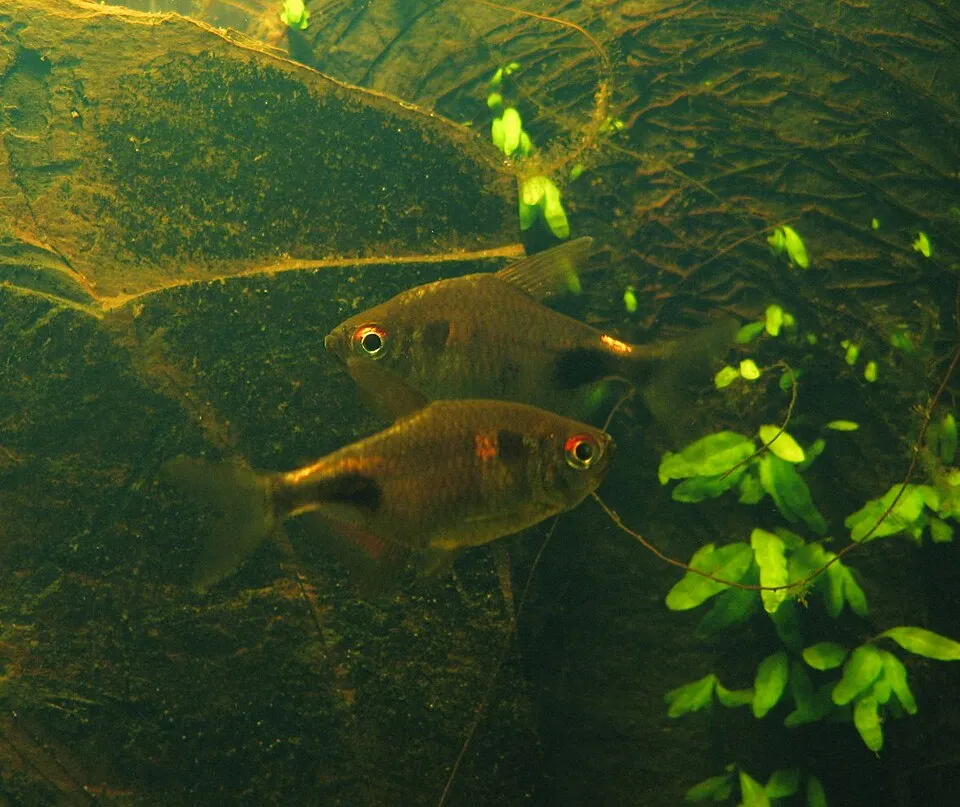 1.8 in (4.5 cm)20 gal (75 L)73–82°F (23–28°C)
Garnet tetra
Hemigrammus pulcher
1.8 in (4.5 cm) · 20 gal (75 L)
 1.8 in (4.5 cm)17 gal (65 L)75–82°F (24–28°C)
Head-and-taillight tetra
Hemigrammus ocellifer
1.8 in (4.5 cm) · 17 gal (65 L)