Garnet tetra
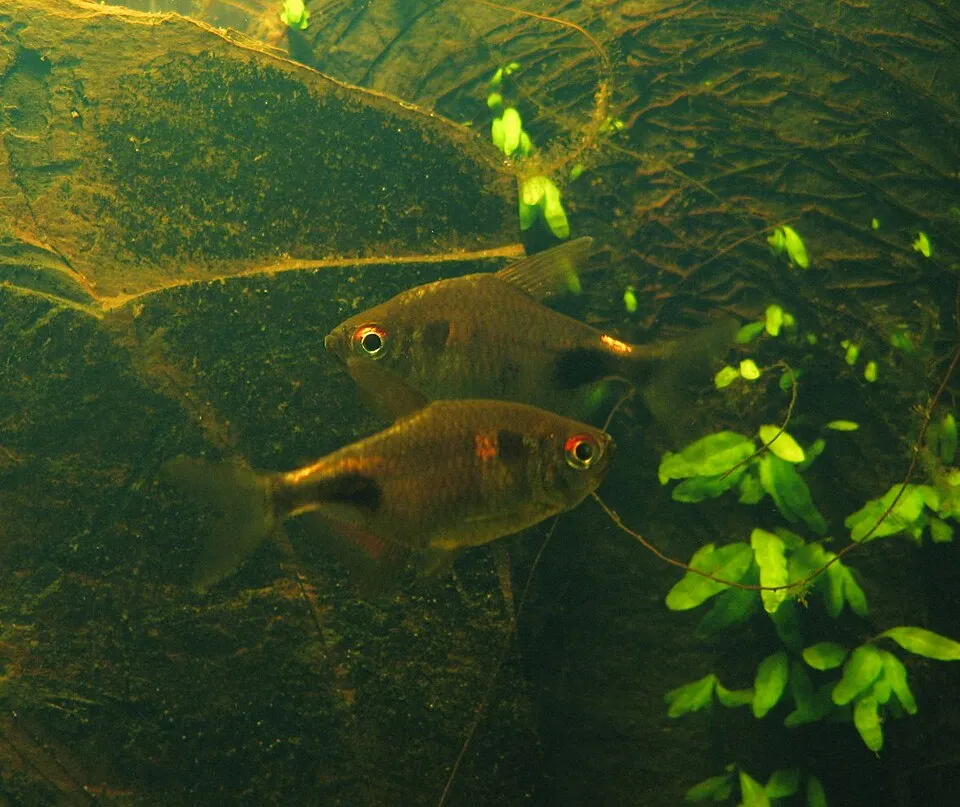
Hemigrammus pulcher
Also known as pretty tetra
FreshwaterFish
Care at a glance
- Temperature
- 73–82°F
- 23–28°C
- pH
- 5.0–7.0
- Adult size
- 1.8 in
- 4.5 cm
- Minimum tank
- 20 gal
- 75 L
- Temperament
- Peaceful
- Social behavior
- Schooling
- Swim level
- Middle
- Difficulty
- Easy
- Breeding
- Hard
- Rarity
- Rare
- Family
- Characidae
- Origin
- Peru
Overview
Keep them in a school of six or more in a tank of about 75 liters. They are peaceful mid-water swimmers that look and behave best in a group and mix well with other small, calm fish. Aim for warm water in the mid 20s C and a low pH between 5 and 7. Feed flake, small pellets, and occasional frozen bloodworms or daphnia. Soft, slightly acidic water suits them best.
In the wild
Garnet tetras come from the Amazon basin in Peru and nearby waters, living in slow blackwater streams stained brown with tannins. That water is soft, warm, and acidic, with leaf litter and submerged plants for cover. Match it with a dim, planted tank, a sandy bottom, and some leaves or wood to lower the pH and tint the water. They show their best color over a dark setup.
Good to know
Hemigrammus pulcher is a characin in the family Characidae, reaching about 4.5 cm. Like most tetras it is an egg scatterer with no parental care, and breeding is difficult to manage in a tank. The species was first described by Ladiges in 1938, and the name pulcher means beautiful in Latin. It is listed as Least Concern, with stable wild populations.
Did you know
The color that gives the garnet tetra its name shifts with the light and the background. Over a dark substrate with tannin-stained water the deep red-gold really shows, while in a bright bare tank the same fish can look washed out. It is a good reminder that setup, not just the fish, decides how a tetra looks.
Weekly picks
Tank mates
Garnet tetra is a peaceful, schooling species that keeps to the middle. These picks share a community profile with it, are safe together in both directions, and overlap on water type, temperature and pH.
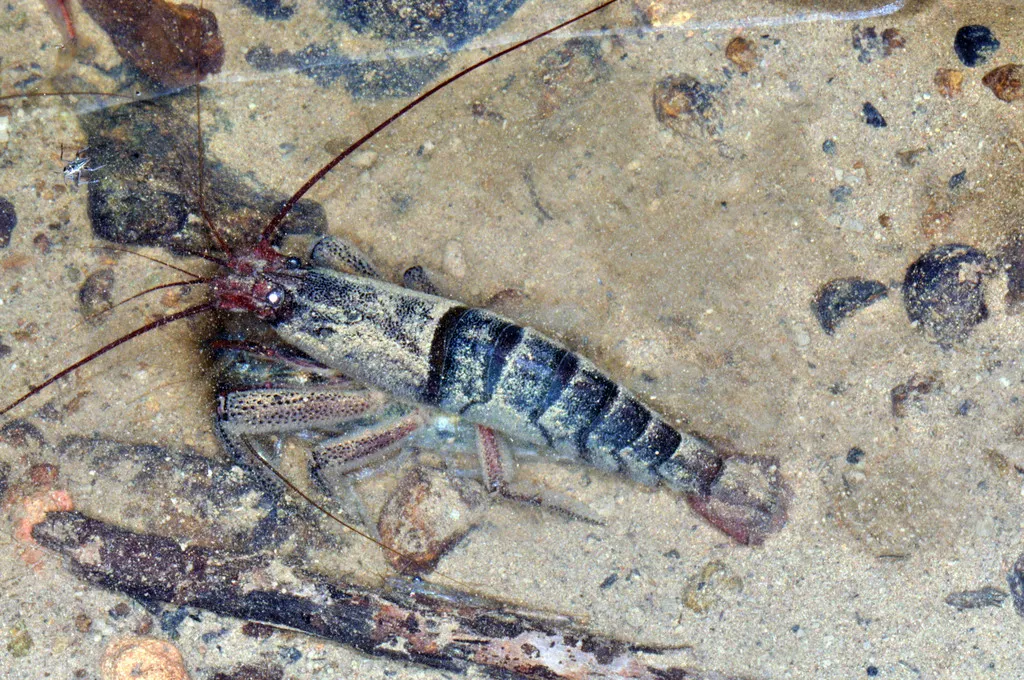
Marble wood shrimp
Atya scabra
Freshwater3.9 in (10 cm) · 20 gal (75 L)73–82°F (23–28°C)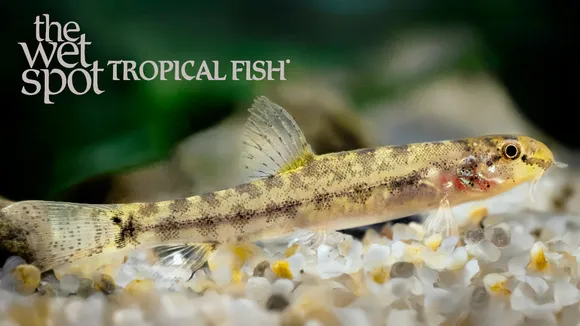
Forktail spiny loach
Lepidocephalichthys furcatus
Freshwater2.4 in (6 cm) · 20 gal (75 L)73–82°F (23–28°C)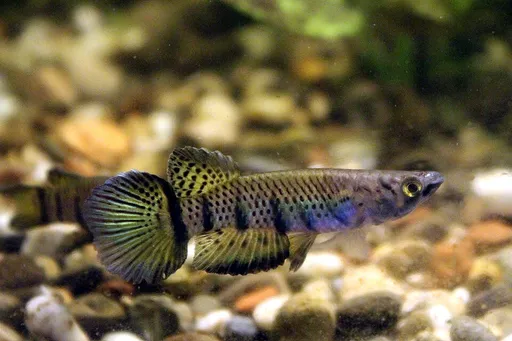
Six-barred panchax
Epiplatys sexfasciatus
Freshwater3.9 in (10 cm) · 20 gal (75 L)72–81°F (22–27°C)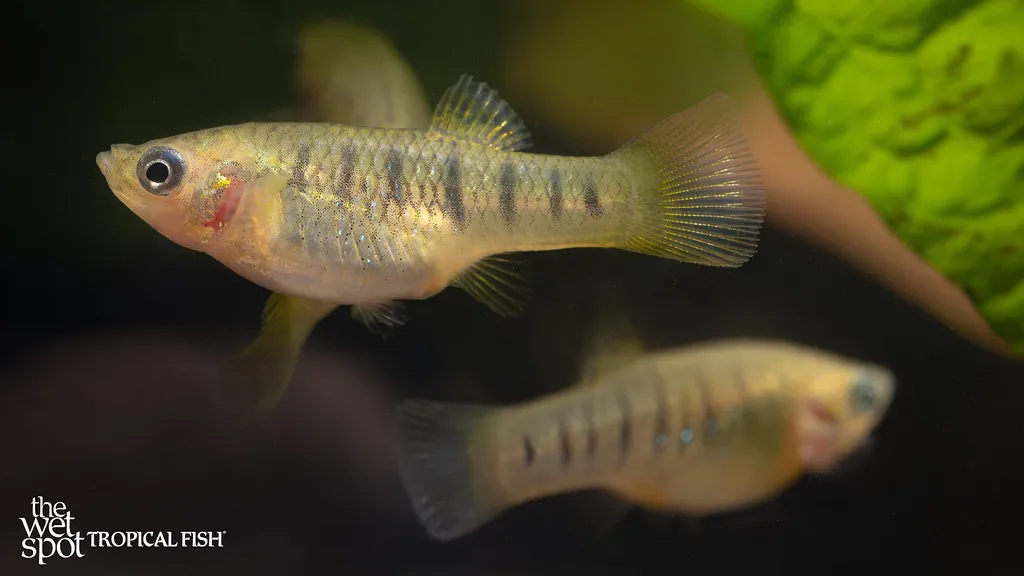
Humpbacked limia
Limia nigrofasciata
Freshwater2.4 in (6 cm) · 20 gal (75 L)72–82°F (22–28°C)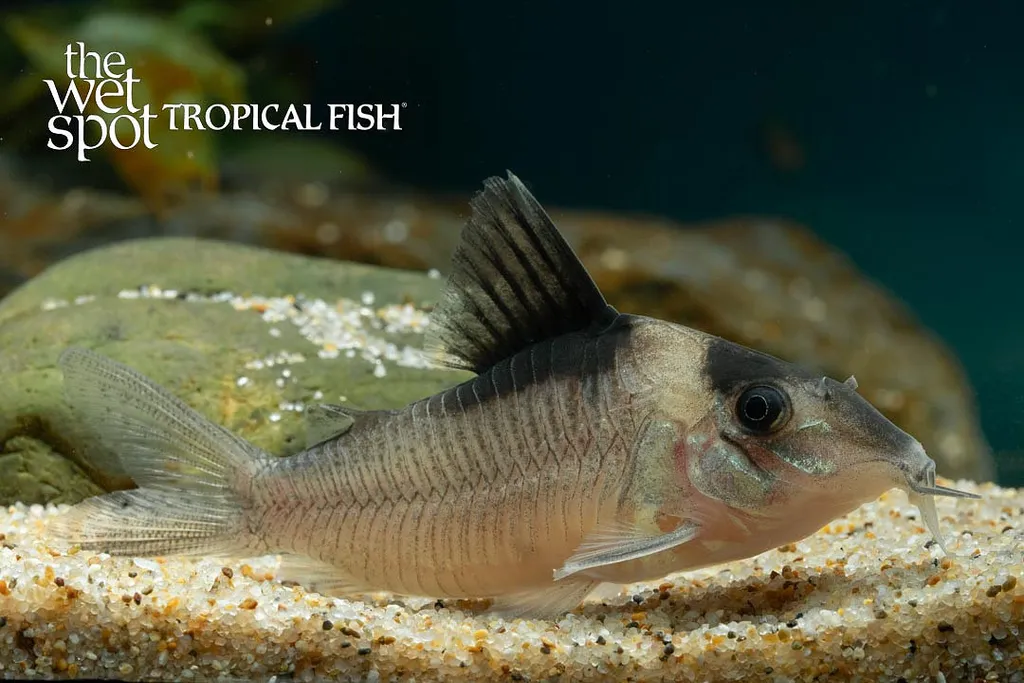
Amanda Jane's cory
Brochis amandajanea
Freshwater2.6 in (6.5 cm) · 20 gal (75 L)75–82°F (24–28°C)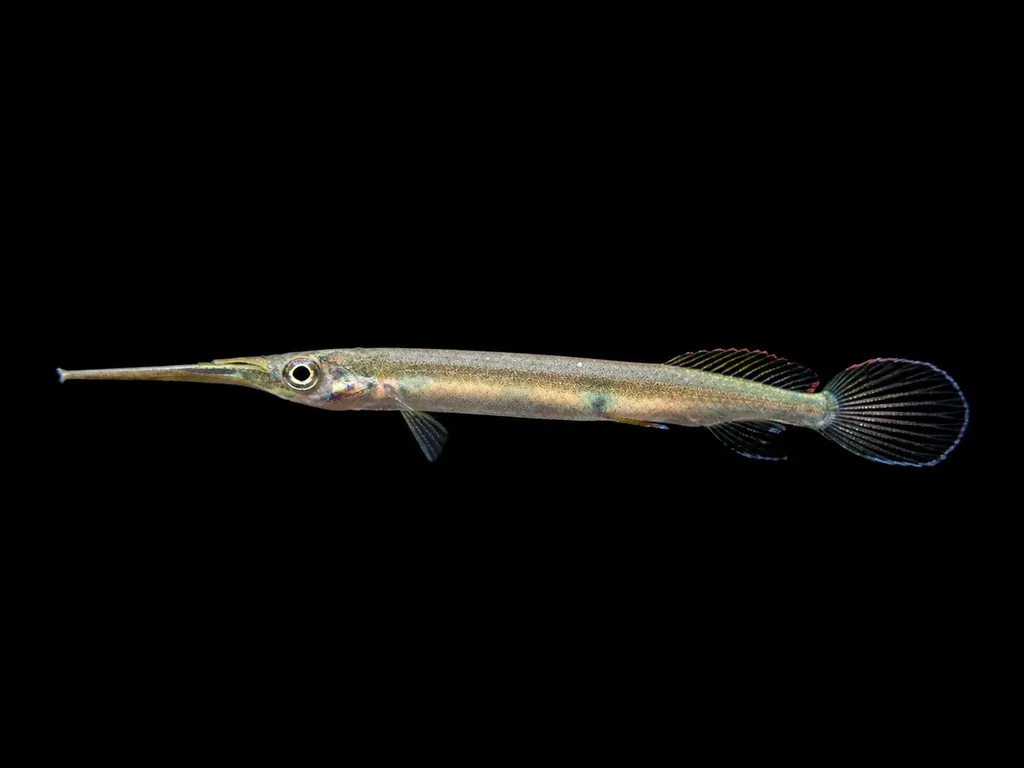
Kuekenthal's halfbeak
Hemirhamphodon kuekenthali
Freshwater3.3 in (8.5 cm) · 20 gal (75 L)73–81°F (23–27°C)
Common questions
What size tank does a Garnet tetra need?
A Garnet tetra needs at least 20 gal (75 L). It spends most of its time in the middle.
What temperature and pH does a Garnet tetra need?
A Garnet tetra is comfortable at 73–82°F (23–28°C) with a pH of 5.0–7.0.
How big does a Garnet tetra get?
An adult Garnet tetra reaches about 1.8 in (4.5 cm).
Does a Garnet tetra need a group?
Yes. A Garnet tetra is a schooling species and should be kept in a group, not singly.
Related species
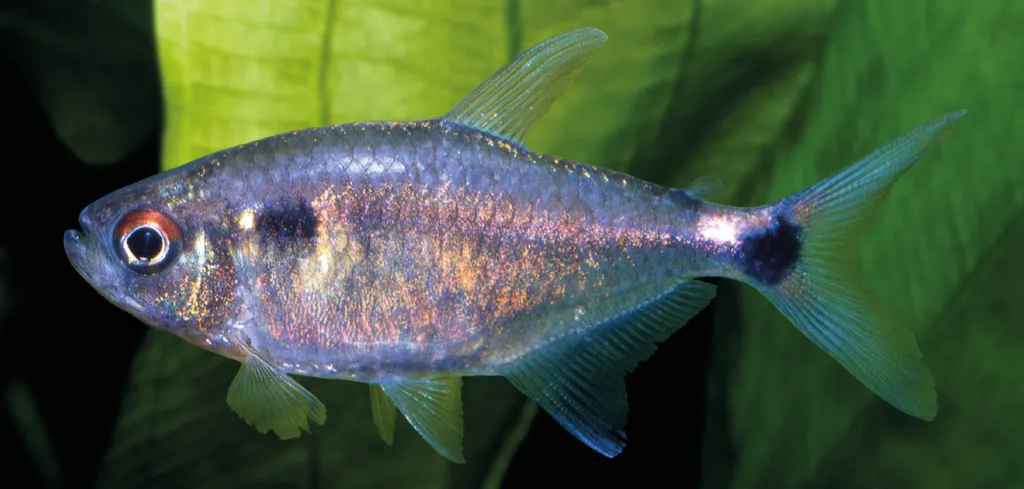 1.8 in (4.5 cm)17 gal (65 L)75–82°F (24–28°C)
Head-and-taillight tetra
Hemigrammus ocellifer
1.8 in (4.5 cm) · 17 gal (65 L)
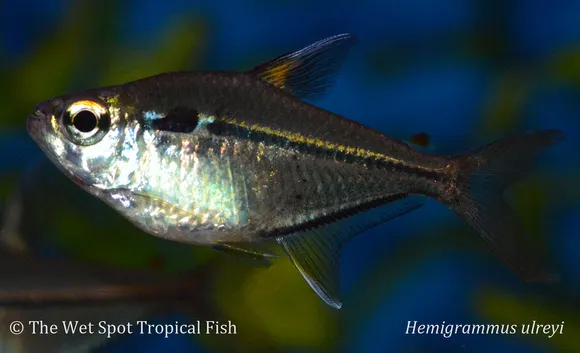 1.7 in (4.4 cm)20 gal (75 L)72–81°F (22–27°C)
Ulrey's tetra
Hemigrammus ulreyi
1.7 in (4.4 cm) · 20 gal (75 L)
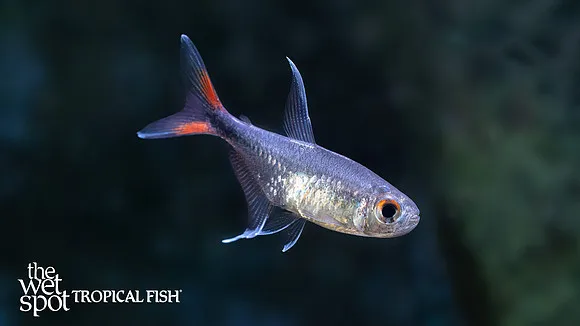 1.7 in (4.3 cm)20 gal (75 L)75–82°F (24–28°C)
Filament tetra
Hemigrammus filamentosus
1.7 in (4.3 cm) · 20 gal (75 L)
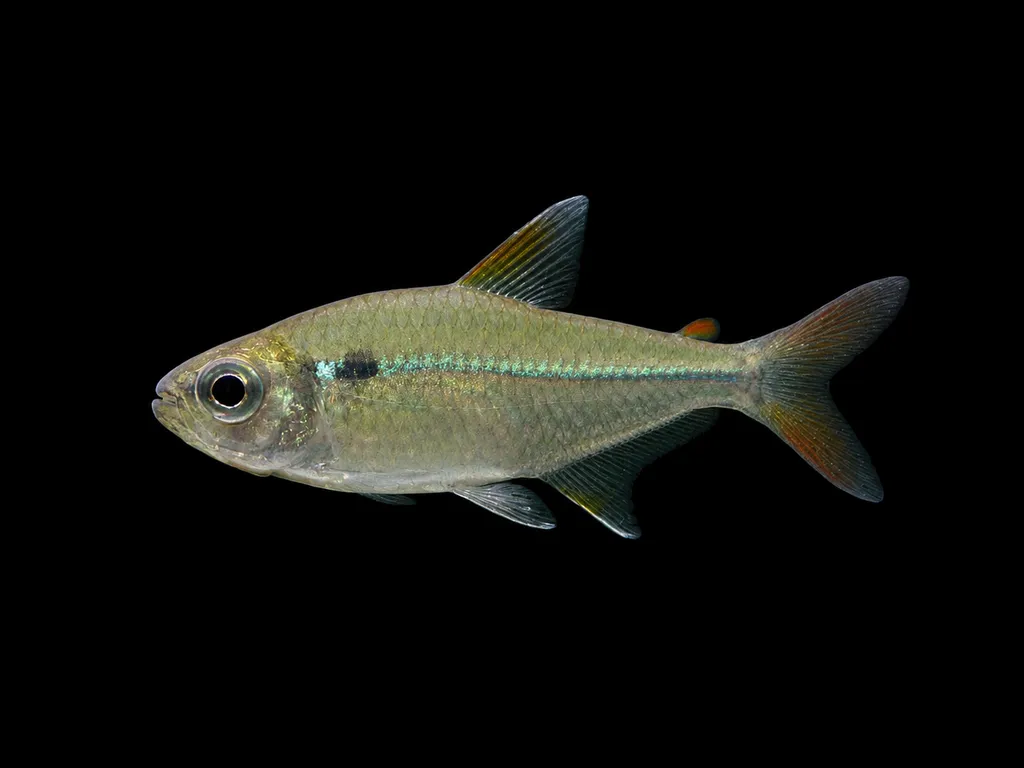 2 in (5 cm)20 gal (75 L)73–82°F (23–28°C)
Collett's tetra
Hemigrammus collettii
2 in (5 cm) · 20 gal (75 L)
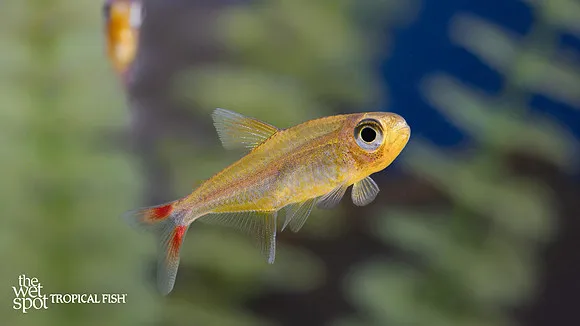 2 in (5 cm)20 gal (75 L)73–82°F (23–28°C)
Red flush tetra
Hemigrammus stictus
2 in (5 cm) · 20 gal (75 L)
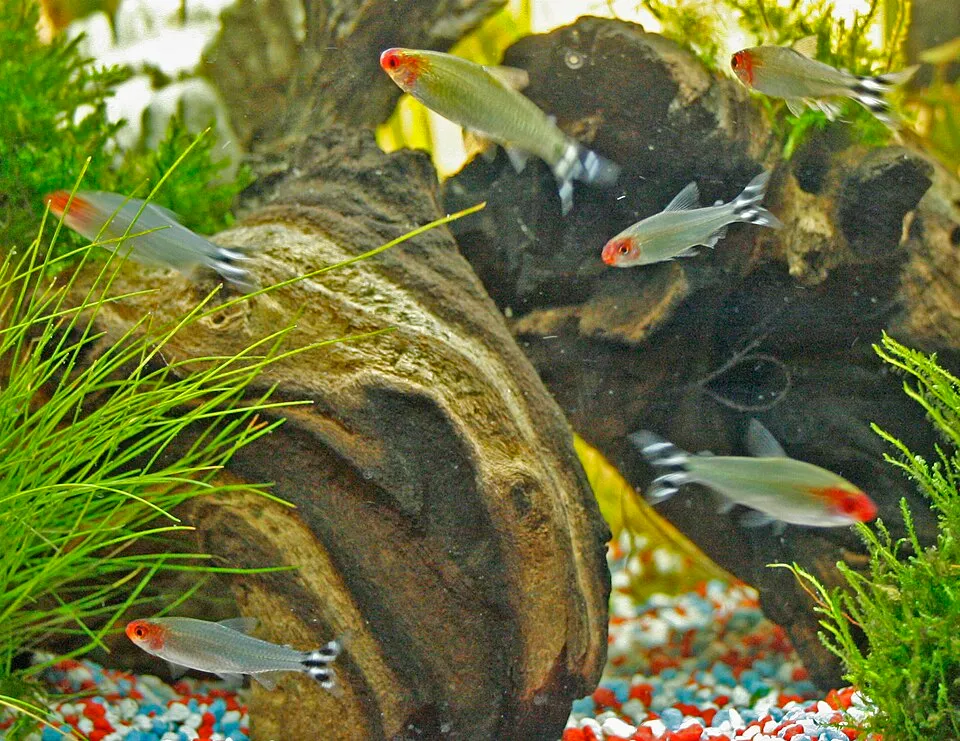 2 in (5 cm)20 gal (75 L)75–81°F (24–27°C)
Rummy-nose tetra
Hemigrammus rhodostomus
2 in (5 cm) · 20 gal (75 L)