Pufferfish
Pufferfish are smart, curious and usually best kept alone, since most nip fins and many turn on tankmates. They span fresh, brackish and salt water, and nearly all need hard-shelled food like snails to wear down teeth that never stop growing. Each profile lists tank size, diet and temperament.
At a glance
- Tank size
- 14–396 gal
- 14 gal (54 L) to 396 gal (1,500 L); half the list needs 32 gal (120 L) or more
- Temperature
- 75–82°F
- 24–28°C, most of the list
- pH
- 6.5–7.5
- Most of the list
- Difficulty
- 23 medium
- 8 difficult
- Temperament
- 1 peaceful
- 11 mostly peaceful · 19 aggressive
- Reef safety
- 2 reef safe with caution
- 6 not reef safe
31 species
The small freshwater puffers
The dwarf pufferfish is the one most people mean when they say pea puffer: an inch and a half (3.5 cm) fully grown, a 15 gallon (55 liter) tank, and the rare puffer that lives in a shoal. The red-tail dwarf puffer is the calm one, the only row here marked peaceful, and the red-eye puffers are dwarf puffers with attitude, best kept alone in their own 14 gallon (54 liter) tank. All of them hunt snails, and all of them will nip long fins.
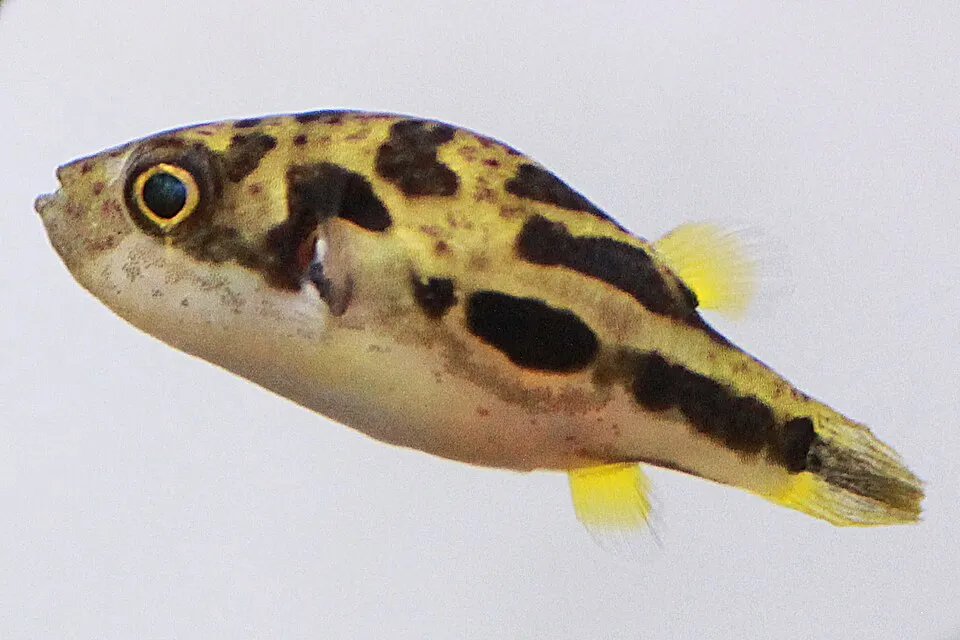
Dwarf pufferfish
Carinotetraodon travancoricus
Freshwater- Size
- 1.4 in (3.5 cm)
- Tank
- 15 gal (55 L)
- Water
- 72–82°F (22–28°C)
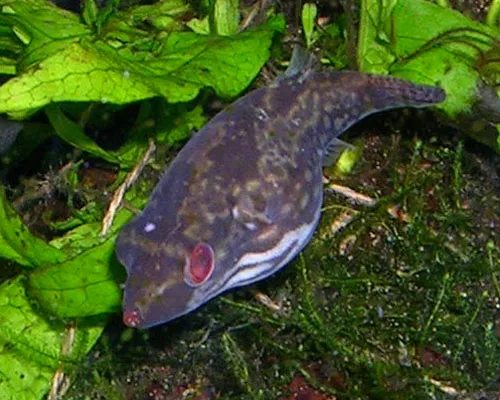
Red-tail dwarf puffer
Carinotetraodon irrubesco
Freshwater- Size
- 1.8 in (4.5 cm)
- Tank
- 17 gal (65 L)
- Water
- 72–82°F (22–28°C)
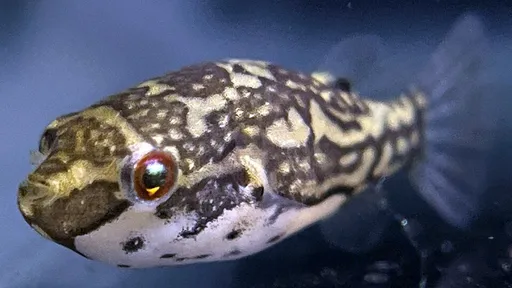
Redeye puffer
Carinotetraodon lorteti
Freshwater- Size
- 2.4 in (6 cm)
- Tank
- 14 gal (54 L)
- Water
- 75–82°F (24–28°C)
The ones that get big
The mbu puffer reaches 26 inches (67 cm) and lists a 396 gallon (1,500 liter) tank, the fahaka 18 inches (45 cm) in 119 gallons (450 liters). On the marine side the map, guineafowl and stars-and-stripes puffers pass 20 inches (50 cm) and want 180 gallons (680 liters) and up, and even the dogface and porcupine puffers need 150 gallons (570 liters) or more. They are sold as coin-sized babies with faces that make people buy them. Read the adult size first.
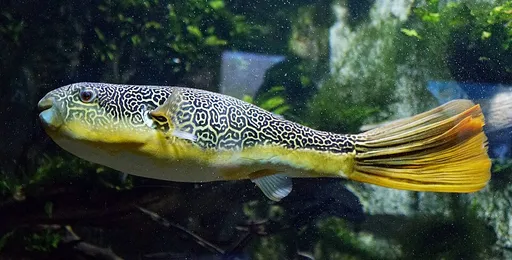
Mbu puffer
Tetraodon mbu
Freshwater26.4 in (67 cm) · 396 gal (1,500 L)75–82°F (24–28°C)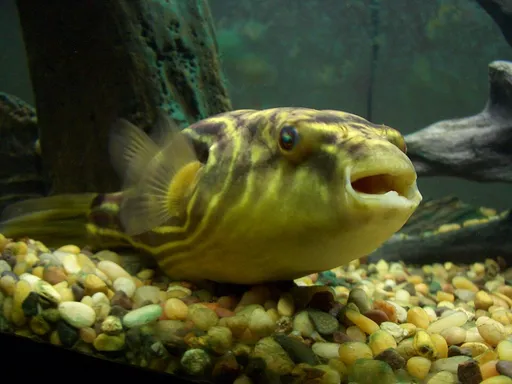
Fahaka puffer
Tetraodon lineatus
Freshwater17.7 in (45 cm) · 119 gal (450 L)75–82°F (24–28°C)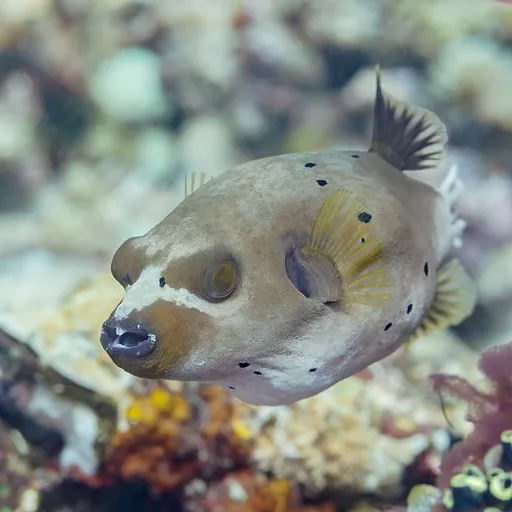
Dogface puffer
Arothron nigropunctatus
Saltwater13 in (33 cm) · 151 gal (570 L)75–81°F (24–27°C)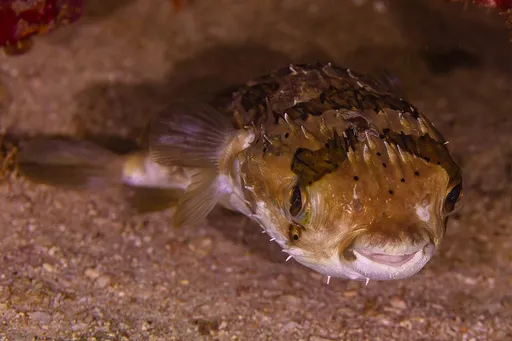
Porcupine puffer
Diodon holocanthus
Saltwater11.8 in (30 cm) · 180 gal (680 L)75–81°F (24–27°C)
Brackish puffers
Three rows straddle the water types. The figure eight puffer is happy in fresh or light brackish water, stays around 3 inches (8 cm) and is one of the few marked social. The green spotted puffer is sold from freshwater tanks and is a brackish fish that wants full marine salinity as an adult, which is most of why it is rated difficult. The Ceylon puffer sits alongside it. If you plan to keep either, plan the salt from the start.
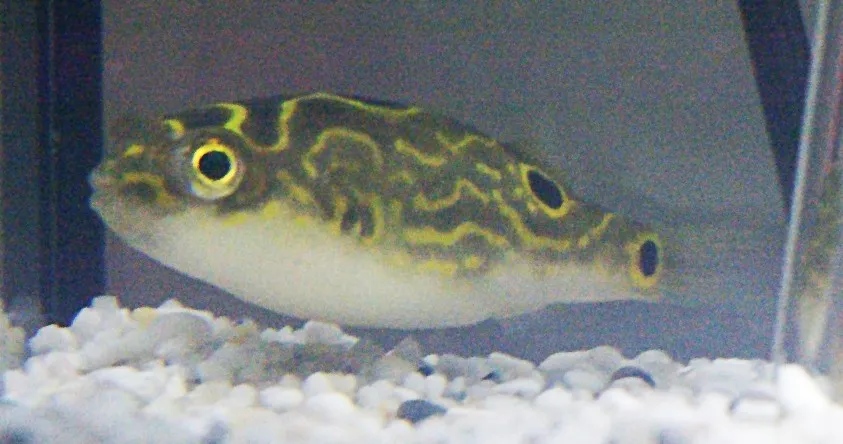
Figure eight puffer
Tetraodon biocellatus
FreshwaterBrackish3.1 in (8 cm) · 20 gal (75 L)72–79°F (22–26°C)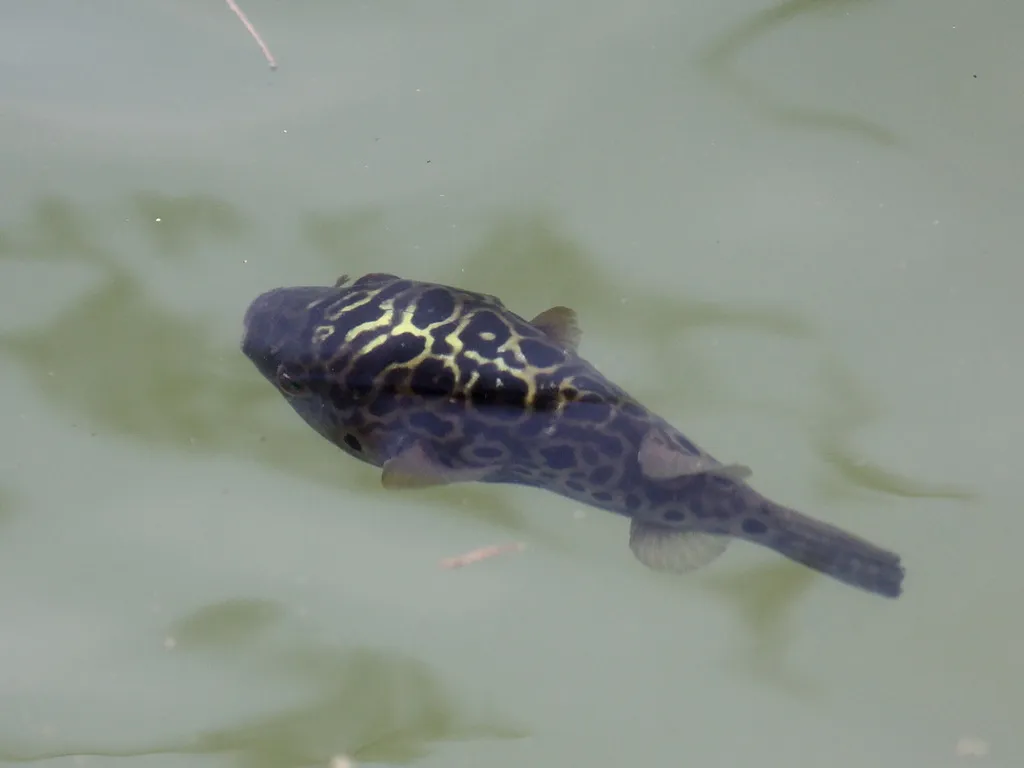
Green spotted puffer
Dichotomyctere nigroviridis
BrackishSaltwater5.9 in (15 cm) · 32 gal (120 L)75–82°F (24–28°C)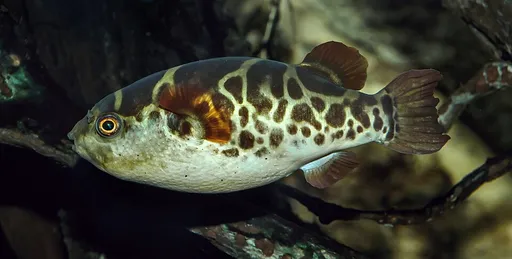
Ceylon puffer
Dichotomyctere fluviatilis
BrackishSaltwater6.7 in (17 cm) · 34 gal (130 L)75–82°F (24–28°C)
Teeth, snails and feeding
A puffer's beak grows for life and is worn down by crushing shells, so a diet of soft frozen food leaves it overgrown and the fish unable to eat. Feed snails, unshelled shrimp, mussels and cockles regularly. The Amazon puffer is the famous case: its teeth outgrow a soft diet fast enough that keepers trim them, and that plus its need for a shoal and a mature tank earns it the difficult rating.
Marine puffers and the reef
The big Arothron and Diodon puffers are not reef safe. They eat snails, crabs, shrimp and whatever coral takes their fancy, so they belong in a fish-only tank. The small tobies, the valentini and the blue-spotted toby, are marked caution instead: they mostly behave in a reef but nip clams, small inverts and the fins of slow tank mates.
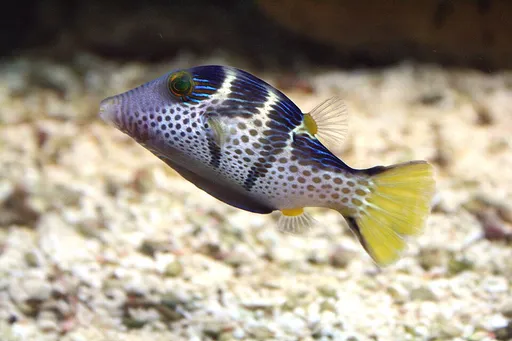
Valentini puffer
Canthigaster valentini
Saltwater4.3 in (11 cm) · 30 gal (114 L)75–81°F (24–27°C)- Size
- 4.3 in (11 cm)
- Tank
- 30 gal (114 L)
- Water
- 75–81°F (24–27°C)
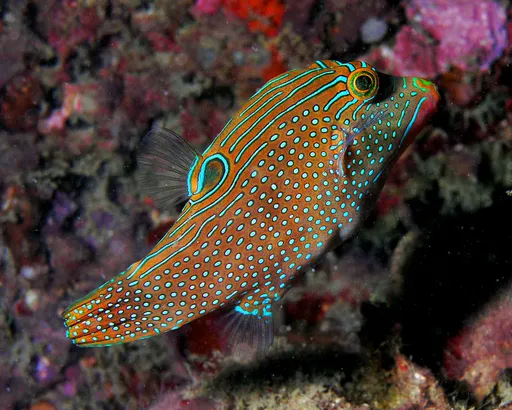
Blue-spotted toby
Canthigaster solandri
Saltwater4.7 in (12 cm) · 50 gal (189 L)75–81°F (24–27°C)- Size
- 4.7 in (12 cm)
- Tank
- 50 gal (189 L)
- Water
- 75–81°F (24–27°C)
By the numbers
Smallest
Largest
Fits a 20 gallon tank
Fits a 30 gallon tank
FAQ
Common questions
Can pufferfish live with other fish?
Most rows here are marked aggressive and solitary, so the honest answer is usually no. The dwarf puffer does well in a shoal of its own kind, the figure eight and spotted Congo puffers are social, and the marine puffers manage in a fish-only tank with robust tank mates.
What do pufferfish eat?
Snails, shrimp, mussels, cockles and other hard-shelled food, which keep the beak worn down, plus bloodworms and frozen food for the small species. They do not eat flake.
Do freshwater puffers need salt?
The dwarf puffers, red-eye puffers, Amazon puffer, mbu and fahaka are true freshwater fish. The figure eight tolerates light brackish water, and the green spotted and Ceylon puffers need it and drift toward marine as adults.
How big do pufferfish get?
From an inch and a half (3.5 cm) for the dwarf pufferfish to 26 inches (67 cm) for the mbu. Most of the freshwater Pao and Tetraodon species land between 5 and 8 inches (12 to 20 cm).
Are pufferfish poisonous?
Their organs and skin carry tetrodotoxin, which is dangerous to eat, not to keep. Handling one is safe. Do not let it puff up in air, though, because swallowed air can be fatal, so move a puffer underwater in a container rather than a net.
Which pufferfish is best for a beginner?
None is rated beginner or easy. The dwarf pufferfish and figure eight puffer are the most forgiving, rated medium, as long as the tank is mature and snails are on the menu.
Index
Freshwater pufferfish
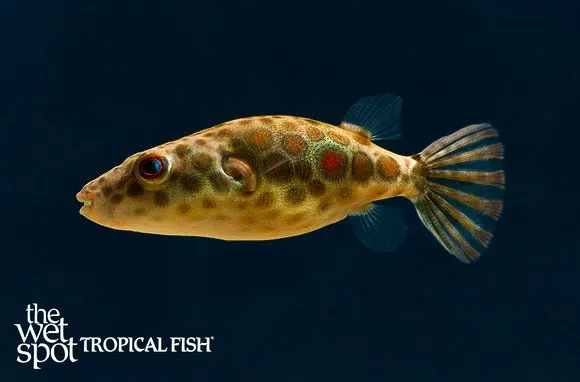
Abei puffer
Pao abei
Freshwater4.7 in (12 cm) · 42 gal (160 L)75–82°F (24–28°C)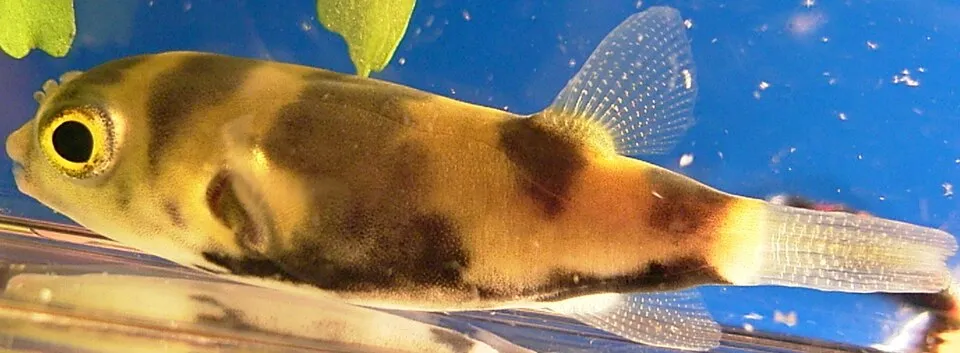
Amazon puffer
Colomesus asellus
Freshwater4.7 in (12 cm) · 26 gal (100 L)72–82°F (22–28°C)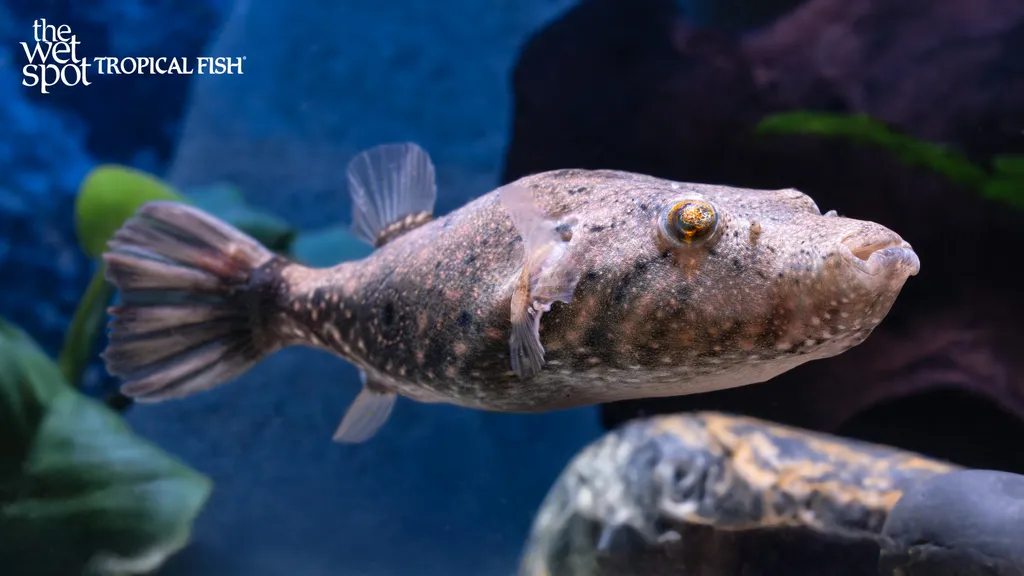
Arrowhead puffer
Pao suvattii
Freshwater5.9 in (15 cm) · 26 gal (100 L)72–79°F (22–26°C)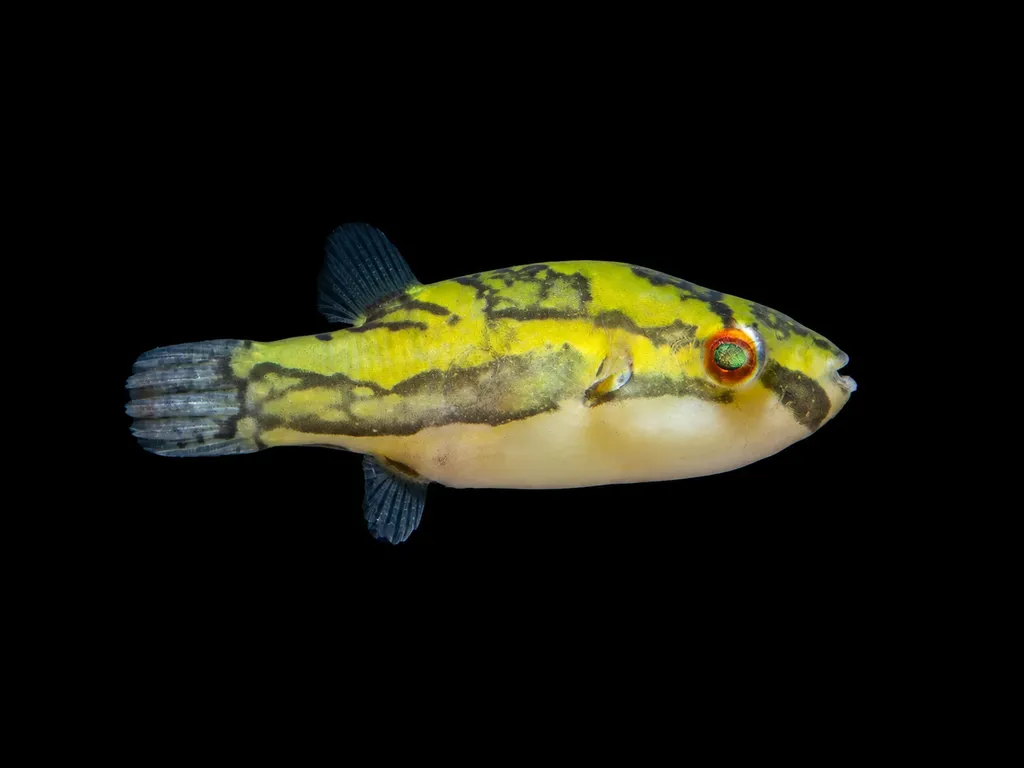
Borneo red-eye puffer
Carinotetraodon borneensis
Freshwater2 in (5 cm) · 14 gal (54 L)75–82°F (24–28°C)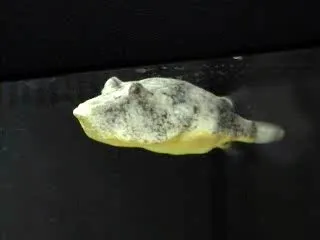
Congo pufferfish
Tetraodon miurus
Freshwater5.9 in (15 cm) · 26 gal (100 L)75–82°F (24–28°C)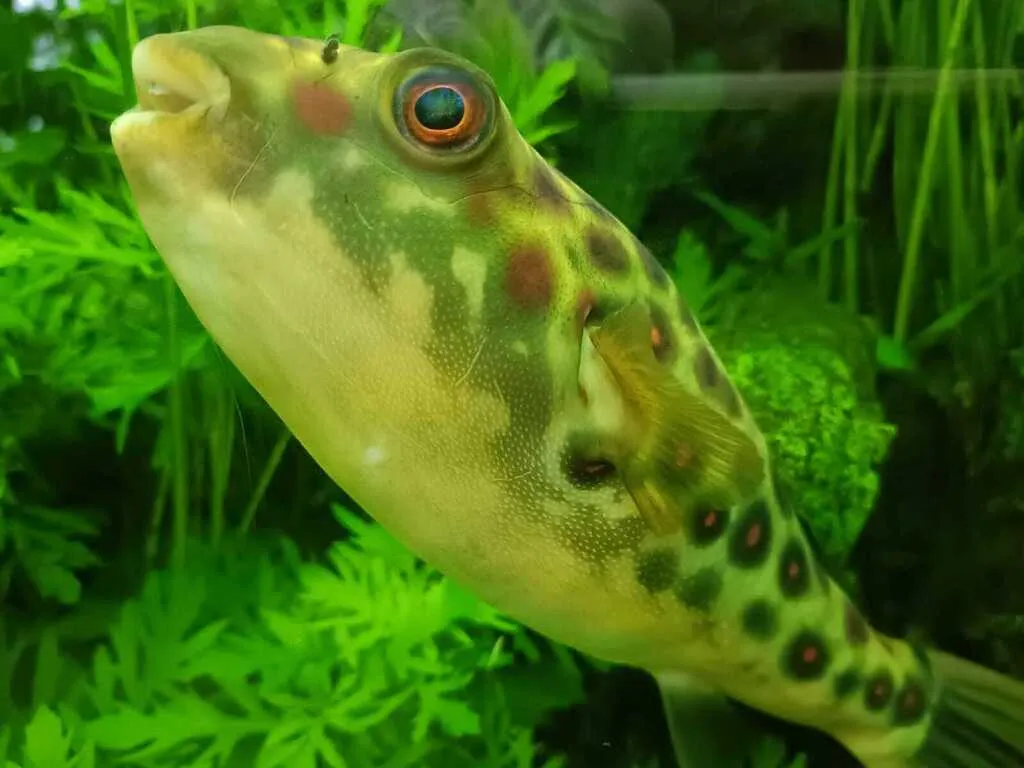
Cross River puffer
Tetraodon pustulatus
Freshwater14.2 in (36 cm) · 119 gal (450 L)75–82°F (24–28°C)Dwarf pufferfish
Carinotetraodon travancoricus
Freshwater1.4 in (3.5 cm) · 15 gal (55 L)72–82°F (22–28°C)Fahaka puffer
Tetraodon lineatus
Freshwater17.7 in (45 cm) · 119 gal (450 L)75–82°F (24–28°C)Figure eight puffer
Tetraodon biocellatus
FreshwaterBrackish3.1 in (8 cm) · 20 gal (75 L)72–79°F (22–26°C)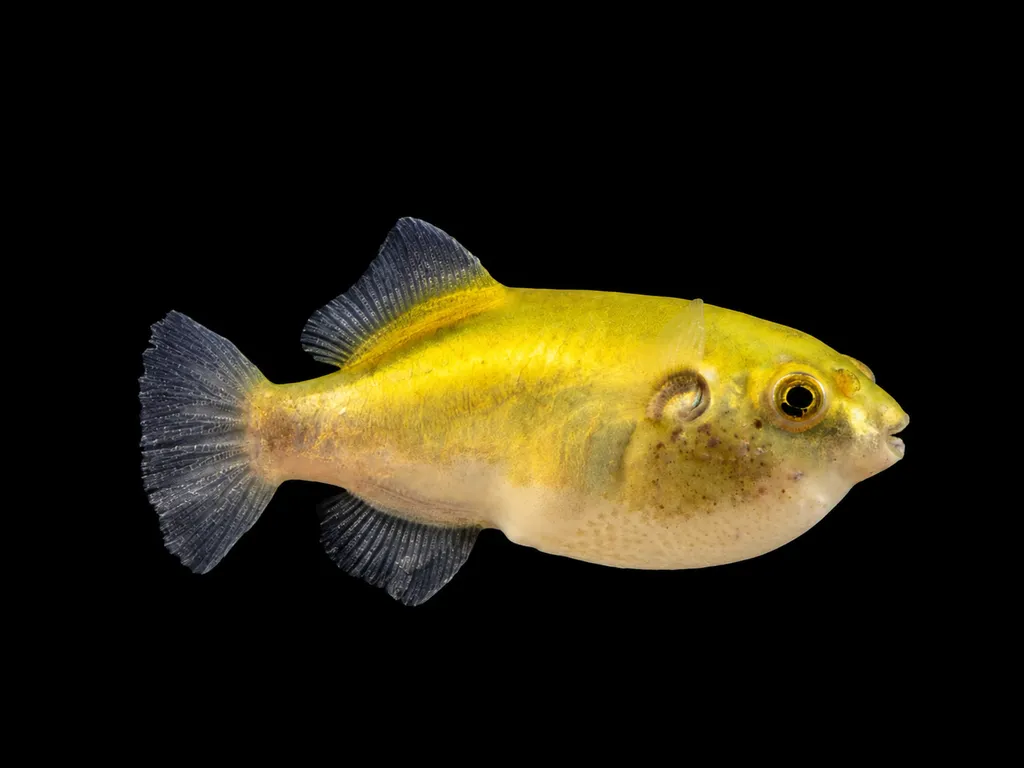
Golden puffer
Auriglobus modestus
Freshwater4.3 in (11 cm) · 22 gal (85 L)73–82°F (23–28°C)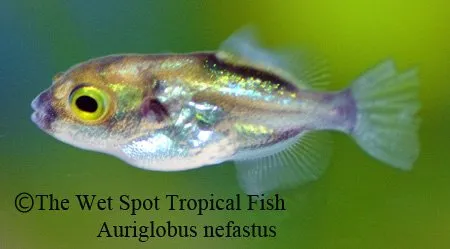
Greenbottle puffer
Auriglobus nefastus
Freshwater5.1 in (13 cm) · 66 gal (250 L)75–82°F (24–28°C)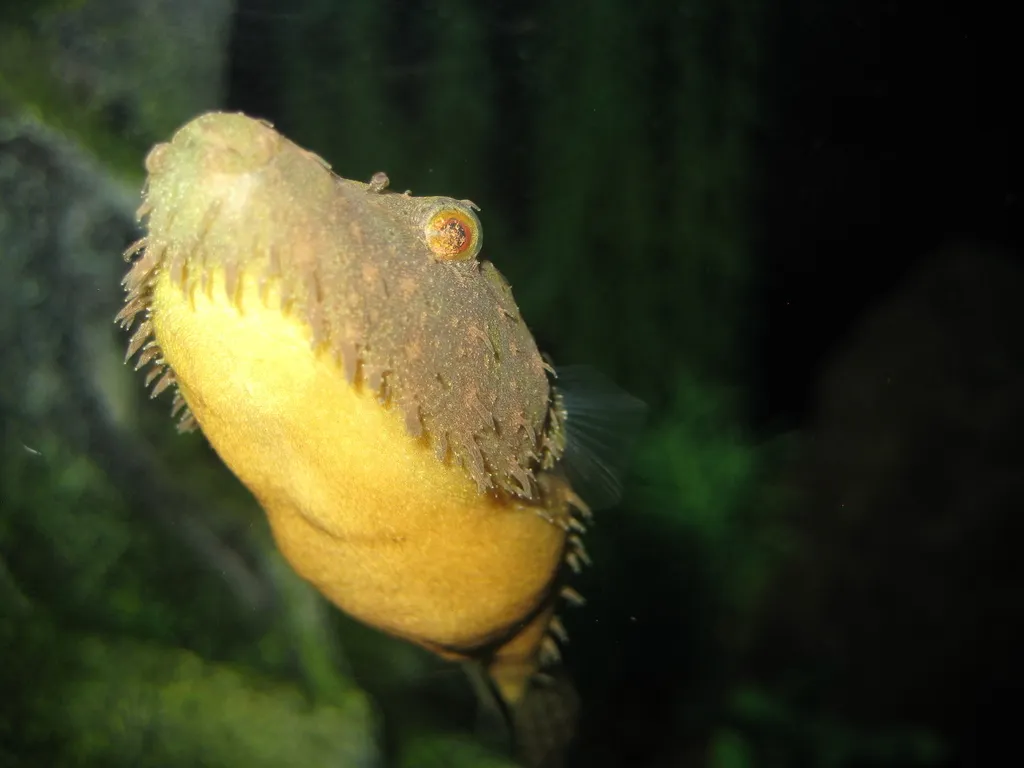
Hairy puffer
Tetraodon baileyi
Freshwater5.5 in (14 cm) · 26 gal (100 L)73–81°F (23–27°C)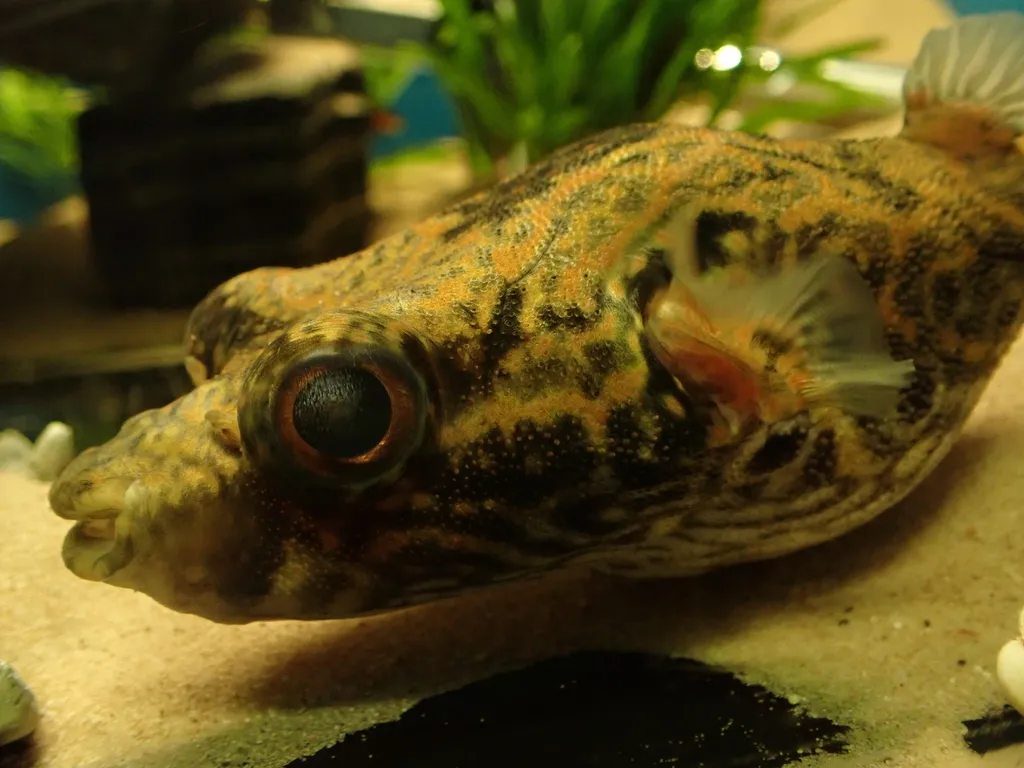
Humpback puffer
Pao palembangensis
Freshwater7.9 in (20 cm) · 32 gal (120 L)75–82°F (24–28°C)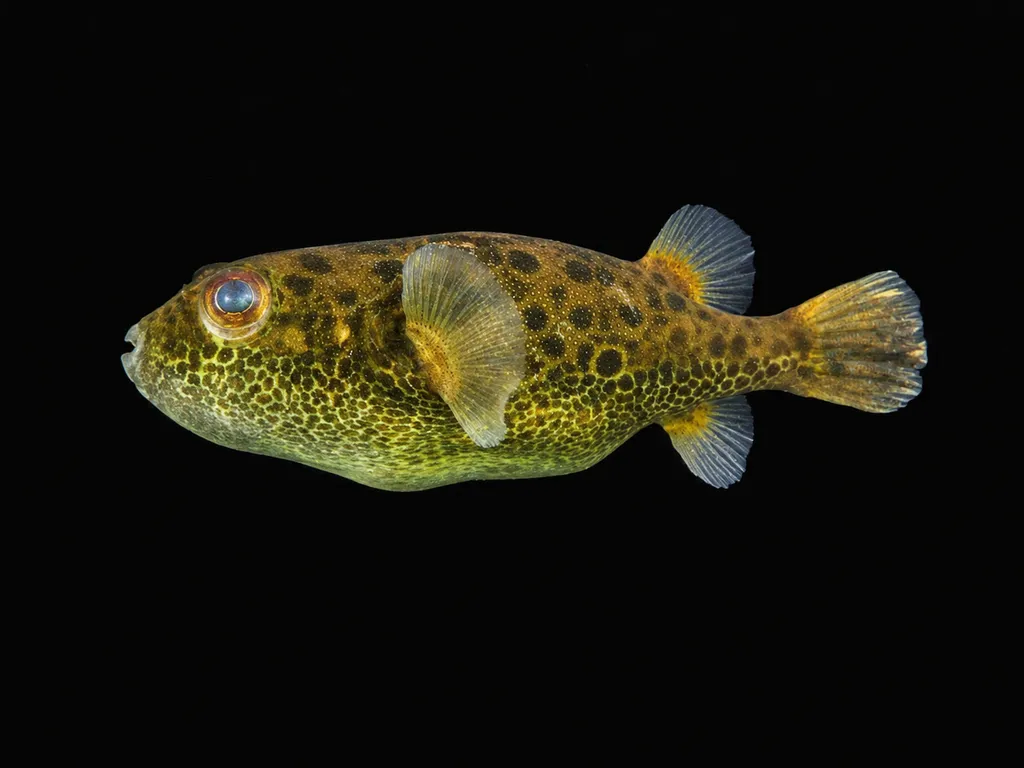
Marsh puffer
Pao brevirostris
Freshwater5.5 in (14 cm) · 42 gal (160 L)75–82°F (24–28°C)Mbu puffer
Tetraodon mbu
Freshwater26.4 in (67 cm) · 396 gal (1,500 L)75–82°F (24–28°C)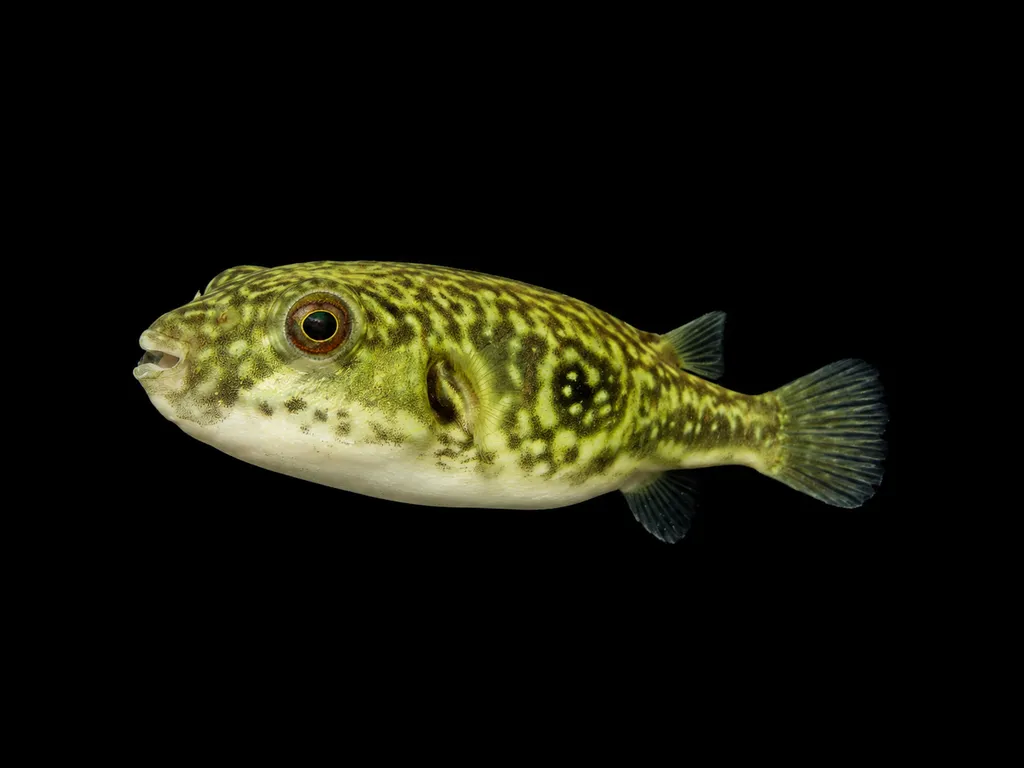
Ocellated puffer
Leiodon cutcutia
Freshwater5.9 in (15 cm) · 29 gal (110 L)75–82°F (24–28°C)Red-striped puffer
Dichotomyctere erythrotaenia
Freshwater3.3 in (8.5 cm) · 29 gal (110 L)75–82°F (24–28°C)Red-tail dwarf puffer
Carinotetraodon irrubesco
Freshwater1.8 in (4.5 cm) · 17 gal (65 L)72–82°F (22–28°C)Redeye puffer
Carinotetraodon lorteti
Freshwater2.4 in (6 cm) · 14 gal (54 L)75–82°F (24–28°C)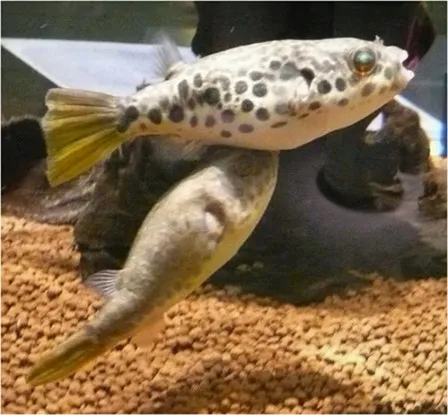
Spotted Congo puffer
Tetraodon schoutedeni
Freshwater3.5 in (9 cm) · 29 gal (110 L)75–82°F (24–28°C)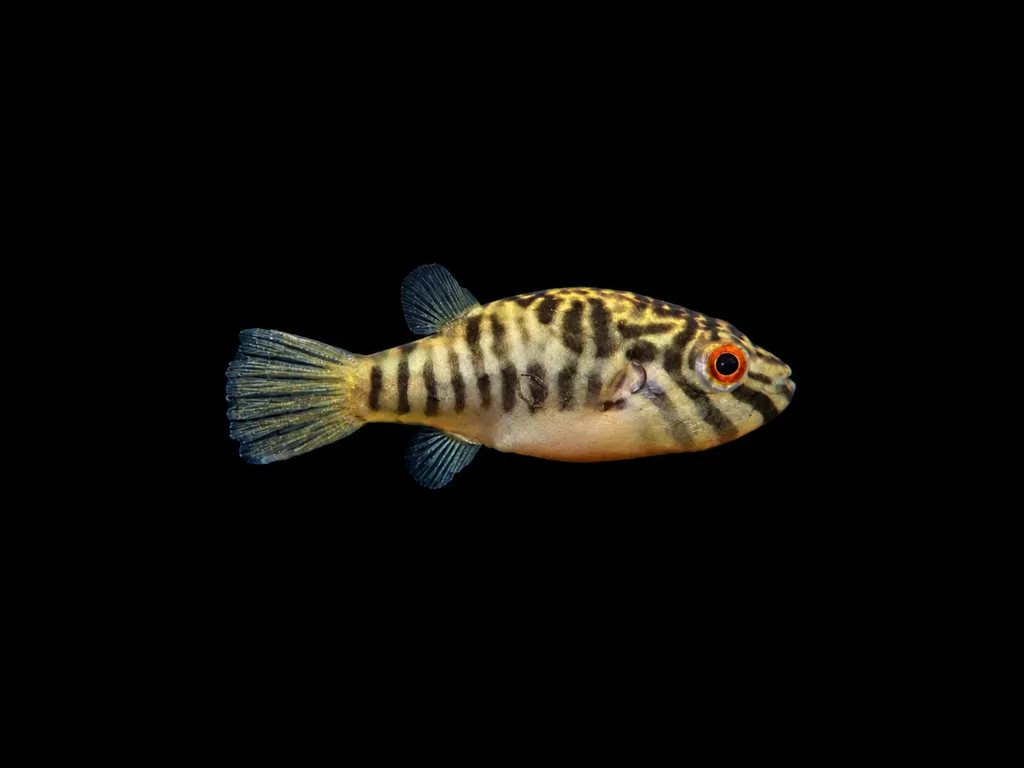
Striped red-eye puffer
Carinotetraodon salivator
Freshwater2 in (5 cm) · 14 gal (54 L)75–82°F (24–28°C)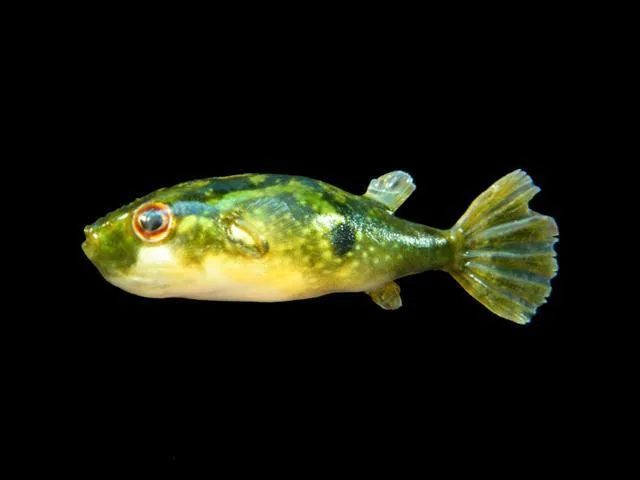
Target puffer
Pao leiurus
Freshwater6.3 in (16 cm) · 53 gal (200 L)75–82°F (24–28°C)
Saltwater pufferfish
Blue-spotted toby
Canthigaster solandri
Saltwater4.7 in (12 cm) · 50 gal (189 L)75–81°F (24–27°C)Ceylon puffer
Dichotomyctere fluviatilis
BrackishSaltwater6.7 in (17 cm) · 34 gal (130 L)75–82°F (24–28°C)Dogface puffer
Arothron nigropunctatus
Saltwater13 in (33 cm) · 151 gal (570 L)75–81°F (24–27°C)Green spotted puffer
Dichotomyctere nigroviridis
BrackishSaltwater5.9 in (15 cm) · 32 gal (120 L)75–82°F (24–28°C)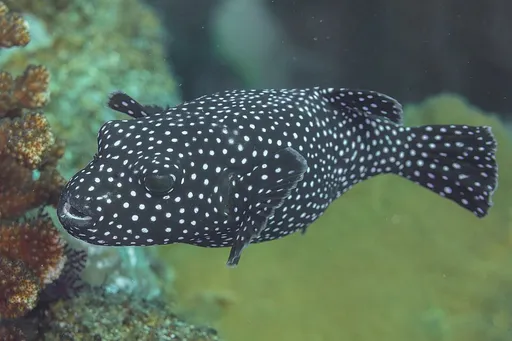
Guineafowl puffer
Arothron meleagris
Saltwater19.7 in (50 cm) · 180 gal (680 L)75–81°F (24–27°C)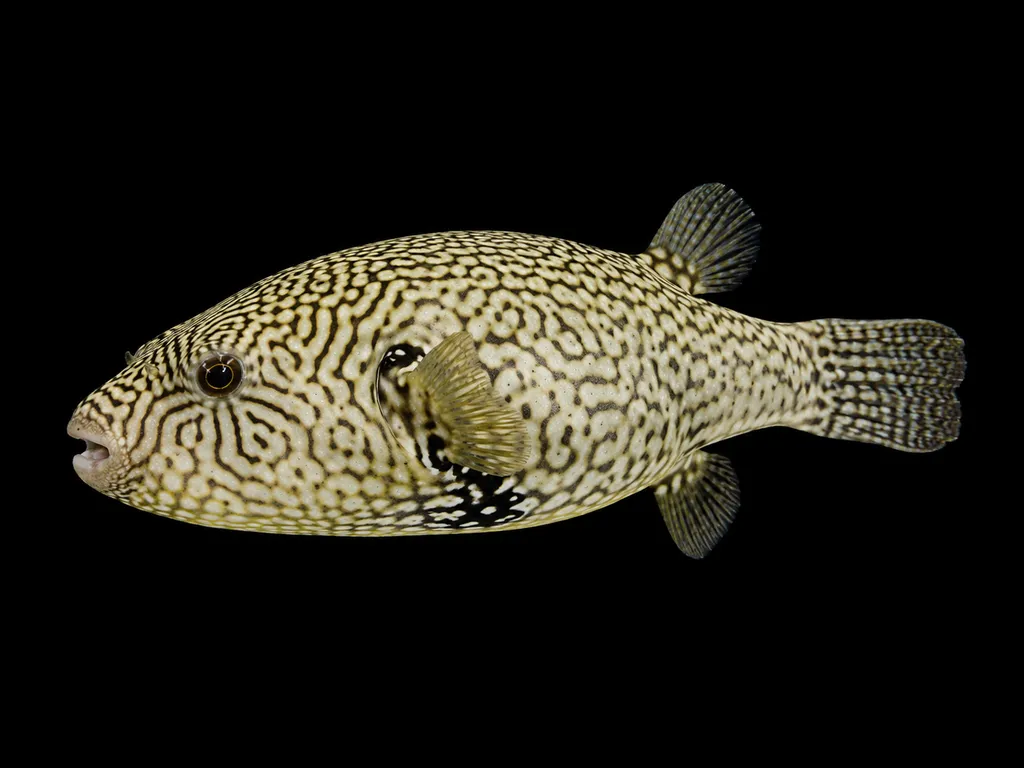
Map puffer
Arothron mappa
Saltwater23.6 in (60 cm) · 238 gal (900 L)75–81°F (24–27°C)Porcupine puffer
Diodon holocanthus
Saltwater11.8 in (30 cm) · 180 gal (680 L)75–81°F (24–27°C)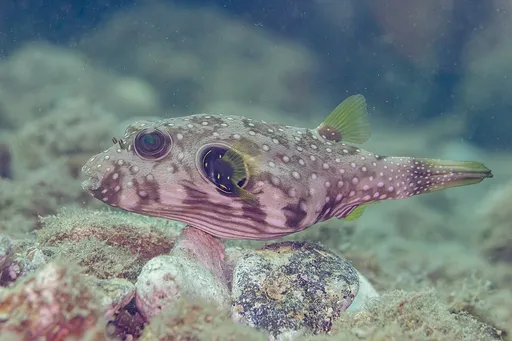
Stars-and-stripes puffer
Arothron hispidus
Saltwater19.7 in (50 cm) · 180 gal (680 L)75–81°F (24–27°C)Valentini puffer
Canthigaster valentini
Saltwater4.3 in (11 cm) · 30 gal (114 L)75–81°F (24–27°C)
Planning a tank?
TankBud checks stocking and water fit as you build a tank, then tracks water tests, reminders and photos once it is running.
Track your tanksMaintain tanks for clients? See TankBud Pro