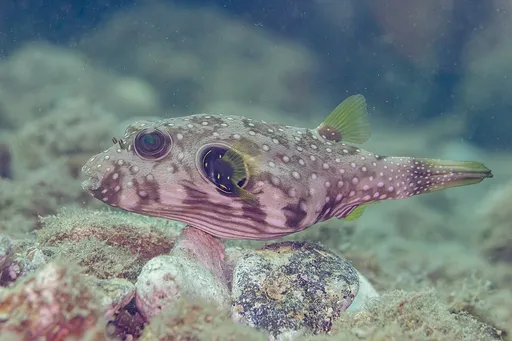
Stars-and-stripes puffer
Arothron hispidus
Also known as White-Spotted Puffer, White-Spotted Toadfish, Stars-and-Stripes Toadfish
SaltwaterFish
Care at a glance
- Temperature
- 75–81°F
- 24–27°C
- pH
- 8.1–8.4
- Adult size
- 19.7 in
- 50 cm
- Minimum tank
- 180 gal
- 680 L
- Temperament
- Mostly peaceful
- Social behavior
- Solitary
- Tankmates
- With caution
- Swim level
- Bottom
- Difficulty
- Medium
- Breeding
- No record
- Rarity
- Common
- Reef safe
- Not reef safe
- Family
- Tetraodontidae
- Origin
- Indo-Pacific and eastern Pacific reefs, from the Red Sea and East Africa to Hawaii and Panama
Overview
Mostly peaceful with fish too large to fit in its mouth, and known among puffer keepers for a genuinely interactive streak: long-term owners often report their fish learning to recognize them and swimming up to the glass at feeding time. It eats snails, crabs, urchins, and coral, so it is not reef safe and needs a fish-only or FOWLR setup with tankmates too big to be seen as food. Feed a varied diet of clams, shell-on shrimp, squid, and crab legs to wear its beak down naturally, since flake or soft frozen food alone will let it overgrow. It is a heavy waste producer for its size, so strong filtration and a protein skimmer matter as much here as tank decor.
In the wild
One of the most widely distributed pufferfish in the world, found on Indo-Pacific reefs from the Red Sea and East Africa to Hawaii and southern Japan, with a separate population on the far side of the Pacific from Baja California to Panama. Juveniles shelter in weedy estuaries and seagrass beds, while adults move out onto sandy and rubble patches near reefs and lagoons at depths to about 50 m. It grows into one of the largest puffers in the hobby, so plan on at least 680 litres (180 US gal) with open sand for foraging and rockwork it can circle without feeling boxed in.
Good to know
Carries the same four-plate fused beak found across the puffer family Tetraodontidae, worn down naturally by crunching through shelled prey, and the same tetrodotoxin loaded into its liver, skin, and other organs as a last-line defense if it is eaten. It is also one of the larger reef-associated pufferfish, reaching around 50 cm and 2 kg in the wild, though aquarium specimens usually stay smaller. Its pattern of white spots over an olive-to-grey body, plus white bars across the belly, gives the species both its common name and its more clinical one, white-spotted puffer.
Did you know
It has a reputation as one of the more intelligent and personable fish in the marine hobby: keepers regularly describe their stars-and-stripes puffer learning to recognize them individually and begging at the glass, a level of apparent recognition uncommon among aquarium fish.
Common questions
What size tank does a Stars-and-stripes puffer need?
A Stars-and-stripes puffer needs at least 180 gal (680 L). It spends most of its time in the bottom.
What temperature and pH does a Stars-and-stripes puffer need?
A Stars-and-stripes puffer is comfortable at 75–81°F (24–27°C) with a pH of 8.1–8.4.
How big does a Stars-and-stripes puffer get?
An adult Stars-and-stripes puffer reaches about 19.7 in (50 cm).
Related species
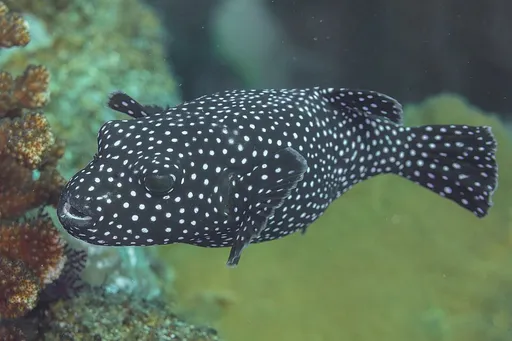 19.7 in (50 cm)180 gal (680 L)75–81°F (24–27°C)
Guineafowl puffer
Arothron meleagris
19.7 in (50 cm) · 180 gal (680 L)
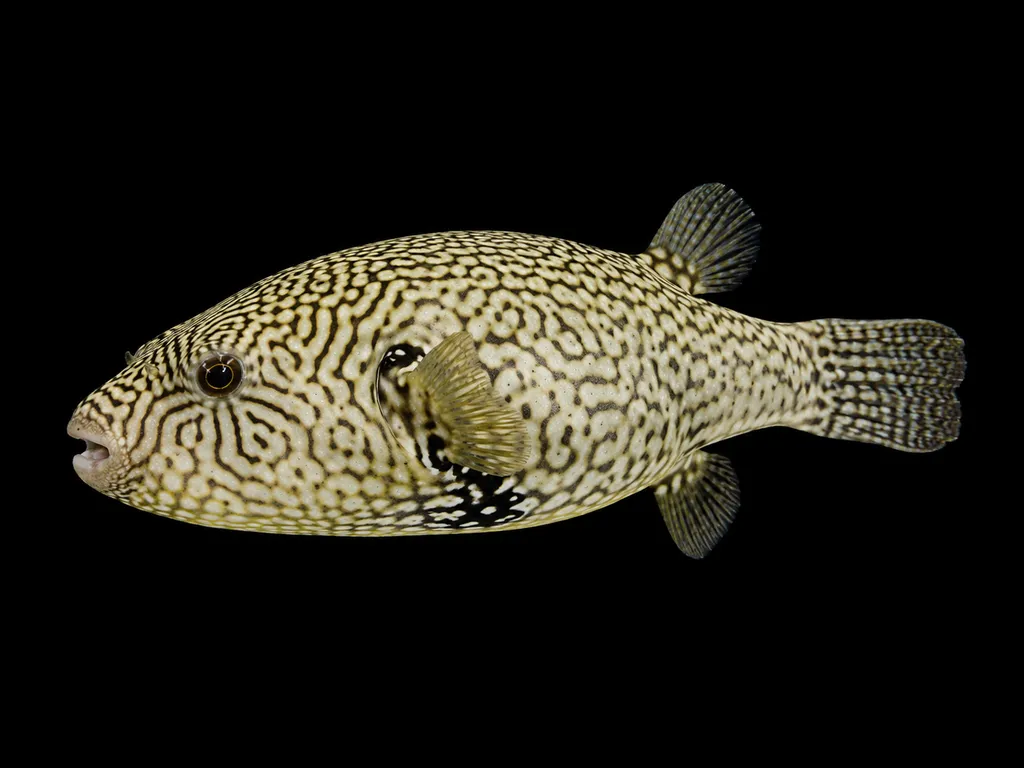 23.6 in (60 cm)238 gal (900 L)75–81°F (24–27°C)
Map puffer
Arothron mappa
23.6 in (60 cm) · 238 gal (900 L)
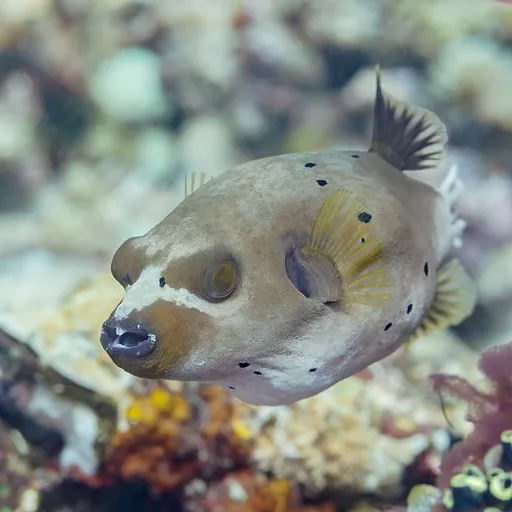 13 in (33 cm)151 gal (570 L)75–81°F (24–27°C)
Dogface puffer
Arothron nigropunctatus
13 in (33 cm) · 151 gal (570 L)
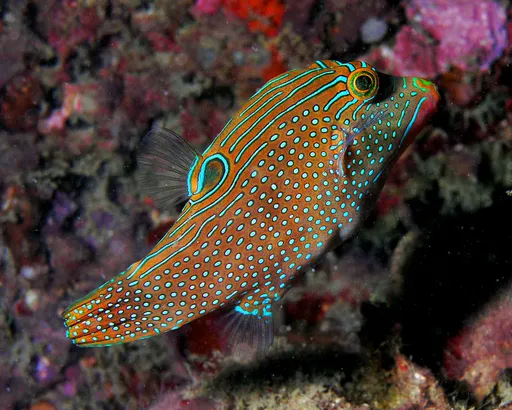 4.7 in (12 cm)50 gal (189 L)75–81°F (24–27°C)
Blue-spotted toby
Canthigaster solandri
4.7 in (12 cm) · 50 gal (189 L)
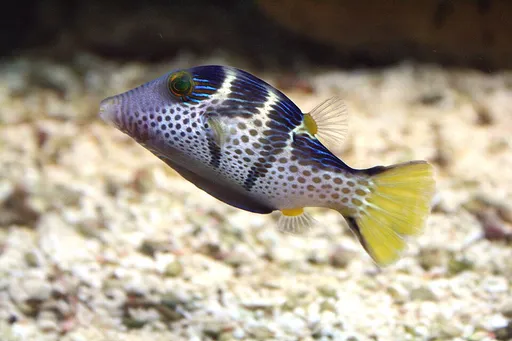 4.3 in (11 cm)30 gal (114 L)75–81°F (24–27°C)
Valentini puffer
Canthigaster valentini
4.3 in (11 cm) · 30 gal (114 L)
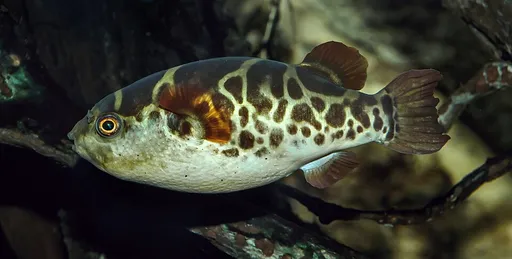 6.7 in (17 cm)34 gal (130 L)75–82°F (24–28°C)
Ceylon puffer
Dichotomyctere fluviatilis
6.7 in (17 cm) · 34 gal (130 L)