Guineafowl puffer
Arothron meleagris
Also known as Golden puffer, Spotted puffer, Guinea fowl puffer, Guineafowl toadfish
SaltwaterFish
Care at a glance
- Temperature
- 75–81°F
- 24–27°C
- pH
- 8.0–8.4
- Adult size
- 19.7 in
- 50 cm
- Minimum tank
- 180 gal
- 680 L
- Temperament
- Mostly peaceful
- Social behavior
- Solitary
- Tankmates
- With caution
- Swim level
- Middle
- Diet
- Carnivore
- Difficulty
- Difficult
- Breeding
- No record
- Rarity
- Common
- Reef safe
- Not reef safe
- Family
- Tetraodontidae
- Origin
- Native to the Indo-Pacific and eastern Pacific, living on coral reefs where it browses on coral tips and invertebrates.
Overview
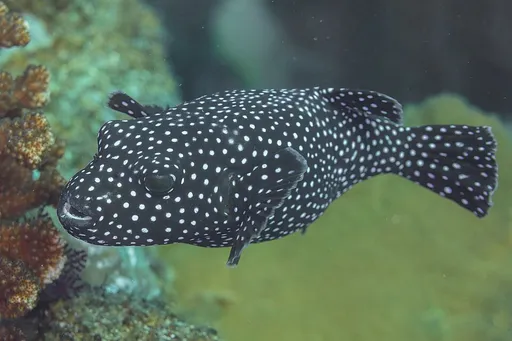
The guineafowl puffer is a chunky, slow-swimming puffer with big eyes and an inquisitive, almost dog-like personality. It is a demanding fish for experienced keepers.
Did you know
The golden and black-spotted guineafowl puffers look so different that they were long sold as separate fish. They are simply two color morphs of the same species.
Caring for the guineafowl puffer
The guineafowl puffer is a large, messy fish and needs a fish-only tank of at least 180 gal (680 L). Run strong filtration and a protein skimmer. Keep the water at 75 to 81°F (24 to 27°C) and a pH of 8.0 to 8.4.
Its four fused teeth keep growing and are worn down by crunching hard-shelled prey. Feed hard-shelled foods such as clams, mussels, crab and shrimp in the shell.
It is not reef safe, since it nips corals, clams and anemones and eats shrimp, snails and crabs. Never let it share a tank with prey-sized invertebrates. It is mostly peaceful and generally calm toward fish of a similar size.
Good to know
Arothron meleagris belongs to the family Tetraodontidae. It comes in a black form covered in tiny white dots and a bright, solid gold form. Both phases occur naturally in the same populations. Like all puffers, it can inflate with water to deter predators, and it carries tetrodotoxin in its organs.
In the wild
The guineafowl puffer is native to the Indo-Pacific and eastern Pacific. It lives on coral reefs, browsing on coral tips and invertebrates with a beak strong enough to crush coral and shellfish.
Common questions
What size tank does a guineafowl puffer need?
A guineafowl puffer needs at least 180 gal (680 L). It spends most of its time in the middle.
What temperature and pH does a guineafowl puffer need?
A guineafowl puffer is comfortable at 75–81°F (24–27°C) with a pH of 8.0–8.4.
What does a guineafowl puffer eat?
A guineafowl puffer eats hard-shelled foods such as clams, mussels, crab and shrimp in the shell. Crunching them wears down its ever-growing teeth.
How big does a guineafowl puffer get?
An adult guineafowl puffer reaches about 19.7 in (50 cm).
Related species
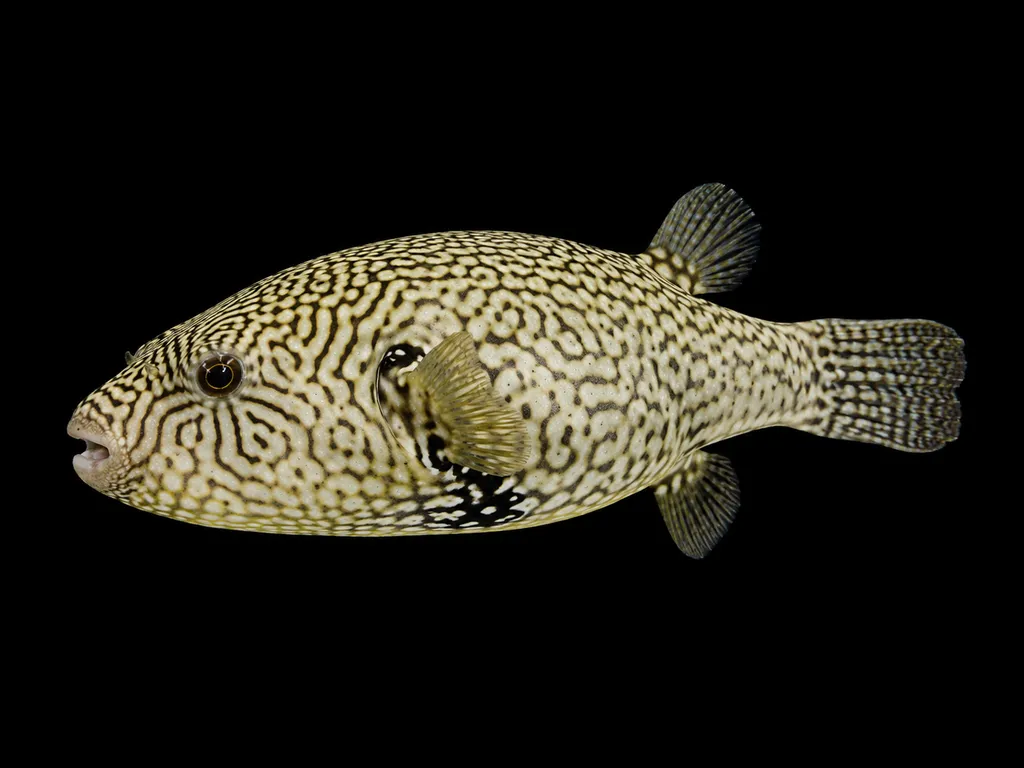 23.6 in (60 cm)238 gal (900 L)75–81°F (24–27°C)
Map puffer
Arothron mappa
23.6 in (60 cm) · 238 gal (900 L)
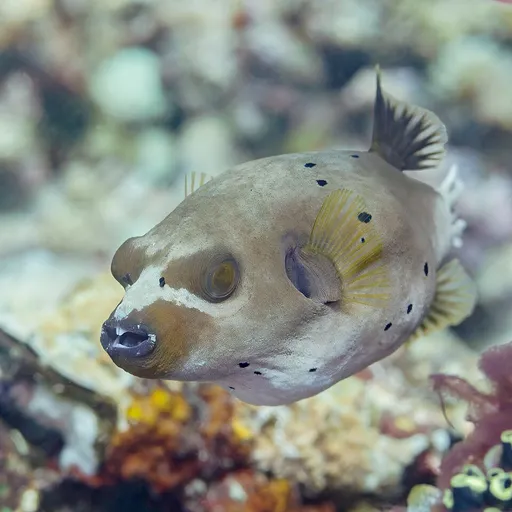 13 in (33 cm)151 gal (570 L)75–81°F (24–27°C)
Dogface puffer
Arothron nigropunctatus
13 in (33 cm) · 151 gal (570 L)
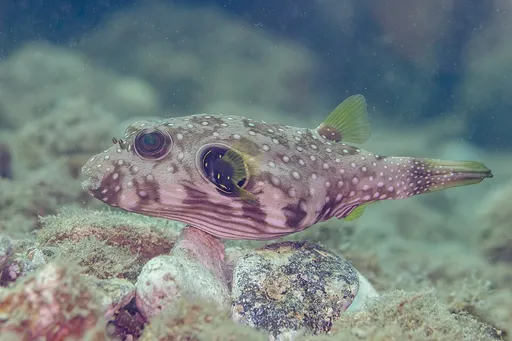 19.7 in (50 cm)180 gal (680 L)75–81°F (24–27°C)
Stars-and-stripes puffer
Arothron hispidus
19.7 in (50 cm) · 180 gal (680 L)
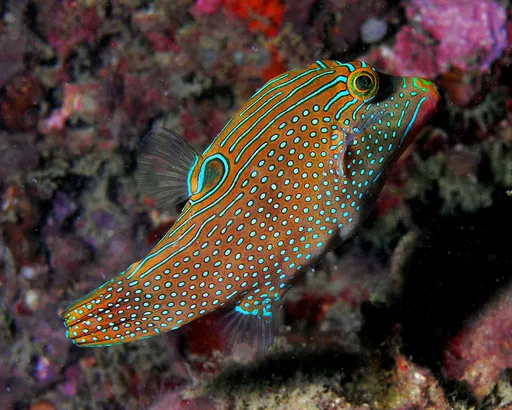 4.7 in (12 cm)50 gal (189 L)75–81°F (24–27°C)
Blue-spotted toby
Canthigaster solandri
4.7 in (12 cm) · 50 gal (189 L)
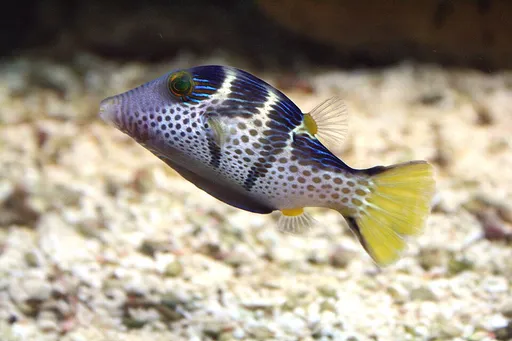 4.3 in (11 cm)30 gal (114 L)75–81°F (24–27°C)
Valentini puffer
Canthigaster valentini
4.3 in (11 cm) · 30 gal (114 L)
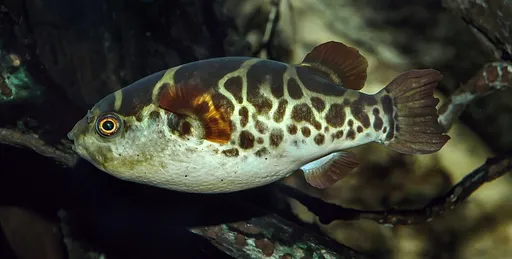 6.7 in (17 cm)34 gal (130 L)75–82°F (24–28°C)
Ceylon puffer
Dichotomyctere fluviatilis
6.7 in (17 cm) · 34 gal (130 L)