Valentini puffer
Canthigaster valentini
Also known as Saddle Toby, Blacksaddle Toby, Valentin's Sharpnose Puffer
SaltwaterFish
Care at a glance
- Temperature
- 75–81°F
- 24–27°C
- pH
- 8.1–8.4
- Adult size
- 4.3 in
- 11 cm
- Minimum tank
- 30 gal
- 114 L
- Temperament
- Mostly peaceful
- Social behavior
- Solitary
- Own kind
- One male per tank
- Tankmates
- With caution
- Swim level
- Middle
- Diet
- Carnivore
- Difficulty
- Medium
- Breeding
- Hard
- Rarity
- Common
- Reef safe
- Reef safe with caution
- Family
- Tetraodontidae
- Origin
- Indo-Pacific reefs, from the Red Sea and East Africa to the Tuamotu Islands, north to southern Japan
Overview
The Valentini puffer is a small toby and one of the more outgoing fish for a FOWLR tank. It suits a keeper with a little experience.
Did you know
The Valentini puffer has a body double on the reef. The unrelated mimic filefish copies its saddle pattern so closely that the two are often mistaken for each other. The filefish carries no toxin at all and simply borrows the toby's fearsome reputation to stay off the menu.
Caring for the Valentini puffer
Give the Valentini puffer a tank of at least 30 gal (114 L) with plenty of live rock. The rock offers both foraging surface and places to retreat. It is a small, busy fish that spends the day picking around the rockwork for food.
Keep the water at 75 to 81°F (24 to 27°C) with a pH of 8.1 to 8.4. Handle it gently and avoid a net when you can. Like all puffers, it can swallow air if stressed out of the water.
Offer a varied diet of mysis plus chopped shrimp and clam, with the shell left on when possible. Hard foods wear down its beak and keep it from overgrowing.
The Valentini puffer is mostly peaceful, but it can nip the fins of slow tank mates and spar with other tobies. Choose its companions with caution, and keep only one male per tank. Breeding it is hard.
It is reef safe only with caution. It generally leaves stony coral alone but will pick at ornamental shrimp, snails, clams and crabs. Treat any invertebrate in the tank as a potential meal.
Good to know
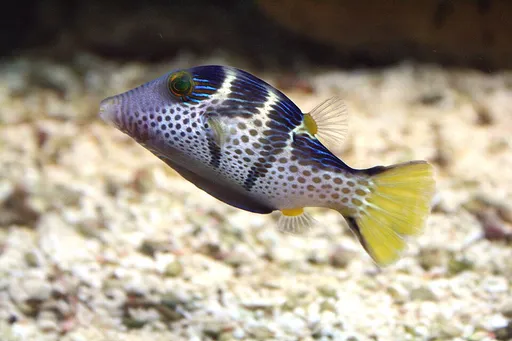
The Valentini puffer carries the same fused, four-plate beak as its larger puffer relatives, scaled down to a small body. Its skin and ovaries concentrate tetrodotoxin, along with smaller amounts of saxitoxin. Both are potent nerve toxins that make the fish unpalatable to most predators. Dark brown saddle markings across its back and sides give it the name saddle toby, and they usually identify it on sight.
In the wild
The Valentini puffer lives on Indo-Pacific reefs from the Red Sea and East Africa to the Tuamotu Islands. Its range reaches north to southern Japan. It usually darts among coral heads and rubble on lagoon and seaward reefs, down to about 55 m.
Common questions
What size tank does a Valentini puffer need?
A Valentini puffer needs at least 30 gal (114 L). It spends most of its time in the middle.
What temperature and pH does a Valentini puffer need?
A Valentini puffer is comfortable at 75–81°F (24–27°C) with a pH of 8.1–8.4.
What does a Valentini puffer eat?
A Valentini puffer eats mysis plus chopped shrimp and clam, with the shell left on when possible to wear down its beak. It will also pick at ornamental shrimp, snails, clams and crabs.
How big does a Valentini puffer get?
An adult Valentini puffer reaches about 4.3 in (11 cm).
Related species
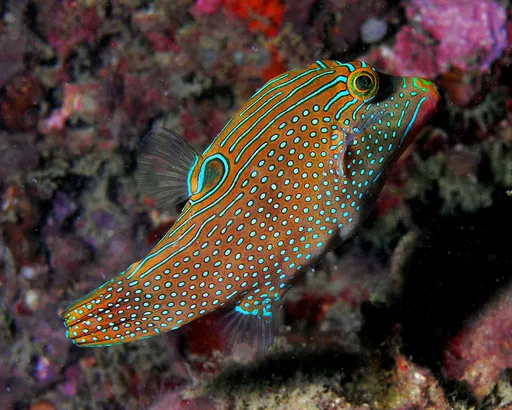 4.7 in (12 cm)50 gal (189 L)75–81°F (24–27°C)
Blue-spotted toby
Canthigaster solandri
4.7 in (12 cm) · 50 gal (189 L)
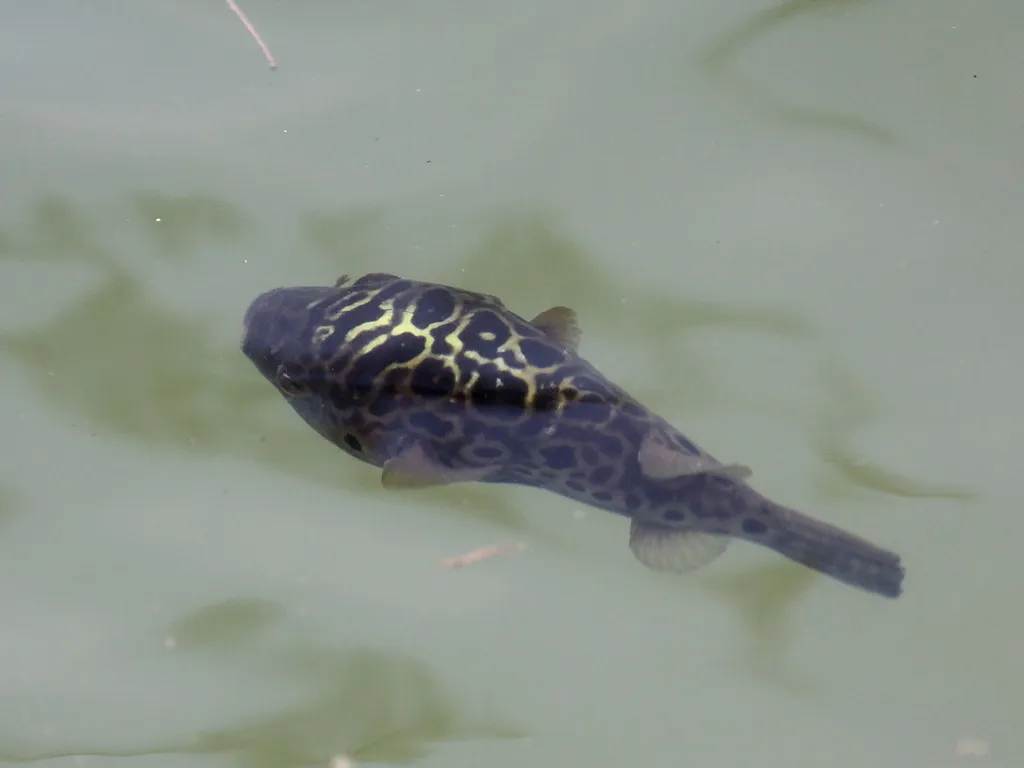 5.9 in (15 cm)32 gal (120 L)75–82°F (24–28°C)
Green spotted puffer
Dichotomyctere nigroviridis
5.9 in (15 cm) · 32 gal (120 L)
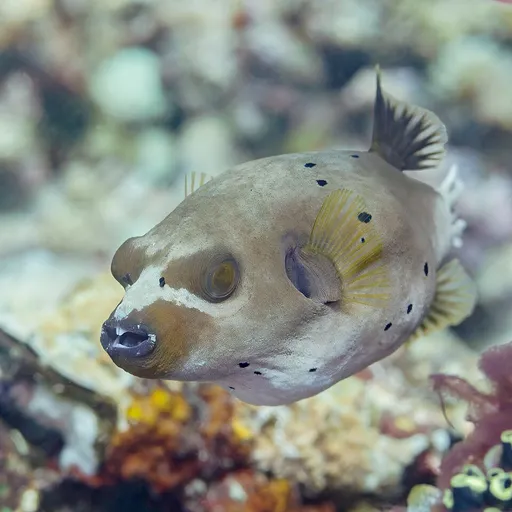 13 in (33 cm)151 gal (570 L)75–81°F (24–27°C)
Dogface puffer
Arothron nigropunctatus
13 in (33 cm) · 151 gal (570 L)
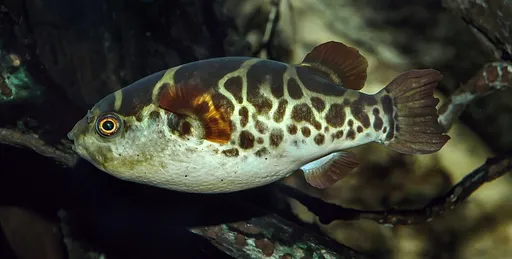 6.7 in (17 cm)34 gal (130 L)75–82°F (24–28°C)
Ceylon puffer
Dichotomyctere fluviatilis
6.7 in (17 cm) · 34 gal (130 L)
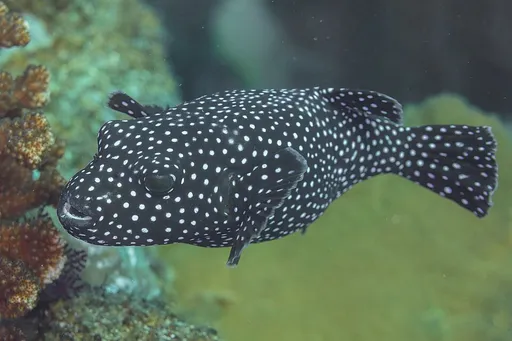 19.7 in (50 cm)180 gal (680 L)75–81°F (24–27°C)
Guineafowl puffer
Arothron meleagris
19.7 in (50 cm) · 180 gal (680 L)
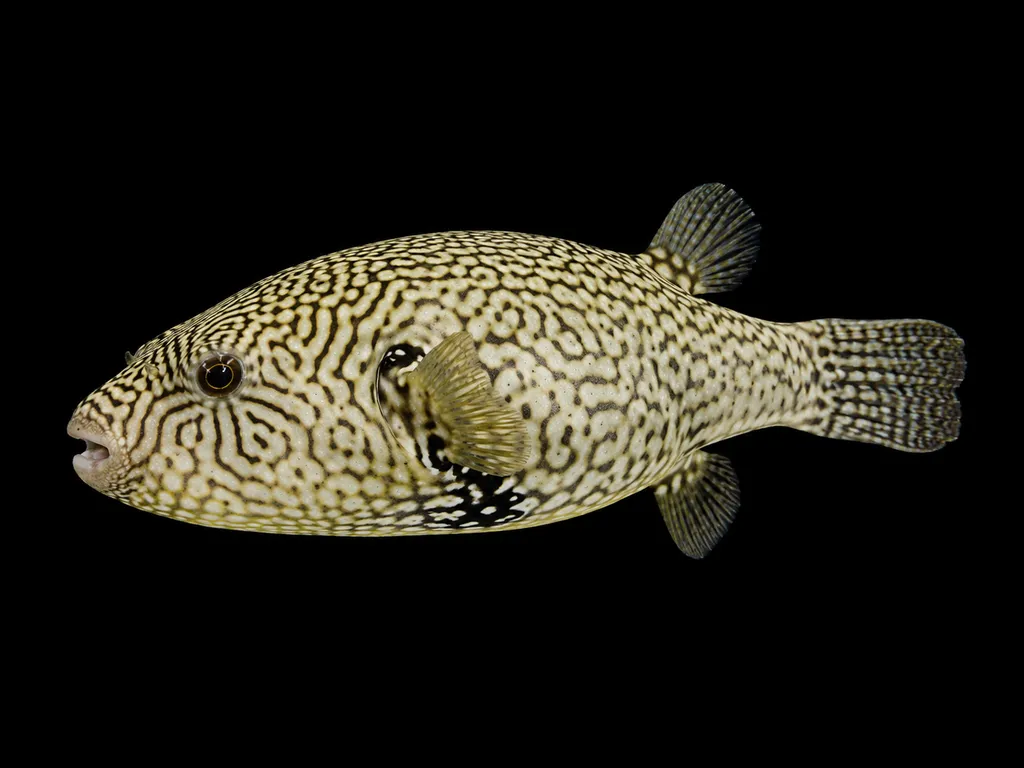 23.6 in (60 cm)238 gal (900 L)75–81°F (24–27°C)
Map puffer
Arothron mappa
23.6 in (60 cm) · 238 gal (900 L)