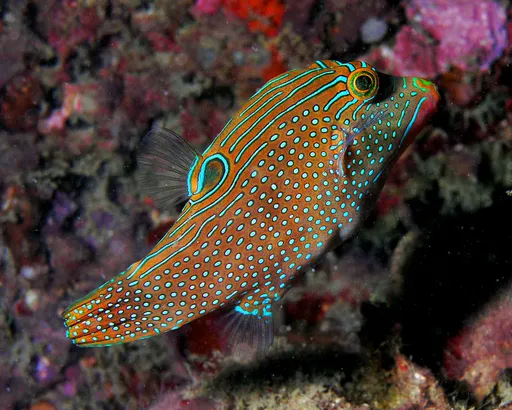
Blue-spotted toby
Canthigaster solandri
Also known as Blue Spot Puffer, Spotted Sharpnose Puffer, Solander's Toby
SaltwaterFish
Care at a glance
- Temperature
- 75–81°F
- 24–27°C
- pH
- 8.1–8.4
- Adult size
- 4.7 in
- 12 cm
- Minimum tank
- 50 gal
- 189 L
- Temperament
- Mostly peaceful
- Social behavior
- Solitary
- Own kind
- One male per tank
- Tankmates
- With caution
- Swim level
- Middle
- Difficulty
- Medium
- Breeding
- Hard
- Rarity
- Common
- Reef safe
- Reef safe with caution
- Family
- Tetraodontidae
- Origin
- Indo-Pacific reefs, from East Africa to the Hawaiian Islands and the Tuamotus
Overview
Mostly peaceful but can be territorial toward other tobies and similarly shaped fish, and it will occasionally nip at slow or long-finned tankmates. Reef safe only with caution: it leaves most stony coral alone but eats snails, small crabs, shrimp, and sometimes soft coral polyps, so don't trust it around an invertebrate collection. Feed a varied meaty diet including clams, shrimp, and krill, ideally with some shell or hard body left on, to keep its beak from overgrowing. Like other puffers, move it with a container instead of a net so it doesn't gulp air while stressed.
In the wild
Ranges across Indo-Pacific reefs from East Africa to the Hawaiian Islands and the Tuamotus, on reef flats and lagoon and seaward reefs from the intertidal zone down to about 36 m. It patrols open sandy or rubble patches as readily as coral heads, so a tank of at least 189 litres (50 US gal) with a mix of open swimming space and live rock to duck into suits it well.
Good to know
Like other members of the sharpnose puffer genus Canthigaster, it carries the family's fused beak of four tooth plates and needs hard foods to keep it worn down. Its skin holds tetrodotoxin as a defense against predators, the same toxin found throughout the puffer family, concentrated enough to make the fish dangerous to eat but not something it releases into the surrounding water. The fine blue spotting that covers its body, denser and smaller than the bold saddle markings of its Valentini relative, gives the species both its common name and its scientific-literature name, spotted sharpnose puffer.
Did you know
It has no pelvic fins at all, a trait shared across the puffer family, and instead sculls through the water with quick, synchronized beats of its dorsal and anal fins, saving the tail fin for bursts of speed when it needs to dart for cover.
Common questions
What size tank does a Blue-spotted toby need?
A Blue-spotted toby needs at least 50 gal (189 L). It spends most of its time in the middle.
What temperature and pH does a Blue-spotted toby need?
A Blue-spotted toby is comfortable at 75–81°F (24–27°C) with a pH of 8.1–8.4.
How big does a Blue-spotted toby get?
An adult Blue-spotted toby reaches about 4.7 in (12 cm).
Related species
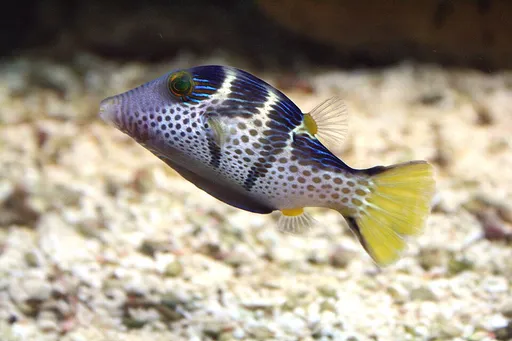 4.3 in (11 cm)30 gal (114 L)75–81°F (24–27°C)
Valentini puffer
Canthigaster valentini
4.3 in (11 cm) · 30 gal (114 L)
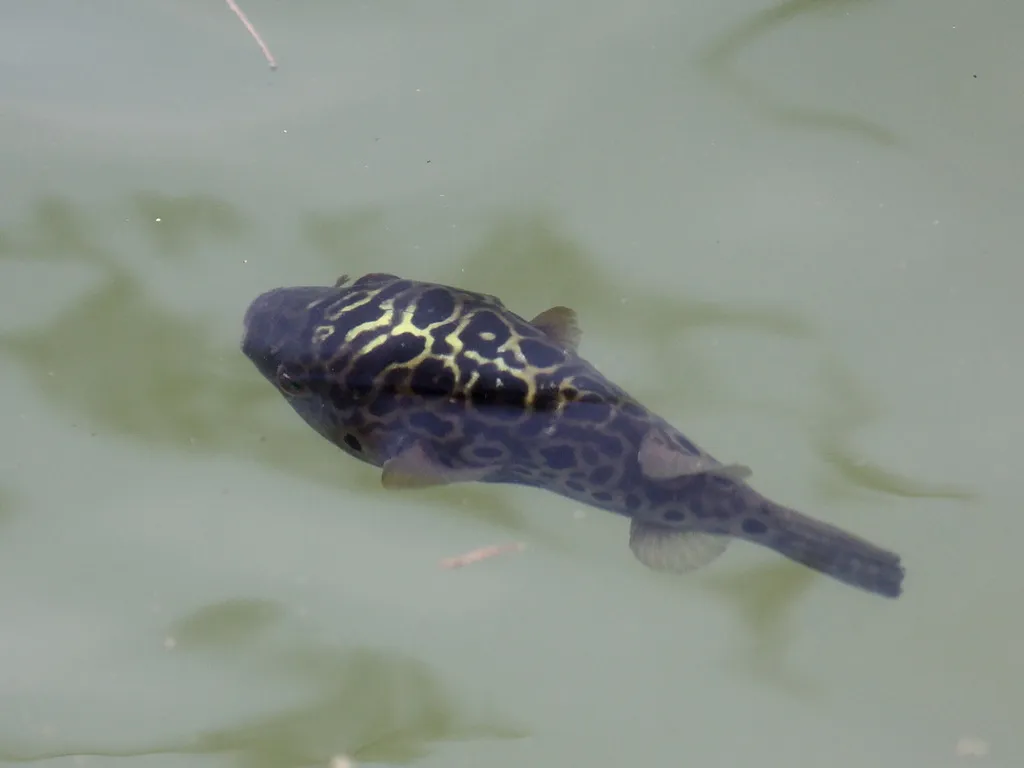 5.9 in (15 cm)32 gal (120 L)75–82°F (24–28°C)
Green spotted puffer
Dichotomyctere nigroviridis
5.9 in (15 cm) · 32 gal (120 L)
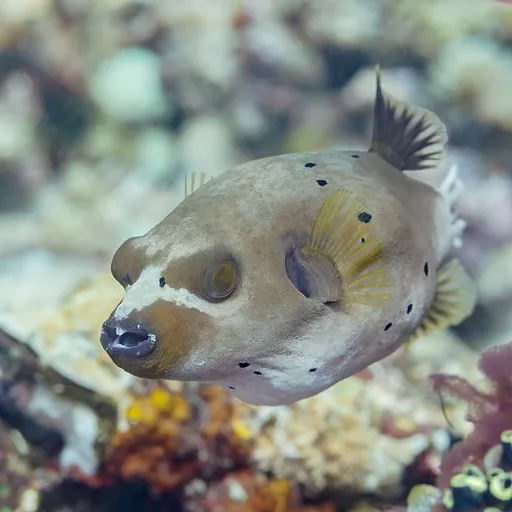 13 in (33 cm)151 gal (570 L)75–81°F (24–27°C)
Dogface puffer
Arothron nigropunctatus
13 in (33 cm) · 151 gal (570 L)
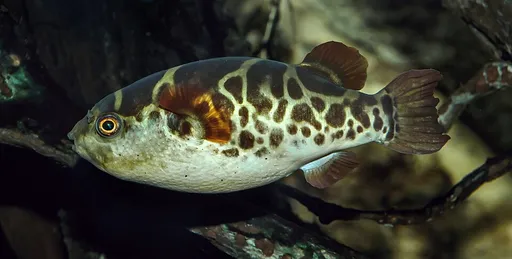 6.7 in (17 cm)34 gal (130 L)75–82°F (24–28°C)
Ceylon puffer
Dichotomyctere fluviatilis
6.7 in (17 cm) · 34 gal (130 L)
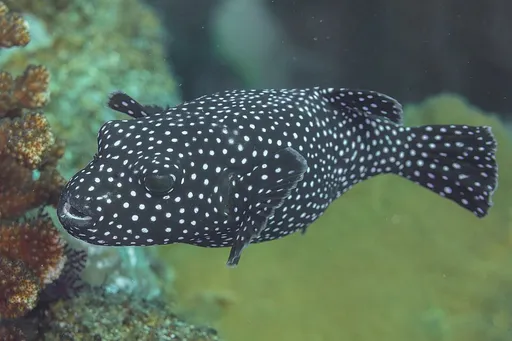 19.7 in (50 cm)180 gal (680 L)75–81°F (24–27°C)
Guineafowl puffer
Arothron meleagris
19.7 in (50 cm) · 180 gal (680 L)
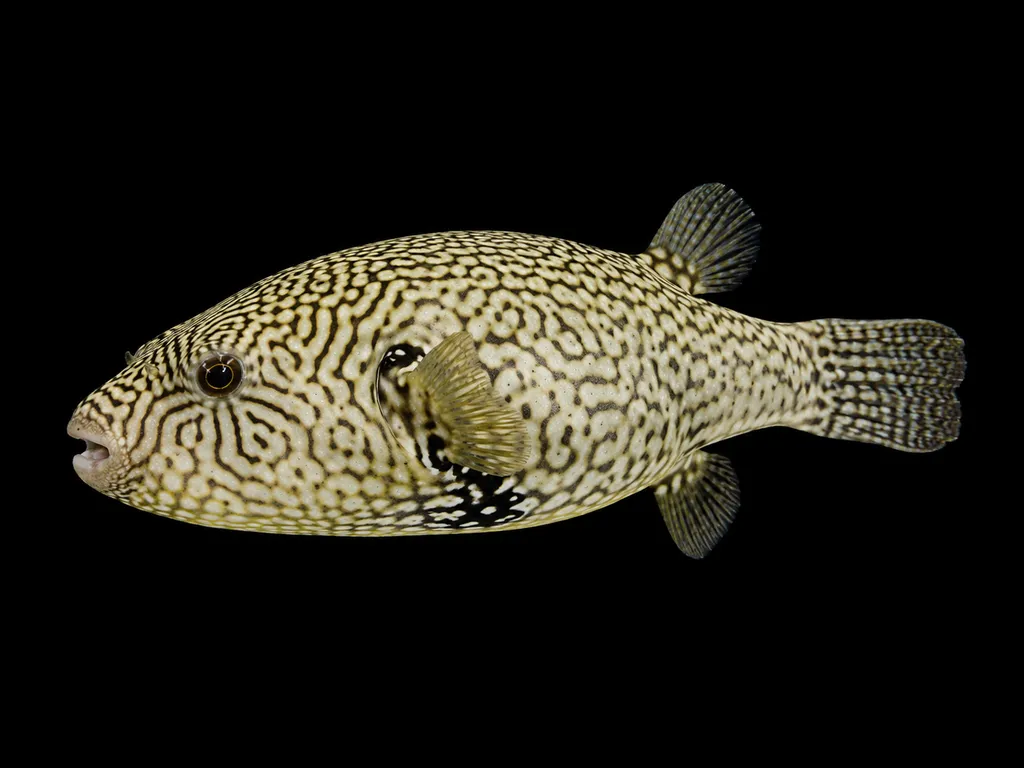 23.6 in (60 cm)238 gal (900 L)75–81°F (24–27°C)
Map puffer
Arothron mappa
23.6 in (60 cm) · 238 gal (900 L)