Aquarium clams
Giant clams bring living color to the sand bed and rockwork, and they help take nutrients out of the water as they filter feed. They build a calcium-carbonate shell, so they want strong light and stable calcium and alkalinity. The one freshwater species here is the Asian gold clam, which buries in sand and filter feeds instead of relying on light. Each profile lists the light, water chemistry and placement a clam needs, and how hardy it is.
At a glance
- Tank size
- 29–198 gal
- 29 gal (110 L) to 198 gal (750 L); half the list needs 40 gal (150 L) or more
- Temperature
- 75–81°F
- 24–27°C, most of the list
- pH
- 8.1–8.4
- Most of the list
- Difficulty
- 1 easy
- 5 medium · 4 difficult
10 species
Start here
The derasa is the beginner's giant clam
The derasa clam is the giant clam marked beginner: it sits on the sand, wants less light than its cousins, reaches 19.7 inches (50 cm) and lists 40 gallons (150 liters). The squamosa clam is marked medium and sits on sand or rubble at 15.7 inches (40 cm). The maxima clam is the one with the colors and it is marked medium, 13.8 inches (35 cm), because it wants strong light and a place on the rock. The crocea clam is the smallest at 5.9 inches (15 cm) for 30 gallons (115 liters), and it is marked difficult because it needs the most light of any. The horse hoof clam is the plain, hardy one at 11.8 inches (30 cm), marked medium.
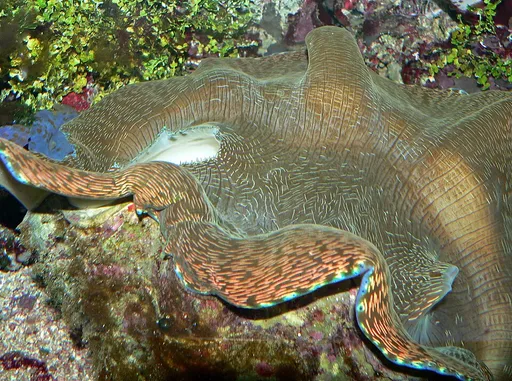
Derasa clam
Tridacna derasa
Saltwater- Size
- 19.7 in (50 cm)
- Tank
- 40 gal (150 L)
- Water
- 75–81°F (24–27°C)
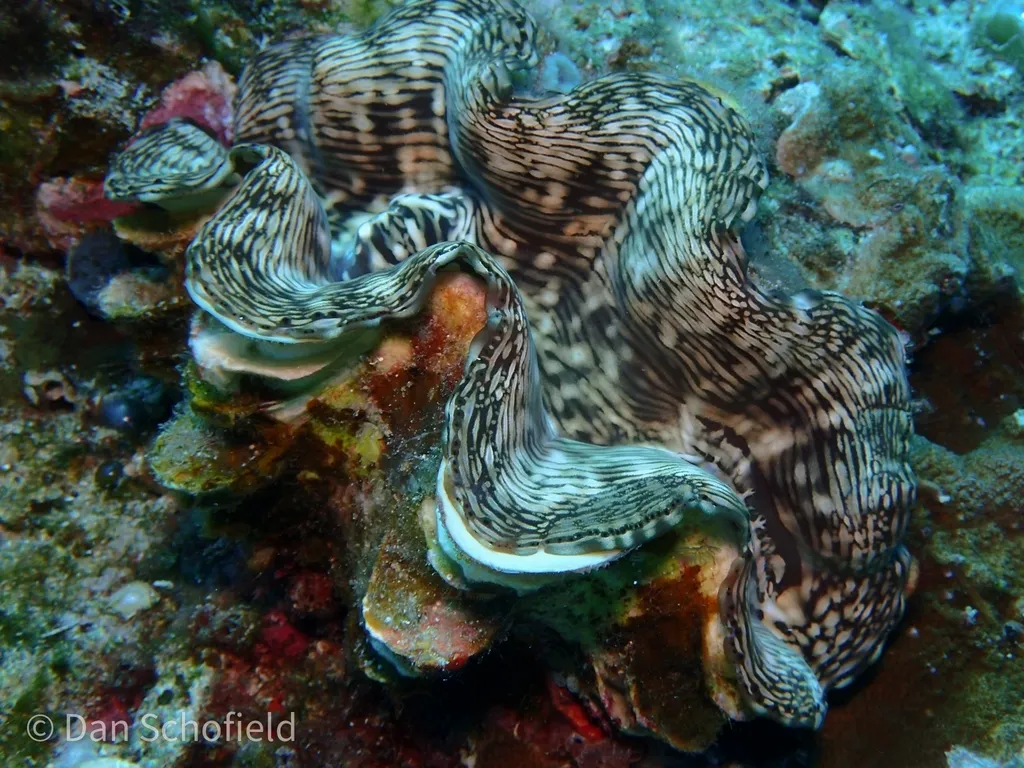
Squamosa clam
Tridacna squamosa
Saltwater- Size
- 15.7 in (40 cm)
- Tank
- 40 gal (150 L)
- Water
- 75–81°F (24–27°C)
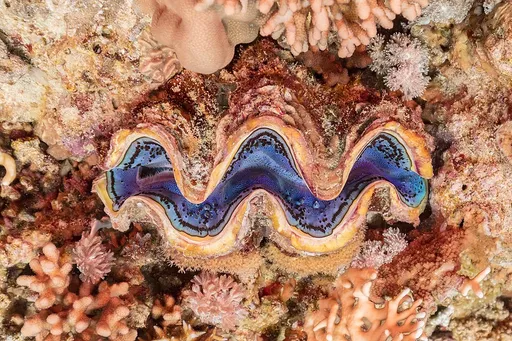
Maxima clam
Tridacna maxima
Saltwater- Size
- 13.8 in (35 cm)
- Tank
- 40 gal (150 L)
- Water
- 75–81°F (24–27°C)
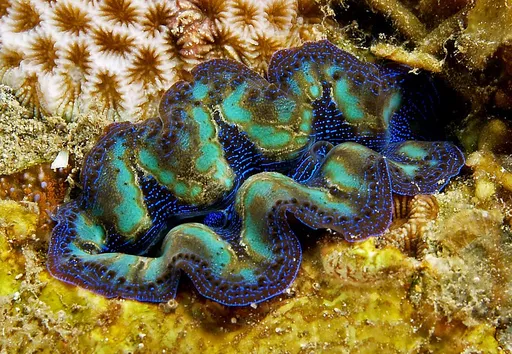
Crocea clam
Tridacna crocea
Saltwater- Size
- 5.9 in (15 cm)
- Tank
- 30 gal (115 L)
- Water
- 75–81°F (24–27°C)
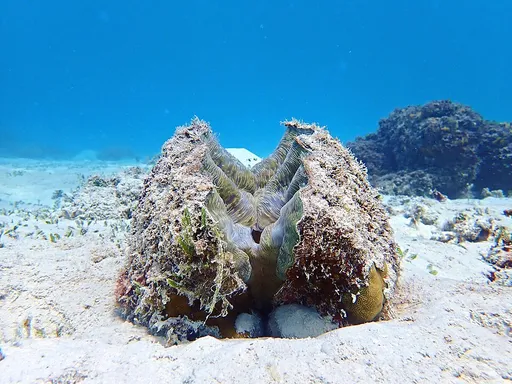
Horse hoof clam
Hippopus hippopus
Saltwater- Size
- 11.8 in (30 cm)
- Tank
- 40 gal (150 L)
- Water
- 75–81°F (24–27°C)
The rule
What a giant clam needs
A giant clam is photosynthetic, so light decides everything: the crocea and maxima clams want the strongest reef lighting near the top of the rock, the derasa and squamosa clams settle for less on the sand. Shell growth draws calcium and alkalinity from the water, so the levels are held where a stony coral would want them. The mantle is soft tissue, and any fish that nips, the angelfish, butterflyfish, triggers and some wrasses, will pick at it until the clam stops opening. And a clam that stays closed for a day is telling you something is wrong.
- 01
Light first
Crocea and maxima want the most, derasa the least
- 02
Calcium and alkalinity
Shell growth needs stable levels
- 03
Placement
Derasa on sand, crocea and maxima on rock
- 04
Nothing that nips
Angels, butterflies and some wrasses pick at it
Size
They get big
The gigas clam is the largest bivalve alive: it reaches 47.2 inches (120 cm) and lists 198 gallons (750 liters), and a small one in a reef is a temporary arrangement. The China clam reaches 15.7 inches (40 cm) and lists 106 gallons (400 liters), marked difficult. Noah's clam is a maxima look-alike at 9.8 inches (25 cm), also marked difficult. The squamosina clam is the medium choice at 11.8 inches (30 cm) for 66 gallons (250 liters). The Asian gold clam is the freshwater one: 2 inches (5 cm), a filter feeder that buries itself and dies unseen, which is why it is marked difficult and lists 29 gallons (110 liters).
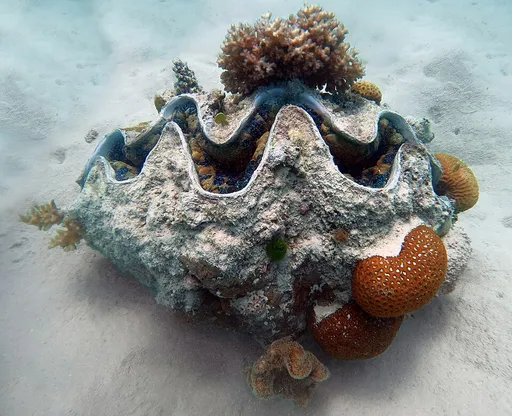
Gigas clam
Tridacna gigas
Saltwater47.2 in (120 cm) · 198 gal (750 L)75–81°F (24–27°C)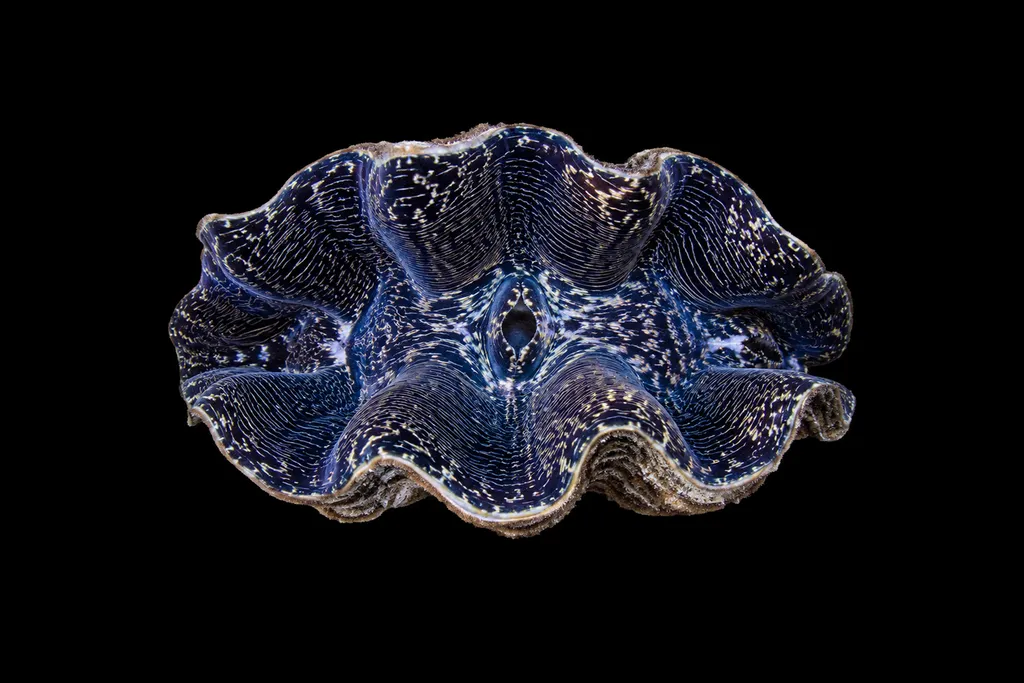
China clam
Hippopus porcellanus
Saltwater15.7 in (40 cm) · 106 gal (400 L)75–81°F (24–27°C)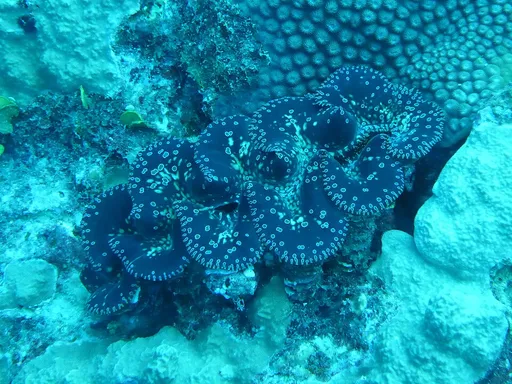
Noah's clam
Tridacna noae
Saltwater9.8 in (25 cm) · 40 gal (150 L)75–81°F (24–27°C)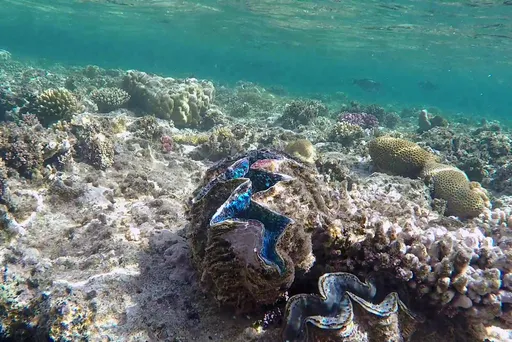
Squamosina clam
Tridacna squamosina
Saltwater11.8 in (30 cm) · 66 gal (250 L)75–82°F (24–28°C)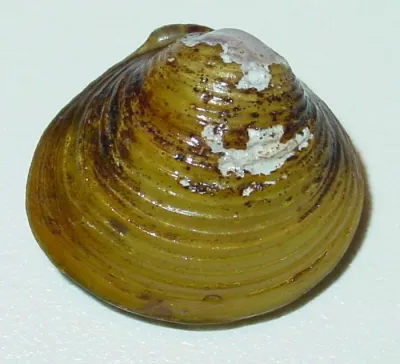
Asian gold clam
Corbicula fluminea
Freshwater2 in (5 cm) · 29 gal (110 L)64–84°F (18–29°C)
By the numbers
Smallest
Largest
FAQ
Common questions
Are giant clams hard to keep?
The derasa clam is marked beginner, the squamosa, maxima, horse hoof and gigas clams are marked medium, and the crocea, Noah's and China clams are marked difficult. Light and stable calcium are what separate them.
What light does a clam need?
Strong reef lighting, since a giant clam feeds on the algae in its mantle. The crocea and maxima clams want the most and sit high on the rock; the derasa clam takes moderate light on the sand.
Do clams need to be fed?
A clam over 3 inches (7.5 cm) lives on light and what it filters from the water. Smaller clams benefit from phytoplankton a few times a week.
Can I keep a clam in a freshwater tank?
The Asian gold clam is the only freshwater clam in the catalog, and it is marked difficult: it filter feeds, buries itself and, when it dies, fouls the tank before anyone notices.
Which fish eat clams?
The large angelfish, butterflyfish, triggers and puffers nip the mantle, and some wrasses pick at it. Tiny pyramid snails on the shell are parasites and get picked off by hand or by a six-line wrasse.
Index
Freshwater clams
Saltwater clams
China clam
Hippopus porcellanus
Saltwater15.7 in (40 cm) · 106 gal (400 L)75–81°F (24–27°C)Crocea clam
Tridacna crocea
Saltwater5.9 in (15 cm) · 30 gal (115 L)75–81°F (24–27°C)Derasa clam
Tridacna derasa
Saltwater19.7 in (50 cm) · 40 gal (150 L)75–81°F (24–27°C)Gigas clam
Tridacna gigas
Saltwater47.2 in (120 cm) · 198 gal (750 L)75–81°F (24–27°C)Horse hoof clam
Hippopus hippopus
Saltwater11.8 in (30 cm) · 40 gal (150 L)75–81°F (24–27°C)Maxima clam
Tridacna maxima
Saltwater13.8 in (35 cm) · 40 gal (150 L)75–81°F (24–27°C)Noah's clam
Tridacna noae
Saltwater9.8 in (25 cm) · 40 gal (150 L)75–81°F (24–27°C)Squamosa clam
Tridacna squamosa
Saltwater15.7 in (40 cm) · 40 gal (150 L)75–81°F (24–27°C)Squamosina clam
Tridacna squamosina
Saltwater11.8 in (30 cm) · 66 gal (250 L)75–82°F (24–28°C)
Planning a tank?
TankBud checks stocking and water fit as you build a tank, then tracks water tests, reminders and photos once it is running.
Track your tanksMaintain tanks for clients? See TankBud Pro