Gigas clam
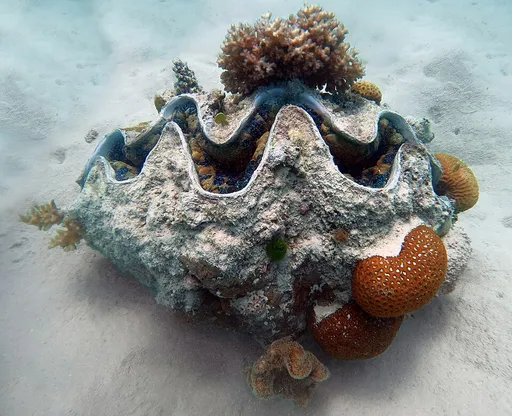
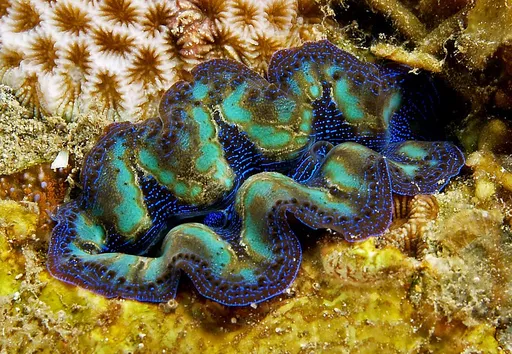
Tridacna gigas
Also known as True Giant Clam, Giant Clam
SaltwaterClam
Care at a glance
- Temperature
- 75–81°F
- 24–27°C
- pH
- 8.1–8.4
- Adult size
- 47.2 in
- 120 cm
- Minimum tank
- 198 gal
- 750 L
- Temperament
- Peaceful
- Social behavior
- Solitary
- Swim level
- Bottom
- Difficulty
- Medium
- Breeding
- Hard
- Rarity
- Rare
- Reef safe
- Reef safe
- Family
- Cardiidae (Tridacninae)
- Origin
- Indo-Pacific, from Myanmar and the Andaman Sea east to Kiribati, north to the Ryukyu Islands of Japan and south to Australia's Great Barrier Reef
Overview
Day-to-day care is closer to a derasa or squamosa than to the pickier maxima or crocea: moderate to fairly high, stable light and moderate flow are enough, so light itself is not the limiting factor here. Calcium, alkalinity, and magnesium still need to stay elevated and steady, calcium 400 to 440 ppm, alkalinity 8 to 11 dKH, and magnesium 1280 to 1350 ppm, to support what is, size for size, some of the fastest shell growth of any clam in the hobby. It belongs on open sand with real room around it, since even a juvenile a few inches across is on its way to becoming a two- to four-foot animal within a couple of decades. Specimens under about 8 cm should get a phytoplankton or greenwater supplement several times a week; larger ones need none. Mantle-nipping wrasses, crabs, shrimp, and pyramid snails are worth watching for, the same as with any Tridacna. Acclimate a new gigas the same careful way as any other clam, floating it to match temperature and drip acclimating slowly, but the bigger decision is whether the tank it is going into can still hold it comfortably ten or twenty years from now.
In the wild
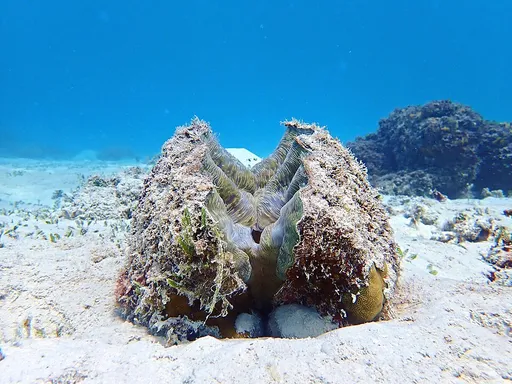
Lives on shallow reef flats and lagoons across the Indo-Pacific, though it has been fished to local extinction across much of its former range, with Australia's Great Barrier Reef and aquaculture centers in Palau now among its strongholds. Juveniles briefly byssal-attach, but an adult gigas is far too heavy to need any attachment at all and simply sits in the open on sand or rubble under its own weight. In the aquarium it needs open floor space on the sandbed, planned around the multi-hundred-gallon footprint it will eventually take up rather than its size on arrival.
Good to know
Tridacna gigas, family Cardiidae, subfamily Tridacninae, is the true giant clam and the largest living bivalve mollusk, capable of living well over a hundred years and growing steadily for most of that time. Like other Tridacnidae it hosts photosynthetic zooxanthellae throughout its mantle and depends on them for the bulk of its energy and shell-building material. Along with Tridacna derasa, it was one of the first two giant clam species listed under CITES Appendix II back in 1983, two years before that protection was extended to every species in the family.
Did you know
The heaviest gigas clam on record, recognized by Guinness World Records, weighed about 333 kg and was collected off Okinawa, Japan, while an even longer shell measuring 137 cm end to end turned up in Indonesia in the early 1800s, proof that a small aquacultured juvenile sold as a starter gigas has a lot of growing left to do.
Common questions
What size tank does a Gigas clam need?
A Gigas clam needs at least 198 gal (750 L). It spends most of its time in the bottom.
What temperature and pH does a Gigas clam need?
A Gigas clam is comfortable at 75–81°F (24–27°C) with a pH of 8.1–8.4.
How big does a Gigas clam get?
An adult Gigas clam reaches about 47.2 in (120 cm).
Related species
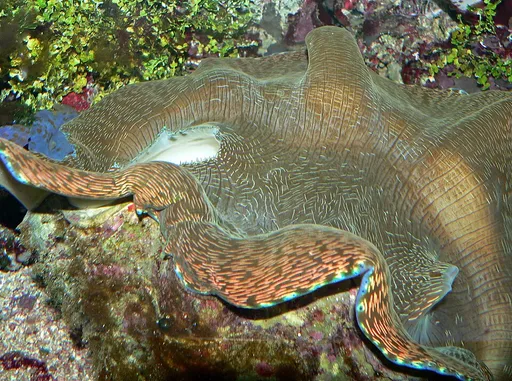 19.7 in (50 cm)40 gal (150 L)75–81°F (24–27°C)
Derasa clam
Tridacna derasa
19.7 in (50 cm) · 40 gal (150 L)
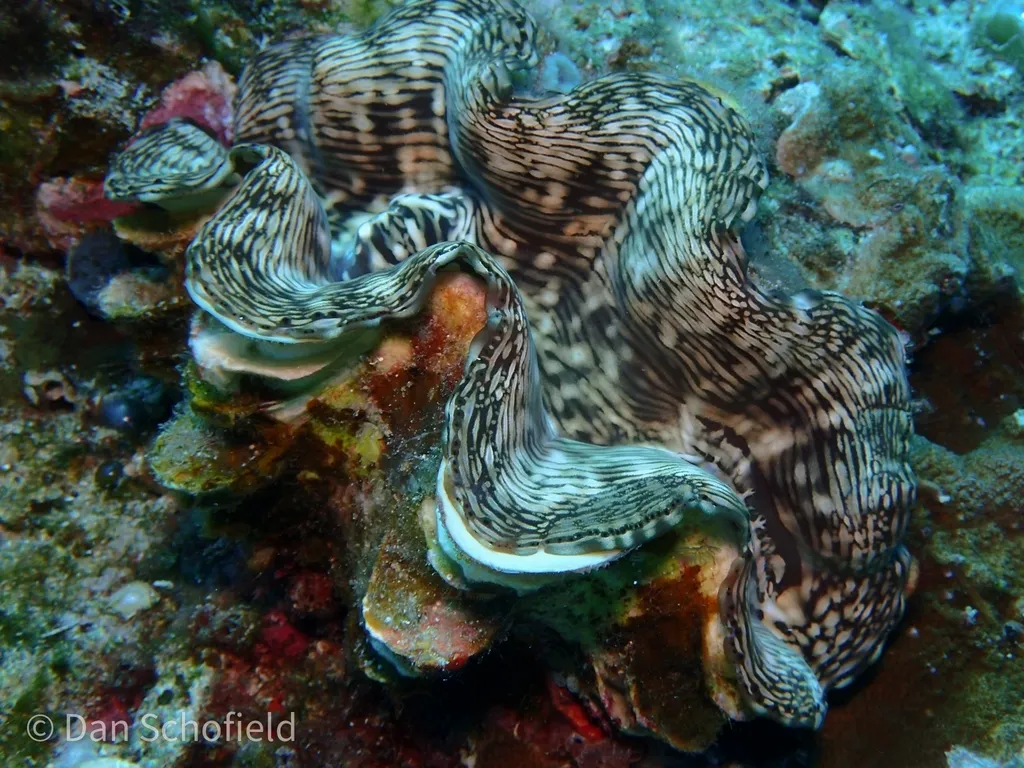 15.7 in (40 cm)40 gal (150 L)75–81°F (24–27°C)
Squamosa clam
Tridacna squamosa
15.7 in (40 cm) · 40 gal (150 L)
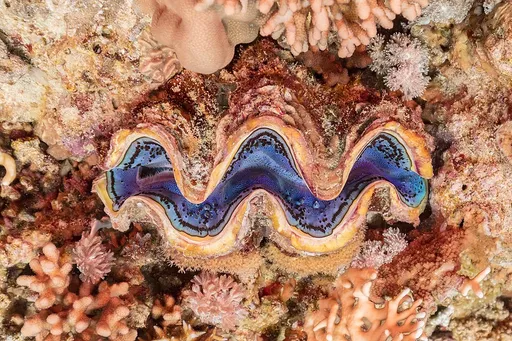 13.8 in (35 cm)40 gal (150 L)75–81°F (24–27°C)
Maxima clam
Tridacna maxima
13.8 in (35 cm) · 40 gal (150 L)
 5.9 in (15 cm)30 gal (115 L)75–81°F (24–27°C)
Crocea clam
Tridacna crocea
5.9 in (15 cm) · 30 gal (115 L)
 11.8 in (30 cm)40 gal (150 L)75–81°F (24–27°C)
Horse hoof clam
Hippopus hippopus
11.8 in (30 cm) · 40 gal (150 L)