Squamosa clam
Tridacna squamosa
Also known as Fluted Giant Clam, Fluted Clam, Scaly Clam
SaltwaterClam
Care at a glance
- Temperature
- 75–81°F
- 24–27°C
- pH
- 8.1–8.4
- Adult size
- 15.7 in
- 40 cm
- Minimum tank
- 40 gal
- 150 L
- Temperament
- Peaceful
- Social behavior
- Solitary
- Swim level
- Bottom
- Difficulty
- Medium
- Breeding
- Hard
- Rarity
- Common
- Reef safe
- Reef safe
- Family
- Cardiidae (Tridacninae)
- Origin
- Indo-Pacific and Red Sea, from East Africa across to the central Pacific, one of the two widest-ranging Tridacna species alongside the maxima clam
Overview
Squamosa is noticeably less demanding of intense light than maxima or crocea, doing well under moderate to fairly high reef lighting rather than needing the most intense fixture in the tank. Calcium, alkalinity, and magnesium should still run high and stable, calcium 380 to 450 ppm, alkalinity 8 to 11 dKH, and magnesium 1280 to 1350 ppm, since it is a fast grower that can triple in size within a year once settled. It adapts well either wedged into a rock crevice or set on open sand, giving more placement flexibility than most other Tridacna. Clams under 5 cm benefit from phytoplankton or greenwater feedings a few times a week, while larger ones live on light alone. It is still at risk from mantle-nipping wrasses, crabs, shrimp, and pyramid snails, despite its generally hardy reputation. Acclimate new arrivals slowly: float to match temperature, drip acclimate over an hour or more, and start it in lower light for the first week or two before moving it toward brighter placement.
In the wild
Ranges across shallow, wave-swept reef flats and lagoons over most of the Indo-Pacific and into the Red Sea, usually in less than 10 metres of water. Juveniles byssal-attach to rock, but many adults settle loosely on sand or rubble with only a small byssal opening left in the shell. In the aquarium it does well either wedged into rockwork or set on the sandbed, and tolerates a bit more shade than a maxima or crocea kept nearby.
Good to know
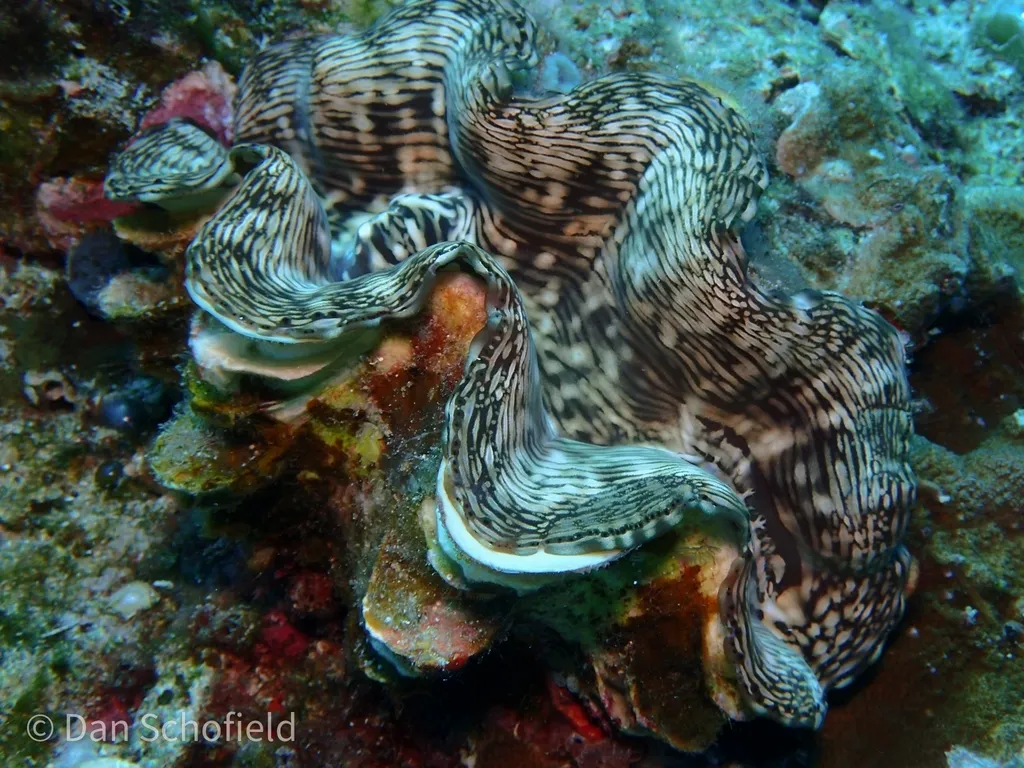
Tridacna squamosa, family Cardiidae, subfamily Tridacninae, is the fluted giant clam, identified by five or six rows of large, leaf-like scutes running down the shell folds, a feature absent in every other Tridacna species. Research on juveniles suggests the scutes help fend off small predators before the shell is thick enough to do the job alone. It hosts photosynthetic zooxanthellae across its colorful outer mantle and uses their output to help build its shell, and like every member of the family it is protected under CITES Appendix II, requiring an export permit for any international trade in live animals or shells.
Did you know
Despite growing as large as 40 cm on reef flats pounded by heavy wave action, squamosa has an unusually small byssal opening for its size, and many adults in the trade are only loosely anchored or not attached at all, which is not a sign of a problem the way it would be in a maxima or crocea.
Common questions
What size tank does a Squamosa clam need?
A Squamosa clam needs at least 40 gal (150 L). It spends most of its time in the bottom.
What temperature and pH does a Squamosa clam need?
A Squamosa clam is comfortable at 75–81°F (24–27°C) with a pH of 8.1–8.4.
How big does a Squamosa clam get?
An adult Squamosa clam reaches about 15.7 in (40 cm).
Related species
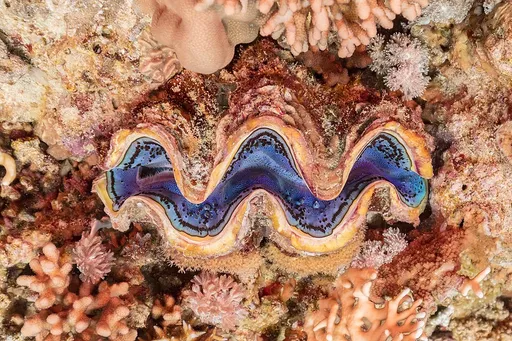 13.8 in (35 cm)40 gal (150 L)75–81°F (24–27°C)
Maxima clam
Tridacna maxima
13.8 in (35 cm) · 40 gal (150 L)
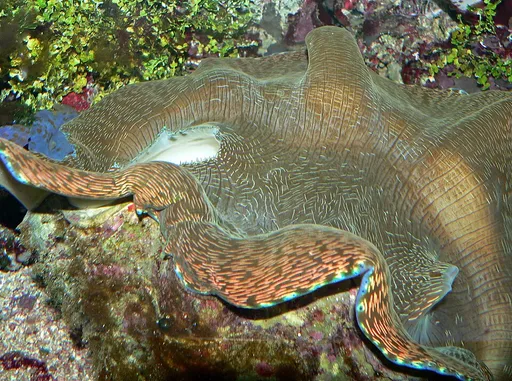 19.7 in (50 cm)40 gal (150 L)75–81°F (24–27°C)
Derasa clam
Tridacna derasa
19.7 in (50 cm) · 40 gal (150 L)
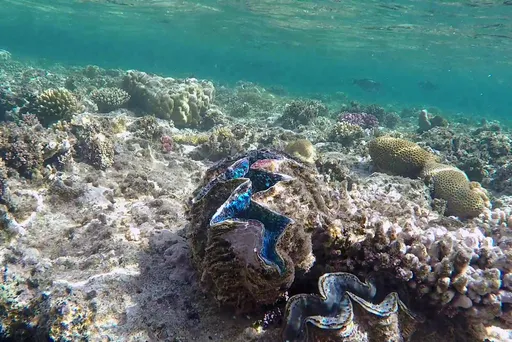 11.8 in (30 cm)66 gal (250 L)75–82°F (24–28°C)
Squamosina clam
Tridacna squamosina
11.8 in (30 cm) · 66 gal (250 L)
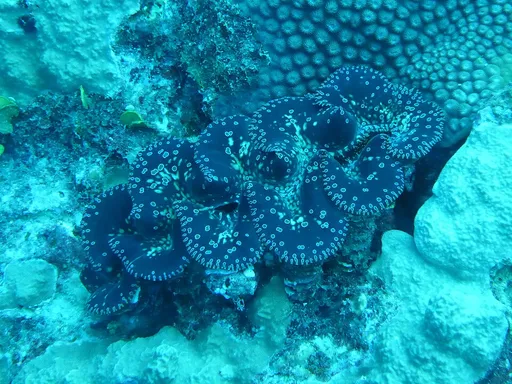 9.8 in (25 cm)40 gal (150 L)75–81°F (24–27°C)
Noah's clam
Tridacna noae
9.8 in (25 cm) · 40 gal (150 L)
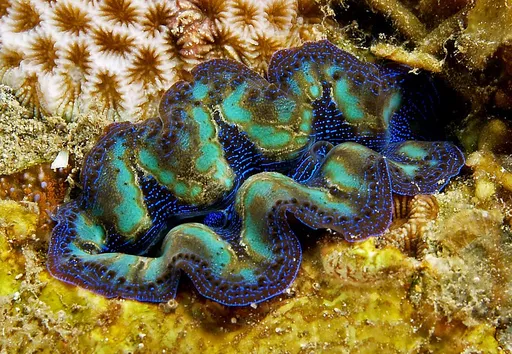 5.9 in (15 cm)30 gal (115 L)75–81°F (24–27°C)
Crocea clam
Tridacna crocea
5.9 in (15 cm) · 30 gal (115 L)
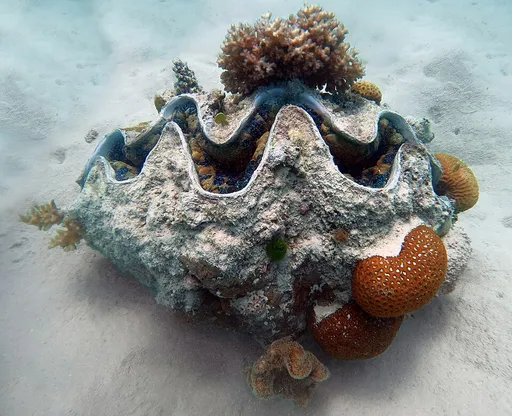 47.2 in (120 cm)198 gal (750 L)75–81°F (24–27°C)
Gigas clam
Tridacna gigas
47.2 in (120 cm) · 198 gal (750 L)