Peaceful community fish
A community tank works when every fish in it is genuinely peaceful and wants similar water. The species here are rated peaceful in our catalog. Check each profile for tank size and the conditions they share.
At a glance
- Tank size
- 5–396 gal
- 5 gal (20 L) to 396 gal (1,500 L); half the list needs 20 gal (75 L) or more
- Temperature
- 72–81°F
- 22–27°C, most of the list
- pH
- 6.0–7.5
- Most of the list
- Difficulty
- 219 easy
- 645 medium · 134 difficult
987 species and 66 varieties
Start here
The community classics
The harlequin rasbora is marked beginner and peaceful at 2 inches (5 cm) for 15 gallons (55 liters), and it takes most tap water. The neon tetra is the same rating at 1.5 inches (3.75 cm) for 11 gallons (40 liters), and the cardinal tetra is its warmer, redder cousin marked easy. The bronze cory is the bottom fish for a first community, 3 inches (7.5 cm) for 20 gallons (75 liters), kept in a group of six. The cherry barb is the one barb marked beginner and peaceful, 2 inches (5 cm) for 20 gallons (75 liters). The kuhli loach is a 3.9 inch (10 cm) eel-shaped fish marked easy that spends the day under the wood and the night on the sand.
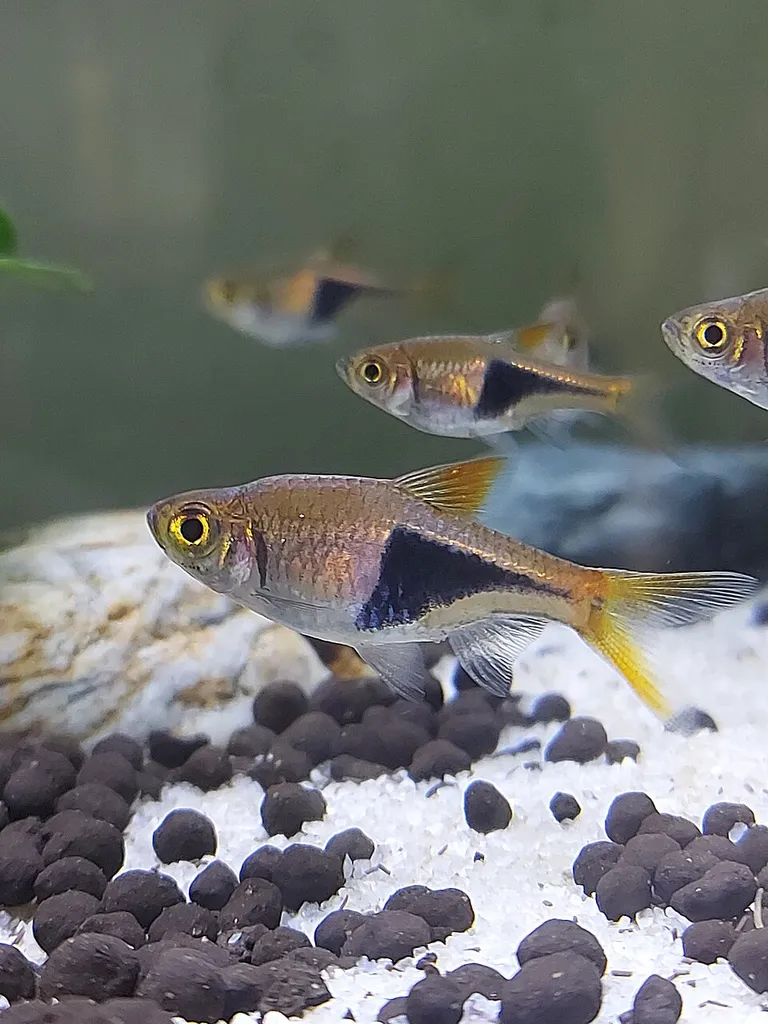
Harlequin rasbora
Trigonostigma heteromorpha
Freshwater- Size
- 2 in (5 cm)
- Tank
- 15 gal (55 L)
- Water
- 72–82°F (22–28°C)
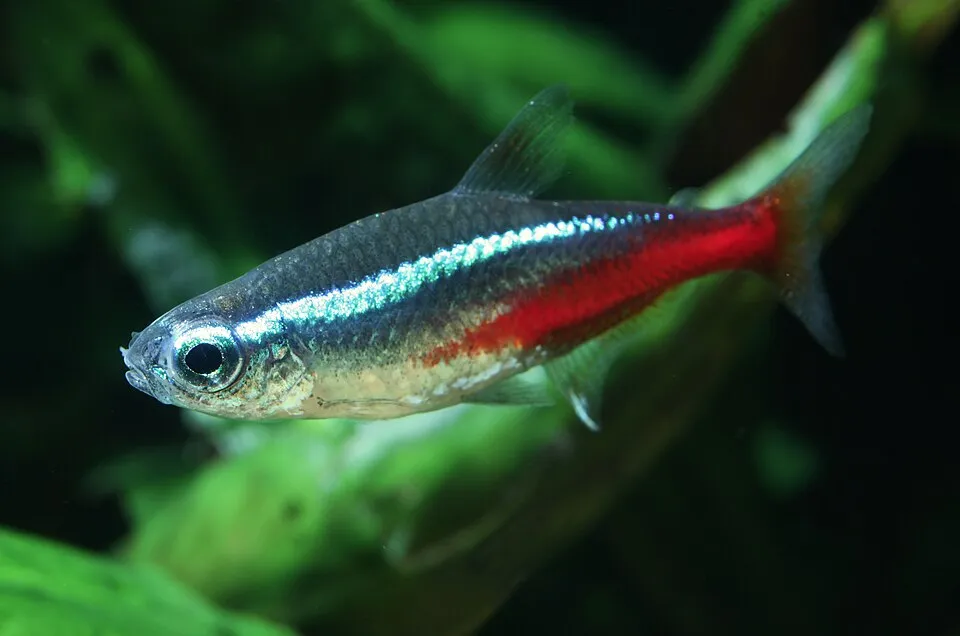
Neon tetra
Paracheirodon innesi
Freshwater- Size
- 1.5 in (3.8 cm)
- Tank
- 11 gal (40 L)
- Water
- 70–77°F (21–25°C)
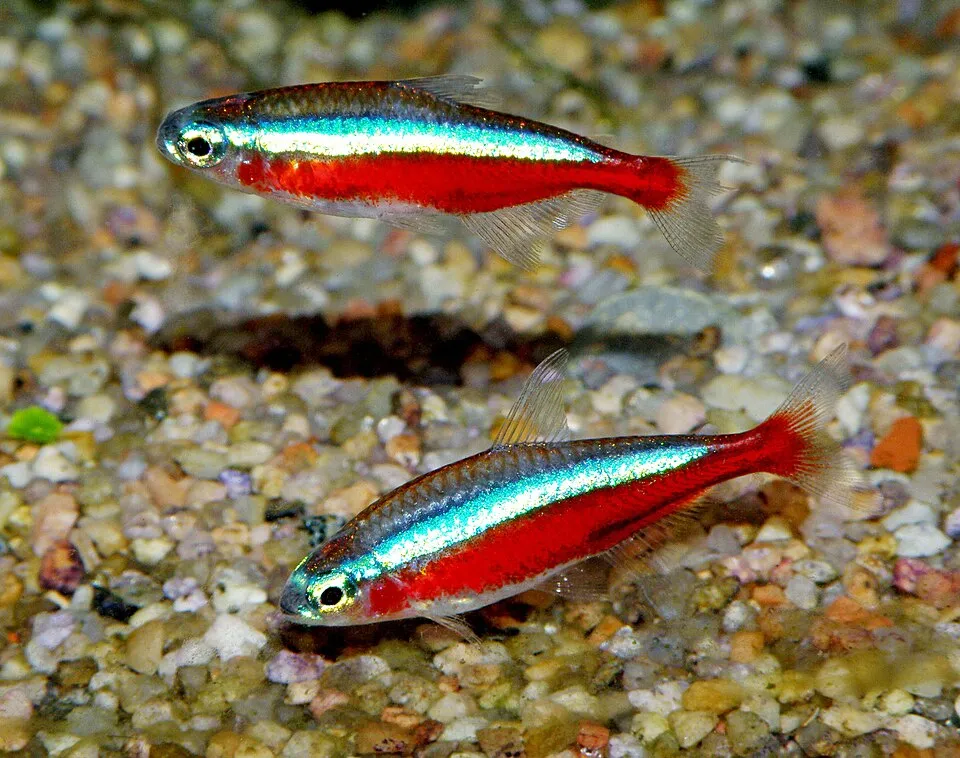
Cardinal tetra
Paracheirodon axelrodi
Freshwater- Size
- 1.8 in (4.5 cm)
- Tank
- 16 gal (60 L)
- Water
- 73–84°F (23–29°C)
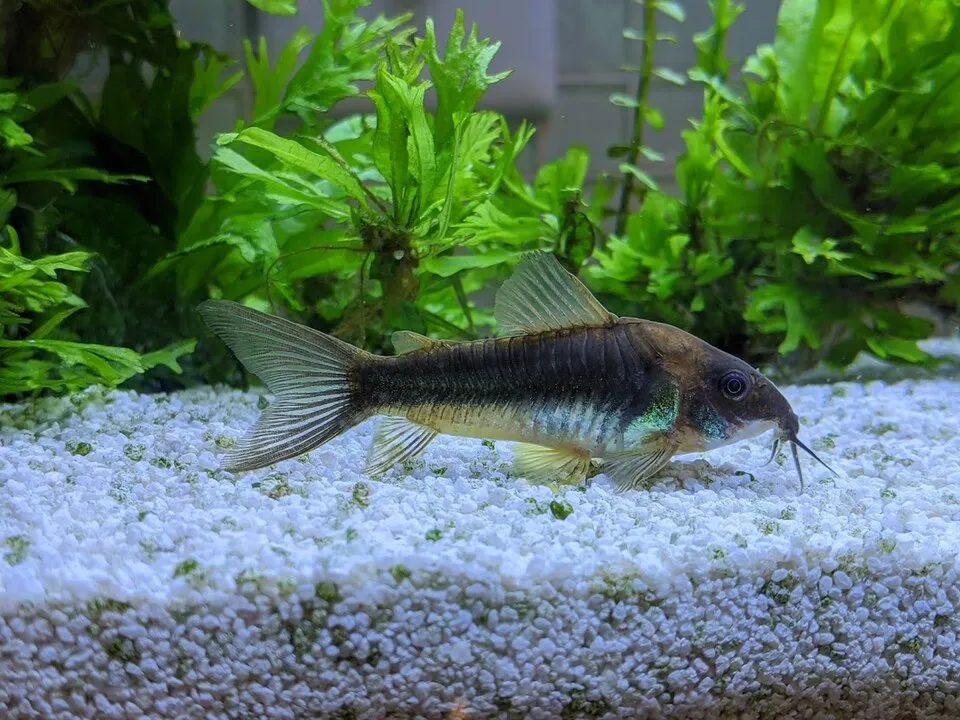
Bronze cory
Osteogaster aenea
Freshwater- Size
- 3 in (7.5 cm)
- Tank
- 20 gal (75 L)
- Water
- 70–81°F (21–27°C)
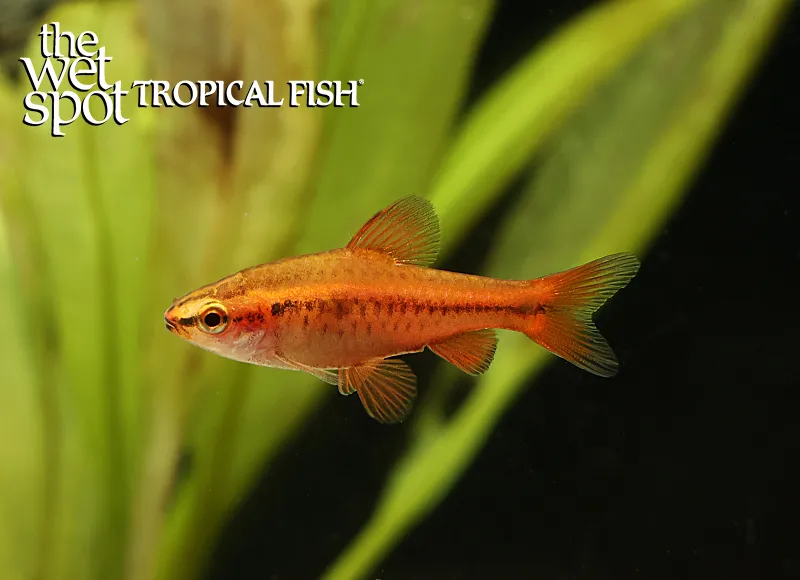
Cherry barb
Rohanella titteya
Freshwater- Size
- 2 in (5 cm)
- Tank
- 20 gal (75 L)
- Water
- 72–81°F (22–27°C)
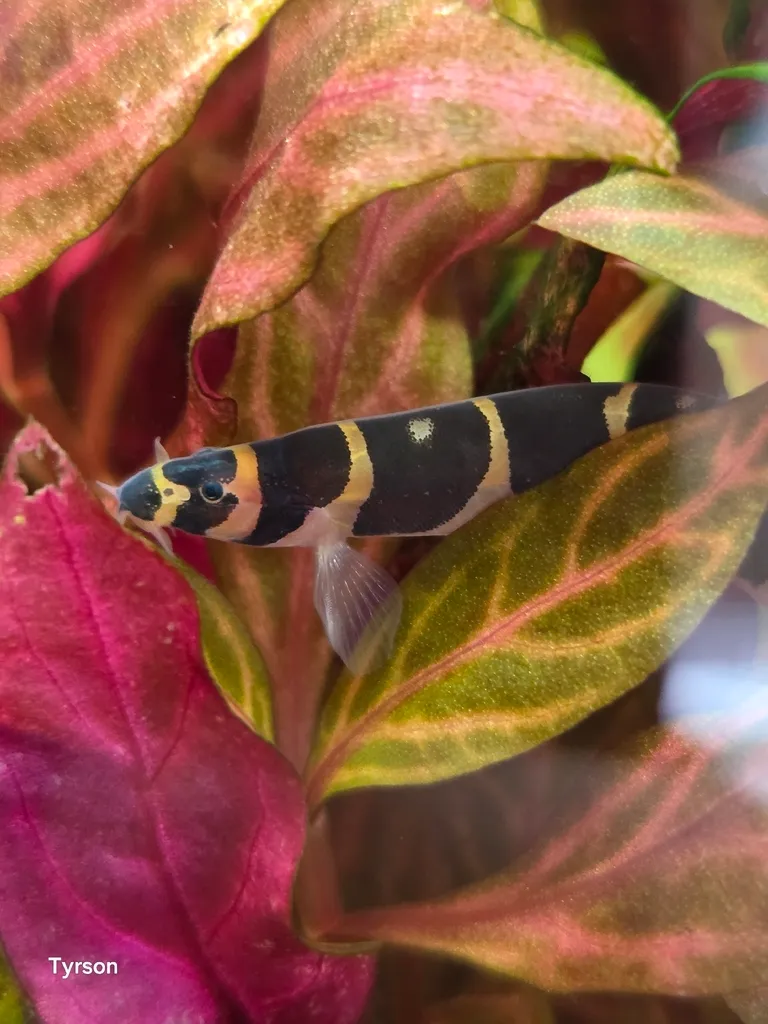
Kuhli loach
Pangio kuhlii
Freshwater- Size
- 3.9 in (10 cm)
- Tank
- 20 gal (75 L)
- Water
- 72–82°F (22–28°C)
The rule
What peaceful means here
Every fish on this page carries the top temperament mark, peaceful. The mark below it, mostly peaceful, covers fish that are fine in most tanks with one known habit: the guppy, the platy, the honey gourami and the dwarf rams are all one step down, which is why they are not here. They mix well with this list, and the stocking calculator checks the pairing. Peaceful fish still eat what fits in the mouth, so a community works by size as much as by temper, and it works by water: every species in the tank shares a temperature and a pH range.
- 01
The top mark
Peaceful, not mostly peaceful
- 02
Same water
Every fish shares a temperature and pH range
- 03
No mouth fits another fish
A 2 inch fish is food to a 6 inch one
- 04
Three levels
Top, middle and bottom fish share the tank without a crowd
The middle
The middle of the tank
The rummy-nose tetra is the tightest school in the hobby at 2 inches (5 cm) for 20 gallons (75 liters), marked easy. The black neon tetra is marked beginner at 1.4 inches (3.5 cm). The lemon tetra and the x-ray tetra both stay around 2 inches (5 cm) and take a pH up to 8, so they suit hard water where cardinals do not. The dwarf rainbowfish is marked easy at 2.8 inches (7 cm) for 20 gallons (75 liters), the rainbowfish that fits a normal tank. The threadfin rainbowfish is 1.6 inches (4 cm) for 13 gallons (50 liters), marked medium, with fins that any nipper will shred, which is why it lives on a page of peaceful fish.
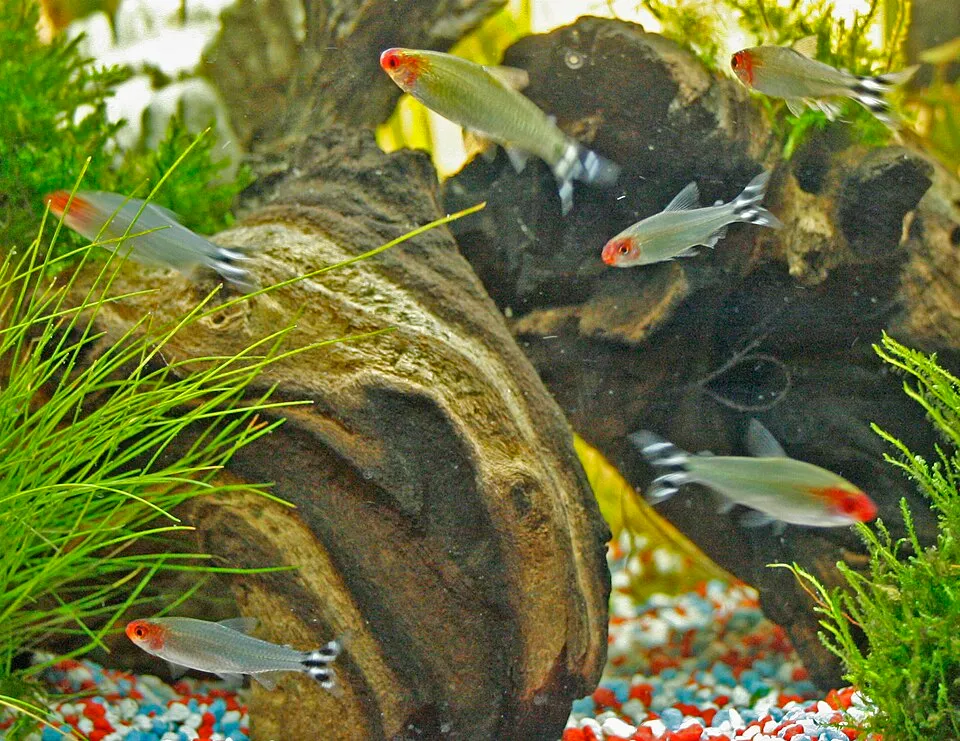
Rummy-nose tetra
Hemigrammus rhodostomus
Freshwater2 in (5 cm) · 20 gal (75 L)75–81°F (24–27°C)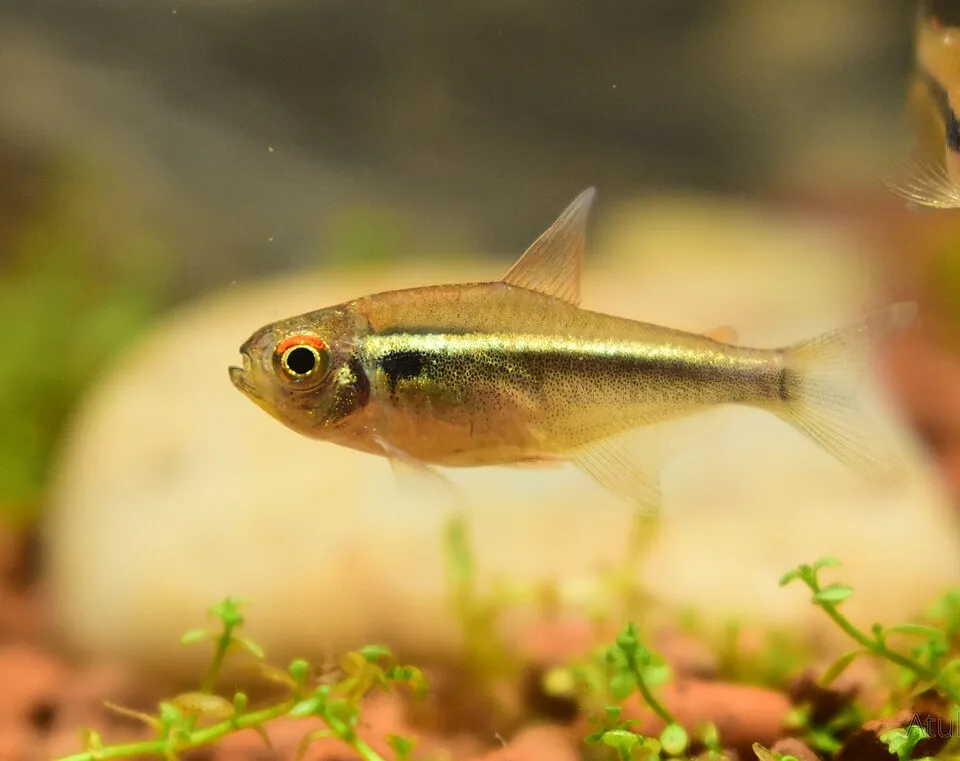
Black neon tetra
Hyphessobrycon herbertaxelrodi
Freshwater1.4 in (3.5 cm) · 16 gal (60 L)72–82°F (22–28°C)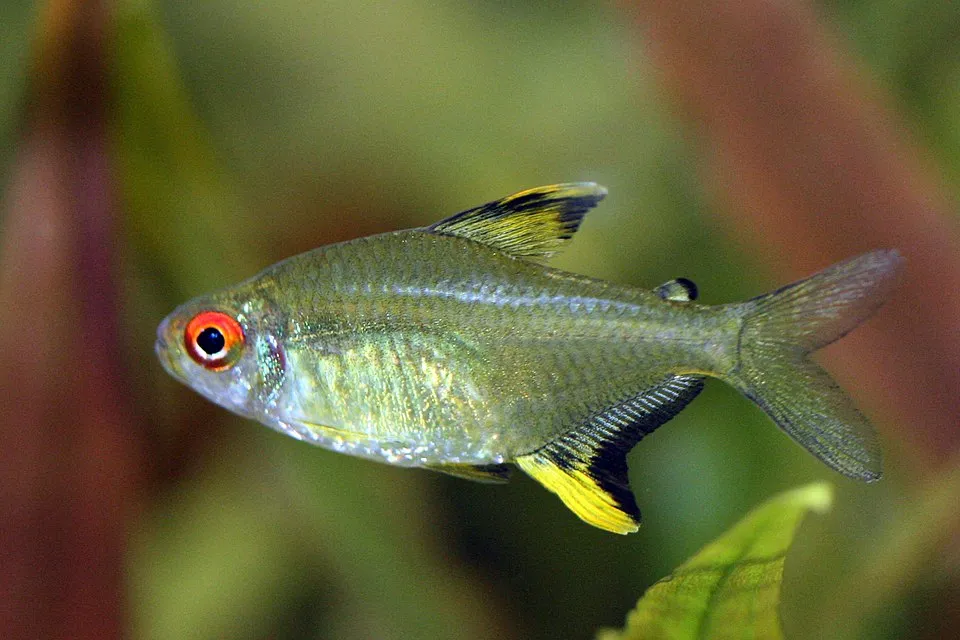
Lemon tetra
Hyphessobrycon pulchripinnis
Freshwater2 in (5 cm) · 17 gal (65 L)72–82°F (22–28°C)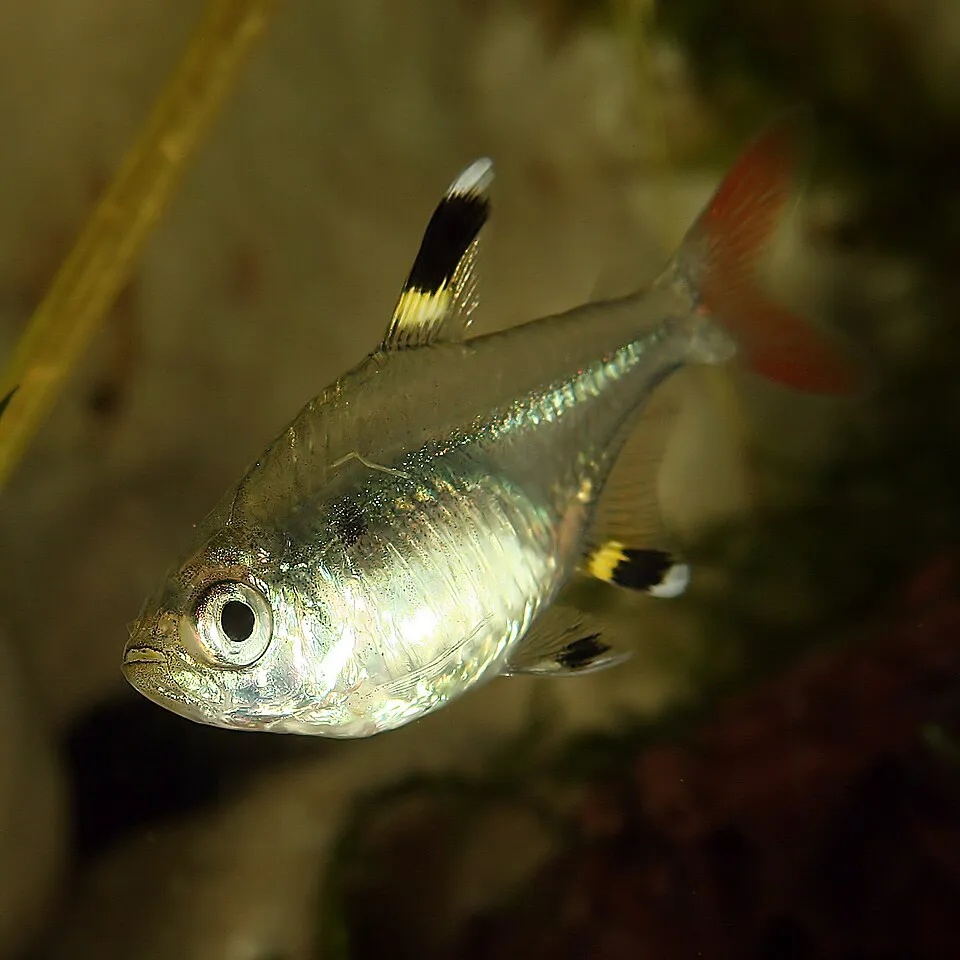
X-ray tetra
Pristella maxillaris
Freshwater1.8 in (4.5 cm) · 18 gal (70 L)72–82°F (22–28°C)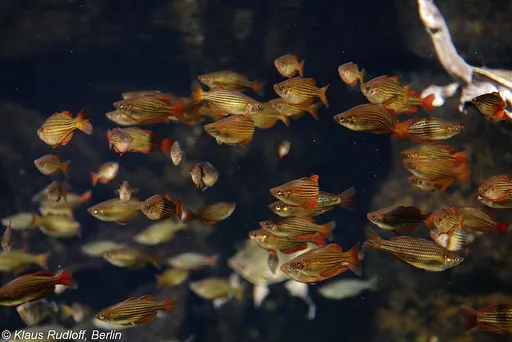
Dwarf rainbowfish
Melanotaenia maccullochi
Freshwater2.8 in (7 cm) · 20 gal (75 L)72–82°F (22–28°C)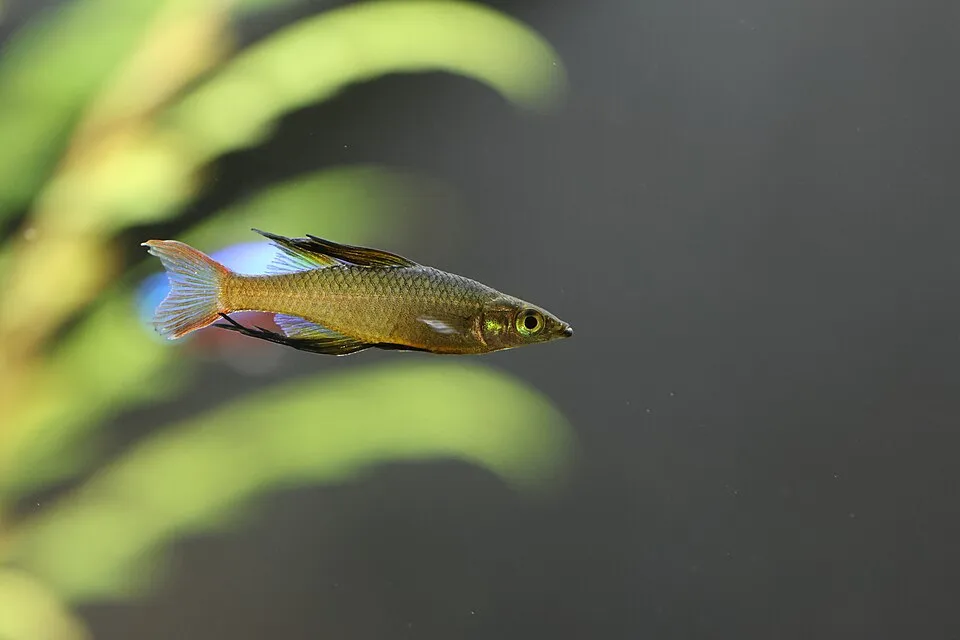
Threadfin rainbowfish
Iriatherina werneri
Freshwater1.6 in (4 cm) · 13 gal (50 L)72–86°F (22–30°C)
The bottom
The bottom of the tank
The panda cory is 2 inches (5 cm) for 15 gallons (55 liters), marked easy, and the cory most shops stock. Sterba's cory is 2.6 inches (6.5 cm) and lists 75–82°F (24–28°C), the cory for a warm tank. The pygmy cory is 1.3 inches (3.3 cm) and swims in open water as often as on the sand. The otocinclus grazes algae at 2 inches (5 cm) for 20 gallons (75 liters), marked medium because a new tank has nothing for it to eat. The bristlenose pleco is the pleco that stays a sensible size, 4.9 inches (12.5 cm) for 20 gallons (75 liters). The yoyo loach reaches 6.3 inches (16 cm), lists 42 gallons (160 liters) and eats snails.
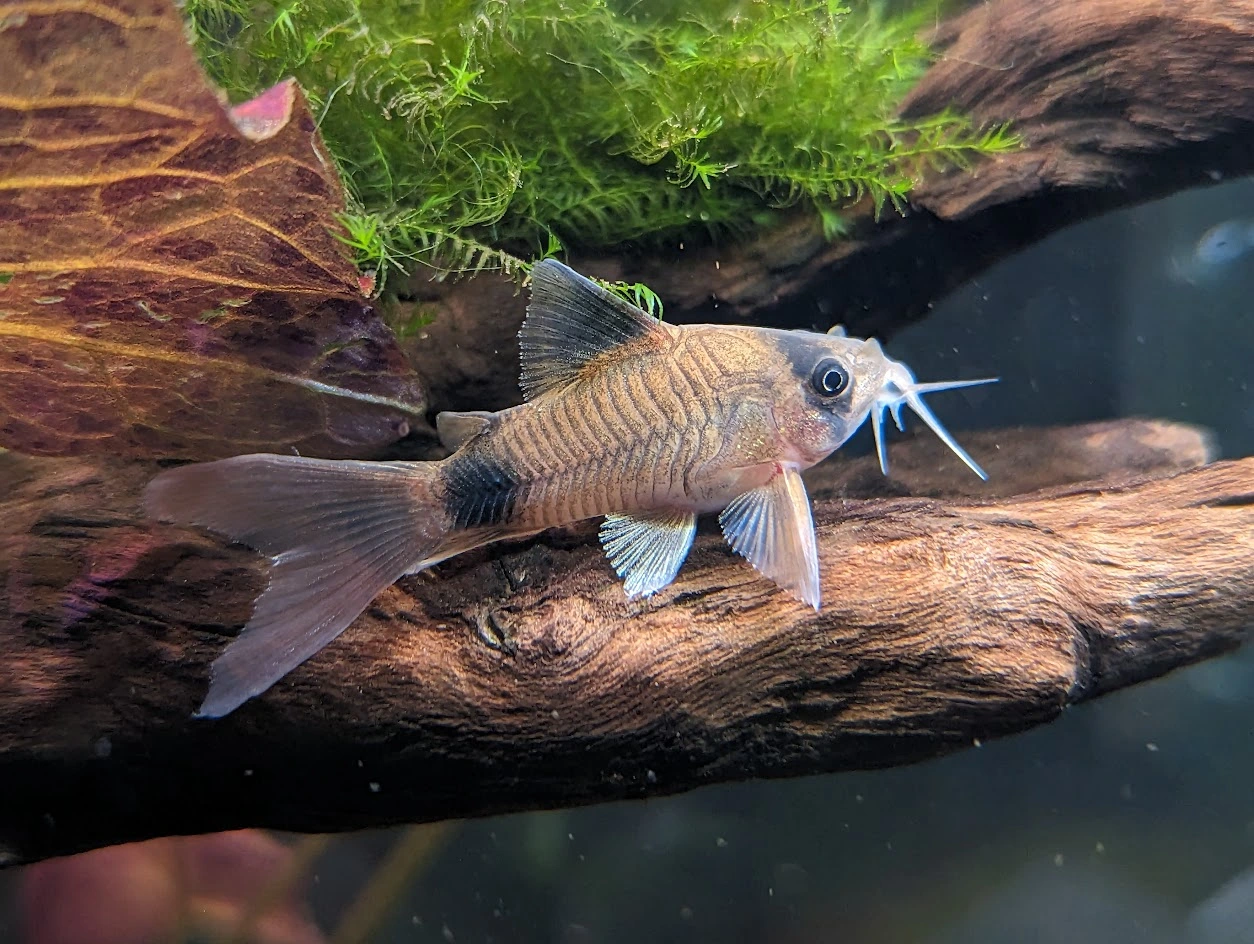
Panda cory
Hoplisoma panda
Freshwater2 in (5 cm) · 15 gal (55 L)72–77°F (22–25°C)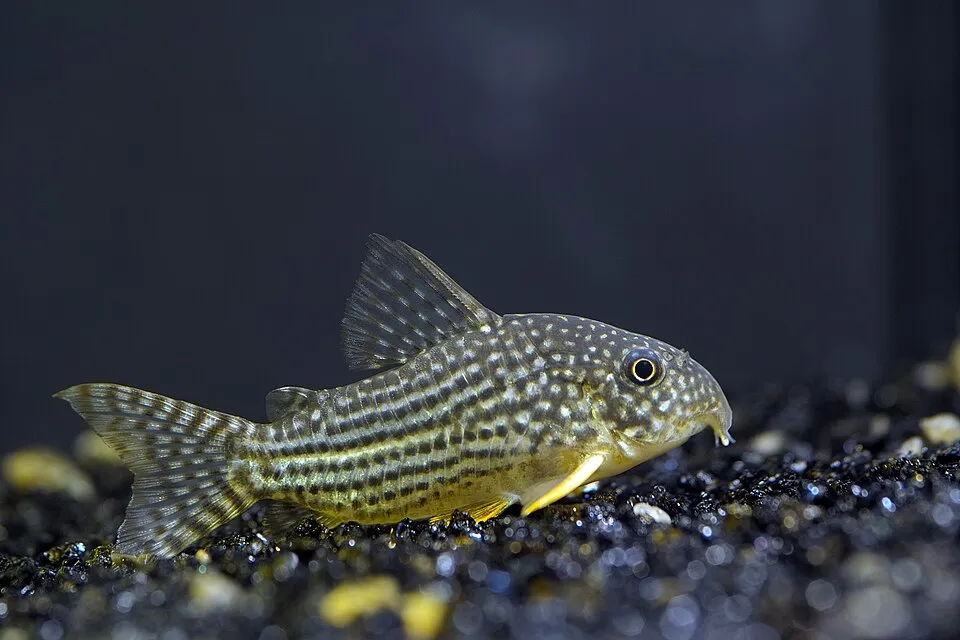
Sterba's cory
Hoplisoma sterbai
Freshwater2.6 in (6.5 cm) · 20 gal (75 L)75–82°F (24–28°C)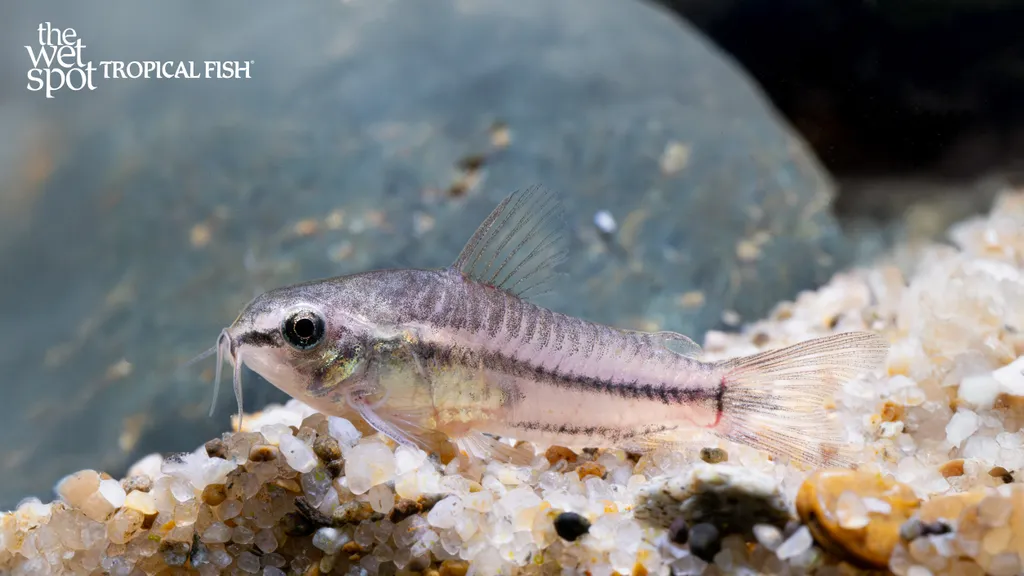
Pygmy cory
Gastrodermus pygmaeus
Freshwater1.3 in (3.3 cm) · 13 gal (50 L)72–79°F (22–26°C)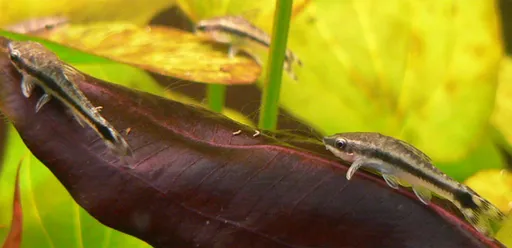
Common otocinclus
Otocinclus vittatus
Freshwater2 in (5 cm) · 20 gal (75 L)72–79°F (22–26°C)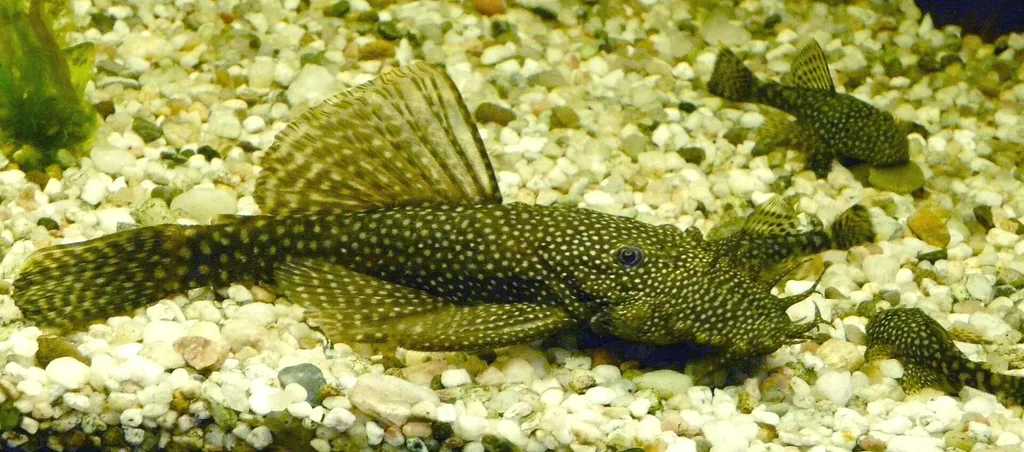
Bristlenose pleco
Ancistrus sp.
Freshwater4.9 in (12.5 cm) · 20 gal (75 L)70–79°F (21–26°C)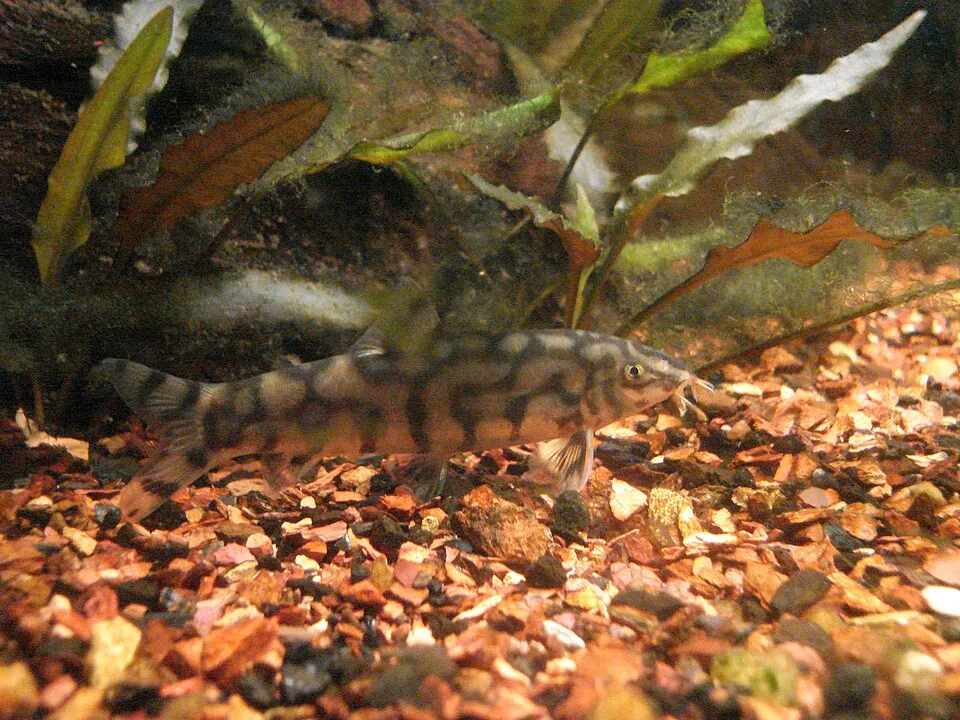
Yoyo loach
Botia almorhae
Freshwater6.3 in (16 cm) · 42 gal (160 L)66–81°F (19–27°C)
The top
The top of the tank
The marbled hatchetfish lives at the surface, 1.6 inches (4 cm) for 32 gallons (120 liters), marked medium, and it jumps through any gap in the lid. The pygmy hatchetfish is the smaller one at 1 inch (2.5 cm). The golden pencilfish hangs under the surface at 2.4 inches (6 cm) for 18 gallons (70 liters). The glass catfish schools in the upper half at 2.8 inches (7 cm) for 30 gallons (115 liters), marked easy, and shows its spine through its body. The white cloud mountain minnow is marked beginner at 1.6 inches (4 cm) and lists 57–72°F (14–22°C), so it suits an unheated tank. Endler's livebearer is 1.6 inches (4 cm) for 5 gallons (20 liters), marked beginner, and breeds without help.
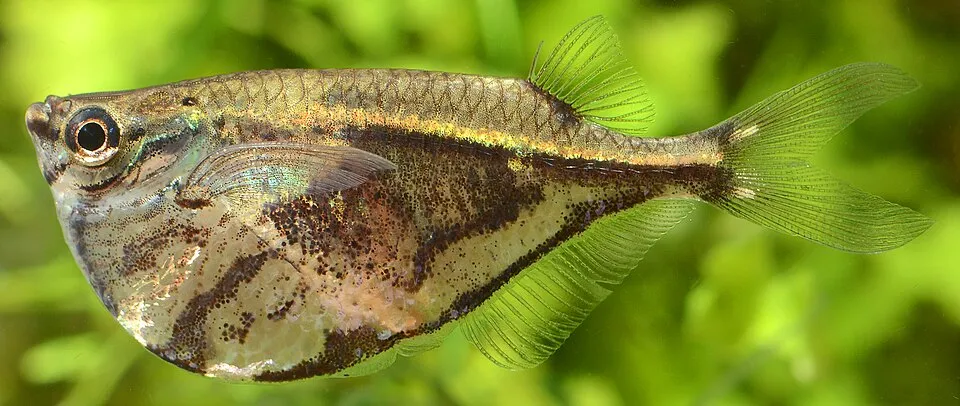
Marbled hatchetfish
Carnegiella strigata
Freshwater1.6 in (4 cm) · 32 gal (120 L)68–82°F (20–28°C)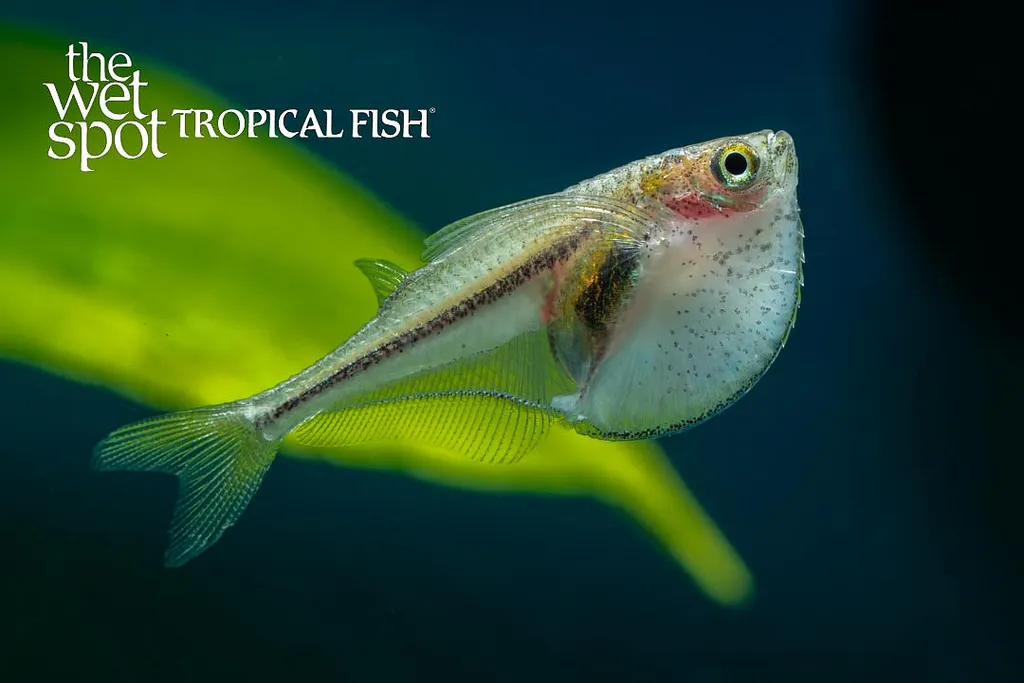
Pygmy hatchetfish
Carnegiella myersi
Freshwater1 in (2.5 cm) · 26 gal (100 L)73–79°F (23–26°C)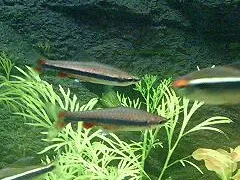
Golden pencilfish
Nannostomus beckfordi
Freshwater2.4 in (6 cm) · 18 gal (70 L)70–81°F (21–27°C)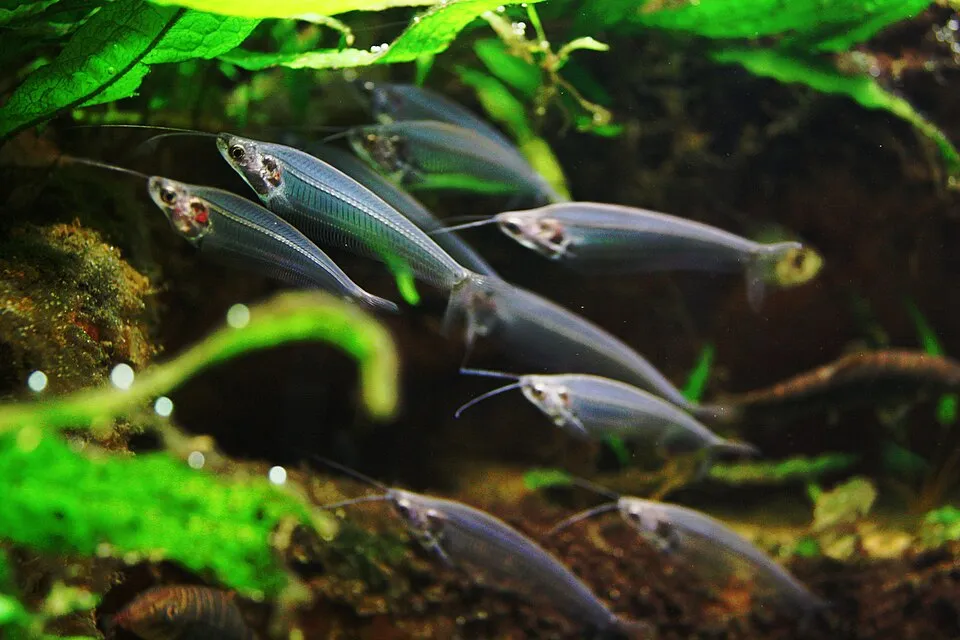
Glass catfish
Kryptopterus vitreolus
Freshwater2.8 in (7 cm) · 30 gal (115 L)70–79°F (21–26°C)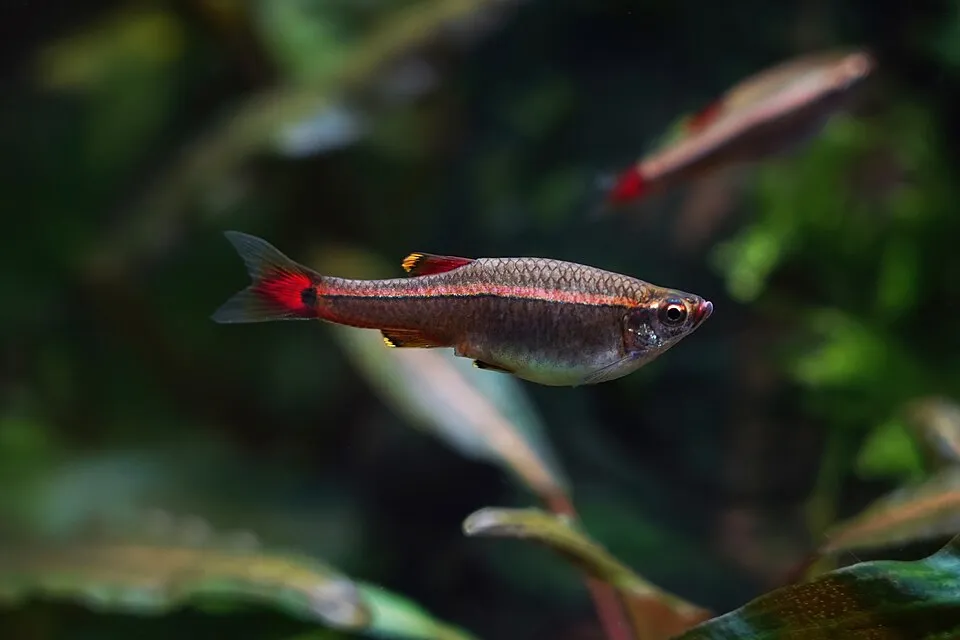
White Cloud Mountain minnow
Tanichthys albonubes
Freshwater1.6 in (4 cm) · 12 gal (45 L)57–72°F (14–22°C)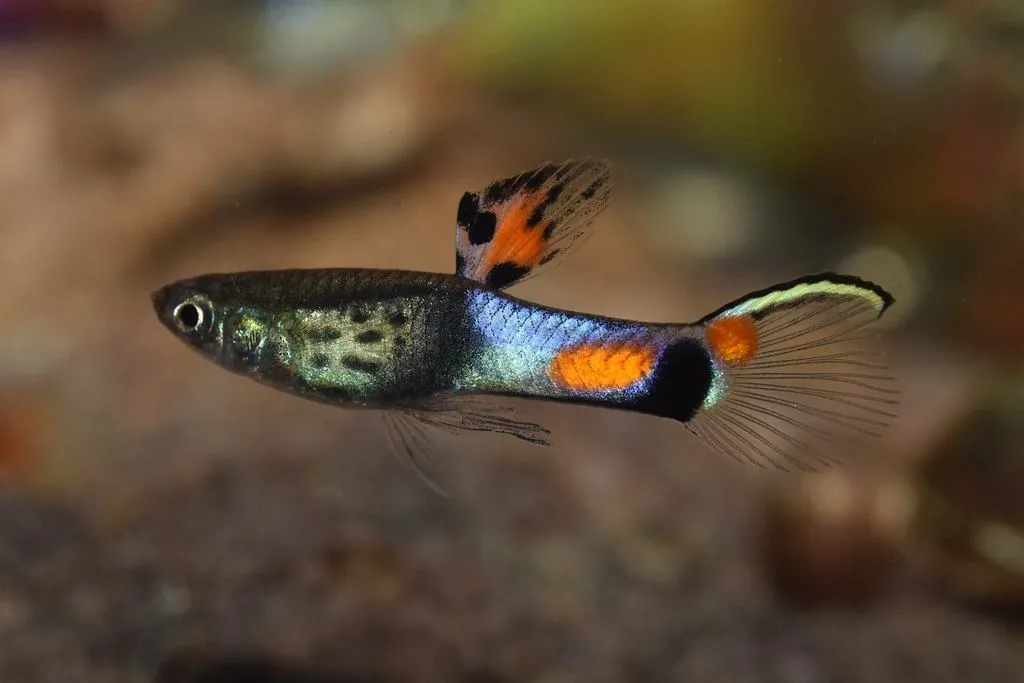
Endler's livebearer
Poecilia wingei
FreshwaterBrackish1.6 in (4 cm) · 5 gal (20 L)72–86°F (22–30°C)
Showpieces
Big fish that stay peaceful
The discus is marked peaceful and difficult, 7.9 inches (20 cm) for 65 gallons (245 liters) at 79–90°F (26–32°C), a shoaling fish kept in a group of six. The Congo tetra is 3.1 inches (8 cm) for 24 gallons (90 liters), marked easy. The spotted silver dollar is 5.5 inches (14 cm) for 53 gallons (200 liters) and eats plants. The red rainbowfish reaches 5.5 inches (14 cm) and lists 34 gallons (130 liters); the banded rainbowfish 5.9 inches (15 cm) and 50 gallons (190 liters). The uaru is a cichlid marked peaceful, 11.8 inches (30 cm) for 65 gallons (245 liters) at 81–86°F (27–30°C), kept in a group.
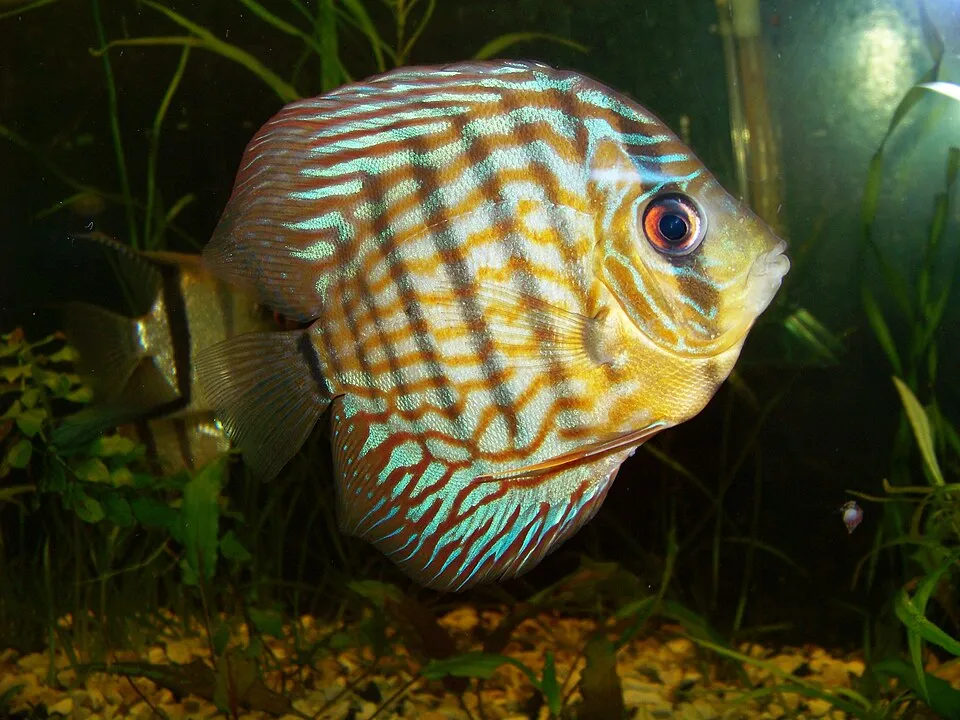
Discus
Symphysodon aequifasciatus
Freshwater7.9 in (20 cm) · 65 gal (245 L)79–90°F (26–32°C)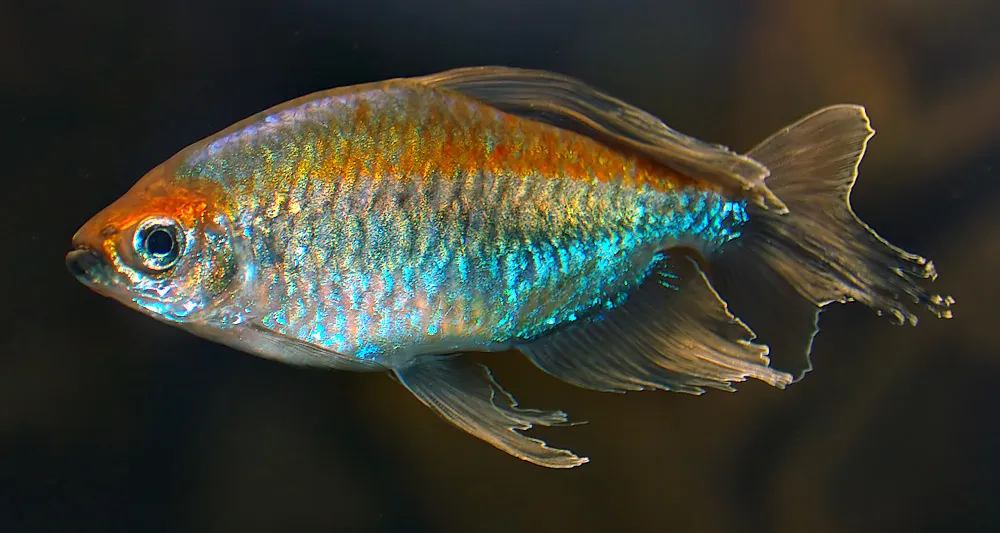
Congo tetra
Phenacogrammus interruptus
Freshwater3.1 in (8 cm) · 24 gal (90 L)73–82°F (23–28°C)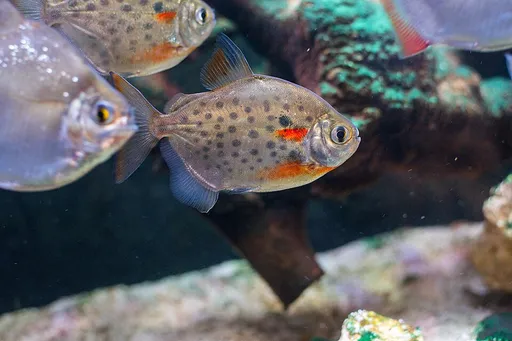
Spotted silver dollar
Metynnis lippincottianus
Freshwater5.5 in (14 cm) · 53 gal (200 L)73–81°F (23–27°C)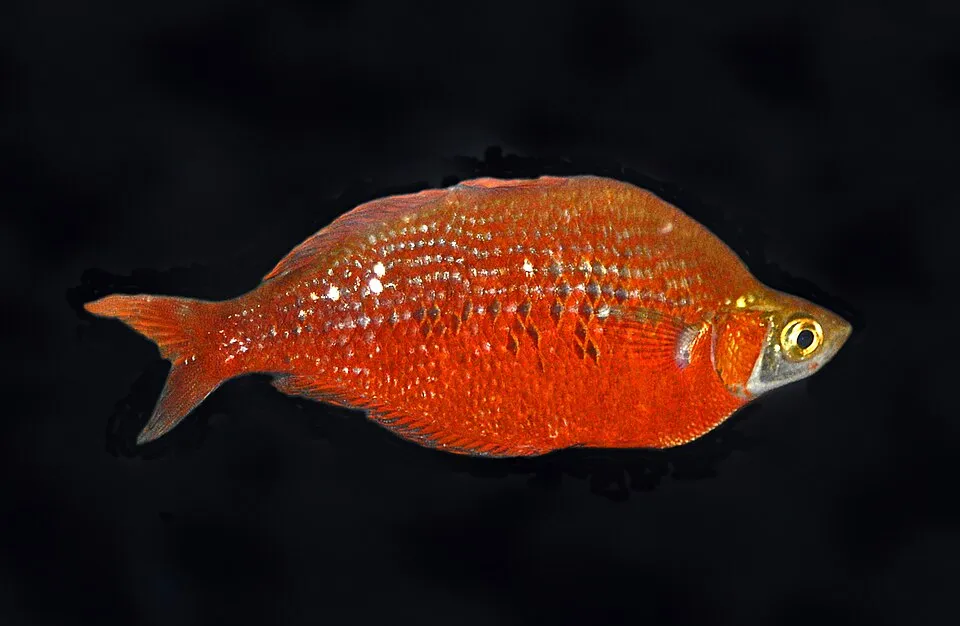
Red rainbowfish
Glossolepis incisus
Freshwater5.5 in (14 cm) · 34 gal (130 L)72–77°F (22–25°C)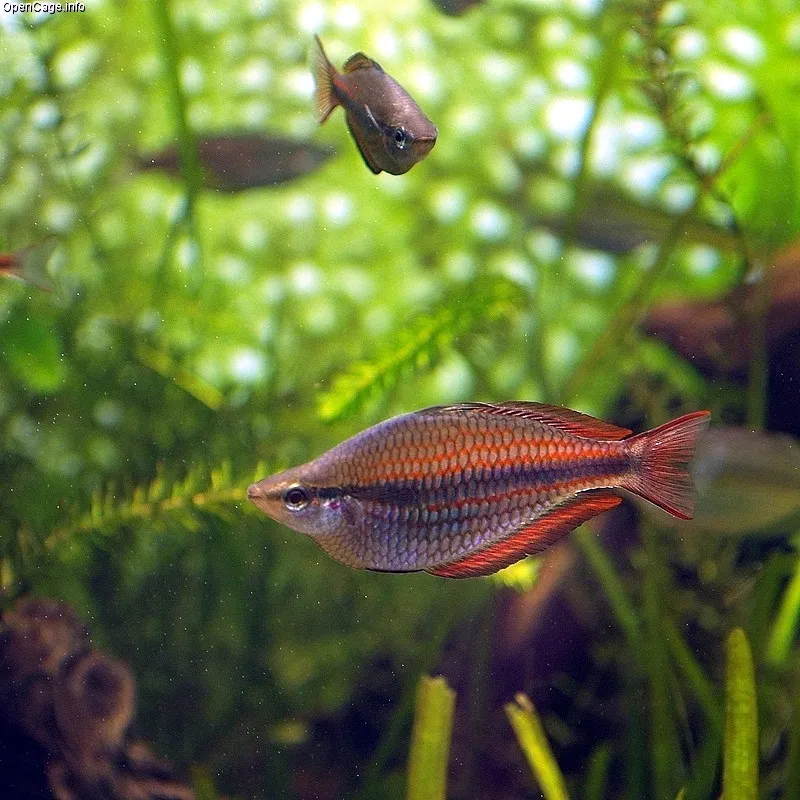
Banded rainbowfish
Melanotaenia trifasciata
Freshwater5.9 in (15 cm) · 50 gal (190 L)75–84°F (24–29°C)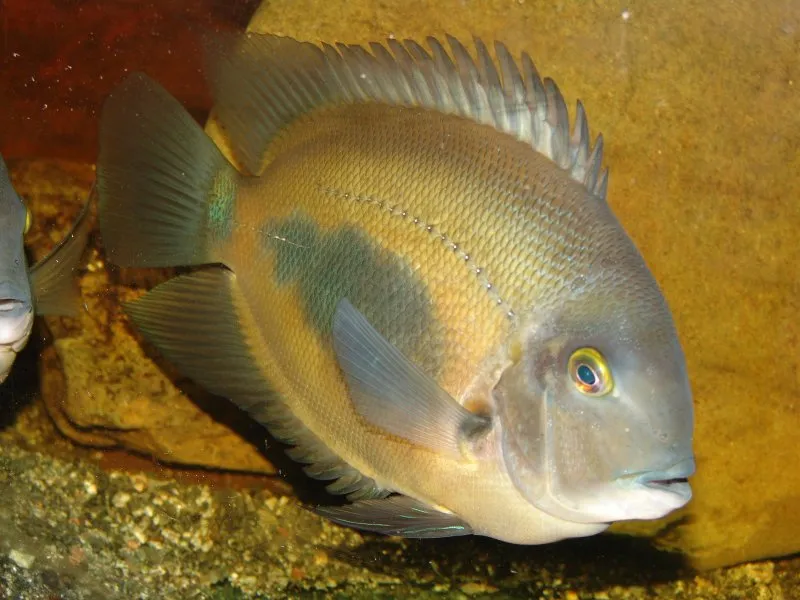
Uaru cichlid
Uaru amphiacanthoides
Freshwater11.8 in (30 cm) · 65 gal (245 L)81–86°F (27–30°C)
By the numbers
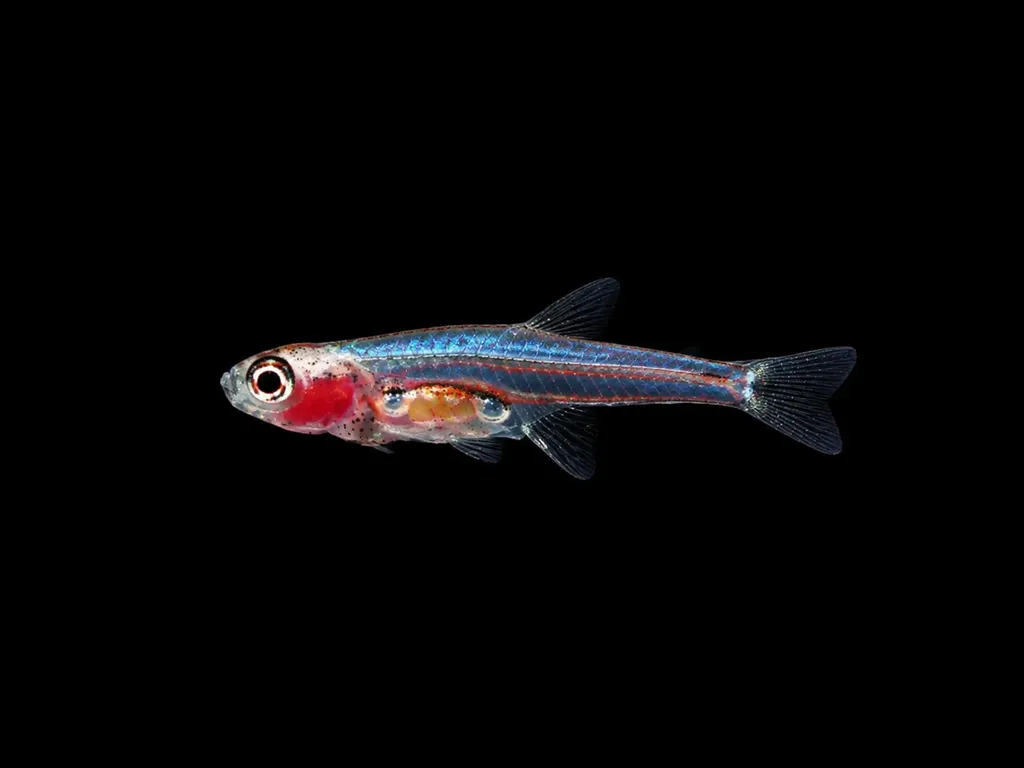
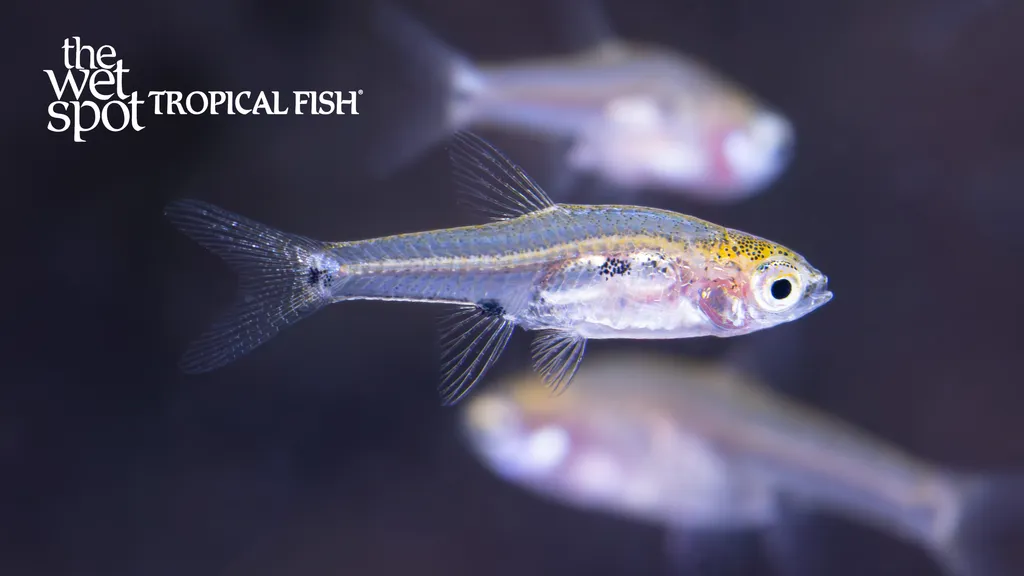
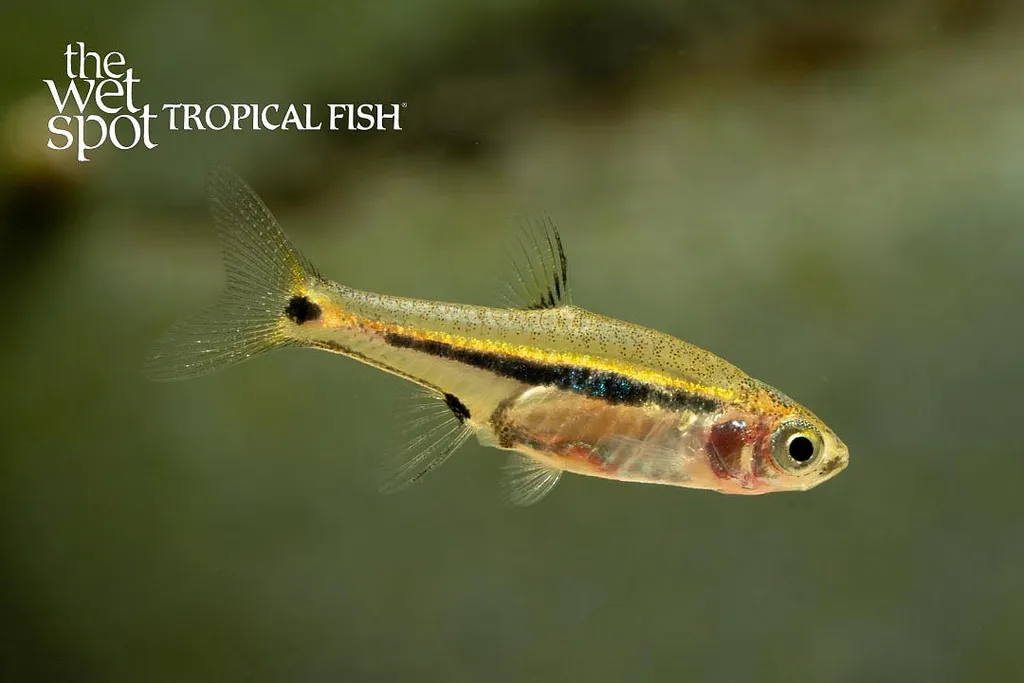
Smallest
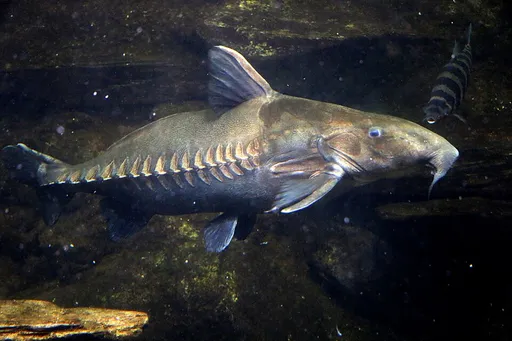
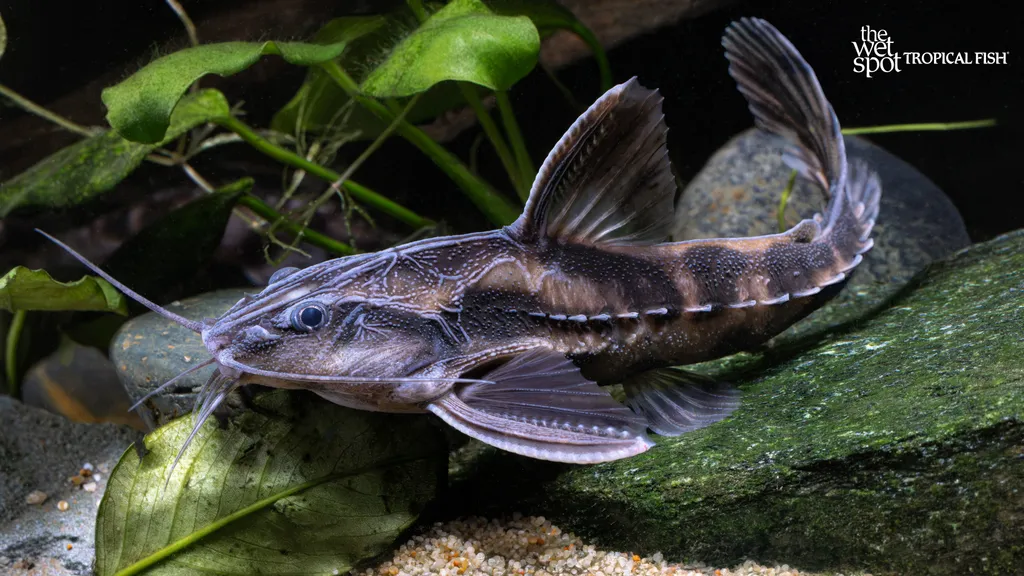
Largest
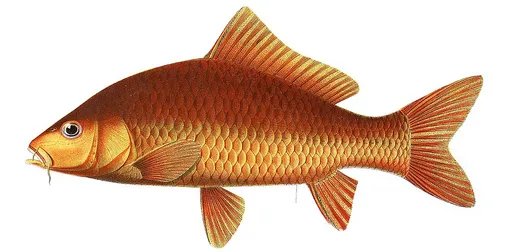
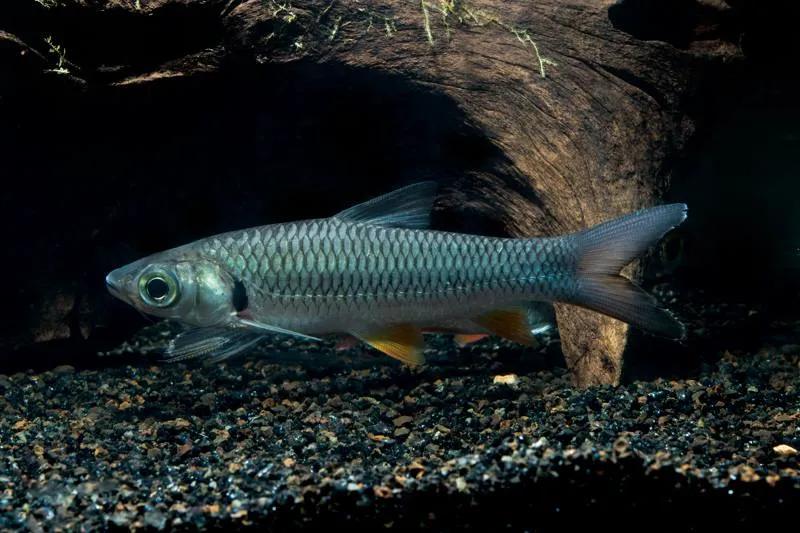
Easiest to keep
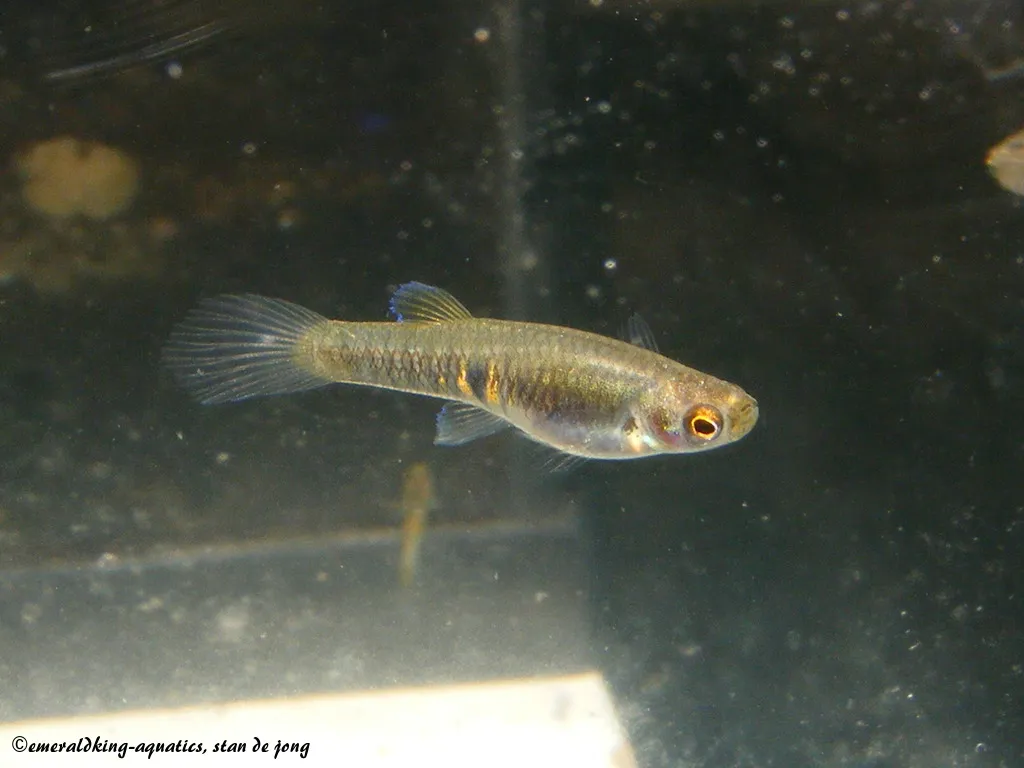
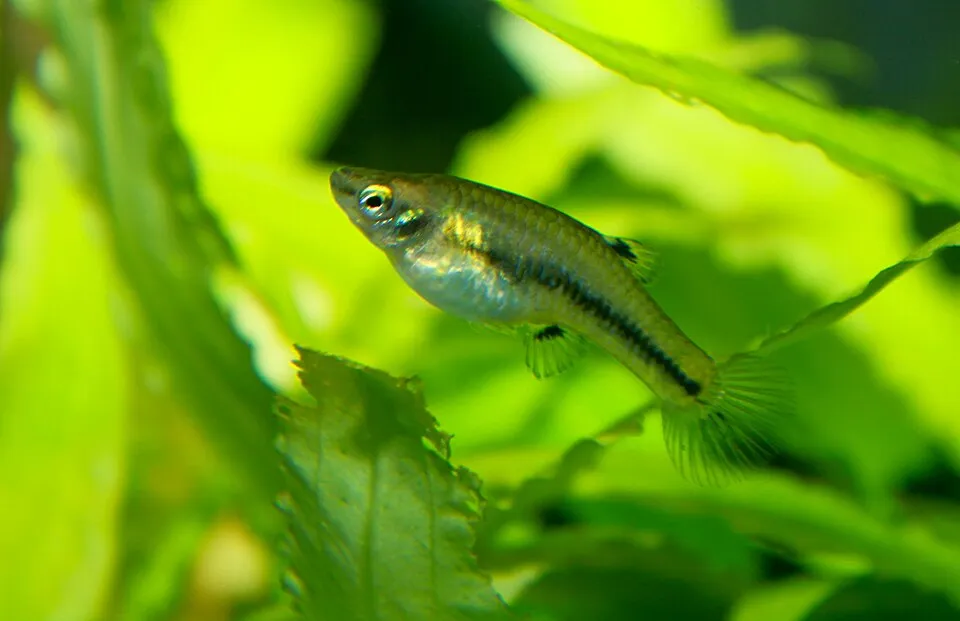
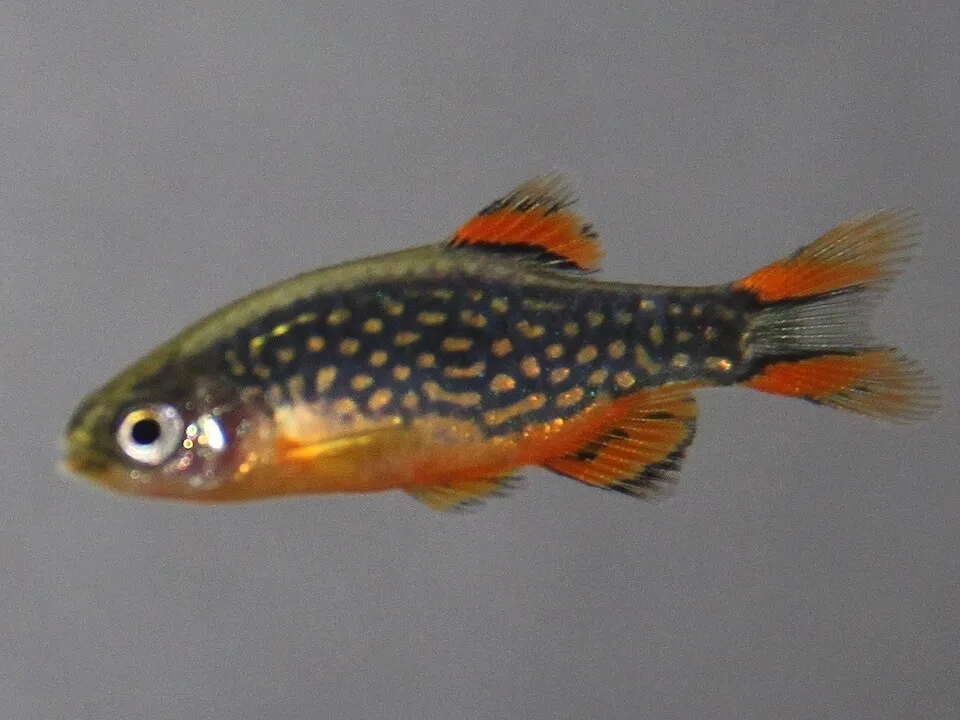
Fits a 20 gallon tank
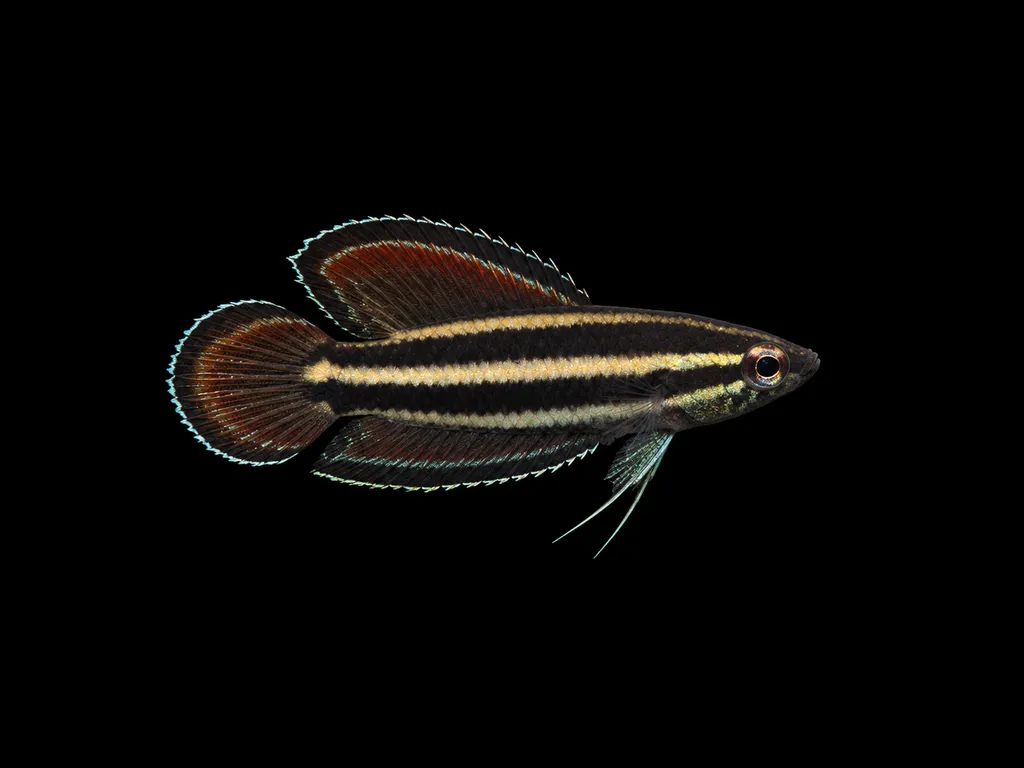
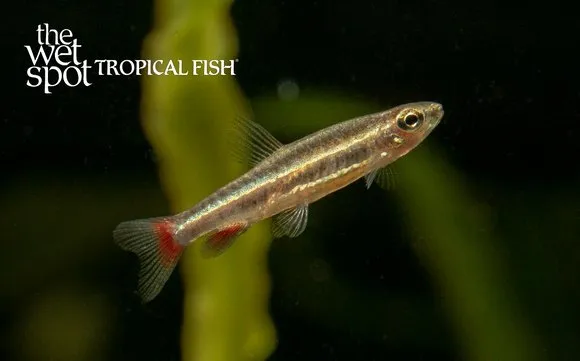
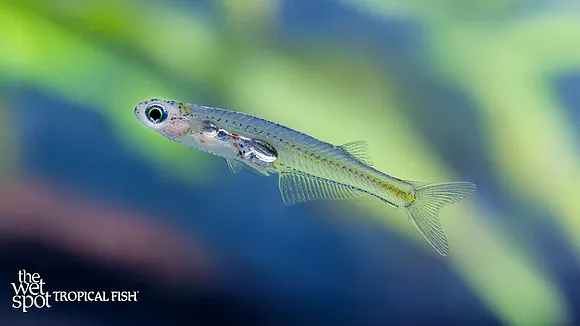
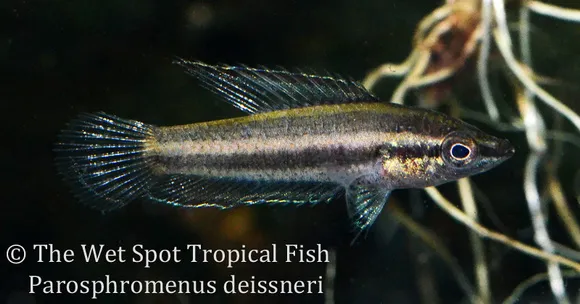
Fits a 30 gallon tank
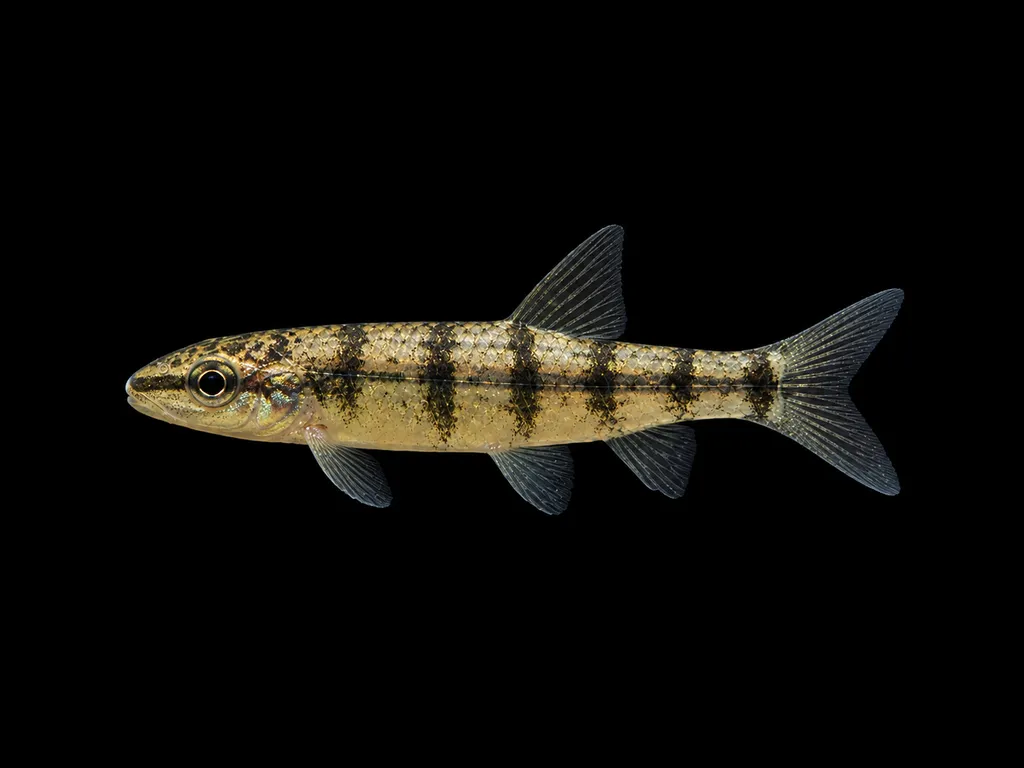
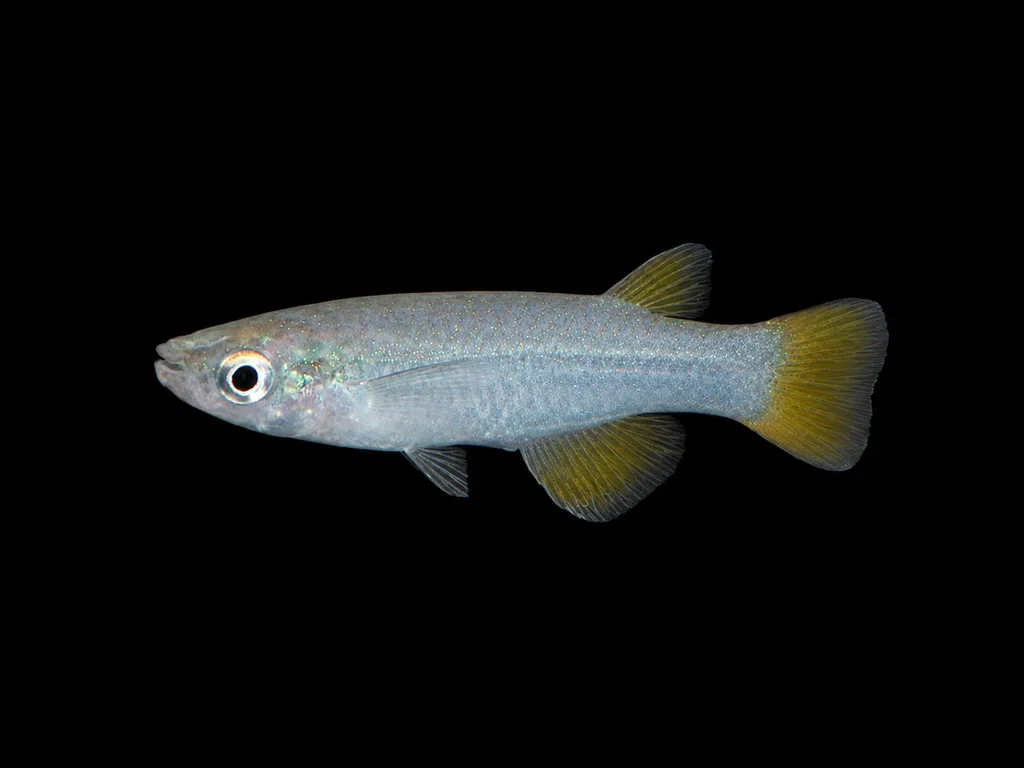
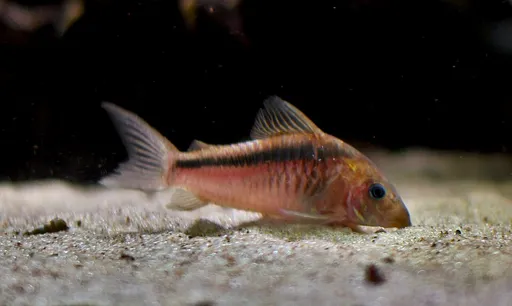
FAQ
Common questions
What is the best community fish for a beginner?
The harlequin rasbora, the neon tetra and the cherry barb are marked beginner and peaceful. Add a group of bronze or panda corys for the bottom and the tank is stocked.
Why are guppies and platies not on this list?
They are marked mostly peaceful, one step below peaceful, because males harass females and other fish. They mix well with the fish here; the list filters on the top mark only.
Can a betta live in a community tank?
The betta is not marked peaceful, so it is not here, but many keepers pair one with corys and a calm school. The betta hub covers which tank mates work and which do not.
What water do community fish need?
Most of this list runs at 72–82°F (22–28°C) and a pH from 6 to 7.5. The white cloud and the Odessa barb want it cooler, the discus and Sterba's cory warmer, and the lemon and x-ray tetras take a pH up to 8.
How many fish can I keep?
Six of each schooling species and one bottom group is a full 20 gallon tank: eight harlequins, six panda corys and a bristlenose. The stocking calculator checks the numbers and the pairings.
Are angelfish community fish?
Angelfish are marked mostly peaceful and eat neon tetras once they are grown, so they are not here. They mix with the larger fish on this page, the Congo tetras and rainbowfish.
Index
All community fish
Planning a tank?
TankBud checks stocking and water fit as you build a tank, then tracks water tests, reminders and photos once it is running.
Track your tanksMaintain tanks for clients? See TankBud Pro